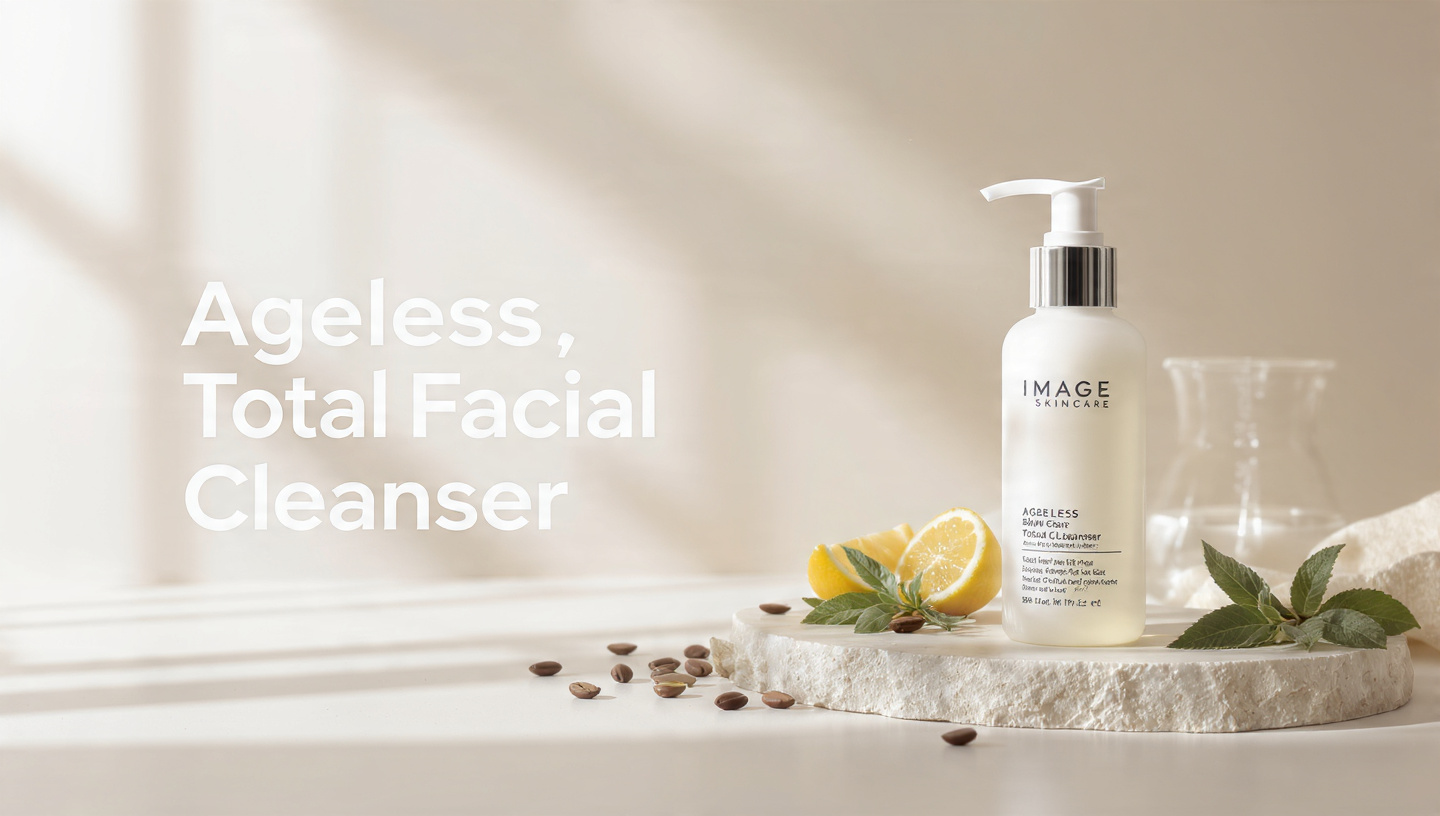
2026 Review: Image Skincare Ageless Total Facial Cleanser
The Image Skincare Ageless Total Facial Cleanser is a premium anti-aging face wash that combines glycolic acid, peptides, and antioxidants to resurface and brighten skin. Whether it truly delivers on these promises depends far more on the chemistry of a wash-off product than on the ingredient list alone. A close analysis of the formulation reveals a sophisticated mix of actives, but their ability to remain on the skin long enough to work is the central question that determines if this product is worth its price.
Over 60% of skincare consumers report using a targeted treatment cleanser according to the American Academy of Dermatology, yet very few understand that washing your face is fundamentally a cleansing event, not a treatment delivery system. The stratum corneum, your skin’s outermost protective layer, is designed to block substances from penetrating, and surfactants in cleansers are designed to lift and remove material from the skin surface. Reconciling these opposing forces is the challenge every anti-aging cleanser faces.
This analysis pulls apart the ingredient label for the Image Skincare Ageless Total Facial Cleanser and examines exactly what each compound does, what the published dermatological research says about wash-off active delivery, and how to use this product without damaging your skin barrier. You will find a direct assessment of the anti-aging claims, a safe integration protocol for your existing routine, and a detailed look at who should steer clear of this formulation entirely.
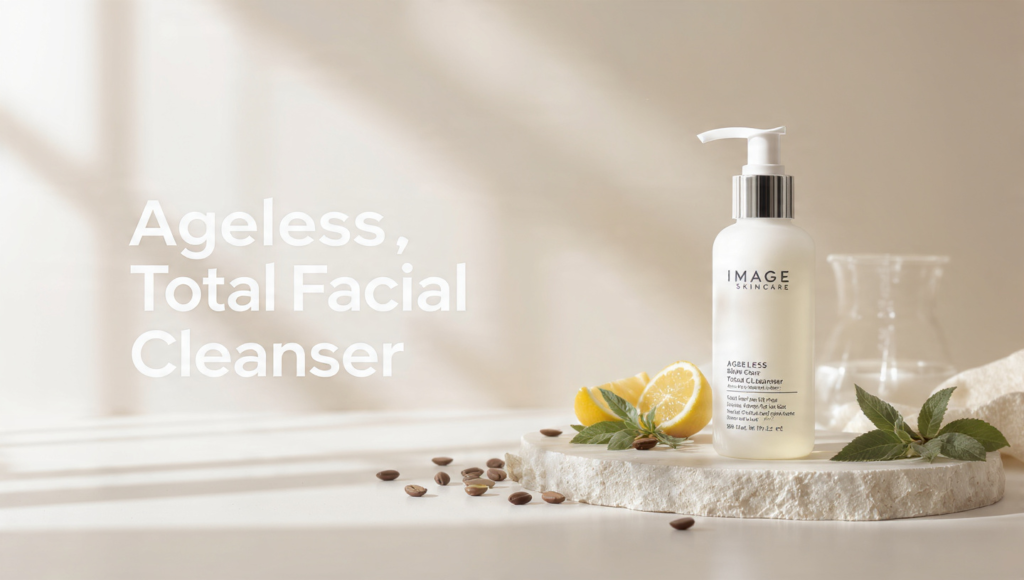
Image Skincare Ageless Total Facial Cleanser
The Image Skincare Ageless Total Facial Cleanser is a multi-action face wash positioned as an anti-aging treatment that exfoliates, brightens, and firms skin during the cleansing step. Its formula uses a sulfate-free surfactant system paired with an alpha-hydroxy acid, vitamin C, peptide blends, and moisturizing humectants to differentiate itself from a basic drugstore cleanser. The product claims to be “medical grade,” a marketing term that signals higher active ingredient quality without carrying regulatory weight from the FDA.
The target user for this product is someone with normal to oily skin who wants a single product to provide both cleansing and mild chemical exfoliation in a streamlined routine. This is not a product designed for removing heavy stage makeup or for use around the delicate eye area. The inclusion of fragrant citrus essential oils immediately narrows its suitability, excluding anyone with reactive or sensitized skin.
| Formulation Category | Active Function | Key INCI Ingredient |
|---|---|---|
| Chemical Exfoliant | Desmosome Disruption | Glycolic Acid |
| Antioxidant/Lipid-Soluble C | Free Radical Scavenging | Tetrahexyldecyl Ascorbate |
| Matrikine Peptide Complex | Fibroblast Signaling | Palmitoyl Tripeptide-1, Palmitoyl Tetrapeptide-7 |
| Humectant | Water Binding | Sodium Hyaluronate |
| Retinoid Ester | Epidermal Differentiation | Retinyl Palmitate |
Image Skincare Ageless Total Facial Cleanser Ingredients
The full INCI list for the Image Skincare Ageless Total Facial Cleanser reveals a formulation built around water, gentle non-ionic surfactants, and a glycolic acid component buffered by soothing agents. Key ingredients include Water/Aqua/Eau, Glycolic Acid, Propanediol, Cocamidopropyl Betaine, and Sodium Hydroxide for pH adjustment. The active complex is rounded out with Tetrahexyldecyl Ascorbate, Tocopheryl Acetate, Palmitoyl Tripeptide-1, Palmitoyl Tetrapeptide-7, and Retinyl Palmitate, alongside Allantoin, Panthenol, and Arginine for barrier support.
This ingredient panel places the product in a confusing middle ground between an efficacious exfoliant and a soothing, residue-free cleanser. The presence of Sodium Hydroxide signals that the formulation must neutralize a portion of the glycolic acid to achieve a skin-safe pH, which directly and necessarily reduces the free acid available for exfoliation. The inclusion of Citrus Aurantium Dulcis (Orange) Oil and Citrus Limon (Lemon) Peel Oil is a significant departure from clinical, evidence-based formulation, introducing potent phototoxic and sensitizing fragrance compounds that contradict the skin health goals of the rest of the ingredient list.
- Glycolic Acid: The smallest alpha-hydroxy acid, capable of penetrating the stratum corneum to break bonds between dead skin cells.
- Tetrahexyldecyl Ascorbate: A highly stable, lipid-soluble ester of ascorbic acid that penetrates skin better than pure L-ascorbic acid in leave-on applications.
- Palmitoyl Tripeptide-1 and Palmitoyl Tetrapeptide-7: Synthetic matrikine peptides that mimic the extracellular matrix breakdown signals to stimulate repair and collagen production in the dermis.
- Retinyl Palmitate: A retinoid ester requiring conversion to retinoic acid, making it far weaker than retinol or retinaldehyde, with a better safety profile but lower efficacy.
Key Takeaway: The Ageless cleanser’s ingredient list is a hybrid of high-performance anti-aging actives and unnecessary fragrant phototoxins, a contradiction that makes the formulation more of a sensorial experience than a focused clinical treatment.
Glycolic Acid in a Cleanser How It Works
Glycolic acid works in a cleanser by entering the upper layers of the stratum corneum and loosening the desmosomes, the protein structures that glue dead skin cells together. For this chemical reaction to occur at a meaningful rate, three conditions must be met: the glycolic acid must be present at a sufficient concentration, the pH of the product must be below 4.0, and the solution must remain on the skin for an adequate contact time, typically several minutes.
Surfactants in the cleanser create a major obstacle for glycolic acid efficacy because their entire job is to lift oils, debris, and other molecules off the skin and emulsify them into the water phase for rinsing. The glycolic acid is caught in this same surfactant micelle system, meaning a portion of it is being actively removed even as a portion is attempting to penetrate. This competition between delivery and removal is why a glycolic acid leave-on serum at a measured pH will always produce more consistent, predictable exfoliation than any wash-off product.
The pH of the Ageless Total Facial Cleanser is adjusted to be safe for daily use, which typically means a final formulation pH closer to 4.5 or 5.0, rather than the 3.0 to 3.5 required for optimal free acid penetration. At a pH of 4.5, a significant percentage of the glycolic acid is present in the neutralized salt form, which has virtually no exfoliating activity. You are left with a product that provides very mild, surface-level smoothing rather than a true resurfacing event.
| Exfoliation Parameter | Optimal Condition for Leave-On AHA | Typical Condition in Wash-Off Cleanser |
|---|---|---|
| Free Acid Concentration | 5-10% | Undisclosed, partially neutralized |
| Formulation pH | 3.0 – 4.0 | 4.5 – 5.5 |
| Contact Time | 5-20 minutes (or overnight) | 45-90 seconds |
| Lipid Barrier Interaction | Enhanced penetration | Surfactant stripping & dilution |
| Controlled Outcome | Predictable desquamation | Inconsistent, minimal effect |
Does a Glycolic Acid Face Wash Exfoliate
A glycolic acid face wash provides a very low level of exfoliation, primarily smoothing the outermost corneocytes that are already loose and ready to shed. It does not penetrate deeply enough or remain on the skin long enough to generate the significant cell turnover, collagen remodeling, or dermal thickening that is documented in clinical trials using leave-on glycolic acid peels. The American Academy of Dermatology confirms that the primary function of a cleanser is to remove dirt, oil, and debris, and any treatment actives that happen to deposit are considered a secondary bonus, not a reliable mechanism.
Clinical research published in the Journal of Cosmetic Dermatology has demonstrated that a leave-on 8% glycolic acid cream applied daily for 22 weeks produced measurable improvements in photoaging, including a reduction in fine wrinkles and improved skin texture. There is no equivalent body of controlled human evidence showing that a glycolic acid wash can replicate these dermal-level changes. The data simply does not support equating the two delivery methods.
This does not mean a glycolic acid cleanser does nothing. It can function as an effective preparatory step to enhance the penetration and efficacy of leave-on actives applied immediately after cleansing. By removing dead surface cells and transiently lowering the skin’s surface pH, a low-pH glycolic acid cleanser can theoretically help a follow-up vitamin C or peptide serum work better. The Ageless cleanser’s value likely lies in this priming function rather than in any standalone anti-aging effect.
Key Takeaway: A glycolic acid face wash provides surface smoothing, not dermal rejuvenation; treat it as a prep step for your leave-on anti-aging serum, not as a replacement for one.
Wash Off Active Ingredients Efficacy
Wash-off active ingredients are those applied to the skin and then rinsed away within two minutes, and their efficacy is severely limited by the laws of skin physiology and cosmetic chemistry. The stratum corneum is specifically structured with a dense lipid matrix of ceramides, cholesterol, and free fatty acids that forms a near-impenetrable waterproof barrier. For any active ingredient to work, it must partition out of the cleanser base, diffuse through this lipid matrix, and reach its biological target in the viable epidermis or dermis before the entire mixture is diluted and washed down the drain.
Peptides and water-soluble antioxidants are at the greatest disadvantage in a rinse-off system because they do not partition well into the lipid barrier and are highly diluted during the water-rinsing step. The contact time is insufficient for passive diffusion through the tortuous intercellular lipid pathway. According to the International Journal of Cosmetic Science, meaningful delivery of active ingredients from wash-off products requires specialized deposition systems, such as cationic polymers that adhere to the negatively charged skin surface or encapsulated actives triggered by dilution or pH change, none of which are prominently featured in this formulation.
The reality is that a cleanser’s job is subtractive. It removes material. Functional skincare is additive; it deposits and delivers material into skin. Trying to do both in one product inevitably results in a compromise where neither function is performed optimally. The Ageless Total Facial Cleanser is excellent at the subtractive portion; it cleans thoroughly without overly stripping the barrier. The additive promises require a closer look at each individual ingredient.
Tetrahexyldecyl Ascorbate in Cleansers Benefits
Tetrahexyldecyl ascorbate is a sophisticated vitamin C ester prized in leave-on formulations for its stability and its ability to penetrate the lipid-rich stratum corneum far more efficiently than water-soluble L-ascorbic acid. Once inside the skin, it converts to ascorbic acid and provides antioxidant protection against reactive oxygen species generated by UV radiation, while also inhibiting tyrosinase to reduce hyperpigmentation and stimulating collagen synthesis in the dermis. These mechanisms are well-documented for leave-on tetrahexyldecyl ascorbate concentrations between 1% and 10%.
Placing this ingredient in a foaming facial cleanser largely wastes its potential. The tetrahexyldecyl ascorbate is solubilized within surfactant micelles, and its contact time with the skin surface is minimal. Any lipid-soluble properties that would normally help it slip between corneocytes are negated by the fact that surfactants are actively removing lipids from the skin surface, not depositing them. The high cost of tetrahexyldecyl ascorbate is a point of legitimate value concern when included in a product format where it has no scientifically justified chance of performing its primary biological functions.
Quick Tip:
- If tetrahexyldecyl ascorbate is a priority in your routine, look for a leave-on serum with a concentration of 5% to 10%.
- A stable vitamin C serum applied to freshly cleansed, dry skin and left on for 15 to 20 minutes before the next step provides documented antioxidant protection.
- Use the Ageless cleanser as a compatible preparatory wash for this routine, not as the antioxidant source itself.
Peptides in Face Wash Do They Work
Peptides in a face wash do not provide a meaningful anti-aging benefit because they cannot reach the dermal fibroblasts that they are designed to signal in the short time before they are rinsed away. Palmitoyl tripeptide-1 and palmitoyl tetrapeptide-7 are matrikine peptides that mimic the breakdown products of collagen and elastin. In leave-on serums, they bind to receptors on fibroblast cells in the dermis and trigger a wound-healing-like response that upregulates new collagen synthesis and tissue remodeling.
The barrier between these peptides in your cleanser and their target fibroblasts is immense. They must be released from the surfactant base, diffuse through the stratum corneum, transit the entire viable epidermis, and reach the papillary dermis, all within 60 to 90 seconds before they are emulsified and removed. This is a biological impossibility without a specialized delivery vector, which this water-based cleanser does not provide. Clinical trials demonstrating peptide efficacy, such as those published in the International Journal of Cosmetic Science, uniformly use leave-on cream or serum vehicles with contact times of hours, not seconds.
The peptides in this formulation serve a marketing function, not a functional one. They allow the product to claim “peptide technology” and align itself with the clinical prestige of matrikine compounds. Any skin-smoothing sensation you feel after using this cleanser is attributable to the mild exfoliating action of the glycolic acid and the emollient residue of humectants, not to fibroblast signaling from rinsed-away peptides.
Anti-Aging Facial Cleanser What to Look For
An effective anti-aging facial cleanser must prioritize barrier preservation, low-pH balance, and thorough yet gentle cleansing. Look for a sulfate-free surfactant system that uses non-ionic or amphoteric cleansers like coco-glucoside, decyl glucoside, or cocamidopropyl betaine, which clean without stripping the acid mantle or disrupting the ceramide-rich lipid barrier. The cleanser’s pH should ideally be at or just below the skin’s natural pH of about 5.5 to maintain a healthy microbiome and prevent the post-wash tightness that signals barrier stress.
The most valuable active ingredients in a cleanser are not the expensive anti-aging actives but humectants and skin-identical lipids. Ingredients like glycerin, sodium hyaluronate, panthenol (provitamin B5), and niacinamide provide immediate, contact-time-appropriate benefits by attracting water to the skin surface and soothing any transient irritation. Niacinamide, in particular, is a rare ingredient that may deliver some wash-off benefit due to its small molecular weight and ability to penetrate the upper epidermis quickly, where it can help regulate sebum and improve barrier function, according to a 2023 review in the Journal of Cosmetic Dermatology.
- Gentle surfactant base: Non-stripping, no sodium lauryl sulfate (SLS) or sodium laureth sulfate (SLES) at high concentrations.
- pH-balanced: Formulated to a final pH of 5.0 to 5.5, unless a specific low-pH exfoliation function is desired.
- Humectant-rich: Glycerin, panthenol, or betaine listed early in the ingredient panel.
- Barrier-supporting: Ceramides, fatty acids, or niacinamide included at meaningful positions on the INCI list.
- Fragrance-free: No essential oils, no “parfum,” to avoid cumulative sensitization risk over decades of use.
Key Takeaway: The best anti-aging cleanser is one that cleans without damaging the barrier, leaving your skin fully receptive to the leave-on actives that do the real anti-aging work.
Image Skincare Ageless Total Facial Cleanser Review
This product performs as a high-quality, low-foaming, non-stripping cream-gel cleanser that leaves skin feeling smooth, hydrated, and prepared for subsequent treatments. The texture is a viscous, pearlescent gel that lathers into a minimal, creamy foam, and it removes light makeup and sunscreen effectively when applied to dry skin first before emulsifying with water. The sensory experience is dominated by a fresh, zesty citrus scent derived from the orange and lemon peel oils, which is notably strong and lingers briefly after rinsing.
For someone with resilient, non-sensitive skin who is seeking an elegant, sensorial face wash and already uses a robust leave-on anti-aging routine, the Ageless cleanser can be a perfectly adequate choice. It will not irritate immediately, and the mild acidification it provides can help maintain a low skin surface pH. The cost, approximately $38 for 5 ounces, places it at a premium tier where the consumer is paying for branding, texture, and fragrance experience rather than a provable, functional advantage over a well-formulated $15 cleanser from a transparent, fragrance-free brand.
For anyone with compromised barrier function, active acne, rosacea, eczema, or a history of contact dermatitis, this product is a poor choice that carries unnecessary risk. The phototoxic citrus oils, the glycolic acid on an already compromised barrier, and the cumulative sensitization potential of daily fragrance exposure make this a product to actively avoid if your skin is not in robust, resilient condition. The same skin-smoothing preparatory function can be achieved with a gentle, fragrance-free PHA (polyhydroxy acid) cleanser at a fraction of the cost and near-zero irritation risk.
| Skin Profile | Suitability for Ageless Total Cleanser | Rationale |
|---|---|---|
| Oily, Resilient Skin | Well-Suited | Tolerates mild daily AHA, benefits from oil control. |
| Normal Skin, Mild Aging | Adequate with Caution | Fine if using broad-spectrum SPF daily. Citrus oils are a long-term sensitization variable. |
| Dry or Dehydrated Skin | Poor Fit | Glycolic acid can exacerbate tightness; barrier already fragile. |
| Sensitive or Rosacea-Prone Skin | Unsuitable | Fragrant phototoxic oils and AHA are major trigger risks. |
| Fitzpatrick Skin Types IV-VI | High Risk | AHA irritation can trigger stubborn post-inflammatory hyperpigmentation. |
| Pregnant or Nursing | Contraindicated | Retinyl palmitate and potent essential oils warrant avoidance. |
How to Use Glycolic Acid Cleanser Safely
Using a glycolic acid cleanser safely requires treating it as an active treatment step with defined frequency limits, not as an unlimited daily staple. Apply the cleanser to dry skin first, massaging gently in circular motions for 45 to 60 seconds to maximize glycolic acid contact before the surfactants are activated. Then add a small amount of lukewarm water, continue massaging for another 15 seconds, and rinse thoroughly with cool water. Never use hot water, which strips the barrier and can worsen the irritation potential of the AHA.
Limit use to no more than once daily, ideally in the evening, and start with two or three nights per week to assess your individual tolerance. According to dermatological guidance from the Journal of the American Academy of Dermatology, signs of AHA overuse include persistent facial flushing, a waxy or shiny skin texture, stinging upon application of any product (even water), and increased breakouts from barrier disruption. If you experience any of these, stop the cleanser immediately and switch to a bland, fragrance-free cream cleanser for a minimum of seven to ten days.
Daily broad-spectrum sunscreen of SPF 30 or higher is non-negotiable when using any glycolic acid product. AHAs thin the stratum corneum and remove protective dead skin cells, which increases photosensitivity for up to seven days after the last application. The citrus oils in this specific formulation add a phototoxic risk that magnifies the UV danger. Apply your sunscreen every morning, no exceptions, and reapply if you are outdoors or near windows for extended periods.
To introduce a glycolic acid cleanser safely into your routine:
Step 1: Patch test behind your ear or on the side of your jaw for three consecutive evenings before using on your full face.
Step 2: Begin with a Monday-Wednesday-Friday schedule for two full weeks, never on consecutive days initially.
Step 3: Apply the cleanser to dry skin, massage for 60 seconds, emulsify with water, then rinse completely.
Step 4: Monitor your skin for the next 24 hours for any stinging, redness, or unusual dryness.
Step 5: If well-tolerated, you may gradually increase to nightly use, but do not exceed once per day.
Step 6: Remove the Ageless cleanser from your routine entirely for one week before any in-office procedure, such as a chemical peel, microneedling, or laser treatment.
Ageless Total Facial Cleanser for Sensitive Skin
The Ageless Total Facial Cleanser is not formulated for sensitive skin and is likely to cause reactive symptoms due to the combined presence of glycolic acid and fragrant citrus essential oils. Sensitive skin, which the International Forum for the Study of Itch defines as a syndrome involving unpleasant sensations like stinging, burning, and itching in response to normally tolerable stimuli, requires fragrance-free, low-irritant formulations. The phototoxic compounds in lemon and orange peel oil, specifically limonene and citral, are among the most common contact allergens in personal care products.
Even if the glycolic acid is partially neutralized and present at a low effective concentration, the repeated, cumulative exposure to essential oils on a cleanser base that is also lowering surface pH creates a perfect environment for subclinical barrier degradation. People with sensitive skin conditions like rosacea, perioral dermatitis, or atopic dermatitis should strictly avoid this product. A board-certified dermatologist would typically recommend a creamy, non-foaming wash with minimal ingredients, such as one based on glycerin and ceramides, for these skin types.
If you have sensitive skin but still want a gentle exfoliation step, polyhydroxy acids (PHAs) like gluconolactone are a far more suitable choice. PHAs have a larger molecular structure than AHAs, which limits their penetration and makes them inherently less irritating while still providing surface smoothing. There is no clinical justification for exposing a sensitive skin barrier to phototoxic citrus oils in pursuit of anti-aging, a benefit that this cleanser cannot reliably deliver anyway.
Layering Actives with Exfoliating Cleanser
Layering actives safely after using an exfoliating cleanser means allowing the skin barrier to fully normalize before applying potent leave-on treatments. After rinsing off the Ageless cleanser, pat your face completely dry. Do not apply a leave-on AHA or BHA serum immediately after because the stratum corneum has been transiently acidified and its lipid barrier is in a more permeable, vulnerable state. Applying a strong acid exfoliant on top of an already acid-primed surface is a fast route to chemical irritation and barrier disruption.
The safest and most effective active to apply after a glycolic acid cleanser is a well-formulated vitamin C serum, specifically one using L-ascorbic acid at a pH of 3.5 or below. The freshly cleansed, low-pH skin surface is the ideal receiving environment for ascorbic acid, optimizing its penetration and stability. Allow the skin to dry completely, apply your vitamin C serum, and then wait at least 10 minutes before applying any subsequent products. This pause lets the serum’s pH gradient do its work without being neutralized too quickly by a higher-pH moisturizer.
- Apply Immediately After: Vitamin C serums (L-ascorbic acid at low pH), gentle hydrating essences, barrier repair serums.
- Apply in the AM Only, Not After PM Cleanser: Leave-on BHA or AHA exfoliants. Exfoliating double-layering is unnecessary and harsh.
- Do Not Apply In Same Routine: High-strength retinol or retinaldehyde serums. Wait and use retinol on a night when you use a plain, non-exfoliating cleanser.
Key Takeaway: Use your glycolic acid cleanser as the primer for a low-pH antioxidant serum, not as a partner to other exfoliants in the same evening routine.
Glycolic Acid and Retinoids Routine Order
A glycolic acid cleanser and a retinoid product should never be used in the same evening skincare routine. The Journal of the American Academy of Dermatology consistently advises against the simultaneous layering of strong AHAs and retinoids due to the compounded irritation risk, which can lead to retinoid dermatitis, a condition of persistent redness, peeling, and barrier failure that requires weeks to resolve. Your skin’s capacity to tolerate actives is finite each night, and combining them on the same evening exceeds that capacity for most people.
The correct protocol is to alternate nights or even alternate parts of the week. On an exfoliation night, use the Ageless glycolic acid cleanser followed by a simple, hydrating moisturizer with no other active ingredients. On a retinoid night, wash with a gentle, non-exfoliating cleanser at pH 5.5, dry your skin completely, apply your pea-sized amount of tretinoin or retinol, and follow with a rich barrier-supporting moisturizer. This alternation allows each active to work optimally without the interference or irritation that comes from layering them.
If your skin is highly retinized and you have been using a prescription retinoid for over a year with zero irritation, you might be able to use the glycolic acid cleanser in the morning only, with retinoid use in the evening. This requires strict adherence to morning sunscreen application and constant monitoring for any emerging signs of barrier stress. For anyone still in the first year of retinoid use, morning use of a glycolic acid cleanser is still an aggressive protocol. A gentler, fragrance-free cleanser for the morning is the safer evidence-based choice while your skin is adapting to retinoids.
| Night of the Week | Cleanser Type | Active Applied After | Key Goal |
|---|---|---|---|
| Monday | Glycolic Acid Cleanser (PM) | Hydrating Moisturizer Only | Mild Surface Exfoliation |
| Tuesday | Gentle pH-Balanced Cleanser | Retinoid + Moisturizer | Dermal Collagen Remodeling |
| Wednesday | Gentle pH-Balanced Cleanser | Barrier Repair Serum | Recovery and Hydration |
| Thursday | Glycolic Acid Cleanser (PM) | Hydrating Moisturizer Only | Surface Smoothing |
| Friday | Gentle pH-Balanced Cleanser | Retinoid + Moisturizer | Anti-Aging Treatment |
| Saturday & Sunday | Gentle pH-Balanced Cleanser | Barrier Repair, No Actives | Full Recovery |
Is Image Skincare Medical Grade
The term “medical grade” as used by Image Skincare is a marketing descriptor with no legal or regulatory definition recognized by the FDA. The FDA classifies cosmetic products based on their intended use: products intended to cleanse, beautify, or alter appearance without affecting the body’s structure or functions are cosmetics. Products intended to treat disease or affect the structure or function of the body are classified as drugs and require pre-market approval. There is no “medical grade” middle category in federal law.
This does not mean the product is of low quality. It means the term is being used to signal a higher concentration of active ingredients, a closer relationship with professional distribution channels (estheticians, dermatology offices), and a perceived superiority over mass-market drugstore brands. Image Skincare does formulate with effective levels of proven ingredients in some products, but this label on the Ageless Total Facial Cleanser is a branding claim, not a regulatory classification. A board-certified dermatologist prescribing tretinoin is providing a medical-grade treatment. A cleanser purchased from a spa or online store is, by legal definition, a cosmetic product.
The consumer implication is that you should evaluate the INCI list and the formulation’s contact-time realities as they are, not as the “medical grade” branding suggests they might be. A $15 fragrance-free glycerin cleanser will clean your skin and support your barrier just as effectively, if not more safely, than this $38 product carrying a marketing term that has no binding meaning.
Best Anti-Aging Cleansers 2026 Compared
The best anti-aging cleansers of 2026 prioritize barrier integrity, low irritation potential, and skin preparation over exaggerated treatment claims. A direct comparison reveals that the Image Skincare Ageless Total Facial Cleanser excels at elegance and sensory experience but underperforms on safety and value when placed against fragrance-free competitors designed for compromised or aging skin barriers. Barrier function naturally declines with age due to decreased ceramide synthesis, making a fragrance-free, lipid-supportive cleanser a more rational anti-aging choice.
CeraVe Hydrating Cream-to-Foam Cleanser uses an amino acid-based surfactant system with three essential ceramides and hyaluronic acid without any fragrance, at a lower price point. La Roche-Posay Toleriane Hydrating Gentle Cleanser provides prebiotic thermal water, niacinamide, and ceramide-3 in a milky, non-stripping texture designed specifically for reactive skin on retinoid therapy. SkinBetter Science’s Oxygen Infusion Wash offers a premium sensorial experience with exfoliating glycolic acid in a controlled delivery system without phototoxic essential oils, placed at a similar price tier to the Ageless cleanser but with a superior safety profile.
| Product | Key Anti-Aging Mechanism | pH | Fragrance-Free | Price |
|---|---|---|---|---|
| Image Skincare Ageless Total | Mild AHA Smoothing + Humectants | ~5.0 est. | No (Citrus Oils) | $38 |
| CeraVe Hydrating Cream-to-Foam | Ceramide Barrier Support | 5.5 | Yes | $15 |
| La Roche-Posay Toleriane Hydrating | Niacinamide + Ceramide Barrier Repair | 5.5 | Yes | $17 |
| SkinBetter Oxygen Infusion Wash | Controlled AHA + Antioxidant Delivery | ~4.5 est. | Yes | $48 |
Over Exfoliation Signs and Barrier Repair
Over-exfoliation from a glycolic acid cleanser manifests as skin that appears shiny or waxy in a stretched, uncomfortable way rather than healthy and luminous. The skin will sting upon application of any product, including water, and fine, tissue-paper-like crepiness may appear across the cheeks. This indicates that the stratum corneum has been thinned to the point where the barrier is no longer effectively preventing transepidermal water loss, and irritants from the environment are entering the skin unchecked. Tightness immediately after cleansing is the earliest warning sign.
Once over-exfoliation is identified, you must stop all active ingredients immediately. According to the American Academy of Dermatology’s guidance on damaged skin barriers, this includes glycolic acid, retinoids, vitamin C serums, and any physical scrubs. Your routine for the next 10 to 14 days should consist of exactly three products: a creamy, non-foaming fragrance-free cleanser, a barrier repair moisturizer containing ceramides, cholesterol, and fatty acids in a skin-identical ratio, and a mineral-only sunscreen with zinc oxide or titanium dioxide as the sole active filter.
Barrier repair is a passive process; you cannot speed it up by adding more ingredients. You create a clean, protected, moist environment and let your keratinocytes do their job, which takes approximately one full epidermal turnover cycle of about two weeks in a younger adult and up to four weeks in a person over 50. Apply your barrier repair moisturizer to damp skin to trap water, reapply as often as your skin feels dry, and do not reintroduce your Ageless cleanser or any exfoliant until your skin has been completely symptom-free for at least one full week.
Signs you have over-exfoliated and need immediate barrier repair:
- Persistent facial flushing unrelated to a specific trigger.
- A shiny, glass-like skin texture accompanied by tightness.
- Stinging sensation upon applying a basic, fragrance-free moisturizer.
- New breakouts of small, textured bumps rather than inflamed pustules.
- Fine, crepey lines that worsen with facial expressions.
Key Takeaway: The first sign of a tight, waxy shine after cleansing is your signal to stop all exfoliation; healthy skin should feel comfortable, not stripped, after you wash it.
Frequently Asked Questions About Image Skincare Ageless Total Facial Cleanser
Does the Image Skincare Ageless cleanser really work for anti-aging?
It provides mild surface smoothing from glycolic acid and prepares skin to absorb your leave-on anti-aging serums more effectively.
It does not deliver a clinically significant anti-aging effect on its own because the active ingredients are rinsed off before they can penetrate and work in the dermis.
Can I use glycolic acid cleanser every day?
Most people should not use a glycolic acid cleanser daily, especially if they also use retinoids, other exfoliants, or have any tendency toward dryness or sensitivity.
Start with three nights per week and only increase to nightly use if your skin shows zero signs of barrier stress after four weeks.
Can I use retinol with a glycolic acid face wash?
You can use retinol in the same skincare routine, just not in the same evening as your glycolic acid face wash.
Alternate nights: use the glycolic acid cleanser one night with a plain moisturizer, and on the next night use a gentle cleanser followed by retinol.
Is Image Skincare Ageless Total Facial Cleanser good for sensitive skin?
No, this cleanser is a poor fit for sensitive, reactive, or rosacea-prone skin due to the glycolic acid and the phototoxic citrus essential oils.
People with sensitive skin should choose a fragrance-free, creamy, non-foaming cleanser with no chemical exfoliants.
Why does my skin tingle when using the Ageless Total Facial Cleanser?
The tingling sensation is primarily a reaction to the glycolic acid lowering your skin’s surface pH and penetrating into the slightly compromised areas of your barrier.
It is not a sign of the product “working”; it is a sign of irritation, and if it persists or intensifies, you should discontinue use.
Is the Image Skincare Ageless cleanser worth the money?
For most people, the Ageless Total Facial Cleanser is not worth its $38 price tag from a purely functional, evidence-based skincare perspective.
You are paying for a luxurious sensorial experience and branding, not for anti-aging results that a $15 fragrance-free cleanser cannot deliver with better long-term safety.
The most important thing to understand about the Image Skincare Ageless Total Facial Cleanser is that its anti-aging value lies almost entirely in what it allows your skin to absorb next, not in what it does during the wash. This product should be reframed in your mind as a well-textured, acidified preparatory cleanser, not as a standalone anti-aging treatment. Its role is to sweep the surface clean and briefly lower the pH so that your leave-on serums can perform more effectively.
If you choose to use this product, protect the investment in your skin by applying it to dry skin, never pairing it with retinoids on the same night, and wearing a high-protection mineral sunscreen every single morning without exception. Monitor your skin barrier with the same attention you give to your anti-aging goals. The moment your face feels tight or shiny rather than soft and comfortable after cleansing, pause the product and support your barrier with a fragrance-free ceramide moisturizer for at least a week before trying again.
Your skin’s health across decades is a function of barrier preservation, consistent sun protection, and the steady, gentle application of proven leave-on actives like retinoids and ascorbic acid. No cleanser, no matter how elegantly formulated or intelligently marketed, can replace that foundational discipline.