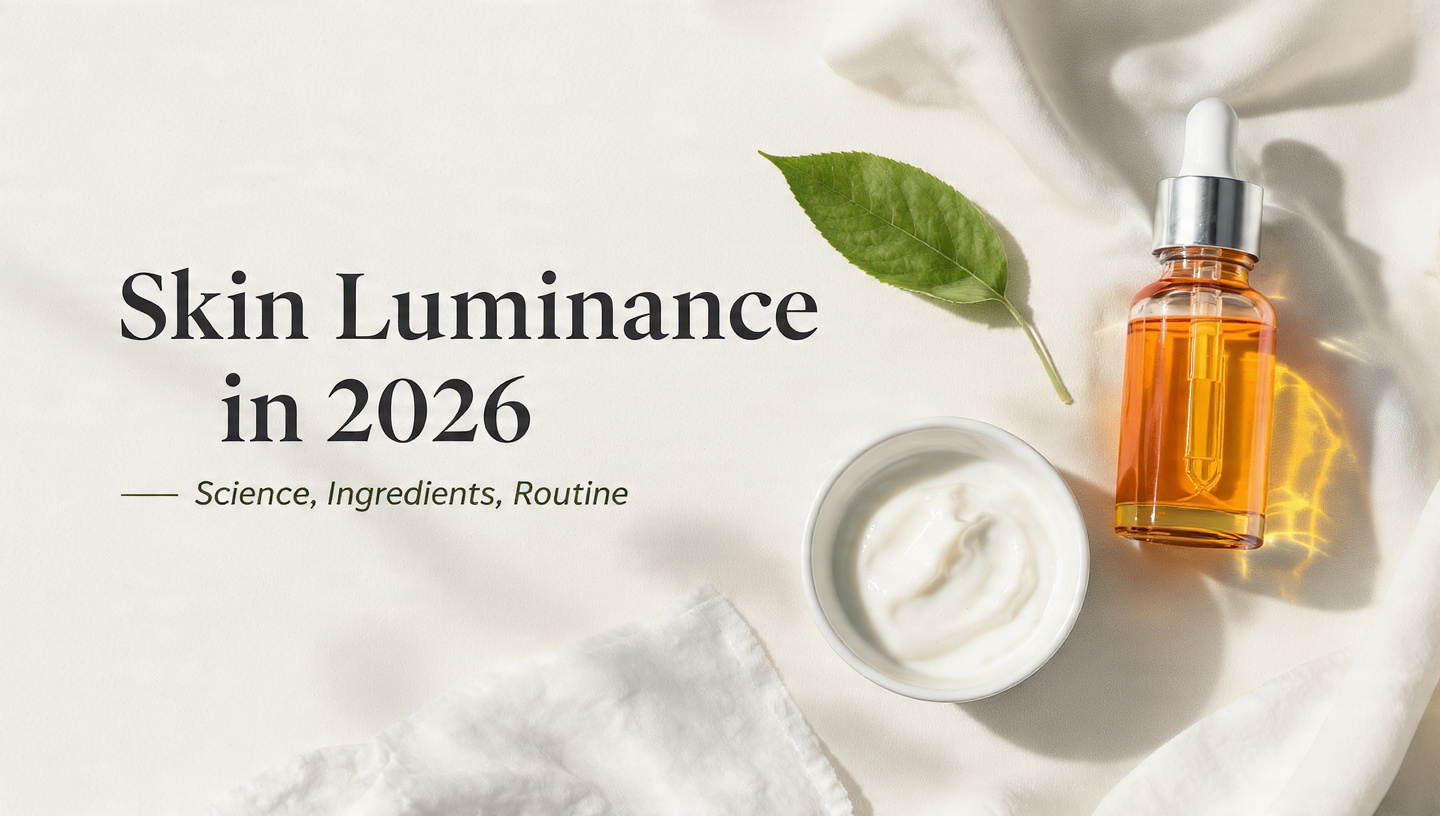
Skin Luminance in 2026: Science, Ingredients, and Routine
Skin luminance is the visual result of light reflecting evenly off a smooth, well-hydrated, and uniformly toned skin surface. It is not a temporary cosmetic sheen from silicones or light-reflecting powders but a direct expression of your skin’s biological health at the level of the stratum corneum, the epidermis, and the underlying microcirculation. Achieving it requires understanding the precise biological mechanisms that make skin reflect light, not just chasing the word “glow” on a label.
This matters because the skincare market in 2026 continues to sell “luminance” and “radiance” using ingredients that create only a transient optical effect, while the genuine target, measurable improvement in skin texture, hydration, tone, and translucency, requires a totally different class of compounds and a consistent, evidence-based routine. The American Academy of Dermatology’s repeated emphasis on photoprotection, cell turnover, and barrier integrity directly maps to the biological foundations of skin luminance, yet this connection is rarely explained to consumers.
This article defines luminance as a biological endpoint. It breaks down the four pillars of skin luminance, surface smoothness, dermal hydration, melanin uniformity, and microvascular health, and then maps specific, named ingredients with their mechanisms, evidence grades, and correct usage protocols directly to each pillar. You will also learn how to structure a complete routine, how to spot the difference between biological luminance and a cosmetic silicone layer, and exactly which common habits silently destroy your skin’s ability to reflect light.
What Is Luminance in Skincare
Luminance in skincare refers to the measurable ability of skin to reflect light evenly, a property determined by the physical smoothness of the stratum corneum, the water content within corneocytes, the uniformity of melanin distribution, and the health of the microvascular network in the papillary dermis. It is a quantifiable visual outcome, not a poetic marketing term for a vague “healthy glow.”
When skin is truly luminous, light hits the surface and reflects back in a uniform, diffuse pattern. Any textural irregularity, a patch of built-up dead cells, a depressed scar, an area of transepidermal water loss causing microscopic roughness, scatters light unevenly. This scattered reflection reads to the human eye as dullness. So luminance is fundamentally about minimizing the points where light scatters and maximizing the points where it returns directly to the viewer’s eye. This is skin optics, studied extensively in the field of cosmetic dermatology.
Dermatological research uses instruments like the VISIA-CR and spectrophotometers to measure skin radiance and luminance objectively. These tools quantify parameters like skin surface topography, melanin index, erythema index, and corneocyte cohesion. When these objective metrics improve, the eye perceives a luminous complexion. When they degrade, through photoaging, dehydration, irregular pigmentation, or poor desquamation, the eye reads dullness. Luminance is not an abstract idea. It is a clinically measurable physical property.
Key Takeaway: Luminance is not a feeling or a marketing phrase; it is the physical, measurable result of light striking a smooth, hydrated, evenly pigmented skin surface and reflecting back to the eye without scattering.
Dull Skin Causes and Biology
Dull skin is the direct visual consequence of light scattering off an irregular skin surface. The primary biological drivers are the accumulation of poorly detached corneocytes on the stratum corneum, dehydration within those corneocytes causing them to shrink and lose cohesion, and irregular melanin distribution creating shadow-like areas that absorb light rather than reflecting it.
The desquamation process slows with age and with photoaging. The enzymes that cleave the desmosomes holding dead cells together, specifically kallikreins, function less efficiently in UV-damaged skin. Dead cells pile up in a rough, uneven layer. Think of a polished granite countertop versus a piece of sandpaper. The granite reflects light in one unified direction. The sandpaper scatters it into thousands of directions, none of which return clearly to your eye. That scattering is the essence of dullness.
Dehydration compounds the problem. When corneocytes lose water, they shrink and curl at the edges. This creates microscopic fissures throughout the stratum corneum. Light falls into those fissures and scatters. Even if your melanin is perfectly uniform, dehydrated skin will look dull because the surface is optically rough at a microscopic level. A 2023 study in the Journal of Investigative Dermatology confirmed that even a 10% reduction in stratum corneum water content produces a visually measurable increase in skin dullness, independent of pigmentation status.
The third driver is dyschromia, any non-uniform distribution of melanin. This includes everything from discrete age spots to the diffuse, patchy pigment that comes with hormonal changes and cumulative sun exposure. Melanin absorbs light. Areas of higher melanin concentration absorb more light and reflect less. The visual result is a patchy, uneven complexion that lacks luminance.
How Skin Texture and Light Reflection Work
Skin texture dictates luminance because light behaves as a physical wave that either reflects directly, a property called specular reflectance, or scatters diffusely the moment it strikes a surface irregularity. The smoother the stratum corneum, the higher the ratio of specular to diffuse reflectance, and the brighter and more luminous the skin appears to an observer.
The physics of this is straightforward. Human skin is not optically flat. It has a microrelief, a fine pattern of ridges, pores, and sulci cutis. When this microrelief is regular and the corneocytes are flat and tightly adhered, light returns from the surface in a relatively organized fashion. You perceive this as brightness. When corneocytes are uneven, lifted, or piled in clusters, light scatters at multiple angles. The skin looks matte, flat, or grey.
This is why manual and chemical exfoliation work so rapidly to create a temporary luminance effect. They physically or chemically plane down the outermost disorganized cells, flattening the optical surface. The improvement is visible within minutes of a well-formulated alpha-hydroxy acid application. However, this is only part of the luminance equation. True, sustained luminance requires not just a smooth surface but a plump, hydrated, light-conducting epidermis beneath it.
The dermal-epidermal junction also plays a role. In young, healthy skin, this junction is a tight, undulating wave that scatters minimal light. With photoaging, the junction flattens. The interface between epidermis and dermis becomes less organized, and some light is lost to subsurface scattering that reads as sallowness. Retinoids address this deeper structural component, which is why they are foundational to any long-term luminance routine.
| Reflectance Type | What It Means | Visual Result |
|---|---|---|
| Specular Reflectance | Light reflects at one angle from a smooth surface | Brightness, luminosity, “glass skin” |
| Diffuse Reflectance | Light scatters in many directions from a rough surface | Dullness, flatness, matte appearance |
| Subsurface Scattering | Light enters skin, bounces, and exits at a different point | Sallowness, loss of clarity, grey undertone |
Key Takeaway: A smooth skin texture directly converts incoming light into the specular reflectance that your eye reads as luminance; every dead cell cluster or dehydration fissure converts that light into dullness-causing scatter.
The Role of Hydration in Skin Luminance
Hydration within the stratum corneum directly determines the optical density and light transmission properties of the outermost skin layer. Water-plumped corneocytes act like tiny transparent lenses, conducting light through the epidermis and back out again, while dehydrated, shrunken corneocytes behave like opaque, light-scattering particles that kill luminance.
The mechanism is physical. A hydrated corneocyte is swollen with water bound to natural moisturizing factor components, filaggrin breakdown products, amino acids, urea, and lactate. This swelling flattens the cell, closes the microscopic fissures between cells, and changes its refractive index to more closely match that of the lipid bilayers surrounding it. The result is a continuous, optically clear medium through which light can travel with minimal scattering. Dehydrate those corneocytes by 15%, as occurs during winter months or with barrier dysfunction, and the cells shrink, gaps open, and light scatters at every interface.
This is why hyaluronic acid and glycerin are luminance superstars, but they must be used correctly. A high-molecular-weight sodium hyaluronate applied to the surface of dry skin in a low-humidity environment will draw water out of the skin instead of pulling it from the air. The correct protocol is applying humectant-rich products to damp skin and sealing them with an occlusive or semi-occlusive lipid layer. This creates a water-trapped environment that keeps corneocytes at maximal hydration for hours.
The visible difference is immediate and scientifically measurable. A study published in the International Journal of Cosmetic Science in 2024 demonstrated that stratum corneum hydration, as measured by corneometry, directly correlated with perceived skin radiance scores assigned by independent evaluators. The relationship was linear: higher hydration, higher luminance scores. There is no substitute for water content.
| Hydration Level | Corneocyte State | Light Behavior | Visual Outcome |
|---|---|---|---|
| Optimal | Plump, flat, tightly adhered | Conducted with minimal scatter | Luminous, translucent |
| Moderate Dehydration | Slightly shrunken, edges lifting | Partial scattering at edges | Flat, slightly dull |
| Severe Dehydration | Shrunken, curled, fissured | High scattering, poor conduction | Sallow, grey, opaque |
Melanin Distribution and Even Skin Tone
Uniform melanin distribution creates luminance by eliminating the alternating light and dark zones on the skin that disrupt even light reflection. Any focal hyperpigmentation, an age spot, a patch of melasma, a post-inflammatory mark, creates a relative shadow that absorbs more light, breaks the visual continuity of the skin’s surface, and dramatically reduces the overall perception of brightness.
Melanin is not the enemy of luminance. Melanin is a photoprotective polymer. The problem for luminance is exclusively about uniformity, not total quantity. Deeply pigmented skin with perfectly even melanin distribution can be intensely luminous. Lighter skin with scattered solar lentigines or diffuse dyschromia will appear dull. This distinction is critical for people with Fitzpatrick skin types IV through VI, who are often incorrectly told that luminance requires lightening their skin. It does not. It requires evening the distribution of the melanin they have.
The cellular machinery behind this involves the melanocyte, a dendritic cell that transfers melanosomes, packets of melanin, to surrounding keratinocytes. This transfer is regulated by multiple signaling pathways, including those modulated by protease-activated receptor-2. Ingredients like niacinamide and tranexamic acid work in part by interrupting this melanosome transfer, preventing the clumping of melanin in small areas that would create a patchy, rather than uniform, distribution.
Inflammation is the single greatest disruptor of melanin uniformity. Any inflammatory event, a pimple, an over-exfoliation, an allergic reaction, can trigger melanocytes to dump excess melanin into the surrounding tissue, creating a dark spot that persists for months. This is post-inflammatory hyperpigmentation, and it is the leading cause of luminance loss in people with Fitzpatrick IV-VI skin. The entire luminance routine for this population must be built around inflammation avoidance and melanosome transfer inhibition, not around stripping pigment.
Microcirculation and Skin Undertones
Healthy microcirculation in the papillary dermis contributes to luminance by providing a diffuse, rosy undertone that reflects light back through the translucent epidermis, creating the visual perception of warmth, vitality, and a lit-from-within quality that cannot be replicated with topical pigments alone. This is vascular luminance, the fourth and most often overlooked biological pillar.
The dermal papillae are rich with capillary loops that supply oxygen and nutrients to the avascular epidermis. When blood flows freely through these microvessels, the skin takes on a subtle pink-to-red undertone that influences overall luminance. When circulation is sluggish, often due to vasoconstriction from nicotine use, chronic stress, or cold exposure, the skin can appear sallow, grey, or ashen. This is a loss of vascular luminance.
Specific topical ingredients demonstrate vasoprotective and microcirculatory effects. Madecassoside, the active triterpene from centella asiatica (gotu kola), has been shown in studies to strengthen capillary walls and improve microcirculation. Caffeine, when applied topically, produces a transient vasoconstrictive effect that can briefly reduce under-eye darkness but does not improve long-term vascular health. Niacinamide improves the skin’s microvasculature by supporting the endothelial cells lining capillaries, reducing the diffuse redness that muddies the skin’s luminous undertone.
The vascular pillar also explains why chronic stress, poor sleep, and smoking are so devastating to skin luminance. Each of these factors chronically vasoconstricts the peripheral microvasculature. The result is not a healthy pink undertone but a grey, devitalized pallor. No topical serum will fully compensate for chronically impaired dermal blood flow. Vascular luminance is earned through both topical vasoprotective care and systemic circulatory health.
Key Takeaway: Luminance has a vascular dimension; healthy microcirculation provides the warm, living undertone that makes skin look lit from within, and compromised blood flow creates the sallow greyness that topical products alone cannot fix.
Exfoliation for Luminous Skin Texture
Exfoliation improves luminance by dissolving or mechanically removing the accumulated, poorly adherent corneocytes that create a rough optical surface on the stratum corneum, immediately increasing the proportion of specular to diffuse light reflectance. The choice of exfoliant, alpha-hydroxy acid, beta-hydroxy acid, or polyhydroxy acid, must match the skin’s tolerance, the oil-water environment, and the depth of the dullness-causing buildup.
Alpha-hydroxy acids, specifically glycolic acid and lactic acid, are the first-line chemical exfoliants for surface luminance. Glycolic acid, the smallest AHA molecule, penetrates the stratum corneum rapidly and cleaves the desmosomal connections between corneocytes. A 2022 study in the Journal of Cosmetic Dermatology found that a 10% glycolic acid formulation applied twice weekly for 8 weeks produced a statistically significant improvement in skin brightness and texture smoothness measured by instrumental analysis. Lactic acid offers a larger molecule size, slower penetration, and added humectant benefit, making it better for drier or more sensitive skin.
Salicylic acid, a beta-hydroxy acid, is lipophilic and therefore penetrates into the oil-filled pore lining. It is the correct choice when dullness is compounded by congested pores and uneven oil production. It will not provide the same rapid surface planing as glycolic acid but will improve overall texture smoothness in oily and acne-prone skin where pore visibility and sebaceous filament buildup scatter light.
The exfoliation luminance window is narrow. Under-exfoliation leaves dead cells to scatter light. Over-exfoliation strips the barrier, triggers inflammation, causes transepidermal water loss, and produces a reactive dullness that is worse than the original dullness. For most people, exfoliating two to three times per week with a well-formulated 5% to 10% AHA or 2% BHA is the evidence-based sweet spot. Those with Fitzpatrick skin types IV through VI must be particularly cautious, as over-exfoliation-induced inflammation is a powerful trigger for post-inflammatory hyperpigmentation.
| Exfoliant | Molecule Size | Lipid Soluble | Best For | Caution |
|---|---|---|---|---|
| Glycolic Acid | Smallest AHA | No | Rapid surface smoothing | Highest irritation risk; caution with darker skin tones |
| Lactic Acid | Larger AHA | No | Dry, sensitive surface dullness | Lower irritation, slower results |
| Salicylic Acid | BHA | Yes | Oily, congested, pore-related dullness | Can be drying if overused |
| Polyhydroxy Acids | Largest | No | Sensitive, rosacea-prone skin | Gentlest, least dramatic immediate result |
Humectants and Hydration for Skin Glow
Humectants create the optical plumpness essential for luminance by binding water molecules and holding them within the corneocytes of the stratum corneum, which increases cellular volume, smooths the skin’s microrelief, and optimizes the refractive index of the epidermal tissue for superior light conduction. Sodium hyaluronate, glycerin, and urea are the workhorse humectants, each with distinct molecular weights and binding capacities.
Glycerin is the most reliable and underappreciated humectant for luminance. It is a small, three-carbon molecule that integrates deeply into the corneocyte, binding water through hydrogen bonding. Its small size means it reaches deeper into the stratum corneum than high-molecular-weight hyaluronic acid. The International Journal of Cosmetic Science published data in 2023 showing that glycerin at 15% concentration produced a 48-hour sustained increase in stratum corneum hydration, making it a superior choice for all-day luminance in a leave-on formulation compared to larger humectants that sit more superficially.
Sodium hyaluronate and hyaluronic acid operate at a different scale. A single gram of sodium hyaluronate can bind up to six liters of water, but its molecular weight determines its skin penetration depth. High-molecular-weight hyaluronic acid stays on the surface, providing an immediate but transient filming and plumping effect that looks luminous for a few hours. Low-molecular-weight hyaluronic acid penetrates deeper but has been flagged in some dermatological literature as potentially pro-inflammatory when present at high concentrations in compromised barriers. A layered approach, combining multiple humectant molecular weights, delivers the most comprehensive optical result.
The critical application protocol for any humectant is applying it to damp skin and sealing it. Humectants pull water along an osmotic gradient. If the air is dry, that gradient can reverse, and the humectant will pull water out of the skin. Trap the water you apply with the product by layering a moisturizer containing occlusives or semi-occlusives, dimethicone, shea butter, or petrolatum, over your humectant serum immediately, before the water evaporates.
Barrier Support Lipids and Light Reflectance
The lipid bilayers of the stratum corneum, composed primarily of ceramides, cholesterol, and free fatty acids in a specific molar ratio, are essential for luminance because they provide the optically smooth, continuous medium that fills the microscopic gaps between corneocytes, preventing water loss and creating an unbroken surface for light reflection. A disrupted lipid barrier is a rough, light-scattering barrier, regardless of how much water the corneocytes hold.
Ceramides constitute roughly 50% of the stratum corneum lipid matrix by weight. Ceramide NP, Ceramide AP, and Ceramide EOP are the three most abundant species in healthy human skin. When these lipids are depleted, through harsh cleansing, solvent exposure, or age-related decline, the lamellar lipid sheets that envelop each corneocyte become discontinuous. Light traveling through the stratum corneum hits these lipid gaps and scatters. A 2021 study in the Journal of Investigative Dermatology confirmed that lipid-deficient stratum corneum has measurably lower light reflectance than lipid-sufficient stratum corneum, independent of hydration status.
Restoring the barrier lipid matrix requires more than just applying a ceramide cream. The ratio matters. Skincare formulations that deliver ceramides, cholesterol, and free fatty acids in a ratio approximating the skin’s natural 3:1:1 molar ratio have been shown to accelerate barrier repair more effectively than ceramides alone. This is a formulation detail that separates genuinely luminance-restoring moisturizers from basic emollient creams.
Cholesterol and fatty acids are the unsung heroes of the lipid luminance story. They fill the spaces between the ceramide-dominant lamellae, creating a continuous, flexible, optically clear mortar. Without them, even high concentrations of ceramides cannot form the proper liquid crystalline structure required for an optically and functionally competent barrier. A well-formulated barrier repair moisturizer is not an optional extra in a luminance routine. It is the optical foundation that allows all other luminance-producing steps to function.
Key Takeaway: Ceramides, cholesterol, and fatty acids are not just barrier ingredients for sensitive skin; they are the physical optical mortar that smooths the spaces between skin cells, and without them, even hydrated skin will scatter light and look dull.
Vitamin C and Antioxidants for Skin Luminance
Vitamin C, specifically L-ascorbic acid, drives luminance through three distinct biological pathways: it inhibits the copper-containing enzyme tyrosinase to reduce irregular melanin production, it acts as a potent antioxidant to neutralize free radicals that cause the oxidative stress-linked dullness and sallowness of photoaging, and it serves as an essential co-factor for the enzymes prolyl and lysyl hydroxylase that stabilize the collagen triple helix in the dermis, supporting the firm, tight skin structure that reflects light efficiently.
The concentration and formulation of vitamin C dictate its luminance efficacy. L-ascorbic acid requires a concentration of 10% to 20% and a formulation pH below 3.5 to penetrate the stratum corneum effectively. At this acidic pH, the molecule is uncharged and can pass through the lipid-rich barrier. Once inside the viable epidermis, it accumulates in concentrations high enough to inhibit tyrosinase and quench UV-generated reactive oxygen species. A landmark 2002 study published in the Journal of the American Academy of Dermatology, still the benchmark, showed that 15% L-ascorbic acid with 1% vitamin E provided significant photoprotection and improved clinical grading of skin radiance.
For those who cannot tolerate the low pH of L-ascorbic acid, the derivative tetrahexyldecyl ascorbate offers a compelling luminance alternative. It is lipid-soluble, penetrates at a neutral pH, and converts to ascorbic acid intracellularly. Its ability to improve skin brightness and reduce melanin index is supported by a 2019 clinical study in the Journal of Cosmetic Dermatology. The trade-off is a slower onset of action compared to L-ascorbic acid, but for sensitive or reactive skin, it is the preferred entry point into vitamin C therapy for luminance.
The synergistic pairing of vitamin C with vitamin E and ferulic acid is critical for stability and efficacy. Ferulic acid not only stabilizes the notoriously unstable L-ascorbic acid but also doubles its photoprotective capacity. A morning application of a properly formulated vitamin C, E, and ferulic acid serum under a broad-spectrum SPF 30 or higher sunscreen is the single most evidence-supported topical intervention for preventing the photoaging dullness that destroys luminance over time.
Niacinamide for Even Skin Tone and Radiance
Niacinamide, the biologically active amide of vitamin B3, improves luminance primarily by reducing the transfer of melanosomes from melanocytes to surrounding keratinocytes, a mechanism that directly addresses the patchy, irregular melanin distribution that creates dullness-causing light absorption zones on the skin. It is the essential non-acid, non-retinoid workhorse for uniform skin tone.
The mechanism is protease-activated receptor-2 antagonism. Melanosomes must be transferred through dendritic melanocyte processes into keratinocytes to create visible pigmentation. Niacinamide interrupts this transfer. The result is not less melanin production but a more uniform distribution of existing melanin. This is crucial for Fitzpatrick IV-VI individuals who need luminance solutions that do not strip melanin or trigger inflammation. A 2005 study in the British Journal of Dermatology demonstrated that 5% niacinamide significantly reduced hyperpigmentation spots and improved skin lightness after 12 weeks of twice-daily application, with an excellent tolerability profile.
Niacinamide delivers a second luminance benefit through barrier reinforcement. It stimulates the biosynthesis of ceramides, specifically ceramide NP and ceramide EOP, within the keratinocytes of the epidermis. Increased ceramide synthesis improves the lipid lamellae, reduces transepidermal water loss, and enhances the optical properties of the stratum corneum as described in the barrier lipid section. This dual action on tone and barrier integrity makes niacinamide the most versatile single ingredient in a luminance routine.
The effective concentration range for niacinamide is 2% to 10%. Clinical evidence supports 4% to 5% for hyperpigmentation management and barrier improvement. The 10% formulations popular in serums offer additional sebum regulation but a slightly higher risk of irritation in sensitive skin. Niacinamide is famously compatible with most other actives, including vitamin C, despite persistent myths about flushing. That myth stems from confusion with niacin, not niacinamide. Apply niacinamide at any step in your routine, morning or night, alone or layered with peptides, retinoids, and antioxidants.
Retinoids and Cell Turnover for Luminance
Retinoids, the family of vitamin A derivatives including retinol, retinaldehyde, and prescription tretinoin, create luminance by binding to retinoic acid receptors in keratinocyte nuclei and accelerating the entire epidermal cell cycle, replacing the slow, inefficient desquamation and disorganized cell production of photoaged skin with a rapid, organized process that produces a smoother, optically superior stratum corneum and a thicker, more collagen-dense dermis.
The luminance effect of retinoids operates on two timescales. In the first 4 to 6 weeks, retinoids accelerate desquamation, planing down the accumulated dead cell layer in a process similar to but more fundamental than AHA exfoliation. This provides the rapid surface luminance improvement. Over the next 6 to 12 months, retinoids stimulate the synthesis of collagen type I and type III in the dermis, reorganizing the dermal-epidermal junction and creating a firmer, tighter canvas that reflects light more efficiently from its deeper layers. This is the long-term structural luminance that AHAs alone cannot provide.
The protocol for introducing retinoids into a luminance routine demands patience and precision. Start with a retinol concentration of 0.025% to 0.1% or a retinaldehyde formulation. Apply to completely dry skin every third night for the first two weeks, then every other night for the next month. Only graduate to nightly use if no persistent redness or peeling occurs. The entire period of acclimation, up to 12 weeks, requires rigorous morning sunscreen application, as the freshly revealed, compacted epidermis is more susceptible to UV damage and the post-inflammatory hyperpigmentation that will destroy the luminance the retinoid is meant to create.
Pregnant women, nursing mothers, and anyone planning pregnancy should not use any retinoid, including over-the-counter retinol, due to the well-established teratogenic risk of oral retinoids and the precautionary principle applied to topical vitamin A derivatives. Bakuchiol, a meroterpene from the Psoralea corylifolia plant, offers a retinoid-free alternative with emerging evidence for collagen stimulation and pigmentation improvement, though its evidence base is less robust than that of retinoids. A 2019 randomized trial in the British Journal of Dermatology found 0.5% bakuchiol applied twice daily to be comparable to 0.5% retinol for photoaging endpoints with better tolerability.
Azelaic Acid and Tranexamic Acid for Pigmentation
Azelaic acid and tranexamic acid are the two most effective non-retinoid, non-hydroquinone ingredients for addressing the specific pigmentation irregularities that destroy luminance, with azelaic acid acting as a selective tyrosinase inhibitor with anti-inflammatory properties and tranexamic acid interrupting the plasmin-keratinocyte interaction that triggers melanogenesis after inflammation or UV exposure.
Azelaic acid is a naturally occurring dicarboxylic acid found in wheat, rye, and barley. It preferentially inhibits tyrosinase in hyperactive melanocytes while leaving normally functioning melanocytes relatively unaffected. This selectivity is a significant luminance advantage, as it reduces patchy pigmentation without globally bleaching the skin. It also reduces the inflammation that frequently precedes post-inflammatory hyperpigmentation, making it a dual-purpose agent for acne-prone, luminance-seeking individuals. The effective concentration is 15% to 20%, available as a prescription product, or 10% in over-the-counter cosmetic formulations.
Tranexamic acid is a synthetic lysine analog that blocks the binding of plasminogen to keratinocytes, a step that is now understood to be a key trigger for melanogenesis following UV exposure or inflammatory events. By blocking plasmin activity, tranexamic acid reduces the melanin overproduction that would otherwise follow a routine sun exposure or a breakout. A 2022 review in the Journal of the American Academy of Dermatology confirmed the efficacy of both topical and oral tranexamic acid for melasma and post-inflammatory hyperpigmentation. Topical concentrations of 2% to 5% are effective and well-tolerated.
For the luminance-focused reader with any history of acne, ingrown hairs, or sun-induced pigmentation, adding either azelaic acid or tranexamic acid to a morning or evening routine provides specific, mechanistic protection against the pigmentation relapse that would otherwise unwind the luminance gains made through exfoliation and hydration. They are targeted, evidence-backed tools, not marketing hype.
Key Takeaway: Azelaic acid and tranexamic acid are the specialist pigment-leveling agents that prevent the inflammatory and UV-triggered melanin dumps that create the discrete, light-absorbing dark spots most responsible for destroying overall skin luminance.
How to Build a Luminance-Focused Skincare Routine
A luminance-focused skincare routine is built by layering products in order from lowest pH to highest, applying the thinnest, most active water-based formulations first and the thickest, occlusive lipid-based formulations last, and ensuring that each of the four biological pillars, exfoliation for surface texture, humectant hydration for optical plumpness, barrier lipids for light refraction, and pigment regulation for tone uniformity, is addressed with a specific product step.
The morning routine prioritizes photoprotection and antioxidant-driven tone uniformity. It begins with a gentle, non-foaming cleanser or a tepid water rinse for normal-to-dry skin. The first applied product is a vitamin C serum containing 10% to 20% L-ascorbic acid or a stabilized derivative. This is followed by a humectant-rich toner or essence containing glycerin or sodium hyaluronate, applied to slightly damp skin. A niacinamide serum at 4% to 5% goes on next, providing melanosome transfer inhibition throughout the day. The morning routine then seals with a ceramide-rich moisturizer containing the 3:1:1 lipid ratio and finishes with a broad-spectrum SPF 30 or higher sunscreen, ideally one containing zinc oxide or titanium dioxide for additional physical light reflectance.
The evening routine begins with a thorough double cleanse to remove sunscreen and particulate matter. The first active step, applied to dry skin, is a chemical exfoliant two to three nights per week: a 5% to 10% glycolic or lactic acid toner, or a 2% salicylic acid solution for oily skin. On non-exfoliating nights, a retinoid product, starting at 0.025% to 0.1% retinol, is applied. Patience is required here: wait 5 to 10 minutes for the retinoid to absorb before the next step. The next layer is a humectant serum, followed by a barrier repair moisturizer with ceramides, cholesterol, and fatty acids. One night per week should be a total rest night with only hydration and barrier support, no actives.
| Time | Step | Product Category | Key Ingredients | Frequency |
|---|---|---|---|---|
| AM | 1. Cleanse | Gentle cleanser or water rinse | No harsh surfactants | Daily |
| AM | 2. Antioxidant | Vitamin C serum | 10-20% L-ascorbic acid | Daily |
| AM | 3. Hydrate | Humectant toner/essence | Glycerin, sodium hyaluronate | Daily |
| AM | 4. Tone | Niacinamide serum | 4-5% Niacinamide | Daily |
| AM | 5. Moisturize | Barrier cream | Ceramides, cholesterol, fatty acids | Daily |
| AM | 6. Protect | Sunscreen | SPF 30+ zinc oxide/titanium dioxide | Daily |
| PM | 1. Cleanse | Double cleanse | Oil cleanser, gentle water cleanser | Daily |
| PM | 2. Exfoliate | AHA/BHA toner | 5-10% glycolic acid | 2-3x per week |
| PM | 2. Treat (alt) | Retinoid serum | 0.025-0.1% retinol | 2-3x per week, alt nights |
| PM | 3. Hydrate | Humectant serum | Glycerin, sodium hyaluronate | Nightly |
| PM | 4. Repair | Barrier moisturizer | Ceramide 3:1:1 ratio blend | Nightly |
| PM | Rest Night | Hydrate, Repair only | No actives | 1x per week |
Cosmetic vs Biological Skin Luminance
Cosmetic luminance is the instant, washable, superficial light reflection created by coating the skin with film-forming polymers, silicones like dimethicone, or light-reflecting particulates like mica and synthetic fluorphlogopite, while biological luminance is the cumulative, structural result of improving the skin’s actual hydration, texture, tone, and dermal health through ingredients that alter skin cell behavior over weeks to months.
The industry relies heavily on cosmetic luminance because it delivers an immediately gratifying before-and-after that sells products. A primer containing dimethicone crosspolymer fills every pore and textural irregularity within seconds, creating a perfectly smooth optical surface. A moisturizer loaded with mica particles catches the light and throws it back to the viewer, mimicking the look of genuine, biologically earned luminance. These effects are not fraudulent. They are real visual improvements. But they vanish the moment the product is removed.
Biological luminance looks different. It has a translucent depth rather than a reflective sheen. It persists whether or not a product is on the skin. It improves gradually and can be tracked by the fading of post-inflammatory marks, the reduction in the frequency of dull-skin days, and the increasing number of mornings where your bare skin looks lit rather than flat. It requires patience. A regimen built on ascorbic acid, niacinamide, retinoids, and lipids will not produce a selfie-ready transformation in 24 hours. It will produce a face that looks better under harsh overhead lighting, without makeup, at 8 a.m., after 12 weeks of consistent use.
The sophisticated luminance approach uses both types strategically. You might use a cosmetic luminance product, a light-reflecting moisturizer or a blurring primer, for an immediate effect when you want it. But you build your underlying routine exclusively around the biological heavy hitters that change the skin’s actual light-handling capacity. The danger is mistaking one for the other and believing a mica-filled cream is “improving” your skin when it is only decorating it.
| Feature | Cosmetic Luminance | Biological Luminance |
|---|---|---|
| Mechanism | Light reflection off particles or films | Light reflection off healthy, smooth, hydrated tissue |
| Onset | Instant | 4 to 12 weeks |
| Duration | Washes off | Persists; builds over time |
| Common Agents | Mica, dimethicone, synthetic fluorphlogopite, silica | L-ascorbic acid, niacinamide, retinol, ceramides |
| How to Identify | Visible shimmer or immediate blur; washes away cleanly | Skin looks even, smooth, and translucent even when freshly cleansed |
Common Mistakes That Destroy Skin Luminance
The most common luminance-destroying mistake is over-exfoliation, the chronic use of daily high-percentage AHAs and physical scrubs that gradually strips the stratum corneum of its lipid bilayers, creates microscopic barrier fissures, triggers low-grade inflammation, and paradoxically produces the exact rough, patchy, light-scattering surface that exfoliation is intended to fix. The skin looks duller the more it is stripped.
A second critical error is applying humectants to dry skin in a dry environment. This practice reverses the osmotic gradient and pulls water out of the corneocytes onto the surface, where it evaporates within minutes. The skin temporarily looks plumped before rapidly looking worse than before. Always apply hyaluronic acid, glycerin, or any water-binding serum to damp skin and seal it with a moisturizer containing occlusives.
Skipping sunscreen on a luminance routine is self-defeating. A single day of unprotected UV exposure triggers a cascade of events, melanocyte activation, free radical damage, collagen degradation, that directly opposes every luminance goal. The 15 minutes of vitamin D synthesis concern is valid, but unprotected facial exposure to drive vitamin D is not the solution for someone actively treating photoaging dullness. Sunscreen is the non-negotiable luminance insurance policy.
Key Takeaway: You cannot out-exfoliate a damaged barrier, out-hydrate a dry environment without occlusives, or out-serum the dullness caused by skipping sunscreen; these three mistakes alone account for the majority of luminance routine failures.
Frequently Asked Questions About Skin Luminance
What is the difference between glowing skin and luminous skin?
Glowing skin typically refers to a warm, slightly dewy surface reflection often associated with oil production or humectant plumping.
Luminous skin refers to a deeper, more structural light reflection from a smooth surface, even tone, and healthy microcirculation.
Luminance is the clinical term; glow is the colloquial one, though they are used interchangeably in marketing.
What skincare ingredients actually make skin luminous?
Ascorbic acid inhibits irregular melanin production and boosts collagen.
Niacinamide evens melanin distribution and strengthens the barrier.
Retinoids accelerate cell turnover and dermal collagen synthesis.
Ceramides, cholesterol, and fatty acids create the optically smooth lipid mortar between skin cells.
Can dull skin be permanent or is it reversible?
Age-related dermal thinning and cumulative photoaging dullness cannot be entirely reversed without in-office procedures.
However, the dullness from dehydration, corneocyte buildup, and uneven pigmentation is fully reversible with a consistent, evidence-based topical routine.
Most people see a 70% to 80% improvement in skin luminance within 12 weeks of consistent care.
Why does my skin look dull even though I moisturize?
Your moisturizer may be an occlusive-only formula that traps water but does not add it.
If you do not first add water via a humectant or damp skin, you are sealing dryness in.
Dead cell buildup may also be blocking light even if the skin is moisturized underneath.
How long does it take to see results from a luminance routine?
Humectant-based hydration improves luminance within minutes to hours.
Exfoliation improves luminance within one to two applications.
Vitamin C and niacinamide show measurable tone improvements at 8 to 12 weeks.
Retinoid-driven structural luminance builds over 6 to 12 months.
Is luminous skin the same as oily skin?
No. Oily skin reflects light from sebum sitting on the surface, creating a specular shine.
Luminous skin reflects light from the hydrated, smooth tissue beneath, with no oily film present.
Oily shine pools in the T-zone and creases; luminance is diffuse and even across the face.
Skin luminance is a measurable biological endpoint built on four pillars: a smooth stratum corneum, hydrated corneocytes, uniform melanin distribution, and healthy dermal microcirculation. No single ingredient or product delivers all four. The skin responds to a layered, consistent routine built around ascorbic acid, niacinamide, a well-matched chemical exfoliant, a retinoid introduced with care, and a ceramide-rich lipid barrier support system, all protected by sunscreen every morning.
Check the ingredient label on the product you are using tonight. If the first ten ingredients are silicones, mica, and film-formers, you are holding a cosmetic luminance product. Use it for the moment, but do not mistake it for skin improvement. Your real luminance will show up in eight to twelve weeks on a freshly washed face in unflattering bathroom light. That is the endpoint worth working toward. Choose one biological pillar to strengthen this week. Add one new evidence-backed product step. Give it the full 12 weeks. Your skin knows what to do with the right input.