What Is a Korean Skincare Cleanser? A 2026 Formulation Guide
A korean skincare cleanser is not defined by where it is manufactured. It is defined by a formulation philosophy that prioritizes preserving the skin’s acid mantle through low-pH surfactants, barrier-supporting humectants, and rinse-off systems designed to clean without disrupting the stratum corneum. This entire category exists to remove sunscreen, makeup, and sebum without creating the tight, stripped feeling that signals barrier damage.
That tight feeling you get after some cleansers is not a sign of effectiveness. According to a 2019 study published in the International Journal of Cosmetic Science, cleansing with a high-pH product (pH 8 to 10) significantly increases transepidermal water loss compared to a low-pH cleanser (pH 4.5 to 5.5). This research explains why Korean formulation labs spent decades engineering surfactant systems that function in the skin’s natural pH range. The goal is clean skin, not damaged skin.
This guide walks you through what separates a Korean cleanser from a Western one, how to read the ingredient label to verify the claims, which surfactant types matter, and how to match a cleanser to your exact skin situation. Whether you are on prescription retinoids, managing rosacea, or just trying to build a routine that does not leave your face feeling tight and angry, you will find the formulation logic to make a smart choice. No product shopping lists. Just ingredient science you can use.
What Is a Korean Skincare Cleanser
A korean skincare cleanser is a water-based or oil-based face wash formulated with the primary design goal of maintaining the skin’s pH between 4.5 and 5.5, using amino acid-derived surfactants and humectant-rich bases that lift debris without removing the lipids and proteins that form the skin’s protective barrier.
The distinction is in the surfactant architecture. Western cleansers historically used anionic surfactants like sodium lauryl sulfate (SLS) or sodium laureth sulfate (SLES), which are highly efficient degreasers that foam abundantly but raise the skin’s surface pH for hours after washing. This prolonged pH shift disrupts the activity of enzymes responsible for ceramide synthesis within the stratum corneum. A 2018 review in the Journal of Investigative Dermatology confirmed that sustained pH elevation in the outer epidermis impairs barrier recovery after cleansing. Korean formulation science responded to this by adopting amino acid surfactants, compounds where a fatty acid is bonded to an amino acid like glycine or glutamic acid. The resulting molecules, including sodium cocoyl glycinate and sodium lauroyl glutamate, clean effectively at a pH of 5.0 to 5.5. They produce a softer foam, rinse cleanly, and leave the acid mantle intact.
Beyond the surfactant, the entire vehicle matters. Korean cleansers frequently incorporate 10 to 25 percent glycerin, panthenol, or sodium hyaluronate in the aqueous phase. These humectants attract water to the stratum corneum during the wash cycle, counteracting the temporary water loss that any cleansing action causes. The formulation treats the wash as a net-neutral event for the skin barrier rather than a damaging one that needs immediate repair afterward. That is the entire philosophy in one sentence: the cleanser should not create a problem that the rest of the routine must fix.
Key Takeaway: A true Korean cleanser operates at the skin’s physiological pH and uses surfactants that clean without disabling the enzymes your barrier needs to repair itself.
Korean Cleanser vs Western Cleanser
A Korean cleanser differs from a Western cleanser in three measurable ways: surfactant type, finished product pH, and the humectant-to-surfactant ratio in the formula.
Western cleanser formulations, particularly drugstore foaming washes historically built for an oily-skin consumer, rely heavily on sulfate-based surfactants and their ethoxylated derivatives. SLS and SLES are cheap, foam dramatically, and strip sebum to a squeaky-clean endpoint. They also typically leave the skin surface at a pH above 7 for 30 to 90 minutes post-wash. A 2017 study in the British Journal of Dermatology demonstrated that high-pH cleansing in patients with atopic dermatitis correlated with increased Staphylococcus aureus colonization, which thrives in a higher-pH skin environment. Korean cleansers, by contrast, are built around the concept of “weakly acidic” formulation. The term appears on packaging and in Korean regulatory guidelines for functional cosmetics. It is not marketing. It describes a verified pH range.
The second distinction is in the supporting ingredients. A Western gel cleanser might contain a single humectant at a low concentration, relying on the consumer to apply moisturizer immediately after. Korean water-based cleansers treat the wash as a simultaneous cleansing and conditioning step. Formulas often include ceramide NP, panthenol, centella asiatica extract, and allantoin, all known for their soothing and barrier-supporting properties. These ingredients do not fully absorb during a 60-second wash, but they deposit enough on the skin surface to reduce the post-cleanse tightness that Western formulations often produce.
The third difference is foam density. Korean foam cleansers engineered with amino acid surfactants produce a creamier, denser, less voluminous lather than the big, airy bubbles of sulfate-based products. This lower foam volume is a feature, not a bug. It reflects a formulation choice to use surfactants that are large-molecular-weight molecules that sit on the skin surface, lifting oil without penetrating the lipid bilayers of the stratum corneum.
Key Takeaway: The core difference is measurable: Korean cleansers target a product pH of 4.5 to 5.5, use amino acid surfactants instead of sulfates, and treat humectant loading as a standard design requirement.
Low pH Cleanser and the Skin Barrier
A low pH cleanser preserves the skin barrier by maintaining the acid mantle at its physiological pH of approximately 5.0 to 5.5, the range at which the stratum corneum’s enzymes, antimicrobial peptides, and lipid-processing proteins function optimally.
Think of the acid mantle as the security system for the brick wall that is your skin barrier. The pH is the electrical current running through the system. Raise the pH with an alkaline cleanser, even temporarily, and you cut the power. The lipid-processing enzymes that produce ceramides, specifically beta-glucocerebrosidase and acidic sphingomyelinase, have peak activity around pH 5.0. A 2020 study in the Journal of Investigative Dermatology showed that sustained pH elevation above 6.0 significantly reduces the conversion of glucosylceramide to ceramide, the lipid that forms the mortar between your keratinocyte bricks. Without this conversion, the barrier cannot self-repair.
The practical translation is simple. Every time you wash with a cleanser above pH 7, you force your skin to spend the next several hours re-acidifying and resuming ceramide production. If you wash twice a day with a high-pH product, your barrier exists in a chronic state of incomplete repair. This is the biochemical explanation for that persistent tightness, the fine flaking that never fully resolves, and the increased reactivity to products that should not sting. A low pH cleanser removes this variable entirely. The enzymes stay online. The lipid bilayers stay organized. The commensal bacteria that prefer an acidic environment, like Staphylococcus epidermidis, continue their protective function without interruption.
For people with melanin-rich skin, Fitzpatrick skin types IV through VI, this matters even more. Barrier disruption from high-pH cleansing is a documented trigger for post-inflammatory hyperpigmentation (PIH). The low-grade inflammation generated by daily pH stress activates melanocytes, and in deeper skin tones, that activation produces visible, stubborn dark marks that take months to fade. A low-pH cleanser is not a luxury add-on. For these skin types, it is a primary hyperpigmentation prevention tool.
Key Takeaway: Your skin’s ceramide factory runs on a pH of 5.5. A low-pH cleanser keeps the power on so the repair machinery never stops working.
Double Cleansing Method Step by Step
The double cleansing method is a two-step evening wash sequence where an oil-based cleanser removes sunscreen, makeup, and sebaceous lipids, followed by a water-based cleanser that removes sweat, environmental particulate, and any residual oil cleanser.
The method exists because modern skincare and makeup formulations include ingredients that water and surfactants alone cannot fully remove. Sunscreens, particularly water-resistant chemical and mineral formulas, are engineered to form a tenacious film on the skin. Silicone-based primers and long-wear foundation bond to the skin surface. Sebum itself is a complex mixture of triglycerides, wax esters, and squalene that water-based surfactants partially emulsify but rarely remove completely. Step one dissolves all of this using the principle of “like dissolves like.” The oil cleanser, typically a blend of lightweight ester oils like ethylhexyl palmitate or caprylic/capric triglyceride combined with an emulsifying agent such as PEG-20 glyceryl triisostearate, melts into the sebum-sunscreen-makeup layer and lifts it from the skin. When you add water, the emulsifier turns the oil into a milky liquid that rinses away cleanly.
Here is the exact sequence:
- Dispense the oil cleanser into dry palms and gently massage it onto a dry face for 45 to 60 seconds. The oil needs direct contact with the oil-based debris on your skin. Adding water too early disrupts this.
- Focus on areas where makeup and sunscreen concentrate: around the nose, the hairline, the jawline, and the orbital bone.
- Wet your hands briefly and continue massaging. The oil will emulsify and turn milky white. This phase lifts everything into suspension.
- Rinse thoroughly with lukewarm water. Hot water strips barrier lipids regardless of your cleanser choice.
- Move immediately to your water-based cleanser. Apply a small amount, roughly a hazelnut-sized dollop, and lather it between wet palms before applying. Massage for 30 to 45 seconds and rinse.
The morning does not require double cleansing. Your skin accumulated only light sebum and pillowcase contact overnight. A single water-based cleanser, or even a lukewarm water rinse for very dry or sensitive skin, is sufficient. Double cleansing in the morning is over-cleansing for most people and a common driver of barrier irritation.
Key Takeaway: Double cleansing at night, oil cleanser first on dry skin, water-based cleanser second, removes what single cleansing physically cannot. Skip step one in the morning.
Korean Oil Cleanser Ingredients and Types
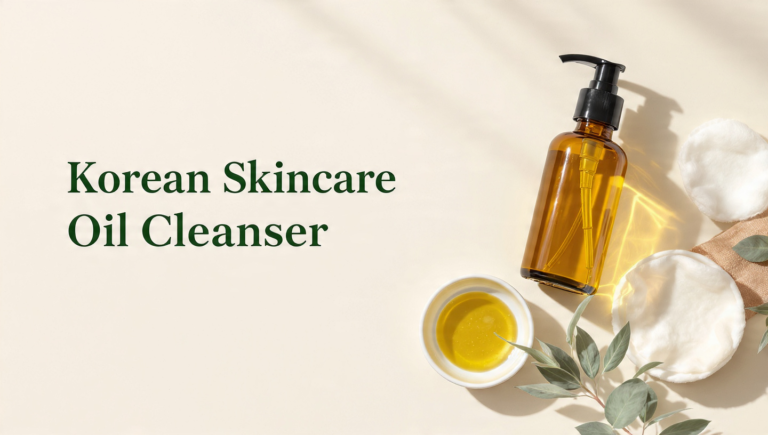
Korean oil cleansers are liquid or balm formulations built on a base of synthetic ester oils, lightweight triglycerides, and a carefully selected emulsifier that ensures complete rinse-off without residue, rather than being simply “oil in a bottle.”
The base oil selection is the most misunderstood part. A Korean oil cleanser does not use heavy, high-oleic-acid plant oils like pure olive oil or coconut oil as the primary cleansing medium. These oils can be comedogenic on acne-prone skin and are difficult to emulsify completely. Instead, Korean formulation labs rely on esters and medium-chain triglycerides. Ethylhexyl palmitate is a dry, fast-spreading ester that dissolves makeup and sunscreen without leaving a greasy film. Caprylic/capric triglyceride, derived from coconut oil but chemically distinct, offers a lightweight slip that glides over the skin without clogging pores. Isopropyl myristate appears frequently but should be noted: it has a comedogenic potential that makes it less suitable for people with active acne.
The emulsifier is the most critical ingredient because it determines whether the oil rinses clean or leaves a stubborn film that can trap debris against the skin. PEG-20 glyceryl triisostearate is a standard, highly effective emulsifier that creates a milky, complete rinse-off when water is added. Polyglyceryl-based emulsifiers, such as polyglyceryl-6 dicaprate, are newer, PEG-free alternatives for those who prefer to avoid ethoxylated ingredients. If your oil cleanser leaves a film or causes blurry vision after rinsing, the emulsifier is the likely culprit, not the oil itself.
Cleansing balms are solid-at-room-temperature versions of the same concept. They use similar ester and triglyceride oils but incorporate a solidifying agent like polyethylene or a natural wax. Balms are easier to travel with and provide a luxurious massage slip, but their ingredient list requires the same scrutiny. A balm with a high concentration of shea butter as a primary ingredient will not rinse as cleanly as one built on ethylhexyl palmitate with a proper emulsifier.
Key Takeaway: A proper Korean oil cleanser is an engineered solvent system, not a single plant oil. The emulsifier determines whether it rinses cleanly.
Korean Water Based Cleanser Formulation
A Korean water-based cleanser is a gel, foam, or milk formula that uses amino acid surfactants at a pH of 4.5 to 5.5 to remove water-soluble debris, sweat, and any remaining oil cleanser residue without altering the skin’s surface pH.
The surfactant system is the engine. Unlike sulfates, which have a small, charged head group that penetrates skin lipids aggressively, amino acid surfactants have a bulkier molecular structure. Sodium cocoyl glycinate, made from coconut fatty acid and the amino acid glycine, produces a creamy, dense foam that cleans the surface without inserting itself into the intercellular lipid matrix of the stratum corneum. Potassium cocoyl glycinate functions similarly but with slightly higher foam volume. Sodium lauroyl glutamate, derived from glutamic acid, is another extremely mild option often found in milk and gel cleansers designed for reactive skin. These surfactants clean. They do not strip.
The formulation thickeners and foam stabilizers matter too. Many Korean water-based cleansers use naturally derived polymers like hydroxypropyl starch phosphate or cellulose gum to create body and slip, rather than relying on high surfactant concentrations. The percentage of active surfactant in a Korean gel cleanser often runs between 8 and 15 percent, compared to 20 to 30 percent in a typical Western foaming wash. This lower surfactant load, combined with a higher glycerin and humectant percentage, is why the product feels less stripping.
A quick field test applies. Squirt a small amount of your cleanser into your palm, lather it, and note the lather texture. Big, airy, fast-dissipating bubbles suggest a sulfate-heavy formula. Tight, creamy, shaving-cream-like foam that holds its structure points to an amino acid surfactant base. The pH test, using a simple pH strip, confirms it. If it reads above 7, it is not a true Korean-formulation water-based cleanser, regardless of what the front label says.
Key Takeaway: Verify the surfactant type on the INCI list and check the pH with a strip. Amino acid surfactants like sodium cocoyl glycinate plus a pH of 5.5 equals a genuine Korean water-based cleanser formulation.
Foaming Cleanser vs Gel Cleanser vs Milk Cleanser
Korean cleansers come in three main water-based textures, and the difference between a foam, a gel, and a milk is not just about the feel. It signals surfactant concentration, lipid content, and intended skin type.
A foam cleanser in the Korean category is usually a cream or paste that lathers into a dense, fine-textured foam. It has a moderate surfactant concentration, often sodium cocoyl glycinate combined with a small amount of potassium hydroxide to drive lather volume. Foam cleansers remove more surface oil than gels and are best suited for combination skin or a normal skin type that tolerates thorough cleansing. A gel cleanser has a lighter, water-jelly texture with a slightly lower surfactant load. It rinses faster, leaves less emollience behind, and works well for oily skin or humid summer mornings. Many gel cleansers incorporate a mild AHA or BHA at a low percentage for daily surface exfoliation, though these versions should be used only once daily.
A milk cleanser is the gentlest category. It has the lowest surfactant concentration of the three, sometimes as low as 3 to 5 percent total surfactant, and includes a higher proportion of emollient lipids like squalane or caprylic/capric triglyceride suspended in the water phase. Milk cleansers do not foam. They leave a perceptible layer of conditioning agents on the skin after rinsing, which is exactly what a dry, compromised, or retinoid-treated barrier needs. Think of milk cleansers as cleansing lotions that tilt the ratio heavily toward skin conditioning over degreasing.
Here is a direct comparison:
| Cleanser Texture | Surfactant Load | Lipid Content | Best For |
|---|---|---|---|
| Foam Cleanser | Moderate (8 to 15%) | Low | Normal, combination, evening cleanse |
| Gel Cleanser | Low to Moderate (5 to 12%) | Very low | Oily, acne-prone, humid climates |
| Milk Cleanser | Very low (3 to 5%) | Moderate | Dry, dehydrated, barrier-compromised, tretinoin users |
Matching the texture to your current skin state, not your aspirational skin type, is the formulation-savvy way to choose.
Key Takeaway: Foam for thorough evening cleansing, gel for oil control, milk for barrier protection. Pick based on what your skin is doing right now, not what you wish it would do.
Key Korean Cleanser Ingredients to Look For
The efficacy of a korean skincare cleanser is built on specific ingredient categories that appear on the INCI list, and knowing which ones deliver barrier support versus which ones just sound good is the difference between smart selection and marketing capture.
The first category is the surfactant backbone. Look for at least one of these in the first five to seven ingredients: sodium cocoyl glycinate, potassium cocoyl glycinate, sodium lauroyl glutamate, or sodium methyl cocoyl taurate. These signal a true amino-acid-surfactant formula. If you see sodium lauryl sulfate or sodium laureth sulfate in the top five, the product is not formulated to Korean low-pH standards, regardless of the brand name.
The second category is humectants. Glycerin, typically listed as the second or third ingredient after water, is the gold standard. It pulls water into the stratum corneum during the wash. Sodium hyaluronate, the smaller-molecular-weight salt form of hyaluronic acid, provides additional surface hydration. Panthenol, also called pro-vitamin B5, is a humectant with proven wound-healing and anti-irritant properties. A 2021 study in the Journal of Cosmetic Dermatology confirmed panthenol’s ability to reduce transepidermal water loss and improve stratum corneum hydration when applied in rinse-off and leave-on products.
The third category is the soothing and barrier-support complex. Centella asiatica extract, madecassoside, and asiaticoside are the triterpene compounds from gotu kola that appear extensively in Korean formulations. They modulate inflammatory cytokines in the skin and support microcirculation. Allantoin is a gentle skin-soothing agent. Ceramide NP, when present, deposits a small amount of barrier-identical lipid onto the skin surface even in a rinse-off format. These ingredients are not performing active treatment during a 60-second wash, but they form a mild anti-irritant buffer that reduces the potential for cleanser-induced tightness.
Key Takeaway: Scan the first seven ingredients for an amino acid surfactant, glycerin as a top-three ingredient, and at least one barrier-supporting compound like panthenol or centella.
How to Read a Korean Cleanser Ingredient Label
Reading a Korean cleanser ingredient label requires focusing on the first five to seven INCI names, because these represent roughly 80 percent of the formula. The surfactant type, pH indicators, humectant level, and potential irritants all announce themselves in this section.
Step one is surfactant identification. If the cleanser uses an amino acid surfactant, you will see a name structured as “sodium” or “potassium” plus “cocoyl” or “lauroyl” plus “glycinate,” “glutamate,” or “taurate” within the first five ingredients. If you see sodium lauryl sulfate, sodium laureth sulfate, or ammonium lauryl sulfate in that same position, the product is a sulfate-based cleanser. If potassium hydroxide appears as a top-three ingredient alongside fatty acids like stearic acid or myristic acid, the product is a saponified soap cleanser. Soap cleansers have a high pH, typically 8 to 10, regardless of any “moisturizing” or “gentle” claims on the front label.
Step two is pH verification. The ingredient list alone cannot tell you the final pH, but it can flag red flags. Potassium hydroxide as a main ingredient means high pH. Citric acid or sodium citrate appearing near the middle or end of the list often indicates a pH adjuster was used to bring the formula down into the target range. These are good signs. If the product label states the pH directly, trust the number over the marketing language. A product can call itself “low pH” and still be at 6.5. The target is 4.5 to 5.5.
Step three is screening for potential irritants. Fragrance or parfum can appear, and many Korean cleansers do contain them. If you have reactive skin, rosacea, or active perioral dermatitis, fragrance is a known trigger. Essential oils like bergamot oil, lavender oil, and tea tree oil carry documented sensitization risks with repeated exposure. A 2020 review in the Journal of the American Academy of Dermatology identified fragrance as one of the most common causes of allergic contact dermatitis from personal care products.
Key Takeaway: Amino acid surfactant in the first five, potassium hydroxide absent from the top three, and fragrance-free if your skin reacts to anything. Those three checks filter out 90 percent of products that do not match the Korean cleansing philosophy.
Best Korean Cleanser for Sensitive and Reactive Skin
The best Korean cleanser for sensitive and reactive skin is a fragrance-free, amino-acid-surfactant milk or low-foam gel that omits essential oils, includes at least two barrier-supporting humectants, and has a verified pH of 5.0 to 5.5.
Sensitive skin is defined by neurosensory hyperreactivity. Stinging, burning, and tightness occur in response to products that would not bother a normal barrier. This skin state is not a fixed condition for many people. It can be induced by over-exfoliation, retinoid initiation, seasonal dryness, or an allergic contact dermatitis that has not fully resolved. A cleanser for this skin must do the absolute minimum mechanically and chemically while providing a humectant buffer during the wash.
What to look for on the label: glycerin and panthenol as top-five ingredients, a single mild surfactant like sodium cocoyl glycinate or sodium lauroyl glutamate, and the complete absence of fragrance, essential oils, or plant extracts with known irritancy (witch hazel, citrus extracts, menthol). Centella asiatica extract and madecassoside are generally well-tolerated and provide anti-inflammatory support. A milk cleanser texture, with its lower surfactant load and built-in emollient phase, is the safer starting point over a foam.
What to avoid: any cleanser that produces a large, airy lather. That foam volume signals high surfactant concentration or a sulfate base. Avoid anything with alcohol denat high on the list. Avoid cleansers that leave a cooling or tingling sensation because that sensation is mild neurogenic irritation, not efficacy. If your skin feels immediately “calmed” by a product but the feeling lasts only minutes, you are experiencing a counter-irritant effect from ingredients like menthol, not genuine barrier support.
Key Takeaway: Fragrance-free, amino acid surfactant only, milk or low-foam texture, and verified at pH 5.5. If it tingles, even slightly, it belongs in the bin.
Korean Cleanser for Acne Prone Skin
A Korean cleanser for acne-prone skin needs to remove excess sebum and debris thoroughly while avoiding the pH disruption and lipid stripping that trigger compensatory oil overproduction and barrier-driven inflammation.
The central myth in acne skincare is that aggressive cleansing dries out pimples. The opposite is true. High-pH, sulfate-based cleansers strip the lipid barrier, which the sebaceous glands then attempt to compensate for by producing more sebum. This compensatory cycle worsens the very oiliness the person is trying to control. A 2019 clinical study in the Journal of the American Academy of Dermatology demonstrated that low-pH skincare, including cleansers, reduced inflammatory acne lesion counts more effectively than a pH-neutral regimen, in part by maintaining the skin’s antimicrobial peptide function.
The ideal texture for acne-prone skin is a gel or a light foam cleanser with an amino acid surfactant backbone. The formula should rinse completely clean without leaving a conditioning film. Salicylic acid, a beta-hydroxy acid, is a beneficial addition at a concentration of 0.5 to 1.0 percent because it is lipid-soluble and can penetrate into the pore lining to exfoliate inside the follicle. However, a salicylic acid cleanser should not be used twice daily. Alternate it with a plain, non-active cleanser to avoid over-exfoliating the skin around the breakouts.
Niacinamide at 2 to 4 percent is another valuable addition. It regulates sebum production over time and has anti-inflammatory properties that reduce the redness associated with active acne lesions. Tea tree oil, while commonly marketed for acne, is a known sensitizer and should not be used on already inflamed, barrier-compromised acneic skin without a patch test and a dermatologist’s guidance.
Key Takeaway: Low-pH gel cleanser, optional salicylic acid once daily only, niacinamide as a sebum-regulating bonus. Never strip the barrier to fight acne. That strategy always backfires.
Korean Cleanser for Dry and Dehydrated Skin
Dry skin lacks oil, and dehydrated skin lacks water. A Korean cleanser for either state must be a milk or low-foam cream formula with a high humectant-to-surfactant ratio that cleans without removing the skin’s already-scarce natural lipids.
Dry skin is a skin type characterized by insufficient sebaceous gland output. The stratum corneum has fewer lipids to hold water in place, making the barrier more permeable and prone to flaking. Dehydrated skin is a temporary condition where water content in the outer epidermis drops due to environmental exposure, over-exfoliation, or inadequate humectant use. Both conditions respond poorly to foam. The air bubbles in a foam lather increase the surface area of surfactant contacting the skin, which increases lipid removal from a barrier that does not have lipids to spare.
The formulation target is a milk cleanser. These products have a lotion-like consistency, low surfactant concentration, and a significant emollient phase of squalane, jojoba oil, or caprylic/capric triglyceride. They deposit a thin, protective lipid film on the skin during rinsing that mimics the barrier’s own sebaceous output. Ceramide NP at 0.1 to 0.5 percent, combined with cholesterol and free fatty acids in a 3:1:1 molar ratio, is the gold standard for barrier repair. While a cleanser cannot deliver ceramides as effectively as a leave-on moisturizer, the rinse-off deposition can still measurably improve barrier function over repeated use.
Sodium hyaluronate and glycerin are non-negotiable for the humectant phase. They pull water into the outer skin layers during the wash. The water temperature matters here more than anywhere. Lukewarm only. Hot water dissolves what little sebum dry skin produces and denatures the structural proteins in the stratum corneum. If your bathroom mirror is fully fogged after your shower, the water is too hot for your skin.
Key Takeaway: Milk cleanser only, ceramide NP on the label, glycerin in the top three, and lukewarm water. Dry skin does not forgive hot water or foam.
Korean Cleanser for Rosacea and Redness
A Korean cleanser for rosacea-prone skin must be a fragrance-free, sulfate-free, low-pH gel or milk that cleans without triggering the neurovascular cascade that produces flushing, stinging, and visible redness.
Rosacea is a chronic inflammatory skin condition involving an exaggerated neurovascular response. Triggers include heat, alcohol, spicy food, and topical products that stimulate the TRPV1 and TRPA1 receptors in skin nerve endings. Many cleanser ingredients activate these receptors directly. Menthol, camphor, alcohol denat, and high concentrations of fragrance all trigger the nerve response that dilates facial blood vessels and produces the characteristic rosacea flush. Sodium lauryl sulfate has been documented to cause contact irritation that mimics and exacerbates rosacea flares.
The formulation requirements are strict. Sodium cocoyl glycinate or sodium lauroyl glutamate as the sole surfactant. Zero fragrance. Zero essential oils including lavender and tea tree, both of which are common sensitizers in this population. Centella asiatica extract and madecassoside are beneficial because they suppress the pro-inflammatory cytokines that drive the papules and pustules of type 2 rosacea. Azelaic acid at 10 to 15 percent is a prescription-level treatment, but a cleanser cannot deliver it at therapeutic levels. Do not buy a rosacea cleanser based on an active ingredient that requires leave-on contact time.
The water temperature rule is stricter for rosacea. Cool to lukewarm only. Warm water alone can trigger a flush. Pat the skin dry with a clean, soft cloth. Do not rub. Rubbing is mechanical stimulation of those same hypersensitive nerve endings. Apply your prescription topical (metronidazole, azelaic acid, ivermectin) to fully dry skin, not damp skin, because damp skin increases penetration and can amplify stinging.
Key Takeaway: Fragrance-free, amino acid surfactant only, cool water only, pat dry. A rosacea cleanser’s job is to be invisible to your skin’s nerve endings.
Korean Cleanser for Skin on Tretinoin or Retinoids
Skin treated with tretinoin or over-the-counter retinoids requires a Korean cleanser that is the gentlest formulation available: a non-foaming, fragrance-free milk or cream cleanser with no active exfoliants, because the retinoid itself is already driving accelerated cell turnover.
Tretinoin and retinaldehyde thin the stratum corneum temporarily during the initial retinization period, which typically lasts four to eight weeks. The barrier is more permeable, more prone to water loss, and significantly more reactive to surfactants. A cleanser that felt normal before starting a retinoid can suddenly sting and leave the skin red and flaking. This is not a sign that the retinoid is not working. It is a sign that the cleanser is too aggressive for the current state of the barrier.
The safest formulation is a milk cleanser with glycerin, panthenol, and caprylic/capric triglyceride or squalane as the primary conditioning agents. The surfactant load should be as low as possible, around 3 to 5 percent total surfactant. No salicylic acid, no glycolic acid, no physical scrub particles. The retinoid is already doing all the exfoliation your skin can handle. Adding even a low-percentage exfoliant in a cleanser increases the risk of retinoid dermatitis, which presents as angry, tight, shiny red skin that stings with every product applied.
Morning cleansing may not be necessary at all. A lukewarm water rinse is often sufficient to remove overnight sweat and light emollient residue. If you do use a cleanser in the morning, it should be the gentlest one in your rotation. The evening cleanse is the critical one because it removes the day’s sunscreen and environmental particulate. Double cleansing with an oil cleanser can continue during retinoid use, but only if the oil cleanser rinses completely clean and does not leave a film. A balm with a robust emulsifier like PEG-20 glyceryl triisostearate is a safer bet than a straight oil.
Key Takeaway: Non-foaming milk cleanser only, zero exfoliants in the cleanser, and a morning water rinse if your skin tolerates it. The retinoid is doing the work. The cleanser’s only job is to not get in the way.
How to Choose a Korean Cleanser for Your Skin Type
Choosing a korean skincare cleanser is a systematic process of matching your current barrier state, not your aspirational skin identity, to the correct surfactant system, pH, and texture. The selection method removes brand loyalty from the equation entirely.
Step one is an honest barrier assessment. Wash your face with your current cleanser and wait three minutes without applying any product. What does your skin feel like? If it feels tight, papery, or stiff when you move your facial muscles, your current cleanser is stripping the barrier. You need a milk or low-foam formula immediately. If it feels comfortable and supple, your current surfactant level and pH are in the right zone. If it feels oily or slick, you may benefit from a slightly more thorough foam or gel cleanser, but never a sulfate-based one.
Step two is identifying your non-negotiable ingredient exclusions based on your skin’s known triggers. If you have rosacea, fragrance and essential oils are out. If you have fungal acne or seborrheic dermatitis, you need to scan the INCI list for oils and esters that feed Malassezia yeast, including ethylhexyl palmitate and isopropyl myristate, which are otherwise excellent cleansing oils. This step often removes popular products from consideration.
Step three is texture selection. Dry, retinized, winter, or sensitive: milk cleanser. Normal, combination: foam cleanser. Oily, humid summer, acne-prone: gel cleanser. This can shift seasonally. Your skin in January and your skin in July may require different textures. You are allowed to own two cleansers and rotate them.
| Barrier State | Cleanser Texture | Key Ingredients | Avoid |
|---|---|---|---|
| Tight, dry, flaking | Milk | Glycerin, ceramide NP, squalane, panthenol | Foam, fragrance, exfoliating acids |
| Comfortable, balanced | Low-pH foam | Sodium cocoyl glycinate, glycerin, centella | Sulfates, high pH soaps |
| Oily, congested | Gel | Sodium lauroyl glutamate, niacinamide, salicylic acid (optional) | Stripping sulfates, alcohol denat |
Key Takeaway: Match the cleanser to the skin you have today, not the skin you wish you had. Check the three-minute feel test. Read the INCI list for your known triggers.
Common Mistakes with Korean Cleansers
The most common mistakes when using a Korean cleanser involve over-cleansing from misinterpretation of the double cleansing method, using texture incorrectly for the skin’s current barrier state, and failing to verify product pH despite relying on the “Korean” label as a guarantee of gentle formulation.
Mistake one is double cleansing in the morning. The double cleanse is an evening-only protocol. Oil, sunscreen, and environmental particulate accumulate during the day. At night, your skin produces a small amount of sebum. That is it. Morning double cleansing strips the barrier, which then spends the day exposed to UV, pollution, and temperature fluctuations without its full protective lipid layer intact. A single water-based cleanser or a plain water rinse is all most skin needs in the morning.
Mistake two is assuming all foam is bad or all foam is good. Amino acid surfactants produce foam. It is a creamier, denser, lower-volume foam, but it is foam. The presence of foam does not automatically equal sulfates. Conversely, a gel cleanser that does not foam can still contain a sulfate surfactant if you see SLS or SLES on the label. Foam is a physical property, not a surfactant classification. Read the INCI list to know which you are using.
Mistake three is not adjusting the cleanser when starting a new active. When someone begins tretinoin, a retinoid, benzoyl peroxide, or a strong AHA/BHA regimen, their barrier is in a state of adaptive repair. The cleanser that worked before the active may now be too aggressive. This is not a failure of the active. It is a predictable shift in barrier tolerance, and the cleanser needs to scale down in intensity temporarily. Keep a milk cleanser on hand for retinization periods.
Key Takeaway: Double cleanse only at night, read the surfactant type rather than judging by foam, and match the cleanser to your barrier state during active treatment initiations.
Frequently Asked Questions About Korean Skincare Cleansers
What is special about Korean facial cleansers?
Korean facial cleansers are formulated with a primary focus on preserving the skin’s acid mantle by using low-pH (4.5 to 5.5) amino acid surfactants like sodium cocoyl glycinate instead of high-pH sulfate surfactants like sodium lauryl sulfate. This formulation choice keeps the barrier’s lipid-processing enzymes functional during and after washing. The result is a cleanser that removes debris without creating the tight, stripped feeling that signals stratum corneum damage.
How do I know if my Korean cleanser is low pH?
The most reliable method is to test the cleanser with a pH test strip, available at most pharmacies, and look for a result between 4.5 and 5.5. On the ingredient label, check that potassium hydroxide does not appear in the first five ingredients, as this indicates a saponified soap base with a high pH. If the brand publishes the pH on the packaging, that number is generally reliable.
Can I just use one Korean cleanser instead of double cleansing?
Yes, you can use a single water-based Korean cleanser, especially in the morning or if you do not wear water-resistant sunscreen or heavy makeup. A single low-pH amino acid cleanser is sufficient for removing light sebum and environmental residue. Double cleansing is specifically designed for the evening removal of tenacious sunscreen films, silicones, and long-wear makeup that a water-based cleanser cannot fully dissolve alone.
What is the best Korean cleanser for beginners?
The best Korean cleanser for a beginner is a fragrance-free, low-pH foam or gel cleanser with an amino acid surfactant like sodium cocoyl glycinate, verified at pH 5.0 to 5.5, and available at an accessible price. A beginner should start with a single evening water-based cleanse before introducing an oil cleanser for the double cleansing method. This allows the skin to adjust and the user to learn their skin’s response to the new formulation philosophy without introducing multiple new products simultaneously.
Are Korean cleansers good for acne?
Low-pH Korean gel and foam cleansers are effective for acne-prone skin because they remove excess sebum without the pH disruption that triggers compensatory oil overproduction and barrier inflammation. Some formulations include 0.5 to 1.0 percent salicylic acid, a beta-hydroxy acid that penetrates the pore lining to exfoliate inside the follicle. A non-active Korean cleanser should be alternated with any salicylic acid version to avoid over-exfoliation.
Can I use a Korean cleanser with tretinoin?
A non-foaming, fragrance-free Korean milk cleanser is one of the safest cleansing options for skin on tretinoin because its low surfactant concentration and built-in emollient phase minimize barrier disruption during the retinization period. Foam cleansers, even low-pH amino acid ones, may be too stripping during the first four to eight weeks of tretinoin use. A morning water rinse and an evening milk cleanser is the gentlest protocol.
Your Cleanser Is the Foundation
Everything you apply after cleansing sits on the surface your cleanser created. If that surface is tight, stripped, and depleted of its protective lipids, no serum or moisturizer can fully compensate. The formulation logic of Korean cleansers, low-pH amino acid surfactants, barrier-supporting humectants, and clean-rinsing emulsification systems, exists to ensure that the foundation stays intact.
The one practical step to take from this guide is the three-minute bare-skin test. Wash with your current cleanser tonight. Set a timer. Wait. If your skin feels tight, papery, or tight when you smile, it is time to switch to a verified low-pH, amino-acid-surfactant formula. Your barrier will tell you exactly what it needs.
The formulation knowledge you now have lets you walk into any store, read any INCI list, and identify whether a product delivers on the Korean cleanser philosophy or just borrows the marketing language. That skill will serve your skin far longer than any single product recommendation.