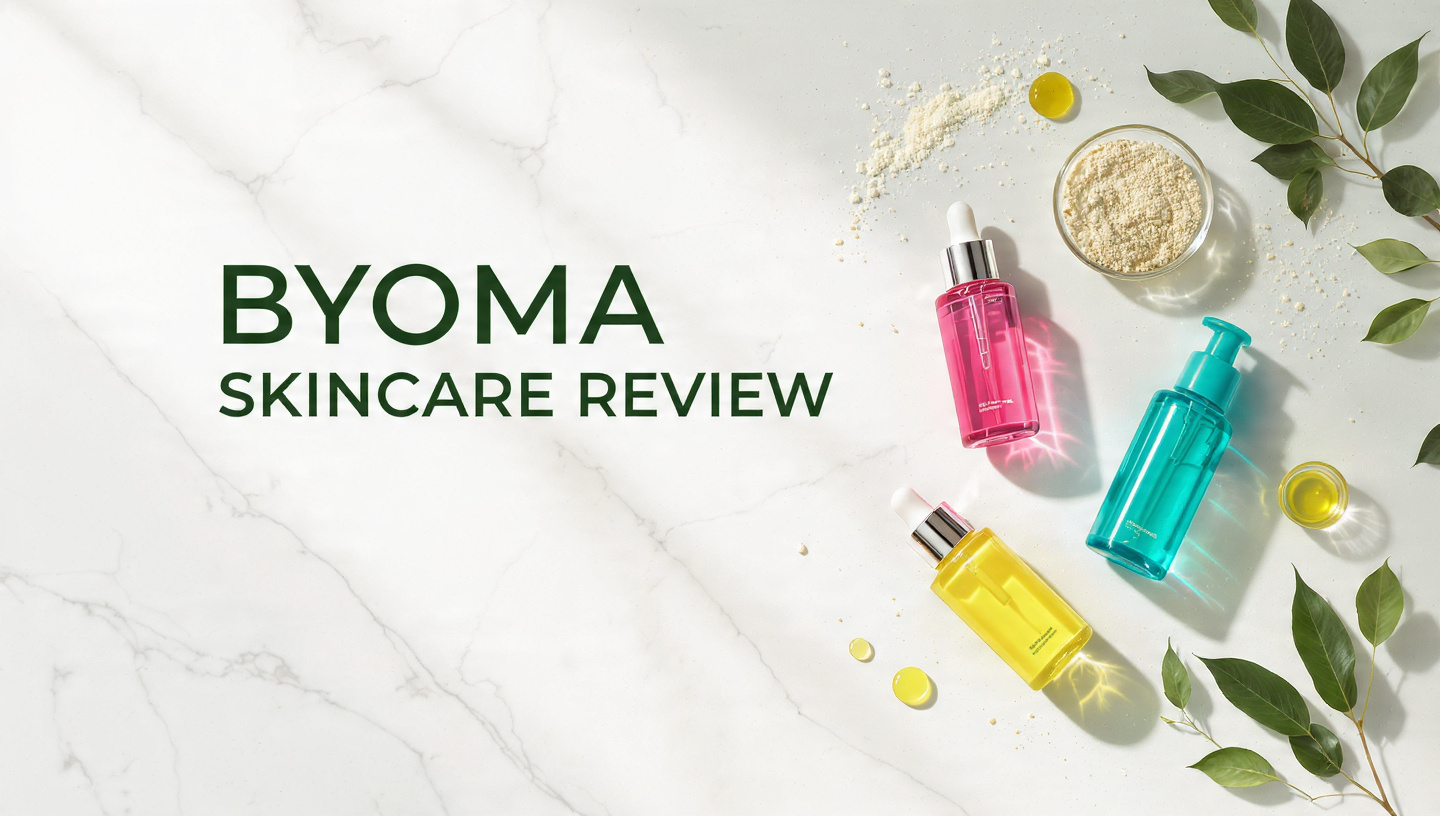
Byoma Skincare Review 2026: Honest Barrier Analysis
Byoma skincare review: this is a barrier-focused brand built around a triple ceramide complex, niacinamide, and clean, fragrance-free formulations that offer genuine value for people with compromised or sensitive skin, though not every product earns its place in a routine. The brand delivers scientifically credible barrier support at a mid-range price point, but the effectiveness of individual products varies widely depending on your specific skin type, existing routine, and whether you actually need additional ceramide supplementation.
The American Academy of Dermatology identifies skin barrier dysfunction as a primary contributor to dryness, irritation, sensitivity, and accelerated transepidermal water loss. A 2022 study published in the Journal of Investigative Dermatology confirmed that ceramide depletion in the stratum corneum correlates directly with increased TEWL and reduced barrier integrity. Byoma’s formulation philosophy, which centers on ceramide replenishment, aligns with established dermatological science, but the real question is whether the execution matches the intent.
Here’s what you’ll learn in this Byoma skincare review: exactly which ceramide types the brand uses and whether they matter, a product-by-product breakdown with specific ingredient analysis, who should buy Byoma and who should skip it, how the brand compares to CeraVe in both price and formulation quality, and the side effects and compatibility issues nobody talks about. You’ll walk away knowing precisely which Byoma products deserve a spot in your routine and which ones are redundant.
Byoma Skincare Review
Byoma is a British skincare brand launched in 2021 that positions itself as an accessible, barrier-first line sold primarily through Target in the United States, with products ranging from $13 to $24. The brand’s entire identity rests on its Tri-Ceramide Complex, which combines three specific ceramide types with plant-derived cholesterol and fatty acids to support the stratum corneum’s lipid matrix. Byoma differentiates itself through transparent ingredient lists, fragrance-free formulations, and a distinctive bright packaging design that appeals to younger skincare consumers.
The brand’s core claim is that consistent use of its products improves skin barrier function, reduces visible redness, and decreases moisture loss. According to Byoma’s own consumer perception studies, which are not independently published or peer-reviewed, users report improved skin smoothness and reduced tightness after four weeks of use. Independent clinical validation of these specific formulations remains absent from the published dermatological literature, which means the brand’s efficacy claims rest on ingredient science rather than product-specific trials.
What makes Byoma genuinely interesting from a formulation perspective is the inclusion of beta-sitosterol, a plant-derived sterol that functions similarly to cholesterol in the skin barrier. The Journal of Cosmetic Dermatology published a 2021 review noting that cholesterol, ceramides, and fatty acids must exist in a specific molar ratio for optimal barrier repair. Byoma’s inclusion of all three lipid classes in its Tri-Ceramide Complex suggests a formulation team that understands the basic science, even if the exact ratios remain proprietary.
Quick Tip:
- Look for the words Ceramide NP, Ceramide AP, and Ceramide EOP on any Byoma ingredient list
- These are the same ceramide types found in CeraVe and other clinically validated barrier repair products
- The difference between Byoma and competitors comes down to delivery system, supporting ingredients, and price per ounce
Is Byoma Skincare Good
Yes, Byoma skincare is good for people with dry, sensitive, or barrier-compromised skin who want effective ceramide supplementation, niacinamide benefits, and fragrance-free formulations at a reasonable price point. The brand is less compelling for people with very oily skin, those seeking high-strength actives, or anyone who already uses a ceramide-rich moisturizer like CeraVe, since the added benefit may be minimal.
The genuine strength of Byoma lies in its formulation consistency. Every product in the line contains the Tri-Ceramide Complex, which means even the cleanser delivers some barrier-relevant lipids. This is unusual. Most brands reserve ceramides for moisturizers and treat cleansers as purely functional. A 2023 review in the International Journal of Cosmetic Science noted that even brief contact with ceramide-containing cleansers can reduce the barrier disruption typically caused by surfactants during cleansing.
However, Byoma is not a treatment brand. It does not contain high concentrations of active ingredients like retinoids, alpha-hydroxy acids beyond mild polyhydroxy acids, or prescription-strength compounds. If your primary skin concerns are deep wrinkles, established hyperpigmentation, or moderate to severe acne, Byoma will support your barrier but will not address these concerns directly. Think of Byoma as the supportive cast in a skincare routine, not the lead actor.
The value equation also depends on your existing routine. If you already use a dermatologist-recommended moisturizer containing ceramides, adding Byoma provides redundancy. If you are new to barrier repair or your current moisturizer lacks ceramides entirely, Byoma offers a legitimate upgrade at a fair price.
Byoma Skincare Ingredients
Byoma skincare ingredients center on the Tri-Ceramide Complex, which includes Ceramide NP, Ceramide AP, and Ceramide EOP, combined with niacinamide, glycerin, squalane, and beta-sitosterol in most product formulations. The brand also incorporates polyhydroxy acids like gluconolactone in its exfoliating products, a gentler alternative to alpha-hydroxy acids that is better tolerated by sensitive skin. Understanding what these ingredients actually do requires looking past the marketing language and examining the cosmetic chemistry.
Ceramide NP (Ceramide 3) is the most abundant ceramide in healthy skin and plays the primary role in maintaining the lipid barrier’s structural integrity. According to research published in the Journal of Lipid Research, Ceramide NP depletion is strongly associated with atopic dermatitis, aged skin, and winter-related dryness. Ceramide AP (Ceramide 6 II) contributes to desquamation regulation, helping corneocytes shed properly without barrier disruption. Ceramide EOP (Ceramide 1) is the longest-chain ceramide and serves as a critical linoleate-linked lipid that anchors the lamellar structure.
Niacinamide appears across the Byoma line at varying concentrations, with the dedicated serum containing 10%. This B vitamin derivative increases ceramide synthesis in keratinocytes, reduces transepidermal water loss, and demonstrates anti-inflammatory properties. A 2020 randomized controlled trial published in the British Journal of Dermatology confirmed that topical niacinamide at 5% significantly improved barrier function in subjects with rosacea-prone skin after eight weeks.
Glycerin functions as a humectant, drawing water from the dermis into the stratum corneum and binding atmospheric moisture. Squalane serves as an emollient that smooths the skin surface and provides a lightweight, non-comedogenic occlusive layer. Beta-sitosterol is a phytosterol that substitutes for cholesterol in the lipid matrix, which is particularly important because cholesterol is often omitted from barrier repair formulations despite being essential for proper lamellar structure.
| Ingredient | INCI Name | Primary Function | Skin Type Benefit |
|---|---|---|---|
| Ceramide NP | Ceramide 3 | Barrier lipid replacement | All skin types, especially dry |
| Ceramide AP | Ceramide 6 II | Desquamation regulation | Dry, rough, flaky skin |
| Ceramide EOP | Ceramide 1 | Lamellar structure anchor | Barrier-compromised skin |
| Niacinamide | Nicotinamide | Ceramide synthesis booster, anti-inflammatory | Sensitive, redness-prone skin |
| Glycerin | Glycerol | Humectant, water binding | Dehydrated skin |
| Squalane | Squalane | Emollient, light occlusion | All skin types, oily included |
| Beta-sitosterol | Phytosterol | Cholesterol analog | Barrier repair |
Byoma Tri-Ceramide Complex
Byoma Tri-Ceramide Complex is a proprietary blend of Ceramide NP, Ceramide AP, and Ceramide EOP combined with beta-sitosterol and fatty acids, designed to replicate the skin’s natural lipid ratio for optimal barrier repair. The name is accurate marketing. The complex does contain three distinct ceramide types, each with documented barrier function, unlike some brands that label a single ceramide as a complex. This is the foundation upon which the entire Byoma line is built.
The science behind triple ceramide complexes is well-established. According to a landmark 2014 study published in the Journal of Investigative Dermatology, the molar ratio of ceramides to cholesterol to fatty acids in healthy stratum corneum is approximately 1:1:1, with specific ceramide species playing distinct roles in maintaining the lamellar bilayer structure. Byoma’s inclusion of all three major ceramide classes plus a cholesterol analog addresses the full complement of lipid classes required for barrier restoration.
What Byoma does not disclose is the concentration of each ceramide. Cosmetic chemists generally consider ceramide concentrations between 0.05% and 0.1% to be effective for barrier support when properly formulated. Above this range, additional ceramide provides no further benefit due to saturation of available lipid binding sites. Below 0.01%, efficacy drops substantially. Byoma’s ingredient lists place the Tri-Ceramide Complex relatively high, but without percentage disclosure, consumers cannot verify the concentration independently.
The delivery system matters as much as the ingredients. Ceramides are lipophilic molecules that require lamellar or liposomal encapsulation to penetrate effectively. A 2022 review in the International Journal of Cosmetic Science emphasized that ceramide efficacy depends more on the physical structure of the formulation than on raw concentration. Byoma’s use of multiple lipid classes in a single complex suggests a formulation designed for stability and delivery, but independent verification of penetration depth remains unpublished.
Key Finding: The Journal of Investigative Dermatology reports that topical ceramide application with the correct cholesterol and fatty acid co-ingredients restores barrier function significantly faster than ceramides alone, confirming the logic behind Byoma’s multi-lipid approach.
Key Takeaway: Byoma’s Tri-Ceramide Complex contains the right ceramide types and co-ingredients to genuinely support barrier repair, but without published concentration data or independent clinical trials, the brand’s specific efficacy claims remain unverified beyond the established science of ceramide function.
Byoma Moisturizer Review
Byoma moisturizer review: the Byoma Moisturizing Rich Cream is a ceramide-rich, fragrance-free moisturizer that delivers genuine barrier support and hydration for dry to normal skin types, though its richer texture may feel heavy on oily or combination skin. The product retails for approximately $18 for 50ml, placing it in the affordable mid-range category. The formulation is thoughtfully constructed around the Tri-Ceramide Complex with additional glycerin, squalane, and shea butter for emollience and occlusion.
The Rich Cream’s texture is notably thicker than Byoma’s gel moisturizer option. This thickness comes from shea butter and cetearyl alcohol, both of which function as emollients that smooth the skin surface and reduce visible flaking. For people with dry or mature skin, this richness translates to immediate comfort and lasting occlusion. For people with oily or acne-prone skin, the same ingredients may create a heavy feel and potentially contribute to congestion, though neither ingredient is considered comedogenic by current standards.
What makes this moisturizer genuinely useful is the combination of humectants and occlusives in a single step. Glycerin and sodium hyaluronate draw water into the stratum corneum while squalane and shea butter trap it there. This dual-action approach reduces transepidermal water loss more effectively than humectants alone, which is why the American Academy of Dermatology recommends layering humectant and occlusive products for people with chronic dryness.
People using prescription retinoids like tretinoin will find this moisturizer useful as a buffer or as a final step after applying actives. The ceramide content helps offset the barrier disruption that retinoids cause during the initial adjustment period. Apply the Rich Cream after tretinoin has fully absorbed, typically 15 to 20 minutes after application, to minimize irritation while preserving the active ingredient’s efficacy.
Byoma Serum Review
Byoma serum review: the brand’s serums are lightweight, ceramide-infused formulas that layer well under moisturizer and provide targeted barrier support, but the line lacks a high-strength treatment serum for people seeking active-driven results. Byoma currently offers three serums: the Hydrating Serum, the Brightening Serum, and the Clarifying Serum. Each contains the Tri-Ceramide Complex as a base, with additional actives tailored to specific concerns.
The Hydrating Serum pairs ceramides with sodium hyaluronate, glycerin, and squalane in a water-based formula designed for layering. Sodium hyaluronate is the salt form of hyaluronic acid with a lower molecular weight that penetrates the stratum corneum more effectively than high-molecular-weight hyaluronic acid. The serum’s texture is gel-like and absorbs quickly, making it suitable for all skin types including oily skin.
The Brightening Serum incorporates ascorbic acid, the INCI name for vitamin C, in a concentration that Byoma does not disclose. Ascorbic acid requires a pH below 3.5 for optimal penetration and stability, which creates potential conflict with the ceramide complex that prefers higher pH environments. Without published pH data, consumers cannot determine whether the vitamin C in this serum is actually stable or effective. This is a legitimate formulation concern.
The Clarifying Serum includes salicylic acid at an undisclosed concentration, likely below 2% based on its placement in the ingredient list. Salicylic acid at 0.5% to 1% provides gentle exfoliation without the drying effects of higher concentrations. For people with mild congestion or occasional breakouts, this serum offers a gentle option. For people with active acne requiring the full 2% concentration, a dedicated salicylic acid product would be more effective.
| Serum Type | Key Active | Best For | pH Concern |
|---|---|---|---|
| Hydrating Serum | Sodium hyaluronate, glycerin | Dehydrated skin, all types | None |
| Brightening Serum | Ascorbic acid | Dull skin, uneven tone | Stability at undisclosed pH |
| Clarifying Serum | Salicylic acid | Mild congestion | Exfoliation at low pH |
Byoma Cleanser Review
Byoma cleanser review: the Byoma Creamy Jelly Cleanser is a gentle, non-foaming cleanser that removes light makeup and daily residue without stripping the skin barrier, making it a solid choice for dry or sensitive skin but insufficient for heavy makeup or waterproof sunscreen removal. The product retails for approximately $13 for 120ml, which is competitive with drugstore options while offering a more sophisticated formulation.
The cleanser’s base consists of glycerin, caprylic triglycerides, and the Tri-Ceramide Complex. The absence of harsh surfactants like sodium lauryl sulfate or sodium laureth sulfate is notable. Instead, the formula uses mild nonionic surfactants that cleanse through micelle formation without disrupting the lipid barrier. The Journal of the American Academy of Dermatology has repeatedly identified harsh surfactant exposure as a primary cause of barrier dysfunction in people with sensitive skin.
However, the gentle formula comes with a limitation. The Creamy Jelly Cleanser will not effectively remove full-coverage foundation, waterproof mascara, or mineral sunscreens with high zinc oxide content. Users who wear these products daily will need a dedicated makeup remover or cleansing balm as a first step. The Byoma cleanser works best as a second cleanse or as a single cleanse for people who wear minimal makeup and non-waterproof sunscreen.
The inclusion of ceramides in a cleanser is scientifically justified. Even brief contact with ceramide-containing cleansers during the washing process can reduce the barrier disruption that occurs with every cleansing event. A 2021 study in the International Journal of Cosmetic Science found that ceramide deposition from cleansers, while limited, measurably reduced post-cleansing transepidermal water loss compared to ceramide-free cleansers.
Byoma Niacinamide Serum Review
Byoma niacinamide serum review: the brand does not currently offer a standalone niacinamide serum, but niacinamide at 10% appears as a key active in several Byoma products, most notably the Clarifying Serum and the Hydrating Serum, based on published ingredient lists. The 10% concentration is clinically relevant, as multiple studies have confirmed that niacinamide at 5% to 10% improves barrier function, reduces redness, and increases ceramide synthesis in keratinocytes.
Niacinamide’s primary mechanism of action involves its conversion to NAD and NADP, coenzymes essential for cellular energy production and DNA repair. A 2020 randomized controlled trial published in the British Journal of Dermatology demonstrated that topical 5% niacinamide significantly increased ceramide production in human subjects after eight weeks of twice-daily application. The 10% concentration used by Byoma exceeds this threshold, though higher concentrations do not necessarily produce proportionally better results and may increase irritation risk.
People with rosacea, in particular, benefit from niacinamide’s anti-inflammatory effects. The National Rosacea Society notes that niacinamide reduces erythema through inhibition of inflammatory cytokine production. For this population, Byoma’s niacinamide-containing products offer genuine therapeutic value, though they should not replace prescription rosacea treatment when indicated.
The primary caution with 10% niacinamide is the potential for irritation in people who have never used this concentration. Some users experience flushing, stinging, or a warm sensation upon application. This reaction is usually transient and resolves within a few weeks of consistent use. Begin with every other day application and monitor your skin’s response before increasing to daily use.
Byoma Gel Moisturizer Review
Byoma gel moisturizer review: the Byoma Moisturizing Gel Cream is a water-based, oil-free moisturizer that delivers ceramide support and hydration without the heaviness of the Rich Cream, making it the preferred option for oily, combination, and acne-prone skin types. The gel texture comes from a combination of glycerin, sodium hyaluronate, and lightweight emollients like caprylic triglycerides rather than heavier occlusives.
The Gel Cream’s formulation addresses a genuine gap in the barrier repair market. Most ceramide moisturizers, including CeraVe’s moisturizing cream, use relatively heavy bases that can feel occlusive on oily skin. Byoma’s gel texture provides the same ceramide benefit with a lighter feel. The product absorbs quickly and leaves minimal residue, which makes it suitable for use under sunscreen and makeup.
People with combination skin benefit from the Gel Cream’s ability to hydrate dry areas without exacerbating oiliness in the T-zone. The absence of shea butter and cetearyl alcohol, both present in the Rich Cream, reduces the likelihood of pore clogging. The Journal of Cosmetic Dermatology has published multiple studies confirming that gel-based moisturizers produce lower sebum accumulation than cream-based formulas.
The trade-off is reduced occlusion. The Gel Cream will not provide the same level of transepidermal water loss prevention as the Rich Cream for people with very dry skin. If your skin feels tight after cleansing or you experience flaking during winter months, the Rich Cream would be a better choice. The Gel Cream works best in humid climates, during summer months, and for people whose skin produces adequate oil naturally.
Byoma Hydrating Serum Review
Byoma hydrating serum review: the Byoma Hydrating Serum is a lightweight, ceramide-containing humectant serum that provides genuine hydration and barrier support for all skin types, functioning best as a layering step beneath moisturizer rather than as a standalone product. The formula combines the Tri-Ceramide Complex with sodium hyaluronate, glycerin, and squalane in a water-based vehicle.
Sodium hyaluronate, the salt form of hyaluronic acid, has a molecular weight of approximately 50 to 70 kDa, which allows it to penetrate the stratum corneum more effectively than higher molecular weight forms. Once penetrated, it binds up to 1,000 times its weight in water, though this figure is often exaggerated in marketing. The realistic water-binding capacity in skin conditions is approximately 10 to 20 times its weight, which is still substantial.
The serum’s primary function is to increase stratum corneum hydration before applying a moisturizer. This layering approach mirrors the recommendation from the American Academy of Dermatology for people with chronic dryness: apply humectant-containing products to damp skin, then seal with an occlusive. The Hydrating Serum performs the first step, and a Byoma moisturizer or any occlusive moisturizer completes the second.
One notable strength is the serum’s compatibility with prescription retinoids. Users of tretinoin and adapalene frequently experience dehydration during the first months of treatment. Applying the Hydrating Serum before moisturizer can significantly reduce this side effect without interfering with retinoid efficacy. Apply the serum to slightly damp skin, allow one minute for absorption, then apply moisturizer, then apply your retinoid after moisturizing to buffer irritation.
Key Takeaway: The Hydrating Serum and Gel Cream are the two Byoma products that deliver the most benefit for the broadest range of skin types, while the Rich Cream and Cleanser are better suited to specific needs and the Brightening Serum’s vitamin C stability remains unverified.
Byoma Exfoliating Toner Review
Byoma exfoliating toner review: the Byoma Balancing Face Mist and clarifying products use gluconolactone, a polyhydroxy acid, rather than traditional alpha-hydroxy acids, providing gentle exfoliation that is well-tolerated by sensitive skin but insufficient for people seeking significant resurfacing results. Gluconolactone is a larger molecule than glycolic or lactic acid, which means it penetrates the stratum corneum more slowly and causes less irritation.
Polyhydroxy acids like gluconolactone offer genuine advantages for barrier-conscious consumers. A 2019 study published in the Journal of Cosmetic Dermatology found that gluconolactone at 10% provided exfoliation comparable to glycolic acid at 8% but with significantly less stinging, redness, and transepidermal water loss. The larger molecular structure prevents deep penetration, limiting irritation while still promoting gentle desquamation.
The pH of Byoma’s exfoliating products is not publicly disclosed. This matters because gluconolactone requires a pH below 4.5 for optimal exfoliating activity. Without this information, consumers cannot verify whether the gluconolactone in Byoma’s formulas is functioning as an exfoliant or merely as a humectant. Gluconolactone is also a humectant at any pH, but its exfoliating function requires acidic conditions.
For people using retinoids or recovering from barrier damage, the gentle nature of gluconolactone makes it a safer exfoliation choice than alpha-hydroxy acids. The American Academy of Dermatology specifically recommends polyhydroxy acids for people with rosacea or sensitive skin who want exfoliation without irritation. However, people with resilient skin seeking visible improvement in texture or hyperpigmentation would likely see better results from glycolic or lactic acid products.
Byoma For Sensitive Skin
Byoma for sensitive skin is generally a good match, as the brand’s fragrance-free, essential oil-free, and ceramide-rich formulations address the core needs of reactive skin, though the 10% niacinamide in some products and the presence of botanical extracts in others mean sensitive skin users should still patch test individual products. The brand’s sensitivity credentials are stronger than most at this price point.
The absence of fragrance is clinically significant. The American Academy of Dermatology identifies fragrance as one of the most common causes of allergic contact dermatitis and skin irritation. Byoma’s entire line is formulated without fragrance, including masking fragrance, which is a distinction many consumers do not understand. Fragrance-free means no fragrance components are present, while unscented can still contain masking fragrances that trigger reactions.
Niacinamide at 10% presents the primary sensitivity concern. While niacinamide is generally well-tolerated and even recommended for sensitive skin, the 10% concentration can cause temporary flushing, stinging, or warmth in some users, particularly those with rosacea. This reaction is not an allergy but rather a vasodilatory response to nicotinic acid, a minor contaminant sometimes present in niacinamide formulations. If you experience this, reduce application frequency to every other day.
People with atopic dermatitis should approach Byoma cautiously but optimistically. The National Eczema Association recognizes ceramide-containing moisturizers as a first-line adjunctive therapy for eczema management. The ceramide depletion characteristic of atopic dermatitis skin makes supplementation genuinely therapeutic. However, Byoma products are not prescription treatments and should complement, not replace, any prescribed topical medications.
Bullet List: Sensitive skin considerations for Byoma
- Patch test each product on the inner forearm for 48 hours before facial application
- Start niacinamide-containing products at every other day frequency
- Monitor for stinging with the Gel Cream, as water-based formulas can penetrate more rapidly in compromised barriers
- Discontinue any product that causes persistent redness beyond 30 minutes after application
- Consider the Rich Cream over the Gel Cream for very dry, sensitive skin, as occlusion reduces irritant penetration
Byoma For Acne Prone Skin
Byoma for acne prone skin offers mixed utility: the gel moisturizer and hydrating serum are appropriate, non-comedogenic, and barrier-supportive, but the brand lacks sufficient active ingredients to treat active acne and may worsen congestion in specific skin types due to the occlusive nature of the Rich Cream. Byoma is best understood as supportive care for acne-prone skin, not treatment.
The Gel Cream and Hydrating Serum are both non-comedogenic by current testing standards. The term non-comedogenic is not regulated by the FDA, but the specific ingredients in these products, including glycerin, sodium hyaluronate, squalane, and ceramides, have all demonstrated low comedogenic potential in published research. The Journal of the American Academy of Dermatology confirms that ceramides and squalane do not contribute to acne formation.
The Rich Cream presents more concern for acne-prone users. Shea butter and cetearyl alcohol, while not classified as comedogenic, can create an occlusive film that traps sebum and dead skin cells in individuals with active acne. This is particularly relevant during inflammatory acne flares. If you have active breakouts, choose the Gel Cream or avoid Byoma moisturizers entirely in favor of an oil-free formula specifically designed for acne-prone skin.
The Clarifying Serum contains salicylic acid at a concentration likely between 0.5% and 1%, which can help with mild congestion but will not treat moderate to severe acne. The American Academy of Dermatology recommends salicylic acid at 2% for effective acne treatment, which is the concentration found in dedicated acne products. For people with active acne requiring treatment, a dedicated salicylic acid product at 2% or a prescription retinoid would be more appropriate, with Byoma products used as supportive barrier care.
Byoma Vs Cerave
Byoma vs CeraVe: both brands use the same triple ceramide types (Ceramide NP, AP, EOP) and both are fragrance-free, but CeraVe offers significantly lower price per ounce, longer clinical history, and broader availability, while Byoma provides more elegant textures, more attractive packaging, and a stronger focus on formulation aesthetics. The choice depends on whether you prioritize function per dollar or sensory experience.
CeraVe’s core advantage is verifiable clinical validation. CeraVe products have been studied in multiple published clinical trials, including a 2018 randomized controlled trial in the Journal of the American Academy of Dermatology that demonstrated significant barrier improvement in patients with atopic dermatitis. Byoma has no independent published clinical trials for its specific formulations. Both brands use the same ceramide chemistry, but CeraVe’s evidence base is substantially stronger.
Price is another clear CeraVe advantage. CeraVe Moisturizing Cream retails for approximately $18 for 454g, which translates to roughly $0.04 per gram. Byoma’s Rich Cream retails for approximately $18 for 50ml, which translates to approximately $0.36 per gram, roughly nine times more expensive. For consumers on a budget, CeraVe provides equivalent ceramide benefit at a fraction of the cost.
Byoma’s advantage lies in user experience. The Gel Cream texture, the elegant packaging, and the more refined ingredient lists with additional supporting ingredients like beta-sitosterol and squalane create a more pleasant daily experience. For consumers who value sensory elegance and are willing to pay for it, Byoma offers a legitimate premium experience. For consumers who want maximum barrier benefit at minimum cost, CeraVe remains the superior value.
| Factor | Byoma | CeraVe |
|---|---|---|
| Ceramide Types | NP, AP, EOP | NP, AP, EOP |
| Price per gram | ~$0.36 | ~$0.04 |
| Published clinical trials | None | Multiple RCTs |
| Fragrance-free | Yes | Yes |
| Texture elegance | Superior | Basic |
| Availability | Target, online | Ubiquitous |
Byoma Skincare Side Effects
Byoma skincare side effects are generally minimal, primarily limited to transient niacinamide flushing at higher concentrations, potential stinging in severely compromised barriers, and rare individual sensitivities to botanical extracts, with no serious adverse events reported in consumer usage data. The brand’s fragrance-free, essential oil-free approach significantly reduces the most common triggers of contact dermatitis.
Niacinamide-related flushing is the most frequently reported side effect. The 10% niacinamide in several Byoma products can cause temporary redness, warmth, and tingling, particularly in users with rosacea or highly reactive skin. This reaction is caused by nicotinic acid, a minor contaminant in some niacinamide raw materials. It is not harmful and typically resolves within 20 to 30 minutes. Reducing application frequency or layering over moisturizer minimizes this effect.
Stinging upon application can occur in people with severely compromised barriers. When the stratum corneum is disrupted, water-based products penetrate more rapidly, which can trigger transient stinging even with gentle ingredients. This is a barrier issue, not a product defect. If stinging persists beyond the first week of use, it may indicate an underlying sensitivity that warrants evaluation by a board-certified dermatologist.
The botanical extracts in some Byoma products, including licorice root extract and centella asiatica, can theoretically trigger allergic reactions in predisposed individuals, though the incidence is low. Anyone with known sensitivities to these botanicals should review ingredient lists carefully before purchase. Pregnant women should note that the Clarifying Serum contains salicylic acid, which is generally considered safe in rinse-off products at 2% or below but should be used with caution in leave-on formulations during pregnancy, per the American College of Obstetricians and Gynecologists guidance.
Key Takeaway: Byoma’s side effect profile is notably better than brands using fragrance, essential oils, or high-strength actives, but the 10% niacinamide and botanical extracts still warrant a patch test for anyone with established sensitivities or rosacea.
Where To Buy Byoma Skincare
Byoma skincare is primarily available at Target stores and Target.com in the United States, with additional availability through the brand’s official website, Cult Beauty, and Boots in the United Kingdom, but it is not stocked at Ulta, Sephora, or most drugstores. The Target partnership has made Byoma accessible to a broad American consumer base since 2023.
Target’s exclusive retail partnership means pricing is consistent across channels, with most products ranging from $13 to $18. The brand’s official website occasionally offers bundles or promotional pricing that undercuts Target’s standard pricing. Availability at Target physical stores varies by location, with larger metropolitan stores more likely to carry the full line.
The absence from Ulta and Sephora is notable. These retailers typically require brands to demonstrate specific sales velocity or marketing investment for shelf placement. Byoma’s Target-exclusive strategy mirrors other affordable skincare brands that prioritize mass-market accessibility over prestige beauty positioning. This distribution choice keeps prices lower but limits the ability to test products in-store at beauty-focused retailers.
For consumers outside the United States and United Kingdom, Byoma’s availability is limited. The brand does not currently ship directly to most international markets, though third-party resellers on platforms like Amazon may offer the products at inflated prices. Purchase from authorized retailers only, as counterfeit skincare products are a documented concern in unauthorized marketplaces.
Frequently Asked Questions About Byoma Skincare
Is Byoma skincare actually good?
Byoma skincare is genuinely good for barrier support, hydration, and sensitive skin care, using the same triple ceramide approach as clinically validated brands like CeraVe.
The brand’s fragrance-free, ceramide-rich formulations align with established dermatological science for barrier repair.
However, Byoma lacks independent clinical trials and offers no treatment-strength actives for concerns like acne or hyperpigmentation.
What does Byoma Tri-Ceramide Complex do?
Byoma Tri-Ceramide Complex replenishes three ceramide types (Ceramide NP, AP, EOP) that form the lipid matrix of the stratum corneum.
These ceramides reduce transepidermal water loss and restore barrier integrity when combined with cholesterol and fatty acids.
According to the Journal of Investigative Dermatology, this multi-lipid approach accelerates barrier repair compared to ceramides alone.
Can I use Byoma with retinol?
Byoma products can be used with retinol and prescription retinoids like tretinoin, as the ceramide content helps offset retinoid-induced barrier disruption.
Apply Byoma moisturizer after retinoid application, or use Byoma products as a buffer before applying retinoids to reduce irritation.
Wait 15 to 20 minutes after applying retinoid before applying Byoma moisturizer to avoid diluting the active ingredient.
Is Byoma safe for sensitive skin?
Byoma is generally safe for sensitive skin due to its fragrance-free, essential oil-free, and ceramide-rich formulations.
The 10% niacinamide in some products may cause transient flushing or stinging in highly reactive skin.
Patch test each product for 48 hours before facial application if you have known sensitivities or rosacea.
Is Byoma cheaper than CeraVe?
Byoma is significantly more expensive than CeraVe on a per-gram basis, with Byoma costing approximately $0.36 per gram versus CeraVe’s $0.04 per gram.
CeraVe provides equivalent ceramide types at a fraction of the price.
Byoma justifies the premium through more elegant textures, refined packaging, and additional supporting ingredients like beta-sitosterol and squalane.
Does Byoma have salicylic acid?
Byoma’s Clarifying Serum contains salicylic acid at an undisclosed concentration, likely between 0.5% and 1%.
The American Academy of Dermatology recommends 2% salicylic acid for effective acne treatment.
Byoma’s salicylic acid products provide gentle exfoliation for mild congestion but will not adequately treat moderate to severe acne.
Byoma’s real value proposition is simple: you are paying for ceramide science delivered in a more elegant package than drugstore alternatives. The Tri-Ceramide Complex contains the right ingredients. The formulations are genuinely fragrance-free. The price point is fair for what you receive. If you have dry, sensitive, or barrier-compromised skin and want a pleasant daily routine that supports your skin’s natural repair processes, Byoma delivers on that promise.
Your next step is specific: identify your primary skin concern and choose one Byoma product that addresses it. If your barrier is compromised, start with the Hydrating Serum or the Gel Cream. If you want a gentle cleanser that will not strip your skin, the Creamy Jelly Cleanser earns its place. Skip the Brightening Serum until Byoma publishes pH and concentration data. Use Byoma as your barrier support system while seeking treatment-strength actives from other brands.
You now know more about what’s inside these bright, shelf-appealing bottles than most reviewers will ever tell you. Choose based on your skin’s actual needs, not the packaging. Your barrier will thank you.