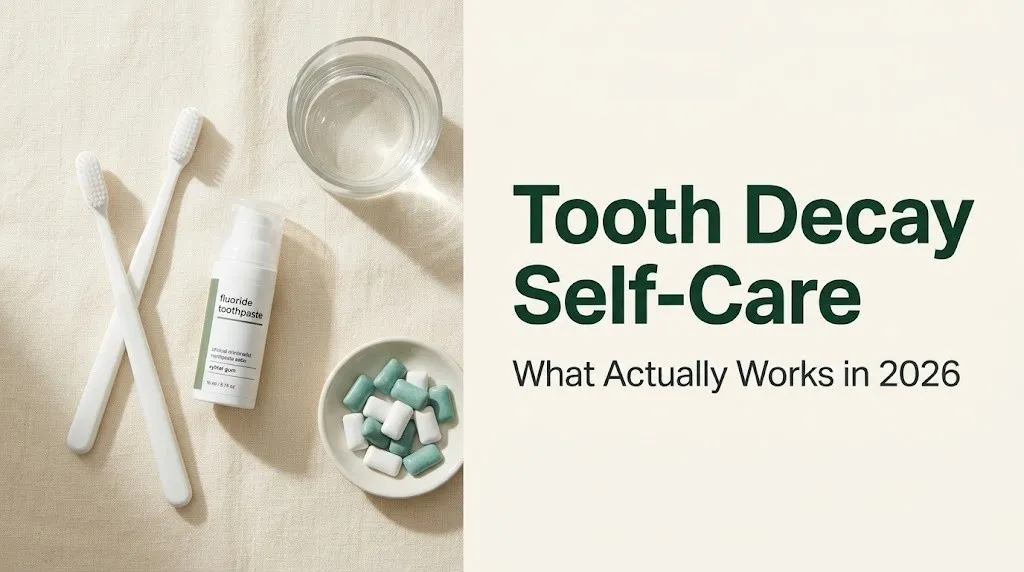
Tooth Decay Self-Care: What Actually Works in 2026
Tooth decay self-care works when it targets the biological cycle that creates cavities, not just the symptoms. The right daily practices, including correctly applied fluoride toothpaste, timed acid exposure management, and consistent interdental cleaning, can prevent tooth decay from starting and remineralize the earliest-stage enamel damage before it becomes a permanent cavity.
According to the National Institute of Dental and Craniofacial Research (NIDCR), dental caries (the clinical name for tooth decay) remains one of the most common chronic diseases worldwide, affecting 92% of adults aged 20 to 64 in the United States at some point in their lives. The encouraging fact is that most tooth decay is preventable with evidence-based self-care, and the earliest stage of decay can actually reverse with the right approach.
This article covers what the science genuinely supports: the enamel chemistry behind every self-care recommendation, specific fluoride concentrations that clinical trials have validated, diet timing strategies that go beyond “eat less sugar,” and an honest look at which popular natural remedies have real evidence and which do not.
Tooth Decay Self-Care Overview
Tooth decay self-care refers to the daily practices, product choices, and dietary habits that protect tooth enamel from bacterial acid damage, support the mouth’s natural repair process, and reduce the conditions that allow cavity-causing bacteria to thrive.
Self-care is genuinely effective for preventing tooth decay and for helping the earliest-stage enamel damage remineralize before it becomes a structural cavity. It is not a replacement for restorative dental treatment once a cavity has formed.
The core self-care framework rests on three pillars: removing bacterial plaque mechanically (brushing and flossing), supplying fluoride ions to the enamel surface to strengthen it against acid attack, and managing dietary acid and sugar exposure to give the mouth time to recover between acid challenges.
Every other self-care recommendation, from xylitol gum to dietary changes to timing your brushing, supports one of these three pillars. Understanding which pillar each practice serves helps you decide which ones matter most for your specific situation.
Self-care alone has clear limits. A visibly darkened spot, a hole you can feel with your tongue, or tooth pain that lingers after cold or heat has faded are signs that enamel loss has progressed past the point where self-care can reverse it. Those situations require a licensed dentist’s assessment and restorative treatment. Self-care in that scenario becomes supportive care, not primary treatment.
Quick Tip:
- Spit out toothpaste after brushing but do not rinse with water. Leaving residual fluoride on your teeth for longer extends the protective window significantly.
- Two-minute brushing sessions twice daily are the minimum, not the ideal. Three minutes, twice daily, is associated with better plaque removal in clinical observations.
- Self-care works best when it is consistent. Missing a night now and then matters less than the overall daily pattern you establish.
What Causes Tooth Decay and How It Progresses
Tooth decay is caused by specific bacteria in the mouth, primarily Streptococcus mutans and Lactobacillus species, that metabolize fermentable carbohydrates (sugars and refined starches) and produce organic acids, mainly lactic acid, as a byproduct.
These acids drop the pH of the dental plaque surrounding the tooth. When plaque pH falls below 5.5, the critical pH threshold for enamel dissolution, the mineral structure of the tooth begins to break down. This is demineralization: calcium and phosphate ions leave the enamel surface.
Tooth decay progresses in stages. It does not start as a hole.
| Stage | What Is Happening | Self-Care Can Help? |
|---|---|---|
| Stage 1: Initial lesion (white spot) | Subsurface demineralization; enamel appears chalky white | Yes, remineralization is possible |
| Stage 2: Enamel caries | Enamel surface begins to break down | Possibly, if caught very early |
| Stage 3: Dentin caries | Decay reaches the dentin layer; sensitivity begins | No, requires professional treatment |
| Stage 4: Pulp involvement | Bacteria reach the pulp; significant pain | No, requires urgent dental care |
| Stage 5: Advanced decay | Abscess risk, tooth loss possible | No, requires urgent dental care |
The bacteria that cause tooth decay form part of the oral biofilm, a structured community of microorganisms attached to the tooth surface. This biofilm is the dental plaque you feel as a fuzzy coating on teeth. Mechanical removal of this biofilm through brushing and flossing disrupts the bacteria’s ability to accumulate acid against the enamel surface.
Decay risk is not equal across all surfaces. Pit and fissure surfaces on the chewing surface of back teeth are especially vulnerable because food and bacteria accumulate in the grooves. Interproximal surfaces between teeth are the second most common decay site, which is exactly why interdental cleaning matters as much as brushing.
The Remineralization and Demineralization Cycle Explained
The remineralization and demineralization cycle is the biological process at the heart of every tooth decay self-care recommendation.
Think of your enamel like a sponge that alternately absorbs and releases minerals depending on the acidity of its environment. When plaque acid drops the pH below 5.5, minerals flow out of the enamel (demineralization). When the pH rises back above 5.5, minerals flow back in from saliva (remineralization). This cycle happens dozens of times a day.
The balance between these two processes determines whether decay progresses, stays stable, or reverses. According to research published in Caries Research, a single sugar exposure creates a pH drop that can last 20 to 40 minutes before saliva returns the plaque pH to safe levels. Eat or drink sugar six times a day, and your enamel is potentially spending more than two hours per day in active demineralization.
Fluoride interrupts this cycle at the molecular level. When sodium fluoride (NaF) ions are present on the enamel surface during a remineralization phase, they incorporate into the enamel crystal structure in place of hydroxyl ions. The result is fluorapatite (Ca10(PO4)6F2) rather than the original hydroxyapatite (Ca10(PO4)6(OH)2). Fluorapatite resists acid dissolution at a lower pH (approximately pH 4.5) compared to hydroxyapatite (pH 5.5). This effectively raises the threshold at which your enamel begins to dissolve.
Saliva’s buffering capacity, provided primarily by the bicarbonate ion system, is the mouth’s natural defense against these acid attacks. Reduced saliva flow (xerostomia) removes this buffer and dramatically accelerates demineralization, which is why dry mouth is one of the strongest independent risk factors for tooth decay.
According to the Journal of Dental Research, people with salivary flow rates below 0.1 mL per minute (stimulated) are at substantially higher risk for rampant caries compared to those with normal salivary flow, independent of their dietary habits.
Key Takeaway: Every self-care practice you do for your teeth is either protecting the remineralization cycle, accelerating it with fluoride, or reducing the frequency and depth of demineralization events. Once you understand this cycle, the reasoning behind each recommendation becomes obvious.
How to Brush Your Teeth Correctly to Reduce Decay Risk
Correct tooth brushing for cavity prevention means removing the bacterial plaque biofilm from all tooth surfaces using a technique that reaches the gumline without abrasively damaging softened enamel.
The American Dental Association (ADA) recommends the modified Bass technique: position the brush at a 45-degree angle to the gumline, make small circular or short back-and-forth strokes, and systematically cover all outer surfaces, inner surfaces, and chewing surfaces. A two-minute session is the minimum. Most people significantly underestimate how long two minutes actually is.
- Use a soft-bristled toothbrush. Medium and hard bristles remove more plaque per stroke, but they also abrade enamel and cause gum recession with regular use, particularly if you apply pressure.
- Set a timer. Two minutes feels longer than it sounds. Divide your mouth into four quadrants and spend 30 seconds on each.
- Hold the brush gently. Most people grip too tightly and press too hard. Firm pressure does not improve plaque removal; it damages gum tissue.
- Angle at 45 degrees to the gumline. Bacteria concentrate where tooth meets gum. This angle lets the bristle tips reach into the sulcus, the small space between tooth and gum.
- Brush all three surfaces per tooth: the outer face, the inner face, and the chewing surface.
- Brush the tongue. Bacteria on the tongue recolonize tooth surfaces between brushings.
- Spit out the toothpaste. Do not rinse with water. This leaves a residual fluoride film on your teeth that extends the protective window.
Electric toothbrushes with oscillating-rotating heads have an advantage for plaque removal. A 2014 Cochrane review found that oscillating-rotating electric toothbrushes reduced plaque by 21% and gingivitis by 11% more than manual brushing over short- and long-term use. For people with limited dexterity, including older adults and those with arthritis, this mechanical advantage is especially relevant.
Children under 8 years should have an adult brush their teeth or closely supervise brushing. Fine motor control to reach all surfaces independently typically does not develop until around age 8 to 10.
Flossing and Interdental Cleaning for Cavity Prevention
Flossing reaches the interproximal surfaces between teeth where toothbrush bristles cannot access, and these surfaces are among the most common sites for tooth decay to begin.
The mechanism is straightforward. Plaque accumulates between teeth and along the gumline in these contact zones. If it is not disrupted at least once every 24 hours, the bacteria within it have sufficient time to produce sustained acid at the enamel surface. Brushing alone leaves interproximal plaque entirely undisturbed.
- Use approximately 18 inches of floss. Wind the majority around your middle fingers, leaving 2 to 3 inches to work with.
- Slide the floss gently between teeth using a zigzag motion rather than snapping it downward. Snapping injures the gum tissue.
- Curve the floss into a C-shape around each tooth and slide it up and down against the tooth surface, not just in and out.
- Move to a clean section of floss for each new space.
- Floss all spaces, including the back surface of your last molars.
Flossing once daily is the recommended frequency, and the timing relative to brushing matters less than many people think. A 2018 study in the Journal of Periodontology found that flossing before brushing allowed more fluoride from toothpaste to reach interdental surfaces, suggesting a floss-then-brush order may offer a modest additional benefit.
For people with tight contacts between teeth, orthodontic appliances, bridges, or limited dexterity, alternatives and adjuncts to string floss include:
- Interdental brushes (also called interproximal brushes): More effective than string floss for plaque removal in wider spaces; available in multiple sizes; the right size is one that fits snugly without forcing
- Water flossers (oral irrigators): Effective for disrupting plaque around orthodontic brackets and implants; evidence for caries prevention is weaker than for string floss and interdental brushes, but they are useful when traditional flossing is not practical
- Floss picks: Convenient but recycle the same plaque-laden floss section across multiple spaces; use a new pick for each tooth if possible
Key Takeaway: Brushing without flossing is like washing your body in the shower but never cleaning between your fingers. The surfaces between your teeth are where some of the most damaging plaque sits, entirely out of reach of your toothbrush.
Best Toothpaste for Tooth Decay: Fluoride Concentration Explained
The best toothpaste for tooth decay prevention is one that contains sodium fluoride (NaF) or sodium monofluorophosphate (SMFP) at a concentration between 1000 and 1500 ppm for adults.
This is not marketing. It is a dose-response relationship that has been established through decades of clinical trials and confirmed by multiple Cochrane systematic reviews. A 2019 Cochrane review analyzing data from 96 trials found that fluoride toothpaste reduces cavities by approximately 23% compared to non-fluoride toothpaste, with higher concentrations within the 1000 to 1500 ppm range performing better for high-risk individuals.
| Population | Recommended Fluoride Concentration | Notes |
|---|---|---|
| Adults (standard risk) | 1000 to 1500 ppm NaF or SMFP | Twice daily; spit, don’t rinse |
| Adults (high risk: 3+ cavities in 3 years, dry mouth) | 2800 to 5000 ppm (prescription) | Dentist-prescribed; not OTC |
| Children under 3 | 1000 ppm (smear: rice-grain amount) | Per AAPD guidelines |
| Children 3 to 6 | 1000 ppm (pea-size amount) | Supervised use; teach to spit |
| Children 6 and over | 1000 to 1450 ppm | Adult supervision still beneficial |
Stannous fluoride (SnF2) is a third fluoride form found in some toothpastes. It offers the same remineralization benefit as sodium fluoride but also carries antibacterial properties against Streptococcus mutans, potentially addressing the cause of acid production rather than just protecting enamel against it. Some individuals experience tooth staining with stannous fluoride; this is a surface stain that can be removed with professional cleaning and does not indicate harm.
Nano-hydroxyapatite (n-HAp) toothpastes are gaining attention as a fluoride-free alternative. A 2019 study in the Journal of Clinical Dentistry found n-HAp comparable to 1450 ppm fluoride toothpaste for remineralizing early enamel lesions in vitro, and a 2020 randomized controlled trial in Clinical Oral Investigations found similar remineralizing effects in human participants. For parents who prefer to avoid fluoride for young children, or for adults in high-fluoride water areas, n-HAp represents an evidence-supported emerging option, though the long-term population-level evidence does not yet match fluoride’s decades-long dataset.
Avoid “whitening” toothpastes as your primary decay-prevention product if you have sensitive teeth. Many whitening formulas contain abrasive silica particles that can wear softened enamel if used aggressively. Whitening and decay prevention are not the same goal, and they sometimes work against each other.
Fluoride Mouth Rinse and Other Adjunct Fluoride Tools
A fluoride mouth rinse provides an additional topical fluoride exposure beyond toothpaste, and it is particularly useful for people at higher caries risk.
Over-the-counter fluoride mouth rinses typically contain 0.05% sodium fluoride, equivalent to approximately 227 ppm. This is a lower concentration than toothpaste, but it serves a different purpose: it delivers fluoride to surfaces that brushing may not reach as thoroughly, including approximal surfaces and areas around dental work. Prescription rinses at 0.2% (900 ppm) are used weekly for high-risk patients.
According to the American Dental Association, fluoride mouth rinse is appropriate as an adjunct, not a replacement, for fluoride toothpaste. The rinse is used after brushing and should not be followed by eating or drinking for at least 30 minutes, to allow the fluoride to remain in contact with the enamel surface.
Other adjunct fluoride tools available outside the dental office include:
- Fluoride varnish (usually applied by a dentist or hygienist, not a self-care product; 2.26% sodium fluoride): applied professionally two to four times per year for high-risk patients; provides a concentrated topical fluoride dose that adheres to the tooth surface
- CPP-ACP products (casein phosphopeptide-amorphous calcium phosphate, marketed as Recaldent in products like MI Paste): not a fluoride product, but a remineralizing agent that works by supplying calcium and phosphate ions to the enamel surface; may be used in conjunction with fluoride for an additive remineralization effect; a 2018 review in the Australian Dental Journal found that CPP-ACP combined with fluoride showed better remineralization outcomes than either alone in several randomized trials; note that CPP-ACP is derived from cow’s milk casein, making it unsuitable for individuals with milk protein allergies
For adults with standard caries risk who are brushing correctly with a 1000 to 1500 ppm fluoride toothpaste, an OTC fluoride rinse is an optional addition. For people with dry mouth, a history of multiple cavities, or active orthodontic treatment, that additional fluoride exposure can make a measurable difference.
Xylitol Gum and Its Role in Cavity Prevention
Xylitol, a naturally occurring 5-carbon sugar alcohol (C5H12O5), prevents tooth decay through a specific antibacterial mechanism rather than simply because it is a sugar-free sweetener.
Streptococcus mutans cannot metabolize xylitol to produce acid the way it metabolizes glucose or sucrose. Worse (from the bacteria’s perspective), xylitol is taken up by S. mutans cells but cannot be processed, which interrupts normal bacterial energy pathways and inhibits bacterial growth. Over time and with regular xylitol exposure, populations of S. mutans in the oral biofilm reduce in number. This is why xylitol is meaningfully different from other non-cariogenic sweeteners like sorbitol, which simply fails to feed the bacteria rather than actively working against them.
A 2015 Cochrane systematic review on xylitol for preventing dental caries concluded that xylitol-containing fluoride toothpaste may reduce caries more than fluoride-only toothpaste, but noted that the evidence was of moderate quality. The review also found some evidence for xylitol chewing gum in caries prevention, with a dose of approximately 5 grams of xylitol per day across multiple exposures being the amount most consistently associated with benefit in available clinical trials.
| Xylitol Product Form | Daily Dose for Benefit | Notes |
|---|---|---|
| Chewing gum | Approximately 5 g/day; 3 to 5 pieces of 1 g gum | Chew for 5 minutes after meals or snacks |
| Mints or lozenges | 5 to 10 g/day across multiple exposures | Useful for those who cannot chew gum |
| Xylitol-containing toothpaste | Supplementary benefit when combined with fluoride | Not a standalone caries prevention strategy |
Chewing xylitol gum also stimulates saliva flow, which provides its own buffering and remineralizing effect independent of the xylitol content. This dual mechanism makes post-meal gum chewing one of the more evidence-supported self-care practices available without a prescription.
A practical note on dose and form: not all “xylitol gum” products contain enough xylitol to reach the 5 g daily threshold. Check the label for xylitol content per piece. Products listing sorbitol as the first sweetener with xylitol appearing later in the ingredient list may not deliver sufficient xylitol for the antibacterial effect.
Key Takeaway: Xylitol works against the bacteria that cause cavities, not just around them. Five grams a day across several small exposures is the dose range consistently linked to benefit in clinical trials, making label-checking essential when choosing products.
Diet Changes That Genuinely Reduce Tooth Decay Risk
The dietary change most supported by evidence for reducing tooth decay is not eliminating sugar entirely. It is reducing the frequency of sugar and fermentable carbohydrate exposure throughout the day.
The science of this distinction comes from the Vipeholm study and subsequent research that established the acid production timeline. Each time fermentable carbohydrates contact the teeth, S. mutans and Lactobacillus species begin producing lactic acid within minutes. The resulting plaque pH drop lasts 20 to 40 minutes before saliva buffers it back to safe levels. Three meals a day with no snacking means roughly three acid challenge periods. Eight snacking events mean eight acid periods, potentially keeping enamel in demineralization for over four hours daily.
Dietary changes with evidence for reducing tooth decay risk:
- Reduce frequency of sugar and refined carbohydrate consumption. Three structured meals is significantly less damaging than five to eight snacking events, even if the total sugar consumed is similar.
- Replace between-meal snacks with low-cariogenic options. Cheese, nuts, and raw vegetables do not significantly lower plaque pH. Cheese additionally raises plaque pH and stimulates saliva, per research in the Journal of Dental Research.
- Drink water rather than juice, soda, or sports drinks between meals. All three categories contain either fermentable sugars or citric and phosphoric acid. Water with meals dilutes oral sugar and acid concentration.
- Consume sugary foods with meals rather than separately. Meal saliva flow and the buffering activity of other foods reduce the acid challenge compared to eating the same sugary food alone.
- Limit sticky or slow-dissolving carbohydrates. Gummy candies, caramel, and crackers that stick to tooth surfaces prolong acid exposure beyond the initial eating event.
The World Health Organization recommends limiting free sugars (those added to foods or naturally present in honey, syrups, and fruit juices, not naturally occurring sugars in whole fruit) to less than 10% of total energy intake, and notes that further reduction to below 5% provides additional oral health benefit. This aligns with the Dietary Guidelines for Americans 2020-2025, which set a limit of less than 10% of daily calories from added sugars.
Acidic Foods and Drinks: Timing Your Exposure to Protect Enamel
Acid erosion of enamel is distinct from bacterial caries, though both weaken the enamel surface. Acidic foods and beverages directly dissolve enamel mineral without requiring bacterial metabolism.
The critical pH for enamel dissolution from dietary acid is the same as from bacterial acid: approximately 5.5. Common acidic foods and drinks fall well below this threshold.
| Drink or Food | Approximate pH | Erosion Risk |
|---|---|---|
| Cola soft drinks | 2.5 to 3.0 | Very high |
| Sparkling water (plain) | 3.0 to 4.0 | Moderate (much lower than cola) |
| Orange juice | 3.5 to 4.0 | High |
| Sports drinks | 2.9 to 4.5 | High |
| Black coffee | 4.5 to 5.0 | Low to moderate |
| Wine (red and white) | 3.0 to 3.8 | High |
| Plain milk | 6.4 to 6.8 | Negligible |
The timing rule for acidic exposures: do not brush your teeth for 30 to 60 minutes after consuming an acidic food or drink. This recommendation is supported by research published in the British Dental Journal, which demonstrated that brushing immediately after an acidic challenge removes more softened, partially demineralized enamel than the acid challenge itself would have removed if the enamel had been left to reharden via salivary remineralization first.
Instead, after an acidic exposure, rinse with plain water immediately to dilute and clear the acid. Chew xylitol gum to stimulate saliva flow and buffering. Then wait 30 to 60 minutes before brushing.
Sparkling water without added flavors or citric acid is considerably less erosive than cola or juice, despite being acidic. The carbonic acid in plain carbonated water is weak and shorter-lived at the enamel surface than the citric and phosphoric acids in flavored beverages. People who have replaced soda with sparkling water are moving in a meaningfully better direction for their enamel.
For people with gastroesophageal reflux disease (GERD) or acid reflux, stomach acid reaching the mouth adds a chronic, involuntary acid exposure that significantly elevates erosion and decay risk. A gastroenterologist or primary care physician should be part of the care team in those cases, with the dentist informed of the reflux history.
Night Routine for Teeth: Why Bedtime Hygiene Matters Most
The most important brushing session of the day is the one before bed, not the one in the morning.
During sleep, salivary flow drops to its lowest point of the 24-hour cycle. Saliva is the mouth’s primary defense mechanism against acid: it buffers plaque pH, supplies calcium and phosphate ions for remineralization, and mechanically washes the tooth surface. With saliva production nearly absent for six to eight hours overnight, any plaque, food debris, or acid left on the teeth at bedtime has a prolonged, undiluted period of contact with enamel.
A complete bedtime tooth care routine for cavity prevention:
- Floss first. Remove all interproximal plaque before brushing so that fluoride from toothpaste can reach those surfaces during the brushing step.
- Brush all surfaces for a full two minutes using 1000 to 1500 ppm fluoride toothpaste. Spend additional time on any areas you know collect plaque, typically the inner lower front teeth and the outer upper back teeth.
- Spit out the toothpaste. Do not rinse with water, mouthwash, or anything else immediately after brushing. The residual fluoride film left on your teeth is protective, and rinsing dilutes and removes it.
- If you use a fluoride mouth rinse, use it 15 to 30 minutes after brushing rather than immediately after, to avoid washing away the concentrated fluoride from your toothpaste.
- Do not eat or drink anything (except water) after this routine. Even a small post-brush snack reintroduces fermentable substrate to the plaque bacteria and drops plaque pH just as salivary protection is at its lowest.
People who snore heavily or breathe through their mouths at night experience additional overnight drying of the oral cavity, which compounds the salivary protection deficit. A humidifier in the bedroom and staying well hydrated before sleep can modestly support overnight salivary function. People with suspected sleep apnea causing mouth breathing should be evaluated by a sleep medicine physician, as CPAP treatment addresses the root cause more effectively than any oral hygiene adaptation.
Key Takeaway: Going to bed with clean, fluoride-coated teeth matters more than any other single brushing event because overnight salivary protection is almost completely absent and the window for undisturbed bacterial acid contact is six to eight hours long.
Oil Pulling and Natural Remedies: What the Evidence Actually Shows
Oil pulling is the Ayurvedic practice of swishing oil (traditionally sesame oil, now often coconut oil) in the mouth for 10 to 20 minutes as an oral hygiene practice. It is one of the most frequently searched natural tooth decay remedies, and the evidence for it is far weaker than most sources presenting it acknowledge.
The proposed mechanism is that oil traps and removes bacteria from the oral cavity by adhering to the bacterial cell membrane. This mechanism is plausible in vitro. The clinical question is whether oil pulling produces meaningful caries reduction in human studies, and the answer from the available evidence is: not convincingly.
A 2017 systematic review published in the Journal of Traditional and Complementary Medicine found that the existing studies on oil pulling were methodologically limited: small sample sizes, short durations, self-reported compliance, and absence of standardized caries measurement outcomes. Some studies showed modest reductions in Streptococcus mutans counts in saliva, but salivary bacterial counts are not the same as plaque biofilm composition, and neither is a direct measure of cavity formation.
The American Dental Association does not recommend oil pulling as a proven oral hygiene practice or as a replacement for any evidence-based self-care measure.
Evidence assessment for common natural remedies:
| Remedy | Proposed Mechanism | Evidence Level | ADA or Cochrane Position |
|---|---|---|---|
| Oil pulling (coconut/sesame oil) | Oil traps bacteria; removes from oral cavity | Preliminary; methodologically limited small studies | Not recommended as proven practice |
| Aloe vera gel (oral use) | Antimicrobial properties of aloin and anthraquinones | Preliminary in vitro data; limited human data | No formal recommendation |
| Licorice root (Glycyrrhiza glabra extract) | Glycyrrhizin may inhibit S. mutans | A few small RCTs with positive results; not large-scale | No formal recommendation; promising but not definitive |
| Activated charcoal toothpaste | Claims to absorb bacteria and toxins | No clinical evidence for caries prevention; abrasion concern | ADA does not recommend; potential enamel abrasion risk |
| Turmeric (curcumin) paste | Antimicrobial and anti-inflammatory in vitro | In vitro evidence only for caries-relevant bacteria | No recommendation; data does not support caries prevention |
None of these remedies should substitute for fluoride toothpaste, mechanical plaque removal, or professional dental care. Some (particularly activated charcoal toothpastes) may actively harm enamel through abrasion. Licorice root extract has the most promising preliminary human evidence, but the research is not yet at the scale or quality to support its recommendation as a primary cavity prevention tool.
Dry Mouth, Saliva, and Why It Directly Affects Cavity Risk
Dry mouth, clinically known as xerostomia, is one of the strongest modifiable risk factors for tooth decay, and it is dramatically underrecognized in self-care discussions.
Saliva performs several functions that are directly relevant to tooth decay prevention: it buffers plaque pH through the bicarbonate system; it supplies calcium, phosphate, and fluoride ions that are the raw materials for enamel remineralization; it mechanically washes the tooth surface; and it contains antimicrobial proteins including lysozyme, lactoferrin, and secretory immunoglobulin A (sIgA) that inhibit bacterial adhesion and proliferation.
When salivary flow is reduced, every one of these protective functions is diminished simultaneously. A person with significant xerostomia is not simply more thirsty. They are running their enamel’s defense system at a fraction of its normal capacity.
Common causes of dry mouth include:
- Medications: Antihistamines, antidepressants (particularly tricyclic antidepressants and SSRIs), antihypertensives, diuretics, anticholinergics, and many others; this is the most common cause of xerostomia in adults over 50
- Mouth breathing: From nasal obstruction, allergies, or sleep-disordered breathing
- Sjögren’s syndrome: An autoimmune condition that damages salivary and lacrimal glands; requires management by a rheumatologist alongside oral care
- Radiation therapy to the head and neck: Can permanently damage salivary glands
- Dehydration: Even mild chronic dehydration reduces salivary flow meaningfully
- Caffeine and alcohol: Both have diuretic and mucosal drying effects
Self-care measures for xerostomia that support cavity prevention:
- Stay consistently well hydrated throughout the day.
- Use alcohol-free mouth rinse; alcohol-containing products worsen mucosal drying.
- Chew xylitol gum or use xylitol lozenges to mechanically stimulate salivary flow.
- Use a saliva substitute or artificial saliva product (look for formulations with carboxymethylcellulose or hydroxyethylcellulose as the base) for overnight dryness.
- Ask your dentist about prescription-strength fluoride toothpaste (5000 ppm) for high-risk dry mouth management.
If dry mouth is caused by prescribed medications, a person should discuss this with their prescribing physician, who may be able to adjust the medication, dose, or timing. This is a clinical decision requiring professional judgment, not a self-care adjustment to attempt independently.
Tooth Decay in Specific Groups: Children, Older Adults, and People With Certain Health Conditions
Tooth decay self-care guidance requires specific modification for several populations, and applying standard adult guidance uniformly across all groups is both inaccurate and in some cases unsafe.
Children under 6:
The American Academy of Pediatric Dentistry (AAPD) recommends that brushing begin as soon as the first tooth erupts, using a rice-grain smear of 1000 ppm fluoride toothpaste. Children under 3 should not use more than this amount due to fluoride ingestion risk during enamel development. A pea-size amount is introduced at ages 3 to 6. An adult should brush or closely supervise brushing until the child demonstrates reliable technique, typically around age 8.
Early childhood caries (previously called baby bottle tooth decay) is the most common chronic disease of early childhood per NIDCR data, affecting approximately 23% of children aged 2 to 5 in the United States. Parents should know that the bacteria that cause tooth decay (S. mutans) can be transmitted from caregiver to infant through saliva sharing (tasting the baby’s food, sharing utensils, or pacifier-licking). Managing parental oral health is genuinely part of infant caries prevention.
Older adults (65 and over):
Root surfaces become exposed as gum tissue recedes with age. Root cementum demineralizes at a higher pH (approximately 6.7) than enamel, making older adults particularly vulnerable to root surface caries. Polypharmacy is prevalent in this group and frequently causes xerostomia. According to the Journal of the American Dental Association, approximately 30% of community-dwelling older adults have untreated dental caries, with root caries representing a growing proportion.
People undergoing cancer treatment:
Radiation therapy to the head and neck region causes permanent salivary gland damage, which leads to severe, chronic xerostomia and dramatically elevated caries risk. Chemotherapy can cause mucositis and temporary salivary changes. Anyone in or approaching cancer treatment should inform their oncology team that they are working with a dentist on oral care management, and should see a dentist before treatment begins to address any existing decay.
Pregnant individuals:
Oral health care during pregnancy, including fluoride toothpaste use, dental visits, and all standard self-care practices, is safe and strongly recommended by the ADA and ACOG. Hormonal changes during pregnancy can increase gingival inflammation and may alter oral pH. Morning sickness introduces gastric acid to the oral cavity; rinsing with a baking soda and water solution (half teaspoon of baking soda in 8 ounces of water) immediately after vomiting neutralizes the acid before it has time to demineralize enamel.
Key Takeaway: Standard tooth decay self-care works well for most healthy adults, but children, older adults on multiple medications, people with Sjögren’s syndrome, and those undergoing cancer treatment all need meaningfully different products, concentrations, or professional oversight to get the same level of protection.
Signs That Self-Care Is Not Enough and When to See a Dentist
Tooth decay self-care is effective for prevention and for supporting the reversal of the earliest pre-cavitation lesions, but there are clear signs that self-care has reached its limits.
Recognizing these signs matters because untreated cavities progress through enamel into dentin and eventually the pulp, at which point treatment escalates from a simple filling to a root canal or extraction. Acting on these signs earlier is almost always less invasive, less expensive, and less uncomfortable than waiting.
Signs that warrant an evaluation by a licensed dentist as soon as practicable:
- A visible dark spot, shadow, or discoloration on a tooth surface that was not there previously
- A visible hole, pit, or rough surface you can feel with your tongue
- Tooth sensitivity to cold, heat, or sweet foods that lasts more than a few seconds after the stimulus is removed
- A toothache or pain on biting that persists
- Food consistently getting trapped in the same location between specific teeth
- A white chalky spot on an enamel surface that has been present for more than three months without improvement despite consistent fluoride use (this may indicate arrested remineralization or progression)
Signs that require urgent same-day or next-day dental care:
- Spontaneous tooth pain occurring without any stimulus
- Facial swelling, swelling in the gum near a tooth, or a visible pimple-like bump on the gum (fistula), which may indicate dental abscess
- Fever with tooth pain
- Pain so severe it interferes with sleep, eating, or normal function
If you have not seen a dentist in more than 12 months, scheduling a recall appointment includes a caries risk assessment and radiographs that can detect interproximal decay before it becomes visible or symptomatic. Self-examination cannot detect interproximal cavities. Only clinical examination and radiographic imaging can reveal decay in the spaces between teeth, which is where decay most commonly begins in adults.
A person with three or more cavities in the past three years, active dry mouth, or a diagnosis of a condition associated with elevated caries risk (Sjögren’s syndrome, a history of head and neck radiation, uncontrolled diabetes) should discuss a caries management protocol with their dentist using the CAMBRA (Caries Management by Risk Assessment) framework, which tailors prevention intensity to individual risk level.
Building Your Daily Tooth Decay Self-Care Routine
A practical, complete daily tooth decay self-care routine combines the evidence-based practices from every section of this article into a consistent, manageable pattern.
Morning Routine:
- Brush teeth for two full minutes with a 1000 to 1500 ppm fluoride toothpaste using a soft-bristled toothbrush (or oscillating-rotating electric brush) and modified Bass technique at a 45-degree gumline angle.
- Spit out toothpaste. Do not rinse with water.
- Eat breakfast. Your morning brush removes overnight plaque accumulation; eating after brushing is fine.
- If you have coffee, juice, or another acidic morning drink, rinse with plain water after finishing it.
- Chew one piece of xylitol gum (check that it contains at least 1 g xylitol per piece) for five minutes after breakfast.
During the Day:
- Limit between-meal snacking, particularly sugary or starchy snacks.
- Drink water as your primary between-meal beverage.
- If you consume a sugary or acidic food or drink, rinse with water immediately. Wait 30 to 60 minutes before brushing.
- Chew xylitol gum after meals when brushing is not possible.
Evening Routine (Most Important Session):
- Floss all interdental spaces using correct C-shaped technique before brushing.
- Brush all surfaces for two full minutes with 1000 to 1500 ppm fluoride toothpaste.
- Spit. Do not rinse.
- Wait 15 to 30 minutes, then use an alcohol-free fluoride mouth rinse if you are at elevated decay risk (dry mouth, orthodontic appliances, history of multiple cavities). Swish for 60 seconds and spit. Do not eat or drink after.
- Eat nothing and drink only water after this routine.
| Practice | Evidence Level | Frequency |
|---|---|---|
| Fluoride toothpaste (1000-1500 ppm) | Well-established (multiple Cochrane RCTs) | Twice daily |
| Flossing or interdental brush | Clinically supported | Once daily |
| Xylitol gum (5 g/day total) | Cochrane review: moderate evidence | After meals; 3 to 5 pieces |
| Fluoride mouth rinse (0.05% NaF) | ADA-supported adjunct | Once daily (evening) |
| Diet sugar frequency reduction | WHO and ADA supported | Every day |
| Water as primary beverage | Expert consensus | Ongoing |
| Professional dental visit | ADA recommendation | Every 6 to 12 months |
This routine takes approximately five minutes in the morning and seven to nine minutes in the evening. The overnight period between your bedtime routine and your morning brush is the single highest-risk window for decay. Every minute invested in your evening routine is protecting those six to eight hours of reduced salivary defense.
Frequently Asked Questions About Tooth Decay Self-Care
Can tooth decay heal on its own without a dentist?
Very early tooth decay, specifically a white spot lesion (pre-cavitation enamel caries) where the enamel surface is still intact, can remineralize and effectively reverse with consistent fluoride toothpaste use and dietary changes over approximately three to six months.
Once enamel has physically cavitated (a hole has formed), the structural loss is permanent and cannot self-repair; it requires a dentist’s restorative treatment.
Self-care without professional evaluation cannot determine which stage a lesion is at, making an initial dental assessment important for anyone who suspects they have active decay.
What is the best toothpaste for tooth decay and cavities?
The best OTC toothpaste for tooth decay prevention is one containing 1000 to 1450 ppm sodium fluoride (NaF) or sodium monofluorophosphate (SMFP), confirmed by multiple Cochrane systematic reviews as reducing cavities by approximately 23% compared to non-fluoride toothpaste.
For adults at high caries risk (frequent cavities, dry mouth, history of head and neck radiation), a dentist may prescribe 5000 ppm fluoride toothpaste.
Avoid judging toothpaste effectiveness by whitening claims or natural ingredient marketing; the fluoride concentration and form are the evidence-based measure of cavity protection.
Does xylitol gum actually prevent cavities?
Xylitol gum has demonstrated caries-preventive benefits in clinical trials through a specific antibacterial mechanism: Streptococcus mutans cannot metabolize xylitol and is actively inhibited by it, reducing the acid-producing bacterial load in the oral biofilm.
A 2015 Cochrane systematic review found moderate evidence supporting xylitol-containing products for caries reduction, with the best-supported dose being approximately 5 grams of xylitol per day across multiple exposures.
To reach this dose with gum, check that each piece contains at least 1 gram of xylitol and chew three to five pieces daily, each for approximately five minutes after meals or snacks.
Should I brush my teeth right after eating?
No. Brushing immediately after eating, particularly after acidic foods or drinks, can abrade softened enamel that has been temporarily weakened by the acid challenge.
Research published in the British Dental Journal supports waiting 30 to 60 minutes after an acidic exposure before brushing, to allow saliva to buffer the pH back to safe levels and begin rehardening the enamel surface.
Instead, rinse immediately with plain water after eating and chew xylitol gum if available, then brush after the waiting period.
What foods cause tooth decay the fastest?
Sticky, slowly dissolving fermentable carbohydrates cause the fastest enamel damage because they maintain prolonged contact between sugar and S. mutans bacteria at the tooth surface: gummy candies, caramel, crackers, and dried fruit are particularly cariogenic.
Frequency of exposure matters more than total quantity: sipping a sugary drink slowly over an hour is more damaging than consuming the same amount quickly with a meal, because it creates a sustained acid challenge period rather than one discrete event.
Acidic beverages including cola, sports drinks, citrus juice, and wine combine acid erosion with the cariogenic effect of sugars, making them especially damaging to enamel.
What are the first signs of tooth decay I can see or feel at home?
The earliest visible sign is a white spot or chalky opaque area on the enamel surface, often visible near the gumline or on smooth surfaces; this represents subsurface demineralization and is the one stage where self-care remineralization is possible.
Sensitivity to cold, sweet foods, or a sweet sensation that lingers briefly (less than a few seconds) may indicate early enamel changes, though sensitivity alone has many causes and is not diagnostic.
A persistent dark spot, rough surface you can feel with your tongue, or sensitivity that lasts more than 30 seconds after the stimulus is removed warrants evaluation by a licensed dentist rather than additional self-care monitoring.
Your Teeth Respond to Daily Decisions, Not Occasional Efforts
Tooth decay self-care is one of the few areas in health where the science is genuinely clear and the tools are accessible. The fluoride in a well-formulated toothpaste, applied correctly and left in contact with your enamel overnight, does measurable work. The xylitol gum you chew after lunch actively works against the bacteria trying to acidify your enamel. The thirty-minute wait after a glass of wine before brushing preserves mineral that would otherwise be brushed away.
Start with the evening routine. That single session, done consistently, with fluoride toothpaste you spit and do not rinse, and flossing done before the brush, provides more protection per minute invested than any other single self-care decision you can make for your teeth.
The reader who finishes this article now knows not just what to do, but exactly why each practice works at the enamel level, which products have the evidence behind them, and precisely when to stop self-care and call a dentist instead.