Cushing’s Syndrome Self-Care: Skin, Body & Mind Guide 2026
Cushing’s syndrome self-care covers the daily practices, skincare strategies, nutritional habits, physical activity modifications, and psychological tools that support your health and skin integrity alongside medical treatment. This is a condition that affects nearly every system in the body, and the self-care practices that genuinely help are specific, evidence-grounded, and very different from generic wellness advice.
Cushing’s syndrome affects an estimated 10 to 15 people per million annually, according to the National Institute of Diabetes and Digestive and Kidney Diseases (NIDDK). The effects of chronically elevated cortisol on the skin, connective tissue, bone, muscle, mood, and sleep are documented across decades of endocrinology and dermatology research. Self-care does not cure this condition, and it does not lower pathologically elevated cortisol levels. But it can meaningfully reduce visible skin damage, prevent secondary complications, and improve daily quality of life at every stage of the condition.
This guide covers what elevated cortisol physically does to your skin, how to build a realistic skincare routine for cortisol-damaged skin, and how to support your physical and emotional health in ways the research actually backs. Each section is specific: named ingredients, named mechanisms, named evidence sources, and named provider types for when professional care is the right next step.
Cushing’s Syndrome Self-Care: What It Actually Means
Cushing’s syndrome self-care refers to the deliberate, evidence-informed lifestyle and topical practices that protect your skin, preserve your physical function, and support your psychological wellbeing while you are living with or recovering from chronic excess cortisol.
Self-care in this context is not a substitute for medical treatment. That distinction matters, and it matters specifically. Elevated cortisol from a pituitary tumor, adrenal tumor, or long-term corticosteroid medication cannot be managed by any moisturizer, diet plan, or mindfulness practice. The medical cause must be identified and treated by a board-certified endocrinologist. What self-care addresses is the daily experience of living in a body that has been affected by glucocorticoid excess, where the skin is fragile, the muscles are weak, the mood is disrupted, and sleep is poor.
The biopsychosocial model, referenced in chronic illness research published by the American Psychological Association, recognizes that managing a complex endocrine condition like Cushing’s syndrome requires attention to biological symptoms, psychological responses, and social factors simultaneously. Self-care is the practical expression of that model. It is what you do every day between medical appointments to protect your skin from tearing, reduce your fracture risk, support your mood, and help your body recover.
Here is what effective Cushing’s syndrome self-care covers:
- Gentle, barrier-focused skincare for atrophic and fragile skin
- Protective habits to prevent bruising, tears, and slow-healing wounds
- Targeted nutritional support for bone density and muscle preservation
- Safe, adapted physical activity that respects current functional limits
- Evidence-based psychological practices for depression, anxiety, and cognitive difficulty
- Sleep hygiene strategies that address cortisol-disrupted circadian rhythms
- Body image support appropriate to the visible changes Cushing’s causes
- A clear framework for when to escalate any symptom to a specialist
Every one of these is covered in the sections that follow.
What Cortisol Does to Your Skin in Cushing’s Syndrome
Chronically elevated cortisol causes measurable, specific damage to the skin’s structure, function, and appearance through several distinct biological mechanisms that operate simultaneously.
Think of your skin like a fabric. Normally, it has strong fibers (collagen), elastic threads woven through it (elastin), and a protective coating on top (the barrier lipids of the stratum corneum). Cortisol excess is like a solvent that degrades all three at once. The fabric thins, loses its stretch, and stops repelling water and irritants the way it should.
The specific mechanisms, according to research published in the Journal of Investigative Dermatology, include glucocorticoid-induced suppression of fibroblast activity. Fibroblasts are the skin cells responsible for synthesizing collagen type I and collagen type III. When cortisol suppresses fibroblasts chronically, collagen production drops sharply. Skin thins, loses its structural integrity, and becomes fragile. Wound healing slows because the connective tissue repair process depends on the same fibroblast activity being suppressed.
Elevated cortisol also disrupts the stratum corneum’s lipid matrix. The stratum corneum relies on a precise molar ratio of ceramides, cholesterol, and free fatty acids to maintain its barrier function and regulate transepidermal water loss (TEWL). Glucocorticoid excess reduces ceramide synthesis in keratinocytes, weakening the barrier and making skin prone to dryness, sensitivity, and irritation from products that would not normally cause a reaction.
| Skin Effect | Biological Mechanism | Clinical Presentation |
|---|---|---|
| Skin thinning (atrophy) | Fibroblast suppression, reduced collagen I and III synthesis | Transparent, fragile skin; visible veins |
| Easy bruising | Collagen loss in blood vessel walls and surrounding dermis | Ecchymoses from minor contact |
| Stretch marks (striae) | Rapid dermal expansion with weakened collagen matrix | Deep purple or red striae, often wide |
| Slow wound healing | Impaired fibroblast and immune cell activity | Small cuts taking weeks to close |
| Acneiform eruption | Increased sebum production, androgen-like effects | Papules and pustules on face, chest, back |
| Hyperpigmentation | ACTH stimulation of melanocortin-1 receptors on melanocytes | Patchy darkening, especially in skin folds |
| Barrier impairment | Ceramide depletion in stratum corneum | Chronic dryness, sensitivity, reactive skin |
People with Fitzpatrick skin types IV to VI experience all of these effects but may see more pronounced post-inflammatory hyperpigmentation because melanocyte activity is already more robust in deeper skin tones, and the additional ACTH-driven melanocyte stimulation in ACTH-dependent Cushing’s amplifies this further.
Building a Skincare Routine for Cushing’s Syndrome
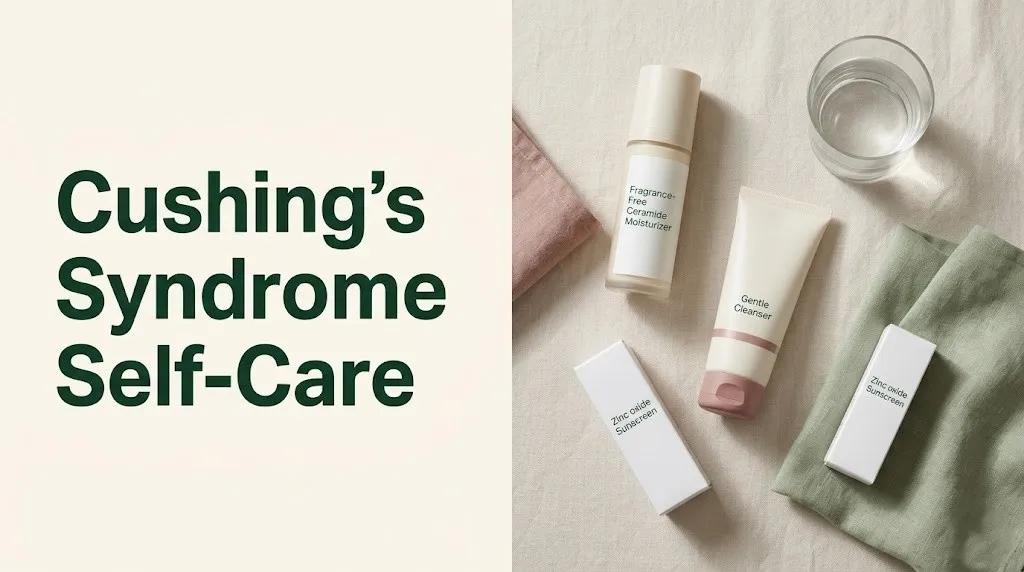
A skincare routine for Cushing’s syndrome should center on three non-negotiable priorities: gentle cleansing that does not further compromise the already-disrupted skin barrier, consistent barrier repair with ceramide-containing and humectant-rich formulations, and reliable broad-spectrum photoprotection.
This is not a routine for addressing fine lines or brightening dull skin. Those goals are secondary to protecting skin that is structurally fragile, barrier-impaired, and slow to heal from any insult. Introducing high-strength actives into a Cushing’s-affected skin routine is counterproductive. The skin does not have the barrier resilience to tolerate them without accelerating irritation and barrier damage.
The Endocrine Society notes that skin atrophy is one of the most consistent physical findings in Cushing’s syndrome, present in up to 50% to 60% of patients in clinical series. A routine built for atrophic skin is fundamentally different from a standard skincare routine.
Morning Routine for Cushing’s Syndrome-Affected Skin:
| Step | Product Category | Key Ingredient to Look For | Why |
|---|---|---|---|
| 1. Cleanse | Gentle, fragrance-free, non-foaming cleanser | Glycerin (INCI: glycerin), sodium PCA | Removes overnight residue without stripping ceramides |
| 2. Hydrate | Alcohol-free toner or hydrating mist | Sodium hyaluronate, allantoin | Adds water content to compromised barrier |
| 3. Moisturize | Ceramide-rich moisturizer | Ceramide NP, ceramide AP, ceramide EOP, cholesterol, panthenol | Replenishes lipid barrier, reduces TEWL |
| 4. Protect | Broad-spectrum mineral sunscreen, SPF 30 minimum | Zinc oxide (INCI: zinc oxide), titanium dioxide | Prevents UV-driven collagen degradation and PIH worsening |
Evening Routine for Cushing’s Syndrome-Affected Skin:
| Step | Product Category | Key Ingredient to Look For | Why |
|---|---|---|---|
| 1. Cleanse | Same gentle cleanser as AM | Glycerin, sodium PCA | Removes sunscreen and environmental particles gently |
| 2. Treatment (if applicable) | Barrier-calming serum | Niacinamide at 2% to 5%, centella asiatica extract, panthenol | Supports ceramide synthesis, calms inflammation, aids repair |
| 3. Moisturize | Rich ceramide moisturizer or emollient balm | Ceramide NP, AP, EOP, dimethicone, squalane | Occlusive-assisted barrier sealing overnight |
Avoid all formulations containing: alcohol denat, sodium lauryl sulfate (SLS), synthetic fragrance, high-concentration essential oils, retinol, tretinoin, high-strength alpha-hydroxy acids (above 5% glycolic or lactic acid), and benzoyl peroxide in concentrations above 2.5%, as these all have the potential to further compromise an already fragile skin barrier.
Individuals on systemic corticosteroid therapy for iatrogenic Cushing’s syndrome should discuss their complete topical routine with their prescribing endocrinologist or dermatologist before adding any active-containing products, as the barrier is likely in an even more compromised state than in endogenous Cushing’s.
Key Takeaway: In Cushing’s syndrome, the skin barrier is structurally compromised by cortisol-driven ceramide depletion and collagen loss, so every skincare decision should prioritize gentle cleansing, ceramide-rich barrier repair, and broad-spectrum mineral SPF before any other concern.
Managing Thin and Fragile Skin with Cushing’s Syndrome
Managing thin, fragile skin in Cushing’s syndrome requires protective habits that go well beyond choosing the right moisturizer. The skin is genuinely more susceptible to tearing, bruising, and prolonged healing because the physical structure supporting it has been compromised at the collagen level.
According to a clinical review published in the Journal of Clinical Endocrinology and Metabolism, skin atrophy in Cushing’s syndrome results from glucocorticoid-mediated suppression of both collagen synthesis and epidermal proliferation. This is not just surface dryness. The dermis itself is thinner, and the epidermis has reduced cell renewal capacity. Standard skincare advice aimed at normal skin does not adequately account for this degree of structural change.
Protective practices for Cushing’s-affected fragile skin:
- Wear protective clothing on the forearms and legs during activities that involve contact with surfaces. Lightweight, long-sleeved fabrics significantly reduce the risk of skin tears from minor physical contact.
- Apply moisturizer to the arms and legs twice daily without exception. The occlusive layer from emollients like dimethicone and squalane reduces friction-induced damage.
- Use non-adhesive wound dressings or soft padding over bony prominences if skin tears are occurring regularly. Adhesive tapes and bandages should be removed with great care: wet them first to soften the adhesive. Ripping adhesive off Cushing’s-thinned skin can cause significant skin tears.
- Avoid skin-on-skin friction in intertriginous areas (groin, underarms, skin folds), where Cushing’s-related fat redistribution increases contact and moisture, creating a secondary maceration and skin breakdown risk.
- Apply a fragrance-free barrier cream containing zinc oxide or petrolatum (INCI: white petrolatum) to skin fold areas prone to friction and moisture accumulation.
- Use only electric razors rather than blade razors on fragile skin areas, as the risk of cutting thinned skin with a blade is substantially higher than in people without skin atrophy.
Quick Tip:
- When applying moisturizer to fragile skin, use gentle pressing motions rather than rubbing strokes. Rubbing applies lateral shear force to already weakened dermal connective tissue.
- Choose pump dispensers over jar packaging. Repeated finger dipping into a jar introduces bacteria and requires more physical contact with fragile skin during product application.
- Look for “skin protectant” labeling on barrier products. The FDA’s OTC drug classification for skin protectants includes petrolatum and zinc oxide as Category I (generally recognized as safe and effective).
Treating Stretch Marks Caused by Cushing’s Syndrome
Stretch marks in Cushing’s syndrome are not the same as the stretch marks associated with rapid growth or pregnancy. They are specifically a consequence of the combination of rapid fat redistribution (which stretches the skin) and severely weakened dermal collagen (which means the dermis tears rather than stretching), resulting in striae distensae that are typically wider, deeper, and more purple or red (striae rubrae) than growth-related striae.
There is no topical treatment that erases established striae. That is a foundational reality of striae dermatology. What topical care can do is support the skin around the striae, potentially reduce the progression of early striae rubrae, and improve the appearance of striae as they mature toward the paler striae albae phase.
According to a 2019 systematic review published in the Journal of the American Academy of Dermatology, the most evidence-supported topical interventions for striae include tretinoin (in people without the skin fragility and barrier compromise seen in Cushing’s syndrome, where it is generally contraindicated) and certain laser and energy-based therapies delivered by a board-certified dermatologist. For people with Cushing’s-affected skin, gentle supportive options are the appropriate focus.
Supportive topical approaches for Cushing’s-associated striae:
- Centella asiatica extract (gotu kola): This botanical contains asiaticoside, madecassoside, and asiatic acid, which have shown in clinical studies to support collagen synthesis in connective tissue. A 2015 study in the International Journal of Cosmetic Science found centella asiatica-containing formulations modestly improved early striae appearance with good tolerability. Safe for fragile skin.
- Panthenol (INCI: panthenol) at 1% to 5%: Provitamin B5 supports wound healing and tissue repair. It is well-tolerated on fragile skin and carries no photosensitivity risk.
- Consistent hydration of the surrounding skin with ceramide-containing moisturizers reduces the contrast between striae and surrounding skin as skin hydration improves texture.
- Avoid products marketed specifically for stretch marks that contain high-concentration retinol, glycolic acid above 5%, or essential oils. The “active” concentration in these products is often insufficient to produce meaningful change while the irritation risk is real on Cushing’s-compromised skin.
Referral note: If striae are progressing rapidly or becoming symptomatic, a board-certified dermatologist experienced in procedural dermatology can evaluate whether fractional laser therapy or microneedling (after cortisol is controlled) is appropriate. Bring photographs documenting progression over time and a complete medication list to that appointment.
Caring for Cushing’s Syndrome Bruising and Skin Tears
Easy bruising and spontaneous skin tears in Cushing’s syndrome occur because collagen loss in both the dermis and the walls of small blood vessels leaves them poorly supported. Minor contact causes blood to leak from capillaries into the surrounding tissue, producing ecchymoses (bruises) that appear from what should be inconsequential bumps.
Preventing and managing bruising and skin tears requires both topical care and behavioral modification. The two work together.
Behavioral protective measures:
- Pad sharp furniture edges and corners in areas where you frequently work or move. The forearms, shins, and hands are the most vulnerable areas for contact bruising in Cushing’s syndrome.
- Move carefully in narrow spaces. The spatial awareness that prevents accidental contact is genuinely relevant here, not as a trivial tip but as a real risk-reduction behavior.
- Avoid wearing tight jewelry, watches, or watchbands with rigid buckles. These create localized pressure points on fragile skin and can cause subcutaneous bleeding with sustained wear.
Topical management when a skin tear occurs:
- Clean the area gently with sterile saline or mild soap and lukewarm water. Do not use hydrogen peroxide or alcohol on open wounds, as both damage tissue and impair healing in normal skin, and the effect is amplified in already-compromised Cushing’s skin.
- Apply a thin layer of petrolatum (white petrolatum/Vaseline) to keep the wound bed moist. Moist wound healing is consistently supported by clinical wound care evidence for accelerating re-epithelialization.
- Cover with a non-adhesive silicone wound dressing or a non-adherent pad secured with paper tape applied to surrounding skin rather than over the wound.
- Change the dressing every 24 to 48 hours or when it becomes saturated.
- Monitor for signs of infection: increasing redness, warmth, swelling, purulent discharge, or fever. If any of these appear, contact your primary care physician or endocrinologist promptly.
The American Academy of Dermatology recommends that anyone with chronic skin fragility causing repeated wounds that do not heal within two to three weeks consult a board-certified dermatologist, bringing a wound healing diary and a list of all systemic medications, as some medications used in Cushing’s treatment can further affect wound healing.
People with diabetes as a comorbidity of Cushing’s syndrome face compound wound healing impairment and should escalate any skin wound that does not show clear progress within seven days to their care team.
Key Takeaway: Bruising and skin tears in Cushing’s syndrome are structural problems caused by collagen loss at the dermal and vascular level. Moist wound healing with petrolatum and non-adhesive dressings, combined with physical protective behaviors, is the evidence-aligned approach.
Acne and Oily Skin from Cushing’s Syndrome
Acne in Cushing’s syndrome is an acneiform eruption driven by androgen-like effects of elevated cortisol on sebaceous glands, not the same as standard comedonal or inflammatory acne. This distinction matters for how you approach it.
The eruption typically presents as papules and pustules on the face, chest, and upper back. Unlike standard acne, which often involves comedones (blackheads and whiteheads) as a prominent feature, Cushing’s-related acneiform eruption is often primarily papulopustular. The skin is also more fragile and barrier-impaired than in typical acne-prone skin, which means that standard high-strength acne treatments can cause significant irritation and barrier damage.
Appropriate management for Cushing’s acneiform eruption:
- Niacinamide (INCI: niacinamide) at 2% to 5%: This form of vitamin B3 reduces sebum secretion, calms visible redness, and supports ceramide synthesis, making it a dual-function option for Cushing’s skin. A 2021 study in the International Journal of Dermatology confirmed niacinamide’s sebum-regulating and anti-inflammatory properties with good tolerability in people with sensitive and barrier-compromised skin.
- Azelaic acid (INCI: azelaic acid) at 10% to 15% (OTC to prescription range): Azelaic acid addresses inflammatory papules and pustules through its antimicrobial activity against Cutibacterium acnes and its anti-inflammatory effect on follicular keratinocytes. It is considerably more suitable for fragile Cushing’s skin than benzoyl peroxide at standard concentrations or topical retinoids. The FDA classifies 15% azelaic acid gel (Finacea) as a prescription product; 10% is available OTC.
- Use a gentle, non-comedogenic moisturizer even on oily areas. Stripping oily skin with harsh cleansers in Cushing’s syndrome worsens the underlying barrier impairment without meaningfully reducing sebum production.
- Avoid: benzoyl peroxide above 2.5%, high-strength salicylic acid (above 1%), astringent toners with high alcohol content, and physical scrubs. All of these worsen barrier disruption on already atrophic skin.
People with Fitzpatrick skin types IV to VI should be especially cautious with any acne treatment that causes dryness or micro-irritation, as post-inflammatory hyperpigmentation from inflammation or irritation adds a separate visible skin concern on top of Cushing’s-related hyperpigmentation.
Referral note: If acneiform eruptions are moderate to severe, not responding to gentle niacinamide and azelaic acid approaches, or becoming painful, a board-certified dermatologist should evaluate whether prescription-level topical or oral therapy (such as low-dose doxycycline for its anti-inflammatory properties rather than antibiotic effect) is appropriate in the context of Cushing’s syndrome management.
Hyperpigmentation in Cushing’s Syndrome
Hyperpigmentation in Cushing’s syndrome, particularly in its ACTH-dependent form (Cushing’s disease from a pituitary adenoma or ectopic ACTH source), is a direct biological consequence of excess ACTH stimulating melanocortin-1 receptors on melanocytes in the skin.
This is mechanistically different from UV-induced hyperpigmentation or post-inflammatory hyperpigmentation, although both of those can co-occur and compound the appearance of ACTH-driven pigmentation. The pattern in ACTH-dependent Cushing’s often involves skin folds, pressure areas, mucous membranes, and areas of prior trauma, producing a generalized bronze or tanned appearance. It is one of the physical findings that suggests ACTH excess rather than a purely adrenal source of cortisol.
According to the Endocrine Society’s 2015 clinical practice guidelines for Cushing’s syndrome, hyperpigmentation is an important clinical finding that helps distinguish ACTH-dependent from ACTH-independent forms. This means treating the hyperpigmentation with topical agents addresses only the visible surface, while the underlying drive is medical.
Topical approaches that are safe for Cushing’s-affected skin:
| Ingredient | Concentration Range | Mechanism | Suitability for Cushing’s Skin |
|---|---|---|---|
| Niacinamide | 2% to 5% | Inhibits melanosome transfer to keratinocytes | Well-tolerated on fragile skin; no irritation risk |
| Azelaic acid | 10% to 20% | Inhibits tyrosinase, selectively targets hyperactive melanocytes | Suitable; prescription at 20%, OTC at 10% |
| Tranexamic acid | 2% to 5% (topical) | Inhibits plasminogen activator, reducing melanin transfer | Emerging evidence; well-tolerated, non-irritating |
| Broad-spectrum SPF 30+ (zinc oxide-based) | As directed | Prevents UV from worsening ACTH-driven pigmentation | Non-negotiable daily use for all Fitzpatrick types |
Kojic acid and high-concentration vitamin C (ascorbic acid) can be effective brightening agents in people with intact skin barriers, but the irritation risk on Cushing’s atrophic skin makes them generally unsuitable as first-choice options without dermatologist guidance. Both are pH-sensitive and can cause transient redness and stinging that is amplified on fragile skin.
Hyperpigmentation driven by ACTH will not resolve with topical products alone. It typically improves after successful treatment of the underlying cortisol excess, as falling ACTH levels reduce the melanocyte stimulation. Managing this with realistic expectations is important.
Key Takeaway: ACTH-driven hyperpigmentation in Cushing’s disease responds primarily to successful medical treatment of cortisol excess; topical niacinamide, azelaic acid, and daily mineral SPF help manage surface appearance without adding irritation risk to fragile skin.
Diet and Nutrition Self-Care for Cushing’s Syndrome
Nutritional self-care for Cushing’s syndrome addresses the specific metabolic consequences of chronic hypercortisolism: impaired glucose metabolism, accelerated bone loss, muscle protein catabolism, weight gain (particularly central adiposity), and elevated cardiovascular risk.
Generic “eat healthy” advice does not serve this population. The nutritional priorities are specific and hierarchy-driven. Managing what goes in matters as much as the skincare you put on.
The most evidence-grounded nutritional priorities for Cushing’s syndrome, aligned with registered dietitian guidance for endocrine conditions:
- Calcium and vitamin D for bone protection: Chronic cortisol excess causes glucocorticoid-induced osteoporosis through direct suppression of osteoblast activity and reduced calcium absorption in the gut. The Endocrine Society’s 2010 clinical practice guidelines for glucocorticoid-induced osteoporosis recommend 1,200 mg elemental calcium and 800 to 1,000 IU vitamin D3 daily for people on long-term glucocorticoids. These same thresholds are clinically referenced for endogenous Cushing’s syndrome. Calcium-rich foods include dairy, fortified plant milks, canned fish with bones, and leafy greens like kale. Supplementation is appropriate where diet cannot meet targets, and should be confirmed with the treating endocrinologist.
- Protein adequacy for muscle preservation: Cortisol accelerates muscle protein catabolism, specifically degrading skeletal muscle for gluconeogenesis. Adequate dietary protein (generally 1.2 to 1.6 g per kilogram of body weight per day, per clinical nutrition consensus for catabolic states) supports maintaining what muscle mass remains and optimizing the benefit of any physical activity.
- Blood glucose management through diet: Cushing’s syndrome causes insulin resistance. A diet lower in refined carbohydrates and higher in fiber, vegetables, and lean proteins helps moderate postprandial blood glucose spikes. This is not a strict diabetic diet for everyone with Cushing’s, but it is a relevant consideration, especially as steroid-related hyperglycemia is a genuine comorbidity risk.
- Sodium awareness: Cortisol has mild mineralocorticoid activity, and some people with Cushing’s syndrome experience fluid retention and hypertension. A diet with moderate sodium intake (the Dietary Guidelines for Americans 2020-2025 target of under 2,300 mg daily) is appropriate without specific physician guidance to restrict further.
Referral note: A registered dietitian with experience in endocrine conditions should develop any personalized nutrition plan for someone with Cushing’s syndrome, particularly when diabetes, hypertension, or kidney disease are comorbid. Bring current bloodwork and a list of all medications, as some Cushing’s treatments affect electrolyte balance and nutrient absorption.
Exercise and Physical Activity Self-Care for Cushing’s Syndrome
Physical activity is a supported and important part of Cushing’s syndrome self-care, but the type, intensity, and progression of exercise must account for the specific physical realities of this condition: significant muscle weakness (proximal myopathy), elevated fracture risk from bone loss, impaired cardiovascular fitness, and fatigue.
The analogy here is useful: trying to run a standard exercise program with Cushing’s-related myopathy is like being handed a marathon training plan after a month of bed rest. The goal is right. The starting point is not acknowledged. The first priority is meeting the body where it currently is.
The Endocrine Society recommends physical activity for people with Cushing’s syndrome as a supportive measure for muscle strength, bone density maintenance, and cardiovascular health, with the guidance that high-impact activities (running on hard surfaces, jumping, heavy weightlifting) should generally be avoided while active hypercortisolism and significant bone loss are present.
Evidence-based exercise approaches for Cushing’s syndrome:
| Exercise Type | Evidence for Benefit | Modification for Cushing’s | Frequency Guidance |
|---|---|---|---|
| Gentle resistance training | Supports muscle preservation against cortisol catabolism | Light resistance, body weight or bands; avoid heavy loads | 2 to 3 times per week; supervised initially |
| Walking | Cardiovascular benefit, low fracture risk | Start with 10 to 15 minutes; progress based on tolerance | Daily if tolerated |
| Swimming or water exercise | Low impact; protects fragile skin from friction | Use rash guards to protect fragile skin in pool environments | 2 to 3 times per week |
| Gentle yoga (chair or restorative) | Balance, flexibility, stress-reduction evidence | Avoid inversions; avoid positions stressing osteoporotic spine | 2 to 3 times per week |
| High-impact activities (running, HIIT) | Not contraindicated in general populations | Avoid while active hypercortisolism and low bone density are present | Reassess after treatment and DEXA improvement |
A physical therapist familiar with endocrine-related myopathy and osteoporosis should design the initial exercise program for people with Cushing’s syndrome, particularly those with confirmed bone density loss on DEXA scan.
People who are post-adrenalectomy or post-transsphenoidal surgery require additional guidance from their surgical and endocrinology team before resuming physical activity, as adrenal insufficiency in the immediate post-surgical period requires management before exercise stress is added.
Key Takeaway: Gentle resistance training and low-impact walking are the most appropriate starting points for physical activity self-care in Cushing’s syndrome, with high-impact exercise appropriately deferred until cortisol is controlled and bone density is re-evaluated.
Bone and Muscle Health Self-Care with Cushing’s Syndrome
Bone and muscle health represent two of the most clinically significant physical self-care priorities in Cushing’s syndrome because glucocorticoid-induced bone loss and skeletal muscle atrophy are progressive, measurable, and carry real consequences including fracture and functional decline.
Cortisol excess accelerates osteoclast activity (bone breakdown) while suppressing osteoblast activity (bone formation), creating a net negative bone balance that can lead to osteopenia and osteoporosis even in younger adults with Cushing’s syndrome. A 2021 analysis in the Journal of Clinical Endocrinology and Metabolism found that vertebral fracture prevalence in Cushing’s syndrome patients was significantly higher than in age-matched controls, with many fractures occurring below the standard radiological threshold for osteoporosis diagnosis.
Practical bone health self-care:
- Confirm bone density status with a DEXA scan as part of your endocrinology workup. Knowing your T-score and Z-score gives you and your care team a baseline for tracking change.
- Discuss calcium and vitamin D supplementation with your endocrinologist, as mentioned in the nutrition section. These are the foundational supplements with the strongest evidence for glucocorticoid-induced bone loss prevention.
- Weight-bearing activity (even gentle walking) provides mechanical loading that stimulates bone formation. This is part of why complete rest is not recommended.
- Fall prevention matters. Cushing’s-related myopathy reduces balance and strength, increasing fall risk, which combined with low bone density creates a fracture-susceptible situation. Remove loose rugs, use grab bars in bathrooms, and ensure good lighting throughout your home.
For muscle health specifically:
- Proximal muscle weakness (affecting the hips and thighs primarily) is characteristic of Cushing’s syndrome and makes activities like rising from a chair or climbing stairs difficult. Seated leg press exercises and chair-supported squats, done with light resistance, target exactly this muscle group safely.
- Adequate protein intake works in combination with resistance exercise to slow the rate of cortisol-driven catabolism. Neither protein nor exercise works optimally in isolation for muscle preservation in this population.
People over 65 with Cushing’s syndrome face compounded bone and muscle risk from age-related sarcopenia and osteopenia layered on top of cortisol-induced losses. A geriatrician or geriatric physical therapist can provide age-specific modifications that account for both.
Sleep Self-Care for Cushing’s Syndrome
Sleep disruption in Cushing’s syndrome is not simply a result of feeling unwell. It is a direct biological consequence of cortisol’s normal circadian pattern being overridden by pathological hypersecretion.
In a healthy person, cortisol peaks in the early morning and falls to its lowest at midnight to 3 AM, permitting slow-wave restorative sleep. In Cushing’s syndrome, the normal diurnal pattern is disrupted. The late-night salivary cortisol test exploits this, measuring cortisol at midnight when it should be at its nadir. When cortisol remains elevated at night, the physiological conditions for restorative sleep are persistently absent.
Sleep hygiene practices do not resolve the underlying hormonal disruption, but they do provide the best possible conditions for sleep within the constraints of that disruption. Research from the NIH National Center for Complementary and Integrative Health supports the following for chronic illness-related sleep disruption:
- Maintain a consistent sleep and wake time seven days a week, including weekends. Circadian anchoring through behavioral consistency partially offsets the hormonal disruption.
- Keep the bedroom cool (between 65 and 68 degrees Fahrenheit). Body temperature drops are a normal part of sleep initiation physiology. Cortisol-related thermoregulatory disruption makes a cool sleeping environment more, not less, relevant.
- Avoid screens for at least 60 minutes before bed. Blue light suppresses melatonin, and people with disrupted cortisol rhythms have reduced compensatory capacity for additional melatonin-suppressive signals.
- Avoid caffeine after noon. The half-life of caffeine is approximately 5 to 6 hours. In someone with sleep already fragmented by elevated nocturnal cortisol, afternoon caffeine compounds the difficulty.
- Short daytime napping (20 minutes maximum) may help manage fatigue without significantly worsening nighttime sleep architecture. Longer naps increase sleep pressure fragmentation in people with already disrupted circadian rhythms.
If sleep disruption is severe, persistent, or accompanied by suspected sleep apnea (a known comorbidity in Cushing’s syndrome due to fat deposition in the neck and throat tissues), an endocrinologist or primary care physician should be involved in evaluating whether formal sleep medicine consultation is warranted.
Key Takeaway: Sleep disruption in Cushing’s syndrome has a direct hormonal cause in disrupted cortisol circadian patterns; sleep hygiene practices create the best available conditions for sleep but cannot resolve the issue until cortisol is medically controlled.
Mental Health and Emotional Self-Care for Cushing’s Syndrome
Mental health self-care for Cushing’s syndrome deserves specific attention because the neuropsychiatric effects of chronic hypercortisolism are not a secondary concern or a matter of “coping.” They are a direct biological consequence of elevated cortisol acting on the brain.
Cortisol excess causes documented structural and functional changes in the hippocampus and prefrontal cortex, regions involved in mood regulation, emotional processing, and memory. A 2016 study published in the Journal of Clinical Endocrinology and Metabolism found that rates of major depression, anxiety disorders, and cognitive impairment were substantially elevated in people with active Cushing’s syndrome compared to the general population. These are neurobiological effects, not simply understandable emotional responses to being ill.
This distinction matters for self-care because it sets realistic expectations. Psychological self-care practices can meaningfully support coping, mood, and cognitive function. They will not reverse hippocampal changes caused by years of cortisol excess. Those changes often partially improve after successful medical treatment, but the timeline is months to years.
Evidence-based psychological self-care practices for Cushing’s syndrome:
- Cognitive behavioral therapy (CBT): CBT is the most consistently evidence-supported psychological intervention for depression and anxiety in chronic illness populations, per the American Psychological Association’s clinical practice guidelines. It teaches concrete skills for identifying and modifying unhelpful thought patterns. For Cushing’s syndrome patients, CBT adapted for chronic illness (addressing illness-related cognitive distortions, activity limitations, and relationship impacts) is the most applicable form.
- Mindfulness-based stress reduction (MBSR): An 8-week structured program with strong RCT evidence for reducing depression and anxiety in chronic illness. It does not reduce cortisol in Cushing’s syndrome (the cortisol excess is tumor or medication-driven, not stress-driven), but it addresses the psychological impact of living with a difficult condition.
- Journaling with structured reflection: Expressive writing about illness experiences has preliminary research support for reducing psychological distress in chronic illness contexts. This is a low-barrier daily practice.
- Social connection maintenance: Social isolation worsens depression in chronic illness. Maintaining contact with friends, family, or peer support communities (the Pituitary Network Association maintains patient community resources) provides social buffering against the isolating effects of Cushing’s syndrome.
Referral note: When depression, anxiety, or cognitive difficulties are significantly interfering with daily function, relationships, or self-care capacity, a licensed psychologist or psychiatrist familiar with chronic endocrine conditions should be involved in care. Bring a description of specific symptoms, their onset timing relative to the Cushing’s diagnosis, and any medications being used, as some Cushing’s treatments affect mood.
Body Image Self-Care for Cushing’s Syndrome
Body image distress in Cushing’s syndrome is one of the most underaddressed dimensions of the condition, yet it profoundly affects quality of life, treatment adherence, and the willingness to engage in other self-care behaviors.
Cushing’s syndrome causes visible, rapid, and socially conspicuous physical changes: central weight gain with fat redistribution to the abdomen, face (moon face), and upper back (buffalo hump), facial plethora (redness), facial hair in women, skin thinning, and prominent striae. These changes occur within months. They are frequently commented on by others. They are difficult to conceal. And they are not within the person’s control through diet or exercise while cortisol remains pathologically elevated.
Research published in the Pituitary journal (a peer-reviewed endocrinology publication) has found that body image distress persists in many Cushing’s syndrome patients even after successful biochemical remission, sometimes for years. The physical changes may partially resolve, but the psychological relationship with one’s body requires its own recovery process.
Practical body image self-care approaches:
- Dress for comfort and fit rather than concealment. Clothing that fits the current body, rather than clothing that previously fit, reduces daily physical discomfort and the psychological distress of fighting against changed body proportions.
- Identify two or three things your body does that you value that are not appearance-related: capacity for movement, the ability to care for people you love, sensory pleasure in food or music. Cognitive anchoring to function over appearance is a concrete skill taught in acceptance and commitment therapy (ACT), which has emerging evidence in chronic illness body image work.
- Connect with others who have Cushing’s syndrome. Peer communities of people who recognize the specific appearance changes of this condition reduce the isolation and social misunderstanding that compound body image distress.
- Address body image distress explicitly with a therapist when it is affecting relationships, avoidance of social situations, or willingness to seek medical care. Body image distress in the context of Cushing’s syndrome is clinically significant and appropriate for specific therapeutic intervention, not just general reassurance.
People who have undergone treatment and are in remission often find that the recovery of body image lags behind the biochemical and even physical recovery. This is a documented clinical observation, not a personal failure.
Self-Care After Cushing’s Syndrome Treatment or Surgery
The post-treatment period in Cushing’s syndrome requires a distinct self-care approach because the abrupt or gradual fall in cortisol after surgery, radiation, or medication creates a new physiological reality: the body adjusts to lower cortisol levels, often passing through a period of adrenal insufficiency that can be as medically significant as the original hypercortisolism.
After successful transsphenoidal surgery for Cushing’s disease (pituitary adenoma removal), the adrenal glands, which have been chronically suppressed by the tumor’s excess ACTH, need time to recover normal function. This period of secondary adrenal insufficiency requires hydrocortisone replacement therapy managed by the endocrinologist, and the self-care implications are significant.
Key self-care practices in the post-treatment recovery period:
- Follow the hydrocortisone tapering schedule exactly as prescribed. Do not self-taper faster than directed. Rapid reduction can precipitate adrenal crisis.
- Learn to identify and respond to signs of adrenal insufficiency: unusual fatigue, nausea, dizziness on standing, abdominal pain. Carry a medical alert card identifying Cushing’s disease and steroid dependency.
- Maintain medical alert documentation. The Endocrine Society provides guidance that people on replacement corticosteroids should carry documentation and know how to access emergency “stress dosing” instructions for illness, injury, or surgery.
- Skin recovery post-treatment: cortisol levels falling toward normal allows fibroblast activity to resume, ceramide synthesis to improve, and collagen to begin rebuilding. This process takes months. The gentle barrier-focused skincare routine from earlier sections remains appropriate throughout this period.
- Expect emotional fluctuation post-surgery. The brain’s adjustment to normalized cortisol levels after years of excess is not instantaneous. Mood swings, fatigue, and cognitive “fog” in the weeks to months after surgery are documented by multiple clinical series and should be discussed with both the endocrinologist and a mental health provider.
Physical activity can be cautiously reintroduced after surgical clearance from the endocrinology and neurosurgery teams. Begin at the lowest appropriate level and progress based on energy and adrenal stability.
Key Takeaway: Post-treatment self-care in Cushing’s syndrome requires strict adherence to cortisol replacement therapy, medical alert identification, and a patience-grounded approach to the months-long process of physical and psychological recovery.
When Self-Care Is Not Enough: Knowing When to Seek Professional Help
Self-care in Cushing’s syndrome is always a companion to professional medical management, not a replacement for it. Knowing when a symptom or experience has moved outside the scope of self-care and requires professional attention is itself a self-care skill.
The clearest thresholds for professional escalation:
- Any wound, skin tear, or ulceration that does not show clear improvement within seven to ten days of consistent moist wound care should be evaluated by a board-certified dermatologist or the treating physician, as impaired wound healing in Cushing’s syndrome can allow superficial wounds to become complicated infections.
- Depressive symptoms, suicidal thoughts, or anxiety that is interfering with daily function requires immediate referral to a licensed psychologist or psychiatrist. The neurobiological mechanism of cortisol-driven depression makes this a medical dimension of the condition, not a personal weakness. Contact a mental health provider or primary care physician at the first sign of worsening mood.
- Bone pain, particularly in the back, hips, or wrists, should be reported to the endocrinologist and evaluated for possible vertebral or stress fracture, given the known fracture risk in Cushing’s syndrome.
- New or worsening hypertension, blood glucose values above personal care targets, or symptoms of adrenal insufficiency (extreme fatigue, nausea, low blood pressure) require prompt medical attention, not self-management.
- If skin changes (fragility, wound healing, acne, hyperpigmentation) are progressing despite consistent self-care, a board-certified dermatologist with experience in endocrine-related skin conditions should be consulted, bringing photographs documenting progression and a complete medication list.
General self-care advice found in popular health media is almost never calibrated for Cushing’s syndrome’s specific risks. When advice designed for general wellness does not match the reality of living with this condition, trust the discrepancy and consult the appropriate specialist.
Frequently Asked Questions About Cushing’s Syndrome Self-Care
What self-care practices help with Cushing’s syndrome skin problems?
The most evidence-aligned self-care practices for Cushing’s syndrome skin involve gentle, fragrance-free cleansing, twice-daily ceramide-containing moisturizer application (ceramide NP, ceramide AP, and ceramide EOP), and daily broad-spectrum mineral sunscreen with zinc oxide.
Physical protection habits, including wearing lightweight long-sleeved clothing and avoiding adhesive products directly on fragile skin, significantly reduce skin tear and bruising risk.
Niacinamide at 2% to 5% and azelaic acid at 10% address both the acneiform eruption and mild hyperpigmentation associated with Cushing’s without the irritation risk of stronger actives on compromised skin.
Can you use retinol on skin affected by Cushing’s syndrome?
Retinol and prescription retinoids (tretinoin, tazarotene) are generally not appropriate for skin actively affected by Cushing’s syndrome because the skin is already severely atrophic, barrier-impaired, and slow to heal.
Retinoids accelerate cell turnover and temporarily disrupt the skin barrier, which is counterproductive in a skin that is already structurally compromised by collagen loss and ceramide depletion.
After successful medical treatment of Cushing’s syndrome and confirmed skin barrier recovery, a board-certified dermatologist can evaluate whether low-concentration retinol introduction is appropriate, starting at 0.025% with close monitoring.
Why does Cushing’s syndrome cause stretch marks and what can help?
Cushing’s syndrome causes stretch marks (striae distensae) because the combination of rapid fat redistribution stretching the skin and severely cortisol-damaged collagen in the dermis means the skin tears rather than elastically accommodating the change.
These striae are typically wider, deeper, and more intensely purple or red than typical growth-related striae, and they appear in areas of greatest fat expansion.
Topical centella asiatica extract and panthenol can provide modest supportive benefit for early striae; established striae benefit most from optimizing surrounding skin health and, after cortisol is controlled, potentially procedural treatments evaluated by a board-certified dermatologist.
What should you eat if you have Cushing’s syndrome?
Nutritional priorities for Cushing’s syndrome include adequate calcium (1,200 mg elemental daily) and vitamin D3 (800 to 1,000 IU daily) to protect against glucocorticoid-induced bone loss, adequate dietary protein (approximately 1.2 to 1.6 g per kilogram of body weight) to counter muscle protein catabolism, and a dietary pattern lower in refined carbohydrates to moderate the insulin resistance associated with chronic hypercortisolism.
These targets should be individualized by a registered dietitian with endocrine condition experience, particularly when diabetes, hypertension, or kidney disease is present as a comorbidity.
Sodium awareness (targeting under 2,300 mg daily without specific physician direction to restrict further) addresses the fluid retention that some people with Cushing’s syndrome experience from cortisol’s mild mineralocorticoid activity.
How does Cushing’s syndrome affect mental health and what actually helps?
Cushing’s syndrome causes depression, anxiety, and cognitive impairment through direct neurobiological mechanisms, including cortisol-mediated changes to the hippocampus and prefrontal cortex, not only through the psychological stress of being ill.
Cognitive behavioral therapy (CBT) has the strongest evidence base for depression and anxiety in chronic illness populations, per the American Psychological Association’s clinical practice guidelines, and is the appropriate evidence-based first intervention.
Mindfulness-based stress reduction (MBSR), social connection through peer communities, and licensed psychological care for significant symptoms are all evidence-aligned supports that meaningfully address the psychological dimension of Cushing’s syndrome alongside its medical management.
When does self-care stop being enough and you need to see a specialist?
Self-care in Cushing’s syndrome is always a complement to specialist medical management, never a standalone treatment. Specific thresholds requiring professional escalation include: any wound not improving within seven to ten days, depressive symptoms interfering with daily function or including suicidal thoughts, back or bone pain suggesting possible fracture, skin changes progressing despite consistent gentle skincare, and any symptoms of adrenal insufficiency in people who have had Cushing’s treatment.
A board-certified endocrinologist manages the primary condition; a board-certified dermatologist addresses skin symptoms not responding to basic self-care; a licensed psychologist or psychiatrist addresses the neuropsychiatric dimension.
Prompt escalation at these thresholds is not a failure of self-care. It is self-care working as it should: recognizing the boundary between what daily practices can address and what requires clinical expertise.
Living with Cushing’s syndrome means managing a condition that affects nearly every visible and invisible system in your body at once. The self-care practices covered here are not generic wellness suggestions. They are specific, mechanism-grounded, and calibrated to the real biological reality of cortisol excess: the fragile skin, the compromised barrier, the weakened bones, the disrupted sleep, and the neurobiological mood changes that make daily life genuinely difficult.
Start with the skincare: ceramide-based barrier repair, gentle cleansing, and daily mineral SPF. Add the physical and nutritional supports that the evidence consistently backs for bone and muscle health. Take the mental health dimension as seriously as the physical one, because the research is equally clear on both fronts.
You are not managing this condition by willpower or routine alone. You are applying evidence-grounded daily practices that work alongside the medical treatment your endocrinologist is directing. That combination, applied consistently, makes a real, measurable difference in how your skin holds up, how your body functions, and how you experience each day.