TBH Skincare: Honest Ingredient Review for 2026
TBH Skincare has built its reputation on transparency, but the real question is whether its formulations hold up when you look at the actual ingredient lists rather than the brand story. This review examines TBH Skincare product by product, ingredient by ingredient, to give you a clear picture of what you are actually putting on your skin and whether it delivers on the brand’s promises.
The skincare market is saturated with brands claiming honesty, but claims are not the same as formulation quality. According to the American Academy of Dermatology, the best predictor of whether a skincare product will work for your skin is the specific active ingredients in the formula, their concentrations, and how they interact with your individual skin type, not the brand’s marketing language. That distinction matters when you are spending money and trusting something with the skin barrier you rely on every day.
This review covers TBH Skincare’s full product range, the specific actives used and how they function, which skin types benefit most from each product, who should approach certain formulations with care, and how to build an effective routine using TBH Skincare products alongside other actives you may already own.
What Is TBH Skincare
TBH Skincare is an Australian-founded skincare brand positioned around ingredient transparency and accessibility, primarily marketed toward teenagers and young adults navigating acne-prone or reactive skin for the first time. The name TBH, shorthand for “to be honest,” is part of a deliberate brand identity built around clear communication about what is in each product and why it is there.
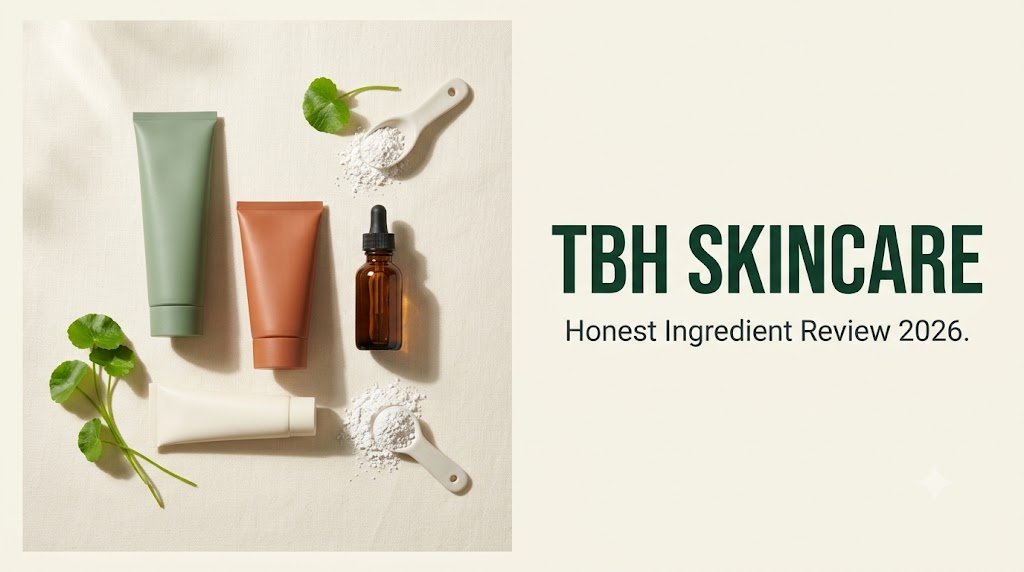
The brand focuses on a core range of cleansers, moisturizers, serums, and targeted treatments. Most products are formulated around well-studied, dermatologically recognized actives including niacinamide (nicotinamide), salicylic acid, hyaluronic acid (sodium hyaluronate), and azelaic acid, rather than proprietary blends with opaque marketing names.
TBH Skincare markets its products as suitable for sensitive and acne-prone skin, free from unnecessary fragrance in most formulations, and accessible at a price point that does not require a significant financial commitment. These are meaningful positioning claims, but they require actual formulation scrutiny to verify.
What the brand does well at the positioning level is avoid the aspirational language that obscures ingredient reality in many skincare brands. Whether the formulations themselves live up to that positioning is what the rest of this review examines.
| Feature | TBH Skincare Position | What to Verify |
|---|---|---|
| Ingredient transparency | Claims clear labeling | Check INCI list order and concentrations |
| Target audience | Teens and young adults | Age-appropriate actives and strengths |
| Skin type focus | Acne-prone and sensitive | Check for irritants and barrier disruptors |
| Price tier | Accessible/drugstore-adjacent | Compare active concentrations to comparable price-point brands |
| Fragrance status | Largely fragrance-free | Verify “parfum” absence on individual INCI lists |
TBH Skincare Product Lineup Overview
TBH Skincare’s core product lineup includes a gel-based cleanser, a lightweight moisturizer, a targeted serum, and a spot treatment, with some formulations also including SPF. The brand keeps its range deliberately concise, which is actually a sign of considered formulation strategy rather than a limitation.
A smaller product range means each product is designed to carry more functional weight in a routine. For a brand targeting skin newcomers, this approach reduces the risk of over-complicating a first routine with redundant products.
The cleanser is the entry point for most TBH Skincare users. It is formulated with mild surfactants and uses salicylic acid as the primary exfoliating active. The moisturizer focuses on barrier support through humectants and emollients rather than heavy occlusive layering. The serum targets specific concerns, with niacinamide and hyaluronic acid as the primary functional ingredients in most formulations.
Across the range, the brand avoids synthetic fragrance (parfum) in its core products, which is an important distinction for acne-prone and sensitive skin types where fragrance is one of the most common contact sensitizers. The FDA requires all fragrance components to be listed collectively as “parfum” or “fragrance” on cosmetic labels, which means individual fragrance chemicals are not always disclosed. TBH Skincare’s decision to omit this ingredient class removes a meaningful source of potential irritation from its formulas.
How to Evaluate a Skincare Brand’s Ingredients
Evaluating a skincare brand’s ingredient quality requires reading the INCI (International Nomenclature of Cosmetic Ingredients) list critically, not just taking the front-of-label claims at face value. The INCI list is ordered from highest to lowest concentration, so the first five ingredients represent the bulk of what you are putting on your skin.
If a brand claims a product is “powered by niacinamide” but niacinamide appears tenth on the INCI list after water, glycerin, and several emollients, the functional contribution of that ingredient may be minimal. Effective niacinamide concentrations in clinical studies start at 2% and produce well-documented results at 5%, according to a 2002 study published in the International Journal of Cosmetic Science.
Reading an INCI list effectively requires a few specific steps:
- Identify the first five ingredients. These form the majority of the formula by weight.
- Locate your target active (niacinamide, salicylic acid, azelaic acid). Its position signals its approximate concentration.
- Check for known irritants: parfum, methylisothiazolinone, propylene glycol at high concentrations, denatured alcohol as a primary solvent.
- Identify the preservation system. Good options include phenoxyethanol, ethylhexylglycerin, and sodium benzoate at appropriate concentrations.
- Note the pH-dependent ingredients. Ascorbic acid, salicylic acid, and AHAs require a low pH (below 4) to function. If a formula also contains ingredients that raise pH significantly, efficacy may be compromised.
- Look for skin-identical ingredients: ceramide NP, ceramide AP, ceramide EOP, cholesterol, and fatty acids signal genuine barrier support rather than surface hydration only.
TBH Skincare Cleanser Formulation and Review
TBH Skincare’s cleanser uses a mild surfactant base alongside salicylic acid (0.5% to 1% range, consistent with OTC acne product FDA classification) as its primary active ingredient. This positions it as a functional acne-management cleanser rather than a purely cosmetic face wash.
Salicylic acid in a cleanser is genuinely useful for acne-prone skin, but with an important caveat. Because the product is rinsed off quickly, the contact time for salicylic acid to work on the follicle lining is limited. A 2018 review in the Journal of Cosmetic Dermatology noted that rinse-off salicylic acid formulations show measurable anti-acne benefit but deliver a lower dose of active to the follicle compared to leave-on formats at equivalent concentrations. This does not make a salicylic acid cleanser ineffective. It means you should not expect a cleanser alone to resolve moderate or severe acne without a complementary leave-on treatment.
The surfactant system in TBH Skincare’s cleanser appears to rely on mild, low-irritation options rather than sodium lauryl sulfate (SLS), which is a strong anionic surfactant associated with barrier disruption at repeated use concentrations. This matters for acne-prone skin because barrier disruption can worsen comedone formation and increase susceptibility to secondary bacterial involvement.
For people with rosacea or a significantly compromised skin barrier, even mild salicylic acid cleansers may warrant caution. A board-certified dermatologist can advise on whether a plain, non-active cleanser would better support barrier repair before actives are reintroduced.
Quick Tip:
- Wet your face with lukewarm water before applying a salicylic acid cleanser; hot water opens the barrier further and can amplify irritation potential.
- Limit use to once daily if you are new to BHAs or if your skin tends toward redness.
- On days when you use a retinoid or a high-concentration AHA in your PM routine, consider using a plain, non-active cleanser instead to avoid stacking exfoliating load.
TBH Skincare Moisturizer Formulation and Review
TBH Skincare’s moisturizer is built around a humectant-forward formula, with glycerin (glycerol) and hyaluronic acid (sodium hyaluronate) as the primary hydrating actives, supported by emollients that help reduce transepidermal water loss (TEWL) without heavy occlusion.
Think of the skin barrier like a freshly plastered wall. Humectants like glycerin draw water up from the lower skin layers and from the environment into the stratum corneum, keeping the plaster flexible and intact. Emollients fill in the cracks between skin cells. Without both components working together, you get surface hydration that does not translate into long-term barrier resilience.
The moisturizer’s lightweight texture is appropriate for oily and acne-prone skin types, which tend to benefit from gel or lotion formats that hydrate without adding excess lipids that could contribute to comedone formation. For people with dry skin or a significantly disrupted barrier, a lightweight formula may not provide sufficient occlusive support to prevent water loss overnight, particularly in low-humidity environments.
According to the Journal of Investigative Dermatology, effective barrier repair in clinically dry or compromised skin typically requires a combination of humectants, emollients, AND occlusive ingredients such as dimethicone (polydimethylsiloxane) or petrolatum. If TBH Skincare’s moisturizer is your primary barrier support product and your skin leans dry, a fragrance-free occlusive layered on top at night is a practical option.
Niacinamide is present in the moisturizer formulation, which adds barrier-reinforcing and sebum-regulating benefits beyond simple hydration. Its position in the INCI list is worth checking on the specific product you are purchasing.
TBH Skincare Serum Ingredients and How They Work
TBH Skincare’s serum is the highest-active product in the range, typically formulated around niacinamide at a functional concentration, with supporting hydration actives including sodium hyaluronate and panthenol (pro-vitamin B5). Serums in general are formulated at lower molecular weight and higher active concentration than moisturizers, which allows deeper delivery to viable skin layers.
The mechanism difference between a serum and a moisturizer matters here. Serums are designed to deliver actives to the skin at higher concentration and are applied to clean, dry skin before heavier formulas are layered on top. This is why the standard application order runs from thinnest to thickest: cleanse, tone or essence if used, serum, moisturizer, SPF (AM only).
A serum formulated with 5% niacinamide produces documented reductions in sebum excretion rates, pore appearance, and surface hyperpigmentation over 8 to 12 weeks of consistent use, based on controlled clinical trial data published in the Journal of the American Academy of Dermatology. That is not instant results. It is a meaningful, measurable improvement that builds gradually through cell turnover cycles.
Panthenol (pro-vitamin B5) in the serum converts to pantothenic acid in skin tissue, where it supports wound healing, barrier integrity, and moisture retention. It is a well-tolerated ingredient with low sensitization potential, appropriate for sensitive skin types including those with atopic tendencies.
For people using prescription topical tretinoin or other prescription retinoids, a niacinamide serum can serve as a useful buffer layer that reduces the dryness and barrier disruption associated with retinoid initiation, as supported by findings in the British Journal of Dermatology.
Key Takeaway: The most practically useful thing to know about the first three sections: TBH Skincare’s product names tell you the brand story, but the INCI list tells you whether the formulation will actually work for your skin.
Niacinamide in TBH Skincare Products
Niacinamide (INCI: Niacinamide; also called nicotinamide) is the most consistent active across TBH Skincare’s range, appearing in both the serum and the moisturizer formulations. At concentrations of 5% to 10%, niacinamide is one of the most evidence-supported multifunctional skincare ingredients available without a prescription.
Its mechanism of action operates across several distinct pathways. For hyperpigmentation, niacinamide inhibits the transfer of melanosomes (melanin-containing vesicles) from melanocytes to surrounding keratinocytes, which reduces the visible darkening of skin over time. For sebum regulation, it modulates sebaceous gland activity. For barrier function, it upregulates the synthesis of ceramides, free fatty acids, and filaggrin, all components of a healthy stratum corneum.
A 2002 study published in the International Journal of Cosmetic Science found that a 5% niacinamide formulation applied twice daily for 8 weeks produced a statistically significant reduction in hyperpigmented spots compared to vehicle control, with benefits noted across multiple skin tones. This is one of the most cited studies on topical niacinamide and establishes 5% as the benchmark effective concentration for pigmentation benefits.
For people with Fitzpatrick skin types IV through VI, niacinamide at 5% is a particularly well-suited active because it addresses post-inflammatory hyperpigmentation (PIH) without the irritation risk that higher-strength acids or retinoids can carry at full concentration. This makes TBH Skincare’s niacinamide-containing products appropriate and relatively safe for medium to deep skin tones when used at labeled directions.
| Niacinamide Benefit | Mechanism | Evidence Level |
|---|---|---|
| Reduces hyperpigmentation | Inhibits melanosome transfer | Strong: multiple RCTs |
| Regulates sebum | Modulates sebaceous gland activity | Strong: clinical studies |
| Strengthens barrier | Increases ceramide and fatty acid synthesis | Strong: multiple clinical studies |
| Reduces pore appearance | Reduces sebum; shrinks follicle opening visually | Moderate: clinical observation |
| Anti-inflammatory | Suppresses cytokine-driven skin inflammation | Moderate: clinical and in vitro evidence |
Salicylic Acid in TBH Skincare for Acne
Salicylic acid (INCI: Salicylic Acid, CAS 69-72-7) is a beta-hydroxy acid (BHA) and the primary acne-targeting active in TBH Skincare’s cleanser and spot treatment. Its lipid-soluble structure is what makes it uniquely effective for acne-prone skin: unlike water-soluble AHAs, it can penetrate through the sebum layer inside a follicle and dissolve the intercellular bonds that hold dead skin cells together within the pore lining.
The result is a gentler, ongoing form of follicle clearance that reduces comedone formation at the source rather than just at the surface. At 0.5% to 2%, salicylic acid is classified as an OTC acne drug by the FDA, meaning it is regulated at the federal level for this specific therapeutic use at these concentrations. Products sold above 2% in the United States would be classified as prescription-only for acne treatment purposes.
TBH Skincare’s salicylic acid formulations appear to sit within the 0.5% to 1% range based on label positioning, which is appropriate for daily use on acne-prone skin without excessive barrier disruption. A 2021 review in the Journal of the American Academy of Dermatology confirmed that 2% salicylic acid used consistently over 12 weeks produced meaningful reductions in both inflammatory and non-inflammatory acne lesions in adolescent and young adult skin.
People who are pregnant should avoid regular use of salicylic acid over large skin surface areas. The FDA has not established a formal cosmetic safety threshold for topical salicylic acid during pregnancy, but systemic absorption risk from widespread body application warrants avoidance. For targeted facial spot treatment at concentrations below 2%, the absorbed dose is low, but a discussion with an obstetric provider or board-certified dermatologist is appropriate before continuing use during pregnancy.
Hyaluronic Acid and Hydration in TBH Skincare
Hyaluronic acid (INCI: Sodium Hyaluronate, CAS 9067-32-7) appears in TBH Skincare’s serum and moisturizer as the primary hydrating humectant. Sodium hyaluronate is the sodium salt form of hyaluronic acid, which is used in cosmetic formulations because its slightly lower molecular weight compared to high-molecular-weight hyaluronic acid allows better penetration into the upper layers of the stratum corneum.
Hyaluronic acid is a glycosaminoglycan naturally occurring in skin tissue. It can hold up to 1,000 times its weight in water, which is why it is so widely used in hydrating formulations. The catch, which most product descriptions omit, is that its actual skin penetration depth depends entirely on molecular weight. Very high molecular weight forms sit on the skin surface and reduce TEWL through a film-forming effect. Lower molecular weight forms penetrate further and hydrate from within the upper dermis.
According to a 2017 study published in the Journal of Cosmetic Dermatology, multi-molecular-weight hyaluronic acid formulations produced superior hydration outcomes at 8 weeks compared to single-weight formulations. If TBH Skincare’s formula uses sodium hyaluronate as its primary form, the bulk of hydration benefit occurs at the stratum corneum level rather than deeper.
For people with severely dry or atopic dermatitis-prone skin, hyaluronic acid alone is not sufficient for barrier repair. The National Eczema Association recommends that moisturizers for atopic-prone skin include all three components of the natural moisturizing factor: humectants, emollients, and occlusives. Using TBH Skincare’s hyaluronic acid serum followed by a ceramide-containing moisturizer and a light occlusive addresses all three layers of this need.
Quick Tip:
- Apply hyaluronic acid to slightly damp skin, not fully dry skin, to maximize water-drawing capacity.
- In dry climates with low ambient humidity, an occlusive layer over hyaluronic acid prevents it from drawing water out of the skin instead of into it.
- Sodium hyaluronate in the top three INCI ingredients signals a functional hydrating concentration.
Key Takeaway: Niacinamide, salicylic acid, and hyaluronic acid are TBH Skincare’s three most important actives. Each one has strong clinical evidence behind it at the right concentration, and understanding how they work is what allows you to use them correctly rather than just hoping they work.
TBH Skincare for Sensitive and Reactive Skin
TBH Skincare can work well for sensitive and reactive skin types, but only in specific formulations and with careful attention to how new products are introduced. The brand’s avoidance of synthetic fragrance (parfum) is the single most important factor in its suitability for sensitive skin.
Fragrance is the leading cause of allergic contact dermatitis from cosmetic products in clinical dermatology practice. The American Academy of Dermatology identifies fragrances as one of the most common skincare allergens, and the EU’s Scientific Committee on Consumer Safety has restricted or banned over 80 specific fragrance chemicals in leave-on cosmetic products as of 2025. A fragrance-free formula removes this risk category entirely for sensitized skin.
That said, sensitive skin types should approach TBH Skincare’s salicylic acid formulations with some caution. Even well-tolerated BHAs can trigger barrier disruption in skin that is already compromised, particularly in people with eczema-prone or rosacea-prone skin. The correct approach is patch testing before full-face application.
To patch test a new TBH Skincare product:
- Apply a small amount of the product to the inner forearm or behind the ear.
- Leave it on for 24 hours without washing.
- Check for redness, itching, burning, or swelling at 24 and 48 hours.
- If no reaction appears, apply the product to a small area of the face for three days before extending to full application.
- If irritation appears, discontinue use and, if symptoms persist beyond 72 hours after cessation, a board-certified dermatologist or allergist can perform formal patch testing to identify the specific sensitizing compound.
For people with active rosacea, starting with TBH Skincare’s niacinamide-only formulations before introducing the salicylic acid cleanser is a more conservative and appropriate approach.
TBH Skincare for Oily and Acne-Prone Skin
TBH Skincare is at its most effective for oily and acne-prone skin types. The combination of salicylic acid for follicular exfoliation, niacinamide for sebum regulation, and lightweight, non-comedogenic moisturization addresses the three primary mechanisms that drive acne development: excess sebum, follicular hyperkeratinization (the buildup of dead skin cells inside pores), and bacterial and inflammatory activity.
Think of oily acne-prone skin like a drain that keeps partially blocking. Salicylic acid acts like the chemical component of a drain cleaner, dissolving the debris inside the pipe. Niacinamide reduces how much debris the pipe is producing in the first place. The lightweight moisturizer keeps the surrounding plumbing functional without adding excess flow.
For people with hormonal acne, specifically the deeper, cystic breakouts along the jawline and chin that are driven by androgen-stimulated sebum production, TBH Skincare’s topical approach will reduce surface congestion and mild to moderate breakouts. However, hormonal acne that is primarily driven by internal androgen fluctuations, such as those associated with polycystic ovary syndrome (PCOS), often requires systemic intervention beyond what any topical skincare can address. A board-certified dermatologist can assess hormonal acne severity and discuss options including topical prescription treatments, oral contraceptives, or spironolactone where appropriate.
| Acne Type | TBH Skincare Relevant Product | Expected Benefit | Limitation |
|---|---|---|---|
| Blackheads (open comedones) | Salicylic acid cleanser | Moderate: follicular clearance | Rinse-off limits contact time |
| Whiteheads (closed comedones) | Salicylic acid cleanser + niacinamide serum | Moderate: reduces sebum and congestion | May need leave-on BHA addition |
| Inflammatory papules | Niacinamide serum + spot treatment | Good: reduces inflammation | Severe cases need prescription treatment |
| Cystic/nodular acne | Limited topical benefit | Minimal for deep cysts | Requires dermatologist evaluation |
| PIH from acne | Niacinamide serum | Good: reduces melanin transfer | Requires consistent use over 8 to 12 weeks |
TBH Skincare for Dry and Combination Skin
TBH Skincare’s moisturizer performs adequately for combination skin but may fall short for genuinely dry skin types without supplementation. The humectant-forward formula hydrates the upper stratum corneum effectively, but dry skin typically requires stronger occlusive support to prevent water loss from the deeper skin layers overnight.
Combination skin, where the T-zone (forehead, nose, and chin) trends oily and the cheeks remain normal or dry, is actually one of the better-matched skin types for TBH Skincare’s lightweight moisturizer. Applying the full product across the face without overloading the oilier zones while still providing the cheeks with adequate glycerin and sodium hyaluronate hydration is a realistic outcome from this formulation.
For dry skin types, particularly those in low-humidity climates or those experiencing perimenopause-related skin changes where estrogen decline accelerates ceramide loss and increases TEWL, a standalone approach with TBH Skincare’s moisturizer may be insufficient. According to the Journal of Investigative Dermatology, postmenopausal skin shows measurable reductions in ceramide content, filaggrin expression, and epidermal thickness compared to premenopausal skin. Addressing these changes requires formulas that actively replace ceramide NP, ceramide AP, and ceramide EOP alongside humectant hydration.
A practical solution: use TBH Skincare’s serum and moisturizer as your base hydration layers, then add a ceramide-containing cream (such as those containing ceramide NP, AP, and EOP alongside cholesterol and fatty acids in the correct ratio for barrier repair) as your final step on particularly dry nights.
Key Takeaway: TBH Skincare fits oily and combination skin best as a standalone brand. Dry skin types and those navigating perimenopause skin changes will benefit most from using TBH Skincare products alongside a ceramide-focused barrier repair cream.
TBH Skincare for Teens and Younger Skin
TBH Skincare is explicitly designed with younger skin in mind, and the brand’s approach to formulation is largely appropriate for teenage acne-prone skin when used as directed. The active concentrations sit within the FDA OTC acne drug guidelines for salicylic acid, and the niacinamide-focused formulations are well-tolerated by adolescent skin.
Teen skin does not need a 12-step routine. It needs a reliable cleanser that removes sebum and surface bacteria without stripping the barrier, a non-comedogenic moisturizer to maintain hydration without contributing to congestion, and a targeted active for acne management. TBH Skincare’s three-product core range (cleanser, moisturizer, serum) maps directly onto this minimum effective structure.
The pediatric dermatology guidance worth noting here is that retinoids, even over-the-counter retinol, are generally not recommended for children under 12 and should be used with supervision in early teenage skin that is still developing. TBH Skincare’s range does not prominently feature retinol as a core active, which is appropriate for its target demographic.
For teens with mild to moderate acne that does not respond to a consistent 8 to 12-week trial of an OTC salicylic acid routine, a board-certified dermatologist or pediatric dermatologist should be consulted. They can assess whether prescription topical retinoids (tretinoin or adapalene), topical antibiotics, or oral therapy (including low-dose doxycycline or isotretinoin in more severe cases) would be appropriate. Moderate to severe teen acne managed only with topical OTC products risks scarring, which is preventable with timely professional intervention.
TBH Skincare Safety: Fragrance, Allergens, and Caution Groups
TBH Skincare’s core product range is marketed as fragrance-free, which removes one of the most common causes of cosmetic contact dermatitis. This is a formulation decision with real clinical implications, not just a marketing angle.
Fragrance sensitivity is more widespread than many people realize. A 2020 analysis of contact allergen data published in the Journal of the American Academy of Dermatology found that fragrance mix I and fragrance mix II (a combination of eight fragrance chemicals used in patch testing panels) were among the most frequently positive allergens in cosmetic dermatitis patients, appearing in 7% to 11% of tested populations. Eliminating fragrance from a daily-use skincare product meaningfully reduces cumulative allergen exposure, especially in skin already prone to reactivity.
Beyond fragrance, the specific groups who should exercise caution with TBH Skincare products are:
- Pregnant women: Salicylic acid should be avoided over large skin surface areas during pregnancy. Spot use on the face at concentrations below 2% presents a very low systemic absorption risk, but this is a conversation to have with an obstetric provider or a board-certified dermatologist before continuing use.
- Children under 2 years: Salicylic acid is contraindicated for use in children under 2, per FDA OTC drug guidelines. TBH Skincare’s acne-focused products are not appropriate for this age group.
- People on prescription retinoids: Using a salicylic acid cleanser or a niacinamide serum alongside prescription tretinoin or adapalene is generally tolerable, but stacking the exfoliating load of a BHA cleanser with a retinoid PM routine can cause significant barrier disruption. Alternating rather than combining is the safer starting approach.
- People with aspirin sensitivity: Salicylic acid is chemically related to acetylsalicylic acid (aspirin). Cross-reactivity in topical application is rare but documented. People with known aspirin hypersensitivity who develop redness or itching from TBH Skincare’s salicylic acid products should discontinue use and consult an allergist.
How to Build a Routine Using TBH Skincare Products
A complete and effective routine using TBH Skincare products follows the standard layering principle: apply products from thinnest to thickest consistency, with actives applied to clean skin before barrier-support formulas.
Here is how to sequence TBH Skincare products for a morning and evening routine:
Morning Routine:
- Cleanse with the TBH Skincare salicylic acid cleanser using lukewarm water. Massage gently for 30 to 60 seconds. Rinse thoroughly.
- Apply the TBH Skincare niacinamide serum to slightly damp skin. Use 2 to 3 drops across the full face. Allow 60 to 90 seconds for absorption.
- Apply the TBH Skincare lightweight moisturizer. A pea to dime-sized amount covers most adult faces.
- Apply SPF 30 or higher as the final step. If TBH Skincare’s SPF product is used, apply it as the last leave-on step before makeup. SPF products regulated as OTC drugs by the FDA require full and even application to deliver the rated sun protection factor.
Evening Routine:
- Double cleanse if you wore sunscreen or makeup: first with a cleansing oil or balm to remove sunscreen, then with the TBH Skincare cleanser.
- Apply the niacinamide serum. If you are also using a prescription retinoid, apply it after the serum has fully absorbed, or on alternate nights to reduce cumulative exfoliation load.
- Apply the moisturizer. If your skin is dry or you are in a low-humidity environment, layer a ceramide-containing cream or a light occlusive over the top as a final sealing step.
| Routine Step | AM | PM | Product Type | Frequency |
|---|---|---|---|---|
| Cleanser (salicylic acid) | Yes | Yes | BHA gel cleanser | Once daily max for sensitive skin; twice for oily |
| Niacinamide serum | Yes | Yes | Water-based serum | AM and PM |
| Lightweight moisturizer | Yes | Yes | Humectant lotion | AM and PM |
| SPF 30+ | Yes | No | OTC sunscreen | Every morning, reapply every 2 hours outdoors |
| Ceramide cream (addition) | Optional | Recommended for dry skin | Occlusive emollient | PM, especially in winter or low humidity |
Key Takeaway: The most reliable way to get results from TBH Skincare is consistent twice-daily use of the cleanser, serum, and moisturizer in sequence, with SPF every morning without exception.
TBH Skincare vs Comparable Brands: Is It Worth It
TBH Skincare sits in a specific and genuinely useful niche: accessible price point, teen and young adult-focused formulation philosophy, transparent ingredient lists, and a commitment to fragrance-free formulation. How it compares to the most frequently mentioned alternatives depends on what you need from a skincare routine.
Compared to brands like CeraVe, which anchors its moisturizers around ceramide NP, ceramide AP, ceramide EOP, and cholesterol in a ratio designed to mimic the natural skin barrier, TBH Skincare’s moisturizer is more lightweight and more appropriate for oily skin but less equipped to address genuine barrier repair in dry or compromised skin. CeraVe’s moisturizers are formulated in collaboration with dermatologists and are frequently cited by the American Academy of Dermatology as appropriate options for sensitive, dry, and eczema-prone skin.
Compared to The Ordinary, which offers a significantly wider range of single-active formulations at very low price points, TBH Skincare offers a simpler and more pre-curated approach. The Ordinary requires the user to understand ingredient compatibility and layering to avoid combining products incorrectly. TBH Skincare removes that complexity, which is an advantage for a first-time skincare user.
The question of whether TBH Skincare is worth buying comes down to your skin type and your experience level. For oily, acne-prone, or combination skin types who want a simple, fragrance-free, well-structured introduction to active skincare, TBH Skincare represents a practical choice. The core actives (niacinamide, salicylic acid, sodium hyaluronate) are all backed by strong clinical evidence at effective concentrations. The formulations avoid the most common sources of irritation. The product count is small enough to prevent over-complicating an initial routine.
For dry skin, compromised barrier skin, or skin managing active conditions like atopic dermatitis or perimenopause-related dryness, TBH Skincare works better as a partial routine that is supplemented with barrier-repair focused products from brands specifically formulated for those needs.
| Brand | Best For | Key Active Strength | Fragrance Status | Price Tier | Barrier Repair Capacity |
|---|---|---|---|---|---|
| TBH Skincare | Oily, acne-prone, combination, teens | Niacinamide, salicylic acid | Largely fragrance-free | Accessible | Moderate |
| CeraVe | Dry, sensitive, barrier-compromised | Ceramide NP/AP/EOP, hyaluronic acid | Fragrance-free | Accessible | High |
| The Ordinary | All types (requires knowledge to build correctly) | Single-actives, wide range | Mostly fragrance-free | Budget | Low to moderate |
| La Roche-Posay | Sensitive, rosacea-prone, reactive | Thermal spring water, niacinamide, LHA | Mostly fragrance-free | Mid-range | Moderate to high |
Frequently Asked Questions About TBH Skincare
Is TBH Skincare good for acne-prone skin?
TBH Skincare is a well-suited option for mild to moderate acne-prone skin, primarily because it combines salicylic acid for follicular exfoliation with niacinamide for sebum regulation and barrier support.
These two actives address the two primary drivers of non-hormonal acne: excess sebum and the buildup of dead skin cells inside follicles.
For moderate to severe or cystic acne that does not improve after 8 to 12 weeks of consistent OTC use, a board-certified dermatologist should evaluate whether prescription topical retinoids, antibiotics, or systemic treatment is appropriate.
What ingredients does TBH Skincare use?
TBH Skincare’s core active ingredients include niacinamide (nicotinamide) for sebum regulation and barrier support, salicylic acid (a beta-hydroxy acid) for follicular exfoliation, and sodium hyaluronate (a form of hyaluronic acid) for surface-level hydration.
Supporting ingredients include glycerin, panthenol, and allantoin across various formulations.
The brand’s INCI lists are publicly available on packaging and the brand website, and reviewing ingredient position in the list tells you relative concentration.
Is TBH Skincare safe for teens?
TBH Skincare is formulated with teen skin in mind and uses actives at OTC-appropriate concentrations, making it broadly suitable for teenage acne-prone skin when used as directed.
The salicylic acid concentrations (0.5% to 2% range) are consistent with FDA OTC acne drug guidelines for adolescents.
Children under 12 should avoid salicylic acid products entirely, and a pediatric dermatologist should be consulted for any child under 12 with persistent or severe acne.
Can you use TBH Skincare if you have sensitive skin?
TBH Skincare can be used by people with sensitive skin, particularly because the core range is fragrance-free, which removes the most common source of cosmetic contact sensitization.
Starting with the niacinamide-only formulations before introducing the salicylic acid cleanser reduces the risk of triggering barrier disruption in already-reactive skin.
Patch testing on the inner forearm for 48 hours before full-face application is the appropriate first step for anyone with a history of skin reactivity.
How does TBH Skincare compare to brands like CeraVe or The Ordinary?
TBH Skincare occupies a different positioning from both: more curated and beginner-friendly than The Ordinary, but less ceramide-focused and less barrier-repair intensive than CeraVe.
For oily and acne-prone skin with an intact barrier, TBH Skincare is a comparable or superior option because of its salicylic acid and niacinamide pairing at a similar price point.
For dry, compromised, or eczema-prone skin, CeraVe’s ceramide NP, ceramide AP, and ceramide EOP formulations address barrier repair more directly than TBH Skincare’s lightweight moisturizer.
Is TBH Skincare fragrance-free?
TBH Skincare’s core product range is formulated without synthetic fragrance (parfum), which is one of its most meaningful formulation decisions for acne-prone and sensitive skin.
The absence of fragrance reduces the risk of allergic contact dermatitis, which affects 7% to 11% of cosmetic patch-test populations according to data published in the Journal of the American Academy of Dermatology.
Always check the specific product’s INCI list before purchasing, as fragrance status can vary across product extensions or limited editions.
TBH Skincare earns its transparency positioning when you look at the formulation decisions behind it: fragrance-free core products, well-evidenced actives, and an ingredient list that rewards people who know how to read one. The niacinamide and salicylic acid pairing is genuinely useful for oily, acne-prone, and combination skin at any age.
If you are starting with TBH Skincare, begin with the cleanser and the niacinamide serum for the first two weeks before adding any additional actives. Monitor your skin for barrier disruption (tightness, flaking, increased redness) and adjust frequency accordingly.
The skin you have in 2026 is not a problem to be solved by a brand story. It responds to the right actives at the right concentrations, applied consistently, on skin that is not being over-processed. TBH Skincare gives you a solid foundation to work from.