Fun Preppy Skincare Coloring Pages and Kid Safe Guide
Preppy skincare coloring pages are creative printable designs featuring skincare products like moisturizers, serums, sunscreens, and cleansers drawn in the signature pastel, aesthetic preppy style that has taken over social media and tween culture in 2026. They are widely searched by kids, tweens, and parents who want a fun creative activity that connects to the skincare habits young people are increasingly curious about.
The intersection of coloring pages and skincare matters more than it might seem at first glance. According to the Society for Pediatric Dermatology, the tween skincare market has expanded dramatically since 2022, with children as young as 8 regularly exposed to skincare marketing and product purchasing decisions. That cultural shift has created a genuine need for age-appropriate skincare education delivered in formats that young people actually engage with.
This guide covers what preppy skincare coloring pages are, what the products they depict actually do, and, critically, which skincare products and ingredients are appropriate for young skin. Parents will find specific, dermatologist-informed guidance here. Tweens will find a clear, honest explanation of what actually belongs in a real skincare routine at their age.
What Are Preppy Skincare Coloring Pages
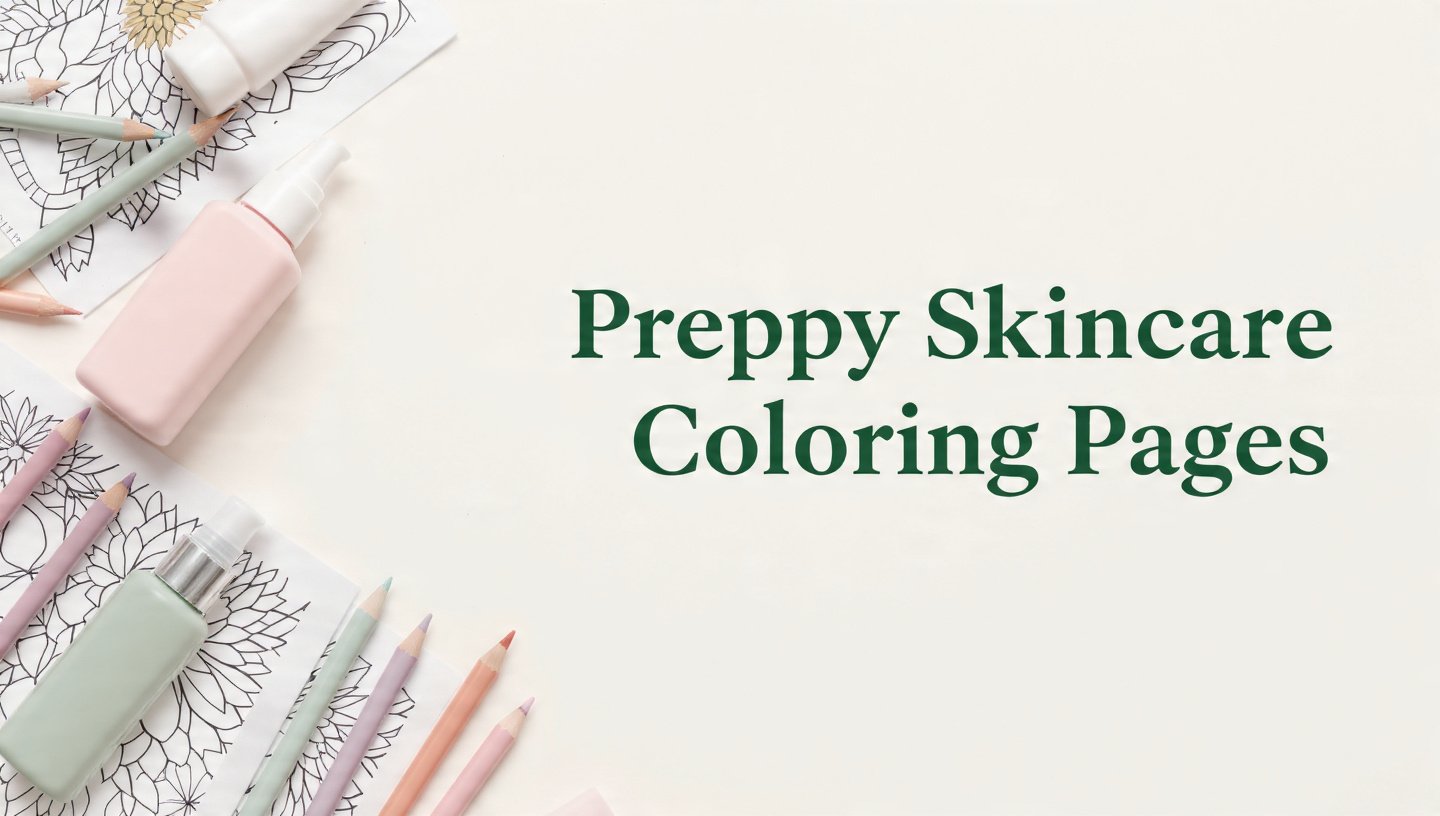
Preppy skincare coloring pages are printable or digital coloring sheets that feature illustrated skincare products, bottles, tubes, face masks, and cleansers drawn in the clean, pastel-heavy visual language of the preppy aesthetic trend.
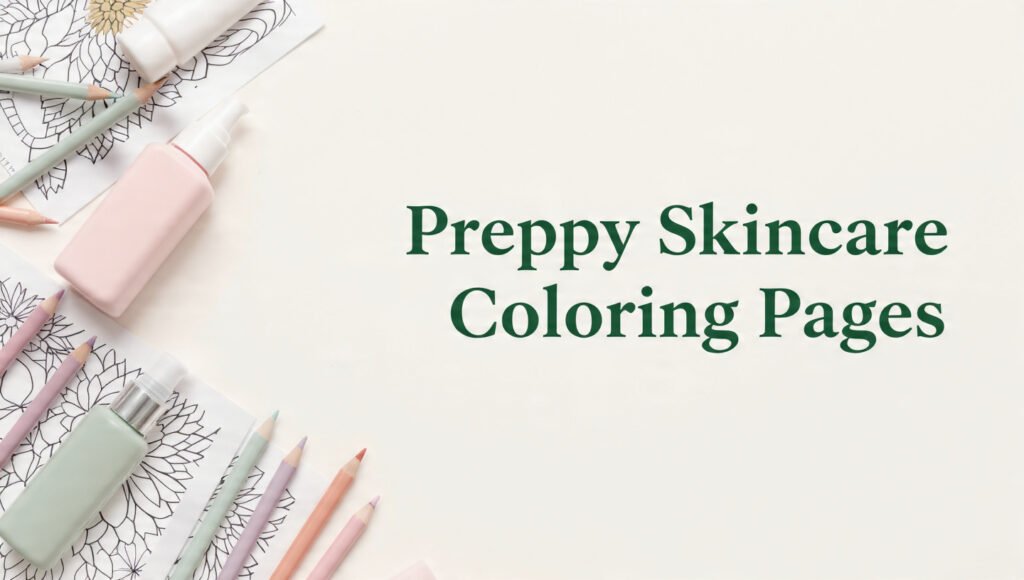
These pages typically show items like cleanser bottles, moisturizer jars, SPF sunscreens, toners, serums, and sheet masks, all illustrated in a cute, aesthetic style using soft pinks, greens, lavenders, and creams. The “preppy” element refers to a visual style rooted in clean color palettes, classic patterns like stripes or plaid, and an overall polished, organized look. Think of it like the visual equivalent of a neatly organized bathroom shelf: everything looks intentional, color-coordinated, and pleasing.
These coloring pages circulate widely on Pinterest, educational printable websites, and parent-focused activity platforms. They are used in classrooms, at home for independent creative time, and sometimes as part of structured self-care activities for tweens. The appeal is straightforward: children who are curious about skincare get a creative, low-stakes way to engage with the topic.
From a practical standpoint, finding these pages is simple. Many are available as free PDF downloads from educational activity sites, creative content platforms, and dedicated coloring page repositories. They range from single-product illustrations to full bathroom shelf scenes or spa-day compositions.
The important thing for parents to understand is that coloring these pages often sparks real questions about skincare products. A child who colors a serum bottle will ask what a serum does. This makes the coloring page an entry point into skincare education, and that education should be accurate, age-appropriate, and grounded in real skin science rather than marketing language.
What Is the Preppy Skincare Aesthetic
The preppy skincare aesthetic is a visual and lifestyle trend that frames skincare products and routines as elements of a polished, classic, aspirationally tidy personal style.
The aesthetic borrows from traditional “preppy” visual culture: think crisp pastel color palettes (sage green, blush pink, navy, cream), clean serif typography, stripe and plaid motifs, and product imagery that communicates order and intention. Applied to skincare, it means shelves of matching glass bottles, color-coordinated product lines, pastel packaging, and the idea that your skincare routine is a form of self-expression rather than just a health practice.
This trend has become especially visible on TikTok, Instagram, and Pinterest, where “preppy skincare aesthetic” boards and videos attract millions of views. It is particularly popular among the 10 to 16 age group, where skincare has become a form of identity and social connection. A 2024 report published in the Journal of the American Academy of Dermatology noted that adolescent skincare purchasing had increased substantially, with a large proportion of buyers under age 13, and that dermatologists were seeing a rise in contact dermatitis and skin barrier disruption in this age group linked to use of adult-formulated products.
The aesthetic trend itself is not harmful. Engaging with skincare as a creative or self-care practice can support positive habits. The concern arises when the visual appeal of a product drives purchasing decisions for young skin without any guidance on whether those products are formulated appropriately for the age group using them.
Quick Tip:
- If your child loves the preppy skincare aesthetic, use it as an opening to talk about what real skincare products do at a basic level.
- Focus on the three genuinely age-appropriate categories for most children: a gentle cleanser, a simple fragrance-free moisturizer, and daily sunscreen.
- The visual appeal of a product tells you nothing about its formulation safety for young skin.
Skincare Products Featured in Preppy Coloring Pages
The skincare products most commonly illustrated in preppy skincare coloring pages include cleansers, toners, moisturizers, serums, face masks, eye creams, and sunscreens.
Each of these product categories performs a distinct function in a skincare routine, and understanding what they do helps parents and children evaluate which ones are actually useful for young skin. Here is what each product type actually does at a functional level:
| Product Category | Primary Function | Age Appropriateness for Kids |
|---|---|---|
| Cleanser (face wash) | Removes dirt, excess sebum, and surface pollutants from skin | Appropriate from school age; choose fragrance-free, sulfate-free |
| Toner | Adjusts skin pH post-cleansing; hydrates or exfoliates depending on type | Hydrating toners may be appropriate; exfoliating toners (AHA/BHA) are not for children |
| Moisturizer | Seals hydration, reinforces the skin barrier lipid layer | Appropriate from infancy; choose ceramide-based, fragrance-free formulas |
| Serum | Concentrated treatment product targeting specific concerns (hyperpigmentation, hydration, texture) | Most serums contain active concentrations too high for young skin; not routinely recommended |
| Face mask | Sheet or wash-off treatment; hydrating or clarifying depending on type | Hydrating sheet masks may be appropriate occasionally; avoid clay masks with high acid content |
| Eye cream | Targeted hydration or treatment for the periorbital area | Not necessary for children; the eye area in young skin does not require dedicated treatment products |
| Sunscreen | Filters UVA and UVB radiation to prevent photoaging and skin cancer | Essential and age-appropriate from 6 months per AAD guidelines; choose mineral (zinc oxide or titanium dioxide) |
Knowing what these product types are and what they do means a child coloring a serum bottle can learn: “This is a concentrated product that adults sometimes use for specific skin concerns. It’s not something most kids need.” That kind of context is far more useful than marketing language.
Skincare Coloring Pages as an Educational Tool for Kids
Skincare coloring pages, including preppy-styled designs, can function as a genuine educational tool when paired with age-appropriate explanations of what each illustrated product does and why basic skincare habits matter for skin health.
Creative engagement with a topic increases information retention in children. Research in educational psychology consistently shows that visual, hands-on learning supports concept formation in children aged 6 to 14. Coloring pages that depict skincare products give parents and educators a natural conversation starter: what is this product, what does it do, and does my skin actually need it?
The skincare education opportunity embedded in these coloring pages is specific and practical. A child who learns that sunscreen protects the skin from UV radiation that can cause lasting damage, framed simply and concretely, is more likely to build the habit of daily SPF application than a child who is simply told to wear sunscreen.
According to the American Academy of Dermatology, skin cancer is the most common cancer in the United States, and UV exposure in childhood and adolescence is a primary driver of lifetime risk. Teaching children to associate sunscreen with daily personal care, through whatever format engages them, is an evidence-supported public health goal.
The coloring activity also supports emotional wellbeing. Mindful coloring has been studied as a low-cost, accessible relaxation practice for children and adolescents. A 2021 study published in Art Therapy: Journal of the American Art Therapy Association found that structured coloring activities reduced self-reported anxiety in children aged 8 to 12.
The key is pairing the creative activity with accurate information. Use the coloring page as an opening, then explain, simply and honestly, what each product does and whether the child’s skin actually needs it right now.
Key Takeaway: Preppy skincare coloring pages work best as an educational conversation starter. Pair the activity with honest, age-appropriate explanations of what each skincare product actually does.
Age-Appropriate Skincare for Kids
Age-appropriate skincare for kids means using the fewest, gentlest, most well-tolerated products that address the child’s actual skin needs without disrupting the natural barrier function of young skin.
Children’s skin is biologically different from adult skin in several ways that matter for product selection. Young skin has a higher water content, a thinner stratum corneum (the outermost layer of the epidermis), and a naturally higher rate of cell turnover. According to research published in the Journal of Investigative Dermatology, children’s skin also has a higher surface-area-to-body-weight ratio than adult skin, which increases the proportional absorption of topically applied ingredients.
This means that what adults can apply to their skin without concern may have a different effect when applied to a child. Ingredients that are safe at adult skin surface-area-to-body-weight ratios may be absorbed in greater relative quantities in children, particularly very young children.
The American Academy of Dermatology recommends that children’s skincare remain simple: a gentle cleanser, a fragrance-free moisturizer, and daily broad-spectrum sunscreen. Most children with healthy skin do not need anything beyond these three categories.
| Age Group | Appropriate Products | Products to Avoid |
|---|---|---|
| Under 6 months | No sunscreen (use protective clothing); gentle water cleansing; minimal product use | Any active ingredient; fragranced products; essential oils |
| 6 months to 5 years | Mineral sunscreen (zinc oxide or titanium dioxide); fragrance-free cleanser; gentle moisturizer | AHAs, BHAs, retinoids, niacinamide above 2%, fragranced products |
| 6 to 11 years | Fragrance-free gentle cleanser; ceramide-based moisturizer; mineral or chemical sunscreen | Retinoids, high-strength acids, exfoliating toners, most adult serums |
| 12 to 14 (tweens) | Gentle cleanser; non-comedogenic moisturizer; SPF; gentle BHA (1% to 2% salicylic acid) for acne-prone areas if needed | Retinoids without dermatologist guidance; high-strength AHAs; fragranced products for sensitive skin |
Skin needs vary considerably by child. A child with atopic dermatitis (eczema) has a compromised skin barrier and needs targeted barrier-repair products, including ceramide-containing moisturizers, applied consistently. A child with acne-prone skin may benefit from a low-concentration salicylic acid cleanser. Neither child needs the multi-step adult routines that preppy skincare content often promotes.
Tween Skincare Routine Basics
A tween skincare routine (ages approximately 9 to 13) should include three to four steps at most: a gentle cleanser, a basic moisturizer, and daily sunscreen, with the optional addition of a targeted product for specific concerns like mild acne only when genuinely needed.
Puberty brings hormonal shifts that affect skin directly. Rising androgen levels increase sebaceous gland activity, producing more sebum. This can lead to a shinier complexion, clogged pores, and the beginning of acne. None of these changes require a 10-step routine. They require the right three products chosen for the skin’s actual state.
A 2023 commentary published in the Journal of the American Academy of Dermatology raised specific concern about the “Sephora tween” phenomenon, noting that dermatologists were seeing adolescent patients with skin barrier disruption, contact dermatitis, and chemical burns from misuse of adult-strength skincare products including retinol serums, glycolic acid exfoliants, and fragranced luxury products that had been targeted to, or purchased by, the under-14 age group.
Building a tween routine should look like this:
- Gentle, fragrance-free cleanser: Use morning and evening. Wet face with lukewarm water. Apply cleanser with fingertips in circular motions. Rinse thoroughly. Pat (do not rub) dry with a clean towel.
- Lightweight, non-comedogenic moisturizer: Apply to damp skin immediately after cleansing. A thin layer is sufficient. Look for ceramide NP, glycerin (glycerol), or dimethicone as key ingredients.
- Broad-spectrum SPF 30 or higher sunscreen: Apply every morning as the final step. Reapply every two hours during outdoor activities. This step is not optional.
- Optional targeted product: Only if a specific concern (mild acne) exists and only with parental guidance. A 1% to 2% salicylic acid (beta-hydroxy acid, BHA) spot treatment or cleanser can be appropriate for comedonal or mild inflammatory acne in tweens.
That is the routine. Four steps maximum. Introduced gradually, one product at a time.
Key Takeaway: A tween skincare routine needs three steps: a gentle cleanser, a basic moisturizer, and SPF. Everything else is optional and should be introduced only for a specific, genuine skin concern.
Gentle Face Wash for Kids: What to Look For
A gentle face wash for kids should be fragrance-free, sulfate-free or low-sulfate, formulated at a skin-appropriate pH (between 4.5 and 6.5), and free of known contact allergens like methylisothiazolinone (MI) and synthetic fragrance.
The cleanser is the most important product in a child’s routine because it directly contacts the skin barrier. Harsh cleansers strip the natural lipid layer of the stratum corneum, increasing transepidermal water loss (TEWL), which leaves skin dry, irritated, and more permeable to external irritants. Think of the skin barrier like a protective film wrap over the skin. A harsh cleanser is like using sandpaper on that film: it removes what should stay and lets in what should be kept out.
What to look for on the label:
- Fragrance-free (not “unscented,” which may contain masking fragrances): The most important single feature for minimizing sensitization risk in children
- Low or no sodium lauryl sulfate (SLS): SLS is a surfactant that can disrupt the skin’s lipid layer, particularly in children with a tendency toward dryness or eczema
- pH between 4.5 and 6.5: The skin’s natural pH sits in this range; cleansers formulated outside it can temporarily disrupt barrier function
- Short ingredient list: Fewer ingredients means fewer potential sensitizers
- Gentle surfactants: Sodium cocoyl isethionate, cocamidopropyl betaine, or decyl glucoside are gentler alternatives to SLS
What to avoid:
- Sodium lauryl sulfate (SLS) in concentrations above 1% in leave-on products (though at standard rinse-off concentrations in a cleanser it is less concerning, it is still worth avoiding for sensitive or eczema-prone skin)
- Fragrances listed as “parfum” or “fragrance”
- Essential oils including tea tree oil (melaleuca alternifolia), lavender oil, citrus oils
- Methylisothiazolinone (MI) and methylchloroisothiazolinone (MCI): EU-banned in leave-on products due to high sensitization rates; still present in some US rinse-off products and associated with contact dermatitis in children
According to the British Journal of Dermatology, fragrance is the most frequently identified contact allergen in children with allergic contact dermatitis, appearing in study data consistently from the late 1990s through 2024.
Moisturizer for Young Skin: How to Choose Right
The best moisturizer for young skin is a simple, fragrance-free formula containing a combination of humectants, emollients, and occlusives, with ceramide NP, ceramide AP, or glycerin as primary active ingredients and no synthetic fragrance or essential oils.
Moisturizers work through three complementary mechanisms. Humectants like glycerin draw water into the stratum corneum from the environment and deeper skin layers. Emollients like dimethicone or natural oils fill gaps between skin cells, softening texture and reducing water loss. Occlusives like petrolatum (petroleum jelly) form a physical film on the skin surface that slows transepidermal water loss directly.
The best moisturizers for children’s skin combine all three types of ingredient. Ceramide-based formulas are particularly well-studied. According to a 2020 clinical study published in the Journal of Cosmetic Dermatology, ceramide-containing moisturizers restored skin barrier function measurably in children with dry skin and atopic dermatitis over a four-week period, reducing TEWL and improving subjective comfort.
| Ingredient Type | Example INCI Names | Function | Priority for Kids |
|---|---|---|---|
| Humectant | Glycerin, sodium hyaluronate, panthenol | Draws water into skin | High |
| Emollient | Dimethicone, squalane, caprylic/capric triglyceride | Fills gaps, softens skin | High |
| Occlusive | Petrolatum, beeswax, shea butter | Seals moisture in | Medium to high for dry skin |
| Barrier lipid | Ceramide NP, ceramide AP, ceramide EOP | Restores skin barrier structure | High, especially for eczema-prone skin |
| Soothing agent | Allantoin, colloidal oatmeal | Reduces redness and irritation | High for reactive or inflamed skin |
Children with Fitzpatrick skin types IV through VI deserve special attention here. Deeper skin tones have higher melanocyte sensitivity, and chronic dryness or barrier disruption can trigger post-inflammatory hyperpigmentation (PIH) in these skin types. Consistent, gentle moisturization is a concrete prevention strategy for PIH in children with deeper complexions.
Apply moisturizer immediately after cleansing, while skin is still slightly damp. This timing maximizes the humectant effect by trapping surface moisture under the product layer.
Key Takeaway: The ideal moisturizer for a child’s skin contains ceramides, glycerin, and dimethicone or petrolatum, with no fragrance and no essential oils. Applying it to damp skin immediately after cleansing significantly improves barrier hydration.
Sunscreen for Children: Getting SPF Right
Sunscreen is the single most evidence-supported skincare product for children of any age, and the American Academy of Dermatology recommends broad-spectrum SPF 30 or higher for all children from 6 months of age onward, applied daily regardless of planned sun exposure.
UV radiation from sunlight causes cumulative, irreversible damage to skin DNA. Childhood and adolescent UV exposure is one of the strongest predictors of lifetime skin cancer risk. This is not a speculative claim. It is supported by decades of epidemiological research across multiple population studies, including data reviewed by the NIH National Institute of Arthritis and Musculoskeletal and Skin Diseases (NIAMS).
For children under 6 months, the AAD advises against sunscreen use due to the higher surface-area-to-body-weight ratio increasing the relative dose of absorbed active ingredients. Protective clothing, shade, and avoiding peak UV hours are the recommended strategies for this age group.
From 6 months onward, two types of sunscreen are available:
- Mineral sunscreens: Contain zinc oxide (ZnO) or titanium dioxide as active ingredients. These work by physically reflecting and scattering UV radiation. They are broad-spectrum, photostable, and generally well-tolerated by sensitive and young skin. The FDA considers both ingredients safe and effective OTC active ingredients at their approved concentrations (zinc oxide 1 to 25%; titanium dioxide 2 to 25%).
- Chemical sunscreens: Contain UV-absorbing organic compounds like avobenzone, oxybenzone, octinoxate, or octisalate. These absorb UV energy and convert it to heat. Some chemical filters, particularly oxybenzone, have raised questions about absorption and hormonal activity; while current FDA data is inconclusive on clinical harm, many pediatric dermatologists recommend mineral sunscreens for young children as a precautionary approach.
For children with atopic dermatitis or reactive skin, mineral sunscreens formulated without fragrances and with a simple ingredient base are the recommended starting point. Patch test any new sunscreen on a small area of the inner arm before full application.
Ingredients to Avoid in Kids Skincare
The ingredients most important to avoid in children’s skincare products are synthetic fragrance (parfum), essential oils at high concentrations, methylisothiazolinone (MI), high-strength alpha-hydroxy acids, and retinoids without specific pediatric dermatologist guidance.
This is not a theoretical concern. The Journal of the American Academy of Dermatology documented a rise in pediatric contact dermatitis cases between 2019 and 2024 that correlated directly with increased use of adult-formulated skincare products by the under-14 age group. The products most frequently implicated contained fragrance, high-concentration AHAs, and retinol.
Ingredients to avoid:
- Synthetic fragrance (parfum): The single most common contact allergen in children. In the United States, “fragrance” on an ingredient label can legally represent a blend of up to several hundred undisclosed compounds, some of which are recognized sensitizers. The European Commission’s Scientific Committee on Consumer Safety maintains a list of 26 fragrance allergens that must be individually declared in EU cosmetics.
- Essential oils: Tea tree oil (melaleuca alternifolia leaf oil), lavender oil, citrus oils (bergapten-containing bergamot, lime, lemon), and peppermint oil all carry documented sensitization risk in children. They are not appropriate in leave-on products for children’s skin.
- Methylisothiazolinone (MI) and methylchloroisothiazolinone (MCI): Common preservatives associated with epidemic levels of allergic contact dermatitis in Europe, leading to EU restrictions. Still found in some US products. Avoid in any leave-on product for children.
- Retinoids (retinol, retinyl palmitate in high concentrations, tretinoin): Not appropriate for children’s skin without specific prescription and pediatric dermatologist supervision. Even over-the-counter retinol is not formulated for pediatric use.
- High-strength alpha-hydroxy acids (AHAs): Glycolic acid or lactic acid above 5% concentration, or at low pH (below 3.5), are inappropriate for children’s naturally thinner stratum corneum and higher skin water content. Irritation, barrier damage, and increased UV sensitivity are the documented risks.
- Alcohol denat. (denatured alcohol) in high concentrations: Can disrupt the skin barrier and increase dryness in children, particularly those with eczema-prone skin.
Key Takeaway: Fragrance (synthetic parfum and essential oils) is the most common contact allergen in children’s skincare. Every skincare product you buy for a child should be fragrance-free, full stop.
Fragrance in Kids Skincare Products
Fragrance, listed on ingredient labels as “parfum” or “fragrance,” is the leading cause of allergic contact dermatitis in children and the single most important ingredient category for parents to identify and avoid in any skincare product intended for young skin.
The hidden complexity of fragrance on an ingredient label is one of the most practically important things a parent can understand about reading a skincare product. In the United States, the FDA does not require cosmetic manufacturers to disclose the individual chemical components of a fragrance blend on the product label. “Fragrance” is treated as a trade secret, which means a single listed ingredient can represent a proprietary mixture of potentially dozens of individual chemical compounds.
The British Journal of Dermatology has published multiple large-scale patch test studies demonstrating that fragrance mix and individual fragrance allergens (including cinnamal, isoeugenol, geraniol, and hydroxycitronellal) consistently rank among the top contact allergens in pediatric populations. A 2019 systematic review of pediatric contact dermatitis studies found fragrance to be the most frequent allergen identified in children under 14 across European and North American data.
“Unscented” is not the same as “fragrance-free.” Unscented products may contain masking fragrances, chemical compounds added specifically to neutralize the natural odor of other ingredients, without providing a perceptible scent. These masking compounds are still fragrance chemicals and still carry sensitization potential. Only “fragrance-free” on the label indicates that no fragrance compounds have been added.
For children with atopic dermatitis, fragrance avoidance is especially important. The skin barrier disruption characteristic of atopic dermatitis increases penetration of fragrance allergens, raising the risk of sensitization significantly. The National Eczema Association includes fragrance avoidance as a primary recommendation in its product selection guidance for eczema-prone skin.
Practical rule: If a skincare label for a child’s product lists “fragrance,” “parfum,” or any individual essential oil, put it back on the shelf and choose a product with “fragrance-free” explicitly stated.
Retinol and Strong Actives: Not for Young Skin
Retinol (the INCI name for the over-the-counter form of vitamin A used in cosmetics, chemical name: retinol, molecular formula: C20H30O) and prescription-strength tretinoin (all-trans retinoic acid) are not appropriate for children’s skin and should not be used by anyone under 12 without explicit guidance from a board-certified dermatologist or pediatric dermatologist.
Retinoids work by binding to nuclear retinoid receptors in skin cells, accelerating cellular turnover and stimulating collagen remodeling in the dermis. These are real, clinically documented mechanisms. But they were studied and validated in adults. The thinner stratum corneum of children’s skin, combined with a higher rate of baseline cell turnover already, means retinoids carry a significantly higher risk of irritation, barrier disruption, dryness, and photosensitivity in young skin compared to adult skin.
The preppy skincare aesthetic trend has introduced many children and tweens to products containing retinol through social media recommendations and aspirational product displays. The product is visually appealing, the packaging is often beautiful, and the marketing positions it as a skin “essential.” It is not an essential for anyone under 12 and should be approached with real caution for those under 16.
Strong actives to specifically exclude from children’s skincare:
- Retinol and all retinoid forms (retinyl palmitate, retinaldehyde, hydroxypinacolone retinoate): Not for under 12 without dermatologist guidance; use with caution and low concentration for teens 13 and older
- Glycolic acid (alpha-hydroxy acid, AHA) above 5% concentration: Inappropriate for children’s skin; causes irritation, increased TEWL, and heightened UV sensitivity
- Lactic acid above 5%: Same concerns as glycolic acid
- Benzoyl peroxide above 2.5%: May be appropriate for teen acne under dermatologist guidance but is too irritating for routine use in younger or sensitive skin
- Vitamin C (ascorbic acid) in highly acidic serums (pH below 3.0): The concentration and pH required for ascorbic acid to be stable and active makes it irritating for children’s skin; gentler derivatives like sodium ascorbyl phosphate may be better tolerated when any antioxidant support is genuinely needed
For tweens aged 12 to 14 dealing with acne, a 1% to 2% salicylic acid (BHA) product is generally the appropriate starting point, not retinol. If a teen’s acne does not respond to OTC management, the appropriate next step is an appointment with a board-certified dermatologist, who can prescribe a prescription retinoid at a safe, monitored concentration if clinically warranted.
Building Good Skincare Habits in Kids and Teens
Building good skincare habits in children and teens is primarily about consistency with a short, simple routine rather than about using many products, and the evidence suggests that habits formed in adolescence tend to persist into adulthood.
The habits worth establishing early are specific and practical: washing the face gently every morning and evening, applying moisturizer to damp skin, wearing SPF daily, and not picking at or aggressively scrubbing blemishes. These four behaviors, practiced consistently, address the majority of skin health concerns that arise in childhood and adolescence.
According to the American Academy of Dermatology, daily broad-spectrum sunscreen application starting in childhood is one of the most evidence-supported interventions for reducing lifetime skin cancer risk. Building the SPF habit before age 14 is a concrete, actionable public health goal that preppy skincare coloring pages, if used educationally, can genuinely support.
Habit formation research from behavioral science (including frameworks reviewed by the American Psychological Association) consistently shows that attaching a new behavior to an existing anchor habit increases long-term adherence. For children, this means pairing skincare with tooth brushing, which is already a twice-daily established habit for most school-age children.
Practical habit-building framework for parents:
- Start with one product: A fragrance-free cleanser used morning and evening. Master this before adding anything.
- Add moisturizer in week two: Same timing as cleansing. Apply to damp skin immediately after patting dry.
- Add SPF in week three: Morning only. Pair it physically with the child’s bag or backpack prep so the cue is built into the leaving-the-house routine.
- Only add a fourth product (like a targeted acne product) when a specific skin concern genuinely requires it and when steps 1 through 3 are fully established habits.
- Make it low-pressure: A child who forgets SPF one morning should be gently reminded, not shamed. Consistent habits built over months matter more than perfect compliance on any single day.
Key Takeaway: Attach SPF application to an existing morning habit like tooth brushing. This single behavioral strategy is one of the most evidence-supported methods for improving sunscreen adherence in children and teens.
Skincare Self-Care for Tweens
Skincare self-care for tweens refers to the practice of incorporating a brief, intentional skincare routine into a tween’s daily self-care habits as a form of personal maintenance, body awareness, and structured downtime, distinct from any therapeutic or medical skin treatment.
The self-care framing of skincare matters here because it changes how tweens engage with the routine. When skincare is framed as a personal wellness habit rather than a beauty standard, it tends to support positive body image and routine satisfaction rather than appearance anxiety. Research published in the Journal of Adolescent Health in 2022 found that adolescents who associated self-care practices with personal health maintenance (rather than appearance improvement) reported higher wellbeing scores and lower appearance-related anxiety.
The preppy skincare coloring page trend taps into this framing naturally. Coloring skincare product illustrations is not about achieving a specific look. It is a creative, tactile activity that normalizes the idea of caring for one’s skin as a neutral, pleasant, and personal practice.
For tweens, skincare self-care works best when:
- The routine is short enough to be realistic: three steps, five minutes maximum
- Products are chosen for skin needs rather than aesthetic appeal or brand popularity
- The routine is framed by parents as a health habit (like brushing teeth) rather than a beauty obligation
- Social media skincare content is contextualized: the multi-step routines popular with adult influencers are not appropriate templates for tween skin
One practical suggestion for parents: do the routine together occasionally. Shared self-care rituals between parents and children support routine adherence and open natural conversations about what products do and why specific ingredients matter. A parent who can explain why fragrance is not in their child’s moisturizer is providing skincare literacy, not just skincare.
The creative activity of coloring preppy skincare pages can extend naturally into this self-care framing. After a coloring session, a child might ask what a toner does, or whether they need a serum. These are perfect openings for accurate, age-appropriate education.
When to See a Pediatric Dermatologist About Your Child’s Skin
A parent should book an appointment with a board-certified pediatric dermatologist when a child’s skin concern does not improve after four to six weeks of consistent, appropriate OTC skincare management, when a rash or skin reaction appears after introducing a new product, when a child shows signs of significant acne that is spreading or causing emotional distress, or when any skin change looks unusual, spreading, or does not match a typical dry skin or mild acne presentation.
Primary care pediatricians are often the first point of contact for childhood skin concerns and can address many common issues including mild eczema and acne. However, when a skin concern is persistent, worsening, or affecting a child’s quality of life, a board-certified dermatologist with pediatric expertise has specialized training in diagnosing and managing conditions specific to developing skin.
Specific situations that warrant a dermatologist referral:
- Suspected contact dermatitis: A red, itchy, sometimes blistering rash that appears in the area where a skincare product was applied. Bring the product (or a photo of the ingredient list) to the appointment. The dermatologist may recommend patch testing to identify the specific allergen.
- Atopic dermatitis (eczema) that is not responding to a consistent OTC fragrance-free moisturizer and gentle cleanser regimen over four to six weeks. A pediatric dermatologist can assess whether a prescription topical is needed and guide safe product selection.
- Moderate to severe acne in a tween or teen: Acne that covers the forehead, cheeks, and chin, includes deep painful cysts or nodules, or is leaving dark marks (post-inflammatory hyperpigmentation) warrants dermatologist evaluation. The dermatologist can prescribe appropriate prescription-strength treatments, including topical antibiotics, retinoids at safe pediatric concentrations, or, in appropriate cases, hormonal evaluation referral.
- Unexpected or unusual skin changes: Any growth, mole change, or skin color change that a parent cannot clearly attribute to a known cause should be evaluated by a board-certified dermatologist rather than attributed to a skincare product.
According to the Society for Pediatric Dermatology, access to a pediatric dermatologist is an important resource for families dealing with chronic or complex pediatric skin conditions, and a referral from a primary care pediatrician is typically the appropriate path when OTC management is insufficient.
Frequently Asked Questions About Preppy Skincare Coloring Pages
Are preppy skincare coloring pages appropriate for young children?
Preppy skincare coloring pages are appropriate as a creative activity for children of most ages, including young children, because the coloring activity itself carries no skin safety risk.
The concern is not the coloring pages but the skincare products the pages may inspire children to want to try, many of which are adult-formulated and not appropriate for young skin.
Using these pages as an educational tool, explaining simply what each illustrated product does and whether a child actually needs it, turns an aesthetic activity into a genuinely useful learning experience.
What skincare products should kids actually use?
Most children only need three skincare products: a fragrance-free gentle cleanser, a basic ceramide or glycerin-based moisturizer, and a broad-spectrum SPF 30 or higher sunscreen applied daily.
The American Academy of Dermatology consistently advises keeping children’s skincare routines simple and ingredient-minimal.
Beyond these three, any additional product should address a specific, real skin concern and ideally be introduced with guidance from a board-certified dermatologist.
Is retinol safe for tweens and teenagers?
Retinol is not recommended for children under 12 and should be used with significant caution for teens under 16 without guidance from a board-certified dermatologist.
The thinner stratum corneum and higher natural cell turnover rate of young skin make retinoids a higher irritation and barrier-disruption risk compared to adult skin.
Teens with acne concerns are better served by starting with a 1% to 2% salicylic acid product and consulting a dermatologist before considering any retinoid.
What ingredients should I avoid in my child’s skincare products?
The most important ingredients to avoid in children’s skincare are synthetic fragrance (parfum), essential oils including tea tree and lavender, methylisothiazolinone (MI), retinoids, and high-strength alpha-hydroxy acids like glycolic or lactic acid above 5%.
According to the British Journal of Dermatology, fragrance is the most frequently identified contact allergen in pediatric patch test studies across multiple countries.
Choose products labeled explicitly “fragrance-free” (not just “unscented”), with short ingredient lists and no essential oil components.
At what age should kids start a skincare routine?
The only truly age-universal skincare step is daily sunscreen, which the American Academy of Dermatology recommends from 6 months of age onward.
A simple two-step routine (gentle cleanser and moisturizer) is appropriate from school age onward for children with normal skin, and earlier for children with dry or eczema-prone skin where barrier support is clinically needed.
The routine should be introduced gradually, one product at a time, starting with the product addressing the most immediate need.
How do I know if a skincare product is safe for my child’s skin?
A product is a safer choice for a child’s skin when it is labeled fragrance-free, contains a short, recognizable ingredient list without essential oils or methylisothiazolinone, and is formulated as a gentle cleanser, basic moisturizer, or mineral sunscreen without active concentrations of retinoids or high-strength acids.
Patch testing any new product on a small area of the child’s inner arm for 24 to 48 hours before full application is a practical, low-barrier safety step recommended by pediatric dermatologists.
If a rash, redness, or itching develops after introducing a new skincare product, discontinue use and consult a board-certified dermatologist or the child’s primary care pediatrician.
Closing
Preppy skincare coloring pages are a creative trend, and a genuinely useful one when they become a starting point for honest skincare education. The products depicted in those illustrations, the cleansers, moisturizers, sunscreens, and serums, are real product categories with real ingredient considerations, and children who color them deserve accurate information about what those products actually do and which ones are right for young skin.
For most children, the answer is simple: fragrance-free cleanser, ceramide-based moisturizer, mineral sunscreen. That’s the whole routine. Everything else should wait until there is a specific, real skin reason to add it, and ideally until a board-certified dermatologist has confirmed that reason.
If your child is curious about skincare, meet that curiosity with accuracy. The habit of reading ingredient labels, choosing simple formulas, and applying SPF every morning is worth building early. It’s one of the most practically protective things a child can learn about their long-term skin health.