Onekind Skincare Review 2026: Science Beyond the Clean Beauty Hype
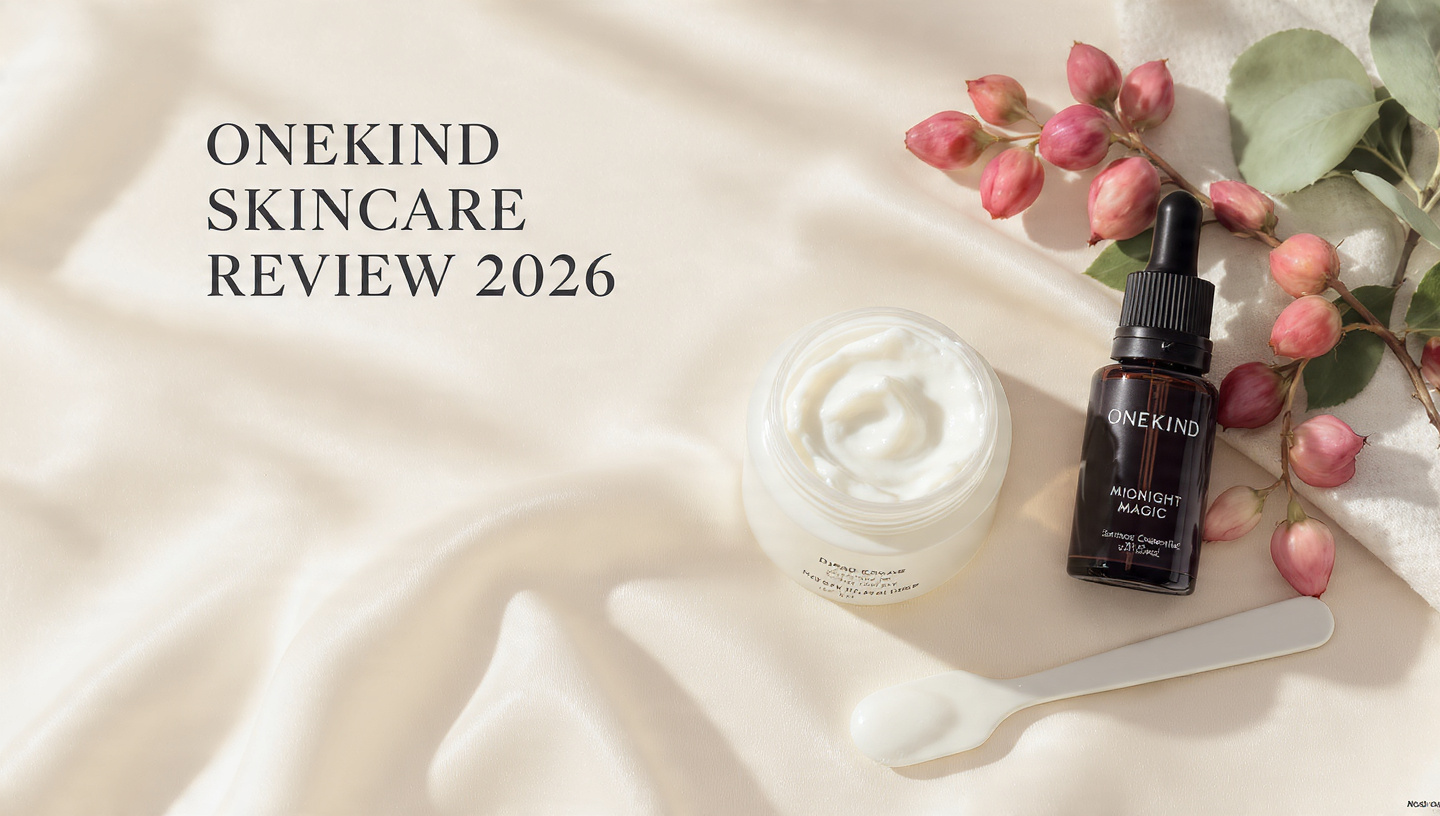
You are likely here because the Onekind brand’s “Dream Cream” and “Midnight Magic Serum” have flooded your feed, and you need a straight answer on whether these products do more than just look beautiful on a shelf. This 2026 science-backed analysis decodes Onekind’s ingredient lists to determine if the formulas justify the price tag or just the aesthetics. The truth lives in the INCI names, not the marketing copy.
The global “clean beauty” market continues to surge, yet the term still has no regulatory definition from the FDA. This creates a space where brand philosophy can easily overshadow performance data. According to the American Academy of Dermatology, the most effective skincare products are formulated based on ingredient efficacy and skin biology, not simply by avoiding a shifting list of “unclean” ingredients. This review applies that exact principle to Onekind.
You will get a full breakdown of the Dream Cream and Midnight Magic Serum, an honest look at their “clean” claims, critical safety notes for sensitive and acne-prone skin, and a practical guide on how to layer them. No vague “glow” promises. Just the cosmetic chemistry and clinical context you need to decide if Onekind belongs in your 2026 routine.
onekind skincare brand analysis
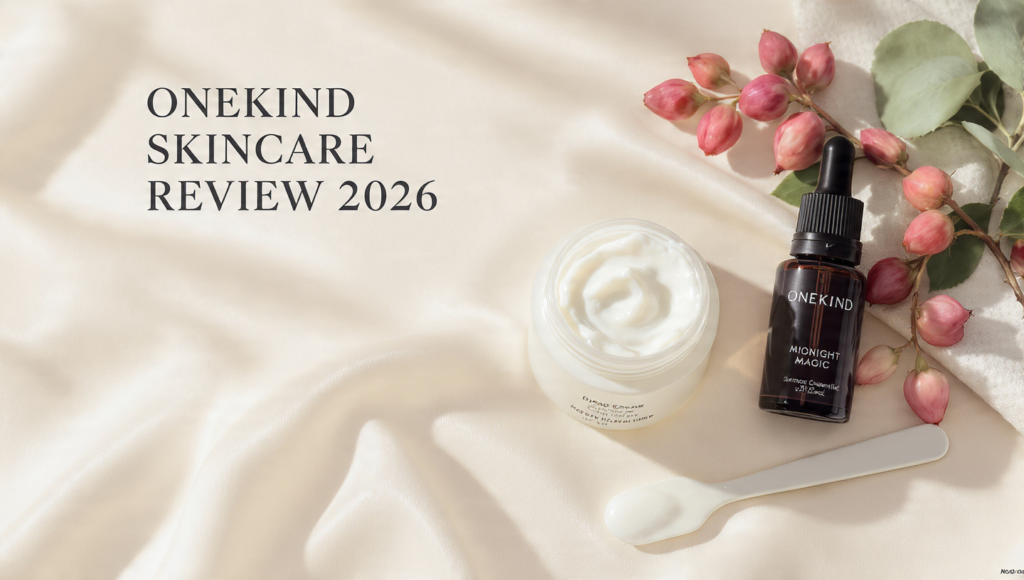
Onekind is a direct-to-consumer skincare brand positioned as clean, conscious, and designed for “dreamers.” The brand’s aesthetic is undeniably elegant, with minimalist packaging and a focus on a tightly curated product line. Rather than launching dozens of SKUs, Onekind has concentrated its efforts on a few hero products: a moisturizer, a serum, and supporting cleansers and masks.
This strategy appeals to consumers overwhelmed by complex, multi-step routines. The brand’s narrative is built on the concept of a simplified, dreamlike approach to self-care, which is more of a lifestyle pitch than a dermatological one. The core of their messaging focuses on plant-based ingredients and what they leave out of formulas rather than a breakthrough molecular technology. Evaluating this brand means separating the aspirational branding from the functional formulation. The real question is whether the ingredient decks of their hero products can compete with clinically-validated, evidence-heavy lines that dominate dermatologist recommendations.
Key Takeaway: Onekind sells a simplified, aesthetic skincare experience first; your decision should hinge on whether its plant-heavy formulas align with your skin’s tolerance and efficacy needs.
what makes onekind skincare different
The main differentiator Onekind champions is its philosophy of “clean” formulation at an accessible price point. Their marketing heavily emphasizes exclusion: no sulfates, parabens, phthalates, or synthetic fragrances. This is a common, almost standard, position in the 2026 skincare market and no longer a unique selling point on its own.
Where they attempt true differentiation is in their ingredient pairings. They combine what they call “potent plant actives” with a base of familiar, effective ingredients. For instance, pairing vitamin C from highly stable, oil-soluble sources with their bakuchiol serum. This formulation philosophy targets the “skinimalism” trend, attempting to deliver multiple benefits in fewer steps. It’s different from a dermatologist-developed brand that might prioritize single-ingredient, high-concentration serums. Onekind bets on its curated blend approach, banking on the synergy of its chosen plant extracts to create a sensorial and effective experience. The approach is attractive in theory but its success depends entirely on ingredient quality, concentration, and the skin’s reaction to complex botanicals.
onekind dream cream ingredients breakdown
The Dream Cream is a whipped moisturizer built around a base of water, emollients, and a distinct set of plant oils. The first five ingredients after water include caprylic/capric triglyceride, squalane, glycerin, and cetearyl alcohol. This base is deeply functional. Squalane, a hydrogenated version of squalene, is a brilliant non-comedogenic emollient that mimics skin’s natural lipids. Glycerin is one of the most effective and well-studied humectants, pulling water into the stratum corneum.
The formula then introduces a blend of oils: rosehip seed oil, avocado oil, and sunflower seed oil. These provide essential fatty acids like linoleic and oleic acid. A 2018 study in the International Journal of Cosmetic Science confirms linoleic acid’s role in maintaining barrier function. The cream’s signature texture comes from its unique whipped, aerated state, which relies on emulsifiers and specific fatty alcohols. It avoids heavy occlusives like petrolatum, making it feel luxurious without being greasy. This is a well-formulated fatty acid and humectant-driven moisturizer at its core, dressed up with botanical oils.
Key Takeaway: The Dream Cream’s base is a well-proven blend of squalane and glycerin; the added botanical oils boost fatty acid content but also introduce the primary risk of irritation for reactive skin.
onekind midnight magic serum ingredients
The Midnight Magic Serum is an anhydrous, oil-based formula. The first listed ingredient is caprylic/capric triglyceride, a lightweight emollient, followed by squalane. This base is straightforward and designed for barrier support. The formula then layers in its “magic”: a blend of ascorbyl tetraisopalmitate (a stable, oil-soluble form of vitamin C), bakuchiol, and rosehip oil.
Ascorbyl tetraisopalmitate is a vitamin C ester that penetrates the lipid-rich stratum corneum more effectively than pure ascorbic acid. At 2% to 5% concentrations, it provides antioxidant protection and collagen synthesis support. The serum’s star active, bakuchiol, is dissolved at an undisclosed concentration. The final key component is a fragrant essential oil blend, including geranium, clary sage, and lavender oils. These are not present for skin restructuring; they are for scent. Each of these essential oils contains known fragrance allergens, such as linalool, geraniol, and citronellol, which are required to be declared on labels in the EU due to their sensitizing potential.
bakuchiol in onekind midnight magic serum
Bakuchiol is a meroterpene phenol extracted from the seeds of the Psoralea corylifolia plant, and it functions as a functional analog to retinol. It upregulates the same genes for collagen type I, type III, and type IV synthesis without binding directly to retinoic acid receptors. A landmark 2019 study published in the British Journal of Dermatology found that 0.5% bakuchiol applied twice daily was comparable to 0.5% retinol applied nightly in reducing wrinkles and hyperpigmentation, but with significantly less scaling and stinging.
Onekind includes bakuchiol as the primary active in its Midnight Magic Serum, but they do not disclose the concentration. This is a critical gap. The clinical evidence for bakuchiol’s effectiveness is concentrated at levels between 0.5% and 1%. Without knowing if the serum reaches this threshold, we cannot confirm it will deliver the retinol-like results the marketing suggests. Bakuchiol has a key practical advantage over retinol: it does not cause photosensitivity. You can use it in the morning without the strict sun-sensitivity rules retinol demands. This makes it a genuinely useful ingredient for those who cannot tolerate retinoids.
Key Takeaway: Bakuchiol is a science-backed retinol alternative, but Onekind’s undisclosed concentration in the serum makes its clinical-grade efficacy impossible to verify from the label alone.
is onekind dream cream a good moisturizer
Based on its ingredient deck, the Onekind Dream Cream is a very good moisturizer for normal to dry skin types that tolerate essential oils. Its primary mechanism of action is threefold: humectant water-binding from glycerin, lipid-replenishing emollients from squalane and triglycerides, and a light occlusive seal from fatty alcohols. This combination effectively reduces transepidermal water loss (TEWL) and smooths the skin’s surface texture.
The whipped, airy texture means it’s less heavy than a traditional balm or thick cream, providing comfort without a sticky residue. This makes it an excellent base layer under sunscreen in the morning. However, its performance is inextricably linked to its fragrance profile. The blend of rosehip, geranium, and other fragrant oils is potent. For someone without a fragrance sensitivity, the cream provides ample moisturization. For a person with a compromised skin barrier, rosacea, or atopic dermatitis, those same fragrance components (linalool, geraniol) transform the cream from a moisturizer into a contact irritant. It fails the “good for everyone” test.
| Ingredient Function | Key Ingredient in Dream Cream | Skin Benefit |
|---|---|---|
| Humectant | Glycerin | Attracts and binds water from the environment and deeper skin layers. |
| Emollient | Squalane, Triglycerides | Fills in the gaps between skin cells, creating a smooth, soft texture. |
| Barrier Lipid | Linoleic Acid (from oils) | Essential fatty acid that strengthens the skin’s lipid barrier. |
| Texture Enhancer | Cetearyl Alcohol | A fatty alcohol that stabilizes the emulsion and gives a silky feel. |
| Potential Irritant | Geraniol, Linalool | Fragrant components of essential oils, known human allergens. |
onekind dream cream vs midnight magic serum
Comparing these two products is like comparing a blanket (Dream Cream) to a targeted supplement (Midnight Magic Serum). The Dream Cream is a moisturizer designed to protect, hydrate, and comfort the skin barrier. The Midnight Magic Serum is a treatment product designed to deliver active ingredients (bakuchiol, vitamin C) into the skin to influence cell behavior over time.
Their formulation chemistry is entirely different. Dream Cream is a water-in-oil emulsion designed to hold moisture in. Midnight Magic Serum is an anhydrous (water-free) oil solution designed for high-absorption delivery of lipid-soluble actives. They do not compete; they are designed to work in sequence. Layer the serum first to deliver the active compounds deep into the lipid layers, then seal and hydrate with the cream. The only overlap is in their base emollients. Both use squalane and triglycerides, which are fantastic but redundant if you are looking for a strictly minimal routine. If you had to choose one, a person seeking barrier repair and hydration gets far more from the Dream Cream. A person seeking anti-aging and antioxidant activity gets more from the Midnight Magic Serum.
Key Takeaway: The serum is an active treatment for aging; the cream is a protective moisturizer. They perform best when used together in a specific order: serum first, cream second.
is onekind skincare good for sensitive skin
Broadly, Onekind skincare is a high-risk choice for people with genuinely sensitive or reactive skin. The brand’s reliance on fragrant plant extracts and essential oils in their hero products contradicts the core requirements of sensitive skin management. The American Academy of Dermatology recommends that people with sensitive skin choose products free of fragrance, botanicals, and common irritants.
Onekind formulates directly against this guidance. The Midnight Magic Serum and Dream Cream both contain well-documented allergens. Linalool and geraniol, found in the serum’s essential oil blend, can oxidize upon exposure to air, forming hydroperoxides that become stronger skin sensitizers over time. This process is detailed in a 2021 review in Contact Dermatitis. A person with a compromised stratum corneum will experience stinging, redness, and contact dermatitis from these ingredients long before they experience any anti-aging benefit from the bakuchiol. The squalane base is excellent for sensitive skin. The fragrance package surrounding it is not. If you have true sensitive skin, the safest option is a minimalist brand focused on barrier repair without any fragrance, not Onekind.
onekind skincare for acne-prone skin
The suitability of Onekind for acne-prone skin is a mixed picture, with a caution on the serum. The Dream Cream has a generally non-comedogenic base. Squalane and glycerin have a comedogenic rating of near zero and are unlikely to clog pores. The fatty acid profile of rosehip oil is high in linoleic acid, which research, including a 2017 study in the Journal of the American Academy of Dermatology, suggests can be beneficial for acne-prone skin, which is often low in this particular fatty acid.
The Midnight Magic Serum presents a problem. It is an oil-based serum formulated with multiple fragrant essential oil compounds. While the base oils are non-comedogenic, fragrant components like geraniol are recognized skin sensitizers. For acne-prone skin, inflammation is a primary driver of breakouts. Introducing a known sensitizer into a routine designed to calm inflammation is counterproductive. Contact dermatitis from these ingredients can mimic and trigger an acneiform eruption. The bakuchiol itself is not the problem; it is the vehicle. If you are acne-prone, the Dream Cream is the safer choice to test, but the serum’s high essential oil load makes it a significant risk for triggering reactive breakouts and inflammation.
Key Takeaway: The Dream Cream’s fatty acid base might help acne-prone skin, but the essential oil-laden Midnight Magic Serum risks triggering inflammation-driven breakouts.
onekind clean beauty claims examined
The term “clean” is the central marketing pillar for Onekind. When the brand states its products are “clean,” it means they are formulated without a list of flagged ingredients, including parabens, sulfates (SLS, SLES), phthalates, and synthetic fragrances. This is a philosophy of exclusion, not one of proven safety or superior efficacy. The FDA has no official definition for “clean beauty.”
Replacing synthetic preservatives with alternatives like radish root ferment filtrate is a common clean beauty choice, but these alternatives have a narrower spectrum of antimicrobial activity. This does not make them unsafe or ineffective; it just demands more rigorous manufacturing hygiene. The far more consequential scientific issue is the replacement of synthetic fragrances with natural essential oils. From an allergenic standpoint, there is no chemical difference between a synthetic linalool molecule and a natural one derived from lavender. Both are equally capable of triggering contact dermatitis. Onekind’s formula avoids synthetic fragrance but is packed with fragrant plant oils containing the exact same allergens. The “clean” label is a values-driven choice, not a measure of a product’s hypoallergenic safety or clinical efficacy.
| “Clean” Claim | Scientific Reality and Nuance |
|---|---|
| No Synthetic Fragrance | The formula still contains potent volatile aromatic compounds from essential oils that are proven skin allergens and sensitizers. |
| No Parabens | Parabens have a long, well-studied safety record. Alternatives used in “clean” formulations are less researched and often weaker preservatives. |
| No Sulfates (SLS/SLES) | SLS is a harsh cleanser that strips the barrier. Avoiding it is beneficial, but not all sulfate-free surfactants are automatically mild. |
| Plant-Based Actives | A plant origin does not make an ingredient safer or more effective. Poison ivy is plant-based. The clinical evidence for the specific extract is what matters. |
onekind skincare routine order
A Onekind routine is simple due to the brand’s limited product line. A full 2026 morning and evening routine using their core products follows a logical thinnest-to-thickest rule, with special attention paid to the anhydrous serum. The goal is to deliver the Midnight Magic Serum’s active ingredients as close to the skin as possible, then layer hydration and protection on top.
The key misunderstanding with an oil-based serum like the Midnight Magic is that it should replace a moisturizer. It should not. An anhydrous oil is an emollient treatment, not a humectant or occlusive moisturizer. You must apply it before a true water-based moisturizer like the Dream Cream to get both active delivery and hydration. In the evening, it’s your treatment step. In the morning, it doubles as an antioxidant shield, a role bakuchiol and vitamin C are uniquely suited for since they cause no photosensitivity. This dual-use routine is the most elegant application of Onekind’s stripped-back product philosophy.
- Step 1: Cleanse with Onekind Clean Slate Cleansing Balm or a water-based cleanser of choice.
- Step 2: While skin is still slightly damp from cleansing, apply 2-3 drops of the Midnight Magic Serum. The dampness aids the spread of the oil and absorption of humectants from subsequent steps.
- Step 3: Apply a pea-sized amount of the Dream Cream. Smooth over the skin in outward motions, sealing in the serum.
- Step 4 (AM only): Finish with a broad-spectrum sunscreen of SPF 30 or higher. Neither Onekind product provides sun protection.
Key Takeaway: The correct Onekind order is an anhydrous oil serum on damp skin, followed by a water-based cream to seal in hydration, plus sunscreen in the AM.
who should not use onekind skincare
Onekind is not universally suitable. People with diagnosed inflammatory skin conditions should avoid the hero products. If you have rosacea, the volatile aromatic compounds in the essential oils act as direct vasodilators, triggering flushing and papulopustular flares. A board-certified dermatologist would strongly advise against exposing erythematotelangiectatic rosacea to such triggers.
Those with atopic dermatitis (eczema) or a known allergic contact dermatitis to fragrance must avoid these formulas entirely. The European Commission’s Scientific Committee on Consumer Safety (SCCS) has formally identified geraniol and linalool hydroperoxides as potent allergens. If patch testing has confirmed a fragrance allergy, the Dream Cream and Midnight Magic Serum are contraindicated. Individuals with highly compromised skin barriers from over-exfoliation or prescription retinoid treatment should also steer clear until their barrier is fully intact. Applying these essential oil-rich products on a raw, stinging barrier will induce inflammation, not repair. The people who will thrive on Onekind are those with robust, resilient skin who want a sensorial, plant-oil-rich experience and do not react to fragrance components.
- Diagnosed with rosacea or erythematotelangiectatic rosacea.
- Diagnosed with atopic dermatitis or eczema.
- Confirmed allergic contact dermatitis to fragrances, specifically geraniol, linalool, or citronellol.
- Currently using prescription retinoids (tretinoin, tazarotene) and experiencing retinization peeling.
- Anyone with a compromised skin barrier who feels stinging from basic moisturizers.
onekind skincare product line overview 2026
The 2026 Onekind product line remains intentionally streamlined, focusing on a multi-use philosophy. The centerpiece is the Dream Cream Nighttime Moisturizer, their signature whipped multi-tasking cream designed for intense overnight repair. It remains the brand’s most recognizable product, supported by their claims that one is sold every minute. The formula continues to be built around squalane, glycerin, and a blend of plant oils to function as a single-step solution for those who dislike complex routines.
The Midnight Magic Serum is their active treatment product, a true oil-based concentrate. It is marketed as a gentle, nightly rejuvenating treatment using bakuchiol and vitamin C to target fine lines and uneven texture without the irritation of retinoids. The rest of the 2026 line-up is supportive: a Dream Peel Resurfacing Mask for gentle exfoliation, a Clean Slate Cleansing Balm for makeup removal, and a Gentle Dream Cream Cleanser for daily washing. The brand has not yet expanded into eye creams, SPFs, or toners. This restraint is admirable, keeping their focus narrow. For a devotee, this line provides a complete, if simple, aromatic skincare ritual.
Key Takeaway: Onekind’s 2026 strength is a tight, curated line that does the basics; its weakness is the lack of a dedicated sunscreen or a truly fragrance-free option for intolerant skin.
Frequently Asked Questions About Onekind Skincare
Is Onekind a clean skincare brand?
Yes, Onekind adheres to a “clean” philosophy by formulating without parabens, sulfates, phthalates, and synthetic fragrances, which meets the cosmetic industry’s self-defined standard for the term.
However, “clean” is a marketing term with no FDA regulatory definition, and Onekind does use natural essential oil blends that contain scientifically documented skin allergens and sensitizers.
What does Onekind Dream Cream do?
The Onekind Dream Cream is a whipped moisturizer that functions as a humectant, emollient, and light occlusive to hydrate the skin and reduce transepidermal water loss.
It relies on glycerin, squalane, and fatty acid-rich plant oils like rosehip to smooth skin texture and support the lipid barrier, though its fragrant essential oils can be a problem for sensitive skin.
Does Onekind Midnight Magic Serum work like retinol?
The Midnight Magic Serum contains bakuchiol, a plant-based compound that a 2019 British Journal of Dermatology study found comparable to retinol for reducing wrinkles and hyperpigmentation but with less irritation.
Since Onekind does not disclose the concentration of bakuchiol in the serum, it is impossible to confirm if the formula matches the clinically effective level of 0.5% to 1% used in research.
Can I use Onekind Dream Cream and Midnight Magic Serum together?
Yes, these two products are designed to be layered, with the anhydrous Midnight Magic Serum applied first to damp skin to deliver active ingredients, followed by the Dream Cream to seal in hydration.
Using them together provides both the treatment benefits of the serum and the protective moisturizing layer of the cream.
Is Onekind skincare good for dry skin?
For dry skin without a fragrance sensitivity, Onekind can be highly effective because the Dream Cream’s squalane and glycerin base is excellent at replenishing lipids and drawing in moisture.
However, if dry skin is linked to a compromised barrier or atopic dermatitis, the fragrant essential oil components are likely to provoke stinging and contact irritation, not relief.
Where can I buy Onekind skincare in 2026?
Onekind skincare is primarily sold direct-to-consumer through its official website, onekind.co, and is often available at major beauty retailers that curate “clean” beauty sections.
You can also check third-party e-commerce platforms, but the brand’s own site usually offers the full product line and any 2026 promotional bundles.
The evidence is clear: Onekind excels at creating a beautiful, multi-sensory experience backed by a smart, minimal product line. The Dream Cream is a genuinely well-formulated moisturizer if your skin tolerates the fragrance. The Midnight Magic Serum is a smart concept with promising actives, but its undisclosed bakuchiol concentration is the single biggest unknown between you and a result you can count on.
If your skin is resilient and you love a plant-rich, aromatic ritual, layering the serum under the cream will give your skin barrier a fatty acid feast and antioxidant support. For anyone with a reactive, sensitive, or diagnosed skin condition, your money is better spent on a truly fragrance-free, dermatologist-developed barrier repair cream. The “clean” label feels good, but your skin reads only chemistry.