Christie Brinkley Skincare 2026: Honest Ingredient & Routine Review
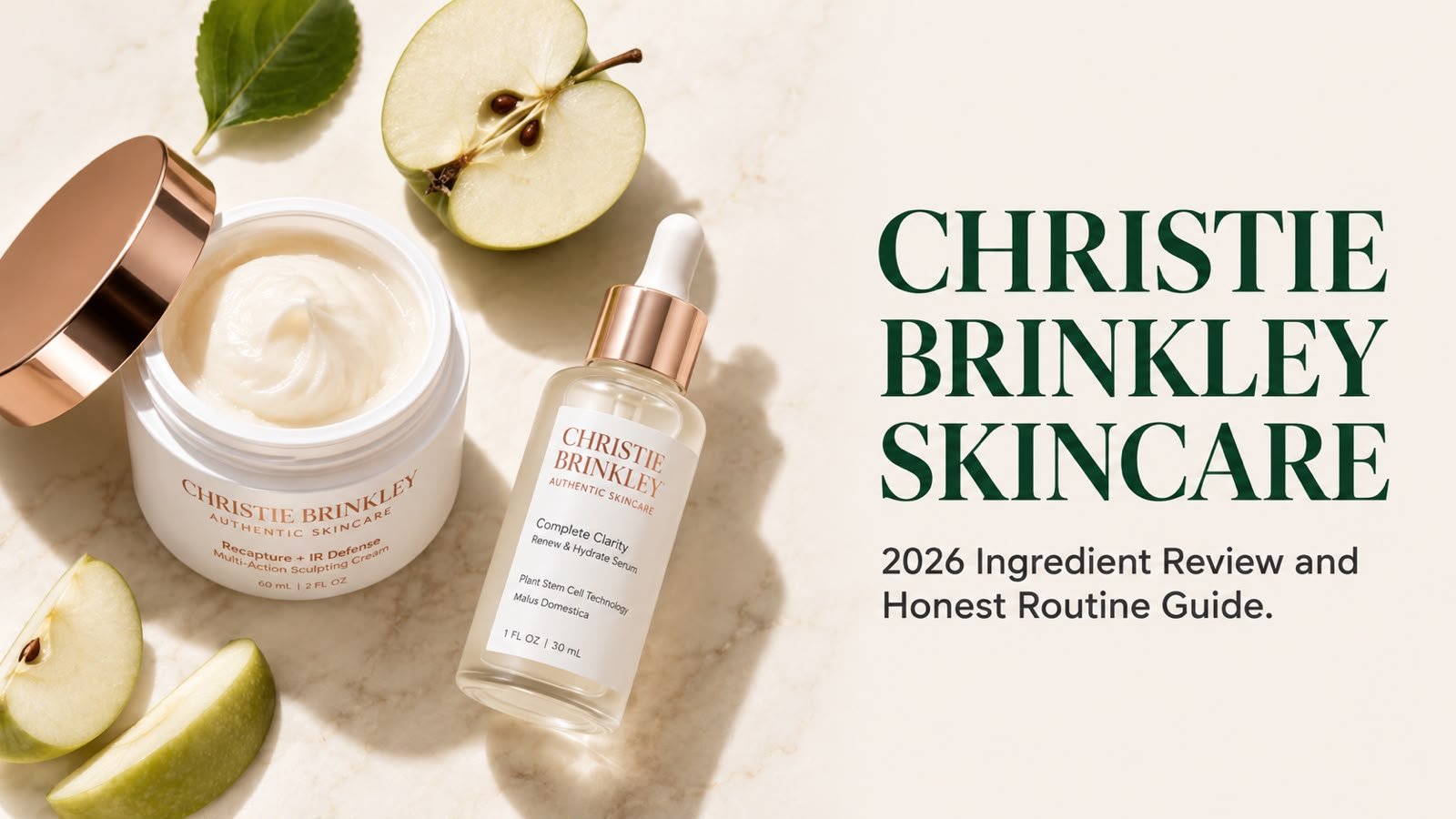
Christie Brinkley skincare is a celebrity-branded anti-aging line built around peptides, plant stem cell extracts, and retinol, positioned as a comprehensive system for mature skin. The products contain several evidence-backed active ingredients, though the clinical strength of the brand’s proprietary complexes varies widely between well-studied peptides and plant extracts with minimal human data.
Understanding what is actually inside these bottles matters because the anti-aging skincare market in 2026 is saturated with celebrity lines that rely on name recognition more than formulation integrity. A 2023 study published in the Journal of Cosmetic Dermatology found that consumers consistently overestimate the efficacy of celebrity-branded skincare relative to clinically equivalent but unbranded formulations, a bias the American Academy of Dermatology has highlighted as a barrier to evidence-based product selection.
This review walks you through every major active ingredient in the line, what the published research actually says about each one, how to build a complete routine from these products if you choose to use them, who should exercise caution, and whether the collection delivers enough formulation quality to justify its price point in 2026. This is an evaluation grounded in cosmetic chemistry, not brand storytelling.
Christie Brinkley Skincare Brand Overview and Philosophy
Christie Brinkley Authentic Skincare launched as a direct-to-consumer anti-aging line marketed to women who want a simplified, multi-step system that targets fine lines, loss of firmness, and uneven texture. The brand’s core message centers on the supermodel’s personal longevity in the public eye, using her image as the primary proof of concept for the formulations.
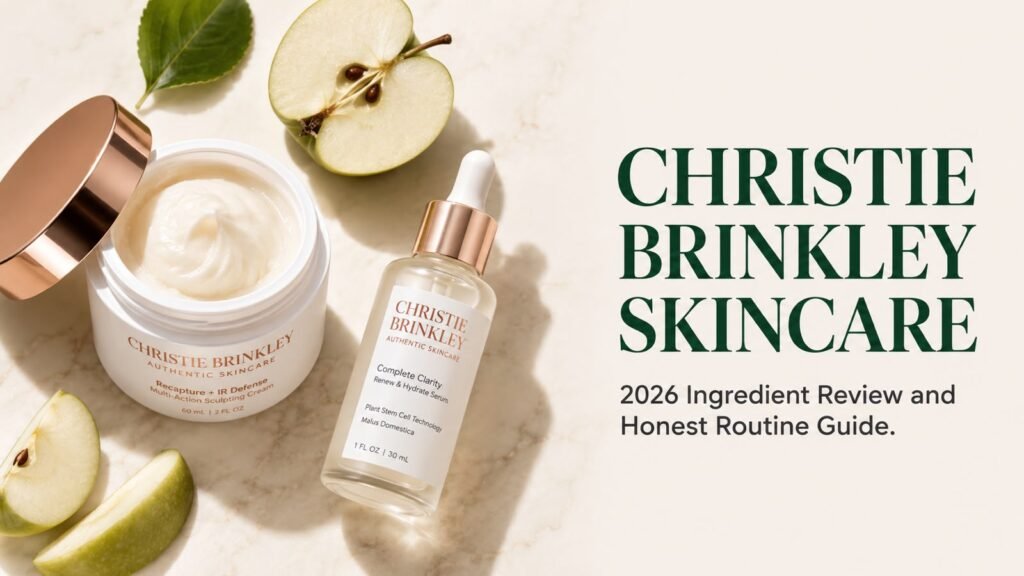
The line does not position itself as dermatologist-grade or clinical-grade. It sits in the masstige space between drugstore anti-aging and physician-dispensed cosmeceuticals, with pricing that reflects celebrity licensing economics as much as raw ingredient cost. A 1.7-ounce moisturizer retails in the $40 to $60 range, placing it alongside brands like StriVectin and Perricone MD rather than CeraVe or Neutrogena.
The brand’s philosophy emphasizes “authentic beauty” and “aging gracefully,” language that resonates with the 45-to-70 demographic that remembers Brinkley from her modeling career and identifies with her generation’s approach to skincare. That demographic connection is genuine. What the skincare journalist wants to know is whether the ingredient deck supports the price. Brand philosophy does not hydrate skin. Formulas do. The next sections examine those formulas compound by compound.
Christie Brinkley Authentic Skincare Ingredient Philosophy
The ingredient philosophy behind Christie Brinkley Authentic Skincare centers on what the brand calls “advanced anti-aging complexes” that combine peptides, plant-derived stem cell extracts, and time-released delivery systems. The brand markets these as proprietary technologies developed to target multiple aging pathways simultaneously, from collagen degradation to oxidative stress.
From a formulation science perspective, this is a legitimate approach in concept. Skin aging involves multiple interdependent mechanisms: fibroblast senescence reduces collagen output, chronic UV exposure upregulates matrix metalloproteinases that degrade existing collagen, and accumulated reactive oxygen species damage cellular DNA and structural proteins. A well-formulated anti-aging product should theoretically address more than one of these pathways. The Journal of Investigative Dermatology has published extensive research confirming that multi-target anti-aging strategies outperform single-mechanism approaches in controlled studies.
The question is execution. The brand’s proprietary complexes include names like “Bio-Renewal Complex” and “Smart Core Technology,” which are marketing terms rather than cosmetic chemistry classifications. A marketing term is not automatically meaningless. It might describe a legitimate liposomal delivery system, a peptide carrier technology, or an encapsulation method that stabilizes retinol. It might also be a label for a standard emulsion base. Without published formulation data or independent analysis, the reader is left relying on the ingredient list to determine what the product actually contains. The INCI list tells the real story. The next section decodes it.
Key Takeaway: Christie Brinkley skincare uses a multi-pathway anti-aging strategy that is conceptually sound, but the proprietary marketing terms need to be cross-referenced against the actual INCI ingredient list to understand what the products genuinely deliver to skin.
Christie Brinkley Skincare Key Active Ingredients Breakdown
The Christie Brinkley skincare line builds its formulations around four primary active ingredient categories: signal peptides for collagen stimulation, plant stem cell extracts for antioxidant protection, retinol for cell turnover, and sodium hyaluronate for hydration. Each of these categories has a different evidence base, and the strength of that evidence varies substantially.
Signal peptides like palmitoyl tripeptide-1 and palmitoyl tetrapeptide-7, used together as the Matrixyl 3000 complex, have multiple human clinical trials demonstrating wrinkle depth reduction and improved skin firmness. Retinol has decades of randomized controlled trial data confirming its efficacy for photoaging. Sodium hyaluronate is a well-established humectant with excellent stratum corneum hydration capacity. The plant stem cell extracts, primarily malus domestica fruit cell culture, have strong in vitro antioxidant data but minimal published human clinical evidence for topical anti-aging effects.
Here is a high-level evidence comparison across the four main active categories in the line:
| Active Category | Specific INCI Name | Primary Mechanism | Human Clinical Evidence | Evidence Strength |
|---|---|---|---|---|
| Signal Peptides | Palmitoyl tripeptide-1, palmitoyl tetrapeptide-7 | Fibroblast collagen synthesis stimulation | Multiple supplier-sponsored RCTs | Supported by clinical studies |
| Retinol | Retinol | Epidermal cell turnover, collagen remodeling | Multiple independent RCTs, AAD-recognized | Well-established |
| Plant Stem Cells | Malus domestica fruit cell culture extract | Antioxidant enzyme activity (in vitro) | Minimal human topical data | In vitro only |
| Hyaluronic Acid | Sodium hyaluronate | Stratum corneum hydration, TEWL reduction | Extensive independent evidence | Well-established |
This table tells you something the brand’s marketing copy does not: two of the four pillars rest on strong clinical evidence, one is well-documented, and one relies almost entirely on supplier-generated in vitro data. That does not make the plant stem cell extracts useless. It means their contribution to visible anti-aging results is less certain than the peptides or retinol in the same jar.
Christie Brinkley Skincare Plant Stem Cells Explained
Plant stem cell extracts in Christie Brinkley skincare refer primarily to malus domestica fruit cell culture extract, derived from a Swiss apple variety bred for storage longevity. The extract is produced by culturing plant cells in a laboratory bioreactor, then lysing the cells to release their intracellular contents, including phenolic compounds, flavonoids, and metabolites with demonstrated antioxidant capacity in cell culture models.
The challenge is the leap from petri dish to human skin. Plant stem cell extracts carry a fundamental bioavailability problem: the bioactive molecules inside a plant cell are large, water-soluble compounds that do not easily cross the human stratum corneum. The “500 Dalton rule” in dermal absorption research, first described in the Journal of Investigative Dermatology, states that molecules above 500 Daltons in molecular weight have negligible passive penetration through intact human skin. Most phytoactive compounds in plant cell extracts fall well above this threshold. Without a documented penetration-enhancing delivery system, what happens in a cell culture dish does not predict what happens on your face.
The brand’s “Smart Core Technology” may refer to an encapsulation system designed to address this delivery problem. Encapsulation can theoretically package large hydrophilic molecules in a lipophilic shell that improves stratum corneum partitioning. However, the brand has not published penetration study data or provided specific details about the encapsulation chemistry. A board-certified dermatologist reviewing the evidence would note the gap between the supplier’s in vitro antioxidant assay data and the absence of controlled human split-face studies showing wrinkle or firmness improvement from topical malus domestica extract alone.
This does not mean the extract is harmful or worthless. It functions as an antioxidant ingredient with plausible mechanism, and antioxidant activity has value in a daily skincare formulation. It means the plant stem cell story is best understood as a supporting ingredient rather than the primary driver of anti-aging results in the Christie Brinkley line.
Christie Brinkley Skincare Peptides and How They Work
The peptides in Christie Brinkley skincare are the strongest evidence-backed active components in the brand’s anti-aging arsenal. The line uses palmitoyl tripeptide-1 and palmitoyl tetrapeptide-7 together, a combination commercialized as Matrixyl 3000, which has multiple published studies demonstrating measurable wrinkle reduction and skin firmness improvement.
Peptides work through a specific signaling mechanism. When the skin’s structural matrix sustains damage, whether from UV exposure, chronological aging, or mechanical stress, collagen fragments called matrikines are released into the extracellular space. These fragments signal fibroblasts to produce new collagen to repair the damage. Synthetic signal peptides like palmitoyl tripeptide-1 mimic those natural matrikine signals. They bind to fibroblast receptors and trigger the same repair response, effectively tricking the skin into producing more collagen and hyaluronic acid than it would in the absence of the signal. The palmitoyl fatty acid chain attached to each peptide molecule improves lipophilic penetration through the stratum corneum, solving the delivery problem that limits many other peptide formulations.
A 2023 review in the Journal of Cosmetic Dermatology analyzed the cumulative clinical data on Matrixyl 3000 and found consistent, statistically significant wrinkle depth reduction across multiple double-blind, placebo-controlled trials, with results typically measurable at eight to twelve weeks of twice-daily application. The effect size is modest compared to prescription retinoids. It is real. For someone who cannot tolerate retinol or wants a multi-pathway approach that stacks peptide signaling alongside retinoid activity, this ingredient provides genuine value.
The Christie Brinkley formulations that feature Matrixyl 3000 at adequate concentrations, typically above 2% of the blended complex, deliver a clinically meaningful active to skin. This is the brand’s strongest cosmetic chemistry asset.
Christie Brinkley Skincare Retinol Product Analysis
Christie Brinkley skincare includes retinol in several of its treatment products, primarily in night creams and targeted serums. The specific INCI name listed is retinol, which is the alcohol form of vitamin A that requires two enzymatic conversion steps within the skin to become active retinoic acid. This is the standard over-the-counter retinoid form and carries decades of clinical evidence.
Retinol’s primary mechanism is well-documented: it binds to retinoic acid receptors in keratinocyte and fibroblast nuclei, upregulating genes responsible for epidermal cell turnover and collagen type I and type III synthesis. The American Academy of Dermatology recognizes topical retinoids as one of the most evidence-supported interventions for photoaged skin. A landmark study published in the Journal of the American Academy of Dermatology demonstrated that 0.1% retinol applied for 12 weeks produced statistically significant improvement in fine lines, hyperpigmentation, and skin roughness compared to placebo.
The critical question for the Christie Brinkley line is concentration. The brand does not publicly disclose the percentage of retinol in its formulations, which is a transparency gap. Effective over-the-counter retinol concentrations range from 0.01% for sensitive skin beginners to 1.0% for experienced users. Without knowing the concentration, a consumer cannot assess whether a product will produce meaningful retinoid activity or function primarily as a marketing claim.
The brand’s “time-released” delivery claim, if accurate, would theoretically reduce irritation by slowing retinol’s conversion rate in the skin. This is a legitimate formulation strategy documented in cosmetic science literature. Encapsulated retinol systems have been shown in International Journal of Cosmetic Science studies to reduce retinization-related erythema while maintaining efficacy. The trade-off is that slower release means slower visible results. A time-released 0.1% retinol will take longer to produce visible changes than an equivalent immediate-release formulation, but the irritation profile will be gentler.
For Fitzpatrick skin types III through VI, slow-release retinol formulations present a genuine advantage because the lower irritation risk reduces the probability of post-inflammatory hyperpigmentation triggered by retinoid dermatitis.
Key Takeaway: Retinol in Christie Brinkley products is a legitimate active, but the undisclosed concentration makes it difficult to position relative to clinically benchmarked alternatives. The time-release delivery is a real formulation feature that prioritizes tolerability over speed.
Christie Brinkley Skincare Vitamin C Product Analysis
The vitamin C component in Christie Brinkley skincare formulations typically appears as tetrahexyldecyl ascorbate, a lipophilic ester form of ascorbic acid. This is a deliberate formulation choice with distinct advantages and trade-offs compared to pure L-ascorbic acid, the most studied form of topical vitamin C.
Tetrahexyldecyl ascorbate penetrates the stratum corneum more efficiently than water-soluble L-ascorbic acid because its fatty acid ester chain gives it affinity for the lipid-rich intercellular matrix. Once inside the epidermis, cellular esterases cleave the ester bond and release free ascorbic acid, which then functions as a collagen synthesis cofactor, a tyrosinase inhibitor for hyperpigmentation, and a direct reactive oxygen species scavenger. This delivery advantage means tetrahexyldecyl ascorbate can achieve intracellular vitamin C concentrations at lower applied percentages than L-ascorbic acid formulations, and it does so without the low-pH formulation requirements that make traditional vitamin C serums sting on application.
The trade-off is comparative evidence volume. L-ascorbic acid at 10% to 20% concentration with a pH below 3.5 has decades of published data confirming its antioxidant and collagen-stimulating effects. Tetrahexyldecyl ascorbate has fewer independent comparative trials, though the available data, published in the Journal of Cosmetic Dermatology, shows comparable antioxidant capacity and superior stability at neutral pH. The ester form also demonstrates better efficacy for hyperpigmentation in Fitzpatrick types IV through VI because it does not cause the low-pH irritation that can trigger post-inflammatory melanogenesis in deeper skin tones.
For a line targeting mature skin, tetrahexyldecyl ascorbate is a smart formulation decision. It delivers vitamin C activity without the stinging, oxidation instability, and pH conflict issues that complicate L-ascorbic acid serums. The evidence base, while thinner than for pure ascorbic acid, is credible and growing.
Christie Brinkley Skincare Hyaluronic Acid Hydration Approach
The Christie Brinkley line uses sodium hyaluronate as its primary humectant, which is the sodium salt form of hyaluronic acid with a lower molecular weight that penetrates the stratum corneum more effectively than high-molecular-weight hyaluronic acid polymers. This is standard, well-validated cosmetic chemistry. Sodium hyaluronate binds up to 1,000 times its weight in water and functions by pulling moisture from the dermis upward into the epidermis and, when ambient humidity is adequate, from the environment into the skin surface.
The brand’s hydration approach is not novel. It is correctly executed. Sodium hyaluronate appears in multiple products across the line, from serums to moisturizers, creating a consistent humectant gradient that supports stratum corneum hydration throughout the routine. The formulations also include emollients and occlusives like dimethicone and caprylic triglyceride that seal hydration into the skin, which is the correct paired strategy because humectants without occlusives can increase transepidermal water loss in low-humidity environments.
One nuance worth noting: hyaluronic acid has become such a ubiquitous skincare ingredient that its presence is no longer a differentiator. The American Academy of Dermatology notes that most well-formulated moisturizers now contain adequate humectant concentrations. The question for the Christie Brinkley consumer is not whether the products hydrate. They will. It is whether the hydration performance justifies the price relative to a $15 drugstore moisturizer with an equivalent sodium hyaluronate and occlusive profile. Hydration efficacy is largely a function of formulation basics rather than proprietary technology, which makes this the least differentiated aspect of the line.
Complete Christie Brinkley Skincare Product Line Overview
The Christie Brinkley Authentic Skincare line in 2026 includes approximately eight to twelve core products organized into a multi-step anti-aging system. The product architecture follows a standard cosmeceutical structure: cleanse, treat, hydrate, protect, with separate AM and PM products where the active ingredients differ.
The core product categories include a gel or cream cleanser, an anti-aging treatment serum featuring the peptide and plant stem cell complexes, a vitamin C day serum or treatment, a retinol-based night cream or treatment, an eye cream targeting crow’s feet and undereye texture, a day moisturizer with SPF in some formulations, a richer night moisturizer with barrier-supporting lipids, and occasionally a neck and décolleté cream. Some kits bundle these into morning and evening regimens.
Here is a representative product architecture map for the line:
| Product Category | Typical Active Ingredients | AM or PM | Primary Function |
|---|---|---|---|
| Cleanser | Gentle surfactants, glycerin | Both | Remove debris without stripping barrier |
| Treatment Serum | Matrixyl 3000 peptides, plant stem cells | Both (check product) | Signal collagen synthesis, antioxidant support |
| Vitamin C Serum | Tetrahexyldecyl ascorbate | AM | Antioxidant protection, hyperpigmentation prevention |
| Eye Cream | Peptides, caffeine, humectants | AM and/or PM | Target periorbital fine lines and puffiness |
| Day Moisturizer | Peptides, humectants, SPF (varies) | AM | Hydration, environmental protection |
| Retinol Night Treatment | Retinol, peptides, ceramides | PM only | Cell turnover, collagen remodeling |
| Night Cream | Peptides, lipids, occlusives | PM | Barrier repair, occlusion, hydration |
| Neck and Décolleté Cream | Peptides, humectants | AM and/or PM | Targeted firming for thinner neck skin |
This structure is logical and covers the major anti-aging intervention points. The product overlap is intentional for marketing expansion but not all of it is necessary. The treatment serum, retinol product, and a moisturizer with sunscreen cover the core evidence-backed functions. The neck cream, eye cream, and separate AM and PM moisturizers add incremental benefit at incremental cost.
Key Takeaway: The full line is a complete anti-aging system with logical product architecture, but a minimal effective routine from this brand could be built with three products rather than eight. The rest is supplementary.
How to Build a Christie Brinkley Skincare Routine
Building a Christie Brinkley skincare routine starts with identifying the three non-negotiable functions any anti-aging regimen must cover: UV protection, collagen signaling, and stratum corneum hydration. Everything beyond those three is optimization, not foundation. Select your products around those functions first.
Start with the retinol night treatment as your primary collagen-signaling intervention. Retinol is the highest-evidence active in the line for reducing fine lines and improving skin texture. If you are new to retinoids, apply it twice weekly for the first three weeks, then every other night for the next three weeks, then nightly as tolerated. The International Journal of Cosmetic Science guidelines on retinoid introduction recommend this graduated schedule to minimize retinization-related peeling and erythema.
Next, layer the peptide treatment serum under your moisturizer on nights when you are not using retinol, or in the morning before your vitamin C product. Peptides and retinol work through complementary mechanisms. Retinol upregulates collagen genes through nuclear receptor binding. Peptides signal through fibroblast membrane receptors. Using them at different application times maximizes the signaling diversity without overwhelming the skin.
Third, ensure your daytime product stack includes a moisturizer with broad-spectrum SPF 30 or higher. Some Christie Brinkley day creams include sunscreen, but check the label. If your day moisturizer lacks SPF, apply a separate sunscreen as the final AM step. No anti-aging routine, regardless of ingredient quality, compensates for unprotected UV exposure. The American Academy of Dermatology states that daily broad-spectrum SPF use is the single highest-impact anti-aging intervention available.
Christie Brinkley Skincare AM vs PM Application Order
The AM application order for Christie Brinkley skincare follows the standard thin-to-thick rule, with active ingredient pH and photostability considerations determining which products belong in the morning versus evening.
To apply your Christie Brinkley morning routine correctly:
- Cleanse with the gel or cream cleanser. Lukewarm water only. Hot water strips barrier lipids.
- Apply the vitamin C treatment (tetrahexyldecyl ascorbate) to clean, dry skin. This ester form is pH-stable, so it layers well and does not require a wait time.
- Apply the peptide treatment serum if your skin tolerates layering it with vitamin C. The two are compatible because tetrahexyldecyl ascorbate does not create the low-pH environment that can theoretically hydrolyze peptides. Wait 60 seconds between layers.
- Apply the eye cream using your ring finger to gently pat the product around the orbital bone. Do not rub. Periorbital skin is thinner than the rest of the face and mechanical stress accelerates crepiness.
- Apply the day moisturizer. If it contains SPF, apply a generous quarter-teaspoon amount to the face to achieve the labeled protection factor.
- If your moisturizer lacks SPF, apply a separate broad-spectrum sunscreen with SPF 30 or higher as the final step. Sunscreen always goes last in the AM.
The PM application order shifts from protection to repair. Cleanse first. If using the retinol night treatment, apply it to clean, dry skin and wait 5 to 10 minutes before applying anything over it. Wet skin increases retinol penetration and irritation risk. After the wait period, apply the night cream over the retinol. On nights without retinol, apply the peptide serum first, then the night cream. The occlusives in the night cream seal the peptides against the skin and reduce transepidermal water loss during sleep, when TEWL naturally increases.
Christie Brinkley Skincare for Sensitive and Reactive Skin
Sensitive and reactive skin types require a modified approach to the Christie Brinkley line because several products contain fragrance, botanical extracts, and retinol, all of which are common triggers for contact dermatitis and sensory irritation in compromised barriers.
The first step is a patch test. Apply a small amount of the product to the skin behind your ear or on the inner forearm. Cover the area and wait 48 hours. If redness, itching, burning, or papules develop at the test site, the product is not suitable for your skin. This is not a reflection of product quality. It is an individual immune sensitivity. The American Academy of Dermatology recommends patch testing for anyone with a history of reactive skin before introducing any new topical product.
If you pass the patch test, introduce products one at a time, with at least two weeks between each new addition. Start with the most inert product: the moisturizer without retinol or fragrance. If tolerated, add the peptide serum next. Introduce the retinol product last and use the lowest frequency possible, beginning with once weekly application. For rosacea-prone skin, the retinol product may never be tolerable, and that is a reasonable outcome. The peptides and antioxidants provide anti-aging benefit without the vasodilation and barrier stress that retinoids provoke in erythematotelangiectatic rosacea.
Check the ingredient list for fragrance, identified as “fragrance (parfum),” “limonene,” “linalool,” “citronellol,” or “geraniol.” These are common sensitizers in the fragrance mix. Even “natural fragrance” can trigger allergic contact dermatitis. A 2024 review in the Journal of the American Academy of Dermatology found that fragrance is the most common cause of cosmetic-related allergic contact dermatitis in North America.
Key Takeaway: Sensitive skin users should patch test every Christie Brinkley product individually, introduce items one at a time, avoid the retinol product if barrier integrity is compromised, and scan ingredient lists for fragrance compounds regardless of whether the label says “for all skin types.”
Christie Brinkley Skincare Pregnancy and Nursing Safety
Pregnancy and nursing safety for Christie Brinkley skincare products depends primarily on whether a given product contains retinol. Retinol, like all topical retinoids, carries a theoretical teratogenicity risk based on the documented teratogenicity of oral isotretinoin, though the actual systemic absorption of topical retinol at cosmetic concentrations is minimal.
The FDA has not assigned formal pregnancy categories to cosmetic ingredients. However, the American College of Obstetricians and Gynecologists and the American Academy of Dermatology both advise avoiding topical retinoids during pregnancy and lactation out of an abundance of caution. The concern is not definitively proven for over-the-counter retinol concentrations. The stakes are high enough that the precautionary principle applies. If you are pregnant, actively trying to conceive, or nursing, skip the Christie Brinkley retinol night treatment and any other product in the line that lists retinol or retinyl palmitate on the INCI list.
The non-retinol products in the line, including the peptide serums, vitamin C treatments, hyaluronic acid moisturizers, and cleansers, are generally considered safe during pregnancy and nursing based on current dermatological consensus. Tetrahexyldecyl ascorbate is a vitamin C ester with no known pregnancy contraindication. Matrixyl 3000 peptides have no systemic absorption concern at topical application levels. Plant stem cell extracts present no known risk. If you want to maintain an anti-aging routine during pregnancy, the peptide and antioxidant components of the Christie Brinkley line provide a reasonable non-retinoid option.
Ask your board-certified obstetrician or a dermatologist with perinatal skincare expertise about your specific product list. Bring the full INCI ingredient panels to your appointment, not just the product names or marketing descriptions. The ingredient list is what your clinician needs to make an accurate safety assessment.
Christie Brinkley Skincare and Prescription Retinoid Interactions
Combining Christie Brinkley retinol products with prescription retinoids like tretinoin, adapalene, or tazarotene creates a high risk of retinoid dermatitis without additional anti-aging benefit. The skin’s retinoic acid receptors have a saturation ceiling. Once that ceiling is reached by a prescription-strength retinoid, adding over-the-counter retinol on top produces only irritation.
Prescription tretinoin is already retinoic acid. It does not require enzymatic conversion and binds directly to all three retinoic acid receptor subtypes at full potency. Christie Brinkley retinol is a precursor that requires two conversion steps to become active. When both are applied to the same skin, the tretinoin fully occupies the receptor pool and the retinol contributes nothing except additional barrier stress. The Journal of the American Academy of Dermatology advises against stacking multiple retinoid products specifically for this reason.
If you use a prescription retinoid, use the non-retinol Christie Brinkley products as your supporting routine. The peptide serum layers well with prescription retinoids and may provide complementary fibroblast signaling through a non-retinoid pathway. The moisturizers with ceramides and occlusives support the barrier function that prescription retinoids compromise during the initial retinization phase. The cleanser is gentle enough for retinoid-treated skin. Simply remove the Christie Brinkley retinol product entirely and let your prescription do the retinoid work.
For those using adapalene, which is available over the counter at 0.1%, the same principle applies. Adapalene is a synthetic retinoid with direct receptor activity. It does not need help from a second retinoid. Stack peptides, antioxidants, and barrier support around it. Skip the additional retinol.
Christie Brinkley Skincare Realistic Results and Clinical Evidence
Realistic results from Christie Brinkley skincare depend on which products you use, how consistently you apply them, and what your baseline skin condition is. The peptide and retinol components can produce measurable improvements in fine lines, skin texture, and firmness. The hydration components will improve stratum corneum water content within days. The magnitude and timeline of visible change, however, need to be calibrated against clinical reality rather than marketing imagery.
For the retinol products, expect visible fine line softening at 12 weeks of consistent nightly use, with continued improvement through 6 to 12 months. This timeline matches the cell turnover cycle acceleration and collagen remodeling latency documented in Journal of the American Academy of Dermatology retinoid studies. You will see improved skin smoothness and radiance earlier, typically by week 4 to 6, as desquamation normalizes and the stratum corneum compacts. The deeper dermal changes that affect wrinkles take months, not weeks.
For the peptide products, clinical trials on Matrixyl 3000 show wrinkle depth reduction measurable by profilometry at 8 to 12 weeks, with continued modest improvement through 6 months. The effect is subtler than retinol. It is real and cumulative. Many users report that their skin looks “better rested” rather than dramatically different, a description that aligns with the effect size seen in the published data.
The plant stem cell extracts may contribute antioxidant protection that prevents future damage, but expecting visible wrinkle reversal from this ingredient category specifically is not supported by current evidence. The vitamin C ester will help prevent new hyperpigmentation and support existing collagen synthesis. The hyaluronic acid will hydrate within the first application, but hydration is transient. It disappears when you stop using the product.
Key Takeaway: Visible anti-aging results from this line are realistic but require 8 to 12 weeks for initial peptide effects, 12 weeks for initial retinol effects, and consistent continued use for cumulative improvement. The line hydrates immediately. It does not transform skin in days.
Is Christie Brinkley Skincare Worth the Investment in 2026
The value proposition for Christie Brinkley skincare in 2026 depends on what you are comparing it to and which specific products you are evaluating. The line delivers legitimate peptide and retinol activity in adequately formulated vehicles. It does not represent the best value in any individual active category, nor does it represent the strongest clinical evidence available at its price point. It occupies a specific niche: a cohesive, simplified anti-aging system from a recognizable brand that removes the need to build a routine from disparate products.
Here is a comparative value assessment across key active categories:
| Active Category | Christie Brinkley Approach | Comparable Clinical Benchmark | Value Assessment |
|---|---|---|---|
| Retinol | Undisclosed %, time-release delivery | 0.3% to 1.0% retinol from brands disclosing concentration | Effective but opaque; better transparency available at this price |
| Peptides | Matrixyl 3000 at typical usage levels | Same peptide complex available in mid-range brands | Competitive; peptide products priced comparably across the segment |
| Vitamin C | Tetrahexyldecyl ascorbate, concentration undisclosed | 10% to 20% L-ascorbic acid with published stability data | Formulation-appropriate for mature skin; evidence lags behind L-AA |
| Hydration | Standard sodium hyaluronate and occlusive base | Equivalent hydration from drugstore at 70% lower cost | Overpriced for the hydration function specifically |
The Christie Brinkley line makes the most sense for a consumer who wants a pre-assembled anti-aging system from a single brand and values the convenience and branding enough to pay the premium. It makes the least sense for a consumer who wants the strongest retinol or vitamin C evidence per dollar or who is comfortable building a routine from individual products across multiple brands.
If you choose to buy, prioritize the retinol night treatment and the peptide serum. These are the products where the active ingredient quality is highest relative to the category. Skip the cleanser and the basic moisturizer unless the brand cohesion matters to you. Drugstore alternatives perform these functions equivalently at a lower price point. The eye cream and neck cream provide real but incremental benefit beyond what your facial products already deliver to those areas.
================================================================
Frequently Asked Questions About Christie Brinkley Skincare
What is Christie Brinkley skincare?
Christie Brinkley skincare is an anti-aging skincare line launched by the supermodel, featuring peptide complexes, plant stem cell extracts, retinol, and hyaluronic acid across a range of serums, moisturizers, and treatments. The brand positions itself as a comprehensive system for mature skin concerned with fine lines, firmness loss, and uneven texture.
What are the main ingredients in Christie Brinkley skincare products?
The main active ingredients include palmitoyl tripeptide-1 and palmitoyl tetrapeptide-7 (Matrixyl 3000 peptides), malus domestica fruit cell culture extract (plant stem cells), retinol, tetrahexyldecyl ascorbate (vitamin C ester), and sodium hyaluronate. The peptide and retinol components carry the strongest clinical evidence for anti-aging efficacy.
Is Christie Brinkley skincare good for wrinkles?
Christie Brinkley skincare can reduce the appearance of fine lines and wrinkles through its retinol and peptide components, both of which have clinical trial data demonstrating wrinkle depth improvement. Results require consistent use over 8 to 12 weeks for initial visible changes, with cumulative improvement over six to twelve months.
Can you use Christie Brinkley skincare with retinol?
Christie Brinkley skincare already includes retinol in its night treatment products, so you should not add a separate retinol product. If you use a prescription retinoid like tretinoin, skip the Christie Brinkley retinol product entirely and use only the brand’s peptide serums, moisturizers, and cleansers to avoid retinoid receptor saturation and irritation.
Is Christie Brinkley skincare safe during pregnancy?
The non-retinol products in the Christie Brinkley line, including peptide serums, vitamin C treatments, and moisturizers, are generally considered safe during pregnancy based on current dermatological consensus. Avoid any products containing retinol or retinyl palmitate during pregnancy and nursing as a precaution.
How long does it take to see results from Christie Brinkley skincare?
Hydration improvements appear within the first application. Visible fine line reduction from peptides typically requires 8 to 12 weeks of consistent use. Retinol results begin around week 12, with continued improvement through six to twelve months. Maximal anti-aging benefit requires consistent, long-term application rather than short-term use.
================================================================
If you take one thing from this review, let it be this: Christie Brinkley skincare contains real active ingredients that can improve aging skin, but the value lies in the peptide and retinol products specifically, not the full line. The peptide serum and the retinol night treatment are where the formulation quality and clinical evidence intersect most meaningfully. Everything else in the collection, the cleansers, the basic moisturizers, the plant stem cell marketing, can be replicated at a lower price point without sacrificing results.
Start there. Use those two products consistently for twelve weeks alongside a broad-spectrum SPF you apply every single morning without exception. Monitor how your skin responds. If you tolerate the routine well and see improvement, the line earned its place on your shelf. If the results do not match the price, you know exactly which ingredient categories to find elsewhere. Good skincare decisions come from knowing what is in the bottle and what the published evidence says about it. Now you know both.