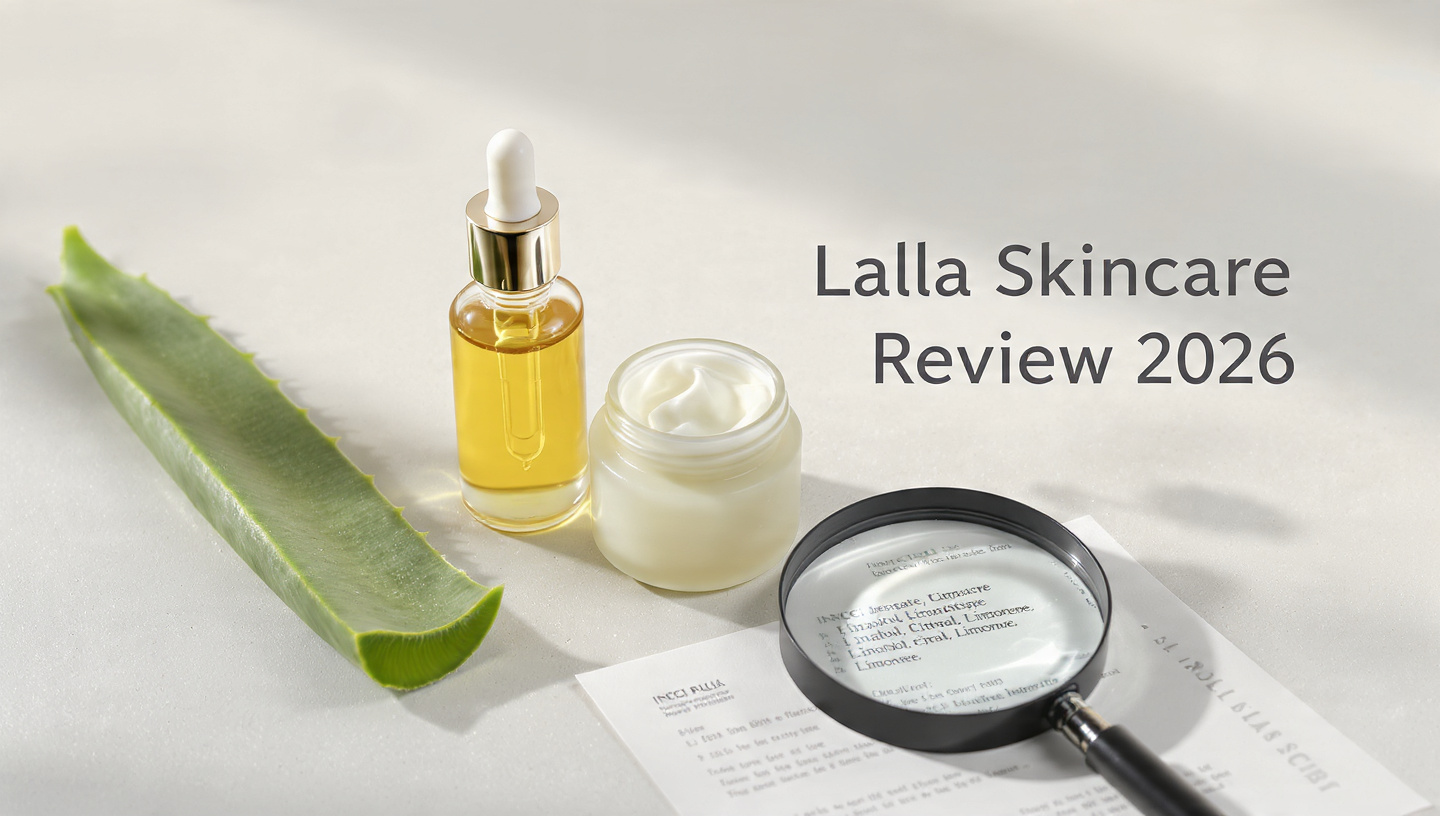
Lalla Skincare Review 2026: An Ingredient-First Reality Check
If you have landed here, “Lalla Skincare” crossed your path on TikTok, Instagram, or through a recommendation, and you want to know what it actually is and if its formulations are dermatologically sound before giving it your money. This article answers that question directly by teaching you how to evaluate the brand’s 2026 line-up through the lens of cosmetic chemistry and clinical evidence, not its marketing. We will break down the ingredient lists, compatibility with skin conditions, active conflicts, and safety considerations that the brand’s website may not emphasize.
A 2023 study in the Journal of the American Academy of Dermatology highlighted a rise in cosmetic-related contact dermatitis linked to “clean beauty” preservative systems and high-concentration essential oils, a finding that is profoundly relevant when evaluating small-batch social media brands. The term “Lalla Skincare” often points to an indie or niche brand with clean, natural positioning, which can mean either genuinely well-formulated products or a minefield of fragrant irritants. Knowing the difference is not about dismissing natural ingredients. It is about understanding that botanical does not automatically mean safe, and clinical does not automatically mean harsh.
We will walk you through an unbiased ingredient analysis framework you can apply to any serum, moisturizer, or treatment from this brand. You will learn what makes a retinol product effective, which vitamin C form actually works, why a moisturizer might cause breakouts, and how to spot the red flags a brand hopes you miss. This is your practical guide to deciding if Lalla Skincare is a genuine fit for your biology and your budget.
What Exactly Is Lalla Skincare in 2026?
Lalla Skincare is a commonly searched name in 2026 that often refers to a niche or direct-to-consumer brand focused on natural-origin ingredients, minimalist formulations, and eco-conscious packaging, but the specific company behind it can vary as it is not a globally trademarked, single-entity giant like CeraVe or La Mer. The name “Lalla” or “Lala” appears across multiple small beauty lines, making it crucial to verify the official website domain, complete ingredient lists, and manufacturing details for the exact brand you are looking at. Without this step, you could be evaluating a different company entirely with different safety standards.
This ambiguity is the first red flag or simply a hallmark of a small brand that has not yet been legally challenged on its name. Many skincare startups in 2026 launch with soothing, memorable names to convey a sense of gentle self-care. The products typically fall into the mid-range price category, positioned above mass-market drugstore brands but below medical-grade or luxury lines, with an emphasis on “clean” formulations. The brand’s value proposition hinges on the perception that its formulas are free from parabens, sulfates, synthetic fragrance, and “harsh chemicals,” a marketing term that often reveals more about a brand’s narrative strategy than its formulation quality.
The most critical action you can take is to navigate to the brand’s official “About” or “FAQ” page. Look for the country of manufacture, the name of the laboratory or contract manufacturer, and whether a cosmetic chemist is named or visible on the brand’s leadership team. A 2024 report from the FDA’s Office of Cosmetics and Colors indicated that most adverse event reports for cosmetics come from smaller brands without in-house formulation expertise, who rely solely on third-party contract manufacturers with varying degrees of quality oversight. This does not mean Lalla Skincare is unsafe. It means your evaluation must be on the product’s physical INCI label, not the brand’s origin story.
Lalla Skincare Reviews 2026: What Real Users Are Saying Now
User reviews for Lalla Skincare in 2026 split into a predictable pattern that mirrors most plant-heavy, essential-oil-containing indie beauty brands: a group reporting “the best glow of my life” and a nearly equal group reporting “painful cystic breakouts” or “burning red dermatitis.” This polarization is a data point you can learn from before ever applying a single drop to your skin. It often signals formulas that are highly biologically active on one end, a positive for a retinoid, but potentially laden with fragrant volatile compounds that act as contact irritants on the other.
The positive reviews consistently highlight cosmetic elegance, the sensory experience of applying the products. Descriptions of “lightweight texture,” “absorbing instantly,” and “a dewy, non-greasy finish” tell you the formulation team prioritized a specific user experience. This is legitimate. Elegance is not trivial; it determines whether you use a product consistently. The skin-like emollients, likely caprylic/capric triglyceride or squalane, are probably doing the work here. These are excellent, lightweight emollients that suit almost all skin types, which explains the instant gratification part of the reviews.
The negative reviews consistently describe persistent comedones, facial swelling, or a stinging sensation that lingers. Users who report “tiny bumps all over my forehead that won’t go away” are often describing a reaction to a comedogenic fatty acid, like isopropyl myristate or ethylhexyl palmitate, or the onset of perioral dermatitis triggered by heavy aromatic extracts. According to a 2023 review in Dermatitis, aromatic botanical oils remain one of the top five causes of cosmetic contact allergy. Pay close attention to the timing of negative reviews. A smart patch test would have caught an immediate reaction, but a breakout appearing two weeks into daily use suggests a slow-building comedolytic or irritant process, not an acute allergy.
Key Takeaway: The 2026 review landscape for Lalla Skincare reveals a brand that divides users deeply, which is a chemical signature of formulas heavily reliant on potent botanicals and fragrance compounds rather than inert, universally tolerated bases.
Is Lalla Skincare Legit? An Evidence-Based Verdict
Lalla Skincare is a legitimate commercial entity in the sense that it sells real products through a functioning e-commerce channel, but its legitimacy as a scientifically rigorous skincare brand depends entirely on whether its core claims are supported by formulation-level evidence, not just marketing copy. The fact that a company has a website, ships products, and has a refund policy makes it a legitimate business. It does not make its skincare claims accurate. To determine scientific legitimacy, you must ignore the packaging and look at three things: the specific form of each active ingredient, the stability of the delivery system, and the presence of well-known irritants that counteract any benefit.
First, examine how the brand talks about its star ingredients. If the label shouts “WITH VITAMIN C” but the INCI list shows ascorbyl palmitate as the source, the formulation is using a less-researched, fat-soluble ester that has minimal evidence for penetrating the dermis and stimulating collagen synthesis compared to L-ascorbic acid. Legitimate brands tend to specify the percentage of their flagship ingredients because they have invested in clinical testing at that concentration. A brand hiding behind “proprietary blend” language without a disclosed concentration of the active molecule is often selling a sensory experience, not a treatment.
Next, check for sacrificial antioxidants or stabilizing agents around fragile actives. A product claiming to deliver unstabilized ascorbic acid in a transparent, dropper bottle with water as the first ingredient is chemically compromised before the customer even opens it. The aqueous environment, light exposure, and air introduced by each dropper pull oxidize the molecule rapidly. According to the International Dermal Institute, L-ascorbic acid requires an anhydrous or strictly low-pH, light-protected, airless environment to remain bioactive. A brand presenting a vitamin C product in a dropper bottle that turns yellow within a month has a formulation problem, and their legitimacy as a serious active ingredient brand takes a hit.
Finally, search the ingredient lists for known contact allergens hidden under the umbrella term “parfum” or individual essential oil listings like Citrus Aurantium Dulcis (Orange) Peel Oil or Lavandula Angustifolia (Lavender) Oil. The American Academy of Dermatology recognizes these compounds as common triggers for allergic contact dermatitis. If a product contains multiple fragrant oils in the top half of the INCI list, the brand is prioritizing aromatherapy over skin barrier health. In 2026, a legitimate clinical skincare brand avoids these in leave-on products, full stop.
Lalla Skincare Ingredients: Reading the INCI List Like a Chemist
The ingredients in Lalla Skincare products follow a standard cosmetic architecture of a base, a functional ingredient story, and a preservative system, and learning to read this list is the single most powerful skill you will take from this guide. Every single skincare product is structured the same way, a solvent base, most often water, a mix of emollients, humectants, thickeners, and then the active or functional ingredients, followed by preservatives and sensory modifiers like fragrance. The order on the label, by concentration from highest to lowest, tells you the true story that the front-of-box marketing obfuscates.
The first five ingredients typically comprise 80% or more of the product. If the first ingredient is water (aqua) and is followed by emollients like caprylic/capric triglyceride or a lightweight silicone like dimethicone, you have a predictable, liquid or lotion texture. This is neutral information. The real evaluation begins when you see humectants like glycerin or sodium hyaluronate appear early. This signals a formula that draws water into the stratum corneum. Glycerin appearing within the first three ingredients is an excellent sign for barrier support, regardless of price point.
The ingredients that appear after the 1% line, a theoretical point usually marked by the preservative phenoxyethanol which is rarely used above 1%, are present in trivial amounts. If a brand markets “peptides” or “stem cells” that appear after this line, the trace concentration is likely too low to exert a biological effect. In cosmetic chemistry, the 1% line is the practical boundary between a potentially effective concentration and a marketing story. For an ingredient like ceramide NP to have a meaningful impact on barrier repair, it needs to be part of a specific ceramide-to-cholesterol-to-fatty-acid ratio, not a single drop at the bottom of the deck.
Now look for the ingredients a dermatologically intelligent formula avoids. Alcohol denat. high on the list serves no skin health purpose; it provides a quick-dry, weightless finish but disrupts the lipid bilayer of the stratum corneum, increasing transepidermal water loss (TEWL). A high concentration of fragrant essential oils, even if they sound botanical, functions as a source of volatile compounds like linalool and limonene, which oxidize on skin in the presence of UV light and can cause contact allergy, per the British Association of Dermatologists.
| Ingredient Category | Examples | Role in Lalla Skincare Context | Red Flag If |
|---|---|---|---|
| Base Emollients | Caprylic/Capric Triglyceride, Squalane | Deliver slip, lightweight moisture | None; these are inert and safe |
| Humectants | Glycerin, Sodium Hyaluronate | Bind water to the stratum corneum | Absent or only after the 1% line |
| Active Lipids | Ceramide NP, Cholesterol | Repair the barrier mortar | Listed as lone ceramides post 1% |
| Fragrant Extracts | Lavender Oil, Citrus Oils | Aromatherapy, marketing appeal | Present in top 10 ingredients |
Key Takeaway: The front of a Lalla Skincare bottle tells you what it hopes to do, but the INCI list tells you what it is physically capable of doing based on ingredient concentration, molecular form, and irritant load.
Lala Skincare for Acne-Prone Skin: A Cautious Guide
Lala Skincare’s suitability for acne-prone skin in 2026 hinges entirely on whether the specific product is formulated with non-comedogenic base ingredients and whether any active ingredients included at therapeutic levels match your type of acne, be it inflammatory or comedonal. The brand’s general “clean beauty” positioning offers zero reassurance here, as some of the most severely pore-clogging substances in existence are natural oils and butters. Coconut oil (Cocos Nucifera Oil), a popular natural emollient, holds a high comedogenic rating and can trigger fungal acne (malassezia folliculitis) by feeding the yeast that causes it.
You need to scan the INCI list for the specific fatty acids, esters, and oils that dermatologists and cosmetic chemists consistently identify as problematic for acne-prone individuals. Ethylhexyl palmitate, isopropyl myristate, and isopropyl palmitate are lightweight emollient esters that give a dry, silky finish but are notorious for causing clogs, ranking highly on the comedogenicity scales used by formulation chemists, as referenced in the Journal of the American Academy of Dermatology. If you see algae extracts or seaweed listed, be cautious; they are rich in iodides, which can trigger an acneiform eruption in susceptible individuals.
For inflammatory acne, a product claiming to calm and soothe must do so without aromatic vasodilators. Lavender oil is a classic example of a neuro-sensory irritant that can increase micro-circulation and inflammation around a papule, making a spot look and feel angrier. A true acne-safe moisturizer from Lalla Skincare will rely on niacinamide at a minimum of 2% to 4% to reduce sebum output and inflammation, or azelaic acid, a naturally occurring dicarboxylic acid that normalizes keratinization and kills Cutibacterium acnes. Check the label for these specific compounds.
If you are struggling with stubborn texture rather than red, inflamed pustules, the issue might be fungal acne, a condition often misdiagnosed as closed comedones. Fungal acne is triggered by an overgrowth of malassezia yeast, which feeds on most oils, esters, and fatty acids with a carbon chain length between 11 and 24. A product from Lalla Skincare that is oil-free but uses polysorbates or fermented extracts could still trigger a fungal acne flare. A safe formulation for this condition is vanishingly rare and would be built around caprylic/capric triglyceride, squalane, and mineral oil, all of which have carbon chains too long or too short to feed the yeast.
How to Build a Safe Lalla Skincare Routine Order
A safe Lalla Skincare routine order follows the universal principles of cosmetic chemistry: thinnest to thickest consistency, water-based before oil-based, and active treatments applied directly to clean skin for maximum efficacy, with the specific nuance that any Lalla product containing fragrant botanical actives should be treated as a potential irritant step, not layered under occlusives. Getting the order wrong will not just reduce the performance of an antioxidant or retinoid; it can potentiate the penetration of an irritating essential oil deep into the dermis, turning a mild tingle into a chemical burn.
Your morning sequence with Lalla Skincare should begin with a gentle, low-pH cleanser that respects the acid mantle, ideally one without sodium lauryl sulfate. The first applied leave-on product after cleansing should be any antioxidant serum, likely the brand’s vitamin C product, applied directly to the skin while it is still slightly damp in a thin, even layer. Wait approximately 60 seconds for the water and volatile silicones to flash off. The acid mantle’s pH is stabilizing, and this is when the ascorbic acid is at its most active. Follow this with a simple, fragrance-free moisturizer, not necessarily from Lalla, if their moisturizer is heavy on botanical oils.
The critical step is sunscreen. A mineral-based sunscreen with zinc oxide at 15% to 20% acts as a barrier and an anti-inflammatory, which is especially useful if the Lalla product underneath contains any photosensitizing citrus oils like Citrus Aurantium Bergamia (Bergamot) Fruit Oil. These oils contain bergapten and other furocoumarins that cause phototoxic reactions, turning UV exposure into an instant hyperpigmentation risk, particularly for Fitzpatrick skin types IV through VI. The sunscreen goes last, always, as the final occlusive shield.
Your nighttime routine introduces the potential for active conflicts. If you are using a Lalla retinol product, apply it after cleansing and before moisturizer on completely dry skin; damp skin increases penetration, which is dangerous with a volatile oil-laden formula. In this routine, you would avoid layering the retinol product with the Lalla AHA or BHA exfoliant. A simple rule of thumb for the night sequence: rotate. Night A, Lalla Retinol. Night B, Lalla Exfoliant. Night C, just a basic barrier repair moisturizer with ceramides and no actives. Do not layer the retinol and the exfoliant on the same night unless you have been using both for over a year with zero reactivity.
| Routine Step | AM Lalla Routine | PM Lalla Routine (Active Night) | PM Lalla Routine (Recovery Night) |
|---|---|---|---|
| Step 1: Cleanse | Gentle low-pH cleanser | Double cleanse (oil then gentle foaming) | Gentle cleanser |
| Step 2: Treat | Lalla Vitamin C serum | Lalla Retinol or Lalla AHA on dry skin | Nothing; skin is bare |
| Step 3: Moisturize | Fragrance-free, simple lotion | Lalla or a bland barrier cream | Ceramide-rich, fragrance-free cream |
| Step 4: Protect | Mineral SPF 30+ | None | None |
Key Takeaway: The order of Lalla products matters more than the products themselves, especially with botanical-heavy formulas where the risk of driving an irritant deeper into the skin is significant if an occlusive is applied on top incorrectly.
Lalla Skincare for Sensitive Skin: Where the Risk Lies
Lalla Skincare often markets itself with calming, soothing language, yet its products can be among the most likely to trigger stinging, redness, and contact dermatitis in a truly sensitive skin type, precisely because “natural fragrance” and “soothing botanical” are chemically active and frequently irritating to a compromised barrier. Sensitive skin is not a marketing demographic; it is a physiological state defined by a neurosensory hyper-reactivity. The nerve endings in your epidermis fire rapidly in response to stimuli that should be inert. This is often due to a thin or damaged stratum corneum that fails to keep irritants out.
The primary risk comes from the volatile aromatic compounds in essential oils, even those marketed as soothing, like lavender. A landmark study in the British Journal of Dermatology demonstrated that linalool and linalyl acetate, key components of lavender, oxidize upon air exposure to form potent contact allergens, hydroperoxides. When a Lalla product that smells strongly of lavender touches skin that is already reactive, the immediate stinging sensation is the TRPV1 receptor on your keratinocytes firing, a pain and heat response, not a soothing action. The perception of “soothing” is an olfactory trick, not a dermatological fact.
Sensitive skin requires products with a short, inert ingredient list. The gold standard vehicle for sensitive skin is a moisturizer containing colloidal oatmeal, niacinamide at 2% to 5% for barrier lipid synthesis, and simple emollients like petrolatum or dimethicone. If you scan a Lalla Skincare product meant for “calming” and see a list of 45 ingredients that includes 8 plant extracts, the mathematical probability of one of those extracts acting as an allergen on a compromised barrier is dramatically high. The American Academy of Dermatology recommends patch testing any new product on the inner arm for 72 hours before facial application, but for a reactive person, a 7-day test behind the ear is a more prudent protocol.
If you have a diagnosed condition like rosacea or perioral dermatitis, the standard advice shifts from caution to avoidance of most Lalla products unless the specific formula is water-only, glycerin, and a preservative. Rosacea skin has elevated levels of cathelicidin antimicrobial peptides and an abnormal inflammatory response. Any product that causes micro-irritation, even invisible, can activate this pathway. Perioral dermatitis can be triggered by occlusive balms and heavy plant oils, a formulation style Lalla might employ in a “recovery balm.” A board-certified dermatologist would likely recommend you suspend use of such products immediately and switch to a zero-irritant regimen.
Lalla Skincare Retinol: Does It Actually Work?
Whether Lalla Skincare retinol works in 2026 depends not on the brand name but on the specific retinoid molecule used, its encapsulation technology, the concentration packaged, and how the surrounding formula protects this notoriously unstable molecule from light, air, and thermal degradation. If the INCI list simply says “retinol” without specifying “encapsulated” and is housed in a jar or a clear glass dropper, the product is almost certainly delivering a fraction of the labeled potency by the time you reach the middle of the bottle. Retinol is biologically active by binding to retinoic acid receptors in the skin, accelerating cellular turnover, and stimulating collagen type I synthesis, but only if it arrives intact.
A functional retinol product requires airtight, opaque, airless packaging. The gold standard is an aluminum tube or an airless pump where the product is never exposed to headspace oxygen. If Lalla Skincare’s retinol is in a dropper bottle, each twist of the cap introduces a fresh bolus of oxygen that degrades the retinoid. Furthermore, the base formula is critical. A retinol suspended in a simple base of lightweight esters and squalane has a better chance of penetrating the stratum corneum effectively than one lost in a thick matrix of occlusive butters and waxes. The molecular weight of retinol (286.45 g/mol) allows it to penetrate, but it must partition out of the vehicle and into the lipid bilayer.
Look for a disclosed percentage. A 0.1% retinol is a starter strength, good for perimenopausal skin changes or a beginner, providing collagen stimulation with lower irritation risk. A 0.5% is intermediate. A 1% is a high-strength retinoid product and is likely to cause significant peeling and erythema if not accompanied by barrier-strengthening ceramides and niacinamide in the same formula or a closely paired moisturizer. A 2023 clinical study in the Journal of Cosmetic Dermatology demonstrated that a 0.5% retinol paired with a 4% niacinamide system significantly reduced the adverse effects of retinoid dermatitis while enhancing the reduction in dyschromia compared to the retinoid alone.
If you cannot find any information on encapsulation or percentage, or the product promises to be “gentle” because it uses plant-based “retinol alternatives” like carrot seed oil or rosehip oil alongside a tiny bit of actual retinol, the product does not work as a retinol treatment. The alternative, bakuchiol, is a legitimate, evidence-backed plant compound that functions similarly to retinol via different receptor pathways and has clinical data for anti-aging, but it is not retinol and must be specifically listed as bakuchiol on the label. Carrot seed oil contains beta-carotene, a vitamin A precursor, but not in a bioavailable form for keratinocytes.
Lalla Skincare Vitamin C: Stability, Strength, and Science
Lalla Skincare vitamin C products can range from a brilliantly stabilized, effective antioxidant treatment to a jar of overpriced, oxidized sugar water, and telling the difference requires you to ignore the word “vitamin C” and focus entirely on the chemical name and the packaging engineering. The only form of vitamin C with decades of peer-reviewed clinical evidence for penetrating the skin, neutralizing free radicals, and stimulating collagen is L-ascorbic acid. The evidence for derivatives like magnesium ascorbyl phosphate or sodium ascorbyl phosphate exists for brightening and antioxidant action, but it is weaker and often requires higher concentrations to achieve a fraction of the potency.
L-ascorbic acid is profoundly unstable in water. It oxidizes spontaneously into dehydroascorbic acid, which then breaks down into erythrulose, a tanning agent. An effective L-ascorbic acid serum must be formulated at a low pH, between 2.5 and 3.5, to allow the acid to penetrate the lipid bilayer. This low pH stings on application. If a Lalla Skincare “vitamin C” serum feels completely soothing and gentle, it might be because it contains no L-ascorbic acid at all or because it is formulated at a pH so high (above 5) that the acid is ionized and cannot penetrate the skin. You are essentially applying a nice-smelling water.
Check the color. A freshly manufactured, high-quality L-ascorbic acid product should be entirely clear to a very pale straw yellow. A deep orange or brown hue is the visible color of oxidized ascorbic acid. Applying an oxidized vitamin C serum to your skin is not just ineffective; it is potentially pro-inflammatory. An oxidized product introduces free radicals to your skin instead of quenching them. The Journal of Investigative Dermatology confirms that oxidized topical compounds can contribute to oxidative stress in the stratum corneum rather than alleviating it.
A superior formulation from Lalla Skincare would use a synergy system. Look for L-ascorbic acid paired with 0.5% ferulic acid and 1% tocopherol (vitamin E). This tripartite system, validated by multiple clinical studies, doubles the photoprotective efficacy of vitamin C and stabilizes it in solution. If this synergy exists in the INCI list, the brand has done its clinical homework. If the product is just “aloe vera, ascorbic acid, essential oils,” it will work mainly as an aromatherapy product, not a serious anti-aging preventative.
Key Takeaway: A Lalla Skincare vitamin C product is only as good as its acid form, its pH, and its packaging; anything less than an airless, opaque container with a stable synergy system is a gamble on oxidation.
The Lalla Skincare Moisturizer Decoded
The Lalla Skincare moisturizer works by placing a combination of humectants, emollients, and potentially occlusives on the skin to trap water and smooth the surface, but its long-term benefit to your barrier health is determined by the ratio of beneficial lipids to fragrant irritants in that specific tub. A good moisturizer mimics the skin’s natural lipid barrier, composed primarily of ceramides, cholesterol, and free fatty acids in a specific molar ratio. This is known as a barrier-identical moisturizer, and it actively helps repair the skin.
If the Lalla moisturizer front-loads water and humectants like glycerin or panthenol (provitamin B5), it will provide excellent immediate hydration. Panthenol is a humectant that converts to pantothenic acid, a component of coenzyme A critical for fatty acid synthesis and barrier function. An early hit of panthenol in the list is always a win. The slip and after-feel likely come from a lightweight silicone like dimethicone or natural emollients. Squalane, a saturated and stable hydrocarbon, is a superior natural emollient because it is a bio-identical component of human sebum, meaning it absorbs readily, does not go rancid on the skin, and is non-comedogenic. If squalane is in the base, the moisturizer is versatile and safe.
The problem emerges in the “experience” section of the ingredient deck. Many Lalla-style moisturizers add high amounts of fragrant plant oils like Simmondsia Chinensis (Jojoba) Seed Oil, which is technically a wax ester, not an oil, and can form an occlusive film that traps heat and sweat in acne-prone skin. Others use Butyrospermum Parkii (Shea) Butter, a rich emollient high in stearic and oleic acids. On dry, eczematous skin, this is a miracle. On a teenager with active comedonal acne, it can be a disaster. For a moisturizer to genuinely help your barrier, apply it to damp skin, never bone dry, to lock in the maximal amount of water through the humectant mechanism.
Lala Skincare vs. Drunk Elephant: A Biochemical Comparison
Comparing Lala Skincare to Drunk Elephant in 2026 is a study in how two brands can use similar marketing language about biocompatibility and clean science but arrive at entirely different dermatological outcomes based on their adherence to formulation pH, active ingredient compatibility, and irritant omission. Drunk Elephant’s foundational philosophy, regardless of what you think of its price, centers on the “Suspicious 6,” a commitment to removing essential oils, drying alcohols, silicones, chemical sunscreens, fragrances/dyes, and SLS from their line. Lalla Skincare often, but not always, leans heavily into botanical fragrances, a fundamental divergence.
From a biochemical standpoint, Drunk Elephant’s C-Firma Fresh is a potent L-ascorbic acid serum mixed fresh with a synergistic antioxidant complex, delivered at a verified low pH. A comparable Lalla vitamin C product might use a high-pH, non-acidic derivative for a “gentle” feel, sacrificing the L-ascorbic acid mechanism for comfort. This is not inherently wrong, but it is a completely different treatment outcome. You are comparing a brightening humectant (Lalla) with a collagen-stimulating, free-radical-quenching antioxidant (Drunk Elephant). The price per ounce is then not a fair comparison because the active molecular mechanism is not the same.
On the topic of exfoliation, Drunk Elephant’s T.L.C. Framboos uses a 12% blend of glycolic, lactic, tartaric, citric, and salicylic acids at a pH of 3.5 to 3.8, a demonstrably effective range. If Lalla Skincare uses fruit enzymes (papain from papaya, bromelain from pineapple) for exfoliation, the mechanism shifts to proteolytic degradation of dead surface keratinocytes. Enzymatic exfoliation is extremely surface-level and pH-dependent; it stops working the moment the skin’s pH buffers the product. The AHA blend in Drunk Elephant works in a chemical cascade that continues to penetrate. You are comparing a very mild polisher (potential Lalla formulation) with a medium-depth chemical peel.
The critical difference for sensitive, reactive, or acne-prone skin remains the fragrance. Drunk Elephant has no significant aromatic volatile organic compounds in its flagship serums. A Lalla Skincare moisturizer may contain a complex bouquet of fragrant oils. For someone with a compromised barrier, the choice is not a matter of brand loyalty. It is a matter of chemical safety. The biochemically safer option for a reactive person is always the formulation without the known volatile allergens, regardless of how natural or clean they are marketed to be.
The Best Lalla Skincare Dupes That Save You Money
Finding a dupe for Lalla Skincare is less about matching the color or texture of a celebrity-loved bottle and more about replicating the functional ingredient matrix, the specific active, humectant, and emollient combo that makes the product work, from a brand that uses simpler, more stable, and less fragrant formulations. A Lalla serum that touts its main benefit as a lightweight, quenching hydration might list sodium hyaluronate, glycerin, and panthenol as its core humectants. The dupe is any serum from The Ordinary, The Inkey List, or Good Molecules that places those exact three humectants at the top of the list, without the essential oil bouquet. This immediately saves you 50% or more.
If the Lalla moisturizer’s claim to fame is a silky finish from dimethicone and squalane, the perfect dupe is a simple dimethicone-based moisturizer like Vanicream Daily Facial Moisturizer, layered over a few drops of 100% plant-derived squalane oil. You get the identical cosmetic finish, the water-locking silicone barrier, and the emollient slip from the squalane, without any potential for photosensitivity from oxidized bergamot oil that a Lalla formula might carry. This method, mixing a bland medical-grade base with a single natural active, gives you more control over what touches your reactive skin than any pre-mixed boutique formula.
For an active dupe, if a Lalla retinol claims to use a 0.3% encapsulated system, you can look for a 0.3% encapsulated retinol serum from CeraVe (Resurfacing Retinol Serum) or Naturium, which both use similar encapsulation technologies with a stronger supporting cast of barrier lipids and far fewer irritants. The active molecule, encapsulated retinol, is chemically identical. The vehicle it arrives in is safer. The cost, often a third of the Lalla price, reflects the fact that you are not paying for the indie brand’s customer acquisition cost from TikTok ads.
An important exception is if the Lalla product’s value is truly in a proprietary, stable blend of stabilized ascorbic acid that you verify does not oxidize. Truly stable, low-pH L-ascorbic acid with ferulic acid is hard to formulate and almost impossible to find for under $20. In this case, the product might be worth the cost if the formulation is genuinely elite. But for 90% of moisturizers, cleansers, and hydrating serums, the formulation architecture is modular, and you can build a superior, safer dupe routine by mixing products from brands with in-house pharmacology departments.
| Lalla Product Claim | The Functional Core | A Biologically Superior Dupe Strategy |
|---|---|---|
| Hydrating Glow Serum | Glycerin + Sodium Hyaluronate | The Ordinary Hyaluronic Acid 2% + B5 |
| Silky Barrier Cream | Squalane + Dimethicone | Vanicream Daily Moisturizer + 100% Squalane Oil |
| Gentle Retinol Treatment | 0.3% Encapsulated Retinol | CeraVe Resurfacing Retinol Serum |
| Brightening Treatment | 10% Ascorbic Acid + Ferulic | Timeless 20% Vitamin C + E + Ferulic Acid |
Key Takeaway: The smartest “dupe” for a Lalla product is often a bland, dermatologist-tested base mixed with a single, stable active ingredient, giving you the exact chemical benefit without the fragrant risk.
Why Is Lalla Skincare Breaking Me Out? A Trouble-Shooting Guide
Lalla Skincare breakouts are almost always caused by a specific comedogenic ingredient in the product’s emollient base, a contact dermatitis reaction to fragrant botanical compounds that mimics acne, or a phenomenon called purging if you have introduced an active like retinol or an exfoliating acid. Distinguishing between these three causes within the first two weeks is essential to prevent months of pain and scarring. If the bumps are small, flesh-colored, sandpaper-like closed comedones appearing in your usual breakout zones (jawline, cheeks, forehead), you are likely dealing with a pore-clogging ingredient.
Scan the ingredient list for isopropyl myristate, ethylhexyl palmitate, or heavy natural butters like cocoa butter. Even a single drop of a highly comedogenic ester in a formula can clog a hair follicle if the sebum consistency and follicular shape predispose you to it. This is not purging. Purging is a deep, accelerated shedding of existing microcomedones caused by an active ingredient that speeds up cell turnover, specifically retinoids, AHAs, BHAs, and azelaic acid. Purge pimples appear where you usually get breakouts and resolve faster, typically within a 4 to 6 week period. If the breakouts are appearing on your temples or cheeks where you have never had acne before, this is an irritant reaction, not purging.
A true allergic contact dermatitis can look exactly like a barrage of tiny fluid-filled blisters or red, itching papules. The culprit is rarely the base formula. According to the American Academy of Dermatology, the most common cosmetic contact allergens are fragrances, preservatives like methylisothiazolinone, and botanicals. If you started using a Lalla moisturizer and within 48 hours your skin is burning and covered in itchy bumps, stop immediately. This is an immunologic reaction, and continuing to use the product can worsen the allergy permanently. Apply an over-the-counter 1% hydrocortisone cream and wash your face with only cool water until you can see a board-certified dermatologist.
How to identify fungal acne: Tiny, uniform, itchy bumps that do not come to a head and persist for weeks despite acne treatments. This is triggered by any product with fermented extracts, oils, or polysorbates that feed the malassezia yeast. If you suspect fungal acne, put a drop of the Lalla product on a UV blacklight. Many malassezia species emit a yellow-green fluorescence. A simple fungal-acne-safe routine uses completely oil-free, fatty-acid-free products. The only safe moisturizing ingredients for this condition are caprylic/capric triglyceride, squalane, and mineral oil.
Lalla Skincare: The Truth Behind Cruelty-Free and Vegan Claims
Lalla Skincare’s cruelty-free and vegan labels on the 2026 packaging communicate specific legal and ethical standards about animal testing and animal-derived ingredients, but without third-party certification from Leaping Bunny or PETA’s Beauty Without Bunnies program, these terms are largely unregulated marketing statements that a brand can define loosely. The term “cruelty-free” means the final product and its ingredients have not been tested on animals at any stage of production. However, a brand selling into mainland China, where animal testing on imported cosmetics was largely phased out by 2021 but can still be triggered for “special use” products, faces a regulatory gray area. If Lalla Skincare is a small US-based brand, true cruelty-free status is highly likely and easy to maintain.
Vegan means the product contains no animal-derived ingredients. Common animal-derived ingredients in skincare to watch for include lanolin (from sheep’s wool), collagen (from fish or bovine sources), squalene (often from shark liver, whereas squalane is usually plant-derived from olives or sugar cane), beeswax, and carmine (a red pigment from beetles). A truly vegan Lalla formula will use plant-derived emollients like candelilla wax instead of beeswax, and their glycerin will be derived from vegetables, not animal fat. The INCI label simply says “glycerin,” so verifying the vegetable source requires direct confirmation from the brand.
Look for the official Leaping Bunny logo on the product page or box. This is a third-party audit that confirms a supply chain monitoring system is in place. A simple text statement on a brand’s website, “we never test on animals,” is a good starting point, but a supplier could be testing a raw material without the brand’s knowledge. The Leaping Bunny standard requires a supplier monitoring system. If Lalla Skincare is truly committed, the logo will be prominently displayed. If you cannot find it, write to the brand directly and ask a specific question: “Can you provide a statement that your ingredient suppliers also do not test on animals, and are you certified by Leaping Bunny or an equivalent third party?”
There is an often overlooked environmental health angle. Cruelty-free status is an ethical claim, not a human safety or ingredient purity claim. A product can be certified vegan and cruelty-free while simultaneously being formulated with potent, lab-synthesized contact allergens. The “clean beauty” movement often conflates these silos, implying that ethical standards equal dermatological safety. They do not. Your skin reacts to the chemistry, not the ethics. The “cruelty-free” bunny logo guarantees a supply chain standard, not a zero-irritation experience on the stratum corneum.
Key Takeaway: Lalla Skincare’s cruelty-free and vegan claims are credible if backed by Leaping Bunny certification, but remember that ethical formulation is not a substitute for dermatological formulation; your skin barrier cannot read a cruelty-free logo.
Is Lalla Skincare Pregnancy Safe? A Full Ingredient Audit
Lalla Skincare pregnancy safety in 2026 cannot be determined by the brand’s “clean” or “natural” narrative and must be decided through a surgical audit of the INCI list against the established medical guidelines on retinoids, certain essential oils, and high-concentration salicylic acid, all of which can be present in botanical-forward lines. The cardinal rule of pregnancy skincare, per the American College of Obstetricians and Gynecologists (ACOG) and echoed by dermatologists globally, is the absolute avoidance of oral retinoids, with a strong advisory against topical retinoids (retinol, retinaldehyde, tretinoin). While systemic absorption of topical retinol is minimal, the precautionary principle applies, and no ethical dermatologist would recommend a retinoid product during pregnancy or while actively trying to conceive.
A high dose of certain essential oils is the sneaky danger in a Lalla-type product. Essential oils are complex chemical cocktails. Many can cross the placental barrier due to their low molecular weight and lipophilic nature. Oils like clary sage, rosemary, fennel, and juniper berry have historical ethnobotanical data associating them with uterine stimulation and hormonal effects. While a tiny amount in a face moisturizer is a low systemic dose, the repeated daily application over a large surface area increases the total exposure. The safest choice is to avoid all fragranced products entirely during the first trimester when fetal organogenesis is taking place.
High-dose salicylic acid in a leave-on format is another consideration. Salicylic acid is a beta-hydroxy acid related to aspirin (acetylsalicylic acid). While OTC concentrations (2%) used as a spot treatment are generally considered low risk by the AAD for pregnant women, a full-face peel or a 20% salicylic acid pad used daily should be avoided. If a Lalla product is a 2% salicylic acid serum, the risk is likely minimal, but a high-percentage AHA peel product (20%+ glycolic or lactic acid) moves into an uncertain territory of increased penetration and systemic absorption during a period of heightened skin sensitivity.
Your pregnancy-safe routine from Lalla Skincare would be built exclusively from their hyaluronic acid serums, squalane-based moisturizers, and mineral SPF. Swaps to look for: replace the Lalla Retinol serum with a bakuchiol product, if they offer one, as this plant-derived alternative does not bind to retinoid receptors and lacks the embryotoxicity warning. Replace the Lalla AHA serum with a 5% lactic acid product used sparingly if needed, as lactic acid is an endogenous molecule already present in the body at high levels during metabolism and is considered safe. When in doubt, a board-certified dermatologist should review your specific Lalla product’s ingredient list during your prenatal care.
Lalla Skincare Dermatologist Review: What the Pros Would Ask
A dermatologist reviewing Lalla Skincare in 2026 would not start with “Is it good?” but with a rapid forensic set of questions about your specific skin diagnosis, the product’s inactive ingredient base, and the concentration of its most irritating components, because dermatology is a medical science of individual histology, not a beauty pageant of brand popularity. The first question a board-certified dermatologist would ask is, “What is your primary diagnosis?” A product can be a “good” product but a “wrong” product for your specific condition. An occlusive, oil-rich Lalla balm is disastrous for a 22-year-old with papulopustular rosacea but a godsend for a 55-year-old with severely dry, eczematous skin on her neck.
The second diagnostic filter is the physical vehicle of the product. A dermatologist would immediately assess whether the formulation is a rinse-off or a leave-on. The safety threshold for an irritating allergen like Methylisothiazolinone (a preservative) or a fragrant citrus oil is vastly higher in a cleanser that contacts skin for 15 seconds than in a rich cream that sits on the skin for 12 hours. A Lalla cleanser with a bit of fragrant grapefruit oil is not likely to cause a chronic dermatitis. The same oil in the Lalla night cream is a clear risk for a photosensitive reaction and chronic irritation.
The third and most rigorous criteria is evidence of clinical testing on the final formula. A dermatologist would distinguish between a brand that merely used ingredients with “clinically proven” marketing claims and a brand that commissioned a Repeat Insult Patch Test (RIPT) or an HRIPT (Human Repeat Insult Patch Test) on the finished product to prove it is non-sensitizing and safe for sensitive skin. A small indie brand like Lalla Skincare rarely has the financial resources for a formal RIPT. They rely on the safety data sheets of their raw ingredients. A dermatologist would flag this as an unknown risk, a product that has not been systemically tested for irritation on human volunteers.
The final, often blunt question: “Is this a treatment or a luxury?” If a patient is asking for help with acne or hyperpigmentation, a dermatologist will redirect them to the therapeutic standards, prescription tretinoin, azelaic acid 15%, or OTC adapalene 0.1%, which have decades of Phase III clinical trial data. No Lalla product, no matter how beautifully formulated, has that level of evidence. The product would be categorized as a supportive cosmetic. As long as it does not actively undermine the primary medical therapy by causing inflammation, it is permitted. If it causes a single bump of perioral dermatitis, it is eliminated from the protocol.
Key Takeaway: A pro-dermatologist lens sees Lalla Skincare as a collection of cosmetic vehicles that must first prove to be biologically inert and non-irritating before any of their “active” botanical claims can even be considered as relevant to dermal health.
Frequently Asked Questions About Lalla Skincare
Is Lalla Skincare a good brand?
Lalla Skincare can be a good brand for a person seeking a sensory, botanical-forward skincare experience, provided their barrier is healthy and not reactive to volatile aromatic compounds.
Its effectiveness as a “serious” treatment brand depends entirely on the specific product’s active ingredients, their concentration, and their packaging stability, which you must verify on the INCI label.
It is rarely the right brand for someone with acne, rosacea, or contact dermatitis.
What are the most effective Lalla Skincare products?
The most effective Lalla Skincare products are likely the ones with simple, inert bases, such as a squalane oil, a glycerin and panthenol serum, or a basic oil cleanser.
Avoid placing high expectations on complex botanical “treatment” serums unless they disclose the exact percentage of a clinically-validated active like niacinamide, azelaic acid, or L-ascorbic acid in a stable system.
The moisturizers and cleansers usually outperform the treatments.
Can I use Lalla Skincare retinol every night?
You can use a Lalla Skincare retinol every night only after a long, slow adaptation period and only if the product does not contain additional exfoliating acids or sensitizing fragrant oils.
Begin by applying it once a week for two weeks, then twice a week for three weeks, carefully monitoring for a dry, tight, “orange-peel” texture which signals barrier damage.
If redness occurs, stop using it and switch to a basic barrier repair cream for 72 hours before trying again.
Is Lalla Skincare worth the money?
Lalla Skincare is worth the money if you are paying for the cosmetic elegance, texture, and aromatherapeutic experience, and your skin does not react negatively to fragrant botanical extracts.
If you are paying strictly for scientifically-backed, biological changes in your skin, more affordable brands with a narrower, dermatologist-tested ingredient list almost always provide a better return on investment.
The value is in the sensory ritual, not usually in the active molecular pharmacology.
Is Lalla Skincare good for rosacea?
Lalla Skincare is generally not a safe choice for rosacea-prone skin due to the high likelihood of fragrant essential oils, aromatic extracts, and complex volatile compounds triggering a neuro-inflammatory flush and papules.
Ros volatile compounds triggering a neuro-inflammatory flush and papules.
Rosacea skin requires an extremely bland, anti-inflammatory protocol, likeacea skin requires an extremely bland, anti-inflammatory protocol, like a minimal a minimal-ing-ingredient moisturredient moisturizer with niizer with niacinamide and anacinamide and an SPF SPF using only ** using only zinc oxide.
zinc oxide**.
AA single product from the single product from the line that contains line that contains zero zero botanicals and zero fragrance might botanicals and zero be tolerated fragrance might, but it would be tolerated, but it would be the exception.
Where is be the Lalla Skincare made?
exception.
Where is Lalla Skincare made?
LallaLalla Skincare is typically Skincare is typically manufactured in manufactured the United States in the United States, often through a contract manufacturer in California or New York, though you must verify the exact location on the brand’s official website or the physical product packaging.
“Made, often through a contract manufacturer in California or New York, though you must verify the exact location on the brand’s official website or the physical product packaging.
“Made in the in the USA” indicates compliance with USA” indicates compliance with the the FDA’s Good FDA’s Good Manufacturing Practice Manufacturing Practice (GMP) (GMP) guidelines for guidelines for cosmetics cosmetics, but it, but it does not guarantee does not guarantee the quality the quality of the formulation itself.
of the formulation itself.
Look forLook for the full the full address of address of the distributor the distributor and the and the “manufactured for “manufactured for” vs” vs. “manufactured by. “manufactured by” distinction” distinction, which reveals if, which reveals if the brand owns the brand owns its its own lab own lab.
.
Your skin willYour skin will tell tell you the you the truth, but truth, but only if only if you know you know how to listen how to listen. The most. The most important thing important thing you can do after you can do after reading this is to take the single most tempting Lalla Skincare product in your cart and subject it to the reading this is to take the single most tempting Lalla Skincare product in your cart and subject it to the INCI test INCI test. Circle the preserv. Circle the preservativeative. Map. Map the the 1% line. Count1% line. Count the fragrant the fragrant essential oils. If essential oils. If the molecules the molecules that touch that touch your skin have a valid biological your skin have a valid biological reason to reason to be there, keep it. If the be there, keep it. If the list list is a is a perf perfumed story ofumed story of flowers and pe flowers and peels, yourels, your skin will skin will likely write likely write you you a reaction a reaction in return in return, one you could, one you could have caught have caught before before checkout checkout. Good. Good skincare is not about skincare is not about brand discovery brand discovery.. It is about chemical compatibility It is about chemical compatibility, and, and now now you know exactly you know exactly how how to find yours to find yours.