LILFOX Skincare Review 2026: Ingredients and What’s Worth It
LILFOX skincare is a luxury botanical brand that delivers a sensorial, ritual-driven experience backed by cold-pressed plant oils and enzyme-based exfoliants rather than high-strength active pharmaceuticals. The products feel beautiful, smell potent, and turn a nightly routine into something closer to a spa treatment. Their visible skin effects come primarily from oil-based moisture support, gentle enzymatic exfoliation, and the antioxidant content of the botanicals rather than from clinically dosed retinoids or acids.
More than one in four skincare products marketed as “natural” or “plant-based” contain at least one fragrance allergen on the European Union’s mandatory label list, according to a 2023 analysis published in Contact Dermatitis. That statistic matters for LILFOX because the brand relies heavily on fragrant essential oils and botanical extracts for both its signature scent profiles and its preservative systems. The products genuinely deliver on texture, ritual, and short-term skin softness. Long-term anti-aging or transformative results comparable to pharmaceutical-grade topicals require a different conversation, one grounded in what specific compounds in these bottles actually reach the skin’s viable layers at meaningful concentrations.
This article walks through exactly what is inside the hero LILFOX products, what the available evidence says about those ingredients, which skin types stand to benefit most, and who should approach with genuine caution. You will find no vague “clean beauty” praise and no reflexive dismissal. Just a cosmetic chemistry level assessment of a brand people genuinely love, so you can decide with clarity whether it belongs on your shelf.
Key Takeaway: LILFOX skincare is best understood as a luxury sensorial ritual with genuine emollient and enzymatic exfoliation benefits. It is not a substitute for clinically dosed active skincare if your primary goals are collagen regeneration, deep hyperpigmentation correction, or moderate to severe acne management.
What is LILFOX skincare and what makes it different
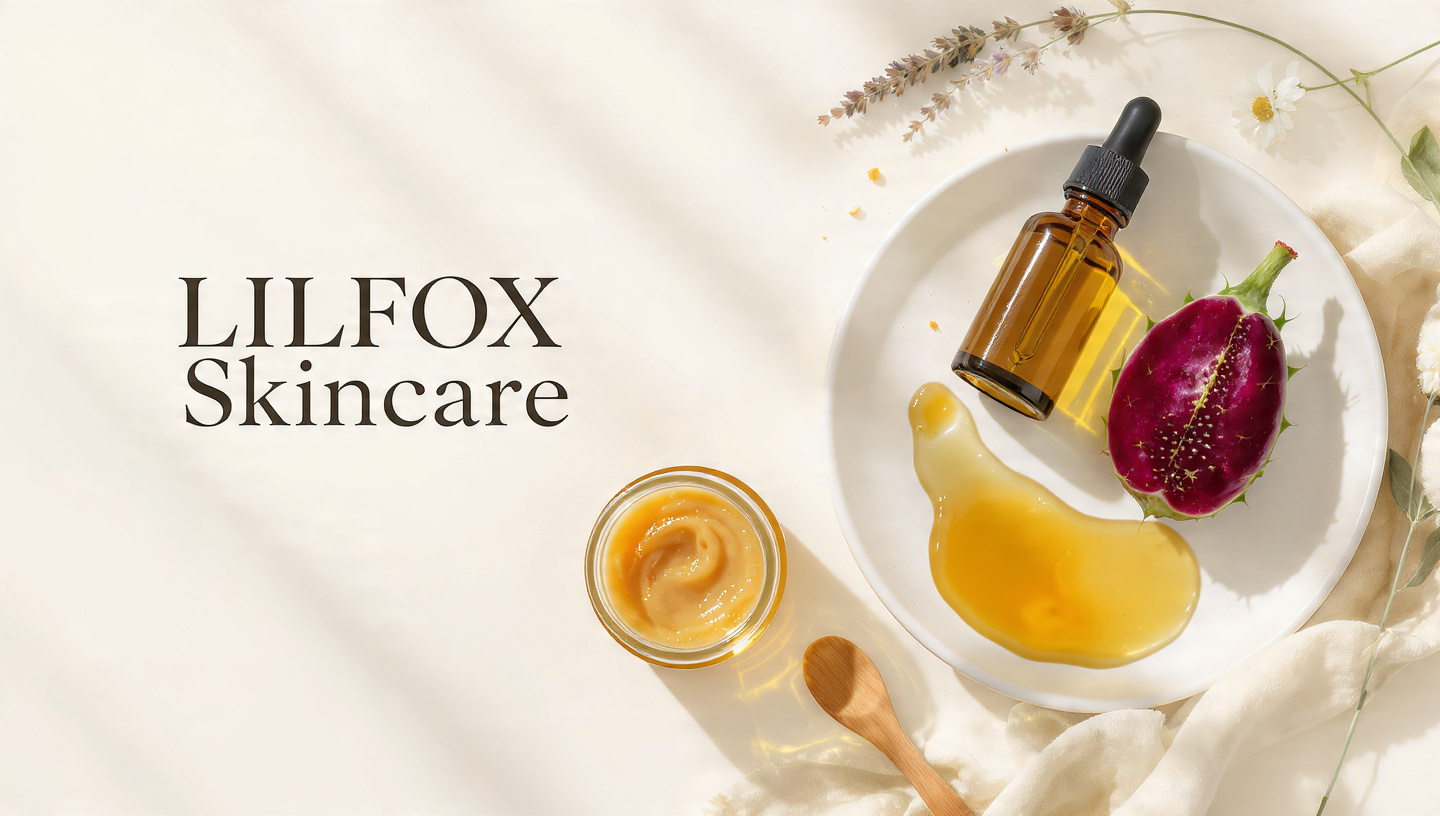
LILFOX is an independent luxury skincare brand founded in Miami by Alexis Rose, built around cold-pressed botanical oils, raw plant extracts, and enzymatic exfoliants formulated without synthetic fragrances, parabens, or sulfates. The brand distinguishes itself through texture and aesthetic: whipped balms that melt on skin contact, honey-thick masks that tingle with papaya enzymes, and vividly colored oils that smell strongly of their source plants rather than any generic “clean” scent profile. The packaging is heavy glass, the labeling is minimalist, and the entire unboxing experience is designed to feel more like receiving a carefully curated apothecary order than a standard skincare shipment.
What sets the brand apart in a crowded luxury botanical market is its refusal to make the products feel clinical. There are no droppers with milliliter markings, no percentage concentrations listed on the labels, and no reference to dermatologist testing in the primary marketing. The focus is entirely on the ritual: applying the products with intention, letting the textures and scents create a sensory experience that the brand frames as equally important to skin health as the ingredient functions themselves. This positions LILFOX closer to aromatherapy-infused skincare than to cosmeceutical treatment lines. According to a 2024 review in the International Journal of Cosmetic Science, sensorial elements such as texture and fragrance meaningfully influence consumer compliance with skincare routines. If you love using a product, you are more likely to apply it consistently. LILFOX builds its entire value proposition around that principle.
The manufacturing base in Miami allows small-batch production with tight control over ingredient sourcing. The brand emphasizes relationships with specific farms and suppliers, particularly for its hero ingredient prickly pear seed oil. This supply chain transparency is a genuine strength in an industry where many luxury brands source commoditized botanical ingredients without traceable origins. The tradeoff is that small-batch formulations are inherently more variable than large-scale pharmaceutical-grade manufacturing. Natural ingredient composition shifts with harvest conditions, soil variation, and extraction timing. Batch to batch variation in color, scent, and even texture is not uncommon with products of this type and is not necessarily a sign of spoilage or quality failure.
LILFOX skincare ingredients and formulation philosophy
LILFOX formulations are built on a core philosophy of using whole plant ingredients at high concentrations rather than isolated active compounds at standardized percentages. The ingredient lists across the product line are short by luxury skincare standards, typically 15 to 25 INCI entries compared to 40 to 60 in many department store creams. This brevity is partly a function of the oil-based format and partly a deliberate choice to let the base oils and botanical extracts dominate the formula rather than functioning as a delivery system for lab-synthesized actives.
The primary ingredient categories across the LILFOX line include cold-pressed seed oils such as Opuntia ficus-indica (prickly pear) seed oil, Simmondsia chinensis (jojoba) oil, and Rosa canina (rosehip) fruit oil. These function as emollients that fill the spaces between corneocytes in the stratum corneum, immediately improving skin surface smoothness and reducing the visible appearance of fine dehydration lines. The products rely on tocopherol (vitamin E) naturally present in these oils as their primary antioxidant preservative system, supplemented in some formulations by rosemary extract. Botanical extracts including Aloe barbadensis leaf juice, Calendula officinalis extract, and Chamomilla recutita (matricaria) flower extract appear across multiple products as soothing and anti-inflammatory components. Enzymatic exfoliants come from papaya-derived papain and pineapple-derived bromelain, which digest the protein bonds between dead surface skin cells without the pH-dependent irritation profile of alpha-hydroxy acids.
What you will not find in the formulations is a meaningful departure from the natural ingredient constraint. There are no synthetic peptides designed to signal collagen production, no stabilized ascorbic acid at a known effective concentration, and no ceramide complexes at the specific 3:1:1 ratio of ceramides, cholesterol, and fatty acids that barrier repair research supports. This is not a flaw, exactly. It is a choice. The brand philosophy intentionally excludes these ingredient categories. Understanding that allows you to match the products to the right place in your routine rather than expecting them to perform functions they are not formulated to deliver.
LILFOX skincare hero products and what they claim to do
LILFOX organizes its small product line around a ritual-based “Face Story” approach that pairs cleansing, masking, and moisturizing into a prescribed experience. The four products that consistently receive the most attention from beauty editors and consumer reviews are Acid Glow, the cleansing oil and balm duo, and the Prickly Pear Face Oil.
Acid Glow is the brand’s signature mask, formulated as a honey-textured enzymatic and AHA exfoliant. It combines lactic acid with papaya and pineapple enzymes suspended in manuka honey and prickly pear oil. The brand markets it as a resurfacing treatment that brightens, smooths texture, and delivers radiance without irritation. The name “Acid Glow” is somewhat misleading because the primary exfoliation mechanism is enzymatic, not acid-based. Lactic acid appears in the formulation but functions more as a humectant at the concentrations likely present in this mask format. The tingle users experience comes primarily from the enzymes digesting surface proteins, which creates a sensation that can feel similar to low-strength acid exfoliation.
The cleansing lineup includes an oil cleanser built on jojoba and sunflower oils with chamomile and calendula extracts, designed to dissolve makeup and sunscreen without stripping the skin barrier. A separate cleansing balm uses a coconut-derived emulsifier system with added prickly pear and moringa oils, intended as a richer first-cleanse option for drier skin types.
The Prickly Pear Face Oil is the brand’s most expensive single product, positioned as a multi-corrective facial oil rich in vitamin E, linoleic acid, and betalain antioxidants from the prickly pear seeds. The texture is lighter than many luxury face oils, absorbing quickly without leaving a visible greasy film. The brand frames it as a do-everything product: moisturizer, antioxidant treatment, and skin tone corrector. The antioxidant claim has compositional merit because prickly pear seed oil does contain measurable levels of tocopherols and ferulic acid, both documented free radical scavengers. The skin tone correction claim requires more scrutiny and is addressed in a later section.
LILFOX Acid Glow review and ingredient breakdown
The LILFOX Acid Glow mask provides genuine enzymatic exfoliation that leaves skin feeling smoother after one use, with visibly reduced surface flakiness and a temporary brightening effect from the removal of dead stratum corneum cells. The formulation deserves credit for avoiding the common mistake of pairing aggressive physical exfoliants with enzymes, which creates over-exfoliation risk. Instead, the mask relies entirely on chemical and enzymatic mechanisms, which is the correct approach for a product in this category.
The ingredient list for Acid Glow centers on Manuka honey as the suspension base, which brings humectant properties and a documented antimicrobial benefit supported by research published in the Journal of Antimicrobial Chemotherapy. Papain from papaya and bromelain from pineapple provide the primary exfoliation activity by cleaving the protein bonds between dead corneocytes. These enzymes work only on the outermost surface layers and self-limit their activity as they degrade, which makes over-exfoliation less likely than with strong acid peels. Lactic acid appears further down the ingredient list, likely at a concentration that supports humectant function rather than aggressive exfoliation. Prickly pear seed oil and aloe vera juice round out the formula to provide emollient and soothing counterbalance during the 10 to 20 minute recommended wear time.
According to a 2022 study published in the Journal of Cosmetic Dermatology, papain-based enzyme masks produced a measurable reduction in skin roughness after four weeks of twice-weekly application without the barrier disruption markers commonly seen with glycolic acid treatments. This evidence aligns with what LILFOX users report anecdotally. The skin feels soft and looks brighter after use, primarily because surface dead skin cells have been removed.
Where the claims stretch beyond the evidence is in the “glow” promise as a sustained skin transformation rather than a temporary post-exfoliation effect. That immediate brightness fades as the skin’s natural oil production and environmental exposure continue. The mask does not inhibit melanin production, does not stimulate collagen synthesis at a clinically significant level, and does not alter pigmentation pathways. It provides excellent surface exfoliation in a luxurious format. Whether that experience is worth approximately $80 for a jar that lasts roughly 12 to 15 applications depends entirely on whether the sensorial ritual and the clean formulation alignment matter enough to justify the price per use.
Key Takeaway: Acid Glow is a legitimately effective enzymatic exfoliant in a beautiful, honey-based formula. It does exactly what a good enzyme mask should do: smooth surface texture without stripping the barrier. Just do not expect it to replace a targeted brightening serum or a retinol for deeper skin restructuring.
LILFOX cleanser and oil-based product analysis
LILFOX oil-based cleansers are well-formulated for their intended purpose: dissolving sunscreen, makeup, and excess sebum without disrupting the skin’s lipid barrier or leaving behind the tight, stripped sensation that foam cleansers commonly produce. The cleansing oil uses Simmondsia chinensis (jojoba) oil and Helianthus annuus (sunflower) seed oil as its base, both of which are non-comedogenic carrier oils with fatty acid profiles that closely resemble human sebum. When massaged onto dry skin, these oils bind to and dissolve oil-based debris, including the silicones and water-resistant film formers found in most sunscreens. The addition of Chamomilla recutita (matricaria) flower extract and Calendula officinalis extract provides anti-inflammatory support during the cleansing process, which is thoughtful for anyone cleansing reactive or redness-prone skin.
The cleansing balm uses a coconut-derived emulsifier system that transforms from a solid balm to a milky emulsion upon contact with water. Moringa oil and prickly pear oil raise the ingredient cost and the sensorial richness, making this the option for drier or more mature skin types that want the cleanser step to leave behind a whisper of moisture rather than a completely stripped surface. Both cleansers rinse cleanly without requiring a second foaming cleanse, though a water-based follow-up cleanser is standard double-cleansing practice that the brand’s own routine structure does not mandate.
Where the cleanser analysis becomes more nuanced is the fragrance component. Both products include Citrus aurantium dulcis (orange) peel oil, Citrus paradisi (grapefruit) peel oil, or related citrus essential oils in their ingredient lists. These oils serve the sensorial experience, giving the products their bright, fresh scent profile. They also introduce limonene and citral, two fragrance allergens that the European Union requires be listed separately on cosmetic labels when present above certain thresholds. For someone without fragrance sensitivity or a history of contact dermatitis, these components may be entirely unproblematic. For a person with rosacea, perioral dermatitis, or a compromised barrier, washing the face with citrus essential oils is a known trigger worth avoiding. A 2021 review in the journal Dermatitis identified limonene as one of the most frequently positive fragrance allergens in North American patch test populations, with sensitization rates of 2 to 3 percent among tested patients.
The practical takeaway: the LILFOX cleansers are well-formulated for normal to dry skin types that tolerate fragrance. For reactive, acne-prone, or sensitized skin, there are equally effective oil cleansers at a lower price point that omit the essential oils entirely and function identically in terms of makeup and sunscreen removal.
LILFOX moisturizer and face oil formulation deep dive
LILFOX does not produce a traditional water-based moisturizer in the cream or lotion format. The brand’s moisturizing step comes entirely from its face oils, with the Prickly Pear Face Oil serving as the hero product in this category. This is a meaningful formulation choice with specific implications for different skin types, and understanding how facial oils actually function at the skin biology level separates a smart purchase from a disappointing one.
Facial oils function primarily as occlusives and emollients. They sit on top of the stratum corneum and fill the microscopic gaps between surface skin cells, smoothing the texture immediately and reducing transepidermal water loss (TEWL) by creating a hydrophobic film. What facial oils cannot do is add water to the skin, because oil and water do not mix. If your skin is dehydrated (lacking water content) rather than simply dry (lacking oil content), applying a pure face oil without hydrating layers underneath will leave your skin feeling soft but still dehydrated underneath the oil film.
The Prickly Pear Face Oil is built on Opuntia ficus-indica seed oil, which contains approximately 60 to 70 percent linoleic acid, a meaningful concentration of gamma-tocopherol (vitamin E), and betalain pigments that function as antioxidants in vitro. Linoleic acid is an essential fatty acid that plays a role in ceramide synthesis and barrier function maintenance. The tocopherol content provides antioxidant protection against lipid peroxidation on the skin’s surface. These are all legitimate functions supported by compositional chemistry analysis. Where the evidence thins is in the claims that the oil directly corrects hyperpigmentation or produces measurable anti-aging results comparable to a retinoid or a stabilized vitamin C serum. No published human clinical trial has specifically tested prickly pear seed oil for hyperpigmentation correction or wrinkle reduction against a placebo control.
For the right skin type, a facial oil at this price point makes sense as an occlusive moisture-sealing step and a sensorial luxury. Someone with genuinely dry skin, a well-functioning barrier, and no active acne will likely find the oil deeply satisfying to use and beneficial for surface smoothness. Someone with oily, congestion-prone, or dehydrated skin who skips humectant hydration before applying oil may find the product disappoints and potentially contributes to congestion over time.
Key Takeaway: LILFOX face oils are exceptional emollients and occlusives that work best layered over hydrating water-based products. They smooth and soften skin beautifully but do not replace targeted treatment products for specific concerns like hyperpigmentation or collagen loss.
LILFOX skincare for acne-prone and oily skin
The suitability of LILFOX products for acne-prone and oily skin depends almost entirely on which specific products you choose and whether your acne is driven by excess sebum production, bacterial proliferation, or inflammatory responses to pore-clogging ingredients. The product line is not uniformly problematic or uniformly safe for acne-prone skin; it is a mixed formulation landscape that requires product-by-product evaluation.
The cleansing oil and the Acid Glow mask are the two products most likely to be compatible with acne-prone skin. Jojoba oil closely mimics human sebum composition and has a non-comedogenic profile, meaning it does not tend to clog pores. The enzymatic exfoliation from Acid Glow provides gentle surface cell turnover without the irritation that can trigger an inflammatory acne response in sensitive individuals. A 2023 study in the Journal of Cosmetic Dermatology found that jojoba oil-based cleansers did not increase comedone formation in subjects with mild to moderate acne over an 8-week period, supporting the choice of this oil base for blemish-prone users.
The face oils present a more complicated picture for acne-prone skin. While prickly pear oil is non-comedogenic based on its fatty acid profile, applying any pure oil to skin that already produces excess sebum can create an occlusive film that traps sebum, bacteria, and dead skin cells within the pore. The linoleic acid content may theoretically help balance sebum composition over time because research has shown that acne-prone skin tends to have lower linoleic acid levels in its sebum compared to non-acne-prone skin. This compositional theory, however, does not guarantee that applying the oil topically will clear existing acne or prevent new breakouts.
The products with heavier waxes, butters, and coconut-derived emulsifiers, including the cleansing balm for some users, carry a higher potential for pore-clogging in those with true comedonal acne. If you have acne-prone skin and want to try the brand, start with the cleanser or the Acid Glow mask. Purchase the smallest size available. Patch test on one side of your jawline for two weeks before applying to your entire face. This approach lets you evaluate whether your specific skin responds well to these formulations without committing to full-size products at the luxury price point.
LILFOX skincare for sensitive skin and rosacea
Sensitive skin and rosacea-prone skin are the two categories where LILFOX products carry the highest risk of adverse reaction, and this caution is entirely missing from the brand’s marketing and from most editorial coverage of the line. The formulations contain multiple known triggers for reactive and erythematous skin that deserve transparent discussion.
Rosacea-prone skin, particularly the erythematotelangiectatic rosacea subtype, is characterized by a compromised skin barrier, heightened neurosensory response, and abnormal inflammatory reactions to common triggers including heat, alcohol, spicy foods, and topical irritants. Essential oils, fragrance components, and certain botanical extracts are among the most frequently cited topical triggers in dermatological rosacea management guidelines published by the American Academy of Dermatology. LILFOX products contain citrus essential oils, limonene, linalool, and various fragrant plant extracts across nearly the entire product line. These ingredients introduce unnecessary reactivity risk for a skin condition that already struggles to maintain barrier integrity and calm inflammatory pathways.
Sensitive skin without diagnosed rosacea faces a similar concern, though the reaction threshold varies individually. A patch test performed on the inner arm or behind the ear for 48 hours before facial application is the minimum precaution for anyone with a known history of product reactivity. The brand’s own patch test guidance is limited, which places the burden on the consumer to understand their own sensitivity profile.
One product in the line that may be less problematic for some sensitive skin types is the Prickly Pear Face Oil if applied sparingly over a well-tolerated, fragrance-free moisturizer. The oil format limits the number of preservatives and emulsifiers in the formula, and prickly pear oil itself has a low documented sensitization rate. The fragrant essential oils are still present in lower concentrations in this product compared to the cleansers, but they are present. Anyone with a confirmed fragrance allergy, a positive patch test to limonene or linalool, or active perioral dermatitis should avoid the entire line. The risk of triggering a flare, setting back barrier healing, or reactivating inflammation is not worth any potential benefit these formulations offer over fragrance-free alternatives.
LILFOX skincare for dry and mature skin types
Dry and mature skin types stand to gain the most from the LILFOX product line, provided a few important caveats about realistic expectations are in place. The oil-based format directly addresses the sebum production decline that occurs with age and the lipid barrier deficiency that characterizes chronically dry skin. The immediate smoothing effect is visible and tactile: fine dehydration lines soften, surface roughness decreases, and the skin takes on the “lit from within” look that the brand’s imagery consistently captures.
Mature skin, particularly postmenopausal skin, experiences measurable declines in ceramide production, sebaceous gland output, and epidermal hyaluronic acid content. According to a 2022 review in the Journal of Investigative Dermatology, ceramide levels in the stratum corneum can drop by as much as 30 percent in postmenopausal women compared to premenopausal controls. Face oils cannot replace those ceramides directly, but they can significantly reduce TEWL by forming an occlusive seal that traps whatever hydration is present in the skin. This makes the Prickly Pear Face Oil a functional overnight moisture seal for mature skin when applied over a hydrating toner or essence that contains humectants like glycerin or sodium hyaluronate.
The enzymatic exfoliation from Acid Glow is gentler than glycolic acid peels, which matters for mature skin where barrier recovery time is slower than it was at age 25. Papain-based enzyme exfoliation provides surface cell turnover without the inflammatory response that stronger acids can trigger in thinner, more fragile mature skin. A 2021 study in the Journal of Cosmetic Dermatology specifically examined enzyme exfoliation in subjects over 50 and found skin texture improvement without the barrier disruption markers associated with AHA exfoliation in the same age group.
The limitation for mature skin is the absence of clinically dosed collagen-stimulating ingredients. Bakuchiol appears in one LILFOX serum formulation, but at an undisclosed concentration. The 2019 British Journal of Dermatology study that established bakuchiol’s retinoid-like effects used a 0.5 percent formulation applied twice daily for 12 weeks. Without knowing the LILFOX concentration, and without the brand publishing independent clinical data on their specific bakuchiol formulation, mature skin users seeking measurable wrinkle reduction or firmness improvement should keep expectations aligned with the oil-based emollient benefits rather than retinoid-level structural changes.
Key Takeaway: If your primary skin goal is surface smoothness, moisture retention, and the sensory pleasure of an elegant face oil, LILFOX is a strong option for dry and mature skin. If your primary goal is measurable collagen stimulation or deep wrinkle reduction, pair these products with a clinically proven retinoid or retinoid alternative at a known effective concentration.
Essential oils and fragrance in LILFOX products what to know
Essential oils in LILFOX products provide the brand’s signature scent experience and serve as part of the natural preservation system. They are not incidental ingredients. They are central to what the brand is selling: a multi-sensory ritual that smells as expensive and complex as the price point demands. Understanding what these compounds do to skin at a biological level, beyond how they smell, is where the conversation needs to shift from “natural equals safe” to something evidence-based.
The specific essential oils that appear across the LILFOX line include Citrus aurantium dulcis (orange) peel oil, Citrus paradisi (grapefruit) peel oil, Lavandula angustifolia (lavender) oil, and Pelargonium graveolens (geranium) oil. These oils contain volatile aromatic compounds including limonene, linalool, citral, geraniol, and coumarin. Each of these compounds appears on the European Union’s list of 26 fragrance allergens that must be declared on cosmetic labels when present above 0.001 percent in leave-on products and 0.01 percent in rinse-off products. The concern is not that these compounds are synthetic or “toxic” in the environmental contaminant sense. The concern is contact sensitization.
Fragrance allergy is not rare. According to a 2023 analysis published in Contact Dermatitis drawn from North American patch test data, fragrance mix I and fragrance mix II produced positive reactions in roughly 5 to 7 percent of patch-tested patients. Limonene and linalool, both present in citrus and lavender oils respectively, were individually positive in 2 to 3 percent of tested patients. These percentages represent people with a diagnosed allergy, not just a subjective preference to avoid fragrance. For those individuals, applying a product containing these compounds to the face can produce erythema, scaling, pruritus, and periorbital edema.
Phototoxicity is an additional concern specifically for the citrus oils. Bergamot oil (Citrus bergamia) and other cold-pressed citrus oils contain furocoumarins that absorb UV radiation and can produce exaggerated sunburn-like reactions on skin exposed to sunlight after application. If a LILFOX product containing citrus peel oils is applied in the morning and the user spends time outdoors without adequate sunscreen coverage, the risk of a phototoxic reaction increases. This is not theoretical. The FDA has regulated bergamot oil in cosmetic products specifically because of documented phototoxic reactions, and while bergapten-free bergamot oil exists, the general category of citrus essential oils carries this warning. Applying LILFOX products containing these oils as part of an evening routine rather than a morning routine significantly reduces this risk.
The fact that essential oils come from plants rather than a laboratory does not make them safer for skin than synthetic fragrance molecules. Plant-derived compounds are chemicals. Their origin does not determine their skin compatibility or sensitization potential. This is the single most important fact to understand before spending over $80 on a product whose scent profile is part of what you are paying for.
Is LILFOX worth the price a value and evidence assessment
The answer to whether LILFOX is worth the price depends entirely on what you are paying for. If you are paying for sensorial luxury, a beautifully designed ritual, cold-pressed ingredients with traceable sourcing, and the subjective experience of using products that feel expensive and smell complex, then the price can absolutely be worth it for the right budget. If you are paying for measurable, clinically validated skin transformation beyond what a well-formulated mid-range emollient and a separate targeted active serum can deliver, then the price is not supported by the evidence currently available for these specific formulations.
Here is a breakdown of what each pricing tier in the line actually buys you in terms of skin function:
| Product Category | Primary Skin Function | Evidence Level | Price Context |
|---|---|---|---|
| Acid Glow mask | Enzymatic surface exfoliation, humectant hydration | Moderate (papain mechanism well-studied; specific LILFOX formula not independently trialed) | $70-$85 per jar; comparable enzyme masks exist at $28-$45 with similar papain concentrations |
| Cleansing Oil/Balm | Makeup and sunscreen removal, emollient cleansing | Well-established (oil cleansing mechanism); fragrance concern adds individual risk | $45-$65; premium segment but not outlier pricing for luxury cleansing oils |
| Prickly Pear Face Oil | Emollient, occlusive moisture seal, surface antioxidant protection | Compositional evidence strong; human outcome data for anti-aging claims limited | $100-$120; among the most expensive prickly pear oil products on the market |
| Bakuchiol Serum | Retinoid-alternative collagen stimulation, antioxidant activity | Bakuchiol efficacy supported by 2019 RCT at 0.5% concentration; LILFOX concentration undisclosed | $85-$95; premium pricing compared to other bakuchiol serums with disclosed concentrations |
The value proposition strengthens if you place high personal value on the “clean” formulation philosophy, the small-batch production, and the brand’s direct relationships with ingredient suppliers. These factors are real. They add cost to the manufacturing process. They are not simply marketing markup. Whether they matter enough to pay a 2x to 3x premium over functionally similar products depends on individual priorities.
What cannot be claimed is that these products produce outcomes that a simpler, less expensive routine built on fragrance-free basics and one well-chosen targeted active serum cannot achieve. The research does not support that claim for any luxury botanical brand, and LILFOX is no exception. What the brand provides is a genuinely beautiful experience for people who want skincare to feel like self-care ritual rather than clinical treatment.
LILFOX skincare dupes and alternatives
Finding true ingredient dupes for LILFOX products is difficult because the brand’s specific prickly pear oil sourcing and its honey-based Acid Glow texture are genuinely distinctive. What exists, however, is a wide range of products that provide the same skin functions at a lower price point, with either similar botanical positioning or stronger clinical evidence behind the formulation.
For the Acid Glow mask, the functional alternatives are other enzyme-based exfoliating masks. Andalou Naturals Pumpkin Honey Glycolic Mask provides a similar honey texture with enzymatic exfoliation from pumpkin enzymes rather than papain at approximately $15. Eminence Organic Skin Care Strawberry Rhubarb Dermafoliant offers papain-based exfoliation in a similar luxury botanical positioning at approximately $10 to $15 less than LILFOX. Youth to the People Yerba Mate Resurfacing Energy Facial uses papaya and pineapple enzymes similarly to Acid Glow with added micro-exfoliating bamboo particles at approximately $20 less. None of these alternatives perfectly replicate the Acid Glow texture and scent experience. Each provides comparable enzymatic exfoliation results.
For the Prickly Pear Face Oil, the direct ingredient alternatives are other prickly pear seed oil products. The Ordinary 100% Organic Cold-Pressed Rose Hip Seed Oil is not prickly pear, but it provides a similar linoleic acid profile and tocopherol content at under $10. For prickly pear specifically, Evan Healy Prickly Pear Cactus Seed Oil and Kahina Giving Beauty Prickly Pear Seed Oil both sell at prices comparable to or slightly below LILFOX. Le Prunier Plum Beauty Oil uses plum seed oil rather than prickly pear but occupies a similar luxury single-ingredient oil niche with slightly more published brand-funded research on its specific formulation.
For the cleansing oil, the alternatives are numerous. DHC Deep Cleansing Oil, Hada Labo Gokujyun Cleansing Oil, and Kose Softymo Speedy Cleansing Oil all remove sunscreen and makeup as effectively as the LILFOX cleansing oil at roughly one-fifth to one-third the price. They contain fragrance and preservative systems that differ from LILFOX but do not necessarily introduce more sensitization risk. For a fragrance-free oil cleanser option, La Roche-Posay Respectissime Waterproof Eye Makeup Remover or the fragrance-free version of Dermalogica Precleanse serve the same function for sensitive and reactive skin types at similar price points to LILFOX’s cleanser with stronger dermatological testing data.
Key Takeaway: You are not paying for exclusive access to a skin function that no other product provides. You are paying for the specific LILFOX formulation experience. The decision is whether that experience brings you enough joy and ritual satisfaction to justify the price difference.
How to use LILFOX products in a routine safely
Incorporating LILFOX products into a skincare routine safely requires understanding which functions the products serve and where they fit in the standard cleanse, treat, moisturize, protect sequence. The brand’s own ritual framing does not always make this clear because it prioritizes the experience over the structural logic of product layering.
The cleansing oil or balm is a first-cleanse product for evening routines. Apply it to dry skin with dry hands, massage gently for 30 to 60 seconds to dissolve sunscreen and makeup, then emulsify with a small amount of water and rinse thoroughly. Follow with a water-based cleanser if you wear heavy makeup or water-resistant sunscreen. If you have dry skin and do not double cleanse, the LILFOX oil cleanser alone is sufficient for a single evening cleanse. Do not use an oil cleanser as your morning cleanser unless your skin is extremely dry and you did not apply occlusive products the night before. A simple water rinse or a gentle water-based cleanser is appropriate for most skin types in the morning.
The Acid Glow mask belongs in the treatment step after cleansing and before moisturizing. Apply an even layer to clean, dry skin and leave on for 10 to 20 minutes. The brand’s instructions allow for a tingle sensation, which is expected from the enzymes. Sharp burning, persistent redness, or visible swelling means the product is incompatible with your skin and should be rinsed off immediately with cool water. Use the mask a maximum of twice per week. If you are also using a retinoid, alternate nights rather than applying both in the same evening. Enzyme exfoliation and retinoid application in a single routine increases barrier disruption risk.
Face oils like the Prickly Pear Face Oil go last in an evening routine, after any water-based serums or treatments. The sequence matters because oils form an occlusive film that water-based products cannot penetrate. If you apply the face oil before your humectant serum, the hydrating ingredients sit on top of the oil and cannot reach the skin surface. Apply hydrating products first, let them absorb for 30 to 60 seconds, then press the face oil into the skin as a sealing step. In a morning routine, apply face oil after sunscreen if you are using the oil as a cosmetic glow product. If you are using the oil as your primary moisturizer, apply it before sunscreen and allow 5 to 10 minutes for absorption before sunscreen application to avoid diluting the sun protection film.
Patch testing new LILFOX products, or any skincare product with essential oils, should follow a consistent protocol. Apply a small amount to the skin behind one ear or along one side of the jawline. Repeat daily in the same location for 5 to 7 days. If no redness, itching, burning, or bumps develop, begin using the product on the full face once or twice per week, monitoring for delayed reactions. Facial skin can react differently than arm or neck skin, so a jawline patch test is more predictive than the traditional inner arm patch test for facial product compatibility.
Who should avoid LILFOX skincare
Several specific skin conditions and circumstances warrant avoiding LILFOX products entirely or approaching with significant medical caution. These recommendations are based on the documented sensitization potential of the essential oil and fragrance components in the formulations, not on a general bias against natural or botanical skincare.
People with diagnosed rosacea, particularly the erythematotelangiectatic and papulopustular subtypes, should avoid LILFOX products containing citrus oils, lavender oil, and high concentrations of fragrant botanicals. The American Academy of Dermatology’s rosacea management guidelines identify topical irritants including fragrance and essential oils as common triggers for rosacea flares. The inflammatory cascade triggered by these compounds can cause visible flushing, papule formation, and a burning sensation that lasts hours after product application. The Acid Glow mask and the Prickly Pear Face Oil may be marginally better tolerated than the cleansers due to lower essential oil concentrations and the buffering effect of the oil format, but the risk-reward calculation still favors fragrance-free alternatives for rosacea-prone skin.
People with active perioral dermatitis or a history of perioral dermatitis should avoid the entire LILFOX line. Perioral dermatitis is notoriously reactive to occlusive products, essential oils, and any formulation that sits heavily on the skin surface. The oil-based products in particular can create the occlusive environment that triggers perioral dermatitis flares. This condition requires a zero-added-fragrance, minimal-product approach, typically under the guidance of a board-certified dermatologist who may prescribe topical metronidazole, azelaic acid, or oral tetracycline antibiotics depending on severity. Introducing a luxury botanical oil into this clinical picture is counterproductive.
People with a confirmed fragrance allergy based on patch testing by a board-certified dermatologist or allergist should avoid any LILFOX product containing their documented allergens. If your patch test results include positive reactions to fragrance mix I, fragrance mix II, limonene, linalool, citral, geraniol, or balsam of Peru, the botanical extracts and essential oils in these products present a direct exposure to your known allergens. The reaction may not be immediate. Allergic contact dermatitis can develop over days of repeated exposure, making it harder to identify the causal product without keeping a product diary and correlating it with symptom onset.
Pregnant and nursing individuals face a more nuanced decision. The essential oils in LILFOX products are present at cosmetic concentrations applied topically to intact skin, which systemic absorption data suggests produces negligible blood levels. No specific essential oil in these products carries a pregnancy contraindication from the American College of Obstetricians and Gynecologists at cosmetic topical concentrations. The bakuchiol serum introduces the pregnancy question because bakuchiol is a retinoid-functional analog, though structurally different from retinoic acid. No published data exist on bakuchiol safety in pregnancy because the studies have not been conducted. Out of an abundance of caution, some obstetric providers recommend avoiding all retinoid-analog ingredients during pregnancy and nursing until safety data exist. This is a conversation to have with the provider managing your prenatal care, not a decision to make based on brand safety claims alone.
Key Takeaway: Fragrance and essential oil sensitivity are the primary contraindications for LILFOX. If your skin has ever reacted to a scented product, if you carry a rosacea or perioral dermatitis diagnosis, or if you have documented fragrance allergies, choose fragrance-free alternatives with simpler ingredient lists and stronger dermatological safety testing data.
Where to buy LILFOX skincare and what to expect
LILFOX skincare is sold direct-to-consumer through the brand’s own website and through a curated selection of clean beauty retailers. The primary retail partners include Credo Beauty, Thirteen Lune, and occasionally smaller independent apothecaries that specialize in luxury botanical and fragrance-forward skincare. The brand is not available at Sephora, Ulta, Dermstore, or Amazon, which reflects its positioning as an indie luxury line rather than a mass-premium brand scaling for wide distribution.
Purchasing directly from the LILFOX website provides the most complete product line access and typically includes seasonal or limited-edition products that retailers do not stock. The brand runs occasional site-wide sales, usually in the 15 to 20 percent off range, with the most significant discounts appearing during the late November to early December holiday period. First-time purchasers can sometimes access a 10 percent discount by signing up for the brand’s email list, though this policy changes periodically. The website offers sample or discovery sets periodically but does not maintain a permanent travel-size or mini-product program, which makes sampling before committing to full-size prices more difficult.
Credo Beauty stocks the core LILFOX product line and offers its own loyalty program and periodic site-wide sales that can reduce the effective price by 15 to 20 percent. Credo’s “Clean Beauty” standards align with LILFOX’s formulation philosophy, meaning the products pass Credo’s ingredient screening without reformulation. Returns through Credo follow the retailer’s standard policy, which is generally more flexible than the brand’s direct return window. Thirteen Lune carries a rotating selection of LILFOX products with an emphasis on the brand’s identity as a founder-led line.
What to expect when purchasing: LILFOX products ship in heavy glass packaging with minimal plastic components. The jars and bottles are designed to be kept and reused, aligning with the brand’s sustainability messaging. The products do not come with spatulas or application tools unless specified in the individual product description. Given the price point, photograph the unboxing if anything arrives damaged because glass packaging and shipping do not always mix well, particularly during summer months when extreme heat can affect oil-based formulations in transit.
Returns and refunds: The brand’s direct return policy typically allows returns on unopened products within 14 to 30 days of purchase. Opened products are generally non-returnable through the direct website, which is standard for indie skincare brands but worth knowing before purchasing a full-size product you have not sampled. If you are purchasing your first LILFOX product, consider buying through a retailer with a more generous return policy for opened items if you are genuinely uncertain about skin compatibility.
Key Takeaway: Your first LILFOX purchase should be through a retailer with the best return policy, not directly from the brand. If your skin reacts poorly to the essential oils or botanicals, retailer return flexibility is the difference between a learning experience and a $100 product sitting unused on your shelf.
Frequently Asked Questions About LILFOX Skincare
Is LILFOX skincare actually clean and non-toxic?
The terms “clean” and “non-toxic” have no legal definition under FDA cosmetic regulations, so LILFOX uses them as marketing descriptors that reflect the brand’s choice to avoid parabens, sulfates, phthalates, and synthetic fragrance.
The formulations do exclude those specific ingredient categories, which aligns with the retailer clean beauty standards at Credo and Thirteen Lune.
The ingredients that remain in the formulas, including fragrant essential oils and botanical extracts, are not inherently safer for skin simply because they come from plants rather than a laboratory.
Does LILFOX Acid Glow really exfoliate effectively?
Acid Glow provides genuine enzymatic exfoliation from papain and bromelain that digests the protein bonds between dead surface skin cells, producing smoother skin texture after one application.
The lactic acid in the formula functions primarily as a humectant at the likely concentration rather than as an aggressive acid peel.
The exfoliation effect is surface-level, temporary, and appropriate for maintaining smooth skin texture between more intensive treatments.
Can you use LILFOX products with retinol?
LILFOX face oils and the Acid Glow mask can be used in the same routine as retinol if separated by alternating nights to avoid over-exfoliating the skin barrier.
Do not apply the Acid Glow mask on the same evening as your retinol product because the combined exfoliation load increases barrier disruption risk.
The face oils can be applied after retinol on retinol nights, serving as a buffering occlusive layer that may reduce retinol-related dryness.
Is LILFOX skincare suitable for acne-prone skin?
The cleansing oil and the Acid Glow mask are the two LILFOX products most compatible with acne-prone skin based on their non-comedogenic oil base and gentle enzymatic exfoliation mechanism.
The face oils and the cleansing balm carry higher pore-clogging potential for those with true comedonal acne, and the essential oils may trigger inflammatory responses in reactive acne-prone skin.
Patch testing on one side of the jawline for two weeks before full-face application is essential for anyone with active or history of acne.
What is the best LILFOX product for beginners?
The Acid Glow mask is the best entry point because it delivers the most tangible immediate result, smoother skin texture after one use, and represents the brand’s signature formulation philosophy in a single product.
The cleansing oil is the second most accessible starting point for those who prefer to test a daily-use product rather than a weekly treatment mask.
The face oils require the most knowledge about how to layer products correctly and represent the highest financial commitment with the most variable results across skin types.
Where is LILFOX skincare manufactured?
LILFOX skincare is manufactured in Miami, Florida, where founder Alexis Rose oversees small-batch production with direct relationships to ingredient suppliers.
The Miami location allows the brand to maintain tight quality control over the cold-pressed oils and botanical extracts that are central to every formulation.
The small-batch manufacturing approach means some natural batch-to-batch variation in color, scent, or texture is expected and is not a sign of a defective or expired product.
You have just read a cosmetic chemistry level assessment of a brand whose value proposition sits squarely at the intersection of sensorial luxury and botanical formulation. LILFOX makes products that feel exceptional to use. The textures are genuinely well-crafted, the cold-pressed oils bring measurable emollient and antioxidant benefits to the skin’s surface, and the enzymatic exfoliation in Acid Glow works exactly as intended. For someone whose skin tolerates fragrant essential oils without reactivity and whose budget accommodates luxury pricing, these products can be a genuinely satisfying part of a skincare ritual.
What these products cannot do is replace clinically dosed actives for people whose primary goals are collagen stimulation, hyperpigmentation correction, or moderate to severe acne management. The research simply does not support those claims at the level of evidence that would justify choosing a brand that prioritizes sensorial experience over standardized, published efficacy data.
Your next step is the practical one. If you want to try the brand, start with the Acid Glow mask through a retailer with a flexible return policy. Patch test diligently. Use the mask exactly as directed. If your skin loves it and the experience genuinely improves your consistency with your broader routine, the price may feel entirely justified. If it does not, or if your skin reacts poorly, you have not committed to a full regimen. You now know exactly what to watch for, what to expect, and what not to expect. That is how an informed skincare decision gets made.