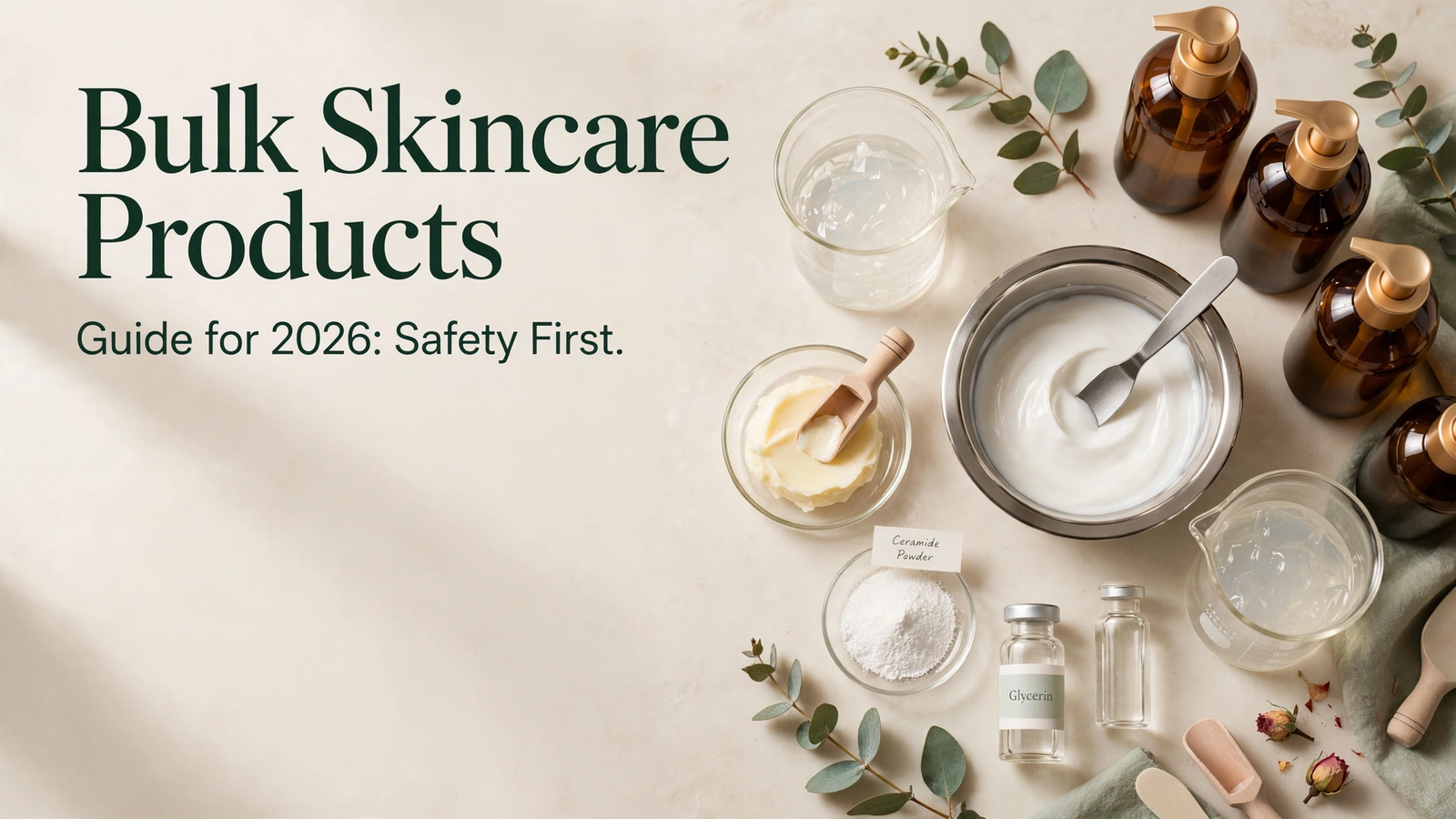
Bulk Skincare Products Guide for 2026: Safety First
Bulk skincare products are large-format cosmetic items sold in volumes larger than standard retail sizes, typically ranging from 16 ounces to multiple gallons. They can be safe, effective, and cost-efficient when you understand formulation chemistry, preservation science, and your own skin’s tolerance. This guide gives you the formulation literacy to buy bulk skincare without compromising your skin barrier or wasting money.
The American Academy of Dermatology consistently emphasizes that the stratum corneum, your skin’s outermost barrier layer, depends on consistent moisturization to prevent transepidermal water loss (TEWL) and environmental irritant penetration. Buying a bulk moisturizer you actually use daily supports this consistency. The FDA Modernization of Cosmetics Regulation Act of 2022 (MoCRA) now requires cosmetic manufacturers to maintain safety substantiation records and report serious adverse events, which raises the baseline accountability for bulk skincare suppliers operating in the United States.
This article walks you through everything the top bulk skincare supplier websites will not tell you. You will learn what counts as a bulk skincare product, how to read an INCI list like a formulation chemist, why preservation is non-negotiable, what the period after opening symbol actually means, how to store large-format products without contaminating them, which active ingredients degrade fastest in bulk containers, and what separates a responsible professional supplier from a risky one. Whether you are buying a gallon of unscented lotion for sensitive skin or sourcing private label products for a spa, you will finish this guide knowing exactly what to look for.
What Are Bulk Skincare Products
Bulk skincare products are cosmetic formulations sold in volumes significantly larger than standard consumer packaging, typically 16 ounces or more for personal use and often 1 to 55 gallons for professional or manufacturing applications. These products include ready-to-use lotions, creams, body butters, facial moisturizers, cleansers, and serums, as well as raw cosmetic ingredients that require additional formulation work before they are safe for skin application. The key distinction is whether you are buying a finished cosmetic base or a raw ingredient.
A finished cosmetic base is a complete formulation that has already been emulsified, pH-adjusted, preserved, and packaged for direct skin use. A raw ingredient, by contrast, is a single component like an emulsifier, a surfactant, or an undiluted active compound. The FDA classifies both differently. Finished cosmetic products sold in bulk for consumer or professional use must comply with MoCRA labeling, safety substantiation, and adverse event reporting requirements. Raw ingredients sold for manufacturing use carry different regulatory obligations depending on how they are marketed.
The cost difference can be substantial. A standard 8-ounce retail moisturizer might cost $18, which translates to $2.25 per ounce. The same formulation purchased as a 1-gallon finished base might cost $60, which translates to $0.47 per ounce. This is why people with chronic dry skin, eczema-prone skin, large families, and professional estheticians consistently seek bulk options.
The risk calculation changes with volume. When you open a standard retail moisturizer, you typically use it up within 4 to 8 weeks. When you open a 1-gallon container of the same product, that container may sit partially empty for 8 to 18 months. Every opening introduces air, which accelerates oxidation. Every dip of a finger or spatula introduces skin flora and environmental microbes. Preservation systems are formulated for a specific product volume, container type, and expected use pattern. A preservative concentration adequate for a 4-ounce tube may be insufficient for a gallon container repeatedly opened over a year.
Quick Tip:
- Check whether the bulk item is labeled “finished cosmetic” or “raw ingredient” before purchasing
- Finished cosmetic bases should list a preservative system on the INCI label within the first 5 to 10 ingredients
- Raw ingredients should specify safe usage concentration ranges and required formulation steps
For consumers with eczema or atopic dermatitis, the National Eczema Association recommends choosing products with minimal ingredient lists, no added fragrance, and robust preservation. Bulk products can serve this population well, provided the base formulation is genuinely fragrance-free and not just unscented. Fragrance-free means no fragrance compounds added for scent. Unscented can mean masking fragrance was added to hide raw material odors. This distinction matters for reactive skin.
Types of Bulk Skincare Bases
Bulk skincare bases fall into four primary categories based on their water content and delivery format: emulsions, anhydrous formulations, gels, and surfactant systems. Each category has different preservation requirements, skin-feel properties, and stability profiles. Understanding these distinctions is foundational for making an informed bulk purchase.
Emulsions are the most common bulk skincare base. An emulsion combines water and oil phases using an emulsifier to create a stable, uniform product. Lotions and creams are both emulsions. The difference is viscosity. Lotions typically contain higher water content and lower oil phase ratios, making them thinner and faster to absorb. Creams contain higher oil phase ratios, making them thicker and more occlusive. Emulsions require broad-spectrum preservation because they contain water, which supports microbial growth. According to the International Journal of Cosmetic Science, water activity above 0.6 creates conditions where bacteria, yeast, and mold can proliferate if preservation is inadequate.
Anhydrous formulations contain no water. Body butters, balms, facial oils, and petroleum-based ointments are all anhydrous. Because there is no water phase, these products do not support microbial growth as readily. They still need antioxidant preservation to prevent rancidity of the oil phase, but they do not require traditional antimicrobial preservatives. This makes anhydrous products generally safer for bulk purchase and longer-term storage, provided they are protected from heat and light.
Gels are water-based products thickened with polymers like carbomer, xanthan gum, or cellulose derivatives. They feel lightweight and are popular for hydrating serums, aloe vera gels, and oil-free moisturizers. Gels have high water activity and require robust preservation. They are also more pH-sensitive than emulsions because the gelling polymer can lose viscosity if the pH drifts outside its optimal range.
Surfactant systems include cleansers, body washes, shampoos, and foaming face washes. These products use surfactants to lift oil and debris from skin. They require preservation due to water content, but the surfactant chemistry itself can provide some antimicrobial support. The primary stability concern with surfactant systems is pH drift over time and separation of the micellar structure in temperature extremes.
Table: Bulk Skincare Base Comparison
| Base Type | Water Content | Preservation Need | Shelf Life When Sealed | Skin Types Best Served |
|---|---|---|---|---|
| Lotion | 60-80% | High (broad-spectrum required) | 12-24 months | Normal, oily, combination |
| Cream | 40-60% | High (broad-spectrum required) | 12-24 months | Dry, mature, barrier-compromised |
| Body Butter (anhydrous) | 0% | Low (antioxidant only) | 24-36 months | Very dry, eczema-prone |
| Gel | 80-95% | Very high (broad-spectrum required) | 12-18 months | Oily, acne-prone, normal |
| Cleanser | 60-80% | High (broad-spectrum required) | 18-24 months | All skin types based on surfactant type |
For someone with oily or acne-prone skin, a lightweight gel-based moisturizer with humectants like glycerin or sodium hyaluronate will provide hydration without the occlusive weight of a cream. For someone with atopic dermatitis, an anhydrous body butter rich in shea butter (Butyrospermum parkii) or petrolatum will reduce TEWL more effectively than a water-based lotion. The Fitzpatrick scale does not change base type preference, but deeper skin tones with post-inflammatory hyperpigmentation concerns should avoid heavily fragranced emulsions that can trigger inflammation.
How to Read a Bulk Skincare Ingredient List
Reading a bulk skincare ingredient list requires understanding the International Nomenclature of Cosmetic Ingredients (INCI) system, which is the globally standardized naming convention for cosmetic ingredients. Ingredients are listed in descending order of concentration. Anything at 1% or below can be listed in any order after the 1% threshold. This threshold matters because active ingredients, preservatives, and functional additives are typically present at or below 1%, meaning their position on the label tells you less than the ingredient identity itself.
The first five ingredients usually tell you the story of the base. Water appears first in most emulsions and gels. Next come humectants like glycerin or propylene glycol, emollients like caprylic/capric triglyceride or dimethicone, and occlusives like petrolatum or shea butter. If the first five ingredients are all cheap fillers with no functional barrier support, the bulk product may feel watery and fail to deliver meaningful moisturization.
Preservatives typically appear between 0.5% and 1.0% concentration. Common systems include phenoxyethanol combined with ethylhexylglycerin, potassium sorbate combined with sodium benzoate, or benzyl alcohol combined with dehydroacetic acid. A responsible bulk supplier lists the full preservative system on the INCI label. If a water-containing product lists no preservatives at all, treat that as a red flag. Some preservatives are not called preservatives on the label. Ingredients like pentylene glycol, caprylyl glycol, and ethylhexylglycerin function as both emollients and antimicrobial boosters. They are often part of a preservative system even when the label does not call them preservatives.
Active ingredients like niacinamide, ascorbic acid (vitamin C), retinol, or sodium hyaluronate may appear anywhere on the list depending on their use concentration. Niacinamide is typically effective at 2% to 5%. Retinol is effective at 0.1% to 1.0%. Sodium hyaluronate is effective at 0.1% to 1.0%. Ascorbic acid requires 10% to 20% for meaningful collagen support and antioxidant effect, but this high concentration is difficult to stabilize in water-based bulk formulations.
Numbered Steps: How to Read a Bulk Skincare INCI List:
- Identify the first ingredient. If it is water (aqua), the product is an emulsion or gel requiring preservation
- Look for the preservative system within the full list, typically appearing after the first 10 to 15 ingredients
- Confirm that every claim ingredient on the front label appears in the INCI list
- Check for fragrance compounds like linalool, limonene, citronellol, or “parfum/fragrance” if you have sensitive skin
- Note whether the product uses humectants, emollients, and occlusives in a balance appropriate for your skin type
- Verify that any advertised active ingredient is present at a concentration that matches its clinically effective range
A 2023 survey published in the Journal of Cosmetic Dermatology found that 68% of consumers could not correctly identify whether a product contained a preservative based on its INCI list. This formulation literacy gap leaves consumers vulnerable to buying bulk products that are inadequately preserved or that contain hidden fragrance compounds. For people with rosacea or contact dermatitis, misreading an INCI list can trigger weeks of barrier disruption and inflammation.
Are Bulk Skincare Products Safe
Bulk skincare products are safe when they are manufactured under cGMP conditions, properly preserved for their specific formulation and container size, and stored correctly by the end user. The FDA Modernization of Cosmetics Regulation Act of 2022 (MoCRA) now mandates that cosmetic manufacturers maintain safety substantiation records for every product they sell, including bulk items sold for consumer or professional use. This regulatory shift, fully phased in by 2025, raised the accountability floor for the entire bulk skincare supply chain.
The primary safety risk with bulk skincare is not the formulation itself but the extended use timeline. A retail moisturizer is used up in weeks. A gallon of moisturizer is used over months. Every time you open that gallon container, you expose the product to air, which introduces oxygen and accelerates oxidation of the oil phase. Every time your hand, a spatula, or a pump mechanism contacts the product, you introduce skin flora. The preservative system must be robust enough to handle this repeated inoculation over the full use period.
cGMP stands for current Good Manufacturing Practices. ISO 22716 is the international standard for cosmetic GMP. A responsible bulk skincare supplier manufactures in a facility that follows ISO 22716, conducts challenge testing on every preservative system, and maintains lot-specific traceability. Challenge testing, also called preservative efficacy testing, involves inoculating the formulation with known quantities of bacteria, yeast, and mold, then measuring microbial kill rates over 28 days. This testing verifies that the preservative system is adequate for the product’s water activity, packaging type, and expected use pattern.
The Cosmetic Ingredient Review (CIR) Expert Panel, an independent body that assesses cosmetic ingredient safety in the United States, has concluded that commonly used preservatives including phenoxyethanol at up to 1.0%, potassium sorbate, sodium benzoate, and benzyl alcohol are safe when used within established concentration limits. These preservatives have decades of safety data and are permitted by the FDA, the European Commission’s Scientific Committee on Consumer Safety (SCCS), and Japan’s Ministry of Health, Labour and Welfare.
For a consumer, the safety question reduces to supplier transparency. A safe bulk skincare supplier will provide the full INCI list, the preservative system concentration, challenge testing documentation, and the period after opening (PAO) recommendation. A supplier that refuses to provide this information should not receive your money. People with confirmed preservative allergies, which are rare at below 1% prevalence for phenoxyethanol according to contact dermatitis research, should obtain patch testing from a board-certified dermatologist or allergist before committing to a large-format product.
How Do Preservatives Work in Skincare
Preservatives in skincare work by disrupting microbial cell membranes, interfering with metabolic enzymes, or creating an environment where bacteria, yeast, and mold cannot reproduce. A water-containing cosmetic product is a nutrient-rich environment for microbial growth. Without adequate preservation, a single contaminated finger dip can introduce millions of colony forming units (CFUs) into a product, turning your moisturizer into a culture medium.
Phenoxyethanol, the most widely used preservative in modern skincare, works by inhibiting oxidative phosphorylation in microbial cells. It is effective against gram-negative and gram-positive bacteria, yeast, and mold, which makes it a broad-spectrum option when combined with a co-preservative like ethylhexylglycerin. Ethylhexylglycerin is a glyceryl ether that disrupts microbial cell membranes, allowing phenoxyethanol to penetrate more effectively. This synergistic combination is now the industry standard for paraben-free preservation.
Potassium sorbate and sodium benzoate are organic acid preservatives. They work most effectively at lower pH ranges, typically below pH 5.5. Potassium sorbate inhibits mold and yeast growth. Sodium benzoate inhibits bacteria and yeast. When combined, they provide broad-spectrum coverage. This system is common in natural-leaning formulations, but it requires careful pH management to remain effective. At pH above 5.5, sodium benzoate loses significant antimicrobial activity.
Benzyl alcohol is a naturally occurring preservative found in essential oils and plant extracts. At concentrations of 1.0% or below, it provides broad-spectrum antimicrobial action with low sensitization potential. It is sometimes listed as a fragrance component, which can be confusing for consumers. The CIR Expert Panel has affirmed benzyl alcohol safety at 1.0% in cosmetic formulations.
Anhydrous formulations do not require antimicrobial preservation because there is no water phase to support microbial growth. However, they require antioxidant preservation to prevent rancidity. Tocopheryl acetate (vitamin E) and butylated hydroxytoluene (BHT) are the most common antioxidants used in anhydrous formulations. These compounds slow the oxidation of unsaturated fatty acids, which is what causes the characteristic rancid odor of expired body butters and facial oils.
Think of a preservative system like the HVAC system in a large building. It does not kill every microbe instantly. It maintains conditions where the microbial load stays below a harmful threshold. The moment you open a container and introduce contamination, the preservative system begins working to keep that contamination in check. A well-preserved product can handle routine use. A poorly preserved product cannot handle a single contaminated dip.
Why Preservative-Free Bulk Skincare Is Risky
Preservative-free bulk skincare that contains water is inherently risky because water activity in an emulsion or gel creates a hospitable environment for microbial growth. The claim “preservative-free” on a water-containing skincare product is either misleading marketing or a genuine safety risk. In most cases, products marketed as preservative-free simply use preservation boosters that function outside the traditional preservative classification, such as pentylene glycol, caprylyl glycol, or ethylhexylglycerin. These ingredients appear on the INCI list as emollients or humectants but function as antimicrobial agents.
The reason bulk skincare and preservative-free claims are particularly incompatible is volume. A small 4-ounce jar of preservative-free moisturizer might be used up in 2 weeks, limiting the window for microbial growth. A 1-gallon container of the same product could sit for 12 months, during which time any initial contamination has ample opportunity to proliferate. The risk is not theoretical. A 2019 study published in the Journal of Applied Microbiology found that unpreserved cosmetic emulsions inoculated with Staphylococcus aureus showed significant bacterial growth within 48 to 72 hours at room temperature.
Some products are genuinely preservative-free and safe. These include anhydrous formulations like pure oils, body butters with no water, and balms made entirely from waxes and butters. These products do not need antimicrobial preservation because they have zero water activity. The risk applies specifically to water-containing formulations that claim to be preservative-free without using preservation boosters.
The FDA does not currently require specific preservative testing for cosmetic products sold in the United States, though MoCRA now requires manufacturers to maintain safety substantiation records. This means a bulk supplier can legally sell a water-containing lotion with no traditional preservatives if they can provide safety substantiation. The problem is that safety substantiation for an unpreserved water-containing product is difficult to establish scientifically.
For consumers with compromised skin barriers, including people with eczema, psoriasis, or recent chemical peels, using an inadequately preserved product carries elevated risk. The American Academy of Dermatology notes that broken skin is more susceptible to infection from contaminated topical products. If you have active eczema patches or any broken skin, avoid preservative-free water-containing skincare entirely. Choose either a robustly preserved emulsion or an anhydrous formulation.
How Long Does Bulk Skincare Last
Bulk skincare shelf life depends on whether the container is sealed or opened, the formulation type, the preservation system strength, and storage conditions. Unopened bulk skincare typically lasts 12 to 36 months from the date of manufacture, depending on the formulation. Once opened, the countdown changes. The period after opening (PAO) symbol on the packaging provides the manufacturer’s guidance for safe use after first opening. For most bulk emulsions, the PAO is 6 to 12 months.
The distinction between shelf life and PAO matters. Shelf life refers to the stability of the product in its original sealed container. This is determined by accelerated stability testing, which exposes the product to elevated temperatures and humidity to predict degradation over time. PAO refers to the safety and stability window after the consumer opens the container. For bulk products transferred to smaller containers, the PAO resets on the new container based on when the transfer occurred.
Anhydrous products last longer than emulsions. A sealed body butter or facial oil can remain stable for 24 to 36 months if stored in a cool, dark environment. Once opened, the primary degradation risk is oxidation of unsaturated fatty acids, which produces the rancid odor that signals spoilage. Emulsions have shorter windows because water activity supports microbial growth even with preservation. A preserved emulsion in a sealed container typically lasts 18 to 24 months. Once opened, the PAO is 6 to 12 months depending on preservative strength and container type.
Storage temperature directly affects longevity. The International Journal of Cosmetic Science consistently reports that storage at elevated temperatures accelerates both chemical degradation and microbial growth. Products stored above 77 degrees Fahrenheit (25 degrees Celsius) degrade faster than those stored in cooler conditions. Products stored in bathrooms with high humidity and temperature fluctuation have shorter effective lifespans than products stored in cool, dry, dark environments.
Table: Expected Bulk Skincare Longevity by Formulation Type
| Formulation Type | Sealed Shelf Life | Open PAO | Primary Degradation Risk | Sign of Spoilage |
|---|---|---|---|---|
| Lotion | 18-24 months | 6-12 months | Microbial growth | Separation, off odor, discoloration |
| Cream | 18-24 months | 6-12 months | Microbial growth | Texture change, visible mold |
| Gel | 12-18 months | 3-6 months | pH drift, microbial growth | Water separation, odor change |
| Body Butter (anhydrous) | 24-36 months | 12-18 months | Lipid oxidation | Rancid odor, color change |
| Cleanser | 18-24 months | 6-12 months | Surfactant degradation | Cloudiness, odor change |
People who use bulk skincare slowly should consider transferring a portion into a smaller daily-use container and keeping the main container sealed and refrigerated if the formulation allows. Refrigeration extends preservative efficacy by slowing microbial metabolism, but it can also destabilize emulsions if the oil phase solidifies and then repeatedly melts. Not all formulations tolerate refrigeration. Check the supplier’s storage guidance before refrigerating.
What Does the Period After Opening Symbol Mean
The period after opening (PAO) symbol is a small open jar icon printed on cosmetic packaging that tells you how many months the product remains safe and stable after you first open it. The number inside the jar, such as 6M, 12M, or 24M, represents the safe use window in months. This symbol is mandatory in the European Union under the Cosmetic Regulation (EC) No 1223/2009. In the United States, it is voluntary but increasingly common on responsibly labeled products.
The PAO symbol is not a guarantee of safety. It is the manufacturer’s statement of their product’s stability testing outcome. A responsible manufacturer conducts preservative efficacy testing and accelerated stability testing to determine the PAO for each specific formulation and packaging configuration. When a bulk supplier repackages a formulation into a different container size or type, the PAO may change because the contamination exposure pattern changes. A wide-mouth gallon jug has different contamination dynamics than a narrow-neck pump bottle.
For bulk skincare specifically, the PAO assumes that you use clean application methods. If you dip your fingers directly into a gallon of moisturizer, you introduce skin flora that the preservative system must control. The more frequently you do this, the more microbial pressure you place on the preservative system. Using a clean spatula or pump reduces inoculation and extends the effective PAO window. Using your fingers repeatedly shortens it. This is practical microbiology, not marketing caution.
Products without a PAO symbol should not be purchased in bulk. The absence of a PAO label suggests the supplier has not conducted proper stability testing or is not following cosmetic labeling standards. Under MoCRA, the FDA now requires cosmetic products to be labeled with responsible party contact information, but the PAO symbol remains voluntary in the United States. A supplier that voluntarily includes it is signaling that they understand stability and preservation science.
For products that do not tolerate refrigeration, storing at room temperature in a cool, dry cabinet maintains the integrity of both the preservative system and the emulsion structure. For products that tolerate refrigeration, cold storage can extend the functional PAO window by slowing microbial metabolism and chemical degradation. The tradeoff is that cold temperatures can disrupt emulsion viscosity and make thick creams difficult to dispense.
Best Packaging for Bulk Skincare Products
The best packaging for bulk skincare products is an airless pump or a closed dispensing system that minimizes air exposure and prevents direct skin contact with the product reservoir. Wide-mouth jars and open-top containers are the worst choices for water-containing formulations because they expose the entire product surface to air and invite finger contamination with every use. This matters more for bulk containers because the product sits for months, accumulating repeated exposure.
Airless pump bottles are the gold standard. They use a vacuum mechanism that dispenses product without drawing air back into the container. This protects oxidation-prone actives like ascorbic acid, retinol, and tocopherol. It also prevents the microbial inoculation that occurs when a pump mechanism draws air into a bottle and the product sits stagnant in the dip tube. Airless packaging extends PAO and preserves active ingredient potency longer than any other format.
For large-format bulk storage, a sealed jerrycan or drum with a dispensing valve works well for professional settings, but these are impractical for home use. For consumers buying a gallon of lotion, the smart approach is to transfer a portion into a smaller airless pump bottle or a clean squeeze tube for daily use, then keep the main container sealed in a cool, dark cabinet. This reduces the frequency with which the main reservoir is opened and exposed.
Glass containers offer better chemical stability than plastic, particularly for oil-based formulations. Certain essential oil compounds and fragrance molecules can interact with plastic polymers over time, causing leaching or degradation. Glass is inert and does not leach. The tradeoff is weight and breakage risk. For bulk facial oils or serums with oil-soluble actives, amber or cobalt glass provides both chemical stability and light protection.
Dark or opaque packaging protects light-sensitive ingredients. Ascorbic acid degrades rapidly when exposed to UV light. Retinol is also photolabile. If you are buying a bulk product containing either of these actives, the packaging must be opaque or amber-tinted. Clear containers signal that the supplier either is not formulating with photolabile actives or does not understand photostability. Either way, choose opaque packaging for any bulk product with actives.
Table: Bulk Skincare Packaging Type Comparison
| Packaging Type | Air Exposure | Contamination Risk | Best For | Worst For |
|---|---|---|---|---|
| Airless pump | Very low | Very low | Actives, serums, emulsions | Very thick butters |
| Squeeze tube | Low | Low | Creams, lotions | Very runny formulas |
| Pump bottle | Moderate | Moderate | Lotions, gels | Actives requiring air protection |
| Jar | High | High | Anhydrous butters | Water-containing products |
| Jerrycan with valve | Low | Low | Professional bulk storage | Home use |
For someone with sensitive skin or compromised barrier function, switching from a jar to an airless pump can extend the safe use window of a bulk product by several months. The fewer times your skin flora contacts the product reservoir, the less microbial pressure the preservative system must handle. This is a simple packaging decision that has real safety implications.
How to Store Bulk Skincare Correctly
Storing bulk skincare correctly means keeping sealed containers in a cool, dark, dry environment with stable temperatures between 59 and 77 degrees Fahrenheit (15 to 25 degrees Celsius). Temperature stability matters as much as the temperature itself. Repeated heating and cooling cycles stress emulsions, causing phase separation where the oil and water components split. A bathroom cabinet near a steamy shower is one of the worst storage locations. A bedroom closet or dedicated linen cabinet is far better.
The first storage rule is to keep the main bulk container sealed until you need to refill your daily-use container. Every opening introduces fresh air and potential microbial contamination. If you buy a gallon of moisturizer, decant 4 to 8 ounces into a clean, sanitized pump bottle or squeeze tube. Refill that smaller container as needed, resealing the main container immediately after each transfer. This maintains the integrity of the main reservoir.
The second rule is to use clean transfer tools. A sanitized spatula, a clean funnel, or a dedicated pump attachment reduces contamination risk. Never transfer product with your bare hands. If you must use a spatula, wash it with hot soapy water and dry thoroughly before each use. For professional settings, use single-use disposable spatulas or sanitize reusable tools between each transfer.
The third rule is to monitor for signs of spoilage before each refill. Look for separation, texture changes, color shifts, off odors, or visible mold. If any of these appear, discard the product. Do not attempt to recover a spoiled emulsion by mixing it or adding preservatives. Once microbial growth has taken hold, the metabolic byproducts remain even if you add more preservative.
The fourth rule is to respect the limitations of refrigeration. Some emulsions tolerate cold storage, but many do not. Cold temperatures can cause the oil phase to crystallize, and repeated warming during use can destabilize the emulsion. If the supplier does not explicitly state that refrigeration is acceptable, store at room temperature in a cool, dark cabinet.
For people living in hot, humid climates, including much of the southeastern United States, storage in an air-conditioned interior space is preferable to a garage, basement, or outbuilding. Humidity accelerates microbial growth. Temperature fluctuation accelerates chemical degradation. Both are common in uninsulated storage spaces.
Best Bulk Moisturizers for Sensitive Skin
The best bulk moisturizers for sensitive skin are fragrance-free emulsions with a minimal ingredient list, a robust preservative system, and a balanced mix of humectants, emollients, and ceramides for barrier repair. Sensitive skin is not a clinical diagnosis but a functional description of skin that reacts more readily to irritants, fragrance compounds, and environmental triggers. The National Eczema Association recommends choosing products with fewer than 15 ingredients total, no added fragrance, and no botanical extracts beyond those with documented safety for reactive skin.
For sensitive skin, ceramide NP is one of the most valuable ingredients in a bulk moisturizer. Ceramides are lipid molecules naturally present in the stratum corneum that function like mortar between skin cells. People with sensitive, dry, or eczema-prone skin often have reduced ceramide levels, which increases TEWL and makes the barrier more permeable to irritants. A bulk moisturizer containing ceramide NP at 0.1% to 0.5%, combined with fatty acids and cholesterol, supports barrier repair over 4 to 8 weeks of consistent use.
Humectants like glycerin and sodium hyaluronate draw water into the stratum corneum. Emollients like squalane, caprylic/capric triglyceride, and dimethicone smooth the skin surface and reduce roughness. Occlusives like petrolatum and shea butter create a physical barrier that reduces TEWL by up to 98% according to some studies. The best bulk moisturizers for sensitive skin combine all three categories in a fragrance-free emulsion.
Ingredients to avoid for sensitive skin include fragrance compounds like linalool, limonene, citronellol, and “parfum/fragrance.” Essential oils are concentrated fragrance compounds and are common sensitizers. The American Academy of Dermatology notes that fragrance is one of the most common causes of allergic contact dermatitis. Preservatives like methylisothiazolinone (MI) have higher sensitization rates than alternatives like phenoxyethanol and should be avoided by people with confirmed preservative sensitivity.
For people with rosacea, additional caution is warranted around botanical extracts and acids. Azelaic acid is an exception, as it has documented anti-inflammatory benefit for rosacea-prone skin. Niacinamide at 2% to 5% is another well-tolerated active for sensitive skin, with clinical trial data supporting its ability to reduce TEWL and improve barrier function. A bulk moisturizer containing 5% niacinamide is an excellent choice for sensitive, reactive skin.
Quick Tip:
- Look for “fragrance-free” not “unscented” on the bulk product label
- Choose products with 15 or fewer total ingredients for maximum tolerability
- Select an airless pump or squeeze tube container rather than a wide-mouth jar
- Confirm the preservative system is phenoxyethanol-based or another low-sensitization option
- Patch test behind the ear or on the inner forearm for 7 consecutive days before full-face use
Do Active Ingredients Stay Stable in Bulk Containers
Active ingredients in bulk containers have variable stability depending on the specific compound, its chemical form, the formulation pH, the packaging type, and how frequently the container is opened. Some actives degrade quickly when exposed to air and light. Others remain stable for months or years. Buying a bulk product containing an oxidation-prone active requires different packaging and storage decisions than buying a bulk product with only stable, non-reactive ingredients.
Ascorbic acid (pure vitamin C) is the most notoriously unstable active in skincare. It degrades rapidly when exposed to oxygen, light, and heat. In aqueous formulations, ascorbic acid at 10% to 20% can lose measurable potency within weeks if the container is repeatedly opened. This makes it a poor candidate for bulk purchase unless the formulation is anhydrous or the packaging is airless and opaque. Even then, a gallon of vitamin C serum is impractical because the active will degrade before you use it.
Retinol is also oxidation-prone and photolabile. It degrades when exposed to light and air. In airtight, opaque packaging, retinol formulations can remain stable for 12 to 24 months. In a jar or clear bottle repeatedly opened, degradation accelerates. The degradation products of retinol are not necessarily harmful, but they are less effective. Buying a bulk retinol cream in a jar means you are likely applying progressively weaker product over the course of the container.
Niacinamide is highly stable in aqueous formulations across a broad pH range of 3 to 10. It does not oxidize readily and tolerates light exposure better than many actives. This makes niacinamide-containing bulk products a safer purchase. Sodium hyaluronate is also stable in aqueous solution, though it can degrade under extreme pH conditions or prolonged heat. Both are good candidates for bulk purchase.
Alpha-hydroxy acids (AHAs) like glycolic acid and lactic acid are stable in properly formulated products. They do not degrade rapidly under normal storage conditions. Beta-hydroxy acids like salicylic acid are similarly stable. Bakuchiol, a plant-derived alternative to retinol, has shown good stability in cosmetic formulations compared to retinol, according to preliminary research published in the International Journal of Cosmetic Science.
Table: Active Ingredient Stability in Bulk Containers
| Active Ingredient | Stability in Aqueous Bulk | Stability in Anhydrous Bulk | Light Sensitivity | Best Bulk Packaging |
|---|---|---|---|---|
| Ascorbic acid | Poor (weeks) | Good (months) | High | Airless opaque bottle |
| Retinol | Moderate (months) | Good | High | Airless opaque pump |
| Niacinamide | Excellent (12-24 months) | Excellent | Low | Any clean container |
| Sodium hyaluronate | Good (6-12 months) | Not applicable | Low | Pump or tube |
| Glycolic acid | Excellent | Good | Low | Any clean container |
| Salicylic acid | Excellent | Good | Moderate | Opaque preferred |
For anyone buying bulk skincare with actives, the practical takeaway is to choose stable actives like niacinamide, sodium hyaluronate, and AHAs for large-format purchases. Reserve oxidation-prone actives like ascorbic acid and retinol for smaller, single-use-sized containers with airless packaging.
Bulk Skincare for Professional Use
Bulk skincare for professional use serves estheticians, dermatology clinics, spas, massage therapists, and private label brands. Professional bulk products must meet higher standards than consumer products because they are applied to multiple clients, often on compromised or recently treated skin. The transmission risk between clients, the need for sanitation protocols, and the regulatory obligations differ fundamentally from personal use.
Estheticians and spa professionals should source bulk skincare from suppliers that manufacture under ISO 22716 cGMP standards and provide lot-specific traceability. This means every batch has a unique lot number that allows recall of a specific production run if a contamination or adverse reaction issue arises. Professional suppliers should also provide Safety Data Sheets (SDS), Certificates of Analysis (COA), and preservative efficacy testing documentation on request.
The professional use context changes packaging requirements. In a treatment room, an esthetician may use a product on 20 different clients in a single day. Each application is a potential cross-contamination event. Single-use disposable spatulas, pump dispensers, or portioned packaging are non-negotiable. Any product that contacts one client’s skin should never be reintroduced into the main container without going through a clean transfer system. The state boards of cosmetology in most U.S. states mandate specific sanitation protocols for professional product handling.
For professionals working with clients who have compromised skin barriers, including post-peel clients, post-microneedling clients, or clients with active eczema or psoriasis, product safety thresholds are higher. An inadequately preserved product that would cause a mild reaction in a healthy consumer could cause a serious infection in a post-treatment client. The American Academy of Dermatology advises that any product applied to broken or recently treated skin must be free of microbial contamination, which requires robust preservation and sterile dispensing protocols.
Bulk professional products should also include detailed usage instructions, pH specifications, and compatibility notes with other treatment products. An esthetician layering a bulk serum under a professional-grade chemical peel needs to understand the pH interactions and whether any ingredient will neutralize another. Professional-grade bulk suppliers typically provide this technical documentation. Consumer bulk suppliers often do not.
How to Start a Private Label Skincare Line
Starting a private label skincare line using bulk products requires selecting a contract manufacturer or bulk supplier that offers finished cosmetic bases with full INCI transparency, preservation documentation, and the ability to customize scent, packaging, and labeling. This is a business venture, not a casual purchase, and the regulatory obligations under MoCRA apply to you as the responsible party for the finished product.
The first step is determining whether you are buying a ready-to-label product or a customizable base. Ready-to-label products are finished formulations that you apply your branding to. Customizable bases allow you to select scent, texture, active ingredient blends, and sometimes preservative systems. Customizable bases require more formulation oversight but offer greater differentiation. Both require you to understand the product’s INCI list, preservative system, and stability profile.
The second step is securing your regulatory position. Under MoCRA, the responsible party for a cosmetic product sold in the United States must register their facility with the FDA, list each product with its ingredients, maintain safety substantiation records, and report serious adverse events. If you are buying a bulk base and relabeling it under your own brand, you are the responsible party. The bulk supplier is not. This means you are responsible for ensuring the product is safe, properly labeled, and compliant with all federal and state regulations.
The third step is cosmetic product liability insurance. Most private label skincare businesses purchase product liability insurance that covers adverse reaction claims, contamination claims, and other product-related liabilities. Insurance providers typically require documentation of your manufacturing source, preservative efficacy testing, and safety substantiation records before issuing a policy. A bulk supplier that cannot provide this documentation creates an uninsurable business risk.
The fourth step is stability testing on your final packaging configuration. A bulk base that is stable in a gallon jerrycan may behave differently when transferred into a 2-ounce airless pump. You need to verify that the preservative system remains effective and the emulsion remains stable in your final packaging. This requires challenge testing and accelerated stability testing through a qualified cosmetic testing laboratory.
Numbered Steps: How to Start a Private Label Skincare Line with Bulk Products:
- Identify your target customer and the specific skin concern or product category you will serve
- Source 3 to 5 bulk suppliers who offer finished cosmetic bases with full documentation
- Request samples and test them personally for 4 to 8 weeks before committing
- Verify each supplier’s cGMP certification, preservative efficacy testing, and lot traceability
- Secure your MoCRA facility registration and product listing with the FDA
- Obtain product liability insurance with full disclosure of your manufacturing source
- Conduct stability and challenge testing on your final packaging configuration
- Design compliant labeling with full INCI list, responsible party contact, and any required warnings
Key Takeaway: Bulk skincare can be safe, effective, and cost-efficient when you understand preservation science, packaging dynamics, and your own skin tolerance. The cheapest gallon of lotion is worthless if it contaminates or destabilizes before you finish it.
What to Look for in a Bulk Skincare Supplier
A responsible bulk skincare supplier provides full INCI transparency, preservative efficacy documentation, cGMP manufacturing verification, lot-specific traceability, and clear PAO guidance. Any supplier that withholds any of these elements is not operating at the accountability level that modern cosmetic regulation under MoCRA requires. These documentation requests are standard in professional sourcing and should not be treated as unreasonable or invasive.
The first verification is manufacturing standards. Ask directly whether the supplier manufactures under ISO 22716 cGMP certification. A legitimate supplier will answer immediately. A supplier that hesitates, deflects, or claims certification without providing documentation is not operating at professional standards. cGMP certification means the facility has been audited by a third-party certification body and meets international standards for hygiene, documentation, and quality control.
The second verification is preservative efficacy testing, also called challenge testing. Ask for the challenge testing documentation for the specific formulation and container size you are purchasing. Challenge testing should be conducted per USP <51> or ISO 11930 standards. These standards involve inoculating the product with known quantities of specific microorganisms and measuring kill rates over 28 days. A product that passes USP <51> demonstrates adequate preservation for its intended use.
The third verification is lot traceability. Every bulk product should have a lot number printed on the container. This lot number allows you to trace the product back to its production date, raw material sources, and quality control testing. If an adverse reaction or contamination issue occurs, lot traceability enables a targeted recall rather than a wholesale product disposal. Under MoCRA, cosmetic manufacturers are required to maintain records that allow product traceability.
The fourth verification is the supplier’s response to your questions. A responsible supplier answers formulation questions accurately and transparently. A supplier that uses vague marketing language, refuses to provide documentation, or pressures you to make a quick purchase decision is signaling that they do not have the documentation you are asking for. Professional sourcing relationships are built on documentation, not marketing claims.
For consumer buyers, these verification requests may seem excessive. However, the same standards apply. You are putting this product on your skin for months. The supplier’s willingness to share preservative testing documentation, INCI lists, and manufacturing standards tells you everything about whether they take product safety seriously.
Common Mistakes When Buying Bulk Skincare
The most common mistakes when buying bulk skincare include choosing jars over airless pumps for water-containing products, buying oxidation-prone actives in large volumes, assuming “natural” or “preservative-free” equals safer, transferring product with contaminated tools, and failing to patch test before committing to a full gallon. Each of these mistakes is preventable with basic formulation literacy.
Buying a water-containing emulsion in a wide-mouth jar is the single most common mistake. Jars expose the entire product surface to air and invite finger contamination. For a 4-ounce retail product used up in weeks, this is manageable. For a gallon container used over 12 to 18 months, this is a contamination risk that no preservative system can reliably control. Choose airless pumps, squeeze tubes, or closed dispensing systems for any water-containing bulk product.
Buying active ingredients that oxidize rapidly in bulk is another frequent error. Ascorbic acid, retinol, and tocopherol all degrade when exposed to air and light. A gallon of vitamin C serum will lose significant potency within weeks of opening, regardless of preservation. Reserve these actives for smaller containers with airless packaging. Choose stable actives like niacinamide, sodium hyaluronate, and AHAs for bulk purchases.
Assuming that “natural” or “preservative-free” labels indicate safer products is a dangerous misconception. Natural preservatives are still preservatives. A product preserved with potassium sorbate and sodium benzoate is not inherently safer or more dangerous than one preserved with phenoxyethanol. What matters is whether the preservative system is effective for the specific formulation, container, and use pattern. Preservative-free water-containing products are a genuine safety risk, not a premium feature.
Transferring product with bare hands or unwashed tools introduces contamination. Use clean spatulas, sanitized funnels, or dedicated pump attachments. Wash transfer tools with hot soapy water between uses. For professional settings, use single-use disposables.
Failing to patch test is a mistake that scales with volume. If you buy an 8-ounce product that irritates your skin, you are out $18. If you buy a gallon of the same product, you are out $60 and you have a gallon of unusable product sitting in your cabinet. Patch test any new bulk formulation behind the ear or on the inner forearm for 7 consecutive days before full-face or full-body use. For anyone with a history of contact dermatitis, obtain patch testing from a board-certified dermatologist or allergist before committing to a large-format purchase.
Key Takeaway: The cheapest bulk skincare product is the one you finish without contamination, degradation, or skin reaction. Paying slightly more per ounce for a well-preserved, properly packaged product is cheaper than discarding a spoiled gallon.
Frequently Asked Questions About Bulk Skincare Products
Is it safe to buy skincare products in bulk?
Bulk skincare products are safe when manufactured under cGMP standards, properly preserved for the specific formulation and container size, and stored correctly after opening. The FDA Modernization of Cosmetics Regulation Act of 2022 now requires manufacturers to maintain safety substantiation records for every cosmetic product sold in the United States. Choose products with transparent INCI lists and documented preservative efficacy testing.
How do I know if my bulk lotion has gone bad?
Signs of spoiled bulk lotion include visible separation of oil and water phases, texture changes, color shifts, off odors, or visible mold growth. A rancid odor in oil-based products indicates lipid oxidation. If any of these signs appear, discard the product immediately and do not attempt to recover it by mixing or adding preservatives.
Can I add my own preservatives to bulk skincare?
Adding preservatives to a finished bulk skincare product is not recommended because you cannot verify the final preservative concentration, pH compatibility, or emulsion stability after modification. This practice can create unsafe products. If you need a different preservation system, source a bulk base that already contains your preferred preservatives from the manufacturer.
What is the best container for storing bulk moisturizer?
An airless pump bottle or closed dispensing system is the best container for bulk moisturizer because it minimizes air exposure and prevents direct skin contact with the product reservoir. Wide-mouth jars are the worst choice for water-containing products. For large-format storage, transfer a portion to a daily-use container and keep the main reservoir sealed.
Does vitamin C serum lose potency in bulk containers?
Ascorbic acid (vitamin C) degrades rapidly when exposed to oxygen, light, and heat. Bulk containers repeatedly opened allow continuous air exposure, which accelerates potency loss. Vitamin C serum is a poor candidate for bulk purchase unless the formulation is anhydrous and the packaging is airless and opaque.
Can I use bulk skincare products on sensitive skin?
Bulk skincare products can work for sensitive skin when chosen carefully. Look for fragrance-free formulations with minimal ingredient lists, robust preservation using low-sensitization ingredients like phenoxyethanol, and barrier-supporting ingredients like ceramide NP and niacinamide. Patch test behind the ear for 7 consecutive days before full-face use.
Bulk skincare products represent a genuine value opportunity for the right buyer. The person who uses a simple fragrance-free moisturizer every day, has stable skin without active reactions, and understands basic storage principles can save hundreds of dollars annually by buying gallon quantities instead of retail sizes. The person chasing the cheapest possible product without understanding preservation or packaging dynamics will likely waste money and potentially harm their skin.
Before you buy, request the documentation. A responsible supplier will provide the full INCI list, preservative efficacy testing, and clear PAO guidance. A supplier that cannot or will not provide this information should not receive your money. This single verification step separates the legitimate bulk skincare market from the risk-prone discount market.
You now know more about preservation chemistry, packaging dynamics, and active stability than most people selling bulk skincare online. Use that knowledge. Check the INCI list. Choose the right packaging. Store it properly. Monitor for spoilage. Your skin barrier is the one product you cannot buy in bulk, and protecting it is the entire point.