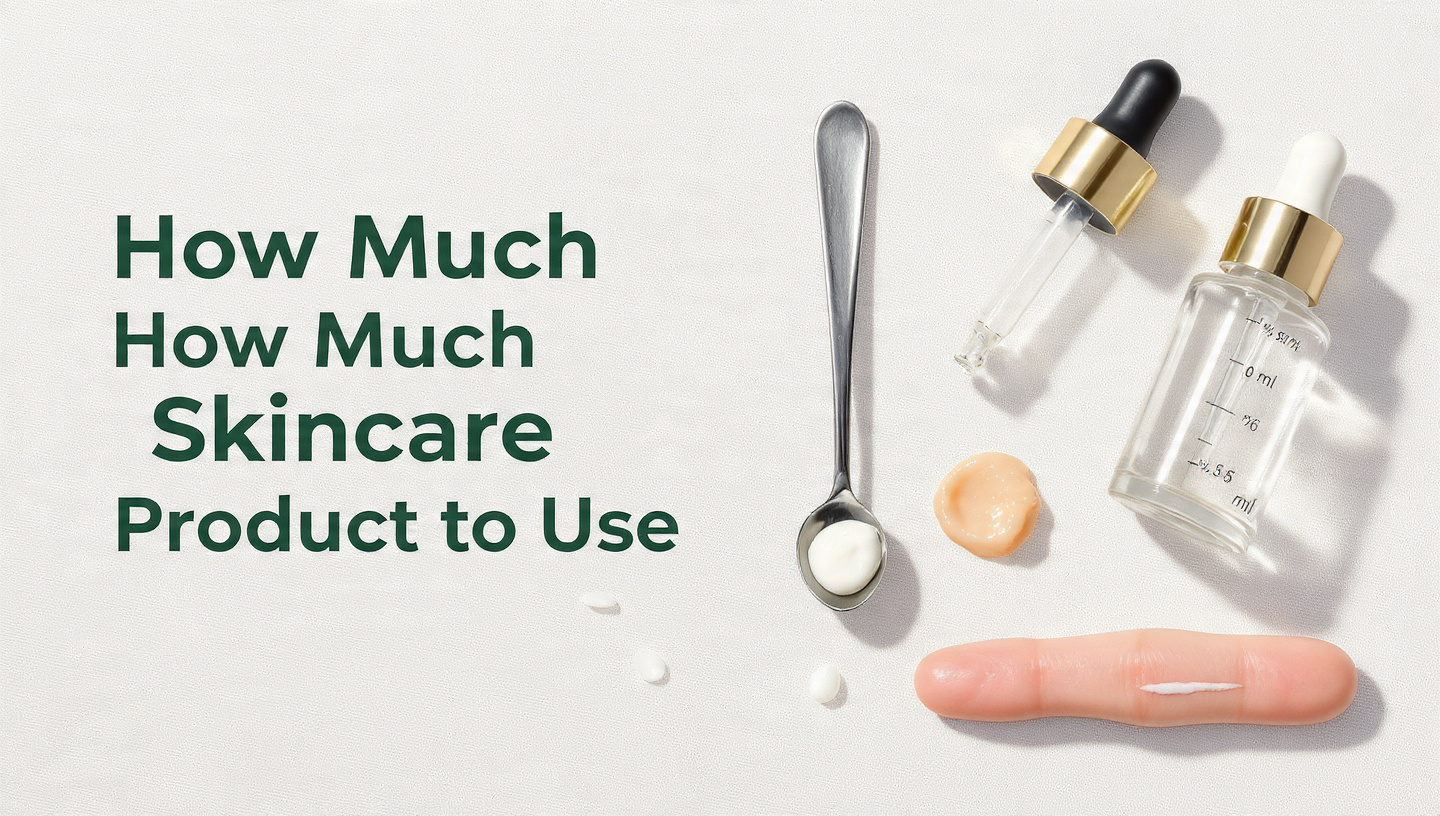
How Much Skincare Product to Use: The 2026 Science-Backed Guide
You need far less skincare product than you think to get clinical results. A pea-size of moisturizer for your face, a quarter-teaspoon of sunscreen, and a single pump of serum is the standard for most adults. Using more product does not accelerate results; it mostly accelerates irritation, clogged pores, and the speed at which you empty your wallet.
The global skincare market is saturated with products housed in oversized, opaque pump bottles that dispense a fixed volume regardless of your actual need. According to a 2023 study published in the International Journal of Cosmetic Science, the average consumer routinely dispenses over 150% of the necessary amount for a leave-on facial product. This chronic over-application is not a benign mistake. For active ingredients like retinol and alpha-hydroxy acids, applying too much is the primary cause of visible irritation, compromised skin barriers, and the premature abandonment of effective routines.
This article translates the visual “pea-size” analogies into quantitative milliliters, anchors every recommendation to skin physiology, and gives you a product-by-product dosing framework that accounts for your skin type, your chosen ingredient concentrations, and how those products interact when layered. You will leave knowing exactly how much cleanser, moisturizer, sunscreen, retinol, vitamin C serum, eye cream, and exfoliant to apply, based on what the current dermatological evidence supports.
How Much Skincare Product to Use: Your Master Framework
A safe and effective skincare routine depends on applying products within a specific dosing window that respects the finite surface area and absorption capacity of your facial skin. The average adult face has a surface area of approximately 380 to 450 square centimeters, and the outermost layer, the stratum corneum, can only hold a limited volume of water and product formulation before saturation occurs. Applying more product than the skin can physically accommodate does not enhance the biological effect of the active ingredients within it. It simply leaves a thicker film of unabsorbed vehicle ingredients, like emollients and thickeners, sitting on the skin surface.
To build a reliable framework, think of your facial skin like a piece of fine leather. It can only absorb a finite amount of conditioner before the excess sits on top, creating a sticky film that attracts dust and debris. Your skin’s surface area and its corneocyte lipid matrix have a fixed capacity. Saturating that matrix is the therapeutic goal, and anything beyond that is waste that can occlude pores and trap dead skin cells.
The master framework relies on three principles. First, the stratum corneum absorption ceiling dictates that for most leave-on products, between 1 ml and 1.25 ml is the maximum useful amount for the entire face and neck. Second, product texture matters. Thin, water-like serums with high humectant content may require slightly more volume to spread evenly compared to a thick, lipid-rich balm, which can be warmed and spread to a whisper-thin, uniform film. Third, layering multiple products changes the total volume your skin encounters, which means individual product amounts must decrease as your routine grows longer. The American Academy of Dermatology consistently emphasizes that correct application amount is just as critical for safety and efficacy as the active ingredient itself.
| Principle | Application |
|---|---|
| Stratum Corneum Ceiling | The face and neck can maximally utilize roughly 1.25 ml of a combined leave-on formulation at one time. |
| Texture-Dependent Spreading | A water-like toner (low viscosity) needs more volume to coat the skin than a dense balm (high viscosity). |
| Layering Reduction | In a multi-step routine, each subsequent step’s volume should be fractionally smaller to avoid product overload. |
How Much of Each Skincare Product to Use: A Precise Cheat Sheet
Your daily routine involves a sequence of products, each with a unique texture and function, and a single visual rule like a “pea-size” collapses under the range of viscosities and potencies in a modern routine. A cleansing oil and a retinol cream simply cannot be dosed with the same mental shortcut. This section provides a direct, quantitative reference table that translates the optimal amount for each core product category into both visual cues and metric volume measurements.
The amounts below are calculated for the average adult face (approximately 380 to 450 cm²) and are based on the minimum effective dose to achieve the product’s primary function: removing debris without barrier disruption for cleansers, providing full UV protection across the surface topography for sunscreens, and delivering a therapeutic dose of active ingredients without diffusion overload for serums and treatments. A useful rule of thumb for adjusting these: if your product does not spread to cover your entire face, you used too little. If the product is still visibly wet or sticky on your skin after one minute, you used too much.
| Product Category | Visual Cue | Metric Amount (approx.) |
|---|---|---|
| Gel/Foaming Cleanser | A hazelnut-sized dollop | 1.0 to 1.5 ml |
| Cream/Lotion Cleanser | A full pump or an almond-sized squeeze | 1.5 to 2.0 ml |
| Watery Toner/Essence | A quarter-size pool in your palm | 0.5 to 1.0 ml |
| Serum | A single full dropper or 3 to 4 drops from a pump | 0.5 to 0.75 ml |
| Face Moisturizer | A pea-size to a chickpea-size blob | 0.5 to 0.75 ml |
| Sunscreen | A quarter-teaspoon for face, another quarter for neck | 1.25 ml for face, 1.25 ml for neck |
| Eye Cream | A grain of rice per eye | 0.05 to 0.1 ml per eye |
| Retinol/Treatment Cream | A pea-size for the entire face | 0.25 to 0.5 ml |
| Chemical Exfoliant Liquid | A cotton pad saturated with a single, even pass | 0.5 to 1.0 ml |
Key Takeaway: The single most important number to internalize is 1.25 ml of sunscreen for your face alone. Every other product amount is negotiable, but this one is the non-negotiable baseline for UV protection as validated by SPF testing standards.
The mL Amount for Skincare Products: Moving Beyond “Pea-Size”
A “pea-size” amount is an inconsistent, non-standardized measurement that varies wildly from person to person based on their interpretation of a pea. A standard cosmetic pea, as defined in formulation labs, is a sphere approximately 5 mm in diameter, yielding a volume of roughly 0.25 ml. In consumer practice, people dispense anything from a tiny lentil-sized dot to a grape-sized blob under the same “pea-size” instruction. This explains why someone may find their 1% retinol serum mildly effective while another person finds the exact same product horribly irritating: they are applying fundamentally different volumes and thus different total retinol loads to their skin.
Moving to milliliters, measured with a simple set of graduated measuring spoons or a child’s medicine syringe, provides a repeatable and consistent dose. A standard 1/4 teaspoon holds 1.25 ml, which is the precise amount of sunscreen required for the average face to achieve the labeled SPF rating, per the FDA’s OTC sunscreen monograph testing standards. For a serum, a 0.5 ml dose is equivalent to about 4 standard drops from a dropper bottle, a quantity that a study in the Journal of the American Academy of Dermatology notes is sufficient to create a uniform film across 400 cm² of skin, provided the formula has adequate slip and spreading agents like dimethicone.
For product categories like cleanser, precision is less critical, as the product is rinsed away before the surfactants can extract intercellular lipids. The goal for cleansers is to generate enough lather and slip to solubilize surface oils and debris without creating so much foam that it runs down your forearms before you can massage your face. For leave-on products with active ingredients, however, a consistent 0.5 ml pump or a measured 1/8 teaspoon delivers a controlled dose. This allows you to truly assess your skin’s tolerance and response to an ingredient rather than accidentally doubling or tripling the dose randomly day-to-day.
Key Takeaway: Switch from visual guesses to a $2 set of measuring spoons or a marked syringe for one week. The data you gather on your skin’s actual response to a consistent 0.25 ml retinol dose versus a haphazard “pea” will likely explain your entire history of unpredictable irritation.
Can Skin Absorb Too Much Product? The Stratum Corneum Limit
Your skin is not a sponge, and a certain point of saturation, it physically cannot accept more product. The stratum corneum, a layer of dead, flattened keratinocyte remnants called corneocytes embedded in a lipid matrix, functions as a barrier designed to keep things out as much as to keep water in. Its capacity to absorb topical ingredients is limited by the diffusion gradient and the finite intercellular lipid channels through which most active molecules must travel. When you exceed this capacity, the product sits on the skin surface in a state of thermodynamic stasis, doing nothing but increasing the risk of friction-based pilling and occluding your sweat ducts.
A 2022 study published in the International Journal of Cosmetic Science demonstrated that for a standard oil-in-water emulsion moisturizer, the absorption saturation point on human forearm skin was reached at an application density of about 2 mg/cm², nearly identical to the sunscreen standard. Applying more than this threshold did not increase skin hydration levels in corneometry measurements at 1, 4, or 8 hours post-application. The excess product simply dried down on the skin surface or transferred onto clothing and pillowcases. This explains why a thin, even film of moisturizer provides the same 24-hour hydration claim as a thick, occlusive layer.
The biological limit becomes a clinical hazard when active ingredients are over-applied. A retinoid’s conversion to retinoic acid in the epidermis follows Michaelis-Menten kinetics, a model of enzyme saturation. Once the cellular retinoid-binding proteins are saturated, applying more retinol does not accelerate collagen synthesis or cell turnover. It simply floods the surrounding tissue with unprocessed retinol, which directly contributes to inflammation, a well-documented mechanism for retinoid dermatitis cited in dermatology pharmacology textbooks. The skin’s absorption ceiling is not a suggestion; it is a physical and biochemical reality.
Think of the stratum corneum like a single-file revolving door. Only so many molecules can enter the skin at any one time. If you push a large crowd at the door, they don’t get through any faster. They jam the entrance, create friction, and cause a scene on the sidewalk. That scene on your skin is redness, irritation, and a sticky, pilled-up film.
How Much Moisturizer to Reduce TEWL: The Clinical Standard
The primary metric of an effective moisturizer application is its ability to reduce transepidermal water loss (TEWL), the passive diffusion of water from the living dermis and epidermis through the stratum corneum into the atmosphere. The clinical standard for measuring this is an application density of 2 mg/cm², the same standard used for sunscreen testing, which translates to approximately 0.75 to 0.8 ml for the average adult face. At this density, a well-formulated moisturizer with a proper balance of humectants, emollients, and occlusives can reduce TEWL by 40% to 60% within an hour, according to bioengineering studies published in the British Journal of Dermatology.
Applying less than this critical threshold leaves gaps in the occlusive film, creating microscopic channels through which water can continue to escape. This is why the same moisturizer can feel “not hydrating enough” to one person while being perfectly adequate for another. The difference is not the formula; it is the under-application by the unsatisfied user. Conversely, applying far more than 0.8 ml creates an overly thick occlusive layer that can trap heat, increase skin surface temperature, and paradoxically lead to an increase in sebum production in individuals already prone to it. For someone with oily or combination skin, a lighter application of 0.5 ml is often sufficient, provided the formula includes effective humectants like sodium hyaluronate and glycerin that bind water without heavy occlusion.
For those treating dry skin conditions like atopic dermatitis or skin compromised by retinoid therapy, reaching the full 0.75 ml dose is therapeutic. The goal is to create a complete, unbroken film that functions as an artificial barrier to slow water loss and prevent irritant entry. A 2023 clinical review in the Journal of the American Academy of Dermatology emphasized that adequate quantity is a prerequisite for any therapeutic effect from a moisturizer, particularly in managing dermatitis where the filaggrin protein is deficient and barrier function is inherently compromised.
Key Takeaway: If your skin still feels tight 10 minutes after applying your moisturizer, measure out exactly 0.75 ml next time. That tightness is a direct sensory signal of TEWL that your current dose failed to control.
Why Overusing Skincare Is Bad: From Waste to Inflammation
Overusing your skincare products sets off a cascade of negative effects that begins with financial waste and ends with a visible biological rebellion on your skin. The most immediate consequence is a compromised skin barrier. A formulation overloaded with surfactants from an over-applied cleanser can disrupt the lipid bilayer matrix that holds your corneocytes together, stripping away ceramides, cholesterol, and fatty acids. The Journal of Investigative Dermatology has published evidence showing that a single overly aggressive wash can increase TEWL by over 30% and require up to 48 hours to fully normalize.
The second level of damage is product interaction. Applying an excessive amount of a silicone-heavy serum, for example, creates a thick, plasticized film that cannot fully absorb. When you layer your moisturizer or sunscreen on top, the friction between these layers causes the product to ball up and physically lift away from the skin, a phenomenon called pilling. Not only does this remove the product from your skin, but it can also physically scrub away the previous layers of your routine, including expensive active ingredients you applied earlier. This is a direct structural failure of your routine caused solely by over-application.
The most serious outcome is inflammation-driven pathology. Over-applying active ingredients, particularly retinoids, alpha-hydroxy acids (AHAs), and beta-hydroxy acids (BHAs), saturates the viable epidermal layers with a chemical load that triggers an inflammatory cytokine response. Clinically, this presents as retinoid dermatitis, a bright red, shiny, stinging skin surface that is not “purging” but is a genuine chemical irritant contact dermatitis. For individuals with Fitzpatrick skin types IV through VI, this inflammation directly activates melanocytes, making over-application a primary driver of preventable post-inflammatory hyperpigmentation. The American Academy of Dermatology’s clinical guidelines for acne and photoaging management explicitly state that frequency and amount should be reduced at the first sign of persistent erythema or stinging.
How Much Cleanser to Use for a Clean Without Stripping
A dime-to-nickel-sized amount of a gel or foaming cleanser, roughly 1.0 to 1.5 ml, is sufficient to remove the day’s sunscreen, oil, and particulate matter without stripping your acid mantle. The goal of cleansing is to emulsify and lift away hydrophobic substances like sebum and silicones, not to produce a voluminous mountain of foam. In fact, excessive foam is a reliable indicator of a high surfactant concentration and an unnecessarily large dose. A 2021 study in the International Journal of Cosmetic Science found that a lower volume of cleanser, when massaged thoroughly, removed over 95% of a foundation and waterproof sunscreen film, matching the efficacy of a dose three times the size.
For a cleansing oil or balm, which relies on the “like dissolves like” principle of oil-based emollients breaking down waterproof makeup and mineral sunscreen, you need a larger volume to create enough slip to move your fingers across your skin without dragging. An almond-sized dollop, about 1.5 to 2.0 ml, provides enough lubrication to dissolve heavy face makeup. The critical step with an oil cleanser is to emulsify it properly with a small splash of water before rinsing, which transforms the oil into a milky texture that lifts away cleanly.
The amount also depends on whether this is a single or double cleanse. If you are performing a double cleanse, the first step with an oil cleanser should use the larger amount, and the second step with a water-based gel cleanser should be reduced to a smaller, 1.0 ml dose. For individuals with rosacea or atopic skin, the cleanser amount should err on the lower side, and the product must be a non-foaming, low-pH lotion. The mechanical action of rinsing is far more important for these skin types than the surfactant dose, as their barrier function is a finite, precious resource that must not be depleted by a single wash.
How Much Moisturizer to Use for Your Face, Neck, and Chest
The amount of moisturizer that delivers the clinically tested reduction in TEWL is 0.75 ml for your face, and you should extend that dose downward to include an additional 0.5 ml for your neck and 1.0 ml for your chest and decolletage. The skin on your neck and chest has a thinner dermal layer and fewer sebaceous glands than your face, making it structurally more vulnerable to dehydration and actinic damage. The “what you apply to your face, apply to your neck and chest” rule only works if you actually adjust the product volume to cover the increased surface area.
The product’s formulation density dictates how easily a small volume can spread. A lightweight gel-cream moisturizer with a high water content and slip agents like dimethicone can spread a 0.75 ml dose across your entire face, neck, and hands with ease. A thick, wax-heavy balm or a ceramide-rich cream designed for barrier repair will not spread as far. You may need to warm a thicker balm between your fingertips first to increase its spreadability rather than simply adding more volume to your palm.
For skin types that produce ample sebum, like those with oily or combination skin in humid climates, the face dose can be decreased to 0.5 ml. The objective is not to eliminate the skin’s own lipid production but to supplement it with a lightweight, non-comedogenic film that normalizes TEWL. Conversely, for skin exposed to extreme cold, high-altitude wind, or low-humidity airplane cabins, a temporary increase to 1.0 ml of an occlusive-rich moisturizer can provide the additional physical barrier needed. The Journal of Cosmetic Dermatology published a small study in 2024 showing that a 50% increase in an occlusive moisturizer dose under extreme environmental stress significantly reduced clinical dryness scores.
How Much Sunscreen for Face: The 2 mg/cm² Standard Decoded
The global standard for sunscreen application to achieve the SPF and broad-spectrum protection stated on the label is 2 milligrams of product per square centimeter of skin. For the average adult face with a surface area of roughly 400 to 450 cm², this translates to a required volume of 0.8 to 0.9 grams, which for most liquid sunscreen formulations is equivalent to 1.0 to 1.25 ml, or a full quarter-teaspoon. This is not a marketing suggestion. It is the exact application density at which all SPF testing is conducted in FDA and ISO-certified laboratories globally.
Applying half that amount, a common daily practice, does not simply halve the sun protection factor. Due to the non-linear relationship between film thickness and UV absorbance described by Beer-Lambert law, applying roughly half the required amount reduces SPF by the square root. An SPF 50 sunscreen applied at 1 mg/cm² effectively drops to an SPF of approximately 7. A 2020 study published in the Journal of the American Academy of Dermatology demonstrated that the average consumer applies only 20% to 50% of the required amount, a consistent finding in photoprotection research that explains the gap between laboratory SPF claims and real-world sunburn rates.
To consistently measure a quarter-teaspoon without special tools, use the “two-finger rule.” Dispense a line of sunscreen from the distal crease to the tip of your index and middle fingers held together. This ribbon of product is approximately 1.25 ml for an average adult hand. Apply this full amount to your face, spreading it in one continuous, even layer rather than in multiple thin, rubbed-in films. This prevents the product from sinking into your follicular ostia and ensures a uniform continuous film. Individuals with larger or smaller facial surface areas should adjust slightly, but the two-finger rule is a more reliable starting point than a nebulous “generous layer.”
| Measurement Method | Approximate Volume for Face |
|---|---|
| 1/4 Teaspoon | 1.25 ml |
| Two-Finger Rule | ~1.25 ml |
| Full Pump from a Calibrated Bottle | Variable; check the label, often 0.5 to 1.0 ml per pump |
Key Takeaway: You are almost certainly under-applying your sunscreen by 50% or more. Measure a quarter-teaspoon of water and pour it into your palm right now to recalibrate your visual perception of what 1.25 ml actually looks like.
How Much Retinol to Use: A Concentration-Dependent Dose
A true pea-size amount of retinol, calculated as a 0.25 ml sphere, is the safe and effective starting dose for the entire face, regardless of whether the product contains 0.1% retinol or 1.0% retinol. The total retinol load delivered to your skin is a function of both concentration and volume. Using a “pea-size” of a 1% retinol formula delivers a significantly higher active ingredient load than the same volume of a 0.25% formula, which is why concentration must dictate your application amount if you are not using the standard starting dose.
For a beginner, starting with a 0.1% to 0.25% retinol product, a 0.25 ml pea-size applied two nights a week is the protocol supported by a 2023 clinical consensus in the Journal of Cosmetic Dermatology. This volume is sufficient to create a thin film across the skin without pooling around the nasolabial folds, the orbital rim, or the corners of the mouth, areas with thinner stratum corneum where retinoid dermatitis first appears. The “retinol sandwich” method, applying moisturizer before and after retinol, further buffers the concentration at the skin interface without reducing the total volume needed for coverage.
If you are using a very low concentration, such as a 0.05% retinaldehyde or a retinol ester like retinyl palmitate, the application volume can be cautiously increased to 0.35 ml because the skin’s retinoic acid receptors will be exposed to a much lower active dose. The critical safety rule is that retinol and prescription retinoids like tretinoin must never be applied to wet skin, which dramatically increases penetration and the risk of an uncontrolled dose. Any moisture on the skin reduces the stratum corneum’s diffusion resistance. Wait a full 10 to 20 minutes after cleansing before applying your pea-size dose.
How Much Vitamin C Serum to Use for Brightness and Protection
For an ascorbic acid serum, 3 to 4 drops from a dropper bottle, or a single pump dispensing roughly 0.5 ml, is the dosage proven to saturate the skin with a photoprotective antioxidant reservoir. Unlike retinol, where the dose is limited by the irritation threshold, the dose of vitamin C is limited by the skin’s inherent capacity to absorb and retain it. A 2022 pharmacokinetic study published in the Journal of Investigative Dermatology demonstrated that a 15% L-ascorbic acid solution applied at a volume sufficient to create a 2 mg/cm² film on human skin reached maximum tissue saturation. Applying more than this did not increase the measured ascorbic acid content in the epidermis or dermis 24 hours later.
The primary reason to not over-apply a vitamin C serum is formulation chemistry. A well-formulated L-ascorbic acid serum is acidic, typically with a pH of 3.5 or lower, to maintain stability and protonate the acid for effective diffusion across the lipid membrane. Pouring a larger volume of this low-pH liquid onto your skin increases the acid load, which can disrupt the skin’s native pH and cause a stinging, burning sensation, especially on a compromised barrier. For individuals with sensitive skin or rosacea, a 0.25 ml to 0.3 ml dose is a better starting point.
The texture of the serum also dictates how much you need. A watery, high-ethoxydiglycol formula spreads to a whisper-thin film very quickly, requiring 4 to 5 drops to cover the face and neck. A thicker, silicone-suspended vitamin C serum or an anhydrous vitamin C in a squalane base will spread less efficiently, and a full 0.5 ml pump may be required. The endpoint you are looking for is a single, uniform layer that dries down within 30 to 60 seconds. If the serum is still wet and dripping after a minute, you have applied well beyond the absorption capacity and are simply wasting product down your neck.
How Much Eye Cream to Use and Why Less Is Finally More
A single grain of uncooked rice, roughly 0.05 ml, is the correct amount of eye cream for each eye. The skin of the periorbital region, your eyelids and under-eye area, is the thinnest skin on your body at approximately 0.5 mm thick, with very few sebaceous glands and almost no subcutaneous fat. This tissue cannot absorb a large volume of product, and the mechanical act of rubbing in an excess amount of cream contributes directly to the physical stress that can, over decades, degrade the delicate elastin and collagen network you are trying to protect.
The “rice grain” rule applies universally, but the reason it works varies by the active ingredient in the cream. For a caffeine-based depuffing eye cream, a very thin film is sufficient for the vasoconstrictive alkaloids to work on the superficial microvasculature. Applying more gel simply extends the dry-down time without improving the clinical outcome. For a retinol-containing eye cream, the minuscule volume is a safety requirement. Migration of retinol into the ocular surface from over-application is a documented cause of meibomian gland dysfunction and dry eye syndrome, as noted in a 2021 ophthalmology review in the British Journal of Dermatology.
To apply the correct dose, dispense the grain-of-rice amount onto the pad of your ring finger, which naturally applies the least pressure of all your digits. Gently tap the product across the orbital bone from the inner corner to the outer corner, staying well clear of the lash line and the waterline. The product will naturally migrate a few millimeters as it warms to skin temperature. Never rub it in. The tapping motion is your application method, and it is designed to distribute a tiny, precise amount. For those with eyelid dermatitis or a history of milia, cutting the dose to half a grain of rice per eye can prevent the occlusion of the vellus hair follicles that triggers those tiny keratin cysts.
Key Takeaway: You cannot reverse years of eye cream under-application by applying a heavy layer tonight. The skin around your eyes absorbs like a paper-thin tissue, not a towel, and a tiny, consistent dose will always outperform a periodic, heavy smear.
How Much Chemical Exfoliant to Use to Remodel Without Damaging
A chemical exfoliant, whether a liquid leave-on formula or a wash-off mask, requires no more than a single, saturated cotton pad for liquids or a thin, semi-transparent layer for creams to achieve the clinical effect of accelerating desquamation. The therapeutic mechanism of alpha-hydroxy acids (AHAs) like glycolic acid and lactic acid is to dissolve the calcium-dependent bonds (desmosomes) between corneocytes in the uppermost layers of the stratum corneum. This is a chemical reaction that requires contact, not a deep reservoir of unreacted acid sitting on the surface.
Drenching a cotton pad so it is dripping wet and flooding your face with a 10% glycolic acid toner is a direct chemical injury. A 2023 study in the International Journal of Cosmetic Science on consumer exfoliant habits found that “over-exfoliation syndrome,” characterized by persistent barrier disruption, was strongly correlated not with the percentage of acid used, but with the volume of product applied per session. A single, even pass with a lightly saturated pad is sufficient to deliver the functional dose. If your pad still has liquid on it after wiping your face, you used too much. You should be able to wring out the cotton pad before applying and not have liquid drip down your face.
For a salicylic acid (BHA) serum or cream, a pea-size dose of 0.25 ml is the maximum. Salicylic acid is lipid-soluble, meaning it penetrates and concentrates within your sebaceous follicles. A small, controlled dose targets the pore lining to dissolve the keratin plugs that cause comedones. An excessive dose creates a concentration gradient that pushes the BHA beyond the follicle into the surrounding dermal tissue, causing unnecessary inflammation. For individuals with darker Fitzpatrick skin types, this deep, diffuse inflammation from BHA overuse is a potent trigger for post-inflammatory hyperpigmentation. The AAD recommends that those prone to hyperpigmentation use chemical exfoliants at the lowest effective dose and frequency, which for many is a 2% salicylic acid product applied as a thin layer once every two or three nights.
To safely use an AHA/BHA peel mask at home, follow these steps:
- Dispense exactly the amount specified on the product label, typically 1.0 to 2.0 ml for a full-face mask.
- Apply an even layer using a fan brush, which provides the thinnest, most uniform distribution without absorbing product into your fingertips.
- Set a timer for the absolute minimum recommended time, not the maximum, for your first application.
- Rinse with cool water for a full 60 seconds to ensure complete neutralization and removal of all acid residues.
- Apply a plain, fragrance-free barrier repair moisturizer with ceramides immediately after patting dry.
Skincare Pilling Causes: When the Amount Is Not the Problem
Skincare pilling is the formation of small, rolled-up balls of product on your skin that occur when the formulation base of one layer is physically incompatible with the next, and the primary cause is often too much total product volume, not the chemistry alone. A water-based serum with a high concentration of a film-forming polymer like polyvinylpyrrolidone (PVP) or xanthan gum dries into a continuous tense film. When you apply an oil-based or silicone-heavy product on top and use a vigorous rubbing motion, the friction tears the underlying film into small pieces that mix with the new layer and roll up. The more of each product you apply, the thicker and more fragile these films become.
The solution is a combination of adjusting your amount, your technique, and your products. Reduce your serum dose to the bare minimum needed for coverage, typically 0.3 to 0.5 ml, and allow a full two to three minutes for the water and volatile silicones to evaporate before proceeding. The serum should feel dry and matte, not tacky, to the touch. For your next product, warm it in your hands and press it into the skin using a gentle patting motion rather than a circular rubbing motion. Patting generates compressive force without the lateral shear that tears films apart.
A secondary cause of pilling is the layering of two products with opposing charges. Certain cationic polymers, used to create a “tightening” feel on the skin, will instantly complex with anionic thickeners in the next layer. This chemical reaction precipitates a solid right on your skin surface. If you have adjusted your application volumes and wait times and still experience pilling, your two products are likely chemically incompatible. There is no technique fix for a chemical reaction, and one of the two products must be moved to an alternate routine or replaced.
| Cause of Pilling | Fix |
|---|---|
| Excess total product volume | Reduce serum to 0.3-0.5 ml, moisturizer to 0.5 ml. |
| Insufficient dry time between layers | Wait 2-3 minutes for each layer to fully set and feel dry to the touch. |
| Friction from rubbing during application | Switch to a gentle patting and pressing motion to apply each layer. |
| Incompatible base ingredients (e.g., water vs. heavy silicone) | Wait longer, or swap one product out of the routine permanently. |
How Much Skincare for Acne-Prone Skin: A Delicate Balance
For skin prone to acne vulgaris, product amounts must be calibrated with a bias toward the minimum effective dose for every single product, because the consequences of over-application directly fuel the condition you are trying to treat. An over-application of a thick, occlusive moisturizer intended for barrier repair can physically block the follicular ostia, creating an anaerobic environment where Cutibacterium acnes bacteria proliferate. An over-application of a salicylic acid serum can chemically denude the follicle lining to the point of inflammation, turning a microcomedone into an angry, inflamed papule.
The moisturizer amount is the most critical variable. Use a gel or gel-cream formulation with a very low volume, roughly 0.3 to 0.5 ml, just enough to normalize TEWL without leaving a perceptible film. Look for a formula with niacinamide, which at a 4% to 5% concentration has clinical evidence for regulating sebum production, and lightweight humectants like sodium hyaluronate. Avoid rich, fatty-acid-heavy creams in volumes that cannot fully absorb into the skin’s surface.
For spot treatments containing benzoyl peroxide or salicylic acid, the “dot, don’t smear” rule applies. Apply a tiny dot, smaller than a match head, directly onto the lesion. Let it dry down completely as a white or clear spot. The goal is to create a localized, concentrated zone of treatment on the blemish without spreading the active ingredient across the surrounding, uninvolved skin, which would dry it out, weaken its barrier, and increase the risk of the acne spreading through what is called “irritant comedogenesis.” The American Academy of Dermatology notes that this precise application technique minimizes side effects while preserving efficacy for inflammatory acne lesions.
Signs of Over-Moisturizing: When Hydration Goes Too Far
Over-moisturizing, or the application of moisturizer in volumes exceeding the stratum corneum’s saturation point, produces a recognizable set of signs that are often mistaken for an allergic reaction or a product “breakout.” The most immediate sign is persistent tackiness or a greasy film that remains on your skin 10 minutes after application. Healthy, adequately hydrated skin absorbs or dries down a correct 0.75 ml dose of a well-formulated moisturizer within a few minutes. A shiny, wet-looking surface after the dry-down window is a film of unabsorbed emollients and occlusives.
The second sign is the development of small, uniform, flesh-colored bumps known as milia or, more generally, occlusion folliculitis. The excess lipid and occlusive film physically traps desquamating corneocytes and vellus hair follicles, creating a keratin plug. This is not acne, though it can look similar. It is a mechanical blockage caused by a suffocating film. This is common on the thinner skin of the periorbital area from heavy eye creams. The correction is not to add an exfoliant on top of an already suffocating skin surface but to immediately reduce your moisturizer dose by half.
The third sign is a paradoxical increase in skin dryness and irritation. A skin surface constantly coated in a thick, occlusive layer down-regulates its own natural desquamation signals and can trap irritants against the epidermis. When you finally remove the product, the skin underneath may be sluggish, slightly macerated, and functionally dependent on the artificial barrier. The Journal of Cosmetic Dermatology describes this as “moisturizer dependency,” where TEWL actually increases above baseline when the occlusive product is discontinued because the stratum corneum’s own barrier lipid synthesis has been temporarily down-regulated. The fix is a gradual taper, cutting the moisturizer amount by 25% every few days to allow the skin’s natural lipid production to recover.
Key Takeaway: If your skin looks wet, feels sticky, and is developing tiny bumps it did not have before, your moisturizer dose is the problem. Your skin is not “drinking it up”; it is drowning in a layer it cannot process.
Frequently Asked Questions About Skincare Product Amounts
What is the pea-size rule for skincare?
The pea-size rule is a visual dosing guide for potent treatment products, primarily retinoids and eye creams, equivalent to a 0.25 ml sphere. It represents the maximum safe starting volume for a high-strength active ingredient to be distributed as a thin film across the entire face without causing pooling in sensitive areas like the nasolabial folds. For a true treatment, applying more than a pea-size amount simply increases the risk of irritation without accelerating clinical results.
How much sunscreen do I actually need for my face?
You need a full 1/4 teaspoon, or 1.25 ml, of liquid sunscreen for your face alone to achieve the labeled SPF rating. This is the 2 mg/cm² application density standard mandated by FDA and ISO sunscreen testing protocols. The most reliable way to approximate this without measuring spoons is the two-finger rule: dispense a continuous line of sunscreen from the base to the tip of your index and middle fingers.
Can using too much serum cause breakouts?
Yes, using too much serum can cause breakouts through a process of mechanical occlusion. A film-forming serum applied in an excessive volume can dry into a thick, plasticized layer that traps sebum and keratinocytes inside the follicle, creating an anaerobic environment that favors Cutibacterium acnes proliferation. Reducing the volume to 3 to 4 drops or a single 0.5 ml pump and ensuring full dry-down before layering usually resolves this type of breakout.
How do I know if I’m over-exfoliating my skin?
You are over-exfoliating if your skin appears shiny and tight, stings when you apply a previously tolerated bland moisturizer, or develops persistent redness and a rough, sandpaper-like texture. This “over-exfoliation syndrome” is a form of chemical irritant contact dermatitis where the stratum corneum has been thinned beyond its functional limit. A 2023 study linked this directly to excessive application volume of leave-on AHA and BHA liquids rather than the frequency of use alone.
Does applying more moisturizer hydrate skin better?
No, applying more moisturizer does not hydrate your skin better once you have reached the stratum corneum’s physical saturation point at roughly 0.75 ml for the face. A 2022 corneometry study showed that application densities beyond 2 mg/cm² did not increase skin hydration levels, as the excess product simply formed an unabsorbed film on the surface. A thin, even film is mechanically and biologically sufficient for reducing transepidermal water loss.
How much retinol should a beginner start with?
A beginner should start with a pea-size amount, precisely 0.25 ml, of a low-concentration retinol product between 0.1% and 0.25%, applied to completely dry skin two nights per week. This dose and schedule allows the skin’s retinoid receptors to adapt to the retinoid load without triggering the inflammatory cascade that leads to retinoid dermatitis. The frequency can be slowly increased to every other night over a period of 8 to 12 weeks as tolerance develops.
The single most important skincare lesson you can implement is that your skin is a finite biological surface, not an infinite canvas. Each product you apply must work within a specific physical footprint, and exceeding that footprint adds nothing but a layer of risk. A measured 1.25 ml of sunscreen, a true 0.25 ml pea of retinol, and a 0.75 ml film of moisturizer represent the scientifically grounded, clinically validated baseline for a routine that works as hard as you do.
Start by pulling a quarter-teaspoon measure from your kitchen drawer and a set of graduated droppers. For one week, approach your routine like a precise formulation chemist, not a hopeful artist. Measure the product that leaves a clean, dry, protected finish. Feel what 0.5 ml of serum actually covers and how quickly it absorbs.
Notice what happens when you stop guessing. Your skin will tell you very quickly when the dose is right, because it will stop complaining. A calm, even-toned, resilient skin surface is the biological confirmation that the quantity matched the need. That is the measurement that finally matters, and you now know exactly how to find it.