Angina Self-Care 2026: A Daily Action Plan to Manage Symptoms
Angina self-care is the structured daily practice of managing stable angina symptoms by reducing myocardial oxygen demand and improving cardiovascular efficiency through a specific set of lifestyle behaviors. It does not replace your prescribed medications or cardiologist’s care plan. Think of it as the operational manual for living fully between appointments while actively reducing the triggers that provoke chest pain.
This topic matters because living with a chronic symptom like angina can erode your confidence and shrink your world without you noticing. According to the American Heart Association, an estimated 10 million people in the United States experience angina, and for many, anxiety about the next episode becomes as disabling as the sensation itself. The emotional weight of a symptom that can signal danger is heavy, but self-care gives you a way to hold that weight with both hands and a clear plan.
We are going to walk through exactly what stable angina is and how to build a precise, actionable plan for it. You will learn a sequenced response for an acute attack, how to exercise safely to raise your ischemic threshold, what dietary pattern has the strongest evidence for vascular health, and how to regulate the stress responses that directly trigger vessel constriction. Every recommendation is grounded in cardiovascular physiology and the clinical guidelines of major heart health organizations. This is your 2026 framework for managing angina, built on evidence and real-world practicality.
angina self-care
Angina self-care is a set of daily, evidence-based actions that manage the frequency and severity of angina episodes by controlling modifiable risk factors and balancing the heart’s oxygen supply with its demand. It involves a coordinated plan of prescribed medication adherence, sublingual nitroglycerin use, a structured exercise routine, a cardioprotective dietary pattern, stress physiology regulation, and environmental awareness to prevent episodes before they start. This practice operates entirely within the boundaries set by your cardiologist and is designed to complement, not substitute, medical and interventional treatments.
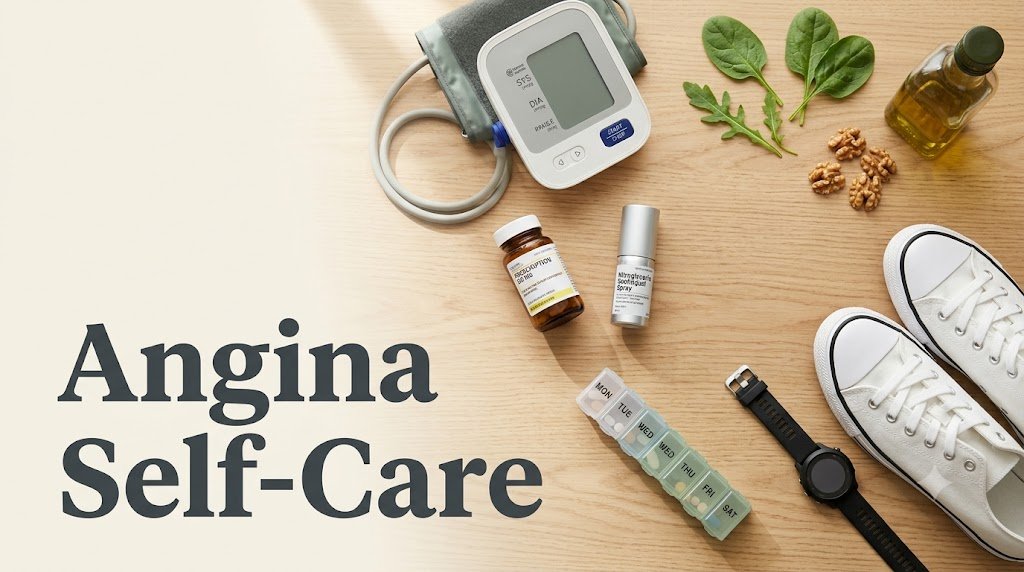
The foundation of effective self-care rests on understanding that myocardial ischemia happens when the heart muscle’s need for oxygen outpaces what the narrowed coronary arteries can deliver. Every self-care action is a deliberate attempt to lower that demand or optimize the body’s use of available oxygen. The American College of Cardiology emphasizes that aggressive risk factor modification through lifestyle is a Class I recommendation for managing chronic stable angina, meaning the evidence supports it as a first-line treatment pillar alongside pharmacotherapy.
Self-care also involves rigorous self-monitoring and pattern recognition. You become the expert on your own symptom triggers. A 2021 scientific statement from the American Heart Association on the mind-heart-body connection underscores that self-monitoring and the sense of control it provides can reduce the psychological distress that independently worsens cardiac outcomes. Documenting what you were doing, the emotional state you were in, and what relieved the episode creates a data set that makes your follow-up appointments infinitely more productive.
This is not about perfection. It is about calibration. The goal is to widen the zone of activities you can do comfortably, reduce the unpredictability that fuels anxiety, and build a daily rhythm that feels sustainable rather than restrictive. You are learning to operate your body with an updated user manual.
what is the difference between stable and unstable angina
Stable angina is a predictable pattern of chest discomfort triggered by exertion or emotional stress, relieved by rest or nitroglycerin within minutes, and caused by a fixed narrowing in a coronary artery that limits but does not entirely block blood flow. Unstable angina is a medical emergency where the pattern suddenly changes: the pain occurs at rest, lasts longer than 20 minutes, is not relieved by nitroglycerin, or occurs with increasing frequency and severity. The difference is not academic. It is the line between a manageable chronic condition you can care for at home and a 911 call.
The underlying mechanism for both involves myocardial ischemia, but the cause is distinct. Stable angina results from stable atherosclerotic plaque that predictably restricts flow when demand increases. Unstable angina is part of the acute coronary syndrome family, where a plaque suddenly ruptures, causing near-complete thrombotic occlusion without full-thickness heart muscle death, which would be a myocardial infarction. The European Society of Cardiology’s 2019 guidelines on chronic coronary syndromes define stable angina as symptoms that have been consistent in frequency, intensity, and trigger for at least two months.
Your self-care plan depends entirely on knowing which type you have. All the safe exercise guidance, dietary adjustments, and stress management we discuss apply to stable angina confirmed by a cardiologist. If your symptoms do not follow a predictable pattern, or if that pattern changes, you are no longer in self-care territory. You are in emergency evaluation territory.
Here is how to tell the difference in real time:
| Characteristic | Stable Angina | Unstable Angina (Call 911) |
|---|---|---|
| Trigger | Predictable: physical exertion, cold, stress | Unpredictable: at rest, minimal exertion, or while sleeping |
| Duration | Typically 1 to 5 minutes, resolves within 5 to 10 | More than 20 minutes, or does not stop |
| Relief | Rest, nitroglycerin | Not relieved by rest or nitroglycerin |
| Pattern | Consistent for weeks/months | Increasing frequency, intensity, or duration; new onset |
| What It Means | Fixed, stable plaque | Ruptured plaque, acute thrombus formation |
Key Takeaway: Stable angina is predictable and manageable with your home protocol. Any change in the pattern, intensity, or response to rest and medication is unstable angina and requires an immediate 911 call.
how to create an angina action plan
Creating an angina action plan means writing a single, portable document that lists your emergency medication instructions, a step-by-step response sequence for an acute attack, and the clear threshold for calling 911, all approved by your cardiologist. This plan converts a frightening moment into a pre-rehearsed, automatic drill that you and your family can follow without hesitation. The National Heart, Lung, and Blood Institute (NHLBI) recommends that every person with a chronic cardiovascular condition have a written action plan that is shared with family members and placed in an easily accessible location.
Your action plan must be simple enough to read during an episode. It is not a comprehensive health history. It is a script for the first critical minutes. Start with your emergency medical identification information: your diagnosis (stable angina), the date of your last cardiac catheterization or stress test, your medication list with dosages, and your cardiologist’s emergency contact number. Below that, write your nitroglycerin protocol as prescribed. The standard prescription, supported by decades of clinical practice, is to sit down, place one tablet under the tongue or administer one spray, and wait 5 minutes.
The next section details exactly when to escalate. If after one dose and 5 minutes the symptom does not fully resolve, the protocol is typically a second dose and waiting another 5 minutes. If the symptom persists 5 minutes after the second dose, or if it is immediately severe and crushing, you call 911. Write this final instruction in bold: “Call 911. Do not drive yourself. Chew one 325 mg uncoated aspirin unless allergic or specifically instructed otherwise by a doctor.” This leaves no room for dangerous decision-making during a crisis.
Review this plan with your cardiologist at every visit. Hand a copy to your partner, a family member, and a trusted coworker. Walk them through it once. Knowing that the people around you have seen the script and understand their role reduces the ambient anxiety of living with angina and ensures that if the plan is ever needed, it will be executed correctly.
what to do during an angina attack at home
During an angina attack at home, you must immediately stop all physical activity, sit down and lean forward slightly, and take your prescribed sublingual nitroglycerin as directed, then monitor your symptoms for exactly five minutes to determine if they resolve. This sequence is the universally recognized acute management protocol for stable angina symptoms. It directly reduces cardiac workload by removing exertion and uses pharmacologic vasodilation to rapidly increase oxygen delivery to the myocardium.
The physiology of sitting down matters. Lying flat can increase venous return to the heart, which increases the volume of blood the left ventricle must pump, raising myocardial wall tension and oxygen demand. Sitting upright with a slight forward lean reduces preload just enough to help while also easing any sense of breathlessness. Staying upright is a simple but critical detail that the American College of Cardiology’s patient education materials specifically recommend.
Your thought process during these five minutes is as important as the physical steps. The goal is to observe without catastrophizing. Tell yourself: “I have a plan for this. I am doing exactly what my cardiologist told me to do.” Anxiety is a powerful vasoconstrictor, and a panic response releases adrenaline that increases heart rate and blood pressure, directly counteracting the effect of nitroglycerin. The Journal of the American College of Cardiology has published data showing that anxiety during acute coronary symptoms is associated with poorer short-term outcomes, independent of disease severity.
After the episode resolves completely, log it. Write down the time, the trigger you can identify, the intensity on a 1 to 10 scale, how many doses you took, and whether it resolved fully. This log becomes the most valuable tool your cardiologist has to adjust your maintenance therapy. If the episode does not follow the script—if it lasts longer, feels different, or requires a third dose—you immediately move to the 911 step of your action plan without waiting to log anything.
angina safe exercise guidelines
Angina safe exercise involves a structured program of aerobic and resistance activity performed at an intensity below the heart rate that triggers your ischemia, progressed gradually to increase your exercise tolerance and reduce your daily symptom burden. The mechanism is called the ischemic preconditioning effect, and it means that regular, controlled exercise can raise the threshold at which you experience angina. According to a 2016 Cochrane Review analyzing 63 randomized controlled trials, exercise-based cardiac rehabilitation reduces cardiovascular mortality and hospital admissions while significantly improving health-related quality of life in people with stable angina.
The safe execution of exercise requires knowing your numbers and staying well within them. Your cardiologist or cardiac rehabilitation team will have identified your ischemic threshold, the heart rate or workload at which ST-segment changes appear on an ECG or symptoms begin. Your exercise prescription is to work at a heart rate 10 to 15 beats per minute below that threshold. You can also use the Borg Rating of Perceived Exertion (RPE) Scale, a simple 6 to 20 scale, staying at an RPE of 11 to 13, which equates to “fairly light” to “somewhat hard.” You should be able to carry on a conversation throughout.
The structure of a safe session follows a rigid pattern that never changes:
- Warm-Up (10 to 15 minutes): Slow walking or stationary cycling at minimal resistance. This gradually dilates coronary arteries and prepares the myocardium. Skipping this is the most common direct trigger of exercise-induced angina.
- Aerobic Conditioning (20 to 30 minutes): Continuous, rhythmic movement such as walking, stationary cycling, or elliptical use at your prescribed target heart rate or RPE.
- Resistance Training (15 to 20 minutes): Low weight, high repetitions. Avoid heavy, static lifting and the Valsalva maneuver (holding your breath during exertion), which causes a dangerous spike in blood pressure and cardiac afterload.
- Cool-Down (10 minutes): Gradual reduction in intensity. Stopping suddenly can cause venous pooling and a drop in blood pressure, which can trigger a reflexive increase in heart rate and a potential ischemic event.
Do not exercise outdoors in temperatures below 40°F (4°C) or above 85°F (29°C) with high humidity. Cold air constricts coronary arteries, and heat increases cardiac workload. An indoor walking track or stationary bike is a safe alternative. If angina occurs during any phase, stop immediately, take nitroglycerin, and do not resume the session that day.
| Exercise Component | Recommendation | Safety Rationale |
|---|---|---|
| Warm-Up | 10-15 mins of slow walking | Gradual coronary vasodilation |
| Aerobic Intensity | HR 10-15 bpm below ischemic threshold; RPE 11-13 | Maintains sub-ischemic myocardial oxygen demand |
| Resistance Training | Low weight, high reps (12-15); no breath-holding | Avoids dangerous afterload spikes from Valsalva maneuver |
| Cool-Down | 10 mins of gradual slowing | Prevents venous pooling and reflex tachycardia |
| Environment | 40-85°F, indoors if extremes | Prevents cold-induced vasospasm and heat-induced cardiac stress |
Key Takeaway: Exercise for angina is safe and necessary when done below your ischemic threshold, with a rigid warm-up and cool-down, and in a controlled environment. Never skip the warm-up.
best diet and foods for angina management
The best dietary pattern for angina management is one that maximizes endothelial function and minimizes systemic inflammation, with the strongest evidence supporting a Mediterranean diet rich in extra virgin olive oil, fatty fish, nuts, legumes, and a high intake of leafy green vegetables. This pattern is consistently associated with reduced major adverse cardiovascular events in large, randomized controlled trials. A 2018 paper in the New England Journal of Medicine reported the landmark PREDIMED trial results, showing that a Mediterranean diet supplemented with extra-virgin olive oil or nuts reduced the incidence of major cardiovascular events by roughly 30% in high-risk individuals over a five-year follow-up.
The mechanism is not about one miracle food. The synergy of dietary nitrate from vegetables like arugula and spinach, omega-3 fatty acids from salmon and sardines, and polyphenols from olive oil and berries collectively improves the bioavailability of nitric oxide, a gas produced by the endothelial lining of arteries that signals smooth muscle to relax, causing vasodilation. Compromised nitric oxide signaling is a central feature of endothelial dysfunction in coronary artery disease. Eating a meal high in saturated fat, by contrast, has been shown in controlled clinical studies to acutely impair endothelial function and reduce flow-mediated dilation for several hours after ingestion, which is the precise window where a post-meal angina episode can occur.
Translating this to daily meals means making specific substitutions. Replace butter with extra virgin olive oil. Replace red meat with wild-caught salmon or sardines at least twice a week. Add a daily handful of walnuts or almonds. Center lunch and dinner plates on vegetables, with whole grains and lean protein as side dishes. The Dietary Guidelines for Americans 2020-2025 also recommend limiting sodium to 2,300 mg per day, but for people with hypertension and angina, a target below 1,500 mg is often more effective because lower sodium reduces fluid retention and blood pressure, decreasing myocardial wall stress.
Foods to specifically prioritize and those to limit:
- Prioritize for nitric oxide support: Arugula, spinach, beetroot, swiss chard (high dietary nitrate).
- Prioritize for omega-3 fatty acids: Salmon, mackerel, sardines, flaxseed, walnuts.
- Prioritize for soluble fiber: Oats, barley, beans, lentils, apples (bind cholesterol in the gut).
- Prioritize for polyphenols: Extra virgin olive oil, berries, dark chocolate (85% cocoa or higher), green tea.
- Limit for endothelial function: Saturated fat from red meat and full-fat dairy, trans fats from processed foods, added sugars, and refined carbohydrates.
Eating smaller, more frequent meals also reduces angina risk. A large meal increases cardiac output demand for digestion and can physically distend the stomach, triggering a vagal response that can alter coronary blood flow. Four to five smaller meals are preferable to three large ones.
stress and angina connection explained
The connection between stress and angina is a direct, measurable physiological pathway in which psychological stress activates the sympathetic nervous system and the hypothalamic-pituitary-adrenal (HPA) axis, releasing catecholamines and cortisol that increase heart rate, blood pressure, and coronary vasoconstriction, simultaneously raising myocardial oxygen demand and reducing supply. This is not a metaphorical connection. Mental stress-induced myocardial ischemia (MSIMI) is a reproducible phenomenon in a clinical laboratory setting, occurring in up to 50% of patients with stable coronary artery disease when subjected to a standardized psychological stressor.
The mechanism is distinct from exercise-induced ischemia. Research published in the Journal of the American Medical Association (JAMA) has demonstrated that mental stress reduces coronary blood flow through microvascular dysfunction and paradoxical vasoconstriction, even in the absence of a severe fixed blockage. This means a moment of intense anger or anxiety can trigger angina through vessel spasm superimposed on your existing stenosis. The clinical implication is profound: managing your psychological state is as biologically significant as managing your physical activity.
Chronic stress adds another dimension through systemic inflammation. Persistently elevated cortisol promotes visceral fat accumulation, insulin resistance, and a pro-inflammatory cytokine profile, all of which accelerate atherosclerosis over the long term. The American Heart Association’s 2021 scientific statement on psychological health and cardiovascular disease affirms that interventions targeting psychological distress, such as cognitive behavioral therapy (CBT) and mindfulness-based stress reduction, are associated with modest but clinically meaningful reductions in recurrent cardiac events.
Your self-care practice must therefore include a daily stress-regulation practice that specifically targets the sympathetic nervous system and aims to activate the parasympathetic “rest-and-digest” response. This is not about a vague sense of calm. It is about measurable outcomes like reduced resting heart rate, increased heart rate variability (HRV), and lower ambulatory blood pressure. The next section covers the specific breathing protocol that achieves this most directly.
breathing exercises to reduce angina symptoms
Breathing exercises reduce angina symptoms by directly activating the parasympathetic nervous system through slow, diaphragmatic breathing at a rate of 5 to 6 breaths per minute, which increases baroreflex sensitivity, reduces sympathetic outflow, lowers heart rate and blood pressure, and decreases myocardial oxygen demand. A specific, structured protocol called paced breathing has been studied in cardiac patients and shown to improve oxygen saturation and reduce the frequency of angina episodes when practiced regularly. The mechanism involves vagal nerve stimulation, which sends inhibitory signals to the sinoatrial node, slowing the heart and creating a longer diastolic filling period where the coronary arteries perfuse the myocardium.
Here is the precise protocol, adapted from the breathing techniques used in cardiac rehabilitation and validated in clinical settings:
- Sit upright in a quiet space with your hand placed flat on your abdomen, just below your ribcage.
- Inhale slowly and deeply through your nose over exactly 4 seconds, pushing your hand outward with your belly while keeping your chest relatively still.
- Exhale slowly through pursed lips over exactly 6 seconds, feeling your abdomen fall. The extended exhale is the key; it maximally stimulates the vagus nerve.
- This 10-second cycle (4-in, 6-out) produces 6 breaths per minute, which is within the resonance frequency range of the cardiovascular system where heart rate variability peaks.
- Continue for 5 to 10 minutes, twice daily, and use a shortened version (2 to 3 cycles) at the first hint of an angina episode while you reach for your nitroglycerin.
The critical safety instruction is this: never use breathing exercises as a substitute for nitroglycerin during an active angina attack. The vasodilation from nitroglycerin is pharmacologic and immediate. Breathing exercises are a preventive and supportive tool. During an attack, your sequence is: sit, medicate, and then incorporate slow breathing to manage the anxiety component that can amplify the pain.
A 2013 randomized controlled trial published in the International Journal of Cardiology found that patients with stable angina who practiced slow breathing for 20 minutes daily for 3 months demonstrated improved respiratory efficiency and a reduction in angina frequency. The practice is zero-cost, zero-calorie, and available at any moment. Its effectiveness depends entirely on consistent daily practice, not on how intensely you do it during a crisis.
Key Takeaway: Diaphragmatic breathing at 6 breaths per minute is a physiologically potent tool that lowers cardiac workload by activating the vagus nerve. Practice it twice daily for prevention and use it to stay calm during an episode, but never as a replacement for nitroglycerin.
cardiac rehabilitation self-care at home
Cardiac rehabilitation self-care at home is the process of independently executing the core components of a medically prescribed rehab program—structured exercise, risk factor education, and stress management—after completing a supervised program or when a center-based program is inaccessible. The American Heart Association and American College of Cardiology give center-based cardiac rehabilitation a Class IA recommendation, the strongest possible, for stable angina. When a home-based model is the only option, the same principles apply, but the burden of monitoring shifts to you.
The home-based model must be initiated with a single supervised session where you receive your exercise prescription, including your target heart rate zone and any contraindicated movements. Do not self-prescribe your exercise intensity based on how you feel. Your ischemic threshold can occur before you feel pain, a phenomenon called silent ischemia. You need the numbers from an exercise stress test. A 2017 Cochrane Review comparing home-based to center-based cardiac rehabilitation found no significant difference in mortality or cardiac events when the home-based programs were well-designed with initial assessment and regular telephone follow-up from a cardiac rehabilitation specialist.
Your home program must include four core components executed weekly. The exercise component involves 3 to 5 sessions per week of aerobic conditioning at your prescribed intensity, plus 2 sessions of light resistance training. The education component requires ongoing learning about your condition, your medications, and the rationale behind each medication. The stress management component is the daily breathing practice described previously, paired with 10 minutes of a mindfulness-based practice or guided relaxation. The fourth and most overlooked component is systematic self-monitoring: logging your exercise sessions, angina episodes, blood pressure if prescribed, and any medication side effects.
Telehealth has transformed home-based cardiac rehab in 2026. Many major cardiac centers now offer virtual cardiac rehabilitation programs with wearable heart rate monitors that transmit data to a remote exercise physiologist. If this is available through your cardiologist, take it. The accountability and real-time monitoring significantly improve adherence and safety. If it is not, schedule a monthly check-in call with your cardiologist’s nurse to review your logs and get your questions answered.
| Core Component | Frequency | Home-Based Implementation |
|---|---|---|
| Aerobic Exercise | 3-5x per week | Walking, cycling at prescribed HR; log session |
| Resistance Training | 2x per week | Bodyweight, bands, light dumbbells; high reps |
| Stress Management | Daily | Paced breathing 2x daily; mindfulness practice |
| Education & Monitoring | Daily/Weekly | Blood pressure log, symptom log, medication review |
| Professional Check-In | Monthly minimum | Telehealth visit or nurse call with data review |
living with angina daily emotional challenges
Living with angina on a daily basis creates a psychological landscape dominated by hypervigilance to bodily sensations and a specific form of anxiety called fear-avoidance behavior, where you begin to avoid any activity you associate with discomfort, progressively shrinking your life to stay safe. This is a predictable, well-documented psychological response to chronic cardiac symptoms, and it is independently associated with worse cardiovascular outcomes and a lower quality of life. Research in the European Journal of Preventive Cardiology has shown that cardiac fear-avoidance beliefs are more predictive of disability and low exercise capacity than the actual severity of the coronary artery disease.
The cycle is self-perpetuating. You experience angina during a brisk walk. You understandably become fearful of that sensation and the cardiac risk it signals. You stop walking briskly. Your exercise capacity drops. Because your capacity is now lower, even mild exertion produces angina at a reduced workload, confirming your fear and causing further avoidance. This deconditioning exacerbates the underlying cardiovascular inefficiency and dramatically increases the psychological burden of the condition. Breaking this cycle requires recognizing it for what it is: a protective survival instinct that has overgeneralized and become maladaptive.
Addressing this requires a specific psychological approach called graded exposure, ideally guided by a clinical health psychologist specializing in cardiac patients. The process involves creating a hierarchy of feared activities, starting with the one that provokes minimal anxiety, and systematically re-engaging with it while monitoring that you are safe and within your physiologic parameters. You can do a simplified version by making a list with your partner: “walking to the mailbox” (fear level 2/10), “walking one block” (4/10), “going to the grocery store” (6/10). You begin with the easiest activity, do it successfully, and cognitively reinforce the outcome: “I did this, my heart was monitored, I was safe.”
Acknowledge the grief that comes with this diagnosis. The life you had before may have felt effortless. The life you have now requires constant self-monitoring, medication schedules, and saying no to certain things. That loss is real. Speaking it aloud to a therapist, a support group for cardiac patients, or a trusted friend removes its power to fester silently. The American Heart Association’s Support Network offers an online community specifically for people navigating the emotional aspects of heart disease. Joining it is an evidence-informed step, not a sign that you are not coping.
how to explain your angina to family and friends
Explaining your angina to family and friends means giving them a clear, non-frightening script that describes exactly what is happening physiologically, what they should look for, and what you need them to do—or not do—when an episode occurs. Do this in a calm moment, not in the middle of an event. Uncertainty in caregivers causes panic, and their panic directly elevates your sympathetic arousal. A 2020 study in the Journal of Cardiovascular Nursing found that partners of cardiac patients who received a clear symptom response plan experienced significantly less anxiety and provided more effective support.
Your explanation must translate medical language into observable actions. A poor explanation is: “I have myocardial ischemia caused by coronary atherosclerosis.” An effective explanation is: “I have a condition called stable angina, which means one of the arteries feeding my heart has a narrowing. When I do something physically demanding or get really stressed, my heart muscle briefly doesn’t get quite enough oxygen. It feels like a pressure or a squeezing in my chest, not a stabbing pain. It is not a heart attack, and it stops within a few minutes when I rest and take my medication. I am working with my cardiologist and I am safe when I follow my protocol.”
Then, you give them their specific role. “If you ever see me stop moving, look uncomfortable, and put a small tablet under my tongue, this is what is happening. Do not call 911 unless I tell you to or unless I lose consciousness. What I need from you is to stay calm, remind me to sit down if I am trying to stand, and do not ask me a lot of questions. I can’t talk well during it. Once it passes, I will tell you I am okay. I will then need to sit quietly for 10 minutes.” This script removes their helplessness and gives them a concrete job. They feel competent. You feel supported. The entire dynamic during an episode shifts from chaos to choreography.
For parents or loved ones who are particularly anxious, bring them to a cardiologist appointment with you. Let them hear the reassurance and the protocol from the clinical authority. One sentence from a cardiologist—”Stable angina is manageable, and his action plan is solid”—will do more to calm a family member’s chronic anxiety than any amount of reassurance from you alone.
angina sleep position and nighttime safety
The safest sleep position for someone with stable angina is on the right side with the head of the bed elevated 30 to 45 degrees, a position that reduces the return of blood to the heart and decreases pressure on the left coronary artery system while also lessening the risk of nocturnal angina triggered by the horizontal redistribution of body fluid. Lying flat allows fluid that has pooled in the legs during the day to return to the central circulation, increasing cardiac preload, ventricular wall tension, and myocardial oxygen demand, which is the precise mechanism that can cause angina to wake you from sleep.
Nocturnal angina requires a specific assessment because it is a change in pattern that can blur the line between stable and unstable. Stable angina that occurs predictably during REM sleep, when sympathetic activity surges, or after a very heavy late meal is still stable if it is quickly relieved by sitting up and taking nitroglycerin. However, the European Society of Cardiology advises that new-onset nighttime angina always warrants an immediate call to your cardiologist to rule out unstable plaque or coronary spasm. Do not rationalize a new nighttime symptom as a normal part of your condition without checking.
Sleep quality itself is a cardiovascular variable. Obstructive sleep apnea causes repetitive nocturnal hypoxia and surges in sympathetic nervous system activity, and it is highly prevalent in people with coronary artery disease. If your partner says you snore loudly and stop breathing during sleep, or if you wake up with a headache and unrefreshed feeling, request a sleep study. The American College of Cardiology Foundation and American Heart Association guidelines note that treating sleep apnea with CPAP in patients with heart disease improves nocturnal oxygen levels and reduces nocturnal angina frequency.
Establish a sleep hygiene routine that supports the parasympathetic state. For 30 minutes before bed, avoid emotionally activating content. Do your second session of slow breathing. Keep the bedroom cool but not cold, because shivering increases cardiac workload. Position a glass of water and your nitroglycerin on the bedside table at exactly the same spot every night so you can find it instantly in the dark. This small act of environmental control significantly reduces the anxiety component of going to sleep.
managing angina during weather extremes
Managing angina during weather extremes requires a strict indoor protocol when temperatures drop below 40 degrees Fahrenheit (4 degrees Celsius) or rise above 85 degrees Fahrenheit (29 degrees Celsius) with high humidity, because both conditions sharply increase cardiac workload through distinct but equally potent physiological mechanisms. The British Heart Foundation specifically warns that cold weather is a known trigger for angina and that significant exertion outdoors in winter carries a measurable increased risk of cardiac events for people with coronary artery disease.
Cold exposure causes cutaneous vasoconstriction to conserve heat. This peripheral constriction increases systemic vascular resistance, which means the left ventricle must pump against a higher afterload. The higher afterload increases myocardial wall tension and oxygen demand. Simultaneously, inhaling cold air can directly irritate the airways and, in susceptible individuals, trigger a vagal reflex that reduces coronary blood flow, a phenomenon documented in cold air challenge studies. Wrapping a light scarf loosely over the mouth to pre-warm the air before it enters the lungs is a simple, evidence-informed preventive measure when you must be outside briefly.
Heat stress forces the opposite problem. To dissipate heat, blood vessels in the skin dilate, shunting a large portion of cardiac output to the periphery. To maintain blood pressure, the heart rate increases. The combination of a high-output demand and fluid loss through sweating increases the concentration of circulating blood, making it more viscous and more difficult to pump through narrowed arteries. The risk of dehydration-triggered angina is high in humid summer weather. The protocol for an unavoidable hot outdoor period is pre-hydration with water, strict avoidance of the midday sun, and the use of indoor air conditioning as a preventative tool, not a comfort preference.
Planning becomes a self-care skill. Check the weather forecast for temperature and humidity daily, just as you check your blood pressure. Schedule outdoor exercise for early morning in summer and mid-afternoon in winter. If the weather is outside your safe range, move your walk to an indoor shopping mall, a climate-controlled gym track, or your own living room with a walking video. This is not avoidance behavior. This is environmental mastery, which is a recognized component of successful chronic disease self-management.
Key Takeaway: Treat extreme weather as a quantifiable cardiac stressor with defined safe and unsafe thresholds. Move your exercise indoors when temperatures are below 40°F or above 85°F, and always wear a scarf over your mouth in the cold.
microvascular angina self-care approaches
Microvascular angina self-care approaches must adapt the standard stable angina recommendations to account for a disease process where the dysfunction is in the tiny resistance vessels of the coronary microcirculation rather than the large epicardial arteries, meaning exercise tolerance can vary more unpredictably and pain often responds differently to nitroglycerin. Microvascular angina results from endothelial dysfunction in vessels too small to be seen on a standard angiogram, and it disproportionately affects women. The American Heart Association has issued guidance emphasizing that microvascular angina is a distinct clinical entity that is underdiagnosed and requires a tailored management strategy.
Exercise prescription for microvascular angina requires a greater tolerance for daily variability. Because the microvessels are exquisitely sensitive to hormonal fluctuations, emotional stress, and even time of day, the workload that triggers symptoms on a Monday may be perfectly comfortable on a Wednesday. You need to learn to work with perceived exertion rather than rigidly sticking to a speed or distance. The Borg RPE scale becomes more valuable than heart rate alone, as the microvascular response does not always produce the same ECG changes. Start every session with a 15-minute warm-up and use an interval approach: 3 to 5 minutes of exertion at RPE 12, followed by 2 minutes of recovery at minimal exertion.
Stress management takes on an elevated importance in microvascular angina because the smaller vessels are densely innervated and highly responsive to catecholamines. Mental stress-induced vasospasm in the microvasculature is a well-documented trigger. A 2009 randomized controlled trial published in the Journal of the American College of Cardiology found that women with microvascular angina who participated in an 8-week mindfulness-based stress reduction program had significantly fewer angina episodes and improved quality of life compared to usual care. This intervention should be considered a first-line self-care strategy, not an optional add-on.
Pain perception is also different. Microvascular angina often presents with prolonged, diffuse discomfort that does not always follow the classic “pressure under the sternum” pattern. The pain may radiate to the jaw, back, or arms asymmetrically and can last 30 minutes or longer, which understandably triggers intense anxiety that this is a heart attack. Your action plan must explicitly account for this: “My cardiologist has diagnosed me with microvascular angina. My pain pattern is often atypical and longer-lasting. I will use my prescribed response, and if my symptoms are entirely unresponsive to rest and medication after one hour, I will seek emergency care.” Customize the exact timeline with your cardiologist.
angina and sexual activity safety guidelines
Sexual activity with a familiar partner in a comfortable setting is safe for individuals with stable angina who can achieve an exercise capacity of 5 METs (metabolic equivalents) without ischemia, which is the equivalent of climbing two flights of stairs at a normal pace. The American College of Cardiology and American Heart Association consensus guidelines on sexual activity and cardiovascular disease state that the risk of triggering a myocardial infarction during sex is less than 1% of a person’s total annual cardiac risk and is exceptionally low for those with stable, well-managed angina. The physiological demands of sexual activity are equivalent to a brisk walk, a modest cardiac workload.
The greatest risk is not the physiological demand but the context and the emotional state. Sexual activity with an unfamiliar partner, in an unfamiliar location, after heavy alcohol consumption, or while experiencing significant emotional distress substantially increases sympathetic activation and the acute cardiac workload. The safe context is with a partner who knows your action plan, in a comfortable room temperature, not within two hours of a heavy meal, and when you feel well-rested. If you use prophylactic nitroglycerin before known triggers, sexual activity is a legitimate and important context in which to use it preventively, exactly as prescribed.
Address this directly with your cardiologist, even if it is uncomfortable. Many patients do not, and the silence creates a void that is filled with fear. Say this: “I want to talk about sexual activity. Can I safely have sex with my partner, and should I take my nitroglycerin beforehand as a preventive measure?” Your cardiologist will answer these questions factually and will likely be relieved you asked. A 2012 scientific statement from the American Heart Association explicitly advises clinicians to proactively counsel cardiac patients about sexual activity, and it provides a structured framework for doing so.
If you or your partner is anxious, resume sexual activity through a graded exposure approach. Start with non-penetrative intimacy: massage, cuddling, and physical closeness that do not cause cardiac symptoms. Observe that your heart tolerates this level of connection perfectly. Build from there. The reclamation of physical intimacy is one of the most powerful emotional components of angina self-care, and it is directly linked to quality-of-life outcomes and relationship satisfaction in cardiac patient populations.
when to call 911 for angina symptoms
You must call 911 immediately for angina symptoms that are new, occur at rest, last longer than 10 to 20 minutes, do not respond to one dose of nitroglycerin within 5 minutes, or feel qualitatively different from your usual pattern in intensity or character, such as a crushing, squeezing, or heavy weight sensation accompanied by shortness of breath, sweating, nausea, or lightheadedness. These are the hallmark features of an acute coronary syndrome—unstable angina or myocardial infarction—and the objective is to get into an ambulance within minutes, not to wait and see.
The most dangerous rationalization is “It’s probably just bad heartburn” or “I don’t want to bother the paramedics if it’s nothing.” Emergency medical professionals explicitly state that they would rather evaluate a thousand false alarms than have one person die at home because they hesitated. A study in the Journal of the American Heart Association on pre-hospital delay times for acute coronary syndrome found that the median delay from symptom onset to calling for help is still 2 to 4 hours, and this delay is the single largest contributor to myocardial damage and death. The damage from a clot grows over time. Every minute matters.
While waiting for the ambulance, the protocol is specific. Stop all activity. Sit or lie down with your head elevated. If you are prescribed nitroglycerin and have not yet taken a dose for this episode, take one. If you have been instructed by your cardiologist, chew one 325 mg uncoated aspirin. Chewing it increases the absorption rate by bypassing the gastric dissolution phase, delivering a rapid antiplatelet effect. Do not take aspirin if you have an allergy or a history of gastrointestinal bleeding. Unlock your front door. Place your medication list and your angina action plan in your hand or pocket to give to the paramedics.
The decision to call 911 is not a failure of self-care. It is the apex of a well-executed self-care plan. Your self-care plan’s single most important function is to tell you exactly when self-management ends and emergency medicine begins, and then to compel you to make that call without shame or hesitation.
Frequently Asked Questions About Angina Self-Care
Can angina go away with lifestyle changes?
Stable angina symptoms can be reduced in frequency and intensity to the point of near-absence through aggressive lifestyle changes, but the underlying coronary artery disease does not disappear.
The atherosclerotic plaque remains, so the potential for ischemia remains.
Cardiac rehabilitation, dietary changes, and stress management can raise your ischemic threshold so high that daily activities no longer provoke symptoms, which is a highly meaningful clinical outcome.
What is the best exercise for someone with angina?
Walking is the safest and most evidence-supported aerobic exercise for stable angina, performed at a sub-ischemic heart rate determined by your cardiologist during a stress test.
Stationary cycling and recumbent elliptical machines are also excellent because they provide controlled environments.
The best exercise is the one done below your ischemic threshold, with a full warm-up and cool-down, on most days of the week.
What foods trigger angina?
Heavy meals high in saturated fat and refined carbohydrates are the most common dietary triggers, as they acutely impair endothelial function and increase cardiac workload for digestion.
Large single meals can distend the stomach and trigger a vagal reflex that alters coronary flow.
Eating a very large, fatty dinner and then reclining is a well-known trigger for nocturnal angina.
Can stress alone cause an angina attack?
Yes, psychological stress can cause a direct, measurable reduction in coronary blood flow and provoke an angina attack even without physical exertion.
This is called mental stress-induced myocardial ischemia (MSIMI) and is caused by stress hormones constricting coronary arteries and microvessels.
It is a real physiological event, not a false alarm, and requires the same protocol as exercise-induced angina: rest and nitroglycerin.
Is it safe to sleep if I have mild angina at night?
You should not lie flat and try to sleep through mild angina without first sitting up and determining if rest relieves it.
If the symptom resolves fully after a few minutes of sitting upright and does not return, you can return to sleep with your head elevated on pillows.
If it does not resolve quickly or returns, you must follow your angina action plan, as nocturnal angina can signal an unstable pattern.
What does an angina action plan look like?
An angina action plan is a single-page written document that lists your emergency contacts, your nitroglycerin protocol (one dose, wait 5 minutes, second dose if needed), and the specific symptoms that mean you must call 911 immediately.
It states that you will chew an uncoated 325 mg aspirin while waiting for the ambulance unless contraindicated.
It is signed by your cardiologist, shared with your family, and kept in an easily accessible place.
Your angina self-care practice is not about eliminating risk. It is about building a structured, evidence-informed daily life where your body feels more predictable and your response to symptoms is automatic, confident, and effective. The physiology of your condition is real. The narrowing is there. But the daily decisions you make about exercise, food, stress, and your environment have a direct, measurable impact on how often that narrowing translates into pain and limitation. You now have a concrete action plan, a safe exercise framework, a dietary pattern built for endothelial health, and the tools to regulate the stress response that so powerfully impacts your vessels.
You also have the one piece of knowledge that is most protective of all: the exact line where self-care stops and emergency care begins. Hesitation at that line is what harms people. You now know when to act. Share your plan with the people you live with this week. Put it in writing. Walk through it once. Then go for a walk at your prescribed pace and notice what happens when you do exactly what your heart needs you to do.
You are the person who lives in this body. You are the expert on its signals. You are the one who will execute this plan. Your cardiologist has the clinical expertise, but you have the agency. Use it deliberately, every single day.