Is Bubble Skincare Good for Kids? A 2026 Safety Guide
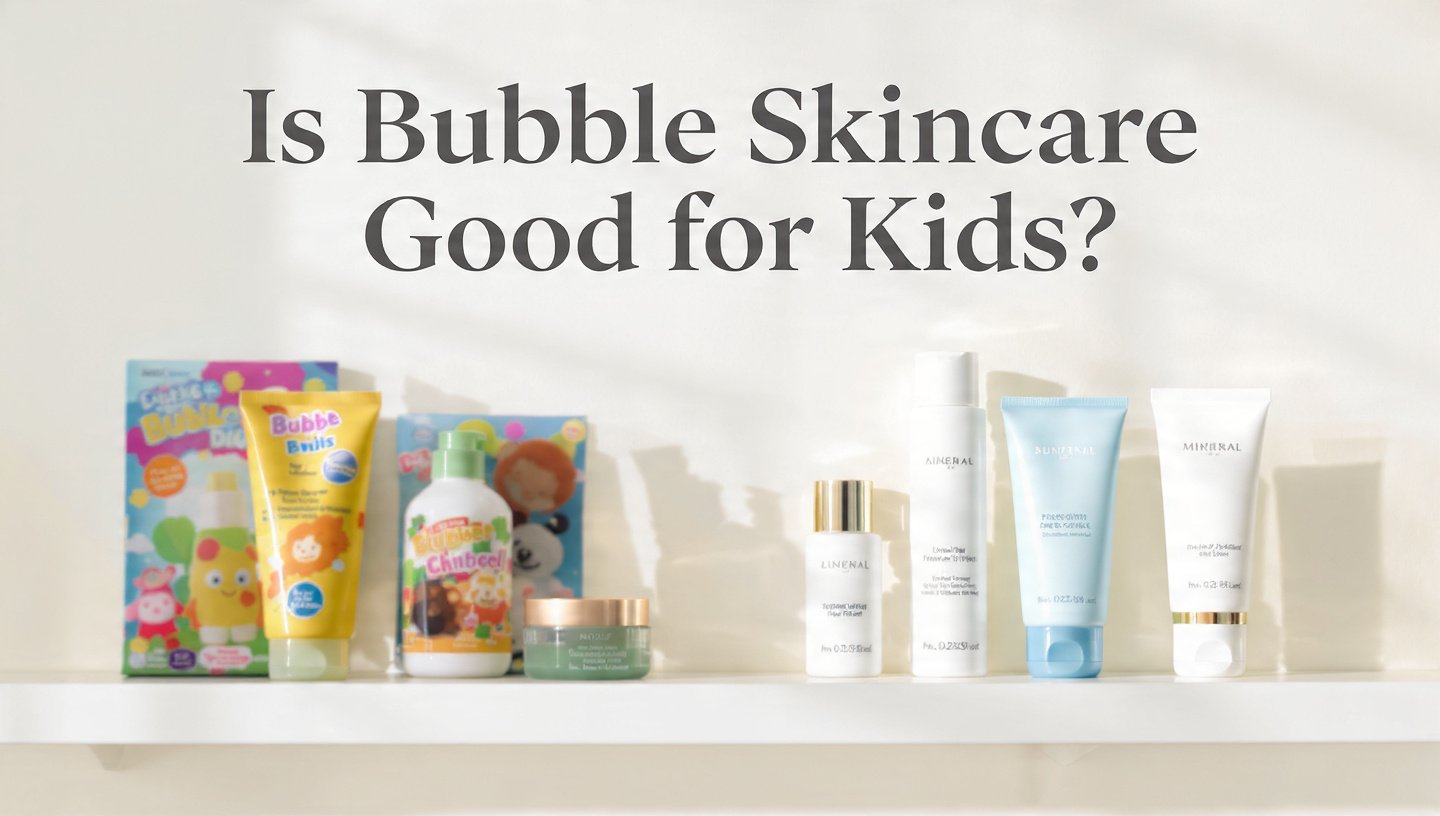
Is Bubble skincare good for kids? The brand is not inherently dangerous, but for most kids, especially those under 12, a simpler, fragrance-free dermatologist-recommended routine is a safer, more effective, and less expensive choice than its multi-step lineup. Bubble’s clever marketing and colorful packaging expertly target Gen Alpha, yet the scientific rationale behind many formulations does not always match the true biological needs of pediatric skin. The allure of a “big kid” routine is powerful, but real skin safety lies in minimal, evidence-based ingredients.
This topic matters because pediatric allergic contact dermatitis is on the rise. A landmark 2021 study in the Journal of the American Academy of Dermatology found that nearly half of children who underwent patch testing had at least one positive allergic reaction, most frequently to ingredients commonly found in personal care products. Fragrance, certain preservatives, and even gentle-seeming botanical extracts are among the top offenders. A product being “clean” or “vegan” at the marketing level does not equal hypoallergenic at the clinical level.
This article provides a rigorous, science-first analysis of Bubble Skincare for different kid age groups. We will dissect the ingredient lists of their hero products, separate the brand’s philosophy from biological fact, and walk you through the pediatric skin physiology that should guide every product decision. Most importantly, you will get a practical framework for building a truly safe, effective routine for your child and a clear script for navigating the social pressure of tween skincare trends. By the end, you will have a clear verdict grounded in dermatological evidence, not TikTok hype.
is bubble skincare good for kids
Bubble skincare is most appropriate as a fun, entry-level brand for older teens, but it is not necessary or particularly well-formulated for the physiological needs of a child’s skin. The brand’s core value proposition is about feeling included in skincare culture and enjoying a sensorial experience, not delivering targeted dermatological treatment for developing skin. This distinction is critical. Bubble is not harmful in the way an aggressive adult acne system would be, but it introduces risk where minimalism is the dermatological gold standard.
Most parents land on this question because their 9- or 10-year-old is suddenly insisting on a cleanser, a toner, a moisturizer, and a serum. The child’s desire stems from social media and peer influence. The parent’s hesitation, however, is rooted in an instinct to protect. That instinct is scientifically sound. Pre-pubertal skin functions optimally with just three things: a gentle cleanse, a basic moisturizer when dry, and consistent sun protection. Adding layers of humectants, botanical extracts, and film-formers from a multi-step system offers no proven benefit and introduces potential allergens to a developing immune system.
According to the American Academy of Dermatology, a skincare routine for children should focus on cleansing and sun protection, and should be free of common irritants, including fragrance. The AAD’s stance is clear: simplicity is the foundation of pediatric skin health. Bubble, by design, complicates the routine. It packages what could be one simple moisturizer into a four-step “ritual,” a concept that is brilliant for driving product sales but directly contradicts what we know about minimizing skin sensitization risk in the young.
Key Takeaway: A child’s skin needs a simple, protective routine. Bubble’s multi-step approach complicates this and introduces more ingredients, and therefore more risk of irritation, with no dermatological benefit for a young, healthy skin barrier.
what age is bubble skincare actually for
The company states its products are for all ages, but a cosmetic chemist or a dermatologist reading the ingredient lists would likely conclude they are best suited for individuals aged 13 and older who have started experiencing pubertal skin changes. The brand’s marketing features models who look squarely in the Gen Alpha demographic, creating a powerful “made for me” signal for 8-to-12-year-olds. This creates a significant disconnect between the marketed target audience and the formulation logic.
Bubble’s product line includes active ingredients like salicylic acid and niacinamide. While niacinamide at low concentrations is benign, salicylic acid is a beta-hydroxy acid designed to exfoliate inside oily pores. A 9-year-old’s skin, which is largely devoid of the sebaceous gland activity that creates oily skin and clogged pores, simply has no biological need for this function. Using a BHA on non-acne-prone skin disrupts the barrier and causes dryness, peeling, and barrier compromise without solving a problem that exists. It is a proactive irritation.
Think of it like buying a powerful detergent for laundry that is not dirty. The act of washing with strong chemicals could fade the fabric and wear down the fibers without ever achieving a real cleaning goal. The best age to introduce Bubble products aligns with the onset of common teen skin concerns, which is typically between 12 and 14 for girls and a bit later for boys. Before this point, a child’s skin barrier is at its peak performance, and the goal is preservation, not intervention.
understanding the science of developing tween skin
Tween skin, roughly from ages 8 to 12, is not just a younger version of adult skin. It is structurally, immunologically, and functionally distinct. The stratum corneum, the outermost protective layer, is thinner and has a more rapid cell turnover rate than adult skin. This makes it exceptionally smooth and resilient to visible damage like fine lines, but it also makes it more permeable to chemicals and more prone to transepidermal water loss (TEWL). This high-functioning but delicate equilibrium is easy to disrupt.
A child’s skin immune system is still in training. The microenvironment of Langerhans cells in the epidermis is highly reactive as it learns to distinguish between harmless and harmful compounds. Exposing this developing system to a high number of foreign antigens, through complex botanical extracts, essential oils, and synthetic fragrance, increases the likelihood of developing a lifelong allergic contact dermatitis. You are not just avoiding a rash today. You are potentially preventing a chronic, permanent skin allergy that will make countless products and environments reactive for decades.
The sebaceous glands are largely dormant until the hormonal surge of adrenarche and then puberty. This means the skin’s lipid mantle is primarily composed of epidermal lipids like ceramides, cholesterol, and free fatty acids, not the squalene and wax esters produced by sebum. Using products designed to strip or “balance” oil on skin that is not producing excess oil only depletes these precious structural lipids. Once the mortar between the skin cells is dissolved, the barrier crumbles, leading to a tight, stinging sensation and rebound reactivity. Pre-pubertal skincare must be about supporting this barrier, not stripping it.
Key Takeaway: Tween skin is a high-performance, low-maintenance organ. It thrives on a “do less” approach that protects the barrier and avoids overstimulating the developing skin immune system.
the marketing claims vs. the clinical reality of bubble skincare
Bubble’s marketing heavily leans on terms like “dermatologist-tested,” “vegan,” “clean,” and “plant-based,” all of which sound incredibly reassuring to a parent. The clinical reality is that these terms have no standard scientific or regulatory meaning that guarantees safety for pediatric skin. “Dermatologist-tested” means a dermatologist was present at some point during product development. It provides zero information about the scope of that testing, the number of subjects, their ages, or the duration of the study. It is a cosmetic claim, not a clinical outcome.
“Clean” and “vegan” are philosophical marketing categories, not safety standards. Poison ivy is both vegan and plant-based. A “clean” preservative system can still be a potent allergen, as we will see with Bubble’s choice of preservatives. The brand’s “Free From” lists, which exclude parabens and sulfates, implicitly demonize ingredients that have decades of safety data. Sodium Lauryl Sulfate (SLS) can be harsh, but other sulfates are gentle. Parabens have a long, well-documented history of low allergenicity. The brand replaces them with alternatives like Phenoxyethanol, which, while effective, is a known contact allergen at concentrations above 1% and is restricted in the European Union for use in products for children under three. This trade-off is invisible on the front of the box.
The packaging and aspirational branding are the most powerful “active ingredient.” The colorful, toyetic design promises fun and belonging. The clinical reality is that for a kid with true sensitive skin or subclinical eczema, a fragrance-laden, multi-ingredient regimen is a setup for a barrier disaster. The clinical reality parents must weigh is simple: Is the social value of the brand worth the potential dermatological cost? For most pre-teens with healthy, normal skin, the answer leans toward no, given the availability of safer alternatives.
is bubble skincare good for 9 year olds
For a 9-year-old with normal skin, Bubble skincare is not the best or safest choice, and it is clinically unnecessary. A 9-year-old’s skin is at its lifetime peak of smoothness and collagen density. They need a sunscreen, a gentle cleanser to remove it at night, and a simple moisturizer only if their skin is dry. Every additional product, from toners to serums, adds a layer of chemical exposure without addressing a single biological need. The Bubble routine, marketed in collectible sets, encourages a level of product consumption that is at odds with skin physiology.
The risk profile is disproportionately high at this age. A 9-year-old’s skin surface area-to-body volume ratio is larger than an adult’s, leading to a higher systemic absorption dose for any chemical applied topically. If a Bubble moisturizer contains a potent preservative like Phenoxyethanol, a 9-year-old absorbs more of it relative to their body weight. This concept, known as dose-per-body-weight toxicity, is why pediatric care with topical products requires an extra layer of caution. A product that is a “safe” choice for a 45-year-old is a more concentrated chemical exposure for a 60-pound child.
Furthermore, starting a complex routine at age 9 normalizes the idea that a “good” routine must be complicated. This sets a behavioral pattern. The child learns that taking care of their skin means buying five products in cute bottles, rather than learning the foundational habit of consistent sun protection. The best skincare “gift” for a 9-year-old is the knowledge that their skin is already powerful and beautiful, and their job is simply to protect it from the sun and keep it clean in the gentlest way possible.
Key Takeaway: At 9, the only routine a child needs is sunscreen in the morning and a gentle, fragrance-free cleanser at night. Anything else is pure marketing, and some products could pose an unnecessary chemical burden.
is bubble skincare good for 12 year olds
For a 12-year-old just beginning to see hormonal skin changes, Bubble skincare is still a mixed bag, but certain products may have a more logical, if still imperfect, place. At 12, the first signs of puberty often appear: an oily T-zone, a few blackheads on the nose, and maybe one or two inflamed pimples. This is when a targeted, active ingredient becomes potentially useful. The problem is that Bubble offers a sledgehammer when most 12-year-olds need a scalpel. Their acne starter kit promotes a routine of harsh mechanical exfoliation and astringents, which is reminiscent of outdated acne advice.
The key for a 12-year-old is to address the specific concern without disrupting the entire face. If excess oil and blackheads are the sole issue, a gentle 2% salicylic acid cleanser used only on the nose and chin a few times a week is a far better starting point than Bubble’s exfoliating serum, which may be applied indiscriminately over the entire face. The serum format encourages overuse, and applying an acid to the cheeks of a child who only has an oily nose is a guaranteed recipe for dry, tight, and irritated skin on the cheeks. Spot-treating the problem is the goal.
The moisturizer choice becomes crucial. A 12-year-old with a newly oily T-zone might think they need an oil-free, mattifying moisturizer. What they actually need is a lightweight, non-comedogenic, fragrance-free moisturizer that supports the skin barrier with ingredients like niacinamide and ceramides. Bubble’s Level Up Balancing Moisturizer, which contains niacinamide and is oil-free, seems like a perfect fit. However, its formula also includes a range of fruit extracts and mica for a “glow” effect, adding potential irritants that provide no therapeutic benefit. A parent should evaluate this product not by its promise of “balancing,” but against a simpler, more dematologically inert lotion containing ceramides and hyaluronic acid.
a detailed ingredient analysis of bubble’s hero products
To move from generalities to specifics, let’s analyze the INCI list of one of Bubble’s most popular and clinically relevant products: the Bubble Come Clean Detoxifying Clay Mask. The marketing claims it “draws out impurities and excess oil” with kaolin clay, which is a legitimate, non-irritating function. However, a deeper look at the complete formulation reveals a high-risk profile for a young user. The formula is a complex cocktail that makes the clay redundant.
Come Clean Detoxifying Clay Mask Ingredient Breakdown:
| Ingredient (INCI Name) | Function | Risk Profile for Pediatric Skin |
|---|---|---|
| Water (Aqua) | Solvent | Safe. |
| Kaolin | Absorbent, Clay | Safe, effectively absorbs excess sebum. |
| Bentonite | Absorbent, Clay | Safe, similar to Kaolin. |
| Salicylic Acid | Exfoliant (BHA) | Unnecessary risk for any child without active acne. Breaks down barrier lipids. |
| Melaleuca Alternifolia (Tea Tree) Leaf Oil | Essential Oil | High risk. A documented, common contact allergen. Provides no unique benefit over a non-allergenic alternative. |
| Citrus Limon (Lemon) Fruit Extract | Botanical Extract | High risk. Contains phototoxic compounds and fragrant allergens. |
| Phenoxyethanol | Preservative | Moderate risk. A known allergen, with an EU restriction for children under 3 due to systemic absorption concerns. |
| Fragrance (Parfum) | Fragrance | Highest risk. The single leading cause of cosmetic allergic contact dermatitis. |
This single product contains clay, an exfoliating acid, a known allergenic essential oil, a phototoxic fruit extract, and synthetic fragrance. This is not a “detox” mask for delicate skin. It is a sensory overload and an allergy risk bundled into a trendy green jar. For an adult with resilient, non-reactive skin, this may be a fun occasional treat. For a pre-teen, the risk-to-benefit ratio is unacceptable. The potential for a severe allergic reaction, even on the first use if the immune system has been pre-sensitized by another product, outweighs any cosmetic benefit of using clay.
common irritants in “kid-safe” skincare
The “kid-safe” label on many trendy Gen Alpha skincare products is often a masterclass in misleading marketing. Parents often assume it means the product is free of the most common irritants. In reality, the term is unregulated. Companies use it while formulating with some of the most documented irritants in dermatology. Knowing these by name helps you see through the label claims. They fall into predictable categories that are easy to spot once you know what you are looking for.
The first category is surfactant systems. Sodium Lauryl Sulfate (SLS) is the classic harsh detergent, and many “clean” brands avoid it. They replace it with Sodium C14-16 Olefin Sulfonate, which is just as drying and disruptive to the skin barrier’s lipid structure. A gentle, proper alternative is Sodium Cocoyl Isethionate or Decyl Glucoside. The second category is preservatives. Parabens are swapped for Methylisothiazolinone (MI) or a high concentration of Phenoxyethanol, both of which are much more common contact allergens. The “paraben-free” claim is often a red flag for a more allergenic preservative system. A safer system relies on propanediol, ethylhexylglycerin, and low concentrations of organic acids.
The most pervasive and harmful category, however, is the fragrance block. This is not just “Fragrance (Parfum).” It is a complex, proprietary mixture of up to hundreds of undisclosed chemicals. The EU requires the labeling of 26 specific fragrance allergens, but in the U.S., “fragrance” can hide nearly anything. When you see a product that smells strongly of fruit or flowers and is labeled for kids, you can assume it contains several of these undisclosed allergens. A child’s skin does not need to smell like a watermelon smoothie to be clean. It just needs to be clean. Prioritize products that explicitly state “100% fragrance-free” and have a short ingredient list free of botanical extracts with strong scents.
Key Takeaway: “Kid-safe” is an unregulated marketing term. True safety is found on the back of the bottle by checking for harsh surfactants, allergenic preservatives, and the presence of the word “fragrance.”
the fragrance and essential oil problem in pediatric skincare
Fragrance is the single most significant and scientifically indefensible irritant in children’s skincare. The bubble-gum scent of a Bubble moisturizer is the number one reason a pediatric dermatologist would advise against it. It has no functional benefit for the skin. Its only job is to make the product more sensorially appealing and to create a subconscious link between the scent and the brand, a strategy that builds lifelong customers out of young children. This trade-off of consumer loyalty for an increased risk of skin allergy is a core ethical tension in the children’s skincare market.
The physiological mechanism is well understood. Fragrance compounds are haptens, which are small molecules that penetrate the skin and bind to a skin protein. This hapten-protein complex is then recognized by the developing immune system’s dendritic cells as a foreign invader, triggering an immune response. With repeated exposure, the body creates memory T-cells specific to that fragrance molecule. From that moment on, every subsequent exposure causes a full-blown, itchy, red, weeping allergic contact dermatitis. This condition is permanent. There is no desensitization therapy for it.
This is not a theoretical risk. The “fragrance mix” used in dermatological patch testing is one of the most frequently positive results in children. A child who develops a fragrance allergy will not just be unable to use their Bubble moisturizer. They may react to perfume, scented laundry detergent, air fresheners in public spaces, and even fragrant botanicals in nature. The lifetime cost of this sensitization, in terms of comfort and product avoidance, is immense. The temporary pleasure of a scented product is a poor trade-off for a permanent immunological scar. A product that smells like nothing is doing its job perfectly.
what a truly age-appropriate skincare routine looks like
A truly age-appropriate routine for a child is boring, affordable, and functional. It is the direct opposite of a viral beauty shelf display. The guiding principle is preservation, not correction. The goal of the routine is to protect the skin’s foundational barrier from external aggressors, primarily UV radiation and environmental pollution, and to gently cleanse at night. There is no “glow” to chase because a child’s skin already has a perfect, intrinsic glow from rapid cellular turnover and abundant dermal collagen.
The products in this routine should be classified by their regulatory status as cosmetics, not as quasi-drugs or treatments. A gentle, non-foaming wash-off cleanser with a pH of 5.5 to 6 removes sunscreen and dirt without stripping lipids. A basic, fragrance-free moisturizer with humectants like glycerin and sodium hyaluronate, and a few skin-identical emollients, replaces any lost moisture. The most essential product is a dedicated broad-spectrum sunscreen with an SPF of 30 or higher. The sunscreen should be water-resistant and, if possible, rely on mineral filters like zinc oxide and titanium dioxide, which sit on top of the skin and reflect light rather than absorbing it chemically.
This routine teaches a powerful, lifelong lesson: skincare is a health behavior, not a consumer behavior. It decouples skin health from product accumulation. A child who grows up understanding that a $15 fragrance-free lotion and a $15 sunscreen are the ultimate tools for healthy skin is a child who is emotionally and intellectually immune to the explosive marketing of complex, overpriced routines later in life.
a simple 3-step dermatologist-approved skincare routine for kids
Building this routine is straightforward and prioritizes product elegance and minimal ingredient lists. Here is a step-by-step, evidence-based protocol for a child or tween, created through the lens of a pediatric dermatologist’s guidelines.
Step 1: Morning Sun Protection
- Product Category: Broad-spectrum mineral sunscreen, SPF 30+.
- Key Ingredients: Zinc Oxide (8-20%), Titanium Dioxide.
- Application: Apply a nickel-sized amount to the face and more for the neck and ears every single morning, 365 days a year. This is the single most important step for lifelong skin health. Make it as automatic as brushing teeth.
- What to Avoid: Chemical sunscreens in spray form due to inhalation risk and uneven application. Avoid fragrant sunscreens.
Step 2: Evening Gentle Cleanse
- Product Category: Non-foaming, fragrance-free cream or lotion cleanser.
- Key INCI Ingredients: Look for Decyl Glucoside, Cocamidopropyl Betaine (in a properly formulated, low-irritation product), Glycerin.
- The “One-Minute Rule”: Massage the cleanser onto dry or damp skin for 30 to 60 seconds. This dissolves sunscreen and grime effectively without the need for harsh sulfates. Rinse with lukewarm, never hot, water.
- What to Avoid: Anything that foams into a big lather. High-foam equals high surfactant concentration and high potential for barrier disruption.
Step 3: Evening Moisturize (As-Needed Basis)
- Product Category: Lightweight, fragrance-free facial lotion.
- Key INCI Ingredients: Glycerin, Sodium Hyaluronate, Ceramide NP, Ceramide AP, Squalane, Dimethicone (a safe, non-comedogenic skin protectant).
- Application: Apply a pea-sized amount to damp skin right after cleansing. If the skin is not dry, skip this step. Over-moisturizing a non-dry face can lead to a “lazy” skin barrier that slows its own natural moisturizing factor (NMF) production.
- What to Avoid: Jars of heavy, occlusive balms on an acne-prone T-zone. Look for a tube or pump bottle to keep the formula stable and free from bacterial contamination.
Key Takeaway: A perfect kid’s skincare routine takes two minutes, costs a fraction of a trendy routine, and is built on three products with no sensory gimmicks. It is 100% function, zero fluff.
how to evaluate a skincare product for your child a parent’s checklist
You do not need a chemistry degree to become a powerful ingredient detective for your child. A systematic approach turns a confusing label into a clear yes or no decision. This checklist is your five-second scan guide. If a product triggers any of the “Red Flag” criteria, it should go back on the shelf, regardless of how popular it is on social media.
Parent’s Product Evaluation Checklist:
| Checkpoint | Red Flag (Put it Back) | Green Flag (Safe to Proceed) |
|---|---|---|
| 1. The Fragrance Test | The word “Fragrance (Parfum)” is on the INCI list. Also a red flag: “limonene,” “linalool,” “eugenol,” “citronellol,” or any essential oil. | The label explicitly states “Fragrance-Free.” The product has no scent, or a faint chemical scent from raw ingredients that disappears quickly. |
| 2. The Function Test | The product promises to “exfoliate,” “detox,” “brighten,” “glow,” or “tighten pores.” These are functions a child’s skin does not need. | The product promises to “cleanse,” “moisturize,” or “protect from sun.” These are the only three functions relevant to pediatric skin. |
| 3. The Ingredient Count | The INCI list is a long paragraph with over 30 ingredients, especially if many are fruit extracts, oils, or plant names. | The ingredient list is short and dominated by a few recognizable emollients, humectants, and a simple preservative system. |
| 4. The Critical Exposures | The product contains an active ingredient like Salicylic Acid, Glycolic Acid, or Retinol. These are reserved for specific, diagnosed dermatological conditions in teens. | The product is a cosmetic, not a treatment. It contains barrier support ingredients like Glycerin, Ceramides, or Hyaluronic Acid. |
This checklist empowers you to trust the chemistry over the commercial. It neutralizes the power of a cute package and places the decision-making power back where it belongs: on the scientific evidence of safety and biological necessity.
product comparison bubble routine vs. a dermatologist’s basic routine
A direct, side-by-side comparison makes the difference impossible to ignore. On one side is a typical Bubble “starter” routine. On the other is a dermatologist’s gold standard. We evaluate them on safety, cost, and biological appropriateness for a 10-year-old with normal skin.
| Feature | Typical Bubble Starter Routine | Dermatologist’s Basic Routine |
|---|---|---|
| Steps & Products | 4 steps: Gel Cleanser, “Balancing” Toner (with acids/botanicals), Niacinamide Moisturizer (with fragrance), and weekly Clay Mask. | 2-3 steps: Gentle Cream Cleanser, Mineral Sunscreen SPF 30+, and a Fragrance-Free Basic Lotion (as needed). |
| Ingredient Risk | High. Contains multiple fragrance allergens, botanical extracts, BHA, and a complex preservative system. | Low. A short list of skin-identical ingredients, no fragrance, mineral sunscreen filters. Designed for zero sensitization. |
| Approximate Cost | $60 to $75 for the full routine. | $30 to $45 for high-quality, drugstore dermatological brands. |
| Biological Match | Poor. Treats non-oily, non-acne-prone skin as if it’s problematic and in need of “balancing” and exfoliation. | Excellent. Preserves the existing healthy barrier and provides the single needed function: UV protection. |
| Educational Value | Teaches that skincare is about buying multiple, fragrant, fun products and following a complex ritual. | Teaches that skincare is a simple, affordable health habit of protection and hygiene. |
The comparison is stark. The Bubble routine costs more, carries a dramatically higher risk of skin sensitization, and is a mismatch for the skin biology of a typical pre-teen. The dermatologist’s routine is less expensive, astronomically safer, and teaches a sustainable health behavior. If the social pressure for a “skincare shelf” is intense, a parent can purchase one empty, decorative skincare fridge and fill it with the boring, safe, dermatologist-approved products.
how to talk to your tween about skincare marketing
The conversation with your tween is the most critical intervention you can make. Banning a brand outright can backfire, making it a forbidden fruit. Instead, your goal is to equip them with critical thinking tools. You want to transform them from a passive target of marketing into an active, skeptical evaluator of claims. This is a gift that protects them far beyond skincare.
Start by validating their desire. Say, “I get why you want Bubble. The packaging is so cool, and everyone has it. They are absolute geniuses at making it look fun.” This makes you an ally, not an adversary. Then, pivot to science. Show them the label. “Let’s be skin scientists together. See this word, ‘Fragrance’? It’s the number one cause of skin allergies. Their marketing says it is gentle, but here is the ingredient that tells a different story.” This teaches them that the truth is on the back of the bottle, not the front.
Finally, frame the alternative as an upgrade, not a downgrade. “The truly cool routine is the one dermatologists use on their own skin to keep it working perfectly. A boring-looking tube of a ceramide lotion is a secret pro-level tool that perfume brands don’t want you to know about.” Frame simplicity as sophistication. The goal is not to have them understand all the nuances but to shift their definition of “cool” from an aesthetic one to an efficacy-based one. You are teaching them to trust in science over hype.
Key Takeaway: Don’t just say no. Teach your tween to read a product label like a marketing lie-detector. The skill of spotting “fragrance” on an INCI list is a superpower that will serve them for life.
when a simple routine is not enough signs your child may need a dermatologist
A simple routine of cleanser, moisturizer, and sunscreen is sufficient for the vast majority of kids. However, there are clear, observable signs that indicate a skin condition is present that requires professional medical intervention, not a different product from Sephora. Knowing this line prevents you from using trendy skincare to solve medical problems, a strategy that will always fail and often makes things worse.
The first sign is true, persistent acne. A few blackheads on the nose are normal. But the presence of inflamed, red, painful bumps (papules and pustules) that last for weeks on the cheeks, forehead, or chin is not a cosmetic issue to be fixed with a salicylic acid serum. This is acne vulgaris, a medical condition, and early, effective treatment by a board-certified dermatologist can prevent permanent scarring. Similarly, a patch of dry, red, itchy skin, especially in the inner elbow or behind the knees, is highly suggestive of eczema (atopic dermatitis). Treating this with a fragranced, botanical-rich lotion will trigger a painful flare.
Other signs include a rash that doesn’t fade in a day, hives, or any product application that leads to immediate burning, stinging, or a delayed itchy rash. These are hallmarks of allergic or irritant contact dermatitis. At this point, the skincare detective work should stop, and a board-certified pediatric dermatologist should take over. They can perform a patch test to identify the exact chemical responsible for the allergy, a diagnostic tool that no amount of label reading can replace. Bring the suspect product to the appointment so the doctor can examine the full INCI list.
the final safety verdict on bubble skincare for kids
The final safety verdict on Bubble Skincare is that it is a masterfully marketed brand whose products present an unnecessarily high risk of skin sensitization for children under 13, with minimal to no dermatological benefit compared to a simple, fragrance-free routine. The brand’s safety is not in its chemical formulations but in the fact that for many children with truly non-reactive, resilient skin, the exposure will not cause an immediate, visible problem. That absence of an acute reaction is often confused with evidence of safety.
However, the silent, invisible risk is the immunological sensitization that can occur with repeated, low-dose exposure to its complex fragrance and botanical cocktails. A child who uses Bubble for two years without a problem might suddenly develop an explosive allergic reaction at age 13, not just to Bubble, but to a vast universe of fragranced products. This delayed consequence is a well-understood phenomenon in dermatology. The brand is not a poison. It is a risk that is entirely avoidable. It is a lifestyle brand built on the scaffolding of skin health, and it brilliantly blurs the line between the two.
The choice for parents is not about demonizing a single company. It is about clearly distinguishing a health practice from a consumer trend. Protecting your child’s skin in 2026 means understanding that its biological needs are simple, its immune system is learning, and the most sophisticated skincare choice is often the least complicated one on the shelf. The most loving act is teaching them that a sunscreen is their most powerful serum, and a moisturizer does not need to smell like candy to work brilliantly.
Frequently Asked Questions About Bubble Skincare
Is Bubble Skincare actually good for sensitive skin?
No, most Bubble products are a poor choice for sensitive or reactive skin.
The brand’s widespread use of fragrance, essential oils, and complex botanical extracts is a direct trigger for sensitive skin flares and allergic contact dermatitis.
A 2021 study in the Journal of the American Academy of Dermatology confirmed fragrance as a top cause of allergic reactions in children.
What is the best Bubble Skincare product for a 10-year-old?
None of them are clinically ideal, but the least problematic product is likely a basic, fragrance-free cleanser from the line.
The core issue is that a 10-year-old has no biological need for a complex routine, regardless of the brand.
A gentle, non-foaming cleanser from a dermatologist-recommended brand at the drugstore is a superior, safer, and less expensive choice.
Does Bubble Skincare contain any harmful ingredients?
It contains ingredients with a high potential for harm in pediatric populations, rather than being acutely toxic.
The primary offenders are added fragrance, essential oils like tea tree and citrus, and exfoliating acids like salicylic acid.
These ingredients are major triggers for skin barrier disruption, dryness, irritation, and lifelong allergic sensitization when used on young skin.
Is niacinamide safe for children?
Yes, niacinamide at low concentrations (2-5%) is generally well-tolerated and safe for children.
It is a non-irritating, anti-inflammatory form of vitamin B3 that can actually support the skin barrier.
The risk comes from using niacinamide in a formula that also contains a fragrance or other irritating extracts, which negates its calming benefits.
Can a 9-year-old use Bubble’s exfoliating serum?
A 9-year-old should not use any exfoliating serum, including Bubble’s.
A 9-year-old’s skin cell turnover is already rapid and efficient, and their sebaceous glands are not producing excess oil.
Introducing a chemical exfoliant like salicylic acid will only cause unnecessary dryness, irritation, and barrier damage without treating a condition that exists.
What is a simple alternative to Bubble Skincare for kids?
A simple, dermatologist-approved alternative is a 3-step routine using fragrance-free products from brands like CeraVe, Cetaphil, or Vanicream.
The routine consists of a gentle cream cleanser, a basic moisturizer (if needed), and a zinc oxide mineral sunscreen every morning.
This approach is backed by pediatric dermatological consensus, costs significantly less, and eliminates the risk of fragrance allergy.