Self-Care Activities for Kids: An Age-by-Age Guide for 2026
Self-care activities for kids are structured, developmentally appropriate practices that teach children how to recognize their emotional and physical needs and meet them in healthy, sustainable ways. These are not indulgences or screen-time breaks; they are skill-building rituals that wire a child’s nervous system for self-regulation, resilience, and body awareness over time. For parents searching for something deeper than a Pinterest list, this guide organizes self-care by developmental stage, connects it to the neuroscience of childhood stress, and addresses the specific intersection of self-care and pediatric skin health that no other resource currently covers.
The American Psychological Association’s 2023 Stress in America survey found that 67% of parents believe their children could benefit from more emotional coping skills, yet only 31% feel confident teaching them. That gap is not about a lack of activity ideas. It is about a lack of understanding: what self-care means for a developing brain, which activities match which developmental window, and how to build self-care into a family culture without it becoming another chore. This article bridges that gap with evidence, age-banded practical guidance, and the skin-health connection that matters for the one in five children living with atopic dermatitis.
You will learn the developmental science that determines what self-care looks like at each age, specific activities organized by emotional, physical, and mindfulness domains, how to respond when a child rejects self-care, and how self-care practices directly support skin barrier health in children with eczema and other stress-reactive conditions. You will also get clear, actionable routines for building self-care habits that stick long past childhood.
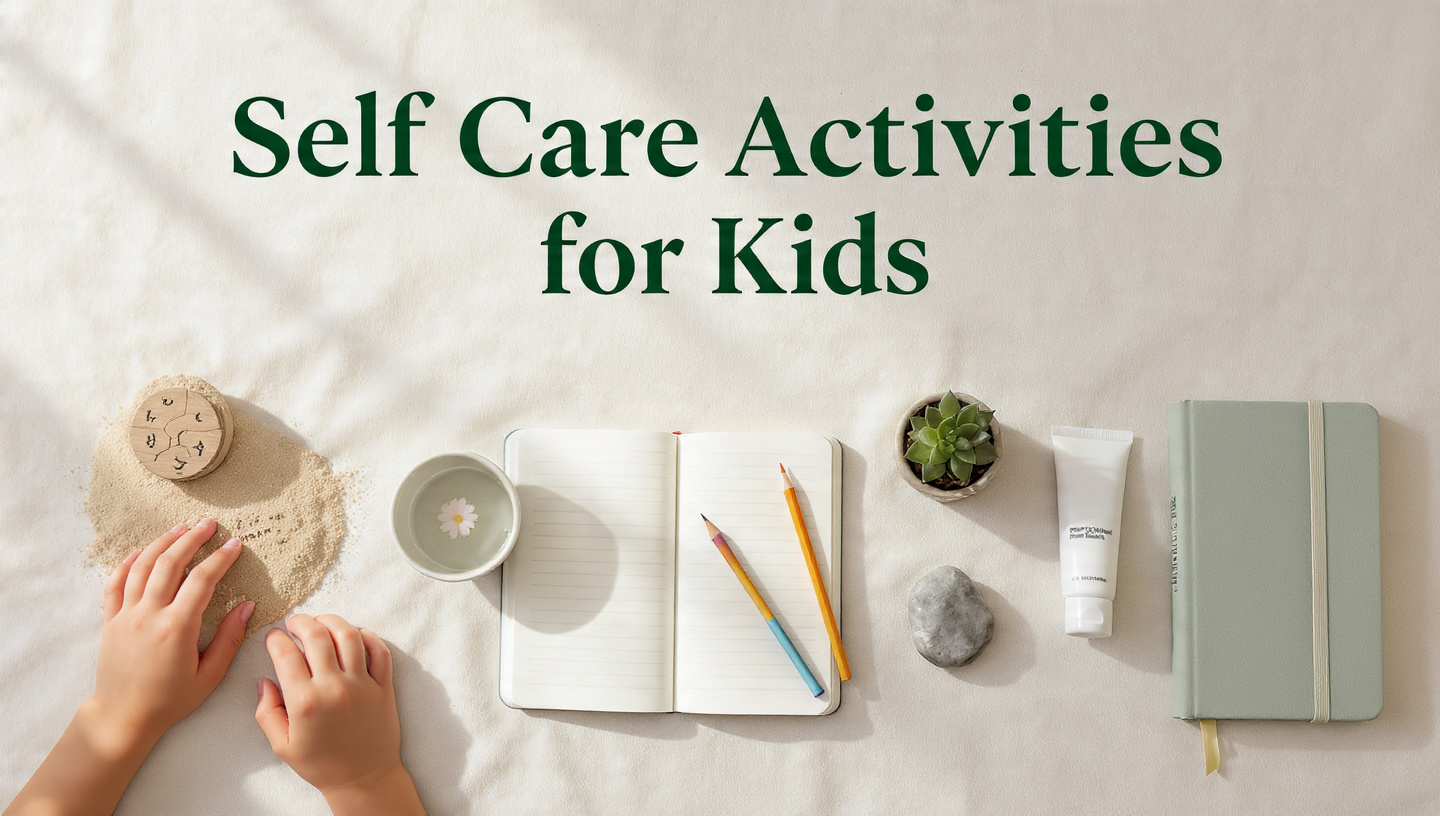
Self Care Activities for Kids
Self-care activities for kids are intentionally designed practices that help children develop interoception, the ability to sense and interpret internal body signals like hunger, fatigue, emotional arousal, and sensory overwhelm, and respond to those signals with effective, healthy behaviors. The term does not mean children managing their lives independently. It means children building the neural pathways for self-awareness and self-regulation through repeated, developmentally scaffolded experiences that a caring adult supports and co-regulates alongside them.
According to the American Academy of Pediatrics, self-regulation skills develop gradually across childhood, with major leaps occurring between ages 3 and 5 as the prefrontal cortex begins maturing, and again between ages 10 and 14 as synaptic pruning accelerates and emotional processing networks reorganize. Self-care activities serve as the practice field for these developing circuits. When a 5-year-old learns to notice tightness in their chest and name it as frustration before taking three deep breaths, they are not just calming down. They are myelinating the neural pathway that connects the insula, which processes internal body states, to the prefrontal cortex, which governs deliberate action. This pathway becomes faster and more automatic each time it fires.
The distinction between self-care and simple comfort is critical here. Comfort is external: a parent soothing a crying child, a snack given without the child recognizing hunger, a distraction offered during boredom. Self-care builds internal capacity: the child recognizing they are dysregulated, knowing what helps, and either self-initiating or asking for the right support. Moving from external regulation to internal self-care is the developmental work of childhood, and the specific activities that best support this shift change dramatically from preschool through adolescence.
Key Takeaway: Self-care for kids is not pampering; it is the repeated, adult-supported practice of noticing internal states and responding effectively, which builds the brain architecture for lifelong emotional and physical self-regulation.
What Is Self-Care for Children
Self-care for children is the developmentally calibrated process of learning to identify personal needs across physical, emotional, social, and sensory domains, and taking age-appropriate action to meet those needs within a safe, supportive relational context. The relational context is non-negotiable. Children do not self-regulate in isolation; they learn regulation through thousands of co-regulation experiences with attuned caregivers, then gradually internalize those patterns as their own capacities.
The American Psychological Association defines self-care broadly as the practice of taking an active role in protecting one’s own well-being and happiness, particularly during periods of stress. For children, this definition requires two modifications. First, the “active role” is scaffolded by adults, with the child’s autonomy increasing in step with their developmental readiness. Second, “well-being” for children includes developmental thriving, not just stress reduction. A self-care activity that supports a child’s development might look different from an adult’s self-care practice. A 7-year-old doing a 5-minute guided breathing exercise is building interoceptive awareness and emotional literacy while also calming their nervous system. The developmental layer is the point.
There is a growing body of research connecting childhood self-care skills to long-term health outcomes. A 2022 study in the Journal of the American Academy of Child and Adolescent Psychiatry found that children who demonstrated higher self-regulation capacities at age 8 had measurably lower inflammatory markers, including C-reactive protein levels, at age 18. This finding matters for skin health specifically. Systemic inflammation is a known trigger for atopic dermatitis flares, and stress-induced cortisol spikes directly compromise skin barrier function by reducing filaggrin production in keratinocytes. When children learn self-care as regulation, they are not just building emotional resilience. They are protecting the physiological systems that keep their skin barrier intact.
Key Takeaway: Children’s self-care is an adult-supported, gradual transfer of regulation capacity from external sources to internal skills, and the evidence links early self-regulation to lower inflammation and better physiological stress recovery in adolescence.
Child Development and Self-Care Skills
Child development dictates exactly which self-care skills are neurobiologically available at each stage, and expecting skills outside a child’s developmental window is the fastest route to frustration for both parent and child. The brain develops in a predictable sequence: sensory and motor regions mature first, emotional processing networks in the limbic system follow, and the prefrontal cortex, responsible for impulse control, planning, and deliberate self-regulation, does not fully mature until the mid-20s. This means a 4-year-old cannot “just calm down” the way an adult can. Their prefrontal cortex is not yet wired to override a fully activated amygdala.
Dr. Dan Siegel’s work on interpersonal neurobiology provides a useful framework here. He describes the “window of tolerance,” the zone of arousal within which a person can function effectively. When stress pushes a child outside this window, into hyperarousal (fight or flight) or hypoarousal (shutdown or numbing), the prefrontal cortex goes offline. Self-care activities cannot be taught or practiced in these moments. They must be taught and practiced when the child is within their window, then gently cued during moments of mild dysregulation, so the brain learns to associate the practice with returning to a regulated state. This sequence requires adult co-regulation at every step for young children, and only gradually becomes an independent skill in later childhood and adolescence.
The Centers for Disease Control and Prevention’s developmental milestone framework offers specific markers relevant to self-care readiness. By age 2, children can follow simple two-step instructions and begin naming emotions with help. By age 4, they can take turns in simple games and show emerging empathy for a crying friend. By age 6, they can sustain attention for 10 to 15 minutes and describe their feelings with some specificity. By age 10, they can set simple goals and reflect on their own behavior. Each of these milestones unlocks new self-care possibilities, and activities must align with the child’s current developmental stage rather than their chronological age if development is asynchronous.
Key Takeaway: Self-care skills are limited by brain development, not willpower; matching activities to a child’s neurodevelopmental stage, not their age alone, is the foundation of effective self-care teaching.
| Developmental Stage | Approximate Age | Self-Care Readiness Markers | Appropriate Activity Types |
|---|---|---|---|
| Early Childhood | 2 to 4 years | Follows 2-step instructions, names basic emotions, emerging empathy | Sensory play, co-regulation breathing, emotion naming games, parallel play |
| Preschool | 4 to 6 years | Follows 3-step sequences, describes feelings, understands simple cause-effect | Guided imagery, movement-based regulation, simple choices, feeling charts |
| Early Elementary | 6 to 9 years | Sustains 10 to 15 minute focus, reflects on behavior, collaborative play | Journaling with prompts, progressive muscle relaxation, social problem-solving |
| Late Elementary | 9 to 12 years | Goal-setting, perspective-taking, understands that thoughts affect feelings | Independent mindfulness, hobbies as self-care, friendship boundary skills |
| Early Adolescence | 12 to 15 years | Abstract thinking, identity exploration, metacognition emerging | Self-directed routines, creative expression, physical activity choice, digital boundaries |
Emotional Self-Care Activities for Kids
Emotional self-care activities for kids are structured practices that build emotional literacy, the ability to name feelings with precision, and emotional regulation, the capacity to manage the intensity and expression of those feelings without suppressing or being overwhelmed by them. These skills are not innate. They are learned through repeated, supported experiences of feeling something strongly, naming it, and choosing a response rather than reacting automatically.
The emotion scientists at the Yale Center for Emotional Intelligence, led by Dr. Marc Brackett, developed the RULER framework, which provides a useful backbone for emotional self-care activities. RULER stands for Recognizing emotions in oneself and others, Understanding the causes and consequences of emotions, Labeling emotions with nuanced vocabulary, Expressing emotions appropriately across contexts, and Regulating emotions effectively. Emotional self-care activities for children map directly onto these five skills. A 5-year-old who can distinguish between “frustrated” and “disappointed” has a more precise internal map than one who only knows “mad” and “sad,” and that precision directly improves regulation because the correct intervention depends on correctly identifying the internal state.
Specific activities change with age. For preschoolers, emotional self-care might involve using an emotion wheel with faces instead of words, playing “mirror the feeling” games where parent and child match facial expressions, or reading picture books where characters navigate feelings and naming them together. For elementary-aged children, activities expand to include drawing or writing about emotional experiences, creating a “calm-down corner” with sensory tools the child has helped choose, and practicing “I feel” statements in low-stakes situations before they are needed in high-conflict moments. Tweens benefit from mood-tracking journals, identifying their personal stress signature, or that specific body sensation that signals rising anxiety, and learning to articulate what kind of support they need rather than just stating they are upset.
A 2021 study in the Journal of the American Academy of Child and Adolescent Psychiatry demonstrated that children who received structured emotional literacy instruction showed measurable improvements in both self-reported emotional awareness and observed behavioral regulation within 12 weeks. The effects were strongest when emotional learning happened in context, during real emotional moments, rather than only in separate “feelings lessons.” This means the most powerful emotional self-care teaching happens when a parent pauses during a conflict, not after it, and says, “I can see you’re feeling something really big right now. Let’s figure out what it is together.”
Key Takeaway: Emotional self-care is built on emotional literacy, the ability to name feelings with precision, and the most effective teaching happens in real emotional moments with an attuned adult, not in calm moments of abstract instruction.
Physical Self-Care Activities for Children
Physical self-care activities for children are practices that build interoceptive awareness, the brain’s ability to sense and interpret signals from inside the body, alongside the motor skills, nutritional awareness, and sleep hygiene that form the foundation of lifelong physical health. Children are not born knowing when they are hungry versus thirsty, tired versus overstimulated, or achy from growth versus achy from illness. These distinctions are learned through thousands of small experiences where a caregiver helps them connect a body sensation to its meaning and an appropriate response.
Interoception research, particularly the work of Dr. Sarah Garfinkel and colleagues, has established that accurate interoceptive awareness correlates strongly with emotional regulation capacity. The same brain region, the insula, processes both internal body signals and emotional experience. When children learn to notice and interpret physical states accurately, they are simultaneously strengthening the neural substrate for emotional awareness. Physical self-care activities that build interoception include body scans adapted for children, where they notice and name sensations in different body parts without judgment, and “body check-in” rituals at transition points in the day, such as noticing how their stomach feels before and after eating or how their muscles feel after running versus after sitting still.
Movement is the other pillar of physical self-care for children, and the distinction between exercise and movement self-care matters. Exercise often carries performance pressure, rules, and external evaluation. Movement self-care is about joyful, autonomous physical expression. It includes unstructured outdoor play, dancing to music in the living room, stretching like an animal they choose, or going on a “sensory walk” where the goal is noticing sounds, textures, and smells rather than reaching a destination. The American Academy of Pediatrics recommends at least 60 minutes of moderate to vigorous physical activity daily for children ages 6 and older, but the self-care framing emphasizes how the movement feels to the child rather than whether it meets an external metric.
Sleep hygiene as self-care is a concept children can learn early. Teaching a child that their brain needs sleep to organize memories and that their skin repairs itself during deep sleep gives them a reason to value rest beyond “because I said so.” A 2023 study in Pediatric Dermatology found that sleep disturbance was both a consequence and a trigger of atopic dermatitis flares in children, creating a vicious cycle where itching disrupts sleep and sleep deprivation increases inflammatory cytokines that worsen itching. Framing a consistent bedtime routine as a physical self-care practice that helps their skin and their brain gives children ownership over a process that often becomes a battleground.
Key Takeaway: Physical self-care for children is rooted in interoception, the ability to read body signals accurately, and movement, nutrition, and sleep practices all become more effective when children understand the “why” behind them in age-appropriate terms.
Mindfulness Activities for Children
Mindfulness activities for children are developmentally adapted practices that teach non-judgmental present-moment awareness through movement, sensory experience, storytelling, and brief guided reflection, rather than the seated meditation that characterizes most adult mindfulness. The goal is not stillness. The goal is awareness of what is happening inside and outside the body right now, without needing to change or fix it.
The evidence base for pediatric mindfulness is substantial and growing. A 2020 meta-analysis published in the Journal of the American Academy of Child and Adolescent Psychiatry reviewed 33 randomized controlled trials and found that mindfulness interventions for children and adolescents produced moderate effect sizes for reducing anxiety and depression symptoms, with effects maintained at follow-up. The mechanisms identified include reduced amygdala reactivity to emotional stimuli, improved prefrontal cortex regulation of limbic responses, and increased heart rate variability, a marker of parasympathetic nervous system tone that indicates the body’s capacity to recover from stress quickly and efficiently.
For children under 6, mindfulness looks like paying attention to one sense at a time. A “mindful snack” involves looking at a raisin or a strawberry closely before tasting it slowly, noticing the texture, temperature, and flavor change as they chew. A “mindful walk” means stopping to listen for three different sounds or feel three different textures with their hands. These activities are brief, 2 to 4 minutes, and embedded in everyday moments rather than set apart as formal practice. They teach children that their attention is something they can direct deliberately, not just something that gets pulled around by whatever is loudest or brightest in their environment.
For children ages 6 to 10, mindfulness activities expand to include body scans adapted as “body adventure” stories where they tense and release different muscle groups, guided imagery where they imagine a calm, safe place in vivid sensory detail, and breathing exercises with concrete anchors. Belly breathing with a stuffed animal resting on their stomach gives them visual feedback: the animal rises on the inhale and sinks on the exhale. “Five-finger breathing,” where they trace each finger with the opposite hand’s index finger, inhaling up one side and exhaling down the other, gives them a portable tool they can use anywhere without drawing attention. For tweens, mindfulness can include brief sitting practice, 3 to 5 minutes of focused breathing, alongside mindful movement like yoga or walking meditation, and the explicit connection between mindfulness and emotional regulation can be discussed more directly.
Key Takeaway: Pediatric mindfulness is not about sitting still; it is developmentally adapted to children’s need for movement and sensory engagement, and the evidence supports measurable improvements in anxiety, emotional regulation, and physiological stress recovery within weeks of regular brief practice.
Self-Care Activities for Preschoolers
Self-care activities for preschoolers, typically ages 3 to 5, focus on sensory exploration, emotion naming with concrete visual support, and co-regulated calming routines that build the earliest neural pathways for self-awareness and emotional recovery. At this developmental stage, the prefrontal cortex is in a period of rapid growth but remains functionally immature. Children cannot reason their way out of a big emotion. They need physical, sensory, and relational pathways back to regulation.
Sensory play is the primary self-care language of the preschool brain. Water play, whether it is pouring, scooping, or simply running hands under a slow stream, engages the tactile and proprioceptive systems in ways that directly calm the autonomic nervous system. Kinetic sand, play dough, and finger painting offer similar regulatory benefits through tactile engagement combined with the rhythmic, repetitive movements that signal safety to the brainstem. These are not just “keeping them busy” activities. They are somatic regulation tools that help a dysregulated nervous system return to its window of tolerance. A 2022 study in Frontiers in Psychology demonstrated that rhythmic sensory activities reduced cortisol levels in preschool-aged children within 15 minutes of engagement.
Emotion naming at this age requires concrete, visual support. A simple feeling chart with four or five faces, happy, sad, angry, scared, and calm, that the child can point to gives them an access point to internal experience before they have the vocabulary to articulate it. Co-regulation at this stage involves the caregiver narrating what is happening: “I see your face is scrunched up and your hands are in fists. I wonder if you’re feeling angry right now. Let’s take three big breaths together and then we can figure out what you need.” The caregiver is lending their regulated nervous system to the child while also naming the internal state the child cannot yet name independently. Over dozens or hundreds of repetitions, the child internalizes this sequence: notice body sensation, connect it to an emotion name, use a calming strategy, and then problem-solve.
Physical self-care for preschoolers centers on building the awareness that their body sends signals that mean something. “What is your tummy telling you right now?” asked before meals and snacks. “Let’s check in with our bodies, do they feel wiggly and full of energy or heavy and tired?” asked in the afternoon. These simple check-ins, repeated daily, build the interoceptive foundation that all later self-care skills depend on. Without this foundation, a child cannot tell the difference between hungry, anxious, and tired, and every intervention will be a guess rather than a targeted response.
Key Takeaway: Preschool self-care is sensory and relational; water play, tactile engagement, visual emotion charts, and caregiver-narrated co-regulation build the neural foundation for all later self-regulation skills.
| Self-Care Domain | Preschool Activity | Developmental Mechanism | Adult Role |
|---|---|---|---|
| Emotional | Emotion face chart with mirror play | Connects facial expression to internal feeling state, builds emotion vocabulary | Narrate and name; validate without fixing |
| Sensory | Water play, kinetic sand, finger painting | Rhythmic tactile input calms autonomic nervous system, reduces cortisol | Provide materials and space; sit nearby as calm presence |
| Physical | Body check-in questions before meals and rest | Builds interoceptive awareness; connects body sensation to need | Ask, pause, suggest; do not answer for the child |
| Relational | Parallel play with attuned adult nearby | Co-regulation through presence; safety signaling through familiar adult proximity | Be present and regulated; follow child’s lead |
| Rest | Quiet time with books or audio stories, not necessarily sleep | Teaches rest as a valid activity; builds ability to shift from active to calm | Protect the time; model rest yourself |
Self-Care Ideas for Elementary School Kids
Self-care ideas for elementary school kids, approximately ages 6 to 10, expand to include independent practice of previously co-regulated skills, peer-based social self-care, and the introduction of simple reflective practices like journaling and gratitude that leverage the cognitive leaps of this developmental stage. Children in this age range can sustain attention longer, understand that thoughts and feelings are connected, and begin to take genuine pride in skills they have practiced and mastered. Self-care shifts from something done with a parent to something a parent supports them in doing more independently.
Journaling for this age group works best with structure and low pressure. A “high and low” journal where the child writes or draws one high point and one low point of their day takes less than five minutes and builds the habit of reflecting on emotional experience. A gratitude practice adapted for elementary students, naming three specific things they felt grateful for today, is supported by a growing body of research. A 2021 study in the Journal of School Psychology found that a 5-minute daily gratitude exercise improved self-reported well-being and reduced negative affect in 8- to 11-year-olds over a 4-week period. The specificity matters: “I’m grateful my friend Maya shared her snack with me” teaches the brain to scan for and encode positive experiences more effectively than a generic “I’m grateful for my friends.”
Physical self-care at this age involves more deliberate choice. Children can be invited to notice how different kinds of movement make their body feel and begin to develop preferences. A child who notices they feel calmer after climbing and swinging than after organized sports is learning to self-select regulation strategies based on internal feedback rather than external expectation. This is the beginning of authentic self-care, choosing what genuinely supports well-being rather than what others say should help. Sleep hygiene becomes more independent too. A consistent wind-down routine that the child helps design, dim lights 30 minutes before bed, a warm bath, reading in bed rather than screen time, gives them ownership over a practice that directly affects their mood, focus, and skin health the next day.
Social self-care emerges as a distinct category in elementary school. Learning to notice which friendships feel energizing and which feel draining, practicing saying no to play invitations when genuinely tired rather than forcing social engagement, and understanding that alone time can be a healthy choice rather than a sign something is wrong all represent social self-care competencies. Parents support this by normalizing the idea that social energy is finite and that choosing rest over a playdate sometimes is not rudeness; it is self-awareness. A child who learns at 8 that they can protect their energy without guilt carries that skill into adolescence and adulthood.
Key Takeaway: Elementary-aged self-care builds independence through structured reflection like journaling, deliberate physical activity choice based on internal feedback, and the emerging skill of social boundary-setting that protects emotional energy.
Self-Care Activities for Tweens
Self-care activities for tweens, typically ages 10 to 14, must address the unique neurobiological reality of early adolescence: a highly reactive emotional brain combined with a prefrontal cortex still years from full maturity, all happening in a social environment that demands conformity while the internal drive for identity exploration intensifies. Self-care at this stage is about building a personal toolkit of regulation strategies that a tween genuinely owns and wants to use, not strategies a parent imposes.
The Journal of the American Academy of Child and Adolescent Psychiatry published a 2023 review of emotion regulation development in adolescence that identified a critical shift during the tween years: children begin to understand that they can change their emotional state not just by changing their external situation but by changing their thinking or attention. This metacognitive leap opens up cognitive reappraisal as a self-care strategy. A tween who can notice they are catastrophizing about a friendship conflict and deliberately reframe it, “I am telling myself a story that everyone hates me, but the facts are that one friend was short with me today and that could mean a hundred things,” is practicing a sophisticated form of cognitive self-care that will serve them for life. Parents can model this out loud: verbalize their own reframing process during minor stressors so the tween sees how it works before trying it themselves.
Physical self-care for tweens intersects directly with skin health in ways that earlier developmental stages do not. Puberty brings hormonal shifts, increased sebum production, and for many tweens, the onset of acne. This is the developmental window where gentle skincare routines become a meaningful self-care practice rather than a chore. A tween who learns to wash their face with a fragrance-free, non-comedogenic cleanser, apply a lightweight moisturizer, and wear sunscreen daily is building a foundation that protects their skin barrier through the acne-prone adolescent years. The self-care framing matters here: skincare presented as punishment for having acne backfires; skincare presented as a practice of caring for the body they live in builds self-efficacy and skin health simultaneously.
Digital self-care is a category unique to this generation of tweens. Teaching tweens to notice how different types of screen time affect their mood and energy, comparing 30 minutes of social media scrolling with 30 minutes of a creative app or a video call with a friend, builds the interoceptive awareness they will need to make healthier digital choices independently. Screen time as self-care is also valid when it is intentional: a tween who uses a meditation app for 5 minutes before bed or watches a calming nature documentary to decompress after a hard day is using screens as a regulation tool rather than as passive consumption. The American Academy of Pediatrics recommends consistent limits on recreational screen time for adolescents but also acknowledges that not all screen time is functionally equivalent. The self-care distinction is about whether the screen activity leaves the tween feeling replenished or depleted.
Key Takeaway: Tween self-care leverages the metacognitive leap of early adolescence to introduce cognitive reappraisal, establishes skin-healthy routines before acne becomes a self-esteem battleground, and teaches digital discernment rather than blanket screen restriction.
| Self-Care Domain | Tween-Specific Practice | Developmental Mechanism | Parent Support Strategy |
|---|---|---|---|
| Emotional | Cognitive reframing out loud | Metacognition emerging; can observe and shift thoughts | Model your own reframing; validate feeling before offering shift |
| Physical | Gentle skincare routine initiation | Pubertal skin changes; self-efficacy through body care | Provide fragrance-free, non-comedogenic products; frame as self-care not correction |
| Digital | Screen type awareness and mood tracking | Building interoception around digital consumption | Ask curious questions; help notice patterns without judgment |
| Social | Friendship energy inventory | Discerning draining vs. energizing relationships | Normalize that some friendships are seasonal; validate their read on social dynamics |
| Creative | Self-directed creative expression (music, art, writing) | Identity exploration through chosen medium | Provide materials and privacy; do not evaluate the product |
| Rest | Autonomous bedtime routine with wind-down choices | Ownership over sleep as health practice | Support their routine choices; model your own wind-down |
How to Teach Kids Self-Care
Teaching kids self-care requires a deliberate sequence: model the practice visibly, do it together with the child as co-regulation, support the child doing it independently with your nearby presence, and gradually fade your direct involvement as their competence and confidence grow. This sequence mirrors the gradual release of responsibility model used in education and aligns with what developmental psychology knows about how children internalize any complex skill, through scaffolded practice with a more skilled partner over time.
The modeling step is the most frequently skipped and the most important. Children learn self-care primarily by watching the adults around them manage stress, rest, and emotional experience. A parent who verbally narrates their own self-care process gives the child a window into internal experience that would otherwise remain invisible. Saying out loud, “I’m feeling really frustrated right now because of a work problem. I’m going to take a five-minute walk outside to clear my head, and then I’ll be ready to help with homework,” teaches the child that frustration is nameable, that taking space is an acceptable regulation strategy, and that self-care helps restore the capacity to be present for others. This kind of modeling does not require perfect regulation. It requires honest, age-appropriate narration of imperfect regulation attempts.
The co-regulation phase involves doing self-care activities together with the explicit framing that this is a shared practice. A parent and child might do three deep breaths together before the school drop-off transition, or spend five minutes of quiet drawing side by side after a busy afternoon. The key is that the parent is genuinely participating, not supervising or directing. The child experiences the parent’s regulated nervous system while practicing their own regulation, and the shared attention creates safety. Dr. Bruce Perry’s Neurosequential Model emphasizes that regulation moves from external sources (the caregiver) to internal capacity over time, and this co-regulation phase is the bridge.
When a child begins to initiate self-care independently but still benefits from adult proximity, the parent’s role shifts to supportive presence. The child might retreat to their calm-down corner on their own but feel safer knowing the parent is in the next room. They might start their bedtime wind-down routine independently but appreciate a brief check-in. The parent at this stage resists the urge to praise excessively, which can shift the child’s motivation from internal to external, and instead offers quiet acknowledgment: “I noticed you took some deep breaths when you were getting frustrated with your brother. How did that feel for you?” The question directs the child’s attention back to their internal experience, which is where the real learning consolidates.
Key Takeaway: Teaching self-care follows a predictable sequence of model, do together, support independence, and fade support, with the parent’s honest, imperfect modeling being the most powerful and most frequently overlooked step.
Co-Regulation Activities for Parents and Kids
Co-regulation activities for parents and kids are shared practices where the adult’s regulated nervous system provides the scaffolding for the child’s developing regulation capacity through synchronous breathing, rhythmic movement, shared attention, and attuned emotional presence. These activities are not just “together time.” They are the biological mechanism through which children learn to move from stress states back to calm states, and every repetition strengthens the neural architecture for self-regulation.
Breathing together is the most direct form of co-regulation because the autonomic nervous system responds to the nervous systems around it through a process called neuroception, a term coined by Dr. Stephen Porges as part of his Polyvagal Theory. When a parent deliberately slows their breathing and the child matches that rhythm, even without explicit instruction, the child’s heart rate variability begins to shift toward the parent’s calmer pattern. A simple practice involves sitting back-to-back with the child and breathing slowly enough that they can feel the parent’s back expand on the inhale and contract on the exhale. No words are needed. The child’s body entrains to the parent’s rhythm through sensory feedback alone. This practice works with children as young as 3 and remains effective through adolescence.
Rhythmic movement co-regulation uses the same entrainment principle through a different sensory channel. Rocking in a rocking chair together, walking in matching rhythm while holding hands, or swinging side by side at the playground all create synchronous vestibular and proprioceptive input that helps regulate both nervous systems simultaneously. For children who resist direct emotional conversation, movement-based co-regulation often works better than talking because it bypasses the language-processing demands that can feel overwhelming when a child is already dysregulated. A parent can say, “Let’s just walk together for a few minutes,” and trust that the shared rhythm is doing the regulation work without the child needing to articulate what they are feeling.
Shared mindful attention, both parent and child focusing on the same sensory experience together, strengthens the relational connection while building the child’s attentional control. Watching clouds and describing shapes together, listening to a piece of music with eyes closed and sharing what each person noticed, or slowly eating a piece of fruit and comparing observations are all co-regulation activities disguised as simple presence. The shared attention signals safety to the child’s nervous system because throughout human evolution, shared attention with a calm caregiver meant there was no immediate threat. The deep breathing and the sensory focus are regulatory; the shared presence is relational; the combination is what makes co-regulation more powerful than either element alone.
Key Takeaway: Co-regulation uses synchronous breathing, rhythmic movement, and shared mindful attention to transfer regulation from the adult’s nervous system to the child’s through the biological mechanism of neuroception, and it works even when the child cannot or will not talk about their internal state.
Self-Care for Kids with Eczema
Self-care for kids with eczema addresses the unique intersection of physical skin management, emotional regulation around itching and discomfort, and the psychological toll of living with a visible, chronic skin condition during childhood. The National Eczema Association estimates that approximately 10% of children in the United States have atopic dermatitis, and for these children, self-care is not optional enrichment. It is an essential component of managing a condition where stress directly triggers flares and flares directly increase stress in a cycle that self-care practices can interrupt.
The stress-skin connection in pediatric eczema is well-documented and bidirectional. A 2023 study in Pediatric Dermatology demonstrated that children with moderate to severe atopic dermatitis showed significantly elevated salivary cortisol levels compared to healthy controls, and cortisol spikes preceded flare intensification by 24 to 48 hours. Cortisol disrupts the skin barrier through multiple pathways: it reduces filaggrin expression in keratinocytes, decreases ceramide production, and increases transepidermal water loss. When a child with eczema experiences stress, whether from school, social dynamics, or the distress of the itch itself, their skin barrier becomes measurably more permeable within hours. Self-care practices that reduce stress are therefore not just “nice to have” for these children; they are directly skin-protective.
The itching-self-care connection requires specific attention. Chronic itch is maddening for anyone but especially for children who lack the prefrontal development to inhibit the scratch impulse through willpower alone. Self-care practices that redirect sensory attention can be more effective than simply telling a child to stop scratching. A “sensory substitution” approach involves teaching the child to apply a cool compress, use a fragrance-free moisturizer with colloidal oatmeal, or engage in a tactile activity that occupies their hands when the itch urge arises. This reframes the experience from “I’m bad for scratching” to “My skin needs something right now, and I know what to do.” The self-efficacy gain is significant for children who often feel their body is out of their control.
The emotional self-care component for children with eczema includes explicit acknowledgment of the feelings that come with having a visible skin condition. Embarrassment about visible rashes, frustration with treatment routines, anxiety about flare timing during important events, and sadness about missing activities due to discomfort are all valid and nameable experiences. Parents can create space for these feelings without rushing to reassurance. A child who hears, “It’s really hard to have itchy skin when you’re trying to sleep, and it’s okay to feel frustrated about that,” learns that their emotional experience is acceptable even when their physical experience is painful. This emotional validation is a form of self-care modeling that protects against the shame that often accompanies chronic pediatric health conditions.
Key Takeaway: For children with eczema, self-care that reduces stress is directly skin-protective because cortisol compromises barrier function, and sensory substitution strategies combined with emotional validation address both the physical itch and the psychological toll of living with a visible chronic condition.
Stress and Pediatric Skin Conditions
Stress and pediatric skin conditions are connected through a well-documented biological pathway: psychological stress activates the hypothalamic-pituitary-adrenal (HPA) axis, triggering cortisol release, which in turn increases systemic inflammation, disrupts epidermal barrier function, and exacerbates inflammatory skin conditions including atopic dermatitis, acne, and psoriasis in genetically susceptible children. This connection, sometimes called the stress-skin axis or psychodermatology, is not metaphorical or psychosomatic. It is a measurable, physiological chain of events with clinical consequences.
The Journal of Investigative Dermatology published a landmark review in 2022 detailing the specific mechanisms by which psychological stress affects pediatric skin. Stress-induced cortisol increases the production of pro-inflammatory cytokines, including interleukin-4, interleukin-13, and thymic stromal lymphopoietin, all of which are directly implicated in atopic dermatitis pathogenesis. Simultaneously, cortisol downregulates the expression of filaggrin and loricrin, two structural proteins essential for maintaining the stratum corneum’s barrier integrity. The combined effect is a skin barrier that is both more inflamed and more permeable, exactly the conditions that trigger and sustain eczema flares. For children with acne, cortisol increases sebum production by stimulating sebaceous gland activity, creating the oily environment in which Cutibacterium acnes proliferates.
This mechanistic understanding has direct implications for self-care intervention. If stress degrades skin barrier function within hours, then stress-reduction practices are not a long-term wellness goal; they are an acute management strategy with near-immediate physiological relevance. A child with eczema who practices 5 minutes of paced breathing during a stressful school morning is not just calming their mind. They are reducing the cortisol surge that would otherwise begin compromising their skin barrier before lunch. The timeframe matters: cortisol’s effects on filaggrin expression begin within 30 to 60 minutes of a stressor, which means timely self-care interventions can meaningfully interrupt the stress-to-flare pathway if the child has been taught to recognize early stress signals and respond with a practiced regulation strategy.
The psychosocial dimension compounds the biological one. Children with visible skin conditions experience higher rates of bullying, social exclusion, and appearance-related teasing than their peers with healthy skin. This social stress triggers more cortisol, which worsens the skin condition, which increases social visibility, which increases social stress. Self-care for these children must address the psychological impact directly, not just the skin symptoms. Teaching a child to respond to teasing with a prepared, neutral statement that protects their dignity without escalating conflict is as much a skin self-care skill as applying moisturizer. The child who can say, “I have eczema. It’s not contagious. I don’t like it when people comment on my skin,” has a tool that reduces the stress load on their HPA axis and, by extension, on their skin barrier.
Key Takeaway: The stress-skin axis is a biological reality, not a metaphor; cortisol compromises pediatric skin barrier function within an hour of a stressor, making timely stress-reduction self-care an acute management strategy for children with inflammatory skin conditions, not merely a wellness practice.
| Stress Response Pathway | Effect on Pediatric Skin | Self-Care Intervention | Timeframe for Effect |
|---|---|---|---|
| Cortisol surge | Reduces filaggrin and loricrin expression in keratinocytes | Paced breathing, progressive muscle relaxation | Cortisol reduction begins within 5 to 15 minutes of practice |
| Pro-inflammatory cytokine release | Increases IL-4, IL-13, TSLP; triggers eczema flares | Mindfulness practice; reduces systemic inflammation markers over time | Measurable cytokine reduction within 4 to 8 weeks of regular practice |
| Increased sebum production | Creates environment for C. acnes proliferation; worsens acne | Stress management plus non-comedogenic skincare routine | Sebum reduction with consistent practice over 4 to 12 weeks |
| Impaired sleep from stress | Reduces skin repair during deep sleep; increases scratching | Wind-down routine, guided relaxation before bed | Sleep quality improvement within 1 to 2 weeks of consistent routine |
| Social stress from visible skin condition | Amplifies all above pathways | Emotional validation, prepared responses to comments, social support | Immediate psychological relief; physiological benefits accumulate with consistency |
Gentle Skincare Routines for Children
Gentle skincare routines for children are minimalist, fragrance-free, and barrier-supportive daily practices that cleanse, moisturize, and protect developing skin without disrupting the stratum corneum’s delicate lipid matrix or the skin microbiome that is still maturing throughout childhood. The Society for Pediatric Dermatology emphasizes that children’s skin is structurally different from adult skin: it has a higher surface-area-to-volume ratio, which means greater absorption of anything applied topically, and a thinner stratum corneum that is more susceptible to irritants and allergens.
A basic pediatric skincare routine requires only three steps, and many children need only two. The morning involves a rinse with lukewarm water, with a gentle, fragrance-free cleanser used only on areas that are visibly soiled or oily, followed by a lightweight, fragrance-free moisturizer applied to damp skin. Sunscreen is the essential final morning step for children 6 months and older. The American Academy of Dermatology recommends a broad-spectrum, water-resistant sunscreen with SPF 30 or higher for all children, with mineral sunscreens containing zinc oxide or titanium dioxide preferred for their lower irritation potential and immediate efficacy upon application. For infants under 6 months, sunscreen is not recommended; sun protection relies entirely on shade, protective clothing, and avoiding direct sun exposure during peak UV hours.
The evening routine is cleanse and moisturize, with the addition of any dermatologist-prescribed treatments for children with diagnosed skin conditions. The cleanser should be a cream or lotion formulation rather than a foaming gel, as foaming agents like sodium lauryl sulfate can strip the skin’s natural lipids and raise skin pH, which should remain slightly acidic at around 5.5 to support barrier function and antimicrobial peptide activity. After cleansing, moisturizer should be applied within 3 minutes of patting the skin dry to lock in the water that has been absorbed into the stratum corneum during washing. For children with atopic dermatitis, the “soak and seal” method, applying moisturizer immediately after a short, lukewarm bath, is recommended by the National Eczema Association and supported by multiple randomized controlled trials showing reduced flare frequency and severity.
Products marketed specifically for children are not automatically safer or gentler. Many contain fragrance, essential oils, or botanical extracts that are common pediatric contact allergens. The label “for kids” or “baby” is a marketing claim, not a regulatory standard. Parents should read the ingredient list, not the front label, and look for formulations that are fragrance-free, which is a regulated term meaning no fragrance ingredients have been added, not unscented, which can mean fragrance chemicals have been added to mask odor. Products should also be free of methylisothiazolinone, a preservative with high sensitization rates in children, and essential oils including lavender and tea tree oil, which, despite their natural origin, are among the most commonly reported pediatric contact allergens according to the American Contact Dermatitis Society.
Key Takeaway: Pediatric skincare is minimalist and ingredient-conscious; a fragrance-free cleanser, moisturizer applied to damp skin, and mineral sunscreen constitute a complete routine, and the “for kids” label on a product guarantees nothing about its safety or gentleness for developing skin.
When Kids Resist Self-Care Activities
When kids resist self-care activities, the resistance is almost never about the activity itself. It is about autonomy, timing, or a mismatch between the activity and the child’s current nervous system state. Understanding which of these is operating makes the difference between a parent who escalates the resistance into a power struggle and one who adjusts the approach and preserves the relationship while still teaching the skill.
Resistance rooted in autonomy is the most common form, particularly in children ages 2 to 6 and again in early adolescence. Children are not rejecting self-care. They are rejecting being told what to do with their body and their time. The solution is offering genuine choice within acceptable boundaries. Instead of “It’s time to do your deep breathing,” a parent can offer, “Your body seems like it needs to calm down right now. Would you rather do belly breathing together or go on a listening walk where we count how many different sounds we can hear?” Both options are regulation activities. The child gets to choose which one, preserving autonomy while still practicing self-care. For tweens, autonomy means involvement in designing their own self-care menu. A tween who helps create a list of activities they know help them feel better, written in their own words and kept somewhere accessible, is far more likely to use it than one handed a pre-made list by a parent.
Resistance rooted in timing occurs when a self-care activity is suggested when the child is already outside their window of tolerance. A child in full meltdown cannot learn deep breathing, cannot process a suggestion, and cannot access the prefrontal cortex functions required for deliberate self-care. Suggesting self-care in these moments is like offering swimming lessons to someone actively drowning. The intervention at this stage is not teaching; it is coregulation through presence, safety, and sensory grounding. The teaching happens when the child is calm, and the skill is practiced enough that it can be gently cued during mild dysregulation before the nervous system has fully flooded. This timing sensitivity explains why many parents report that their child “knows what to do but won’t do it when they’re upset.” The child does know. The child cannot access that knowledge when their amygdala has taken their prefrontal cortex offline.
Resistance rooted in mismatch means the activity itself is wrong for this child at this developmental stage or with this sensory profile. A child with tactile sensitivities will not find kinetic sand regulating; they will find it agitating. A child with ADHD may find seated breathing exercises intolerable but respond well to movement-based regulation. A tween who finds gratitude journaling performative may respond to a more private, low-pressure reflection format. When a child consistently resists a particular self-care activity, the activity is the variable to change, not the child’s compliance. The goal is not to get the child to do the activity. The goal is for the child to develop an internal toolkit of regulation strategies that genuinely work for them. That process requires experimentation, permission to reject what does not work, and a parent who observes the child’s responses with curiosity rather than agenda.
Key Takeaway: Resistance to self-care is information, not defiance; it signals a need for more autonomy, better timing relative to the child’s nervous system state, or a different activity that actually matches the child’s sensory and developmental profile.
| Type of Resistance | What It Sounds Like | What It Usually Means | Parent Response |
|---|---|---|---|
| Autonomy resistance | “You can’t make me,” “I don’t want to,” refusal without explanation | Child needs choice and ownership over self-care | Offer two regulation options; involve child in creating their own self-care menu |
| Timing resistance | “Not now,” pushing away, increased agitation when activity is suggested | Child is already outside their window of tolerance | Shift to co-regulation through presence; teach later when calm |
| Sensory mismatch | “That feels weird,” “I hate that,” consistent rejection of specific activity | Activity does not match child’s sensory profile | Observe what the child gravitates toward naturally; offer alternatives |
| Developmental mismatch | “This is for babies,” “I’m too old for that,” eye-rolling | Activity no longer matches cognitive or social developmental stage | Update activities to match current developmental level; involve child in redesign |
| Fatigue-based resistance | Resistance only at certain times of day, child seems depleted | Child’s capacity for deliberate practice is exhausted | Prioritize connection over practice; try again at a different time of day |
Building Self-Care Habits in Kids
Building self-care habits in kids requires the same behavioral principles that build any habit in humans: a clear cue, a simple routine, immediate reinforcement, and consistent repetition in a stable context. The difference with children is that the parent initially serves as the external prefrontal cortex, providing the cue and reinforcement, until the child’s own brain has myelinated the pathway enough that the habit runs on its own.
The cue is the environmental or temporal trigger that initiates the self-care routine. For children, effective cues are consistent, concrete, and tied to existing routines rather than abstract times. “After we brush teeth” is a better cue than “at 8:15 PM” because teeth-brushing is a concrete, observable event the child already does. “When we get home from school” works better than “in the afternoon” because the transition from car to house provides a natural behavioral slot. The cue must happen every time the routine is supposed to happen, without exception, during the habit-building phase. Consistency of cue is more important than consistency of time, because children’s temporal reasoning develops slowly and they respond to sequence cues earlier than clock cues.
The routine itself must be simple enough that the child can complete it even when tired, dysregulated, or not particularly motivated. A bedtime self-care routine for a 7-year-old might be three steps: apply moisturizer to damp skin, take five slow belly breaths with a hand on the stomach, and name one good thing from today. Three steps. Not ten. The simplicity ensures the routine can be executed on hard days as well as easy ones, and habit formation research consistently shows that a routine done imperfectly every day is far more valuable than a perfect routine done inconsistently. For children with eczema, the moisturizer step doubles as medical adherence. For all children, the belly breathing builds parasympathetic tone. The “one good thing” builds the cognitive habit of positive encoding. Three steps, multiple developmental targets, simple enough to survive a tired Tuesday night.
Reinforcement in the habit-building phase comes primarily from the parent’s calm, consistent presence and quiet acknowledgment, not from elaborate praise or external rewards that would shift the child’s motivation from internal to external. A simple, “That felt good, didn’t it? Your skin feels soft and your body feels calm,” directs the child’s attention to the internal payoff of the routine. Over time, the internal payoff, soft skin, calm body, a brain that finds one good thing, becomes the reinforcement itself. The parent fades out the verbal acknowledgment as the child begins to notice and name the benefits independently. When a child says, “My skin feels better when I put on my cream,” they are not just describing a physical sensation. They are demonstrating that the self-care habit has begun to wire itself into their identity.
Key Takeaway: Self-care habits in children are built through consistent cues tied to existing routines, simple three-step sequences that survive hard days, and reinforcement that directs the child’s attention to the internal payoff until the habit runs on its own reward.
Frequently Asked Questions About Self-Care Activities for Kids
What are the best self-care activities for kids?
The best self-care activities for kids are developmentally matched to their age and nervous system maturity. For preschoolers, sensory play and emotion naming with visual charts work best. Elementary-aged children benefit from brief journaling, movement choice, and structured breathing exercises like five-finger breathing. Tweens can engage in cognitive reframing, autonomous skincare routines, and self-directed creative expression. The activity must fit the child’s developmental stage, sensory profile, and current stress level to be effective.
At what age can children start practicing self-care?
Children can begin practicing self-care in developmentally appropriate forms from approximately age 2, when they can follow simple two-step instructions and begin naming basic emotions with adult support. Self-care at this age is entirely co-regulated. Independent self-care skills emerge gradually across childhood, with major leaps around ages 5 to 6 when prefrontal cortex development accelerates, and again around ages 10 to 12 when metacognition allows children to reflect on and deliberately modify their own emotional states.
How do I teach my child to self-soothe without a screen?
Teaching a child to self-soothe without a screen requires building alternative regulation strategies when the child is calm and practicing them repeatedly with adult co-regulation before expecting independent use. Start with sensory-based strategies like deep breathing with a stuffed animal on the belly, listening to a short guided relaxation, or engaging in rhythmic movement like rocking or swinging. The key is introducing and practicing these strategies during calm moments, not during dysregulation, and gradually fading your involvement as the child builds competence.
Can self-care help my child’s eczema?
Self-care that reduces stress can directly improve pediatric eczema outcomes because psychological stress triggers cortisol release, which compromises skin barrier function by reducing filaggrin production and increasing transepidermal water loss. A 2023 study in Pediatric Dermatology found that elevated salivary cortisol preceded eczema flares by 24 to 48 hours. Stress-reduction practices like paced breathing and mindfulness, combined with consistent gentle skincare routines, address both the trigger pathway and the skin barrier maintenance that eczema management requires.
What is the difference between self-care and a reward for kids?
Self-care is a practice that meets a genuine physical or emotional need, such as rest, regulation, or sensory grounding. A reward is an external incentive for completing a task or meeting an expectation. The distinction matters because rewards tie the activity to external approval and can undermine intrinsic motivation for self-care. A child who takes quiet time because they are genuinely overstimulated is practicing self-care. A child who gets screen time because they finished homework is receiving a reward. Both have their place, but only self-care builds internal regulation capacity.
How much time should kids spend on self-care each day?
Children do not need a separate, lengthy block of time labeled “self-care.” Brief practices of 2 to 10 minutes, integrated into existing daily transition points like morning wake-up, after-school re-entry, and bedtime wind-down, are more effective and more sustainable than longer dedicated sessions. A preschooler might spend 5 minutes on a sensory activity after nap. An elementary-aged child might spend 10 minutes on a bedtime routine that includes moisturizer application, breathing, and reflection. Consistency of practice matters far more than duration.
Closing
Self-care for children is not a list of activities to check off. It is a gradual, relational process of building the brain architecture for self-awareness, emotional regulation, and body stewardship that will serve them long after the specific activities of childhood have been outgrown. Every time you breathe slowly next to a dysregulated child, you are lending them your nervous system. Every time you name an emotion they cannot yet name, you are building their emotional vocabulary. Every time you apply moisturizer to their skin and explain why it matters, you are teaching them that caring for their body is a practice, not a punishment.
What you do next depends on your child’s developmental stage and your current family rhythms. Pick one transition point in your day, morning, after-school, or bedtime, where you can anchor a 3-minute self-care routine. Choose an activity matched to your child’s age and sensory profile, not someone else’s list. Practice it together for two weeks before expecting any independence. Notice what works and what does not, and adjust without judgment.
The goal is not a child who performs self-care on command. The goal is a child who grows into an adult who can hear what their body and mind are asking for and knows they are someone worth caring for. That is a skill no one is born with. But it is one every child can learn, one small, repeated practice at a time, with an adult who believes the practice matters and shows up to do it alongside them.