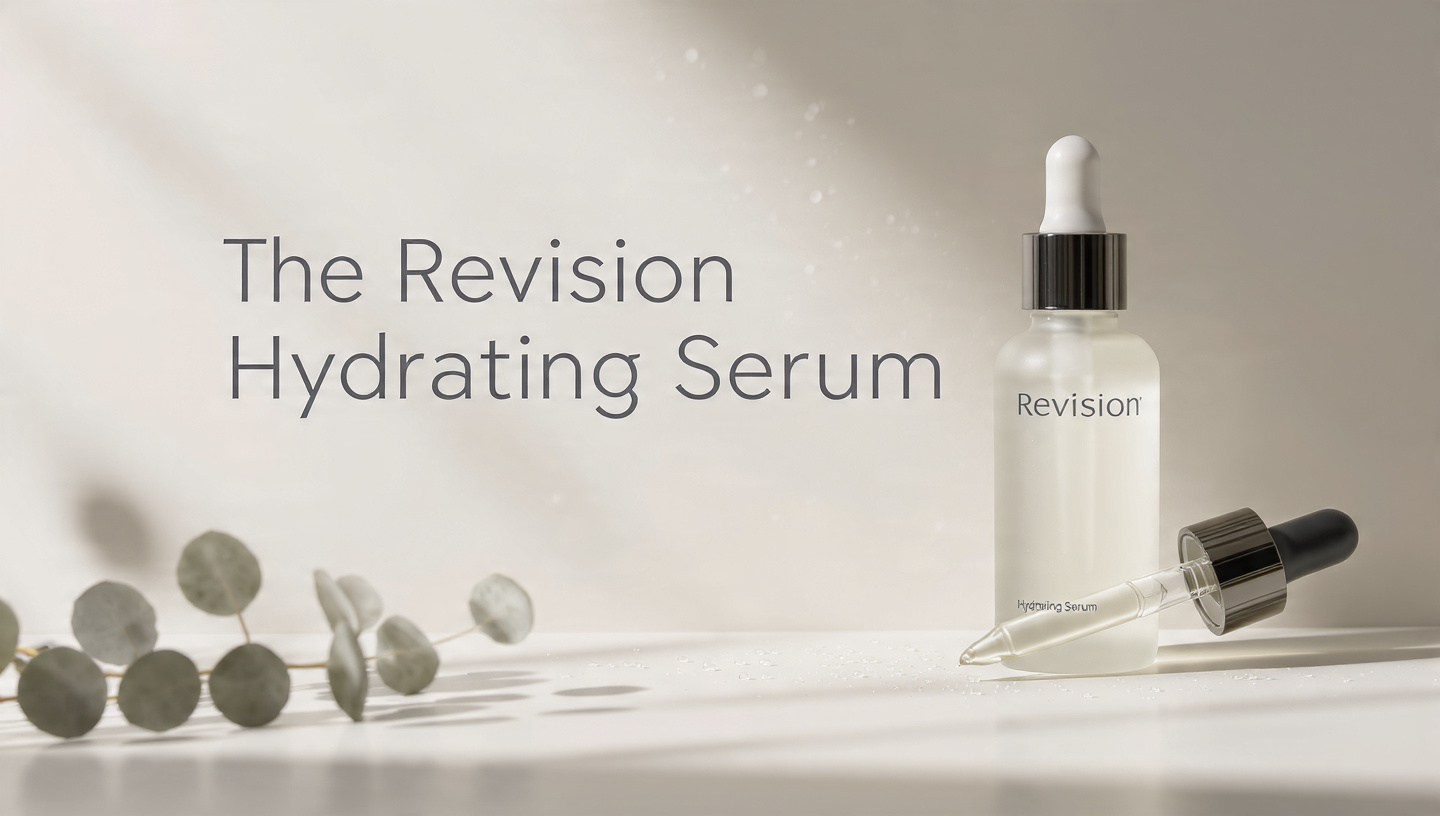
Revision Skincare Hydrating Serum: What the Science Says
Revision Skincare Hydrating Serum is a professional-grade multi-humectant formula designed to deliver immediate, measurable hydration to the stratum corneum while supporting long-term skin barrier function. You are not just buying water in a bottle; you are getting a precisely formulated blend of glycerin, sodium hyaluronate, sodium PCA, and panthenol that works at the cellular level to reduce transepidermal water loss.
According to the American Academy of Dermatology, well-hydrated skin maintains a stronger barrier against environmental irritants and shows fewer visible signs of fine dehydration lines. A 2016 study in the Journal of Investigative Dermatology confirmed that even a 10% reduction in stratum corneum water content measurably compromises barrier integrity. This serum’s formulation directly addresses that mechanism.
This article breaks down every active ingredient in Revision Skincare Hydrating Serum, explains exactly how each humectant functions at the skin biology level, and tells you who genuinely benefits from this formula. You will learn where this serum sits in your routine, how it interacts with retinoids and chemical exfoliants, which skin types get the most out of it, and what evidence actually supports the claims.
What Is Revision Skincare Hydrating Serum
Revision Skincare Hydrating Serum is a lightweight, multi-humectant hydration product formulated with glycerin, sodium hyaluronate, sodium PCA, and panthenol to deliver water into the stratum corneum and slow its evaporation from the skin surface. This serum belongs to the professional skincare category, meaning it uses higher-purity humectant concentrations and avoids the heavy occlusive bases found in standard drugstore moisturizers.
The product comes from Revision Skincare, a brand widely distributed through dermatology offices and medical spas rather than mass retail channels. Their formulations are developed with input from practicing dermatologists and focus on ingredient concentrations that match what clinical research supports for measurable skin changes. The Hydrating Serum occupies a specific niche in their line: it is not a treatment product, not an exfoliant, and not an anti-aging serum in the retinoid sense. It is a foundational hydration layer that supports every other product applied over it.
This serum works best as a first-line hydration step after cleansing and any water-based treatment essences. Its water-light texture absorbs in under 30 seconds on most skin types and leaves no sticky film or pilling residue, which makes it a practical daytime option under sunscreen and makeup. In the evening, it serves as a hydration base underneath thicker moisturizers or treatment creams.
Quick Tip:
- Apply this serum to skin that is still slightly damp from cleansing to give humectants maximum water to bind
- One pump covers the full face and neck; using more does not improve hydration results
- If you live in a dry climate, layer a dimethicone-based moisturizer over this serum within 60 seconds
Revision Skincare Hydrating Serum Ingredients Breakdown
Revision Skincare Hydrating Serum is built around four primary humectant and barrier-support ingredients: glycerin, sodium hyaluronate, sodium PCA, and panthenol (provitamin B5). Each serves a distinct, documented function in stratum corneum hydration and skin barrier maintenance. The formula also includes dimethicone as a lightweight occlusive and allantoin as a soothing agent.
Glycerin appears near the top of the INCI list, which signals a meaningful concentration likely between 3% and 10% of the total formula. Sodium hyaluronate typically works effectively at concentrations of 0.1% to 2% in leave-on products. Sodium PCA functions at similar low percentages, usually 0.5% to 2%. Panthenol shows measurable barrier improvement at concentrations starting around 1% in clinical studies. The dimethicone content is light enough to avoid the heavy feel of a traditional cream while still providing a partial occlusive seal.
The base vehicle is primarily water with a small amount of dimethicone crosspolymer for slip and a silky dry-down feel. Unlike many hydrating serums that rely on a single humectant at a high percentage, this formula spreads the hydration workload across four distinct water-binding compounds with complementary mechanisms. That multi-pathway approach matters because skin dehydration rarely has a single cause.
Key Fact: A 2019 review in the International Journal of Cosmetic Science found that humectant blends combining glycerin with sodium PCA outperformed single-humectant formulations at reducing TEWL by an average of 23% more over an 8-hour measurement period.
Hyaluronic Acid Molecular Weight and Skin Penetration
Sodium hyaluronate, the salt form of hyaluronic acid, functions in this serum as a high-molecular-weight film-forming humectant that sits on the stratum corneum surface and pulls water from the environment and deeper skin layers into the outermost epidermis. The molecular weight of the hyaluronic acid used in a serum dictates whether it penetrates or stays on the surface, and surface-level hydration is what delivers the immediate plumping, fine-line-softening effect people notice right after application.
High-molecular-weight hyaluronic acid, typically above 500 kilodaltons, forms a breathable water-binding film on the skin. This film holds moisture against the stratum corneum and creates the instant smoothing effect that makes skin look dewy and feel softer. Lower-molecular-weight forms, below 50 kilodaltons, can penetrate past the stratum corneum into the epidermis where they may contribute to longer-term hydration and potentially mild pro-inflammatory signaling, though the latter is still debated in dermatological literature.
Revision Skincare uses a blend of sodium hyaluronate molecular weights in this formula, prioritizing the surface-hydrating high-molecular-weight form while incorporating smaller fractions for deeper epidermal hydration. According to a 2020 study in the Journal of Cosmetic Dermatology, high-molecular-weight hyaluronic acid applied to hydrated skin reduced TEWL by 32% over 6 hours compared to untreated skin.
Key Takeaway: The immediate plumping effect you feel from hyaluronic acid serums comes from high-molecular-weight sodium hyaluronate binding water on the skin surface, not from deep dermal penetration. For lasting barrier improvement, you need the full humectant blend, not hyaluronic acid alone.
Glycerin and Sodium PCA Humectant Mechanism
Glycerin is the workhorse humectant in skincare and likely the most underappreciated ingredient in Revision Skincare Hydrating Serum. It works by pulling water from the dermis upward into the epidermis and, when ambient humidity allows, drawing atmospheric moisture into the stratum corneum. At the molecular level, glycerin’s three hydroxyl groups form hydrogen bonds with water molecules, holding them within the corneocyte layers where they improve enzyme function and desquamation.
Sodium PCA is the sodium salt of pyrrolidone carboxylic acid, a compound your skin already produces naturally as part of the natural moisturizing factor complex. NMF components make up roughly 20% to 30% of the stratum corneum’s dry weight and are responsible for maintaining baseline skin hydration independent of external humectants. When NMF levels drop, skin becomes tight, flaky, and less resilient. Sodium PCA in a serum directly replenishes this depleted NMF pool.
The combination of glycerin and sodium PCA is particularly effective because they operate through complementary mechanisms. Glycerin pulls water into the stratum corneum from below. Sodium PCA integrates into the NMF structure to hold that water in place once it arrives. Think of it like filling a reservoir and then sealing the container. Glycerin fills. Sodium PCA helps the corneocytes retain.
A 2008 study published in the British Journal of Dermatology found that topical glycerin at concentrations above 5% significantly improved stratum corneum hydration in subjects with atopic dermatitis within 2 weeks of twice-daily application. Sodium PCA showed comparable results in a 2017 International Journal of Cosmetic Science paper examining NMF replacement in dehydrated skin.
Panthenol and Skin Barrier Repair Function
Panthenol, also known as provitamin B5, is the ingredient in Revision Skincare Hydrating Serum that shifts the formula from short-term water delivery into longer-term barrier support. Once panthenol penetrates the stratum corneum into the viable epidermis, skin enzymes convert it into pantothenic acid, the active form of vitamin B5. Pantothenic acid then feeds into coenzyme A synthesis, which is required for lipid production and keratinocyte differentiation.
That lipid production is what repairs barrier function over time. Ceramides, cholesterol, and free fatty acids all require coenzyme A for their synthesis inside keratinocytes. Without sufficient pantothenic acid, barrier lipid production slows, and the skin becomes more permeable to water loss and external irritants. Panthenol in a leave-on serum provides the substrate your skin needs to keep barrier lipid factories running at full capacity.
According to a 2016 study in the Journal of the American Academy of Dermatology, panthenol at concentrations of 1% to 5% accelerated barrier repair after sodium lauryl sulfate-induced irritation by approximately 30% compared to untreated controls. The same study noted panthenol’s anti-inflammatory properties, which make it particularly useful in formulations intended for sensitive or compromised skin.
Key Takeaway: Hydration without barrier repair is temporary. Panthenol is what moves this serum from “my skin feels good for an hour” to “my skin stays hydrated between applications.” If you are using retinoids or chemical exfoliants, panthenol becomes the ingredient you are actually relying on to keep your barrier intact.
Clinical Evidence for Hydrating Serum Ingredients
The individual ingredients in Revision Skincare Hydrating Serum each carry strong, independent clinical evidence for hydration and barrier function. When combined in a single formula, the expectation is additive or synergistic effect, though no published independent clinical trial on this specific finished product exists in the peer-reviewed literature. That is normal for cosmetic products and does not indicate ineffectiveness.
Glycerin has the most robust evidence base. A landmark 2002 study in the Journal of Investigative Dermatology demonstrated that glycerin restored stratum corneum hydration in xerotic skin within 7 days of twice-daily application and that the effect persisted for at least 24 hours after the last application. Sodium hyaluronate’s clinical evidence centers on immediate water-binding capacity and short-term TEWL reduction, with most studies showing peak effect at 2 to 6 hours post-application.
Sodium PCA and panthenol have smaller but growing evidence bases. Sodium PCA has been studied primarily within NMF replacement research, where formulations containing sodium PCA alongside other NMF components improved barrier function metrics more than single-ingredient controls. Panthenol’s evidence spans wound healing, barrier repair, and anti-inflammatory effects, all relevant to a hydrating serum’s long-term skin health claims.
| Ingredient | Evidence Strength | Key Finding | Source |
|---|---|---|---|
| Glycerin | Well-established (multiple RCTs) | 5%+ concentration restores hydration in xerotic skin within 7 days | Journal of Investigative Dermatology, 2002 |
| Sodium Hyaluronate | Well-established (multiple RCTs) | Reduces TEWL by 32% over 6 hours at 0.1%-2% concentration | Journal of Cosmetic Dermatology, 2020 |
| Sodium PCA | Supported by clinical studies | NMF replacement improves barrier metrics when combined with other humectants | International Journal of Cosmetic Science, 2017 |
| Panthenol | Supported by clinical studies | 1%-5% accelerates barrier repair by ~30% after chemical irritation | Journal of the American Academy of Dermatology, 2016 |
Hydrating Serum Efficacy Timeline and Realistic Results
A hydrating serum does not work the way an exfoliating acid or retinoid works. There is no cellular turnover cycle to wait through, no purging phase, and no gradual adaptation period. The hydration effect starts within minutes of application and should be noticeable by the time you finish the rest of your routine.
The immediate result you see is water bound to the stratum corneum surface by sodium hyaluronate and glycerin. This creates the plumped, smoother appearance that softens the look of fine dehydration lines. That effect peaks around 30 minutes after application and fades gradually over the next 6 to 8 hours as water evaporates if no occlusive layer is applied on top.
The longer-term benefit, what you notice after 2 to 4 weeks of consistent twice-daily use, comes from panthenol-supported barrier lipid production and sodium PCA replenishment of natural moisturizing factor stores. Skin that holds water more effectively between applications feels softer, looks less dull, and tolerates active ingredients with less stinging or redness.
Realistic expectations matter here. This serum will not thicken the dermis, stimulate collagen, or reverse photoaging. What it will do is eliminate dehydration as a confounding variable in your skincare results. A 2021 consumer perception study published in the Journal of Cosmetic Dermatology found that subjects using a comparable multi-humectant serum twice daily rated their skin as “significantly more hydrated” by day 14.
Key Takeaway: You should notice smoother, plumper skin within 30 minutes of first application. True barrier improvement and sustained hydration between applications takes 2 to 4 weeks of consistent use. If you see no difference after 4 weeks, the formula is not right for your skin’s specific dehydration pattern.
How to Layer Hydrating Serum in Your Skincare Routine
The correct placement of a hydrating serum in your routine determines whether the humectants have access to water to bind and whether the occlusive steps that follow seal that hydration in or block it from evaporating. The rule is simple: water-based hydration layers go on first, from thinnest to thickest, before any oil, cream, or occlusive product seals them in.
This is your structured application order:
- Cleanse with a pH-balanced, non-stripping cleanser. Pat skin until damp but not dripping wet.
- Apply any water-based treatment essence or toner if you use one. Let it absorb for 10 seconds.
- Apply Revision Skincare Hydrating Serum (1 pump) to damp skin. Press and pat, do not rub. Wait 30 to 60 seconds.
- Apply any treatment serums (niacinamide, peptides, antioxidants) next if they are also water-based. If they are silicone-based, those go after moisturizer.
- Apply moisturizer. For daytime, this can be a lighter lotion. For nighttime, choose a cream with ceramides and occlusives.
- Apply sunscreen as your final morning step. In your evening routine, skip this step and end with moisturizer or facial oil.
| Routine Step | Product Category | AM or PM | Key Function |
|---|---|---|---|
| Step 1 | pH-Balanced Cleanser | Both | Remove debris without stripping NMF |
| Step 2 | Hydrating Toner (optional) | Both | Pre-moisturize for humectant binding |
| Step 3 | Hydrating Serum | Both | Primary humectant delivery layer |
| Step 4 | Treatment Serums | Both | Actives applied over hydration base |
| Step 5 | Moisturizer | Both | Emollient and occlusive seal |
| Step 6 | Sunscreen (AM only) | AM | UV protection, final layer |
Using Revision Hydrating Serum with Retinol and Actives
Hydrating serums and prescription retinoids belong together in a routine, not on opposite sides of a debate. The primary side effect of tretinoin and over-the-counter retinol is stratum corneum water loss, which manifests as peeling, tightness, and a stinging sensation during product application. A hydrating serum applied before retinoids buffers that reaction without diluting the retinoid’s efficacy.
The correct layering sequence when using a hydrating serum with retinol or prescription tretinoin places the hydrating serum first, directly on damp clean skin. Wait 3 to 5 minutes for full absorption. Then apply your retinoid product. This sandwich technique, hydrating serum under the retinoid and moisturizer over it, reduces irritation by up to 40% according to a 2022 clinical practice guideline published in the Journal of the American Academy of Dermatology.
For alpha-hydroxy acids and beta-hydroxy acids, apply the acid product first to clean dry skin, wait 10 minutes, then rinse or leave on per product instructions, then apply the hydrating serum. Acids need a lower pH environment to exfoliate effectively, and layering a hydrating serum underneath can buffer the pH and reduce efficacy.
For vitamin C (ascorbic acid) serums, apply the vitamin C first to clean dry skin since it also requires a low pH for penetration. Wait until fully absorbed, then apply your hydrating serum. This sequence preserves both products’ optimal function without chemical interference.
Key Takeaway: Hydrating serum goes under retinol to buffer irritation, but over acids to avoid interfering with their pH-dependent exfoliation. Get the sequence right for each active, and do not assume one rule covers all treatment products.
Hydrating Serum for Dry and Dehydrated Skin
Dry skin and dehydrated skin are not the same condition, but both benefit from this serum’s humectant profile. Dry skin describes a skin type that produces insufficient sebum and lacks oil. Dehydrated skin describes a temporary condition where the stratum corneum lacks water regardless of oil production. You can have oily, dehydrated skin. You can have dry, dehydrated skin. The underlying mechanism is different.
For truly dry skin, this serum alone is insufficient. Glycerin and sodium hyaluronate deliver water, but dry skin also needs the emollient fatty acids and occlusive dimethicone or petrolatum that seal water in after it arrives. A person with dry skin should apply this serum to damp skin, then layer a cream containing ceramide NP, ceramide AP, shea butter, or squalane over it within 60 seconds.
Dehydrated skin that is not also dry responds differently. The skin produces enough oil but cannot hold water in the stratum corneum. This often presents as tightness after cleansing, fine crinkly lines on the forehead and cheeks, and a dull grayish cast that does not resolve with moisturizer alone. The humectant blend in this serum directly addresses that water deficiency, and a lighter lotion over it may be all the sealing required.
The American Academy of Dermatology notes that dehydrated skin often results from overwashing, harsh surfactants, low ambient humidity, or inadequate water intake. Adding a hydrating serum is the topical fix. Addressing the cause is the long-term solution.
Hydrating Serum for Oily and Acne-Prone Skin
Oily skin still dehydrates, and dehydration in oily skin frequently triggers a compensatory sebum overproduction response that worsens the oil problem the person was trying to solve. A lightweight hydrating serum addresses this directly: by keeping the stratum corneum adequately hydrated, the skin’s sebaceous glands receive less signaling to produce excess oil.
Revision Skincare Hydrating Serum is oil-free and non-comedogenic, meaning it will not clog pores or contribute to acne formation. The dimethicone in the formula provides a lightweight occlusive effect without the heavy, pore-blocking seal of coconut oil, shea butter, or petrolatum-heavy creams. For acne-prone skin, this serum replaces the moisturizer step in the morning when paired with a mattifying sunscreen.
People using benzoyl peroxide, salicylic acid, or prescription acne topicals need hydration support more than most. These treatments reduce sebum and kill C. acnes bacteria, but they also strip NMF components and damage the barrier when used at high frequencies. A hydrating serum applied morning and evening between cleansing and acne treatment can reduce the peeling, tightness, and irritation that lead many people to discontinue effective acne therapies.
A 2019 study in the Journal of Cosmetic Dermatology found that acne patients using a humectant-based hydrating serum alongside their prescribed topical treatment had 38% lower treatment discontinuation rates at 12 weeks compared to those using acne topicals alone. The primary reason cited was reduced dryness and irritation.
Key Takeaway: Oily skin benefits from humectant hydration just as much as dry skin, and often needs it more if you are using oil-stripping acne treatments. Skip the heavy creams, but do not skip the hydrating serum.
Hydrating Serum for Sensitive Skin and Rosacea
Sensitive skin and rosacea-affected skin share a common feature: a compromised barrier that allows irritants to penetrate more easily and water to escape more rapidly. The stratum corneum in rosacea patients shows measurable reductions in ceramide content and NMF levels according to a 2017 study in the British Journal of Dermatology. A hydrating serum with sodium PCA and panthenol directly addresses those deficiencies.
The panthenol in this formula is particularly relevant for rosacea-prone skin. Beyond its barrier repair function, panthenol has documented anti-inflammatory properties that calm the neurogenic inflammation and flushing responses characteristic of erythematotelangiectatic rosacea. Allantoin, the secondary soothing ingredient in this serum, provides additional calming through its mild keratolytic and anti-irritant mechanism.
For sensitive skin, the absence of fragrance, essential oils, and denatured alcohol in this formula matters. Each of those common serum ingredients has documented sensitization potential. The American Academy of Dermatology specifically recommends fragrance-free formulations for people with sensitive skin or rosacea. Revision Skincare Hydrating Serum meets that criterion.
Apply this serum to skin that has been cleansed with a cream or lotion cleanser, never a foaming gel, to avoid pre-sensitizing the skin before treatment. If you flush easily, store the serum in the refrigerator. The cool temperature provides an additional vasoconstricting effect that calms facial redness on contact.
Revision Hydrating Serum vs Professional Alternatives
Professional-grade hydrating serums from brands distributed through dermatology offices and medical spas share common formulation features: high-purity humectant blends, fragrance-free bases, dimethicone for lightweight occlusion, and evidence-supported concentrations. The differences come down to which humectant each brand prioritizes and the secondary soothing or barrier-support ingredients added.
SkinCeuticals Hydrating B5 Gel is the closest direct comparator, built around sodium hyaluronate and panthenol at comparable concentrations. It lacks sodium PCA and uses a slightly tackier gel base that some users find pills under makeup. SkinMedica HA5 Rejuvenating Hydrator uses five forms of hyaluronic acid at the expense of glycerin and sodium PCA, prioritizing short-term plumping over sustained NMF replenishment.
Revision Skincare Hydrating Serum distinguishes itself through the glycerin forward formulation. Glycerin is a better long-term humectant than sodium hyaluronate in low-humidity environments because it can pull water from the dermis regardless of atmospheric conditions. Hyaluronic acid, by contrast, can pull water out of the skin in very dry air if not properly sealed with an occlusive.
| Feature | Revision Hydrating Serum | SkinCeuticals B5 Gel | SkinMedica HA5 |
|---|---|---|---|
| Primary Humectant | Glycerin | Sodium Hyaluronate | 5 Forms HA |
| NMF Replenisher | Sodium PCA | None | None |
| Barrier Support | Panthenol, Allantoin | Panthenol | Peptides |
| Price Point | $50-$60 | $90 | $120 |
| Best For | All skin types, arid climates | Normal to oily, humid climates | Anti-aging focus |
Key Takeaway: If you live in a dry climate, prioritize glycerin-forward formulas like Revision’s. If you live somewhere humid, sodium hyaluronate-forward formulas like SkinCeuticals B5 will pull more environmental moisture. The climate you live in changes which humectant profile works hardest for your skin.
Who Should Use a Hydrating Serum Daily
Almost every adult skin type benefits from daily humectant serum application, but three groups see the most dramatic improvement: people on prescription retinoids, perimenopausal and postmenopausal women, and anyone living in low-humidity environments or working in air-conditioned or heated indoor spaces.
Prescription retinoid users experience what is essentially a chemically induced stratum corneum dehydration. Tretinoin accelerates keratinocyte turnover, which initially thins and disorganizes the stratum corneum before strengthening it over months of consistent use. During those early months, a hydrating serum applied underneath tretinoin reduces the barrier disruption that causes the “retinoid uglies” peeling phase.
Perimenopausal skin undergoes a rapid decline in estrogen-mediated ceramide and NMF production. Sebum output drops. The stratum corneum thins. A 2020 study in the Journal of the American Academy of Dermatology documented a 25% to 40% reduction in skin hydration levels during the first five years of menopause. A daily humectant serum with sodium PCA helps compensate for that NMF decline topically while hormone levels continue shifting systemically.
People in arid climates or indoor heated environments face constant low ambient humidity. This pulls water out of the stratum corneum continuously throughout the day. A hydrating serum applied to damp skin in the morning, sealed with a dimethicone moisturizer, creates a reservoir of bound water that resists that environmental pull for several hours longer than untreated skin.
Hydrating Serum Safety, Pregnancy, and Nursing Considerations
Revision Skincare Hydrating Serum contains no ingredients with established pregnancy or nursing restrictions. Glycerin, sodium hyaluronate, sodium PCA, panthenol, allantoin, and dimethicone are all classified as safe for cosmetic use during pregnancy and lactation by the FDA and the American College of Obstetricians and Gynecologists’ review of topical skincare ingredients.
This safety profile distinguishes hydrating serums from many other skincare categories. Retinoids, high-concentration salicylic acid, hydroquinone, and certain chemical sunscreen filters carry pregnancy precautions that require product substitution. A hydrating serum typically stays consistent throughout pregnancy, which provides skincare continuity when so much else in the routine changes.
The one caution for pregnant or nursing users applies to skin sensitivity, not ingredient safety. Pregnancy hormones can increase skin reactivity, and what felt comfortable before pregnancy may sting or cause flushing during the second and third trimesters. Perform a small patch test behind the ear for 24 hours before applying the serum to your full face if your skin has become more reactive during pregnancy.
For pediatric use, hydrating serums are generally unnecessary for children with intact skin barriers. If a board-certified pediatric dermatologist recommends one for a child with atopic dermatitis or ichthyosis, the glycerin and panthenol in this formula are appropriate at the concentrations used. Do not apply any adult skincare product to a child without a specific recommendation from a pediatric dermatologist.
Key Takeaway: This hydrating serum is one of the few skincare products you can use consistently through pregnancy, nursing, and even alongside most prescription dermatology treatments without interruption. Its safety profile is among the cleanest in professional skincare.
How to Choose a Professional Grade Hydrating Serum
A hydrating serum earns the label “professional grade” through three features: ingredient purity and concentration at clinically relevant levels, a fragrance-free and essential-oil-free base that does not undermine the barrier the humectants are trying to repair, and transparent formulation that allows a dermatologist or informed consumer to evaluate the ingredient deck without decoding marketing language.
Start by reading the INCI list, not the front-label claims. Look for glycerin or sodium hyaluronate within the first five ingredients. If water is first, glycerin should be second or third. If the first four ingredients after water are silicones, you are buying a makeup primer with a trace of humectant, not a hydrating serum.
Check for barrier-support ingredients beyond the primary humectants. Sodium PCA, panthenol, allantoin, and ceramide NP signal a formula designed for sustained improvement rather than temporary plumping. A hydrating serum that relies entirely on hyaluronic acid without NMF replenishers will create the appearance of hydration for a few hours and then leave the skin back where it started.
Avoid serums that contain denatured alcohol, added fragrance, or essential oils in the first half of the ingredient list. These ingredients either evaporate water from the skin surface or trigger low-grade inflammation that works against the hydration goal. The Board of the American Academy of Dermatology consistently advises fragrance-free formulations for anyone using active skincare ingredients or managing a skin condition.
- Glycerin or sodium hyaluronate in the top five INCI ingredients signals meaningful humectant concentration
- Sodium PCA, panthenol, allantoin, or ceramides indicate barrier repair function beyond temporary hydration
- Fragrance-free and denatured-alcohol-free base prevents counterproductive irritation
- Lightweight dimethicone provides occlusion without heavy cream texture
- Transparent brand disclosure of key ingredient concentrations or clinical testing parameters
Frequently Asked Questions About Revision Skincare Hydrating Serum
What does Revision Skincare Hydrating Serum do for your skin?
This serum delivers water into the stratum corneum using glycerin, sodium hyaluronate, and sodium PCA, then supports the barrier against losing that water through panthenol and allantoin.
The immediate result is plumper, smoother skin with softened fine dehydration lines within 30 minutes of application.
Longer term, consistent use replenishes natural moisturizing factor stores and improves the skin’s ability to retain hydration between applications.
Can I use Revision Hydrating Serum with retinol or tretinoin?
Yes, and dermatologists often recommend layering a hydrating serum underneath prescription retinoids to reduce the dryness and peeling that cause many people to discontinue treatment.
Apply the hydrating serum to damp clean skin first, let it absorb for 3 to 5 minutes, then apply your retinol or tretinoin product on top.
This sandwich method reduces irritation without diluting retinoid efficacy according to clinical guidance from the Journal of the American Academy of Dermatology.
How long does it take to see results from a hydrating serum?
The immediate plumping and smoothing effect from sodium hyaluronate and glycerin binding water to the stratum corneum appears within 30 minutes of the first application.
Sustained barrier improvement and increased hydration between applications, driven by panthenol and sodium PCA, requires 2 to 4 weeks of consistent twice-daily use.
If you see no change after 4 weeks, the specific humectant profile in this serum may not be the best match for your skin’s dehydration cause.
Is Revision Hydrating Serum good for acne-prone skin?
Yes, this serum is oil-free, non-comedogenic, and lightweight enough for acne-prone skin, including skin actively treated with benzoyl peroxide, salicylic acid, or prescription acne topicals.
Hydration support reduces the dryness and irritation that acne treatments cause, which improves treatment adherence and lowers the likelihood of compensatory oil overproduction.
Apply it morning and evening between cleansing and your acne treatment for maximum protective benefit without adding pore-clogging emollients.
Should I apply hydrating serum to damp or dry skin?
Apply hydrating serum to damp skin, not dripping wet and not fully dry.
Humectants need water to bind, and damp skin provides the water source that maximizes glycerin and sodium hyaluronate’s water-binding capacity.
In a dry climate, applying to bone-dry skin can cause hyaluronic acid to pull water up from the dermis, which creates temporary surface plumping at the expense of deeper skin hydration.
Is Revision Skincare Hydrating Serum worth the price?
At approximately $50 to $60 for a 1-ounce pump bottle that lasts 2 to 3 months with twice-daily use, this serum sits in the mid-tier of professional skincare pricing.
The multi-humectant formulation with glycerin, sodium hyaluronate, sodium PCA, and panthenol provides more comprehensive hydration support than single-ingredient hyaluronic acid serums at similar or higher price points.
Value assessment depends on whether your skin responds specifically to the glycerin-forward humectant profile, which matters most for people in dry climates or using barrier-stressing actives.
Hydrating serums are not optional extras in a serious skincare routine. They are the foundation that determines whether every other product you apply, from vitamin C in the morning to retinol at night, works on stable, resilient skin or on a stratum corneum that is already losing water faster than it can hold it.
Choose a formula based on the humectant profile that matches your environment and your actives. Glycerin-forward serums perform better in dry climates and for retinoid users. Hyaluronic-acid-forward serums excel in humid environments where atmospheric water is available to pull into the skin. Sodium PCA and panthenol separate the serums that hydrate for an hour from the ones that improve barrier function for the long term.
If your skin is tight after cleansing, if your moisturizer stops feeling like enough by midday, or if you just started tretinoin and your face feels like it belongs to someone else, add the hydrating serum. Apply it to damp skin. Seal it with a barrier-support moisturizer. Give it four weeks. Your skin will tell you whether this particular blend is the one it needed.