A Dermatology Guide to Your 2026 Skincare Routine
Your morning and evening skincare routine is a rhythm that can align with your skin’s built-in 24-hour clock to maximize protection when the sun is up and repair while you sleep. The core principle remains applying products from the thinnest, most water-like consistency to the richest, most occlusive formula, but understanding skin cell chronobiology in 2026 makes the difference between a routine that maintains and one that actively regenerates.
A 2024 study in the Journal of Investigative Dermatology demonstrated that human skin cell proliferation peaks at night, primarily between 11 p.m. and 4 a.m., while the skin barrier’s defense against external aggressors is highest during daylight hours. This means your morning skincare routine and night skincare routine are performing physiologically distinct tasks, not simply mirroring each other with SPF swapped in. The 2026 approach to a skin care routine day and night leverages this biology, asking not just what to apply but precisely when.
This guide moves past product lists to build a foundational understanding of your skin’s needs across the full 24 hours. You’ll learn the structural logic behind a 12 step skincare routine, the simplified essence of a 6 step skincare routine for beginners, and the precise mechanism behind every product category. We’ll cover how to safely introduce retinol, how to layer serums so they actually absorb rather than pilling off, and how to spot and correct the barrier damage that makes half the products in your bathroom counterproductive.
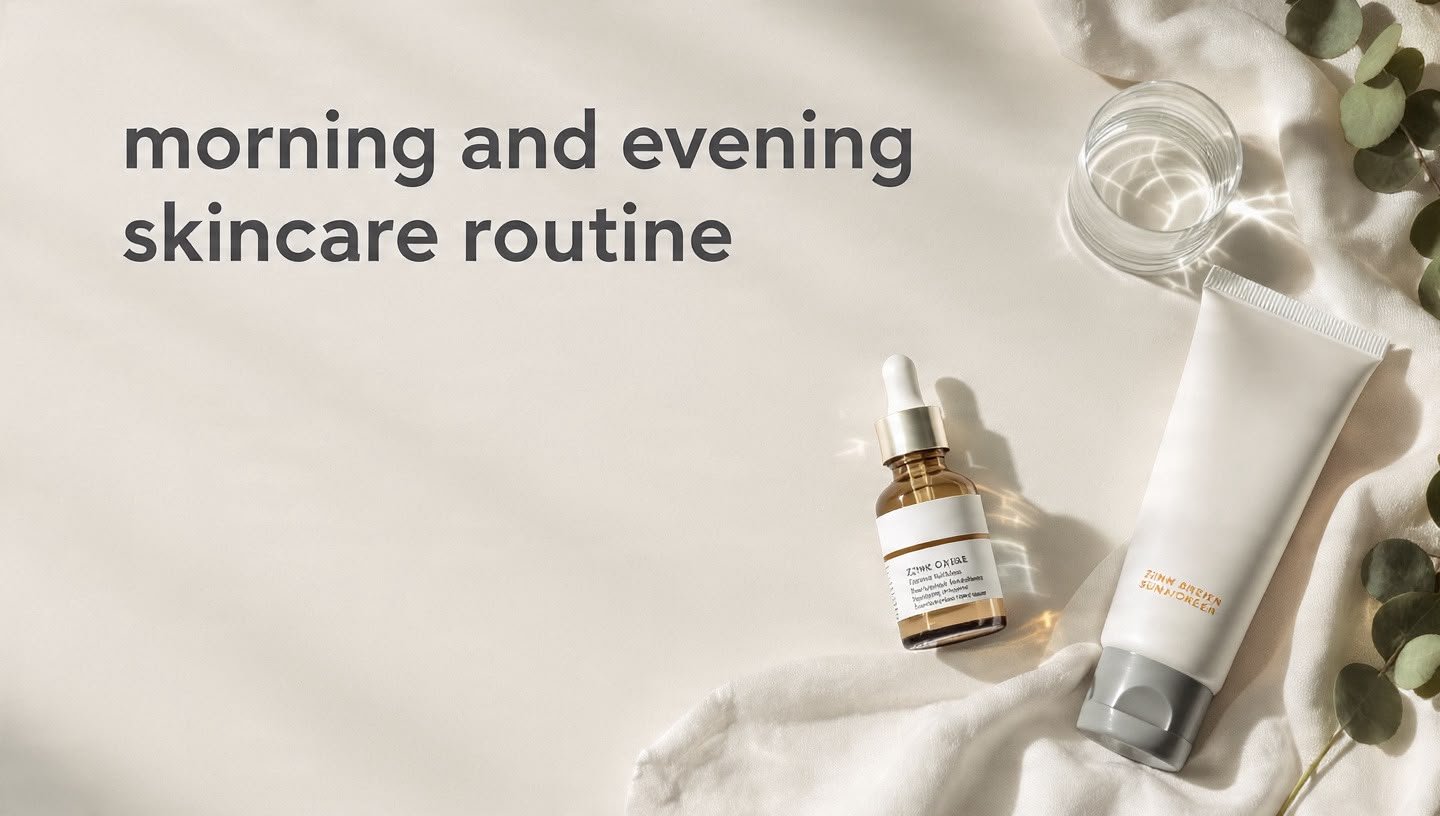
morning and evening skincare routine
A morning and evening skincare routine is a dual-phase system where the morning phase focuses on antioxidant defense, photoprotection, and gentle cleansing, and the evening phase concentrates on cell turnover, barrier repair, and receptor-driven rejuvenation. The two routines are not interchangeable because the skin’s enzymatic activity, cell cycle, and permeability shift dramatically between your waking hours and the deep sleep stages.

According to the American Academy of Dermatology, a complete morning routine always terminates with a broad-spectrum sunscreen rated SPF 30 or higher. This single step is the highest-impact intervention for preventing photoaging, a fact consistently supported by decades of dermatological research. What precedes it, typically an ascorbic acid (L-ascorbic acid) serum at a 10 to 20 percent concentration, chemically sacrifices itself to intercept UV-generated free radicals that slip past sunscreen molecules.
Your evening routine, by contrast, is purely about tissue rehabilitation. The skin’s barrier permeability increases overnight as the stratum corneum undergoes its peak renewal phase. Ingredients like retinol or bakuchiol applied during this window dock with retinoic acid receptors in keratinocytes, signaling a cascade that accelerates cell turnover and collagen type I synthesis, a process that would generate inflammation if activated under UV exposure. The evening is also when transepidermal water loss (TEWL) accelerates, making occlusive and emollient ingredients essential to prevent waking up with a compromised, dehydrated surface.
Key Takeaway: Your daytime routine protects the skin from the environment; your nighttime routine repairs the skin from the inside out, a division of labor dictated by your epidermal circadian rhythm.
skincare routine day and night
A skin care routine day and night addresses two separate biological modes, the daytime catabolic state that defends against oxidative damage and the nighttime anabolic state that rebuilds damaged structural proteins and lipids. Using the same products at both times signals you are fighting your skin’s natural physiology rather than supporting it.
Morning skin has elevated sebum production, which can make water-based serums formulated with delivery enhancers like pentylene glycol or propanediol feel tacky if layered too heavily. A gel-based cleanser or micellar water is often sufficient for removing overnight metabolic waste without stripping the newly formed lipid barrier. Following with a niacinamide serum of 4 to 5 percent concentration can help regulate daytime oil release by modulating sebaceous gland activity.
Night skin rapidly loses surface hydration. This is not a flaw but an evolutionary function tied to the nocturnal drop in cortisol, which loosens the tight junction proteins between keratinocytes. The resulting increase in TEWL means your nighttime moisturizer must deliver ingredients that slow water loss, specifically occlusives like dimethicone and petrolatum, along with emollients like squalane. A 2023 consensus review in the International Journal of Cosmetic Science confirmed that nighttime application of long-chain ceramides, specifically ceramide NP and ceramide EOP, can more efficiently integrate into the extracellular lipid matrix than daytime application due to increased permeability.
Daytime or Nighttime Product Function Guide
| Product Category | Daytime Role | Nighttime Role |
|---|---|---|
| Cleanser | Remove overnight sebum and sweat | Remove sunscreen, pollution, makeup |
| Antioxidant Serum | Quench UV-induced free radicals | Support cellular repair processes |
| Retinoid | Not applied; causes photosensitivity | Accelerate epidermal differentiation |
| Moisturizer | Humectant-focused, lightweight | Emollient and occlusive-focused, rich |
| Sunscreen | Mandatory, SPF 30+ mineral or chemical | Not applied |
The 2026 guidance shifts from a one-size list to a system where you actively ask, “What is my skin doing at this hour, and how does this product support that specific biology?” That intellectual shift is what prevents product accumulation without purpose.
skincare steps morning and night
Skincare steps morning and night follow a strict order based on molecular weight, pH, and formulation polarity: water-based cleanser, water-based treatments from lowest to highest pH, anhydrous or oil-based treatments, emulsion-based moisturizer, and daytime sunscreen. Deviating from this sequence creates a permeability barrier that prevents active ingredients from reaching the epidermis.
Morning steps begin with a lukewarm rinse or a low-foaming, sulfate-free cleanser. The second step is a low-pH treatment, typically an ascorbic acid serum formulated below pH 3.5, which requires application directly to clean, dry skin for efficient penetration into the stratum corneum. A five-minute wait ensures the acid’s hydrogen ions have acidified the skin’s surface, creating a gradient that pulls the active molecule through the lipid bilayers.
Following the antioxidant treatment, a peptide serum or niacinamide layer can be applied without conflict. The final moisturizing step should contain humectants like glycerin or sodium hyaluronate to bind atmospheric water. The entire morning sequence must conclude with a mineral zinc oxide or hybrid sunscreen that sits on the skin’s surface as a film, never penetrating, which means it must be the final, undisturbed layer.
Evening steps require a more rigorous first cleanse. An oil-based cleanser or balm dissolves the sunscreen film and lipid-soluble pollutants that water-based surfactants cannot fully lift. A water-based cleanser follows to remove the now-dissolved residue and sweat. This double-cleanse method, standard in Korean and Japanese dermatological practice, prevents the accumulation of occluded debris in follicles.
After drying the face completely, treatment actives are applied. An exfoliating alpha-hydroxy acid like glycolic acid or a cell-communicating retinol serum goes first, directly onto bare skin, followed by a 20-minute absorption window. A moisturizer containing ceramide NP, cholesterol, and free fatty acids in a 3:1:1 biomimetic ratio then seals the treatment in and provides the raw substrate for overnight barrier repair.
Key Takeaway: The “thinnest to thickest” rule is a proxy for molecular compatibility; water-based serums cannot pass through an oil layer, so every product containing water must precede every product lacking it.
circadian rhythm and skin repair
Circadian rhythm and skin repair refers to the 24-hour biological clock operating within skin cells, primarily keratinocytes and fibroblasts, that regulates the peak timing of DNA repair, collagen synthesis, blood flow, and barrier permeability. Applying certain ingredients in opposition to this clock does not just reduce efficacy; in the case of retinoids and harsh exfoliants used during peak UV exposure hours, it can actively cause harm.
The skin’s “clock genes,” including CLOCK and BMAL1 proteins, regulate the expression of nearly 10 percent of the skin’s transcriptome. Blood flow to the skin increases in the late afternoon and early evening, but cell mitosis and repair activity peak between 11 p.m. and 4 a.m. A 2024 study in the Journal of Investigative Dermatology found that fibroblasts responsible for laying down new collagen type I and type III fibers are most metabolically active during this deep sleep window.
Melatonin, while primarily a pineal hormone regulating sleep, is also synthesized in the skin. It acts as a potent free-radical scavenger. Nighttime skincare that incorporates melanin-safe skin repair ingredients, like certain peptides that mimic growth factors, can theoretically work synergistically with the body’s endogenous repair processes. While consumer formulations are not drugs, the principle of chrono-cosmetics is increasingly evidence-supported.
Disruption to your circadian rhythm, such as chronic sleep deprivation, directly manifests in the skin. Studies have shown that even one night of poor sleep reduces skin barrier recovery rates and increases TEWL the following day. A morning and evening skincare routine becomes even more critical in these circumstances, as the external application of barrier-supporting lipids and daytime antioxidants must partially compensate for the internal repair deficit that lack of sleep creates.
12 step skincare routine structure
The 12 step skincare routine is a Korean-influenced framework that applies the “skin flooding” principle, using multiple thin, water-based layers to achieve deep corneocyte hydration before sealing the surface with an occlusive cream. The structure is not about applying 12 separate product categories but about performing 12 sequential steps, several of which involve the same product applied in multiple thin coats.
The first step begins with an oil cleanser, followed by a water-based cleanser. The third step is a gentle physical or enzymatic exfoliator, used one to two times weekly rather than daily. The fourth step is a hydrating toner, often containing sodium hyaluronate or beta-glucan, which is patted into the skin with hands rather than wiped with cotton to avoid mechanical irritation.
Steps five through seven constitute the essence, serum, and ampoule layering phase, where targeted actives are delivered. An essence primes the surface, a serum provides a concentrated active at a specific molecular weight, and an ampoule delivers an even smaller fraction of active molecules in a lipid-based suspension. The eighth and ninth steps are an eye cream and a moisturizer, which forms the initial seal.
The tenth step is a facial oil, often squalane-based, applied over the moisturizer to prevent overnight water loss. Step eleven is a specific lip treatment or mask. The twelfth and daytime-final step is broad-spectrum sunscreen. For a night version, step twelve becomes a sleeping mask, an occlusive gel or cream that sits on top of the entire routine to create a physical barrier that reverses overnight TEWL by up to 40 percent according to cosmetic formulation studies in the International Journal of Cosmetic Science.
12 Step K-Beauty Routine Sequence
| Step | Product Category | Key Characteristic |
|---|---|---|
| 1 | Oil Cleanser | Lipid-soluble, removes sunscreen |
| 2 | Water-Based Cleanser | Low-foaming, pH balanced |
| 3 | Exfoliator | Weekly use, enzyme or gentle acid |
| 4 | Toner | Hydrating, patted in with hands |
| 5 | Essence | Lightweight, primer for serums |
| 6 | Serum | Concentrated active ingredient |
| 7 | Ampoule | High-potency, smaller molecules |
| 8 | Eye Cream | Targeted, thicker texture |
| 9 | Moisturizer | Emulsion or cream base |
| 10 | Facial Oil | Squalane or rosehip seed oil |
| 11 | Lip Treatment | Occlusive balm or mask |
| 12 | Sunscreen (AM) or Sleeping Mask (PM) | Final protective layer |
This structure is effective for dehydrated skin but risks overwhelming oily or acne-prone skin with occlusive layers that trap heat and sebum. The structure should be adapted to skin type, not applied dogmatically.
Key Takeaway: The 12 step routine is a hydration technology, not a treatment protocol; its primary goal is elevating stratum corneum water content to the 20 to 35 percent range where enzymatic repair functions optimally.
morning skincare routine protection steps
Morning skincare routine protection steps build a multi-layered defense against ultraviolet radiation, visible light, infrared radiation, and particulate pollution. The sequence starts with a water-soluble antioxidant that penetrates the intercellular lipid matrix, followed by a humectant layer, a lightweight emollient, and a terminal sunscreen film that reflects or absorbs photons before they reach living tissue.
The first protection step is a 10 to 20 percent L-ascorbic acid serum applied to clean, dry skin. Ascorbic acid’s protective mechanism is sacrificial oxidation: the molecule donates electrons to neutralize reactive oxygen species generated by UV and HEV (blue) light before those radicals can damage dermal fibroblast DNA. Formulations that also contain 0.5 percent ferulic acid and 1 percent tocopherol double the serum’s photoprotective efficacy against erythema, a finding replicated in multiple published dermatology studies.
Following ascorbic acid, a niacinamide serum at 4 to 5 percent reinforces the barrier, reduces UV-induced immunosuppression, and modulates sebum for those with oily or combination skin. The formula here must be water-based and fully absorb before the next step, or the sunscreen layer will slide and pill.
The third protection step is a moisturizer with humectants like glycerin and panthenol that pull water into the stratum corneum. Well-hydrated skin cells scatter light more effectively than dehydrated, flattened corneocytes, providing a small but real additive photoprotective effect. The final step, and the only non-negotiable one, is a broad-spectrum mineral or hybrid sunscreen rated SPF 30 or higher. Zinc oxide and titanium dioxide work as physical barriers, sitting on the skin surface and deflecting photons via a semi-conductor mechanism. This film must remain undisturbed, meaning no makeup blending or liquid foundation directly worked into the sunscreen layer. Apply makeup gently over the fully dried, set sunscreen film.
night skincare routine repair steps
Night skincare routine repair steps are sequenced to first remove all photodamaged surface debris, then deliver a cell-signaling active that stimulates fibroblast and keratinocyte regeneration, and finally provide a biomimetic lipid layer that supplies the raw building blocks for overnight barrier reconstruction.
The first repair step is a thorough but non-stripping double cleanse. An oil-based cleansing balm dissolves the polymer film of daytime sunscreen and the lipid-bound particulate matter adhered to it. A second water-based gel cleanser removes sweat and any remaining surfactant-bound debris without denaturing the skin’s own surface proteins. Harsh foaming cleansers with sodium lauryl sulfate disrupt the lipid bilayer that holds corneocytes together, which is precisely the structure you are attempting to repair overnight.
The second step, two to three nights per week, is a retinoid or an exfoliating acid, not both simultaneously. A retinol serum at 0.3 to 0.5 percent, applied to thoroughly dry skin, begins the slow genetic signaling process that instructs basal keratinocytes to proliferate and differentiate into new stratum corneum cells. Retinol’s irritation potential is real, so a “short contact therapy” approach, where it is applied for 30 minutes and rinsed off during the first month of use, can dramatically reduce retinoid dermatitis while preserving efficacy, a method documented in dermatological practice literature.
After the treatment product has fully absorbed, usually 20 minutes, the repair step continues with a moisturizer. The most effective night moisturizers use a 3:1:1 ratio of ceramides, cholesterol, and free fatty acids, mimicking the skin’s own intercellular lipid composition. Ceramide NP, the most abundant ceramide in a healthy barrier, works as the primary “mortar” between the protein “bricks” of corneocytes. A 2022 clinical study found that this precise ratio reduced TEWL by 25 percent more than moisturizers using ceramides alone over an eight-week period.
An occlusive sleeping mask or a thin layer of petrolatum as the final step is optional but highly effective, particularly in low-humidity or winter climates. Petrolatum reduces overnight water loss by up to 99 percent, creating an artificial barrier so your stratum corneum can dedicate its enzymatic resources to cell turnover rather than fighting dehydration.
choosing a cleanser for your skincare routine
Choosing a cleanser for your skincare routine means selecting a surfactant system that removes the targeted soil, sunscreen film, sweat, and environmental debris without stripping the organized lipid bilayers from the stratum corneum. The cleanser’s pH, surfactant type, and rinse-off profile matter more than any “active” ingredients it claims to deposit.
The skin’s surface has an acidic pH, typically between 4.7 and 5.75, which is essential for ceramide-synthesizing enzymes like beta-glucocerebrosidase. Traditional soap bars and many high-foaming cleansers have an alkaline pH of 9 to 10, which elevates skin surface pH for hours, impairing barrier repair. A properly formulated synthetic detergent, or syndet, cleanser maintains a pH of 5.0 to 5.5 and uses gentle surfactants like sodium cocoyl isethionate or decyl glucoside.
For a morning skin care routine day and night, two separate cleansers can be optimal. The morning cleanser can be a micellar water or a single low-foaming gel, as the task is removing overnight sebum and light skincare residue. The evening cleanser’s first step is an oil-based balm or cleansing oil containing caprylic/capric triglyceride or isopropyl myristate to dissolve waterproof sunscreen and foundation. The second step water-based cleanser removes the now-emulsified oil and sweat.
People with Fitzpatrick skin types IV through VI should be especially cautious with foaming cleansers. Deeper skin tones are more prone to post-inflammatory hyperpigmentation after even low-level barrier disruption. A non-foaming, cream-based cleanser with ceramides is often the safest choice for this population to prevent subclinical inflammation that triggers melanocyte overactivity.
A simple litmus test for your cleanser: after washing, your skin should feel soft and pliable, not tight, shiny, or “squeaky.” That squeaky-clean feeling indicates the surfactant has stripped the skin’s natural moisturizing factors, primarily amino acids and pyrrolidone carboxylic acid, and denatured surface proteins.
Key Takeaway: A cleanser’s pH and surfactant gentleness predict its long-term compatibility with your barrier more than any added botanical or active ingredient it claims to deliver during a 60-second wash-off contact time.
how to layer serums and treatments
How to layer serums and treatments follows a strict molecular and pH hierarchy: water-based serums before anhydrous solutions, low-pH formulas before higher-pH formulas, and small-molecule active solutions before large-molecule or polymer-rich suspensions that form a film. Incorrect layering results in product pilling, which is the microscopic evidence that your actives never reached their target tissue.
The foundational rule is that water cannot pass through oil. A water-based ascorbic acid serum applied on top of a silicone-rich emulsion will ball up and slide off the occlusive layer. Every water-containing product must fully absorb before an anhydrous, oil, or silicone-based product is applied. Serums formulated with dimethicone or cyclopentasiloxane as the first ingredient are designed as final treatment layers, not as layers to be penetrated.
The pH rule is equally critical. A low-pH exfoliating acid like glycolic acid at pH 3.5 must be the first serum on bare skin. Applying a neutral-pH peptide serum first would buffer the skin’s surface, preventing the acid’s hydrogen ions from acidifying the microenvironment, a step necessary for effective stratum corneum penetration. After the acid has worked for 15 to 20 minutes, the skin’s natural buffering systems return the surface pH towards its usual range, at which point higher-pH niacinamide or peptide treatments can be safely applied without mutual neutralization.
Water-based, oil-free serums can often be layered without waiting periods if their actives are chemically compatible. Niacinamide and hyaluronic acid can be applied sequentially while the skin is still slightly damp to enhance humectant water binding. However, a peptide serum containing a film-forming polymer should be the terminal serum layer, applied just before moisturizer, because the polymer creates a breathable film that subsequent products cannot breach.
The presence of tackiness is a feedback signal. If a serum remains sticky and tacky for more than 90 seconds, the skin is saturated, and the molecule’s diffusion gradient is spent. Applying another product at this point will mechanically displace the unabsorbed serum rather than pushing it deeper. Apply less product, not more layers.
humectants emollients and occlusives explained
Humectants emollients and occlusives are the three functional categories of moisturizing ingredients, each working through a distinct physical mechanism on a different layer of the stratum corneum. Humectants pull water in, emollients fill the cracks between corneocytes, and occlusives seal the surface to block water from evaporating out.
Humectants are hygroscopic molecules that attract and bind water. Glycerin, sodium hyaluronate, urea at concentrations below 10 percent, and panthenol are the most evidence-backed humectants in dermatology. Glycerin, a small three-carbon molecule, penetrates deeply into the stratum corneum and increases its water-holding capacity by drawing moisture from the underlying dermis and, in high humidity, from the atmosphere. Sodium hyaluronate is a much larger polymer that sits closer to the surface, holding up to 1,000 times its weight in water and providing an immediate, visible plumping effect that is temporary but cosmetically significant.
Emollients are lipids and oils that fill the microscopic fissures between desquamating corneocytes, smoothing the skin’s surface texture and providing a soft, tactile finish. Squalane, caprylic/capric triglyceride, jojoba oil, and shea butter are widely used emollients. They do not primarily add water; they improve skin flexibility by lubricating the protein-lipid interface between cells. A skin care routine day and night should modulate emollient load depending on ambient humidity, heavier emollients for dry winter air, and lighter ester-based emollients for summer months.
Occlusives are hydrophobic films that physically block transepidermal water loss. Petrolatum is the most effective, reducing TEWL by approximately 99 percent, according to long-established dermatological consensus. Dimethicone is a silicone-based occlusive that provides a lighter, breathable film without the heavy feel of petrolatum. Lanolin and high-oleic-acid plant oils offer a middle ground, with lanolin being a particularly sophisticated occlusive capable of holding twice its weight in water while still allowing some vapor transmission.
The most effective moisturizers use all three categories in a strategic layered sequence: a humectant-rich serum applied to damp skin, followed by a cream containing emollients and occlusives to trap the humectant-bound water. Applying a humectant alone in a dry climate without an occlusive seal risks pulling water from the skin, a mechanism called paradoxical dehydration.
Key Takeaway: A moisturizer’s true performance depends on its ratio of humectants, emollients, and occlusives, and that ratio should shift with the season and your skin’s current water-loss rate.
retinol application and skin cycling
Retinol application and skin cycling is the method of introducing retinol on a graduated, non-consecutive-night schedule, allowing the epidermis to undergo retinization, the biological adaptation to accelerated cell turnover, without crossing the threshold into chronic inflammation and barrier failure. Skin cycling, a term popularized by dermatologists on clinical observation, formalizes this rhythm into a four-night cycle.
Retinol is a first-generation retinoid, a vitamin A alcohol that must be enzymatically converted within the skin to retinaldehyde and then to all-trans retinoic acid, the active metabolite that binds to nuclear receptors in keratinocytes. This conversion process creates a controlled, delayed release of the active molecule, which is why retinol is less immediately irritating than prescription retinoic acid (tretinoin) but can still cause significant retinoid dermatitis if over-applied.
A safe skin cycling protocol for a skincare routine night and day begins with a four-night cycle. Night one is an exfoliation night, using an alpha or beta-hydroxy acid. Night two is retinol night: a pea-sized amount of a low-concentration (0.25 to 0.3 percent) retinol serum applied to completely dry skin, followed by a fragrance-free moisturizer containing ceramides. Nights three and four are “recovery nights,” where only gentle cleansing, barrier-supporting moisturizer, and occlusives are applied.
This cycle gives the epidermis 72 hours between retinoid exposures to repair its barrier, synthesize new ceramides, and build the enzymatic machinery that processes retinol without mounting an inflammatory response. The cycle continues for four to six weeks until no redness, stinging, or peeling occurs, at which point the user can advance to a two-night retinol schedule if desired.
Applying retinol to damp skin increases its penetration and its irritation potential exponentially. The water on the skin’s surface enhances the permeability of the stratum corneum, driving the retinol deeper and faster than the keratinocytes can adapt. Always wait a full 10 to 15 minutes after cleansing before applying any retinoid product.
Retinoids, including over-the-counter retinol, are contraindicated during pregnancy and breastfeeding due to the known teratogenicity of high-dose oral retinoids and the precautionary principle applied to topical forms. Bakuchiol, a plant-derived meroterpene phenol, is a non-retinoid alternative that has shown retinoid-like gene expression profiles in some preliminary in vitro studies, though its clinical efficacy is less robust than that of retinol.
how to reintroduce your moisture barrier
How to reintroduce your moisture barrier involves stripping your routine down to a neutral-pH cleanser, a biomimetic barrier repair moisturizer, and a mineral sunscreen for a minimum of two to four weeks, allowing the stratum corneum to restore its organized lipid bilayer and rebalance its microbiome without the interference of active ingredients. A damaged barrier is not a skin type; it is an injury state.
A compromised moisture barrier presents as stinging with previously tolerated products, persistent redness, a shiny, tight appearance despite oiliness, and increased sensitivity to temperature changes. At the cellular level, the lamellar membranes of ceramides, cholesterol, and fatty acids that surround each corneocyte have been disrupted, usually by over-exfoliation, aggressive surfactants, or concurrent use of multiple high-strength actives. Transepidermal water loss accelerates, and irritants that normally would be excluded by the lipid matrix now penetrate freely, triggering inflammation.
The repair protocol requires complete cessation of all exfoliating acids, all retinoids, and all ascorbic acid serums. The only cleanser permitted is a cream or milk formula with a pH of 5.0 to 5.5, containing barrier-supporting ingredients like ceramide NP and niacinamide, or a simple glycerin-based non-foaming gel. The morning routine is rinse with water or cleanser, apply a barrier repair moisturizer, and apply a mineral zinc oxide sunscreen.
The evening routine is the same cleanser, followed by a more generous application of the same barrier repair moisturizer, sealed with a thin layer of petrolatum as the final occlusive step. Do not introduce any new product, no matter how gentle its marketing claims, for at least two weeks. The burning, stinging, and sensitivity should diminish noticeably within three to five days of this protocol; if it does not, or if the skin develops weeping, crusting, or spreading rash, a board-certified dermatologist should evaluate the skin for contact dermatitis or infection, conditions that go beyond a simple barrier disruption.
After two symptom-free weeks, barrier-supporting products like a 5 percent niacinamide serum or a pure sodium hyaluronate hydrator can be introduced one at a time, with a five-day observation window between each. Active treatments like retinol or acids are reintroduced only after a full month of a stable, non-reactive barrier state.
6 step skincare routine for beginners
The 6 step skincare routine is a minimal-viable system that covers the four non-negotiable dermatological functions, cleanse, treat, moisturize, and protect, with enough flexibility to accommodate a beginner’s skin type and lifestyle while avoiding the product overload that causes irritation and routine abandonment.
Step one is a gentle, pH-balanced cleanser. Choose a cream-based formula for dry skin, a gel for oily skin, and a non-foaming lotion for sensitive skin. The goal is to remove surface debris without stripping the barrier. Step two, morning only, is an ascorbic acid serum at a 10 to 15 percent concentration, the beginner-friendly antioxidant range that confers photoprotection with lower stinging risk.
Step three, night only, is a treatment product selected for the primary skin concern. A 0.2 percent retinol serum or a 5 percent niacinamide serum are the two evidence-backed beginner anchors; retinol for early anti-aging and comedonal acne, niacinamide for redness, oil regulation, and pore appearance. Do not use both simultaneously in the first three months. Step four is a humectant-rich hydrating serum or essence, something containing sodium hyaluronate and panthenol, applied to damp skin.
Step five is a moisturizer containing ceramides and squalane, functioning as both emollient and mild occlusive. In the morning, this step can be a lighter lotion; in the evening, it can be a richer cream. Step six, morning only and the most essential, is a broad-spectrum sunscreen, SPF 30 or higher, applied as the final, undisturbed layer.
The 6 step morning sequence is: rinse, vitamin C, hydrate, moisturize, SPF. The 6 step evening sequence is: cleanse, treatment (retinol or niacinamide), hydrate, moisturize. This structure provides 100 percent of the proven dermato-functional benefit with less than half the steps of a maximalist regimen. Beginner errors almost always come from adding too many products too quickly; a disciplined six-step protocol is the fastest route to results because it eliminates the variables that cause irritation and compliance failure.
Key Takeaway: A minimal, well-formulated six-step routine executed consistently outperforms a complex 12-step routine applied haphazardly or abandoned after three weeks.
day and night skincare routine for sensitive skin
A day and night skincare routine for sensitive skin is built around avoidance of the most common contact sensitizers and irritants, including fragrance, essential oils, high-concentration denatured alcohols, and aggressive surfactants, while focusing the entire product sequence on barrier reinforcement and the reduction of neurogenic inflammation. Sensitive skin is not a diagnosis but a physiological state of heightened neurosensory response.
The morning sequence for sensitive skin begins with a tepid water rinse or a cream cleanser that lists ceramide NP in the first five ingredients. A fragrance-free azelaic acid gel at 10 percent is an ideal single morning active for sensitive and redness-prone skin; it reduces the production of reactive oxygen species from neutrophils, decreases kallikrein-5, an enzyme implicated in rosacea pathology, and provides gentle comedolytic action without the pH trauma of alpha-hydroxy acids.
Following azelaic acid, a moisturizer containing Avena sativa (oat) kernel flour or colloidal oatmeal, a skin protectant recognized by the FDA, soothes via its avenanthramide content, which blocks histamine release from mast cells. The final step is a mineral-only sunscreen with zinc oxide as the sole active filter. Zinc oxide is both a photoprotectant and an anti-inflammatory wound-healing agent, making it doubly therapeutic for reactive skin.
The evening sensitive routine follows the same ultra-gentle cleanse, then introduces one treatment rotation: azelaic acid or a barrier-repairing bakuchiol serum, never both on the same night. Bakuchiol, at a concentration of 0.5 to 1 percent, provides some retinoid-like transcriptional effects without the TRPV1 receptor activation that retinol triggers, sparing sensitive nerve endings. A ceramide-dominant night cream with an occlusive finish, applied generously, completes the routine.
Individuals with sensitive skin and Fitzpatrick phototypes IV to VI should be aware that inflammatory flares, even when mild and visually subtle, carry a higher risk of leaving behind persistent post-inflammatory hyperpigmentation. The priority with sensitive skin of color is to suppress inflammation with azelaic acid and barrier lipids, not to “treat” pigmentation with irritating lightening agents, which will paradoxically worsen the discoloration they seek to correct.
common morning and evening skincare mistakes
Common morning and evening skincare mistakes are almost universally rooted in impatience and the conflation of a product’s immediate sensation with its therapeutic action. Skipping morning sunscreen, applying retinol immediately after cleansing on damp skin, and layering multiple new actives simultaneously are the three errors most frequently encountered in dermatology practices.
The first mistake is interpreting the absence of a negative reaction as a sign that a product is “doing nothing.” Retinol’s mechanism operates through gene transcription, a biological process that takes 8 to 12 weeks to manifest visibly. The temporary tightness from an alcohol-based toner, conversely, feels like “action” but is actually protein denaturation and barrier disruption. Equating sensation with efficacy drives consumers towards damaging products and away from reparative ones.
The second pervasive mistake is spot-treating pigmentation without protecting the surrounding skin. Applying a high-strength tranexamic acid or kojic acid product only on a dark spot while skipping a full-face antioxidant and sunscreen allows the UV-exposed untreated skin to continue melanogenesis, creating a phenomenon where the spot fades slightly but its perimeter deepens, resulting in no net cosmetic improvement.
The third mistake is attempting to “detox” the skin. The skin does not have a metabolic waste elimination system that responds to charcoal masks or clay cleansers. The liver and kidneys perform systemic detoxification. Products that claim to “pull toxins from the skin” are almost always just absorbing surface sebum, a perfectly normal and necessary physiological secretion, and stripping the lipid barrier in the process.
A fourth clinical pattern is the self-prescribed concurrent use of multiple “active” systems: a salicylic acid cleanser, a glycolic acid toner, an ascorbic acid serum, and a retinol moisturizer all used in a single evening. This combination reliably produces retinoid dermatitis, barrier failure, and an inflammatory cascade that accelerates visible aging. The skin’s repair machinery has a finite capacity per night; exceeding it does not produce faster results, only redness and peeling that users often misinterpret as products “working.”
Key Takeaway: If you cannot isolate which product in your routine is causing the specific positive change you are seeing, your routine has too many variables and you are statistically more likely to be irritating your skin than optimizing it.
affordable skincare routine for self-care
An affordable skincare routine for self-care leverages the same core ingredients found in premium formulations at concentrations supported by independent dermatological research, focusing financial resources on the three products with the highest clinical impact while substituting formulator-adjacent ingredients for the lower-impact luxury steps. Cost and efficacy are not linearly related in skincare.
The highest-impact, evidence-backed categories that deserve budget allocation are sunscreen, a retinoid or retinol, and a fragrance-free barrier repair moisturizer. A drugstore mineral sunscreen with zinc oxide provides identical UV protection to a prestige version if both are rated SPF 30 or higher and are applied at the correct 2 mg per square centimeter dosage. A generic petrolatum occlusive is the most effective TEWL reducer ever studied, at a cost of pennies per application.
Ascorbic acid is the one ingredient where formulation quality and price often correlate, as a stable, low-pH, pure L-ascorbic acid formula requires specific solubilizing chemistry and air-restrictive packaging. However, sodium ascorbyl phosphate, a vitamin C ester, is stable, affordable, and effective at lower concentrations for brightening and antioxidant functions, though it does not have the same depth of photoprotective evidence as L-ascorbic acid.
For a sustainable, low-cost morning routine, use a gentle drugstore cream cleanser, apply a niacinamide serum from a transparently formulated brand, moisturize with a ceramide lotion, and seal with a broad-spectrum sunscreen. The evening routine uses the same cleanser, applies an affordable retinol encapsulated in a lipid delivery system to reduce irritation, and follows with the same ceramide moisturizer. The total product count is five, and the per-month cost can be kept under a restaurant dinner for two if selections are made based on ingredient lists rather than brand imagery.
Skin care as self-care is defined not by the price of the bottles on the counter but by the deliberate, mindful act of spending five minutes in the morning and five minutes in the evening attending to the body’s largest organ. A ritual that costs very little but is performed consistently and attentively will produce measurably better skin than a luxury cabinet applied erratically while scrolling through a phone. The self-care element is the attention, not the expense.
PHASE 5: FREQUENTLY ASKED QUESTIONS
H2: Frequently Asked Questions About Your Morning and Evening Skincare Routine
What is the correct order for a morning and evening skincare routine?
The correct order follows the thinnest to thickest consistency rule: water-based cleanser, water-based serums from lowest to highest pH, oil-based or anhydrous treatments, emulsion moisturizer, and morning sunscreen as the final step.
This sequence ensures that molecules with smaller particle sizes and lower pH penetrate first, and occlusive films that block water loss are applied last.
Can I use the same skincare routine for day and night?
No, your daytime routine must prioritize photoprotection with antioxidants and sunscreen, while your nighttime routine should focus on cell turnover and barrier repair with ingredients like retinol and ceramides.
Using daytime protection products at night provides no benefit, and using nighttime actives during the day increases the risk of UV-induced irritation and photosensitivity.
What does a 12 step skincare routine look like in practice?
A 12 step routine is a Korean beauty framework that layers multiple thin hydration products: oil cleanser, foam cleanser, exfoliant, toner, essence, serum, ampoule, eye cream, moisturizer, facial oil, lip treatment, and a sunscreen or sleeping mask.
Each step serves a specific hydration or treatment function, and the entire process is designed to flood the skin with water-binding molecules before sealing them in.
How long should you wait between skincare steps?
Wait 30 to 60 seconds for water-based serums to dry, and 15 to 20 minutes after applying a low-pH active like an ascorbic acid or exfoliating acid before applying the next product.
This pause allows the skin’s surface pH to return to its natural range so the subsequent product’s active ingredients are not neutralized or rendered ineffective.
When should I apply retinol in my night skincare routine?
Apply retinol to completely dry skin after cleansing and before moisturizer, and follow a skin cycling schedule of one night retinol, then two to three recovery nights to prevent barrier damage.
Applying retinol to damp skin dramatically increases its penetration and the likelihood of peeling, redness, and retinoid dermatitis.
How do I start a skincare routine for sensitive skin?
Begin with a fragrance-free, pH-balanced cleanser, a barrier-repair moisturizer with ceramides, and a mineral sunscreen for two weeks, then introduce azelaic acid or niacinamide as a single active treatment one product at a time.
Avoid all exfoliating acids, retinoids, and essential oils until your barrier is stable and no longer reacts with stinging or redness to neutral products.
PHASE 6: CLOSING SECTION
Your morning and evening skincare routine is now understood as two distinct biological shifts rather than a mirrored set of steps. The products you apply at 7 a.m. are an environmental shield; the products you apply at 10 p.m. are the cellular repair crew, and their timing is non-negotiable if you want each to perform its intended function at full capacity.
Start tomorrow morning with exactly three steps: a gentle rinse, a broad-spectrum mineral sunscreen, and a conscious decision to skip the exfoliating toner that has been making your cheeks feel tight. That single subtraction, removing the product that is quietly dismantling your barrier, may be the most effective “active” change you can make. Monitor how your skin feels at the end of the day, not just how it looks.
You now have the mechanistic understanding to read a label, interpret a pH range, and sequence your serums so they actually absorb rather than balling up and rolling off. Use that knowledge to prune rather than to accumulate. The goal of a 2026 skin care practice is not a counter full of products; it is a stratum corneum that functions so well you rarely think about it at all.