What Is Pro Skincare? A 2026 Ingredient-First Buying Guide
Professional skincare is a marketing term describing products with high concentrations of evidence-backed active ingredients, advanced delivery systems, and formulation stability not typically found in mass-market products. It does not have a legal or FDA-regulatory definition. Your purchase decision should depend entirely on the ingredient list, not the label on the box.
The term evolved from products once exclusively dispensed by dermatologists and licensed estheticians. Today, the professional skincare market is projected to grow by 5.2% annually through 2026, driven by consumers seeking clinical-grade results at home. A 2023 report from the Journal of Cosmetic Dermatology noted that consumer understanding of active ingredient concentration and pH-driven efficacy has doubled in four years, yet confusion about what “professional” actually means remains the single largest gap between marketing and reality.
We will break down what professional skincare genuinely is, how it differs from drugstore products at the molecular level, which ingredients justify the higher price, how to layer them without destroying your skin barrier, and where to find specific brands like Image Skincare and Ultra Skincare through verified retail channels. You will walk away knowing exactly what to look for on a label and what to ignore in the marketing copy.
what is professional skincare
Professional skincare refers to product lines formulated with higher percentages of active ingredients, backed by clinical stability testing, and historically distributed through dermatologist offices, medical spas, and licensed estheticians. The distinguishing claim is clinical efficacy delivered through optimized formulation chemistry rather than a regulatory stamp. There is no government agency that certifies a product as “professional grade.”
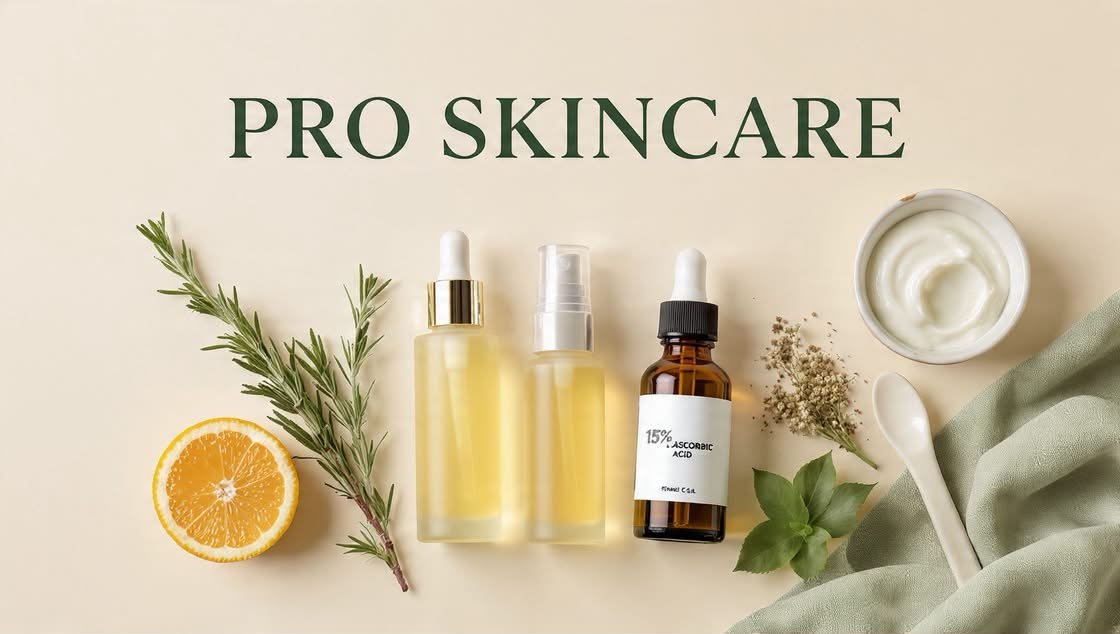
These products often sit in a middle ground between standard cosmetics and prescription drugs. The FDA classifies them as cosmetics if they claim only to cleanse or beautify, or as over-the-counter drugs if they contain ingredients like sunscreen or acne-fighting salicylic acid. A product labeled “professional” might contain 15% L-ascorbic acid instead of a more common 5%, or it might use liposomal encapsulation to deliver retinol deeper into the epidermis. The word itself signals concentration, not classification.
What separates professional formulations is the research investment behind the vehicle. The vehicle, meaning the cream, serum, or gel base, determines whether an active ingredient stays stable on the shelf and penetrates the stratum corneum. A 2022 study in the International Journal of Cosmetic Science demonstrated that the same 10% glycolic acid can have a threefold difference in bioavailability depending on the polymer delivery system used. Professional brands invest in that vehicle science.
You should also know that “professional” does not mean “suitable for everyone.” A 1.0% retinol serum packaged for professional channels carries the same irritation risk as any other 1.0% retinol. The label does not change your skin’s tolerance threshold. Professional designation describes distribution history and formulation ambition, not universal safety.
| Label Term | What It Actually Means | What It Does Not Mean |
|---|---|---|
| Professional | Historically sold via derm offices, higher active %, advanced delivery systems | FDA approved or tested for efficacy |
| Medical-Grade | Marketing term, not an FDA classification | Clinically proven to treat disease |
| Clinical | Often used interchangeably with professional | Subjected to a registered clinical trial |
| Cosmeceutical | Industry portmanteau with no legal standing | Recognized as a distinct regulatory category |
Quick Tip:
- Ignore the front label and look at the ingredient deck. The active concentration and supporting formulation chemistry reveal everything the word “professional” only hints at.
- Any brand can call itself professional. The only verification is the INCI list order and stability data, which reputable brands publish.
medical grade skincare definition
Medical grade skincare is the most potent category of professional skincare, theoretically formulated at concentrations close to pharmaceutical thresholds and designed to create measurable physiological changes in skin function. It is a marketing term without legal standing. The FDA does not recognize “medical grade” as a distinct cosmetic or drug category, which means the phrase is an industry convention, not a regulatory designation.
The confusion is intentional. When a brand calls itself medical grade, it often means the products were originally developed by a physician, are sold primarily through physician channels, or contain active ingredients at concentrations that overlap with low-dose prescription formulations. SkinMedica and SkinCeuticals, for example, build product lines around peer-reviewed research published in journals like the Journal of Investigative Dermatology. That is a credible signal, but it is still a brand’s own framing.
A product becomes a drug the moment it claims to treat, cure, or prevent a disease. A serum that claims to “reduce the appearance of fine lines” is a cosmetic. One that claims to “treat photodamage” is, by FDA definition, an unapproved new drug if it lacks clearance. Medical grade brands walk up to this line carefully. They publish clinical data and use pharmaceutical-adjacent language without crossing into drug claims. As a consumer, you are responsible for seeing this distinction clearly.
The practical value of the medical grade label, when legitimate, lies in formulation integrity. These brands typically conduct accelerated stability testing, publish pH and pKa data, and disclose free acid values for ingredients like glycolic acid. A drugstore brand may use 10% glycolic acid with a pH of 5.5, rendering most of it neutralized and ineffective. A properly formulated medical grade product will buffer the same acid to a pH near 3.5 where it can actually exfoliate. According to the American Academy of Dermatology, the pH at which alpha-hydroxy acids remain effective is a more reliable indicator of product efficacy than the percentage alone.
Key Takeaway: Professional and medical grade are marketing signals, not safety or efficacy guarantees. Your real tools are the ingredient list, the concentration data when available, and the formulation pH. Learn to read those, and the labels become irrelevant.
professional skincare vs drugstore
Professional skincare products typically contain higher concentrations of active ingredients, utilize evidence-backed delivery systems for deeper penetration, and include more sophisticated stabilizer and antioxidant networks to protect those actives from degrading inside the package. Drugstore products prioritize safety across massive consumer populations, use conservative active percentages, and formulate for shelf stability under uncontrolled retail conditions rather than peak biological performance.
The tradeoff is real and important. A drugstore retinol at 0.1% suspended in a simple silicone base will produce some cell turnover with minimal risk of irritation. A professional 1.0% retinol in a liposomal delivery system will stimulate significantly more collagen production, according to clinical data on retinoid response curves, but the irritation risk scales proportionally. The price difference reflects the research investment, not just the raw materials.
What you also pay for in professional lines is the supporting cast of ingredients. A drugstore vitamin C serum might contain L-ascorbic acid, water, a preservative, and a basic thickener. A professional formulation typically pairs L-ascorbic acid with tocopherol and ferulic acid at specific ratios. A landmark 2005 study from SkinCeuticals published in the Journal of the American Academy of Dermatology found that this particular combination doubled photoprotection and improved chemical stability eightfold compared to ascorbic acid alone. That combination requires precise formulation chemistry to prevent the antioxidants from destabilizing each other, and that expertise is expensive.
Still, mass-market brands have narrowed the gap significantly. L’Oreal and Olay now produce peptide serums and stabilized retinoid formulations that rival professional lines from a decade ago. The value question is not simply professional equals better. The question is whether a specific professional product provides a formulation advantage that justifies the price for your particular skin concern. For someone with resilient skin targeting significant photodamage reversal, a 20% L-ascorbic acid serum with the full antioxidant network likely delivers results an 8% drugstore serum cannot match. For a 24-year-old with no visible sun damage and sensitive skin, that same professional product may trigger barrier disruption with no noticeable cosmetic benefit.
| Comparison Factor | Professional Skincare | Drugstore Skincare |
|---|---|---|
| Active Concentration | Higher (10% to 20% L-ascorbic acid, 0.5% to 1.0% retinol) | Lower (2% to 8% L-ascorbic acid, 0.05% to 0.3% retinol) |
| Delivery System | Liposomal, microencapsulation, ion-pairing | Simplex emulsions, basic silicone gels |
| Stability Testing | Published accelerated aging data, pH studies | Internal quality control, rarely published |
| Ingredient Synergy | Proprietary antioxidant networks (e.g., C+E+Ferulic) | Simpler combinations, fewer co-active ingredients |
| Irritation Potential | Higher, requires introduction protocol | Lower, formulated for broad population tolerance |
| Price per Ounce | $80 to $180+ | $15 to $45 |
key ingredients in professional skincare
Professional formulations are defined by active ingredients used at concentrations within their clinically validated efficacy windows, combined with stabilization and penetration partners that ensure the active actually reaches viable skin layers in its functional form. The ingredients that most reliably signal a genuine professional-grade formulation include L-ascorbic acid at 10% to 20%, retinol at 0.5% to 1.0%, glycolic acid at free acid values above 4%, and stabilized peptide complexes with published in vivo data.
L-ascorbic acid remains the gold standard antioxidant in professional skincare. It neutralizes reactive oxygen species generated by UV exposure, inhibits tyrosinase to reduce hyperpigmentation, and serves as an essential cofactor for collagen synthesis enzymes. The catch is that L-ascorbic acid is notoriously unstable in water, oxidizing within days if not properly formulated at a pH below 3.5 with a stabilizing antioxidant partner like ferulic acid. Professional brands invest in this stabilization chemistry.
Retinol drives epidermal proliferation and dermal collagen remodeling. The conversion pathway goes from retinyl palmitate to retinol to retinaldehyde to retinoic acid, with each step reducing potency but increasing tolerability. Professional formulations typically use free retinol at 0.5% to 1.0% in airless packaging with antioxidants to prevent oxidation. Retinol is highly sensitive to light and oxygen, so packaging matters enormously. A retinol in a jar loses activity within weeks regardless of the starting concentration.
Alpha-hydroxy acids like glycolic and lactic acid exfoliate by breaking the desmosomal bonds between corneocytes in the stratum corneum. Their efficacy depends almost entirely on free acid value, which is a function of both the percentage listed and the final formulation pH. A professional 10% glycolic acid at pH 3.6 has a free acid value near 7.5%, meaning 7.5% of the acid is actually available to exfoliate. A poorly buffered 10% product at pH 4.5 might have a free acid value below 2%, performing worse than a properly formulated 5% product.
Growth factors and cytokines represent the most expensive category in professional skincare, isolated from human fibroblast cultures, bone marrow stem cells, or bioengineered sources. The TNS Recovery Complex from SkinMedica, for example, uses a processed human fibroblast culture media containing over 110 growth factors and cytokines. Evidence for these remains mixed. A 2021 review in the Journal of Cosmetic Dermatology concluded that growth factor serums show promise for reducing photoaging when used consistently over six months, but the active molecules are large proteins with limited stratum corneum penetration, making the delivery system more important than the growth factor concentration itself.
high concentration active ingredients safety
High concentrations of active ingredients increase both the potential for visible results and the probability of barrier disruption, chemical irritation, and post-inflammatory hyperpigmentation. The relationship between concentration and benefit is not linear. Skin enzymes and receptor sites saturate at certain thresholds, meaning 20% vitamin C does not work twice as well as 10%. It does, however, carry roughly double the stinging and irritation risk for sensitive skin types.
The most common high-concentration injuries we see in clinical practice involve acids and retinoids. A 30% glycolic acid peel product used by someone with an unacclimated barrier can cause erosive irritation that takes weeks to heal. Retinoid overuse at high concentrations triggers retinoid dermatitis, where the skin becomes red, flaky, tender, and more permeable to allergens. According to a 2023 clinical review in the British Journal of Dermatology, the majority of over-the-counter retinoid adverse events reported to dermatologists involved concentrations above 0.5% in patients who had not followed a staged introduction protocol.
The safe approach to high-concentration professional products is staged introduction and buffer pairing. Start with the lowest available concentration, not the aspirational one. Use it twice a week for three weeks, evaluate tolerance, then increase to every other night. Always layer a barrier-supporting moisturizer containing ceramides, cholesterol, and fatty acids in a 3:1:1 ratio over your active treatment. This lipid ratio directly mimics the intercellular lamellae of the stratum corneum and has been shown in controlled studies to accelerate barrier repair.
You also need to understand ingredient incompatibilities that amplify irritation. Using a high-concentration acid in the same routine as a high-concentration retinoid creates a synergistic barrier insult. The acid lowers stratum corneum cohesion, and the retinoid then penetrates more deeply and rapidly than intended. The American Academy of Dermatology recommends separating these by at least one full day for beginners and by a full skincare routine session, morning vs. evening, for experienced users.
| Active Ingredient | Common “Pro” Concentration | Saturation Threshold | Irritation Risk at Max % |
|---|---|---|---|
| L-ascorbic acid | 15% to 20% | ~20% (receptor saturation) | Moderate stinging at pH <3.2 |
| Retinol | 0.5% to 1.0% | 1.0% (efficacy plateau for OTC) | High (retinoid dermatitis) |
| Glycolic acid | 10% to 20% (leave-on) | Variable by pH and free acid | High (barrier erosion) |
| Salicylic acid | 2% (maximum OTC) | 2% (FDA OTC limit) | Moderate (salicylism risk with high BSA) |
| Niacinamide | 10% to 20% | 5% to 10% (efficacy for most endpoints) | Low to moderate (flushing at >10%) |
Key Takeaway: Higher concentration means higher risk, not proportionally higher reward. Receptor saturation is real. Use the lowest concentration that produces a visible skin response, and never start at the top of the range.
how to read an ingredient list for potency
An ingredient list, formally the INCI declaration, lists ingredients in descending order of concentration down to 1%. Below 1%, ingredients can appear in any order. This rule, enforced by the FDA under the Fair Packaging and Labeling Act, is your single most reliable tool for evaluating whether a “professional” product is genuinely potent or just performing potency on the label.
Start by identifying the functional ingredients. Water, butylene glycol, glycerin, and dimethicone typically appear first as solvents and emollients. The active ingredients you care about should appear in the top five to seven positions if the product claims to be high-potency. If you see “Water, Cyclopentasiloxane, Glycerin, Dimethicone, Propanediol, Phenoxyethanol” before you see your first botanical extract or active, you are holding a standard moisturizer in professional packaging. The concentration of the star ingredient likely falls below 1%.
The 1% line is your most powerful evaluation tool. Certain ingredients are almost never used above 1%: phenoxyethanol as a preservative, fragrance components, most chelators like disodium EDTA, and many botanical extracts listed with their extraction solvent. The moment you see phenoxyethanol on the list, every ingredient below it sits at less than 1%. If your retinol or vitamin C appears after that line, you are dealing with a negligible concentration regardless of what the front label claims.
Professional brands earn their price when the active appears prominently and the supporting formulation confirms the chemistry. Look for stabilizer partners. L-ascorbic acid should be accompanied by ferulic acid or tocopherol. Retinol should be in an airless opaque container and paired with antioxidants like BHT or tocopheryl acetate to slow oxidation. Peptides need delivery enhancers like liposomes or penetration peptides. If you see a high-concentration active in a jar with no stabilizers, the product is unstable and the listed concentration is aspirational, not functional.
To evaluate a professional skincare ingredient list:
- Identify the solvent base: water, silicones, or oil. Know what the first three ingredients tell you.
- Locate your active ingredient. Is it in the top five? If yes, concentration is likely meaningful.
- Find phenoxyethanol or another preservative. That is your 1% marker line.
- Note everything below the 1% line. These are present in subtherapeutic or accent quantities.
- Scan for stabilizers and penetration partners. Does the formula support the active’s chemistry?
- Check the packaging. Airless pump, opaque, or UV-coated? If not, sensitive actives are degrading.
delivery systems in pro skincare
A delivery system is the formulation technology that carries an active ingredient through the stratum corneum and into the viable epidermis or dermis where it can interact with living cells. Professional skincare brands distinguish themselves primarily through investment in delivery systems, not just ingredient sourcing. An active that cannot penetrate is an active you paid for that never reaches its target.
The stratum corneum is a lipid-based barrier 10 to 20 microns thick, organized in a brick-and-mortar structure of corneocytes embedded in lamellar lipid bilayers. Molecules must cross this barrier through intercellular, transcellular, or appendageal routes. For most ingredients, molecular weight is the primary gatekeeper. The rule of thumb is that molecules above 500 Daltons have dramatically reduced passive diffusion. L-ascorbic acid, at 176 Daltons, penetrates readily if the pH is low enough to keep it uncharged. A growth factor protein at 25,000 Daltons will not penetrate at all without an engineered delivery system.
Liposomal encapsulation is the most widely used professional delivery technology. Phospholipid bilayers form microscopic vesicles around the active ingredient, mimicking the structure of cell membranes. These vesicles fuse with the lipid bilayers of the stratum corneum and deposit their payload gradually. A 2020 study in the International Journal of Cosmetic Science demonstrated that liposomal retinol delivered a 60% higher concentration of retinoid activity to the viable epidermis than the same retinol percentage in a simple alcohol vehicle.
Microencapsulation uses polymer or silica shells to physically protect unstable actives and release them slowly upon skin contact. Retinol, notoriously vulnerable to oxidation, is often microencapsulated in professional formulations. The microcapsules protect the molecule from air and light during storage and break open from friction and skin pH on application. The slow release also reduces the characteristic retinoid irritation spike by flattening the concentration curve over hours rather than delivering the full dose within minutes.
Penetration enhancers work differently by transiently disrupting the lipid order of the stratum corneum. Ethanol, propylene glycol, and certain surfactants fall into this category. Professional formulations use these carefully because too much disruption equals barrier damage and irritation. Glycolic acid itself is both an active exfoliant and a penetration enhancer. A product that combines glycolic acid with a potent active that usually sits safely on the surface will drive that active deeper than intended, changing its safety profile.
Key Takeaway: Delivery systems are what you are really paying for in professional skincare. The active ingredient list tells you what is in the bottle. The delivery system tells you what actually reaches your skin. Packaging that protects against oxidation is a dealbreaker for retinol and vitamin C.
what makes pro skincare effective
Professional skincare becomes effective when three conditions are met simultaneously: the active ingredient is present at a concentration within its clinically validated efficacy range, the formulation chemistry stabilizes the active and delivers it to the target skin layer, and the user applies the product consistently over the timeframe required for that biological mechanism to produce visible change. No single factor works in isolation.
Clinical validation separates truly effective professional products from marketing exercises. A brand that has published peer-reviewed data showing that their specific formulation, not just the generic ingredient class, produces statistically significant improvements in skin parameters has cleared a bar most brands never approach. SkinCeuticals CE Ferulic, for example, demonstrated a 41% reduction in UV-induced photodamage in a controlled clinical study. That is evidence for the finished product, not just the ingredient category. Most professional brands do not publish product-specific data.
The biological timeframe matters enormously. Active ingredients work through cellular pathways that require weeks to months to accumulate visible change. Retinoids stimulate collagen gene expression within days, but visible wrinkle reduction takes 12 to 24 weeks of consistent use because collagen remodeling is a slow biological process. Consumers abandoning a product after four weeks because “it didn’t work” failed the product, not the other way around. The American Academy of Dermatology patient education materials consistently emphasize that any topical product claiming visible dermal changes requires a minimum of three months to evaluate.
User compliance and application technique are the final bottleneck. A $180 antioxidant serum applied to unwashed skin over a layer of moisturizer will perform identically to a $20 serum under the same conditions, meaning not at all. Active ingredients need clean skin, appropriate pH environment, and sufficient contact time. Professional skincare assumes the user understands layering order, pH interactions, and the necessity of photoprotection. Without that knowledge, the formulation advantage of a professional product evaporates.
professional skincare for sensitive skin
Sensitive skin is not a single condition but a symptom cluster characterized by a lowered threshold for neurosensory irritation, visible redness, and barrier permeability. For people with this presentation, the high concentrations that define professional skincare can represent a meaningful danger rather than a benefit. The goal shifts from maximum potency to maximum tolerability within a therapeutic window.
The most important distinction is between reactive skin that is simply prone to stinging and flushing, and sensitized skin caused by an impaired barrier. According to a 2023 epidemiological study in the Journal of the American Academy of Dermatology, approximately 60% of women and 50% of men self-report sensitive skin, but only a subset have objectively measurable barrier dysfunction as assessed by transepidermal water loss (TEWL) measurements. If your sensitivity is barrier-driven, you must repair the barrier before introducing professional actives. If it is neurosensory, you need to select low-irritation professional alternatives with careful introduction protocols.
Professional ingredients that are genuinely suitable for sensitive skin include niacinamide at 5% or below, which strengthens barrier function and reduces inflammatory cytokine release without irritation, and azelaic acid at 10% to 15%, which reduces redness and has a favorable tolerability profile in rosacea patients according to multiple randomized controlled trials. Lactic acid at low concentrations, 5% or less at a pH above 4, provides gentle exfoliation with humectant properties that larger glycolic acid molecules cannot match.
Growth factor serums and copper peptide formulations represent an emerging category for sensitive skin types because they signal repair pathways without the irritation cascade triggered by acids and retinoids. The challenge is cost and penetration. Many growth factor products sit above $150 and the molecules are too large to cross an intact barrier efficiently, making them a poor value proposition for anyone without a fully competent stratum corneum.
Ingredients to avoid entirely if you have confirmed sensitive skin include SD alcohol, denatured alcohol, witch hazel distillates, high concentrations of essential oils, and fragrance components that appear above the 1% line on the INCI list. Linalool, limonene, citronellol, and eugenol are among the most common fragrance sensitizers named by the European Commission’s Scientific Committee on Consumer Safety. Professional brands often use these at higher concentrations than drugstore lines because the target consumer associates botanical scents with clinical efficacy, a dangerous fallacy for reactive skin.
| Sensitive Skin Type | Recommended Professional Ingredients | Maximum Safe Starting Concentration |
|---|---|---|
| Barrier-compromised (high TEWL) | Ceramides, cholesterol, fatty acids (3:1:1), niacinamide | 5% niacinamide, barrier repair base only |
| Neurosensory (stinging, burning) | Azelaic acid, bisabolol, centella asiatica | 10% azelaic acid, every other day |
| Rosacea-prone (flushing, erythema) | Azelaic acid, sulfur, low-dose niacinamide | 5% niacinamide, patch test first |
| Atopic (eczema history) | Colloidal oatmeal, ceramides, petrolatum | No active acids or retinoids during flares |
Key Takeaway: Sensitive skin and professional strength are not automatically incompatible, but you must earn the right to use actives by first confirming your barrier is intact. Repair first, treat second, and choose the lowest effective concentration every time.
pro skincare routine for beginners
A beginner’s professional skincare routine should introduce exactly one active ingredient at a time, sandwiched between barrier support and photoprotection, for at least four weeks before adding a second active. The most common beginner mistake is purchasing a full regimen of professional products and applying them all at once. The predictable outcome is a disrupted skin barrier, reactive sensitivity, and the belief that professional skincare “doesn’t work for me.”
The core beginner structure has four steps. In the morning, use a gentle cleanser that does not foam aggressively or leave the skin feeling tight. Foaming surfactants like sodium lauryl sulfate strip the lipid bilayers that hold corneocytes together. Apply an antioxidant serum, ideally a stabilized L-ascorbic acid product at 10% to start. Follow with a moisturizer containing barrier lipids, then finish with a broad-spectrum SPF 30 or higher. Professional vitamin C serums perform their antioxidant function most powerfully during daylight exposure, not as a nighttime treatment.
The evening routine introduces your single active treatment. Cleanse, apply the active to dry skin, wait a few minutes for absorption, then seal with a lipid-rich moisturizer. If you choose a retinol, start at 0.25% and use it two nights per week for three weeks, then increase to every other night. If you choose an exfoliating acid like glycolic or salicylic, the same staged introduction applies. Never use a retinoid and an acid on the same night during your first two months of professional skincare use. The American Academy of Dermatology specifically recommends separating these by at least a full day in the early phases of any new active regimen.
To start a professional skincare routine as a beginner:
- Pick one skin concern you want to target: photodamage, uneven texture, or early laxity. Do not chase all three at once.
- Choose one active ingredient with evidence for that concern and purchase it at the beginner concentration.
- For weeks 1 to 3, use the active twice weekly in your evening routine. Morning is barrier support plus SPF only.
- Weeks 4 to 6, if no irritation has developed, increase to every other night.
- Week 7, evaluate visible skin response. Only now consider adding a second active into the morning routine.
- Never add a new active when your barrier feels compromised. Signs include stinging with moisturizer, persistent redness, and flaking that goes beyond mild retinoid peel.
layering pro skincare actives safely
Layering professional actives safely requires applying products from thinnest to thickest consistency, respecting pH-dependent absorption windows, and understanding which ingredient combinations create synergistic irritation or degrade each other chemically. The standard dermatological sequence is water-based serum first, anhydrous or oil-based serum next, emulsion or lotion, then occlusive cream. Thinner products deliver actives with smaller molecular footprints. If you apply a heavy occlusive first, nothing applied afterward will reach the skin surface.
pH conflicts are the most common chemical incompatibility in professional routines. L-ascorbic acid serums are formulated at a pH below 3.5 to maintain stability and penetration. Niacinamide converts to niacin, which causes flushing, at low pH. A 2015 lab study showed this reaction occurs slowly and incompletely under real-world application conditions, but the conservative approach is to separate them by twenty minutes. Apply your low-pH L-ascorbic acid serum first, allow full absorption, then apply the niacinamide product. This timing buffer prevents pH mismatch at the skin surface.
Retinoids and exfoliating acids are the combination most likely to send a beginner into barrier failure. Both accelerate cell turnover, thinning the stratum corneum through different mechanisms. When used simultaneously, they create a compounded thinning effect and a permeable barrier. The clinical guideline is to never use them in the same routine. Retinoids go in the evening four nights a week. Acids can occupy two of the other nights. Beginners should not overlap these categories at all.
Some professional ingredient pairings work better together. Niacinamide and retinol used in the same evening routine reduce retinol-induced irritation while preserving efficacy. A 2021 split-face study in the Journal of Cosmetic Dermatology confirmed that a 0.5% retinol paired with 4% niacinamide produced equivalent anti-aging results to 0.5% retinol alone but with significantly less scaling and erythema. Ceramides paired with any active enhance tolerability by maintaining barrier integrity as the active drives cell turnover.
| Active Pairing | Safe Together? | Application Rule |
|---|---|---|
| L-ascorbic acid + Niacinamide | Yes, with timing | Wait 20 minutes between layers to avoid pH-driven flushing |
| Retinol + Niacinamide | Yes, same routine | Niacinamide first or formulated together; reduces retinoid irritation |
| Retinol + Glycolic acid | No, same evening | Separate by a full day; alternate evening use only |
| L-ascorbic acid + SPF | Yes, essential | Vitamin C under sunscreen amplifies photoprotection |
| Benzoyl peroxide + Retinol | No, same evening | Benzoyl peroxide oxidizes retinol; separate by AM/PM |
| Salicylic acid + Retinol | No, same evening | Compounded barrier thinning; alternate nights |
best professional skincare brands 2026
The professional skincare market in 2026 is led by brands that have published peer-reviewed clinical data on their finished formulations, maintain rigorous stability testing, and distribute primarily through physician channels or verified direct-to-consumer platforms. This list identifies brands based on formulation integrity and evidence transparency, not marketing spend or popularity.
SkinCeuticals remains the benchmark for antioxidant science. Their C E Ferulic serum combined 15% L-ascorbic acid with 1% alpha-tocopherol and 0.5% ferulic acid in a formulation that generated the most widely cited photoprotection study in cosmetic dermatology. The brand publishes free acid values, pH data, and accelerated stability results. Their retinol line ranges from 0.3% to 1.0% in airless packaging. The limitation is cost: the antioxidant serum retails near $182 in 2026, making it inaccessible for many consumers.
SkinMedica built its reputation on growth factor technology, specifically the TNS Recovery Complex derived from human fibroblast culture media. Their retinol complex uses microencapsulation for slow release and reduced irritation. The brand has published data on their formulations in the Journal of Drugs in Dermatology. Growth factor products remain controversial in the broader dermatology community due to the large molecular size and limited independent replication of cosmetic endpoints, but patient-reported outcomes are generally positive.
Obagi occupies the prescription-adjacent niche with their tretinoin-compatible systems and hydroquinone-containing pigment correctors in markets where regulatory frameworks permit them. Their professional protocols pair physician-dispensed active treatments with supportive skincare designed to manage the irritation and photosensitivity that accompany pharmaceutical-grade ingredients. Obagi products assume clinical oversight.
Image Skincare positions itself as a clinical line with a botanical intelligence angle, combining active percentages in the professional range with plant-derived antioxidants and peptides. Their Vital C and Ageless lines are their flagships. A detailed discussion of availability follows in the next section.
iS Clinical emphasizes pharmaceutical-grade botanical extraction and has published several small clinical studies on their formulations. Their Active Serum and Pro-Heal Serum Advance+ are frequently recommended by estheticians for acne and rosacea management, though the evidence base is smaller than the industry leaders.
where to buy image skincare
Image Skincare products are sold through licensed dermatology offices, medical spas, and authorized professional skincare retailers both online and in physical locations. The brand uses a professional distribution model, meaning they do not sell directly through mass-market retailers like Target, Walmart, or Amazon’s general marketplace. Purchasing from unauthorized channels carries a meaningful risk of receiving expired, diverted, or counterfeit product.
The most reliable purchase channels for Image Skincare are the brand’s own website, which often includes a “find a professional” locator tool, and authorized online retailers that verify their supply chain. Dermstore, LovelySkin, and SkinStore are three of the largest authorized online retailers carrying Image Skincare as of 2026. These platforms source directly from the brand or from authorized distributors and store products under temperature-controlled conditions, which matters for formulations containing L-ascorbic acid and retinol that degrade with heat exposure.
Physical purchase locations include dermatology and plastic surgery practices, independently owned medical spas, and select luxury resort spas that maintain professional skincare retail licenses. Buying through a provider office gives you access to the practitioner’s product knowledge and often includes sample sizes to test tolerability before committing to full-size purchases. Many offices now offer virtual consultations followed by direct product shipment, a model that accelerated during the early 2020s and is now standard practice in 2026.
Avoid third-party marketplace sellers on Amazon, eBay, and Walmart.com unless the listing clearly identifies the seller as an authorized professional retailer. The FDA does not regulate skincare product diversion, meaning products bought through unauthorized third-party sellers may have been stored in unregulated warehouses where summer temperatures routinely exceed the degradation thresholds for active ingredients. A 2022 investigative analysis by a consumer safety organization found that 24% of professional skincare products purchased from unauthorized Amazon sellers showed evidence of oxidation or ingredient separation consistent with improper storage.
where can i buy image skincare
You can buy Image Skincare products through authorized professional retailers online, dermatology and medical spa offices, and the brand’s official direct-to-consumer website. The brand restricts distribution to professional channels, so availability is intentionally narrower than mass-market skincare.
Online, the largest authorized retailers are Dermstore, LovelySkin, and SkinStore. Each carries the full or near-full Image Skincare line and offers product descriptions that include INCI ingredient lists, usage instructions, and customer reviews. These retailers periodically run promotions, particularly around seasonal changes when consumers are switching from summer hydration to fall exfoliation protocols. Signing up for email lists from authorized retailers is the most reliable way to catch discount events without risking unauthorized sellers.
In a physical clinical setting, you can purchase Image Skincare from board-certified dermatologist offices that carry the line, medical spas operating under physician supervision, and a subset of high-end resort spas with licensed estheticians on staff. A phone call to local dermatology practices asking whether they stock or can order Image Skincare products will often yield results even if the brand is not prominently displayed on their website. Many practices maintain professional accounts with multiple skincare lines and can special-order products upon request.
Subscription delivery is now available through several authorized channels in 2026. Image Skincare’s own site offers auto-replenishment with a discount, and Dermstore has integrated the brand into its recurring delivery program. Retinol, vitamin C, and SPF products degrade on the shelf, so timed replenishment ensures you are always using product at peak potency rather than stockpiling and storing for months.
ultra skincare
Ultra Skincare refers to a category of professional and cosmeceutical products positioned at the highest end of concentration, formulation complexity, and price, often marketed as premium or luxury within the professional channel. The term is not a regulated classification but a marketing descriptor used by certain brands and retailers to distinguish their most intensive treatment products from maintenance-level professional formulations.
Within the Ultra Skincare segment, you will typically find serums and treatments featuring rare or synthetically expensive ingredients at elevated concentrations: 20% L-ascorbic acid rather than 10%, human-derived growth factors rather than plant peptides, and multi-acid exfoliation complexes rather than single-acid formulations. The price point for ultra-tier products typically ranges from $150 to $350 per ounce, roughly double the standard professional tier.
The Ultra Skincare consumer is assumed to have a seasoned skin tolerance and a multi-step routine. These products are not designed for beginners or sensitive skin types. A person with a fully intact barrier, a year of consistent retinoid use, and no history of reactive skin may benefit from the incremental potency increase. For most consumers, the standard professional tier delivers 85% to 90% of the visible result at 40% to 50% of the cost. The law of diminishing returns applies sharply here.
When evaluating an ultra-tier product, apply the same analytical framework as any professional product. Does the brand publish stability data? Is the active concentration within a clinically validated range rather than an arbitrary maximum? Is the delivery system appropriate for the active’s molecular size? Ultra price does not guarantee ultra performance. The most expensive serum in a line often has the highest marketing margin, not the highest per-ounce active ingredient cost.
Key Takeaway: Ultra Skincare products represent incremental potency at geometric price increases. They reward experienced users with specific, well-defined goals and resilient skin barriers. For everyone else, the standard professional tier offers a better value and safety profile.
professional skincare alternatives and dupes
Professional skincare dupes are products from mass-market or independent brands that attempt to replicate a high-end professional formulation’s active ingredient profile, concentration range, and delivery system at a significantly lower price point. The quality of these alternatives ranges from chemically sophisticated copies that differ primarily in packaging and prestige to ineffective imitations that share only the ingredient name without the supporting formulation technology.
The legitimate dupe category has grown substantially since 2023. Brands like The Ordinary, Good Molecules, and Inkey List have pushed the market toward transparency in active concentration and simplified, single-ingredient-focused products. A 10% niacinamide serum from one of these brands that lists water, niacinamide at 10%, and zinc PCA near the top of the INCI list is chemically doing the same thing as a $70 professional version with the same active composition. Niacinamide is stable, water-soluble, and easy to formulate, so the dupe premium here is genuinely brand markup with minimal functional difference.
Vitamin C is the ingredient where dupes most often fail. L-ascorbic acid at 15% to 20% requires a low pH, a stabilizer network, and airless packaging to remain functional. The raw material itself is inexpensive. The formulation chemistry to make it stable and deliverable into skin is not. A $12 vitamin C serum in a clear dropper bottle claiming 20% L-ascorbic acid is almost certainly oxidized before it reaches the consumer. In a 2023 analysis published by a cosmetic chemistry research group, six of eight mass-market vitamin C serums tested showed significant oxidation within 30 days of opening, compared to zero of the professional formulations tested under identical conditions.
Retinol dupes occupy a middle ground. Encapsulated retinol technology has become more accessible, and several mid-tier brands now use the same encapsulation suppliers as professional lines. Timeless and Naturium both offer encapsulated retinol at 0.5% in airless packaging for under $30, performing comparably to professional formulations at that concentration in independent stability tests. The main difference is the supporting lipid blend: professional retinols often include ceramide complexes and anti-inflammatory botanicals that reduce irritation. The dupe delivers comparable retinol activity with less irritation buffering.
| Professional Product | Active and Concentration | Legitimate Alternative | Key Difference |
|---|---|---|---|
| SkinCeuticals CE Ferulic ($182) | 15% L-ascorbic acid, 1% tocopherol, 0.5% ferulic acid | Timeless 20% Vitamin C + E Ferulic Acid Serum ($26) | pH and stability data less rigorous, but antioxidant network similar |
| SkinMedica Retinol Complex 0.5 ($78) | 0.5% microencapsulated retinol | Naturium Retinaldehyde Cream Serum 0.05% ($32) | Retinaldehyde instead of retinol; one fewer conversion step |
| Obagi Professional-C Serum 20% ($142) | 20% L-ascorbic acid | Maelove The Glow Maker ($32) | Very similar INCI list; lower stability documentation |
| EltaMD UV Clear SPF 46 ($43) | Zinc oxide, niacinamide | DRMTLGY Universal Tinted Moisturizer SPF 46 ($22) | Similar actives, different texture and cosmetic elegance |
================================================================
FAQ SECTION
Frequently Asked Questions About Professional Skincare
What does professional skincare actually mean?
Professional skincare means products formulated with higher concentrations of active ingredients and advanced delivery systems, historically distributed through dermatologist offices and medical spas. It is a marketing category, not a regulatory one. The label carries no FDA-backed guarantee of efficacy.
Is medical-grade skincare a real FDA classification?
No. The FDA does not recognize “medical grade” as a skincare classification. Products are either cosmetics or drugs based on their intended use claims. Medical grade is an industry term used to signal higher potency and physician-channel distribution without any regulatory meaning.
How do I start a pro skincare routine without damaging my skin barrier?
Start with a four-step structure: gentle cleanser, moisturizer with barrier lipids, and broad-spectrum SPF 30 or higher every morning. Add exactly one active product at its lowest available concentration. Use it twice weekly for three weeks. Increase to every other night only if no irritation develops.
Can I use pro skincare if I have rosacea or sensitive skin?
Some professional ingredients are well suited for sensitive skin, including azelaic acid, low-concentration niacinamide, and barrier-repair ceramide products. Avoid denatured alcohol, high-percentage acids, and fragrance compounds above the 1% line. Patch test every new product on a small area of the jaw for 48 hours.
What is the difference between pro retinol and prescription tretinoin?
Retinol is available over the counter and requires two enzymatic conversion steps in the skin to become active retinoic acid. Tretinoin is prescription retinoic acid that binds directly to retinoid receptors with far greater potency. Pro retinol products use higher concentrations and encapsulation to narrow the efficacy gap.
Why is professional skincare more expensive?
The cost reflects formulation research, stability testing, delivery system technology, and often published clinical data on the finished formulation. A professional vitamin C serum costs more because stabilizing 15% L-ascorbic acid at pH below 3.5 with a synergistic antioxidant network requires chemistry expertise and packaging engineering that drugstore products do not invest in.
================================================================
Professional skincare is a category built on ingredient concentration, formulation chemistry, and delivery technology. The label itself means nothing legally. The ingredient list, concentration data, pH values, and packaging stability mean everything practically.
Start with one active that matches your specific skin concern. Introduce it slowly. Support your barrier. Use SPF every morning regardless of what else you apply. Photoprotection is the most effective anti-aging professional skincare product in existence, and it costs less than any serum you will ever buy.
Your ability to read an INCI list and identify the 1% marker line is more valuable than any brand reputation or price point. Learn those skills. Apply them every time you consider a purchase. That knowledge protects your skin, your barrier, and your budget more reliably than any front-label claim ever will.