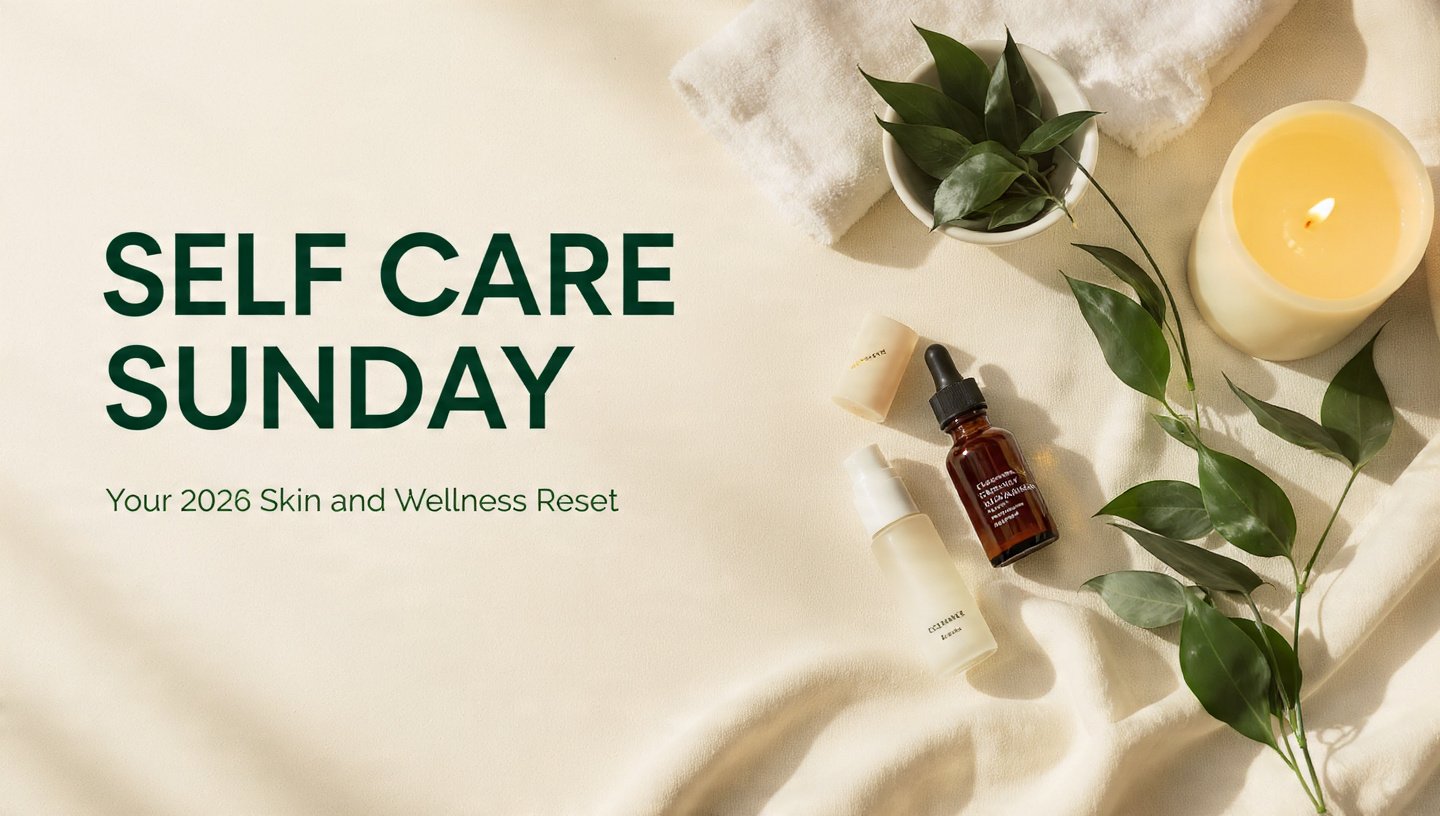
Self Care Sunday: The Complete 2026 Skin and Wellness Reset Guide
Self care Sunday is a dedicated weekly ritual of intentional physical, emotional, and skincare practices designed to reset your body and mind before the week begins. Done consistently, it does more than help you feel better: it actively supports your skin’s barrier function, lowers stress hormones, and gives your complexion the recovery time that a busy weekday routine rarely allows.
The biological case for it is real. Research published in the Journal of Investigative Dermatology has demonstrated that psychological stress activates the hypothalamic-pituitary-adrenal (HPA) axis, triggering cortisol release that measurably increases transepidermal water loss (TEWL) and compromises the integrity of the stratum corneum, the outermost protective layer of the skin. A 2025 study in PMC found that moderately stressed subjects showed fine lines and roughness increased by approximately 32.9% compared to mildly stressed counterparts, alongside reduced antioxidant capacity in the skin.
This guide covers everything you need to build a self care Sunday that is grounded in skin biology, behavioral health research, and practical habit design. You’ll find step-by-step skincare guidance, ingredient-level specifics, mental wellness practices with evidence behind them, and realistic expectations about what one day a week can achieve.
What Is Self Care Sunday
Self care Sunday is a structured, recurring weekly practice where you intentionally set aside time, most commonly the whole day or several focused hours on a Sunday, to address the physical, emotional, and skincare needs that tend to fall behind during the work week.
The concept is culturally popular, but the practice has legitimate biological grounding. It’s not just about mood. When the body spends five or six consecutive days under chronic low-grade stress, the HPA axis stays partially activated. Cortisol accumulates. Skin barrier lipids, including ceramides, fatty acids, and cholesterol, get depleted faster than daily routines can replenish them.
Self care Sunday works as a reset point precisely because of this cycle. A full day of lower-cortisol activity, attentive skincare, sleep-forward habits, and deliberate rest gives the body time to shift toward parasympathetic dominance, the physiological state in which skin repair, cell turnover, and barrier restoration happen most efficiently.
It’s worth being clear about one distinction: self care Sunday is a supportive lifestyle practice, not a substitute for ongoing mental health treatment or dermatological care. When stress is chronic and disabling, or when a skin condition is active and worsening, a dedicated Sunday ritual is a supplement, not a solution.
| What Self Care Sunday Can Address | What Requires Professional Support |
|---|---|
| Mild accumulated stress and fatigue | Chronic anxiety or depression |
| Skin dryness and reactive skin after a stressful week | Active eczema (atopic dermatitis) flares requiring prescription treatment |
| Disrupted sleep patterns | Sleep disorders requiring clinical evaluation |
| Neglected skincare routine reset | Persistent acne, rosacea, or hyperpigmentation needing dermatological care |
| Low mood from burnout | Mental health conditions requiring therapy or medication |
Why Self Care Sunday Actually Improves Your Skin
Self care Sunday improves your skin because reducing psychological stress measurably improves two key skin health indicators: barrier function and inflammatory response.
The science is specific. A 2018 study published in Scientific Reports by Choe et al. from Yonsei University directly linked psychological stress to elevated cortisol in the stratum corneum, increased basal TEWL, and reduced stratum corneum integrity. TEWL is the rate at which water escapes through the skin’s surface. When it rises, skin becomes drier, more reactive, and more vulnerable to environmental irritants.
Stress also disrupts keratinocyte differentiation, the process by which skin cells mature and form a tightly organized protective layer. Research published in the Cureus Journal (available via NIH PMC) confirms that psychological stress impairs normal keratinocyte replacement, weakening the skin’s protective function at the cellular level.
On the positive side, a study published in Health Psychology (an American Psychological Association journal, Robles et al., 2009) found that people with higher trait positive affect showed significantly faster skin barrier recovery after disruption during acute stress. This is the biological mechanism behind why a calm, enjoyable Sunday meaningfully supports skin recovery: it’s not metaphorical. Positive emotional states buffer the HPA response and allow barrier repair to proceed.
Think of your skin barrier like a freshly mortared brick wall. When stress hormones stay elevated, the mortar, which in the skin means ceramides, fatty acids, and cholesterol between keratinocytes, gets slowly stripped away. Self care Sunday is when you let the wall start resealing, by lowering the stress signal and applying the right barrier-supporting ingredients at the same time.
According to the American Academy of Dermatology, managing stress is a recognized factor in controlling skin conditions including acne vulgaris, rosacea, and atopic dermatitis, all of which have documented worsening patterns under psychological stress.
Key Takeaway: Chronic stress elevates cortisol, raises TEWL, and slows keratinocyte differentiation. A weekly low-stress reset day, supported by barrier-repair skincare, gives your skin’s protective layer measurable recovery time.
Self Care Sunday Checklist
A self care Sunday checklist is a structured list of physical, skincare, mental, and environmental practices you complete weekly to reset your body and skin systematically.
Having a checklist matters because consistency is what makes self-care physiologically effective. A single session feels good. Repeating it weekly is what produces measurable reductions in perceived stress and skin barrier improvements over a 4 to 8 week period, per NIH National Center for Complementary and Integrative Health (NCCIH) reviews on mindfulness-based stress reduction.
Keep the checklist short enough to complete. Three to five practices per category is the practical ceiling for most people before the Sunday ritual starts feeling like a to-do list rather than a reset.
Physical Self-Care:
- Gentle movement for 20 to 30 minutes: walking, yoga, or stretching (activates parasympathetic nervous system response, lowers cortisol measurably within 20 to 30 minutes of moderate activity per NIH NCCIH evidence reviews)
- Full Sunday skincare routine including double cleanse, treatment step, and barrier-repair moisturizer
- Body care: exfoliation, hydration, and an emollient-rich body moisturizer applied to damp skin
- Adequate sleep target: 7 to 9 hours Sunday night, per American Academy of Sleep Medicine guidance
Emotional and Mental Self-Care:
- 10 to 20 minutes of a mindfulness or breathing practice (evidence-based per NCCIH)
- Journaling: 5 to 10 minutes of unstructured writing or a simple prompt
- Digital limit: no screens for the first 45 minutes after waking
- One activity done purely for enjoyment, without productivity framing
Environmental Self-Care:
- Declutter one small space (reduces ambient cortisol-triggering visual disorder)
- Open windows for fresh air if weather allows
- Prepare your space before you start: dim lights, lower noise, set a comfortable temperature
| Checklist Category | Practice | Evidence Quality | Time Required |
|---|---|---|---|
| Physical | 20-30 min gentle movement | Evidence-based (NCCIH) | 20-30 min |
| Skincare | Full Sunday skincare reset | Well-established (AAD) | 20-30 min |
| Mental | Mindfulness or breathing | Evidence-based (NCCIH) | 10-20 min |
| Emotional | Journaling | Clinically informed | 5-10 min |
| Environmental | Declutter + fresh air | Expert consensus | 10-15 min |
| Social | One unscheduled social connection | Clinically informed | Variable |
Self Care Sunday Morning Routine
A self care Sunday morning routine starts later than a weekday morning and prioritizes low-cortisol activity for the first 45 to 60 minutes before you introduce any screen time, decisions, or tasks.
This is not arbitrary. Cortisol follows a natural diurnal rhythm, peaking 20 to 30 minutes after waking in what researchers call the cortisol awakening response (CAR). Checking email or social media immediately after waking amplifies the CAR instead of letting it subside naturally. Starting Sunday with low-stimulation, pleasurable activity shortens the CAR peak and sets a lower cortisol baseline for the rest of the day.
A structurally sound self care Sunday morning looks like this:
- Wake without an alarm if possible, or set one no earlier than needed.
- Drink 400 to 500 ml of room-temperature water before anything else. Overnight dehydration affects both alertness and skin hydration baseline.
- Spend the first 20 minutes doing something with no output requirement: stretching, sitting quietly, looking out a window.
- Complete your morning skincare routine slowly and intentionally (detailed in the skincare section below).
- Eat a real breakfast without screens. Eating without distraction activates the parasympathetic (“rest and digest”) nervous system branch.
- Get outside or near natural light for at least 15 to 20 minutes before noon. Light exposure regulates circadian rhythm, which governs the overnight cortisol and melatonin cycles your skin depends on for repair.
For people managing rosacea: avoid outdoor activity during peak UV hours (10am to 2pm) and protect the face with a broad-spectrum mineral sunscreen containing zinc oxide (INCI: zinc oxide) at SPF 30 or higher. Heat and direct UV are documented rosacea triggers.
Self Care Sunday Skincare Routine Steps
A self care Sunday skincare routine is a more thorough version of your daily routine, designed to address the barrier disruption and product buildup that accumulate over the week, without overloading stressed or reactive skin with too many actives at once.
The goal is repair and reset, not maximum treatment. After a week of irregular routines, environmental stressors, and elevated cortisol, your skin’s barrier may be mildly compromised. This is the wrong time to stack high-strength acids and retinoids.
Sunday PM Skincare Routine (Recommended Order):
| Step | Product Category | INCI/Ingredient Focus | Skin Type Note |
|---|---|---|---|
| 1 | Oil-based or micellar cleanser | Remove SPF, makeup, and excess sebum | All types; use lightweight cleansing oil for oily skin |
| 2 | Low-pH gentle foaming or gel cleanser | Complete double cleanse | Avoid sulfate-heavy formulas on dry or sensitive skin |
| 3 | Exfoliation (once weekly) | Lactic acid (lactic acid, INCI) 5-10% for dry/sensitive; salicylic acid (salicylic acid, INCI) 1-2% BHA for oily/acne-prone | Skip if skin is reactive or barrier is compromised |
| 4 | Hydrating toner or essence | Glycerin (glycerin, INCI), sodium hyaluronate | Apply to damp skin for better absorption |
| 5 | Treatment serum | Niacinamide (niacinamide, INCI) 5-10% OR centella asiatica extract for calming | Niacinamide before heavier layers |
| 6 | Face mask (optional, 10-15 min) | See face mask section | Choose based on skin condition not habit |
| 7 | Moisturizer | Ceramide NP, ceramide AP, ceramide EOP complex; panthenol (panthenol, INCI); glycerin | Barrier-repair focus for stressed skin |
| 8 | Face oil (optional) | Squalane (squalane, INCI) | Oily skin: skip or use one to two drops only |
For people who are pregnant: skip exfoliation steps using glycolic acid above 5% or salicylic acid above 2%. Consult your OB-GYN or a board-certified dermatologist before introducing any new active ingredients during pregnancy.
Key Takeaway: The Sunday skincare goal is barrier repair, not maximum treatment. Ceramide NP, niacinamide, and glycerin are the three most evidence-supported ingredients for a post-stress skin reset.
Self Care Sunday Face Mask Guide
A self care Sunday face mask should be chosen based on your skin’s current state after the week, not based on a rotating schedule or what’s aesthetically appealing.
There are three primary mask categories worth understanding by function, not just by name.
Hydrating sheet masks or hydrogel masks contain humectants like sodium hyaluronate and glycerin. They temporarily increase surface hydration and can feel soothing after a dry or reactive week. The effect is real but short-lived: hydrating masks do not penetrate below the stratum corneum at clinically significant depths. Their value is primarily immediate comfort and the delivery of glycerin and sodium hyaluronate into the upper skin layers.
Clay masks (formulated with kaolin or bentonite) absorb excess sebum and temporarily reduce the appearance of pores. The American Academy of Dermatology notes that clay-based masks can be beneficial for oily and acne-prone skin types when used once weekly. However, they can be drying for already-compromised or sensitive skin. After using a clay mask, always follow with a ceramide-containing moisturizer to replenish barrier lipids.
Barrier repair or cream masks are the correct choice when your skin is stressed, reactive, or shows signs of dryness or sensitivity. These typically contain ceramide complexes, panthenol, centella asiatica extract, or oat extract (INCI: avena sativa kernel extract). They work by temporarily reinforcing the lipid matrix in the stratum corneum and reducing TEWL while the product is in contact with the skin.
- Do not use an exfoliating mask and a retinol serum in the same Sunday routine.
- Do not layer a clay mask over already-dehydrated or flaky skin without a thin hydrating essence underneath.
- People with Fitzpatrick skin types IV through VI should be cautious with enzyme masks (containing papain or bromelain) as over-exfoliation increases post-inflammatory hyperpigmentation risk in deeper skin tones.
- Remove all masks gently with lukewarm water. Do not rub. Pat dry.
According to a 2023 study published in Experimental Dermatology, topical niacinamide applied to stress-affected skin was associated with reduced markers of barrier dysfunction, making niacinamide-containing masks or post-mask serums a well-supported choice for a Sunday routine.
Self Care Sunday Body Care Routine
A self care Sunday body care routine addresses the skin below the neck, which most daily routines neglect, using exfoliation followed by occlusion-supported hydration to restore the body’s skin barrier.
The skin on the body has a thicker stratum corneum than facial skin but is subject to the same stress-related barrier compromise, transepidermal water loss increases, and cortisol-mediated dryness. It also tends to receive far fewer intentional treatments during the week.
A functional Sunday body routine:
- Exfoliate in the shower with a chemical or gentle physical exfoliant. Lactic acid body wash or lotion (INCI: lactic acid) at 5% to 10% is well-supported for smoothing texture and improving hydration in dry and keratosis pilaris-prone skin. Use physical scrubs only on areas of thickened skin (elbows, knees, heels), not on the chest, inner arms, or neck.
- Shower with lukewarm, not hot, water. Hot water raises TEWL temporarily and strips surface lipids. The American Academy of Dermatology recommends keeping shower temperature at warm rather than hot, particularly for people with dry skin or atopic dermatitis.
- Apply a ceramide-rich body lotion or cream immediately after patting skin dry, within two to three minutes, while skin is still slightly damp. This maximizes occlusion of water already present in the stratum corneum.
- Focus extra application on the shins, elbows, knees, and heels. These areas have fewer sebaceous glands and lose moisture faster.
- For extra barrier repair, apply a thin layer of squalane or petrolatum-based balm to severely dry patches before bed Sunday night.
People with psoriasis should avoid abrasive physical exfoliants during a flare. Stick to gentle lactic acid or urea-based body products (urea at 10% to 20% is well-supported by clinical evidence for scaling and dryness in psoriasis) and consult a board-certified dermatologist if a body exfoliant causes stinging or increased redness.
Self Care Sunday Hair Care
A self care Sunday hair care routine focuses on scalp health and hair fiber hydration through a weekly treatment that your daily washing schedule doesn’t have time to provide.
Scalp health is relevant to self-care science in a way most people miss. The scalp is skin. It has sebaceous glands, keratinocytes, and a barrier function subject to the same cortisol-driven disruption as facial skin. A 2024 study in Phytotherapy Research found that chronic stress contributed measurably to scalp-related skin parameter changes, and stress is a well-documented trigger for seborrheic dermatitis flares.
Sunday hair care sequence:
- Scalp massage: 5 to 10 minutes of manual scalp massage before washing. A 2019 study in the journal Eplasty found that 24 weeks of standardized scalp massage (4 minutes daily) was associated with increased hair thickness. The mechanism involves increased blood flow to hair follicles and possible activation of stretch receptor pathways that stimulate dermal papilla cells.
- Apply a hair mask or deep conditioner to mid-lengths and ends. Leave on for 10 to 20 minutes under a shower cap for better penetration. Look for formulas containing hydrolyzed proteins (hydrolyzed keratin or hydrolyzed silk, INCI: hydrolyzed keratin), panthenol, or behentrimonium chloride (INCI: behentrimonium chloride) for detangling and cuticle smoothing.
- Wash with a sulfate-free or low-sulfate shampoo if your scalp is dry or sensitive. Sodium laureth sulfate (INCI: sodium laureth sulfate) is milder than sodium lauryl sulfate (INCI: sodium lauryl sulfate) for those with scalp sensitivity.
- Rinse with cool water to close the hair cuticle.
- Apply a lightweight leave-in conditioner or hair oil to damp ends, not the scalp.
People with scalp psoriasis or diagnosed seborrheic dermatitis should consult a board-certified dermatologist before introducing new scalp treatments, particularly those containing tea tree oil (INCI: melaleuca alternifolia leaf oil), which can be effective for seborrheic dermatitis at low concentrations (5%) but irritating at higher amounts or on broken scalp skin.
Key Takeaway: Scalp health is skin health. A weekly 5 to 10 minute scalp massage followed by a protein- or panthenol-based hair mask addresses the scalp barrier and hair fiber hydration that daily shampooing strips but rarely replenishes.
Self Care Sunday Mental Health Practices
Self care Sunday mental health practices are evidence-informed behavioral techniques that reduce HPA axis activation, lower perceived stress, and improve emotional regulation when practiced consistently, not just on a single day.
The distinction between evidence-backed and culturally popular mental health practices matters here. Both are legitimate. But knowing which practices have clinical research behind them helps you prioritize.
Evidence-based practices (supported by controlled human studies reviewed by NIH NCCIH):
- Mindfulness-based stress reduction (MBSR): Even abbreviated versions, 10 to 20 minutes of body scan, breath awareness, or guided meditation, reduce salivary cortisol levels in healthy adults within a single session in multiple controlled studies. The NIH National Center for Complementary and Integrative Health recognizes MBSR as having strong evidence for reducing psychological stress and anxiety symptoms.
- Diaphragmatic breathing: Slow, controlled breathing at 4 to 6 breaths per minute activates the vagus nerve, shifting the autonomic nervous system toward parasympathetic dominance. This is the “rest and digest” state in which skin repair processes accelerate.
- Physical movement: 20 to 30 minutes of moderate-intensity exercise reduces cortisol within the session and improves mood via beta-endorphin release. Walking outside adds light exposure and mild vagal stimulation.
- Journaling: Expressive writing, 15 to 20 minutes of unstructured reflection on stressors or emotional states, has been associated in multiple peer-reviewed studies with reduced psychological distress. The mechanism is cognitive reappraisal: converting unprocessed stress into narrative reduces its hormonal impact.
Clinically informed but with less robust RCT evidence:
- Gratitude journaling: positive affect induction, indirectly supported by barrier recovery research (Robles et al., 2009 in Health Psychology)
- Aromatherapy with lavender: preliminary evidence of cortisol reduction via olfactory-limbic pathways; human RCT evidence exists but is of variable quality
Culturally established without strong research base (no clinical claim should be made):
- Crystal healing
- Chakra work
- CBD topicals for mood/anxiety (insufficient evidence for topical CBD as an anxiolytic at this time)
Self Care Sunday on a Budget
A meaningful self care Sunday requires no expensive products, spa appointments, or elaborate setups. The practices with the strongest evidence behind them, breathing exercises, gentle movement, consistent barrier-repair skincare, and journaling, cost almost nothing.
The most evidence-supported skincare actions for a Sunday reset involve ingredients available in affordable formulations at the drugstore. Ceramide-containing moisturizers do not need to be expensive to be effective. What matters is whether the INCI list confirms the presence of ceramide NP, ceramide AP, and ceramide EOP, along with a humectant like glycerin and an emollient like dimethicone (INCI: dimethicone) or squalane.
Low-cost Sunday skincare essentials by ingredient priority:
| Ingredient | INCI Name | Function | Where to Find |
|---|---|---|---|
| Ceramide NP, AP, EOP | Ceramide NP, Ceramide AP, Ceramide EOP | Barrier repair | Many drugstore moisturizers |
| Niacinamide | Niacinamide | Anti-inflammatory, barrier support, PIH reduction | Budget serums, 5-10% concentration |
| Glycerin | Glycerin | Humectant, draws water into stratum corneum | In most moisturizers; also available pure |
| Lactic acid | Lactic acid | Gentle exfoliation, improves barrier over time | Affordable chemical exfoliants |
| Squalane | Squalane | Lightweight emollient, barrier support | Mid-range price; a few drops goes far |
Budget self-care Sunday mental practices are inherently free: a 10-minute walk outside, a breathing exercise from a free app, 10 minutes of journaling with a notebook, and a screen-free meal cost nothing and carry the strongest evidence of any self-care category.
Self Care Sunday for Beginners
If you’re starting self care Sunday for the first time, the most effective approach is to start with three practices, not twenty, and repeat them weekly until they feel automatic before adding more.
Beginning with an overwhelming list of activities is one of the main reasons self-care intentions fail. The behavioral science of habit formation, as outlined in research reviewed by the American Psychological Association, consistently shows that implementation intentions (specific plans linking a time, place, and action) are far more predictive of behavior change than motivation alone.
A beginner’s self care Sunday in three anchored practices:
- A 20-minute walk outside, after breakfast, before any screen time. This anchors physical movement, light exposure, and cortisol reduction to a specific trigger (after breakfast) and time window.
- A 15-minute skincare routine in the early evening, performed slowly and intentionally. Use a gentle cleanser, one treatment product (niacinamide at 5%, or a ceramide moisturizer), and SPF in the morning version. The physical ritual of applying skincare mindfully, with attention to texture and sensation, activates sensory-calming pathways in the nervous system, per psychodermatology research.
- A 10-minute wind-down journal before bed. Three prompts to start: What went well this week? What do I want to let go of from this week? What do I want from next week?
Resist the urge to add a fourth practice in week one. Consistency with three beats occasional perfection with twelve.
For beginners with acne-prone skin: keep the Sunday skincare step simple. A gentle cleanser, a salicylic acid (INCI: salicylic acid) toner at 1% to 2% BHA, and an oil-free ceramide moisturizer is an appropriate and well-supported starting routine. Resist adding both a new exfoliant and a new mask in the same Sunday session. Introduce one new product per two to three weeks to identify any reactivity.
Key Takeaway: Start your self-care Sunday practice with three anchored habits rather than a full schedule. The research on habit formation consistently shows that specific implementation plans beat ambitious lists.
Self Care Sunday Night Routine
A self care Sunday night routine sets the biological conditions for both quality sleep and overnight skin repair, the two processes most disrupted by chronic work-week stress.
Sleep is when the skin’s repair processes, including collagen synthesis, cellular turnover, and barrier restoration, operate at their highest efficiency. According to the American Academy of Dermatology, sleep deprivation is associated with increased TEWL and impaired skin barrier function over time. A Sunday night routine that genuinely supports sleep is, in direct terms, a skincare intervention.
Sunday night routine structure:
- Stop all screens 45 to 60 minutes before bed. Blue-wavelength light from screens suppresses melatonin release and delays sleep onset. This is the single highest-impact change most people can make to Sunday night sleep quality.
- Complete your PM skincare routine. Sunday night is appropriate for including a retinol or bakuchiol step if you’re acclimated to either. Retinol (INCI: retinol) at concentrations of 0.025% to 0.1% applied once weekly (not every night) is an appropriate introduction frequency for those new to retinoids. Pregnant women should avoid retinol entirely and consult a board-certified dermatologist about pregnancy-safe alternatives including bakuchiol (INCI: bakuchiol).
- Reduce ambient temperature to 65 to 68°F (18 to 20°C) if possible. Cooler room temperatures support deeper sleep stages during which growth hormone peaks, a key trigger for epidermal cell regeneration.
- Practice 4-7-8 breathing or progressive muscle relaxation for 5 to 10 minutes before sleep. Both activate the parasympathetic nervous system and reduce the time to sleep onset in multiple controlled studies.
- Use a silk or satin pillowcase if accessible. Fabric friction against the face during sleep is a real, if minor, mechanical contributor to skin surface disruption over time.
Self Care Sunday Anxiety and Stress Relief
Self care Sunday practices that target anxiety are most effective when they directly address the physiological pathway through which anxiety manifests: sustained HPA axis activation and elevated cortisol.
Not all “relaxing” activities have equal impact on the stress hormone system. Watching television, for example, feels passive and restful but does not reliably lower cortisol. Activities that involve controlled breathing, physical movement, or focused sensory engagement produce measurably different hormonal effects.
The most physiologically effective anxiety-focused practices for a Sunday:
- Diaphragmatic breathing at 4 to 6 breaths per minute (box breathing or 4-7-8 technique): This is the highest-evidence, zero-cost intervention for acute cortisol reduction. Multiple RCTs confirm vagal nerve activation and reduced sympathetic tone within minutes.
- 20 to 30 minutes of walking, preferably in a green or natural environment: Research published in journals including the British Journal of Sports Medicine shows that nature-based walking reduces rumination and lowers cortisol more than urban walking of equivalent duration.
- Progressive muscle relaxation (PMR): Systematically tensing and releasing muscle groups from feet to face activates parasympathetic pathways and has level-I evidence for anxiety reduction per NIH NCCIH reviews.
- Cold exposure (brief): Ending a shower with 30 to 60 seconds of cold water activates the vagus nerve and produces a post-exposure increase in norepinephrine that many researchers associate with improved mood. The evidence for this is emerging and not yet from large RCTs. Consider it clinically informed rather than definitively proven.
If anxiety is frequent, disruptive to daily function, or associated with physical symptoms including persistent insomnia, heart palpitations, or gastrointestinal distress, a self care Sunday is not an adequate intervention. In those circumstances, a primary care physician or licensed mental health professional should be involved to assess whether anxiety disorder treatment is warranted.
Key Takeaway: Diaphragmatic breathing at 4 to 6 breaths per minute has level-I evidence for reducing acute cortisol. It’s the highest-impact, zero-cost anxiety management practice available on a self-care Sunday.
Self Care Sunday for Sensitive or Stressed Skin
Self care Sunday for sensitive or stressed skin means stripping the routine down to barrier repair fundamentals and removing any aggressive treatment step that a compromised skin barrier cannot safely tolerate.
Stressed skin is characterized by elevated TEWL, increased reactivity to products you normally tolerate, and a tendency toward redness, stinging, or patchy dryness. These are signs that the stratum corneum is partially compromised. The correct response is not to treat more aggressively. It is to treat protectively.
What stressed or sensitive skin needs on a Sunday:
- A fragrance-free, non-foaming or low-foam cleanser with a pH near the skin’s natural surface pH of 4.5 to 5.5. Cleansers with a high alkaline pH temporarily disrupt the acid mantle and increase TEWL.
- A barrier-repair moisturizer containing ceramide NP (INCI: ceramide NP), cholesterol, and fatty acids in a physiological ratio. This is not optional for compromised skin: it is the primary treatment.
- Panthenol (INCI: panthenol) at 1% to 5% in a serum or moisturizer. Panthenol, also known as provitamin B5, has well-documented anti-inflammatory and skin barrier recovery effects supported by clinical studies in International Journal of Cosmetic Science.
- Centella asiatica extract (INCI: centella asiatica extract), also called gotu kola, contains asiatic acid and madecassoside. These compounds have demonstrated anti-inflammatory and collagen-synthesis-supporting effects in multiple in vivo human studies.
What to skip on a Sunday when skin is stressed:
- AHA exfoliants above 5% concentration
- Retinoids (retinol, tretinoin)
- Vitamin C (ascorbic acid) above 10% if skin is reactive
- Physical scrubs on the face
- Clay masks on dry or flaking skin
People with Fitzpatrick skin types IV through VI should be especially cautious with exfoliation on stressed skin Sundays. Disrupting an already-compromised barrier in deeper skin tones increases the risk of post-inflammatory hyperpigmentation from even minor irritation.
Self Care Sunday Products: What to Look For
The self care Sunday products worth including are those with INCI-verified active ingredients at concentrations supported by clinical evidence, not those marketed with aspirational language about “glow,” “transformation,” or “luxury.”
Reading an INCI (International Nomenclature of Cosmetic Ingredients) list is the most reliable tool for evaluating any self-care Sunday skincare product. Ingredients are listed in descending order of concentration. An ingredient listed after the 15th position is present at a very low concentration and unlikely to drive meaningful skin effects.
What to look for on a label for a Sunday skin reset:
- Ceramide NP, Ceramide AP, Ceramide EOP listed within the first 10 to 12 INCI positions in a moisturizer
- Niacinamide at a declared or estimable 5% to 10% concentration; in a serum, it should appear in the top 5 ingredients
- Glycerin (INCI: glycerin) as a primary humectant, ideally listed in the top 5
- Panthenol within the first 10 to 12 positions for anti-inflammatory and barrier repair benefit
- Centella asiatica extract or its isolated compounds (asiaticoside, madecassoside, asiatic acid) for calming and barrier support
- Lactic acid for weekly exfoliation at 5% to 10% (pH below 3.8 increases irritation risk; look for pH information or user reviews confirming tolerability)
Red flags in self-care Sunday product marketing:
- “Clinically proven” without a named study, named journal, or named research institution
- “Repairs the skin barrier” using a formula without ceramides, cholesterol, or fatty acids in the top 12 INCI ingredients
- “100% natural” framing used to bypass discussion of specific active compounds and their concentrations
- Essential oil fragrance listed in the first 10 INCI positions of any product intended for sensitive or compromised skin: fragrance, both synthetic and natural, is one of the leading causes of contact dermatitis per the American Academy of Dermatology
Key Takeaway: The INCI list tells you what a product actually does. Ceramide NP, niacinamide, glycerin, panthenol, and centella asiatica extract are the five ingredient families to look for in any Sunday barrier-repair skincare product.
How to Make Self Care Sunday a Consistent Habit
Self care Sunday becomes a consistent habit through behavioral anchoring, starting with the absolute minimum viable practice rather than an aspirational full-day ritual, and building from there once the anchor holds.
Research on habit formation published by the American Psychological Association identifies three reliable components of durable habits: a cue, a routine, and a reward. The weekly frequency of self care Sunday is both an advantage and a challenge. Weekly habits take longer to automate than daily ones because the cue interval is further apart. This means the initial weeks require more intentional effort.
Building the habit:
- Choose a specific anchor time: “Every Sunday, at 10am, I begin my self-care Sunday routine.” Specific beats vague. “Sunday morning” leaves too many decision points that erode follow-through.
- Start with the minimum viable version: one practice, not five. For skincare-focused self care Sunday, this might be a 15-minute dedicated skincare session with a cleanser, treatment serum, and ceramide moisturizer.
- Track completion for four consecutive Sundays. Behavioral research consistently shows that visible tracking (checking a box, marking a calendar) increases habit adherence in the short term while the behavior becomes automatic.
- After four consecutive weeks, add one practice to the routine.
- Prepare the environment the night before: set out your skincare products, fill a water bottle, set your alarm, and place your journal on the bedside table. Environmental design reduces friction, which is the primary reason habits fail even when motivation is present.
Life circumstances genuinely disrupt self care Sunday for extended periods: illness, caregiving, travel, and mental health crises are real. When this happens, the habit resets from the minimum viable practice, not from where you left off at the peak of the routine. Returning to the simplest version immediately is more important than resuming the full routine.
For people managing chronic mental health conditions including depression: a consistently neglected self care practice can both reflect and worsen low mood. If multiple weeks go by without any self-care practice because engagement feels impossible rather than impractical, that is a meaningful signal to discuss with a licensed therapist or psychiatrist. Self care Sunday at its best is a maintenance tool, not a crisis tool.
Frequently Asked Questions About Self Care Sunday
What should I do on a self-care Sunday?
A self care Sunday should include three to five intentional practices across physical, skincare, and emotional categories.
Start with one practice from each: a 20-minute walk, a thorough PM skincare routine focused on barrier repair with ceramide NP, niacinamide, and glycerin, and a 10-minute journaling or breathing session.
Scale up gradually as each practice becomes automatic.
How long should a self-care Sunday routine take?
A meaningful self care Sunday routine can be completed in 60 to 90 minutes of focused activity, spread across the day.
A 20-minute skincare routine, a 30-minute walk, and a 10-minute journaling session covers the three most evidence-supported categories without requiring a full day of unstructured time.
Building in unpressured downtime around these anchors is what makes the day feel restorative rather than like a second to-do list.
What skincare should I use on a self-care Sunday?
For a Sunday skin reset, prioritize barrier-repair ingredients: ceramide NP, ceramide AP, ceramide EOP, niacinamide at 5% to 10%, glycerin, and panthenol.
If exfoliation is part of your Sunday routine, use lactic acid at 5% to 10% for dry or sensitive skin, or salicylic acid at 1% to 2% for oily or acne-prone skin, but not both in the same session.
Avoid stacking retinoids, strong vitamin C, and high-strength AHAs in one Sunday routine if your skin is reactive after the week.
Does self-care Sunday actually reduce stress?
Yes, when it includes practices with documented physiological mechanisms: specific practices reduce cortisol, activate the parasympathetic nervous system, and lower HPA axis activity measurably.
A 2018 study in Scientific Reports (Choe et al.) directly links psychological stress to elevated stratum corneum cortisol and barrier compromise, and research reviewed by the NIH NCCIH confirms that mindfulness-based practices reduce salivary cortisol within a single session.
One Sunday does not reverse a week of chronic stress, but consistent weekly practice over 4 to 8 weeks produces measurable reductions in perceived stress scores and improvements in skin barrier integrity.
Can I do a face mask and exfoliate on the same day?
You can, but only if your skin is not already stressed, reactive, or showing signs of barrier compromise (stinging, redness, or unusual sensitivity).
The sequence matters: exfoliate first (lactic acid or salicylic acid, wait 10 to 15 minutes, then rinse), then apply a hydrating or barrier-repair mask, not another exfoliating mask.
Never apply a clay mask immediately over a chemical exfoliant without rinsing the exfoliant first, as the combination can create an overly dehydrating effect on the stratum corneum.
How do I make self-care Sunday a habit that sticks?
Anchor it to a specific time and cue: “Every Sunday at 10am, I do my self-care routine,” not “sometime Sunday morning.”
Start with the minimum viable version: one skincare step and one mental health practice, completed for four consecutive Sundays before adding anything else.
Prepare your environment the night before by setting out your products and materials so that Saturday evening decision-making doesn’t become Sunday morning friction.
Your skin responds to how you treat your nervous system, not just what you apply to its surface. The stress-skin axis is real: chronic elevated cortisol measurably impairs barrier function, slows keratinocyte differentiation, and accelerates fine lines. A consistent self care Sunday, combining barrier-repair skincare with nervous system-calming practices, directly addresses both sides of that equation.
Start where you are. Three practices, consistently done, will outperform ten practices attempted once. Apply ceramide NP, run a body scan, walk outside. Let the routine earn its place in your week by showing up for it simply and regularly.
When your Sunday ritual is built, you’ll notice the compound effect over weeks: skin that’s more resilient, a Monday morning that feels less jarring, and a measurable difference in how reactive your skin is to the stressors you can’t always control.