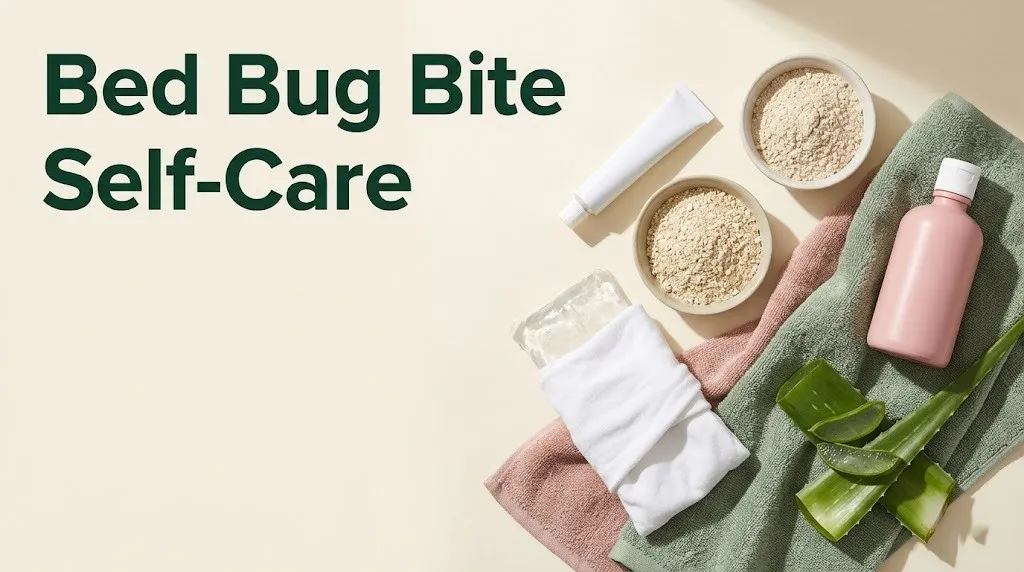
Bed Bug Bite Self-Care: Proven Relief Steps for 2026
Bed bug bite self-care starts with three things: control the itch, calm the inflammation, and protect the skin barrier while healing happens. For the vast majority of bites, that means cold compresses, an OTC anti-itch topical, and keeping your hands off the site.
The American Academy of Dermatology confirms that bed bug bites are not known to transmit infectious diseases, but they can trigger significant skin reactions ranging from mild localized itching to more pronounced inflammatory responses. What makes self-care genuinely important here is that scratching, not the bite itself, is the most common cause of lasting skin damage, secondary infection, and dark marks that can take weeks to fade.
This article covers exactly what to apply, what to take, and what to avoid at each stage of a bed bug bite reaction. It addresses the physiology behind the itch, explains which OTC ingredients have real evidence behind them, and draws a clear line between what home care can manage and what warrants a call to your doctor.
Bed Bug Bite Self-Care: What It Is and Why It Matters
Bed bug bite self-care refers to the home-based management of the inflammatory skin reaction caused by the saliva of Cimex lectularius, the common bed bug, using topical and oral OTC treatments, physical relief methods, and protective skin practices.
Self-care here is not a workaround for real treatment. For uncomplicated bites without signs of infection or systemic allergic reaction, it is the actual recommended treatment. The FDA OTC Drug Review Panel has identified and approved multiple topical agents specifically for the symptomatic relief of insect bite reactions, including topical hydrocortisone, calamine, and pramoxine hydrochloride.
What self-care can manage independently:
- Localized itching (pruritus) at the bite site
- Mild to moderate swelling and redness within the immediate bite area
- Skin discomfort and inflammation during the healing window
- Prevention of secondary damage from scratching
What self-care cannot replace medical care for:
- Bites showing spreading redness, warmth, or purulent discharge (signs of bacterial infection)
- Systemic allergic reactions including urticaria beyond the bite site, angioedema, or any breathing difficulty
- Extensive bite coverage across large body surface areas with severe inflammation
- Reactions that worsen after 72 hours of consistent self-care
The physiological reason self-care works for most bites is straightforward. Bed bug saliva contains nitrophorin proteins and apyrase, compounds that prevent blood clotting while the bug feeds. These proteins trigger mast cell degranulation at the bite site, releasing histamine. That histamine binds H1 receptors on cutaneous itch-specific C-fiber neurons, generating the intense pruritus that characterizes the reaction. Self-care interrupts this cascade at multiple points.
| Self-Care Approach | Mechanism of Action | Evidence Level |
|---|---|---|
| Cold compress | TRPM8 receptor activation, partial itch signal gating | Clinically informed, expert consensus |
| Topical hydrocortisone 1% | Glucocorticoid receptor activation, reduced cytokine release | FDA-approved OTC; strong clinical support |
| Calamine lotion | Zinc oxide anti-inflammatory; counterirritant effect | FDA OTC monograph approved |
| Oral antihistamine (cetirizine, loratadine) | H1 receptor blockade, systemic | Well-established clinical evidence |
| Colloidal oatmeal (Avena sativa kernel flour) | Avenanthramide-mediated NF-kB inhibition, barrier support | Supported by controlled clinical studies |
What Do Bed Bug Bites Look Like and How Do They Feel
Bed bug bites typically appear as small, flat or slightly raised red welts, often arranged in a line or cluster of three or more, on areas of skin exposed during sleep.
The clustered or linear pattern reflects how bed bugs feed: they bite, move a short distance, and bite again along the same exposed surface. Common sites include the neck, arms, shoulders, hands, and legs. The welts usually measure between 2 and 5 millimeters, though swelling can make them appear larger in people with stronger inflammatory responses.
The sensation starts as mild warmth or tingling and escalates to intense itching within minutes to hours of the bite, depending on whether the individual has been previously sensitized to bed bug saliva proteins. First-time exposure often produces a delayed or absent reaction. Repeated exposure commonly intensifies the response, according to a 2017 review published in the Journal of the American Academy of Dermatology on arthropod bite hypersensitivity patterns.
The central bite point may have a small dark spot or appear slightly paler than the surrounding wheal, which reflects the vasodilatory response around the puncture site. On people with Fitzpatrick skin types IV through VI, the redness may appear as darkened or brownish discoloration rather than bright red, making the inflammatory pattern slightly harder to distinguish visually from surrounding skin tone.
Key distinguishing features of bed bug bites versus other insect bites:
- The linear or “breakfast, lunch, dinner” clustered pattern is strongly associated with bed bugs
- Bites rarely occur on covered skin areas
- No stinger, central necrotic lesion, or expanding bull’s-eye pattern (the last two are associated with spider bites and Lyme disease, respectively, and warrant a different medical response entirely)
- Multiple people in the same sleeping environment may report bites simultaneously
Bed bug bites are not definitively diagnosable from appearance alone. If you are uncertain what caused the reaction, your situation warrants evaluation by a board-certified dermatologist, particularly if the reaction pattern is severe, worsening, or includes symptoms beyond the skin.
How Long Do Bed Bug Bites Last
Most bed bug bites resolve on their own within one to two weeks with or without self-care treatment, though the itch-active phase typically peaks within the first 48 hours.
The healing timeline breaks into three rough stages. In the first 24 to 48 hours, the histamine-driven wheal and flare reaction is at its most intense. The bite site is visibly raised, red, and aggressively itchy. From day 3 through day 7, the acute inflammation begins to subside as the body clears histamine and other mediators. By the end of the second week, the physical welt is typically gone in people without sensitization complications.
| Healing Phase | Typical Timeline | What You’ll Notice |
|---|---|---|
| Acute inflammatory phase | Hours 0 to 48 | Peak itching, redness, raised wheal, possible warmth |
| Subacute healing phase | Days 3 to 7 | Reduced swelling, fading redness, itch decreasing |
| Resolution phase | Days 7 to 14 | Flat skin, residual discoloration possible |
| PIH phase (if applicable) | Weeks 2 to 6 | Darkened mark at bite site, especially in deeper skin tones |
Several factors extend healing time. Scratching restimulates the inflammatory response and can reopen the skin surface, resetting the wound healing cascade. People with atopic dermatitis have a compromised skin barrier to begin with, meaning their healing trajectory is often slower and the infection risk from scratching is higher. People with immune suppression may experience prolonged inflammation.
The post-inflammatory hyperpigmentation that can follow bite-site inflammation, particularly in people with Fitzpatrick skin types IV through VI, is not a wound. It is the skin’s melanin response to localized inflammation. This darkening can persist for two to six weeks and, in some cases, longer without targeted management. This is where preventive self-care choices made during the acute phase genuinely affect long-term skin outcome.
How to Stop Bed Bug Bites From Itching
The most effective way to stop bed bug bites from itching combines a topical anti-itch agent with an oral antihistamine for the first 48 to 72 hours when the histamine-driven itch is at its peak.
No single product interrupts every component of the itch signal simultaneously. The histamine response involves H1 receptors both on cutaneous nerve endings (producing the local itch) and systemically. An oral antihistamine blocks H1 receptors centrally and peripherally. A topical anti-itch product provides localized relief at the site directly.
Step-by-step approach to managing bed bug bite itch:
- Wash the bite site gently with mild soap and lukewarm water. Pat dry with a clean cloth. Do not rub.
- Apply a cold compress (a clean cloth soaked in cold water, or a gel ice pack wrapped in a cloth) for 10 minutes. This activates TRPM8 cold receptors in the skin, partially gating the itch signal through competing sensory input.
- Apply a topical anti-itch agent: either 1% hydrocortisone cream, calamine lotion, or a product containing pramoxine hydrochloride 1%. Do not use all three simultaneously on the same bite site.
- Take an oral second-generation antihistamine: cetirizine 10mg or loratadine 10mg. Both are non-sedating at standard doses and provide 24-hour H1 blockade.
- Repeat topical application every 6 to 8 hours as needed. Keep the area clean and covered lightly if the site is on an arm or leg to reduce unconscious scratching during sleep.
- Trim fingernails short for the first week. This reduces skin damage from any scratching that occurs involuntarily during sleep.
The hardest part of this protocol is not the application. It is not scratching. Scratching stimulates further mast cell degranulation at the site, releasing additional histamine and prolonging the itch-inflammation cycle. Think of the itch signal like an alarm. Scratching does not silence the alarm. It presses snooze for 10 seconds and then makes it louder.
People with sensitive skin or a known tendency toward contact dermatitis should patch-test any new topical product on the inner forearm for 24 hours before applying to bite sites across larger areas.
Cold Compress and Immediate Relief for Bed Bug Bites
A cold compress is the single fastest-acting, safest first-response tool for bed bug bite relief and works by activating cold-sensing receptors in the skin that temporarily interrupt itch signal transmission.
The mechanism is documented in pain and itch neuroscience research. The skin’s TRPM8 (transient receptor potential melastatin 8) channels respond to temperatures below approximately 26 degrees Celsius. When these cold-sensitive receptors activate, they compete with itch-specific C-fiber neuron signals for processing in the spinal dorsal horn, reducing the perceived intensity of pruritus through a gate-control-type mechanism. This is not permanent itch suppression. It provides 10 to 20 minutes of relief per application.
How to apply a cold compress correctly:
- Use a clean cloth or a dedicated gel pack. Avoid applying ice directly to skin; direct ice contact risks ice burn, particularly on sensitive or already-inflamed skin.
- Wrap the cold source in a thin layer of cloth if using a gel pack or ice cubes in a bag.
- Apply to the bite site for 10 minutes maximum. Remove for at least 10 minutes before reapplying.
- Dry the skin gently before applying any topical treatment afterward. Wet skin changes topical absorption rates and can dilute active ingredients.
Quick Tip:
- A bag of frozen peas wrapped in a kitchen towel works as well as a commercial gel pack for this purpose.
- Do not leave any cold application on longer than 10 to 15 minutes, especially on facial skin, where tissues are thinner and more sensitive to temperature extremes.
- For children under 6, use a cloth soaked in cool (not ice-cold) water rather than a cold pack, as young skin is more sensitive to temperature-mediated tissue damage.
Cold compresses are appropriate for all skin types and Fitzpatrick phototypes. They carry no sensitization or concentration risk. They are particularly useful as the first step before any topical product, as the cold reduces local blood flow temporarily, which can slightly reduce product absorption into the most inflamed tissue layers.
Calamine Lotion for Bed Bug Bites
Calamine lotion is an FDA-approved OTC topical that relieves itching from insect bites through the combined anti-inflammatory action of zinc oxide and a mild counterirritant effect, and it is one of the safest available options for most skin types.
The active ingredients in calamine are zinc oxide (typically 6.97%) and ferric oxide (0.5%), which gives the lotion its characteristic pink color. Zinc oxide has a well-documented anti-inflammatory mechanism: it inhibits prostaglandin synthesis at the skin surface and forms a mild physical barrier over the irritated area, reducing external stimulation of the already-sensitized nerve endings. The FDA classifies calamine as a safe and effective external analgesic and skin protectant under the OTC Drug Review.
Application guidance:
- Shake the bottle well before each use. Calamine settles and an unmixed application delivers inconsistent zinc oxide concentration.
- Apply a thin, even layer directly to the bite site using a cotton ball or clean fingertip.
- Allow to dry completely before covering with clothing. Calamine leaves a visible pink-white residue on skin.
- Reapply every 4 to 6 hours or after washing the area.
One practical limitation of calamine is its drying effect. Zinc oxide is an astringent, meaning it draws moisture from the skin surface. For people with dry or eczema-prone skin (atopic dermatitis), repeated calamine application without a follow-up moisturizer can impair skin barrier function and extend healing time. After calamine has dried and provided itch relief, applying a fragrance-free, ceramide-containing moisturizer over the top can protect the barrier without canceling the anti-inflammatory benefit.
Calamine is appropriate for use on adults and children over 2 years of age. For children under 2, consult a pediatrician before applying any topical zinc oxide preparation at this concentration. Pregnant women may use calamine at standard OTC concentrations on small skin areas; the systemic zinc absorption from topical calamine at this concentration is minimal and not considered clinically concerning.
Key Takeaway: Cold compresses interrupt the itch signal through TRPM8 receptor activation, calamine lotion delivers FDA-approved zinc oxide anti-inflammatory relief, and topical hydrocortisone reduces cytokine-driven inflammation at the glucocorticoid receptor level. These three are the most evidence-backed first-line self-care tools for bed bug bites.
Hydrocortisone Cream for Bed Bug Bites
Topical hydrocortisone 1% is the most pharmacologically targeted OTC self-care option for bed bug bite inflammation, working by binding glucocorticoid receptors in skin cells to suppress the release of inflammatory cytokines, prostaglandins, and leukotrienes at the bite site.
The FDA classifies hydrocortisone 1% as a safe and effective OTC anti-inflammatory for temporary relief of itching associated with insect bites. This is not a guess or general wellness advice. It is a regulatory classification based on decades of clinical use and pharmacological review. The mechanism is specific: topical hydrocortisone reduces local vascular permeability (which decreases swelling), inhibits mast cell-associated cytokine production (which reduces the ongoing histamine signal), and calms the sensory nerve sensitization that sustains post-bite pruritus.
Evidence and application guidance:
| Application Factor | Guidance |
|---|---|
| Concentration | 1% hydrocortisone for OTC self-care; do not exceed without dermatologist direction |
| Frequency | Apply 2 to 4 times daily to the affected area |
| Duration | Use for no more than 7 consecutive days on a single bite site without medical review |
| Amount | Thin layer only; excess application does not increase efficacy and raises systemic absorption risk |
| Areas to avoid | Do not apply near eyes, on broken skin, or on genital skin without medical guidance |
| Age restriction | Not recommended for children under 2 without pediatric guidance |
An important nuance: 1% hydrocortisone works on inflammation that is already present. It does not prevent the bite reaction from initiating, and it does not speed healing of the skin surface wound itself. Apply it after the cold compress, not instead of it.
For people with rosacea or perioral dermatitis, use topical corticosteroids only under dermatologist supervision on facial skin. Repeated corticosteroid application on facial skin in people with these conditions can cause steroid-induced rosacea flares or exacerbate perioral dermatitis.
People with Fitzpatrick skin types IV through VI benefit particularly from prompt hydrocortisone use because controlling inflammation early reduces the melanin overproduction that drives post-inflammatory hyperpigmentation at the bite site.
Antihistamine for Bed Bug Bite Itch
Oral antihistamines are the most effective systemic self-care tool for managing the widespread or intense itch from bed bug bites, working by blocking histamine H1 receptors throughout the body before histamine can bind them and trigger nerve-mediated pruritus.
Two generations of OTC antihistamines are available, and they are not equivalent for bed bug bite self-care.
| Antihistamine | Generation | Sedation Level | Duration | Best Use Context |
|---|---|---|---|---|
| Diphenhydramine (Benadryl) 25-50mg | First-generation | Highly sedating | 4 to 6 hours | Nighttime use when sleep is disrupted by itch |
| Cetirizine (Zyrtec) 10mg | Second-generation | Minimally sedating | 24 hours | Daytime use; preferred for ongoing daily coverage |
| Loratadine (Claritin) 10mg | Second-generation | Non-sedating | 24 hours | Daytime use; safe option during pregnancy (category B) |
| Fexofenadine (Allegra) 180mg | Second-generation | Non-sedating | 24 hours | Daytime use; no grapefruit juice interaction issue |
According to the British Journal of Dermatology, second-generation antihistamines (cetirizine, loratadine, fexofenadine) provide equivalent or superior H1 blockade compared to first-generation agents while avoiding the cognitive impairment, urinary retention, and anticholinergic effects associated with diphenhydramine.
For most adults managing bed bug bite itch, cetirizine 10mg once daily is the practical first choice: 24-hour coverage, once-daily dosing, and minimal sedation at standard doses.
A note for people with liver or kidney impairment: second-generation antihistamines are metabolized or cleared renally. If you have known hepatic or renal conditions, check with your primary care physician before starting any antihistamine. Diphenhydramine should be used with particular caution in older adults (65 and above), as anticholinergic effects including confusion and fall risk are elevated in this population, per the American Geriatrics Society’s Beers Criteria.
Oatmeal Bath and Soothing Skin Soaks for Bed Bug Bites
An oatmeal bath using colloidal oatmeal (Avena sativa kernel flour) is a clinically supported self-care measure for widespread or multiple bed bug bites, working through the anti-inflammatory action of avenanthramides, polyphenolic compounds unique to oats that suppress NF-kB-mediated cytokine signaling in skin cells.
The mechanism is more specific than “soothing.” A 2012 study published in the Journal of Cosmetic Dermatology found that avenanthramides from colloidal oatmeal significantly reduced inflammatory markers in skin cell cultures. While this was in vitro work, the same researchers’ follow-on clinical data and the broader evidence base for colloidal oatmeal in atopic dermatitis, poison ivy, and insect bite pruritus support its use as a genuinely active anti-inflammatory agent rather than simply a moisturizing bath additive.
How to prepare and use an oatmeal bath correctly:
- Use a product labeled “colloidal oatmeal” (finely milled Avena sativa kernel flour). Regular rolled oats do not have the same particle size and will not disperse properly in water.
- Fill a bathtub with lukewarm water, not hot. Hot water dilates blood vessels and increases histamine release from mast cells, worsening itch.
- Add 1 cup (approximately 100g) of colloidal oatmeal to the running water while the tub fills. Stir to distribute.
- Soak for 15 to 20 minutes. Do not scrub the bite sites.
- Pat skin dry gently with a soft towel. Do not rub.
- Immediately apply a fragrance-free, barrier-supporting moisturizer (one containing petrolatum or ceramide NP) to damp skin to seal in hydration and support the skin barrier.
Key Takeaway: Oral second-generation antihistamines (cetirizine or loratadine 10mg) deliver the most effective systemic H1 receptor blockade for bed bug bite itch, and colloidal oatmeal baths provide documented anti-inflammatory relief for multiple bites through avenanthramide-mediated NF-kB suppression.
People with a confirmed allergy to oats or grains should not use colloidal oatmeal products. If you have celiac disease or known wheat or oat sensitivity, speak with your allergist before using colloidal oatmeal in any form on your skin.
Natural and Home Remedies for Bed Bug Bites
Several natural remedies have genuine mechanistic rationale for bed bug bite relief, while others carry sensitization or irritation risks that outweigh any potential benefit at typical home-use concentrations.
Aloe vera (Aloe barbadensis leaf juice) contains acemannan, a polysaccharide with documented anti-inflammatory and wound-healing properties in controlled human studies. Applied as a pure gel to the bite site, aloe vera may reduce local inflammation and support the skin barrier without the drying effect associated with calamine. A 2019 review in the British Journal of Dermatology supported aloe vera’s anti-inflammatory efficacy on irritated skin, noting that its acemannan content reduced cytokine expression comparable to low-concentration topical steroids in some models.
What works and what carries risk:
- Aloe vera gel (pure, fragrance-free): Anti-inflammatory via acemannan; appropriate for adults and children over 2; low sensitization risk in fragrance-free form
- Sodium bicarbonate (baking soda) paste: Mild pH buffering of skin surface; provides very short-term physical distraction from itch; no documented anti-inflammatory mechanism; can be drying; limited to brief application, rinse off within 10 minutes
- Cold tea bags (green or black tea): Contain tannins with mild astringent properties; may temporarily reduce surface redness; evidence is anecdotal with no controlled clinical trial support for bite-specific use
- Tea tree oil (melaleuca alternifolia): High sensitization risk at concentrations above 1%; the American Contact Dermatitis Society has identified tea tree oil as a common contact allergen; it should not be applied undiluted to bite sites; its anti-inflammatory activity at safe diluted concentrations is modest and not superior to calamine or hydrocortisone
- Honey (raw): Some antimicrobial properties documented from manuka honey research, but no evidence for insect bite itch relief specifically; sticky application carries hygiene concerns
- Apple cider vinegar: Acidity (approximately pH 2 to 3) risks further irritating already-inflamed skin; no clinical evidence for bite relief; not recommended
For people choosing natural options over OTC pharmaceuticals, aloe vera gel remains the most evidence-informed choice. Colloidal oatmeal is the strongest evidence-backed natural option of all.
How to Prevent Scarring and Post-Inflammatory Hyperpigmentation From Bed Bug Bites
The most effective way to prevent lasting skin marks from bed bug bites is to control inflammation early and stop scratching completely, because post-inflammatory hyperpigmentation (PIH) is driven by melanin overproduction triggered by the inflammatory signal itself, not by the bite wound.
Post-inflammatory hyperpigmentation is the skin’s response to any localized inflammation: melanocytes in the basal layer of the epidermis produce excess melanin as part of a protective response, leaving a dark mark after the inflammation resolves. This mechanism is the same whether the trigger is acne, a rash, or an insect bite. According to the Journal of Investigative Dermatology, melanocyte activation from inflammatory mediators, particularly prostaglandin E2 and leukotriene C4, is the primary driver of PIH in skin with Fitzpatrick types IV through VI.
Why this matters for self-care decisions: every time you scratch a bite site, you re-trigger the inflammation cascade, which re-stimulates melanocyte activity. Managing itch aggressively during the acute phase is not just about comfort. It directly affects whether you end up with a temporary mark or one that takes months to fade.
Prevention and management steps:
- Apply 1% hydrocortisone cream promptly to reduce the initial inflammatory intensity and minimize prostaglandin-driven melanocyte stimulation
- Keep the bite site moisturized with a fragrance-free, ceramide-containing product to prevent the skin surface from cracking and extending the wound healing period
- Avoid sun exposure on healing bite sites. UV light stimulates melanin production independently, compounding any existing PIH response
- Apply a broad-spectrum SPF 30 or higher sunscreen to any exposed healing bite sites
- Do not apply alpha-hydroxy acids, retinoids, or any exfoliating agents to actively inflamed bite sites. These are appropriate for fading PIH marks only after the inflammation has fully resolved, not during the active healing phase
For people with Fitzpatrick skin types IV through VI who develop persistent dark marks after bite healing, a board-certified dermatologist can evaluate whether a topical brightening agent containing azelaic acid (15 to 20%), tranexamic acid, or niacinamide (4 to 10%) is appropriate for fading residual PIH.
Signs of an Infected Bed Bug Bite
A bed bug bite is infected when bacteria, most commonly Staphylococcus aureus or Streptococcus pyogenes, have entered the broken skin barrier, usually through scratching, and the body’s immune response to that bacterial colonization has begun producing signs distinct from the original bite reaction.
This distinction matters because an infected bite requires antibiotic treatment, not more self-care. Continuing to apply calamine or hydrocortisone to an infected bite will not resolve the infection and may delay treatment of what can become a rapidly spreading skin infection like cellulitis or impetigo.
Signs that a bite is infected rather than just inflamed:
- Redness that expands beyond the immediate bite area and continues to spread after 48 hours rather than subsiding
- Warmth and tenderness to touch that is increasing, not decreasing
- Purulent discharge (yellow or green fluid) from the bite site
- Crusting with yellow or honey-colored material, which is characteristic of impetigo caused by Staphylococcus aureus or Streptococcus pyogenes
- Swelling that extends significantly beyond the original wheal
- Red streaking lines radiating outward from the bite (a potential sign of spreading lymphangitis, which is a medical emergency)
- Fever, chills, or body aches accompanying the local skin changes
Key Takeaway: Stop scratching completely. Scratching is the primary way bacteria enter a bite site and turn a self-limiting skin reaction into a bacterial skin infection. If you see spreading redness, warmth, discharge, or streaking lines from a bite site, contact a primary care physician or urgent care provider that day.
An infected bed bug bite that is not treated can progress to cellulitis, a deeper infection of the dermis and subcutaneous tissue, which typically requires oral or intravenous antibiotics. This is not a scare tactic. It is a well-documented complication of any insect bite that is scratched open and exposed to skin surface bacteria.
People with diabetes, circulatory conditions, or immune suppression should seek evaluation for any bite that does not show clear improvement within 48 hours of self-care, as their ability to contain bacterial skin infections is reduced compared to immunocompetent individuals.
Bed Bug Bite Allergic Reaction Symptoms
A bed bug bite allergic reaction occurs when the immune system mounts an IgE-mediated hypersensitivity response to bed bug salivary proteins, producing symptoms that go beyond the local bite site and may include widespread hives, swelling, or in rare cases, systemic symptoms.
Most people experience a local irritant reaction: a wheal, some redness, itch. An allergic reaction involves the immune system recognizing specific proteins in bed bug saliva as foreign antigens and producing IgE antibodies against them. On re-exposure, mast cells throughout the body degranulate, releasing histamine systemically rather than just locally.
Symptoms that suggest an allergic reaction rather than normal bite inflammation:
- Hives (urticaria) appearing on areas of skin far from the actual bite site
- Angioedema: swelling of the lips, tongue, eyelids, or throat
- Rapid development of symptoms within minutes of the bite rather than the usual hours-long delayed reaction
- Generalized itching across the whole body, not just the bite site
- Difficulty swallowing or a sensation of throat tightening
- Dizziness, lightheadedness, or rapid heart rate
- Difficulty breathing or wheezing
The National Institute of Allergy and Infectious Diseases (NIAID) identifies any combination of skin symptoms with airway or cardiovascular involvement as anaphylaxis until proven otherwise, and anaphylaxis requires immediate emergency medical care, including administration of epinephrine.
If someone experiences hives, angioedema, or any respiratory or cardiovascular symptoms after a bed bug bite, call emergency services immediately. This is not a situation for home management. After recovery, a referral to an allergist/immunologist is appropriate to discuss whether allergen sensitization testing and a personalized emergency action plan, including an epinephrine auto-injector, are warranted.
When to See a Doctor for Bed Bug Bites
See a primary care physician or urgent care provider for a bed bug bite when the reaction does not improve after 72 hours of consistent self-care, when any signs of bacterial infection appear, or when symptoms extend beyond the local bite site.
The distinction between “monitor at home” and “see someone today” is clearer than most resources make it:
| Situation | Recommended Action |
|---|---|
| Small, itchy welts, improving over 48 to 72 hours | Continue self-care; monitor |
| No improvement after 72 hours of consistent OTC treatment | Primary care physician evaluation |
| Spreading redness, warmth, discharge, or crusting at bite site | Urgent care or primary care physician, same day |
| Red streaking from bite site | Emergency care immediately |
| Hives, angioedema, or breathing difficulty | Call emergency services (911) immediately |
| Severe reaction covering large body surface area | Primary care physician or dermatologist within 24 hours |
| Bites with no response to OTC treatment in children under 2 | Pediatrician, same day |
| Bite on the face with significant swelling | Primary care physician or dermatologist evaluation |
According to the American Academy of Dermatology, any insect bite that is spreading, feels increasingly painful (not just itchy), or shows signs of bacterial superinfection should be evaluated by a healthcare provider without delay.
When you do visit a provider, describe: the approximate time the bites appeared, how many are present, where on your body they are located, what self-care you have already tried and for how long, and whether any household members or travel companions have developed similar bites. This information helps the provider confirm the source, assess the reaction type, and choose the appropriate treatment.
Bed Bug Bite Self-Care During Pregnancy and for Sensitive Skin
Bed bug bite self-care during pregnancy requires modification because several standard OTC options carry restrictions or reduced safety data for pregnant women, and self-care for sensitive skin requires attention to fragrance, pH, and concentration levels that standard formulations may not account for.
For pregnant women:
- Oral diphenhydramine (Benadryl) is classified as Pregnancy Category B by historic FDA classification standards but is associated with increased risk of cleft palate when used in the first trimester and potential neonatal withdrawal symptoms when used near term. The safer OTC antihistamine choice during pregnancy is loratadine 10mg (also Category B with a cleaner safety profile in observational data).
- Topical hydrocortisone 1% is generally considered low-risk when applied in small amounts to limited skin areas for short periods during pregnancy. Prolonged, large-surface-area use carries theoretical systemic absorption concerns. Limit use to the minimum necessary.
- Colloidal oatmeal baths and cold compresses are the safest first-line measures during pregnancy and should be prioritized before any pharmacological option.
- Topical aloe vera (pure, fragrance-free) is appropriate during pregnancy at standard topical use concentrations.
For sensitive skin:
- Choose fragrance-free formulations of every product. Fragrance is the most common contact allergen in OTC skincare and OTC pharmaceutical topicals.
- Avoid products combining multiple actives (for example, calamine plus menthol plus benzocaine). Multi-active formulations increase sensitization risk.
- Patch test any new product on the inner forearm for 24 hours before application to bite sites, particularly if your skin reacts to new products regularly.
- If your skin typically flares with any topical corticosteroid, cold compresses and colloidal oatmeal baths are your strongest non-corticosteroid options.
| Product | Pregnancy Safety | Sensitive Skin Note |
|---|---|---|
| Cold compress | Safe | Safe for all |
| Colloidal oatmeal bath | Safe | Confirm no oat allergy |
| Calamine lotion | Generally safe on limited area | Can be drying; follow with moisturizer |
| Hydrocortisone 1% cream | Low-risk in small area, short-term | Avoid on broken skin; patch test first |
| Loratadine 10mg | Category B; preferred oral antihistamine | No topical application concerns |
| Diphenhydramine oral | Use with caution; avoid first trimester and near term | Sedation risk; anticholinergic effects |
| Aloe vera (pure, fragrance-free) | Appropriate at topical use concentrations | Confirm no aloe allergy; rarely allergenic |
A pregnant woman experiencing more than 10 bite sites, any signs of allergic reaction beyond the bite site, or any bite showing signs of infection should contact her obstetric provider or primary care physician that day rather than managing independently at home.
Key Takeaway: During pregnancy, colloidal oatmeal baths, cold compresses, and fragrance-free aloe vera are the safest first-line bed bug bite self-care steps; loratadine 10mg is the preferred oral antihistamine if a systemic approach is needed, and topical hydrocortisone 1% is appropriate only in small amounts on limited skin areas for a short period.
Frequently Asked Questions About Bed Bug Bite Self-Care
How do I stop bed bug bites from itching immediately?
Apply a cold compress to the bite site for 10 minutes to activate TRPM8 cold-sensing receptors, which temporarily interrupt the itch signal.
Follow immediately with a topical anti-itch product: 1% hydrocortisone cream, calamine lotion, or a product containing pramoxine hydrochloride 1%.
For faster and longer-lasting systemic relief, take cetirizine 10mg or loratadine 10mg, which provide 24-hour H1 receptor blockade across the body.
Is it safe to use hydrocortisone cream on bed bug bites every day?
Topical hydrocortisone 1% is FDA-approved for insect bite relief and safe for most adults when applied two to four times daily to the affected area for up to seven consecutive days.
Do not apply it under occlusive dressings, on broken or infected skin, or around the eyes without medical guidance.
If your bites are not improving after seven days of consistent use, see a primary care physician or board-certified dermatologist to rule out secondary infection or a different skin reaction.
What is the fastest home remedy for bed bug bite relief?
A cold compress is the fastest-acting option, providing 10 to 20 minutes of itch relief within minutes of application through TRPM8 receptor-mediated itch signal interruption.
Pair it with calamine lotion or 1% hydrocortisone for sustained relief that lasts hours beyond what the cold compress provides alone.
Colloidal oatmeal baths work well for multiple bites across the body and begin reducing inflammation within 15 to 20 minutes of soaking.
Can bed bug bites leave permanent scars or dark marks?
Bed bug bites do not typically cause permanent scarring, but scratching can break the skin and create a wound that heals with scar tissue or persistent discoloration.
Post-inflammatory hyperpigmentation, a dark mark left at the site of resolved inflammation, is common after bed bug bites in people with Fitzpatrick skin types IV through VI and can last two to six weeks or longer.
Controlling inflammation early with hydrocortisone, protecting the site from sun exposure, and not scratching are the most effective ways to minimize the duration and intensity of these marks.
How do I know if my bed bug bite is infected?
Signs of an infected bite include spreading redness beyond the original welt, increasing warmth and tenderness, yellow or green discharge, honey-colored crusting, or swelling that is growing rather than shrinking.
Red streaking lines radiating from the bite site indicate a potentially serious spreading infection and require emergency care.
Fever, chills, or a general feeling of illness accompanying any bite site changes are additional signs that the situation has moved beyond self-care.
When should I go to the doctor for a bed bug bite?
Go to a primary care physician or urgent care provider if your bite shows no improvement after 72 hours of consistent OTC self-care, if redness is spreading, or if you see any discharge or crusting at the bite site.
Call emergency services immediately if you develop hives beyond the bite site, swelling of the lips or throat, difficulty breathing, or dizziness after a bed bug bite.
Children under 2 with any bed bug bite reaction should be seen by a pediatrician rather than managed at home with standard OTC adult formulations.
What to Do Right Now
Most bed bug bites respond well to prompt, consistent self-care: a cold compress to interrupt the initial itch signal, a topical anti-inflammatory to calm the bite site, and an oral antihistamine to block histamine systemically for the peak 48 to 72 hours. None of this requires a prescription, and none of it is complicated. What it requires is following through.
The one thing that determines whether a bite heals cleanly in one to two weeks or leaves a mark that takes a month to fade is whether you scratch it. That one behavioral choice affects healing time, infection risk, and whether post-inflammatory hyperpigmentation develops at all.
Gather your self-care kit now: colloidal oatmeal products, calamine lotion or 1% hydrocortisone cream, cetirizine or loratadine, and a fragrance-free barrier moisturizer. Know the signs of infection and the signs of allergic reaction so you can recognize them clearly if they appear. With the right approach, you will have the tools and the knowledge to handle this well.