Sprained Ankle Self-Care Tips: How to Heal Faster in 2026
Sprained ankle self-care, done correctly from the first hour, is the single most important factor in how fast and how completely your ankle recovers. Most sprains can be managed at home, but the steps you take in the first 48 to 72 hours either set up the healing tissue for success or slow it down significantly.
According to the National Institute of Arthritis and Musculoskeletal and Skin Diseases (NIAMS), ankle sprains are among the most common musculoskeletal injuries worldwide, accounting for an estimated 25,000 cases per day in the United States alone. The research published in the British Journal of Sports Medicine in 2019 also showed that the traditional RICE protocol (rest, ice, compression, elevation) has been refined and expanded into a more evidence-grounded approach that better accounts for the active role movement plays in ligament repair.
This guide covers what actually happens in your ankle when it sprains, the updated self-care protocol sports medicine now recommends, a phase-by-phase recovery plan with exercises you can start at home, and specific guidance for people whose health status makes standard approaches less appropriate. It is written for the person dealing with a real, current injury who needs practical, science-backed steps they can act on now.
Sprained Ankle Self-Care: What It Actually Involves
Sprained ankle self-care is the structured, evidence-informed set of actions you take at home to reduce tissue damage, control swelling, manage pain, and restore full function to the ankle joint without accelerating reinjury.
It is not just putting your foot up and hoping the swelling goes away. Effective self-care involves active decisions about timing, tools, movement, and progressive loading across specific recovery phases. The distinction matters because passive rest alone, without deliberate rehabilitation, is associated with higher rates of chronic ankle instability, a condition where the ankle becomes mechanically or functionally unstable after repeated sprains.
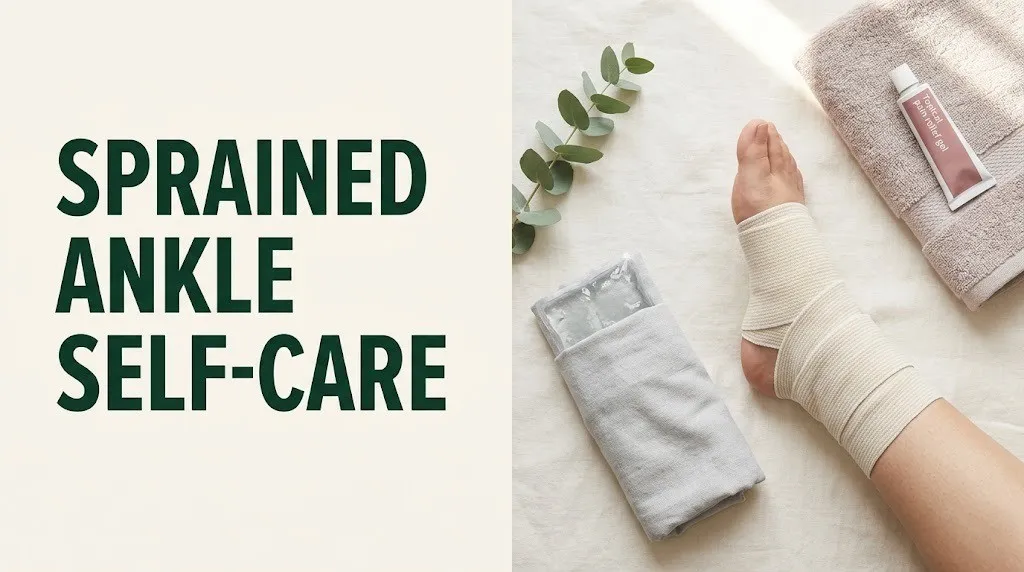
Self-care in this context supports but does not replace medical evaluation. If your ankle cannot bear any weight after 48 hours, if the pain is severe and localized directly over a bone, or if the swelling is rapidly worsening without response to home care, that is a clinical threshold that warrants a visit to a licensed physical therapist, sports medicine physician, or urgent care provider. For everything below that threshold, the steps in this guide are grounded in current sports medicine evidence.
Ankle sprain self-care has a clear scope. It can manage edema (swelling from fluid accumulation), reduce pain through appropriate analgesia and cryotherapy, maintain range of motion, rebuild proprioceptive function (the ankle’s ability to sense its position in space), and restore strength. It cannot repair a fully ruptured ligament without surgical support, rule out a fracture, or diagnose a syndesmotic injury (a tear of the ligament connecting the two lower leg bones).
What Is a Sprained Ankle and How Does It Happen
A sprained ankle is an injury to one or more of the ankle’s ligaments, caused by the joint being forced beyond its normal range of motion in a way that stretches or tears the fibrous connective tissue holding the bones in proper alignment.
The ankle complex is held together by several ligament groups. On the outer (lateral) side, the three primary ligaments are the anterior talofibular ligament (ATFL), the calcaneofibular ligament (CFL), and the posterior talofibular ligament (PTFL). The ATFL is the most commonly injured ligament in a lateral sprain, which accounts for approximately 77 to 85 percent of all ankle sprains according to the American Orthopaedic Foot and Ankle Society (AOFAS).
The mechanism of injury in a lateral sprain is typically plantarflexion with inversion: the foot rolls inward and downward, often while landing from a jump, stepping on an uneven surface, or changing direction quickly. When this happens, the ATFL is stretched beyond its elastic limit. If the force continues, the CFL may also be involved.
Think of a ligament like a woven nylon strap holding two door hinges in alignment. A mild sprain stretches the strap without breaking the fibers. A severe one tears through the strap completely. In both cases, the hinge can still move, but with far less stability and control than before.
Medial sprains, involving the deltoid ligament complex on the inner ankle, are far less common and typically associated with more significant force. High ankle sprains, or syndesmotic injuries, involve the ligaments between the tibia and fibula above the ankle joint and require much longer recovery periods.
Grades of Ankle Sprain and What They Mean for Recovery
Ankle sprains are classified into three grades based on the degree of ligament disruption, and each grade carries different implications for how long recovery takes and what self-care can reasonably achieve.
| Grade | Ligament Damage | Key Symptoms | Weight Bearing | Self-Care Sufficient? |
|---|---|---|---|---|
| Grade I | Micro-tears, fibers intact | Mild swelling, minimal bruising, mild tenderness | Usually possible within 24 hours | Yes, with appropriate protocol |
| Grade II | Partial tear | Moderate swelling, bruising, significant tenderness, some instability | Painful but possible | Yes, with PT guidance recommended |
| Grade III | Complete rupture | Severe swelling, bruising, marked instability, possibly painless at moment of injury | Typically not possible | Medical evaluation required |
Grade I sprains involve microscopic tearing of ligament fibers without disruption of overall ligament structure. The joint remains stable. Self-care at home is appropriate and typically sufficient.
Grade II sprains involve partial tearing, with some loss of structural integrity. The ankle may feel loose or unstable under load. Home self-care manages the initial inflammatory phase, but a physical therapy evaluation is strongly recommended to assess instability and guide rehabilitation.
Grade III sprains involve complete ligament rupture. The paradox here is that a Grade III sprain may feel less painful immediately after injury because the sensory nerve fibers in the ligament are also disrupted. Severe instability, rapid extensive bruising, and inability to bear any weight at all are the clinical signals. A board-certified orthopedic surgeon or sports medicine physician should evaluate any suspected Grade III injury, as some require surgical repair.
The PEACE and LOVE Protocol for Ankle Sprain
The PEACE and LOVE protocol is the current evidence-preferred self-care framework for acute soft tissue injuries including ankle sprains, replacing the older RICE (rest, ice, compression, elevation) model as the primary guidance for injury management.
Published in the British Journal of Sports Medicine by Dubois and Esculier in 2019, PEACE and LOVE was developed because RICE, while valuable in the first few hours, does not account for the active recovery phase or address the psychosocial factors that affect rehabilitation outcomes.
PEACE covers the immediate phase (first 1 to 3 days):
| Letter | Stands For | What It Means in Practice |
|---|---|---|
| P | Protection | Limit movement that causes pain. Avoid activities that load the injured ligament. |
| E | Elevation | Raise the ankle above the level of the heart when resting to reduce edema. |
| A | Avoid anti-inflammatory modalities | The inflammatory phase is part of healing. Avoid aggressive icing, NSAIDs, and anti-inflammatory medications during the first 72 hours where possible. |
| C | Compression | Apply a bandage or sleeve to limit swelling. |
| E | Education | Understand the injury, set realistic expectations, and avoid passive treatments that create dependency. |
LOVE covers the subsequent rehabilitation phase:
| Letter | Stands For | What It Means in Practice |
|---|---|---|
| L | Load | Begin optimal loading as soon as pain allows. Movement accelerates tissue remodeling. |
| O | Optimism | Psychological factors like fear of reinjury and catastrophizing affect outcomes. Confidence in recovery improves it. |
| V | Vascularization | Low-pain cardiovascular activity (cycling, pool walking) promotes blood flow to healing tissue without mechanical stress. |
| E | Exercise | Progressive range of motion, strength, and proprioception exercises restore function. |
The “Avoid anti-inflammatory modalities” element is the most clinically surprising component for most readers. The reasoning is grounded in tissue biology: the inflammatory cascade in the first 72 hours is not a mistake your body is making. It is the recruitment of repair cells, growth factors, and collagen synthesis precursors to the damaged tissue. Aggressively blocking it with high-dose NSAIDs or prolonged icing may disrupt this process. This does not mean avoiding pain relief entirely, but it changes the calculus around how aggressively to suppress inflammation in the very earliest hours.
Key Takeaway: The PEACE and LOVE protocol is the current evidence-preferred approach for ankle sprain self-care, updating the older RICE model with an active recovery phase that begins as soon as pain allows.
Ice vs Heat for a Sprained Ankle
Ice is appropriate in the first 24 to 72 hours after an ankle sprain to reduce pain and limit swelling, while heat becomes appropriate in the subacute and rehabilitation phases to promote blood flow, relax surrounding muscle tissue, and prepare the joint for movement.
The practical rationale for ice in the acute phase centers on two mechanisms. First, cold reduces local nerve conduction velocity, which decreases pain signal transmission. Second, cold causes vasoconstriction, which slows the rate of hemorrhagic edema accumulation in the early hours after injury. According to the Journal of Athletic Training, sessions of 15 to 20 minutes of cryotherapy applied up to four times daily are the most commonly cited evidence-supported application parameters.
Ice should never be applied directly to the skin. A cloth barrier, thin towel, or purpose-made gel pack sleeve must sit between the ice source and the skin at all times. Direct ice-to-skin contact beyond 10 minutes risks ice burn, a frostbite-like surface injury characterized by erythema (redness), vesicle (blister) formation, and in severe cases, temporary skin necrosis. People with peripheral neuropathy, including those with diabetes-related sensory loss, cannot reliably detect the early warning signs of ice burn and must be especially careful with cryotherapy application.
Heat application (thermotherapy) is appropriate from roughly day 3 to 5 onward, once the acute inflammatory phase has stabilized and the dominant goal shifts to promoting circulation and soft tissue flexibility. A warm (not hot) compress applied for 15 to 20 minutes before gentle range-of-motion exercises helps prepare the tissue for movement. Do not use heat in the first 24 to 48 hours. It accelerates local blood flow at a time when the microvasculature around the injury is already leaking, which worsens swelling.
Compression and Elevation for Ankle Sprain Swelling
Compression reduces swelling by providing external counter-pressure against the fluid accumulating in the tissue surrounding the injured ligament, and elevation uses gravity to move excess fluid away from the ankle toward the body’s core.
Compression works best when applied immediately or within the first hour after injury and maintained continuously in the acute phase. A figure-eight bandage pattern or an appropriately sized elastic compression sleeve provides the most consistent pressure distribution. The pressure should be firm enough to feel supportive but should never cause tingling, numbness, or skin color changes below the bandage (pale, blue, or mottled skin below compression indicates it is too tight and must be loosened immediately).
For elevation, the target is to raise the ankle above the level of the heart, not just above the level of the hip. Lying flat with the ankle propped on two or three pillows meets this threshold for most people. Sitting in a chair with the foot on a footstool does not achieve sufficient elevation to meaningfully reduce hydrostatic pressure in the ankle vasculature.
Quick Tip:
- Apply compression before getting out of bed in the morning, when swelling is lowest, for the most comfortable and effective fit.
- Check for signs of circulation restriction every 30 minutes in the first few hours: press the toenail until it blanches, release, and verify color returns within 2 seconds.
- People with a history of venous insufficiency or lymphedema should consult a physician or certified lymphedema therapist before applying any compression to a swollen limb, as standard bandage tension may be inappropriate for their circulatory physiology.
Key Takeaway: Compression applied with a figure-eight bandage and elevation above heart level are two of the most mechanically effective immediate steps you can take to limit ankle swelling in the first hours after a sprain.
OTC Pain Relief for a Sprained Ankle
Over-the-counter analgesics can reduce pain from an ankle sprain and allow for earlier, more comfortable mobility during the rehabilitation phase, though timing and choice of medication matters more than most people realize.
Ibuprofen (a non-steroidal anti-inflammatory drug, chemical name: 2-(4-isobutylphenyl)propanoic acid) and naproxen sodium are the most commonly used OTC options. Both reduce prostaglandin synthesis via cyclooxygenase (COX-1 and COX-2) inhibition, which lowers both pain and inflammation. Per standard OTC labeling, ibuprofen is typically dosed at 200 to 400 mg every 4 to 6 hours as needed, not to exceed 1,200 mg per day without medical supervision.
The PEACE and LOVE framework specifically cautions against aggressive anti-inflammatory NSAID use in the first 72 hours for the reasons discussed earlier. However, this is a nuanced position, not an absolute prohibition. If the pain is severe enough to prevent any weight bearing or sleep, the benefit of NSAID analgesia for function and adherence to rehabilitation may outweigh the theoretical cost of partial inflammatory suppression. This is a clinical judgment call, and any person with kidney disease, peptic ulcer disease, cardiovascular disease, or who is taking blood-thinning medications should consult their prescribing physician before using NSAIDs.
Acetaminophen (analgesic, chemical name: para-acetylaminophenol or 4-acetamidophenol) provides pain relief without the anti-inflammatory mechanism, making it the preferred alternative when NSAID use is contraindicated and when the goal is purely pain management without interfering with the inflammatory healing process. Standard OTC dosing is 325 to 650 mg every 4 to 6 hours, not exceeding 3,000 mg per day for adults, and 2,000 mg per day for older adults or those with hepatic (liver) concerns.
Topical diclofenac sodium 1% gel offers a third option. It is an FDA-approved OTC topical NSAID that penetrates to superficial soft tissue with lower systemic absorption than oral NSAIDs, making it a reasonable consideration for people who need localized pain relief but want to minimize gastrointestinal or renal effects.
How Long Does a Sprained Ankle Take to Heal
Healing time for a sprained ankle depends directly on the grade of the injury, the consistency of the self-care protocol applied, the individual’s age and baseline tissue health, and whether rehabilitation exercises are introduced at the appropriate time.
| Sprain Grade | Functional Recovery Range | Return to Normal Activity | Return to Sport |
|---|---|---|---|
| Grade I | 1 to 2 weeks | 1 to 3 weeks | 1 to 3 weeks |
| Grade II | 3 to 6 weeks | 4 to 8 weeks | 6 to 12 weeks |
| Grade III | 3 to 6 months | 3 to 6 months | 4 to 12 months or post-surgical |
These ranges are drawn from AOFAS clinical benchmarks and Journal of Orthopaedic and Sports Physical Therapy published outcome data. They represent functional recovery, meaning the ability to return to normal daily activity without significant pain or instability, not complete ligament tissue remodeling. Ligament collagen remodeling continues for 12 to 18 months after a significant sprain even after functional recovery is achieved.
One of the most common errors people make is treating the absence of pain as the signal to return to full activity. Pain resolution and tissue healing do not follow the same timeline. A Grade II sprain that feels comfortable to walk on at week 3 may still have incomplete ligament integrity at the structural level. Returning to running or sport activity before proprioceptive rehabilitation is complete substantially raises the risk of re-sprain.
Age has a measurable effect on recovery speed. Ligament healing depends on collagen synthesis, which requires cellular metabolic activity that slows with age. Adults over 60 generally take 20 to 30 percent longer to achieve functional recovery from soft tissue injuries, based on clinical observation documented in British Journal of Sports Medicine reviews of musculoskeletal repair timelines.
Key Takeaway: A Grade I sprain typically allows return to normal activity within 1 to 3 weeks, but pain resolution does not equal tissue healing, and returning to high-impact activity too soon is the leading driver of chronic ankle instability.
Sprained Ankle Exercises You Can Do at Home
Starting gentle, pain-guided movement within the first 24 to 48 hours after a lateral ankle sprain accelerates recovery by stimulating collagen fiber alignment, reducing stiffness, and preventing the muscle atrophy that begins within 48 to 72 hours of disuse.
The following is a phase-appropriate exercise progression based on American College of Sports Medicine (ACSM) rehabilitation guidelines:
Phase 1 (Days 1 to 3): Range of Motion Only
- Ankle alphabet: Sitting with your leg elevated, trace the letters of the alphabet in the air with your big toe using only ankle movement. Do this once per session, 2 to 3 times daily. No pain should occur.
- Gentle ankle circles: Rotate the foot slowly clockwise 10 times, then counterclockwise 10 times. Stop if pain increases.
- Towel toe curls: While seated, place a small towel on the floor and grip it with your toes, releasing and repeating 10 times. This activates the foot intrinsic muscles without loading the lateral ankle.
Phase 2 (Days 4 to 10, pain permitting): Strengthening Begins
- Seated heel raises: Both feet flat on the floor, rise onto the balls of your feet and slowly lower. Start with both feet, progress to the injured side alone as comfort allows. Three sets of 15.
- Seated resistance band inversion and eversion: Loop a light resistance band around the foot. Slowly push the foot inward (inversion) and outward (eversion) against the resistance. Three sets of 15 each direction.
- Towel scrunching: Place a small towel on the floor and use your toes to bunch it up, then flatten it. Repetitions: 2 sets of 20.
Phase 3 (Weeks 2 to 4 or later for Grade II): Weight-Bearing Progression
- Standing heel raises: Both feet on the floor, rise onto toes and lower slowly. Increase range and resistance as pain allows.
- Sit-to-stand: Controlled transitions from seated to standing, working toward single-leg lowering.
- Partial weight-bearing toe taps: Standing near a wall or chair for support, lightly tap the injured foot forward and to the side.
Perform all exercises on a firm, flat surface. Discontinue immediately if any exercise causes sharp or increasing pain.
Proprioception Training After an Ankle Sprain
Proprioception training is the most overlooked component of ankle sprain self-care and the single most evidence-supported intervention for reducing the risk of re-spraining the same ankle.
The anterior talofibular ligament (ATFL) contains mechanoreceptors: specialized nerve endings that continuously send the central nervous system information about the ankle’s position, load, and movement velocity. When the ATFL is torn or stretched, these mechanoreceptors are disrupted. The brain loses some of its real-time input about ankle position, which creates what sports medicine calls proprioceptive deficit. Without rehabilitating this specifically, the ankle’s automatic protective muscle contractions are slower and less precise, making it far more likely to roll under load.
A 2022 systematic review published in the Journal of Athletic Training found that proprioceptive training programs reduced the recurrence rate of lateral ankle sprains by 35 to 50 percent in athletes compared to standard care without balance training. This finding has been replicated across multiple study populations including recreational athletes and older adults.
Proprioception exercises should begin as soon as single-leg standing is possible without significant pain, typically between days 5 and 14 for Grade I sprains.
Beginner proprioception sequence:
- Single-leg standing: Stand on the injured foot with a slight knee bend for 30 seconds. Use a wall or chair for safety. Progress to eyes closed when 30 seconds is comfortable.
- Wobble board or balance board: If available, stand on an unstable surface with the injured foot for 1 to 2 minutes. Beginners without equipment can fold a thick bath towel and stand on it as a low-cost alternative.
- Single-leg mini squat: Standing on the injured leg, slowly lower 10 to 15 degrees into a partial squat and return. This challenges neuromuscular control under light load.
People over 65 should perform all balance exercises near a stable surface and may benefit from working with a licensed physical therapist for the proprioception phase, as fall risk is a genuine safety consideration during this stage.
Skin Care and Tissue Protection During Ankle Sprain Recovery
Protecting the skin and underlying soft tissue during ankle sprain self-care is a genuine clinical priority that no major competitor resource addresses, yet skin breakdown during recovery can create complications that extend injury time significantly.
The skin risks during ankle sprain recovery come from three primary sources: cryotherapy application, compression bandaging, and prolonged immobility.
Cryotherapy skin risks:
- Ice burn (frostbite-like injury): Occurs when ice or gel packs contact unprotected skin for more than 10 to 15 minutes. Signs include intense redness, white or waxy discoloration of the skin, burning or tingling on removal, and blister formation. Always use a cloth barrier and limit application to 15 to 20 minutes per session.
- Repeated cold exposure irritation: Daily icing over several days can compromise the stratum corneum (the outermost skin layer) in people with pre-existing dry skin or atopic dermatitis. Apply a thin fragrance-free emollient like petrolatum (petroleum jelly, INCI: petrolatum) to the ankle skin before ice pack application as a protective barrier layer.
Compression bandage skin risks:
- Pressure marks and skin breakdown: A bandage applied too tightly or left in place for too long without adjustment can create focal pressure injuries, particularly over bony prominences like the malleolus (the bony bump on either side of the ankle). Remove and reapply compression at least twice daily and inspect the skin underneath for blanching, open areas, or moist skin.
- Adhesive reaction from kinesiology tape: Kinesiology tape uses an acrylic adhesive that can cause contact dermatitis in sensitive individuals. Apply a thin layer of skin-protective barrier film or porous medical tape underneath kinesiology tape at areas of greatest adhesive contact if redness or itching develops.
Prolonged immobility:
Reduced movement slows lymphatic circulation, which can cause skin over the ankle to become tighter, shinier, and more fragile from persistent edema-related stretching. Gentle effleurage (light stroking massage from the toes toward the knee) using a fragrance-free oil or lotion can support lymphatic drainage and skin integrity during the immobile phase.
Key Takeaway: Always place a cloth barrier between any ice source and the skin, inspect the skin under compression bandages at least twice daily, and apply a fragrance-free emollient to protect the stratum corneum if skin appears dry, irritated, or fragile during recovery.
Nutrition to Support Ligament Healing
The tissue repair process that rebuilds damaged ligament fibers depends on specific nutritional cofactors, and meeting these through diet during recovery is a self-care step that most people never think to address.
Ligament tissue is primarily composed of collagen type I and collagen type III, two structural proteins synthesized by fibroblast cells in the connective tissue. The synthesis of these proteins requires specific nutritional inputs at the enzymatic level.
Key nutritional supports for ligament healing:
- Ascorbic acid (vitamin C, INCI: ascorbic acid): Required for the hydroxylation of proline and lysine residues in the collagen precursor molecule (procollagen), a step that is essential for collagen triple-helix formation and cross-linking. Without adequate ascorbic acid, collagen produced is structurally weak. The NIH NIAMS research program notes that collagen synthesis is directly impaired in ascorbic acid deficiency. Dietary sources include citrus fruit, bell peppers, and strawberries. For therapeutic contexts, 500 to 1,000 mg of supplemental ascorbic acid daily has been used in some sports medicine rehabilitation protocols, though high-quality RCT evidence specifically for ligament healing in ankle sprains remains preliminary.
- Zinc (zinc sulfate, zinc gluconate): A co-factor for matrix metalloproteinase enzymes involved in extracellular matrix remodeling during the tissue repair phase. Adequate zinc intake supports normal wound healing. The recommended dietary allowance (RDA) for zinc is 8 mg per day for adult women and 11 mg per day for adult men, per the NIH Office of Dietary Supplements.
- Omega-3 fatty acids (eicosapentaenoic acid, EPA; docosahexaenoic acid, DHA): Modulate the prostaglandin synthesis pathway, influencing the balance between pro-inflammatory and resolving lipid mediators. During the late inflammatory and proliferative phases of healing, adequate omega-3 intake may support resolution of chronic low-grade inflammation. Sources include fatty fish (salmon, sardines, mackerel), flaxseed, and walnuts.
- Protein: Collagen is a protein. Adequate total protein intake (1.2 to 1.6 grams per kilogram of body weight per day is the range commonly recommended in sports medicine nutrition guidelines) is necessary to provide the amino acid substrates for collagen synthesis.
These are dietary supports, not treatments. They work by ensuring the metabolic machinery for tissue repair is not rate-limited by nutritional deficiency. A registered dietitian can assess whether dietary adequacy is a realistic concern in an individual’s specific context.
Sprained Ankle Self-Care for Older Adults and People With Diabetes
Standard ankle sprain self-care protocols require specific modifications for older adults and people with diabetes, because both groups face physiological differences that make several routine steps either less effective or actively risky without adjustment.
Older adults (approximately 60 years and above):
Aging skin has reduced collagen density, thinner epidermal layers, and diminished barrier function compared to younger skin. This means the stratum corneum is more susceptible to injury from mechanical pressure (compression bandages) and thermal stress (ice packs). The recommended modifications are:
- Reduce ice pack application time to 10 to 12 minutes per session and always use two layers of cloth barrier.
- Choose a foam-backed compression sleeve rather than an elastic bandage to distribute pressure more evenly over fragile skin.
- Increase the frequency of skin inspection under compression from twice daily to every time the compression is adjusted.
- Recognize that functional recovery timelines are typically 20 to 30 percent longer, and that premature return to activity is a stronger risk factor for fall-related reinjury in this group.
People with diabetes mellitus:
Peripheral neuropathy, present in an estimated 50 percent of people with long-term diabetes according to the American Diabetes Association, impairs the ability to feel pain, pressure, and temperature in the feet and lower legs. This creates a specific safety problem during ankle sprain self-care:
- Ice burns may go undetected. A person with peripheral neuropathy who cannot feel cold-to-pain temperature changes must rely entirely on a timer and a visual check of the skin after every ice application.
- Compression-related pressure injury may go undetected. Visual inspection under compression must happen every 2 to 3 hours, not just twice daily.
- Healing is often slower due to impaired microvascular circulation, and the risk of soft tissue infection in any skin breakdown is elevated.
Any person with diabetes who sustains an ankle sprain should inform their podiatrist or certified diabetic care and education specialist (CDCES) promptly, even if the injury appears mild, to get skin and vascular assessment guidance specific to their individual circulation status.
Key Takeaway: Older adults and people with diabetes need shorter ice application times, more frequent skin checks under compression, and professional guidance before applying any compression if peripheral neuropathy or venous insufficiency is present.
Ankle Sprain in Athletes: What Is Different
Athletes face a different risk calculus after ankle sprain than the general population: the pressure to return to training and competition quickly creates a genuine conflict with the biological timeline of ligament tissue repair.
The rate of lateral ankle sprain in sport is among the highest of any musculoskeletal injury across activity types. The Journal of Athletic Training reports that lateral ankle sprains account for approximately 10 to 15 percent of all sports-related injuries, with basketball, soccer, and volleyball having the highest per-exposure incidence rates.
For competitive athletes, the PEACE and LOVE framework’s LOVE phase (Load, Optimism, Vascularization, Exercise) is typically introduced faster and progressed more aggressively than in recreational populations, under the supervision of a certified athletic trainer or sports medicine physician. Low-impact cardiovascular cross-training (cycling, pool running, or upper body conditioning) can begin within the first few days as pain allows, maintaining fitness while offloading the healing ligament.
The most clinically meaningful difference for athletes is the role of supervised proprioceptive and sport-specific rehabilitation. A 2021 study published in the British Journal of Sports Medicine found that athletes who completed a full neuromuscular training program after lateral ankle sprain had a 52 percent lower reinjury rate at 12 months compared to those who returned to sport on the basis of pain resolution alone. Return-to-sport clearance should be based on functional testing (single-leg hop tests, dynamic balance assessments) rather than elapsed time or subjective comfort.
Athletes with a history of three or more ankle sprains to the same joint should be evaluated for functional ankle instability or chronic ankle instability by a sports medicine physician, as these conditions may require bracing protocols or targeted surgical consultation.
Sprained Ankle Brace vs Compression Wrap
A sprained ankle brace and a compression wrap serve overlapping but distinct purposes, and choosing the wrong one for the wrong phase of recovery can either delay healing or fail to provide the support the tissue needs.
| Feature | Elastic Compression Wrap | Semi-Rigid Ankle Brace | Lace-Up Ankle Support |
|---|---|---|---|
| Primary function | Edema control | Mechanical stability | Mixed stability and proprioception |
| Best phase of use | Acute (day 1 to 5) | Subacute to return to sport | Rehabilitation and prevention |
| Adjustability | High | Moderate | High |
| Skin contact considerations | Risk of pressure injury if too tight | Less pressure risk, but check for edge irritation | Breathable, lower skin risk |
| Evidence for use | Strong for edema reduction | Strong for preventing re-sprain | Strong for proprioception support |
A compression wrap (elastic bandage or Tubigrip tubular bandage) is most appropriate in the first 3 to 5 days when edema control is the primary goal. It compresses without restricting joint mechanics significantly, allowing the gentle range-of-motion exercises that begin in Phase 1.
A semi-rigid ankle brace (a hard-shell or strap-based brace with lateral support structures) becomes appropriate when the athlete or patient is beginning weight-bearing activity and proprioception is still recovering. According to the American Orthopaedic Foot and Ankle Society, ankle bracing during the return-to-activity phase reduces the rate of reinjury in athletes with a history of prior lateral ankle sprain by approximately 50 percent.
Lace-up ankle supports sit between these two in terms of rigidity and are a practical choice for people transitioning from the subacute phase back into light activity. They provide more joint position awareness cues (mechanoreceptor stimulation via the material against the skin) without fully restricting motion the way a rigid cast would.
How to Prevent Spraining Your Ankle Again
Re-sprain is not an accident of bad luck. It is largely a predictable outcome when rehabilitation is incomplete and the neuromuscular deficits from the original injury have not been fully addressed.
The most evidence-supported prevention strategies are:
- Proprioceptive training programs: As discussed in the proprioception section, neuromuscular training that specifically challenges single-leg balance and dynamic stability reduces reinjury rates by 35 to 52 percent, based on findings from the Journal of Athletic Training and British Journal of Sports Medicine systematic reviews.
- Ankle bracing during high-risk activities: Semi-rigid ankle braces worn during sport participation significantly reduce the incidence of lateral ankle sprain in people with a history of prior sprain. The evidence for bracing as primary prevention in people without prior sprain history is weaker and less consistent.
- Strengthening the peroneal muscles: The peroneus longus and peroneus brevis muscles run along the outer lower leg and are the primary dynamic stabilizers of the lateral ankle. Eccentric strengthening of these muscles with resistance bands reduces the mechanical demand on the ATFL during inversion stress.
- Footwear selection: High-heeled footwear increases plantarflexion angle and biomechanically predisposes the ankle to lateral inversion stress. Shoes with a wide, stable base and a heel height under 2 centimeters reduce this risk for people returning from ankle sprain.
- Surface awareness: Uneven terrain, wet surfaces, and low-visibility environments are the most common context for community ankle sprains. Deliberate attention to foot placement and a brief slowdown in pace on unfamiliar surfaces is a behaviorally simple but mechanistically sound prevention step.
Key Takeaway: Completing a full proprioceptive rehabilitation program after an ankle sprain, rather than stopping at pain resolution, is the single most evidence-supported action you can take to prevent spraining the same ankle again.
When to See a Doctor or Go to the ER for a Sprained Ankle
Most ankle sprains can be managed at home, but several specific clinical signs indicate that self-care alone is not appropriate and that prompt evaluation by a medical professional is necessary.
The Ottawa Ankle Rules are a validated clinical decision tool, published and widely adopted by the American Academy of Family Physicians (AAFP), that identifies which ankle injuries require imaging to rule out fracture. According to these rules, seek evaluation by a physician or emergency care provider if:
- There is bone tenderness (pain directly on the bone when pressed) at the back edge or tip of either the lateral malleolus (outer ankle bone) or the medial malleolus (inner ankle bone).
- There is bone tenderness at the base of the fifth metatarsal (the bony prominence on the outer edge of the midfoot, often injured in ankle sprains).
- You are unable to bear weight (put full weight on the foot and take four steps) both immediately after the injury and at the time of evaluation.
Go to the emergency department or call emergency services if:
- The ankle is visibly deformed, with obvious malalignment of the bones.
- The skin over the ankle is broken, with an open wound near the injury site.
- Sensation in the foot or toes is completely absent.
- The foot or toes are pale, cold, or blue-gray in color (possible vascular injury).
- Swelling is extreme and progresses rapidly in the first 30 to 60 minutes.
See a licensed physical therapist or sports medicine physician (non-emergency) if:
- After 48 to 72 hours of appropriate self-care, you cannot bear weight without significant pain.
- Swelling is not improving after 3 to 5 days of the PEACE protocol.
- The ankle feels mechanically unstable (giving way) during low-impact walking.
- You have had three or more sprains to the same ankle.
A licensed physical therapist can perform functional testing, assess ligament stability manually, and guide you through a supervised rehabilitation program that substantially reduces re-sprain risk. For people with diabetes, older adults with skin fragility, or anyone with circulatory conditions, an earlier professional evaluation (within the first 24 to 48 hours) is appropriate regardless of symptom severity.
Frequently Asked Questions About Sprained Ankle Self-Care
How do I know if I sprained or broke my ankle?
The Ottawa Ankle Rules, validated by the American Academy of Family Physicians, are the most reliable tool for determining whether imaging is needed.
If you have tenderness directly on the malleolus bones or the base of the fifth metatarsal, or if you cannot take four steps bearing weight, you should seek imaging to rule out a fracture.
A sprain typically involves pain and swelling around the ligament areas, not directly over the bone, but clinical evaluation is the only reliable way to distinguish the two without X-ray.
Should I use ice or heat on a sprained ankle?
Use ice (with a cloth barrier, 15 to 20 minutes per session) in the first 24 to 72 hours to reduce pain and limit swelling.
Switch to heat from approximately day 3 to 5 onward, when the goal shifts to improving circulation and preparing the soft tissue for movement.
Never apply heat in the first 48 hours: it increases local blood flow at a time when the tissue around the injury is already accumulating fluid.
Can I walk on a sprained ankle?
Whether you can walk depends on the grade of the sprain.
Grade I sprains often allow weight-bearing within 24 hours, while Grade II sprains may require 3 to 7 days before walking is comfortable, and Grade III sprains may not allow weight-bearing without medical assessment.
If walking produces sharp, worsening pain rather than mild discomfort, stop and evaluate using the Ottawa Ankle Rules criteria.
How long does a sprained ankle take to heal at home?
Grade I sprains typically allow return to normal daily activity within 1 to 3 weeks with appropriate self-care.
Grade II sprains generally require 4 to 8 weeks for functional recovery, though ligament tissue remodeling continues for months after pain resolves.
Consistency with compression, elevation, and progressive rehabilitation exercises is the primary factor determining where within those ranges an individual lands.
What is the PEACE and LOVE method for ankle sprains?
The PEACE and LOVE protocol is the current evidence-preferred framework for ankle sprain management, published in the British Journal of Sports Medicine in 2019 by Dubois and Esculier.
PEACE covers the acute phase: Protection, Elevation, Avoid anti-inflammatory modalities, Compression, Education.
LOVE covers the rehabilitation phase: Load, Optimism, Vascularization, Exercise.
When should I go to the ER for a sprained ankle?
Go to the emergency department if the ankle looks visibly deformed, if there is an open wound near the injury, if the foot is pale, cold, or has lost sensation, or if swelling is extreme and increasing rapidly.
These signs suggest a possible fracture, dislocation, or vascular injury that requires imaging and medical stabilization, not home self-care.
Any inability to take four steps bearing weight also meets the Ottawa Ankle Rules threshold for seeking evaluation.
Taking the Next Step in Your Recovery
The most important shift to make in ankle sprain recovery is from passive waiting to active, phase-appropriate self-care. That means applying compression and elevation immediately, transitioning from ice to heat at the right time, and starting gentle movement earlier than you probably think is appropriate.
Start with the PEACE protocol in the first 72 hours. Then move deliberately into the LOVE phase: load the ankle as pain allows, begin the ankle alphabet and calf raise sequence, and introduce single-leg balance work as soon as it is safe to do so. Protecting the skin under compression and during ice application is not optional, it is a foundational part of keeping your recovery on track.
The research is clear that the people who recover fastest and with the lowest reinjury risk are not the ones who rested longest. They are the ones who rehabilitated most completely. Your ankle’s long-term stability depends more on proprioceptive retraining than on any single day of acute care. Start the process now, stay consistent, and your recovery timeline will reflect it.