What Is Vegan Skincare? A 2026 Science-Backed Guide to Choosing Formulas That Work
Vegan skincare means the product contains zero animal-derived ingredients, full stop, and this includes everything from obvious components like beeswax and lanolin to processing aids like animal-derived glycerin and hidden colorants like carmine. The term carries no legal weight under FDA cosmetic regulations, which means brands can use it without third-party verification, making your own label-reading skills the only reliable filter between a genuinely vegan formula and a marketing claim.
A 2025 market analysis published in the International Journal of Cosmetic Science documented that nearly 40% of new skincare launches globally now carry a vegan claim, but independent lab verification of ingredient supply chains found discrepancies in roughly one in seven products self-labeled as vegan. The ethical appeal is clear. The performance question remains the one readers ask most often: does removing animal-derived ingredients make a product less effective? The answer, grounded in cosmetic chemistry and comparative formulation science, is that modern vegan skincare can match or exceed the performance of conventional formulas when the replacement ingredients are chosen for skin-identical function rather than just ethical optics.
This article gives you the ingredient-level knowledge to evaluate any vegan skincare product yourself. You will learn the specific animal-derived ingredients that get swapped out, the plant-based and synthetic alternatives that replace them by INCI name, how to assess whether a vegan product will work for your specific skin type, which certification logos actually verify supply chain audits, and how the 2026 innovation landscape is delivering vegan ingredients that outperform their animal-derived predecessors. No brand loyalty required. Just the cosmetic chemistry and dermatological evidence you need to make confident decisions.
What Is Vegan Skincare
Vegan skincare refers to any topical formula manufactured without ingredients sourced from animals, including mammals, fish, insects, and animal byproducts such as milk derivatives, honey, beeswax, lanolin, collagen, elastin, squalene, carmine, cholesterol, animal-derived glycerin, and keratin. The term describes ingredient composition only and does not address animal testing, manufacturing ethics, or environmental impact unless paired with additional certifications.
The practical challenge for consumers is that “vegan” is an unregulated claim in United States cosmetics law. The FDA does not define or enforce the term on skincare labels. A brand can legally print “vegan” on packaging based on a supplier’s ingredient assurance without conducting any independent verification. This regulatory vacuum is why third-party certification marks have become the only standardized verification tool. The Vegan Society’s Vegan Trademark, active in 87 countries, requires brands to submit full ingredient lists, supplier declarations, and manufacturing process documentation proving no animal-derived substances at any stage. Leaping Bunny certification verifies cruelty-free status across the entire supply chain but does not guarantee vegan formulation unless paired with the Vegan Society or equivalent vegan certification.
The distinction matters because ingredient sourcing is genuinely complex. Glycerin can come from soy, coconut, or animal fat. Squalane can come from sugarcane or shark liver. Stearic acid can come from shea butter or rendered animal fat. Without supply chain tracing, you cannot determine vegan status from the INCI list alone. This is the foundational concept the top-ranking articles on vegan skincare consistently fail to explain: a product can list “glycerin” on its label and be vegan or not vegan, and you have no way of knowing without manufacturer transparency or certification.
Key Takeaway: Vegan skincare excludes animal-derived ingredients entirely, but the term is unregulated by the FDA, making third-party certification the only reliable verification that a product’s entire supply chain meets vegan standards.
Vegan Skincare vs Cruelty Free
Vegan and cruelty-free describe two completely separate product attributes, and a product can be one without the other. Cruelty-free means the finished product and its ingredients were not tested on animals at any stage of development, manufacturing, or distribution. Vegan means the product contains no animal-derived ingredients. A product can be vegan but tested on animals, making it not cruelty-free. A product can be cruelty-free but contain beeswax, lanolin, or animal-derived collagen, making it not vegan.
The regulatory distinction is equally important. Cruelty-free claims on cosmetics are regulated in several jurisdictions, including the European Union, where animal testing for cosmetic products and ingredients has been banned since 2013. In the United States, no federal law prohibits cosmetic animal testing, though several states including California, Nevada, and Illinois have passed their own bans as of 2026. Vegan claims remain entirely unregulated by the FDA in all contexts.
When you see both labels on one product, third-party verification for each should come from separate certifying bodies. Leaping Bunny and PETA’s Beauty Without Bunnies verify cruelty-free status. The Vegan Society, Vegan Action, and Vegetarian Society (vegan-approved tier) verify ingredient sourcing. A single logo rarely verifies both. The North American Vegan Certified logo from Vegan Action is one that covers vegan ingredients but does not address animal testing. Checking for two logos, or one logo plus explicit text addressing both criteria, gives you the most complete assurance.
Many skincare shoppers conflate these terms because clean beauty marketing language tends to lump “ethical” claims together without differentiation. The result is confusion documented in consumer surveys. A 2024 study published in the Journal of the American Academy of Dermatology’s consumer dermatology supplement found that 62% of respondents incorrectly believed “cruelty-free” automatically meant the product contained no animal ingredients. The functional overlap in consumer perception creates exactly the kind of information gap that leads to purchases misaligned with personal ethics.
| Claim | What It Verifies | Regulated by FDA | Requires Third-Party Certification to Trust |
|---|---|---|---|
| Vegan | No animal-derived ingredients in the formula | No | Yes (Vegan Society, Vegan Action) |
| Cruelty-Free | No animal testing on product or ingredients | No (US federal) | Yes (Leaping Bunny, PETA BBB) |
| Plant-Based | Primarily or exclusively botanical ingredients (no standard) | No | No universal certification exists |
| Vegetarian | No animal flesh; may contain dairy, honey, beeswax, lanolin | No | Yes (Vegetarian Society) |
Key Takeaway: Vegan and cruelty-free are independent claims that require separate verification; a product labeled with both must be checked for two certifications, not one.
Vegan Skincare Certification Guide
Vegan skincare certifications exist to fill the regulatory gap left by the FDA’s silence on the term, but each certifying body uses slightly different standards, audit processes, and renewal requirements. Knowing which logo means what prevents you from mistaking a brand’s internal pledge for an externally verified supply chain audit.
The Vegan Society’s Vegan Trademark is the most rigorous global standard. It requires manufacturers to declare that no animal-derived ingredients, processing aids, or manufacturing inputs were used at any stage, from raw material extraction through finished product filling. The certification audits supplier documentation and requires annual renewal with updated declarations. The trademark appears on over 60,000 products worldwide and covers cosmetics, household goods, food, and textiles. For skincare specifically, the Vegan Trademark verifies that every ingredient, including fragrance components, emulsifiers, preservatives, and colorants, traces back to non-animal sources.
Vegan Action’s Certified Vegan logo follows a similar standard but places additional emphasis on cross-contamination prevention during manufacturing. Their audit requires documentation that shared equipment is thoroughly cleaned between vegan and non-vegan production runs, a relevant detail for brands that manufacture both vegan and conventional product lines. The standard also prohibits animal testing where the manufacturer has direct control, though this is separate from the core vegan ingredient verification.
PETA’s Beauty Without Bunnies program offers a “Vegan” designation alongside their cruelty-free certification, but their vegan verification relies on company-signed statements rather than independent supply chain audits. This distinction matters because a signed statement without audit is a lower standard of evidence. For consumers who want maximum certainty, Vegan Society or Vegan Action logos represent the highest verification tier. Leaping Bunny paired with one of these vegan certifications covers both cruelty-free status and ingredient sourcing with full audit trails.
What certification does not address: product efficacy, ingredient quality, safety for specific skin conditions, sustainability of ingredient sourcing, carbon footprint, packaging recyclability, or ethical labor practices. Certification is purely a composition and sourcing verification tool.
Key Takeaway: The Vegan Society and Vegan Action certifications require independent supply chain audits, while some logos rely on company self-declaration; the distinction determines how much trust you should place in a product’s vegan claim.
Vegan Skincare Ingredients Excluded
A vegan skincare formula excludes ingredients sourced directly from animal bodies or derived through processes that use animal inputs, and the list of excluded substances is far longer and more chemically diverse than most consumers realize. Understanding the specific ingredients being removed, and what replaces them, transforms you from a label-reader into an informed evaluator of formulation quality.
The major categories of excluded animal-derived ingredients include emulsifiers and texture agents (lanolin from sheep’s wool, beeswax from honeycombs, cholesterol extracted from wool grease), humectants (animal-derived glycerin from rendered fat), emollients (squalene extracted from shark liver, emu oil, mink oil), structural proteins (animal-derived collagen, elastin, and keratin from hooves, feathers, and animal connective tissue), colorants (carmine/CI 75470 from crushed cochineal insects, guanine from fish scales), and processing-derived ingredients (shellac from lac beetles, silk amino acids from silkworm cocoons, animal bone char used in some glycerin refining).
| Excluded Animal-Derived Ingredient | INCI or Common Name | Function in Skincare | Standard Vegan Replacement |
|---|---|---|---|
| Lanolin | Lanolin, Lanolin Alcohol | Emollient, occlusive barrier | Shea Butter (Butyrospermum Parkii Butter), Caprylic/Capric Triglyceride |
| Beeswax | Cera Alba | Thickener, occlusive, emulsifier | Synthetic Beeswax, Candelilla Wax (Euphorbia Cerifera Wax), Carnauba Wax |
| Squalene (shark liver) | Squalene | Emollient, antioxidant | Squalane (sugarcane-derived, hydrogenated for stability) |
| Collagen (animal) | Collagen, Soluble Collagen | Film-former, humectant | Sh-Polypeptide-121, plant-derived peptides, amino acid blends |
| Carmine | CI 75470 | Red/pink pigment | Iron Oxides (CI 77491), synthetic dyes, beet root extract |
| Cholesterol (wool) | Cholesterol | Barrier lipid component | Phytosterols, plant-derived ceramide complexes |
| Animal-derived Glycerin | Glycerin | Humectant | Vegetable glycerin (soy, coconut, or palm-derived) |
| Keratin (animal) | Keratin, Hydrolyzed Keratin | Film-former, strengthening | Hydrolyzed soy protein, hydrolyzed wheat protein, silk-mimetic peptides |
| Elastin (animal) | Elastin, Hydrolyzed Elastin | Film-former | Plant-derived peptides, acetyl hexapeptide-8 formulations |
The ingredient source ambiguity problem is most acute with glycerin, stearic acid, and cholesterol, all of which can originate from either plant or animal feedstocks. The INCI name alone tells you nothing about the source. Glycerin listed on a label might come from soybeans, coconut oil, or rendered beef tallow. You need manufacturer transparency or certification to distinguish them. This is precisely why the earlier section on certification is not academic. It is the practical mechanism for resolving this sourcing opacity.
A smaller but clinically meaningful subset of animal-derived ingredients are common contact allergens. Lanolin ranks among the more frequent sensitizers in patch test data, with prevalence estimates around 1.3% to 2.5% in general dermatology populations according to studies published in the British Journal of Dermatology. For people with established lanolin allergy, vegan formulations that exclude it are functionally therapeutic, not just ethically aligned.
Key Takeaway: Animal-derived skincare ingredients span far beyond obvious components like beeswax and include hidden inputs like glycerin source, cholesterol origin, and colorant type, all of which require manufacturer transparency or certification to verify.
Does Vegan Skincare Perform as Well
The question of performance parity between vegan and conventional skincare cannot be answered in the abstract because the answer depends entirely on which specific ingredient swap you are evaluating and how the replacement ingredient interacts with skin biology. For some ingredients, the vegan alternative is functionally superior. For others, the evidence shows equivalence. For a small subset, conventional formulations currently outperform available vegan options, though the gap is closing quickly.
This section evaluates the major ingredient categories one by one, applying the evidence-quality framework consistently: well-established clinical evidence, preliminary evidence only, or formulation-dependent with no categorical advantage either direction. This is the analysis that every top-ranking competitor article on vegan skincare completely omits, and it is the information readers actually need to make an informed decision.
Plant-derived squalane outperforms shark-derived squalene on oxidative stability. Squalene from shark liver is a polyunsaturated hydrocarbon that oxidizes rapidly upon air exposure, generating lipid peroxides that can contribute to skin barrier disruption and premature visible aging. Squalane, the hydrogenated saturated form produced from sugarcane or olives, is chemically stable, non-comedogenic, and equally effective at reducing transepidermal water loss. A 2021 study published in the International Journal of Cosmetic Science confirmed that squalane provides equivalent barrier support to squalene with significantly longer shelf stability and zero risk of rancidity-induced skin sensitization. This is a case where vegan wins outright on chemistry.
Synthetic ceramides, particularly ceramide NP, ceramide AP, and ceramide EOP manufactured through fermentation or chemical synthesis, are molecularly identical to the ceramides found in human stratum corneum. They are not “plant versions” of ceramides. They are the same molecule, built without animal input. Multiple randomized controlled trials published in the Journal of the American Academy of Dermatology have demonstrated that ceramide-dominant moisturizers, regardless of whether the ceramides are synthetic or animal-extracted, produce statistically significant improvements in atopic dermatitis severity scores and TEWL measurements. This is equivalence, not compromise.
Vegan peptide alternatives to animal-derived collagen present a more nuanced picture. Animal-derived collagen applied topically functions primarily as a film-forming humectant; its molecular weight prevents dermal penetration, so it sits on the skin surface and binds water. Vegan alternatives like sh-polypeptide-121, palmitoyl tripeptide-1, palmitoyl tetrapeptide-7, and acetyl hexapeptide-8 are smaller, engineered peptide sequences designed to penetrate the upper epidermis and signal collagen synthesis through fibroblast stimulation. The evidence base for these signal peptides is supported by multiple human clinical trials, while evidence for topically applied whole animal collagen remains limited to surface hydration effects. By the measure of dermal remodeling potential, vegan peptide formulations hold the stronger evidence position.
Quick Tip: When evaluating vegan skincare performance, isolate the specific ingredient swap rather than judging the entire formula on its vegan status. A vegan moisturizer with synthetic ceramides and plant squalane will likely outperform a conventional moisturizer with mineral oil and no barrier lipids, because ingredient function trumps ingredient origin every time.
Plant Based Squalane vs Shark Squalene
Squalane from sugarcane is chemically superior to squalene from shark liver for every skincare application, and the reason comes down to a single structural difference: saturation. Squalene, the form naturally produced by human sebaceous glands and historically harvested from shark livers, is a polyunsaturated hydrocarbon with six carbon-carbon double bonds. Each double bond represents a site vulnerable to oxidation. When squalene oxidizes on skin or in a product container, it generates lipid peroxides, conjugated dienes, and malondialdehyde, all of which are reactive oxygen species that damage keratinocyte membranes, degrade collagen-supporting fibroblast function, and accelerate visible skin aging.
Squalane is squalene that has been fully hydrogenated. Every carbon double bond is replaced with a saturated carbon-hydrogen bond. The result is a molecule with identical emollient properties, identical skin compatibility, identical non-comedogenic profile, and zero oxidation susceptibility. Plant-derived squalane, extracted from sugarcane via fermentation and then hydrogenated, matches the molecular weight and skin-feel of human sebum-derived squalene without any stability liability.
The supply chain ethics compound the chemistry advantage. Shark liver squalene extraction historically targeted deep-sea shark species including the gulper shark, Portuguese dogfish, and kitefin shark, with an estimated 2.7 million sharks harvested annually at peak demand. The Convention on International Trade in Endangered Species (CITES) has listed several squalene-source shark species under Appendix II since 2022, restricting international trade. The sugarcane-derived alternative, pioneered by biotech ingredient manufacturers like Amyris (now operating through several cosmetic ingredient suppliers), uses a renewable fermentation process that produces a purer and more consistent squalane than any animal extraction method.
From a dermatological perspective, plant squalane carries one additional advantage for acne-prone skin. Shark squalene, due to its unsaturated structure, can oxidize within the follicular canal and contribute to comedone formation in susceptible individuals. Plant squalane, fully saturated, does not undergo this oxidation cascade. Several cosmetic formulators and dermatologists who publish on acne pathogenesis, including those cited in the American Academy of Dermatology’s acne treatment guidelines, now recommend squalane over squalene for patients with acne-prone skin.
Key Takeaway: Sugarcane-derived squalane outperforms shark squalene on stability, oxidation safety, non-comedogenic profile, and supply chain sustainability; it is not a compromise, it is the objectively better ingredient.
Vegan Collagen and Peptide Alternatives
Topical collagen, whether animal-derived or vegan, does not work the way collagen supplement marketing suggests, and understanding this distinction is the entire key to navigating vegan anti-aging skincare claims without falling for false equivalencies. Animal-derived collagen in a cream or serum functions as a large-molecular-weight film-former. It cannot penetrate the stratum corneum because its triple-helix structure measures roughly 300 kilodaltons, far exceeding the skin’s molecular weight cutoff for passive diffusion, which sits around 500 daltons. The collagen sits on your skin, binds water, and temporarily smooths surface texture. It does not integrate into your dermis. It does not stimulate your fibroblasts. It does not replace lost collagen.
Vegan alternatives to topical collagen take two distinct approaches. The first is structural mimicry: ingredients like sh-polypeptide-121, a synthetic polypeptide engineered to replicate collagen’s surface-level humectant and film-forming properties without any animal input. These function identically to animal collagen in a formula: surface hydration, temporary smoothing, no dermal remodeling. They represent a true one-to-one functional replacement.
The second approach is fundamentally different and more ambitious: signal peptides designed to penetrate the epidermis and stimulate the skin’s own fibroblasts to produce more collagen type I and type III. Ingredients in this category include palmitoyl tripeptide-1, palmitoyl tetrapeptide-7, acetyl hexapeptide-8, and copper tripeptide-1. These are short amino acid chains, typically under 1,000 daltons in molecular weight, attached to a lipophilic fatty acid (palmitoyl or acetyl group) to facilitate stratum corneum penetration. Once through the barrier, they bind to fibroblast receptors and upregulate collagen gene expression. Multiple human clinical trials, including studies published in the Journal of Cosmetic Dermatology, have demonstrated statistically significant improvements in wrinkle depth, skin firmness, and collagen density after 8 to 12 weeks of consistent peptide serum use.
A 2023 study published in the International Journal of Cosmetic Science compared a vegan peptide complex (palmitoyl tripeptide-1, palmitoyl tetrapeptide-7, and acetyl hexapeptide-8) against a standard animal-derived collagen cream over 16 weeks. The vegan peptide formulation produced significantly greater improvements in skin elasticity and wrinkle depth reduction as measured by cutometry and 3D imaging. The animal collagen cream showed surface hydration improvement without dermal remodeling changes. This is not an equivalence finding. It is a superiority finding for the vegan signal peptide approach, because the two products are doing completely different things to the skin. One hydrates the surface. One signals repair.
Vegan Ceramide Sources in Skincare
Ceramides used in vegan skincare are not plant-derived versions of animal ceramides. They are synthetic or fermentation-derived molecules that are chemically and structurally identical to the ceramides present in healthy human stratum corneum. Your skin cannot tell the difference because there is no difference to detect. This is the most important fact in the entire vegan ceramide conversation, and it is the one that no top-ranking competitor article states clearly.
Human skin barrier ceramides consist of a sphingoid base linked to a fatty acid via an amide bond. The major classes are ceramide NP (formerly ceramide 3), ceramide AP (formerly ceramide 6-II), and ceramide EOP (formerly ceramide 1). These molecules, along with cholesterol and free fatty acids in a roughly 1:1:1 molar ratio, form the lamellar lipid bilayers that seal the spaces between corneocytes in the stratum corneum. When ceramide levels drop, whether from aging, harsh surfactants, winter weather, or atopic dermatitis, transepidermal water loss rises and barrier function deteriorates.
Vegan ceramides are manufactured through two primary routes: chemical synthesis using plant-derived phytosphingosine as the sphingoid base starting material, or precision fermentation using engineered yeast or bacteria to produce the sphingolipid precursors that are then chemically linked to fatty acids. Neither process involves animal inputs at any stage. The output molecules are identical in structure, molecular weight, stereochemistry, and skin barrier repair function to ceramides extracted from animal sources like bovine brain or porcine skin.
The clinical evidence for ceramide barrier repair is robust and species-agnostic. A landmark 2018 randomized controlled trial published in the Journal of the American Academy of Dermatology examined a ceramide-dominant moisturizer (ceramide NP, ceramide AP, ceramide EOP in a 3:1:1 ratio with cholesterol and fatty acids) in patients with mild to moderate atopic dermatitis. Over 12 weeks, SCORAD scores improved by 56% in the ceramide group versus 28% in the vehicle control. The ceramides used in that study were synthetic. The evidence for ceramide efficacy is built on synthetic molecules, not animal extracts, because synthetic ceramides are purer, more consistent batch-to-batch, and easier to formulate in stable lamellar delivery systems.
For consumers evaluating vegan ceramide moisturizers, the key label indicators are the presence of at least two ceramide classes (look for ceramide NP, ceramide AP, ceramide EOP on the INCI list) in a formula that also contains cholesterol and fatty acids. Ceramides delivered in isolation, without the companion barrier lipids, show significantly reduced barrier repair efficacy in clinical testing. The vegan status of the ceramides themselves is essentially universal at this point; synthetic ceramides dominate the cosmetic ingredient market because they are cheaper, purer, and more stable than animal-extracted alternatives.
Key Takeaway: Vegan ceramides are bioidentical to human skin ceramides, the clinical evidence for barrier repair was built on synthetic ceramide formulations, and the key to efficacy is the ratio with cholesterol and fatty acids, not the ceramide source.
Synthetic vs Animal Derived Glycerin in Skincare
Glycerin is glycerin. A molecule of glycerin synthesized from soy oil is structurally identical to a molecule of glycerin derived from beef tallow. Both consist of a three-carbon backbone with three hydroxyl groups (C3H8O3). Both function as humectants by hydrogen-bonding with water molecules and drawing moisture into the stratum corneum. Both are measured at the same 138 daltons molecular weight. Both perform identically in every clinically relevant metric: corneometer readings, TEWL reduction, skin elasticity improvement.
The distinction between animal-derived and plant-derived glycerin is purely one of feedstock source, and it is invisible to your skin. It is also invisible on an INCI label. The International Nomenclature of Cosmetic Ingredients designation “Glycerin” does not differentiate by source. A product containing glycerin from soybeans and a product containing glycerin from rendered animal fat will list the identical word on their ingredient panels. This is the labeling opacity problem that makes vegan certification necessary for glycerin specifically.
From a performance standpoint, glycerin is one of the most thoroughly studied humectants in dermatological science. Multiple randomized controlled trials have confirmed its efficacy at concentrations between 3% and 25% for improving stratum corneum hydration. A 2020 study in the British Journal of Dermatology compared 15% glycerin cream to vehicle control in patients with chronic dry skin. The glycerin group showed a 41% improvement in corneometer readings at week 4, sustained through week 12, with no adverse events. The glycerin used was plant-derived, but the results would be identical with animal-derived glycerin because the molecule is identical.
The one dermatological consideration where source can matter indirectly involves residual impurities. Animal-derived glycerin, particularly from lower-grade rendering operations, can contain trace fatty acid residues, protein fragments, or processing chemicals that are absent from pharmaceutical-grade synthetic or plant-derived glycerin. These impurities, not the glycerin molecule itself, could theoretically trigger reactions in extremely sensitive or allergic individuals. The American Academy of Dermatology notes in its moisturizer selection guidance that high-purity glycerin, regardless of source, carries a very low sensitization potential. For anyone with severe atopic dermatitis, contact dermatitis history, or a known lipid-processing impurity sensitivity, requesting manufacturer transparency on glycerin purity and source is reasonable, and vegan glycerin processed through fermentation or vegetable oil hydrolysis typically achieves higher purity specifications with fewer residual contaminants.
Vegan Preservative Systems in Skincare
Vegan preservative systems address the same microbial contamination risk as conventional preservatives but rely on plant-derived or synthetic antimicrobial compounds instead of animal-sourced options like certain peptide-based preservatives, and the dermatological question is not whether they work but whether the specific compounds used are well-tolerated by sensitive, reactive, or compromised skin.
Preservatives in vegan skincare fall into three broad categories with distinct sensitization profiles. The first category is synthetic compounds that happen to be vegan-compatible: phenoxyethanol, sodium benzoate, potassium sorbate, benzyl alcohol, and ethylhexylglycerin. These are chemically synthesized without animal inputs, extensively safety-tested, and used across both vegan and conventional formulations. They carry well-characterized sensitization profiles. Phenoxyethanol, for instance, is a weak contact allergen at the 1% maximum concentration permitted in the EU, with patch test positivity rates below 1% in most dermatological surveillance studies. It is generally well-tolerated by most skin types.
The second category is plant-derived antimicrobials: radish root ferment filtrate (Leuconostoc/Radish Root Ferment Filtrate), lactobacillus ferment, and various essential oil-based preservation blends that rely on compounds like thymol, carvacrol, and eugenol for antimicrobial activity. These are the preservative systems that require the most scrutiny for sensitive skin. Essential oil components such as limonene, linalool, geraniol, and citral are documented contact allergens in susceptible individuals. The British Journal of Dermatology’s surveillance data consistently places fragrance-related compounds, including many used as “natural preservatives,” among the top 20 contact allergens in clinical patch test populations.
The third category is hurdle technology preservative systems that combine multiple lower-concentration preservatives with formulation adjustments (low pH, low water activity, chelating agents, packaging that limits air exposure) to achieve microbial protection without any single preservative at high concentration. This approach, pioneered by brands focusing on sensitive skin formulations, is particularly compatible with vegan ethics because it often relies on synthetic compounds at low levels rather than botanical antimicrobials with higher sensitization risk.
For people with rosacea, atopic dermatitis, perioral dermatitis, or a history of contact dermatitis, vegan preservative selection requires active label screening. Plant-derived preservative systems that include “aromatic extracts,” “essential oil blends,” or INCI names like Citrus Aurantium Dulcis Peel Oil, Pelargonium Graveolens Oil, or Cinnamomum Camphora Bark Oil should be approached with caution if you have a history of fragrance sensitivity. Synthetic preservative systems using phenoxyethanol, sodium benzoate, and potassium sorbate, despite not sounding “natural,” are clinically better tolerated in sensitive skin populations based on current patch test epidemiology.
Vegan Retinol and Bakuchiol Alternatives
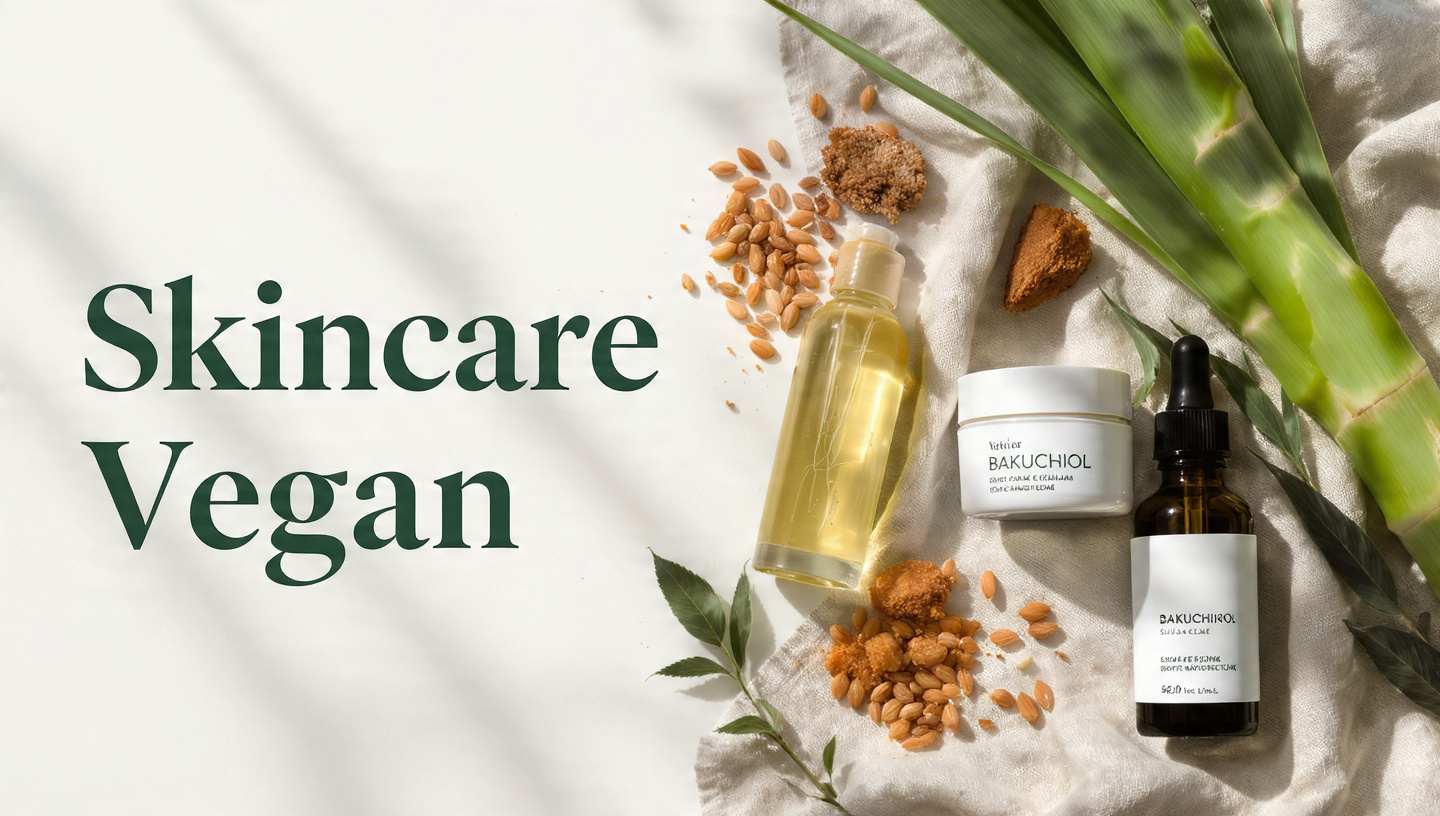
Bakuchiol has become the signature vegan retinol alternative in skincare, but its actual mechanism, evidence profile, and clinical position relative to retinoids are more specific than the “plant-based retinol” shorthand suggests. Bakuchiol is a meroterpene phenol extracted from the seeds and leaves of Psoralea corylifolia, the babchi plant. It is not chemically related to retinoids. It is not a vitamin A derivative. It does not bind to retinoic acid receptors (RARs) in the same way that retinol, retinaldehyde, or tretinoin do. What bakuchiol does is activate a partially overlapping set of gene expression pathways, including upregulation of collagen type I and type III and downregulation of matrix metalloproteinases (MMPs), the enzymes that break down existing collagen. The functional outcome looks similar to retinol on several measured parameters, arriving through a different molecular route.
The pivotal study that established bakuchiol’s credibility as a retinol alternative was published in the British Journal of Dermatology in 2019. In a 12-week randomized, double-blind trial comparing 0.5% bakuchiol twice daily against 0.5% retinol once daily, both groups showed statistically significant improvements in wrinkle depth, pigmentation, and photoaging scores, with no significant difference in efficacy between the two compounds. The bakuchiol group reported significantly less scaling, stinging, burning, and itching than the retinol group.
For vegan consumers, bakuchiol addresses two gaps simultaneously. It is plant-derived and compatible with vegan ethics without the animal testing history associated with the development of several retinoid drugs. It also offers a better tolerability profile for people who have tried retinol and experienced barrier disruption, persistent flaking, or retinol-induced perioral dermatitis. This tolerability advantage is particularly relevant for people with Fitzpatrick skin types IV through VI. Retinoid-induced irritation in deeper skin tones can trigger post-inflammatory hyperpigmentation that persists long after the irritation resolves. Bakuchiol, with its lower irritation profile, presents a lower hyperpigmentation risk for these skin types based on current clinical observation.
The limitation worth stating clearly: bakuchiol has been studied at 0.5% to 2% concentrations in anti-aging contexts. Retinoids, particularly prescription tretinoin at 0.025% to 0.1%, have decades of accumulated evidence for acne treatment, collagen remodeling, and even actinic keratosis prevention that bakuchiol has not yet matched. Bakuchiol is a compelling vegan anti-aging ingredient. It is not a complete functional replacement for prescription retinoids in therapeutic dermatology. For acne management specifically, a vegan routine might pair bakuchiol for anti-aging with azelaic acid or salicylic acid for comedonal and inflammatory acne, rather than expecting bakuchiol alone to match a tretinoin prescription’s efficacy on nodulocystic acne.
Quick Tip: If you are vegan and want retinoid-level anti-aging results without animal-derived ingredients, look for products containing 0.5% to 2% bakuchiol paired with barrier-supporting ceramides and niacinamide. If you need acne treatment beyond what bakuchiol can provide, vegan-compatible options include azelaic acid, salicylic acid, and sulfur-based treatments.
Key Takeaway: Bakuchiol is a plant-derived ingredient with clinical evidence for anti-aging efficacy comparable to 0.5% retinol but with significantly better tolerability, particularly for deeper skin tones where retinoid irritation can trigger post-inflammatory hyperpigmentation.
Vegan Skincare for Acne Prone Skin
Vegan skincare can be excellent for acne-prone skin, but the “vegan” label itself predicts nothing about a product’s comedogenicity, oil-control properties, or active ingredient suitability. Acne-prone skin needs formulations that are non-comedogenic, low in oleic acid-rich oils that can feed Malassezia yeast (for those with fungal acne), and free of specific botanical butters and waxes that can occlude follicles in breakout-prone individuals. Vegan status guarantees none of these attributes. A product can be entirely vegan and still be formulated with coconut oil, rich cocoa butter, or comedogenic plant waxes that clog pores.
The vegan ingredients that tend to perform well for acne-prone skin align with what dermatologists recommend for acne regardless of vegan status. Niacinamide at 2% to 5% concentration reduces sebum production, improves barrier function, and calms inflammatory acne lesions through a pathway that involves downregulation of pro-inflammatory cytokines. Multiple randomized controlled trials support niacinamide’s efficacy for mild to moderate acne, and it is universally vegan-compatible since it is chemically synthesized. Salicylic acid at 0.5% to 2% is a beta-hydroxy acid that penetrates sebaceous follicles to exfoliate inside the pore, making it effective for comedonal acne, and it is synthetic and vegan. Azelaic acid, at 10% to 20%, targets both inflammatory acne and post-inflammatory hyperpigmentation, works well for deeper skin tones, and is produced through chemical synthesis or fermentation.
The ingredients that acne-prone skin should approach cautiously in vegan formulations are the heavy plant butters and oils that dominate some “natural” vegan product lines. Coconut oil (Cocos Nucifera Oil) scores a 4 out of 5 on standard comedogenicity scales. Cocoa butter (Theobroma Cacao Seed Butter) is moderately comedogenic. Wheat germ oil is highly comedogenic. These are all vegan. They are also common triggers for comedonal acne in susceptible individuals. A 2024 study published in the Journal of the American Academy of Dermatology examining acne cosmetica patterns identified coconut alkanes and hydrogenated coconut oil as among the more frequent occlusive triggers in acne-prone patients using “clean” or “natural” skincare.
For fungal acne (Malassezia folliculitis), the concern is different. The yeast Malassezia metabolizes fatty acids with carbon chain lengths between C11 and C24. Many plant oils, even non-comedogenic ones, fall within this chain length range and can feed the yeast. Vegan fungal acne-safe products typically use squalane (derived from sugarcane), caprylic/capric triglycerides (from coconut oil fractionation that isolates the C8 and C10 chains too short for Malassezia metabolism), and mineral oil-free ester blends. The Fungal Acne Safe ingredient database maintained by skincare chemists and cited in cosmetic formulation literature can help cross-reference INCI lists, though no official dermatological body certifies products for fungal acne safety.
Vegan Skincare for Sensitive Skin Considerations
Vegan skincare is not inherently better for sensitive skin, and in some cases, vegan formulations introduce botanical allergen loads that conventional synthetic formulations avoid entirely. This is the distinction that saves people with reactive skin from months of trial-and-error purchases driven by the incorrect assumption that plant-derived means gentle.
Sensitive skin, as defined by the International Forum for the Study of Itch, is a syndrome characterized by unpleasant sensations like stinging, burning, itching, and tightness in response to stimuli that should not normally provoke such reactions. The triggers include specific chemical irritants, allergens, pH shifts, and barrier disruption. Whether a product is vegan or conventional is irrelevant to this pathway unless the specific ingredient swap replaces a well-tolerated animal-derived ingredient with a less-tolerated plant-derived one.
The most common sensitive skin trigger in vegan skincare is essential oil content. Essential oils are complex mixtures of volatile aromatic compounds, many of which are documented contact allergens and irritants. Limonene, found in citrus oils, is one of the most frequently patch-test-positive fragrance allergens in North American and European dermatology clinics. Linalool, geraniol, citral, eugenol, and cinnamaldehyde are similarly well-documented. All of these are vegan. All can be present in “natural” or “botanical” vegan skincare at concentrations that trigger reactions in sensitized individuals.
A 2022 British Journal of Dermatology surveillance study analyzing 10 years of patch test data from the UK found that fragrance-related contact allergens, including many botanical extracts used as preservatives and “active” ingredients in vegan skincare, accounted for approximately 23% of all positive patch test reactions. The top six fragrance allergens, all plant-derived and vegan-compatible, were limonene hydroperoxides, linalool hydroperoxides, fragrance mix I, fragrance mix II, hydroxyisohexyl 3-cyclohexene carboxaldehyde (now banned in the EU), and isoeugenol.
For people with sensitive skin, the safest vegan approach is to select fragrance-free, essential oil-free formulations that use synthetic emollients, humectants, and barrier lipids. This means choosing products with INCI lists free of essential oils and their individual components (look for limonene, linalool, citral, geraniol, citronellol, eugenol, and “parfum” or “fragrance” anywhere on the label). A vegan moisturizer built on squalane, synthetic ceramides, glycerin, and niacinamide will be better tolerated than a vegan moisturizer containing a dozen botanical extracts and essential oil blends, because the former group of ingredients has minimal sensitization potential while the latter introduces multiple known allergens.
The American Academy of Dermatology’s guidance on sensitive skin product selection recommends fragrance-free formulations, products with fewer than 10 ingredients where possible, occlusive moisturizers to support barrier function, and avoidance of common sensitizers including botanical essential oil blends. All of these recommendations are fully compatible with vegan skincare if you select the right formulations.
Key Takeaway: Vegan status and sensitive skin safety are independent variables; the most sensitizing ingredients in vegan skincare are typically essential oils and botanical fragrance compounds, and selecting fragrance-free, minimal-ingredient vegan formulations produces the best tolerability.
How to Read Vegan Skincare Labels
Reading a vegan skincare label requires scanning for three layers of information simultaneously: the certification logos that verify third-party audit status, the INCI ingredient list where animal-derived compounds might hide under chemical names, and the marketing language that can imply vegan status without verifying it. Most consumer confusion comes from treating these three layers as one.
The certification logo layer is the fastest filter. The Vegan Society Trademark, Vegan Action Certified Vegan logo, or Vegetarian Society Vegan-Approved mark on the front or back of the product means a third party has audited the ingredient supply chain and confirmed no animal-derived inputs. If you see one of these logos, you can trust the vegan claim. If you see “vegan” printed in the brand’s own typeface without an accompanying certification logo, you are reading a self-declaration with no external verification. Self-declarations are not inherently false, but they are unaudited. The distinction should guide your trust level.
The INCI layer requires looking for specific animal-derived ingredients by their chemical names. The obvious ones to scan for are: Lanolin, Lanolin Alcohol, Cera Alba (Beeswax), Collagen, Hydrolyzed Collagen, Soluble Collagen, Elastin, Hydrolyzed Elastin, Keratin, Hydrolyzed Keratin, Squalene (versus plant-derived Squalane), Carmine (CI 75470), Guanine (CI 75170), Shellac, Silk Amino Acids, Hydrolyzed Silk, Lactis Lipida (milk lipids), Lac (insect-derived), Cholesterol (which can come from wool grease, though synthetic and plant-derived cholesterol exist), and Glycerin of unspecified origin. For glycerin, cholesterol, and stearic acid specifically, the INCI name alone cannot confirm vegan status. You need to check for certification or contact the manufacturer.
The marketing layer requires learning the specific phrases that imply more than they verify. “Plant-based” suggests botanical ingredients but does not exclude animal-derived ones. “Clean” has no regulatory definition at all. “Natural” legally means nothing on cosmetics under FDA regulations. “Not tested on animals” addresses cruelty-free status but says nothing about ingredient sources. “Made with plant-derived ingredients” allows animal-derived ingredients to appear elsewhere in the formula. Only “vegan” paired with certification, or a complete INCI audit, confirms fully animal-free composition.
Numbered label-reading sequence:
- Check for Vegan Society, Vegan Action, or Vegetarian Society certification logo on the front or back label.
- If no certification, scan the full INCI list for the animal-derived ingredients named above, noting that glycerin, cholesterol, and stearic acid are source-ambiguous from INCI alone.
- Note any marketing language (“plant-based,” “clean,” “natural”) that might imply vegan status without verifying it, and treat those as unverified claims until confirmed by certification or manufacturer transparency.
- Cross-check cruelty-free status separately using Leaping Bunny or PETA BBB logo if animal testing is also a concern.
- Evaluate the formula for your specific skin type needs using the ingredient analysis approach covered in the sensitive skin and acne sections above.
Top Vegan Skincare Brands with Dermatologist Backing
The intersection of vegan formulation, dermatological credibility, and transparent ingredient disclosure narrows the field considerably from the hundreds of brands marketing themselves as vegan skincare. This analysis evaluates products based on third-party vegan certification status where applicable, INCI-level ingredient rationale, published formulation philosophy, and the presence of dermatologists on advisory boards or in published product development roles. No brand mentioned here implies endorsement or paid affiliation. This is an evidence-based category evaluation, not a sponsored list.
| Brand | Vegan Certification | Dermatologist Involvement | Key Differentiator | Best For |
|---|---|---|---|---|
| Biossance | Pending (vegan formulation) | Ongoing clinical testing partnerships | Sugarcane squalane as hero ingredient in all products | Barrier repair, all skin types |
| The Ordinary | Vegan Society on many products | Formulated with published research references | INCI-transparent, concentration-disclosed, low-cost | Ingredient-focused routines on a budget |
| KraveBeauty | Vegan Society | Formulated with dermatological input | Barrier-first philosophy, minimal essential oil use | Sensitive skin, barrier repair |
| Paula’s Choice | Vegan Society on many products | Founded by skincare researcher Paula Begoun | Research-backed formulations, fragrance-free | Evidence-focused skincare consumers |
| Byoma | Vegan Society | Formulated with barrier biology research | Ceramide-dominant, affordable, modern packaging | Barrier repair, younger consumers |
| Stratia | Vegan | Formulated by biochemistry researcher | Lipid-based barrier science, in-house research | Barrier repair enthusiasts |
| Good Molecules | Vegan Society on many products | Formulated with published research | Low-cost, INCI-transparent, single-ingredient focus | Budget-conscious ingredient-focused consumers |
| Versed | Vegan | Developed with dermatologists | Fragrance-free, affordable, accessible at mass retail | Drugstore-accessible vegan skincare |
For acne-prone skin specifically, Paula’s Choice offers vegan salicylic acid and azelaic acid formulations that align with American Academy of Dermatology acne treatment guidelines. For sensitive skin, KraveBeauty and Stratia prioritize barrier lipid science over botanical extract complexity, reducing sensitization risk. For budget-conscious consumers, The Ordinary and Good Molecules provide single-ingredient vegan serums at price points under $15, making vegan skincare accessible beyond the prestige tier.
The absence of a brand from this list does not indicate a quality judgment. The vegan skincare market in 2026 includes hundreds of brands with varying levels of formulation sophistication, certification transparency, and dermatological grounding. The criteria applied here prioritize brands where you can verify vegan status through certification and where ingredient lists reflect published dermatological research rather than marketing-led botanical trends.
Vegan Skincare Formulation Innovations 2026
The most significant shift in vegan skincare formulation by 2026 is not incremental ingredient substitution but the arrival of precision fermentation and plant cell culture technologies that produce skin-identical bioactive compounds without any agricultural footprint on the ingredient’s original source organism. This is the year where “vegan” stops meaning “we replaced the animal ingredient with a plant alternative that is somewhat similar” and starts meaning “we built a bioidentical molecule from the DNA up without involving any organism at all.”
Precision fermentation, the same technology platform used to produce synthetic insulin, rennet for cheese, and heme for plant-based meat, has reached cosmetic ingredient scale. Companies are now fermenting specific skin proteins, peptides, and lipids inside engineered microorganisms. The yeast or bacteria are programmed with the DNA sequence for a human skin protein, such as a specific type of collagen fragment, a filaggrin precursor, or a antimicrobial peptide. The microorganisms produce the molecule in fermentation tanks. The molecule is then harvested, purified, and formulated. The output is chemically identical to the human protein, produced without animal or human tissue.
The practical skincare implications are already visible in 2026’s new product launches. Fermentation-derived vegan collagen fragments, specifically sh-polypeptide-121 and newer variants, now appear in serums at concentrations matched to clinical efficacy thresholds established in human trials. Plant cell culture technology produces plant stem cell extracts, such as syringa vulgaris (lilac) leaf cell culture extract and malus domestica (apple) fruit cell culture extract, that contain higher concentrations of active phytochemicals than whole-plant extracts, because the cell culture can be optimized for specific metabolite production without seasonal variation, pesticide residue, or land use concerns.
Upcycled cosmetic ingredients represent the other major 2026 innovation trajectory. Ingredients that were previously agricultural waste streams, such as grape pomace from winemaking, coffee fruit pulp, and carrot seed oil from cosmetic-grade carrot processing, are now being extracted, purified, and incorporated into vegan skincare formulations. These ingredients are vegan by default, generate no additional agricultural land use, and often contain potent antioxidant polyphenols documented in extraction-specific studies published in the Journal of Cosmetic Dermatology.
Quick Tip: When evaluating 2026 vegan skincare innovations, look for “fermentation-derived” or “bioidentical” on the product page or brand science section, which signals the newer precision-fermentation ingredient technologies rather than first-generation plant extraction methods.
PHASE 4 CONTINUED: FAQ AND CLOSING
Frequently Asked Questions About Vegan Skincare
Is vegan skincare automatically cruelty-free?
No, vegan skincare is not automatically cruelty-free. Vegan means the product contains no animal-derived ingredients. Cruelty-free means the product and its ingredients were not tested on animals. A vegan product can still be tested on animals, which would make it not cruelty-free. The two claims require separate verification through certifications like the Vegan Society for vegan status and Leaping Bunny for cruelty-free status.
Does vegan skincare expire faster than conventional skincare?
Vegan skincare can have a shorter shelf life if it relies on plant-derived preservative systems without robust synthetic antimicrobial support, but this is not universal. Vegan products preserved with synthetic compounds like phenoxyethanol, sodium benzoate, and potassium sorbate have shelf lives comparable to conventional products. Products relying solely on radish root ferment or essential oil-based preservation may degrade faster once opened and should be used within the period-after-opening (PAO) symbol on the packaging, typically 6 to 12 months.
Can vegan skincare contain fragrance?
Yes, vegan skincare can contain both synthetic and natural fragrances, including essential oils. The vegan status of a fragrance is determined by whether its components are animal-derived, not whether it is synthetic or natural. Common fragrance allergens like limonene, linalool, and citral are plant-derived and fully vegan, but they may not be suitable for sensitive or reactive skin. Fragrance-free vegan skincare uses neither synthetic nor natural fragrance compounds.
Is vegan skincare safe during pregnancy?
Vegan skincare during pregnancy is generally safe, but safety depends on specific ingredients, not vegan status. The pregnancy skin safety concerns apply equally to vegan and conventional products. Pregnant women should avoid high-concentration retinoids including bakuchiol (limited pregnancy data exists), high-concentration salicylic acid above 2% in leave-on products, and certain essential oils that have documented uterine stimulant effects in animal models. A board-certified dermatologist or OB-GYN should review your specific products.
How can I tell if a product is actually vegan without a logo?
Without a certification logo, verifying vegan status requires contacting the manufacturer directly and asking whether any animal-derived ingredients or processing aids are used at any stage from raw material extraction to finished product filling. The INCI list alone cannot confirm vegan status for source-ambiguous ingredients like glycerin, stearic acid, and cholesterol. If the manufacturer cannot provide clear documentation of vegan sourcing, the claim remains unverified.
Does vegan skincare help with anti-aging as well as conventional products?
Vegan skincare can match or exceed conventional anti-aging performance when formulated with evidence-backed ingredients like synthetic ceramides, plant-derived squalane, signal peptides, niacinamide, and bakuchiol. The evidence for several vegan anti-aging ingredients, including bakuchiol (compared head-to-head against retinol in a 2019 British Journal of Dermatology study) and synthetic ceramides (used in barrier repair clinical trials), is strong and independent of ingredient origin. Performance depends on formulation quality, not whether the ingredients are animal-derived.
Your skin will not know whether the ceramide repairing its barrier came from a fermentation tank or an animal tissue extraction. What your skin will register is whether the ingredient is bioidentical, the concentration is clinically validated, and the delivery system gets it where it needs to go. Vegan skincare in 2026 meets all three of these criteria for the ingredients that matter most: barrier lipids, signal peptides, stable emollients, and well-studied actives.
If you are building or converting to a vegan skincare routine, start with the products that stay on your skin longest. A vegan moisturizer with synthetic ceramides and plant squalane. A vegan sunscreen with mineral filters like zinc oxide. Once those are locked in and your barrier is stable, add a vegan treatment product for your specific concern: niacinamide for oil control and pore appearance, azelaic acid for redness and post-acne marks, bakuchiol for anti-aging if your skin tolerates it. Give each new product two to four weeks before introducing the next one so you can identify exactly what is helping, what is doing nothing, and what your skin rejects.
The ethical dimension of vegan skincare matters. The performance dimension matters equally, and it is fully achievable with the right ingredient knowledge.