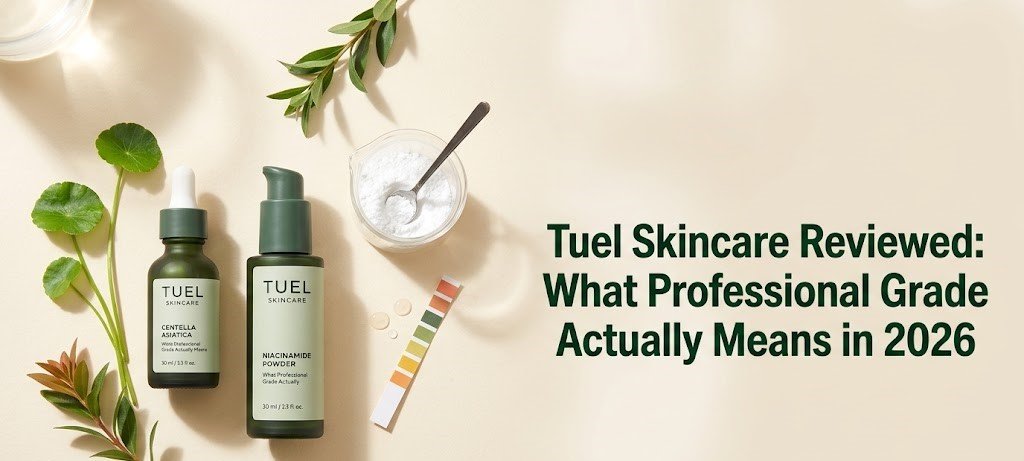
Tuel Skincare Reviewed: What Professional Grade Actually Means in 2026
Tuel Skincare is an esthetician-founded professional skincare brand that positions itself between drugstore and medical-grade categories, using botanical complexes and active ingredients in formulations sold primarily through licensed professionals. Its effectiveness depends less on the “professional” label, which carries no regulatory definition, and more on whether its specific ingredient formulations at their actual concentrations match your individual skin needs. This review analyzes what is actually in Tuel’s products and who they genuinely work for.
The American Academy of Dermatology recognizes no legal or regulatory distinction between “professional-grade,” “medical-grade,” and standard cosmetic skincare products. This matters because the professional positioning often leads consumers to assume a level of efficacy and safety testing that may not exist. According to the FDA’s classification system, skincare products are cosmetics unless they make drug claims about treating or preventing disease or affecting skin structure. Tuel, like most professional lines, occupies this cosmetic category, which means its formulations deserve the same ingredient-by-ingredient scrutiny you would give any skincare purchase.
Here is what this review covers: an analysis of Tuel’s brand identity and what professional-grade actually signals in 2026, a breakdown of the product line and key active ingredients, skin-type-specific guidance on which Tuel products suit acne-prone, sensitive, or aging skin, a direct comparison to medical-grade brands and drugstore alternatives, a deep look at the botanical extract evidence base, and clear safety guidance on allergens, pregnancy considerations, and how to introduce Tuel products without disrupting your skin barrier.
Tuel Skincare Brand Overview
Tuel Skincare was founded by licensed estheticians and built its identity around professional-use formulations that bridge the gap between spa treatment products and home care regimens. The brand sells through estheticians, spas, and direct-to-consumer channels, using a distribution model common among professional lines that creates an impression of expert endorsement. The brand’s formulations emphasize botanical ingredients, active compounds like niacinamide and salicylic acid, and what the company describes as a results-driven approach to skin health.
Tuel’s product development philosophy centers on what the brand calls “skin fitness,” a concept that applies exercise training principles to skincare: consistent, progressive use of active ingredients to build skin resilience rather than aggressive, intermittent treatment. This framing is more marketing than mechanism. Skin does not build “fitness” the way muscle tissue responds to resistance training. What Tuel is actually describing is the well-established dermatological principle of consistent use of appropriate active ingredients at tolerable concentrations, which supports barrier function, cell turnover, and collagen maintenance over time.
The brand’s hero product categories include cleansers, treatment serums, moisturizers, masks, and professional-use peels. The ingredient lists across the line show a combination of evidence-backed actives, including niacinamide (vitamin B3), salicylic acid (beta-hydroxy acid), retinyl palmitate (a retinoid ester), and ascorbic acid (vitamin C), alongside proprietary botanical complexes that feature extracts like centella asiatica (gotu kola) and aloe barbadensis leaf juice. The botanical components are where Tuel differentiates itself from purely synthetic clinical formulations, though this botanical emphasis also introduces considerations around potential sensitization that a fragrance-free clinical line would avoid entirely.
Key Takeaway: Tuel occupies a middle space between drugstore and medical-grade, founded by estheticians, with formulations that combine proven actives and botanical complexes, but the “professional” designation is a marketing term, not a regulatory standard that guarantees superior results.
What Professional Grade Skincare Actually Means
“Professional-grade skincare” is a marketing term with no FDA definition, no standardized ingredient concentration requirements, and no mandated efficacy testing threshold that separates it from products sold at drugstores. The term typically signals one of several things: the brand sells primarily through licensed professionals like estheticians rather than mass retailers, the formulations contain higher concentrations of active ingredients than typical drugstore products, or the products are designed to complement in-office professional treatments. None of these signals are regulated, verified, or consistently applied across brands that use the professional label.
The FDA classifies skincare products as cosmetics unless they contain active ingredients recognized as drugs or make claims about treating skin conditions or altering skin structure. A product containing salicylic acid at 2% for acne treatment falls under the FDA OTC drug monograph and is regulated as a drug regardless of whether the brand calls itself professional or drugstore. The same salicylic acid concentration from a “professional” brand and a drugstore brand faces identical regulatory requirements and quality standards for that active ingredient, assuming both are legally manufactured and labeled correctly.
What can genuinely distinguish a professional-line product from a mass-market alternative is formulation quality, not a brand’s self-applied category label. A higher concentration of an active ingredient, measured and disclosed on the label, is a real difference. The absence of certain preservatives or the inclusion of specific delivery systems that improve ingredient penetration are real differences. The stability of the formulation, particularly for notoriously unstable ingredients like L-ascorbic acid, is a real difference. An esthetician’s ability to assess your skin and recommend specific products for your individual needs adds value that the product alone cannot provide. The word “professional” on the bottle guarantees none of these things.
Quick Tip:
The most useful question is not “Is this brand professional-grade?” but rather “What concentration of what active ingredient is in this product, and is that concentration supported by clinical evidence for the concern I want to address?”
Ignore the “professional” label entirely. Instead, read the ingredient list, look for disclosed concentrations, and verify whether the active compounds are in forms known to be stable and bioavailable.
If a brand does not disclose active ingredient concentrations, assume they are at cosmetic inclusion levels, meaning present but not necessarily at clinically effective percentages, regardless of the brand’s professional positioning.
Tuel Skincare Product Line Categories
Tuel Skincare organizes its products across six core categories that follow the standard professional skincare sequence: cleanse, exfoliate, treat, hydrate, protect, and mask. Each category includes multiple products targeting different skin types and concerns, with varying active ingredient profiles and botanical complex formulations. Understanding what each category actually does, independent of brand marketing, lets you assess whether a Tuel product in that category fits your routine.
The cleanser category includes gel, cream, and oil-based formulations. Tuel’s cleansers incorporate botanical extracts and, in some formulations, low concentrations of salicylic acid or glycolic acid for mild chemical exfoliation during cleansing. A cleanser’s primary job is removing sunscreen, makeup, and excess sebum without disrupting the stratum corneum barrier or raising skin pH significantly. Any active ingredient in a wash-off product has limited contact time, so exfoliating acids in cleansers provide gentler, less concentrated effects than the same acid in a leave-on serum.
The treatment serum and concentrate category contains Tuel’s highest-concentration active products. These formulations include niacinamide, retinyl palmitate, ascorbic acid, and peptide complexes. Serums are where Tuel’s formulation approach is most consequential: the concentration of the active, the stability of the delivery system, and the pH of the formula determine whether the product delivers meaningful results. A niacinamide serum at an effective 4% to 5% concentration functions differently from one at an undisclosed, potentially subtherapeutic level.
The moisturizer category includes lighter lotions for oily and combination skin and richer creams for dry and mature skin. Tuel’s moisturizers combine humectants like sodium hyaluronate with emollients and occlusive agents, plus botanical oils and extracts. The Professional Treatment Mask category offers clay-based, enzyme-based, and hydrating mask options designed for weekly use. Each category serves a distinct function in a complete routine, and the value of any individual Tuel product depends on whether its specific formulation, at its specific concentration of active ingredients, addresses your specific skin concern.
| Product Category | Primary Function | Key Tuel Formulation Features | What to Evaluate |
|---|---|---|---|
| Cleansers | Remove debris, sebum, and sunscreen without barrier disruption | Botanical extracts, low-concentration acids in some formulas | pH level, surfactant gentleness, fragrance content |
| Exfoliants | Increase cell turnover, unclog pores | AHA/BHA formulations, enzyme-based options | Acid type, concentration, pH for efficacy |
| Serums | Deliver active ingredients at therapeutic concentrations | Niacinamide, retinoids, vitamin C, peptides | Active concentration, stability, delivery system |
| Moisturizers | Hydrate, support barrier, reduce TEWL | Humectants, emollients, botanical oils | Occlusive level for skin type, fragrance content |
| Masks | Intensive weekly treatment | Clay, enzyme, or hydrating bases | Frequency guidance, active concentration |
Key Takeaway: Product categories serve standard skincare functions. Tuel’s value within each category comes down to active ingredient concentrations, formulation stability, and compatibility with your skin type, not the brand’s professional designation.
Tuel Skincare Key Active Ingredients
Tuel Skincare formulations center on a core set of active ingredients with varying degrees of clinical evidence support. The most consequential actives in the line include niacinamide, salicylic acid, retinyl palmitate, ascorbic acid, sodium hyaluronate, and several peptide complexes. Each of these ingredients has a known mechanism of action, established effective concentration ranges, and specific compatibility considerations that determine whether they deliver results in a given formulation.
Niacinamide, also known as nicotinamide or vitamin B3, is one of the most broadly beneficial and well-tolerated active ingredients in dermatology. According to a 2021 review published in the Journal of the American Academy of Dermatology, niacinamide improves skin barrier function by increasing ceramide synthesis, reduces transepidermal water loss, decreases inflammation, and regulates sebum production. The effective concentration range for niacinamide is 2% to 5%. Below 2%, barrier benefits diminish. Above 5%, irritation risk increases without proportional added benefit for most skin concerns. Tuel includes niacinamide in several treatment products. The concentration disclosure determines whether these products deliver at clinically meaningful levels.
Salicylic acid is a beta-hydroxy acid that penetrates oil-filled follicles and exfoliates inside the pore lining, making it the first-line OTC ingredient for comedonal acne and blackheads. The FDA OTC monograph recognizes salicylic acid at 0.5% to 2% as safe and effective for acne treatment. Tuel’s acne-targeted products include salicylic acid in this concentration range. Salicylic acid is generally safe for all Fitzpatrick skin types and does not carry the post-inflammatory hyperpigmentation risk that more aggressive peels pose for deeper skin tones.
Retinyl palmitate is a retinoid ester, the weakest member of the retinoid family that ranges from retinyl esters to retinol to retinaldehyde to prescription tretinoin. Retinyl palmitate must undergo two enzymatic conversions to reach the active retinoic acid form, which means its effects are milder and slower than retinol or prescription retinoids. A 2020 study in the International Journal of Cosmetic Science found retinyl palmitate effective for improving photodamage at concentrations of 0.5% to 1%, though the results take longer to appear compared to retinol at 0.1% to 0.5%. Tuel’s use of retinyl palmitate makes its retinoid products gentler and less likely to cause retinoid dermatitis, but also less potent for significant collagen remodeling or acne treatment.
Ascorbic acid, the active form of vitamin C, is one of the most challenging ingredients to formulate effectively. L-ascorbic acid is water-soluble, degrades rapidly when exposed to light, air, and high pH, and requires a formulation pH below 3.5 to penetrate the stratum corneum effectively. At concentrations of 10% to 20%, L-ascorbic acid provides photoprotective antioxidant activity, inhibits melanin production, and supports collagen synthesis. Tuel’s vitamin C formulations use ascorbic acid. Whether they deliver depends on the product’s pH, packaging that prevents oxidation, and the concentration of ascorbic acid actually present and stable at the time of application.
| Active Ingredient | INCI Name | Effective Concentration Range | Primary Mechanism | Key Limitation in Formulation |
|---|---|---|---|---|
| Niacinamide | Niacinamide | 2%–5% | Barrier repair, sebum regulation, anti-inflammatory | Concentration below 2% limits efficacy |
| Salicylic Acid | Salicylic Acid | 0.5%–2% | Intrafollicular exfoliation, comedolytic | Must be at correct pH (below 4) for full activity |
| Retinyl Palmitate | Retinyl Palmitate | 0.5%–1% | Cell turnover (requires 2-step conversion) | Weaker than retinol; results are slower |
| Ascorbic Acid | Ascorbic Acid | 10%–20% | Antioxidant, collagen support, melanin inhibition | Degrades rapidly; pH-dependent penetration |
Key Takeaway: Tuel’s active ingredients are legitimate and evidence-backed, but their effectiveness depends entirely on concentration, formulation pH, and stability. These are what you need to verify, not whether the brand calls itself professional.
Tuel Skincare Formulation Philosophy
Tuel Skincare’s formulation philosophy combines standard cosmetic science with a botanical-forward approach that differentiates the brand from purely synthetic clinical lines. The formulations use water, humectants, emollients, and active ingredients as the base, then layer in proprietary botanical complexes that feature plant extracts with traditional use histories and varying levels of clinical research support. This botanical emphasis creates a sensory experience and a “natural” positioning that appeals to certain consumers, but it also introduces variables that fragrance-free, botanically minimalist formulations avoid entirely.
The brand’s use of botanical complexes includes ingredients like centella asiatica (gotu kola), which has evidence for wound healing and anti-inflammatory effects in skincare, and aloe barbadensis leaf juice, a well-established humectant and soothing agent. A 2017 review in the Journal of Cosmetic Dermatology documented centella asiatica’s active compounds, madecassoside and asiaticoside, and their effects on collagen synthesis and inflammation reduction in human skin models. These are legitimate, though the concentration present in a finished product determines whether the effect seen in research translates to the product in your hand.
Where Tuel’s botanical philosophy introduces caution is in the use of essential oils and botanical fragrance components in some formulations. Ingredients like lavandula angustifolia (lavender) oil and citrus aurantium dulcis (orange) peel oil contain volatile aromatic compounds including limonene, linalool, and citral. These compounds are documented contact allergens. The European Commission’s Scientific Committee on Consumer Safety (SCCS) requires labeling of 26 specific fragrance allergens, including limonene and linalool, when they exceed certain thresholds in leave-on products. A person with a healthy, intact skin barrier may use these products without incident for years. A person with a compromised barrier, atopic dermatitis, rosacea, or an undiagnosed fragrance allergy may react to the same product.
Think of botanical extracts in skincare like spices in cooking. Some, like turmeric, add both color and documented health benefits. Others, like chili flakes, add sensory intensity but can overwhelm the dish and cause discomfort for some diners. The fact that both come from plants and both appear in high-end kitchens tells you nothing about which one belongs in your meal. Tuel’s formulations include both types of botanicals: some with research-supported skin benefits and some that primarily add scent and sensory experience with potential sensitization risk.
Quick Tip:
If you are drawn to Tuel for its botanical positioning, review the full ingredient list for your specific product of interest, not the brand’s overall marketing.
Identify any essential oils or known fragrance allergens, especially if you have rosacea, eczema, or a history of contact dermatitis.
The same botanical ingredient that makes one person’s skin feel “spa-like” can make another person’s skin barrier deteriorate.
Tuel Skincare for Different Skin Types
Tuel Skincare, like any multi-category line, includes products suited to different skin types, but the brand does not organize its entire catalog by skin type in a transparent way that makes selection straightforward without professional guidance. The line includes lightweight gel cleansers and oil-free moisturizers for oily skin, richer cream formulations for dry skin, and gentle cleansers and soothing masks positioned for sensitive skin. What matters is not whether a product is labeled for your skin type but whether its specific ingredient profile, pH, and active concentration match your skin’s current condition and tolerance level.
For oily and combination skin, Tuel’s products containing salicylic acid and niacinamide are the most directly supported by clinical evidence. Salicylic acid at 0.5% to 2% penetrates sebaceous follicles and exfoliates inside pores, reducing comedone formation. Niacinamide at 2% to 5% regulates sebum production without the drying effects of harsher astringents. A 2022 study in the Journal of Cosmetic Dermatology confirmed niacinamide’s sebum-regulating effects at 4% concentration over 8 weeks of daily use. Tuel’s gel-based and lightweight formulations serve oily skin better than heavier creams containing occlusive oils that can feel congestive.
For dry and dehydrated skin, the humectant content of Tuel’s hydrating serums and moisturizers matters more than the botanical positioning. Sodium hyaluronate draws water into the stratum corneum. Glycerin, another common humectant in Tuel formulas, performs the same function through a different molecular mechanism. The presence of occlusive ingredients like botanical oils and butters in Tuel’s richer creams helps trap that water against the skin surface, reducing transepidermal water loss (TEWL). A product that provides both humectant and occlusive components supports dry skin effectively, provided the occlusive agents do not trigger congestion or irritation in your specific case.
For combination skin, which exhibits oiliness in the T-zone and dryness or normal sebum production elsewhere, Tuel’s approach of using different products on different facial zones, called multi-masking or zone-specific application, applies. You might use a salicylic acid-containing Tuel treatment only on the nose, chin, and forehead while applying a richer moisturizer only to the cheeks and periorbital area. This approach requires more effort than using a single all-in-one product, but it matches how combination skin actually behaves better than one-size-fits-all solutions.
Key Takeaway: Tuel’s line includes options for different skin types, but the responsibility falls on you to match specific product ingredient profiles to your skin’s needs, rather than relying on broad “for oily skin” or “for dry skin” labeling that may not reflect your individual tolerance and response.
Tuel Skincare for Acne-Prone Skin
Tuel Skincare offers several products that address acne-prone skin through evidence-backed mechanisms, primarily via salicylic acid exfoliation inside pores, niacinamide sebum regulation, and anti-inflammatory botanical ingredients. The most directly relevant Tuel products for acne contain salicylic acid at concentrations within the 0.5% to 2% FDA-recognized range for OTC acne treatment, which provides comedolytic activity that reduces blackheads and prevents new microcomedone formation. This works for mild to moderate comedonal acne. Inflammatory acne with deeper nodules and cysts typically requires prescription intervention that no OTC skincare line, professional or otherwise, can provide.
The mechanism behind salicylic acid’s effectiveness for acne is its lipid solubility. Unlike alpha-hydroxy acids (AHAs) like glycolic and lactic acid, which are water-soluble and work primarily on the skin surface, salicylic acid dissolves in sebum and penetrates oil-clogged follicles. Once inside, it breaks down the desmosome connections between dead skin cells that create the plug. A 2019 review in the Journal of the American Academy of Dermatology confirmed salicylic acid as an effective OTC comedolytic at 0.5% to 2% concentrations, noting its particular usefulness for blackheads and closed comedones.
Niacinamide supports acne management through a separate mechanism. It reduces sebum production by affecting the sebaceous glands directly, and it decreases the inflammatory response that turns a small microcomedone into a red, swollen lesion. The combination of salicylic acid and niacinamide in a routine addresses both the structural blockage component of acne and the inflammatory component, making Tuel’s products that include both ingredients useful for acne-prone skin. A 2023 study in the International Journal of Dermatology found that a 4% niacinamide formulation reduced acne lesion counts by 52% over 12 weeks compared to placebo, confirming the ingredient’s role in acne management independent of direct exfoliation.
| Acne Mechanism | Tuel Ingredient That Addresses It | Evidence Strength | Important Limitation |
|---|---|---|---|
| Follicular hyperkeratinization (dead cells clogging pores) | Salicylic acid 0.5%–2% | Well-established by FDA monograph and multiple RCTs | Works for comedonal acne; less effective for inflammatory cysts |
| Excess sebum production | Niacinamide 2%–5% | Supported by clinical studies | Results take 8–12 weeks of consistent use |
| Inflammation in active lesions | Niacinamide, centella asiatica | Moderate evidence for niacinamide; preliminary for centella | Does not replace prescription anti-inflammatories for severe acne |
| Acne-causing bacteria (C. acnes) | No direct antibacterial in Tuel line | N/A | Benzoyl peroxide or prescription antibiotics address this pathway |
Key Takeaway: Tuel’s salicylic acid and niacinamide products address comedonal acne and mild inflammatory acne through established mechanisms, but the line lacks benzoyl peroxide for bacterial control, and severe acne with nodules or cysts falls beyond what OTC skincare can manage regardless of professional branding.
Tuel Skincare for Sensitive and Reactive Skin
Sensitive and reactive skin presents the greatest challenge for evaluating Tuel Skincare because the brand’s botanical and essential oil components, which are part of its identity, can trigger reactions in exactly the skin type most in need of gentle products. Sensitive skin is not a single diagnosis. It encompasses people with diagnosed conditions like rosacea, atopic dermatitis, and allergic contact dermatitis, as well as people with otherwise healthy skin that simply reacts with stinging, redness, or irritation to certain ingredients. Tuel’s suitability for sensitive skin varies dramatically depending on which subgroup you belong to and which specific Tuel product you consider.
For people with diagnosed rosacea, the vasodilatory and potential irritant effects of botanical essential oils and fragrance components are a genuine concern. The National Rosacea Society identifies fragrance, botanical extracts, and essential oils as common triggers for rosacea flares. Lavender oil, citrus oils, and their constituent compounds like linalool and limonene, which appear in some Tuel formulations, can provoke flushing, stinging, and increased erythema in rosacea-prone skin. A Tuel product formulated without these sensitizing botanicals, such as a simple niacinamide serum or a fragrance-free hydrator, poses less risk for rosacea skin than a product centered on a complex botanical blend.
For people with atopic dermatitis or an eczema history, the impaired skin barrier function that characterizes these conditions means penetration of potential irritants occurs more readily. A fragrance-free, minimalist formulation is typically safer than a botanical-rich product for this population. A 2021 study in the Journal of Investigative Dermatology documented that filaggrin mutations and barrier disruption increase the risk of contact sensitization to fragrance allergens. The same Tuel product that feels soothing and smells pleasant on intact skin can trigger sustained inflammation on atopic skin.
For people with “reactive” skin that stings or turns red with product application but lacks a diagnosed condition, the concern is more about sensory irritation than immunological allergy. Ingredients that produce a tingling sensation, including certain botanical extracts and acid-based exfoliants, may cause discomfort without causing lasting damage. The key distinction is between transient sensory irritation that resolves within minutes of application and true contact dermatitis that worsens over hours to days. If you have reactive skin and want to try Tuel, select the products with the shortest ingredient lists, fewest botanical additives, and no essential oils, and always perform a patch test before full-face application.
To identify whether a Tuel product poses elevated sensitivity risk:
Check the full ingredient list for essential oils: lavender oil, citrus oils, peppermint oil, eucalyptus oil, or any oil with “fragrance” in the name.
Look for known fragrance allergens: limonene, linalool, citral, geraniol, citronellol, eugenol.
Note the presence of “parfum” or “fragrance” on the label, which can mask dozens of undisclosed aromatic compounds.
Prioritize Tuel products labeled fragrance-free and essential-oil-free if your skin reacts easily.
Patch test behind the ear or on the inner arm for at least 48 hours before facial application.
Tuel Skincare for Mature and Aging Skin
Mature skin, which encompasses the changes that come with chronological aging, accumulated photodamage, and the postmenopausal decline in estrogen’s supportive effects on dermal collagen and skin hydration, benefits from specific active ingredients that Tuel includes in several products. The brand’s use of retinyl palmitate, ascorbic acid, peptides, and hydrating humectants addresses multiple pathways of skin aging. The effectiveness for any individual depends on product concentration, consistency of use, and realistic expectations about what topical skincare can achieve compared to in-office procedures.
The structural changes in aging skin occur primarily in the dermis, where collagen type I and type III production declines and existing collagen and elastin fibers degrade through accumulated UV exposure and enzymatic breakdown. Retinoids address this by upregulating collagen gene expression and reducing matrix metalloproteinase enzymes that break down existing collagen. Tuel uses retinyl palmitate rather than retinol or tretinoin, which means the collagen-stimulating effect is present but milder and slower to appear than with stronger retinoids. A 2020 study in the Journal of Cosmetic Dermatology found that retinyl palmitate at 1% improved fine lines and skin texture over 24 weeks, with effects being gradual and cumulative rather than rapid.
Ascorbic acid (vitamin C) supports aging skin through several mechanisms that complement retinoid action. It serves as an antioxidant, neutralizing reactive oxygen species generated by UV exposure and pollution before they damage collagen and elastin fibers. It acts as a cofactor for enzymes that stabilize collagen structure. It inhibits tyrosinase, reducing the hyperpigmentation that often accompanies photodamage. Tuel’s vitamin C products must maintain ascorbic acid stability and deliver it at an effective pH to provide these benefits. An oxidized, yellowed vitamin C serum is ineffective and potentially irritating regardless of the brand’s professional positioning.
Postmenopausal skin experiences accelerated dryness and thinning as estrogen levels decline. Estrogen receptors in skin influence hyaluronic acid production, collagen synthesis, and barrier lipid composition. Tuel’s hydrating products containing sodium hyaluronate and glycerin address the hydration deficit, while richer cream formulations provide the occlusive protection that postmenopausal skin’s diminished barrier function requires. A 2022 review in the British Journal of Dermatology documented that postmenopausal women experience increased TEWL and decreased skin hydration, making consistent moisturizer use more functionally important than it was during premenopausal years.
Quick Tip:
For aging skin, prioritize Tuel’s vitamin C and retinoid products for collagen support and photoprotection, but verify the vitamin C is stable (clear to pale yellow, never brown) and apply the retinyl palmitate product consistently for months before evaluating results.
Layer hydrating serums under richer moisturizers, especially if you are postmenopausal, when skin hydration drops noticeably.
Sunscreen is the most effective anti-aging product in any line, professional or otherwise. Without daily SPF 30 or higher, no Tuel active ingredient can fully protect against ongoing photodamage.
Key Takeaway: Tuel’s retinyl palmitate and vitamin C products address aging skin pathways legitimately but gently. Expect gradual improvement over months, and recognize that the milder retinoid form in Tuel products will not match the clinical results of prescription tretinoin.
Tuel Skincare Ingredient Analysis by Product
Evaluating Tuel Skincare at the individual product level requires examining the full ingredient list using INCI nomenclature, identifying which ingredients are present at functional concentrations, and separating the ingredients doing the therapeutic work from those serving sensory, preservation, or marketing purposes. Without Tuel disclosing active ingredient concentrations across all products, the ingredient list order provides the primary public tool for assessment. INCI labeling requires ingredients to be listed in descending order of concentration above 1%, with ingredients present at 1% or below listable in any order.
Tuel’s treatment serums show niacinamide, ascorbic acid, retinyl palmitate, and peptide complexes positioned early enough in the ingredient lists to suggest concentrations at potentially effective levels. A product that lists niacinamide in the first five ingredients is more likely to be at a therapeutic 2% to 5% than one that places it after the preservative system. The cosmetic industry practice of listing “active” ingredients at low concentrations for marketing purposes is widespread across all brand categories. An ingredient appearing on the label does not guarantee it is present at a clinically meaningful level, which is why concentration disclosure is the single most valuable transparency practice a skincare brand can adopt.
The base formulations across Tuel products use standard cosmetic chemistry: water as the primary solvent, humectants like glycerin and sodium hyaluronate for hydration, emollients like squalane and botanical oils to soften and smooth, thickeners and stabilizers to create the product texture, and preservatives to prevent microbial contamination. These formulation components are neither unique to Tuel nor indicative of professional quality. The same base components appear in effective drugstore products and luxury lines alike. The therapeutic differentiation, if it exists, comes from the active ingredients, their concentrations, and their delivery systems.
For any Tuel product you are considering, the ingredient list tells you more than the product name or marketing description. A “brightening serum” that lists niacinamide or ascorbic acid early in the ingredient list has mechanistic justification for the brightening claim. A “firming cream” that places peptides near the top of the list has a rationale for the firming assertion. A product that makes a specific skin benefit claim but lists only botanical extracts and no established active ingredient at functional concentrations is relying on marketing more than mechanism. This is not specific to Tuel. It is how you should evaluate every skincare product from every brand.
| What to Look For on a Tuel Ingredient Label | Why It Matters | Red Flag Indicator |
|---|---|---|
| Active ingredient position in the list | Ingredients above 1% are listed in descending concentration order | Active ingredient listed after preservatives, fragrance, or colorants |
| Disclosed concentration percentage | Voluntary disclosure indicates confidence in formulation and efficacy | No concentration provided for the hero active ingredient |
| Preservative system | Preservatives appear around 0.5%–1%, giving you a rough concentration marker | No preservatives visible (contamination risk) |
| Fragrance and essential oil placement | Below the preservative line usually means low concentration, but sensitization can occur even at low levels | “Fragrance” or multiple essential oils present if you have sensitivity history |
| Oxidation indicators | Vitamin C products should be clear to pale yellow | Brown, orange, or cloudy appearance indicating oxidation |
Tuel Skincare Botanical Extracts Evidence
Tuel Skincare’s botanical extract complexes are where the brand’s marketing claims most significantly outpace the clinical evidence. This does not mean the botanicals are ineffective. It means the specific Tuel formulations containing these botanicals have not been subjected to randomized controlled trials comparing them to established active ingredients at known concentrations. The botanical extracts Tuel uses have varying levels of research support in the dermatological literature, but the gap between what an extract does in a laboratory study and what Tuel’s specific finished product accomplishes on your face is substantial.
Centella asiatica (gotu kola) is the most evidence-supported botanical in Tuel’s formulations. The plant’s active triterpenoid compounds, primarily madecassoside and asiaticoside, have demonstrated anti-inflammatory effects, collagen synthesis stimulation, and wound healing acceleration in multiple human and animal studies. A 2017 systematic review in the Journal of Cosmetic Dermatology evaluated centella asiatica in dermatology and found moderate evidence for its wound healing and anti-inflammatory properties, with the caveat that standardized extracts with known active compound concentrations are necessary for reproducible effects. Whether Tuel uses a standardized centella extract with disclosed madecassoside and asiaticoside concentrations is not publicly available.
Aloe barbadensis (aloe vera) leaf juice provides humectant polysaccharides that hydrate the stratum corneum and has well-documented soothing properties for minor skin irritation. The research support for aloe in wound healing and burn treatment is substantial, though the specific aloe concentration and processing method in a finished product changes its properties. A 2020 review in the Journal of Ethnopharmacology confirmed aloe’s dermatological benefits when used at appropriate concentrations in stable formulations.
The challenge with Tuel’s botanical positioning is that botanical extracts with legitimate research support sit alongside aromatic essential oils and plant extracts selected primarily for sensory experience. Lavandula angustifolia (lavender) oil appears in some Tuel formulations, as do citrus-derived oils. These ingredients add scent and a natural positioning, but their dermatological benefits are poorly supported compared to their documented potential for contact sensitization. A 2020 study in Contact Dermatitis, the journal of the European Society of Contact Dermatitis, identified lavender oil, limonene, linalool, and related compounds as among the most frequently identified contact allergens in patch testing.
The botanical approach is neither inherently good nor bad. It is a formulation choice that carries both potential benefits and potential sensitization risks. The missing piece from Tuel and from the broader professional skincare industry is disclosure: which botanical extracts are present at concentrations supported by research for therapeutic effect, and which are present for fragrance and sensory experience. Without this transparency, consumers cannot accurately assess whether they are buying a treatment product or an experience product.
| Botanical Extract | Evidence-Supported Benefit | Evidence Strength | Key Consideration |
|---|---|---|---|
| Centella asiatica (gotu kola) | Wound healing, anti-inflammatory, collagen stimulation | Moderate, supported by human and animal studies | Standardized extract with known active concentration matters |
| Aloe barbadensis (aloe vera) | Humectant hydration, soothing minor irritation | Well-established for hydration, moderate for wound healing | Processing method affects polysaccharide content |
| Camellia sinensis (green tea) | Antioxidant (EGCG), photoprotective, anti-inflammatory | Strong for antioxidant action, supported by human trials | Stability of EGCG in formulation affects efficacy |
| Lavandula angustifolia (lavender) | Aromatherapeutic, limited antimicrobial evidence | Weak for dermatological therapeutic claims | Documented contact allergen; sensitization risk |
| Citrus aurantium dulcis (orange) oil | Limited antioxidant from vitamin C in oil form | Weak; vitamin C concentration in oil extract is low | Limonene and citral are known contact allergens |
Key Takeaway: Some of Tuel’s botanicals have legitimate research support, but the aromatic essential oils in certain products introduce sensitization risk without corresponding therapeutic benefit. Disclose the distinction, or assume botanical extracts primarily serve sensory rather than treatment purposes.
Tuel Skincare vs Medical-Grade Brands
“Medical-grade skincare” is the most common comparison category for Tuel because both professional and medical positioning trade on the implication of superior efficacy. The terms operate differently. Medical-grade usually signals that a brand sells through physician offices and includes active ingredients at higher concentrations than typical retail products, sometimes formulated with delivery systems designed for enhanced penetration. The reality is that neither “medical-grade” nor “professional-grade” carries regulatory meaning, and individual product formulations vary more within each category than between them.
Medical-grade brands like SkinCeuticals, SkinMedica, and Alastin invest heavily in clinical testing of their specific finished formulations, publishing data in peer-reviewed journals that demonstrates efficacy of the exact product a consumer purchases. SkinCeuticals CE Ferulic, for example, has published studies in the Journal of the American Academy of Dermatology demonstrating photoprotection and collagen preservation effects at its specific formulation. This formulation-level evidence is what genuinely separates many medical-grade products from professional and cosmetic lines, not the distribution channel. Tuel does not appear to publish clinical trial data on its finished products, which means the efficacy claims rest on the known properties of the individual ingredients rather than evidence that Tuel’s specific formulations deliver those results.
Ingredient concentration disclosure is another differentiator. Many medical-grade brands disclose active ingredient concentrations as a transparency practice that allows independent evaluation. Tuel does not consistently disclose concentrations across its product line, which makes direct ingredient-level comparison difficult. A 10% ascorbic acid serum from a medical-grade brand with published stability data and a disclosed concentration is fundamentally more evaluable than a Tuel vitamin C product that uses ascorbic acid but does not disclose the percentage or publish stability data.
The price points differ substantially. Medical-grade products typically range from $60 to $200 for treatment serums. Tuel products occupy a lower price tier, generally $30 to $80, which positions them competitively for consumers who want active ingredients at functional concentrations but do not want to pay for the clinical testing overhead and physician distribution markup of medical-grade lines. This pricing accurately reflects the difference: you are paying less for Tuel because the brand has not invested in the same level of finished-product clinical validation that medical-grade brands have. Whether the formulation quality is proportionally lower is impossible to determine without concentration disclosure and independent comparative testing.
| Evaluation Criterion | Tuel Skincare | Medical-Grade Brands | Drugstore Brands |
|---|---|---|---|
| Active ingredients used | Niacinamide, salicylic acid, retinyl palmitate, ascorbic acid | Same actives plus prescription-only in some lines | Same actives, often at lower disclosed concentrations |
| Published finished-product clinical trials | Not publicly available | Yes (SkinCeuticals, SkinMedica, Alastin) | Rare; some exceptions (La Roche-Posay, CeraVe) |
| Concentration disclosure | Limited | More common | Variable; some disclose, many do not |
| Distribution channel | Estheticians, spas, direct online | Physicians, medical spas | Mass retail, drugstores, online |
| Price range (serums) | $30–$80 | $60–$200+ | $8–$35 |
| Botanical complexity | High (brand identity) | Varies (usually lower) | Lower (usually simpler) |
Tuel Skincare vs Drugstore Alternatives
Comparing Tuel to drugstore skincare brands requires looking past the professional distribution channel and focusing entirely on formulation: what active ingredients are present, at what concentrations, in what delivery systems, and with what supporting ingredients. The drugstore category has evolved significantly. Brands like CeraVe, La Roche-Posay, The Ordinary, and Good Molecules now offer products with clinically supported active ingredients at disclosed concentrations, often for a fraction of Tuel’s price. The professional distribution channel does not automatically make Tuel’s formulations superior.
CeraVe, developed with dermatologists and owned by L’Oréal, offers niacinamide in several products, salicylic acid in its SA line, and a peptide complex in its Skin Renewing line. The formulations include ceramides (ceramide NP, ceramide AP, ceramide EOP) at disclosed positions in the ingredient list and a delivery system designed for sustained release. CeraVe is fragrance-free across the line, which eliminates the botanical sensitization risk that Tuel’s approach introduces. If your primary concern is barrier support and active ingredient delivery at a lower price point, a CeraVe niacinamide product compares favorably to Tuel’s niacinamide offerings on ingredients alone.
The Ordinary, from DECIEM, built its brand on concentration transparency and minimalist formulations. A 10% niacinamide serum from The Ordinary costs approximately $6 to $10 and discloses the concentration. A 2% salicylic acid solution discloses the concentration and the formulation pH. Tuel’s comparable products cost three to five times as much without providing the same transparency. The Ordinary’s formulations are simple, sometimes inelegant texturally, and lack the botanical sensory experience Tuel offers. For consumers who prioritize ingredient transparency and clinical efficacy over texture and scent, The Ordinary’s approach is difficult for Tuel to beat on value.
Tuel’s advantage over drugstore alternatives, where it exists, is in the combination of actives with a broader formulation elegance: more refined textures, more complex supporting ingredient blends, and the sensory experience that some consumers value as part of their skincare ritual. This is a legitimate preference. Skincare adherence matters, and a product you enjoy using gets used more consistently. Whether the texture and botanical experience justify three to five times the price of a drugstore product with the same active ingredient at a disclosed concentration is a personal decision, not a dermatological one.
Quick Tip:
If your priority is the active ingredient result at the lowest possible cost, buy the drugstore or The Ordinary version with disclosed concentration.
If your priority is the sensory experience and botanical complexity alongside active ingredients, and you are willing to pay more for it, Tuel offers a middle ground between clinical minimalism and luxury spa skincare.
Patch test regardless of price point. A $60 product that sensitizes your skin is worse than a $10 product that does not.
Tuel Skincare Price and Value Assessment
Tuel Skincare products range from approximately $25 for cleansers to $80 for treatment serums, placing the brand in the mid-tier professional skincare price category. This positions Tuel above drugstore brands ($5 to $35), comparable to other esthetician-founded professional lines like Dermalogica and PCA Skin, and below the physician-dispensed medical-grade category ($60 to $200+). Whether Tuel products deliver value proportional to their price depends on active ingredient concentrations, formulation quality, and how the products perform against your specific skin concerns.
Cleansers represent the category where price differential is hardest to justify by formulation alone. A cleanser’s contact time with skin is approximately 30 to 60 seconds before rinsing, severely limiting how much any active ingredient can accomplish regardless of its quality. The primary requirements for a cleanser are effective removal of sunscreen and debris without disrupting the skin barrier’s pH or stripping essential lipids. Drugstore brands like CeraVe Hydrating Cleanser and La Roche-Posay Toleriane Cleanser meet these criteria at $12 to $16. Tuel’s cleansers at $25 to $40 may offer a more pleasant texture and botanical sensory experience, but they are unlikely to deliver superior cleansing or skin health outcomes based on formulation necessity. The exception is Tuel’s acid-based cleansers, which deliver mild chemical exfoliation during the wash, though the contact time constraint still limits effect compared to leave-on acid products.
Treatment serums are where price differences are most justifiable by active ingredient quality and concentration. A well-formulated niacinamide serum at 4% to 5% concentration, a stable ascorbic acid serum at 10% to 20%, or a retinyl palmitate product at 0.5% to 1% delivers benefits proportional to formulation quality and consistent use. Tuel’s serum pricing at $40 to $80 is defensible if the active concentrations are at clinically effective levels and the formulations are stable and well-delivered. The absence of concentration disclosure across much of Tuel’s line makes this value assessment speculative, which is itself a consumer fairness concern.
Moisturizers occupy a middle ground where formulation texture and compatibility with your skin type matter more than active ingredient concentration for most consumers. A moisturizer’s primary function is hydration and barrier support through humectants, emollients, and occlusives. Tuel’s moisturizers at $35 to $60 compete with CeraVe’s dermatologist-developed moisturizers at $12 to $18 and La Roche-Posay’s Toleriane line at $20 to $30. The Tuel formulations offer more botanical complexity and a more refined sensory experience. Whether that matters depends on whether your skin tolerates those botanicals without irritation and whether you value the experience enough to pay the premium.
| Product Category | Tuel Price Range | Comparable Drugstore | Price Multiple | Where Value Justifies Cost |
|---|---|---|---|---|
| Cleansers | $25–$40 | $10–$16 | 2–3x | Only if botanical experience matters more than function |
| Treatment Serums | $40–$80 | $6–$35 | 2–10x | If concentrations are clinically effective and disclosed |
| Moisturizers | $35–$60 | $12–$30 | 2–3x | If botanical tolerability and texture preference justify it |
| Masks | $30–$50 | $8–$25 | 3–4x | Weekly treatment; value depends on active concentration |
Key Takeaway: Tuel’s treatment serums offer the most defensible value proposition if active concentrations are at clinical levels. Cleansers and moisturizers compete on sensory experience and brand preference rather than functional superiority.
Tuel Skincare Potential Irritants and Allergens
Tuel Skincare’s use of botanical extracts, essential oils, and natural fragrance components means the line includes ingredients that are documented contact allergens for sensitized individuals. This is not a defect in Tuel’s formulation quality. It is a consequence of the brand’s botanical-forward philosophy that consumers need to understand before purchasing. The most significant potential irritants and allergens in Tuel products fall into several categories: essential oils, their constituent aromatic compounds, certain botanical extracts known for sensitization potential, and, in some products, the “fragrance” or “parfum” ingredient that may contain dozens of undisclosed aromatic chemicals.
Lavandula angustifolia (lavender) oil appears in some Tuel formulations. Lavender oil contains linalool, linalyl acetate, and other volatile aromatic compounds. The European Commission’s Scientific Committee on Consumer Safety classifies linalool and linalyl acetate as established contact allergens when oxidized. A 2021 review in Contact Dermatitis confirmed lavender oil as a clinically relevant allergen in patch test populations, with reactions ranging from mild erythema to significant dermatitis in sensitized individuals. You can use a product containing lavender oil for years and suddenly develop a reaction. Sensitization is cumulative and unpredictable at the individual level.
Citrus-derived oils, including citrus aurantium dulcis (orange) oil and citrus limon (lemon) oil, contain limonene and citral, both on the EU’s mandatory labeling list of 26 fragrance allergens. These compounds are photosensitizing in addition to being contact allergens. Applying a product with citrus oils and then exposing skin to UV light without adequate sun protection increases the risk of a phototoxic or photoallergic reaction, especially in lighter Fitzpatrick skin types.
The ingredient “fragrance” or “parfum” on a Tuel label is a proprietary blend of aromatic compounds that manufacturers are not required to disclose individually under FDA cosmetic regulations. This means you cannot identify which specific fragrance allergens are present or at what concentrations. For a person without fragrance sensitivity and with a healthy skin barrier, this may never matter. For a person with undiagnosed fragrance allergy, atopic dermatitis, or chronic skin reactivity, fragrance is the single most common cause of cosmetic product intolerance. A 2020 study in the Journal of the American Academy of Dermatology found that fragrance allergy affects approximately 1% to 4% of the general population, with higher rates in people with existing dermatitis.
Bullet list of documented sensitization risk factors in skincare products:
Limonene and linalool: volatile aromatic compounds found in lavender, citrus, and other botanical oils; classified as contact allergens by the EU SCCS
Citral, geraniol, citronellol: additional fragrance allergens present in many botanical essential oil complexes
Fragrance/parfum: proprietary blend that may contain dozens of undisclosed aromatic chemicals, including those named above
Essential oil concentration above 0.1% in leave-on products: increases cumulative sensitization risk with repeated exposure over time
Compromised skin barrier from over-exfoliation, retinoid use, or underlying conditions: increases penetration of potential allergens
Tuel Skincare During Pregnancy and Nursing
Pregnancy and nursing introduce specific safety considerations for any skincare line, and Tuel’s inclusion of retinoids, salicylic acid, and botanical ingredients at undisclosed concentrations means some products require caution or avoidance during these periods. The safety data on topical skincare ingredients during pregnancy is limited because pregnant women are ethically excluded from most clinical trials. The guidance that exists comes from animal studies, case reports, expert consensus, and the precautionary principle applied by organizations like the American Academy of Dermatology.
Retinyl palmitate, the retinoid ester used in Tuel products, occupies a gray area in pregnancy safety. Oral retinoids like isotretinoin are unequivocally teratogenic and contraindicated during pregnancy. Topical tretinoin carries a theoretical risk and is generally avoided during pregnancy out of precaution, though large-scale studies have not demonstrated the same teratogenicity seen with oral forms. Retinyl palmitate, which is two enzymatic steps removed from active retinoic acid and present at lower cosmetic concentrations, carries less concern than tretinoin but lacks definitive safety data in human pregnancy. The AAD and most obstetric guidelines recommend avoiding all topical retinoids during pregnancy, including retinyl esters, due to the availability of safer alternatives.
Salicylic acid at OTC concentrations of 2% or less applied to limited body surface area is considered lower risk during pregnancy than higher concentrations or large-area application. The concern with salicylates comes from oral aspirin use in late pregnancy, which can cause fetal complications. Topical salicylic acid absorption is low, and a 2% concentration applied to facial skin only results in minimal systemic exposure. The AAD considers OTC salicylic acid at 2% or less generally acceptable during pregnancy when used on limited areas and not under occlusion. Tuel’s salicylic acid products at standard OTC concentrations fall into this category. Avoid salicylic acid peels at concentrations above 2% or application to large body areas during pregnancy.
Botanical ingredients present the most challenging pregnancy safety assessment because individual botanical safety data is sparse. Some botanical compounds have known uterotonic effects (can stimulate uterine contractions) when consumed orally at high doses. Topical application of botanical extracts at cosmetic concentrations is unlikely to produce systemic effects, but the absence of safety data means the precautionary approach is to limit botanical-rich products to those with well-established pregnancy safety records. Aloe vera, centella asiatica, and green tea extracts are considered safe in topical cosmetic use during pregnancy based on available data and long use history. Essential oils applied to intact skin at cosmetic concentrations present minimal risk, though the general pregnancy skincare guidance favors fragrance-free formulations to reduce any unnecessary chemical exposure.
Specific guidance for pregnancy and nursing skincare decisions with Tuel:
Discontinue any Tuel product containing retinyl palmitate during pregnancy and nursing, per AAD precautionary guidance.
Limit salicylic acid to 2% or less concentration on facial areas only; avoid salicylic acid peels.
Choose Tuel products with the simplest ingredient lists, avoiding those heavy in essential oils and undisclosed fragrance.
Consult your obstetrician or a board-certified dermatologist with specific pregnancy skincare expertise before continuing any active-ingredient skincare regimen during pregnancy.
After delivery, nursing considerations are less restrictive than pregnancy, but the same precautionary approach to retinoids applies while breastfeeding.
How to Introduce Tuel Skincare Into an Existing Routine
Introducing any new skincare line, professional or otherwise, requires a systematic, one-product-at-a-time approach that respects your skin barrier’s adaptation capacity and allows you to identify which product causes a reaction if one occurs. Tuel products with active ingredients like salicylic acid, retinyl palmitate, and ascorbic acid are most likely to cause initial irritation or purging, while cleansers and basic moisturizers are least likely to cause problems. The sequence and pacing of introduction determines whether you successfully integrate Tuel products or trigger unnecessary inflammation.
The fundamental principle is isolation and observation. Introduce one new Tuel product at a time and use it for a minimum of two weeks before adding another. This window allows you to distinguish between a normal skin adjustment period and a genuine intolerance reaction. Transient mild flaking from a retinoid product is expected and usually resolves within two to four weeks. Persistent redness, stinging, or the development of small red bumps across previously clear skin is not normal adjustment and warrants discontinuing the product.
Perform a patch test before full-face application of any Tuel product containing active ingredients or botanical essential oils. Apply a small amount of product to the skin behind your ear or on your inner forearm once daily for three to five days. The skin in these areas is sensitive enough to detect most contact reactions. If no redness, itching, or bumps develop, proceed to facial application. If a reaction occurs, you have identified a product your skin does not tolerate without subjecting your entire face to the inflammation.
To introduce Tuel products into an existing routine:
Stop all other active ingredient products (acids, retinoids, vitamin C) for one week before starting Tuel. This creates a clean baseline.
Start with a Tuel cleanser or moisturizer first, as these carry the lowest irritation risk.
After two weeks of the new cleanser or moisturizer without reaction, add one Tuel treatment serum.
If the treatment serum contains salicylic acid or retinyl palmitate, start with application every third night for two weeks, then every other night for two weeks, before moving to nightly use if tolerated.
Introduce ascorbic acid products in the morning, starting every other day, and observe for any stinging or redness.
Keep the rest of your routine unchanged during the introduction period so you can attribute any skin changes to the new Tuel product.
If you experience persistent irritation, stop the most recently introduced product and let your skin return to baseline before trying a different Tuel product.
The most common mistake when switching to a new skincare line is introducing multiple new products simultaneously and then being unable to identify which one caused a problem. The second most common mistake is introducing active ingredients too quickly, overwhelming the skin barrier, and then concluding the entire line does not work. Patience in introduction is the difference between accurately assessing whether Tuel products work for you and abandoning potentially effective products because of an avoidable introduction error.
Key Takeaway: Introduce Tuel products one at a time with two-week observation windows, patch test actives before facial application, and start retinoid and acid products at reduced frequency before building to daily use. Your skin barrier’s adaptation timeline determines success, not the brand’s professional positioning.
Frequently Asked Questions About Tuel Skincare
Is Tuel Skincare actually professional grade?
Tuel Skincare is professional grade in the marketing sense that it is sold primarily through licensed estheticians and spas rather than mass retailers. The term has no regulatory definition from the FDA and does not guarantee active ingredient concentrations, formulation quality, or clinical efficacy superior to non-professional brands. The actual formulation quality of Tuel products must be evaluated product by product based on ingredient lists, disclosed concentrations, and your individual skin response.
What are the most effective Tuel Skincare products?
Tuel’s treatment serums containing niacinamide, salicylic acid, and ascorbic acid at functional concentrations are the products most likely to deliver measurable skin improvements. A salicylic acid treatment at 0.5% to 2% can reduce blackheads and comedonal acne over 6 to 8 weeks. A niacinamide product at 2% to 5% can improve barrier function and reduce sebum production over 8 to 12 weeks. Effectiveness depends on the active ingredient concentration actually present in the specific product formulation.
Is Tuel Skincare good for acne?
Tuel products containing salicylic acid at 0.5% to 2% and niacinamide at 2% to 5% address mild to moderate comedonal acne through established mechanisms of pore exfoliation and sebum regulation. The line lacks benzoyl peroxide for bacterial control, which limits effectiveness for inflammatory acne. Severe nodulocystic acne requires prescription treatment from a board-certified dermatologist and falls outside what any OTC skincare line can manage.
Does Tuel Skincare work for sensitive skin?
Some Tuel products work for sensitive skin. Formulations without essential oils, fragrance, or high concentrations of botanical extracts are more suitable than those with lavender oil, citrus oils, and complex botanical blends. The brand’s botanical-forward philosophy introduces potential sensitizers that fragrance-free clinical brands avoid entirely. If you have diagnosed rosacea, atopic dermatitis, or a history of contact dermatitis, patch test any Tuel product for several days before facial application.
How does Tuel compare to medical-grade skincare brands?
Medical-grade brands like SkinCeuticals and SkinMedica invest in published clinical trials on their finished formulations and typically disclose active ingredient concentrations. Tuel does not publish finished-product clinical trial data and discloses concentrations inconsistently. This means medical-grade products offer more evaluable efficacy evidence. Tuel’s price point is lower, which accurately reflects the difference in clinical validation investment. Both use the same types of active ingredients.
Is Tuel Skincare safe during pregnancy?
Tuel products containing retinyl palmitate should be discontinued during pregnancy per American Academy of Dermatology precautionary guidance, even though the risk from topical cosmetic retinyl esters is theoretical and lower than prescription retinoids. Salicylic acid at OTC concentrations of 2% or less applied to limited facial areas is considered acceptable by the AAD. Choose Tuel products with the simplest ingredient lists and fewest essential oils during pregnancy, and consult your obstetrician.
Tuel Skincare is a legitimate professional line with evidence-backed active ingredients and a botanical complexity that some consumers genuinely enjoy. The brand’s effectiveness for any individual depends on product-specific active ingredient concentrations, whether those concentrations are clinically meaningful, and how well your skin tolerates the botanical components. The professional designation guarantees none of these things.
Your next step is the same step that applies to every skincare brand, regardless of price point or distribution channel. Look at the ingredient list of the specific Tuel product you are considering. Identify which active ingredients are present. Verify, where possible, that the concentrations are at therapeutic levels. Check for essential oils and fragrance components if your skin is reactive or sensitive. And introduce one product at a time, slowly, with enough patience to actually see what it does.
You cannot buy your way to better skin through a brand category label. You get there by matching specific formulations to your specific skin, at the right concentrations, with the right introduction pacing, and with the willingness to stop using something that is not working regardless of what the bottle promises. Tuel can be part of that process if its products match your skin. The information on the ingredient label tells you more than the brand story does.