Derm Skincare in 2026: The Evidence-Based Science Behind What Actually Works
Derm skincare is not a price point or a single brand you can buy at a specific store. It is a rigorous philosophy of choosing and using products based on independent, peer-reviewed clinical evidence about skin biology, ingredient chemistry, and formulation integrity. Strip away the marketing, and what remains is a practice of supporting the skin barrier with proven compounds at effective concentrations, delivered in stable formulations, without the inflammatory irritants that undermine skin health.
The American Academy of Dermatology consistently emphasizes that an effective routine does not require dozens of steps or a luxury budget. The critical distinction is not whether a product is sold at a pharmacy or a department store. It is whether the ingredient list reflects a formulation designed to solve a biological problem, supported by data published in journals like the Journal of Investigative Dermatology and the British Journal of Dermatology, rather than just a compelling story.
We are going to walk through what this philosophy looks like in practice. This means understanding your skin barrier at a cellular level, learning to spot the difference between a well-formulated serum and a marketing myth, and building a routine that matches your specific biology. You will learn how to read an ingredients label like a formulation chemist, how to select actives based on their receptor-level mechanism, and when your home routine needs the support of an in-office procedure.
What Is Derm Skincare?
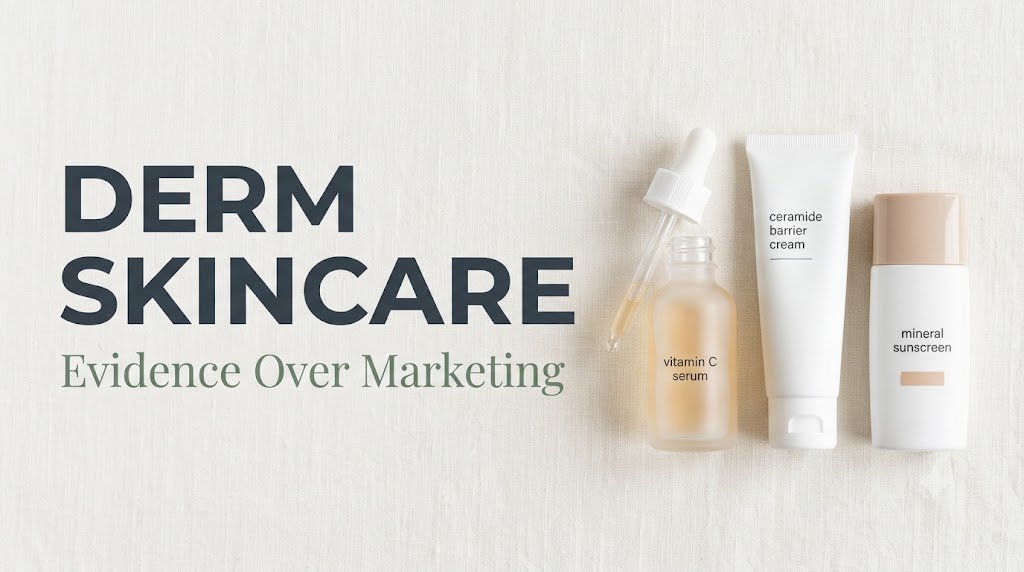
Derm skincare is the practice of curating a topical routine exclusively around ingredients and formulations with a demonstrated, causal mechanism of action in human skin, verified through independent clinical trials and accepted by the consensus of dermatological organizations. It explicitly rejects the idea that price, brand prestige, or “clean beauty” narratives are useful proxies for efficacy. The term is often misused as a marketing label, but its functional meaning is a strict, evidence-first filter for product selection.
Think of this as the difference between taking a supplement because the label looks nice and taking a medication prescribed after a blood test identified a specific deficiency. One approach is based on hope and packaging. The other is based on identifying a biological target and using a compound shown to interact with that target predictably. Derm skincare applies this clinical logic to the cosmetic counter. It asks, what exactly is this molecule supposed to do inside my keratinocytes or melanocytes, and what data proves it?
This philosophy centers on the concept of the minimal effective routine. Instead of layering ten products with overlapping and often irritating ingredient profiles, you use the smallest number of well-studied compounds at their known effective concentrations. A 2023 review in the Journal of the American Academy of Dermatology on skincare simplification concluded that reducing a routine to a gentle cleanser, a barrier-supporting moisturizer, a targeted active ingredient, and a broad-spectrum sunscreen achieves better clinical outcomes for acne and rosacea than complex multi-step regimens due to improved adherence and reduced barrier irritation.
Key Takeaway: Derm skincare is a decision-making process based on biological mechanisms and clinical data, not a shopping list of expensive brands.
What Makes a Skincare Product Evidence-Based?
An evidence-based skincare product is defined by the quality and applicability of the data supporting its core claims, not by the presence of a single studied ingredient floating in an otherwise problematic base formula. For a product to be genuinely evidence-based, three criteria must intersect. First, the key active ingredient must have at least two independent, randomized controlled human trials published in peer-reviewed dermatology journals demonstrating its efficacy for the specific claim being made. Second, the ingredient must be present in the product at a concentration and pH that matches the successful trial conditions. Third, the overall formulation must not contain ingredients known to cause a negative effect that cancels out the benefit, such as a high-concentration denatured alcohol in a product marketed for barrier repair.
For example, the evidence for ascorbic acid (pure vitamin C) as a collagen synthesis booster and photoprotective antioxidant is robust when formulated at a concentration of 10 to 20 percent with a pH below 3.5. A product listing ascorbic acid as the 15th ingredient in a neutral-pH base has the ingredient science behind it but fails the formulation science test. The molecule will not penetrate the stratum corneum effectively in that environment. The International Journal of Cosmetic Science has repeatedly published research showing that the delivery system and the base formulation’s pH are just as critical to clinical outcomes as the active ingredient’s raw percentage on the label.
You must also distinguish the type of evidence. An in vitro study on fibroblast cultures in a petri dish is preliminary science, not a reason to buy a cream. A single small observational study with 20 participants is hypothesis-generating. A well-conducted, double-blind, placebo-controlled, split-face trial with histological analysis is actionable evidence. Most skincare marketing collapses these distinct categories into one vague phrase: “clinically proven.”
The Skin Barrier Science Explained
Your skin barrier, clinically referred to as the stratum corneum, is not a passive wall but a highly organized, metabolically active interface between your internal biology and the outside world. It is structured like a brick wall. The corneocytes, which are terminally differentiated, protein-rich cells, are the bricks. The lipid matrix surrounding them, composed of a precise molar ratio of ceramides, cholesterol, and free fatty acids, is the mortar. This mortar is the primary regulator of transepidermal water loss (TEWL) and prevents the entry of pathogens, allergens, and irritants.
When a dermatology researcher says a barrier is “compromised,” they are typically describing a quantifiable disruption to this lipid matrix. This disruption creates microscopic gaps through which water evaporates uncontrollably and external irritants can penetrate to trigger an immune response in the living epidermis. This is the cellular basis of stinging, tightness, and reactivity. A 2022 study in the Journal of Investigative Dermatology demonstrated that even a 10 percent reduction in stratum corneum ceramide levels directly correlates with a measurable and significant increase in TEWL and a lower threshold for irritant-induced inflammation.
Restoring this barrier requires replacing the missing lipids in the correct physiological ratio, not simply slathering on any oil or butter. Products built on the concept of molar ratio barrier repair use a specific blend of ceramide NP, ceramide AP, ceramide EOP, cholesterol, and free fatty acids to literally fill in the gaps in the crumbling mortar. This is the foundational science behind any effective derm skincare routine. If the barrier is not intact, every other active ingredient, from retinoids to vitamin C, becomes a potential source of intractable irritation rather than a vehicle for improvement.
Key Takeaway: A fully functional skin barrier, with its specific lipid matrix intact, is the non-negotiable platform upon which all other derm skincare results are built.
Ingredients Dermatologists Actually Recommend
The core ingredients that form the backbone of a derm skincare philosophy are not trendy extracts with a single in vitro study. They are workhorse molecules that have demonstrated consistent, reproducible results in human skin across multiple independent trials. Niacinamide (a form of vitamin B3) works by boosting the biosynthesis of barrier-critical ceramides while reducing sebum production and inhibiting the transfer of melanosomes from melanocytes to skin cells. The American Academy of Dermatology highlights its versatility because it addresses barrier repair, pore appearance, and uneven tone with a low risk of irritation.
Retinoids are the most comprehensively studied topical molecules in dermatology. They bind to nuclear receptors in skin cells to directly regulate gene transcription, increasing epidermal turnover and dermal collagen density. While prescription tretinoin (retinoic acid) is the gold standard for speed and potency, cosmetic retinol is a well-established over-the-counter alternative that must undergo a two-step enzymatic conversion to retinoic acid inside the skin, making it slower-acting but more tolerable.
Azelaic acid is a naturally occurring dicarboxylic acid with a uniquely multi-targeted mechanism. It is bacteriostatic against Cutibacterium acnes, it normalizes the disordered keratinization that leads to clogged pores, it is a direct inhibitor of the enzyme tyrosinase to reduce hyperpigmentation, and it acts as an anti-inflammatory agent. This makes it a critical tool for acne, rosacea, and post-inflammatory hyperpigmentation simultaneously.
Ascorbic acid (L-ascorbic acid) serves a primary function as a potent antioxidant that neutralizes reactive oxygen species generated by UV radiation and pollution. It also acts as an essential cofactor for the enzymes prolyl hydroxylase and lysyl hydroxylase, which are required for the synthesis of stable collagen triple helices. The challenge here is exclusively formulation. It requires a low pH and a specific concentration to penetrate, making the delivery system the deciding factor between a useful serum and expensive, oxidized water.
| Ingredient | Primary Mechanism | Known Effective Concentration | Key Formulation Requirement |
|---|---|---|---|
| Niacinamide | Ceramide synthesis boost, melanosome transfer inhibition | 2% to 5% | Compatible with a wide pH range; effective even at low concentrations. |
| Retinol | Gene transcription modulation via nuclear receptors | 0.1% to 1% | Needs encapsulation for stability; highly photosensitive; use at night. |
| Azelaic Acid | Tyrosinase inhibition, antibacterial, anti-inflammatory | 15% to 20% (prescription), 10% (cosmetic) | Efficacy is concentration-dependent; often formulated as a suspension. |
| L-Ascorbic Acid | Antioxidant, collagen synthesis cofactor | 10% to 20% | Requires a pH below 3.5 and an aqueous base; highly unstable. |
Medical Grade Skincare Myth vs. Regulatory Reality
The term “medical-grade skincare” has no legal or regulatory definition in the United States. The U.S. Food and Drug Administration (FDA) does not recognize it as a distinct category of products. Under the Federal Food, Drug, and Cosmetic Act, a topical product is legally either a cosmetic or a drug. A cosmetic is defined by its intended use to cleanse, beautify, or alter appearance without affecting the body’s structure or function. A drug is defined by its intent to diagnose, treat, cure, mitigate, or prevent a disease, or to affect the structure or function of the body. The claim a product makes, not the price or where it’s sold, determines its regulatory class.
A moisturizer sold in a physician’s office that contains ceramide NP and makes the claim of “moisturizing and smoothing” is legally a cosmetic. A nearly identical moisturizer sold at a drugstore containing the same ceramide NP at the same concentration, making the same claim, is the same class of product. The “medical-grade” label is a marketing strategy deployed to suggest superior potency and clinical legitimacy without the burden of actual FDA drug approval. The real distinction exists only between prescription drugs, like tretinoin 0.05% cream, which have an approved New Drug Application (NDA), and all non-prescription cosmetics, regardless of their sales venue.
This does not mean that products sold in dermatologists’ offices are bad or ineffective. Many are exceptionally well-formulated by companies that invest heavily in clinical testing for their cosmetic products. It means the label itself tells you nothing about the formulation’s quality. The true marker of a high-performance cosmetic product is not the words “medical-grade” on the box. The true marker is an ingredient deck that respects the science of the barrier, uses actives at effective concentrations with the correct pH and delivery system, and omits unnecessary irritants.
Key Takeaway: Judge a product by its complete ingredient list and the independent clinical data supporting its formulation, not by a legally meaningless “grade” on the label.
How to Read a Skincare Ingredients Label
Reading an INCI (International Nomenclature of Cosmetic Ingredients) list correctly is the single most empowering skill in derm skincare. The golden rule is that ingredients are listed in descending order of concentration down to the 1 percent line. Below 1 percent, they can be listed in any order. The product’s functional identity is almost entirely determined by the first five to seven ingredients after the solvent base, which is usually water. This is where you look to see if the vehicle is a barrier-supporting lipid blend or a cheap, volatile filler.
The second critical task is locating the 1 percent line. Phenoxyethanol, a common preservative, is typically used at exactly 1 percent. Any ingredient listed after it is present at less than 1 percent. This is useful. If a product’s marketing story is built around a 10 percent niacinamide serum, but niacinamide appears after the phenoxyethanol, the label itself contradicts the claim. Similarly, a “hydrating serum” with hyaluronic acid listed at number 38 on the label contains a fraction of a drop. The hydrating effect you feel is coming from the humectants and film-formers much higher up the list, like glycerin or dimethicone.
Pay attention to ingredient families, not just single names. A product marketed for sensitive skin that lists “parfum,” “linalool,” “limonene,” or “geraniol” high on the list is fundamentally at odds with its own claim. These are fragrance allergens that a 2021 study in the British Journal of Dermatology identified as significant contributors to allergic contact dermatitis. If a cleanser claims to be hydrating but the second ingredient is sodium lauryl sulfate, the harsh surfactant will strip more lipids from your barrier than any humectant in the bottle can replace.
A Quick Tip for reading labels:
- Identify the solvent base (usually water/aqua).
- Look at the first five functional ingredients to understand the product’s true category: a cleanser, an emollient-rich cream, or a silicone-heavy primer.
- Locate the preservative system (like phenoxyethanol) to mentally mark the 1 percent threshold.
- Check active ingredients against their known effective concentration range and ensure they sit above that threshold.
- Scan the final third of the list for known inflammatory triggers, like denatured alcohol (alcohol denat.) in a product for barrier repair or rosacea.
Prescription Retinoid vs. Cosmetic Retinol
The difference between a prescription retinoid and a cosmetic retinol is a matter of receptor affinity and the number of metabolic steps required to reach the active state. Prescription tretinoin (retinoic acid) is the biologically active form of vitamin A that directly binds to all three retinoic acid receptors (RAR-alpha, RAR-beta, RAR-gamma) and retinoid X receptors. It requires no conversion by your skin. This immediate and powerful receptor activation is why it is the undisputed gold standard for treating acne vulgaris and photoaging, delivering measurable histological improvements in collagen density as early as 12 weeks, and also why it triggers retinoid dermatitis if the barrier is not carefully managed.
Cosmetic retinol, by contrast, is a pro-drug. Your skin’s keratinocytes must first enzymatically oxidize retinol into retinaldehyde, and then into retinoic acid. Each metabolic conversion step reduces the final concentration of the active molecule, creating a slow-release effect. A 0.5% retinol serum does not deliver a 0.5% retinoic acid hit to your skin. The final concentration is a fraction of that, making it significantly more tolerable but slower to produce results.
The clinical decision is not simply about potency. A 2023 randomized controlled trial published in the Journal of the American Academy of Dermatology directly compared 0.02% tretinoin with 1% retinol over 24 weeks. The tretinoin group showed faster and more dramatic improvement in fine lines and pigmentation. The retinol group showed improvement that eventually reached a similar, though less pronounced, endpoint, but with dramatically lower rates of erythema and scaling during the first eight weeks. For someone with a robust barrier or a history of tolerating acids, tretinoin is the most direct path to results. For someone with a sensitive barrier or eczema, starting with a well-formulated, encapsulated retinol at a low percentage is a perfectly valid derm skincare strategy.
Key Takeaway: Tretinoin is the direct, high-affinity key to the receptor. Retinol is the gentler precursor that your body slowly converts into that key.
Derm Skincare Routine Core Structure
A derm skincare routine is a biological reset for your skin, built on three non-negotiable pillars and one elective active. The morning is for protection. The evening is for repair and targeted treatment. Every step must have a clear biological purpose and a formulation that supports your barrier, not strips it.
The core sequence in the morning serves to defend against ultraviolet radiation and oxidative stress. You begin with a gentle, low-pH cleanser or a simple splash of water if your skin is dry. The goal is to remove overnight sweat and product residue without stripping the lipid matrix. You follow immediately with a dedicated antioxidant serum. The clinical data is strongest for a well-formulated ascorbic acid serum at a 10 to 20 percent concentration, applied to bare skin to maximize its reservoir effect, where it remains active in the skin for up to 72 hours even after washing. The final and most critical morning step is a broad-spectrum sunscreen with an SPF of 30 or higher. Sunscreen is not the last step in a skincare routine. It is the primary treatment for preventing photoaging and barrier degradation.
The evening sequence flips the objective to cellular repair. You must thoroughly but gently remove the day’s sunscreen, sebum, and particulate pollution. This is best achieved with a double-cleanse method: an oil-based cleanser or micellar water to dissolve the lipid-based film of sunscreen, followed by a traditional water-based cleanser suited to your skin type. Once the skin is clean and damp, you apply your barrier-repair moisturizer. This is the vehicle for your ceramides, cholesterol, and humectants. Your targeted active ingredient, such as a retinoid or azelaic acid, is applied either before your moisturizer to maximize penetration or after it to buffer the effect and reduce irritation. This “sandwich” technique is widely recommended for introducing retinoids.
| Routine Step | Morning Function | Evening Function | Product Category |
|---|---|---|---|
| Cleanse | Remove light residue, prep for antioxidant. | Dissolve SPF and pollution thoroughly. | Gentle, non-foaming or low-foam gel/milk. |
| Treat | Apply ascorbic acid serum to bare skin. | Apply retinoid or other targeted active. | pH-correct water-based serum. |
| Moisturize | Layer SPF-containing moisturizer or separate SPF. | Apply a ceramide-rich barrier cream. | Emollient and occlusive-rich lotion/cream. |
| Protect | Broad-spectrum SPF 30+ is the final layer. | No protection step; skin is in repair mode. | Zinc oxide or photostable chemical filters. |
How to Layer Skincare Actives Safely
Layering actives safely is governed by the chemistry of pH and the biology of receptor occupancy, not by arbitrary brand pairings. The primary rule is to never apply two low-pH actives together in the same session unless you are certain of their stability. For example, salicylic acid (a beta-hydroxy acid) and ascorbic acid both function optimally at a pH below 3.5. If you layer them, the cumulative acidity will not make them work better. It will simply overwhelm your skin’s bicarbonate-buffering system, chemically burning the acid mantle and triggering a predictable inflammatory cascade that looks like a rash.
The correct approach is to separate actives by time of day or to apply them on alternating nights. The classic and most effective separation strategy is morning antioxidant, evening retinoid. This aligns with the skin’s circadian rhythm, which is more receptive to DNA repair at night, and eliminates any pH conflict. If you are using a product with niacinamide, which is most stable around a neutral pH of 5.5 to 6.5, applying it directly over a low-pH acid serum can transiently raise the pH of your skin’s surface, which is generally well-tolerated, or cause flushing in some individuals.
The “retinoid sandwich” is a practical application of dermatological buffering. You start by applying a layer of a bland, fragrance-free moisturizer to damp skin after cleansing. You wait a full five to ten minutes for this moisture to fully absorb and the skin to return to a dry, stable state. You then apply a pea-sized amount of your retinoid across the face, avoiding the orbital rim and nasal folds. Finally, you apply a second layer of moisturizer. This technique dilutes the retinoid’s penetration rate just enough to prevent acute dermatitis without blocking the receptor-mediated effects that improve skin texture.
Key Takeaway: If you feel stinging, stop the session. Rinse with cool water. Do not try to push through the pain to build tolerance to a low-pH combination.
Skin Purging vs. Allergic Reaction
Skin purging is a predictable, self-limiting acceleration of the follicular cycle triggered specifically by ingredients that increase cell turnover, while an allergic reaction is a specific immune-mediated hypersensitivity response that demands immediate cessation of the product. Purging, technically known as retinoid-induced acne flare, occurs when an active like tretinoin or salicylic acid increases the desquamation rate inside the pore. This forces microcomedones, which are tiny pre-pimples that would have surfaced slowly over weeks, to rise to the surface simultaneously over a period of three to six weeks.
The diagnostic clue is location and duration. Purging happens in the precise areas where you normally break out. If you usually get hormonal cysts along your jawline, a purge will confine itself to your jawline. If you suddenly develop inflamed, itchy bumps across your cheeks and forehead where you never get acne, this is contact dermatitis. Purging produces comedones and pustules that heal quickly within three to five days with a thinner, less inflamed life cycle. An allergic reaction produces persistent redness, welts, and a uniform, sandpaper-like texture of tiny bumps that does not resolve on its own.
If you suspect an allergic reaction, stop using every new product immediately. Strip your routine back to a fragrance-free, non-foaming cleanser and a barrier repair moisturizer you have used safely for months. If the reaction does not begin to calm within 24 to 48 hours, or if it is accompanied by swelling of the eyelids or lips, you need to be evaluated by a board-certified dermatologist. Continuing to apply the suspected product to “see if your skin gets used to it” is the primary way allergic contact dermatitis is converted into a chronic, painful, and skin-thinning condition.
Derm Skincare for Acne-Prone Skin
A derm skincare protocol for acne-prone skin targets the four pillars of acne pathogenesis without collapsing the barrier that acne treatments notoriously compromise. The four mechanisms are follicular hyperkeratinization (dead cells clogging the pore), sebum overproduction, colonization by Cutibacterium acnes bacteria, and a subsequent inflammatory cascade. Your routine must simultaneously address these with a minimal number of non-comedogenic products.
The essential active for unclogging pores is salicylic acid at a concentration of 2 percent. Unlike water-soluble alpha-hydroxy acids, salicylic acid is lipid-soluble. It penetrates the sebaceous follicle to dissolve the keratin plugs at their source. For the bacterial and inflammatory component, a leave-on product containing 2.5 percent benzoyl peroxide is the clinical workhorse. A landmark review in the Journal of the American Academy of Dermatology notes that 2.5 percent benzoyl peroxide is as effective at reducing C. acnes counts as 10 percent concentrations, but with a fraction of the drying side effect. Benzoyl peroxide should not be layered with tretinoin in the same application, as benzoyl peroxide directly oxidizes and degrades the tretinoin molecule.
The third indispensable agent for acne is a prescription or cosmetic retinoid. Adapalene 0.1%, now available over the counter, is a specific agonist of the RAR-beta receptor and provides potent comedolytic action with a stability profile that makes it safe to use alongside benzoyl peroxide in a split routine. Your morning moisturizer must be an oil-free, non-comedogenic formula containing niacinamide to regulate sebum and ceramides to restore the barrier lipids that benzoyl peroxide strips away. A 2024 clinical review in the British Journal of Dermatology reinforced that combining a barrier-focused moisturizer with benzoyl peroxide significantly increases treatment adherence compared to a drying, single-agent approach.
Key Takeaway: The triad for acne is a 2% salicylic acid wash, a 2.5% benzoyl peroxide leave-on treatment used in the morning, and an adapalene or tretinoin product used at night, all built on a cushion of ceramide-rich hydration.
Derm Skincare for Hyperpigmentation
Hyperpigmentation in derm skincare is treated as a problem of melanocyte hyperactivity and melanosome transfer to keratinocytes, with treatment timeframes measured in months, not weeks. The specific condition determines the treatment depth. Post-inflammatory hyperpigmentation (PIH) from acne is primarily an epidermal process of melanin spillover into surrounding keratinocytes and responds well to topical intervention. Melasma, by contrast, involves a complex interplay of hormones, visible light, and dermal melanophages, and requires a more cautious, layered approach to avoid triggering a rebound flare.
The cornerstone active for PIH is a prescription retinoid. By accelerating epidermal turnover, tretinoin physically sheds melanin-laden keratinocytes from the surface, lightening dark marks at a rate approximately three times faster than spontaneous resolution. This is paired with a direct tyrosinase inhibitor to turn off the faucet producing new pigment. Azelaic acid at 15 percent gel is superior here because it exhibits specificity for hyperactive melanocytes, leaving normally functioning melanocytes alone, which makes it a safer choice for deeper skin tones.
For conditions like melasma, a well-formulated serum with tranexamic acid at a concentration of 3 to 5 percent has emerged as a significant tool. Tranexamic acid works by blocking the plasminogen activator pathway, which prevents UV light and inflammation from signaling melanocytes to produce melanin. A 2023 study in the Journal of the American Academy of Dermatology evaluating a compounded topical tranexamic acid formula found a significant reduction in the Melasma Area and Severity Index (MASI) score after 12 weeks of twice-daily application, without the irritation risk posed by hydroquinone.
The absolute non-negotiable in hyperpigmentation treatment across all Fitzpatrick skin types, especially Fitzpatrick skin types IV through VI, is rigid, year-round photoprotection. Visible light, particularly high-energy blue light, can independently worsen melasma. A tinted sunscreen with iron oxides, used daily over the entire face, provides a physical barrier against the wavelengths that untinted chemical sunscreens allow through. Without this step, every other active is being undercut by the one variable you can completely control.
| Active Ingredient | Mechanism for Pigmentation | Best For | Critical Safety Note |
|---|---|---|---|
| Tretinoin | Accelerates epidermal turnover, shedding pigment. | Post-inflammatory hyperpigmentation. | Causes photosensitivity; use only at night. |
| Azelaic Acid | Selective tyrosinase inhibitor. | PIH and sensitive skin; safe in pregnancy. | Can cause transient itching at application. |
| Tranexamic Acid | Inhibits plasmin-mediated melanogenesis. | Melasma and vascular-component pigmentation. | Effective only with strict visible light protection. |
| Kojic Acid | Tyrosinase inhibitor. | General lightening. | Higher sensitization potential; patch test required. |
Derm Skincare for Rosacea and Sensitive Skin
A derm skincare approach for rosacea and sensitive skin is built on the principle of zero tolerance for vascular and neural triggers, prioritizing barrier integrity and broad anti-inflammatory action over exfoliation. Rosacea, particularly the erythematotelangiectatic subtype, involves an inherently dysregulated innate immune system in the skin. The cathelicidin antimicrobial peptide pathway is overactive, and the sensory nerves are hypersensitive. This means the skin does not simply “get irritated.” It amplifies and overreacts to stimuli that normal skin would ignore.
The foundational ingredient is azelaic acid at 15 percent gel or foam. The FDA has approved this for the papulopustular lesions of rosacea because it directly calms the cathelicidin pathway, reduces the inflammatory cytokines that cause visible redness, and works without the exfoliating mechanism that makes acids dangerous for this population. It should be introduced over a bland, fragrance-free moisturizer to buffer the initial stinging sensation that typically fades after two weeks of consistent use.
The second pillar is surgical avoidance of vasodilators in your routine. This list is specific. Menthol, peppermint oil, eucalyptus oil, witch hazel, and denatured alcohol (alcohol denat.) must be eliminated from every product, including cleansers and sunscreens. These compounds activate the TRPV1 and TRPA1 receptors on sensory nerves, directly triggering the flushing, burning, and worsening of visible blood vessels that rosacea patients are trying to prevent. A gentle, non-foaming cleanser and a moisturizer containing ceramide NP, cholesterol, and niacinamide at 2 to 5 percent constitute a complete baseline routine before any other active is even considered.
Sunscreen selection is uniquely critical. Chemical UV filters absorb light energy and convert it to heat through a chemical reaction. In rosacea-prone skin, this localized heat at the skin’s surface is often sufficient to trigger a flushing episode. A purely mineral sunscreen containing zinc oxide and titanium dioxide stays on the surface and reflects light, avoiding the exothermic chemical reaction entirely. Tinted mineral formulas are ideal, as iron oxides add extra protection against visible light.
Key Takeaway: For rosacea, your core actives are azelaic acid and broad-spectrum mineral SPF. Your core avoidance list is menthol, alcohol denat., and chemical sunscreen filters.
In-Office Treatments vs. Home Skincare
The relationship between a home derm skincare routine and an in-office procedure is sequential and synergistic, not competitive. Home skincare is the cultivation of healthy, resilient tissue. An in-office treatment is a controlled, physical intervention performed by a board-certified dermatologist to break down or remodel a specific structure that a topical agent cannot reach. You would never run a marathon on a broken leg, and a dermatologist will not perform a laser resurfacing on a neglected, inflamed barrier.
For acne, a home routine of adapalene and benzoyl peroxide successfully manages grade I and II comedonal and inflammatory acne in approximately 70 to 80 percent of cases. When nodulocystic acne, which are deep, painful, and solid lumps, develops, topical penetration is insufficient. This is the threshold for in-office intervention, typically intralesional corticosteroid injections to immediately halt the destructive inflammatory process that leads to permanent scarring, or an isotretinoin consultation.
For photoaging and pigment, the ceiling of a cosmeceutical retinoid serum is the gradual remodeling of dermal collagen over 12 to 24 months. This is a slow, diffuse improvement. Fractional non-ablative laser treatments, like those using a 1550-nm wavelength, create precise columns of microthermal injury within the dermis, triggering a rapid, focal wound-healing response that generates new collagen in a matter of days. A 2025 clinical trial in the Journal of Investigative Dermatology demonstrated that a series of three fractional laser sessions coupled with a maintained home retinol routine increased procollagen type I synthesis by over 400 percent compared to either intervention alone.
The most effective strategy is to prepare your skin with a retinoid for at least 12 weeks before a procedure to regulate cell turnover, and then to use a strict barrier-repair protocol with ceramides and broad-spectrum SPF afterward. The procedure delivers the dramatic, time-zero remodeling event. The home routine sustains and extends that result, protecting the investment.
When to See a Board-Certified Dermatologist
A board-certified dermatologist is the appropriate provider when a skin condition exceeds the functional capability of cosmetic topical products, which are legally barred from altering the structure or function of the skin. The specific clinical thresholds that warrant this referral are clearly defined. A sudden onset of a rapidly changing mole, with asymmetry, irregular borders, or color variation, requires an immediate, same-week dermatoscopy exam to rule out malignancy. This is not a cosmetic concern. It is a cellular biology emergency.
For inflammatory conditions, the line is drawn at the failure of first-line over-the-counter evidence-based treatments. If a consistent, properly applied routine of adapalene 0.1% and benzoyl peroxide 2.5% for acne, or azelaic acid 10% for rosacea, produces no meaningful improvement after 12 weeks, you are likely dealing with a more complex pathogenesis that requires prescription-strength anti-inflammatories, oral medication, or a diagnostic biopsy. Persistent, full-thickness facial flushing that does not resolve after removing all vasoactive triggers in your skincare warrants an evaluation for underlying systemic conditions like carcinoid syndrome or mast cell activation.
When preparing for this appointment, bring your complete product list with INCI names, not just brand names. A photo timeline of your skin flares correlated with your diet, stress levels, and product use is worth more than a verbal description of the problem. Ask directly about the biological mechanism of your diagnosis: which specific receptors or inflammatory pathways are involved. This turns a passive consultation into an active collaboration.
Key Takeaway: Over-the-counter derm skincare treats predictable, mild-to-moderate cosmetic and inflammatory conditions. A dermatologist treats unpredictable, severe, or structurally destructive disease processes that require drugs regulated by the FDA.
Frequently Asked Questions About Derm Skincare
What does “derm skincare” actually mean?
“Derm skincare” refers to a philosophy of selecting products based on independent, peer-reviewed clinical evidence of their biological mechanism and efficacy, not on brand price, marketing claims, or unregulated labels like “medical-grade.”
It is the practice of using ingredients at their known effective concentrations in stable formulations that support, rather than undermine, the skin barrier.
Is medical-grade skincare better than drugstore skincare?
No, “medical-grade” is a marketing term with no legal or regulatory definition in the United States, according to the FDA.
A product’s quality is determined by its complete ingredient list, the concentration and stability of its actives, and its pH, not by whether it’s sold at a pharmacy or a physician’s office.
What is the number one ingredient dermatologists recommend?
A daily broad-spectrum sunscreen with an SPF of 30 or higher is the most universally recommended product.
Beyond protection, retinoids (like tretinoin or retinol) are the most comprehensively studied topical molecules for both treating acne and preventing the signs of photoaging by directly stimulating collagen synthesis.
How do I know if my skincare is evidence-based?
Look for independent randomized controlled human trials supporting the specific ingredient at the concentration in the bottle, published in journals like the Journal of the American Academy of Dermatology.
Verify that the active ingredient sits above the 1 percent line in the INCI list, and that the formulation does not include ingredients known to damage the barrier it claims to help, such as denatured alcohol high on the list.
What’s a basic derm-approved skincare routine?
A basic derm routine has three core steps: a gentle, pH-balanced cleanser, a barrier-repair moisturizer, and a broad-spectrum SPF 30+ sunscreen every morning.
At night, you reintroduce the same gentle cleanser and moisturizer, adding a single targeted active like a retinoid for aging and acne or azelaic acid for redness and pigmentation.
Can I build a derm skincare routine if I have sensitive skin?
Yes, and it is especially important for sensitive skin to focus on barrier repair over exfoliation.
Start by using only a non-foaming cleanser, a fragrance-free cream with ceramides and niacinamide, and a mineral zinc oxide sunscreen for four weeks before even considering introducing a low-potency active like azelaic acid.
The central, unshakable practice of derm skincare is a return to the evidence. You have seen that every legitimate step in a routine maps back to a defined biological mechanism, whether it is a ceramide filling a gap in a lipid bilayer or a retinoid binding to a nuclear receptor to tell your DNA to produce more collagen. The words on the bottle are a sales pitch. The INCI list, understood correctly, is a blueprint.
Your next step is to apply this filter to your own bathroom shelf. Pick up the product you use most. Scan down to the first five ingredients after water. Find the preservative to mark the 1 percent line. Ask if your active is above it and if the formulation’s solvents or emulsifiers align with your skin type’s needs. This is how you stop buying hope and start investing in biology.
You now have a framework that distinguishes a clinical effect from a marketing narrative. Use this framework to build a routine that is simple enough to follow every single day and specific enough to address exactly what you see in the mirror. A well-chosen, boring, consistent routine will outperform an expensive, rotating collection of unverified promises every single time.