Trader Joe’s Skincare: The Best Products Reviewed for 2026
Trader Joe’s skincare is worth paying attention to, but not every product in the aisle earns its place in your routine. Several formulations contain clinically supported ingredients at workable concentrations. Others are inexpensive for a reason that shows up clearly when you read the INCI list.
The gap between a product that works and one that merely feels nice is almost always written in the ingredient panel. According to the Cosmetic Ingredient Review (CIR) Expert Panel, ingredient quality and concentration determine cosmetic efficacy far more reliably than price point or brand status. A $6 moisturizer with glycerin (INCI: Glycerin), ceramide NP, and panthenol (INCI: Panthenol) will outperform a $60 one built on fragrance and filler.
This article gives you an honest, ingredient-level look at Trader Joe’s skincare. You will find out which products deliver what they claim, which contain ingredients worth your skin’s attention, who each one suits, and who should approach certain formulations with caution before the first use.
What Is Trader Joe’s Skincare and How Does It Compare to Standard Drugstore Brands?
Trader Joe’s skincare refers to the personal care and cosmetic products sold under Trader Joe’s private label branding, positioned as budget-accessible alternatives to both mass-market and mid-range skincare.
The brand’s pricing model is its most obvious feature: most products fall between $4 and $14. What makes this interesting from an ingredient standpoint is that Trader Joe’s sources some formulations containing the same functional actives found in drugstore staples from CeraVe, Neutrogena, and Aveeno. The key question is whether those actives appear at concentrations that actually influence skin biology.
Compared to standard drugstore brands, Trader Joe’s skincare has narrower product range, inconsistent availability (seasonal and regional stock changes mean a product you loved can disappear), and less standardized concentration disclosure on labels. On the positive side, some formulations are notably free of heavy fragrance loading and unnecessary colourants.
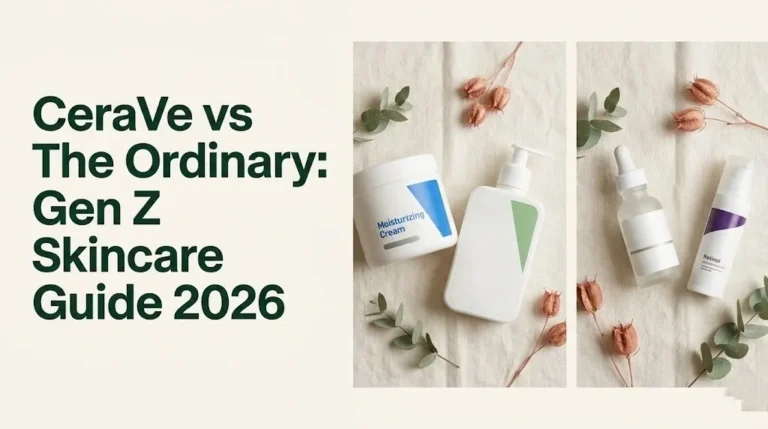
The comparison to brands like CeraVe and The Ordinary is instructive. CeraVe’s moisturizing cream, for example, explicitly features ceramide NP, ceramide AP, ceramide EOP, niacinamide at approximately 0.1% to 0.5%, and sodium hyaluronate. The Ordinary lists exact active concentrations on every product label. Trader Joe’s labels are less transparent on exact percentages, which means you are working from ingredient order on the INCI list as a proxy for relative concentration.
Think of the ingredient list like the credits in a film: whoever appears first had the biggest role. If glycerin appears in position three, it is a meaningful component. If it appears in position fifteen after several thickeners and preservatives, its contribution to hydration is cosmetically negligible.
| Feature | Trader Joe’s | CeraVe | The Ordinary |
|---|---|---|---|
| Price range | $4 to $14 | $8 to $22 | $5 to $29 |
| Concentration transparency | Low (no percentages listed) | Moderate (some disclosed) | High (all actives listed) |
| Fragrance content | Variable by product | Mostly fragrance-free | Mostly fragrance-free |
| Ceramide-containing options | Limited | Core formulation feature | Several products |
| Dermatologist collaboration | Not publicly disclosed | Formulated with dermatologists | Formulated with chemists |
| Availability consistency | Seasonal/regional variation | Wide and consistent | Wide and consistent |
Best for: Shoppers who understand how to read an INCI list, want to supplement an existing routine with accessible basics, and are not relying on a Trader Joe’s product as their sole active treatment for a specific skin concern.
Is Trader Joe’s Skincare Good? An Honest Ingredient-Level Assessment
Trader Joe’s skincare is genuinely good for basic hydration, barrier support, and gentle cleansing. It is less reliable as a source of high-potency actives or clinically dosed treatment products.
The honest assessment comes down to three factors. First, ingredient quality at this price tier is generally acceptable. Glycerin, sodium hyaluronate (INCI: Sodium Hyaluronate, the lower-molecular-weight salt form of hyaluronic acid that penetrates the stratum corneum more readily than the full polymer), and panthenol appear across several products. These are well-established, evidence-backed humectants and barrier-support agents. Second, active ingredient concentrations are not disclosed, which limits clinical confidence. You cannot confirm whether the ascorbic acid (INCI: Ascorbic Acid, the L-isomer of vitamin C required for photoprotective antioxidant activity) in a Trader Joe’s vitamin C serum appears at 10%, 15%, or 2%. Below 10%, ascorbic acid has limited evidence for photoprotection or collagen stimulation in human trials. Third, fragrance is present in some products but not all, and for people with a reactive or compromised stratum corneum, that variable matters more than the price tag.
According to a 2021 review published in the Journal of Cosmetic Dermatology, formulation vehicle (the base into which an active is dissolved) affects ingredient bioavailability and skin penetration at least as much as ingredient inclusion alone. A sodium hyaluronate molecule in an unstable or poorly buffered base may not deliver the same benefit as one in an optimized pH-adjusted emulsion.
The verdict: Trader Joe’s skincare is good for what it genuinely does well. Basic moisturizers and cleansers offer solid functional value. Targeted actives (vitamin C, retinol, niacinamide) require more scrutiny of ingredient position on the label before you decide they belong in your routine.
For people with Fitzpatrick skin types IV through VI who are managing post-inflammatory hyperpigmentation, underdosed brightening actives can create a false sense of treatment progress without delivering the melanocyte-level impact needed to shift pigmentation meaningfully.
Key ingredients worth looking for across Trader Joe’s products:
- Glycerin: humectant that draws water into the epidermis via osmotic gradient
- Sodium hyaluronate: lower molecular weight than full hyaluronic acid, penetrates the stratum corneum surface layers
- Panthenol (provitamin B5): converts to pantothenic acid in skin, supports barrier repair and water retention
- Allantoin (INCI: Allantoin): keratolytic and soothing agent, reduces transepidermal water loss in sensitive skin
- Camellia sinensis leaf extract (green tea): contains epigallocatechin gallate (EGCG), an antioxidant with preliminary human trial evidence for UV-induced oxidative stress reduction
Best Trader Joe’s Skincare Products Worth Buying in 2026
The best Trader Joe’s skincare products in 2026 are those whose INCI lists show functional actives appearing in the first half of the ingredient list, with minimal fragrance components and a clear stated purpose.
Based on ingredient analysis rather than editorial preference, these categories represent the strongest value buys in the Trader Joe’s personal care aisle.
Mango Butter Body Moisturizer contains Mangifera indica seed butter (mango butter, INCI: Mangifera Indica Seed Butter) high on the ingredient list. Mango butter is rich in oleic acid and stearic acid, fatty acids that replenish the lipid layer of the stratum corneum and reduce transepidermal water loss (TEWL). A 2019 study in the International Journal of Cosmetic Science noted that plant butter formulations high in oleic acid improve skin barrier function measurably after 4 weeks of daily application in participants with dry skin.
Moisturizing Cream with Vitamin E is a straightforward emollient moisturizer. Tocopherol (INCI: Tocopherol, vitamin E) functions as both an antioxidant and a membrane-stabilizing lipid in skin. It appears to be a genuine component of this formulation rather than a token addition, based on its position within the ingredient list. This product suits dry to normal skin types for everyday moisture maintenance.
Tea Tree Tingle Body Wash contains Melaleuca alternifolia leaf oil (tea tree oil). At low concentrations in a rinse-off formulation, it offers antimicrobial properties with some evidence for reducing surface bacteria. Note that tea tree oil at higher concentrations is a known skin sensitizer. In a rinse-off body wash context, sensitization risk is lower than in leave-on products.
| Product | Key Active | Primary Function | Best Skin Type | Caution |
|---|---|---|---|---|
| Mango Butter Moisturizer | Mangifera indica seed butter | TEWL reduction, barrier lipid replenishment | Dry, normal | May feel heavy for oily skin |
| Moisturizing Cream with Vitamin E | Tocopherol | Antioxidant, membrane stabilization | Dry to normal | Check for added fragrance in newer versions |
| Tea Tree Body Wash | Melaleuca alternifolia leaf oil | Surface antimicrobial (rinse-off) | Body acne-prone | Sensitizing for compromised or reactive skin |
| Enrich Moisturizing Face Lotion | Glycerin, panthenol | Humectancy, barrier support | All skin types | Not targeted enough for active skin concerns |
| Spa Face Wash | Sodium laureth sulfate, glycerin | Cleansing, mild hydration retention | Normal to oily | Too stripping for dry or eczema-prone skin |
Key Takeaway: The strongest Trader Joe’s skincare buys are basic moisturizers and body products where the key lipids and humectants appear high on the INCI list. The targeted active products require label scrutiny before purchase.
Trader Joe’s Skincare Review: What the Formulations Actually Deliver
An honest Trader Joe’s skincare review looks at what the formulations chemically deliver, not what the label promises.
The Trader Joe’s Enrich Moisturizing Face Lotion is the most frequently purchased face product from the brand. The formulation contains glycerin and panthenol at positions that suggest functional contributions, a blend of emollient esters for texture, and a preservative system. What it does not contain is a meaningful concentration of any active treatment ingredient: no disclosed retinoid, no verified niacinamide percentage, no ceramide complex. As a basic daily moisturizer for normal to slightly dry skin, it functions adequately. As an anti-aging or brightening product, the formulation does not have the chemical tools to deliver those outcomes.
The Trader Joe’s Daily Facial Sunscreen SPF 30, when formulated with zinc oxide (INCI: Zinc Oxide) or titanium dioxide (INCI: Titanium Dioxide) as active ingredients, meets FDA OTC sunscreen standards for broad-spectrum UVA and UVB protection at SPF 30. This is one of the strongest arguments for buying from Trader Joe’s. The FDA’s final monograph on OTC sunscreen (2021) sets strict standards for both the active ingredients permitted and the SPF labeling claims made. A product that meets those standards at $6 provides the same primary photoprotective function as one that meets them at $40.
The Trader Joe’s facial serums receive the most mixed reviews, and the ingredient chemistry explains why. Serum delivery systems depend on precise pH buffering, correct ingredient solubility, and appropriate vehicle formulation. A vitamin C serum that does not disclose its pH is concerning because ascorbic acid requires a formulation pH below 3.5 to maintain stability and skin penetration efficacy, according to research published in the Journal of the American Academy of Dermatology.
People with oily or combination skin may find Trader Joe’s lighter lotions work well as a cost-effective hydration step. People managing active acne, hyperpigmentation, or accelerated photoaging typically need verified active concentrations, which the Trader Joe’s line does not publicly provide.
Are Trader Joe’s Skincare Dupes Genuinely Comparable to Premium Products?
Trader Joe’s skincare dupes are comparable to premium products only when they contain the same functional active ingredient at a workable concentration in a chemically appropriate formulation. Texture similarity or packaging resemblance is not a dupe.
This is where the conversation around Trader Joe’s gets complicated. A product that looks like La Mer, smells similar to a Tatcha cream, or has a similar texture to a luxury serum is not a dupe unless it delivers the same mechanism of action through the same or equivalent ingredient at an effective dose.
The Trader Joe’s Moisturizing Face Wash compared to CeraVe’s Hydrating Facial Cleanser is a reasonable functional comparison. Both use mild surfactants and humectants in a formula designed to clean without significant barrier disruption. CeraVe’s version includes ceramide NP, ceramide AP, and ceramide EOP, which actively reinforce the skin barrier during cleansing. The Trader Joe’s version does not list ceramides. Both cleanse. One simultaneously reinforces the barrier.
A true dupe at the ingredient level requires:
- The same active ingredient present (not just a similar category ingredient)
- That active appearing in a similar position on the INCI list (suggesting comparable concentration)
- A compatible formulation vehicle (pH, solubility, and delivery system appropriate for that active)
- Absence of ingredients that would counteract or destabilize the active
- Similar or confirmed absence of known sensitizers if the premium product is marketed for sensitive skin
The Trader Joe’s retinol serum compared to The Ordinary’s Retinol 0.5% in Squalane is an illustrative case. The Ordinary discloses exactly 0.5% retinol (INCI: Retinol) in a squalane (INCI: Squalane) base, which provides good ingredient stability and skin tolerance. Trader Joe’s retinol serum lists retinol without concentration disclosure, in a base that may contain fragrance components. Without concentration parity, this is not a dupe in the clinical sense.
Key Takeaway: A skincare dupe is defined by ingredient identity and concentration, not by texture or price. Before accepting any “dupe” claim, check whether the active ingredient appears in the same position on both INCI lists.
Trader Joe’s Moisturizer: Ingredients, Performance, and Who It Suits
The Trader Joe’s Enrich Moisturizing Face Lotion and Mango Butter Moisturizer each perform their primary function (delivering and retaining skin moisture) through a combination of humectants (ingredients that attract water, primarily glycerin and sodium hyaluronate) and emollients (ingredients that smooth and fill gaps in the stratum corneum, including plant butters and ester blends).
Glycerin appears consistently across Trader Joe’s moisturizer formulations, often in the top five ingredients. This is significant. Glycerin at concentrations of 20% to 40% in a vehicle has well-established clinical evidence for reducing TEWL, according to a 2016 review in the Journal of Investigative Dermatology. In a commercially marketed lotion, glycerin concentrations typically range from 3% to 15%. Its position in the Trader Joe’s formulations suggests a functional rather than cosmetic contribution.
Panthenol (provitamin B5) in the Enrich Moisturizing Face Lotion converts to pantothenic acid at the skin surface. Pantothenic acid supports keratinocyte proliferation and migration, contributing to barrier repair over time. A 2017 study published in Skin Pharmacology and Physiology found that topical panthenol at 1% to 5% reduced TEWL and improved skin hydration scores versus vehicle control over 4 weeks.
For people with dry skin, the Mango Butter Moisturizer is the more suitable choice. The oleic acid content in mango butter provides occlusive-like barrier reinforcement alongside humectant pairing. For normal to combination skin, the lighter Enrich Moisturizing Face Lotion avoids the heavier feel of plant butters without sacrificing meaningful hydration.
People with oily or acne-prone skin should note that some plant butter-based formulations have moderate comedogenicity potential. Mangifera indica seed butter has a comedogenic rating of approximately 2 to 3 on the standard 0-to-5 scale, meaning it has moderate potential to block pores in individuals predisposed to comedonal acne. Patch testing on the jaw or cheek for one week before full-face application is a reasonable precaution.
Trader Joe’s Vitamin C Serum: Does the Formulation Actually Work?
Trader Joe’s vitamin C serum can work, but only if the formulation contains ascorbic acid (the L-isomer, INCI: Ascorbic Acid) at a concentration of at least 10%, formulated at a pH below 3.5, and packaged in a format that limits air and light exposure.
Ascorbic acid is the most clinically studied form of vitamin C in topical skincare. Its mechanism involves inhibiting tyrosinase activity (the enzyme required for melanin synthesis) and acting as a co-factor for collagen type I and type III synthesis by supporting prolyl and lysyl hydroxylase enzymes. According to a 2017 review in the Journal of the American Academy of Dermatology, topical L-ascorbic acid at 10% to 20% showed measurable improvements in photoaging markers in randomized controlled trials.
The Trader Joe’s vitamin C serum’s label does not disclose concentration or pH. These two omissions are meaningful. Below 10%, the brightening and collagen-supportive evidence base thins significantly. Without pH disclosure, you cannot verify whether the product maintains the sub-3.5 pH required for both ascorbic acid stability and dermal penetration.
Ascorbic acid is inherently unstable. It oxidizes on contact with air, light, and water. You can observe this degradation: fresh ascorbic acid solution is colorless to faintly yellow. When it turns orange or brown, oxidation has occurred and the antioxidant capacity is compromised. If a Trader Joe’s vitamin C serum appears orange-brown in the bottle at purchase, the active has likely already degraded.
For people with sensitive skin or rosacea, ascorbic acid formulations at the pH required for efficacy (below 3.5) can cause transient stinging, flushing, and barrier irritation. A more tolerable alternative is sodium ascorbyl phosphate (INCI: Sodium Ascorbyl Phosphate), a more stable, higher-pH vitamin C derivative with some evidence for brightening effects, though the potency evidence is less strong than for L-ascorbic acid.
Quick Tip:
- Check the vitamin C serum color before buying. Colorless to pale yellow is acceptable. Orange or brown means oxidation has occurred.
- Store vitamin C serums away from direct sunlight in a cool environment. Refrigeration extends stability.
- If you have reactive or rosacea-prone skin, look for sodium ascorbyl phosphate or magnesium ascorbyl phosphate rather than ascorbic acid in any budget serum.
Trader Joe’s Retinol Serum: What the Formula Contains and What to Expect
The Trader Joe’s retinol serum contains retinol (INCI: Retinol, the alcohol form of vitamin A) as its primary active, but without a stated concentration, setting realistic expectations requires understanding how retinol functions across a range of doses.
Retinol works on a delay, like planting a garden. You do not apply it on Tuesday and see collagen remodeling by Wednesday. Retinol binds to intracellular retinoic acid-binding proteins in keratinocytes, converts to retinaldehyde and then to retinoic acid in the skin, and from there signals fibroblasts to increase collagen type I production and accelerates keratinocyte turnover. A 2019 review in the British Journal of Dermatology confirmed that retinol at 0.1% to 0.3% produced measurable improvements in fine lines and skin texture in controlled trials after 12 weeks minimum.
The Trader Joe’s retinol serum’s concentration is not disclosed. Products that contain retinol at concentrations below 0.025% are unlikely to produce the collagen-stimulating or keratinocyte-turnover effects demonstrated in clinical trials. The ingredient position on the label suggests it is present at a low to moderate level, but this cannot be confirmed without independent laboratory testing.
Common and expected side effects of retinol, even at low concentrations, include dryness, flaking, and increased photosensitivity. These are not signs of an allergic reaction; they reflect normal retinoid-induced acceleration of keratinocyte shedding. To minimize irritation:
- Start with application two nights per week, not nightly.
- Apply to clean, dry skin at least 10 minutes after washing.
- Follow with a fragrance-free moisturizer to support the barrier during the adjustment period.
- Apply broad-spectrum SPF 30 or higher every morning without exception.
- Expect a 12-to-16-week minimum before assessing visible results.
People with darker Fitzpatrick skin types (IV through VI) should be aware that retinoid-induced peeling can trigger post-inflammatory hyperpigmentation in some individuals. Starting at the lowest possible frequency and combining with a niacinamide-containing moisturizer for barrier support is a reasonable approach.
Pregnant individuals must avoid all retinol-containing products. Topical retinoids are classified as Category C by the FDA based on their teratogenic potential in animal studies, and the American Academy of Dermatology advises avoiding all retinoid forms during pregnancy.
Key Takeaway: Trader Joe’s retinol serum can contribute to skin texture improvement over time, but without concentration disclosure, you cannot confirm whether it reaches the threshold of clinical efficacy. Start slowly, use SPF daily, and give it at least 12 weeks before drawing conclusions.
Trader Joe’s Niacinamide: Concentration, Evidence, and Real-World Results
Trader Joe’s niacinamide-containing products deliver clinically relevant benefits only if niacinamide (INCI: Niacinamide, also known as nicotinamide and vitamin B3) appears high on the ingredient list, suggesting a concentration approaching the 2% to 5% range that supports sebum regulation and melanogenesis inhibition.
Niacinamide’s mechanism is among the best understood of any cosmetic active. At 2% to 5%, it inhibits the transfer of melanosomes (pigment-containing organelles produced by melanocytes) to surrounding keratinocytes, which reduces visible hyperpigmentation over 8 to 12 weeks. At 4% to 5%, it measurably reduces sebaceous gland output in studies with oily and acne-prone skin participants. At concentrations of 5% to 10%, it has demonstrated barrier-reinforcing effects by stimulating ceramide and fatty acid synthesis in the stratum corneum.
A 2014 double-blind controlled trial published in the Journal of Cosmetic Dermatology found that topical niacinamide at 5% produced statistically significant reductions in hyperpigmentation and sallowness compared to vehicle control in participants across Fitzpatrick types III through V over 8 weeks.
Niacinamide is one of the most skin-type-inclusive actives available. It is well-tolerated in most individuals, including those with rosacea, acne-prone skin, and compromised barriers. The occasional concern about niacinamide causing flushing stems from confusion with niacin (nicotinic acid), a different compound. At the concentrations used in cosmetics, niacinamide does not convert to niacin in meaningful quantities.
Without concentration disclosure from Trader Joe’s, here is how to make an educated estimate: if niacinamide appears within the first seven ingredients on the label, it is likely present at a concentration sufficient to produce at least some of the sebum-regulating and melanogenesis-inhibiting effects documented in clinical literature. If it appears after position 10, treat it as a functional adjunct rather than a primary active.
For people managing early post-inflammatory hyperpigmentation (PIH) after acne breakouts, a niacinamide product at a workable concentration is one of the most evidence-supported OTC options available, particularly for Fitzpatrick types III through VI where PIH is more persistent and visually prominent.
Trader Joe’s SPF Sunscreen: How It Measures Up Against FDA Standards
Trader Joe’s SPF sunscreen products that list zinc oxide or titanium dioxide as active ingredients, and that carry an SPF 30 or higher label with “Broad Spectrum” designation, meet the minimum FDA requirements for daily photoprotection.
This is not a small point. The FDA’s 2021 final rule on OTC sunscreen active ingredients limits permitted actives in the US market to those with demonstrated safety profiles under the Tentatively Final Monograph framework. Zinc oxide (INCI: Zinc Oxide) at concentrations up to 25% and titanium dioxide (INCI: Titanium Dioxide) at concentrations up to 25% are classified as generally recognized as safe and effective (GRASE) by the FDA. Both are physical (mineral) UV filters that work by scattering and reflecting UV radiation rather than absorbing and converting it.
Broad-spectrum designation under FDA rules requires that the product demonstrate UVA protection proportional to its UVB (SPF) protection in standard critical wavelength testing. Any Trader Joe’s sunscreen labeled “Broad Spectrum SPF 30” has passed this test.
The practical difference between a $6 Trader Joe’s mineral SPF and a $45 department store mineral SPF is not in the primary photoprotective mechanism. It is in skin feel (white cast from zinc oxide, texture, finish) and formulation elegance. For people with Fitzpatrick types I through III, white cast from zinc oxide is less visible on the skin and less cosmetically problematic. For people with Fitzpatrick types IV through VI, white cast from higher concentrations of zinc oxide can be cosmetically significant. Check whether the Trader Joe’s formulation uses micronized zinc oxide, which reduces particle size and minimizes the white cast effect.
According to the American Academy of Dermatology, sunscreen should be applied at approximately 2 mg per square centimeter of skin, which works out to about one teaspoon for the face and neck combined. At this application rate, an SPF 30 product that costs $6 versus $45 provides equivalent primary UV protection when applied correctly.
| Sunscreen Feature | Trader Joe’s SPF 30 | Standard Premium Mineral SPF |
|---|---|---|
| Active ingredient (if mineral) | Zinc oxide or titanium dioxide | Zinc oxide or titanium dioxide |
| FDA Broad Spectrum compliance | Yes, if labeled | Yes |
| White cast (zinc oxide) | Varies by micronization | Often reduced by tinting or micronization |
| Skin feel and finish | Variable | Often formulated for elegance |
| Price per application | Very low | Higher |
| Photoprotective equivalence | Equal at correct dose | Equal at correct dose |
Key Takeaway: An FDA-compliant Trader Joe’s broad-spectrum SPF 30 with zinc oxide or titanium dioxide provides equivalent primary UV photoprotection to a premium mineral sunscreen applied at the same dose. The price difference buys texture and finish, not better sun protection.
Trader Joe’s Skincare for Sensitive Skin: What Works and What to Avoid
Trader Joe’s skincare for sensitive skin requires careful label reading because some formulations in the line contain fragrance (INCI: Fragrance or Parfum), essential oils, and plant extracts that carry sensitization potential even at low concentrations.
Fragrance is the leading cause of allergic contact dermatitis from cosmetics, according to the American Academy of Dermatology. Fragrance components act as haptens, binding to skin proteins and triggering a T-cell-mediated immune response in susceptible individuals. This does not happen on first exposure but builds over repeated contact, meaning a product can appear well-tolerated for months before a reaction develops.
For sensitive skin types, the Trader Joe’s products most likely to be tolerable are those whose INCI lists do not include:
- Fragrance or Parfum (umbrella terms that can conceal 100 or more individual chemical compounds)
- Citrus-derived essential oils (limonene, linalool, citronellol are common sensitizers listed separately or hidden under Fragrance)
- Cinnamal and cinnamic alcohol (spice-derived fragrance allergens)
- Formaldehyde-releasing preservatives (DMDM hydantoin, quaternium-15, imidazolidinyl urea)
- High-concentration Melaleuca alternifolia leaf oil (tea tree oil) in leave-on products
The Trader Joe’s Enrich Moisturizing Face Lotion and unfragranced body butter options are generally the better starting points for reactive skin. Always perform a patch test before full-face or full-body application: apply a small amount to the inner forearm and observe for 24 to 48 hours before proceeding.
People with atopic dermatitis (eczema) should be particularly cautious with any Trader Joe’s product containing fragrance, essential oils, or alcohol denat. (denatured alcohol), as these are established triggers for atopic flares. For eczema-adjacent skin management, look for formulations listing only petrolatum, glycerin, ceramides, and panthenol with no fragrance.
Trader Joe’s Skincare for Acne: Which Products Help and Which May Worsen Breakouts
Trader Joe’s products most useful for acne-prone skin are those containing salicylic acid (INCI: Salicylic Acid, a beta-hydroxy acid or BHA) or benzoyl peroxide at disclosed concentrations, or those providing fragrance-free, non-comedogenic hydration support for a compromised acne barrier.
Salicylic acid’s mechanism is particularly relevant for acne. As a lipid-soluble BHA, it penetrates the sebaceous follicle and dissolves the dead keratinocyte material that forms comedones. The FDA OTC Drug Monograph for acne products recognizes salicylic acid at concentrations of 0.5% to 2% as a safe and effective acne ingredient in leave-on formulations. Any Trader Joe’s product listing salicylic acid as an active ingredient at this range falls within the established efficacy window.
The risk for acne-prone skin in the Trader Joe’s line comes from plant butter-based moisturizers with moderate-to-high comedogenic ingredient ratings. Formulations containing isopropyl myristate (INCI: Isopropyl Myristate, comedogenic rating 5), coconut oil (INCI: Cocos Nucifera Oil, comedogenic rating 4), or lanolin (INCI: Lanolin, comedogenic rating 2) may worsen comedonal acne in predisposed individuals, regardless of how gentle the rest of the formula appears.
For acne-prone skin at Trader Joe’s, the approach is:
- Use a salicylic acid-containing face wash at 1% to 2% concentration as an OTC acne active cleanser.
- Follow with a fragrance-free, glycerin-based lotion that does not list isopropyl myristate, coconut oil, or lanolin in the top half of the INCI list.
- Avoid the mango butter-based and plant butter-heavy moisturizers on the face.
- Do not skip SPF: acne-prone skin that is already inflamed is more susceptible to UV-induced PIH.
Individuals managing hormonal acne (typically presenting along the jawline and chin in cyclical patterns) are unlikely to find sufficient active treatment in the Trader Joe’s line alone. Hormonal acne often requires prescription-level intervention: a consultation with a board-certified dermatologist is appropriate if breakouts are persistent, cystic, or do not respond to 8 weeks of consistent OTC salicylic acid use.
Trader Joe’s Skincare Ingredients: Reading the INCI List Accurately
Understanding Trader Joe’s skincare ingredients requires reading the INCI list as a ranked concentration guide, not as a marketing claim.
The International Nomenclature of Cosmetic Ingredients (INCI) system requires ingredients to be listed in descending order of weight in the formulation, from highest concentration to lowest, down to 1%. Below 1%, ingredients may be listed in any order. This means the first five ingredients typically make up 80% to 95% of the product by weight.
Here is how to read any Trader Joe’s INCI list accurately:
- Identify the primary water phase (usually water/Aqua in position 1, sometimes an aloe or botanical water).
- Identify the primary emollient or oil phase (plant butters, esters, silicones) in positions 2 through 5.
- Identify the humectant(s) in positions 3 through 7 (glycerin, sodium hyaluronate, panthenol, sorbitol).
- Look for any functional actives (niacinamide, retinol, ascorbic acid, salicylic acid): their position indicates approximate concentration tier.
- Identify preservatives (phenoxyethanol, sodium benzoate, potassium sorbate, parabens): these appear near the bottom of the list, typically in the final five ingredients.
- Flag fragrance, parfum, or individual essential oil components (limonene, linalool): these can appear anywhere in the list.
- Note any ingredients from the bottom third of the list: at sub-1% concentrations, these have minimal impact on skin function and are primarily marketing or formulation-stabilizing additions.
According to the Cosmetic Ingredient Review (CIR) Expert Panel, many cosmetic ingredients with positive safety profiles can still cause reactions at concentrations above the safe use threshold, and ingredients below 1% in a rinse-off formulation pose considerably lower sensitization risk than the same ingredient in a leave-on product.
For Fitzpatrick types V and VI managing hyperpigmentation: specifically look for niacinamide, tranexamic acid (INCI: Tranexamic Acid), or kojic acid (INCI: Kojic Acid) in the top half of the ingredient list in any Trader Joe’s brightening product, and verify their position before expecting clinical results.
Key Takeaway: If the active ingredient you bought a Trader Joe’s product for appears below position 10 on the INCI list, its contribution to that claimed benefit is likely cosmetic rather than clinical at that concentration.
Trader Joe’s Skincare During Pregnancy: What Is Safe and What to Skip
During pregnancy, Trader Joe’s skincare products that are safe to use are those containing only glycerin, sodium hyaluronate, panthenol, allantoin, zinc oxide, and titanium dioxide as functional actives, with no retinoids, no high-dose salicylic acid, and no essential oils at concentrations above background.
The American Academy of Dermatology advises pregnant individuals to avoid topical retinoids in all forms: retinol, retinyl palmitate (INCI: Retinyl Palmitate), retinaldehyde, adapalene, tretinoin, and tazarotene. While systemic absorption from topical retinoids is considered low, the teratogenic risk established in animal and case study literature makes avoidance the standard clinical recommendation throughout pregnancy and breastfeeding.
High-dose salicylic acid in leave-on formulations (above 2% in peels or exfoliants used repeatedly) is also advised against during pregnancy, per AAD guidance. In rinse-off cleansers at 1% to 2%, the systemic exposure risk is considered negligible by most dermatological guidelines, but individual practitioners vary on this. If uncertain, discussing specific product use with an obstetric provider is appropriate.
Products from Trader Joe’s that are generally considered pregnancy-compatible based on ingredient review:
- Fragrance-free basic moisturizers listing glycerin and panthenol as primary actives
- Mineral SPF products with zinc oxide or titanium dioxide as the only active ingredients
- Gentle cleansers using sodium laureth sulfate or sodium lauroyl methyl isethionate without added fragrance or essential oils
- Mango butter or shea butter body moisturizers without added fragrance (check for Parfum/Fragrance on the label)
Products to skip during pregnancy:
- Trader Joe’s retinol serum (retinol is a retinoid)
- Any vitamin C serum if the pH is below 3.5 and it contains additional actives like retinoids or chemical exfoliants
- Products listing high concentrations of essential oils (lavender, tea tree, citrus) as they have insufficient safety data for first-trimester use at high concentrations
If there is any uncertainty about a specific product formulation during pregnancy, a board-certified dermatologist with experience in gestational dermatology can review the specific INCI list and advise based on current ingredient safety classifications.
Best Trader Joe’s Skincare Routine Order for Morning and Evening
The best Trader Joe’s skincare routine order follows the universal skincare layering principle: thinnest to thickest consistency, with actives applied before barrier-support products, and SPF as the absolute final AM step.
A full morning and evening routine built entirely from Trader Joe’s products can be effective for basic skin maintenance, with the caveat that anyone targeting specific concerns (acne, hyperpigmentation, accelerated photoaging) may need to supplement with products offering clearer concentration disclosure.
| Step | AM Product Type | PM Product Type | Why This Order |
|---|---|---|---|
| 1. Cleanse | Gentle face wash (low-irritation surfactants) | Same or oil-based cleanser if wearing sunscreen | Removes overnight buildup (AM) or sunscreen and environmental debris (PM) |
| 2. Treat (optional) | Vitamin C serum if using | Retinol serum or niacinamide serum | Antioxidants work in AM to neutralize UV-triggered free radicals; retinoids work PM to avoid photodegradation |
| 3. Moisturize | Lightweight glycerin-based lotion | Richer emollient moisturizer if skin is dry | Seals in humectants and supports barrier during the day or overnight repair cycle |
| 4. Protect (AM only) | Broad-spectrum SPF 30+ mineral sunscreen | None needed | UV protection is the single most evidence-backed anti-photoaging step available |
For a practical two-product beginner routine using only Trader Joe’s:
- AM: Gentle face wash, followed by the Enrich Moisturizing Face Lotion, followed by Trader Joe’s SPF 30 broad-spectrum sunscreen.
- PM: Same face wash, followed by the Enrich Moisturizing Face Lotion or Mango Butter Moisturizer if skin is dry.
This baseline is appropriate for most adults with normal, dry, or combination skin who are not managing an active skin condition. Anyone introducing the retinol serum should start in the PM routine only, two nights per week, and avoid pairing it with any acid exfoliant (glycolic acid, lactic acid, salicylic acid) on the same evening to prevent cumulative barrier disruption.
People over 50 with postmenopausal skin changes, characterized by reduced estrogen-driven collagen synthesis and increased TEWL, benefit from prioritizing richer emollients in the PM step. The mango butter moisturizer is a stronger barrier-reinforcing option than the lighter face lotion for this group.
Frequently Asked Questions About Trader Joe’s Skincare
Is Trader Joe’s skincare actually effective or is it just cheap?
Trader Joe’s skincare is genuinely effective for basic hydration, gentle cleansing, and barrier support when the INCI list shows functional actives like glycerin, sodium hyaluronate, and panthenol in the top half of the ingredient list.
It is less reliable as a source of high-potency treatment products because active ingredient concentrations are not disclosed.
For foundational skincare steps, the formulations offer solid functional value at a low price; for targeted concerns like acne, hyperpigmentation, or photoaging, the evidence base depends on ingredient verification that Trader Joe’s labels do not currently provide.
Which Trader Joe’s skincare products are fragrance-free?
Fragrance-free status must be confirmed by reading the INCI list for the absence of “Fragrance,” “Parfum,” and individual fragrance components like limonene, linalool, and geraniol.
Not all Trader Joe’s products labeled as “gentle” or “natural” are fragrance-free.
Some basic moisturizers and the mineral SPF products in the line have been formulated without added fragrance, but this can change between product batches, so checking the label at each purchase is necessary.
Can you use Trader Joe’s retinol serum every day?
No; starting daily with any retinol serum, including Trader Joe’s, significantly increases the risk of irritation, barrier disruption, and retinoid dermatitis, particularly in the first 4 to 6 weeks.
Begin with two applications per week in the evening, on clean dry skin, followed by a fragrance-free moisturizer.
Increase frequency gradually over 8 to 10 weeks only if skin is tolerating the current schedule without peeling, excessive dryness, or persistent redness.
Are Trader Joe’s skincare dupes as good as CeraVe or The Ordinary?
Trader Joe’s products are functionally comparable to CeraVe or The Ordinary only where the same active ingredient appears at a similar position on the INCI list in a compatible formulation.
CeraVe explicitly includes ceramide NP, ceramide AP, and ceramide EOP in its moisturizers; the Trader Joe’s equivalents do not list ceramides.
The Ordinary discloses all active concentrations; Trader Joe’s does not, which makes true equivalence comparisons impossible without independent lab testing.
Is Trader Joe’s vitamin C serum stable enough to actually work?
A Trader Joe’s vitamin C serum works if it contains L-ascorbic acid (ascorbic acid, INCI: Ascorbic Acid), is formulated at a pH below 3.5, and has not yet oxidized.
If the serum appears orange or brown in the bottle, ascorbic acid oxidation has already occurred and the antioxidant activity is compromised.
Without pH disclosure on the label, you cannot confirm whether the formulation maintains the sub-3.5 pH required for effective skin penetration; a colorless to faintly yellow, tightly sealed product at purchase is the best available proxy for stability.
Which Trader Joe’s skincare products should you avoid during pregnancy?
The Trader Joe’s retinol serum should be avoided during pregnancy because retinol is a retinoid; the American Academy of Dermatology advises against all topical retinoids throughout pregnancy and breastfeeding.
Any product containing high concentrations of essential oils or an undisclosed fragrance blend should also be approached with caution, as the systemic safety data for many fragrance compounds during pregnancy is insufficient.
The safest Trader Joe’s products during pregnancy are fragrance-free basic moisturizers, mineral SPF products with zinc oxide or titanium dioxide, and gentle cleansers without added essential oils.
Getting the Most Out of What Trader Joe’s Actually Does Well
Trader Joe’s skincare earns its place in a routine where it fits: as a source of affordable, functional basics for hydration, gentle cleansing, and daily sun protection. The mango butter moisturizer, a well-formulated fragrance-free lotion, and a zinc oxide SPF are genuinely useful products at a price that makes consistent use realistic.
Where the line falls short is in verifiable active treatment. Without concentration disclosure, the retinol, vitamin C, and niacinamide products cannot be confirmed as clinical-grade. For those concerns, supplementing with a product from a brand that discloses exact concentrations (The Ordinary for actives, CeraVe for ceramide-based barrier repair) is the more evidence-supported approach.
Read the INCI list on every Trader Joe’s product before you buy it. Ingredient position tells you more than the front-label claim. Your skin deserves products chosen for what they chemically contain, not just for what they cost.