Plated Skincare Review: What the Science Really Shows (2026)
Plated Skincare is a physician-developed brand built around platelet-derived exosome technology, positioning itself as one of the more scientifically ambitious skincare lines available without a prescription. The brand’s core claim is that topically applied exosomes can communicate with skin cells at a biological level, triggering the same repair and regeneration signals that operate in wound healing.
That claim is more grounded in real cell biology than most skincare marketing language. But it also requires some careful unpacking. According to research published in the Journal of Investigative Dermatology, exosome-mediated cell signaling plays a documented role in skin repair processes, though the bulk of that evidence comes from wound-healing models and in vitro studies rather than large-scale cosmetic RCTs.
This article covers what Plated Skincare’s technology actually is, how the active ingredients work at the skin biology level, what the existing evidence genuinely supports versus what it does not yet confirm, how these products fit into a standard skincare routine, and who is most likely to benefit from them.
What Is Plated Skincare
Plated Skincare is a cosmeceutical brand that uses platelet-derived exosomes as its core active technology, formulated to support skin repair, reduce visible signs of aging, and strengthen barrier function through intercellular signaling rather than simple surface hydration.
The brand operates under the name Plated Skin Science. It was co-founded by physicians and draws on research in regenerative medicine, particularly the established science of platelet-rich plasma (PRP) therapy. PRP has been used clinically in orthopedics and dermatology for years. Plated isolates the exosome fraction of platelets rather than using whole PRP, which the brand argues delivers a more concentrated and stable active payload.
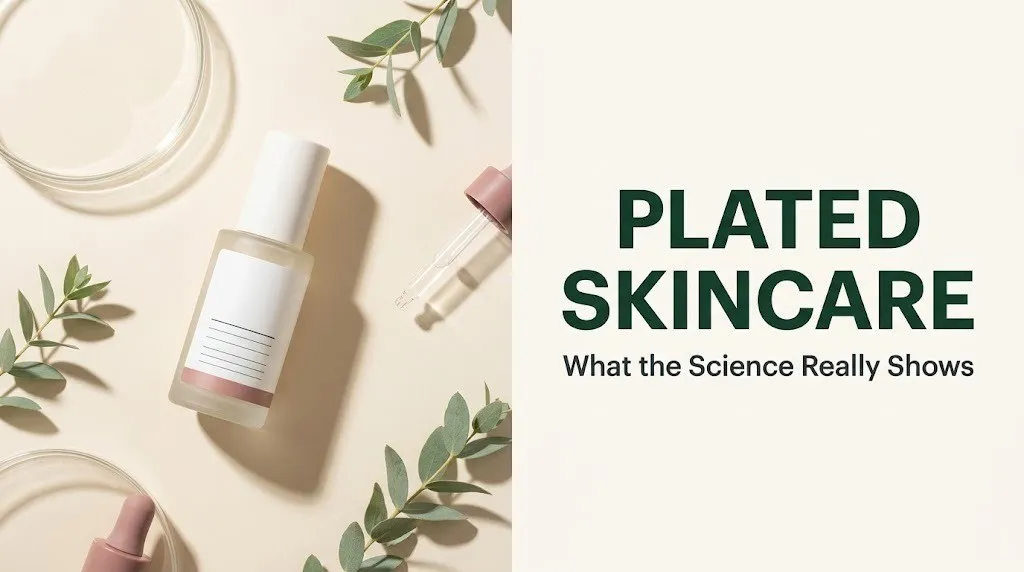
The product lineup includes serums and moisturizers targeted at skin aging, barrier repair, and skin texture. These are positioned as premium skincare products, not medical devices or treatments. Under U.S. FDA classification, topical exosome products marketed with appearance-based claims are regulated as cosmetics rather than as drugs or biologics. That distinction matters for how the evidence is interpreted.
Understanding what Plated is requires separating two things: the underlying science of exosome biology, which is well-established in cell research, and the specific clinical evidence for topical exosome formulations on aged human skin, which is newer and more limited. This review covers both layers clearly.
| Category | Plated Skincare Position |
|---|---|
| Product type | Cosmeceutical skincare (cosmetic regulatory classification) |
| Core technology | Platelet-derived exosomes |
| Founded | Physician-developed, regenerative medicine background |
| Primary targets | Skin aging, barrier repair, texture, tone |
| Regulatory status | FDA-classified cosmetics (appearance claims) |
Plated Skin Science Brand Overview
Plated Skin Science was built on the scientific premise that the signaling chemistry inside human platelets, particularly the exosome fraction, can be harnessed topically to communicate with skin cells and activate repair pathways.
The founding team includes physicians with backgrounds in dermatology and regenerative medicine. That scientific foundation distinguishes Plated from most brands that use “clinical” as an aesthetic word rather than an operational standard. The brand has published or sponsored early-stage human use data, though as of 2026, independent large-scale RCTs from academic dermatology centers remain limited for this specific product category.
Plated’s formulations isolate exosomes from human platelets through a proprietary process, standardize them for consistency, and incorporate them into stable cosmetic vehicles. Stability is a genuine challenge with biologic-derived ingredients. Exosomes are sensitive to temperature, pH, and formulation conditions. The brand’s manufacturing process addresses this, though independent verification of exosome viability in the final product across shelf life is not yet a publicly standardized requirement in the cosmetics industry.
The brand is transparent about the physician origins and regenerative science framework. Where it is less specific is in disclosing exact exosome concentrations per product, which is common across the cosmetics industry but makes independent efficacy assessment harder.
Key facts about the brand’s positioning:
- Grounded in platelet biology and regenerative medicine research
- Exosomes sourced from human platelets via proprietary isolation process
- Products are cosmetics by FDA classification, not drug treatments
- Targeted primarily at adults concerned with visible skin aging and barrier disruption
- Priced at the premium end of the cosmeceutical market
Platelet-Derived Exosomes in Skincare
Platelet-derived exosomes are nanoscale extracellular vesicles, ranging from approximately 30 to 150 nanometers in diameter, released from activated human platelets and carrying a cargo of proteins, lipids, messenger RNA, and microRNA that influence cell behavior.
Exosomes are not a new biological discovery. Cell biology research has documented exosome-mediated cell-to-cell communication across many tissue types for decades. What is newer is the application of this biology to topical skincare formulations. Think of exosomes as the postal service of cellular biology: individual cells package up instruction sets, load them into tiny vesicles, and send them out to neighboring cells. The receiving cells read those instructions and adjust their behavior accordingly.
In platelet biology specifically, these vesicles carry a dense concentration of growth factors, signaling proteins, and genetic material that evolved to coordinate wound healing. When a blood vessel is damaged, activated platelets release exosomes that tell surrounding fibroblasts to produce more collagen, signal keratinocytes to proliferate and migrate to close the wound, and modulate the inflammatory response to prevent excessive scarring.
The cosmetic application of this system asks a practical question: can exosomes derived from platelets, when applied topically, penetrate the stratum corneum and deliver those same biological instructions to aging skin cells? Their nanoscale size theoretically supports penetration into the epidermis. But the evidence for delivery to the dermis, where fibroblasts that produce collagen type I and type III live, is still being characterized in human studies.
| Exosome Property | Detail |
|---|---|
| Size range | 30 to 150 nanometers |
| Origin | Derived from activated human platelets |
| Cargo | Growth factors, proteins, mRNA, microRNA |
| Theoretical skin target | Keratinocytes (epidermis), fibroblasts (dermis) |
| Penetration support | Nanoscale size; stratum corneum delivery established; dermal delivery under investigation |
What Do Exosomes Do for Skin
Topically applied exosomes are designed to deliver intercellular signaling molecules to skin cells, with the goal of activating fibroblasts, supporting keratinocyte function, and modulating the inflammatory environment in aged or damaged skin.
At the biological level, exosomes interact with skin cells through surface receptor binding and membrane fusion. Once they make contact with a target cell, they can transfer their protein and RNA cargo directly into the receiving cell’s interior. That transferred cargo includes microRNAs that can suppress inflammatory gene expression and growth factor proteins that stimulate collagen synthesis and cell proliferation.
This is where the science gets genuinely interesting. MicroRNAs carried in platelet-derived exosomes have been shown in multiple in vitro studies to regulate fibroblast activity, specifically turning up genes associated with collagen type I synthesis and turning down pathways associated with inflammatory breakdown of the extracellular matrix. A 2021 review published in the International Journal of Molecular Sciences documented this mechanism across several cell model systems, though the authors noted that translation of these findings to topical cosmetic applications requires further human study.
For practical skin outcomes, the proposed effects include: improved skin firmness through fibroblast stimulation, reduced appearance of fine lines through collagen support, improved skin texture through keratinocyte signaling, and a modulated inflammatory environment that may benefit redness-prone or post-procedure skin.
The distinction between what exosomes do in cell biology and what topical exosome products reliably deliver to living human skin is something this article returns to in the clinical evidence section, because those are not the same question.
Quick Tip:
- The biological mechanism of exosomes is well-established in cell research. The translation of that mechanism to topical cosmetic delivery is still being confirmed in human trials.
- Do not confuse exosome science (strong) with exosome cosmetic evidence (emerging). They are related but not equivalent.
- If a product claims exosomes “repair DNA,” ask for the specific published human trial that demonstrates that outcome topically.
Platelet-Derived Growth Factors and Skin Regeneration
Platelet-derived growth factors, including PDGF-AA, PDGF-AB, PDGF-BB, epidermal growth factor (EGF), and transforming growth factor beta-1 (TGF-beta-1), are signaling proteins that direct fibroblast proliferation, collagen synthesis, and skin repair cascades relevant to aging skin.
Growth factors are not unique to Plated Skincare. They appear across the cosmeceutical market, often extracted from plant sources, fermentation processes, or cell-conditioned media. Platelet-derived growth factors are distinct because they represent the specific growth factor portfolio that human biology evolved to coordinate wound repair, meaning the receptor compatibility with human skin cells is documented.
TGF-beta-1 is particularly relevant to skin aging. Research published in the Journal of Investigative Dermatology has established that TGF-beta-1 signaling drives collagen type I and type III production in dermal fibroblasts. As skin ages, fibroblast responsiveness to TGF-beta-1 declines, contributing to the gradual reduction in dermal collagen density that produces fine lines and loss of firmness.
EGF, another component of the platelet-derived exosome payload, stimulates keratinocyte proliferation and migration. In aged skin, keratinocyte turnover slows, which contributes to dull texture, slower barrier recovery after disruption, and reduced exfoliation efficiency. Theoretically, EGF-containing formulations support faster surface renewal.
The important caveat is molecular size. Free growth factor proteins are large molecules, and their ability to penetrate intact skin topically is limited. Exosomes may offer an advantage here: by packaging growth factors within a lipid membrane vesicle, they potentially protect the cargo from degradation and improve delivery efficiency compared to free topical growth factors. Research in this area is ongoing, and human dermal delivery confirmation remains an active investigation.
Plated Skincare Clinical Evidence
The clinical evidence for Plated Skincare, as of 2026, includes early human use studies showing improvements in hydration, skin texture, and visible fine lines, though independent large-scale randomized controlled trials remain limited compared to more established skincare categories.
Plated Skin Science has published or sponsored human trials supporting efficacy claims. These studies generally show statistically meaningful improvements in skin hydration, measured transepidermal water loss (TEWL), and participant-reported improvements in skin texture and firmness over 4 to 12 week periods. Independent replication of these findings by academic dermatology centers is the next credibility threshold.
The broader exosome research context matters here. A 2022 study published in the Journal of Cosmetic Dermatology examined topical platelet-derived exosome formulations in human subjects and reported measurable improvements in skin hydration and elasticity after eight weeks of twice-daily application, with no serious adverse events reported in the study population. Sample sizes in these early studies tend to be small, typically 20 to 40 participants, which limits the statistical power.
Comparing evidence quality levels for plated skincare’s primary claims:
| Claimed Benefit | Evidence Source | Evidence Strength |
|---|---|---|
| Improved skin hydration | Human use studies | Moderately supported (small RCT data) |
| Reduced appearance of fine lines | Human use studies, participant report | Preliminary (limited independent RCT) |
| Fibroblast stimulation | In vitro cell studies | Well-established mechanism (not confirmed topically at scale) |
| Collagen type I support | In vitro, animal model | Mechanistic support; human topical data emerging |
| Barrier repair | Human use data | Moderately supported |
| Anti-inflammatory effect | In vitro microRNA data | Preliminary; human topical confirmation limited |
The honest reading of this evidence: Plated’s technology has a real, mechanistically sound scientific foundation, and early human data is encouraging. The gap between “mechanistically plausible and showing early promise” and “confirmed effective through multiple independent large-scale RCTs” is real, and readers should hold both things at once.
Key Takeaway: Plated Skincare’s exosome technology has solid mechanistic support from cell biology and wound-healing research, plus early encouraging human use data, but as of 2026, independent large-scale RCTs specific to topical cosmetic formulations remain limited. The science is real. The cosmetic evidence is promising but still building.
Do Exosomes Work for Skin Aging
Exosomes show genuine promise for skin aging through their ability to deliver biologically active growth factors and microRNA cargo to skin cells, but the evidence for dramatic anti-aging results from topical cosmetic exosome formulations specifically is still in early stages.
Skin aging operates through several intersecting mechanisms: reduced collagen synthesis by dermal fibroblasts, slower keratinocyte turnover, declining skin barrier efficiency, chronic low-grade inflammation (sometimes called inflammaging), and reduced cellular response to repair signals. Platelet-derived exosomes theoretically address several of these mechanisms simultaneously, which is what makes the technology genuinely interesting compared to single-mechanism actives.
A 2023 review in the British Journal of Dermatology assessed the state of exosome-based therapeutics across dermatology applications, including wound healing, hair regeneration, and skin aging. The authors concluded that the mechanistic rationale for exosome use in skin is well-established, but that topical cosmetic delivery studies are still in the early evidence-building phase and that most robust exosome data comes from injected or applied-to-compromised-skin contexts, such as post-procedure care, rather than intact aging skin.
For someone considering Plated Skincare as a standalone anti-aging investment, the realistic expectation is this: you are likely to see improvements in hydration, surface texture, and possibly a modest reduction in fine line appearance over consistent 8 to 12 week use. These are meaningful outcomes. They are not equivalent to the outcomes from injectable treatments or prescription retinoids with decades of RCT data behind them.
For people with Fitzpatrick skin types IV through VI, an important consideration arises: any product that significantly modulates growth factor activity or keratinocyte signaling has the theoretical potential to interact with melanocyte behavior, which could affect post-inflammatory hyperpigmentation risk. Current evidence does not show exosome products increasing PIH risk, but this population should monitor skin response during the first two to four weeks.
Plated Skincare Ingredients and Formulation
Plated Skincare formulations combine platelet-derived exosomes with a supporting cast of barrier-repairing, hydrating, and peptide-based ingredients designed to create an optimal environment for exosome activity at the skin surface.
Beyond the exosomes themselves, the formulations incorporate sodium hyaluronate, the sodium salt form of hyaluronic acid, which is a smaller-molecular-weight humectant capable of drawing moisture into the epidermis. Panthenol (provitamin B5) is present in several products as a barrier-soothing agent that supports keratinocyte migration and wound repair independent of the exosome payload.
Peptides appear in the formulations as complementary actives. Palmitoyl tripeptide-1 and palmitoyl tetrapeptide-7, commonly associated with Matrixyl 3000 combinations, have independent evidence for fibroblast stimulation and inflammatory modulation in aging skin, published in the International Journal of Cosmetic Science. Their inclusion alongside exosomes is sensible; the mechanisms are complementary rather than redundant.
The formulations are generally fragrance-free, which is a deliberate choice for products targeting reactive, mature, or compromised skin. Fragrance is one of the most common contact sensitizers identified in dermatological patch testing, and its absence reduces baseline irritation risk.
| Ingredient | INCI / Chemical Name | Function in Formulation |
|---|---|---|
| Platelet-derived exosomes | Extracellular vesicles, platelet-derived | Core active: cell signaling, growth factor delivery |
| Sodium hyaluronate | Sodium hyaluronate | Humectant, surface and epidermal hydration |
| Panthenol | Panthenol (provitamin B5) | Barrier repair, keratinocyte support, soothing |
| Palmitoyl tripeptide-1 | Palmitoyl tripeptide-1 | Fibroblast stimulation, collagen support |
| Palmitoyl tetrapeptide-7 | Palmitoyl tetrapeptide-7 | Anti-inflammatory signaling support |
| Niacinamide (where included) | Niacinamide (nicotinamide) | Barrier lipid support, sebum modulation, brightening |
Exact concentrations for proprietary active ingredients like exosomes are not publicly disclosed by Plated, which is standard practice in the cosmetics industry but worth acknowledging. The supporting ingredient concentrations follow standard cosmetic formulation ranges.
Plated Skincare Product Lineup
Plated Skincare’s product lineup centers on two primary formats: an intensive repair serum and a nourishing moisturizer, both built around the platelet-derived exosome technology with supporting ingredients tailored to their specific delivery role.
The PLATED Intense Serum is the brand’s hero product. It delivers the highest exosome concentration in the lineup and is designed to function as a treatment step rather than a simple hydration layer. The serum format allows for a lighter vehicle that sits beneath moisturizer in a standard routine, which supports exosome contact with the skin surface before occlusion.
The PLATED Nourishing Moisturizer combines exosome technology with a richer emollient base, incorporating ceramides and fatty acids alongside the exosome and peptide payload. This format serves a dual function: active delivery and barrier sealing. For people with dry or compromised barriers, this combined product may simplify the routine without sacrificing active delivery.
The brand has also introduced products targeting specific concerns including eye area care and post-procedure recovery, the latter being an application context where exosome evidence is stronger given that compromised skin barriers offer less resistance to active penetration.
Evaluating the lineup against standard cosmeceutical criteria:
| Product | Primary Format | Best For | Evidence Support Level |
|---|---|---|---|
| PLATED Intense Serum | Serum (lightweight) | Daily aging skin treatment | Emerging human use data |
| PLATED Nourishing Moisturizer | Rich emollient moisturizer | Dry, mature, barrier-disrupted skin | Moderate support |
| PLATED Eye product | Targeted eye area | Fine lines around eyes | Preliminary |
| Post-procedure products | Barrier repair format | Post-laser, post-peel, post-microneedling | Strongest evidence context |
For people new to the brand, the Intense Serum is the logical starting point because it delivers the highest concentration of the core active technology in the format with the most direct skin contact.
Key Takeaway: The PLATED Intense Serum is the brand’s most evidence-adjacent product given its concentrated exosome payload and serum delivery format; the post-procedure application context is where topical exosome evidence is most consistently supported because compromised skin barriers allow more reliable active penetration.
How to Use Plated Skincare in Your Routine
Plated Skincare products work best when applied to clean, slightly damp skin after cleansing and toning, before heavier moisturizers or occlusives, using a gentle press-in technique rather than rubbing to minimize mechanical disruption of the exosome structure.
The application logic follows the standard cosmetic layering principle of thinnest to thickest. Serums with bioactive ingredients like exosomes and peptides go on before moisturizers because the lighter vehicle allows more direct contact with the skin surface, and the subsequent moisturizer layer seals in both hydration and the active ingredient environment.
To incorporate Plated Skincare correctly:
- Cleanse with a pH-balanced, non-stripping cleanser appropriate for your skin type. Harsh cleansers that disrupt the skin barrier create an inflammatory baseline that may reduce receptivity to repair-oriented actives.
- Apply any water-based toner or essence if part of your routine. Allow this layer to absorb for 30 seconds.
- Apply 2 to 4 drops of the PLATED Intense Serum to your palm. Warm between palms for 5 seconds and press gently into the face and neck rather than rubbing.
- Allow 60 seconds for absorption before applying the next product layer.
- Follow with your moisturizer to seal the serum layer and support hydration retention.
- Apply SPF in the morning as the final step. Sun protection is non-negotiable for anyone using active skincare, as the American Academy of Dermatology recommends broad-spectrum SPF 30 or higher daily for all skin types using any anti-aging skincare regimen.
Plated products can be used morning and evening. The brand recommends consistent twice-daily application for optimal outcomes based on their use study protocols. People with sensitive or reactive skin should start with once-daily evening application for the first two weeks to assess tolerance before moving to twice daily.
Can You Use Plated Skincare With Retinol and Other Actives
Plated Skincare can generally be used alongside retinol, niacinamide, and peptides without compatibility conflicts, but it should be applied before retinol in the routine and not layered directly with high-concentration AHAs or active vitamin C serums in the same application step.
The compatibility logic here is practical. Retinol (retinyl ester form) and prescription tretinoin (retinoic acid) work by binding to nuclear retinoic acid receptors to accelerate keratinocyte turnover and upregulate collagen gene expression. Exosomes work at the receptor and membrane level through growth factor signaling. These mechanisms do not directly interfere with each other, and a reasonable case can be made that the barrier-supportive and anti-inflammatory components of Plated formulations may actually offset some of the initial dryness and irritation associated with retinoid introduction.
The sequencing recommendation when combining:
| Active | Compatible With Plated | Timing Note |
|---|---|---|
| Retinol (0.025% to 0.1%) | Yes | Apply Plated serum first; apply retinol after full absorption |
| Tretinoin (prescription 0.025% to 0.1%) | Yes, with dermatologist guidance | Not layered simultaneously; alternate steps |
| Niacinamide (2% to 10%) | Yes, complementary | Can be in the same layer or sequenced; no conflict |
| Peptides (palmitoyl types) | Yes, potentially synergistic | Safe to layer; mechanisms are complementary |
| Ascorbic acid serum, pH 2.5 to 3.5 | Use at separate times | Low pH can theoretically denature protein cargo in exosomes; use vitamin C in AM, Plated in PM |
| AHAs (glycolic, lactic acid, pH below 3.5) | Separate application times | Avoid layering directly; acid pH environment may compromise exosome integrity |
| Physical sunscreen (zinc oxide, titanium dioxide) | Yes | Final AM step; no interaction with exosomes |
People using prescription-strength topical retinoids at higher concentrations (tretinoin 0.05% to 0.1%) should speak with a board-certified dermatologist before adding a growth-factor-active product like Plated, specifically to ensure the combined stimulatory effect on fibroblast and keratinocyte activity is appropriate for their skin status and any concurrent condition being managed.
Key Takeaway: Apply Plated Skincare before retinol in your routine, separate it from low-pH vitamin C serums by using them in different application windows (morning vs. evening), and treat niacinamide and peptides as safe, complementary companions to the exosome technology.
Plated Skincare for Sensitive and Reactive Skin
Plated Skincare’s fragrance-free formulations and barrier-supportive ingredient base make them generally appropriate for sensitive skin, though people with highly reactive skin or a currently compromised barrier should introduce the products gradually and monitor for signs of growth factor sensitivity.
Sensitive skin, in dermatological terms, typically refers to skin with a lower tolerance threshold for topical ingredients, often characterized by reduced barrier function (elevated TEWL), higher baseline reactivity to surfactants and fragrances, and a tendency toward redness and stinging. The American Academy of Dermatology notes that fragrance is the most frequent cause of allergic contact dermatitis in cosmetic products, making Plated’s fragrance-free formulation a meaningful formulation choice for this group.
The growth factor and exosome component requires a specific consideration for sensitive skin. Biologically active signaling molecules that promote cell proliferation and inflammatory modulation could theoretically produce a mild initial reactivity in very sensitized skin, similar to the purging or adjustment period sometimes seen with retinoids. This does not mean the product is harmful. It means the body’s cellular response to novel signaling molecules requires a few days to reach equilibrium.
For people with rosacea, a condition characterized by chronic vascular and inflammatory dysregulation of the skin, exosome products warrant attention. The anti-inflammatory microRNA cargo in platelet-derived exosomes may theoretically be beneficial in a rosacea context, but the data specific to rosacea skin and topical exosomes is insufficient to make a clear recommendation. Anyone with moderate to severe rosacea should discuss adding a new biologically active product with a board-certified dermatologist before starting, describing their current prescription regimen (metronidazole, azelaic acid, brimonidine, or oral antibiotics) to confirm compatibility.
People with atopic dermatitis (eczema) should be especially cautious during flares. Applying any new biologically active product to actively inflamed skin with significant barrier disruption increases the unpredictability of skin response. Wait for a stable period before introducing Plated products.
Plated Skincare Side Effects and Safety
Plated Skincare products have demonstrated a favorable safety profile in published use studies, with the most commonly reported side effects being mild and transient: temporary redness, a slight tingling sensation on first application, and minor skin tightness that resolves within 30 minutes of application.
No serious adverse events were reported in the human use studies sponsored or conducted by the brand as of 2026. That said, the safety profile of topical platelet-derived exosome products across large diverse populations has not been evaluated in independent multi-center clinical trials to the same standard as established cosmetic ingredients like niacinamide or hyaluronic acid, which have decades of safety data.
The theoretical safety considerations for this ingredient class include:
- Protein sensitization: Any product derived from biological material carries a theoretical risk of sensitization, where the immune system identifies a protein component as a foreign antigen and mounts an allergic response. This appears to be rare with topical platelet-derived products, but it is not quantified in large-scale published data.
- Melanocyte interaction: Growth factor-active formulations interact with keratinocyte signaling, and the relationship between keratinocyte growth signals and melanocyte activity means people with Fitzpatrick types IV through VI should monitor skin tone evenness during the first four weeks.
- Bleeding disorder consideration: While topical exosome products do not enter the bloodstream and are not equivalent to PRP injections, anyone with a documented platelet function disorder or on anticoagulant therapy should discuss use with a healthcare provider, not because of demonstrated risk but because the category lacks safety data for this population specifically.
Pregnancy and nursing safety has not been established for topical platelet-derived exosome products. Given the biological activity of the growth factor cargo, the precautionary approach is to avoid use during pregnancy and nursing until human safety data in these populations is available. A board-certified OB-GYN or dermatologist can help weigh this decision individually.
Plated Skincare for Aging Skin and Barrier Repair
Plated Skincare’s most evidence-supported application context is aging skin combined with barrier disruption, where the exosome technology’s growth factor cargo may address multiple aspects of skin decline simultaneously while the supporting humectants and barrier lipids work to restore TEWL levels.
Skin aging involves two overlapping processes: intrinsic aging (genetically programmed cellular changes) and extrinsic aging (environmental damage, primarily from cumulative UV exposure). Both reduce dermal collagen density, slow epidermal cell turnover, and impair the barrier’s ability to retain water. The TEWL elevation that comes with aged skin creates a feedback loop where dry, less-elastic skin is more prone to irritation, which triggers low-grade inflammation, which further degrades collagen and ceramide production.
Think of the aging skin barrier like a slow leak in a well-built wall. Over time, the mortar (ceramides, fatty acids, cholesterol) thins and cracks. Water escapes, irritants enter, and the structural integrity weakens. Products that only patch the surface with occlusive or humectant layers slow the leak but do not rebuild the mortar. Plated’s formulations attempt to address the underlying cellular signaling that drives ceramide production and collagen synthesis rather than just managing the surface manifestation.
For postmenopausal skin specifically, estrogen decline accelerates collagen loss (estimated at 30% in the first five years postmenopause, according to research reviewed in the Journal of the American Academy of Dermatology), reduces hyaluronic acid content in the dermis, and decreases sebaceous gland activity. This population may respond well to growth factor-active products precisely because the cellular machinery for collagen production is still functional but under-signaled due to hormonal changes. Whether platelet-derived exosomes can adequately compensate for estrogen-driven fibroblast decline is a genuinely interesting question that current research has not yet fully answered.
Quick Tip:
- For aging and barrier-disrupted skin, use Plated Intense Serum followed by the Nourishing Moisturizer in the same routine to stack the active delivery step with the barrier-sealing step.
- Twice-daily application over a minimum of eight weeks is the protocol used in early human use studies showing positive outcomes.
- Adding a gentle ceramide-based moisturizer (containing ceramide NP, ceramide AP, and ceramide EOP) even from a separate brand can reinforce the barrier-sealing effect between Plated applications.
Key Takeaway: Postmenopausal skin experiencing accelerated collagen loss and elevated TEWL is one of the more scientifically coherent target populations for growth factor-active products like Plated, because the cellular machinery for collagen synthesis remains functional and may respond to exosome-delivered signaling that partially compensates for declining estrogen-driven fibroblast stimulation.
Is Plated Skincare Worth the Cost
Whether Plated Skincare is worth the premium price depends on the individual’s skin concerns, existing routine, realistic expectations for topical skincare outcomes, and whether the emerging evidence for exosome technology justifies paying more than for established actives with longer evidence trails.
Plated Skincare products sit at the premium end of the cosmeceutical market, with serums typically priced between $150 and $200 per bottle depending on size and product. For context, this places them alongside other high-end growth factor serums and above the cost of prescription tretinoin (which remains the most evidence-backed anti-aging topical available, supported by over 30 years of controlled clinical trial data).
The value equation has several components:
| Factor | Assessment |
|---|---|
| Evidence quality | Promising early human data; below the RCT standard of retinoids |
| Mechanism credibility | High: grounded in real cell biology |
| Ingredient quality | High: fragrance-free, peptide-supported, biologically derived active |
| Uniqueness vs. alternatives | Moderate: copper peptides, growth factor serums, and retinoids address overlapping concerns with more established evidence at lower cost |
| Appropriate use case | Strong for post-procedure, mature/barrier-disrupted skin, retinoid-intolerant users |
| Best price-to-evidence ratio | Prescription retinoids still lead for anti-aging; Plated is a strong addition or alternative for those who cannot tolerate retinoids |
If you are building a skincare routine from scratch and have a limited budget, establishing a foundation of SPF, a gentle cleanser, a barrier moisturizer with ceramides, and either retinol or prescription tretinoin will deliver more evidence-grounded anti-aging outcomes per dollar spent. If you already have that foundation and want to layer in a growth factor technology, or if you cannot tolerate retinoids due to chronic skin sensitivity or a condition like rosacea, Plated Skincare presents a scientifically credible option with an appropriate cost justification for that specific role.
Who Should Use Plated Skincare
Plated Skincare is best suited for adults concerned with visible skin aging, post-procedure skin recovery, or chronic barrier disruption who want a biologically grounded active technology that operates through a different mechanism than retinoids or acids.
The clearest candidate profiles:
- Adults 35 and older noticing fine lines, loss of firmness, uneven texture, and skin that recovers slowly from disruption
- People who have tried retinoids and cannot tolerate them due to persistent dryness, peeling, or redness, and need an alternative approach to stimulating collagen support
- Anyone in a post-procedure recovery period (post-laser, post-microneedling, post-chemical peel), where barrier disruption creates better conditions for exosome penetration and the anti-inflammatory growth factor cargo is most relevant
- Postmenopausal individuals experiencing accelerated skin thinning and barrier decline who want to add a growth factor layer to their routine
- Skincare-engaged adults who already have a full routine established and want to add a biologically distinct active rather than a redundant one
People who are less likely to benefit or for whom alternatives are better matched:
- Young adults under 30 whose primary concerns are acne, hyperpigmentation, or texture, where evidence-backed actives like salicylic acid, niacinamide, azelaic acid, or low-concentration retinol address those concerns more directly and cost-effectively
- Anyone with active inflammatory skin conditions in a flare state (severe rosacea, active eczema outbreak, active cystic acne), where stabilizing the skin barrier and managing inflammation takes priority over growth factor delivery
- Pregnant or nursing individuals, pending established safety data for topical platelet-derived biologic ingredients in these populations
- People on a tight skincare budget who have not yet established the foundational steps (SPF, cleanser, basic moisturizer, and a single proven active) that return higher evidence-backed outcomes per dollar
A board-certified dermatologist can help determine whether Plated Skincare fits into an existing treatment plan, particularly if you are managing a diagnosed skin condition or using prescription topicals, by reviewing the full ingredient list against your current regimen and skin status.
Frequently Asked Questions About Plated Skincare
What exactly is in Plated Skincare products?
Plated Skincare products contain platelet-derived exosomes as the core active ingredient, alongside supporting ingredients including sodium hyaluronate, panthenol, palmitoyl tripeptide-1, palmitoyl tetrapeptide-7, and in some formulations, niacinamide and ceramides.
The formulations are fragrance-free and built around the exosome technology rather than using it as a minor add-in ingredient.
Exact exosome concentration per product is proprietary, which is standard in the cosmetics industry but means independent concentration verification is not available.
How long does it take to see results from Plated Skincare?
Early human use studies for Plated Skincare and similar exosome formulations have used 8 to 12 week protocols to measure outcome changes, meaning visible improvements in texture, hydration, and fine line appearance typically require consistent twice-daily use over at least two months.
Results build gradually as the growth factor and peptide cargo accumulates its effects on fibroblast activity and barrier repair, not through surface-level instant improvement.
Expecting significant change in the first two to three weeks is not consistent with how biologically active collagen-support products operate.
Can I use Plated Skincare if I already use retinol?
Yes, Plated Skincare and retinol can generally be used together, with Plated applied first and retinol applied after full absorption of the serum layer.
The mechanisms are complementary: exosomes deliver growth factor signaling while retinol accelerates keratinocyte turnover and upregulates collagen gene expression through retinoic acid receptor binding.
People using prescription-strength tretinoin at 0.05% or higher should confirm compatibility with a board-certified dermatologist before adding growth factor-active products to the same routine.
Is Plated Skincare safe for sensitive skin?
Plated Skincare’s fragrance-free formulations reduce one of the most common drivers of contact sensitization in cosmetics, making the baseline formulation appropriate for many sensitive skin types.
People with highly reactive or compromised barriers should introduce the product gradually, starting with once-daily evening application for the first two weeks before moving to twice daily.
Anyone with moderate to severe rosacea or active atopic dermatitis should consult a board-certified dermatologist before adding any new growth factor-active product, specifying their current prescription regimen to assess compatibility.
What is the difference between exosomes and growth factors in skincare?
Exosomes are nanoscale vesicles that carry growth factors, proteins, and microRNA within a protective lipid membrane, while free growth factors are standalone signaling proteins without a delivery vehicle.
The advantage of exosomes over free topical growth factors is that the lipid membrane may protect the growth factor cargo from degradation during penetration and improve delivery efficiency to target skin cells.
Both technologies share the same biological goal of stimulating fibroblast activity and supporting collagen synthesis, but exosomes package and deliver their payload differently than free growth factor serums.
Is Plated Skincare FDA approved?
Plated Skincare products are classified as cosmetics under FDA jurisdiction, not as drugs or biologics, because they are marketed with appearance-based claims rather than disease treatment claims.
Cosmetics in the United States are not subject to FDA pre-market approval, though they must comply with FDA safety and labeling regulations.
The FDA has issued warnings about exosome products marketed as medical treatments for disease, but properly labeled cosmetic formulations like Plated’s occupy a distinct and lawful regulatory category as long as disease treatment claims are not made.
Closing
Plated Skincare offers something genuine: a biologically grounded technology built on cell-signaling science that extends well beyond typical cosmetic marketing. The platelet-derived exosome mechanism is real, the supporting ingredients are well-chosen, and the early human use data is encouraging. What it does not yet have is the same depth of independent, large-scale RCT evidence that established actives like prescription retinoids carry.
That does not make it a poor investment for the right person. If you already have a solid skincare foundation in place, your skin cannot tolerate retinoids, you are recovering from a procedure, or you are in a life stage where growth factor support makes biological sense, Plated is worth serious consideration.
Start with the Intense Serum, apply it twice daily after cleansing, separate it from low-pH vitamin C by time of day, and give it a full eight to twelve weeks before assessing results. That is the protocol the evidence supports, and it is the only fair way to evaluate what this technology actually delivers on your skin.