Sundae Skincare 2026: A Real Review of Whipped Body Care
Sundae skincare is a body care concept built around aerated, whipped textures and dessert-inspired fragrances, yet its real-world effect on your skin depends entirely on the ingredient list behind the aesthetic. The trend, popularized by brands that mimic the look and feel of soft-serve ice cream, has reshaped body care shelves in 2026. Understanding what you are actually applying goes far beyond the cute packaging.
The desire for this texture is not just marketing whimsy. A 2024 consumer perception study published in the International Journal of Cosmetic Science demonstrated that product texture and sensory feel during application are primary drivers of compliance in body moisturizer use. People are more likely to use a body cream daily if the experience feels luxurious and pleasant. However, the same study noted that a pleasant texture alone cannot compensate for a formulation that undermines skin barrier integrity, a nuance often absent from social media reviews.
This article breaks down the sundae skincare concept from a cosmetic chemistry and dermatological perspective. We will walk through what defines a whipped formulation, how it compares to standard lotions, the specific function of humectants, emollients, and occlusives in these products, and give you a clear-headed analysis of the ingredients inside the internet’s favorite whipped shower foam. You will learn how to evaluate these products for your skin type and how to understand the very real trade-off between intense fragrance and long-term skin tolerance.
What Is Sundae Skincare?
The “Sundae Skincare” concept is a branded aesthetic that transforms conventional body cleansers and moisturizers into aerosolized foams and aerated, mousse-like creams that visually resemble whipped cream or soft-serve ice cream. The name derives directly from the dessert parlor association, promising a routine that feels indulgent, playful, and sensorially rich. It is not a single brand in every context, but often a category descriptor for any product achieving this specific “whipped” visual and textural profile.
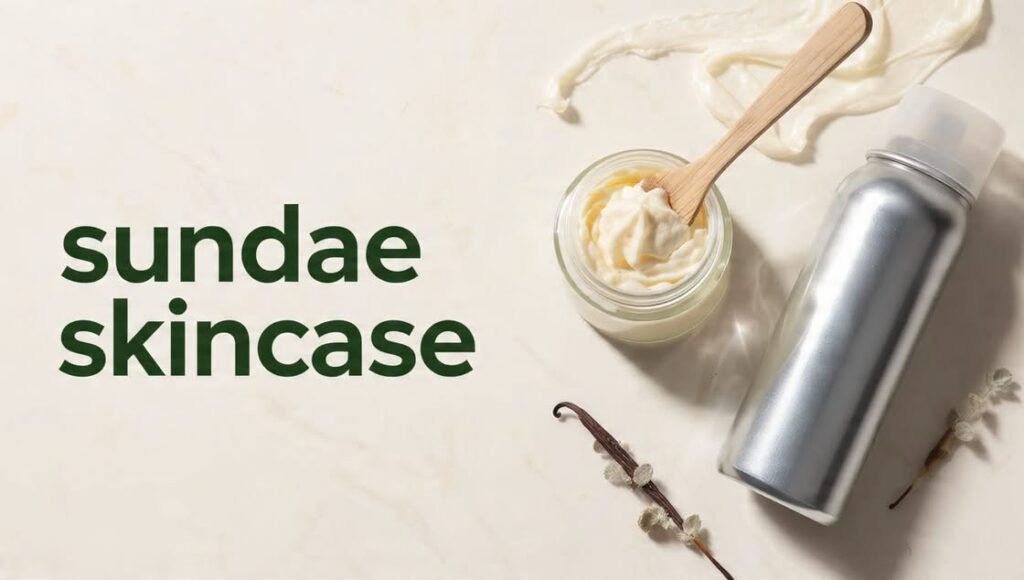
The mechanics involve using a specific blend of surfactants and pressurized packaging for cleansers, or aerating machinery for creams. The result is a product with a lower density than a standard lotion. This physical structure shifts the application experience. The product spreads with less drag, feels cushiony on skin, and melts quickly upon contact with body heat. This interplay between physical chemistry and sensory perception is the core innovation.
Quick Tip:
- A true whipped texture relies on physical aeration, not just thickeners.
- Look for propellants like isobutane or nitrogen in foaming body washes.
- An air-whipped body cream jar should hold its peaks, a sign of a stable internal phase.
What Is Whipped Skincare?
Whipped skincare refers to any product category where the final formulation is mechanically aerated to trap gas bubbles, creating a fluffy, lightweight texture that defies the original density of its raw ingredients. This is a physical transformation, not a chemical reaction. The process injects air (or an inert gas) into an emulsion, turning a dense butter or lotion into a voluminous, cloud-like consistency that scoops easily and collapses under pressure.
In cosmetic chemistry, this is an exercise in emulsion stabilization. A standard oil-in-water emulsion is already a delicate balance of dispersed oil droplets in a continuous water phase, held together by emulsifiers. Whipping this emulsion adds a third phase: air bubbles. These bubbles must be finely dispersed and prevented from coalescing. If the emulsifier network cannot support the gas bubbles, the air will escape, and the structure will deflate back into a liquid pool, a common failure point for unstable DIY formulations.
According to the Journal of the American Academy of Dermatology’s 2025 continuing education module on moisturizer science, the act of aeration does not inherently increase a product’s functional moisturizing power. The identical base formula, simply spread at a higher density (lotion form), deposits more occlusive material per square inch. The whipped version excels in compliance, getting people to apply a moisturizer they enjoy, and its lighter skin-feel makes it a strong choice for daytime use under tighter clothing.
The Sundae Skincare Aesthetic Explained
The sundae skincare aesthetic goes beyond product texture and enters the realm of deliberate visual and sensorial world-building. It uses pastel color palettes, soft-focus photography, and packaging that invokes ice cream tubs, syrup bottles, and bakery boxes. The goal is to collapse the distinction between a bathroom counter and a dessert bar. Brands achieve this through custom mold designs for jars, frosted glass effects, and labels with dessert-menu typography.
This aesthetic targets the psychological connection between scent, texture, and emotional comfort. The “dopamine beauty” framework, widely discussed in consumer psychology research, suggests that products designed to deliver a childlike or nostalgic pleasure response can temporarily lower cortisol and increase motivation to engage in routine self-care tasks. A body cream that smells like vanilla gelato and looks like mousse removes the clinical sterility that makes some people avoid daily moisturization.
However, evaluating skincare through its aesthetic alone is risky. An ingredient panel printed on a beautiful jar does not change its chemical composition. A synthetic fragrance blend that perfectly mimics “raspberry sorbet” is still a complex mixture of volatile organic compounds interacting with your skin’s immune cells. The aesthetic should be understood as a powerful emotional value-add, not a performance indicator. You can appreciate the visual craft while simultaneously reading the back-of-pack ingredient list with the same scrutiny you would apply to any unscented, clinically packaged product.
Whipped Body Cream vs. Regular Lotion
A whipped body cream and a regular lotion begin their lives as nearly identical emulsions, but the physical property that distinguishes them is density. A standard lotion is a stable semi-liquid with a viscosity that allows it to be poured or pumped. A whipped body cream is the same foundational chemistry, processed to incorporate enough air to reduce its specific gravity to a fraction of the original, creating a solid-like foam that requires scooping from a jar.
This difference in physical structure changes the application density. With a pump lotion, you dispense a concentrated amount and must work it across the skin. With a whipped cream, the air pockets collapse during spreading, depositing a thinner, more easily distributed film. The practical consequence is that a whipped product often delivers a lower weight of occlusive and emollient oils per application compared to the same volume of a dense lotion. This makes it feel “lighter” and less greasy, which is excellent for normal skin but may require a second layer for severely dry, compromised skin.
Key Takeaway: The sundae skincare concept re-engineers the sensory experience of body care through physical aeration. Its primary win is making moisturizer application feel indulgent, not medicinal, though its structural chemistry demands more rigorous stabilization and preservation than dense balms.
Benefits of Whipped Body Butter
A well-formulated whipped body butter offers a unique combination of instant tactile pleasure and moderate emollient deposition. The primary functional benefit is rapid spreadability. The aerated structure has immense surface area, so it shears instantly upon contact with warm skin. You do not need to rub your hands together to melt a solid balm. This reduces the friction of application, which is meaningful for individuals with inflamed, sunburned, or eczematous skin where even gentle rubbing can trigger discomfort.
A secondary benefit is thermoregulatory comfort post-application. Dense, anhydrous occlusive balms like pure petrolatum or heavy butters can feel occlusive and hot on the skin, especially in humid summer months. A whipped emulsion, which contains a significant water phase plus lighter emollients, allows for normal transepidermal water loss to be moderated without creating a complete seal. This results in a “breathable” skin feel that many consumers report as preferable for daytime use and warm-weather wear.
The psychological compliance benefit is not trivial. The American Academy of Dermatology notes that consistent application is the single most important variable in managing xerosis, or pathological dry skin. If the scent and texture of a whipped vanilla body butter encourage a person with chronic dry legs to moisturize twice daily instead of twice weekly, the net clinical benefit is positive, provided the fragrance does not cause a reactive skin response. The formulation’s success, therefore, must be measured by both its chemistry and its power to build a consistent habit.
How Emollients Support Skin Barrier Function
Emollients support the skin barrier by filling the microscopic gaps between desquamating corneocytes in the stratum corneum, instantly smoothing the skin’s surface texture and improving its optical properties. Think of your outermost skin cells as shingles on a roof. When the air is dry or washing has stripped natural lipids, those shingles can lift and curl, creating a rough, patchy surface that scatters light, making skin look ashy and dull. Emollients function like the spackle that fills the tiny cracks between those shingles.
This process is largely cosmetic but physiologically relevant. The emollient molecules, which include compounds like squalane, cetyl alcohol, and fatty acid esters, intercalate into the lipid bilayers surrounding corneocytes. This increases the plasticity of the skin surface, making it more pliable and less prone to cracking with movement. This is distinct from occlusives, which block water loss, or humectants, which draw water into the skin. Emollients improve the immediate feel and flexibility of the skin surface itself.
Clinical observation consistently shows that skin treated with emollients loses the pro-inflammatory signals associated with a dry, fissured barrier. A smooth stratum corneum is less likely to trigger the itch-scratch cycle. For the sundae skincare enthusiast, this is where the whipped texture delivers a quick win. The light, emollient-heavy oil phase in a whipped body cream provides this rapid surface-smoothing effect, leaving skin feeling “buttery” within seconds. This immediate tactile reward is a powerful reinforcer for continued use.
Key Humectants Found in Whipped Skincare
The voluminous texture of whipped skincare depends on a water phase that must be both bound and stabilized, which places humectants at the center of every successful formulation. Glycerin is the most ubiquitous and well-studied humectant in these products. A 2022 study in the British Journal of Dermatology confirmed that glycerin not only attracts water from the environment into the stratum corneum but also channels water through aquaporin-3 pathways in keratinocytes, improving deep skin hydration over several weeks of consistent use.
Sodium hyaluronate (the salt form of hyaluronic acid) is another frequent inclusion, prized for its film-forming and water-binding properties. At concentrations of 0.1% to 1%, sodium hyaluronate creates a breathable, moisture-retaining network on the skin surface. Its inclusion in a whipped body formula adds a cushioning slip that complements the aerated structure. However, in a whipped product with a significant occlusive phase (shea butter, dimethicone), the humectant must be delivered effectively. If the occlusive film blocks ambient moisture from being drawn into the humectant layer, the formula must supply its own hydration, usually from the water phase applied to damp skin.
Other humectants commonly sourced for “clean” or “sundae” aesthetic formulations include propanediol (a naturally derived glycol with a light, non-sticky finish) and aloe vera gel. These are effective at low levels. The danger in a poorly formulated whipped product is an imbalance where too little humectant leaves the skin feeling tight and dry after the water phase evaporates, a sensation of increased dryness despite having just applied a product. A quality formula balances glycerin and emollients so the humectant effect is realized without that backfire.
| Humectant | INCI Name | Function in Whipped Formulas |
|---|---|---|
| Glycerin | Glycerin | Primary humectant; improves skin elasticity via aquaporin channels. |
| Sodium Hyaluronate | Sodium Hyaluronate | Film-forming humectant; adds slip and a plush, cushioned texture. |
| Propanediol | Propanediol | Light humectant and texture enhancer; improves spreadability without stickiness. |
| Aloe Vera Gel | Aloe Barbadensis Leaf Juice | Hydrating base; contains polysaccharides that add body to the water phase. |
The Role of Occlusive Ingredients in Body Moisturizers
Occlusive ingredients form a hydrophobic film on the skin’s surface that physically blocks transepidermal water loss (TEWL). Unlike humectants that pull water in or emollients that fill cracks, occlusives are the seal. Think of them as the plastic wrap applied over a bowl of hydrating ingredients. Petrolatum is the medical gold standard in this category, documented to reduce TEWL by over 98%, but its dense, greasy texture is aesthetically incompatible with the lightweight promise of sundae skincare.
Formulators therefore lean on secondary occlusives that offer a more sensorially elegant experience. Dimethicone, a silicone-based polymer, is a master of this category. It provides a breathable, silky occlusive film that imparts a velvet skin-feel without visible sheen. This is the ingredient that gives many whipped body creams their instant “slip.” It reduces TEWL moderately but dramatically improves the cosmetic elegance of the formula. For the whipped texture, a small percentage of a silicone elastomer or high-viscosity dimethicone can also help stabilize the air bubbles at the interface between the oil and water phases.
Shea butter (Butyrospermum parkii) plays a dual role. It is a potent emollient, rich in triglycerides that fill intercellular gaps, but it also contains a significant unsaponifiable fraction that acts as a mild, natural occlusive. The balance of these functions in a whipped body butter is why it feels deeply nourishing. It does not seal skin with an airtight grip like petrolatum, but it slows water loss while actively softening the tissue. For those with dry skin, a product that pairs shea butter with dimethicone often offers the best middle ground between medicinal occlusivity and the sensory delight of a whipped, cloud-like cream.
Key Takeaway: A whipped body butter differentiates itself from a lotion through application density and thermoregulatory comfort, not inherently superior occlusivity. Its true clinical strength lies in habit compliance, as its application is frictionless and its emollient payload instantly smooths the stratum corneum.
Sundae Skincare Whipped Shower Foam Ingredients Analyzed
The signature product that launched the concept into viral status is the whipped shower foam. Unlike a conventional body wash that is a viscous surfactant gel, this product is an aerosolized foam dispensed from a metal canister. The primary functional ingredients are cleansing agents, but the delivery system and texture agents are what define the sensory experience. A generic representative formula typically begins with water (Aqua) and a base of mild surfactants like sodium cocoyl isethionate, a widely respected cleansing agent derived from coconut oil.
Sodium cocoyl isethionate is a solid at room temperature but creates a creamy, dense, non-stripping lather in water. It is often paired with cocamidopropyl betaine, a zwitterionic surfactant that builds foam volume and further reduces any irritation potential from the primary cleanser. This combination is gentle enough for daily use on all but the most reactive skin. The “whipped cream” density of the dispensed product, however, is primarily driven by the propellant and the gas trapped within the formulation, not the surfactants themselves. Isobutane, a volatile hydrocarbon gas, expands rapidly as it exits the pressurized can, inflating the liquid base into a firm, shaving-cream-like foam.
The thickening agent is usually a polymer like carbomer or a natural gum, which gives the liquid its viscosity before aeration. Polyquaternium-7 is a conditioning agent included to deposit a light, moisturizing film on the skin to counteract surfactant-induced dryness. The ingredient list will almost always feature fragrance (Parfum) high on the list, as scent is the central appeal. While this shower foam is an effective and gentle daily body cleanser, the lavish sensory experience is a feat of packaging and physical chemistry rather than a function of cleansing superiority. The value proposition is the aesthetic ritual of dispensing a cloud of dessert-scented foam, not a cleansing result you could not get from a well-formulated liquid body wash.
Cosmetic Texturizers and INCI Names to Know
The architecture of a whipped sundae skincare product relies on texturizing agents that behave like the scaffolding inside a mousse. These ingredients set the viscosity of the water phase, stabilize the air bubbles, and control the melt-away feel on your skin. One of the most common is carbomer, a high-molecular-weight cross-linked polyacrylic acid polymer. At concentrations of 0.1% to 0.5%, carbomer forms a clear, yield-stress gel that suspends air bubbles and oil droplets, creating a stable, high-viscosity matrix that will not flow.
Cetearyl alcohol is another texturizing workhorse, but its function is often misunderstood. Despite the “alcohol” in its name, it is not a drying solvent. It is a fatty alcohol, a waxy solid at room temperature that functions as a co-emulsifier, consistency thickener, and opacifier. In a whipped body cream, cetearyl alcohol crystallizes into a network that traps the oil phase and provides body and structure to the aerated cream. This is what allows the product to hold its peaks when scooped and prevents it from melting into a puddle at slightly elevated bathroom temperatures.
Xanthan gum is a fermentation-derived polysaccharide that provides a silky, slippery glide. It is highly pseudoplastic, meaning it is thick at rest but thins out immediately when you apply shear stress, like scooping or rubbing. This property is what gives a whipped cream that distinct “fluff” on contact with the skin. Manufacturers might also use tapioca starch or aluminum starch octenylsuccinate for a dry, powdery finish that absorbs excess oil and counters any residual stickiness from humectants. Learning to spot these INCI names allows you to predict how a cream will actually feel, beyond the marketing copy promising a “whipped cloud.”
The Appeal of Dessert-Scented Skincare
The use of dessert fragrance profiles in body care is a targeted strategy rooted in the neurobiology of olfaction and memory. Scent molecules travel directly to the limbic system, the brain’s emotional center, bypassing the analytical processing of the neocortex. Vanilla, caramel, and fruit notes are particularly potent triggers for the release of dopamine and serotonin. The result is a product that is not just a moisturizer but a daily dose of predictable, controllable comfort.
This appeal crosses demographic lines but finds particular traction during periods of high ambient stress. The “lipstick effect” theorizes that during economic or social uncertainty, consumers pivot to small, affordable luxuries that deliver a high sensory payoff. A $14 whipped body wash that turns a 7-minute shower into a bakery-scented escape fits this psychological niche perfectly. It is not a substitute for stress management, but it is a legitimate, tangible, ritual-based mood modifier.
The commercial drive for gourmand fragrance accuracy has been accelerated by advances in synthetic aroma chemicals. Compounds like ethyl maltol (cotton candy), gamma-decalactone (peach), and vanillin (vanilla) are used to build these photorealistic scent profiles. These molecules are volatile, designed to bloom in the steam of a shower and cling to damp skin for a short post-shower persistence window. This transient nature is intentional. It delivers the peak sensory moment of the “sundae” ritual without a lasting, all-day fragrance trail that might compete with perfumes or overwhelm a shared space.
Is Heavily Fragranced Body Cream Bad for Skin?
The question is not whether fragrance is universally bad, but whether the specific fragrance load in a product you use repeatedly is compatible with your skin’s unique immunological tolerance. Fragrance is the single most common cause of cosmetic contact dermatitis. A 2023 review in the Journal of the American Academy of Dermatology identified over 80 individual fragrance compounds, including limonene, linalool, and eugenol, as confirmed allergens for a subset of the population. The problem is insidious because sensitization is a delayed, cumulative process, not an immediate reaction.
You can use a heavily fragranced body cream for months with zero visible reaction while your skin’s Langerhans cells are slowly building immunological memory against a particular allergen. Then, one day, under stress, after a hot shower, or on a patch of slightly compromised skin, that same product triggers a red, pruritic eruption. This is not the formula changing. This is your immune system reaching its threshold. Once sensitized, that reaction can be lifelong, which is why dermatologists often caution against daily application of high-fragrance leave-on products for those with an atopic history or a damaged skin barrier.
The risk varies by body site and product type. A wash-off fragranced shower foam has far less contact time than a leave-on body cream. The aerosolized whipped format can also be a respiratory irritant for some. For a person with healthy, intact skin and no history of eczema or seasonal allergies, using a scented whipped body cream is a personal choice with a relatively low absolute risk. For someone with atopic dermatitis, facial rosacea, or a known history of contact allergies, the label “Parfum” is a genuine hazard worth avoiding in favor of unscented, derm-tested formulations.
| Ingredient | Common Function | Sensitivity Note |
|---|---|---|
| Parfum (Fragrance) | Scent profile creation | Leading cause of cosmetic contact dermatitis; label hides numerous potential allergens. |
| Limonene | Citrus, sweet scent note | A common hydroperoxide allergen upon air exposure. |
| Linalool | Floral, lavender note | Oxidizes into allergenic hydroperoxides over time. |
| Citral | Intense lemon scent | Strong sensitizer restricted to low levels in EU cosmetics regulation. |
Key Takeaway: The hallmark of a good whipped cleanser is the synergy of gentle surfactants (sodium cocoyl isethionate) with atmospheric propellants that create texture. The hallmark of a good whipped cream is an emollient-rich oil phase (shea butter, cetearyl alcohol) that supports its air-filled physical scaffold.
DIY Whipped Body Butter Preservative Safety
Creating a DIY whipped body butter from raw ingredients bypasses the most critical element of a formulated product: the preservative system. The most viral recipe is a simple blend of shea butter, coconut oil, and a liquid carrier oil, whipped to a stiff peak. This formula is entirely anhydrous. The prevailing, and dangerously incomplete, advice is that because the product is “waterless,” it does not need a preservative. This is only true if the product stays waterless for its entire lifespan.
The moment a user scoops a dollop of body butter with damp fingers from a steamy shower, water is introduced into the jar. This creates a localized water-in-oil micro-environment where gram-negative bacteria like Pseudomonas aeruginosa and fungi can proliferate unseen. A 2024 study published in the Journal of Applied Microbiology demonstrated that consumer-use cosmetic products sampled from open jars showed a statistically significant rise in total aerobic microbial counts by the 30-day mark, despite starting sterile. The risk is not just a spoiled product; a contaminated moisturizer applied to skin with micro-cuts or barrier compromise can cause serious infection.
For a chemically stable DIY whipped butter, you must introduce an antioxidant to prevent the plant oils from going rancid. Tocopherol (Vitamin E) is a lipid-soluble antioxidant that quenches free radicals in the oil phase, preventing the development of a rancid, crayon-like odor. However, tocopherol is not a broad-spectrum antimicrobial. To address water introduction from wet fingers, a cosmetic-grade broad-spectrum preservative like phenoxyethanol at 0.5% to 1% is required. Even with this addition, a home environment cannot replicate a factory GMP. The safest path is to treat any homemade, water-exposed cosmetic with extreme caution: make very small batches, store them in the refrigerator, and discard them after 30 days, no matter how good they smell.
Frequently Asked Questions About Sundae Skincare
What is Sundae Skincare brand known for?
Sundae Skincare is known for its aerated, whipped body cleansers and creams that mimic the texture of soft-serve ice cream.
They pair this unique physical chemistry with bold, dessert-inspired fragrances to create a sensory “shower dessert” ritual.
Is whipped body cream better than regular lotion?
Whipped body cream is not functionally “better,” but it applies with less friction and at a lighter density, which many people prefer for daytime wear.
The application compliance it encourages can make it a more effective option for those who dislike the feel of heavy, greasy lotions.
Can whipped body butter be used on the face?
Whipped body butters are generally too heavy in emollients and occlusives for facial skin and may contain fragrant components or texturizers that clog facial pores.
Most formulations are designed for the thicker, less reactive skin of the body and pose a risk of comedones or perioral irritation on the face.
Why is heavily scented body cream a concern?
Fragrance is the leading cause of cosmetic contact dermatitis, and sensitization to its components can build up slowly over time with repeated exposure.
Once an allergy develops, even trace amounts of that fragrance can trigger a persistent, itchy rash.
What is the difference between a humectant and an occlusive?
A humectant, like glycerin, chemically attracts water molecules into the stratum corneum from the air and deeper skin layers.
An occlusive, like dimethicone, forms a physical hydrophobic film on top of the skin that passively blocks water from evaporating outward.
How can I make my DIY whipped body butter safe?
Add a lipid-soluble antioxidant like tocopherol to prevent rancidity and a broad-spectrum cosmetic preservative like phenoxyethanol to combat microbial growth from wet hands.
Even with these additions, make very small batches, store them in a cool, dark place, and discard any product older than 30 days.
The sundae skincare trend is a genuine materials science success, delivering a textural and olfactory experience that makes daily body care feel like a treat rather than a chore. Its real-world value hinges entirely on the integrity of its ingredient list. Before you commit to the next limited-edition vanilla chai swirl or raspberry sorbet foam, confirm that the formula holds up under scrutiny: a gentle surfactant base in the cleanser and a balanced oil phase rich in humectants and stable emollients in the cream.
Your next step is to look at the jar on your shelf right now. Scan for the preservative system if it’s a DIY product or the full fragrance allergen list if it’s a scented brand. If your skin has been feeling tighter, redder, or subtly more reactive, remove the heavily fragranced item for two weeks and substitute it with an unscented, derm-tested moisturizer with an identical emollient base. This simple swap isolates the variable and tells you definitively if you were reacting to the sensory cocktail or the foundational skincare.
You now possess a framework for enjoying the sundae skincare aesthetic with your eyes wide open. You can appreciate the dopamine hit of a confection-scented shower without mistaking it for a medically active treatment. The goal isn’t to avoid pleasure; it’s to make sure your pursuit of pleasure on your skin doesn’t quietly undermine the barrier you’re trying to care for.