Skincare Ingredients to Avoid While Breastfeeding in 2026
The skincare ingredients you need to avoid while breastfeeding fall into three main categories: retinoids (all forms), hydroquinone, and certain chemical sunscreen filters like oxybenzone. You do not need to stop all skincare. Many effective, evidence-backed ingredients like azelaic acid, niacinamide, and mineral sunscreens are considered safe and can keep your skin healthy through the postpartum months. What you need is not a blanket ban on products but a clear, tiered understanding of what the science actually says about absorption, breast milk transfer, and risk to your baby.
A 2020 FDA sunscreen absorption study confirmed something dermatologists have been discussing for years: certain topical ingredients do enter the bloodstream at measurable levels. The question for breastfeeding parents is not whether absorption happens. It is whether the amount absorbed is high enough to reach breast milk in concentrations that matter. According to the LactMed database maintained by the National Library of Medicine, most topical skincare ingredients have minimal systemic absorption when used on limited body surface areas at standard concentrations. The exceptions are specific ingredients with high absorption rates, long half-lives, or known endocrine activity, and those are the ones this guide will help you identify and replace.
This article is built on research from the American Academy of Dermatology, the LactMed database, peer-reviewed studies in the Journal of the American Academy of Dermatology, and the clinical work of researchers like Dr. Thomas Hale at the InfantRisk Center. You will learn exactly which ingredients to avoid, which to use with caution, which are considered safe, and, most importantly, how to build a complete skincare routine that treats acne, melasma, or general skin health without compromising breastfeeding safety.
Skincare Ingredients to Avoid While Breastfeeding: A Tiered Risk Guide
Skincare ingredients to avoid while breastfeeding can be organized into three clear risk tiers: Avoid (known high absorption or documented risk), Use with Caution (limited data but low predicted risk when used correctly), and Generally Safe (well-studied with minimal absorption). This framework replaces the anxiety-inducing binary of “safe or unsafe” that fails to account for concentration, body surface area, contact time, and formulation chemistry. You can make informed decisions rather than eliminating entire product categories out of fear.
The Avoid tier includes oral retinoids like isotretinoin, topical hydroquinone at any concentration, oxybenzone and octinoxate in chemical sunscreens, and high-concentration essential oils applied undiluted to large body surfaces. These ingredients have documented systemic absorption profiles that raise legitimate lactation safety concerns. Isotretinoin is a known teratogen with documented transfer into breast milk. Hydroquinone absorbs at 35 to 45 percent of the applied dose, which is dramatically higher than the 1 to 2 percent absorption typical of most topical actives. Oxybenzone was flagged by the FDA’s 2020 study showing measurable plasma concentrations after topical sunscreen application.
The Use with Caution tier includes topical retinoids like tretinoin and adapalene at standard prescription concentrations, salicylic acid at 2 percent or below on facial areas only, and products with high concentrations of certain essential oils like tea tree or peppermint used in wash-off formulations. These ingredients have limited data rather than documented harm. Tretinoin absorption is estimated at 1 to 2 percent of the applied dose, which suggests minimal systemic exposure from facial use. Salicylic acid at 2 percent applied to the face has not been associated with adverse lactation outcomes, but the precautionary principle applies because aspirin (acetylsalicylic acid) is contraindicated during breastfeeding. The molecular relationship between salicylic acid and aspirin means some clinicians recommend limiting use to small body surface areas.
The Generally Safe tier includes azelaic acid, niacinamide, hyaluronic acid, vitamin C (ascorbic acid), mineral sunscreens (zinc oxide and titanium dioxide), ceramides, peptides, and most fragrance-free moisturizers. These ingredients have molecular weights, absorption profiles, or pregnancy and lactation safety data that support their use. Azelaic acid absorbs at 4 to 8 percent and is naturally found in dietary sources like wheat and barley. Zinc oxide particles sit on the skin surface with no demonstrated systemic absorption when formulated as non-nano particles.
| Risk Tier | Ingredient Examples | Key Concern | Recommendation |
| Avoid | Oral isotretinoin, topical hydroquinone, oxybenzone, high-concentration essential oils on large areas | Documented absorption or known transfer risk | Replace with safe alternatives immediately |
| Use with Caution | Topical tretinoin, adapalene, salicylic acid 2% (face only) | Limited data, low predicted risk with small-area use | Discuss with your board-certified dermatologist; consider alternatives first |
| Generally Safe | Azelaic acid, niacinamide, vitamin C, zinc oxide, ceramides | Minimal absorption, established safety data | Use as needed at standard concentrations |
Key Takeaway: Most of the breastfeeding skincare panic comes from confusing oral medication risk with topical product risk. Know which ingredients genuinely absorb at levels that matter, and you will stop throwing out entire routines unnecessarily.
Can Skincare Products Enter Breast Milk? Absorption and Transfer Explained
Skincare products can enter breast milk only if an ingredient penetrates the stratum corneum, reaches the dermal blood supply in sufficient concentration, circulates systemically, and then crosses the blood-milk barrier. This is a series of biological hurdles, not a single open pipeline. Most topical ingredients fail at the first hurdle because the stratum corneum is designed precisely to keep things out. The question for breastfeeding safety is not “can any molecules get through” but rather “does enough of this specific molecule get through at this specific concentration to matter.”
The 500 Dalton rule is the key concept here. Molecules with a molecular weight above 500 Daltons (500 g/mol) generally cannot penetrate intact skin in meaningful amounts. Think of your stratum corneum like a screen door on a summer evening. Small mosquitoes slip through the mesh. Larger moths bounce right off. The same principle applies to skincare ingredients. Small molecules below 500 Daltons, like tretinoin at 300.44 g/mol, can theoretically penetrate. Larger molecules like hyaluronic acid, which can range from 50,000 to several million Daltons even in low-molecular-weight forms, essentially sit on the surface. Sodium hyaluronate at 50,000 Daltons simply cannot pass through intact skin in amounts that would ever reach your bloodstream, let alone your breast milk.
Formulation chemistry changes everything. Occlusive vehicles like petrolatum-based ointments can increase penetration of active ingredients by hydrating the stratum corneum and reducing its barrier function. Penetration enhancers like propylene glycol or ethanol can temporarily disrupt the lipid barrier. Conversely, a rinse-off cleanser containing an ingredient of concern gives the compound almost no contact time to penetrate. A leave-on serum with the same ingredient applied under occlusion presents a very different risk profile. The vehicle matters as much as the active. A 2019 review in the International Journal of Cosmetic Science confirmed that penetration enhancement can increase absorption of small-molecule actives by two to ten times compared to simple aqueous formulations.
The final safety filter is the blood-milk barrier itself. Even if a small amount of a topical ingredient reaches your bloodstream, it must then cross from maternal plasma into breast milk. This transfer depends on the molecule’s lipid solubility, protein binding, and ionization state. Highly protein-bound drugs stay in the plasma. Lipid-soluble, un-ionized small molecules cross more readily. According to the LactMed database, most topically applied skincare ingredients at standard facial-use amounts do not produce measurable levels in breast milk. The exceptions are those with unusually high absorption rates like hydroquinone or those with documented oral toxicity at low doses like isotretinoin.
A 2020 study published in the Journal of the American Academy of Dermatology confirmed that systemic exposure from topical retinoid application to the face is negligible compared to oral retinoid dosing, with plasma levels often below the limit of detection. This does not mean topical tretinoin is proven safe in lactation. It means the concern is precautionary, rooted in the known harm of oral isotretinoin, not in documented harm from topical use. You and your dermatologist can weigh precaution against your actual skin condition management needs.
Key Takeaway: Your skin is designed to keep things out. Unless an ingredient is small, lipid-soluble, applied in a penetration-enhancing formula over a large surface area, and poorly protein-bound, the odds of it reaching breast milk are extremely low.
Why Are Retinoids Unsafe While Breastfeeding? The Science of Vitamin A Transfer
Retinoids are considered unsafe during breastfeeding because oral isotretinoin, a vitamin A derivative used for severe acne, is a documented teratogen that transfers into breast milk and can cause serious adverse effects in infants. Topical retinoids like tretinoin and adapalene fall under a precautionary avoidance recommendation not because they have been shown to cause harm during lactation, but because the entire retinoid class is managed conservatively in light of oral isotretinoin’s known risk profile. This is a case of guilt by association, and understanding that distinction will help you make more nuanced decisions.
Vitamin A is essential for infant development. It supports vision, immune function, and cellular differentiation. Your breast milk naturally contains vitamin A in amounts calibrated to your baby’s needs. The problem arises with synthetic retinoids at pharmacologic doses. Oral isotretinoin (13-cis-retinoic acid) is a high-dose synthetic retinoid that causes apoptosis in sebaceous glands. It is classified as FDA Pregnancy Category X and is strictly contraindicated during pregnancy and breastfeeding. A 2022 review in the British Journal of Dermatology confirmed that isotretinoin and its metabolites are detectable in breast milk, and while the exact infant risk from lactational exposure is not fully quantified, the known teratogenic mechanism is sufficient to warrant absolute avoidance.
Topical tretinoin is a different molecule used at a different dose through a different route. Tretinoin (all-trans retinoic acid) applied to facial skin at 0.025 to 0.1 percent concentration results in plasma levels that are often undetectable or within the range of normal endogenous retinoid levels. Your body already circulates retinoids naturally. Applying a small amount to your face does not create a pharmacologic spike comparable to swallowing a 40 mg isotretinoin capsule. According to the LactMed database, topical tretinoin is classified as “probably compatible” with breastfeeding due to minimal systemic absorption, but the database notes that alternatives like azelaic acid or bakuchiol should be considered first when available.
Retinol, the over-the-counter form found in cosmetic serums, sits even lower on the concern scale. Retinol must undergo two enzymatic conversion steps within the skin to become active retinoic acid. This conversion is rate-limited, meaning your skin can only convert so much at a time. Cosmetic retinol serums at 0.3 to 1 percent concentration produce a slow, steady, low-level retinoid activity that is orders of magnitude below prescription tretinoin, which is itself orders of magnitude below oral isotretinoin. The risk hierarchy is clear: oral isotretinoin is absolutely contraindicated; prescription topical tretinoin is precautionarily avoided; over-the-counter retinol sits in a gray zone where some dermatologists are comfortable and others are not.
Think of this like caffeine and pregnancy. A triple espresso and a square of dark chocolate both contain caffeine, but no one equates the risk. Oral isotretinoin is the triple espresso. Topical tretinoin on a small facial area is the chocolate square. The problem is that dermatological guidelines, understandably, prioritize the most conservative approach for breastfeeding parents, and the “avoid all retinoids” blanket rule is easier to communicate than the pharmacokinetic nuance.
Tretinoin and Breastfeeding Safety: Topical vs. Oral Risk Levels
Tretinoin and breastfeeding safety exists on a spectrum where topical facial use is considered low-risk by many dermatologists, while oral isotretinoin is absolutely contraindicated. The distinction rests on systemic absorption data: topical tretinoin produces plasma concentrations below or barely at the limit of detection in most studies, while oral isotretinoin produces pharmacologic blood levels designed to achieve a therapeutic effect. If you are currently using prescription tretinoin for acne or photoaging and are breastfeeding, the decision to continue or pause should involve a conversation with your board-certified dermatologist about your specific skin condition, the concentration you are using, and whether a safe alternative like azelaic acid can bridge the gap.
A 2018 study published in the Journal of the American Academy of Dermatology measured plasma retinoid levels in patients applying tretinoin 0.05 percent cream to the face daily. Endogenous retinoid levels fluctuated naturally between 1.0 and 3.5 ng/mL. The application of topical tretinoin did not produce a detectable increase above this normal background range. This finding is consistent with the known 1 to 2 percent percutaneous absorption rate of tretinoin from a standard cream vehicle. If you apply 0.5 grams of 0.05 percent tretinoin cream to your face, the total drug applied is 0.25 mg. One to two percent absorption means 0.0025 to 0.005 mg enters your systemic circulation. That amount is distributed across your entire blood volume, metabolized by your liver, and diluted further before any fraction could reach your breast milk.
The precautionary argument against topical tretinoin during breastfeeding is not based on evidence of harm. It is based on the absence of large, controlled lactation safety studies, which do not exist because conducting drug trials on breastfeeding infants is ethically challenging. In the absence of definitive safety data, the default recommendation is avoidance. The InfantRisk Center, led by Dr. Thomas Hale, places topical tretinoin in Lactation Risk Category L2 (safer), noting that “topical retinoids are poorly absorbed and are probably compatible with breastfeeding.” This is a more nuanced position than the blanket “avoid all retinoids” guidance found on many consumer websites.
The practical question for you is whether your skin condition warrants continuing tretinoin or whether a temporary substitution is appropriate. If you are using tretinoin for acne and your acne is well-controlled, switching to azelaic acid 15 to 20 percent or a 2 percent salicylic acid product may maintain control through the breastfeeding period. If you are using tretinoin for photoaging, the cosmetic benefit can safely be paused and resumed later. If you have severe, scarring acne that only tretinoin controls, the risk-benefit calculus shifts. A board-certified dermatologist can help you weigh whether the documented risk of acne scarring outweighs the theoretical risk of minimal topical retinoid exposure through breast milk.
| Product Type | Example | Systemic Absorption | Breastfeeding Guidance |
| Oral Retinoid | Isotretinoin (Accutane) | 100% (by design) | Absolutely contraindicated |
| Prescription Topical Retinoid | Tretinoin 0.05% cream | 1-2% of applied dose | Precautionarily avoid; discuss with dermatologist |
| OTC Retinol | Retinol 1% serum | Less than 1% (rate-limited conversion) | Most conservative guidance says avoid; some dermatologists are comfortable |
| Retinoid Alternative | Bakuchiol 1% | Minimal; no retinoid receptor activation via same pathway | Considered safe during breastfeeding |
Key Takeaway: The gap between oral isotretinoin’s documented danger and topical tretinoin’s theoretical precaution is wide. Do not treat them as equivalent threats, but do discuss your specific case with a board-certified dermatologist who understands lactation pharmacology.
Retinol vs Bakuchiol: A Breastfeeding-Safe Alternative Worth Considering
Retinol should be avoided or used only after discussion with your dermatologist during breastfeeding, while bakuchiol is a plant-derived ingredient that delivers retinoid-like improvements in fine lines, pigmentation, and skin texture without binding to the same nuclear receptors that raise concern for fetal and infant development. The distinction matters because bakuchiol operates through a different molecular mechanism. It does not activate retinoic acid receptors (RARs) or retinoid X receptors (RXRs), the pathways through which synthetic retinoids exert their teratogenic effects. For a breastfeeding parent who wants the skin-smoothing, collagen-stimulating benefits of a retinoid without the retinoid class precaution, bakuchiol at 0.5 to 1 percent concentration is the closest evidence-backed substitute currently available.
A 2019 randomized, double-blind study published in the British Journal of Dermatology compared bakuchiol 0.5 percent applied twice daily to retinol 0.5 percent applied daily over 12 weeks. Both groups showed significant improvements in wrinkle surface area, hyperpigmentation, and overall photodamage. The bakuchiol group reported less scaling, stinging, and burning. The study was not designed to assess lactation safety, but bakuchiol’s distinct mechanism, its long history of use in Ayurvedic and traditional Chinese medicine, and its lack of retinoid receptor activation make it mechanistically unlikely to pose the same theoretical risk that drives retinoid avoidance during breastfeeding. No evidence currently links topical bakuchiol use to adverse lactation or infant outcomes.
Bakuchiol is extracted from the seeds and leaves of the Psoralea corylifolia plant. It functions as a antioxidant, anti-inflammatory, and collagen-preserving compound. It inhibits matrix metalloproteinases (MMPs), enzymes that break down collagen in response to UV exposure, much like retinoids do. It also downregulates melanogenesis, helping to fade hyperpigmentation, which is particularly relevant for the 50 to 70 percent of pregnant and postpartum people who develop melasma. A breastfeeding parent dealing with postpartum melasma can use bakuchiol alongside azelaic acid and mineral sunscreen for a safe, multi-pathway approach to pigmentation without introducing a retinoid.
The caveat is that bakuchiol is not a retinoid. It does not push cell turnover as aggressively as prescription tretinoin. If you have severe acne that only retinoids control, bakuchiol is unlikely to be an adequate substitute. For anti-aging and mild to moderate pigmentation management during breastfeeding, however, it delivers real, measurable results without the class-wide precautionary baggage.
Quick Tip:
Look for bakuchiol serums at 0.5 to 1 percent concentration listed early on the INCI list. Avoid formulations that combine bakuchiol with retinol, which defeats the purpose of choosing a breastfeeding-safe alternative. Pair bakuchiol with niacinamide 4 to 5 percent for enhanced pigment-fading effects without irritation.
Hydroquinone While Breastfeeding: Safety Concerns and Absorption Data
Hydroquinone while breastfeeding raises safety concerns because its topical absorption rate of 35 to 45 percent is dramatically higher than nearly every other skincare active, creating a legitimate possibility of systemic exposure and breast milk transfer. This is not a theoretical precaution based on class association. This is a pharmacokinetic reality. Hydroquinone is a small molecule (110.11 g/mol) that penetrates the stratum corneum efficiently. It is metabolized in the liver to sulfate and glucuronide conjugates. The concern is not about the parent molecule’s toxicity at cosmetic concentrations. It is about the metabolite burden and the absence of lactation safety data for an ingredient with such high systemic bioavailability from topical application.
Hydroquinone works by inhibiting tyrosinase, the rate-limiting enzyme in melanin production. It is the most effective topical skin-lightening agent available and is commonly prescribed for melasma at concentrations of 2 percent (OTC in some countries, prescription in others) to 4 percent (prescription only in the United States). Melasma affects up to 70 percent of pregnant people, and it often persists or worsens postpartum during breastfeeding. The urge to treat it is understandable. The problem is that hydroquinone’s absorption profile makes it impossible to dismiss the lactation concern. A 2016 study in the Journal of the American Academy of Dermatology confirmed that urinary excretion of hydroquinone metabolites is measurable after topical facial application, confirming that the compound enters systemic circulation.
The LactMed database does not provide a clear safety classification for topical hydroquinone during breastfeeding due to insufficient lactation-specific data. The American Academy of Dermatology lists hydroquinone among ingredients breastfeeding parents should avoid. The European Commission’s Scientific Committee on Consumer Safety has classified hydroquinone as a category 3 carcinogen and mutagen, leading to its restriction in cosmetic products across the European Union. While the carcinogenicity classification relates to chronic high-dose exposure and is not directly relevant to lactation safety, it adds to the overall caution profile surrounding this ingredient.
The alternative for breastfeeding parents treating melasma is a combination approach using ingredients with established safety profiles and complementary mechanisms. Azelaic acid 15 to 20 percent inhibits tyrosinase through a different pathway without significant systemic absorption. Tranexamic acid applied topically at 2 to 5 percent has shown efficacy for melasma in recent studies and has a molecular weight of 157.21 g/mol with limited data on systemic absorption, though it is likely safer than hydroquinone based on its lower absorption profile. Kojic acid, derived from fungi, offers another tyrosinase-inhibiting pathway. Niacinamide 4 to 5 percent interferes with melanosome transfer to keratinocytes. And broad-spectrum mineral sunscreen with iron oxides for visible light protection is non-negotiable, since visible light drives melasma in deeper skin tones and no topical treatment works without rigorous photoprotection.
Key Takeaway: Hydroquinone is one of the few skincare ingredients where the absorption data alone justifies avoidance during breastfeeding, regardless of the absence of direct lactation harm studies. The 35 to 45 percent absorption rate makes “just in case” avoidance sensible here.
Azelaic Acid: A Breastfeeding-Safe Ingredient for Acne and Pigmentation
Azelaic acid is considered safe for breastfeeding by the American Academy of Dermatology, the LactMed database, and clinical consensus because it has low systemic absorption of 4 to 8 percent from topical application and is a naturally occurring dicarboxylic acid found in wheat, rye, and barley that your body already encounters through dietary sources. It is the single most versatile, evidence-backed active ingredient a breastfeeding parent can use to manage both acne and hyperpigmentation simultaneously without introducing retinoid or hydroquinone concerns.
Azelaic acid works through multiple mechanisms that make it uniquely suited to postpartum skin. It is bacteriostatic against Cutibacterium acnes, the bacteria involved in acne pathogenesis. It normalizes keratinization, meaning it helps prevent the follicular plugging that leads to comedones, but it does so without the aggressive cell turnover of retinoids. It is anti-inflammatory, reducing the redness and swelling of active acne lesions. And, critically for postpartum skin, it inhibits tyrosinase, the enzyme responsible for melanin production, making it effective against the post-inflammatory hyperpigmentation that follows acne and the melasma that appears or worsens during the postpartum period.
A 2023 clinical review in the Journal of the American Academy of Dermatology confirmed that azelaic acid 15 percent gel is as effective as benzoyl peroxide 5 percent for inflammatory acne and superior to tretinoin 0.05 percent for the treatment of post-inflammatory hyperpigmentation in patients with Fitzpatrick skin types III through VI. This last point is especially relevant because postpartum melasma disproportionately affects people with deeper skin tones, and hydroquinone avoidance leaves a treatment gap that azelaic acid fills with both safety data and efficacy evidence.
Prescription azelaic acid at 15 percent (Finacea gel) and 20 percent (Azelex cream) is available through a board-certified dermatologist. Over-the-counter formulations at 10 percent are available from brands like The Ordinary and Paula’s Choice. The 10 percent concentration can be effective for mild acne and pigmentation maintenance, but the 15 to 20 percent prescription formulations show faster and more robust results for inflammatory acne and established melasma. The most common side effect is transient stinging or itching during the first two weeks of use, which typically resolves as the skin adapts. It can be applied twice daily, morning and evening, and is compatible with niacinamide, hyaluronic acid, and mineral sunscreen.
Quick Tip:
Apply azelaic acid to completely dry skin after cleansing to minimize the initial stinging sensation. Wait 5 to 10 minutes before layering moisturizer over it. It can pill under certain silicone-heavy moisturizers, so pat rather than rub your subsequent products over the azelaic acid layer.
Salicylic Acid While Breastfeeding: What Percentage Is Actually Safe?
Salicylic acid at 2 percent concentration applied to the face or limited body areas is considered low-risk during breastfeeding by most dermatologists, while high-concentration peels of 20 to 30 percent applied to large body surfaces should be avoided. The distinction turns on four factors: concentration, body surface area, contact time, and the aspirin connection. Salicylic acid belongs to the same molecular family as acetylsalicylic acid, better known as aspirin. Aspirin is contraindicated in breastfeeding infants due to the risk of Reye syndrome, a rare but serious condition affecting the liver and brain. This family resemblance is the basis for salicylic acid caution during breastfeeding, not documented harm from topical application.
A 2 percent salicylic acid toner or cleanser applied to the face exposes you to roughly 10 to 30 mg of salicylic acid, of which approximately 9 to 25 percent may be absorbed percutaneously depending on the vehicle. That means a total systemic dose of roughly 1 to 7.5 mg from a single facial application. For context, a single 325 mg aspirin tablet delivers 325 mg of acetylsalicylic acid systemically. The exposure from facial salicylic acid use is one to two orders of magnitude lower than a low-dose aspirin, and aspirin itself is primarily a concern in children with active viral infections, not breastfeeding infants exposed to trace amounts through milk. The LactMed database does not list a specific prohibition on topical salicylic acid during breastfeeding. The InfantRisk Center classifies topical salicylic acid at 2 percent on limited areas as “probably compatible.”
The risk increases when salicylic acid is applied to large body surfaces, used under occlusion, or administered as a professional chemical peel. A 20 to 30 percent salicylic acid peel applied to the full face or, worse, the back or chest, delivers a significantly higher dose to a significantly larger absorption area. In-office peels also often include ethanol or other penetration enhancers that increase systemic uptake. The American Academy of Dermatology generally advises against high-concentration salicylic acid peels during breastfeeding, not because of a documented adverse infant outcome, but because the precautionary principle applies when the dose, surface area, and absorption are all elevated beyond what limited safety data supports.
For a breastfeeding parent managing hormonal acne, a 2 percent salicylic acid cleanser offers the lowest-risk option because of minimal contact time. A 2 percent leave-on serum or toner applied to the face only is a step up in exposure but still within what most dermatologists consider low-risk. Pairing salicylic acid with azelaic acid gives you a dual-mechanism acne treatment, exfoliation plus antibacterial plus anti-inflammatory action, without introducing a retinoid.
| Salicylic Acid Use | Concentration | Body Area | Breastfeeding Guidance |
| Cleanser (rinse-off) | 2% | Face | Low risk; minimal contact time |
| Leave-on serum/toner | 2% | Face only | Low risk; standard precautions apply |
| Leave-on body spray | 2% | Back, chest | Use with caution; increased absorption area |
| Professional peel | 20-30% | Face | Avoid during breastfeeding |
| Professional peel | 20-30% | Full back or body | Absolutely avoid during breastfeeding |
Chemical Sunscreen and Breastfeeding: Safe or Not? The Oxybenzone Question
Chemical sunscreen and breastfeeding safety concerns center on oxybenzone (benzophenone-3) because a 2020 FDA study confirmed it reaches systemic circulation at levels above the threshold for toxicology concern, while other chemical filters like avobenzone and octocrylene absorb in lower amounts and mineral filters like zinc oxide show no systemic absorption at all. The sunscreen question during breastfeeding is not a blanket “chemical vs. mineral” issue. It is a specific question about oxybenzone, and to a lesser extent octinoxate and homosalate, which are the chemical UV filters with the most concerning pharmacokinetic profiles.
The 2020 FDA sunscreen absorption study published in the Journal of the American Medical Association measured plasma concentrations of six active sunscreen ingredients after maximal-use application. Oxybenzone reached plasma concentrations of 209.6 ng/mL on day one, which is more than 400 times the FDA’s threshold of 0.5 ng/mL for waiving additional toxicology studies. Avobenzone, octocrylene, and ecamsule all showed lower but still measurable absorption. The study did not assess breast milk transfer. It assessed systemic absorption from topical application, and the finding was clear: oxybenzone gets into your blood when you apply sunscreen containing it.
The concern during breastfeeding is what happens next. Oxybenzone has demonstrated estrogenic and anti-androgenic activity in animal studies. It has been detected in human breast milk in small studies. The Centers for Disease Control and Prevention (CDC) has found oxybenzone in the urine of 96.8 percent of Americans tested, confirming widespread environmental and personal care product exposure. Whether the plasma levels achieved through sunscreen application translate to clinically meaningful endocrine effects in a breastfeeding infant is not established. The precautionary principle, combined with the availability of effective alternatives, leads most dermatologists and the American Academy of Pediatrics to recommend mineral sunscreens during pregnancy and breastfeeding.
Mineral sunscreens using zinc oxide and titanium dioxide work differently. These particles, when formulated as non-nanoparticles, sit on the surface of the stratum corneum. They reflect and scatter UV radiation rather than absorbing it into the skin. The 2020 FDA study included zinc oxide and titanium dioxide and found no detectable plasma levels, confirming what formulation chemistry has long predicted. For a breastfeeding parent, this makes the mineral sunscreen recommendation straightforward: you get broad-spectrum UV protection without systemic absorption, without endocrine activity questions, and without the lactation transfer unknowns that surround oxybenzone.
Key Takeaway: The FDA’s 2020 sunscreen absorption study changed the conversation. Oxybenzone in sunscreen gets into your bloodstream at measurable levels. Zinc oxide and titanium dioxide do not. During breastfeeding, the mineral option is the clear winner.
Oxybenzone and Breastfeeding: Why Dermatologists Recommend Avoiding It
Oxybenzone during breastfeeding is recommended against by the American Academy of Dermatology and the American College of Obstetricians and Gynecologists because it demonstrates systemic absorption exceeding the FDA’s safety threshold, has documented estrogenic activity in laboratory studies, and has been detected in human breast milk samples. When an effective alternative exists in mineral sunscreens, the precautionary calculus shifts clearly toward avoidance. This is not a case of banning all chemical sunscreens. It is a specific recommendation about a specific filter with a specific body of evidence that justifies caution.
The estrogenic concern comes from in vitro and animal studies demonstrating that oxybenzone and its metabolites can bind to estrogen receptors and alter estrogen-dependent gene expression. A 2020 rat study published in Environmental Health Perspectives found that oxybenzone exposure during lactation altered mammary gland development in offspring. Extrapolating rodent studies to human breastfeeding is fraught, but when the question is infant development during a critical window, dermatologists generally recommend erring on the side of avoidance. The American Academy of Dermatology’s 2021 updated guidance on sunscreen use during pregnancy and lactation specifically recommends mineral sunscreens as the first choice, citing the systemic absorption data.
Octinoxate (ethylhexyl methoxycinnamate) is a secondary chemical filter of concern. It also shows measurable systemic absorption and demonstrates estrogenic activity in animal models, though at lower potency than oxybenzone. The European Commission has restricted octinoxate concentrations in cosmetic products. Hawaii banned both oxybenzone and octinoxate in sunscreens due to coral reef toxicity, a separate concern but one that speaks to the broader profile of these ingredients as environmentally persistent and biologically active compounds. For a breastfeeding parent reading an INCI list, both benzophenone-3 (oxybenzone) and ethylhexyl methoxycinnamate (octinoxate) are ingredients to recognize and avoid when possible.
The practical sunscreen choice for breastfeeding parents is a mineral formulation with zinc oxide 15 to 20 percent and/or titanium dioxide, ideally with added iron oxides for visible light protection. Iron oxides are inert mineral pigments that block visible light, the wavelength range that drives melasma in deeper skin tones. Many tinted mineral sunscreens now include iron oxides, giving breastfeeding parents with Fitzpatrick skin types III through VI both UV and visible light protection in a single product without chemical filters.
Mineral Sunscreen with Zinc Oxide: The Breastfeeding-Safe Gold Standard
Mineral sunscreen with zinc oxide is the breastfeeding-safe gold standard for sun protection because zinc oxide particles remain on the surface of the stratum corneum with zero demonstrated systemic absorption, even under the maximal-use conditions of the FDA’s 2020 sunscreen study. Unlike chemical filters that absorb into the skin to convert UV radiation to heat, zinc oxide sits on top and creates a physical barrier. It reflects and scatters UVA and UVB rays. It provides immediate protection upon application without the 15 to 20 minute wait time required for chemical sunscreens to bind to the skin. And it has the broadest coverage spectrum of any single UV filter, protecting across the entire UVA and UVB range.
Zinc oxide has been used in diaper rash creams for decades. Your parents probably applied it to your skin when you were an infant. The safety profile is established across all age groups, including neonates, making the breastfeeding safety question straightforward. The only practical objection to zinc oxide sunscreens, the white cast, has largely been solved by modern micronized and non-nano formulations. Micronized zinc oxide particles are small enough to appear transparent on skin but large enough (above 30 nanometers) to avoid the concerns raised about nanoparticle penetration. The Environmental Working Group and the FDA both recognize non-nano zinc oxide as safe for topical use.
Titanium dioxide functions similarly as a physical UV filter, though its protection range skews more heavily toward UVB and short UVA wavelengths. Many mineral sunscreens combine zinc oxide and titanium dioxide for full coverage. For breastfeeding parents, either or both are acceptable. The choice between a pure zinc oxide formulation and a zinc oxide-titanium dioxide blend comes down to cosmetic elegance and personal preference. Zinc oxide at 20 percent concentration provides the highest single-ingredient SPF and broad-spectrum coverage available without a chemical filter.
Key Takeaway: If you choose exactly one skincare product to use correctly every single day during breastfeeding, make it a zinc oxide mineral sunscreen of SPF 30 or higher. UV exposure worsens melasma, accelerates collagen breakdown, and drives post-inflammatory hyperpigmentation. You are already dealing with hormonal skin changes. Do not add photodamage to the list.
Essential Oils to Avoid While Breastfeeding: Endocrine and Infant Safety
Essential oils to avoid while breastfeeding include lavender oil, tea tree oil, peppermint oil, clary sage oil, and fennel oil when applied undiluted to large body surface areas, due to potential endocrine-disrupting effects, infant respiratory sensitivity, and the documented ability of certain essential oil compounds to reach breast milk. The concern is not that a drop of lavender in a facial moisturizer will harm your baby. It is that essential oils are concentrated volatile organic compounds that can penetrate skin, enter circulation, and, in the case of certain oils, exert estrogenic or anti-androgenic effects at sufficient doses.
Tea tree oil (Melaleuca alternifolia) and lavender oil (Lavandula angustifolia) were implicated in a 2007 case series published in the New England Journal of Medicine describing three prepubertal boys who developed gynecomastia (breast tissue growth) after repeated topical exposure to products containing these oils. In vitro studies confirmed that both oils exhibit estrogenic and anti-androgenic activity. The case series involved repeated, high-exposure use, not a single application, but it established a biological mechanism that warrants caution during breastfeeding, when an infant’s endocrine system is developing and exquisitely sensitive to external hormonal influences.
Peppermint oil raises separate concerns. It is a known respiratory irritant at high concentrations, and breastfeeding infants have sensitive airways. Applying peppermint oil to your chest or neck, areas close to your baby’s face during feeding, creates direct inhalation exposure. Topical peppermint oil has also been used traditionally to suppress lactation, though the evidence for this is anecdotal. The concern with clary sage and fennel oils is their phytoestrogen content, compounds that structurally resemble human estrogen and can theoretically bind to estrogen receptors.
The practical guidance for breastfeeding parents is not to eliminate all products containing essential oils. It is to avoid high-concentration, undiluted essential oil applications, especially on large body areas or near the chest. A facial moisturizer with 0.1 percent lavender oil as a fragrance component is unlikely to create a clinically relevant exposure. A body oil containing 5 percent undiluted tea tree applied to your back and chest daily is a different category of use. Wash-off products like cleansers with essential oils present the lowest risk. Leave-on body products with high essential oil concentrations present the highest. When in doubt, choose fragrance-free formulations during breastfeeding and save the aromatherapeutic skincare for later.
Quick Tip:
If a product lists “parfum,” “fragrance,” or specific essential oils among the first five ingredients on the INCI list, the concentration may be high enough to warrant caution during breastfeeding. Essential oils listed after preservatives near the end of the INCI list are present at low concentrations and pose minimal concern.
Parabens and Phthalates in Skincare: Breastfeeding Safety Context
Parabens and phthalates in skincare during breastfeeding are ingredients to minimize rather than panic about, because they are ubiquitous environmental exposures with demonstrated endocrine-disrupting potential in laboratory studies, but the contribution of a single skincare product to your total body burden is relatively small compared to dietary and environmental sources. The goal during breastfeeding is to reduce overall exposure where practical, not to achieve zero exposure, which is impossible in the modern environment.
Parabens (methylparaben, propylparaben, butylparaben, ethylparaben) are preservatives used to prevent microbial growth in cosmetic products. They have weak estrogenic activity in vitro, binding to estrogen receptors at approximately 10,000 to 100,000 times lower affinity than natural estradiol. A 2019 study in the Journal of the American Academy of Dermatology reviewed the safety of parabens in cosmetics and concluded that at the low concentrations used in skincare (typically 0.01 to 0.3 percent), the estrogenic effect is negligible compared to endogenous hormone activity and dietary phytoestrogen intake. Parabens are metabolized rapidly in the skin and liver, reducing systemic exposure further.
The CDC’s National Health and Nutrition Examination Survey (NHANES) has detected parabens in the urine of most Americans, confirming widespread exposure. During breastfeeding, the goal is not to eliminate parabens entirely. It is to avoid leave-on products with high paraben concentrations applied to large body surface areas. Your facial moisturizer with a single paraben near the end of the INCI list contributes minimally to your total body burden. A body lotion with multiple parabens applied to your arms, legs, and torso daily is a more meaningful source of exposure. Choose fragrance-free, paraben-free body products where possible, and do not lose sleep over the trace amounts in your facial skincare.
Phthalates are plasticizers used in fragrance formulations and some product packaging. They are not typically listed individually on skincare labels because they hide within the term “fragrance” or “parfum.” This makes avoidance through label-reading difficult, which is why “fragrance-free” is the single most effective label strategy for reducing phthalate exposure during breastfeeding. Phthalates have demonstrated anti-androgenic effects in animal studies and have been associated with altered reproductive development in some human epidemiological studies. The American College of Obstetricians and Gynecologists recommends minimizing phthalate exposure during pregnancy and breastfeeding by choosing fragrance-free personal care products when possible.
A Breastfeeding-Safe Skincare Routine: Step-by-Step Morning and Evening
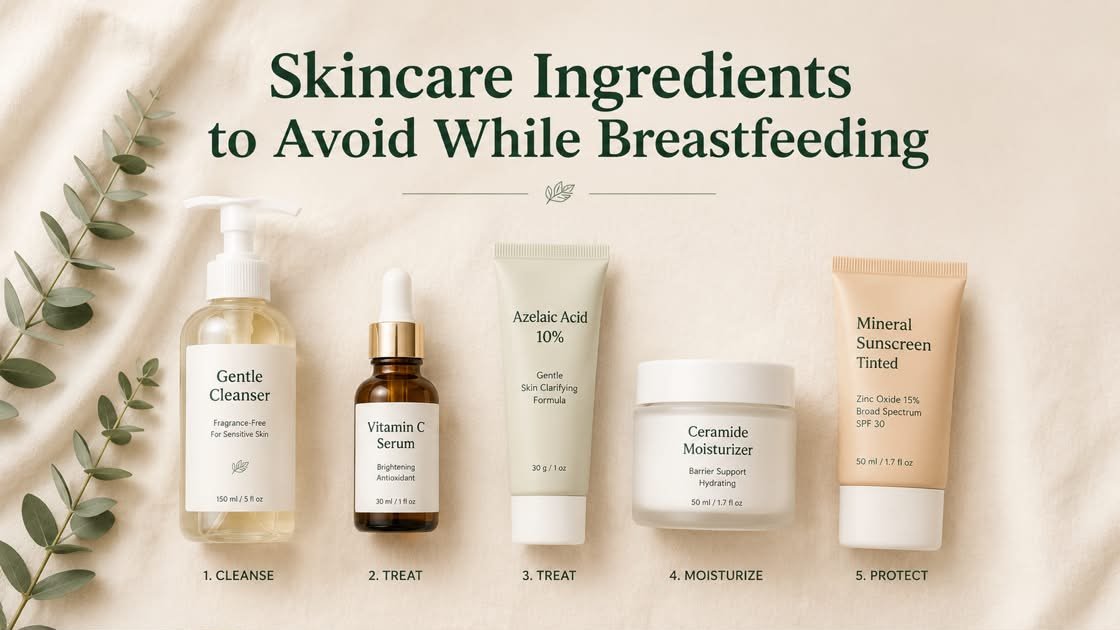
A breastfeeding-safe skincare routine follows the same structural principles as any effective skincare routine, cleansing, treating, moisturizing, and protecting, but with ingredient substitutions that eliminate retinoids, hydroquinone, oxybenzone, and high-concentration actives of concern. The structure stays intact. The ingredients inside it change. Here is a complete morning and evening routine you can follow from the first day postpartum through the end of your breastfeeding journey.
Morning Routine:
Step 1: Gentle Cleanser. Use a fragrance-free, non-foaming cleanser with ceramides or glycerin to avoid stripping your already hormonally sensitive skin. If you have oily or acne-prone skin, a 2 percent salicylic acid cleanser provides brief-contact exfoliation with minimal systemic exposure. Rinse thoroughly. Pat dry. Do not rub.
Step 2: Vitamin C Serum. Ascorbic acid at 10 to 15 percent provides antioxidant protection against UV-generated free radicals and inhibits melanin production, helping to manage the hyperpigmentation that plagues postpartum skin. Apply to dry skin after cleansing. Wait 2 to 3 minutes for full absorption. Vitamin C is considered safe during breastfeeding because it is a water-soluble vitamin your body already requires and regulates.
Step 3: Azelaic Acid. Prescription 15 percent gel or OTC 10 percent suspension. This is your multi-tasking active: anti-acne, anti-inflammatory, and anti-pigment in one ingredient. Apply a thin layer over the entire face, not just on active breakouts, for full preventive benefit.
Step 4: Moisturizer. Choose a fragrance-free formula with ceramide NP, cholesterol, and fatty acids to support your skin barrier. Hormonal shifts during the postpartum period can weaken barrier function, making ceramide-rich moisturizers particularly valuable right now.
Step 5: Mineral Sunscreen SPF 30+. Zinc oxide 15 to 20 percent, ideally tinted with iron oxides for visible light protection. Apply liberally. This is the most important step for melasma prevention and overall skin health, and it is completely safe for breastfeeding.
Evening Routine:
Step 1: Gentle Cleanser. Same as morning. If you wore makeup or water-resistant sunscreen, consider double cleansing: an oil-based cleanser first to dissolve sunscreen and makeup, followed by your gentle water-based cleanser.
Step 2: Niacinamide Serum. Niacinamide at 4 to 5 percent reduces sebum production, calms inflammation, and interferes with melanosome transfer to reduce pigmentation. It pairs well with azelaic acid and is considered safe during breastfeeding.
Step 3: Azelaic Acid. Second daily application. Consistent twice-daily use improves results for both acne and pigmentation.
Step 4: Moisturizer or Night Cream. Same ceramide-rich formula. If your skin is particularly dry from postpartum hormonal fluctuations, add a thin layer of a petrolatum-based occlusive as your final step to lock in hydration. Petrolatum is inert, non-absorbable, and completely safe.
| Time | Step | Ingredient | Function | Breastfeeding Safety Note |
| AM | 1 | Gentle Cleanser | Remove overnight oil | Fragrance-free, ceramide-rich |
| AM | 2 | Vitamin C (ascorbic acid) 10-15% | Antioxidant, pigment inhibition | Safe; water-soluble vitamin |
| AM | 3 | Azelaic Acid 10-20% | Anti-acne, anti-pigment | Safe; low absorption |
| AM | 4 | Moisturizer with ceramides | Barrier support | Safe |
| AM | 5 | Mineral Sunscreen SPF 30+ | UV and visible light protection | Safe; zero absorption |
| PM | 1 | Double Cleanse if needed | Remove sunscreen/makeup | Use non-comedogenic oil cleanser |
| PM | 2 | Niacinamide 4-5% | Sebum regulation, pigment reduction | Safe |
| PM | 3 | Azelaic Acid 10-20% | Maintenance dose | Safe |
| PM | 4 | Ceramide Moisturizer or Night Cream | Barrier repair | Safe; petrolatum occlusive optional |
Key Takeaway: You can build a complete, effective, multi-step skincare routine during breastfeeding without a single ingredient of concern. The structure remains the same. You simply substitute azelaic acid for retinoids, mineral sunscreen for chemical, and niacinamide for hydroquinone.
Acne Treatment While Breastfeeding: Safe Ingredients and Routine Swaps
Acne treatment while breastfeeding requires replacing retinoids and high-concentration salicylic acid peels with azelaic acid, low-concentration salicylic acid at 2 percent, niacinamide, and, in consultation with a dermatologist, potentially topical antibiotics like clindamycin or oral medications like cephalexin for severe cases. Postpartum acne is driven by the same hormonal shifts, specifically the drop in estrogen and relative androgen elevation, that make acne common after delivery whether you are breastfeeding or not. You do not need to suffer through it untreated. You need a treatment plan built from safe ingredients.
The core acne-fighting combination for breastfeeding parents is azelaic acid 15 to 20 percent applied twice daily plus a 2 percent salicylic acid product used either as a short-contact cleanser or a leave-on treatment applied to active breakouts only. Azelaic acid handles the bacterial component (Cutibacterium acnes), the inflammatory component, and the post-inflammatory pigmentation that follows acne healing. Salicylic acid handles the comedonal component by exfoliating inside the pore to prevent and clear whiteheads and blackheads. Together, they cover all four acne pathogenic factors: excess sebum, follicular hyperkeratinization, bacterial proliferation, and inflammation.
For inflammatory, red, painful acne lesions, a board-certified dermatologist can prescribe topical clindamycin, a topical antibiotic with decades of safe use data during lactation. Clindamycin has minimal systemic absorption from topical application and is classified as compatible with breastfeeding by the LactMed database. It is typically prescribed as a 1 percent gel or lotion, often combined with benzoyl peroxide to prevent antibiotic resistance. Benzoyl peroxide itself is considered safe during breastfeeding at concentrations up to 5 percent; it works by releasing oxygen into the follicle, which kills C. acnes bacteria without any systemic absorption. Benzoyl peroxide is broken down to benzoic acid on the skin, which is then excreted without reaching breast milk.
For severe, scarring, or treatment-resistant acne during breastfeeding, oral antibiotics like cephalexin or erythromycin may be appropriate. These are prescription medications, not skincare, and they require a dermatologist’s evaluation, but they are considered compatible with breastfeeding by the American Academy of Pediatrics. Oral isotretinoin remains absolutely contraindicated. Hormonal therapies like spironolactone or combined oral contraceptives, which are sometimes used for acne, are generally avoided during breastfeeding due to effects on milk supply and infant exposure.
Quick Tip:
If you are using a benzoyl peroxide product during breastfeeding, apply it to active lesions only rather than your entire face to minimize dryness and irritation. Benzoyl peroxide can bleach fabrics, so use white pillowcases and towels, and wash your hands thoroughly after application.
Melasma Treatment Postpartum: Breastfeeding-Safe Options That Actually Work
Melasma treatment postpartum while breastfeeding relies on a combination of rigorous photoprotection with tinted mineral sunscreen, twice-daily azelaic acid, and supportive ingredients like niacinamide, vitamin C, and bakuchiol. This multi-pathway approach tackles melanin production at multiple points without the hydroquinone that would normally anchor melasma treatment outside of the breastfeeding context. The bad news is that melasma is stubborn and slow to fade. The good news is that the breastfeeding-safe alternatives have genuine efficacy data, and the photoprotection piece is both completely safe and completely within your control.
Melasma is a complex hyperpigmentation disorder driven by hormonal stimulation (estrogen and progesterone upregulate melanocyte activity), UV radiation, and visible light, particularly high-energy visible (HEV) blue light. This is why melasma appears or worsens during pregnancy and does not always resolve postpartum. Melanocytes that have been hormonally primed remain hypersensitive. The foundational treatment is preventing further stimulation. A tinted mineral sunscreen with zinc oxide 15 to 20 percent and iron oxides blocks both UV and visible light. Iron oxides are the critical differentiator here; untinted mineral sunscreens do not adequately block visible light, and visible light is a major melasma trigger, especially in Fitzpatrick skin types III through VI.
Azelaic acid at 15 to 20 percent applied twice daily is the most effective topical monotherapy for melasma that is safe during breastfeeding. A 2014 randomized controlled trial in the Journal of the American Academy of Dermatology found that azelaic acid 20 percent cream was as effective as hydroquinone 4 percent for melasma over six months of treatment, with fewer side effects. This study was not conducted in a breastfeeding population, but the efficacy equivalence to the gold-standard treatment, combined with azelaic acid’s established lactation safety, makes it the clear first-line choice.
Vitamin C (ascorbic acid) at 10 to 15 percent in the morning adds antioxidant protection and additional tyrosinase inhibition. It works through a different mechanism than azelaic acid, reducing melanin precursors through its antioxidant activity. Niacinamide at 4 to 5 percent blocks the transfer of melanosomes from melanocytes to keratinocytes, meaning that even if some excess melanin is produced, it does not reach the visible skin surface. Bakuchiol at 1 percent in the evening adds collagen preservation and additional pigment-fading activity through pathways that do not overlap with retinoid receptor concerns.
Tranexamic acid applied topically at 2 to 5 percent is an emerging melasma treatment with a growing evidence base. Oral tranexamic acid is highly effective for melasma but is not recommended during breastfeeding due to transfer into breast milk. Topical tranexamic acid may offer some of the same benefit with lower systemic exposure, though its lactation safety has not been formally studied. Discuss topical tranexamic acid with your dermatologist before adding it to your routine. Kojic acid at 1 to 4 percent offers another tyrosinase-inhibiting pathway and is generally considered low-risk during breastfeeding, though less studied than azelaic acid.
Key Takeaway: Melasma during breastfeeding does not have to wait. The combination of tinted mineral sunscreen plus azelaic acid plus vitamin C gives you a three-pathway treatment system that is safe, evidence-backed, and effective, even without hydroquinone.
How to Read Skincare Labels for Breastfeeding Safety: INCI and Risk Categories
Reading skincare labels for breastfeeding safety means checking the INCI (International Nomenclature of Cosmetic Ingredients) list, not the front-of-package marketing claims, for the specific ingredient names covered in this guide: retinol, retinyl palmitate, retinaldehyde, tretinoin, adapalene, isotretinoin, hydroquinone, oxybenzone (benzophenone-3), octinoxate (ethylhexyl methoxycinnamate), and, depending on your comfort level, high-concentration salicylic acid or essential oils. Front-label terms like “clean,” “natural,” “dermatologist-tested,” and even “pregnancy-safe” are not regulated claims. The FDA does not define or enforce any of those terms in the skincare context. The INCI list is the only thing you can verify.
The INCI list is organized in descending order of concentration. Ingredients present at 1 percent or more are listed from highest to lowest concentration. Ingredients below 1 percent can be listed in any order after the 1 percent line. This means if retinol appears in the first five ingredients of a serum, the concentration is likely meaningful, probably 0.3 percent or higher. If it appears after the preservative phenoxyethanol, typically used at 1 percent or less, the retinol concentration is likely 0.1 percent or below. This does not make it safe during breastfeeding, but it gives you context for the exposure level you would be getting from the product.
The “fragrance” loophole deserves special attention. The term “fragrance” or “parfum” on an INCI list can hide dozens of individual compounds, including phthalates, without disclosing them separately. This is legal under FDA cosmetic regulations because fragrance formulations are considered trade secrets. During breastfeeding, “fragrance-free” on the front label is more reliable than trying to parse what is inside the fragrance term. “Unscented” is not the same thing; unscented products may contain masking fragrances to neutralize the smell of raw ingredients. Look for “fragrance-free” specifically.
Sunscreen labels require checking both the active ingredients (usually listed in a Drug Facts box, since sunscreens are regulated as OTC drugs in the United States) and the inactive ingredients. The active ingredients will tell you whether the product uses zinc oxide, titanium dioxide, or chemical filters like oxybenzone, avobenzone, octinoxate, octisalate, or homosalate. The inactive ingredients list is where you check for fragrance, essential oils, or other ingredients of concern.
Quick Tip:
Screenshot the Avoid ingredients list from the tiered risk guide at the top of this article and keep it on your phone. When you are standing in a store aisle or scrolling an online product page, pull up the INCI list and search for those specific names. Thirty seconds of checking replaces hours of anxious Googling.
When Can I Use Retinoids Again After Breastfeeding? Reintroduction Timeline
You can use retinoids again after breastfeeding as soon as you have fully weaned and your milk supply has dried, because the concern about retinoid transfer is lactation-specific and ends when breast milk is no longer being produced and consumed by your infant. There is no waiting period after weaning, no need to “clear” retinoids from your system, and no risk to your baby from your topical retinoid use when you are no longer lactating. The ban lifts the moment breastfeeding ends.
The practical reintroduction requires more care than the safety decision. Your skin may be more sensitive than you remember after months or years without retinoid use. The postpartum hormonal environment changes skin barrier function, and jumping back to your pre-pregnancy tretinoin 0.1 percent on day one post-weaning is a recipe for redness, peeling, and frustration. Restart with the lowest concentration you have access to: over-the-counter retinol at 0.3 percent or prescription tretinoin at 0.025 percent applied twice weekly for the first two weeks, then every other night for two weeks, then nightly as tolerated.
If you used bakuchiol during breastfeeding, you do not need a washout period before switching to a retinoid. Bakuchiol does not bind to retinoid receptors and does not create any cross-reactivity or cumulative sensitivity issue. You can use bakuchiol one night and retinol the next during your transition, then phase out bakuchiol as your retinoid tolerance builds. The two ingredients are not contraindicated together and can even be used in the same routine for an efficacy boost if your skin tolerates it.
If you are planning another pregnancy soon after weaning, discuss retinoid timing with your board-certified dermatologist and obstetrician. The standard recommendation is to discontinue retinoids at least one month before attempting conception, though topical retinoid absorption is so low that the risk is theoretical rather than documented. For oral isotretinoin, the recommendation is one month of washout before conception, and this is based on documented risk, not precaution.
Quick Tip:
The first three months after weaning are the ideal window to restart a retinoid. Your skin has the hormonal stability to tolerate reintroduction, and you are likely still in the habit of daily sunscreen use from your breastfeeding melasma prevention routine, which is the most important concurrent requirement for retinoid use.
Frequently Asked Questions About Skincare Ingredients to Avoid While Breastfeeding
What skincare ingredients should I absolutely avoid while breastfeeding?
The skincare ingredients to absolutely avoid while breastfeeding are oral isotretinoin, topical hydroquinone, oxybenzone in chemical sunscreens, and high-concentration undiluted essential oils applied to large body areas.
Topical prescription retinoids like tretinoin fall into a precautionary avoidance category with a risk-benefit discussion recommended.
Azelaic acid, niacinamide, vitamin C, mineral sunscreens, and ceramide moisturizers are all considered safe.
Can I use retinol cream on my face while breastfeeding?
Most dermatological organizations recommend avoiding retinol cream on your face while breastfeeding due to precautionary concerns about the entire retinoid class, though over-the-counter retinol absorbs at very low levels and has not been linked to any adverse lactation outcomes.
If you choose to use retinol, discuss it with your board-certified dermatologist to weigh your skin condition needs against the theoretical risk.
Bakuchiol at 1 percent is an evidence-backed, non-retinoid alternative that delivers similar anti-aging and pigment-fading results.
Is salicylic acid safe to use during breastfeeding?
Salicylic acid at 2 percent concentration applied to the face only is considered low-risk during breastfeeding by the InfantRisk Center and most dermatologists.
Avoid high-concentration salicylic acid peels of 20 to 30 percent and avoid applying 2 percent salicylic acid to large body surface areas like the back and chest.
A 2 percent salicylic acid cleanser provides the lowest systemic exposure because of minimal contact time.
What sunscreen is safest while breastfeeding?
Mineral sunscreens containing zinc oxide and/or titanium dioxide are the safest choice during breastfeeding, with zero demonstrated systemic absorption in FDA studies.
Choose a tinted formulation with iron oxides for added visible light protection, which is especially important for preventing and managing postpartum melasma.
Avoid sunscreens containing oxybenzone (benzophenone-3) and octinoxate, which show measurable systemic absorption and potential endocrine activity.
Can I use vitamin C serum while breastfeeding?
Vitamin C (ascorbic acid) serum at 10 to 15 percent is safe to use during breastfeeding because it is a water-soluble vitamin your body already requires and tightly regulates through its own transport and metabolism systems.
Topical vitamin C provides antioxidant protection and mild tyrosinase inhibition for hyperpigmentation without any known lactation safety concerns.
Apply it in the morning under your moisturizer and mineral sunscreen for best results.
How long after stopping breastfeeding can I use retinol again?
You can start using retinol immediately after you have fully weaned and your milk supply has dried, with no required waiting period.
Restart with a low concentration, 0.3 percent retinol or 0.025 percent tretinoin, applied twice weekly, and gradually increase to nightly use over four to six weeks.
Your skin may be more sensitive than you remember after pregnancy and breastfeeding, so reintroduce slowly to avoid irritation.
You do not need to choose between healthy skin and a safe breastfeeding experience. The ingredients you truly need to avoid, retinoids, hydroquinone, oxybenzone, and high-concentration essential oils on large areas, are specific and identifiable. For everything else, azelaic acid, niacinamide, vitamin C, ceramides, mineral sunscreens, and bakuchiol are waiting to build you a complete, effective routine that treats acne, manages melasma, and supports your skin barrier through every postpartum hormonal shift.
Start with the sunscreen. A tinted zinc oxide formula of SPF 30 or higher applied every morning will do more for your skin over the next year than any active ingredient, and it comes with zero breastfeeding safety concerns. Add azelaic acid next. Give it two weeks of twice-daily use, and you will likely see exactly why dermatologists consider it the breastfeeding skincare MVP. From there, build your routine step by step using the morning and evening template in this guide.
Your skin carried you through pregnancy and is carrying you through new parenthood. It deserves care that is both safe and effective. Now you know exactly what that looks like.