Self Care Bingo 2026 Guide: Science-Backed Cards & Skin Health
Self care bingo is a structured, game-like tool that transforms abstract wellness goals into concrete, trackable daily actions. It moves self-care from a vague aspiration into a visible, rewarding practice. This method is uniquely powerful because it leverages behavioral psychology principles like immediate reward and visual progress tracking.
The concept gains real, measurable depth when you understand that your skin is an immediate, visible billboard for your internal state. According to the American Academy of Dermatology, stress can trigger or worsen skin conditions like acne, eczema, and psoriasis through a defined biological pathway. Self-care, therefore, is not a luxury; it’s a direct intervention in your skin’s health.
This guide builds a self-care bingo practice from the ground up. We will explore the neurobiological link between your mind and your epidermis, separate evidence-backed practices from empty wellness trends, and construct a bingo board that genuinely supports your mental health and your moisture barrier. You’ll learn to design sensory squares, create a daily challenge, and know precisely when a bingo card is not enough and it’s time to call a board-certified dermatologist.
self care bingo
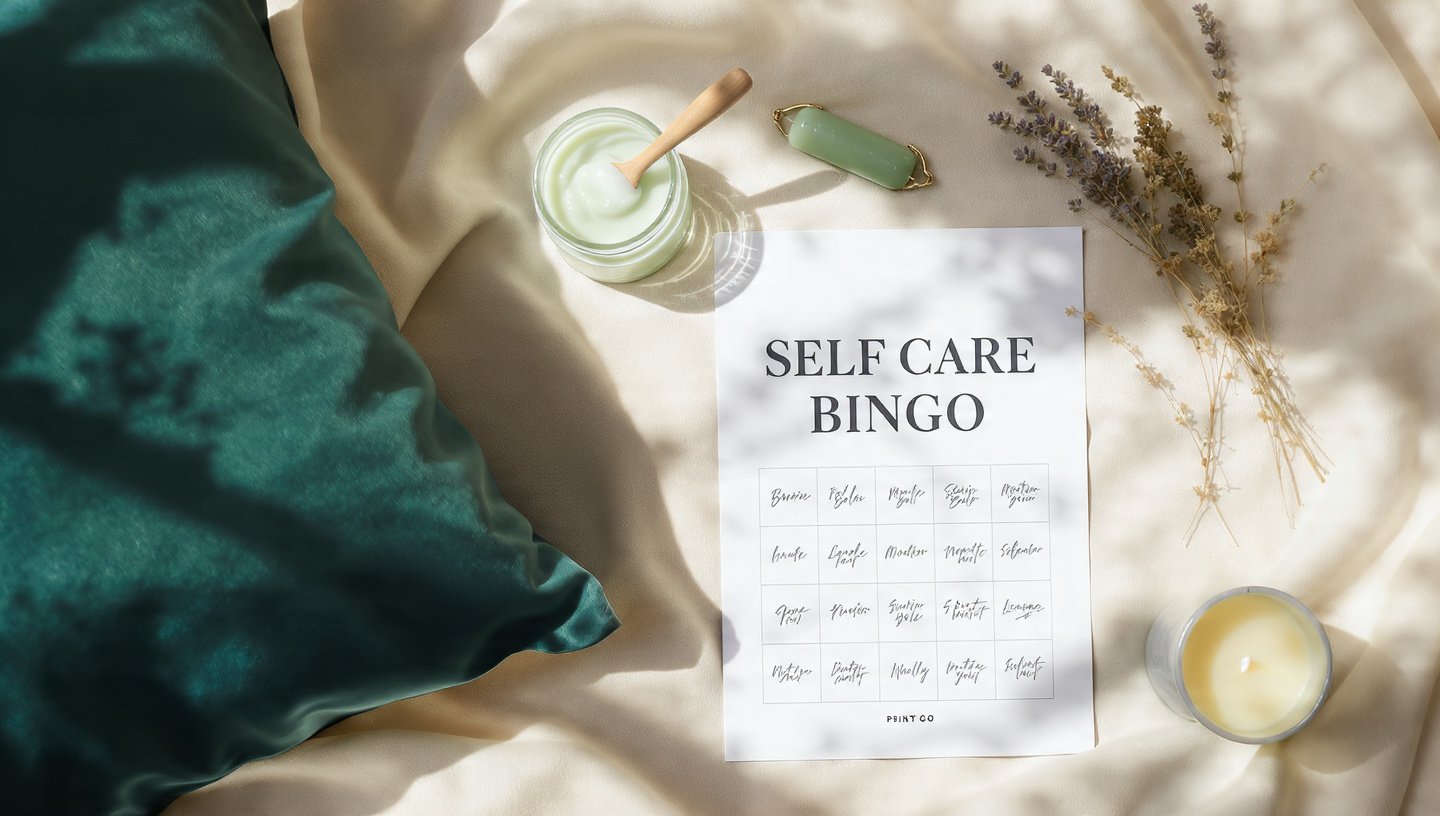
Self care bingo is a gamified wellness tool where a grid of self-care activities replaces numbers, and you mark a square each time you complete an action. The goal is to achieve a line, a pattern, or a full card, making the consistent practice of self-care more engaging and trackable than a simple to-do list. Its power lies in turning necessary, often skipped, restorative behaviors into a tangible challenge.
This isn’t a frivolous game; it’s a dopamine-driven adherence system. Every time you check off a square, your brain receives a small, rewarding hit of dopamine, reinforcing the habit loop and making you more likely to repeat the behavior. A 2022 study in the Annual Review of Psychology highlights that consistent small rewards are more effective for habit formation than large, delayed ones. The bingo card becomes your external dopamine architect.
For a soothhealth.com reader, the bridge to skin health is direct. Chronic stress activates the hypothalamic-pituitary-adrenal (HPA) axis, releasing cortisol. Cortisol tells your sebaceous glands to ramp up oil production and signals a cascade of inflammation that degrades collagen and weakens the skin barrier. A card packed with scientifically grounded stress-reduction techniques isn’t just a mood booster; it’s a dermatological co-treatment.
The foundational self-care bingo board is a flexible framework, not a rigid prescription. Its core function is to make the invisible work of self-restoration visible, completed, and celebrated. This visual feedback directly combats the all-or-nothing thinking that often defeats a self-care routine before it starts.
self care bingo board
A self care bingo board is the physical or digital grid, most commonly a 5×5 layout with a free space in the center, that organizes your self-care activities into a visual challenge format. This structure is your canvas, and the 24 squares you fill in become the architecture of your daily recovery. The board’s layout itself is a psychological tool.
The grid’s power comes from its closure principle. Your brain naturally seeks to complete an incomplete visual pattern, a phenomenon identified in Gestalt psychology. An open bingo board with a few marked squares creates a subtle, non-punitive tension that motivates you to fill the next square to achieve a visual line of completion. It transforms “I should take a break” into “I want to fill this square and get to five across.”
When designing your board, think beyond a random collection of ideas. You are building a multi-system recovery plan on a single page. The most effective boards distribute squares across distinct domains of well-being. This prevents over-focusing on one area, like physical activity, while neglecting others, like emotional processing.
| Board Domain | Function | Example Square |
|---|---|---|
| Physical & Sensory | Repairs the body and calms the nervous system via direct sensory input. | Apply a barrier repair balm with colloidal oatmeal. |
| Emotional & Cognitive | Processes feelings and gives the brain a rest from analytical overload. | Do a 3-minute guided imagery exercise. |
| Social & Relational | Fosters connection that buffers against stress. | Text one friend an unsolicited compliment. |
| Environmental & Spatial | Organizes your external world to reduce low-grade ambient anxiety. | Clear one surface that’s been a clutter hotspot all week. |
A well-constructed board is not a list of chores. It’s a menu of accessible restoration options. By intentionally placing squares that target these four domains, you build a complete practice that acknowledges you are a complex, interconnected system. The board becomes your personal wellness ecosystem planner.
Key Takeaway: A self-care bingo board uses Gestalt psychology’s need for visual completion to motivate you, and its power comes from deliberately distributing squares across physical, emotional, social, and environmental domains for a multi-system recovery effect.
self care bingo card
A self care bingo card is a single, often theme-specific, iteration of the larger board concept, designed to be used over a defined period, like a week or a month, for a focused reset. While the board is your standing framework, the card is a time-bound tactical mission. It’s the difference between your overarching fitness plan and this week’s specific workout split.
Filling out your first card requires ruthless specificity. A square that says “relax” is useless because it is not an executable command; your brain sees it as another ambiguous decision. Instead, a square must be a complete, sensorially rich micro-instruction. “Wrap yourself in a robe still warm from the dryer for five minutes and breathe in the scent of lavender-cedar steam” is an action your senses can latch onto and your motor cortex can execute.
Thematic cards are the most powerful application of this tool. You can create a “Winter Barrier Repair Card” filled with squares like “run a cool-mist humidifier in your bedroom for 8 hours,” “skip morning cleanser and rinse with tepid water only,” and “apply an occlusive lip balm with lanolin and dimethicone before bed.” Each square on a themed card becomes a targeted dermatological or psychological intervention.
You can generate a complete mental health card in the same way. A “Mid-Week Anxiety Reset Card” might include “complete a 4-7-8 breathing cycle for two minutes,” “write down one catastrophic thought and then write one factual counter-statement,” and “hold an ice cube in your palm and focus only on the temperature for 90 seconds,” a skill from dialectical behavior therapy that powerfully forces the brain into the present moment.
The card is where your self-care stops being a concept and becomes a scheduled activity. It gives you permission to focus intensely on one specific aspect of your well-being for a manageable amount of time, making the entire practice feel less overwhelming and more directed.
mental health self care bingo
Mental health self care bingo is a targeted version of the game where each square is a specific, evidence-informed cognitive or emotional regulation skill designed to reduce rumination, manage anxiety, or interrupt depressive thought loops. This card operates as a portable, non-pharmaceutical circuit breaker for psychological distress patterns.
The clinical mechanism here is cognitive defusion, a core process in Acceptance and Commitment Therapy (ACT). When you are stuck in a loop of “I’m failing at everything,” you are fused with that thought; you experience it as an unquestioned truth. A bingo square that instructs you to “say your worst thought out loud in a silly cartoon character voice” forces you to step back and observe the thought as just a collection of sounds. You have defused from it.
A 2023 meta-analysis in the Journal of Affective Disorders confirmed that brief, app-based or self-guided ACT interventions can produce small-to-moderate effect sizes in reducing symptoms of anxiety and depression. A bingo card translates these clinical skills into a tangible, accessible format. A square that says “name five things you can see, four you can touch, three you can hear” is a clinically validated grounding technique for acute anxiety.
When building this card, the focus must be on safety and scalability. A square should never trigger a trauma response or be impossible on a very bad day. This is where the distinction between gentle activation and toxic positivity becomes critical.
A mental health card square should always:
- Offer a specific, low-energy, single-step action.
- Focus on observation and redirection, not suppression or forced positivity.
- Have a built-in “gentle alternative” option for days when the primary task feels impossible.
Your mental health self care bingo card is not a treatment plan for a clinical condition on its own. It is a secondary prevention strategy and a daily mental hygiene practice. It works by repeatedly strengthening the neural pathways that allow you to step back from and redirect catastrophic thinking, one tiny, gameified choice at a time.
what is self care bingo
What is self care bingo? At its core, it is a behavioral activation tool disguised as a game that transforms abstract, often guilt-inducing self-care concepts into a concrete, visually trackable sequence of restorative actions. It directly combats the executive dysfunction that makes self-care feel impossible during periods of high stress or low mood by removing the biggest barrier: deciding what to do.
The concept operationalizes the psychodermatology model, which holds that skin health and mental health are not just correlated but are biologically intertwined. When you mark a square that guides you through a 5-minute facial massage with a cold-pressed oil, you are not doing two separate things. You are simultaneously activating the parasympathetic nervous system through touch and improving microcirculation and lymphatic drainage in the dermis. The game format links the psychological reward of completion to a physical skin health action.
According to the biopsychosocial model of health, which integrates biological, psychological, and social factors, effective wellness interventions must operate on multiple levels at once. Self-care bingo is an elegant, layperson-accessible tool that does exactly this. A single card can address the biological (a 15-minute walk for cortisol regulation), the psychological (a square for gratitude journaling), and the social (calling a supportive friend).
For the reader with stress-reactive skin, this framework validates their lived experience. It posits that their rosacea flare and their looming work deadline are not separate problems. They are inputs into the same system, and the bingo card becomes their daily user interface for managing that system. It makes the invisible connection between a meditation square and a calmer skin day tangible and actionable.
is self care bingo effective
Is self care bingo effective? Yes, a self-care bingo practice is effective as a habit-formation and adherence tool, but its clinical impact depends entirely on whether the specific activities chosen for the squares are themselves evidence-based practices with a known mechanism of action. The bingo format is an effective delivery system, not the medicine itself.
The effectiveness of the wrapper cannot be overstated in behavioral science. The Hawthorne effect, where individuals modify their behavior in response to being observed, applies even when the observer is your own future self checking a bingo card. A 2024 review in Health Psychology Review found that self-monitoring is one of the most robust predictors of consistent health behavior change. The act of marking the square is a form of self-monitoring that brings unconscious behavior into conscious awareness.
The critical risk, and the failure point of most social media-driven wellness trends, is packing a bingo card with aesthetic placebos. A square that says “drink a green juice” is a health halo unless it’s attached to a specific, measurable goal like consuming a specific number of fiber grams. An effective card uses only squares with a traceable physiological or psychological benefit, like “drink 500ml of water immediately after your morning alarm” to rehydrate the stratum corneum after overnight transepidermal water loss (TEWL).
A 2022 randomized controlled trial published in the British Journal of Dermatology demonstrated that patients with psoriasis who received a brief, four-session cognitive behavioral therapy intervention showed significantly faster skin clearance than the control group. A self-care bingo card that includes squares for CBT-based journaling, specific stress-reduction breathing, and active skin treatment application is effectively delivering a low-cost, self-directed version of this psychodermatological approach, translating clinical trial protocols into your living room.
Key Takeaway: Self-care bingo is an effective delivery and adherence system, but its therapeutic power comes entirely from loading the card with evidence-based practices with known mechanisms, like specific CBT skills or barrier repair steps, not generic wellness filler.
how to create a self care bingo card
How to create a self care bingo card begins with defining your therapeutic goal, which must be more specific than “feel better.” A well-designed card treats a tangible target, such as “reduce nightly skin-picking episodes,” “interrupt a 3 PM cognitive crash,” or “restore a damaged moisture barrier in two weeks.” The target dictates the prescription of your squares.
Step one is to choose your primary domain and its measurable indicator. If the target is “repairing a damaged skin barrier,” your indicator might be “absence of stinging when applying my basic moisturizer.” Step two is to reverse-engineer the physiological and psychological actions that directly influence that indicator, generating a pool of 30 to 40 potential squares based on dermatological science and behavioral psychology.
Step three is to curate, not just collect. Select 24 actions from your pool that can realistically fit into a standard week. You must then organize them into a mini-circuit for the card. The most elegant cards create a pacing rhythm. You cannot have all high-effort squares or you will abandon the card by Wednesday.
| Square Category | Pacing Guide | Example (Skin-Barrier Repair Card) |
|---|---|---|
| Active/High-Energy | 4 to 6 squares | Complete a 20-minute guided facial massage with a high-linoleic-acid oil blend. |
| Restorative/Medium-Energy | 8 to 10 squares | Apply a ceramide NP-rich serum to damp skin immediately after a tepid shower. |
| Rest/Reward/Low-Energy | 8 to 10 squares | Sit in a cool-mist humidified room for 15 minutes and listen to a single song with your eyes closed. |
Step four is to set the rules before you start. Decide if you are playing for a single line, a postage stamp (four corners), or a blackout (full card). Tie it to a specific, healthy reward that does not undermine your goal. If your target is barrier repair, your reward for a blackout might be purchasing a high-quality silk pillowcase, an evidence-backed tool for reducing friction and TEWL overnight.
Creating the card is itself a therapeutic act of clarifying your intention. It forces you to move from “I want to feel better” to “I will execute these 24 specific protocols to modulate my cortisol and rebuild my stratum corneum lipid bilayer.” That level of precision is where genuine self-care lives.
self care bingo ideas
Self care bingo ideas function best when they are precise, sensorially rich commands that bridge a mental intention with a physical action, not just pleasant concepts. A square that says “take a bath” is a missed opportunity; a square that says “soak in a warm bath with 40g of colloidal oatmeal for 15 minutes” is a therapeutic prescription that delivers a specific dose of barrier-supporting beta-glucan and anti-inflammatory avenanthramides.
The strongest ideas target the biological stress-skin axis directly. Chronic stress elevates neuropeptides like substance P, which triggers mast cells in the skin to release histamine, causing inflammation and itching. An effective bingo square is a counter-agents to this cascade. The most versatile and scientifically grounded ideas fall into four actionable categories that can be adapted to any card.
- Neurocosmetic application: “Close your eyes and inhale the scent of your fragrance-free moisturizer slowly three times before applying it.” This pairs a skin treatment with a non-cognitive mindfulness anchor.
- Parasympathetic activation: “Lie on your floor with your legs up the wall for five minutes while humming on each exhale.” Humming increases nasal nitric oxide production, a vasodilator, and the vagal position directly quiets the fight-or-flight response.
- Tactile reset: “Run your palms under cool water for 30 seconds, then gently press them against your closed eyelids.” This activates the mammalian dive reflex and quickly lowers heart rate, providing a fast, discreet anxiety reset.
- Environmental micro-shift: “Move one piece of furniture two inches to the left.” This disrupts a stagnant visual routine and can create a subtle but powerful cognitive shift without the exhaustion of a full reorganization.
These ideas work because they bypass the thinking brain and speak directly to the sensory and motor systems. They are designed for low executive function days, when the thought of a complex task is paralyzing. The best self-care bingo idea is one your nervous system will not argue with, a micro-instruction so simple and specific that resistance melts into action.
skin care self care bingo
Skin care self care bingo is a specialized card where every square is a ritualized, sensorial skin treatment act designed to simultaneously deliver a dermatological benefit and engage the parasympathetic nervous system through mindful touch. It reframes your AM and PM routine from a transactional task into a therapeutic practice, directly leveraging the connection between skin innervation and emotional centers in the brain.
The science that underpins this approach is the intimate embryological link between the skin and the brain. Both develop from the same layer of fetal tissue, the ectoderm. For the rest of your life, they share a dense network of nerve endings, neurotransmitters, and hormone receptors. When you slowly massage a cool, soothing gel-cream into your skin, the tactile receptors (C-tactile fibers) fire signals directly to the insular cortex, a brain region that processes emotion. You are applying a topical treatment and a simultaneous emotional intervention.
A well-designed skin care bingo card moves beyond “apply serum” to create full sensory moments. A square like “spend 90 seconds slowly pressing a chilled jade roller across your jawline” does multiple things at once. The cold temperature vasoconstricts swollen vessels, the pressure aids lymphatic drainage, and the slow, repetitive motion is a non-verbal signal of safety to an overactive amygdala.
This is also a strategy to counteract a common problem: treatment fatigue. A person with a chronic condition like adult acne or eczema can burn out on the repetitive, medicalized nature of their routine. A skin care bingo card injects novelty and play. A square that says “patch test a new ingredient on your inner arm tonight” makes product safety a game. One that says “do your entire routine with your non-dominant hand” forces a mindful slowness that enhances product absorption and keeps you grounded in the present moment.
By treating each application step as a potential bingo square, you transform a potentially tedious chore into a structured self-soothing practice. The card becomes an accountability partner that reminds you your skin is not a battleground to be managed, but a sensory landscape to be tended to with intention and care.
Key Takeaway: Skin care self-care bingo leverages the ectodermal link between skin and brain, turning product application into a parasympathetic nervous system ritual where C-tactile fibers activated by slow, mindful touch directly soothe the emotional processing centers of the brain.
skin barrier repair self care bingo
Skin barrier repair self care bingo is a targeted 7 to 14-day protocol where each square prescribes a specific action to reduce transepidermal water loss (TEWL), replenish the lipid matrix, and protect the stratum corneum from further insult. This card functions as a dermatological recovery plan disguised as a game, and its goal is measurable: the return of smooth, non-stinging, non-reddened skin.
Your skin barrier, the uppermost layer of your epidermis, is a brick-and-mortar structure. The corneocytes are the protein-rich bricks, and the lipid matrix made of ceramides, cholesterol, and free fatty acids is the mortar. A compromised barrier, from over-exfoliation, harsh surfactants, or environmental stress, is a wall with crumbling mortar, allowing water to escape and irritants to enter. This bingo card acts as your repair crew and security detail.
The squares on this card are a set of strict, non-negotiable protocols for one week. The goal is to impose a period of “sensory rest” on your skin, stripping your routine down to only what is necessary to rebuild that lipid mortar.
- Cleanse only with cool to tepid water for 48 hours. This halts surfactant-induced lipid stripping to give the barrier a chance to begin self-repair.
- Apply a 2% colloidal oatmeal balm to still-damp skin. The oatmeal forms a protective, anti-inflammatory shield, and applying to damp skin traps water in the stratum corneum.
- Sleep with a cool-mist humidifier running next to your bed. Higher ambient humidity passively reduces the rate of TEWL for eight hours.
- Wear a dimethicone-based occlusive balm over your moisturizer. This is the final mortar sealant, an artificial, breathable barrier that prevents water loss completely.
This card must also have strict avoidance squares, like “go 24 hours without touching your face” and “skip all actives (AHAs, BHAs, retinoids, ascorbic acid).” A 2023 study in the Journal of Cosmetic Dermatology confirmed that a simplified, fragrance-free routine focusing on humectants and occlusives accelerates barrier recovery time by nearly 50% compared to continuing a complex, active-laden routine.
If after one full cycle of this card your skin still stings when you apply plain water, your barrier repair needs medical support. A board-certified dermatologist can prescribe treatments like topical immunomodulators that you cannot formulate on your own at home.
sensory self care bingo
Sensory self care bingo uses squares that directly target the five senses to rapidly shift the body from a state of sympathetic hyperarousal to one of parasympathetic calm, creating a somatic reset that is particularly effective for skin conditions exacerbated by a high-alert nervous system. This is body-first self-care, bypassing the thinking mind entirely to speak the language of the nervous system: sensation.
The neurobiological target here is neurogenic inflammation. This is inflammation initiated by nerves, not by external pathogens. When you are chronically stressed, your sensory nerve endings in the skin release pro-inflammatory peptides like substance P and CGRP. These peptides cause vasodilation, redness, and mast cell activation. A sensory bingo square can interrupt this feedback loop by changing the sensory data your brain is receiving from your body, signaling safety instead of threat.
A card built on this principle uses squares that provide strong, non-threatening sensory input. The touch of a weighted blanket provides deep-pressure proprioceptive input, which rapidly reduces cortisol and increases serotonin. Listening to binaural beats at a specific low delta frequency (1 to 4 Hz) has been shown in preliminary EEG studies to encourage a brainwave state associated with deep, restorative sleep, critical for skin repair.
The most powerful sensory squares use temperature. The mammalian dive reflex is an ancient survival mechanism: when your face is cooled, your heart rate drops immediately to conserve oxygen. A square that says “splash your face with ice-cold water for 15 seconds” is a cheat code for a rapid anxiety reset that reduces the neurogenic flush in your skin. Another potent square is “hold a warm ceramic mug of rooibos tea with both hands and inhale the steam for three minutes,” which combines warmth, touch, and olfactory input into a single calming ritual.
For the soothhealth.com reader, sensory self-care bingo is a direct intervention in the physiology of a stress-induced acne or rosacea flare. It’s an acknowledgment that your skin’s reactivity is not a character flaw but a physiological response, and sensory tools are a legitimate, powerful way to modulate it.
social self care bingo
Social self care bingo translates the well-documented health benefits of social connection into actionable, low-demand micro-interactions that buffer against the detrimental effects of loneliness and isolation on both mental and dermatological health. This card combats the assumption that socializing is an energy drain, reframing specific types of connection as an energy source.
The evidence for this approach is robust and startling. A 2020 meta-analysis in PLoS Medicine found that poor social relationships were associated with a 29% increase in risk of coronary heart disease, and a separate body of research shows loneliness elevates cortisol as reliably as a physical threat. High cortisol means increased sebum production, heightened skin inflammation, and a weakened barrier. A bingo card that facilitates connection is directly lowering your skin’s inflammatory load.
The key to a successful social bingo square is that it must be low-friction and offer a pre-built script to eliminate social anxiety. A square that says “connect with a friend” is an anxiety-inducing demand. An effective square says “send a friend a photo of a cloud that you think looks like something.” This is a complete, executable task. It’s a bid for connection with zero risk of rejection, and it takes less than 30 seconds.
A complete social self-care card should include squares that target different types of connection to nourish different neural pathways. These range from the simplest, least risky bids for connection to more structured interactions.
- Passive shared experience: “Watch the same movie as a friend, but from your own homes, and send one reaction text.”
- Active appreciation: “Record a 30-second voice note telling someone one specific thing you appreciate about them.”
- Weak-tie acknowledgment: “Make eye contact and genuinely smile at the person who makes your coffee.”
- Relational self-soothing: “Ask for and receive a 20-second hug with no conversation.”
By systematically completing these squares, you are not just doing a fun social activity. You are deliberately building and reinforcing your social safety net, one measurable, low-stakes interaction at a time. That net is one of the most protective factors you can have against the systemic inflammation driven by chronic stress.
Key Takeaway: Social self-care bingo works because it provides pre-scripted, low-friction bids for connection that directly counteract the cortisol-elevating, skin-inflammation-worsening effects of loneliness, transforming socializing from an energy drain into a measurable health intervention.
emotional self care bingo
Emotional self care bingo is a structured practice of naming, processing, and regulating internal feeling states, not to suppress them, but to allow them to move through the body without triggering a prolonged inflammatory stress response. It is the deliberate cultivation of what neuroscientists call “affect labeling,” and its impact on the brain is measurable and immediate.
In a famous 2007 study from UCLA, published in the journal Psychological Science, researchers found that simply putting feelings into words, a process called affect labeling, reduced the reactivity of the amygdala, the brain’s fear center. When participants looked at pictures of angry or fearful faces and chose a word to label the emotion, their amygdala activation dropped significantly. An emotional self-care bingo square that asks you to “write down the one word that best captures your current internal weather” is a direct, low-cost version of this.
These squares provide a structured container for the complexity of human emotion. On a day when you feel numb, a square like “scan a feelings wheel and identify one surprising emotion” can unlock a cascade of self-awareness. On a day of high anxiety, a square that says “do a stream-of-consciousness brain dump on scrap paper for three minutes without stopping” engages the pre-frontal cortex, pulling your brain out of a limbic system hijacking.
A dedicated emotional card can include squares that process past experiences, like “write a one-sentence letter of forgiveness to someone, even if you don’t send it.” It also includes future-oriented ones, like “visualize a difficult conversation going well for 60 seconds.” This is mental rehearsal, a technique used by athletes that strengthens the neural circuitry for the desired behavior.
For those with skin-picking disorder or stress-induced scratching, this card is a first-line behavioral intervention. The compulsion to pick is often an emotional-driven grooming response. An emotional square that redirects the hands and labels the feeling (“close your fists for 10 seconds and name the feeling that just made you want to pick”) interrupts the automatic circuit and builds the neural infrastructure for a different choice.
environmental self care bingo
Environmental self care bingo is a set of actions that intentionally curate your physical surroundings to reduce low-grade ambient stress, minimize sensory overload, and create a space that physically supports skin health and psychological recovery. This practice is based on the psychological concept of environmental mastery, which is one of the six core dimensions of psychological well-being identified by Carol Ryff. It posits that a sense of control over your immediate environment is a fundamental component of mental health.
This card translates that theory into a series of micro-environmental wins. It directly targets the phenomenon of cognitive load, the mental processing power consumed by the world around you. A cluttered space is not just aesthetically displeasing; it is a constant source of competing visual stimuli that your brain must unconsciously process, draining cognitive resources and elevating stress hormones. A square that says “clear one flat surface you see when you first wake up” is not just about tidying. It’s about removing a source of cognitive drag during the most sensitive part of your circadian cycle.
From a dermatological standpoint, environmental self-care squares target invisible skin aggressors. The skin is continuously bathed in its microclimate. A square like “check your bedroom’s hygrometer and activate a humidifier if the reading is below 40%” is a direct intervention. An environment with humidity below 40% rapidly accelerates transepidermal water loss (TEWL), compromising the stratum corneum’s enzymatic function and leading to tight, flaky, irritable skin overnight.
This card can also include squares to manage light and air quality. A square that says “wear your blue-light-blocking glasses for 60 minutes before bed” is an evidence-based sleep hygiene practice. A square instructing you to “open your windows for a five-minute cross-breeze in the morning” reduces the concentration of indoor volatile organic compounds (VOCs) from furniture, cleaning products, and cooking, which can be an invisible trigger for sensitive skin.
Environmental self-care is the foundational layer upon which all other self-care sits. A perfect evening routine of guided meditation and barrier balm will have a blunted effect if the room is arid, the light is harsh, and the visual field is chaotic. This card is about making your space work for your nervous system, and therefore your skin, silently and automatically.
daily self care bingo challenge
A daily self care bingo challenge is a high-frequency, low-intensity version of the practice where you aim to mark one to three squares each day, often from a single-line card, to build unshakeable rhythm and proof of concept that daily self-care is sustainable. The goal is not completion, but consistency. The challenge’s mandate is to prove to yourself that you can do something for your own restoration, no matter how small, every single day.
The clinical rationale is a concept from behavioral activation therapy for depression called “anti-avoidance.” Depression and burnout teach you that effort is pointless, so you stop doing things. This creates a downward spiral. The daily bingo challenge is an anti-avoidance engine. A square that says “stand barefoot on the grass for 60 seconds” is so disarmingly simple that your resistance circuit does not even engage, and its completion delivers a dose of negative ions and a sensory grounding input that creates a tiny, but real, upward mood shift.
A weekly daily challenge card might look like this, designed to create a “win” that takes less than five minutes per day.
| Day | Therapeutic Target | Bingo Square |
|---|---|---|
| Monday | Grounding & Earthing | Stand barefoot on a natural surface for 2 minutes and take 5 slow exhales. |
| Tuesday | Myofascial Release | Use a tennis ball against a wall to massage your upper back for 90 seconds. |
| Wednesday | Circadian Anchor | Watch the sunrise or sunset for 5 minutes without looking at your phone. |
| Thursday | Auditory Reset | Sit in silence and identify the three most distant sounds you can hear. |
| Friday | Somatic Release | Do a single, full-body shake from your hands to your feet for 15 seconds. |
| Saturday | Social Micro-Connection | Send a photo of your morning coffee or tea to a friend with no context. |
| Sunday | Future Self Compassion | Write down one prep task that will make Monday morning 10% easier. |
The daily challenge is the most potent antidote to the all-or-nothing perfectionism that kills a self-care practice. It redefines success from “I overhauled my entire life” to “I connected with a friend for 20 seconds and stood on the grass for a minute.” These micro-doses of deliberate recovery, repeated daily, compound into a sustainable neurobiological shift far more effectively than a single monthly spa day.
Key Takeaway: A daily self-care bingo challenge leverages the behavioral activation principle of anti-avoidance, using disarmingly simple, under-five-minute squares to prove that daily restoration is possible and to build an unshakeable rhythm of consistency over intensity.
when self care isn’t enough
When self care isn’t enough is the most critical square you can put on any bingo card, because it demonstrates true self-awareness, not a failure of practice. The square represents the point where your symptoms exceed the capacity of behavioral and topical self-care tools, and the most restorative action is to escalate your care to a licensed professional. This decision point is a profound act of self-care, not an abandonment of it.
The biological threshold is often a matter of duration and severity. According to the American Psychological Association, a low mood or heightened anxiety that persists for more than two weeks and interferes with your daily functioning is a clinical benchmark for seeking a licensed therapist. From a psychodermatological standpoint, a board-certified dermatologist can intervene when a skin condition does not improve with a simplified, gentle routine and stress-reduction techniques. A square that says “book an appointment if the rash is still spreading after 72 hours of my barrier repair card” is a pre-negotiated, objective trigger.
This square should contain explicit, non-negotiable triggers for specific professional referrals. It removes the agonizing guesswork and self-blame from a situation that already feels overwhelming. You plan for this square when you are well to guide you when you are not.
When to use this square: A referral guide
- Board-Certified Dermatologist: You have a new mole that is asymmetrical, has an irregular border, or is changing. An acne or rosacea flare shows no reduction in inflammation after eight weeks of a consistent, non-irritating routine. You have a rash that is painful, blistered, or covers more than 10% of your body.
- Licensed Clinical Psychologist or Therapist: You have been using your mental health bingo card but your anxiety is causing heart palpitations. You are unable to sleep more than a few hours a night despite using your sleep hygiene squares. You are having recurring thoughts of self-harm or suicide.
- Licensed Psychiatrist: Your depression is making it physically impossible to get out of bed to do even the lowest-energy bingo square. You and your therapist have determined that you need a medication consultation as an adjunct to therapy.
- Primary Care Physician (PCP): Your fatigue is so profound that you cannot complete any of your physical squares, and you suspect an underlying medical cause like anemia or a thyroid disorder.
Self-care bingo is a map for navigating everyday stressors and maintaining your baseline. It is not a substitute for chemotherapy, mood stabilizers, or a surgical biopsy. The genius of a truly comprehensive card is that it contains within it the permission and the clear, pre-defined instructions to put itself down when it is no longer the right tool for the job.
FAQ
Frequently Asked Questions About Self Care Bingo
What is a self-care bingo card?
A self-care bingo card is a grid of 24 actionable, restorative activities and one “free space” that you mark off upon completion, turning abstract wellness goals into a visual, game-like challenge.
It serves as a behavioral activation tool that provides a dopamine reward for each completed square, reinforcing healthy habit loops.
How do you play self-care bingo?
You play by choosing a card with self-care actions, then marking a square each time you complete a task, aiming to achieve a pre-set winning pattern like a horizontal, vertical, or diagonal line.
The “game” element is highly flexible; you can play for a full blackout card over a month or a single daily square, depending on your energy and goal.
Is there a self-care bingo specifically for mental health?
Yes, a mental health self-care bingo card uses squares that are specific evidence-based cognitive skills, like grounding techniques, ACT-based defusion exercises, or structured gratitude practices.
These are not just “feel good” activities but targeted interventions to reduce rumination, manage anxiety attacks, or disrupt negative thought loops.
What are some good self-care bingo ideas for skincare?
Good skincare bingo ideas are precise, sensorial rituals, such as “slowly press a chilled jade roller across your jawline for 90 seconds” or “apply a ceramide-rich moisturizer to damp skin within two minutes of a tepid shower.”
These ideas bridge psychology and dermatology, leveraging the link between touch and the parasympathetic nervous system to reduce cortisol while directly treating the skin.
Can self-care bingo help with anxiety?
Self-care bingo can be an effective supplementary tool for managing anxiety by converting abstract worries into structured, present-moment actions that activate the parasympathetic nervous system, like diaphragmatic breathing or sensory grounding squares.
However, if anxiety causes persistent physical symptoms like heart palpitations or prevents daily functioning for more than two weeks, it is essential to consult a licensed therapist.
How is a self-care bingo board different from a checklist?
A bingo board uses a spatial grid and the visual closure principle to motivate completion of a pattern, while a checklist is a linear, often more punitive-feeling list of to-dos.
The board offers choice and visual feedback, creating a sense of play and self-directed autonomy that a rigid, top-down checklist typically lacks, making adherence more sustainable.
Self-care bingo is at its most transformative when you treat the card as a living document of your own somatic intelligence. It’s a record not of chores done, but of restoration signals your nervous system received and acknowledged. The most important outcome isn’t the blackout card on your fridge; it’s the internal calibration you build over time. You are learning, with clinical precision, exactly which sensory, social, and environmental inputs most efficiently guide your unique mind-body system back to a state of regulation.
Your next step isn’t to create a perfect card. It’s to create a “data-gathering card” for the next three days. Put a mix of physical, emotional, and sensory squares on it. Pay no attention to the pattern. Simply note which square, when marked, creates a palpable, physical exhale in your body. That single square is your keystone habit. That is the practice you build your next, permanent board around.
The world will tell you that self-care is an indulgence. You now know from the fields of psychodermatology, neuroscience, and behavioral psychology that it is a non-negotiable biological maintenance protocol. Your card is your protocol. Your skin and your mind will show you the evidence. Start with one square. Mark it. That’s the revolution.