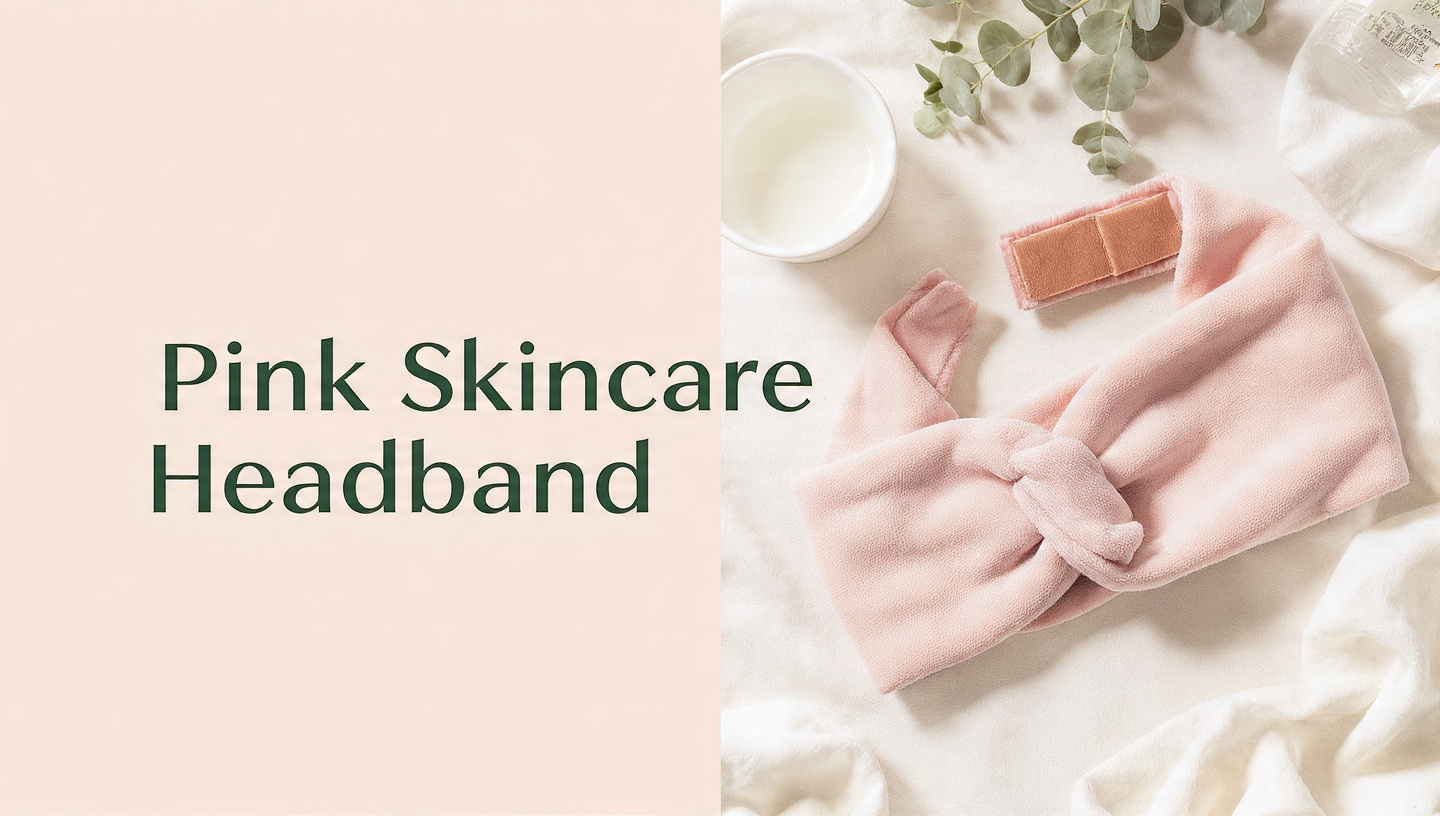
Pink Skincare Headband Guide: Materials and Care 2026
A pink skincare headband is a simple fabric tool that keeps hair off your face during cleansing and product application, directly reducing oil transfer and mechanical interference with your skincare routine. It is not a cosmetic product and does not treat any skin condition, but it supports better product contact and cleaner application. Choosing the right material and maintaining proper hygiene are what separate a genuinely useful skincare headband from a decorative hair accessory.
Hair contact with facial skin matters more than most people realize. According to the American Academy of Dermatology, hair products including leave-in conditioners, gels, and oils can transfer to facial skin and contribute to clogged pores and irritation, particularly around the hairline and forehead. A clean, well-fitted headband creates a physical barrier that prevents this transfer during your routine.
This article covers everything the top product listings skip: what materials work best for different skin types, how to use a headband correctly in your routine, when to wear one, how to clean it properly, and how to select a fit that actually stays in place. You will finish with specific, practical knowledge you cannot get from a product page.
pink skincare headband
A pink skincare headband is a soft, absorbent band worn around the hairline to keep hair away from facial skin during cleansing, masking, and product application. The color is purely aesthetic and has no functional impact on performance. What matters is the material, fit, and how you maintain it between uses.
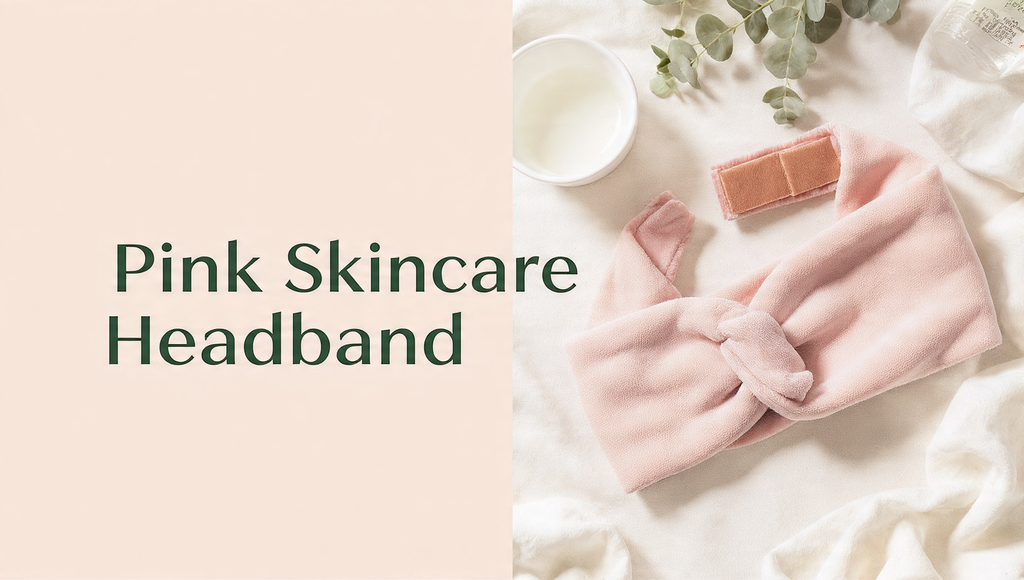
The headband works by creating a physical barrier between your hair and your face. Hair carries natural sebum, styling products, and environmental debris that can transfer to facial skin on contact. A headband prevents this transfer during your skincare routine, particularly when you are applying watery products that would otherwise wick into your hairline and cause product buildup.
The best pink skincare headbands share specific functional features. They have a wide band that covers the entire hairline, use soft absorbent material that will not irritate skin on contact, and include a secure closure system that prevents slipping during application.
Key features to look for:
- A band width of at least 2 inches for full hairline coverage
- Soft microfiber or cotton terrycloth construction
- Adjustable closure with elastic or Velcro
- Machine washable construction
- No added fragrance in the fabric itself
The pink color has one practical benefit: it is easier to spot product residue and stains on lighter-colored fabric, which helps you recognize when the headband needs washing.
skincare headband pink
A skincare headband in pink offers the same functional benefits as any other color, with the added advantage of making product residue and grime more visible. Pink fabric tends to show yellowing from sebum, white streaks from dried cleanser, and brown stains from tinted products more clearly than darker colors. This visibility serves as a useful cue for when cleaning is needed.
The dye used to create the pink color is worth considering if you have reactive skin. Some fabric dyes can cause contact dermatitis in sensitive individuals, particularly when the fabric is damp and pressed against the skin for extended periods. If you have a history of skin reactions to clothing or textiles, look for headbands labeled as using low-impact or azo-free dyes.
According to the National Eczema Association, people with sensitive skin or atopic dermatitis should choose textiles that are soft, breathable, and free of harsh dyes and fragrances. A pink headband made from undyed natural cotton that has been tinted with a gentle mineral dye may be a better choice than one using synthetic colorants.
The real distinction among skincare headbands has nothing to do with color. It comes down to the fiber construction, the closure mechanism, and how the fabric interacts with both hair and skin.
Quick Tip:
- Wash a new pink headband before first use to remove any residual dye or manufacturing chemicals
- Look for colorfast labels to confirm the dye will not bleed onto your skin or towels
- If you notice pink dye transfer during washing or use, discontinue use and select a different product
what is a skincare headband
A skincare headband is a specialized hair containment tool designed specifically for use during facial cleansing and skincare application. It differs from a regular headband in its width, material composition, and absorbency profile. The primary function is keeping hair completely off the face while providing a soft, non-irritating surface against the skin.
Think of a skincare headband like a protective barrier for your hairline. When you wash your face, water and cleanser naturally migrate toward your hairline. Without a barrier, those products soak into your hair, leaving residue that can cause scalp irritation and product buildup. The headband absorbs that migration before it reaches your hair.
A standard fashion headband is typically too narrow, too rigid, or made from materials that slip on wet skin. A proper skincare headband covers the entire hairline from temple to temple, uses absorbent fabric that holds up to moisture, and maintains its position even when wet.
Here is what separates a skincare headband from a regular headband:
| Feature | Skincare Headband | Regular Headband |
|---|---|---|
| Width | 2 to 3 inches minimum | Often under 1 inch |
| Material | Absorbent microfiber or terrycloth | Synthetic, rigid, or decorative |
| Closure | Adjustable with secure fit | Fixed size or weak elastic |
| Moisture handling | Designed for wet conditions | Not designed for water exposure |
| Hair coverage | Full hairline from temple to temple | Partial or decorative only |
The term skincare headband is not regulated by the FDA, so any manufacturer can label a headband as such. Understanding the functional criteria above helps you identify which products genuinely serve a skincare purpose rather than just carrying the label.
skincare headband material guide
Skincare headbands come in four primary materials: microfiber, cotton terrycloth, bamboo viscose, and synthetic blends. Each material has distinct properties that affect absorbency, skin contact comfort, drying time, and durability. The right choice depends on your skin type, routine length, and washing habits.
Microfiber is a synthetic fabric made from finely woven polyester and polyamide fibers. The extremely thin fibers create a dense surface with high absorbency and quick drying time. This makes microfiber the most practical choice for skincare headbands used during wet routines. The material wicks moisture away from the skin and holds it within the fabric rather than letting it drip back onto your face.
Cotton terrycloth features looped fibers that provide excellent absorbency and a soft, familiar feel against the skin. The loops create air pockets that trap water effectively. However, cotton takes longer to dry than microfiber and can become heavy when saturated. For shorter routines, cotton works well. For longer masking sessions, microfiber is more comfortable.
Bamboo viscose offers natural softness and good moisture management. The fibers are smooth and less likely to cause friction against sensitive skin. Bamboo also has natural antimicrobial properties, though these diminish with repeated washing. The trade-off is that bamboo viscose is less durable than microfiber or cotton and may pill more quickly with frequent laundering.
Synthetic blends, typically polyester with spandex or elastane, prioritize stretch and fit over absorbency. These headbands hold their shape well and resist shrinking, but they absorb less moisture and may feel slippery on wet skin.
| Material | Absorbency | Drying Time | Skin Contact | Durability |
|---|---|---|---|---|
| Microfiber | High | Fast | Very soft | High |
| Cotton Terrycloth | High | Slow | Soft | Medium |
| Bamboo Viscose | Medium | Medium | Very soft | Low to Medium |
| Synthetic Blend | Low to Medium | Fast | Smooth but slippery | High |
For most skincare routines, microfiber offers the best balance of performance, comfort, and practicality.
microfiber vs cotton skincare headband
Microfiber outperforms cotton for skincare headbands in absorbency, drying speed, and moisture management, making it the better choice for most routines. Cotton remains a solid option for shorter routines or for people who prefer natural fibers against their skin. The decision comes down to how you use the headband and how often you are willing to wash it.
Microfiber works through capillary action. The ultra-thin synthetic fibers create microscopic channels that pull moisture into the fabric rapidly and distribute it across a larger surface area. This is why microfiber headbands feel dry against the skin even after absorbing significant amounts of water. The same mechanism allows microfiber to dry much faster than cotton after washing.
Cotton terrycloth absorbs through the looped fiber structure, which traps water in the spaces between loops. This creates a plush, cushioned feel that many people find comfortable. However, cotton holds moisture against the skin longer when saturated, which can feel heavy and may contribute to skin occlusion around the hairline during extended wear.
Here is a direct comparison for skincare use:
| Factor | Microfiber | Cotton Terrycloth |
|---|---|---|
| Absorbency speed | Fast | Moderate |
| Moisture retention against skin | Low | High |
| Drying time after use | 2 to 4 hours | 6 to 12 hours |
| Weight when wet | Light | Heavy |
| Skin friction | Very low | Low to moderate |
| Ideal routine length | Any length | Under 15 minutes |
| Washing durability | High | Medium |
According to textile research published in the International Journal of Cosmetic Science, microfiber fabrics demonstrate superior moisture wicking compared to cotton due to their higher surface area to volume ratio. This matters for skincare because a headband that stays damp against your hairline creates an environment where bacteria can proliferate.
how to use a skincare headband
To use a skincare headband correctly, position it at your hairline so it covers your entire forehead hairline from temple to temple, then pull it back over your hair to secure all hair away from your face. The band should sit low enough to cover baby hairs along the hairline but not so low that it covers your eyebrows or interferes with product application on the forehead.
Start with dry or slightly damp hair. If your hair is wet, towel-dry it first so the headband does not become saturated before your routine begins. Pull all hair back with your hands, smoothing the hair away from your face. Place the headband at the center of your forehead hairline and push it back over your head until it sits securely.
The headband should feel snug but not tight. A band that is too tight can cause mechanical irritation along the hairline and may leave temporary indentations in the skin. A band that is too loose will slide forward during cleansing, defeating the purpose entirely.
To position correctly:
- Brush or comb hair completely back from the face
- Hold the headband with both hands at the temples
- Position the front edge at your natural hairline
- Push the band back over the top of your head
- Adjust so it covers all baby hairs along the hairline
- Check that your forehead is fully exposed
- Smooth any hair that escapes back under the band
During your routine, if the headband slips, take a moment to reposition it rather than letting it slide forward. A slipped headband will interfere with product application and may drag hair products onto your freshly cleansed skin.
when to wear a skincare headband
Wear a skincare headband during any skincare step that involves water, cleansing, masking, or applying products near your hairline. The most important times are during face washing, masking, and applying leave-on treatments like serums and moisturizers that could wick into your hair if contact occurs.
You do not need to wear a skincare headband for every single step. Applying eye cream with a clean fingertip does not require hair containment. Applying a face mask, washing your face, or using a toner with a cotton pad all benefit from the barrier a headband provides. The general rule is that any step involving water, spreadable products, or extended waiting time warrants headband use.
The timing also depends on your hair type and styling status. If you have already styled your hair for the day, wearing a headband during a midday cleanse prevents water and cleanser from ruining your style. If you are doing your evening routine before bed, the headband protects your hair from leave-on products that could transfer to your pillowcase and then to your facial skin while you sleep.
Routine step guide:
| Routine Step | Headband Needed | Reason |
|---|---|---|
| Oil cleanser | Yes | Spreadable product reaches hairline |
| Foaming cleanser | Yes | Water and cleanser migration |
| Toner | Yes | Liquid wicks into hair |
| Serum | Yes | Product can transfer at hairline |
| Moisturizer | Yes | Occlusive products smear easily |
| Eye cream | No | Small application area |
| Spot treatment | No | Precise application |
| SPF | Yes | Needs even distribution |
Key Takeaway: A pink skincare headband is not a decorative accessory but a functional barrier that prevents hair oil and product transfer onto facial skin. Microfiber outperforms cotton for absorbency and drying speed, making it the better default choice for most skincare routines.
skincare headband for washing face
A skincare headband for washing face needs to withstand direct water exposure, hold its position on wet skin, and absorb the water and cleanser that migrate toward your hairline during cleansing. Microfiber and cotton terrycloth both perform well for this purpose, but microfiber holds an edge for its faster drying and lighter wet weight.
When you wash your face, water tends to travel along the contours of your face toward your hairline. Without a barrier, this water soaks into your hair, carrying cleanser with it. The result is hair that feels sticky or heavy after washing and a hairline that never truly gets clean. A headband placed correctly intercepts this migration before it reaches your hair.
The fit matters most during face washing because your skin becomes slippery. A headband with an adjustable closure and some grip on the interior surface will stay in place better than a simple elastic band. Look for headbands with a silicone strip or textured interior that provides traction against wet skin.
For face washing specifically:
- Choose a headband you do not mind getting thoroughly wet
- Position it before you wet your face
- Rinse the headband after each use and hang it to dry
- Avoid headbands with decorative elements that can hold water
- Select a width that covers your entire hairline without gaps
People with bangs benefit most from a headband during face washing. Bangs hang directly in the cleansing zone and will inevitably become wet and product-laden without a barrier. A wide headband that can hold bangs back completely solves this common frustration.
skincare headband for acne-prone skin
A skincare headband supports acne-prone skin by preventing hair oils and styling products from mixing with your cleanser and skincare products at the hairline. This matters because hairline acne is a specific and common pattern of breakouts caused by product transfer and oil accumulation along the forehead and temples.
According to the American Academy of Dermatology, acne that concentrates around the hairline is often caused by hair products including pomades, gels, and leave-in conditioners. These products can clog pores when they come into contact with facial skin. A clean headband creates a barrier that prevents this contact during your routine.
The headband itself can also contribute to acne if it is not washed frequently. A dirty headband accumulates sebum, dead skin cells, and skincare product residue. When you place that dirty band against your skin, you are reintroducing those pore-clogging substances to a freshly cleansed surface. This is why hygiene is non-negotiable for acne-prone skin.
For acne-prone skin specifically:
- Choose a microfiber headband that dries quickly, reducing bacterial growth opportunity
- Wash your headband after every 2 to 3 uses
- Use a fragrance-free laundry detergent
- Avoid fabric softener, which leaves a residue that can clog pores
- Replace your headband every 3 to 4 months if used daily
The bacterium Cutibacterium acnes, which plays a central role in acne development, thrives in warm, moist environments. A damp headband stored in a bathroom provides exactly these conditions. Drying your headband completely between uses is a simple but effective step for managing acne-prone skin.
hygiene and washing frequency for skincare headbands
Wash your skincare headband after every 2 to 3 uses, or more frequently if you have acne-prone skin, active breakouts, or use heavy hair products. This frequency prevents the accumulation of sebum, dead skin cells, product residue, and bacteria that can transfer back to your skin during subsequent uses.
A skincare headband functions like any other personal care textile. It comes into direct contact with your skin, absorbs moisture, and collects whatever is on your face and hair. Unlike a washcloth, which many people use once and launder, a headband is often used repeatedly without washing because it does not look dirty. However, invisible residue accumulates quickly.
The American Academy of Dermatology recommends using clean towels and cloths on your face to reduce the risk of introducing bacteria to the skin. A skincare headband falls into this same category. The fact that it does not look soiled does not mean it is clean.
Here is a washing frequency guide based on your skin type and routine:
| Skin Type | Washing Frequency | Reason |
|---|---|---|
| Acne-prone | Every 1 to 2 uses | Prevent bacterial reintroduction |
| Sensitive skin | Every 2 to 3 uses | Reduce irritant residue buildup |
| Normal skin | Every 3 to 4 uses | Standard hygiene maintenance |
| Eczema-prone | Every 1 to 2 uses | Minimize contact irritant exposure |
| Heavy hair product use | Every use | Remove styling product transfer |
Washing more frequently is always acceptable. Washing less frequently than these guidelines increases the risk of skin irritation or breakouts, particularly around the hairline where the headband makes closest contact.
Key Takeaway: A skincare headband prevents hair product transfer to facial skin during your routine, but it only works as intended if you position it correctly and keep it clean. For acne-prone skin, washing every 1 to 2 uses is the standard you should aim for.
how to clean a skincare headband
To clean a skincare headband, machine wash it in warm water with a gentle, fragrance-free laundry detergent, then air dry it completely before the next use. Avoid fabric softener entirely, as the softening agents leave a residue on the fabric that can transfer to your skin and clog pores.
The washing process matters as much as the frequency. Standard laundry detergents with strong fragrances or optical brighteners can leave residues that irritate sensitive skin when the headband is pressed against your face. Choose a detergent formulated for sensitive skin or a free and clear option without added fragrance or dyes.
Fabric softener is particularly problematic for skincare headbands. The quaternary ammonium compounds in fabric softeners coat fabric fibers to make them feel soft, but this coating can transfer to your skin on contact. For acne-prone or sensitive skin, this residue can contribute to clogged pores and irritation along the hairline.
To clean properly:
- Machine wash in warm water, not hot
- Use a fragrance-free, dye-free laundry detergent
- Do not add fabric softener
- Do not add dryer sheets
- Air dry hanging or laid flat
- Ensure complete dryness before storing or using
If you prefer hand washing, use lukewarm water and a small amount of gentle detergent. Rinse thoroughly until the water runs clear. Gently squeeze out excess water without wringing, which can damage the elastic or distort the shape.
skincare headband fit and adjustability
A proper skincare headband fit means the band stays securely in place throughout your entire routine without sliding forward or requiring constant readjustment. The fit depends on three factors: the closure mechanism, the band width, and the presence of any grip-enhancing interior features.
Most quality skincare headbands use either an adjustable Velcro closure or a continuous elastic band. Velcro offers the advantage of precise size adjustment, accommodating different head circumferences and hair volumes. The downside is that Velcro can catch on hair if not carefully positioned. Elastic bands offer simplicity but provide less adjustability and may stretch out over time.
The band width matters for stability. A wider band distributes pressure more evenly across your head, reducing the chance of slipping. Narrow bands concentrate pressure at a single point, which can cause discomfort and create gaps where hair escapes. For most adults, a band width between 2 and 3 inches provides the best combination of coverage and stability.
Fit considerations:
- Head circumference varies significantly between individuals
- Thick or curly hair requires more room than fine hair
- A band that fits when dry may fit differently when wet
- Velcro closures allow adjustment as your hair volume changes
- Interior silicone strips improve grip on wet skin
A headband that is too tight can cause mechanical irritation along the hairline, particularly for people with reactive skin. A headband that is too loose defeats its purpose. Test the fit before your routine begins, and adjust as needed.
skincare headband for thick hair
A skincare headband for thick hair needs a wider band, a stronger closure, and more internal volume to accommodate the increased hair mass. Standard headbands designed for fine or medium hair often slip off thick hair because they cannot contain the volume and do not have enough tension to hold their position.
Thick hair creates specific challenges for headband use. The hair has more volume, which pushes the headband forward. The hair strands are often coarser, which means they do not compress as easily under a band. The weight of thick hair, especially when wet, pulls the headband backward or causes it to slide. All of these factors require a headband designed with extra capacity.
For thick hair, look for a headband with an adjustable closure that provides significant length adjustment. Velcro closures work better than fixed elastic because they allow you to customize the fit to your specific hair volume on any given day. A double-layer construction with an elastic interior and a fabric exterior provides both stretch and structure.
What works for thick hair:
- Band width of 3 inches or more
- Adjustable Velcro closure with extended range
- Strong elastic that resists stretching out
- Deep pocket design that can contain hair volume
- Textured interior that grips hair rather than sliding
People with curly or coily hair benefit from the same features. The curl pattern creates additional volume and texture that requires more containment capacity than a standard headband provides.
skincare headband for sensitive skin
A skincare headband for sensitive skin should be made from soft microfiber or bamboo viscose, free of added fragrances and harsh dyes, and washed in gentle detergent before first use. The goal is minimizing contact irritation while still providing effective hair containment during your routine.
Sensitive skin reacts to mechanical friction, chemical irritants, and occlusive pressure more readily than normal skin. A headband that feels comfortable on someone with resilient skin may cause redness, itching, or burning along the hairline for someone with sensitive skin. The material choice and fabric finishing become critical.
According to the National Eczema Association, people with sensitive skin should select textiles made from soft, breathable fibers with minimal chemical processing. Bamboo viscose and high-quality microfiber both offer very low surface friction, reducing the mechanical irritation that can trigger reactivity along the hairline.
For sensitive skin:
- Choose microfiber or bamboo viscose over coarse cotton
- Look for headbands labeled fragrance-free and dye-free
- Wash before first use to remove manufacturing residues
- Use only gentle, unscented laundry detergent
- Avoid headbands with exposed seams or rough stitching
- Replace any headband that causes persistent redness or itching
If you experience a reaction to a headband, discontinue use and note the material, dye, and detergent used. A reaction may stem from the fabric itself, the dye, or a laundry product rather than the headband design.
Key Takeaway: The hygiene and fit of your headband matter as much as the material. Wash every 2 to 3 uses for normal skin, every 1 to 2 uses for acne-prone or sensitive skin, and always air dry completely to prevent bacterial growth that can transfer to your skin.
best skincare headband features
The best skincare headbands combine a wide absorbent band, an adjustable closure, soft skin-contact material, and quick-drying construction. These four features determine whether a headband performs reliably during your routine or becomes a frustrating accessory that slips and irritates.
Absorbency is the core functional requirement. A headband that cannot absorb water and product migration simply redirects the moisture rather than containing it. Microfiber delivers the highest absorbency per gram of fabric, making it the preferred material for performance-focused headbands. Cotton terrycloth offers good absorbency but holds water longer.
Adjustability ensures the headband fits your specific head size and hair volume. Fixed-size headbands work for some people but fail for others. An adjustable closure, whether Velcro or a tie design, provides the flexibility needed for consistent performance across different hair states and styles.
The skin-contact surface matters for comfort and irritation prevention. Look for headbands with a smooth, soft interior surface. Exposed seams, rough stitching, or abrasive trim can cause mechanical irritation along the hairline, particularly during extended wear.
| Feature | Why It Matters | What to Look For |
|---|---|---|
| Width | Full hairline coverage | 2 to 3 inches minimum |
| Material | Absorbency and skin comfort | Microfiber or soft cotton |
| Closure | Secure fit | Adjustable Velcro or tie |
| Drying speed | Prevents bacterial growth | Quick-dry microfiber |
| Seam quality | Prevents mechanical irritation | Flat seams or seamless design |
| Dye quality | Reduces chemical irritation | Low-impact or azo-free dyes |
A headband that meets all of these criteria will serve you well regardless of brand or price point. The features themselves matter more than the label.
skincare headband drying and storage
Dry your skincare headband completely between uses and store it in a clean, dry location away from the humid bathroom environment. Proper drying prevents bacterial and fungal growth that can transfer to your skin during the next use. A damp headband stored in a bathroom is a breeding ground for microorganisms.
The drying time depends on the material. Microfiber dries in 2 to 4 hours in normal room conditions. Cotton terrycloth takes 6 to 12 hours. Bamboo viscose falls somewhere in between. If your headband is still damp when you need it for your next routine, rotate between two headbands to allow proper drying.
Storage location matters. Bathrooms are humid environments, particularly after showers. Storing a headband on a hook next to the shower exposes it to constant moisture. A better option is storing it on a hook outside the bathroom or in a drawer in a bedroom, where air circulation is better and humidity is lower.
Drying and storage tips:
- Hang the headband or lay it flat after each use
- Do not store in a closed container while damp
- Keep at least two headbands to allow rotation
- Store away from direct steam and shower spray
- Replace headbands that develop a persistent odor despite washing
A headband that smells musty or sour even after washing has likely developed microbial colonization within the fabric. The American Academy of Dermatology advises against using textiles that retain odor after laundering, as this indicates bacterial growth that can cause skin irritation or infection.
Key Takeaway: Drying your headband completely and storing it outside the humid bathroom prevents the bacterial growth that can cause breakouts and irritation along your hairline. This simple habit extends the safe lifespan of your headband and protects your skin.
Frequently Asked Questions About Pink Skincare Headbands
How often should I wash my pink skincare headband?
Wash your pink skincare headband after every 2 to 3 uses for normal skin.
For acne-prone or sensitive skin, wash after every 1 to 2 uses.
Use fragrance-free detergent and air dry completely.
Can a skincare headband cause acne?
Yes, a dirty skincare headband can cause acne by transferring accumulated sebum, dead skin cells, and bacteria back to your skin.
Washing every 2 to 3 uses prevents this transfer.
Clean headbands do not cause acne and actually help prevent hairline breakouts.
What material is best for a skincare headband?
Microfiber is the best material for a skincare headband due to its high absorbency, fast drying time, and low skin friction.
Cotton terrycloth works well for shorter routines under 15 minutes.
Bamboo viscose offers good softness for sensitive skin but is less durable.
How do I keep my skincare headband from slipping?
Choose a headband with an adjustable closure and a band width of at least 2 to 3 inches.
Position it fully at your hairline before wetting your face.
Look for interior silicone strips or textured fabric that grip wet skin.
Can I use a regular headband for skincare?
A regular headband usually does not work well for skincare because it is too narrow, not absorbent enough, and slips on wet skin.
Skincare headbands have specific widths, materials, and closures designed for wet conditions.
Using a regular headband may work in a pinch but will not provide reliable hair containment.
Should I use a different headband for morning and evening routines?
Using two headbands in rotation is ideal because it allows each one to dry completely between uses.
This is especially important if your evening routine involves heavy products or you wash your face twice daily.
A dry headband prevents bacterial growth that can transfer to your skin.
Closing
A pink skincare headband earns its place in your routine when you select it for function rather than appearance. The material, fit, and hygiene practices determine whether it helps your skin or becomes a hidden source of irritation. Microfiber with an adjustable closure is your best default choice.
Start by evaluating your current headband against the criteria in this article. Does it cover your full hairline? Does it stay in place when wet? When did you last wash it? If you cannot answer that last question confidently, wash it today and set a reminder to do so every 2 to 3 uses.
Your skincare routine deserves tools that work as hard as your products do. A clean, well-fitted headband is a small investment that protects the skin you are working so carefully to maintain. Choose wisely, wash regularly, and your hairline will thank you.