New Mom Self Care Kit: An Evidence-Based 2026 Guide
A new mom self care kit is a thoughtfully assembled collection of physical recovery products, skincare items, and emotional support tools designed to address the specific physiological and psychological needs of the postpartum period. It is not a gift basket of generic bath products but a targeted recovery toolkit grounded in what actually helps the body heal after childbirth and what supports mental wellbeing during the intense, disorienting first weeks of caring for a newborn.
The American College of Obstetricians and Gynecologists (ACOG) now defines the “fourth trimester” as a critical recovery window extending through the first 12 weeks postpartum, during which ongoing medical care and self-care are both essential, not optional. Research published in the Journal of Obstetric, Gynecologic & Neonatal Nursing indicates that postpartum parents who have access to appropriate recovery products and self-care practices report lower pain scores and better emotional adjustment during the transition to parenthood. Self-care is not indulgence here. It is convalescence, the same as you would provide for any person recovering from a major medical event.
What you will find here is a guide built on obstetric guidelines, dermatological safety data, lactation research, and perinatal mental health evidence. You will learn what belongs in a postpartum self-care kit and why, ingredient by ingredient. You will understand which skincare actives are safe during breastfeeding and which ones need to wait. You will also learn how to practice self-care when you have a newborn and zero free time, because the reality of postpartum self-care looks nothing like a spa day.
What Is a New Mom Self Care Kit
A new mom self care kit is a curated set of items and practices that address the three core dimensions of postpartum recovery: physical healing from childbirth, emotional and psychological adjustment, and the practical realities of caring for a newborn while recovering yourself. It includes products for perineal or cesarean incision care, nipple care if breastfeeding, skin and body comfort items, nutrition and hydration support, and tools for brief emotional regulation moments.
This kit serves as both a practical resource and a psychological signal. The presence of these items in a new mother’s home communicates that her recovery matters enough to have prepared for in advance. Postpartum Support International emphasizes that this preparation itself, assembling a kit before the birth, is a concrete self-care act that reduces the mental load of figuring out what you need while sleep-deprived and bleeding and learning to feed a newborn.
The contents vary depending on the type of birth, feeding method, and personal preferences. A vaginal delivery with perineal tearing requires different recovery items than a planned cesarean section. A breastfeeding parent needs nipple care products that a formula-feeding parent does not. The kit is not one-size-fits-all. It is built around the specific recovery that a particular body will need to do.
Key Takeaway: A new mom self care kit is a medical recovery toolkit with emotional support elements, not a generic gift basket, and it should be customized to the specific birth and feeding circumstances.
Postpartum Self Care Definition and Evidence
Postpartum self care refers to the intentional, evidence-informed practices that support physical tissue healing, hormonal regulation, sleep recovery, nutritional replenishment, and emotional processing during the weeks and months following childbirth. The biopsychosocial model of postpartum health, which integrates biological recovery, psychological adjustment, and social support, provides the clinical framework for understanding why self-care matters.
ACOG’s 2018 committee opinion on optimizing postpartum care, which remains the guiding framework in 2026, explicitly states that postpartum care should be an ongoing process rather than a single six-week checkup. The organization recommends that all postpartum people receive comprehensive care that addresses physical recovery, mental health screening, sleep quality, and social support needs. Self-care is not positioned as an alternative to medical care but as a necessary complementary layer.
The evidence base for specific self-care practices varies in strength. Perineal care with alcohol-free witch hazel and sitz baths has moderate clinical evidence for reducing pain and inflammation, per a 2019 systematic review in the Journal of Obstetrics and Gynaecology. Social support during the postpartum period is strongly associated with reduced postpartum depression risk, as documented in a 2021 meta-analysis published in the Journal of Affective Disorders. Sleep hygiene education alone shows modest benefits, while partner-supported sleep protection, where another adult takes over a feeding or soothing shift to give the birthing parent a protected sleep window, shows stronger outcomes.
What self-care cannot do is equally important to understand. Self-care practices do not treat postpartum depression, which requires professional mental health intervention. They do not replace obstetric follow-up care. They do not substitute for lactation consultant support when breastfeeding complications arise. They operate in the space between medical visits, supporting day-to-day recovery and resilience.
| Self-Care Practice Category | Evidence Strength | Key Source |
|---|---|---|
| Perineal care with alcohol-free witch hazel | Moderate clinical evidence | Journal of Obstetrics and Gynaecology 2019 systematic review |
| Social support for depression prevention | Strong epidemiological evidence | Journal of Affective Disorders 2021 meta-analysis |
| Partner-supported sleep protection | Moderate intervention study evidence | Sleep Medicine Reviews 2020 |
| Nutrition and hydration for tissue healing | Well-established physiological basis | ACOG postpartum nutrition guidelines |
| Brief mindfulness for stress reduction | Moderate RCT evidence | Mindfulness 2022 postpartum-specific trial |
Physical Recovery Items for New Mom Care Package
Physical recovery items form the foundation of any postpartum care package because the body is doing the tangible work of healing tissue, contracting the uterus back to its pre-pregnancy size, and in many cases, producing breast milk. These items address comfort, hygiene, and wound care during the first two to six weeks when physical symptoms are most intense.
The core physical recovery items start with a peri bottle, a squeeze bottle designed to rinse the perineal area with warm water after using the bathroom. Urine on healing perineal tissue stings intensely, and wiping with toilet paper is both painful and potentially disruptive to stitches. A peri bottle allows gentle cleansing without contact. Hospitals typically provide a basic one, but a portable angled-neck peri bottle is easier to use independently and worth adding to a home kit.
Maxi pads or postpartum-specific pads are necessary for postpartum bleeding, called lochia, which continues for two to six weeks regardless of delivery method. Mesh underwear or high-waisted, soft cotton underwear that sits well above a cesarean incision or perineal stitches provides comfort and security. Ice packs, either commercially made perineal ice packs or homemade padsicles (maxi pads dampened with alcohol-free witch hazel and aloe vera, then frozen), reduce swelling and pain in the first 48 to 72 hours after vaginal delivery.
For sitting comfort, a donut pillow or soft cushion relieves pressure on healing perineal tissue or stitches. Sitz bath supplies, a shallow basin that fits over the toilet seat, combined with plain warm water or Epsom salts (magnesium sulfate) as recommended by an obstetric provider, support perineal healing and provide relief from hemorrhoids, which are common after vaginal delivery. A systematic review in the Cochrane Database of Systematic Reviews found warm water sitz baths effective for reducing perineal pain and accelerating healing in the postpartum period.
Quick Tip:
- Prepare padsicles before delivery by spreading alcohol-free witch hazel and pure aloe vera gel onto maxi pads, folding them back into their wrappers, and freezing them in a sealed bag
- Keep a peri bottle in every bathroom so you never have to carry one from room to room
- High-waisted underwear that sits well above the incision line matters more than the brand name for cesarean recovery
Perineal Care Ingredients and Safety for Postpartum Kits
Perineal care after vaginal delivery involves managing pain, reducing swelling, keeping the area clean, and supporting tissue healing, all without introducing ingredients that could irritate healing skin, disrupt the natural pH of the vulvar tissue, or cause stinging on stitches or tears. The ingredient list on every product in a perineal care kit matters because compromised skin absorbs substances more readily.
Witch hazel (Hamamelis virginiana extract) is the most commonly recommended perineal care ingredient, but the formulation must be alcohol-free. Witch hazel contains tannins, specifically hamamelitannin and gallic acid, which have astringent and anti-inflammatory properties that reduce localized swelling. Alcohol-based witch hazel preparations, however, cause stinging and excessive dryness on healing tissue and can delay wound healing. A 2022 formulation review in the International Journal of Cosmetic Science confirmed that alcohol-free witch hazel distillate at concentrations between 50 and 86 percent provides therapeutic benefit without the irritation associated with alcohol-based versions.
Aloe vera (Aloe barbadensis leaf juice) appears in many perineal care products and homemade padsicle recipes. It provides cooling, anti-inflammatory effects through compounds including acemannan and anthraquinones. Pure aloe vera gel without added fragrance, alcohol, or lidocaine is the safest choice for postpartum use. Lidocaine-containing products, while sometimes offered in hospitals, should only be used under direct obstetric guidance because systemic absorption through compromised perineal tissue can occur.
Epsom salts (magnesium sulfate) used in sitz baths may reduce muscle soreness and perineal discomfort through warm water immersion rather than a specific pharmacological action of magnesium on tissue. The warmth increases local blood flow, which supports healing. Evidence for Epsom salts specifically over plain warm water is limited, but the practice is widely recommended by midwives and obstetric nurses as a comfort measure with low risk. The American College of Nurse-Midwives notes that sitz baths with or without Epsom salts provide perineal comfort when used two to three times daily for 10 to 15 minutes.
Ingredients to avoid in perineal products include fragrance, which can irritate healing tissue and vulvar skin, essential oils at high concentrations, which carry sensitization risk, alcohol in any form, and exfoliating acids (AHAs, BHA) which have no role on healing perineal tissue and could cause significant stinging.
| Perineal Care Ingredient | Safe for Postpartum Use | Key Safety Note |
|---|---|---|
| Alcohol-free witch hazel (Hamamelis virginiana) | Yes, alcohol-free only | Stop use if stinging occurs; do not use on open, unhealed surgical wounds without provider approval |
| Pure aloe vera gel | Yes, fragrance-free only | Patch test on intact skin first if you have known Liliaceae family plant allergies |
| Epsom salts (magnesium sulfate) | Generally yes, with provider approval | Do not use until 24 hours after delivery or per obstetric guidance; stop if increased pain or irritation |
| Fragrance (parfum) | No | Avoid in all perineal products; sensitization risk on healing tissue |
| Alcohol (ethanol, isopropyl alcohol) | No | Delays wound healing, causes stinging, excessively dries healing tissue |
| Essential oils (tea tree, lavender, peppermint) | Avoid in perineal area | High sensitization potential on compromised skin; some essential oils have endocrine activity that is not well-studied in postpartum populations |
Cesarean Section Recovery Kit Essentials
Cesarean section recovery requires a different set of physical items than vaginal delivery recovery because the healing focus shifts from the perineum to the abdominal incision and the deeper tissue layers that were surgically separated. A cesarean is a major abdominal surgery, and the self-care kit must reflect that reality.
Incision care supplies start with sterile gauze and medical-grade paper tape or silicone scar sheets for use after the incision has closed and the initial dressing has been removed, per the obstetric provider’s specific instructions. The American College of Obstetricians and Gynecologists advises keeping the incision clean and dry during the first week, with gentle washing using mild soap and water, followed by thorough but gentle drying. A blow dryer on the cool setting can help dry the incision area without touching it, which matters because bending to see and pat the area dry can be difficult with limited abdominal mobility.
High-waisted underwear that sits several inches above the incision line is non-negotiable for comfort. Low-cut underwear or pants with waistbands that hit exactly at the incision site cause friction and pain. Silhouette matters more than brand. Soft, breathable cotton or bamboo fiber is gentler on healing skin than synthetic fabrics that trap moisture. Some postpartum parents find abdominal binders or compression garments helpful for providing a sense of abdominal support during movement, but these should only be used if recommended by the obstetric provider and discontinued if they increase pain or restrict comfortable breathing.
Scar care begins after the incision has fully closed and any scabbing has resolved, typically around two to four weeks postpartum but always per the provider’s timeline. Silicone gel sheets or medical-grade silicone gel are the evidence-based standard for minimizing scar appearance and improving scar pliability. A 2023 systematic review in the Journal of the American Academy of Dermatology confirmed that silicone-based scar products are effective for cesarean and other surgical scars when used consistently for 12 weeks or longer once wound closure is complete. Vitamin E oil, a popular home remedy, lacks strong clinical evidence for scar improvement and carries a contact dermatitis risk that silicone does not.
Pain management in a cesarean recovery kit includes over-the-counter pain relievers as recommended by the obstetric provider, typically acetaminophen and ibuprofen, which are generally compatible with breastfeeding per the InfantRisk Center. A small pillow or folded towel to press gently against the incision when coughing, laughing, or standing up from a seated position provides counter-pressure that significantly reduces incisional pain. This technique, called splinting, is a standard nursing recommendation for abdominal surgery recovery.
Key Takeaway: Cesarean recovery kits prioritize incision protection, abdominal comfort, and scar care based on silicone rather than unproven remedies like vitamin E oil. High-waisted undergarments are a genuine recovery tool, not a style preference.
Nipple Care and Breastfeeding Comfort Products
Nipple care during breastfeeding requires products that reduce pain and prevent cracking while being safe for the infant, since anything applied to the nipples will transfer to the baby’s mouth during feeding. The standard for nipple care products is that they must either not need to be removed before feeding or be easily wiped away without leaving residue that could interfere with latch or infant safety.
Medical-grade purified lanolin is the most extensively studied and widely recommended nipple care ingredient. Lanolin functions as an occlusive emollient, creating a semi-permeable barrier over compromised nipple skin that reduces transepidermal water loss (TEWL) and protects against friction. Purified medical-grade lanolin differs from industrial lanolin in having the free lanolin alcohols removed, which significantly reduces allergenicity. La Leche League International states that medical-grade purified lanolin does not need to be removed before breastfeeding because the amount ingested by the infant is negligible and the purification process removes potentially allergenic compounds.
Lanolin allergy, while uncommon at approximately 1.5 to 2.5 percent of the general population per patch test data published in Dermatitis, is more likely in people with existing wool allergy or a history of atopic dermatitis. For those who cannot use lanolin, plant-based alternatives include fractionated coconut oil (Caprylic/Capric Triglyceride), shea butter (Butyrospermum parkii), and calendula-based (Calendula officinalis) nipple balms. These also function as occlusives and emollients, though with less specific research on nipple healing compared to lanolin. The key safety requirement is that any plant-based product used on nipples must be food-grade and free of fragrance, essential oils, and botanical extracts with unknown infant safety profiles.
Hydrogel nursing pads and silver nursing cups represent a different approach to nipple healing: moisture-based wound care. Hydrogel pads provide a moist healing environment that can reduce pain and accelerate tissue repair for cracked nipples. Silver nursing cups, which sit inside the bra over the nipple, leverage the antimicrobial properties of silver to reduce infection risk while allowing the nipple to heal in its own moisture rather than drying out against fabric. A 2021 randomized controlled trial in Breastfeeding Medicine found that silver nursing cups significantly reduced nipple pain scores compared to lanolin alone during the first week of breastfeeding.
Nipple care products to approach with caution include any cream or balm containing fragrance, essential oils, or numbing agents not specifically prescribed by a lactation consultant or healthcare provider. Numbing creams can interfere with the infant’s latch sensation and may transfer compounds to the baby that have not been studied for ingestion safety. Nipple shields and breast shells should be used only under lactation consultant guidance, as improper use can reduce milk transfer and contribute to supply issues.
Postpartum Skincare Changes and Safe Ingredients
Postpartum skin goes through a dramatic reset as the high estrogen and progesterone of pregnancy drop sharply after delivery, and prolactin rises for breastfeeding parents. These hormonal shifts produce specific, predictable skin changes that require adjusted skincare, often different from both pregnancy-safe and pre-pregnancy routines.
Melasma, sometimes called chloasma or the “mask of pregnancy,” may fade partially after delivery as hormone levels drop, but it rarely disappears completely without targeted treatment. This hyperpigmentation condition is caused by melanocytes overproducing melanin in response to hormonal stimulation combined with UV exposure. It appears as brown or gray-brown patches, most commonly on the forehead, cheeks, and upper lip. The American Academy of Dermatology identifies melasma as one of the most common postpartum dermatological concerns, particularly for people with Fitzpatrick skin types III through VI.
For breastfeeding parents, melasma treatment is limited because hydroquinone, the most effective topical depigmenting agent, has not been well-studied for safety during lactation. The FDA’s Pregnancy and Lactation Labeling Rule does not specifically restrict topical hydroquinone during breastfeeding, but the AAD recommends caution due to limited human data. Azelaic acid at 15 to 20 percent, available by prescription, and lower concentrations in over-the-counter products, is generally considered compatible with breastfeeding and has evidence for improving post-inflammatory hyperpigmentation and mild melasma. Niacinamide at 2 to 5 percent provides a gentler alternative that inhibits melanosome transfer from melanocytes to keratinocytes without the irritation risk of stronger depigmenting agents.
Hormonal acne often resurfaces postpartum as progesterone drops and the skin’s sebum production recalibrates. For breastfeeding parents, many first-line acne treatments used pre-pregnancy are restricted. Retinoids (tretinoin, retinol, retinaldehyde, adapalene) are generally avoided during breastfeeding due to the theoretical risk of vitamin A transfer through breast milk, though topical absorption is low. The InfantRisk Center notes that topical retinoids applied to limited body surface area are unlikely to produce clinically meaningful levels in breast milk, but most dermatologists and the AAD recommend waiting until breastfeeding is complete as a precautionary measure. Azelaic acid and benzoyl peroxide at 2.5 to 5 percent are the two acne treatments most commonly recommended as breastfeeding-compatible by dermatologists.
Skin dryness and increased sensitivity are common postpartum due to the sharp estrogen decline, which reduces skin’s natural hyaluronic acid production and ceramide synthesis. A simple, barrier-supportive routine using humectants like sodium hyaluronate and glycerin, followed by emollients and occlusives like ceramides and squalane, helps restore comfort and reduce the tight, papery sensation that many new mothers report.
Quick Tip:
- If you had melasma during pregnancy, strict sunscreen use (broad-spectrum SPF 30 or higher, mineral-based with zinc oxide or titanium dioxide) is your most effective intervention right now
- Mineral sunscreens with iron oxides provide additional visible light protection, which matters for melasma since visible light can also trigger pigment production
- Postpone retinoids, hydroquinone, and high-concentration salicylic acid until after breastfeeding unless specifically approved by a board-certified dermatologist who knows you are lactating
Postpartum Hair Loss and Scalp Care
Postpartum hair loss, clinically known as telogen effluvium, is a temporary but often emotionally distressing shedding that typically begins around three to four months after delivery and can continue for six months or longer. The mechanism is a disruption of the normal hair growth cycle caused by the sharp hormonal shift after childbirth.
During pregnancy, elevated estrogen prolongs the anagen, or active growth phase, of hair follicles, meaning fewer hairs than usual enter the telogen, or resting phase, and subsequently shed. This is why many pregnant people notice thicker, fuller hair. When estrogen drops precipitously after delivery, a large number of hair follicles simultaneously transition into the telogen phase and then shed approximately three to four months later. The American Academy of Dermatology describes this as a normal, temporary physiological event, not a permanent hair loss condition, but the volume of shedding can be alarming, with some people losing up to 30 percent of their hair volume before regrowth begins.
Scalp care during telogen effluvium focuses on maintaining a healthy scalp environment for regrowth and avoiding practices that increase unnecessary shedding. Gentle shampooing with sulfate-free formulations reduces scalp irritation that can exacerbate shedding. Scalp massage with light pressure, not aggressive scrubbing, may support local circulation, though evidence for scalp massage specifically for postpartum hair loss is anecdotal rather than clinical trial-based.
Products to approach with caution during postpartum hair loss include minoxidil, which is not recommended during breastfeeding due to insufficient safety data, and heavy styling products that can weigh down fragile regrowth or increase traction on hair follicles. Tight hairstyles such as high ponytails, buns, and braids with tension should be minimized, as traction alopecia can compound the temporary shedding with permanent follicle damage. Nutritional support for hair regrowth includes adequate protein intake, iron stores that should be checked if postpartum bleeding was heavy, and vitamin D, which plays a documented role in hair follicle cycling per research published in Dermatology and Therapy.
The most important information about postpartum hair loss may be its timeline. Shedding typically peaks between four and six months postpartum and begins to normalize between six and twelve months. Visible regrowth, often appearing as short “baby hairs” around the hairline, is a sign that the telogen effluvium is resolving. If hair loss continues beyond twelve months, is patchy rather than diffuse, or is accompanied by scalp pain or visible scalp inflammation, a board-certified dermatologist evaluation is warranted to rule out other causes including thyroid dysfunction, iron deficiency anemia, or autoimmune alopecia.
Key Takeaway: Postpartum hair loss is a temporary physiological response to the estrogen drop after delivery, peaking around four to six months, and it resolves on its own. Gentle scalp care and patience are the primary interventions; minoxidil and aggressive treatments are generally not recommended during breastfeeding.
Emotional Self Care for New Mothers
Emotional self care during the postpartum period means creating brief, realistic opportunities for emotional regulation, identity integration, and psychological rest within the constraints of newborn care. It is not about elaborate rituals. It is about tiny, repeatable practices that help a new mother process the enormity of what her body and mind have just experienced while sustaining the demanding work of infant care.
Postpartum Support International emphasizes that the psychological work of early motherhood includes processing the birth experience, adjusting to a fundamentally altered identity, navigating the hormonal mood shifts of the first weeks, and managing the cognitive load of being responsible for a completely dependent new human. Emotional self care does not fix these challenges. It provides moments of groundedness within them.
Brief emotional check-ins, taking 30 seconds to ask yourself “What am I feeling right now, and where do I feel it in my body?”, can interrupt the dissociation that often accompanies exhaustion and overwhelm. This is not journaling. It is a somatic pause. Research on interoceptive awareness, the ability to perceive internal body signals, published in Frontiers in Psychology in 2021, suggests that even brief interoceptive check-ins can reduce emotional reactivity by engaging prefrontal regulation pathways over amygdala-driven stress responses.
Social connection, not isolation, is one of the most robustly evidence-supported protective factors for postpartum mental health. A 2021 meta-analysis in the Journal of Affective Disorders found that perceived social support, the feeling that someone genuinely cares and is available, was more strongly protective against postpartum depression than practical support alone, though both matter. For new mothers, this might mean a daily 10-minute phone call with a friend who will listen without giving advice, or a postpartum support group, either in-person or virtual, facilitated by a trained perinatal mental health professional.
Creative or expressive outlets that require no skill or productivity pressure can serve as emotional processing tools. Listening to music that matches your mood rather than trying to feel better, moving your body gently in whatever way feels available, or speaking your thoughts into a voice memo app rather than trying to write coherently are all valid forms of emotional self care that require minimal time, no supplies, and no performance.
Sleep and Rest Strategies for Postpartum Recovery
Sleep deprivation is the single most disruptive physiological stressor of the postpartum period, and it directly impacts wound healing, emotional regulation, breast milk production, and skin barrier function. While uninterrupted eight-hour sleep is not realistic with a newborn, sleep protection strategies that maximize sleep quality within fragmented sleep patterns are evidence-supported and should be considered part of any comprehensive postpartum self care plan.
The stress-skin axis, the biological pathway by which psychological stress, primarily through cortisol elevation, affects skin health, is directly relevant here. Elevated cortisol from sleep deprivation impairs skin barrier function by reducing ceramide synthesis and increasing transepidermal water loss (TEWL). Research published in the Journal of Investigative Dermatology has demonstrated that even one night of partial sleep deprivation measurably reduces skin barrier recovery after disruption. For a postpartum body already managing wound healing, this matters.
Partner-supported sleep protection is the intervention with the strongest evidence for improving postpartum parent sleep. This involves another adult taking responsibility for one feeding or soothing block, typically four to five hours, during which the birthing parent sleeps in a separate room or uses earplugs and an eye mask to achieve one uninterrupted sleep cycle per day. A 2020 systematic review in Sleep Medicine Reviews found that protected sleep windows of four or more hours significantly reduced postpartum fatigue scores and were associated with lower depression screening scores. For breastfeeding parents, this requires pumping or collecting milk in advance, which is its own logistical challenge but one that many lactation consultants support once breastfeeding is established.
Sleep hygiene in the postpartum period looks different than standard sleep hygiene advice. You cannot control when the baby wakes. You can control the sleep environment. Blackout curtains for daytime napping, when the birthing parent may have the opportunity to sleep while someone else holds the baby, and white noise machines that mask household noise during these nap windows are inexpensive, high-impact tools. A comfortable eye mask and earplugs or noise-canceling earbuds playing ambient sound can create a sensory cocoon for short sleep opportunities.
The advice to “sleep when the baby sleeps” is well-intentioned but often impractical. A more realistic framework is “rest when the baby sleeps, and sleep when you have protected coverage.” Rest might mean lying flat with your eyes closed for 15 minutes, which still provides physiological recovery benefits distinct from sleep, or sitting in a supported position without holding or attending to anything. This is rest as a physical practice, not rest as the absence of activity.
Quick Tip:
- Treat one protected four-hour sleep block per day as a non-negotiable recovery need, not a luxury, and plan with your partner, family member, or postpartum doula in advance for how to make it happen
- Blackout curtains and a white noise machine are the two most effective environmental sleep tools that work regardless of the baby’s schedule
- If you cannot sleep, lying flat with eyes closed and a hand on your chest for 15 minutes still shifts your nervous system toward parasympathetic activation
How to Build a Self Care Kit for a New Mom
Building a self care kit for a new mom means assembling products and practice prompts customized to her specific birth experience, feeding method, living situation, and known preferences, not buying a pre-packaged gift set that may contain ingredients she cannot use or items irrelevant to her recovery.
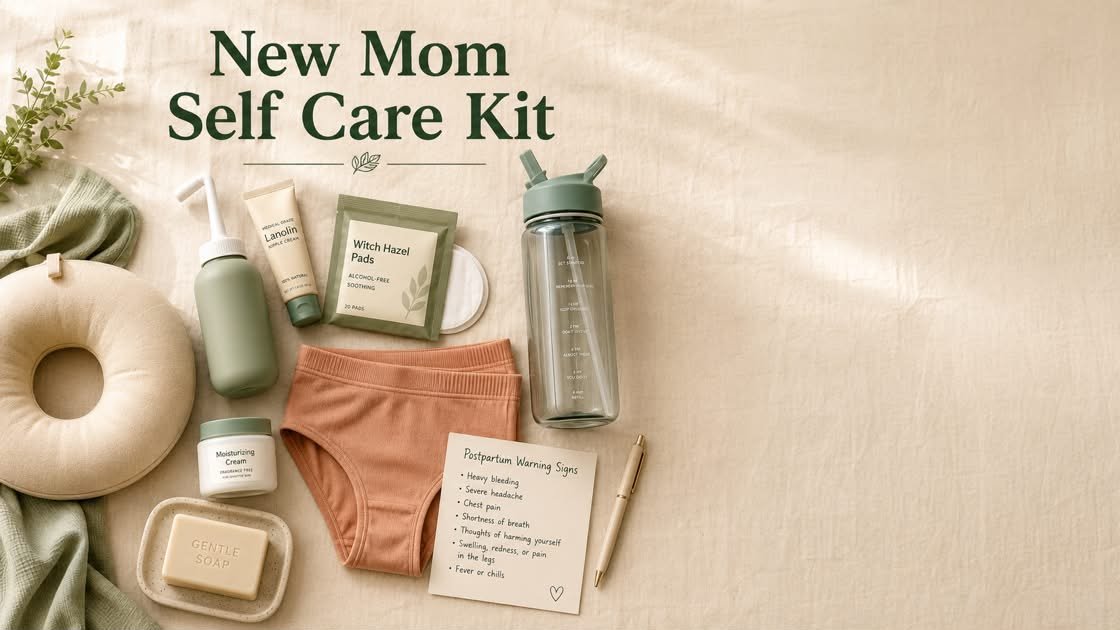
Start with the birth type. Vaginal delivery requires perineal care items: an angled peri bottle, alcohol-free witch hazel pads or spray, pure aloe vera gel, padsicles, a donut cushion, and sitz bath supplies. Cesarean delivery requires high-waisted underwear, silicone scar sheets for later use, a small pillow for incision splinting, and gentle, fragrance-free body wash for showering without irritating the incision.
Add feeding-specific items. For breastfeeding: medical-grade purified lanolin or a plant-based alternative if lanolin allergy is a concern, hydrogel pads or silver nursing cups, a supportive nursing bra without underwire, and breast pads for leaking. For formula feeding: a formula dispenser for middle-of-the-night feeds, a reliable bottle brush, and comfortable feeding positions that protect the parent’s back and neck.
Include skin and body comfort items that require no instruction or effort to use. A large water bottle with a straw that can be operated one-handed, because hydration needs are high for breast milk production and tissue healing and both hands are rarely free. Lip balm with occlusives like shea butter or lanolin, because postpartum dehydration and mouth breathing during labor often leave lips painfully cracked. High-protein, one-handed snacks like nuts, protein bars, or individually wrapped cheese portions. Comfortable clothing with easy nursing or skin-to-skin access.
Add self-care practice prompts, not just products. Write three to five tiny self-care instructions on index cards: “Lie flat for 5 minutes with your eyes closed,” “Drink a full glass of water right now,” “Text one person who will not ask you for anything,” “Step outside and take 10 deep breaths of fresh air.” These are the actual self-care practices. The products support them. They are not substitutes for them.
Finally, include a printed card with postpartum warning signs and who to call. This might be the most important item in the kit. It should list the symptoms that warrant an immediate call to the obstetric provider: heavy bleeding soaking through a pad in an hour, fever over 100.4 degrees Fahrenheit, incision redness or pus, calf pain or swelling, severe headache that does not improve with acetaminophen, and the mental health red flags of postpartum depression and anxiety. Include the phone number for the obstetric practice, the lactation consultant if applicable, and the Postpartum Support International helpline: 1-800-944-4773.
Key Takeaway: The most effective self care kit is built around the specific birth and feeding circumstances, includes both physical recovery items and self-care practice prompts, and contains emergency contact information and postpartum warning signs, because the most important self-care act is knowing when to seek help.
Ingredients to Avoid in Postpartum Skincare and Products
Postpartum skin and body care requires an ingredient safety lens that accounts for two factors simultaneously: the increased absorption potential of compromised or healing skin, particularly on the perineum and nipples, and for breastfeeding parents, the transfer potential of topically applied ingredients into breast milk and subsequently to the infant.
Fragrance, listed on labels as “parfum,” “fragrance,” or individual essential oil components, is the single most avoidable irritant in postpartum skincare. Fragrance is among the most common causes of allergic contact dermatitis per the American Academy of Dermatology’s patch test registry data, and the risk is heightened when skin barrier function is compromised by hormonal changes, surgical healing, or perineal tissue repair. The European Commission’s Scientific Committee on Consumer Safety has identified 26 fragrance allergens that must be individually listed on cosmetic labels in the European Union. These regulations do not apply in the United States, where “fragrance” can represent a proprietary blend of dozens of compounds. For postpartum use, choose fragrance-free products, not just unscented ones. Unscented products may contain masking fragrances that still include allergenic compounds.
Retinoids, including tretinoin (prescription), retinol, retinaldehyde, and adapalene (over-the-counter), are generally avoided during breastfeeding despite limited evidence of risk from topical application. The concern is the theoretical transfer of vitamin A metabolites into breast milk, as oral retinoids (isotretinoin) are known teratogens and are absolutely contraindicated during pregnancy and breastfeeding. The InfantRisk Center notes that topical retinoid absorption through intact skin is low, and the amount that would reach breast milk from facial application is likely negligible, but both the AAD and most obstetric providers recommend deferring retinoid use until breastfeeding is complete as a precautionary measure. This guidance may evolve as more lactation-specific safety data becomes available.
Hydroquinone, the prescription-strength skin lightening agent used for melasma and hyperpigmentation, has limited human lactation safety data. The FDA has not assigned it a specific lactation risk category, but its relatively high systemic absorption compared to many other topical ingredients, estimated at 35 to 45 percent of the applied dose per the FDA’s clinical pharmacology review, warrants caution. The AAD recommends that breastfeeding parents avoid hydroquinone and use alternative pigment-modulating ingredients such as azelaic acid, niacinamide, or kojic acid.
High-concentration salicylic acid, meaning peels and products above 2 percent for the face or above 3 percent for body applications, should be avoided during pregnancy and lactation due to the theoretical risk of salicylate toxicity, which is a documented risk for oral salicylates. Over-the-counter salicylic acid at 2 percent or less, applied to a limited body surface area, is considered low-risk by most dermatologists, but consultation with an obstetric provider is recommended for individual guidance.
Essential oils at high concentrations present multiple concerns: sensitization risk on compromised skin, the potential for endocrine activity from compounds like lavender and tea tree oil that have shown weak estrogenic or anti-androgenic activity in some in vitro studies, and the lack of lactation-specific safety data for most essential oil constituents when absorbed through skin and potentially transferred to breast milk. The National Association for Holistic Aromatherapy recommends that breastfeeding parents avoid undiluted essential oil application and limit use to low-dilution products that are washed off rather than left on skin.
Self Care Practice When You Have a Newborn
Practicing self care with a newborn requires redefining what self care looks like. It will not look like a morning routine with multiple skincare steps, a quiet meditation practice, or a leisurely bath, at least not in the early weeks. It will look like micro-practices, tiny windows of body care and emotional grounding that fit into the fragmented schedule of infant feeding, diapering, and soothing.
A postpartum skincare routine in two minutes is a realistic target. Wash your face with a gentle, fragrance-free cleanser. Apply a moisturizer containing humectants like glycerin or sodium hyaluronate and barrier-supporting lipids like ceramides. Apply mineral sunscreen if it is daytime and you will be near windows or going outside. This takes two minutes. It signals to your nervous system that you exist as a person with needs, not just a care provider. A full multi-step routine can return later. The postpartum skincare goal is maintenance and protection, not optimization.
Hygiene as self care is a genuine concept in the postpartum period, not a trivial one. A one-minute rinse in the shower, a clean change of clothes, brushing your teeth, these brief hygiene acts reset something physiologically and psychologically. They communicate to your body that you are not in a state of emergency, which matters because prolonged hypervigilance and self-neglect can reinforce the stress-skin axis activation that impairs barrier function and wound healing.
Hydration and nutrition as self care are concrete and non-optional. Breast milk production demands approximately 700 additional calories per day and significant fluid intake per ACOG nutritional guidelines. Dehydration and inadequate caloric intake worsen fatigue, reduce milk supply, impair tissue healing, and exacerbate the cognitive fog that already accompanies sleep deprivation. Having a large water bottle with a straw and a stash of one-handed, high-protein snacks in every room where you feed the baby makes meeting these needs possible without requiring planning or effort during each feeding session.
Sensory self care acknowledges that the postpartum body has been through sensory overwhelm, the physical sensations of labor or surgery, the constant touching and holding of a newborn, the noise, the lights of medical settings. Self care can involve reducing sensory input rather than adding it. A quiet, dim room. A soft blanket that feels good against skin. Noise-canceling earbuds. Ten minutes of nobody touching your body. These are self care interventions that cost nothing and require no products.
Key Takeaway: Postpartum self care with a newborn is about micro-practices that maintain basic physical needs and provide brief emotional grounding moments. A two-minute face routine, a clean shirt, a full glass of water, and ten minutes without physical contact are real self care in this season.
Partner and Support Person Involvement in Postpartum Self Care
Partner and support person involvement in postpartum self care is not about handing the new mother a gift basket and telling her to relax. It is about actively creating the conditions in which self care is physically possible, which means taking over infant care tasks to create protected time, monitoring the environment for basic needs being met, and learning to recognize the difference between normal postpartum adjustment and warning signs that require intervention.
Specific, actionable involvement includes taking a feeding shift. For breastfeeding parents, this means bringing the baby to the parent for feeding, then immediately taking the baby back for burping, diapering, and soothing so the parent can return to sleep or rest. For bottle-feeding parents, this means taking entire feeding sessions so the birthing parent gets a protected sleep block. The distinction between “helping with the baby” and “taking full responsibility for a specific time block” is meaningful. The former still leaves the birthing parent as the default caregiver. The latter creates genuine rest opportunity.
Environmental care is a form of partner support that is often overlooked. Refilling the water bottle, restocking the snack supply in the feeding area, keeping the peri bottle filled with warm water and within reach, washing the nipple care supplies, managing visitors who overstay, these environmental maintenance tasks reduce the cognitive load on the birthing parent. The mental energy of noticing what needs to be done and asking for it is often as draining as the task itself. A support person who learns to anticipate these needs without being asked is providing direct self care support.
Learning postpartum warning signs is a partner responsibility, not just the birthing parent’s. Postpartum Support International recommends that partners and family members know the symptoms of postpartum depression, anxiety, and psychosis, and understand that the birthing parent may not recognize these symptoms in themselves. Withdrawal from the baby, persistent inability to sleep even when the baby sleeps, expressions of hopelessness or worthlessness, panic attacks, and any statements about harming oneself or the baby are all thresholds for immediate professional intervention. A partner who knows these signs and has the contact information for the obstetric provider and the Postpartum Support International helpline ready is a critical safety component in the postpartum self care system.
Postpartum Self Care and Mental Health Screening
Postpartum self care includes mental health awareness as a core component, not a separate concern. The hormonal shifts of the postpartum period, combined with sleep deprivation, physical recovery demands, and the psychological adjustment to parenthood, create a window of heightened vulnerability to mood and anxiety disorders that approximately one in seven birthing parents will experience per ACOG data.
The Edinburgh Postnatal Depression Scale (EPDS) is the validated screening tool used by obstetric and pediatric providers to identify postpartum depression risk. It is a 10-question self-report scale that assesses mood, anxiety, and anhedonia over the preceding seven days. ACOG recommends universal screening at the comprehensive postpartum visit, and the American Academy of Pediatrics recommends screening at infant well-child visits during the first year. A self care kit can include a printed EPDS or a note with instructions for accessing it online, not as a diagnostic tool but as a self-awareness prompt that makes the concept of screening familiar and destigmatized.
The distinction between “baby blues” and postpartum depression is clinically important and well-defined. Baby blues affect up to 80 percent of birthing parents, begin within the first few days after delivery, and resolve within two weeks without treatment. Symptoms include mood swings, tearfulness, irritability, and mild anxiety. Postpartum depression persists beyond two weeks, often intensifies over time, and includes symptoms such as anhedonia, meaning the inability to feel pleasure or interest in things that normally bring it, significant sleep disturbance beyond what newborn care explains, feelings of worthlessness or excessive guilt, and in severe cases, thoughts of harming oneself or the baby. Self-care practices are supportive for baby blues. They are not sufficient treatment for postpartum depression, which requires professional mental health care from a perinatal psychiatrist, reproductive psychiatrist, or therapist specializing in perinatal mental health.
Postpartum anxiety and postpartum OCD are distinct from depression and may present with intrusive thoughts that are ego-dystonic, meaning they are distressing and inconsistent with the parent’s values, or with constant hypervigilance and inability to sleep even when the baby sleeps. These conditions are treatable, and the sooner they are identified and addressed, the better the outcomes for both parent and infant. Postpartum Support International provides a helpline (1-800-944-4773) and a provider directory for finding perinatal mental health professionals.
When to Seek Medical Care During Postpartum Recovery
Knowing when to seek medical care is as important a component of postpartum self care as any product or practice in a recovery kit. Self care operates in the space between medical visits. It is not a replacement for medical evaluation when symptoms cross from normal recovery into potential complication.
The American College of Obstetricians and Gynecologists specifies clear postpartum warning signs that warrant immediate medical attention. Heavy bleeding, defined as soaking through a pad in an hour or passing clots larger than a golf ball, can indicate postpartum hemorrhage, a leading cause of maternal morbidity. A fever of 100.4 degrees Fahrenheit or higher may signal endometritis, an infection of the uterine lining, or wound infection at the cesarean incision or perineal tear site. Severe headache that does not improve with acetaminophen, especially when accompanied by visual changes or upper abdominal pain, can indicate postpartum preeclampsia, which can develop up to six weeks after delivery even in people with no history of preeclampsia during pregnancy.
Incision or perineal wound red flags include increasing redness, warmth, pus or foul-smelling discharge, separation of the wound edges, or pain that increases rather than decreases over time. A board-certified obstetrician or midwife should evaluate any of these signs. Calf pain, swelling, warmth, or redness, particularly on one side, may indicate a deep vein thrombosis, for which postpartum people are at elevated risk due to the hypercoagulable state of pregnancy that persists for several weeks after delivery.
Mental health warning signs that require immediate intervention, not watchful waiting, include any thoughts of harming oneself or the baby, confusion or disorientation, hallucinations, or severe agitation. These may indicate postpartum psychosis, a rare but extremely serious psychiatric emergency that requires immediate emergency medical care. Postpartum Support International’s helpline can guide callers to emergency resources, but if there is imminent risk, the correct action is calling 911 or going to the nearest emergency department.
For breastfeeding-specific concerns including persistent nipple pain beyond the initial latch discomfort, signs of mastitis such as a wedge-shaped area of breast redness, pain, and flu-like symptoms, or concerns about infant weight gain or milk transfer, an International Board Certified Lactation Consultant (IBCLC) is the appropriate professional to contact. Many lactation consultants offer urgent appointments for acute breastfeeding complications. The obstetric provider or pediatrician can provide referrals.
Key Takeaway: Self care includes the responsibility of knowing when self care is not enough. The warning signs of postpartum hemorrhage, infection, preeclampsia, deep vein thrombosis, and postpartum mental health emergencies are specific and actionable, and every postpartum person and their support system should know them before they are needed.
Frequently Asked Questions About New Mom Self Care Kits
What should I put in a new mom self care kit?
A new mom self care kit should include perineal care items like an angled peri bottle and alcohol-free witch hazel for vaginal delivery, or high-waisted underwear and silicone scar sheets for cesarean delivery.
Add feeding-specific items such as medical-grade lanolin for breastfeeding or formula feeding supplies, plus a large water bottle, high-protein one-handed snacks, and a printed card with postpartum warning signs and emergency contact numbers.
Customize everything to the specific birth type and feeding method.
What skincare ingredients should I avoid while breastfeeding?
Retinoids including tretinoin, retinol, and adapalene, hydroquinone, and high-concentration salicylic acid above 2 percent are generally avoided during breastfeeding due to limited safety data or known oral risks.
Fragrance and undiluted essential oils should also be avoided because sensitization risk increases on postpartum skin.
Azelaic acid, niacinamide, and mineral sunscreens are considered breastfeeding-compatible options by the American Academy of Dermatology.
Is witch hazel safe to use on perineal tears after birth?
Alcohol-free witch hazel is safe for use on healing perineal tissue and is widely recommended for reducing postpartum swelling and discomfort.
Alcohol-based witch hazel should be avoided because it stings, excessively dries healing tissue, and may delay wound healing.
Always confirm with your obstetric provider before applying any product to healing perineal tears, particularly third-degree or fourth-degree tears.
When can I start using retinol again after having a baby?
If you are not breastfeeding, you can resume retinol use once your skin barrier has stabilized postpartum, typically around three to four months after delivery, though a board-certified dermatologist can provide personalized guidance.
If you are breastfeeding, the American Academy of Dermatology recommends deferring retinoid use until breastfeeding is complete as a precautionary measure, though topical absorption is low.
Azelaic acid and niacinamide are breastfeeding-compatible alternatives that address acne, hyperpigmentation, and skin texture in the meantime.
How do I practice self care with a newborn when I have no time?
Redefine self care as micro-practices: a two-minute face wash and moisturize, drinking a full glass of water, stepping outside for five deep breaths, or lying flat with your eyes closed for ten minutes while someone else holds the baby.
Keep a large water bottle and one-handed snacks in every feeding location so basic physical needs are met without requiring extra time or effort.
One protected four-hour sleep block per day, provided by a partner or support person, is the single most effective self-care intervention with evidence for reducing postpartum fatigue and supporting emotional regulation.
What are the warning signs of postpartum depression vs. normal baby blues?
Baby blues affect up to 80 percent of birthing parents, begin within days of delivery, and resolve within two weeks without treatment, with symptoms of mood swings, tearfulness, and mild anxiety.
Postpartum depression persists beyond two weeks, often intensifies, and includes anhedonia, feelings of worthlessness or guilt, sleep disturbance beyond what newborn care explains, and in severe cases, thoughts of self-harm or harming the baby.
Postpartum depression requires professional mental health evaluation from a perinatal psychiatrist or therapist; self-care alone is not sufficient treatment.
================================================================
The products you put in a new mom self care kit matter because they make physical recovery more comfortable and remind her that her body deserves care. The practices you include, the sleep protection, the hydration, the brief moments of emotional grounding, the permission to let someone else take over, matter more. The kit is the tool. The self care is the practice. Both require someone, ideally the birthing parent and their support system together, to insist that her recovery is non-negotiable.
If you are building this kit for yourself, you are telling yourself that your health still counts while you care for someone else. If you are building it for someone else, you are telling her the same thing, with objects she can hold and use, and with the offer of your time and attention to make self care logistically possible. Start with the recovery items her specific body needs. Add the comfort items. Include the emergency information. Then do the most important thing: help her actually use them.
Postpartum recovery is not measured in days or weeks. It unfolds over months, through disrupted sleep, and around the endless learning curve of caring for a new human. A self care kit is not a solution. It is scaffolding. It holds up the idea that the person who gave birth is still a person, with a body that needs tending and an interior life that deserves attention, during the most demanding transition she may ever face.