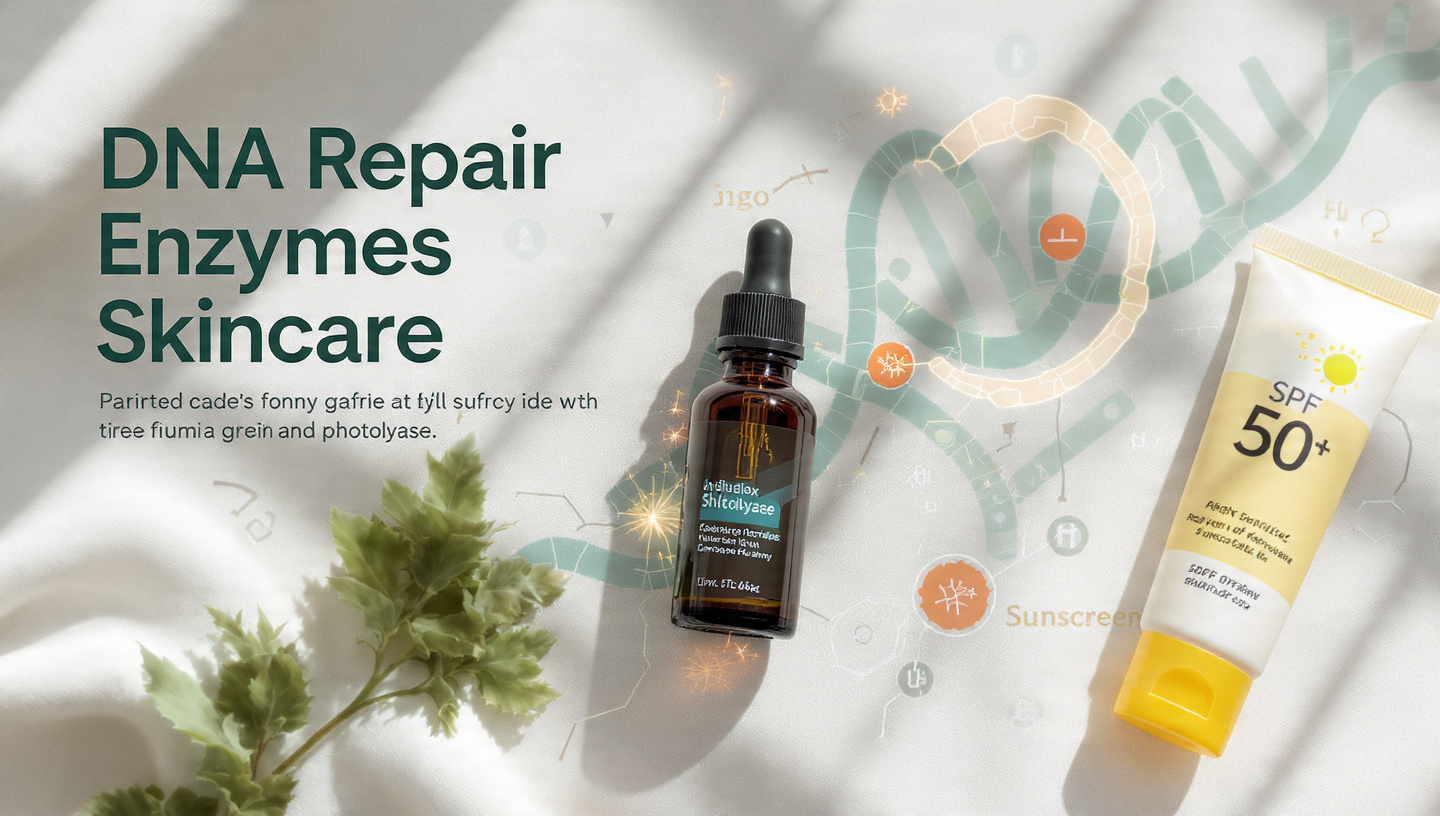
DNA Repair Enzymes Skincare 2026: Do Topical DNA Repair Serums Work?
DNA repair enzymes in skincare are topical proteins that aim to identify and correct ultraviolet radiation-induced damage in skin cell DNA. They sit at a fascinating intersection of molecular biology and cosmetic formulation, offering a prevention-adjacent approach that goes far beyond simply neutralizing free radicals. These ingredients are not a replacement for sunscreen, but they do target a mechanism that antioxidants and retinoids cannot reach: the direct restoration of altered DNA sequences in the nucleus of your skin cells.
The burden of accumulated DNA damage is the central driver of what we see clinically as photoaging and, more critically, the initiation of skin cancers. According to the American Academy of Dermatology, ultraviolet radiation from the sun causes the overwhelming majority of the visible changes we attribute to skin aging. While broad-spectrum sunscreen prevents new damage, it does nothing to address the decades of genetic lesions already present in your keratinocytes and fibroblasts. That’s where the concept of topical DNA repair enters the conversation.
This article walks through exactly what DNA repair enzymes are, the specific types of genetic damage they target, what the peer-reviewed clinical evidence says about their efficacy, and how to intelligently integrate them into a modern skincare routine. You’ll walk away with a clear understanding of photolyase, endonuclease, and glycosylase enzymes, how they differ from antioxidants, and whether this category of ingredient deserves a place in your regimen or is simply an elegant story being told at a high price point.
What Are DNA Repair Enzymes in Skincare
DNA repair enzymes in skincare are biologically active proteins, typically derived from microbial, plant, or plankton sources, that are formulated into topical products to recognize and correct structural errors in the DNA of skin cells. These enzymes are not synthetic chemicals. They are harvested from organisms that have evolved potent DNA repair systems to survive under extreme ultraviolet radiation exposure, such as the microbe Micrococcus luteus or the blue-green algae Anacystis nidulans. Once extracted and stabilized in a formulation, they are applied to human skin with the goal of supplementing our own cellular repair machinery.
The core concept borrows from a well-established biological truth: human skin cells possess endogenous DNA repair pathways, most notably nucleotide excision repair (NER) and base excision repair (BER). These systems scan the genome for lesions, excise the damaged section, and resynthesize the correct sequence using the complementary strand as a template. Topical DNA repair enzymes are intended to augment this process, not replace it. A 2001 study published in The Lancet demonstrated that topically applied T4 endonuclease V, delivered via liposomes, could reach the epidermis and reduce the formation of new actinic keratoses in patients with xeroderma pigmentosum, a condition characterized by deficient DNA repair. This study remains a foundational piece of evidence for the entire category.
What you see on an ingredient label will never just say “DNA repair enzyme.” Instead, you will find specific INCI names like Plankton Extract, Micrococcus Lysate, Arabidopsis Thaliana Extract, or Saccharomyces Cerevisiae Extract. Each name corresponds to a different enzyme with a distinct repair target. Knowing which enzyme a product contains tells you what type of DNA damage it is designed to address, a distinction most marketing copy conveniently glosses over.
How Do DNA Repair Enzymes Work on Skin
DNA repair enzymes work on skin by recognizing specific types of kinks, breaks, or chemical adducts on the DNA double helix inside the nucleus of your cells and initiating a biochemical process to excise and replace the damaged segment. The enzyme acts as both a scout and a catalyst. It patrols the genome, finds a lesion, binds to it, and then either directly reverses the damage or cuts the DNA backbone so the cell’s own repair machinery can finish the job. Think of it like a spell-check function running on a corrupted text file: the enzyme finds the typo, highlights it, and either fixes it on the spot or signals for a full rewrite of that line.
For this to work topically, the enzyme must overcome a significant structural barrier. Proteins are large, hydrophilic molecules. The stratum corneum, your skin’s outermost layer, is a lipid-rich, hydrophobic barrier designed to keep large water-soluble molecules out. A naked enzyme simply cannot cross it in meaningful quantities. This is why delivery systems are everything in this category. Liposomal encapsulation, where the enzyme is housed inside a microscopic sphere of phospholipids that can fuse with cell membranes, has been the most studied method. A 2015 review in the International Journal of Cosmetic Science noted that the clinical efficacy of topical DNA repair enzymes is entirely dependent on the carrier system’s ability to deliver the protein through the stratum corneum and into the viable epidermal layers. Without a proven delivery mechanism, you are applying an expensive protein to a dead layer of cells where it will sit until you wash it off.
Once inside a keratinocyte or melanocyte, the enzyme gets to work. The specific mechanism depends on the enzyme type. Photolyase, for example, binds to a cyclobutane pyrimidine dimer (CPD), absorbs a photon of visible light, and uses that energy to break the abnormal bonds, restoring the DNA to its original state. Endonucleases take a different approach: they cut the DNA strand on one side of the lesion, creating a nick that triggers the cell’s own nucleotide excision repair machinery to remove a short stretch of nucleotides around the damage and fill in the gap correctly.
Types of DNA Damage in Skin Cells
DNA damage in skin cells is not a single, uniform injury. Ultraviolet radiation, particularly UVB and the longer-wavelength UVA that penetrates deep into the dermis, inflicts distinct molecular lesions on the DNA double helix. Understanding these lesions is critical to understanding why different DNA repair enzymes exist and what they are respectively designed to fix. The two primary categories you need to know are direct UV-induced photoproducts and oxidative base modifications caused by reactive oxygen species (ROS).
The most abundant form of UVB-induced damage is the cyclobutane pyrimidine dimer (CPD). When UVB photons hit DNA, they can cause two adjacent pyrimidine bases, usually thymines or cytosines, to fuse together in an abnormal four-membered ring structure. This kink distorts the DNA helix, blocking transcription and replication. If left unrepaired, CPDs lead to characteristic C-to-T and CC-to-TT signature mutations found in the p53 tumor suppressor gene of many skin cancers. Alongside CPDs, UVB also generates 6-4 photoproducts (6-4PPs), another type of dimeric lesion at pyrimidine sites, though these are formed at a lower frequency and are typically repaired more quickly by the cell’s own NER system.
UVA damage is more indirect. UVA photons penetrate to the dermis and generate reactive oxygen species that chemically attack the guanine bases in DNA. The hallmark lesion here is 8-oxo-7,8-dihydroguanine (8-oxo-G). This oxidized base is mutagenic because it can mispair with adenine during DNA replication, leading to G-to-T transversion mutations. The repair of 8-oxo-G requires a completely different set of enzymes, specifically glycosylases like OGG1, which initiate the base excision repair pathway. A product containing only a photolyase will do nothing for 8-oxo-G lesions. A product with a glycosylase will not touch a CPD. The damage type determines the enzyme required.
| UV Band | Primary DNA Lesion | Repair Pathway | Required Enzyme Class |
|---|---|---|---|
| UVB | Cyclobutane Pyrimidine Dimers (CPDs) | Photoreactivation or Nucleotide Excision Repair | Photolyase or Endonuclease V |
| UVB | 6-4 Photoproducts (6-4PPs) | Nucleotide Excision Repair | Endonucleases, NER enzymes |
| UVA | 8-oxo-guanine (8-oxo-G) | Base Excision Repair | Glycosylases (e.g., OGG1) |
Key Takeaway: DNA repair enzymes are not one-size-fits-all proteins. Photolyase fixes CPDs from UVB exposure, while glycosylases fix oxidized bases from UVA-generated oxidative stress, and choosing a product without knowing which lesion it targets means you might be applying the wrong tool for the damage you actually have.
Do DNA Repair Enzymes Actually Work
Yes, DNA repair enzymes do work in a biochemical sense, but the clinically meaningful question of whether their topical application produces visible skin improvements that justify the cost yields a more nuanced answer. The enzymes themselves are functional proteins with well-characterized catalytic activity in vitro and in animal models. The evidence bottleneck is not the enzyme’s biological capability. It is the delivery, the concentration that reaches the target cell nucleus, and the translation of molecular repair into photographic skin changes that the human eye can perceive over a reasonable timeframe.
The most robust clinical evidence comes from studies on patients with compromised DNA repair pathways. A landmark 2001 study in The Lancet gave xeroderma pigmentosum patients topical T4 endonuclease V in a liposomal lotion for one year. The treatment group experienced a 68% reduction in the incidence of actinic keratoses and a 30% reduction in basal cell carcinomas compared to placebo. This was a high-stakes, high-visibility result that proved the concept: a well-formulated topical enzyme could reduce the clinical consequences of UV-induced DNA damage in a vulnerable population. The extrapolation from this study to healthy skin is reasonable but not identical. A person with fully functional endogenous NER will see a less dramatic marginal benefit than someone whose repair machinery is genetically broken.
For the general population concerned with photoaging, the evidence is smaller in scale but directionally consistent. A 2017 study published in the Journal of Drugs in Dermatology evaluated a serum containing photolyase from plankton extract, endonuclease from Micrococcus luteus, and an antioxidant complex in 30 women with mild to moderate photoaging over 12 weeks. The researchers reported statistically significant improvements in crow’s feet, skin texture, and overall photodamage scores. The limitation here is the multifactorial nature of the product: it contained antioxidants as well, so attributing all visible results solely to the DNA repair enzymes is not scientifically clean. This is a common problem in the enzyme skincare literature. Pure single-enzyme studies in healthy photoaged skin are scarce.
DNA Repair Enzymes Skincare Evidence and Clinical Studies
The body of clinical evidence for topical DNA repair enzymes is real but modest, consisting primarily of small to medium-sized human trials, many funded or conducted by the ingredient manufacturers. This does not invalidate the data, but it requires the reader to apply a healthy level of scrutiny to the claims. The strongest studies are those that measure a direct biomarker of DNA damage, namely the presence of cyclobutane pyrimidine dimers (CPDs) in skin biopsies, rather than relying solely on clinical photography and investigator grading.
A 2010 study in the British Journal of Dermatology measured CPD levels in UV-irradiated human skin treated with a topical photolyase formulation versus a vehicle control. The photolyase-treated sites showed a statistically significant reduction in CPDs 24 hours post-irradiation compared to untreated skin. This type of mechanistic biomarker study is persuasive because it directly confirms that the enzyme is reaching the epidermis and performing its biochemical function. It answers the “does the protein get where it needs to go” question with a molecular endpoint rather than a subjective wrinkle score. A 2018 study in the Journal of the American Academy of Dermatology extended this concept, demonstrating in a split-face study that a DNA repair enzyme serum combined with daily sunscreen reduced the appearance of actinic keratoses more than sunscreen alone, with a 47% reduction in AK counts at 6 months in the enzyme group.
However, a comprehensive 2022 systematic review published in the International Journal of Dermatology on topical DNA repair enzymes for photoaging concluded that while the available studies consistently show a biological effect at the molecular level, the quality and size of the trials are insufficient to make strong population-wide recommendations. The review specifically called for larger, independent, vehicle-controlled, double-blind studies with longer follow-up periods. For the evidence-conscious consumer, this means the category has a legitimate foundation in biochemistry and early clinical work, but it has not yet met the evidentiary bar that, for example, broad-spectrum sunscreens or topical retinoids have achieved through decades of large-scale independent research.
Key Takeaway: The best evidence for DNA repair enzymes shows they reduce CPDs in irradiated human skin and may lower actinic keratosis counts when paired with sunscreen. The evidence for visible anti-aging improvements in healthy skin is supportive but thin, and most products are tested as multi-ingredient complexes, not single-enzyme treatments.
Photolyase in Skincare
Photolyase in skincare is a light-activated flavoprotein enzyme, most commonly sourced from the blue-green algae Anacystis nidulans, that directly reverses cyclobutane pyrimidine dimers (CPDs) in a process called photoreactivation. It is the only enzyme in the DNA repair skincare category that does not cut the DNA backbone. Instead, it binds specifically to a CPD lesion, absorbs a photon of visible blue or UVA light, and uses that captured energy to catalyze the breaking of the abnormal carbon-carbon bonds that formed between adjacent pyrimidine bases. The original DNA sequence is restored intact, with no bases excised and no new DNA synthesis required. It is, in essence, a direct reset button for the most common UVB lesion.
The light dependency of photolyase is both its most elegant feature and its most significant practical limitation. The enzyme is biologically inactive in the dark. Without photon absorption, the flavin adenine dinucleotide (FADH2) cofactor buried in the enzyme’s active site cannot transfer an electron to the CPD substrate, and the repair reaction stalls. For this reason, photolyase-containing skincare products are designed for daytime application or formulated with a secondary, light-independent repair enzyme as a backup. A product that instructs you to apply a photolyase serum at night and immediately turn off the lights is effectively asking you to apply a temporarily inert protein. A 2015 study in the Journal of the American Academy of Dermatology on a photolyase-containing sunscreen demonstrated that when applied before controlled UV exposure, the enzyme was active and reduced subsequent CPD formation, suggesting the repair process occurs in real-time during and shortly after light exposure.
When looking for photolyase on a product label, you will not see the word “photolyase” directly on most INCI lists. Instead, look for Plankton Extract, Anacystis Nidulans Extract, or branded enzyme complexes like Roxisomes or Photosomes. The concentration is rarely disclosed as a percentage, as these are typically sold as proprietary complexes to formulators. The key quality indicator is the presence of a liposomal delivery system, which should be noted in the product’s supporting materials or packaging. Without encapsulation, photolyase is a large soluble protein that will remain stranded in the stratum corneum, performing its elegant light-activated repair on a layer of dead cells that do not replicate and cannot manifest the benefit clinically.
Endonuclease and Glycosylase in Skincare
Endonuclease and glycosylase are two additional classes of DNA repair enzymes used in skincare that operate fundamentally differently from photolyase. Neither requires light activation, and both work by excising damaged DNA segments rather than directly reversing a lesion. An endonuclease recognizes a distortion in the DNA helix, such as a CPD, and cuts the phosphodiester backbone of one strand at a specific site flanking the damage. This creates a nick that the cell’s endogenous nucleotide excision repair (NER) machinery recognizes as a signal to remove a patch of 24 to 32 nucleotides surrounding the lesion and resynthesize the correct sequence. T4 endonuclease V, derived from the bacterium Micrococcus luteus, is the most researched enzyme in this class.
Glycosylases work at a different level of damage recognition. Instead of recognizing the gross distortion of a CPD, a glycosylase like OGG1 (8-oxoguanine DNA glycosylase) identifies a single chemically modified base, most critically 8-oxo-guanine, and cleaves the glycosidic bond attaching the damaged base to the deoxyribose sugar backbone. This creates an abasic site, which is then processed by an AP endonuclease that cuts the backbone, allowing the cell’s base excision repair (BER) pathway to insert the correct, undamaged base. This is the primary repair mechanism for UVA-induced oxidative DNA lesions. A skincare product containing a glycosylase is targeting a different layer of the sun damage story than one containing an endonuclease or photolyase.
The practical application of this distinction is that a well-rounded DNA repair product should theoretically contain enzymes that address both UVB photoproducts and UVA oxidative base damage. You can look for this on the label by searching for Micrococcus Lysate (source of endonuclease V), Arabidopsis Thaliana Extract (source of a glycosylase-like activity, though the exact enzyme identity in plant extracts is often less biochemically defined than the microbial sources), or Saccharomyces Cerevisiae Extract, which can contain multiple enzyme activities. The formulation challenge here is stability. Enzymes are fragile proteins that denature with heat, extreme pH, and certain preservatives. A product that boasts a cocktail of three or four different enzymes must demonstrate that all remain conformationally intact and active through the product’s shelf life. This is a non-trivial claim that few brands substantiate with published stability data.
| Enzyme Class | INCI Source Example | Target Lesion | Mechanism | Light Required |
|---|---|---|---|---|
| Photolyase | Plankton Extract, Anacystis Nidulans Extract | Cyclobutane Pyrimidine Dimers (CPDs) | Direct photoreversal of dimer bonds | Yes (visible/UVA) |
| Endonuclease | Micrococcus Lysate, Micrococcus Luteus Extract | CPDs, DNA distortions | Cuts DNA backbone, initiates NER | No |
| Glycosylase | Arabidopsis Thaliana Extract, OGG1 | 8-oxo-guanine, oxidized bases | Excises damaged base, initiates BER | No |
Plant and Plankton Derived DNA Repair Enzymes
Plant and plankton derived DNA repair enzymes form the sourcing backbone of this entire skincare category, and the origin organism matters because it dictates the specific enzyme structure, its optimal temperature and pH range for activity, and the biochemical pathway it uses for repair. The most commercially significant sources are extremophilic microorganisms that evolved under constant, intense UV radiation. Anacystis nidulans, a cyanobacterium also known as Synechococcus, thrives in sun-exposed aquatic environments and produces a potent photolyase to survive the DNA damage inflicted by full-spectrum sunlight at the water’s surface. Micrococcus luteus, a bacterium found on human skin and in the environment, produces T4 endonuclease V, which it uses to repair its own genome after UV exposure.
A more recent entrant in the plant-sourced category is Arabidopsis thaliana, a small flowering plant that serves as a model organism in plant genetics and is now a source of DNA repair enzyme extracts for skincare. The appeal of Arabidopsis extract is that it contains a suite of repair-related proteins rather than a single isolated enzyme, offering a broader spectrum of repair activity. A 2019 study in the Journal of Cosmetic Dermatology evaluated a topical formulation containing an Arabidopsis thaliana extract complex and found a reduction in UV-induced DNA damage markers in ex vivo human skin models. The limitation, as with many plant extract studies, is the lack of precise molecular characterization of which specific enzymes in the extract are performing the repair and at what concentration. Plant extracts are inherently complex mixtures, and batch-to-batch variability in enzyme content and activity is a formulation challenge that is more easily controlled with recombinant or purified microbial enzymes.
Plankton extract, one of the most common INCI names you will encounter, often refers specifically to an extract of the aforementioned Anacystis nidulans that is rich in photolyase. This ingredient is also frequently sold under trade names like Photosomes, which indicates a liposomal encapsulation designed to deliver the enzyme across the stratum corneum. The plankton source is relevant for those with specific allergies. While documented allergic reactions to topical DNA repair enzymes are rare, an individual with a known algae or cyanobacteria allergy should approach plankton-derived enzymes with caution and perform a patch test. There is no evidence suggesting a higher allergenicity profile compared to other protein-containing skincare ingredients, but the data is limited by the relatively niche use of these products in the general population.
Key Takeaway: The biological source of a DNA repair enzyme determines its repair target, its optimal working conditions, and its potential allergenicity. Plankton-derived photolyase needs light; micrococcus-derived endonuclease does not. Arabidopsis extracts offer a broad repair complex but with less molecular precision in labeling.
DNA Repair Enzymes vs Antioxidants and Sunscreen
DNA repair enzymes, antioxidants, and sunscreen address skin photodamage at three completely different points in the causal chain, and positioning them as competitors misunderstands their respective functions. Sunscreen is a primary preventive intervention: it absorbs, scatters, or reflects UV photons before they can reach living skin cells and initiate the photochemical reactions that create DNA lesions. Antioxidants like L-ascorbic acid (vitamin C) and tocopherol (vitamin E) are secondary preventive agents: they neutralize the reactive oxygen species that are generated when UVA photons interact with cellular chromophores, intercepting the oxidative cascade before it attacks DNA, lipids, and proteins. DNA repair enzymes are neither preventive nor interceptive. They are a restorative intervention: they act on DNA lesions that have already formed, either because sunscreen was imperfect, reapplication was late, or the damage accumulated over a lifetime before consistent photoprotection began.
This means a well-designed skincare strategy uses all three layers. Sunscreen reduces the rate of new lesion formation. Antioxidants reduce the collateral oxidative damage. DNA repair enzymes address the backlog of existing genetic damage that sunscreen and antioxidants cannot touch. The American Academy of Dermatology’s position is unequivocal that sunscreen remains the single most important topical intervention for preventing photoaging and skin cancer. No DNA repair enzyme product challenges that hierarchy. A 2018 study in the Journal of the American Academy of Dermatology demonstrated that the combination of sunscreen plus a DNA repair enzyme serum produced a greater reduction in actinic keratosis counts over 6 months than sunscreen alone, suggesting a genuine additive effect rather than a substitution.
Retinoids enter this conversation as a fourth agent with a different target entirely. Retinol and tretinoin work primarily by binding to nuclear retinoic acid receptors and altering gene transcription to increase collagen production, accelerate epidermal turnover, and normalize keratinocyte differentiation. They do not repair DNA lesions. They alter the behavior of living cells to produce a dermis that looks more like younger skin. A DNA repair enzyme is not “better than retinol” in any generalizable sense. They are biologically orthogonal interventions that can coexist in the same routine, addressing different layers of the aging cascade. The practical question for the consumer is not “which one should I use” but “can I afford and tolerate incorporating both into a consistent routine alongside daily broad-spectrum SPF 30+ sunscreen.”
How to Use DNA Repair Enzymes in Your Routine
DNA repair enzymes should be applied to clean skin in the treatment step of your routine, after water-based serums and before heavier emulsions or creams, allowing the enzyme-containing product to sit directly against the epidermis where it can begin the absorption process. This is the standard position for any active treatment that needs to reach the viable epidermis. The specific instruction to apply “after cleansing, before moisturizing” is consistent across the clinical trials that have shown efficacy. A liposomal enzyme serum applied over a thick occlusive moisturizer will have its access to the stratum corneum physically blocked. The enzyme needs direct contact with skin.
The product format you choose matters for practical integration. DNA repair enzymes are most commonly found in lightweight serums, fluid lotions, or as an added active in a broad-spectrum sunscreen. If you are using a dedicated DNA repair enzyme serum, it should be applied as your first treatment product in the morning, directly after cleansing or after a low-pH vitamin C serum has been given 3 to 5 minutes to absorb. The rationale for this order is that enzyme proteins are sensitive to pH extremes. Applying an enzyme serum on top of a freshly applied acidic active (like a 15% ascorbic acid formula with a pH of 3.0 to 3.5) could theoretically denature the protein before it is absorbed, though this concern is based on biochemical principles of protein stability rather than a published study demonstrating this specific incompatibility in a cosmetic formulation.
Do not mix a DNA repair enzyme serum with other products in your palm before application. Layering is the correct approach. Apply the enzyme serum to your face, let it dry down for 60 to 90 seconds, then proceed with your moisturizer and sunscreen. The enzyme protein is not volatile and does not evaporate. Once the water in the serum has evaporated, the enzyme, along with its liposomal carrier if present, is deposited on the skin surface and in the upper intercellular spaces of the stratum corneum. Applying your next product too quickly risks physically wiping away the deposited enzyme. Give it a short window to settle.
DNA Repair Enzymes Morning or Night
The optimal time to apply DNA repair enzymes depends entirely on which enzyme class your product contains. A photolyase-based product must be applied in the morning or during daylight hours because the enzyme requires visible light photons to catalyze its repair reaction. A photolyase serum applied at night, followed by lights-out, will sit on the skin in a functionally inactive state until morning. It will not be degraded, but it will not be repairing DNA lesions either. If your product lists Plankton Extract or Anacystis Nidulans Extract as a primary ingredient and markets its photolyase activity, morning application is non-negotiable for optimal activity.
Endonuclease and glycosylase products, which work through light-independent excision repair pathways, can be used morning or night. There is no biochemical reason to restrict them to one time window. However, the practical consideration is that the morning skincare routine is already dense with products: vitamin C, potentially a treatment serum, moisturizer, and a carefully measured application of broad-spectrum sunscreen. Adding an enzyme serum to this stack is feasible but may feel like too many layers. The nighttime routine often has more room for treatment products, as you are not applying a full quarter teaspoon of sunscreen on top. For this reason, many people find that using a non-photolyase enzyme serum at night, alternating with their retinoid or exfoliating acid as tolerated, is the most logistically sustainable approach.
A product that contains both a photolyase and a light-independent endonuclease presents an interesting choice. The photolyase component will only be active during daylight, while the endonuclease component will be active around the clock. This type of dual-enzyme formulation is best used in the morning to allow the photolyase to function, with the understanding that the endonuclease will continue working through the night. The residual enzyme deposited in the epidermis from the morning application should persist and remain active for at least 12 to 24 hours, though precise residence time data for these specific cosmetic enzyme formulations on living human skin is not published in the peer-reviewed literature.
Layering DNA Repair Enzymes with Retinol and Acids
Layering DNA repair enzymes with retinol, tretinoin, or exfoliating acids like glycolic and salicylic acid requires a separation strategy to preserve the structural integrity of the enzyme protein and prevent mutually assured inactivation. Retinoids and hydroxy acids are not chemically incompatible with DNA repair enzymes in the way that, for example, benzoyl peroxide oxidizes tretinoin. The concern is different. Proteins are large, folded macromolecules held in their functional three-dimensional shape by delicate hydrogen bonds, hydrophobic interactions, and disulfide bridges. Exposing a protein to a low-pH environment from a glycolic acid toner (pH ~3.5) or mixing it directly with a retinoid cream containing penetration enhancers could unfold it. A denatured enzyme is simply inert protein debris.
The simplest protocol is to use DNA repair enzymes in your morning routine and retinoids or acids in your evening routine. This temporal separation eliminates any formulation compatibility question. If you prefer to keep your enzyme serum in your evening routine alongside your retinol, apply the enzyme serum first to clean, dry skin, allow it to absorb fully for 5 to 10 minutes, and then apply your retinol product. The wait time allows the enzyme’s liposomal carrier, if present, to fuse with the stratum corneum and begin delivering the protein into the epidermis. Once the enzyme is in the skin, a retinol applied on top should not affect its activity, as retinol acts through nuclear receptor binding in the dermis, a spatially distinct process. The concern is limited to the moment of product-to-product contact on the skin’s surface.
For acid exfoliation, the same rule applies with a stricter pH consideration. If you use a leave-on alpha-hydroxy acid (AHA) or beta-hydroxy acid (BHA) product, do not apply it immediately before or after an enzyme serum. The acidic pH can unfold the protein on contact. Separate them: acid in the evening, enzyme in the morning, or use them on alternate nights. There is no published compatibility study that maps the exact pH tolerance of each commercial enzyme extract, so the precaution is based on general protein biochemistry rather than specific formulation data. A 2016 review on protein stability in cosmetic formulations, published in the International Journal of Cosmetic Science, noted that maintaining the native conformation of active proteins in multi-ingredient, acidic, or surfactant-rich cosmetic bases is a significant challenge and is often the limiting factor in clinical performance.
| Active Ingredient | Layer With DNA Repair Enzymes? | Timing Advice |
|---|---|---|
| Vitamin C (Ascorbic Acid) | Yes, with caution | Apply low-pH vitamin C first, wait 5 min, apply enzyme serum |
| Retinol / Tretinoin | Yes, best separated by time of day | Enzyme in AM, retinoid in PM; or enzyme first, wait 10 min, apply retinoid |
| AHA/BHA Exfoliants | Separate by routine | Do not layer; use acids in PM, enzymes in AM, or on alternate nights |
| Niacinamide | Yes, compatible | Can be applied in either order; close pH range |
| Sunscreen | Yes, essential | Apply enzyme serum first, let dry, apply sunscreen as final step |
Key Takeaway: DNA repair enzymes are proteins that can denature when exposed to extreme pH from acid exfoliants. The cleanest routine strategy is enzymes in the morning, acids and retinoids at night. If layering them in the same routine, wait 5 to 10 minutes between products to allow surface absorption.
Realistic Skin Repair Timeline and Visible Results
The timeline for visible results from topical DNA repair enzymes is measured in months, not weeks, and the nature of the “result” depends on whether you are looking at a clinical endpoint like actinic keratosis reduction or a cosmetic endpoint like wrinkle softening and hyperpigmentation fading. For actinic keratoses, which are pre-cancerous lesions directly driven by accumulated DNA mutations in keratinocytes, clinical studies have shown a measurable reduction in AK counts at the 3- to 6-month mark with consistent daily application of a DNA repair enzyme product paired with sunscreen. The 2018 split-face study in the Journal of the American Academy of Dermatology reported a 47% reduction in AK counts at 6 months in the enzyme plus sunscreen group versus sunscreen alone.
For cosmetic photoaging endpoints like fine lines, uneven texture, and dyspigmentation, the timeline is longer and the degree of improvement is modest. The 12-week photodamage study in the Journal of Drugs in Dermatology found statistically significant but visually subtle improvements in crow’s feet and skin texture. “Statistically significant” means the changes were greater than what would be expected by chance; it does not mean the difference is dramatic to the naked eye in a photograph. A realistic expectation for a person with moderate photoaging using a well-formulated DNA repair enzyme product consistently for 6 months is a gradual, modest improvement in overall skin smoothness and a subtle evening of skin tone. This is not a resurfacing treatment. It is not a laser. It is a long-game ingredient that addresses one layer of the aging cascade.
The reason for the slow timeline is biological. DNA repair enzymes reduce the rate at which new mutations accumulate and allow the skin’s natural cellular turnover to gradually replace damaged keratinocytes with healthier ones over complete epidermal cycles. A full epidermal turnover cycle takes approximately 28 to 40 days in younger adults and up to 60 days in people over 50. For melanocytes, which are the cells responsible for pigmentation and are notoriously long-lived and mutation-retaining, the turnover is far slower. Visible fading of a sunspot requires not just DNA repair in melanocytes but also the removal of existing melanin deposits in keratinocytes and the reduction of aberrant melanogenic signaling. This is why DNA repair enzymes are best paired with pigment-targeting ingredients like niacinamide, azelaic acid, or tranexamic acid for those whose primary concern is hyperpigmentation.
DNA Repair Enzymes Side Effects and Sensitivity
DNA repair enzymes have a very low reported incidence of adverse effects in the published clinical literature, consistent with their identity as naturally occurring proteins applied at low concentrations in simple, minimalist base formulations. Unlike retinoids, which actively remodel the epidermis and induce an initial retinization period of dryness and peeling, DNA repair enzymes do not alter the rate of keratinocyte turnover or disrupt the stratum corneum barrier. They are biologically “quiet” ingredients in the sense that they do not trigger an inflammatory cascade, stimulate collagenase activity, or acidify the skin’s surface pH. Most published studies explicitly report no significant treatment-related adverse events.
The primary sensitivity concern is a contact allergy to the enzyme protein itself or, more commonly, to another component of the formula such as a preservative, fragrance, or the liposomal encapsulation materials. Protein contact allergy is a recognized phenomenon, though it is far less common than fragrance or preservative allergy. An individual with a known contact allergy to algae, yeast, or bacterial fermentation products should perform a patch test before applying a product containing plankton, yeast, or bacterial extracts to their face. The patch test procedure for a potential protein-containing skincare product is the same as for any new product: apply a small amount to the inner forearm or behind the ear once daily for three days and observe for any erythema, pruritus, or papular eruption.
There is a theoretical concern, not yet documented in the dermatological literature, about the potential for topical DNA repair enzymes to interfere with the normal DNA damage response signaling that triggers apoptosis (programmed cell death) in cells with catastrophic DNA damage. The body’s intrinsic tumor suppressor system relies on detecting unrepaired DNA damage to flag a cell for destruction, preventing a potentially cancerous cell from replicating. If topical enzymes artificially repair DNA in a cell that would otherwise have been marked for apoptosis, could this theoretically allow a damaged cell to survive? This question has been raised in academic discussions but has no clinical data to support it as a real-world risk. The cells that topical enzymes can reach are primarily in the epidermis, which is a self-renewing population that is constantly being shed. The hypothesis remains speculative, and the documented benefit of reducing overall DNA lesion burden in the skin likely outweighs this unproven theoretical risk.
DNA Repair Enzymes During Pregnancy and for Sensitive Skin
DNA repair enzymes have not been formally studied for safety during pregnancy or lactation, which places them in the default category of “no evidence of harm, but no evidence of safety” that applies to most cosmetic ingredients not subjected to teratogenicity testing. There is no structural or mechanistic reason to suspect that a large protein enzyme applied topically to the skin would cross the placental barrier or enter breast milk in meaningful quantities. Proteins of the size of a DNA repair enzyme (typically 40 to 80 kilodaltons) are not systemically absorbed through intact skin in significant amounts. They are large, hydrophilic macromolecules that are metabolically degraded by proteases in the epidermis long before they could reach the dermal vasculature. A board-certified dermatologist or an obstetrician can provide personalized guidance, but the current cosmetic chemistry consensus is that topical DNA repair enzymes are a low-concern ingredient during pregnancy and nursing.
For individuals with sensitive skin, defined by a subjective history of stinging, burning, or erythema in response to topical products, DNA repair enzymes are one of the more tolerable active ingredient categories. They do not acidify the skin, they do not increase transepidermal water loss, and they do not thin the stratum corneum. The base formulation is the more relevant variable. A DNA repair enzyme serum suspended in a lightweight, fragrance-free, alcohol-free vehicle with a minimal preservative system is likely to be well-tolerated by sensitive skin. A product with a high concentration of denatured alcohol, added fragrance, or botanical extracts with known sensitization potential (such as lavender oil, citrus oils, or ylang-ylang) could cause irritation independent of the enzyme content. Read the full INCI list, not just the marketing claims about the enzyme.
Those with rosacea, particularly the erythematotelangiectatic subtype, should approach any new active ingredient with caution, not because DNA repair enzymes are vasoactive or trigger flushing, but because the rosacea-affected skin barrier is inherently more permeable and reactive. A patch test on a small area of the cheek or jawline for five days is a prudent step. If the enzyme product is well-tolerated, the pairing of a DNA repair enzyme with a mineral sunscreen containing zinc oxide or titanium dioxide is an elegant rosacea-friendly daytime strategy, as both components are low-irritancy and address UV-driven exacerbation of the condition.
Key Takeaway: DNA repair enzymes are a pregnancy-safe, sensitive-skin-friendly ingredient category based on their large molecular size and biologically quiet mechanism, but always read the full formula. A gentle enzyme in a fragrance-heavy, alcohol-based vehicle is no longer a gentle product.
Are DNA Repair Enzymes Worth It
Whether DNA repair enzymes are worth it for you depends on a clear-eyed assessment of your skin goals, your existing routine’s completeness, and your budget. If you have a history of significant cumulative sun exposure, you wear a broad-spectrum SPF 30+ sunscreen every day, you already use a well-formulated vitamin C serum and a retinoid consistently, and you are looking for an additional layer of long-term skin health intervention that targets a mechanism nothing else in your routine can reach, then a DNA repair enzyme serum is a rational next addition. The clinical evidence, while modest in size, consistently points in a positive direction, and the biological mechanism is sound.
If you are not yet using sunscreen daily, the money you would spend on a DNA repair enzyme serum should go toward finding a broad-spectrum sunscreen with a texture and finish you will actually wear every single day without fail. Sunscreen prevents orders of magnitude more DNA damage than any repair enzyme can address after the fact. Similarly, if you do not yet have a stable foundation of cleansing, moisturizing, and daily photoprotection, DNA repair enzymes are a premature optimization. They are a supplement to a solid routine, not a replacement for the fundamentals.
The cost of entry for a well-formulated DNA repair enzyme product from a brand with genuine expertise in enzyme stabilization and delivery is typically high, often in the $80 to $200 range for a 30ml serum. This is not a commodity ingredient. The sourcing, extraction, stabilization, and liposomal encapsulation required for a functional product are genuinely more expensive than mixing up a batch of hyaluronic acid serum. You are paying for the delivery system as much as the enzyme itself. If your budget allows it, look for a product that specifies the enzyme source (plankton, micrococcus, arabidopsis), indicates a liposomal delivery system, comes in airtight, light-protective packaging, and has no added fragrance or denatured alcohol. If you are looking for a budget-friendly entry point, this category does not currently have one that has published third-party evidence of preserved enzyme activity. The DNA repair enzyme market, as of 2026, remains a premium niche, and the evidence reflects the quality of the formulation as much as the ingredient concept.