Dead Horse Ranch State Park Camping: A Complete Guide for 2026
An Honest Look at Dead Horse Ranch State Park Camping
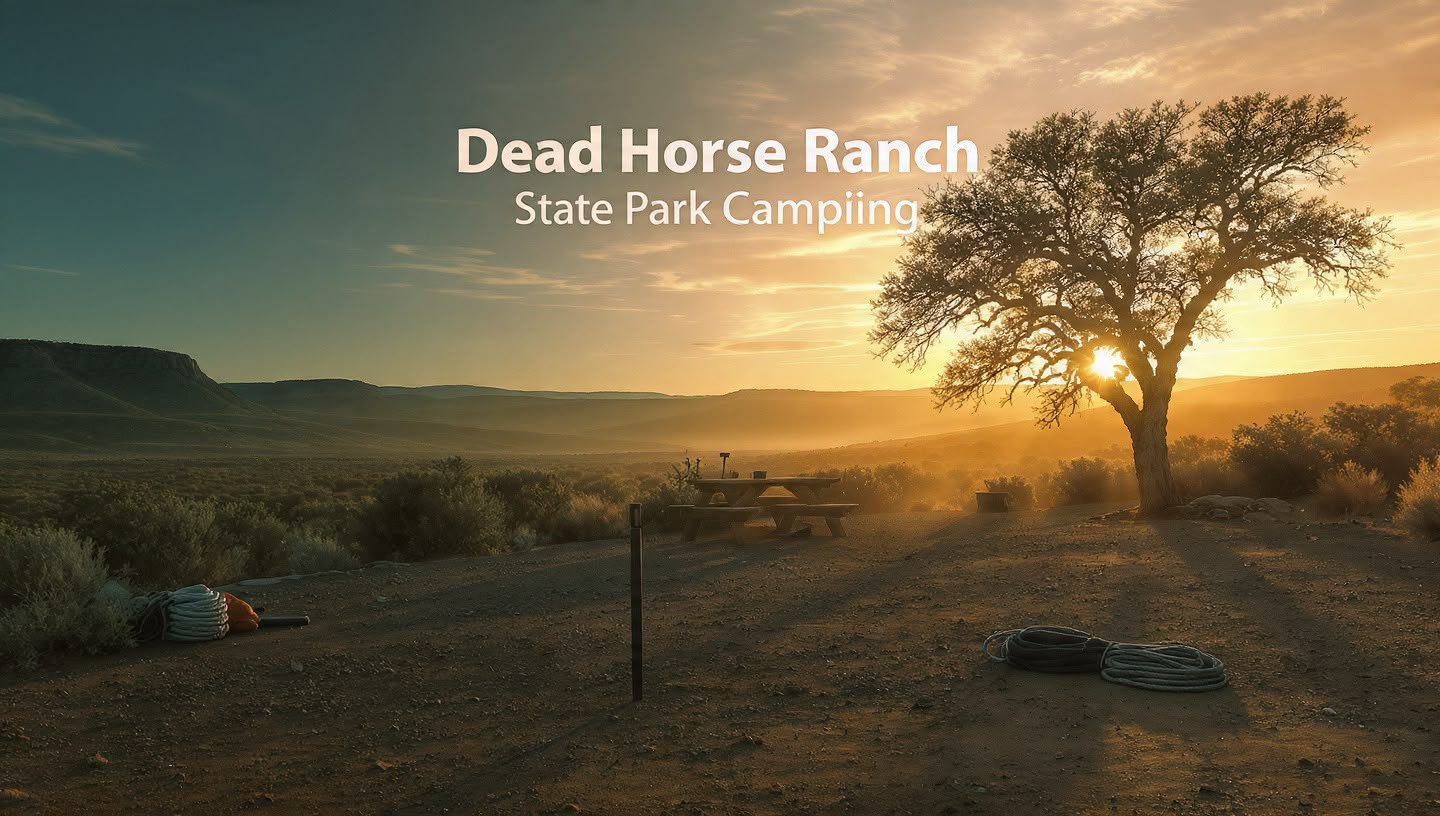
Dead Horse Ranch State Park camping is a high-desert basecamp, not a wilderness retreat. It sits in the heart of the Verde Valley.
The campground delivers genuine convenience with clean facilities and easy river access. Most first-timers do not realize how close it is to Cottonwood’s grocery stores.
You camp on the Verde River’s edge while staying ten minutes from a supermarket. This proximity defines the experience for better and for worse.
Road noise from 10th Street drifts into the Quail Loop. You will hear it at night if you camp on the western edge.
The park spreads across 423 acres with three fishing lagoons. Cottonwood trees shade the riparian zone by the river.
Key Takeaway: Dead Horse Ranch offers developed convenience, not solitude, making it a strategic hub for Verde Valley exploration.
Dead Horse Ranch State Park Campground Map and Loops Explained
The campground has three distinct loops plus a cabin row. Each loop serves a different camping style with specific site configurations.
Quail Loop contains the most sites and sits nearest the entrance. It features a mix of back-in and pull-through configurations for RVs.
Road noise is highest here but so is hookup reliability. Power pedestals are modern and well-maintained by the camp host.
Red-Tailed Hawk Loop is the central loop with a quieter feel. Its sites offer more shade from mature juniper and cottonwood trees.
Tent campers often prefer this loop for the softer ground. Sites here back up to open space, not another row of RVs.
Cooper’s Hawk Loop is the farthest from the road and the quietest. It has a compact feel popular with smaller rigs and tent campers.
Reserve a site on the outer rim for the most privacy. These back directly onto the desert scrub toward the river.
Inside the Loops
| Loop Name | Site Count | Hookup Types | RV-Friendly | Best For |
|---|---|---|---|---|
| Quail Loop | 60+ sites | Water & Electric, Full Hookup | Yes, pull-throughs | RV travelers needing full utilities |
| Red-Tailed Hawk Loop | 30+ sites | Electric & Water | Yes, back-ins | Tent campers wanting shade and quiet |
| Cooper’s Hawk Loop | 20+ sites | Electric & Water | Smaller RVs only | Couples and solo campers seeking privacy |
| Cabins | 8 cabins | Electric, no water inside | N/A | First-timers without camping gear |
Verify your specific site length on the Arizona State Parks reservation page. Some Cooper’s Hawk sites are very short.
Key Takeaway: Cooper’s Hawk Loop offers the quietest camping, while Quail Loop is best for big rigs needing full hookups.
How to Book Dead Horse Ranch State Park Reservations
Dead Horse Ranch State Park reservations are mandatory and open 12 months in advance. The booking window runs on a rolling daily calendar.
Book directly through the Arizona State Parks and Trails reservation portal. Do not use Recreation.gov for this state park.
To book a prime spring weekend site, log in before 7 a.m. Arizona time. The best river-adjacent and pull-through sites vanish within minutes.
First-time campers should create an online account days before the booking window. Pre-loading your payment and vehicle information saves critical seconds.
Experienced RV travelers target mid-week arrivals in April and October. This avoids the booking rush for Copper Canyon and Verde Valley event weekends.
Families needing two adjacent sites must book instantly when the window opens. Finding two side-by-side flat sites on a Saturday is extremely difficult.
- Create an account on the Arizona State Parks reservation site.
- Search “Dead Horse Ranch” and select your loop.
- Check the site’s max length and surface type photo.
- Verify the site’s proximity to the restroom on the map.
- Book exactly 12 months ahead for weekends in March, April, and October.
Arizona State Parks uses dynamic pricing and fees vary by season and hookup type. Always verify the final nightly rate and cancellation policy before confirming.
Key Takeaway: Create your online account now and book exactly when the 12-month window opens for spring and fall weekends.
Dead Horse Ranch State Park RV Camping and Hookup Guide
Dead Horse Ranch State Park RV camping centers on the Quail Loop’s full hookup sites. These offer water, 30/50-amp electric, and sewer connections.
The pull-through sites in Quail Loop can accommodate rigs up to 60 feet long. These are flat, gravel-paved, and easy to navigate with a big rig.
Do not attempt a 40-foot trailer in Cooper’s Hawk Loop. The turning radius is too tight and trees overhang the narrow road.
A dump station is available near the campground entrance for back-in site users. It is clean and easily accessible for all campers.
Water spigots are shared in Red-Tailed Hawk and Cooper’s Hawk loops. Plan to fill your fresh tank before backing into your site.
The park roads are paved and well-maintained for all vehicle types. There is zero clearance anxiety here, unlike boondocking spots in nearby Coconino National Forest.
Insider Tip:
Quail Loop site numbers ending in “20s” back onto open desert.
These feel less like a parking lot than the interior pull-through rows.
RV solar users should request sites on the loop’s south side for maximum exposure.
Arizona summer heat strains RV air conditioning units from June through August. A 50-amp connection is non-negotiable for those months.
Key Takeaway: Big rigs thrive in Quail Loop’s pull-throughs, but check site length photos online to avoid a tight squeeze.
The Best Dead Horse Ranch State Park Tent Camping Sites
The best Dead Horse Ranch State Park tent camping sites are in Red-Tailed Hawk Loop. Sites on the outer edge back up to desert scrub, not neighbors.
Look for site numbers in the 40s and 50s for shade. Large cottonwood and juniper trees block the intense high-desert afternoon sun here.
Cooper’s Hawk Loop offers smaller, more intimate walk-in tent sites. These sit farthest from the road and feel genuinely secluded at night.
Avoid tent camping in Quail Loop if you dislike generator noise. The close-packed RV sites create an urban hum during peak hours.
The ground is hard-packed desert soil with a gravel tent pad. Bring heavy-duty steel stakes because plastic ones snap on impact.
A family tent user needs a site rated for a large footprint. Check the maximum tent dimensions on the reservation page for each site number.
- Red-Tailed Hawk outer rim sites for shade and space.
- Cooper’s Hawk small sites for couples seeking quiet.
- Avoid Quail Loop unless no other tent spots exist.
Picnic tables and raised fire rings come standard with every site. A metal grate for grilling sits over the fire ring on most sites.
Key Takeaway: Target the outer edge of Red-Tailed Hawk Loop for the best tent experience with shade and privacy.
Dead Horse Ranch State Park Cabins and Alternative Stays
Dead Horse Ranch State Park cabins sit in a dedicated row east of the campground loops. These eight structures offer a clean, simple, climate-controlled base.
The cabins feature a queen bed and bunk beds for four people total. They lack interior plumbing, so you use the campground restroom and shower building.
Each cabin has heating, air conditioning, and a mini-refrigerator. A covered porch with a picnic table extends the living space outdoors.
Book cabins through the same Arizona State Parks reservation system as campsites. Their booking window opens 12 months in advance and fills instantly in spring.
A first-time camper with young children will find these cabins perfect. They eliminate tent setup stress while delivering a genuine campground atmosphere.
Couples seeking a romantic Verde Valley weekend should look elsewhere. The cabins are close together and near the main campground road traffic.
- The AC works well and blocks out neighbor noise.
- Bring your own bedding, pillows, and cooking stove.
- The porch is the best spot for morning coffee with a lagoon view.
The cabins sit near the lagoons, offering a quick walk for evening fishing. This location is their single greatest amenity for families with kids.
Key Takeaway: Cabins are an ideal middle ground for new campers, but book a full year ahead for spring availability.
A Guide to Dead Horse Ranch State Park Hiking Trails
The park’s trail system connects the campground to the Verde River and upland mesas. Trails range from flat riparian walks to exposed high-desert climbs.
The Blackhawk Trail climbs quickly to a mesa overlooking the entire Verde Valley. This 1.5-mile loop gains about 300 feet of rocky elevation quickly.
It offers a postcard view of the Red Rocks of Sedona to the north. The steepest section is unshaded and treacherous with loose rock.
The Lime Kiln Trail is a longer, 2.5-mile loop through classic high-desert scrub. It passes an old historic kiln and offers views of Tavasci Marsh.
This trail has zero shade from the midday sun. A beginner hiker in July risks heat exhaustion on this route by 10 a.m.
The Verde River Greenway trail is a flat, easy path along the water’s edge. This is where families should go for a short walk before dinner.
It connects the campground to the fishing lagoons and riverbank. Watch for javelina tracks in the mud near the water here.
- Start Blackhawk Trail at dawn for the best light and cool air.
- Carry a full liter of water even for short walks.
- The Greenway trail is stroller-friendly from the day-use parking lot.
An experienced hiker will find these trails too short and easy. Use Dead Horse Ranch as a basecamp and drive 20 minutes to Mingus Mountain for a real challenge.
According to Arizona State Parks, trails may close briefly after heavy monsoon rains due to flash flood risk. Verify trail status at the ranger station before a long walk.
Key Takeaway: Blackhawk Trail delivers a big view for a short, steep effort, but hike it only at dawn in warm months.
Verde River Access and Fishing from the Campground
Verde River access lies a short walk from the campground via the Greenway trail. There is no direct vehicle access to the river from inside the camping area.
The riverbank is a mix of soft mud and rocky gravel bars. Wading is easy in late spring when the flow drops and the water warms.
Fishing in the park also includes the three stocked lagoons near the cabins. These are Catfish, Rainbow Trout, and Bass-specific water bodies.
The lagoons offer a controlled environment ideal for teaching a child to fish. An Arizona state fishing license is required for anyone over the age of ten.
River fishing targets largemouth bass, channel catfish, and sunfish. The best water is downstream from the bridge where the current cuts a deeper channel.
Flash flooding from summer monsoon storms turns the Verde River into a dangerous torrent. Never wade in the river if you see muddy water and floating debris.
- Arizona Game and Fish Department stocks the lagoons seasonally.
- Worms work better than lures for kids fishing from the bank.
- Bring water shoes with a hard sole for the rocky riverbed.
A budget camper can fill an entire afternoon just exploring the riverbank. This is the park’s best free activity after you have paid the day-use fee.
Key Takeaway: The lagoons are perfect for a family’s first fishing trip, but check the Arizona Game and Fish stocking schedule online.
Getting There: Dead Horse Ranch State Park Directions and Access
Dead Horse Ranch State Park sits on the north edge of Cottonwood, Arizona. The physical address is 675 Dead Horse Ranch Road, Cottonwood, AZ 86326.
Driving from Phoenix takes roughly 1 hour and 45 minutes via I-17 North. You exit at Cottonwood and follow AZ-89A to 10th Street.
The route from Sedona is a scenic 30-minute drive south on AZ-89A. It winds through the Verde Valley’s red rock foothills with no steep grades.
Flagstaff is about 55 miles north, a 1-hour drive through Oak Creek Canyon. This route is steep and winding, not recommended for large RVs towing a vehicle.
An RV traveler coming from Flagstaff should take I-17 south to Cottonwood instead. The 89A switchbacks through Oak Creek Canyon are white-knuckle tight.
A paved two-lane road leads directly into the park entrance. No high-clearance vehicle is needed to reach any part of the campground.
- Set GPS to “Dead Horse Ranch State Park” not just “Cottonwood.”
- The last gas station with diesel is on Main Street in Cottonwood.
- RV dump station and potable water fill are inside the park near the entrance.
The park day-use entrance closes at dusk to non-campers. If you arrive late, use the campground entrance gate code on your reservation confirmation email.
Key Takeaway: The drive is easy for any vehicle, but avoid the 89A switchbacks from Flagstaff with a big rig.
The Best Time to Visit Dead Horse Ranch State Park for Camping
The best time to visit Dead Horse Ranch State Park for camping is April through May. Daytime temperatures settle into the 70s and nights are crisp but comfortable.
Late September through October delivers nearly perfect weather with fewer crowds. The cottonwood trees along the river turn bright gold in the autumn light.
A spring break family needs to book for March and early April exactly 12 months out. This is the single most competitive window at this campground.
An experienced outdoor enthusiast seeking solitude should visit mid-week in November. The park is nearly empty, but you risk an overnight freeze below 30 degrees.
Summer is brutally hot from June through August in the low 100s. This heat is manageable only for RV campers with a functioning air conditioner.
The July monsoon season brings a real flash flood risk along the Verde River. Afternoon thunderstorms can flood the trails in minutes, stranding hikers on the wrong side of a wash.
- Spring weekends: booked solid, must reserve a year ahead.
- Summer weekdays: hot but available for last-minute trips.
- Autumn weekends: the sweet spot for comfort and availability.
Winter nights drop into the low 20s between December and February. Tent campers need a four-season sleeping bag rated to 10 degrees Fahrenheit.
Key Takeaway: Target October for a perfect blend of fall color, mild weather, and manageable booking competition.
Seasonal Weather Realities and Park Closures
Dead Horse Ranch State Park weather reflects the high desert’s extreme daily temperature swings. A 40-degree Fahrenheit drop from afternoon to midnight is normal even in spring.
Summer highs in July routinely exceed 100 degrees Fahrenheit. The low humidity makes the shade tolerable, but physical exertion outdoors is dangerous.
The monsoon season from early July through mid-September transforms dry washes into rivers. Verify the Verde River flow rate with the USGS water data site before wading or fishing.
According to the National Weather Service, flash floods develop within minutes of heavy upstream rainfall. A storm you cannot see can send a wall of water down the Verde River.
Winter freezes hard overnight, cracking RV water hoses left connected to the spigot. Disconnect and drain your hose before bed if the forecast calls for below 30 degrees.
The park rarely closes fully but the Lime Kiln Trail may shut for mud. Arizona State Parks posts all closures on the official park web page and at the ranger station.
- Pack for a 50-degree daily temperature swing in spring and fall.
- Monitor the USGS streamflow gauge for the Verde River online.
- Bring an extra blanket even for a spring trip in an RV.
Wind can whip down the Verde Valley unexpectedly, collapsing cheap pop-up canopies. Stake every piece of gear with heavy-duty ground anchors every single night.
Key Takeaway: Prepare for violent temperature swings and sudden wind; check the USGS stream gauge before any river activity.
Camping at Dead Horse Ranch as a Family or First-Timer
Camping at Dead Horse Ranch is a training ground for first-time campers with children. The clean bathrooms with hot showers remove the biggest barrier to entry.
The lagoon fishing offers a guaranteed activity that requires no hiking skill. A child can catch a bluegill from the bank within minutes on a weekend morning.
A family with young kids should book a site in Red-Tailed Hawk Loop near the restrooms. Site numbers near the 30s are a short walk to flush toilets and showers.
A first-time tent camper should request a site with a shaded ramada. This provides a cool outdoor living space when the midday sun punishes the tent fabric.
The park’s proximity to Cottonwood solves the “forgot the ketchup” problem. A Walmart and several grocery stores sit less than a ten-minute drive from your campsite.
The camp store at the ranger station sells ice, firewood, and basic supplies. It does not stock tent repair kits or camping stove fuel.
- Buy firewood locally in Cottonwood to avoid spreading invasive insects.
- The park’s Junior Ranger program is worth picking up at the visitor center.
- Flush toilets are a miracle for a child’s first camping weekend.
An experienced camping family may find the campground too developed and structured. This is the park’s strength for newcomers and its weakness for seasoned backcountry veterans.
Key Takeaway: Dead Horse Ranch is the best campground in the Verde Valley for a family’s first-ever weekend camping trip.
How Dead Horse Ranch Compares to Nearby Camping Options
Dead Horse Ranch State Park is a developed campground, a sharp contrast to dispersed options nearby. Coconino National Forest surrounds the Verde Valley with free, primitive campsites.
Coconino National Forest dispersed camping offers total solitude and zero amenities. You pack out your own trash, have no water, and rely on a portable toilet.
The forest roads south of Sedona require high-clearance vehicles after rain. A minivan or a sedan will bottom out on the rutted dirt tracks to these free sites.
Thousand Trails Verde Valley is a private RV resort five miles from Dead Horse Ranch. It offers a pool, a clubhouse, and planned activities for a higher membership or daily fee.
A couple seeking a quiet romantic weekend may prefer a dispersed forest site. The noise of kids and organized games at the resort will grate on their nerves.
Dead Horse Ranch beats dispersed camping for a multi-family group with kids. The structured amenities and reserved sites eliminate the risk of a squatter in your spot.
- Dispersed camping in Coconino National Forest: free but primitive.
- Dead Horse Ranch State Park: paid, convenient, and family-friendly.
- Private RV resorts in Cottonwood: expensive but amenity-rich.
A budget solo traveler should use the free national forest land west of the park. You get the same Verde Valley view with zero cost and total silence.
Key Takeaway: Choose Dead Horse Ranch for ease and structure; choose dispersed forest camping for solitude and zero cost.
Cottonwood, Arizona: Town Logistics and Supply Runs
Cottonwood, Arizona is the park’s logistical backbone, located two miles from the entrance. It is a genuine full-service town, not a remote outpost with a single gas station.
Main Street in Old Town Cottonwood is a destination for wine tasting rooms. After a dusty hike on Blackhawk Trail, a clean air-conditioned tasting room feels like a luxury.
A Walmart Supercenter sits at the intersection of AZ-89A and AZ-260. Stock up on cheap camping gear, groceries, and forgotten sunscreen here before heading into the park.
Diesel fuel is available at multiple stations on Main Street near the I-17 connector. Do not count on the lone gas station near the park entrance for diesel.
For a restaurant meal off the camp stove, try Colt 804 Grill on Main Street. It is a local spot, not a tourist trap, with a shaded patio.
The Verde Valley Medical Center is in Cottonwood for any medical emergencies. It is a level IV trauma center with an emergency department open 24 hours.
- Fry’s Food and Drug on AZ-89A has the best grocery selection.
- Safeway on AZ-260 is open late and has a pharmacy.
- The Verde Valley Canyon Railroad depot is in nearby Clarkdale.
A camper with zero cell service in the park can drive into town for full 5G signal. Both Verizon and AT&T work perfectly on Main Street.
Key Takeaway: Cottonwood is a full-service town, so pack light knowing you can buy anything you forgot in under ten minutes.
Staying Safe: Park Rules and Important Safety Notes
Dead Horse Ranch State Park rules are standard for a developed campground but strictly enforced. The speed limit is 15 mph and a ranger patrols the loop after quiet hours.
Quiet hours from 10 p.m. to 6 a.m. are a genuine rule, not a suggestion here. The camp host will politely remind you once before a ranger issues a citation.
Fire restrictions escalate quickly in the high desert’s dry summer months. By June, a total campfire ban often goes into effect, with charcoal grills prohibited too.
Verify current Coconino National Forest and state park fire restrictions online before you pack. Bringing your own firewood is illegal unless it is Arizona-certified heat-treated wood.
Black bear and javelina frequent the campground searching for food. Store all coolers, toiletries, and food inside a hard-sided vehicle, not in your tent.
The Verde River’s calm surface hides a deceptively strong undercurrent near the bridge. Never let a child wade unsupervised, even in shallow water.
Important Safety and Conditions Notes for Dead Horse Ranch
The greatest immediate risk is flash flooding in the Verde River during monsoon season.
Verify the following before your trip:
- Fire restrictions on the Arizona State Parks website.
- Current USGS Verde River streamflow data.
- The specific weather forecast for Cottonwood, AZ, not Flagstaff.
- Your campsite’s maximum vehicle length on the reservation portal.
- The park’s current quiet hours and generator usage policy.
Assume a campfire ban from June through September and plan meals for a propane stove only.
Key Takeaway: The biggest dangers are summer fire bans and monsoon flash floods, both are easy to prepare for with online checks.
What the Photos Don’t Show You: A Realist’s Preview
The photos of Dead Horse Ranch State Park show a lush, green riparian paradise. They are real, but they are taken at dawn in April after a wet winter.
The campground is fundamentally a high-desert landscape with sharp, dusty plants. The spaces between the cottonwood trees are sun-baked gravel and hard-packed dirt.
You will hear road noise from 10th Street in the Quail Loop. No Instagram photo of a glowing campfire captures the sound of a semi-truck downshifting for the traffic light.
The Verde River is a muddy, slow-flowing stream for most of the year. The crystal-clear blue water in promotional shots reflects a rare winter day after upstream snowmelt.
This does not make the park a disappointment. It makes it a realistic, functional, and honest basecamp for exploring the Verde Valley.
Expect a clean, well-managed campground, not a remote wilderness painting. Adjust your expectations to this reality and you will have a genuinely great trip.
Key Takeaway: Come for the convenience and the basecamp location, not for wilderness solitude, and you will love this park.
Frequently Asked Questions About Dead Horse Ranch State Park Camping
Do you need a reservation for Dead Horse Ranch State Park?
Yes, a reservation is required for all campsites and cabins at Dead Horse Ranch.
There is no first-come, first-served camping inside the park.
You must book online through the Arizona State Parks reservation portal before arrival.
Are there full hookup RV sites at Dead Horse Ranch State Park?
Yes, the Quail Loop has full hookup RV sites with water, 30/50-amp electric, and sewer.
These are mostly pull-through sites that can fit rigs up to 60 feet long.
The other loops offer only electric and water with a central dump station.
Is there Verizon cell service at Dead Horse Ranch State Park campground?
Verizon cell service is weak and unreliable inside the campground loops.
You can often send a text message near the restroom buildings.
Reliable 5G data signal returns immediately once you drive into Cottonwood.
Can you swim in the lagoons at Dead Horse Ranch State Park?
No, swimming is strictly prohibited in the three fishing lagoons.
These are for fishing only, and the water is murky and full of submerged logs.
Wade in the Verde River instead, but only when water levels are low and clear.
Are dogs allowed on the trails at Dead Horse Ranch State Park?
Yes, dogs are allowed on all park trails if kept on a leash no longer than six feet.
Clean up pet waste immediately, as the heat bakes waste and attracts javelina.
Never leave a dog unattended at the campsite, as coyotes roam the park at dusk.
How far is Dead Horse Ranch from Sedona?
Dead Horse Ranch State Park is a 30-minute drive southwest of Sedona via AZ-89A.
The distance is roughly 18 miles and the road is paved and well-maintained.
Expect heavy tourist traffic on this road, especially on weekends in the spring.
The Single Best Piece of Advice
Dead Horse Ranch State Park camping is all about strategic convenience. You are not here for a remote wilderness experience.
You are here for a clean, comfortable basecamp near Cottonwood’s wine and food scene. The best trip uses the park as a crash pad for Verde Valley exploration.
Book a site in Cooper’s Hawk or Red-Tailed Hawk Loop for the quietest sleep. Avoid the western edge of Quail Loop if traffic noise bothers you at night.
Reservation windows and fire restrictions change without notice in Arizona’s high desert. Call the park or check the Arizona State Parks website to confirm every detail before you leave home.