Duncans Mills vs. Japan Camping: A 2026 Guide
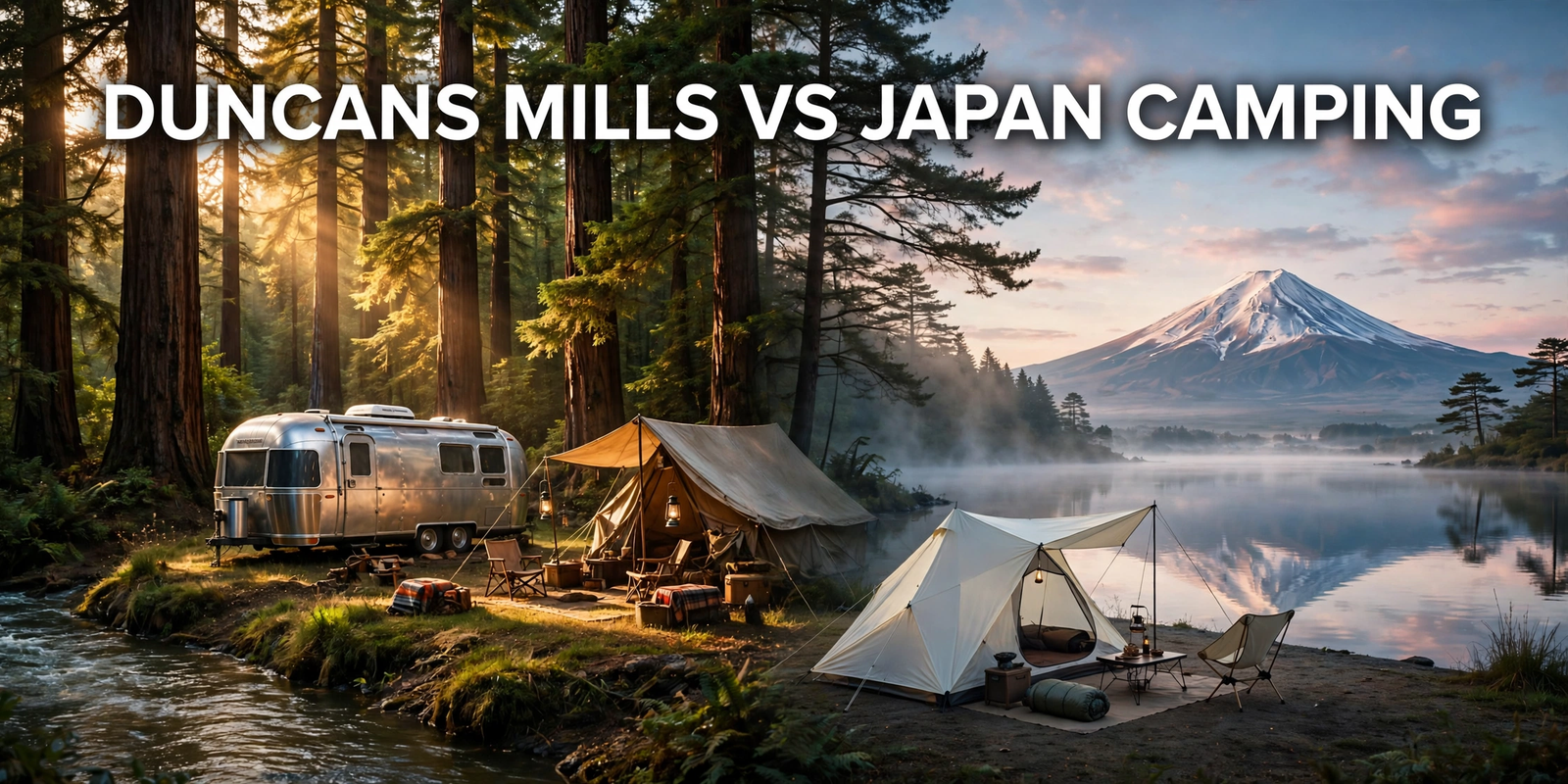
Duncans Mills Camping Club is a classic Russian River hub. Camping in Japan offers a uniquely structured outdoor culture. This guide compares both experiences for your 2026 planning.
Duncans Mills operates as a private resort with river access. Japan’s camping scene ranges from ultra-organized glamping to minimalist “free campsites.” The key difference is cultural expectation and booking style.
We will cover specific site types, reservation systems, and regional recommendations. You will learn which experience fits your budget, gear, and travel style for next season.
duncans mills camping club
The best site type at Duncans Mills Camping Club depends on your travel profile. RV travelers want the riverfront pull-throughs. Tent campers should target the shaded redwood loops.
Reservations open months ahead through the campground’s private online portal. Summer weekends book out fast, often within hours. Verify the current booking window directly with the club before planning.
This campground best suits Bay Area families and RV travelers. It is not a good fit for solitude-seekers. The sites are close together and the atmosphere is social.
Weather is best from April to October. Summer brings morning fog and warm afternoons. Winter is rainy and many river activities become less appealing.
Most first-timers miss how close the campground is to Highway 116. You will hear road noise in some loops. Request a site in the back section if you want more quiet.
| Site Type | Hookup | Best For | Honest Note |
|---|---|---|---|
| Riverfront | Full/Partial | RV Travelers, Families | Most desirable, books first, less privacy. |
| Redwood Loop | None/Water | Tent Campers, Couples | Shadier and quieter, but farthest from river. |
| Open Field | None | Groups, Budget | Sunny and exposed, can feel cramped on weekends. |
camping in japan
Camping in Japan is not a single experience. It ranges from refined glamping near Mount Fuji to rugged campsites in Hokkaido. Your choice defines your entire trip.
The most important step is understanding the booking culture. Many popular sites require reservations through Japanese-language web portals. Phone calls can be difficult without language skills.
Experienced outdoor enthusiasts will prefer Hokkaido’s remote public campgrounds. These offer more space and a wilder feel. First-timers will find Fuji Five Lakes more accessible.
The best months are July and August for Hokkaido. April, May, and October are ideal for Honshu. Avoid Golden Week in early May if you dislike crowds.
Most Western campers underestimate the formality. Campsites are meticulously organized. There are specific rules for trash, quiet hours, and even where you wash dishes.
russian river camping
The Russian River offers a string of campgrounds from Healdsburg to Jenner. Duncans Mills Camping Club sits at the western end. Schoolhouse Canyon Campground is a more rustic option east of Guerneville.
Families with children should look at campgrounds with direct, shallow river access. Casini Ranch Family Campground near Duncan Mills is a strong alternative. It has a huge lawn and calm water.
Reservations for the Russian River corridor are essential from May through September. ReserveCalifornia handles the nearby Sonoma Coast State Park campgrounds. Private parks like Casini Ranch use their own booking systems.
The river is the main attraction here. Kayaks, canoes, and inner tubes are everywhere. Water levels are typically calm in summer, perfect for lazy floats.
The honest limitation of this area is weekend traffic. The river towns of Guerneville and Monte Rio get packed. Book a campsite and plan to stay put for the weekend.
sonoma coast camping
Sonoma Coast camping delivers a completely different vibe than the river. Wright’s Beach Campground places you directly on a sandy beach. It is managed by California State Parks.
This is the spot for couples and romantic weekend travelers. The sound of the Pacific is constant. The sunsets over Bodega Bay are spectacular.
Reservations for Wright’s Beach are mandatory and very competitive. They become available through ReserveCalifornia on a rolling basis. You need to book the moment your window opens.
The coastal weather is colder and foggier than inland. Bring layers even in July. The reward is dramatic cliffs, tide pools, and migrating whales in season.
Do not expect to swim here. The water is dangerously cold. This is for walking, photography, and watching the ocean, not body surfing.
best campgrounds japan
The best campgrounds in Japan depend on what you want to see. For Mount Fuji views, Lake Motosu Campground offers the most iconic perspective. For wide-open nature, Hokkaido’s Shikotsu-Toya National Park campsites are superior.
Budget campers should target municipal campsites. These are often called “auto camp-jo” or “camp-jo.” They are incredibly clean and cost a fraction of private resorts.
According to the Japan National Tourism Organization, there are over 3,000 registered campgrounds. The sheer number means you can almost always find something available. The challenge is finding one that suits your style.
For families, larger private parks near major cities offer the most convenience. They have on-site stores, rental gear, and flush toilets. These are less adventurous but very stress-free.
The honest downside is that “best” is relative. The most famous spots are often crowded. A little extra driving reveals quieter, equally scenic options.
japan campsite reservation
You can reserve most Japanese campsites online, but the process varies wildly. Some use national platforms like Nappu. Others rely on phone calls or their own Japanese-only websites.
First-time international campers face the biggest hurdle here. The language barrier is real. Your best tool is a translation app and patience.
For popular sites during peak season, book one to three months in advance. This is less competitive than US national parks. Smaller municipal sites often accept same-day arrivals.
Some high-end glamping Japan resorts are listed on international booking platforms. These are the easiest to reserve. You pay a premium for that convenience.
Always confirm your reservation with a follow-up email. Clearly state your arrival time. Japanese campgrounds are very punctual and some have strict check-in windows.
| Reservation Method | Best For | Difficulty | Peak Season Lead Time |
|---|---|---|---|
| Nappu / Web Portals | Independent Planners | Medium (Japanese) | 1-3 Months |
| Private Site (Phone) | Advanced Planners | High (Language) | 1-2 Months |
| International Booking | Glamping/Resort Users | Easy | 2-3 Months |
| Walk-In | Flexible Budget Travelers | Low (for municipal) | Same Day |
RV camping sonoma county
RV camping in Sonoma County is concentrated along the Russian River. Duncans Mills Camping Club and Casini Ranch are the two big names. Both cater well to RVs with full hookups.
Road access is generally fine for any size RV. Highway 101 to River Road is a straightforward drive. Be cautious on smaller roads near the coast, which can be narrow and winding.
RV travelers should book the longest available site. Many sites were built decades ago. A modern 30-foot trailer will feel tight on the older loops.
The main limitation is the lack of true “resort-style” amenities. You will find hookups and bathrooms. Do not expect heated pools or paved patio pads.
Plan your dump station use strategically. Weekends create lines at checkout time. Dump on a weekday morning or the night before you leave.
glamping japan
Glamping in Japan has become a major industry. Hoshino Resorts operates several high-profile locations. These offer luxury tents with beds, electricity, and private baths.
This experience is genuinely worth the price for first-time outdoor travelers. You get the nature experience without the gear headache. The service is exceptional and language is less of a barrier.
Experienced campers may find it overpriced and inauthentic. The sites are often closer to a hotel than a campground. The curated experience removes the sense of adventure.
The best glamping spots are near tourist landmarks. The Fuji Five Lakes area is packed with options. You can wake up to a view of Mount Fuji from a heated bed.
The honest catch is that these book out incredibly fast. Popular resorts are reserved months in advance. This is not a last-minute, budget-friendly option.
riverfront camping california
Riverfront camping in California is a premium category. Duncans Mills Camping Club is a prime example on the Russian River. Other notable spots include Lupin Lodge in the Santa Cruz Mountains.
The value of a riverfront site is direct water access. You can launch a kayak from your campsite. Kids can splash in the shallows while you make coffee.
The trade-off is privacy. River sites are always the most popular. Expect other campers to walk past your site to reach the water.
For budget campers, riverfront sites are a luxury. The higher nightly rate is for the location. A site one row back is often significantly cheaper and quieter.
Check the water level before you book a riverfront site in spring. High water can flood low-lying sites. The campground will have current information.
michi-no-eki overnight parking
Michi-no-eki are government-designated roadside stations found throughout Japan. They offer free parking, 24-hour toilets, and local food shops. Overnighting in a campervan here is common but unofficial.
This is the ultimate option for budget campers road-tripping Japan. It costs nothing for a safe, well-lit place to park for the night. You are not allowed to set up a tent or cook outside your vehicle.
The rules are unspoken but important. Be quiet, be tidy, and leave early. You are a guest using a rest stop, not a campsite.
This system is ideal for campervan travelers exploring rural Hokkaido or Kyushu. It is less practical in major cities. Urban michi-no-eki are often busy and less welcoming to overnighters.
The honest risk is that it is not a legal guarantee. Local police can ask you to leave. This rarely happens if you are discreet, but it is a possibility to know.
hokkaido camping
Hokkaido is Japan’s best region for pure, wild camping. The open spaces and cooler summers feel a world away from Tokyo. The best campsites are often free or very low-cost.
Niseko is the adventure hub. In summer, its ski resorts become mountain biking and hiking centers. The surrounding campsites offer stunning views of Mount Yotei.
This region is best for experienced outdoor enthusiasts. Distances are vast and a rental car is essential. The rewards are quiet trails, hot springs, and incredible local food.
The camping season is short. Most campgrounds operate from late June through early September. Snow can linger on mountain passes well into spring.
Ezo deer and red foxes are common wildlife sightings. You must store all food in your car or a provided bear box. Hokkaido has a large population of Ussuri brown bears.
fuji five lakes camping
Fuji Five Lakes camping is defined by one thing: the view of Mount Fuji. Lake Motosu and Lake Kawaguchi are the most popular bases. The mountain dominates the horizon on clear days.
This area is a perfect introduction to camping in Japan for a first-timer. It is easily accessible from Tokyo by bus or train. You can rent gear at some of the larger campgrounds.
The honest assessment is that it is a crowded, tourist-driven experience. You will not find solitude here. The view is spectacular, but you will share it with many others.
The best season is autumn. The air is crisp and clear, offering the best chance to see Fuji. Cherry blossom season in April is also beautiful but very busy.
Book your site well in advance if you want to camp on a weekend. The most famous campgrounds fill up. A mid-week stay offers a slightly more relaxed pace.
free camping japan
Free camping in Japan exists in two forms. “Free campsites” are designated public areas with minimal facilities. Wild camping is technically allowed in some areas but is heavily regulated.
For budget travelers, Hokkaido has the best network of free or very cheap campsites. They are often located in stunning natural settings. The trade-off is basic amenities like a simple pit toilet.
Wild camping is a legal grey area. It is often tolerated in remote mountain areas or on beaches. It is strictly prohibited in national parks and most public parks in cities.
The Leave No Trace Center for Outdoor Ethics principles are essential here. Pack out everything you bring. The goal is to leave zero impact on these pristine areas.
The risk is real. Camping on private land without permission is trespassing. Always look for designated signs or ask at a local tourist information center.
wild camping japan rules
The main rule for wild camping in Japan is “do not be a nuisance.” There is no single law that bans it entirely. Local ordinances and national park regulations create a complex patchwork.
The most important rule is to never camp in urban parks or on beaches near towns. This is almost universally prohibited. You will be moved on by police.
In remote areas, practice “stealth camping.” Arrive late, leave early, and leave no trace. A small, dark-colored tent is more discreet than a large, bright one.
For experienced backcountry enthusiasts, the Japanese Alps offer opportunities. You will need to register your route at a mountain hut or ranger station. This is a safety measure, not a permit system.
The honest truth is that the best wild camping in Japan is in Hokkaido. The open space and tolerant local culture make it more practical.
camping gear japan
You do not need to bring all your gear to camp in Japan. Major outdoor brands like Mont Bell and Snow Peak are everywhere. You can buy high-quality equipment in most large cities.
For first-time campers, renting gear is the best option. Many popular campgrounds and glamping sites offer full rental packages. This includes tent, sleeping bag, and cooking equipment.
If you plan to rent a campervan, it will come fully equipped. This is the easiest way to road-trip. The van has a bed, stove, and all the basics you need.
The one item you should bring from home is a quick-dry towel. Japanese campsites always have shower facilities. The supplied towels are often small and slow to dry.
Your US camping stove will not work in Japan. The fuel canisters are a different standard. Buy a stove and fuel after you arrive.
Key Takeaway: Duncans Mills is convenient and social. Japan requires more planning but offers a unique cultural and natural experience.
Frequently Asked Questions About Duncans Mills and Japan Camping
What type of camping is Duncans Mills Camping Club known for?
Duncans Mills Camping Club is known for classic car and RV camping on the Russian River.
The atmosphere is social and family-friendly with direct river access.
It is not a backcountry or dispersed camping destination.
Do you need a reservation to camp in Japan?
Yes, reservations are highly recommended for most campsites in Japan, especially on weekends and during peak seasons.
Many popular campgrounds and glamping resorts book out months in advance.
Some smaller municipal campsites may accept same-day arrivals, but it is a risk.
What are the best campgrounds near the Russian River?
The best campgrounds are Duncans Mills Camping Club, Casini Ranch, and Schoolhouse Canyon.
For a coastal experience, Wright’s Beach Campground is the top choice.
Each offers a different vibe from riverfront to rustic to beachside.
Is camping in Japan expensive?
Camping in Japan can be very affordable, especially at municipal “free” or low-cost campsites.
Private campgrounds with more amenities are moderately priced, similar to US state parks.
Glamping is the most expensive option, comparable to a luxury hotel.
What are the rules for wild camping in Japan?
Wild camping is a legal grey area and is often prohibited in national parks and urban areas.
The primary rule is to be discreet, leave no trace, and avoid private land.
It is best practiced in remote areas of Hokkaido or the backcountry.
Can you rent camping gear in Japan?
Yes, you can easily rent camping gear from major outdoor retailers or at popular campgrounds.
Many campervan rental companies also provide fully equipped vehicles.
This is often easier and cheaper than bringing your gear from home.
The choice between Duncans Mills and Japan comes down to your goal. Duncans Mills offers an easy, familiar escape. Camping in Japan provides a deep cultural immersion.
Your next step is to check the booking window for your chosen destination. Fees and reservation systems change without notice. Verify directly with the campground before you finalize your plans. The right trip is the one you prepare for best.