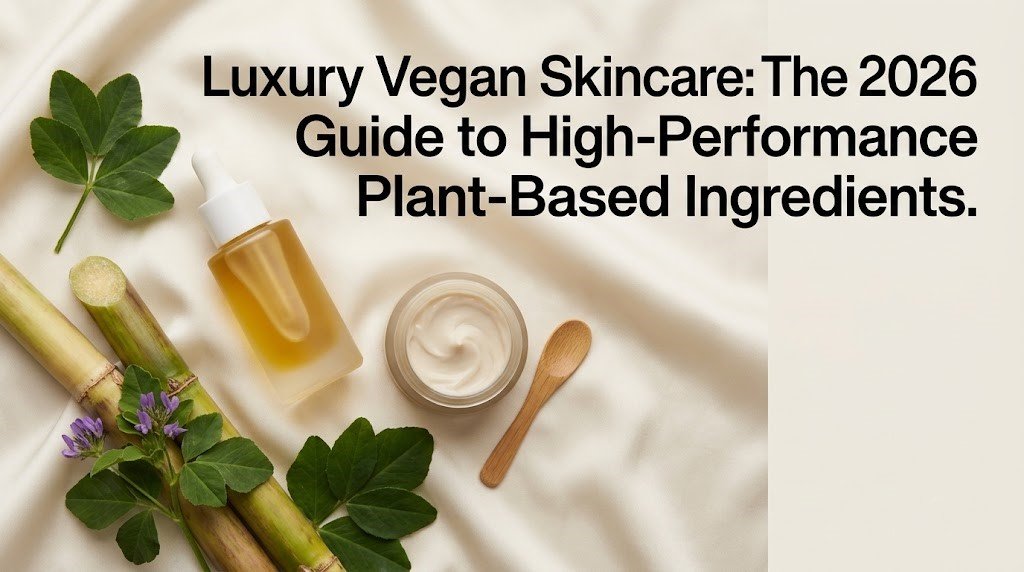
Luxury Vegan Skincare: The 2026 Guide to High-Performance Plant-Based Ingredients
Luxury vegan skincare combines the sensorial richness of prestige formulations with active ingredients sourced without any animal-derived inputs or byproducts. The performance depends entirely on the specific plant-derived or synthetic compounds in the bottle, not the vegan label alone. In 2026, the best formulations use fermentation-derived ceramides, plant-based retinol alternatives like bakuchiol, and biotechnologically produced hyaluronic acid to match or exceed the results of their conventional counterparts.
A 2019 randomized clinical trial published in the British Journal of Dermatology found that the plant-derived molecule bakuchiol improved fine lines, pigmentation, and elasticity at a level comparable to retinol after 12 weeks, with less associated scaling and stinging. This single study shifted the conversation from vegan skincare as a compromise to vegan skincare as a legitimate high-performance category worth rigorous investigation. The data matters more than the marketing story.
This guide walks you through the specific ingredients that define the modern luxury vegan category. You will learn how plant-based ceramides repair the skin barrier, which vegan retinol alternatives have human clinical backing, and how to spot a formulation that is genuinely efficacious versus one that is simply expensive and plant-filled. We name the compounds, examine the evidence, and help you build a routine grounded in cosmetic chemistry rather than brand narrative.
what does luxury vegan skincare mean
Luxury vegan skincare means a product is formulated without any animal-derived ingredients, byproducts, or insect secretions, while meeting the elevated texture, packaging, and sensorial experience standards of the prestige skincare market. The animal-derived inputs most commonly replaced include beeswax (Cera alba), lanolin (a sheep sebum derivative), collagen, elastin, silk proteins, carmine, and shark liver-derived squalene. The term “vegan” in a topical skincare context remains a cosmetic claim, not a legal definition enforced by the FDA, which is why independent certification marks from organizations like The Vegan Society or Vegan Action carry weight for verification.
The “luxury” dimension refers to the investment in clinical-grade active concentrations, elegant emulsion systems, and multi-sensory textures that feel substantive on skin without being greasy. A luxury vegan moisturizer does not just swap petrolatum for shea butter and call it done. It engineers a lamellar emulsion that mimics the lipid bilayers found naturally in the stratum corneum, using vegan phospholipids and fermentation-derived ceramides. The manufacturing cost to cold-process these structures with plant oils while maintaining oxidative stability is high, which contributes to the premium price point.
The final layer of distinction involves the formulation philosophy around what is excluded, not just what is sourced. A luxury vegan product from a brand like Biossance or Pai Skincare typically avoids the “spaghetti at the wall” approach of throwing dozens of unpreserved botanical extracts into a jar. Instead, the formulation architecture uses a smaller number of high-purity, biotechnologically produced actives with documented skin targets. You are paying for ingredient precision, not just a long INCI list of obscure Amazonian fruit extracts with no published clinical data.
Key Takeaway: Luxury vegan skincare is a precise engineering challenge of replacing animal-sourced functional ingredients like ceramides and squalene with biotechnologically identical or superior plant-based versions, while maintaining the elegant texture and stability that define the prestige category.
vegan vs cruelty-free understanding the difference
Vegan and cruelty-free are separate claims governed by entirely different criteria, and a product can be one without being the other. A cruelty-free label means the final product and its ingredients were not tested on animals at any stage of development, a standard verified by third-party programs like Leaping Bunny, which requires a supplier monitoring system and independent audits. A vegan label means the product contains no animal-derived ingredients or animal byproducts, a standard verified by the Vegan Action “Certified Vegan” mark or The Vegan Society’s sunflower trademark, which assesses ingredient supply chains for animal inputs like carmine, beeswax, lanolin, and keratin.
The regulatory gap is critical. A product can display a self-declared “cruelty-free” bunny logo designed in-house by the brand without any independent audit. A product can claim “vegan” on the front label while using honey-derived ingredients or silk amino acids because no federal regulation prohibits this. In mainland China, pre-market animal testing on imported cosmetic products was historically required, though regulatory changes in 2021 removed mandatory animal testing for most general cosmetics manufactured and sold domestically. For consumers seeking verified luxury vegan skincare, the presence of both an independently issued vegan certification mark and a Leaping Bunny or equivalent cruelty-free certification represents the highest alignment of both ethical consumption goals.
| Claim | Definition | Verifying Body |
|---|---|---|
| Cruelty-Free | No animal testing at any production stage | Leaping Bunny, PETA Beauty Without Bunnies |
| Vegan | No animal-derived ingredients or byproducts | Vegan Action, The Vegan Society |
| Both | Independently verified for both standards | Brands carrying both certification marks |
If a luxury face oil is formulated entirely with plant oils and vitamin E (tocopherol) but the brand sells in physical retail locations in a regulatory region that requires animal testing for market access, the vegan claim on the ingredient panel is accurate while the overall product line may not meet a strict cruelty-free standard. Understanding this distinction prevents the assumption that the two terms are interchangeable.
clean beauty and vegan how the definitions separate
Clean beauty is a marketing term with no regulatory definition, used broadly to signal the exclusion of specific ingredients a brand or retailer deems undesirable, such as parabens, phthalates, sulfates, or synthetic fragrance. Vegan skincare refers exclusively to the absence of animal-derived inputs in the formulation. A product can be clean by Sephora’s “Clean at Sephora” standard while containing beeswax and lanolin, making it definitively not vegan. A luxury vegan serum can simultaneously fail a “clean” standard by containing fully synthetic, laboratory-synthesized preservatives like phenoxyethanol, which have robust safety data reviewed by the Cosmetic Ingredient Review (CIR) Expert Panel but appear on many clean beauty restricted lists.
The 2026 disconnect between these concepts creates confusion when shopping the prestige skincare aisle. A brand marketing itself as “clean vegan” may emphasize botanical ingredients like essential oils and fragrant plant hydrosols, prioritizing the exclusion of synthetic preservatives over the skin’s barrier tolerance. A separate luxury vegan brand may formulate with ethically sourced plant actives but preserve the formula with modern, broad-spectrum antimicrobials that allow a stable 12-month shelf life without microbial contamination risk. Neither approach is inherently superior, but the skin’s biological response to a 100% natural preservative system may include contact dermatitis in sensitive individuals, a nuance lost in the clean marketing narrative.
Look for the specific ingredient list, not the front-label claims. A vegan cleanser preserved with radish root ferment filtrate (Leuconostoc/radish root ferment filtrate) carries a different preservation efficacy and irritancy profile than one preserved with a synthetic system. The American Academy of Dermatology does not endorse the “clean” category as a scientific standard, and its position states that preservative systems prevent microbial growth in water-containing products, which is a genuine safety consideration. A luxury vegan moisturizer in an airless pump with a well-designed preservative system may offer superior stability compared to a jarred “clean” alternative that oxidizes rapidly upon opening.
the luxury sensorial experience in plant-based formulations
The sensation of applying a luxury vegan moisturizer or serum, the slip, the absorption rate, the finish on skin, is engineered through a lipid phase constructed entirely without animal-derived emollients. Animal-sourced squalene (from shark liver) and lanolin provide a uniquely substantive, skin-mimetic slip because their molecular structures closely match the lipids in human sebum. The plant-based formulator must recreate this tactile experience using sugarcane-derived squalane, which has been hydrogenated to a stable, non-comedogenic form, combined with structured plant oils like jojoba esters, caprylic/capric triglyceride, and shea butter ethyl esters. The sensory gap between a cheap natural lotion and a luxury vegan cream is entirely in the lipid structuring technology.
The second dimension of luxury texture involves the thickener and gelling system. Animal gelatin and silk proteins provided a specific bouncy, cooling gel texture that was standard in prestige Asian skincare. Vegan replacements use a combination of sclerotium gum, microbial-derived xanthan gum, and algae extracts like carrageenan or algin to achieve that “memory-gel” texture that bounces back when touched. Youth to the People, for example, builds their texture philosophy around kale and spinach extracts blended with hyaluronic acid from fermentation, using plant-derived propanediol as a humectant carrier that improves slip without the characteristic tackiness of glycerin-heavy formulas.
Fragrance is the final and most contested sensorial element. The luxury skincare experience is historically tied to an essential oil-dominant aromatherapeutic opening note: neroli, Bulgarian rose absolute, sandalwood. These are vegan, but they are also among the most common causes of allergic contact dermatitis from cosmetic products, a point documented extensively by the American Contact Dermatitis Society. The most sophisticated luxury vegan brands in 2026 are trending toward fragrance-free or using single-molecule, nature-identical aroma compounds that provide a clean, spa-like scent without the volatile allergen fractions present in whole essential oils. This shift recognizes that the luxury experience is increasingly defined by how skin feels and functions the morning after application, not just the olfactory signature during the ritual.
best vegan skincare ingredients with clinical backing
The performance of luxury vegan skincare lives entirely in the specific concentration, molecular form, and clinical data supporting each plant-derived or biotech-synthesized active. The formulation philosophy that separates luxury from basic natural skincare is the use of bio-fermentation to produce ingredients identical to their animal-derived counterparts, rather than using whole plant extracts with unstandardized active compound levels. The most clinically relevant vegan actives for 2026 are bakuchiol (a meroterpene phenol from Psoralea corylifolia), sugarcane-derived squalane, fermentation-derived hyaluronic acid, plant peptides from hydrolyzed rice and soy proteins, and tetrahexyldecyl ascorbate, an oil-soluble vitamin C ester. Each has at least one controlled human study or well-established dermatological consensus supporting its skin function.
| Vegan Ingredient | INCI Name | Primary Skin Function | Key Clinical Evidence |
|---|---|---|---|
| Bakuchiol | Bakuchiol | Retinol analog; stimulates collagen, reduces MMPs | 2019 randomized controlled trial, British Journal of Dermatology |
| Plant Squalane | Squalane | Non-comedogenic emollient, prevents TEWL | Well-established in cosmetic chemistry; non-irritating across skin types |
| Sodium Hyaluronate (fermented) | Sodium Hyaluronate | Humectant; holds 1,000x its weight in water | Extensive RCT data for wound healing and barrier hydration |
| Tetrahexyldecyl Ascorbate | Tetrahexyldecyl Ascorbate | Lipid-soluble antioxidant; brightens, stimulates collagen | A 2016 study in Journal of Drugs in Dermatology showed efficacy in reducing photodamage |
| Plant Peptides | Hydrolyzed Soy/Rice Protein | Cell signaling for collagen and elastin synthesis | In vitro and small in vivo studies; less robust than retinoid or AHA data |
Azelaic acid deserves mention as a grain-derived (often from barley or wheat fermentation) active with strong clinical evidence for both post-inflammatory hyperpigmentation and papulopustular rosacea management. The April 2020 JAAD guidelines list azelaic acid as an effective topical for rosacea-associated erythema and papules. For vegan formulations, the key confirmation point is that the azelaic acid is synthesized via a fermentation pathway rather than using any animal-derived processing aids. Asking a brand directly about the sourcing pathway for their azelaic acid is a reasonable due diligence question for a vegan consumer.
plant-based ceramides how they support the skin barrier
Plant-based ceramides used in vegan luxury skincare are phytoceramides, typically extracted from wheat germ oil, rice bran, or produced through fermentation processes using engineered yeast strains like Saccharomyces cerevisiae. Phytoceramides are sphingolipids structurally similar to the ceramides naturally present in the human stratum corneum, specifically ceramide NP (ceramide 3), which constitutes approximately 22% of the skin’s natural lipid barrier. The luxury vegan formulation challenge is that applying a single ceramide type to skin does not reconstitute a healthy barrier; the optimal clinical approach to barrier repair involves a specific molar ratio of ceramides, cholesterol, and free fatty acids (1:1:1 or 3:1:1), a finding established through studies led by Dr. Peter Elias’s laboratory on epidermal barrier function.
A luxury vegan moisturizer from a brand like Pai Skincare or Biossance solves this by blending multiple phytoceramide types with plant-derived cholesterol (from sources like lanolin-free phytosterols) and fatty acids from oils such as borage, evening primrose, or safflower, which are rich in linoleic acid. This lipid mixture forms a lamellar structure that fills the extracellular spaces between skin cells, directly reducing transepidermal water loss (TEWL). Without the correct cholesterol and fatty acid partners, even high concentrations of plant ceramides underperform because they crystallize in the formula rather than integrating into the skin’s lipid bilayers.
For individuals with compromised barriers, and those with a history of atopic dermatitis, a condition genetically linked to filaggrin mutations and reduced natural ceramide production, vegan ceramide formulations offer a critical repair pathway. Look for products listing ceramide NP, ceramide AP, and ceramide EOP on the INCI alongside cholesterol and a fatty acid source. A product that simply lists “rice extract” or “wheat germ oil” as a source of ceramides without specifying the concentration or the complete lipid ratio is marketing a benefit story rather than a formulated repair system.
vegan retinol alternatives bakuchiol and beyond
Bakuchiol is the most evidence-backed vegan alternative to retinol, with a mechanism of action that involves direct binding to retinoic acid receptors (RARs) and regulation of gene expression to stimulate collagen type I and type III production while suppressing matrix metalloproteinases (MMPs) that degrade existing collagen. A 2019 randomized, double-blind, 12-week clinical trial published in the British Journal of Dermatology compared 0.5% bakuchiol applied twice daily to 0.5% retinol applied once daily. The study found statistically significant improvements in wrinkle surface area and hyperpigmentation for both groups, with no statistically significant difference in efficacy between the two, and the bakuchiol group reported less facial scaling and stinging. This is not an in vitro cell culture finding; it is a human clinical trial that reshaped how dermatologists discuss plant-derived retinoid alternatives.
Beyond bakuchiol, other vegan alternatives work via different molecular pathways and do not directly mimic retinoid receptor activity. Beta-carotene, the provitamin A carotenoid found in carrot root extract, can be enzymatically converted by skin cells into retinaldehyde and then to retinoic acid, though the conversion rate is highly variable and dependent on individual enzyme efficiency, making it less reliable as a primary anti-aging active. Rambutan leaf extract (Nephelium lappaceum) is a newer plant-derived ingredient, with a 2021 in vitro study showing retinoic acid receptor activation and collagen gene expression. However, human clinical trial data for rambutan extract for photoaging outcomes is minimal compared to the bakuchiol evidence base. Sea buckthorn oil, rich in the rare omega-7 fatty acid palmitoleic acid, supports tissue regeneration and barrier function but does not activate retinoic acid pathways.
The practical recommendation for someone transitioning from conventional retinol to a vegan alternative is to start with a formulated 0.5% to 1% bakuchiol product, applied twice daily in a complete formulation containing peptides and antioxidants for additive benefit. Retinaldehyde, a direct precursor to retinoic acid that is also vegan, offers a more potent, intermediate option for skin already acclimated to retinoids, but its higher irritation potential requires the same cautious introduction as conventional retinoid products. Pregnant or nursing individuals should discuss any retinoid or bakuchiol product use with their board-certified obstetrician, as the safety data for bakuchiol in human pregnancy is not as extensive as the clear avoidance data for tretinoin and high-dose oral retinoids.
plant-derived squalane a lightweight non-comedogenic emollient
Plant-derived squalane is produced through the hydrogenation of squalene extracted from sugarcane (Saccharum officinarum), resulting in a stable, fully saturated hydrocarbon that does not oxidize upon air exposure, unlike its unsaturated precursor. This molecular stability is the functional distinction that makes sugarcane squalane a superior cosmetic ingredient to olive-derived squalane, which requires more refining to remove odor and oxidation-prone fractions. Approximately 12% of human sebum is squalene at secretion, making squalane a biomimetic emollient that integrates smoothly into the skin’s lipid film without the heavy, occlusive layer of petrolatum or mineral oil.
For acne-prone skin and individuals with oily, congestion-prone complexions, squalane is rated as non-comedogenic, with a score of 0 to 1 on the standard five-point comedogenicity scale. It functions as an emollient that softens and smooths skin by filling the micro-cracks in the stratum corneum, while also possessing a moderate capacity to reduce TEWL. Think of squalane as a sheer, weightless silk veil laid over the skin, protecting moisture without suffocating pores, whereas a heavier occlusive like shea butter is a heavier wool blanket.
| Property | Sugarcane Squalane | Olive Squalane | Mineral Oil |
|---|---|---|---|
| Source | Vegan; sugarcane fermentation | Vegan; olive oil refining | Petroleum-derived |
| Molecular Stability | Excellent; fully saturated | Good; requires high refinement | Excellent; inert |
| Sensorial Feel | Dry, weightless, fast-absorbing | Slightly heavier, can be odor-prone | Heavier, occlusive |
| Skin Type Suitability | All skin types, including acne-prone | Normal to dry, not ideal for reactive skin | Dry, compromised barrier, not acne-prone |
Biossance, a pioneer in this space, built their entire luxury vegan brand identity around a patented sugarcane squalane platform. The consumer insight from dermatological practice is that patients using stable squalane-based moisturizers often report improved makeup application and a reduced midday shine, as the lightweight emollient does not provoke the compensatory sebum overproduction that heavier occlusives can trigger in oily skin types.
vegan hyaluronic acid sources and molecular weight
Vegan hyaluronic acid is produced through a bacterial fermentation process using strains like Streptococcus zooepidemicus or Bacillus subtilis, grown on a plant-derived glucose or soy peptone substrate, completely eliminating the older extraction method that used rooster combs. The resulting sodium hyaluronate is chemically identical to the glycosaminoglycan naturally present in human skin’s extracellular matrix, which can bind up to 1,000 times its weight in water. The luxury formulation distinction is in the multi-molecular weight approach, which uses low-molecular-weight (LMW) hyaluronic acid for deeper epidermal penetration, medium-molecular-weight for sustained surface hydration, and high-molecular-weight (HMW) for immediate plumping and barrier film formation.
The molecular weight debate in 2026 centers on a growing body of evidence suggesting that very low molecular weight fragments (below 50 kDa) can trigger a pro-inflammatory cytokine cascade via toll-like receptor activation in keratinocytes, a pathway that may be counterproductive in individuals with rosacea or sensitive skin. A 2020 study in the Journal of Investigative Dermatology explored this mechanism, and while the clinical relevance for topical application is still under investigation, it has led several luxury vegan brands like Pai Skincare to formulate exclusively with HMW sodium hyaluronate and pair it with barrier-supporting phytoceramides. The practical safety signal is to avoid “nano-hyaluronic acid” products if you have a history of facial flushing, perioral dermatitis, or rosacea.
Look for formulations that combine sodium hyaluronate with sodium acetylated hyaluronate, an ingredient that adheres more strongly to the skin’s surface due to its chemical modification, providing a longer-lasting hydration reservoir. Vegan hydrating serums that list saccharide isomerate, which binds to skin’s own keratin proteins via a carbohydrate complex, or tremella fuciformis polysaccharide, a mushroom-derived hydrocolloid that holds more water than hyaluronic acid by weight, as complementary humectant technologies offer a more sophisticated hydration delivery system than a single-source hyaluronic acid solution.
plant peptides for collagen and firmness signals
Plant peptides in vegan skincare are short chains of amino acids derived from the enzymatic hydrolysis of plant proteins, typically from rice, soy, pea, or wheat, which function as messenger molecules that signal skin cells to upregulate collagen, elastin, and hyaluronic acid production. They work by mimicking the degradation fragments of the skin’s own collagen, a concept known as matrikine signaling. When a plant-derived tripeptide reaches dermal fibroblast receptors, the cell interprets the signal as evidence of existing collagen damage and initiates a repair response, synthesizing new collagen type I and type III to reinforce the extracellular matrix.
The clinical evidence for plant peptides is most robust for their hydrating and short-term smoothing effects, with the longer-term collagen-building data being less established than that for retinoids. A 2018 study in the Journal of Cosmetic Dermatology evaluating a rice-derived peptide complex showed a statistically significant improvement in skin elasticity and roughness after 28 days of twice-daily application. The mechanism appears to involve the inhibition of MMPs and the stimulation of tissue inhibitor of metalloproteinases (TIMPs), shifting the skin’s balance toward collagen preservation rather than degradation. The luxury vegan peptide serums from Youth to the People and Herbivore often combine multiple peptide fractions with antioxidants like vitamin C to create a multi-targeted approach to firmness.
One critical formulation note is that peptides are vulnerable to hydrolysis (breaking apart) in low-pH environments. Do not layer your vegan peptide serum immediately after a low-pH vitamin C serum (pH 3.0 to 3.5) without a 5- to 10-minute waiting period, as the acid environment can cleave the peptide bonds and render the signal molecules inactive before they reach the viable epidermis. Apply peptides in a separate step from direct acids, ideally in the same routine but with a pH-buffering hydrating toner between them, or use the peptide product in the morning after a gentle, pH-balanced cleanser and the acid in the evening.
vegan vitamin C options for brightening without irritation
L-ascorbic acid, the pure, water-soluble form of vitamin C, is itself vegan, synthesized through a fermentation process from plant-derived glucose. The challenge is that effective concentrations of L-ascorbic acid, generally 10% to 20%, require a formulation pH of 3.0 to 3.5 to maintain stability and skin permeability, which can sting, burn, or cause erythema in sensitive skin, darker Fitzpatrick phototypes, and individuals with rosacea. The luxury vegan response in 2026 is the increased use of stabilized, lipid-soluble vitamin C esters, primarily tetrahexyldecyl ascorbate (THD ascorbate) and ascorbyl tetraisopalmitate, which are formulated at a skin-neutral pH of 5.0 to 6.0 and penetrate the lipid-rich stratum corneum more efficiently due to their fatty acid backbone.
A 2016 study in the Journal of Drugs in Dermatology on THD ascorbate demonstrated its ability to reduce the appearance of photodamage and stimulate collagen synthesis at concentrations of 7% to 15%, without the stinging, oxidation, or stability limitations of L-ascorbic acid in a water-based serum. For individuals with post-inflammatory hyperpigmentation, the additional benefit is the reduced activation of melanocytes through irritation pathways. When L-ascorbic acid stings, it can trigger an inflammatory response in sensitive skin, which itself can worsen hyperpigmentation, particularly in Fitzpatrick skin types IV through VI. The mechanism of brightening is the same, inhibition of tyrosinase activity, but the THD ascorbate delivery system avoids the collateral barrier irritation.
Look for vegan vitamin C serums that combine THD ascorbate with ferulic acid, a plant-derived antioxidant from rice bran or oats, which stabilizes the vitamin C and provides additional UV protection synergy when layered under sunscreen. A vegan ascorbic acid + ferulic acid serum, like the one formulated by Drunk Elephant, uses pumpkin ferment and pomegranate extract to generate natural enzymatic delivery enhancers that increase the skin’s uptake of the antioxidants. If your skin tolerates L-ascorbic acid, it remains the most evidence-backed form for photoprotection and brightening. If it does not, the lipid-soluble esters represent a sophisticated, non-irritating alternative that still activates the collagen and tyrosinase pathways.
vegan exfoliating acids AHAs BHAs and fruit enzymes
Vegan hydroxy acids are synthesized in a laboratory or fermentation setting, not extracted from an animal source. Glycolic acid, the smallest alpha-hydroxy acid (AHA) with the deepest penetration into the epidermis, is typically synthesized from sugarcane, which is a vegan feedstock. Lactic acid, known for its gentler exfoliation and humectant properties, is produced via the fermentation of corn starch or sugar beets by bacteria such as Lactobacillus, making it fully vegan. The vegan exfoliation category expands further with salicylic acid, a beta-hydroxy acid (BHA), which is synthesized from phenol or extracted from wintergreen leaf (Gaultheria procumbens), and lipohydroxy acid (LHA), a salicylic acid derivative with a slower, more controlled penetration profile preferred for sensitive and rosacea-prone skin.
The luxury vegan resurfacing products are distinguished by their use of blended acid systems paired with soothing counter-agents. A 10% lactic acid plus 0.5% salicylic acid serum might incorporate bisabolol (a chamomile-derived anti-inflammatory terpene) and allantoin (a comfrey root-derived skin protectant) to buffer the stinging and erythema associated with acid application. Fruit enzymes like papain from papaya and bromelain from pineapple offer a purely enzymatic, non-acid exfoliation that gently digests the intercellular bonds (desmosomes) holding dead skin cells to the surface, without lowering the skin’s pH into the acidic range where acid-based exfoliants operate. This makes fruit enzyme masks an important option for individuals with extremely sensitive skin or those using tretinoin who cannot layer an acidic exfoliant.
The caution with luxury vegan acid toners and peels is overuse. The American Academy of Dermatology warns that over-exfoliation is a common cause of barrier disruption, leading to increased TEWL, visible redness, and a shiny, tight “plastic wrap” appearance to the skin. A vegan glycolic acid peel at a professional concentration (20% to 30%, typically only used by a licensed esthetician) has the same capacity to cause a chemical burn as any non-vegan equivalent. The active molecule does not differentiate its source; it differentiates by its pKa, free acid value, and formulation pH.
| Acid/Enzyme | INCI/Source | Function | Ideal For |
|---|---|---|---|
| Glycolic Acid | Sugarcane-derived | Deep epidermal exfoliation, stimulates collagen | Normal to oily, sun-damaged, uneven texture |
| Lactic Acid | Fermented corn/sugar beet | Gentle surface exfoliation, hydrating | Dry, sensitive, Fitzpatrick types IV-VI |
| Salicylic Acid | Wintergreen/synthetic | Pore-clearing, anti-inflammatory | Acne-prone, oily, blackheads |
| Papain | Papaya fruit enzyme | Protein-dissolving surface exfoliation | Sensitive, reactive, rosacea-prone |
the anti-aging vegan skincare routine a practical framework
An evidence-based vegan anti-aging morning routine starts with a gentle, sulfate-free cleanser that does not strip the acid mantle, followed by a vitamin C antioxidant serum with either 10% to 20% L-ascorbic acid at low pH or 7% to 15% tetrahexyldecyl ascorbate at skin-neutral pH. The third step is a barrier-reinforcing moisturizer with plant ceramides and sugarcane squalane, layered under a broad-spectrum mineral sunscreen with zinc oxide at SPF 30 or higher. The vegan mineral sunscreen must confirm that the zinc oxide is not coated with any animal-derived stearate processing aids during manufacturing.
The evening routine revolves around the retinol-alternative or retinoid step. Apply a 0.5% to 1% bakuchiol serum or a retinaldehyde product to clean, dry skin, then wait 10 minutes for absorption. Follow with a multi-molecular-weight vegan hyaluronic acid serum to restore the hydration pulled from skin during the retinoid absorption phase. Seal the routine with a richer lipid-phase moisturizer that combines phytoceramides, cholesterol, and evening primrose oil for overnight barrier repair and TEWL containment.
Key Takeaway: The vegan anti-aging routine is structurally identical to a conventional anti-aging routine; the difference is the sourcing verification of every active compound and the careful selection of lipid-soluble vitamin C esters that avoid the stinging inflammatory cascade in sensitive and hyperpigmentation-prone skin.
is vegan skincare better for sensitive skin conditions
Vegan skincare is not inherently better for sensitive skin, eczema, or rosacea. The absence of animal-derived ingredients like lanolin, a known contact allergen for approximately 2.5% of patients undergoing patch testing according to data from the North American Contact Dermatitis Group, removes one potential sensitizing exposure. However, many luxury vegan formulations replace animal fats with high concentrations of fragrant botanical essential oils, including limonene, linalool, citronellol, and geraniol, which are among the most common fragrance allergens globally. A vegan face oil scented with ylang-ylang and bergamot essential oils poses a higher irritancy and photosensitivity risk for a rosacea patient than a non-vegan, dermatologist-developed moisturizer formulated with purified petrolatum and a simple fatty alcohol system.
The ingredient to interrogate is not the vegan certification mark but the fragrance panel. The fragrance compounds in plant extracts are metabolized into reactive haptens by skin enzymes, which then bind to skin proteins and trigger a T-cell mediated allergic contact dermatitis reaction. This mechanism is ingredient-specific, not source-philosophy-specific. The safest vegan skincare for genuinely sensitive skin conditions is a fragrance-free formulation, meaning no added synthetic fragrance and no essential oils or fragrant plant extracts, certified by an organization like the National Eczema Association with their Seal of Acceptance, or explicitly noted as formulated for atopic and reactive skin by the brand’s medical advisory board. The “vegan” label alone is not a proxy for hypoallergenicity or barrier safety.
fragrance-free vegan skincare for reactive and compromised barriers
Fragrance-free vegan skincare for reactive skin represents the most technically challenging subcategory because it removes both animal-derived emollients and the essential oil aromatherapeutic experience that masks the natural scent of cold-processed plant oils and unrefined butters. A fragrance-free vegan barrier repair cream must build its texture from low-odor botanical lipids like fractionated coconut oil (caprylic/capric triglyceride), mango seed butter, and fully deodorized cocoa butter, using vitamin E (tocopherol) as a fat-soluble antioxidant to prevent the lipid phase from oxidizing into a rancid odor. The absence of fragrance unmasks the inherently earthy, nutty scent of raw plant oils, which some consumers interpret as a “medicinal” or “unpleasant” smell until they adjust their olfactory expectations.
The most suitable brands for reactive, barrier-compromised skin typically formulate around a small number of inert, high-purity vegan ingredients with published barrier repair data. Pai Skincare’s entire product line is certified vegan by The Vegan Society and certified fragrance-free, using ingredients like schisandra berry extract for its anti-inflammatory adaptogenic properties and thistle oil (from safflower) for its high linoleic acid content, which directly supports barrier repair in acne-prone and eczema-prone skin. For someone with perioral dermatitis or a history of contact dermatitis to botanicals, the prudent approach is to apply a 48-hour patch test of any new vegan product on the inner forearm or behind the ear before facial application, and to avoid all products with “parfum,” “fragrance,” or any named essential oil on the INCI list.
Key Takeaway: The ideal luxury vegan skincare for reactive skin is simultaneously certified vegan and fragrance-free, using fermentation-derived ceramides, squalane, and bisabolol to calm and repair without the volatile allergen fraction of whole plant essential oils.
how to verify authentic vegan and cruelty-free certifications
The Vegan Society’s sunflower trademark and Vegan Action’s “Certified Vegan” logo are the two most globally recognized independent vegan product certifications, both requiring a full audit of the ingredient supply chain to confirm no animal-derived inputs, including processing aids like bone char filtration or casein-derived fining agents. For cruelty-free verification, the Leaping Bunny Program, managed by the Coalition for Consumer Information on Cosmetics (CCIC), requires a supplier monitoring system with independent audit rights, a standard that self-declared cruelty-free logos do not meet. A product carrying the Leaping Bunny logo and the Certified Vegan mark has undergone the most rigorous dual verification currently available in 2026.
When a luxury vegan skincare product is exclusively sold online through a direct-to-consumer model, scrutinize the brand’s certification page for the issuing body’s name and a verifiable certificate number. Many brands use the term “vegan” without certification, relying on their own internal ingredient screening, which for small brands may not account for animal-derived solvents, carriers, or glycerin sources. Plant-derived glycerin is ubiquitous, but glycerin can also be derived from animal fats, and without a certified supply chain, the consumer cannot independently verify the claim. A brand that is transparent about its certifications will display them prominently and be able to produce documentation upon request; a brand that is evasive or uses ambiguous language like “vegan-friendly” without an external mark should be evaluated with more skepticism.
Frequently Asked Questions About Luxury Vegan Skincare
Is vegan skincare always cruelty-free?
No, vegan and cruelty-free are different certifications. A vegan product contains no animal ingredients but may have been tested on animals where required by specific international regulations. Always look for the Leaping Bunny logo alongside the Certified Vegan mark for complete verification.
What is the best vegan alternative to retinol?
Bakuchiol, applied at 0.5% to 1% twice daily, is the most clinically supported vegan alternative. A 2019 randomized trial in the British Journal of Dermatology showed comparable anti-aging effects to 0.5% retinol with less skin irritation.
Can vegan skincare help with anti-aging?
Yes, specific vegan ingredients like bakuchiol, plant peptides, and tetrahexyldecyl ascorbate have independent clinical evidence for anti-aging effects. The performance depends entirely on the concentration and formulation, not the vegan claim itself.
How can you tell if a luxury skincare product is truly vegan?
Look for the Certified Vegan logo from Vegan Action or the sunflower trademark from The Vegan Society on the packaging. These are independent, third-party audits of the entire ingredient and processing supply chain.
Is plant-based squalane better than squalene from sharks?
Yes, sugarcane-derived squalane is more stable, identical in skin compatibility, and ethically produced. Shark-derived squalene is unhydrogenated, oxidizes rapidly on skin, and its harvest contributes to the depletion of deep-sea shark populations.
Why is vegan skincare more expensive sometimes?
Luxury vegan formulations often use biotech-fermented ingredients that carry higher manufacturing costs than their commoditized animal-derived counterparts. The cold-processing, stability testing, and third-party certification costs also contribute to the premium price point.
Your skin responds to the specific molecules in a product, not the story behind them. The most effective luxury vegan skincare routine in 2026 is one you can follow consistently, built on a foundation of biotechnologically precise ingredients, verified standards, and a sensible respect for your skin’s unique tolerance thresholds.
Start by replacing one product in your routine with a certified vegan alternative where the clinical evidence is strong: a bakuchiol serum for your retinol, a sugarcane squalane oil for your moisturizer, a THD ascorbate serum for your vitamin C step. Monitor your skin for 28 days, the approximate length of a full epidermal turnover cycle, before adding the next swap.
You are not making a sacrifice by choosing a rigorously formulated vegan product. You are making an informed decision to use ingredients that have evolved beyond the old animal-derived commodity supply chain. The 2026 standard for luxury vegan skincare is simple: ingredient-level transparency, independent certification, and human clinical data. If a product does not offer all three, the price tag is the luxury, not the formulation.