The 2026 Accutane Skincare Routine That Actually Protects Your Skin Barrier
An effective accutane skincare routine is not about adding products. It is about removing everything but the gentlest, most bio-identical moisture support your skin can tolerate while the medication does its work. Isotretinoin temporarily transforms your skin into the most fragile version of itself, and your routine must be built like a sterile, protective cocoon, not a traditional skincare regimen. The 2026 evidence continues to affirm that occlusives, humectants, and skin-identical lipids are the only non-negotiable pillars you need for the entire course of treatment.
This level of skin fragility is well-documented. According to a 2017 study published in the Journal of the American Academy of Dermatology, nearly 100% of patients on isotretinoin experience cheilitis (severely chapped lips), and over 50% report generalized xerosis, or pathological dry skin, because the drug induces controlled apoptosis, or programmed cell death, in the sebaceous glands. The medication fundamentally and reversibly changes how your skin produces oil and sheds cells. What worked for your skin before this prescription will not work now, and the damage from using the wrong product can include painful fissuring, eczema-like rashes, and post-inflammatory hyperpigmentation that lingers long after the acne has cleared.
Every step you are about to read is built around a single principle: reduce transepidermal water loss while avoiding any molecular trigger for inflammation. I will guide you through the morning and evening step sequences, the three-item protocol for lips, a whole-body management plan, and exactly what to avoid with the names of the biological processes that make those ingredients dangerous for you right now.
Isotretinoin Skincare Routine Basics
An isotretinoin skincare routine is a medically necessary protective sequence designed to compensate for the drug’s systemic reduction of sebum and disruption of the epidermal barrier. The primary goals shift entirely from treating active acne to preventing water loss, friction damage, and UV-induced phototoxicity. According to the American Academy of Dermatology’s clinical guidance on isotretinoin management, the most common reason patients discontinue treatment early is not laboratory abnormalities but the mucocutaneous side effects that a properly structured routine can completely resolve.
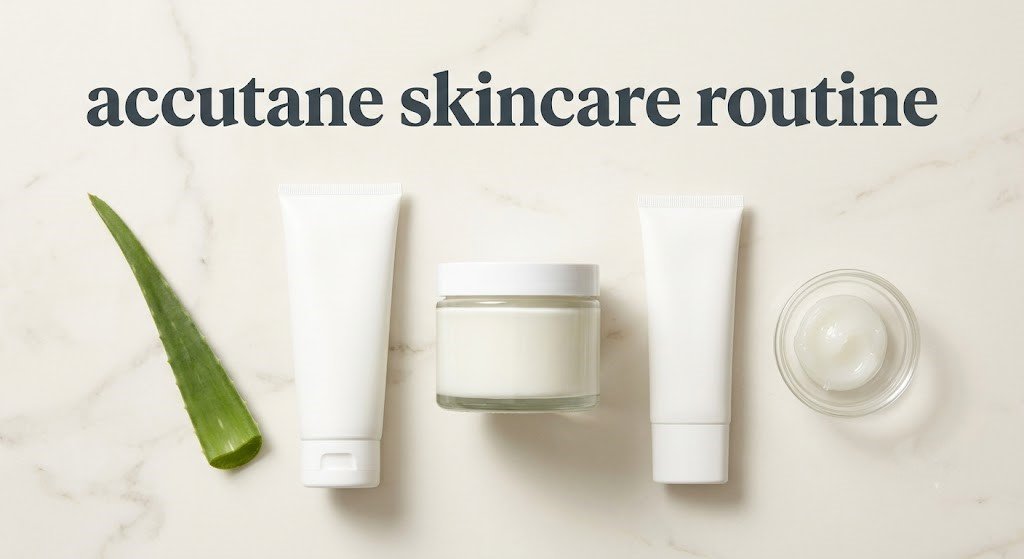
Your morning routine has one job: protect the skin from UV radiation and environmental water loss for the next 12 to 16 hours. Your evening routine has a different job: remove the day’s sunscreen, replenish the lipids stripped by cleansing, and seal the skin under an occlusive film while you sleep. Do not conflate these goals. The products may be similar, but the sequence and the reasoning differ in ways that change your skin’s ability to heal overnight versus survive the day.
Think of your skin barrier as a thin, precious layer of silk covering a healing wound. You would not scrub silk with soap. You would not pour alcohol on it. You would not stretch it repeatedly. That is the level of mechanical, chemical, and photonic gentleness required right now. Every product you apply must be fragrance-free, essential oil-free, and free of any functional active that works by increasing cell turnover or thinning the stratum corneum.
The Non-Negotiable Rules:
- You cannot skip sunscreen. Isotretinoin thins the stratum corneum, reducing the skin’s intrinsic UV protection.
- You cannot exfoliate. No chemical exfoliants, no physical scrubs, no rough washcloths.
- You cannot use hot water. Lukewarm or cool water only on your face and body.
- You must apply moisturizer to damp skin, never dry skin.
- You must treat your lips, nostrils, and eye area with occlusives before they crack, not after.
Key Takeaway: An Accutane skincare routine is a protective medical protocol, not a cosmetic one, and its sole purpose is to prevent transepidermal water loss and UV damage while your skin’s oil production is pharmacologically suppressed.
How Accutane Changes Your Skin Barrier
Isotretinoin works by binding to retinoic acid receptors in the nucleus of your sebocytes and triggering apoptosis, literally killing the oil-producing cells. This is how it achieves permanent acne clearance for a majority of patients. A 2018 analysis in the Journal of Investigative Dermatology detailed that this process reduces sebum production by up to 90 percent within six weeks of reaching a therapeutic dose. The side effect of this efficacy is that your entire integumentary system loses its natural waterproofing.
The skin barrier is not just a wall. It is a lipid bilayer matrix that fills the spaces between your corneocytes. The three components of that matrix are ceramides, cholesterol, and free fatty acids in a roughly 3:1:1 molar ratio. Isotretinoin disrupts the enzymes that synthesize these epidermal lipids, creating a condition where the mortar between your skin cells crumbles away. With the mortar gone, water rushes out of your skin into the environment, a process measured as transepidermal water loss. Your skin becomes rough, flaky, and microscopically fissured.
This physical breakdown has immunological consequences. The disrupted barrier allows irritants, allergens, and microbes to penetrate into living epidermal layers. Your skin, already under systemic stress from a powerful retinoid, now faces local inflammation. This is why stinging and burning sensations when applying even plain water become common by month two of therapy. It is not an allergic reaction to your moisturizer. It is your exposed nerve endings reacting to anything touching them. Understanding this mechanism is what makes the product choices in the following sections logical rather than arbitrary.
| Barrier Component | Normal Function | Isotretinoin Effect | Skincare Strategy |
|---|---|---|---|
| Ceramides | Forms lipid lamellae, retains water | Synthesis reduced | Apply ceramide-dominant moisturizer |
| Sebum | Waterproofs surface, feeds microbiome | Reduced by up to 90% | Apply occlusives like petrolatum |
| Corneocytes | Physical barrier cells | Premature detachment (flaking) | Avoid all exfoliation, use humectants |
| Filaggrin | Produces Natural Moisturizing Factor | Downregulated by retinoids | Use urea-free humectant formulations |
Gentle Cleansing on Accutane
Gentle cleansing on Accutane means using a lipid-rich, low-foaming, fragrance-free cleanser that removes sunscreen and debris without stripping the few protective lipids your skin still produces. The goal is to leave your skin feeling as if you barely cleansed it at all. Any sensation of “squeaky clean” or tightness means you have dissolved the barrier lipids you need and set your skin back by hours.
The mechanism of damage from harsh cleansing is straightforward. Surfactants like sodium lauryl sulfate bind to and remove the cholesterol and free fatty acids from the intercellular space. On healthy skin, sebaceous glands replenish this loss within an hour. On your isotretinoin-suppressed skin, that replenishment does not happen. The lipid loss is permanent until you manually replace it with a moisturizer. Choose a cleanser that contains skin-identical lipids or high concentrations of glycerin so the cleansing step itself deposits some moisture rather than only removing it.
Wash your face only twice a day at most, and if your skin is flaring, wash with only lukewarm water in the morning and use your cleanser exclusively at night to remove sunscreen. Cleansing without water, using a gentle cream cleanser wiped off with a soft cotton pad, is an effective strategy for extremely sensitized periods. Never use a washcloth, a cleansing brush, or a scrubbing motion. Your fingertips provide the only mechanical action your skin can tolerate.
To cleanse safely:
- Wet your face with lukewarm water for no more than 10 seconds.
- Dispense a nickel-sized amount of cream or balm cleanser into your palm.
- Gently press and roll the cleanser over your face without dragging or stretching the skin.
- Rinse with lukewarm water until the slippery feel is gone, which may take only a few splashes.
- Pat dry with a clean microfiber cloth or soft cotton towel, leaving the skin slightly damp.
- Immediately proceed to your moisturizer within 60 seconds of patting dry.
Barrier Repair Moisturizers for Accutane
Barrier repair moisturizers for Accutane are formulations specifically engineered to deliver the three physiological lipids your skin can no longer manufacture in sufficient quantities. The most robust clinical evidence supports products containing ceramides, cholesterol, and free fatty acids in a balanced molar ratio. A 2019 study in the Journal of Drugs in Dermatology demonstrated that moisturizers with a 3:1:1 ratio of these lipids accelerated barrier recovery significantly faster than those relying on humectants alone.
A moisturizer for isotretinoin-treated skin must perform three functions in sequence. First, it must deliver humectants like glycerin or sodium hyaluronate to draw water into the stratum corneum from the dermis below or, in humid environments, from the air. Second, it must deposit emollient lipids like squalane or jojoba oil to fill in the cracks between flaking corneocytes, smoothing the skin’s surface instantly. Third, it must seal everything in with an occlusive like dimethicone or, for nighttime, a thin layer of pure petrolatum.
The texture you choose matters. A light gel-cream will disappear too quickly and leave your skin unprotected within an hour. A heavy balm in the morning may make sunscreen application difficult. The optimal texture for daytime is a rich, whipped cream moisturizer that dries down to a non-tacky film. At night, you want the heaviest occlusive balm you can tolerate on your pillowcase. There is no such thing as “too greasy” for your PM isotretinoin routine. That greasiness is the physical seal preventing water loss for the next eight hours.
| Moisturizer Function | Key Ingredient | Purpose for Accutane Skin |
|---|---|---|
| Humectant | Glycerin, Sodium Hyaluronate | Attracts water to the stratum corneum |
| Emollient | Squalane, Shea Butter | Fills intercellular spaces, smooths flakes |
| Occlusive | Petrolatum, Dimethicone | Seals surface, reduces TEWL by over 90% |
| Lipid Replenisher | Ceramides, Cholesterol | Rebuilds physiological barrier matrix |
Sunscreen Essentials During Isotretinoin Therapy
Sunscreen during isotretinoin therapy is a non-negotiable pharmacological requirement, not a cosmetic preference. Isotretinoin causes corneocyte compaction and thinning of the stratum corneum, which reduces the skin’s natural UV-filtering capacity. Simultaneously, oral retinoids increase the photosensitivity of skin cells, meaning the same UV dose causes more DNA damage than it would in untreated skin. The FDA’s prescribing information for isotretinoin explicitly flags photosensitivity as a known adverse reaction.
Your sunscreen must be a purely mineral formulation containing zinc oxide, titanium dioxide, or a combination of both. These inorganic filters sit on top of the skin and reflect, scatter, and absorb UV radiation. They do not undergo chemical reactions within the skin, generate heat, or risk causing a stinging reaction on your sensitized barrier. A broad-spectrum SPF of 50 or higher is the standard of care because application thickness in the real world is almost always less than the 2 mg per square centimeter used in SPF testing.
Chemical, or organic, UV filters like avobenzone, octinoxate, and oxybenzone must absorb into the epidermis to function and then convert UV energy into heat. On a barrier-compromised face, this absorption often triggers immediate stinging, redness, and periorbital swelling. The reaction feels like a product allergy, and for the duration of your isotretinoin treatment, it effectively is one. Reapply your mineral sunscreen every two hours if you are outdoors, and find a tinted formulation if white cast is a concern. Tinted mineral sunscreens use iron oxides that also protect against visible light, which can worsen post-inflammatory hyperpigmentation in Fitzpatrick skin types IV through VI.
Key Takeaway: You need a mineral-only, fragrance-free SPF 50 sunscreen applied every single morning, including days indoors near windows, because your thinned stratum corneum has lost its innate UV shielding capability.
Accutane AM Skincare Routine Steps
The Accutane AM routine is a three-step, maybe four-step, sequence designed to hydrate, seal, and shield your skin for the daylight hours. There is no toner, no antioxidant serum in a traditional active sense, and definitely no exfoliant. The goal is to trap water in your skin and place an inert, reflective barrier between your fragile keratinocytes and the sun.
Step one is a splash of lukewarm water. In the morning, your skin has not accumulated environmental debris or sunscreen. The products you applied the night before have either absorbed or transferred to your pillowcase. A full cleanse with a surfactant is often unnecessary and can disrupt the fragile lipid layer you restored overnight. If your skin feels uncomfortably oily or greasy, use a tiny amount of your cream cleanser, but for most isotretinoin patients, water is sufficient.
Step two is immediate moisturizer application. Pat your skin damp after your water rinse, and within 60 seconds, apply your barrier repair moisturizer. The “sopping wet” skin technique, where you apply moisturizer to visibly wet skin, can be counterproductive because the water evaporates and pulls product away unevenly. A uniformly damp surface is ideal. Let this layer absorb for three to five minutes. You want the surface to feel supple but not wet.
Step three is your mineral sunscreen. Apply it liberally. For the full face and neck, you need roughly a quarter teaspoon, or two finger-length strips. Press it into the skin rather than rubbing it in a circular motion, which can pill and disturb your moisturizer layer. An optional step four, if your environment is extremely arid or windy, is to tap a pea-sized amount of pure petrolatum over the highest points of your cheekbones, the tip of your nose, and any healing patches as a final occlusive seal.
Accutane PM Skincare Routine Steps
The Accutane PM routine is your restoration phase, a two-part lipid and water replenishment protocol that repairs the day’s damage while you sleep. Cortisol levels drop during the first half of the night, and skin permeability increases, making this the window when your barrier most readily accepts lipids and water.
Step one is a genuine, thorough but gentle double-cleanse if you used a water-resistant sunscreen. Your first cleanse dissolves the sunscreen film. Use a pure, non-emulsifying oil like squalane or mineral oil. Dispense a generous amount into your palm, press it over your dry face, and let it sit for 30 seconds to dissolve the sunscreen’s film formers. Gently tissue it off or rinse with lukewarm water. The second cleanse uses your cream or balm cleanser to remove the oil and any remaining debris. If your sunscreen is not water-resistant or you have not left the house, a single cream cleanse is enough.
Step two is the most critical step of your entire 24-hour cycle: applying your treatment moisturizer and occlusive seal. On damp, freshly cleansed skin, apply your barrier repair moisturizer. This is the product that should contain ceramides, cholesterol, and fatty acids. Let it absorb for two minutes. Then, apply a second layer over the areas that sting or flake the most, typically the perioral region, the nasolabial folds, and the chin.
Step three is the occlusive lock. For this, use a thin, visible film of pure petrolatum or a petrolatum-based healing ointment. Press it over the entire face, concentrating on the lips, the corners of the nose, and any fissured areas. This seal can reduce overnight transepidermal water loss by over 95 percent. You will wake up with skin that feels soft, plump, and protected rather than tight and cracked.
Your PM Routine in Sequence:
- Dissolve sunscreen with a non-emulsifying oil cleanser if needed.
- Cleanse with a gentle, lipid-rich cream cleanser.
- Apply a ceramide-rich barrier repair moisturizer to damp skin.
- Apply a second layer to sensitive zones like the nasolabial folds.
- Seal with a thin film of petrolatum-based ointment over the entire face.
The Accutane Lip Care Protocol
The Accutane lip care protocol replaces your regular lip balm habit with a medically structured sequence of moisture sandwiching that manages drug-induced cheilitis. Cheilitis from isotretinoin is not simply dry lips. It involves full-thickness desquamation of the lip mucosa, often extending past the vermillion border onto the surrounding skin. Saliva enzymes on fissured lips accelerate tissue breakdown, creating a painful cycle of licking, drying, and cracking.
A 2020 review in the British Journal of Dermatology emphasized that plain petrolatum remains the single most effective agent for managing retinoid cheilitis because it creates an impermeable seal that allows the underlying mucosal epithelium to heal without evaporative stress. Any tingling, cooling, or medicated lip product must be discarded immediately. Camphor, menthol, phenol, and salicylic acid in lip balms create a temporary sensation of relief but work by denaturing surface proteins, ultimately drying the lip tissue further.
Your protocol is a three-item system. Item one is a pure lanolin or medical-grade lanolin cream, the type used by nursing parents for cracked skin. Apply this to damp lips after every single meal and water break. Item two is a thick layer of petrolatum ointment applied over the lanolin. Think of this as applying a wet poultice and then wrapping it in plastic wrap. Item three is a tube of pure petrolatum you keep in your pocket, your car, and next to your bed. Reapply it every hour you are awake. You are not trying to moisturize your lips. You are trying to create an unbroken waterproof seal that lasts all day.
For overnight lip restoration:
- Run a wet fingertip over your lips to add water.
- Immediately apply a thick glob of pure lanolin or lanolin-based cream.
- Seal with an even thicker layer of petrolatum ointment, extending well past the lip borders.
- Sleep on your back if possible to avoid wiping the ointment onto your pillow.
Managing Nasal Dryness and Nosebleeds
Managing nasal dryness on Accutane requires directly moisturizing the anterior nasal vestibule, the inside of the nostril opening, because isotretinoin dries the mucosal epithelium there just as aggressively as it dries the lips. The nasal mucosa depends on a continuous mucus layer to trap pathogens and prevent the underlying blood vessels from cracking. When that mucus dries up, the fragile capillaries on the anterior septum rupture with minimal provocation, producing epistaxis, or nosebleeds.
The biological mechanism is a loss of goblet cell function within the respiratory epithelium. These cells produce mucin, the glycoprotein backbone of mucus. Retinoic acid receptors are highly expressed in these cells, and isotretinoin binding alters mucin gene expression. The result is a thin, watery, or completely absent mucus layer. The Kiesselbach plexus, a dense network of blood vessels on the anterior septum, becomes exposed, crusted, and fissured.
Your management protocol has two phases. During the day, use a preservative-free saline gel, not a spray. A gel stays in the vestibule and provides sustained humidification. Apply a pea-sized amount to a cotton swab and gently coat the inside of each nostril every morning and every evening. This is a humectant step. Immediately follow it with an occlusive step: apply a thin film of petrolatum ointment using a fresh cotton swab to the same area. This traps the water from the saline gel against the mucosa and prevents evaporative crusting overnight.
At night, if you have active crusting or bleeding, add a third step. Run a cool-mist humidifier in your bedroom. The goal is to keep the ambient relative humidity above 40 percent while you sleep. Dry air wicks moisture from your nasal passages with every breath. The combination of saline gel, petrolatum seal, and humidified air resolves and prevents the nosebleeds that affect up to 30 percent of isotretinoin patients, according to AAD isotretinoin management guidelines.
Key Takeaway: Your Accutane body must be treated as a whole-organism barrier dysfunction, not a facial skincare issue, and your lips, nose, and body require the same water-seal protocol as your face.
Body Skincare and Eczema Prevention on Accutane
Body skincare on Accutane is essential because isotretinoin-induced xerosis affects the extensor surfaces of the arms, the lower legs, and the trunk within the first eight weeks of treatment. The reduction in epidermal lipid synthesis is systemic, not localized to the face. Without intervention, the skin on your shins and forearms can develop into frank eczematous plaques that are itchy, fissured, and a portal for staphylococcal infection.
This distribution of dryness follows a predictable pattern. Areas with fewer sebaceous glands to begin with, like the shins, suffer first and worst. The palms and soles, which have a thick stratum corneum but no sebaceous glands, often peel in sheets. This is called retinoid palmoplantar desquamation. Your shower is where you either prevent or cause a full-body flare. Hot water and foaming body washes are your two greatest enemies. The surfactants in standard body wash, particularly sodium laureth sulfate, strip the body’s lipid barrier just as they strip the face’s.
Switch to a fragrance-free, oil-based body cleanser or a gentle hydrating body wash that contains colloidal oatmeal. Wash only the areas that require daily hygiene: the axillae, groin, and feet. Do not soap your arms, legs, and trunk every day unless they are visibly soiled. Water alone is sufficient for your limbs. After your lukewarm shower, you must apply moisturizer to your entire body within three minutes of turning off the water. Waiting until you are dressed and your skin has dried tight is a missed therapeutic window.
The ideal body moisturizer is a rich cream containing colloidal oatmeal, an FDA-designated skin protectant that binds to the skin and buffers inflammatory cytokines released in dry, irritated skin. Apply it to damp skin in a downward, hair-stroke direction to avoid follicular irritation. If you have patches of active eczema or extreme roughness, add a layer of a petrolatum-based ointment over those areas before putting on soft cotton clothing. Avoid wool and synthetic fabrics directly against your skin for the duration of treatment.
Hydrating Ingredients Safe for Isotretinoin Users
Hydrating ingredients safe for isotretinoin users are those that increase the water content of the stratum corneum through humectant action or emollient filling without activating retinoid-sensitized pathways. The safest and most evidence-backed options are glycerin, sodium hyaluronate, panthenol, and colloidal oatmeal. Each works through a different mechanism, and a well-formulated Accutane moisturizer will contain several of them.
Glycerin is a small-molecule humectant that penetrates into the stratum corneum and pulls water from the dermis upward into the epidermis through an aquaporin-3 channel-mediated pathway. It is one of the few humectants shown to directly improve corneocyte cohesion and reduce desquamation independently of its water-binding capacity. Sodium hyaluronate is a larger polysaccharide that sits higher in the skin, binding up to 1,000 times its weight in water on the skin’s surface. It provides immediate, tangible plumping that reduces the appearance of fine dehydration lines.
Panthenol, or provitamin B5, is a humectant that the skin converts to pantothenic acid, a coenzyme required for fatty acid synthesis and keratinocyte proliferation. It actively accelerates barrier repair rather than just passively supporting hydration. Colloidal oatmeal is the most functionally versatile ingredient on this list. Its avenanthramides block the release of histamine and IL-8, calming the intense itch that accompanies retinoid xerosis. Its beta-glucans form a protective, breathable film on the skin that mimics some of the lost barrier function.
| Ingredient | INCI Name | Mechanism | Sensory Effect |
|---|---|---|---|
| Glycerin | Glycerin | Aquaporin-3 activation, humectant | Slight tackiness when used at high percentages |
| Sodium Hyaluronate | Sodium Hyaluronate | High molecular weight water-binding | Silky slip, rapid absorption |
| Panthenol | Panthenol | Converts to pantothenic acid, supports lipid synthesis | Lightweight, non-sticky moisture |
| Colloidal Oatmeal | Avena Sativa Kernel Flour | Anti-inflammatory, film-forming, skin protectant | Soothing, milky, physically protective film |
Simple Body and Face Emollients
Simple body and face emollients are single-ingredient or short-ingredient-list oils and butters that fill the microscopic fissures between dry corneocytes, providing immediate smoothness and reducing further cracking. They are the lipid component of your moisturizing sandwich. While they do not actively drive water into the skin, they are biologically essential because they replace the smoothing function once performed by your sebum.
Squalane is the most biocompatible emollient for human skin. It is the saturated, stable form of squalene, a lipid that makes up approximately 12 percent of human sebum. Your skin recognizes it, absorbs it well, and uses it to plasticize the intercellular lipid matrix. It is exceptionally lightweight, non-comedogenic despite its lipid nature, and safe for fungal acne-prone skin. Jojoba oil is a liquid wax ester that is structurally similar to human sebum esters. It provides a slightly heavier, more protective film than squalane and is ideal for body application.
Shea butter is a rich plant fat containing stearic and oleic acids along with a fraction of unsaponifiable compounds like phytosterols and vitamin E that support barrier homeostasis. It is the correct choice for the thickest, most protected emollient layer you apply to your body at night. Petrolatum, as discussed, is technically an occlusive rather than an emollient, but its role overlaps because it fills surface irregularities so completely that it feels and functions like an emollient while providing vastly superior water-locking.
The application technique for these is more important than the specific choice. Apply any oil or butter to damp, not wet or dry, skin. Applying oil to soaking wet skin creates a water-oil suspension that slides off before absorbing. Applying it to dry skin seals in no water and leaves a greasy, non-functional layer. Damp skin has enough water in the superficial layers for the emollient to trap, but not so much that it repels the product.
Skincare Products and Actives to Avoid on Accutane
Skincare products and actives to avoid on Accutane fall into three mechanistic categories: cell turnover accelerants, chemical exfoliants, and barrier solvents. The common thread is that all of them work by either removing the stratum corneum or triggering an inflammatory cascade that a retinoid-compromised barrier cannot handle. Using them will not cause a minor irritation. It will likely cause an acute, weeping retinoid dermatitis that takes weeks to heal and increases the risk of post-inflammatory hyperpigmentation.
The first category is other retinoids. You must immediately discontinue any and all topical retinoids, including tretinoin, adapalene, tazarotene, and over-the-counter retinol or retinaldehyde serums. Isotretinoin is a systemic retinoid with a potency far exceeding any topical. Using a topical on top of it is redundant for acne but catastrophic for irritation. Retinoid receptors in your keratinocytes are already saturated. Adding more ligand pushes the cells into a hyper-proliferative, disorganized state that causes peeling that is not therapeutically useful but purely destructive.
The second category is hydroxy acids. Salicylic acid, glycolic acid, lactic acid, and mandelic acid work by dissolving the desmosomes that hold corneocytes together. On an isotretinoin-thinned stratum corneum, this action penetrates too deeply, too quickly, dissolving the junctions between living keratinocytes in the stratum granulosum and triggering a chemical burn. Benzoyl peroxide falls into a related oxidative category. It kills C. acnes bacteria by generating reactive oxygen species, but it also depletes vitamin E and other antioxidants in the skin surface lipids, accelerating the breakdown of an already fragile barrier.
The third category is solvents and astringents. This includes alcohol denat, witch hazel distillates that are not triple-distilled, and essential oils. Alcohol on a broken barrier delivers an immediate, searing sting followed by visible vasodilation and inflammation. Essential oils like peppermint, eucalyptus, lemon, and lavender are volatile organic compounds that act as penetration enhancers, carrying themselves and any accompanying fragrance allergens deep into the dermis. A fragrance allergy that would have been subclinical on healthy skin can become a full-blown contact dermatitis on isotretinoin skin.
| Ingredient to Avoid | Category | Mechanism of Damage |
|---|---|---|
| Tretinoin, Adapalene, Retinol | Topical Retinoids | Retinoid receptor over-saturation, hyper-proliferation |
| Salicylic, Glycolic, Lactic Acid | Hydroxy Acids | Desmosome dissolution, uncontrolled penetration |
| Benzoyl Peroxide | Oxidizing Agent | Lipid peroxidation, antioxidant depletion |
| Alcohol Denat. | Solvent | Immediate barrier lipid dissolution |
| Essential Oils (Peppermint, Citrus) | Fragrance/Penetration Enhancer | Allergen delivery into dermis, chemical irritation |
The “Accutane Purge” and How to Handle It
The Accutane purge refers to a temporary, often severe acne flare occurring in the first four to eight weeks of isotretinoin therapy, and the only correct way to handle it is to change nothing about your gentle, protective skincare routine. The mechanism of the purge is not fully understood, but a leading hypothesis, discussed in a 2022 review in the Journal of the American Academy of Dermatology, involves a transient dysregulation of the innate immune system within the pilosebaceous unit as C. acnes populations are rapidly reduced and the follicular epithelium remodels.
This is not the same as the retinization period caused by topical retinoids. Topical purging is localized keratinocyte desquamation. The isotretinoin flare is a deep, inflammatory nodular reaction. You will want to treat it like an active acne breakout. Every instinct you have developed from years of acne management will urge you to apply a spot treatment, a salicylic acid patch, or a benzoyl peroxide cream. You must actively resist this. The lesions are not a surface infection. They are a deep immunological fire that topical anti-acne ingredients cannot reach and will only worsen by adding chemical insult to the overlying skin.
The only permissible topical intervention for a painful, swollen nodule is a dermatologist-administered intralesional corticosteroid injection, which you should discuss with the board-certified dermatologist managing your isotretinoin. At home, you apply a cold, damp, clean cloth to the area for no more than five minutes to reduce swelling. Then, you apply a thick layer of petrolatum to prevent the stretched skin over the nodule from cracking. Do not lance. Do not squeeze. Do not apply a hydrocolloid patch, as the adhesive can rip the fragile skin off the entire perilesional area when removed.
Key Takeaway: The Accutane purge is a deep immunological event, not a surface breakout, and every topical anti-acne remedy you own will burn the skin covering the purge without touching the inflammation beneath it.
How to Rebuild a Compromised Skin Barrier
Rebuilding a skin barrier compromised by isotretinoin requires supplying the three missing physiological lipids in their correct stoichiometric ratio and maintaining an occlusive seal over them for weeks, not days. The process is conceptually simple but requires absolute consistency because your skin cannot contribute its own lipids to the repair. You are building a barrier entirely from externally applied products.
The first phase, lasting the first two weeks of a dedicated repair routine, is inflammation reduction. A barrier that stings with every product application is a barrier with living nerve endings exposed. During this phase, eliminate every product from your routine except a cream cleanser, a moisturizer with at least a 3:1:1 ratio of ceramides to cholesterol to free fatty acids, and pure petrolatum. Apply the moisturizer to damp skin every two hours if your environment allows it. This is not a cosmetic routine. This is a wound healing protocol. At night, apply a layer of petrolatum so thick that your skin feels like it is suffocating. That sensation is the water finally staying inside your skin.
The second phase, which can last from two weeks to the end of your isotretinoin course, is lipid matrix maintenance. You may be able to reduce petrolatum reapplication to only the morning and evening and use a slightly lighter moisturizer during the day. Continue avoiding all actives. The “wound” is no longer acute, but the chronic fragility remains. The sign that your barrier has healed is not the absence of flaking; it is the absence of stinging. If plain water or moisturizer does not sting, your barrier has structurally resealed, even if the skin’s surface texture is still uneven and dry.
Post-Accutane Skincare Routine Transition
The post-Accutane skincare routine transition is a cautious, four-to-six-week process of introducing exactly one active ingredient to address residual texture, pigmentation, or maintenance concerns while your sebaceous glands slowly regain partial function. Your skin will never return to its pre-isotretinoin state of high oil production, but it will regain enough function that you can no longer rely on the drug’s complete sebum suppression to prevent breakouts.
For the first month after your last pill, do not change a single thing. Your skin barrier, systemic vitamin A levels, and sebaceous gland function are still recovering from a potent pharmacological agent that has a half-life of roughly 21 hours but a biological effect that persists for weeks. Continuing your isotretinoin routine for a full month after discontinuation is the single most reliable way to prevent a post-treatment eczema or acne rebound.
The first active you introduce should be a leave-on azelaic acid at a 10 to 15 percent concentration. Azelaic acid is uniquely suited for the post-isotretinoin skin because it is a mild exfoliant, a tyrosinase inhibitor that fades post-inflammatory hyperpigmentation, and an anti-inflammatory that reduces the redness of post-inflammatory erythema without the irritation of retinoids or hydroxy acids. Apply it once every third night, over your moisturizer, for two weeks. If your skin tolerates this without stinging, flaking, or flushing, you can increase to every other night.
Only after a full month of successful azelaic acid use should you consider a low-strength retinoid for maintenance, such as over-the-counter adapalene 0.1 percent, to maintain clear pores. You will need a maintenance moisturizer that is lighter than your isotretinoin balm but still rich enough for a skin that now produces less oil than it did before treatment. Squalane-based moisturizers are an excellent bridge product. Your sunscreen habits must be lifelong. You tolerated a near-total barrier dysfunction for months to achieve clear skin. The UV damage you prevent now is what keeps that skin healthy, firm, and evenly pigmented for the decades ahead.
Frequently Asked Questions About Accutane Skincare
What is the best skincare routine while on Accutane?
The best routine is a morning splash of water, a fragrance-free barrier repair moisturizer, and a mineral SPF 50 sunscreen.
At night, use a gentle cream cleanser, the same barrier repair moisturizer on damp skin, and a thin layer of petrolatum ointment to seal in the hydration.
Can I use hyaluronic acid while on Accutane?
Yes, sodium hyaluronate is safe and highly effective for drawing water into the skin.
It must be applied to damp skin and immediately sealed with a moisturizer containing occlusives, or the water it pulls to the surface will evaporate and leave your skin drier than before.
What should you absolutely not use on your skin while on Accutane?
You cannot use topical retinoids, salicylic acid, glycolic acid, benzoyl peroxide, alcohol-based toners, or any products containing synthetic fragrance or essential oils.
These ingredients dissolve the already-fragile lipid barrier or trigger an inflammatory response that a retinoid-compromised barrier cannot handle.
How do you wash your face on Accutane?
Wash with a lipid-rich, non-foaming cream or balm cleanser using only your fingertips and lukewarm water.
Pat your skin damp, never rub it dry, and apply your moisturizer within 60 seconds while the skin is still damp to trap the water on the surface.
How do I stop my lips from peeling on Accutane?
Apply a thick layer of pure lanolin to damp lips, seal it with an even thicker layer of petrolatum ointment, and reapply the petrolatum layer every hour while you are awake.
Discard all lip balms that contain camphor, menthol, or salicylic acid, as these will worsen the peeling.
When can I start using actives after Accutane?
Wait at least one full month after your last isotretinoin capsule before introducing any active ingredient.
Start with a gentle azelaic acid 10% every third night, and only consider a low-strength retinoid like adapalene 0.1% after successfully tolerating the azelaic acid for an additional month.
The medicine you are taking is the most effective tool dermatology has for severe acne, but its power comes at the direct expense of your skin barrier’s ability to function. For the next several months, your job is simply to replace what the drug has taken: the lipids, the water, and the UV protection. If you do that consistently and refuse to introduce even one additional irritating variable, you will walk away from treatment with clear skin that is healthy, calm, and ready for a lifetime of evidence-based maintenance.
Your skin will feel like it is falling apart during the middle weeks of treatment. That is a sign the drug is working, not a sign that your routine is failing. Stick to the protocol. Seal the water in. Seal the UV out. Let the isotretinoin do what it was designed to do, and give your barrier the materials it needs to survive the journey.