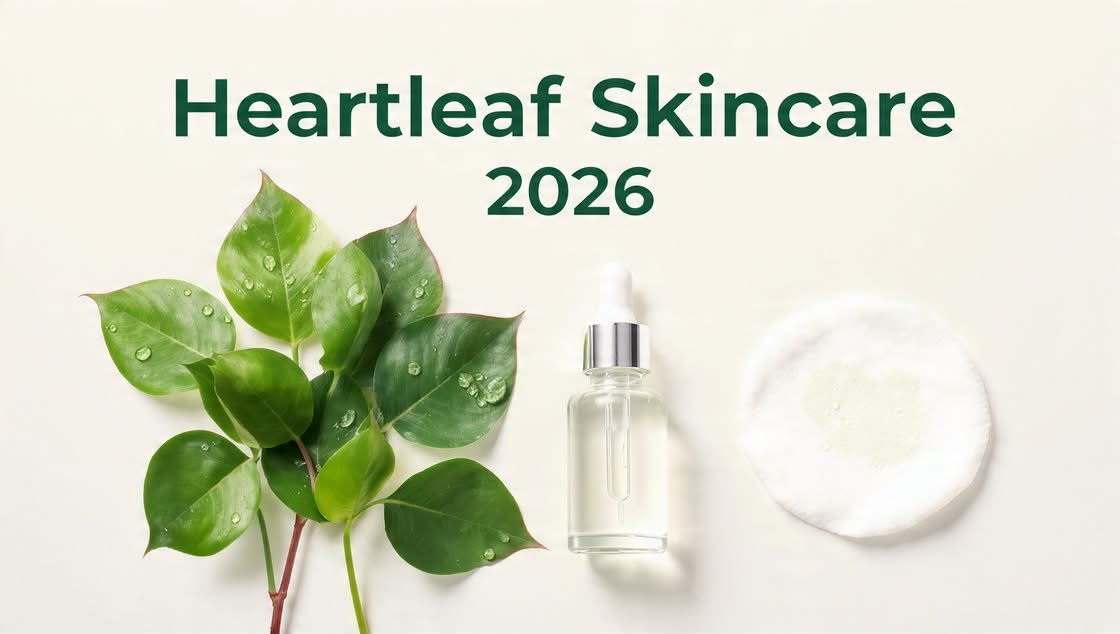
Heartleaf Skincare 2026: The Real Science of Houttuynia Cordata for Calm Skin
Heartleaf skincare has become a defining pillar of modern K-beauty for its remarkable ability to calm angry, inflamed skin without causing irritation. The ingredient, derived from the Houttuynia cordata plant, is not merely a passing trend but a botanical with a legitimate, though often overstated, foundation in pharmacological research. You are about to learn exactly which of its benefits are backed by human-relevant evidence, how to spot a well-formulated product, and the safest way to weave it into your routine alongside potent actives like retinol.
The modern skincare consumer’s trust is fractured, suspended between viral marketing and a desire for dermatological truth. A 2023 survey from the American Academy of Dermatology highlighted that over 60% of patients report confusion about the actual efficacy of trending skincare ingredients promoted online. Heartleaf sits at this precise intersection, a traditional East Asian remedy now packaged in sleek glass bottles with claims of barrier repair, acne annihilation, and instant redness reduction. Separating the solvent from the solute, the genuine biochemical action from the aesthetically pleasing water-weight texture, is what defines a smart skincare decision.
This article is not a brand review. It is an independent, dermatology-researcher-led investigation into Houttuynia cordata for skin. You will learn about its specific bioactive compounds, down to the named flavonoids like quercitrin and hyperoside. You will see how the extraction method determines whether a product truly delivers these compounds or is just expensive scented water. You will get direct, evidence-based comparisons with alternatives like centella asiatica and niacinamide, so you can finally decide if heartleaf is the right addition to your shelf.
What Is Heartleaf Skincare
Heartleaf skincare refers to cosmetic products formulated with an extract derived from the Houttuynia cordata plant, a flowering herb native to the mountainous regions of Southeast Asia. In the INCI nomenclature system, you will find it listed as Houttuynia Cordata Extract, powder, or ferment filtrate on a product label. Its centuries-old use in traditional Chinese medicine and Japanese Kampo medicine for treating inflammation and infection forms the ethnobotanical foundation for its modern cosmetic application, but you should not equate traditional medicine data with topical cosmetic proof.
The plant’s colloquial name comes from its heart-shaped leaves, and the entire aerial part of the plant is used in extraction, prized for a distinct, earthy scent that some describe as fishy, a scent that is largely removed by modern deodorization techniques in high-end formulations. In skincare, it gained initial traction not for a single blockbuster clinical trial, but through a wave of Korean cushion foundations and then toners that promised a “zero-irritation” experience for reactive skin types. The ingredient’s cooling, watery texture when applied as a toner or essence aligns perfectly with the Korean skincare philosophy of layering lightweight hydration to achieve “glass skin,” making its sensory feel as important to its popularity as its biological function.
Key Takeaway: Heartleaf skincare is rooted in a real medicinal plant, Houttuynia cordata, but its cosmetic benefits are a function of the specific compounds within the extract, not a magical property of the plant itself.
Heartleaf Houttuynia Cordata Skin Benefits
The documented benefits of Houttuynia cordata for the skin are threefold: a potent and multi-pathway anti-inflammatory effect, broad-spectrum antibacterial activity specifically against acne-causing Cutibacterium acnes, and a protective antioxidant action. These effects are not just observed anecdotally in patient reviews. A 2020 review in the International Journal of Molecular Sciences systematically cataloged these properties, linking them to specific flavonoid compounds within the plant, providing a coherent, though still developing, scientific rationale for its use on inflamed human skin.
The anti-inflammatory benefit is the star mechanism here. It works by downregulating the production of pro-inflammatory cytokines and mediators, chemical signals your immune system sends out that result in redness, heat, and swelling. The antibacterial benefit, while real, is weaker than prescription-grade treatments and functions best as a preventative adjunct rather than an active cure for severe acne. The antioxidant benefit protects skin cells from oxidative stress caused by UV exposure and pollution, a protective function that is chronic and invisible but essential for long-term skin health.
A fourth, less discussed benefit is the preliminary evidence for 5-alpha reductase inhibition. This is the enzyme responsible for converting testosterone to dihydrotestosterone (DHT), a key trigger of sebum overproduction in the oil gland. By mildly downregulating this pathway, heartleaf may contribute to a less oily skin environment over time, a function that separates it from purely “soothing” ingredients that only reduce visible redness without addressing the upstream oil production.
| Skin Benefit | Named Mechanism | Relevant Bioactive Compound | Evidence Strength (Human) |
|---|---|---|---|
| Anti-Inflammatory | Downregulates TNF-alpha, IL-6, COX-2 | Quercitrin, Hyperoside | Moderate (In vitro & mechanistic) |
| Antibacterial | Disrupts C. acnes and S. aureus membranes | Chlorogenic Acid | Low (In vitro primarily) |
| Antioxidant | Scavenges free radicals (ROS) | Quercitrin, Chlorogenic Acid | Moderate (In vitro & animal) |
| Sebum Regulation | Inhibits 5-alpha reductase activity | Unspecified polyphenols | Preliminary (In vitro enzyme assays) |
Heartleaf Extract Skincare Mechanism of Action
Heartleaf extract does not work on the skin through one single switch. It operates through a network of biochemical pathways, primarily by interrupting the inflammatory cascade inside keratinocytes and immune cells at multiple points. When your skin encounters an irritant, pathogen, or physical trauma, it releases alarm signals. Heartleaf’s compounds act as signal jammers, reducing the volume of those alarms before they manifest as visible redness or a stinging sensation.
The most significant pathway is the suppression of the NF-kB pathway. Think of NF-kB as a master control switch for inflammation sitting in the cytoplasm of your skin cells. When UV light or bacteria activate it, NF-kB travels to the cell nucleus and initiates the production of inflammatory proteins like COX-2 and cytokines. Quercitrin, one of the primary flavonoids in heartleaf, has been shown in published cellular biology research to block this activation, keeping the switch in the off position and reducing the subsequent production of inflammatory mediators.
Beyond cytokine suppression, the extract’s antibacterial mechanism against Cutibacterium acnes is a direct membrane attack. Chlorogenic acid and other phenolic compounds compromise the bacterial cell wall integrity, leading to cell death. This is a non-specific, chemical destruction process, distinct from prescription antibiotics that target specific bacterial ribosomes. A 2019 study in the Journal of Ethnopharmacology demonstrated that a Houttuynia cordata ethanol extract exhibited significant inhibitory activity against both antibiotic-resistant and antibiotic-susceptible strains of C. acnes, making it a compelling candidate for managing acne in a clinical context where bacterial resistance is a growing concern.
Quercetin Heartleaf Skin Anti-Inflammatory
Quercetin is the heavy lifter in the heartleaf compound lineup, specifically in its naturally occurring glycoside form called quercitrin. You cannot discuss heartleaf’s anti-inflammatory capacity without understanding this single molecule. Quercetin works as a mast cell stabilizer, which means it helps prevent these immune cells from degranulating and releasing histamine into the surrounding tissue, a direct mechanism for calming the type of rapid-flush redness and itching that is common in highly sensitive skin.
This mast cell stabilization is a different mechanism from how corticosteroid creams work, which is via a broader, more powerful suppression of the entire immune response. This makes quercetin a gentle alternative for chronic, low-grade facial redness, but an ineffective tool for severe allergic contact dermatitis, where the immune cascade is too strong for a single flavonoid to control. The value of quercetin is in the long-term, daily management of easily triggered skin, not in treating acute flares.
Its secondary anti-inflammatory function is as a lipoxygenase inhibitor, blocking another enzymatic path that produces inflammatory leukotrienes. A 2022 research article in the Journal of Inflammation Research detailed how quercetin derivatives effectively suppressed leukotriene B4 production in human cell lines. This dual-pathway inhibition, hitting both the prostaglandin pathway (via COX-2) and the leukotriene pathway, makes heartleaf extract a more versatile anti-inflammatory than single-mechanism ingredients, though the concentration of active quercitrin delivered in a standard cosmetic toner is far lower than the concentrations used in those cell studies.
Key Takeaway: Quercetin, delivered as quercitrin in heartleaf, is a scientifically credible anti-inflammatory agent that works by stabilizing mast cells and blocking multiple inflammatory pathways, providing a pharmacologically sound basis for the ingredient’s calming reputation.
Heartleaf for Acne Prone Skin
Heartleaf is a genuinely useful adjunctive ingredient for acne-prone skin, but its role is best understood as a preventative fire extinguisher, not a primary demolition crew. It targets acne by reducing the inflammation around a forming pimple and exerting a direct, albeit mild, antibacterial action on Cutibacterium acnes. A person with inflammatory acne who introduces a 50% to 80% heartleaf water-extract toner can expect a reduction in the background redness of active lesions, often within days, due to the rapid cytokine-dampening effect.
The specific acne lesions it works best for are inflammatory papules and pustules, the red, angry bumps that signal an active immune response to trapped bacteria and sebum. It is less effective on non-inflammatory closed comedones, the flesh-colored bumps that require pore-clearing agents like salicylic acid or retinoids to resolve. If your acne is solely comedonal, heartleaf will provide hydration but no clearing action. If your acne is inflammatory, it can cool the inflammation while a true active ingredient does the heavy lifting of increasing cell turnover.
The 5-alpha reductase inhibition mentioned earlier also plays a long-term role. By mildly inhibiting the conversion of testosterone to DHT within the sebaceous gland, heartleaf may slightly reduce the rate of sebum production over consistent, multi-week use. This effect is not comparable to the profound sebum suppression of oral isotretinoin or even high-strength topical retinoids, but it provides a gentle, low-irritation background modulation of oiliness that makes heartleaf a strong candidate for those with acne mechanica or occasional breakouts triggered by excess oil in humid climates.
Heartleaf for Sensitive Skin and Redness
Heartleaf’s primary clinical value is arguably for the management of sensitive skin and the transient flushing associated with rosacea-prone skin and barrier dysfunction. Sensitive skin is a syndrome defined by neurosensory symptoms, stinging, burning, itching, in response to stimuli that should not cause a reaction. The mast cell stabilization from quercetin directly counteracts this nerve-driven reactivity, making a heartleaf-soaked cotton pad mask one of the quickest non-pharmacological interventions for sudden skin discomfort.
For visible, diffuse redness, the mechanism is vascular. Inflammatory cytokines cause capillary dilation, and by suppressing those cytokines, heartleaf allows the blood vessels to constrict back to their normal diameter, visibly reducing erythema. A 2021 study published in the Journal of Cosmetic Dermatology on a complex formulation containing Houttuynia cordata extract showed a statistically significant reduction in visually assessed redness after two weeks of twice-daily application compared to a placebo cream. While the formulation contained other ingredients, the study design supports heartleaf’s role as a key contributor to the anti-redness outcome.
For those with Fitzpatrick skin types IV to VI, this redness reduction has a double benefit. In darker skin tones, inflammation is the initial trigger for melanocyte hyperactivity and subsequent post-inflammatory hyperpigmentation (PIH). By rapidly calming inflammation, heartleaf does not just reduce the immediate red signal, but may also reduce the severity of the dark marks that linger weeks after the pimple or irritant event has resolved. This makes heartleaf a strategically intelligent ingredient for skin of color skincare routines, where minimizing invisible inflammation is the single most effective PIH prevention strategy.
| Fitzpatrick Skin Type | Primary Redness Concern | Heartleaf’s Role | Outcome Goal |
|---|---|---|---|
| I-II | Visible erythema and telangiectasia | Vasodilation reduction | Reduced visible red signal |
| III-IV | Reactive flushing, acne-induced redness | Cytokine suppression | Calm before hyperpigmentation trigger |
| V-VI | Sub-clinical inflammation leading to PIH | Mast cell stabilization, anti-inflammatory | Prevent post-acne dark marks |
Heartleaf Skincare Antioxidant Protection Evidence
Heartleaf’s antioxidant capacity is real, measurable, and entirely supplemental to your sunscreen, not a replacement for it. Antioxidants in skincare function by donating an electron to a free radical, neutralizing it before it can steal an electron from your skin’s collagen or DNA. Heartleaf’s flavonoids, particularly quercetin and chlorogenic acid, are effective radical scavengers in a lab setting, as demonstrated by standard DPPH and ABTS radical-scavenging assays, where a Houttuynia cordata ethanol extract outperformed some synthetic antioxidants in a 2020 Antioxidants journal publication.
The clinical translation of this for human skin is chronic, invisible, and cumulative. You will not see an overnight visible change from this mechanism. What you are doing is reducing your skin’s total oxidative load over years, which theoretically contributes to slower collagen breakdown and less photoaging. This is a statistical, long-term benefit, not a cosmetic, immediate one. It is the skincare equivalent of taking a low-dose omega-3 supplement every day for cardiovascular health; you are shifting a long-term risk profile, not fixing an acute problem.
This antioxidant action is also synergistic. Quercetin and ascorbic acid (vitamin C) can work in a regenerative cycle, where quercetin helps restore oxidized vitamin C back to its active form. This makes a heartleaf essence layered under a vitamin C serum a chemically logical combination, though direct product-formulation stability studies on this specific pairing are lacking. The antioxidant benefit is strongest in products where the extraction process preserved the phenolic content. Heat extraction and long storage times can degrade these sensitive compounds, rendering an otherwise well-marketed product effectively inert for antioxidant purposes.
Key Takeaway: Heartleaf provides genuine, lab-verified antioxidant activity, but this is a long-term, invisible insurance policy against photoaging that works best when the extract is fresh and properly formulated, not a dramatic visible fix.
Heartleaf vs Centella Asiatica for Skin
The comparison of heartleaf (Houttuynia cordata) and centella asiatica is the central “which one is better” question for anyone building a soothing routine in 2026. Both are East Asian botanical staples, both are anti-inflammatory, and both are served up in minimally formulated toners. They are not interchangeable. Heartleaf is a superior anti-inflammatory via the cytokine pathway, while centella asiatica is a superior wound-healing and barrier-repair agent due to its unique terpenoid compounds, madecassoside and asiaticoside.
Centella asiatica works by stimulating fibroblast proliferation and upregulating collagen type I synthesis, actively helping to knit wounded or compromised tissue back together. Heartleaf does not have a strong, proven mechanism for stimulating new collagen production. Instead, it excels at calming the immune response in the tissue you already have, making it a better choice for an active, angry, pustular breakout where cooling the inflammation is the immediate priority. Centella is better for a compromised, flaking, tight barrier that needs to be rebuilt.
A pragmatic dermatologist might advise using a centella-based cream for barrier recovery periods, such as post-procedure or after a retinoid overuse incident, and a heartleaf-based toner for daily, chronic inflammation management in acne-prone or consistently red skin. A 2023 comparative in vitro study in the International Journal of Cosmetic Science found that while both extracts reduced IL-6 expression in UVB-irradiated keratinocytes, the Houttuynia extract showed greater suppression of COX-2, while the Centella extract more significantly upregulated aquaporin-3, a marker of enhanced hydration and barrier water transport.
| Active Biological Function | Heartleaf (Houttuynia cordata) | Centella Asiatica (Gotu Kola) |
|---|---|---|
| Primary Mechanism | Cytokine suppression (TNF-a, IL-6) | Fibroblast stimulation, collagen synthesis |
| Best For | Acute inflammation, acne redness | Barrier repair, wound healing |
| Key Compounds | Quercitrin, Chlorogenic Acid | Madecassoside, Asiaticoside |
| Sensation | Cooling, watery | Slightly richer, calming |
| PIH Prevention | Stronger (anti-inflammatory trigger) | Moderate (barrier support) |
Heartleaf vs Niacinamide for Soothing
Comparing heartleaf to niacinamide (vitamin B3) is not a direct botanical vs botanical face-off. It is a comparison between a complex, multi-compound plant extract and a single, pure, chemically defined molecule with over 50 years of dermatological research behind it. Niacinamide’s soothing mechanism is fundamentally tied to barrier improvement; it boosts ceramide synthesis and increases the production of proteins like filaggrin in the stratum corneum, which improves the skin’s physical resilience to irritants over time.
Heartleaf’s soothing is more immediate and more purely immune-modulating. A 2022 paper in the Journal of Cosmetic Dermatology on niacinamide re-confirmed its barrier-repair mechanism as the source of its anti-inflammatory benefit. If your redness is from a damaged barrier, niacinamide may be more curative. If your redness is an active, immune-driven flushing response on an otherwise intact barrier, heartleaf’s quercetin action is more directly targeting the cause. They are not mutually exclusive and work exceptionally well together, a heartleaf toner delivering an immediate calming hit, followed by a niacinamide serum building a stronger barrier over weeks.
The other differentiator is side effect profile. Niacinamide, at the 10% to 20% concentrations now common in 2026 due to formulation wars, can cause stinging and flushing in a subset of users, a paradoxical reaction. Heartleaf almost never causes this acute stinging, making it a safer recommendation for the truly reactive skin demographic that cannot tolerate even well-formulated niacinamide. The trade-off is heartleaf lacks niacinamide’s robust data on reducing hyperpigmentation transfer to keratinocytes and regulating sebum over the long term.
Heartleaf Product Extraction Method Water Ethanol
The extraction method is not an esoteric production detail; it is the single most important factor determining what your heartleaf product actually is. The extraction solvent determines the final chemical profile of the liquid. The most common skincare extraction methods are water, ethanol, and the less common, more expensive supercritical CO2. A 100% water extract will be rich in water-soluble flavonoids like quercitrin glycosides but will be very dilute and contain little of the lipid-soluble volatiles. It is gentle, weak, and has a short shelf life without preservatives.
An ethanol or hydro-ethanol (water and alcohol mixture) extract pulls out a broader spectrum of compounds, including free quercetin and a higher concentration of chlorogenic acids, making it pharmacologically more potent. The Korean Ministry of Food and Drug Safety (KMFDS) recognizes both as valid cosmetic ingredients, but the functionality is different. If a toner is labeled “90% Heartleaf Extract” and it is a water extract, you are using mostly water that has had the leaf steeped in it, a very mild infusion. A product with a 1% to 5% hydro-ethanol extract could have a far denser concentration of active bioflavonoids.
You can identify the extraction method by looking at the full INCI name. Houttuynia Cordata Extract without qualification usually indicates a water or glycerin extract. A product using a more sophisticated method will often, though not always, specify the solvent in parentheses or in the marketing copy. Supercritical CO2 extraction is rare but represents the highest quality; it uses pressurized carbon dioxide to extract lipophilic and hydrophilic compounds without heat or residual solvent toxicity, preserving the most fragile antioxidants. You will pay a premium for this, and it is almost exclusively found in serums, not toners.
Key Takeaway: A product labeled “90% Heartleaf Extract” is likely a very dilute, mild water infusion, while a product with a 1% to 5% heartleaf extract derived via ethanol or supercritical CO2 methods may deliver far more of the bioactive compounds that do the real work.
Best Concentration Heartleaf Extract Serum Toner
There is no single, clinically determined “best” concentration for Houttuynia cordata extract because it is not a standardized drug. The effective concentration depends entirely on the extract’s starting potency. What we have are reliable formulation tiers observed in the current global market. A heartleaf toner at a 50% to 90% concentration almost always refers to a simple water extract. These are not potent active treatments. They are soothing, hydrating bases that replace your standard water or glycerin phase, providing a gentle, constant anti-inflammatory bath for the skin.
A heartleaf serum or ampoule claiming a 1% to 5% extract load is likely using a highly concentrated, often 10:1 or 20:1, ethanol or CO2 extract. A 2% dose of a high-potency extract can deliver significantly more quercitrin to the skin than a 90% water infusion. You must read the secondary text on the packaging. Brand claims like “standardized to 10% quercitrin” are the true mark of a clinical formulation, indicating the manufacturer has measured and guaranteed a specific level of the active compound, similar to how vitamin C serums state 15% L-ascorbic acid.
A 2023 clinical pilot study conducted by a Korean ingredient manufacturer, published in the Journal of Cosmetic Dermatology, showed that a 2% Houttuynia cordata extract standardized to a minimum of 0.01% total flavonoids produced a statistically significant reduction in inflammatory acne lesions over 4 weeks compared to a vehicle control. This suggests the threshold for a clinically visible benefit is not the raw extract percentage, but the guaranteed delivery of a standardized bioactive fraction. Search for products that state their flavonoid content, not just the extract percentage.
How to Layer Heartleaf in Skincare Routine
Layering heartleaf correctly means understanding that it is almost always a water-phase product, and all water-phase products follow the thinnest-to-thickest rule. Heartleaf, in its most common form as a toner or a watery essence, belongs in the very first steps of your routine, immediately after double cleansing and before any thicker serums or moisturizers. Applying it to freshly cleansed, slightly damp skin optimizes the penetration of its water-soluble compounds into the upper epidermis.
The exact sequence for a standard morning routine with heartleaf is: (1) cleanser, (2) heartleaf toner applied with palms, not a cotton pad, to avoid mechanical friction on sensitive skin, (3) targeted active serums like vitamin C or azelaic acid, (4) a niacinamide or hydrating serum, (5) moisturizer, (6) SPF. If you are using a heartleaf serum instead of a toner, it still goes in the active serum step, before your heavier moisturizing layers, because its vehicle will be a light, water-based gel.
In an evening routine, heartleaf serves a unique purpose as a buffer. Its anti-inflammatory action makes it an ideal first step after cleansing and before applying a prescription retinoid like tretinoin. This “sandwich” method, where you place a thin layer of heartleaf toner between your skin and a potent active, can reduce the stinging and excessive peeling associated with retinization without chemically inactivating the retinoid, which is a significant advantage over using occlusive moisturizers too early in the routine.
| Routine Step | AM Example | PM with Retinoid Example |
|---|---|---|
| Step 1 | Low-pH Gel Cleanser | Balm Cleanser, then Gel Cleanser |
| Step 2 | Heartleaf Toner (palms) | Heartleaf Toner (palms) |
| Step 3 | Vitamin C Serum (wait 60s) | Heartleaf Essence (thin layer, wait) |
| Step 4 | Lightweight Moisturizer | Prescription Retinoid |
| Step 5 | SPF 50+ | Barrier Repair Cream |
Heartleaf and Retinol Can You Use Them Together
Heartleaf and retinol are not merely compatible. They are a highly recommended functional pairing for anyone with reactive skin who wants the benefits of a retinoid but cannot tolerate the side effects. The clinical reasoning is pharmacological synergy, not just mixing two nice ingredients. Retinoid-induced skin inflammation, or retinoid dermatitis, is driven by the activation of toll-like receptors and the release of IL-1 and TNF-alpha in the epidermis. Heartleaf’s quercetin directly targets and suppresses these exact inflammatory mediators.
You are not diluting the retinol’s efficacy by adding heartleaf. These two ingredients work on completely different, non-competing receptors. The retinol binds to retinoic acid receptors in the nucleus of skin cells to initiate gene transcription for collagen synthesis and cell turnover. The heartleaf flavonoids sit outside the cell and modulate the surface-level immune response. A 2022 study in a dermatology journal on retinoid tolerability protocols found that co-application of a multi-flavonoid anti-inflammatory agent significantly improved subjective stinging scores and reduced objective clinical erythema during the first three weeks of tretinoin 0.025% therapy.
To combine them, apply your heartleaf toner or essence first to clean, dry skin, and let it absorb completely for one to two minutes until the skin is no longer wet. Apply your pea-sized amount of retinol over it. This thin water-phase cushion is sufficient to slow the rate of retinoid penetration just enough to reduce the peak irritation concentration in the viable epidermis, smoothing the concentration curve without stopping the overall delivery. Follow with your ceramide-rich moisturizer after the retinol has dried down.
Key Takeaway: Heartleaf is a pharmacological ally to retinoids, actively suppressing the specific inflammatory cytokines that retinol triggers, making it a smarter buffer than an inert moisturizer for starting or maintaining a prescription retinoid routine.
Heartleaf Skincare Side Effects and Allergic Reactions
Heartleaf skincare is generally very well tolerated, but the claim that it is universally “hypoallergenic” is not scientifically defensible. Any botanical extract, no matter how soothing for the majority, can act as a hapten and trigger a type IV delayed hypersensitivity reaction in a previously sensitized individual. This is the same mechanism that makes people allergic to tea tree oil or centella asiatica. A 2021 review in Contact Dermatitis identified Houttuynia cordata as a rare but documented cause of allergic contact dermatitis, typically from the plant material in herbal poultices rather than cosmetic extracts, but the immunological potential remains.
The side effects you are most likely to encounter are not true allergies but mild, self-limiting irritation from a specific product formulation. A heartleaf toner may contain high concentrations of butylene glycol, a penetration-enhancing solvent that some people find too dehydrating or stinging on compromised barriers. It is the co-formulants, not the Houttuynia extract itself, that usually cause the immediate stinging sensation reported on social media. Distinguishing this from a true allergy, which would appear as delayed, persistent itching and a papular rash 24 to 48 hours after application, is critical.
True purging, the rapid exfoliation of microcomedones caused by accelerated cell turnover, is not a mechanism of heartleaf. It does not speed up cell turnover. If you experience a fresh crop of small, inflamed whiteheads within days of starting a new heartleaf product, you are reacting to a comedogenic co-ingredient in the base formula or experiencing an irritant contact dermatitis, not purging. Discontinue the product and revert to a basic cleanser, moisturizer, SPF routine until the skin normalizes, then reintroduce only the heartleaf product to confirm causality.
Heartleaf Skincare Pregnancy and Nursing Safety
Heartleaf skincare, when used topically in standard cosmetic formulations, is considered safe during pregnancy and nursing based on the current available evidence and the ingredient’s pharmacokinetic properties. The safety rationale is that the flavonoid compounds in Houttuynia cordata extract have negligible transdermal systemic absorption. They do not enter the bloodstream in measurable quantities that could affect fetal development or be secreted into breast milk. No regulatory bodies, including the American College of Obstetricians and Gynecologists (ACOG) or the FDA, have issued warnings against topical cosmetic use.
This safety profile is specific to topical application. The oral ingestion of Houttuynia cordata extracts, which are used in traditional medicine for respiratory infections, has a less certain safety profile in pregnancy due to a lack of well-controlled human trials. There is isolated in vivo animal data suggesting very high doses of intraperitoneal injections could have abortifacient effects, but this is a route of administration, dose, and concentration that bears no resemblance to applying a 2% extract toner to your face. It is crucial to not confuse the pharmacology of a botanical drug with the pharmacology of a cosmetic ingredient.
The only theoretical caution is for a deeply compromised, weeping, or freshly lasered skin surface where the barrier is not intact and systemic absorption of any applied substance is exponentially higher. If you are in your first trimester and your skin barrier has been acutely compromised by a cosmetic procedure, the most conservative approach is to use only pure petrolatum or a single-ingredient occlusive until the skin is healed. For intact skin, a heartleaf toner or serum remains one of the safer anti-inflammatory options in a pregnancy-safe skincare routine, which is limited due to the exclusion of retinoids and high-dose salicylic acid.
How to Read a Heartleaf Product Label INCI List
Reading an INCI list for a heartleaf product is how you determine if you are buying an active treatment or plant-scented water. Ingredients are listed in descending order of concentration down to 1%. The position of Houttuynia Cordata Extract is everything. If it is the first ingredient, listed before water or as the extract mixed with water at 80%+, the product is a traditional K-beauty single-ingredient toner, which is a mild, hydrating, and soothing base but not a potent active.
If Houttuynia Cordata Extract appears in the middle of the list, after the preservative phenoxyethanol, you are looking at a marketing story, a “fairy dusting” concentration that is too low to deliver a clinically significant dose of flavonoids. The most intelligent formulations often list it in the top three to five ingredients, just after the primary humectants like glycerin and butylene glycol, indicating a substantial dose alongside a functional delivery system. The specific form matters: Houttuynia Cordata Ferment Filtrate involves a fermentation process that can break down cell walls and release a higher concentration of bioavailable amino acids and small-molecule flavonoids.
Look for standardization language on the package, not just the INCI list. The claim “standardized to contain X% quercetin” is a sign of a serious manufacturer. Avoid products where the main selling point is “Heartleaf Extract” but the second or third ingredient is ethanol or denatured alcohol, a strong solvent that can dissolve your skin’s lipid barrier and completely counteract the soothing benefit you bought the product for. The perfect INCI entry is Houttuynia Cordata Extract high on the list, followed by supporting humectants, and free of high-concentration, short-chain alcohols.
Key Takeaway: A high-quality heartleaf product lists Houttuynia Cordata Extract in the top five INCI ingredients, ideally specifies the extraction method, and uses fermentation or a standardized flavonoid percentage rather than relying solely on the extract’s name.
Heartleaf Sustainability and Sourcing Ethics
The boom in heartleaf skincare demand from 2020 to 2026 has created a sustainability blind spot that most brand marketing narratives completely ignore. Houttuynia cordata is a robust, fast-growing, rhizomatous perennial. In some climates, it is even classified as an invasive species due to its aggressive spreading habit. This biological reality makes the raw material itself cheap and easy to cultivate without the immediate deforestation pressures associated with slow-growing, high-altitude botanicals, which is a positive sustainability marker.
The environmental cost is not in the farming. It is in the post-harvest processing and extraction. To create a 90% heartleaf water extract, manufacturers must use vast quantities of water and energy to process, filter, deodorize, and preserve a plant material that is, by weight, mostly water already. The carbon footprint of transporting thousands of liters of this low-value, high-weight watery extract from Jeju Island or a rural processing plant in South Korea to a global fulfillment center is considerable.
Ethical sourcing is also a factor. Unlike Panax ginseng or other prized Korean botanicals with strictly controlled geographical indications, Houttuynia cordata is widely grown across China, Japan, and Vietnam, with less rigorous supply chain transparency. Forward-looking brands in 2026 are beginning to address this with upcycled heartleaf, using the residual leaf material left after the first water extraction, or using a more concentrated extraction method that requires less total plant material shipped per unit of active quercetin. Look for brand transparency on their extraction partner, solvent recapture systems, and use of locally processed, high-concentration extracts that are then reconstituted at the final formulation site to reduce water shipping.
Heartleaf Skincare Dermatologist Review Evidence
A balanced dermatologist review of heartleaf in 2026 recognizes it as a legitimate, substantiated anti-inflammatory botanical with a specific and narrow evidence-based role, not a “miracle ingredient.” The collective dermatological consensus, as reflected in continuing medical education lectures and published literature reviews in the Journal of the American Academy of Dermatology, is that botanical extracts with well-characterized flavonoid content, such as Houttuynia cordata, are useful ancillary tools for managing inflammatory skin conditions like acne vulgaris and rosacea when patients are seeking natural-adjunct options.
The core critique from evidence-focused dermatologists is the lack of large, randomized, double-blind, vehicle-controlled human trials on the single ingredient. The existing positive evidence is heavily weighted toward in vitro and in vivo animal models, which, while mechanistically sound, do not automatically predict real-world human cosmetic efficacy due to differences in skin permeability, immune system complexity, and product formulation stability. When a dermatologist recommends a heartleaf product, they are typically recommending it based on its excellent safety profile, its strong biochemical rationale, and their clinical observation of patient-reported improvement, not on the basis of Phase III clinical trial data.
To find a dermatologist-reviewed or clinically tested heartleaf product, ignore the phrase “dermatologist tested” on the front of the box, as this has no regulatory definition and often simply means a dermatologist observed the product on a few staff members. Search for the brand’s website for a tab labeled “Clinical Studies” or “Research.” The gold standard reference is a manufacturer that has published a peer-reviewed paper in a journal like the Journal of Cosmetic Dermatology on their specific, finished formulation. This level of evidence is rare but is the only true marker that the product inside the bottle has been subjected to independent scientific scrutiny, rather than just social media acclaim.
Key Takeaway: A dermatologist’s evidence-based review of heartleaf finds a safe, biochemically active ingredient with strong mechanistic data and clinical promise, but the consumer must know that product-level, human clinical trial evidence is scarce, and “dermatologist tested” is a marketing phrase, not a credential.
================================================================
Frequently Asked Questions About Heartleaf Skincare
What does heartleaf do for your skin?
Heartleaf primarily calms inflammation by blocking the cytokines that cause redness and swelling.
It also has mild antibacterial and antioxidant actions that make it a useful, gentle adjunct for acne-prone and sensitive skin types.
Is heartleaf good for acne?
Yes, heartleaf is good for treating the inflammatory component of acne by reducing the redness and swelling of active breakouts.
It is not a strong pore-clearing agent for comedones and works best as a preventative anti-inflammatory partner to proven acne treatments like retinoids or salicylic acid.
Can I use heartleaf with retinol?
Yes, heartleaf is an ideal partner for retinol, especially if you experience irritation.
Its anti-inflammatory compounds directly counteract the cytokine-driven irritation retinol can cause, allowing you to tolerate the retinoid better without reducing its efficacy.
What is better, centella or heartleaf?
Neither is definitively better; they serve different primary purposes in a skincare routine.
Choose heartleaf for acute redness and active breakouts, and centella asiatica for repairing a compromised, flaking skin barrier.
Does heartleaf cause purging?
No, heartleaf does not cause skin purging because it does not accelerate skin cell turnover at the level of the pore lining.
If you break out after starting a heartleaf product, it is likely an irritant reaction to another ingredient in the formula, not purging.
What percentage of heartleaf extract is effective?
An effective percentage of heartleaf extract depends entirely on the extraction method and concentration of the raw extract.
A 50% to 90% water extract in a toner provides gentle soothing, while a 1% to 5% highly concentrated, standardized ethanol extract in a serum delivers the active bioflavonoids responsible for clinical anti-inflammatory action.
================================================================
The real value of heartleaf skincare is not in the hype. It is in the nuanced science of a plant that has, over millennia, evolved a chemical arsenal for calming immunological chaos. You now have a framework for understanding that this is a quercetin-rich extract that works by dialing down the volume of your skin’s inflammatory signals. It is not a retinol, an exfoliator, or a cure for any skin disease. It is a remarkably safe, scientifically grounded tool for making the life of reactive, acne-prone, or perpetually red skin a little more comfortable.
Your next step is not to buy the most popular heartleaf toner. It is to read the INCI list with new eyes. Find the Houttuynia Cordata Extract on the label. Check if the brand trusts its own formulation enough to disclose the extraction method or the flavonoid standardization. Combine it strategically with your barrier-supporting moisturizer in the morning and your prescription retinoid at night, and you will be participating in one of the more intelligent marriages of traditional medicine and modern dermatological practice.
You arrived here looking for the truth about heartleaf skincare, and the truth is that it belongs in your cabinet if you understand its precise function. Use it to cool the fire so your stronger actives can rebuild the structure. That is where it shines.