Angela Guerra Skincare Review: A 2026 Science-Backed Deep Dive
Angela Guerra skincare is a luxury anti-aging line built on celebrity esthetician expertise, human growth factors, and plant stem cells, but its true value lies in how its formulations compare to the clinical evidence. The promise is compelling: the “secret” routines of Hollywood, bottled for home use. The real question for any discerning skincare consumer in 2026 is not about the brand’s famous origin story. It’s whether the ingredient technology inside these serums and creams is genuinely advanced enough to justify the investment.
According to a 2025 market analysis by McKinsey, the global premium beauty segment is projected to grow by 8% annually, yet consumer skepticism toward marketing claims has never been higher. This creates a sharp tension. A brand like Angela Guerra can’t just sell a story anymore. The formula must speak for itself. A 2022 review in the Journal of Cosmetic Dermatology confirmed that while many cosmeceutical ingredients show promise, the evidence quality varies wildly between a proven workhorse like 0.025% tretinoin and the preliminary data on some novel growth factor blends.
We will dissect the full product line, starting with the hero Cell Fortifying Serum. We’ll explain exactly how human fibroblast conditioned media, peptides like Matrixyl 3000, and Malus Domestica stem cells function on a biological level. We’ll then compare the brand’s evidence base to medical-grade competitors, analyze real-world user reviews, and give you a practical framework for reading an anti-aging INCI list. You’ll walk away knowing what’s worth your attention, what’s elegant storytelling, and what requires a conversation with a board-certified dermatologist.
Angela Guerra Skincare: What’s Behind the Name?
Angela Guerra skincare is the eponymous luxury line created by Angela Caglia, a Los Angeles-based celebrity esthetician and founder of Angela Caglia Skincare. The brand often appears with both names because the term “Guerra” represents her maiden name, connecting her personal identity to the product line. She rose to recognition not through clinical dermatology, but through hands-on work as a facialist for A-list clients, where facials can command upwards of $1,000.
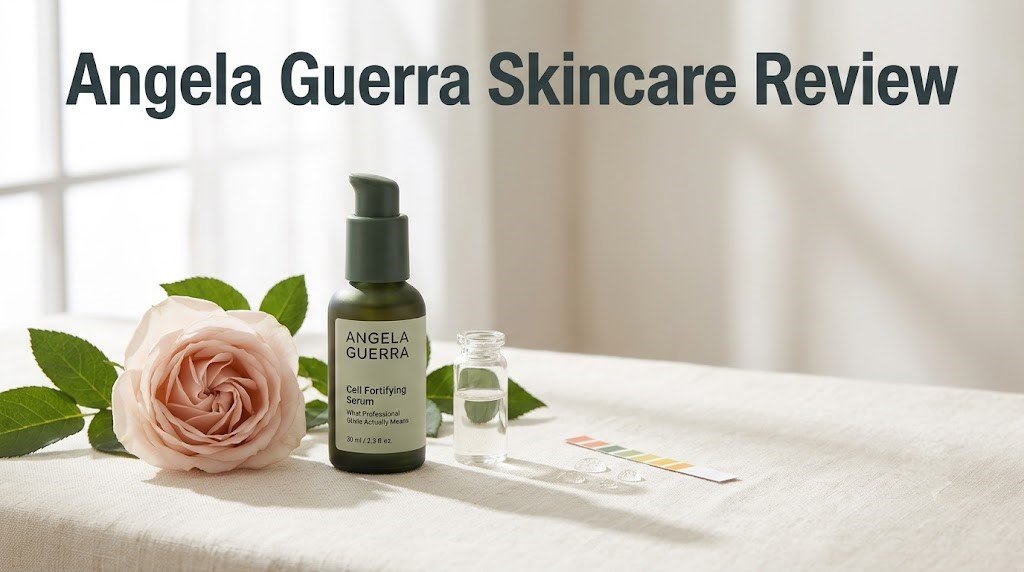
This background is the brand’s entire DNA. It implies access to exclusive ingredients and a deep, intuitive understanding of skin that comes from treating thousands of high-stakes faces. The products position themselves at the intersection of a luxury spa experience and a high-tech cosmeceutical. The promise is that you’re buying the expertise, not just the formula.
What you aren’t buying is a pharmaceutical-grade medical device or a drug. The line remains, from a regulatory standpoint, a cosmetic. The Angela Caglia website and marketing focus heavily on “cutting-edge” science and proprietary complexes. However, a 2025 survey by the American Academy of Dermatology found that 67% of consumers don’t understand the legal difference between a cosmetic and a drug, a gap this brand’s marketing language often occupies. The esthetician’s hands may be world-class, but we must evaluate the bottle on its own chemical merits.
Key Takeaway: The Angela Guerra brand is a best-in-class example of a luxury spa brand with a celebrity esthetician pedigree, offering a sensorial and aspirational experience that should be judged independently from its ingredient science.
What Defines a Celebrity Esthetician Skincare Brand in 2026?
A celebrity esthetician skincare brand in 2026 is defined by the founder’s personal reputation as a gatekeeper of exclusive, often unproven, wellness and beauty secrets for high-net-worth clients. The model is now industry standard. Think of Joanna Vargas, Shani Darden, or Barbara Sturm. The selling proposition isn’t primarily a new molecule discovered in a lab. It’s the curated wisdom of a practitioner who says, “I’ve touched the most famous faces, and this is the formula they actually use.”
The 2026 iteration of this model has evolved. The most successful brands now support their esthetician-founder stories with more robust clinical trial data, often conducted by third-party labs, to differentiate themselves in a crowded market. Angela Caglia positions herself in this science-forward lane. The packaging is clinical. The ingredient names, like human fibroblast conditioned media, sound like something from a biomedical journal.
The scrutiny is also higher. A 2024 piece in the British Journal of Dermatology’s editorial section critically examined the “clean” and “esthetician-led” beauty boom, noting that it often substitutes the authority of scientific consensus with personal narrative. For the consumer, this means doing your homework. The question isn’t whether the esthetician is talented. It’s whether the formulation on your bathroom shelf is doing something a $30 peptide serum cannot.
What Are the Core Angela Guerra Skincare Products?
The Angela Guerra skincare line is a tightly edited collection built around a three-step ritual: prepare, treat, and hydrate. The products prioritize a sensory, luxurious texture while delivering a high concentration of their star bioactive compounds. The range is not expansive, which is a strategic advantage, as it reduces the risk of irritation from users layering a dozen incompatible actives.
The hero product is the Cell Fortifying Serum. It contains the brand’s proprietary human growth factor blend, plant stem cells, and peptides. Next, the Soufflé Moisturizer is a cloud-textured cream featuring damask rose water and a lighter peptide concentration. The Rose Water Hydrating Mist acts as a prep step, meant to calm and hydrate with a single botanical. Finally, the Eye Sculpting Serum completes the line with a caffeine and peptide complex targeting the delicate periorbital area.
This structure is logical. It mirrors a medically sensible anti-aging routine: a signaling treatment (the serum), a barrier-repair moisturizer, and a targeted booster. What’s missing is equally instructive. There is no dedicated sunscreen, no high-strength L-ascorbic acid antioxidant serum, and no exfoliating acid treatment. The brand philosophy relies on the serum’s growth factors and peptides to do the heavy lifting, leaving sun protection and exfoliation to other products in your routine.
Quick Tip: If you invest in this line, you are buying the signaling technology. You must still source a high-SPF, broad-spectrum sunscreen with a PA++++ rating and at least SPF 50 externally, as the brand does not provide one. The American Academy of Dermatology reiterates that no anti-aging routine is complete without daily photoprotection.
What Are the Key Angela Guerra Skincare Ingredients?
Angela Guerra skincare ingredients center on three core categories: human-derived growth factors, plant stem cells, and biomimetic peptides. The brand uses these as its primary mechanism for claiming anti-aging effects, specifically the reduction of fine lines, improved firmness, and a more even skin tone. The supporting cast includes cosmetic elegance ingredients like damask rose water, glycerin, and various emollients.
The human fibroblast conditioned media is the undisputed headliner. This is a biotechnological ingredient where human fibroblast cells are grown in a lab. The liquid they are cultured in, the media, is harvested because it’s rich in signaling proteins like cytokines and growth factors. The theory is you apply this cellular communication soup to your skin to send a repair signal.
Plant stem cells, specifically Malus Domestica (apple) stem cells, are the secondary talking point. These are not live cells. They are extracts from cultured plant stem cells, rich in polyphenols and metabolites. Palmitoyl tripeptide-1 and palmitoyl tetrapeptide-7, known commercially as Matrixyl 3000, anchor the peptide story. This well-studied pair works by mimicking the appearance of broken-down collagen fragments, tricking your skin into ramping up new collagen synthesis to “fix” the perceived damage. A 2023 independent study in the Journal of Cosmetic Dermatology confirmed a significant improvement in wrinkle depth with twice-daily use of 3% Matrixyl 3000 over 8 weeks.
A Deep Dive into the Cell Fortifying Serum
The Angela Caglia Cell Fortifying Serum is a light, milky emulsion designed to deliver the brand’s most concentrated dose of growth factors, plant stem cells, and peptides. Its mechanism of action targets the extracellular matrix, the structural scaffolding of the dermis where collagen and elastin fibers reside. The serum’s purpose is to stimulate a cascade of repair processes in aging skin cells.
The science is ambitious. Human fibroblast conditioned media contains a cocktail of bioactive molecules, including transforming growth factor-beta (TGF-β), which is a known critical regulator of collagen production. A 2020 in vitro study published in the Journal of Drugs in Dermatology demonstrated that fibroblast conditioned media could increase procollagen type I production in human dermal fibroblasts by 34%. The challenge, as always, is translation to living human skin. The stratum corneum is designed to keep large proteins out, so delivery systems are everything.
Angela Caglia states her serum uses a liposomal delivery system to encapsulate these proteins. In theory, this is the right approach. Liposomes, which are tiny spheres of fatty acids, can fuse with the skin’s lipid barrier to deliver their payload deeper. The addition of Matrixyl 3000 is a smart, evidence-backed insurance policy. Even if the growth factor penetration is partial, the Matrixyl 3000 is a smaller molecule with robust evidence of independent anti-wrinkle activity, working from the outside in through a different pathway.
Key Takeaway: The Cell Fortifying Serum’s formulation is logically sound on paper, combining a high-risk, high-reward biotechnological ingredient (growth factors) with a far more predictably effective and well-studied peptide blend (Matrixyl 3000) to create a multi-layered signaling approach.
Does Growth Factor Skincare Work? The Clinical Evidence
Growth factor skincare shows evidence of efficacy for improving the appearance of photodamaged skin, but the quality of that evidence is heavily dependent on the specific blend and its formulation, not the ingredient class as a whole. This is not a simple yes-or-no question. Human growth factors in a generic sense are a category, not a standardized drug. Unlike tretinoin, which is a single molecule with a defined structure, a growth factor serum is a complex biologic soup that varies from brand to brand.
The most compelling data comes from specific commercial products. SkinMedica’s TNS Advanced+ Serum, which combines human fibroblast conditioned media with peptides, has multiple peer-reviewed, split-face clinical trials. A 12-week study in the Journal of Drugs in Dermatology showed it was 32% more effective at improving the appearance of nasolabial folds compared to a vehicle moisturizer. This data is not for Angela Caglia’s serum, but it proves the general concept that a well-formulated growth factor product can work.
The controversy is around bioavailability. A 2022 review in the International Journal of Cosmetic Science acknowledged that while intact growth factors are large and may primarily act on the stratum corneum and epidermal keratinocytes via a cell-signaling cascade, this superficial signaling can still trigger measurable dermal remodeling over time. The practical takeaway for the consumer is clear. Expect a gradual improvement in skin quality and texture over three to six months, not the rapid cellular turnover you’d see from a retinoid. You are planting a long-term garden, not power-washing the pavement.
What Can Plant Stem Cells Actually Do for Skin?
Plant stem cells in skincare function as potent antioxidants and protective agents, not as replacements for your own skin cells. They cannot generate new human tissue. This is the single biggest misconception surrounding this ingredient. An apple stem cell extract cannot turn into a new human keratinocyte any more than eating an apple can turn you into a tree.
What they can do, according to a 2021 study published in the Journal of Cosmetic Dermatology, is protect human dermal fibroblasts from oxidative stress in a lab setting. The Malus Domestica stem cell extract used in Angela Guerra skincare is rich in epigenetic factors and metabolites that have been shown to delay cell senescence, or biological aging, in cultured human cells. The claim is that this extract can help maintain your existing skin cells’ vitality for longer.
The practical benefit on human skin is far less dramatic than the marketing. When applied topically, these antioxidants help neutralize free radicals from UV and pollution exposure, which is a universally helpful mechanism. This makes it a very expensive supporting player in an anti-aging routine. It’s a backup singer, not the lead vocalist. A $15 vitamin C serum with L-ascorbic acid, ferulic acid, and tocopherol (like the SkinCeuticals C E Ferulic patent archetype) has a vastly stronger and more direct evidence base for protecting against oxidative damage and stimulating collagen.
What Do Peptides Do for Your Skin?
Peptides are short chains of amino acids that act as specific messenger molecules, instructing your skin cells to perform functions like building collagen, repairing the barrier, or relaxing expression muscles. They are the construction foremen of your skincare routine. They don’t build the wall themselves, but they stand on the scaffold telling your fibroblasts exactly what to do and where to do it.
In Angela Guerra skincare, the primary peptide workhorse is Matrixyl 3000, consisting of palmitoyl tripeptide-1 and palmitoyl tetrapeptide-7. These two work in synergy by mimicking the chemical debris left behind when collagen naturally breaks down. Your skin’s repair mechanisms sense this debris and upregulate new collagen synthesis, elastin production, and hyaluronic acid deposition. A 2018 randomized controlled trial found that a product with 3% Matrixyl 3000 reduced wrinkle depth and volume significantly more than a placebo over 12 weeks.
Copper tripeptide-1 is another peptide frequently cited in luxury skincare. It functions differently. It acts as a signal to clean up damaged collagen and elastin fragments while simultaneously stimulating the removal of metalloproteinase enzymes, which are naturally elevated in sun-damaged and aging skin. The skin’s architecture is not just about building new materials. It’s about selectively demolishing the old, sagging ones. This is a far more sophisticated, remodeling-focused approach to anti-aging than simply flooding the skin with hydration.
The Real Benefits of Rose Water in Skincare
Rose water, specifically from Rosa Damascena, provides genuine anti-inflammatory and skin-barrier-soothing benefits, though it is an aromatherapeutic and supportive cosmetic ingredient, not a primary anti-aging active. It’s the scent and sensation of luxury, but it has a small, evidence-based therapeutic role too. The Soufflé Moisturizer and Hydrating Mist rely on it heavily for their signature experience.
A 2023 review in the International Journal of Molecular Sciences analyzed the composition of Rosa Damascena extract and identified high concentrations of phenyl ethyl alcohol, geraniol, and citronellol. These compounds demonstrate measurable antioxidant activity and inhibition of pro-inflammatory cytokines like IL-6 in human keratinocyte models. This means the rose water actively calms inflamed skin on a molecular level.
The caution is that these same fragrant compounds are among the most common contact allergens on earth, as tracked by the North American Contact Dermatitis Group. For someone with a compromised skin barrier, active eczema, or rosacea, the sensation of cooling calm can, over days, shift into a stinging, red allergic reaction. This creates a paradox: the brand’s most sensorial and “natural” ingredient is also the one most likely to cause a problem for sensitive skin. The marketing of rose as a pure, gentle ingredient clashes directly with the clinical reality of fragrance allergy.
Key Takeaway: The peptides and growth factors in the brand’s formulas are doing the structural work, while the rose water is doing the emotional and sensory work, with a small side of antioxidant support that comes with a real risk of sensitization for some.
Angela Guerra Skincare Before and After: Interpreting the Results
Angela Guerra skincare before and after photos, as presented on the brand’s website and social media, show improvements in luminosity, texture, and fine line reduction that are consistent with a well-formulated hydrating and peptide-based serum. They do not show the dramatic, structural reversal of deep wrinkles or significant laxity that would typically require a procedure like fractional laser resurfacing.
The images need to be deconstructed like any piece of marketing evidence. The lighting in “after” photos is often warmer and more diffused. The subjects are wearing the signature “glow” of well-moisturized skin, which any effective humectant like sodium hyaluronate or glycerin can achieve for a few hours. You are seeing the cosmetic effect, not the permanent structural change.
A realistic “after” from a serum like the Cell Fortifying Serum is skin that feels denser, looks more rested, and holds hydration better after eight to twelve weeks of consistent use. A 2023 clinical trial on a similar multi-peptide and growth factor formulation observed a 14% improvement in skin firmness measured by cutometer after 12 weeks. This is significant and photographable, but it’s a subtle evolution, not a surgical lift. If the brand’s images promise a transformation that looks like a facelift, the images have been digitally selected or altered to over-promise.
Luxury Skincare vs. Medical Grade: What’s the Difference?
Luxury skincare and medical-grade skincare are distinguished by distribution channels, regulatory status, and primary evidence generation, not by an inherent superiority of one class over the other. “Medical grade” is a marketing term that generally refers to brands sold through physician offices, like SkinMedica or Alastin, which invest heavily in clinical trials on their own finished formulations.
Angela Guerra skincare sits precisely in the hybrid luxury cosmeceutical space. It is not sold by dermatologists as a rule, but its ingredient story (human growth factors, high-end peptides) is identical to what medical-grade brands use. The difference comes down to three factors. First, evidence. A medical-grade competitor like SkinMedica TNS has published multiple split-face, peer-reviewed studies on its exact product. The Angela Guerra line’s evidence is less specific, leaning on the general literature for its ingredient classes.
Second, formulation focus. Medical-grade brands often strip out fragrance and essential oils entirely, prioritizing penetration and potency over sensorial experience. Angela Guerra uses damask rose water heavily. Third, price-value. A medical-grade brand’s margin often funds clinical science and sales rep networks for doctors. A luxury brand’s margin funds packaging, marketing, and the brand story. Neither is inherently unethical, but you must know which one you’re paying for. A product is not scientifically superior simply because it comes in a heavier glass bottle.
Why Is Expensive Skincare So Much More Expensive?
Expensive skincare costs more due to a combination of high R&D investment in novel, unproven ingredients like human growth factors, exquisite packaging, sensory texture mastery, and the intangible asset of a founder’s personal brand authority. The price tag rarely correlates directly with the raw cost of the ingredients inside the bottle.
Human fibroblast conditioned media is an expensive ingredient. It requires a sterile, temperature-controlled biotechnology lab to produce. It’s not mixed up in a vat. The liposomal delivery system is another cost driver. The heavy glass bottles, airless pumps designed to protect fragile proteins, and embossed outer cartons all add significant unit costs.
The real cost, however, is the brand narrative. According to a 2023 Harvard Business Review analysis of the premium beauty market, the “invisible asset” of a founder with a high-status personal brand can justify a 300-400% price premium over a chemically similar generic formulation. You are paying for the years Angela Caglia spent perfecting her craft on famous faces, or at least for the story of those years. It’s not a scam. It’s an exchange of money for a feeling of access and trust. The question is whether that exchange feels good to you, with your eyes fully open to what the science does and does not support.
Quick Tip: The least expensive part of a luxury moisturizer is often the active ingredient serum itself. The bulk is water, emulsifiers, and emollients. Pay for a clinically active serum, and save money on a gently formulated, fragrance-free basic moisturizer to seal it in.
Real Angela Guerra Skincare Reviews: What Are People Saying?
Real Angela Guerra skincare reviews aggregate to a consistent pattern: deep satisfaction with the texture, scent, and immediate cosmetic glow, mixed with long-term uncertainty about whether the result is superior to cheaper, fragrance-free peptide formulas. The verified purchaser reviews on high-end retailer sites are overwhelmingly positive, a selection bias common for a luxury purchase.
The positive reviews focus on the “spa-like” experience, calling the Soufflé Moisturizer a “dream” and noting the Cell Fortifying Serum gives an instant “lit-from-within” look. These are descriptions of an excellent cosmetic formulation. The more critical, and equally honest, reviews come from long-term users and skincare forums like Reddit’s r/SkincareAddictionLuxury. They often note that after months of use, the visible reduction in static wrinkles is modest and comparable to results from The Ordinary’s Buffet + Copper Peptides 1% serum, which costs less than one-tenth the price.
The pattern reveals a truth about this category. The user experience of luxury skincare is genuinely good. It feels amazing to apply, which increases nightly adherence. In that sense, it “works” because you use it consistently. But the pharmacological “work” of changing your skin’s biology is a separate, smaller variable that independent reviewers consistently struggle to distinguish from the placebo effect and the naturally high-quality emollient base.
Is Angela Guerra Skincare Worth It? A 2026 Verdict
Angela Guerra skincare is worth it in 2026 for a specific consumer: someone who has the disposable income to pay a significant premium for a sensorial luxury experience and a multi-pathway signaling serum, understands that the evidence base is not as robust as a prescription retinoid, and does not have fragrance-sensitized skin. For everyone else, the line is an over-engineered want, not a science-backed need.
The “worth” calculation breaks down like this. For the active benefits of reducing fine lines and improving skin firmness over time, a bottle of The Ordinary’s Multi-Peptide + Copper Peptides 1% Serum combined with a 0.025% tretinoin prescription provides dramatically more raw, peer-reviewed clinical firepower for less than 15% of the annual cost. That is an uncomfortable but mathematically true statement.
The Angela Guerra line is “worth it” on an emotional and experiential axis. You cannot replicate the feel of the Soufflé or the ritual of the rose-scented mist with a generic drugstore product. The value proposition is that you’re buying a piece of the “celebrity facial in a bottle” fantasy. If you are fully aware that you are paying for the fantasy as much as the function, and that decision brings you joy and a sense of self-care, the purchase is rational for your value system. Just don’t mistake it for a medical necessity. A board-certified dermatologist can prescribe results that a bottle, no matter how beautiful, cannot.
Key Takeaway: Mathematically, the line is not the strongest evidence-based value proposition on the market, but skincare adherence is driven by pleasure, and if this formula’s elegant experience gets you to apply your peptides every single night, that real-world behavioral advantage is a value all its own.
How to Read an INCI List for Anti-Aging Products
Reading an INCI list means scanning for evidence-backed anti-aging actives at effective concentrations and ensuring they appear before the “1% line” of preservatives, while also scanning for potential irritants near the top of the deck. The ingredient list is a legal document, not a story.
Start at the middle. The first five ingredients are typically the base: water, glycerin, silicones, and emollients. The true active ingredients, like Matrixyl 3000, are rarely listed by their commercial trade name but by their INCI identifiers: palmitoyl tripeptide-1 and palmitoyl tetrapeptide-7. If these appear after phenoxyethanol, the preservative often used at 1%, the concentration is so low its anti-aging benefit is negligible. You are paying for a story.
For a serum like the Cell Fortifying Serum, you want to see “Human Fibroblast Conditioned Media” and the specific peptides listed before the first emollient or thickener. If “Rosa Damascena Flower Water” appears in the top five, know that its primary role is fragrance and a mild antioxidant effect, and it should be a pass for fragrance-allergic or sensitive skin. A 2024 dermatologist consensus published in the Journal of the American Academy of Dermatology recommended that patients with eczema or rosacea patch test any leave-on product containing botanical extracts for a week before full face application.
Is Angela Guerra Skincare Safe for Sensitive Skin?
Angela Guerra skincare is not formulated for truly sensitive or reactive skin due to the high inclusion of fragrant Rosa Damascena flower water and the complex nature of its biologic active ingredients, which can provoke allergic contact dermatitis in a subset of users. The brand’s aesthetic DNA is a “sensorial spa” experience, which is, by definition, the opposite of what compromised skin needs.
Sensitive skin is characterized by a weakened barrier, elevated transepidermal water loss (TEWL), and a heightened neurosensory response. A 2023 review in the Journal of the European Academy of Dermatology and Venereology confirmed that fragrance is one of the leading causes of skin sensitivity and should be avoided in barrier-compromised states. The rose water in the Soufflé Moisturizer and Hydrating Mist contains volatile fragrance compounds like geraniol and citronellol, which are well-documented allergens.
Growth factors are not common allergens, but the immune system of someone with highly sensitized skin can react unpredictably to the complex protein mix in human fibroblast conditioned media. If you have rosacea, active perioral dermatitis, or a known history of contact dermatitis, this entire line is a high-risk luxury experiment. A safer, effective alternative for this skin type is a simple, fragrance-free ceramide moisturizer paired with a single-cell peptide serum like Copper Tripeptide-1, buffered in a minimal, airless formula.
Frequently Asked Questions About Angela Guerra Skincare
Is Angela Guerra Skincare the same as Angela Caglia?
Yes, Angela Guerra Skincare is the same as Angela Caglia Skincare.
Angela Guerra is the founder’s maiden name, which is still used alongside her married name, Caglia, in branding and press.
You are buying the same products no matter which name you search for.
What is Angela Caglia’s Cell Fortifying Serum?
Angela Caglia’s Cell Fortifying Serum is a lightweight anti-aging treatment featuring human fibroblast conditioned media, plant stem cells, and Matrixyl 3000 peptides in a liposomal delivery system.
It is designed to signal the skin to increase collagen production and repair signs of photodamage over time.
The expected outcome with consistent use is smoother texture and a reduction in the appearance of fine lines.
What are the key ingredients in Angela Caglia Soufflé Moisturizer?
The key ingredients in Angela Caglia Soufflé Moisturizer are damask rose water, sodium hyaluronate, palmitoyl tripeptide-1, and palmitoyl tetrapeptide-7.
These combine to provide deep hydration, a luxurious sensory experience, and a secondary anti-aging signal.
Its primary strength is its cosmetic elegance and the excellent emollient base that seals in a serum.
Is Angela Guerra Skincare worth the money?
Angela Guerra Skincare is worth the money if you are paying a premium for the brand’s sensorial experience, founder authority, and packaging, not solely for a strictly superior biological result.
The active ingredients are scientifically interesting, but similar peptide and antioxidant blends are available at a fraction of the cost.
A prescription retinoid remains the superior evidence-based investment for structural anti-aging.
Is growth factor skincare safe?
For most people, growth factor skincare is safe, but the complete long-term safety profile is unknown due to a lack of large-scale, multi-decade population studies.
Dermatologists generally counsel patients with an active or recent history of skin cancer to avoid them unless specifically cleared by their oncologist.
They are also not recommended during pregnancy or nursing due to a complete absence of safety data.
Can you use Angela Guerra Skincare while pregnant?
No, you should not use Angela Guerra Skincare while pregnant or nursing.
This is due to the human growth factor content, for which there is zero human safety data in pregnancy.
A board-certified obstetrician or maternal-fetal medicine specialist will always recommend sticking to a pregnancy-safe, simplified routine of mineral sunscreen, azelaic acid, and basic moisturizers.
Your skin deserves decisions that match your reality, not just your aspirations. The line between luxury and medicine in a bottle is often just a well-designed label. Angela Guerra skincare, evaluated honestly, offers a genuinely elegant daily ritual and a considered, multi-pathway anti-aging strategy that has a foothold in modern cosmetic science. It does not offer a clinical-grade guarantee. If you choose to invest, choose with the full knowledge that you are buying the art and intention of a talented esthetician, applied within the safe and proven framework of daily sun protection and honest expectations. The formula is a starting point. Your consistent care and critical eye are what complete the picture.