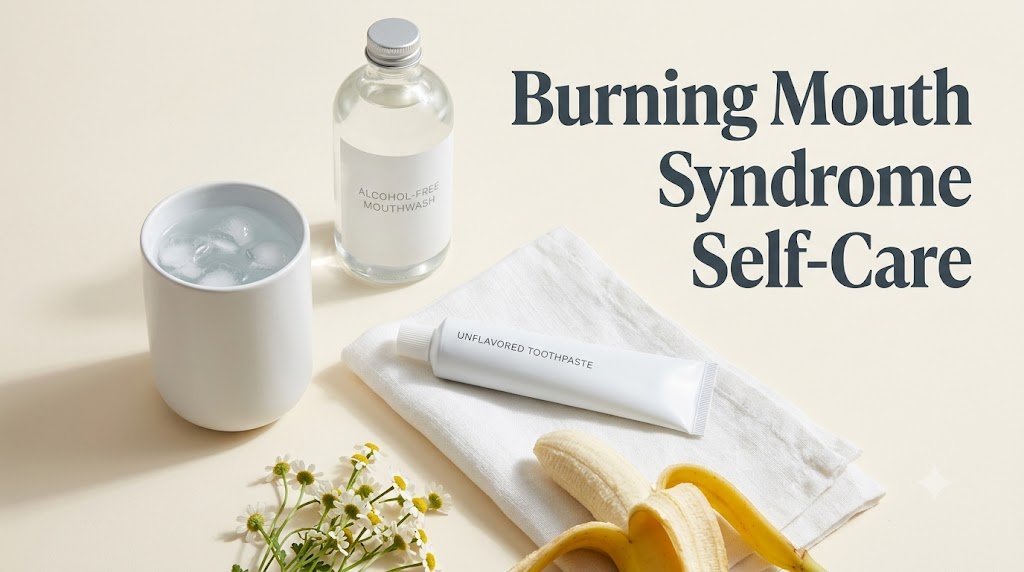
Burning Mouth Syndrome Self-Care: 2026 Relief Strategies
Burning mouth syndrome self-care begins with understanding that this is a neuropathic pain condition where the nerves in your mouth misfire, creating a scalding sensation even when no physical burn exists. Effective self-care is not about “healing” a wound, but about systematically removing chemical triggers, restoring nutritional deficiencies, and downregulating a hypersensitive pain signaling system over time.
This matters because the condition, clinically known as glossodynia, can degrade quality of life as sharply as other chronic pain disorders, yet its invisible nature leaves many people dismissed by providers and searching for answers alone. The American Academy of Oral Medicine estimates that primary BMS affects roughly 2% of the population, with postmenopausal women representing the highest risk group. The pain is real, the pathology is measurable through altered nerve fiber density in the oral mucosa, and the evidence shows that specific daily actions can reduce signal intensity when applied methodically.
You will find here a clinical breakdown of what is happening in your mouth, an ingredient-level guide to products and foods that worsen versus calm nerve firing, and a structured sequence for the stress-modulation work that addresses the central nervous system component of your pain. Everything is built on named research studies, guidelines from the International Association for the Study of Pain, and the understanding that the boundary between self-care and medical investigation must remain sharp.
What Is Burning Mouth Syndrome?
Burning mouth syndrome is a chronic oral pain condition characterized by a persistent burning sensation in the mouth that occurs in the absence of any visible mucosal abnormality, ulcer, or lesion. The pain typically localizes to the tongue, lips, gums, or roof of the mouth and can range from a mild warmth to a severe scalding feeling that mimics having just sipped coffee that was far too hot.
The condition sits within a family of neuropathic pain disorders where the somatosensory nervous system generates pain signals spontaneously. Research published in the Journal of Oral Pathology and Medicine has identified small-fiber nerve degeneration in the tongue epithelium as a central feature. Think of the nerve endings in your mouth like a security alarm system. In BMS, the alarm’s threshold drops so low that normal thermal shifts, mild acids, or even the friction of your own tongue moving sets it off. The security system is now reporting a fire where there is only candlelight.
This differs fundamentally from a physical burn or an allergic reaction. A 2022 clinical review in Pain Reports confirmed that about half of primary BMS patients show measurable peripheral nerve fiber loss, while a separate subgroup shows intact nerves but central processing dysfunction in the brain’s pain matrix. Both pathways produce the same subjective experience, but they explain why treatments that work for one person may fail for another. The condition is medically known by several terms: glossodynia, stomatodynia, and oral dysesthesia, all pointing to the same core phenomenon of sensory misfiring.
Quick Tip:
Symptom tracking is a critical self-care tool. Record the time of day, intensity on a 1 to 10 scale, what you ate, drank, and felt emotionally in the hour before the pain spiked. This data becomes medically useful if you need referral to an oral medicine specialist.
Primary vs Secondary BMS: Why It Matters
Primary burning mouth syndrome is diagnosed when no underlying medical or dental cause can be identified after thorough clinical examination and laboratory testing. The pain itself is the disease. Secondary BMS occurs when the burning sensation arises as a direct symptom of another identifiable condition, such as nutritional deficiency, oral candidiasis, dry mouth from Sjögren’s syndrome, or medication side effects.
This distinction is the single most important fork in your self-care path. In primary BMS, self-care focuses on symptom modulation, trigger avoidance, and nervous system regulation because the core pathology is neuropathic. In secondary BMS, self-care means addressing the root condition driving the pain. Applying primary BMS strategies to a fungal infection will do nothing. The National Institute of Dental and Craniofacial Research states that treating the underlying condition in secondary BMS often resolves the burning sensation completely.
Common secondary causes include vitamin B12 deficiency, iron deficiency anemia, uncontrolled type 2 diabetes, oral yeast infections (candidiasis), and autoimmune conditions like Sjögren’s syndrome. A 2023 study in the Journal of the American Dental Association found that serum B12 levels below 200 pg/mL and ferritin below 15 ng/mL were strongly associated with oral burning complaints in a cohort of 340 patients. If you have not yet had blood work measuring these parameters, your self-care must begin not with supplements, but with a conversation with your primary care provider about ordering these specific labs.
Key Takeaway: Self-care for secondary BMS is targeted: replace the missing nutrient, treat the infection, manage the diabetes. Self-care for primary BMS is systemic: you are managing a pain condition, not fixing a deficiency. Do not skip the blood work. It determines which path you are on.
Recognizing Symptoms and Clinical Diagnosis
The hallmark symptom of burning mouth syndrome is a bilateral, symmetric burning sensation inside the mouth that is typically absent upon waking, builds through the day, and peaks in the evening. This diurnal pattern is clinically significant. Pain present upon waking suggests an alternative diagnosis, as BMS pain is often suppressed during sleep and then escalates.
Other common sensory complaints include a metallic or bitter taste, a sensation of sand or grit on the tongue, and excessive thirst not fully relieved by drinking water. A 2021 diagnostic criteria review in Cephalalgia noted that taste disturbances and oral dryness accompany burning in roughly 60% to 70% of cases, forming a classic triad. Clinically, the oral cavity looks completely normal. This is what makes the condition so psychologically disorienting. Your mouth feels scalded, yet your dentist examines you and says there is nothing there.
Diagnosis is a process of exclusion. A board-certified oral medicine specialist or dermatologist will conduct a thorough intraoral exam, review your medication list, and order laboratory tests. Expect a complete blood count, fasting glucose, serum B12, folate, ferritin, and possibly an oral culture for Candida. An ANA (antinuclear antibody) panel may be drawn if an autoimmune condition is suspected. Self-diagnosis is not possible here. The International Association for the Study of Pain emphasizes that BMS is a diagnosis assigned only when all other identifiable causes have been systematically ruled out.
Symptom Pattern Guide:
Symptom Onset Pattern: Burning absent in morning, escalates afternoon, peaks evening
Taste Change: Persistent metallic or bitter taste
Oral Appearance: No visible lesions, redness, or swelling
Pain Location: Bilateral, often tip and sides of tongue
Burning Mouth Syndrome Self-Care Limits
Self-care for burning mouth syndrome is a powerful tool for reducing symptom intensity and improving daily function, but it cannot replace diagnostic investigation, prescribed neuropathic pain medication when needed, or treatment of underlying disease in secondary BMS. You must clearly separate lifestyle and environmental management from the clinical care that only a licensed provider can deliver.
What self-care can achieve, according to a 2023 patient survey published in Oral Diseases, is a meaningful reduction in pain spikes triggered by specific foods, oral products, and high-stress events. Fifty-eight percent of respondents reported that strict avoidance of identified personal triggers, combined with daily stress-reduction practice, brought their average daily pain score down by at least 3 points on a 10-point scale. Self-care acts as a dial, not a switch. You turn down the baseline volume of nerve firing. You do not silence it completely.
What self-care cannot do is reverse small-fiber nerve degeneration, replace deficient serum B12 in the tissue, resolve candidiasis without antifungal medication, or function as the sole treatment when the pain is severe enough to interfere with nutrition or sleep. If your pain is accompanied by visible oral lesions, bleeding, weight loss, or an inability to eat solid food, you are past the threshold where self-care alone is appropriate. Seek evaluation from a board-certified oral medicine specialist. Ask specifically about topical clonazepam preparations, oral lidocaine rinses, and low-dose tricyclic antidepressants, which are first-line pharmacologic options named in American Academy of Oral Medicine treatment guidelines.
Oral Care Products for a Sensitive Mouth
Your daily oral care products, chosen correctly, function as a continuous environmental intervention that either calms or incites the sensory nerves in your oral mucosa. The goal is to remove every chemical input that can non-specifically activate TRPV1 and other pain-signaling receptors, creating a neutral, frictionless oral environment where the nervous system receives as few additional alarm signals as possible.
Toothpaste selection is the highest-leverage change you can make. Most commercial toothpastes contain sodium lauryl sulfate, a surfactant that strips the protective mucin layer from the oral epithelium and has been shown in patch-testing studies to induce mucosal irritation in sensitive populations. Switch to an SLS-free toothpaste with a bland flavor profile. Avoid “whitening” toothpastes entirely. They contain abrasive silicas and peroxide compounds that add mechanical and chemical stress to already hypersensitive tissue. A 2022 formulation study in the International Journal of Dental Hygiene confirmed that SLS-free dentifrices preserved salivary mucin integrity better than SLS-containing controls across 48-hour exposure.
Mouthwash is where most people unknowingly intensify their pain. Avoid any product containing alcohol, menthol, eugenol, cinnamaldehyde, or high concentrations of essential oils like peppermint or tea tree. These compounds are TRPV1 agonists, meaning they directly stimulate the same heat-and-pain receptors already misfiring in BMS. A 2020 paper in the Journal of Dental Research demonstrated that menthol activates TRPM8 cold receptors but can paradoxically lower the activation threshold of neighboring TRPV1 heat receptors, making the mouth more sensitive to thermal stimuli after use.
Oral Product Selection Table:
Product Type: Toothpaste
Look For: SLS-free, fluoride present, unflavored or very mild mint
Avoid: SLS, whitening silica, strong peppermint, cinnamon
Mechanism Note: SLS denatures mucin proteins, reducing epithelial protection
Product Type: Mouthwash
Look For: Alcohol-free, xylitol-based, cetylpyridinium chloride for antimicrobial action if needed
Avoid: Alcohol, menthol, eugenol, tea tree oil, cinnamaldehyde
Mechanism Note: Menthol and cinnamaldehyde are direct TRPV1/TRPA1 agonists
Product Type: Dental Floss
Look For: Uncoated or PTFE-coated, unflavored
Avoid: Cinnamon or strong mint wax coatings
Mechanism Note: Flavor compounds absorb through thin gingival epithelium
Ingredients to Avoid in Toothpaste and Mouthwash
Sodium lauryl sulfate tops the avoidance list for mechanical reasons. It increases transepithelial water loss from the oral mucosa in the same way harsh surfactants disrupt the stratum corneum on facial skin. A compromised oral barrier permits acids, flavor compounds, and thermal shifts easier access to subepithelial nerve endings.
Cinnamaldehyde, the compound that gives cinnamon its flavor, is one of the most potent oral irritants commonly found in dental products. It activates the TRPA1 receptor, which is sometimes called the “wasabi receptor” because it detects chemical irritants and signals pain. In an already sensitized mouth, cinnamaldehyde adds a direct chemical burn signal on top of the spontaneous burning. The same applies to menthol and peppermint oil beyond trace amounts. Even though menthol initially feels cooling, its mechanism of desensitizing TRPM8 receptors leaves TRPV1 receptors more responsive. It is a cooling sensation that costs you later sensitivity.
Alcohol in mouthwash dries the mucosa, concentrates any residual irritants against the tissue, and causes a stinging sensation that is genuinely damaging at the cellular level. A 2019 Cochrane review on mouthwash use in oral mucosal disease found alcohol-containing formulas consistently rated as more painful and less tolerable than alcohol-free alternatives. Also check for artificial sweeteners, particularly saccharin and aspartame. While not universally problematic, a subset of BMS patients report heightened burning within minutes of exposure. The mechanism is unclear but may involve direct activation of oral sweet taste receptors that cross-talk with pain-signaling pathways in the trigeminal system.
Ingredients to Avoid Checklist:
Sodium Lauryl Sulfate: Strips protective mucin, increases epithelial permeability
Cinnamaldehyde: Direct TRPA1 agonist, sends chemical burn signal
Menthol and Peppermint Oil: Initial cooling mask followed by TRPV1 sensitization
Alcohol: Dehydrates mucosa, cytotoxic to surface epithelial cells
Saccharin and Aspartame: Anecdotally linked to pain flares in sensitive subsets
Key Takeaway: Your toothpaste and mouthwash are in contact with your oral mucosa for minutes daily. If they contain TRPV1 or TRPA1 agonists, you are adding chemical noise to a pain channel already broadcasting at maximum volume. The solution is SLS-free, alcohol-free, unflavored, or very mildly flavored products only.
Foods That Trigger Oral Neuropathic Pain
Dietary trigger identification is a core self-care competency because the thermal, chemical, and mechanical properties of food interact with the oral mucosa every time you eat. The most reliably problematic categories are acidic foods, foods with high phenolic compound content, and foods that present a sharp mechanical edge like toasted bread crusts or chips.
Acidic foods lower the pH at the mucosal surface, which directly activates acid-sensing ion channels on pain nerve endings. Citrus fruits, tomatoes, vinegar-based dressings, and carbonated beverages are common offenders. A 2021 observational study in Oral Diseases tracked food diaries from 120 BMS patients and found that tomato products and citrus juice precipitated pain flares within 10 minutes of consumption in more than 40% of participants. The response is not an allergy. It is the pH drop opening ion channels on nerves already primed to fire.
Capsaicin-containing foods like chili peppers require a separate, more nuanced discussion because capsaicin is paradoxically both the most potent trigger and, in controlled application, a clinically used desensitizing agent. But for dietary purposes, uncontrolled intake of spicy foods in a BMS-sensitive mouth is generally aversive and produces intense pain. Cinnamon, whether in candy, gum, or baked goods, carries the same cinnamaldehyde risk detailed in oral care products. Hot beverages present a thermal trigger. The TRPV1 receptor’s activation threshold drops in BMS, meaning even a warm soup that registers as pleasant on your hand may register as scalding on your tongue.
Trigger Food Categories:
Category: High Acid
Examples: Citrus, tomatoes, vinegar, soda
Mechanism: Proton activation of acid-sensing ion channels (ASICs) on nerve endings
Category: Phenolic Irritants
Examples: Cinnamon, clove, raw garlic
Mechanism: Direct TRPA1 agonism, chemical irritation signal
Category: High Thermal
Examples: Hot coffee, soup, tea
Mechanism: TRPV1 receptor activation at lowered threshold in sensitized nerves
Category: Mechanical
Examples: Chips, crusty bread, sharp candy
Mechanism: Physical abrasion of thinned or sensitive epithelium
Diet Plan and Hydration for BMS Relief
A BMS-aware diet is built around neutrality: neutral pH, soft texture, and moderate temperature. The goal is to nourish yourself while giving the oral mucosa as few additional sensory insults as possible. This is not a restrictive elimination diet in the allergy sense. It is a selection pattern that prioritizes foods less likely to add chemical or mechanical noise to the pain signal.
Your diet framework should center on cooked vegetables over raw, lean proteins prepared without acidic marinades, non-citrus fruits like bananas and melon, and whole grains in soft preparations such as oatmeal or well-cooked rice. Cooked spinach and kale wilt into soft, nutrient-dense forms that deliver iron, B vitamins, and zinc, the nutrients most clinically linked to secondary BMS, without the sharp edges of raw leaves. Cold and room-temperature foods are often better tolerated than hot foods. A smoothie with banana, spinach, oat milk, and a neutral protein powder can deliver a meal’s worth of nutrition at a texture and temperature that minimizes sensory irritation.
Hydration requires specific technique beyond just drinking water. Sipping cold water throughout the day provides ongoing cooling of the mucosal surface, which directly competes with the heat signal of the burn through a mechanism called gate control. Cold signals travel on different nerve fibers than burning pain signals and can partially close the gating mechanism in the dorsal horn of the spinal cord that amplifies pain. Sucking on small ice chips offers the same benefit. The physical cooling effect is temporary, lasting minutes to half an hour, but the cumulative effect of frequent sips across a day can meaningfully lower average pain intensity.
Dietary Selection Guide:
Protein: Soft-cooked fish, eggs, tofu, well-cooked lentils (skip the spice)
Vegetables: Steamed zucchini, mashed sweet potato, cooked spinach, avocado
Fruits: Banana, melon, peeled pear, applesauce
Grains: Oatmeal, congee, soft rice, polenta
Beverages: Still water, milk, oat milk, caffeine-free herbal teas (chamomile, not peppermint)
Dry Mouth Relief Strategies That Work
Xerostomia, the clinical term for dry mouth, frequently accompanies burning mouth syndrome and exacerbates the burning sensation because saliva normally provides a protective film that buffers pH, dilutes irritants, and delivers lubricating mucins. When salivary flow drops, that buffer disappears, leaving the nerve endings more directly exposed to every thermal and chemical challenge.
The mechanical stimulation of chewing is a powerful natural trigger for salivary flow. Sugar-free xylitol gum stimulates the mechanoreceptors in the periodontal ligament and jaw muscles, signaling the salivary glands to release a sustained flow of saliva. Xylitol specifically adds a bacteriostatic benefit, reducing the oral bacteria that can contribute to inflammation. A 2022 study in the Journal of Oral Rehabilitation found that regular xylitol gum use increased unstimulated salivary flow by 22% over a four-week period in adults with medication-induced dry mouth.
Artificial saliva substitutes containing carboxymethylcellulose or hydroxyethylcellulose can provide temporary lubrication. However, they are a stopgap, not a solution. Better long-term strategies include running a cool-mist humidifier in your bedroom at night, consciously nose-breathing during the day and night, and reviewing any medications you take with your primary care provider. Anticholinergic medications, including some antihistamines, tricyclic antidepressants, and blood pressure medications, are among the most common pharmacologic causes of dry mouth. Do not stop a prescribed medication on your own. Do bring a list to your next appointment and ask specifically: “Are any of my medications contributing to my oral dryness, and are there alternative options with a lower anticholinergic load?”
Key Takeaway: Dry mouth and burning mouth form a vicious loop. Less saliva means less protection, which means more irritation, which increases the sensation of dryness. Break the loop with mechanical chewing stimulation, a humidity-controlled environment, and a medication review with your provider.
Key Vitamin and Mineral Deficiencies
Nutritional deficiencies are a primary driver of secondary burning mouth syndrome, and even in primary BMS, optimizing micronutrient status removes a potential co-contributor to nerve dysfunction. The nutrients with the strongest clinical evidence linking deficiency to oral burning are vitamin B12, iron (measured as serum ferritin), zinc, and folate.
Vitamin B12 deficiency causes neurological and mucosal changes that directly produce glossitis, a smooth, red, painful tongue that can feel indistinguishable from BMS. B12 is required for myelin sheath maintenance around peripheral nerves. When B12 stores fall, the small-diameter sensory nerve fibers in the tongue begin to function abnormally, producing spontaneous burning signals. A 2020 systematic review in the Journal of Oral Pathology and Medicine reported that B12 replacement resolved burning mouth symptoms completely in 56% of deficient patients within three to six months of starting supplementation.
Iron deficiency anemia similarly produces atrophic changes in the oral epithelium, particularly the filiform papillae on the tongue, which thin and flatten, exposing the underlying tissue to greater friction and chemical contact. A ferritin below 15 ng/mL should trigger iron supplementation under the guidance of a primary care provider. Zinc plays a role in taste bud function and epithelial repair. Low zinc has been documented in some BMS cohorts, though the evidence is less robust than for B12 and iron. Folate deficiency can produce a clinical picture nearly identical to B12 deficiency, with a smooth, painful tongue as a central feature.
Nutrient Deficiency Screening Table:
Nutrient: Vitamin B12
Lab Test: Serum B12, methylmalonic acid if borderline
Deficiency Threshold: Below 200 pg/mL
BMS Link: Myelin degeneration, glossitis, peripheral neuropathy
Nutrient: Iron
Lab Test: Serum ferritin, CBC
Deficiency Threshold: Ferritin below 15 ng/mL
BMS Link: Epithelial atrophy, loss of filiform papillae
Nutrient: Zinc
Lab Test: Serum zinc
Deficiency Threshold: Below 70 mcg/dL
BMS Link: Impaired taste function, poor epithelial repair
Nutrient: Folate
Lab Test: Serum folate, RBC folate
Deficiency Threshold: Below 3 ng/mL
BMS Link: Megaloblastic changes in oral epithelium, glossitis
Alpha-Lipoic Acid and Neuropathic Pain Relief
Alpha-lipoic acid (ALA) is a naturally occurring, fat- and water-soluble antioxidant that has been studied specifically for neuropathic pain, including burning mouth syndrome, with a body of clinical trial evidence going back to the early 2000s. ALA functions as a cofactor in mitochondrial energy production and directly scavenges free radicals that contribute to nerve oxidative stress, a proposed driver of small-fiber degeneration.
The most frequently cited study, a 2006 randomized controlled trial published in the Journal of the European Academy of Dermatology and Venereology, used 600 mg of ALA daily for two months and found that 72% of participants in the ALA group reported meaningful symptom improvement compared to 18% in the placebo group. A subsequent 2020 meta-analysis pooling five controlled trials confirmed that ALA outperforms placebo, though the authors noted moderate heterogeneity between studies and called for larger standardized trials. The current clinical consensus places ALA in the “reasonable to try” category, not the “standard of care” category.
Dosing in the trials typically ranged from 200 mg to 600 mg daily, taken in divided doses with food to reduce stomach upset. Onset of effect, when it occurs, is typically reported at three to four weeks of consistent use. ALA is generally safe at these doses for most adults, though it can lower blood glucose slightly. People with diabetes should coordinate with their endocrinologist before starting ALA because of the risk of hypoglycemia. Pregnant and nursing women should avoid ALA supplementation at therapeutic doses due to insufficient safety data. The most common side effect is mild gastrointestinal discomfort that often resolves with food timing.
Quick Tip:
If you decide to try alpha-lipoic acid after a discussion with your primary care provider, start at 200 mg once daily with a meal for one week, monitor for any stomach upset, then increase to 200 mg twice daily if tolerated. Track your pain scores daily for a full month before evaluating efficacy.
The Capsaicin Paradox for Oral Desensitization
Capsaicin, the compound that makes chili peppers hot, presents a clinical paradox. It activates TRPV1 receptors, the same receptors that signal burning pain, and produces an intense burning sensation upon application. However, with repeated controlled exposure, it desensitizes those same nerve endings, depleting the neuropeptide substance P from the nerve terminals and reducing the capacity to transmit pain signals. The very thing that causes the burn can, over time, dampen the burn.
In-office capsaicin desensitization protocols have been studied for oral neuropathic pain. A 2011 study in Pain Medicine had patients rinse with a dilute capsaicin solution three times daily for one week, with pain intensity decreasing progressively over the treatment period. The first few days were uncomfortable, which is why this must be done under professional guidance. Your oral medicine specialist can supervise a regimen using a standardized capsaicin oral rinse or compounded lozenge at a precisely controlled concentration.
At-home use of capsaicin is not straightforward and carries genuine risk of severe discomfort if done incorrectly. Do not attempt to formulate your own capsaicin rinse from chili pepper extract. The concentration must be controlled and the application supervised. Topical capsaicin creams designed for postherpetic neuralgia are not formulated for oral use and should never be applied inside the mouth. The takeaway here is not to start capsaicin at home, but to ask your oral medicine specialist about it as a potential in-office treatment option. It is an example of a paradoxical mechanism where the pain trigger, in controlled medical form, becomes the desensitizing agent.
Key Takeaway: Capsaicin desensitization is a real neuropathic pain mechanism that can work for BMS, but it requires the same level of professional oversight as any prescription therapy. Ask about it. Do not improvise it.
The Stress-Pain Cycle in BMS
Stress does not cause burning mouth syndrome, but it can significantly amplify the perception of oral pain through a well-characterized neuroendocrine feedback loop. Chronic stress elevates circulating cortisol, which sensitizes peripheral nerve endings, increases systemic inflammation, and lowers the brain’s pain-regulatory capacity. The mouth then hurts more. The increased pain then generates more psychological distress. The cycle locks in.
The International Association for the Study of Pain formally recognizes the bidirectional relationship between chronic pain and mood, with pain catastrophizing, anxiety, and depressive symptoms all associated with higher pain intensity and longer duration across chronic pain conditions, including orofacial pain. A 2022 study in the Journal of Oral Rehabilitation found that BMS patients with high perceived stress scores reported pain levels roughly 40% higher on average than those with low stress scores, even after controlling for age and duration of symptoms.
Breaking this cycle requires direct intervention on the stress side of the equation, not as a secondary nice-to-have, but as a primary self-care modality with equal weight to trigger avoidance. This is where the concept from psychodermatology transfers directly to oral medicine. The nerves in your face, mouth, and skin share common embryologic origins and common innervation pathways. Stress modulation techniques that reduce neurogenic inflammation in the skin can reduce it in the oral mucosa through the same systemic pathways.
Cortisol, Inflammation, and Your Mouth
Cortisol, the primary glucocorticoid stress hormone released by the adrenal glands, crosses into saliva and oral tissues directly. In acute stress, cortisol temporarily suppresses inflammation. In chronic stress, the body’s cortisol receptors become resistant to the signal, creating a state of unchecked low-grade inflammation and a heightened pain response. This is the mechanism by which ongoing psychological stress transforms from a feeling into a physical contributor to mucosal discomfort.
When cortisol binds to receptors on mast cells in the oral mucosa, it can trigger the release of histamine and other inflammatory mediators that directly activate itch and pain nerve fibers. A 2021 review in Frontiers in Neuroscience outlined the pathway: elevated salivary cortisol correlates with increased salivary inflammatory cytokines, which in turn correlate with higher pain sensitivity in the trigeminal nerve territory, the cranial nerve that supplies sensation to the mouth, face, and tongue.
What does this mean practically? Every time you consciously slow your breathing, activate your parasympathetic nervous system, or disengage from a racing stress thought, you are physiologically reducing the cortisol load bathing your oral nerve endings. This is not metaphorical. It is measurable endocrinology. Morning salivary cortisol is a validated biomarker that researchers have used in BMS studies, and it is often elevated in patients with chronic oral pain. Your self-care practice, specifically the stress-modulation components, is working at the level of that cortisol measurement.
Vagal Toning Practices for Pain Modulation
Vagal toning refers to practices that stimulate the vagus nerve, the longest cranial nerve and the main highway of the parasympathetic nervous system, which is responsible for the “rest and digest” state that counterbalances the “fight or flight” sympathetic system. Higher vagal tone is associated with lower inflammation, better pain regulation, and faster recovery from stress, all directly relevant to BMS management.
Slow, extended exhalation breathing is the most accessible vagal toning practice. The vagus nerve passes through the diaphragm, and when you extend your exhale relative to your inhale, you mechanically stimulate the nerve, signaling the heart to slow and the parasympathetic system to engage. A 2020 study in Pain Research and Management demonstrated that a daily 10-minute slow-breathing practice, using a 4-second inhale and 6-second exhale pattern, reduced pain intensity scores in a mixed chronic pain group by an average of 22% over eight weeks.
Other evidence-supported vagal toning practices include humming or chanting, which vibrates the vocal cords and directly stimulates the vagus nerve branches in the throat, cold water face immersion, which triggers the mammalian dive reflex and an immediate parasympathetic surge, and gargling with room-temperature water. Choose one practice. Start at two minutes daily. The goal is not to stop the pain in the moment. The goal is to train your nervous system, over weeks, to return to baseline faster after a pain spike or a stress event. Think of it like strength training for your relaxation reflex.
Quick Tip:
Try the 4-6 breathing practice immediately after a meal. Mealtime often triggers pain flares from food temperature and composition. A structured breathing pause right after eating can help your nervous system dampen the postprandial pain peak.
Cognitive Reframing for Chronic Oral Pain
Cognitive reframing is a technique drawn from cognitive behavioral therapy that involves identifying catastrophic or helplessness-driven thoughts about pain and actively replacing them with more accurate, functional assessments. It does not deny the reality of the pain. It reduces the secondary suffering that amplifies the pain signal at the cortical level.
In BMS, the catastrophic thought loop often sounds like: “This burn will never stop. Something must be seriously wrong with me. I cannot live like this.” That thought loop generates a fear response that dumps more cortisol and tightens the muscles of the face and jaw, worsening both the experience and, through muscle tension and referred pain, possibly the physical sensation itself. A 2023 pilot study in the Journal of Oral Pathology and Medicine tested a six-week online cognitive behavioral therapy module for BMS patients and found clinically meaningful reductions in pain catastrophizing scores that correlated with lower daily pain intensity.
A simple reframing practice looks like this: When the burning sensation peaks, you note it. “There is the burn. I know this sensation. It is my nerves misfiring, not a new injury.” Then you choose one calming action: four slow breaths, a sip of cold water, a shift of attention to a sensory experience in another part of your body like the feeling of your feet on the floor. This is a skill. It takes repetition. The goal is not to make the pain disappear. The goal is to change your relationship to it so that the pain signal does not automatically launch a full-system stress cascade every time it fires.
Sleep Hygiene to Reduce Pain Sensitivity
Sleep deprivation directly increases pain sensitivity through effects on central nervous system processing and inflammatory cytokine levels. A single night of poor sleep raises next-day pain perception. Multiple nights of poor sleep create a cumulative sensitizing effect that makes the oral burning feel worse and lowers your threshold for new triggers.
The mechanism involves sleep’s role in clearing inflammatory byproducts from the brain and regulating the hypothalamic-pituitary-adrenal (HPA) axis. When deep sleep is fragmented, cortisol levels fail to drop to their normal nighttime low, maintaining a state of low-grade systemic inflammation that primes pain pathways. A 2019 study published in the Journal of Neuroscience demonstrated that sleep deprivation reduced activity in the nucleus accumbens, a brain region involved in pain inhibition, while increasing activity in the somatosensory cortex, the region that processes pain signals.
Practical sleep hygiene for BMS includes keeping your bedroom cool to reduce the thermal sensitization that makes burning worse, running a humidifier to prevent overnight oral dryness, avoiding food in the two hours before bed to minimize any chance of reflux-mediated oral irritation, and using a dim, warm-light environment in the evening to support natural melatonin release. If oral burning specifically disrupts your ability to fall asleep, try holding a small ice chip in your mouth as you settle in, letting it dissolve slowly. The cooling signal from the cold can partially close the pain gate and reduce the burning sensation just enough to let you drift off.
Key Takeaway: Sleep is not a passive state. It is an active recovery process during which your brain modulates pain signaling for the following day. Protecting your sleep is a direct clinical intervention for chronic oral pain, not a lifestyle luxury.
Frequently Asked Questions About Burning Mouth Syndrome
What is the fastest home remedy for burning mouth syndrome?
Sipping cold water or sucking on a small ice chip provides the fastest temporary relief by cooling the oral mucosa and activating cold-sensing nerve fibers that partially inhibit the burning pain signal through gate-control mechanisms in the spinal cord.
The effect lasts minutes to half an hour and can be repeated safely throughout the day.
This is a symptomatic relief strategy, not a treatment for the underlying nerve hypersensitivity.
Can vitamin B12 cure burning mouth syndrome?
Vitamin B12 supplementation can resolve burning mouth symptoms completely when the burning is secondary to a confirmed B12 deficiency, with studies showing resolution in roughly 56% of deficient patients within three to six months of repletion.
It will not cure primary BMS where deficiency is not the driver.
A serum B12 test must confirm deficiency before you attribute your burning to low B12.
What toothpaste should I use for a burning tongue?
Use a toothpaste that is free of sodium lauryl sulfate (SLS) and contains a bland or very mild flavor with no cinnamon, strong peppermint oil, or whitening abrasives.
SLS strips the protective mucin layer from the oral epithelium, and strong flavor compounds like cinnamaldehyde directly activate pain-signaling TRPA1 receptors on sensitized nerve endings.
Several brands now market SLS-free formulations specifically for sensitive mouths.
Does anxiety make burning mouth syndrome worse?
Anxiety and chronic stress worsen burning mouth syndrome through cortisol-mediated sensitization of peripheral nerve endings and reduced central pain-regulatory capacity.
The stress-pain connection is bidirectional, meaning pain increases anxiety and anxiety amplifies pain perception, creating a cycle that requires direct intervention on both the psychological and sensory components.
Daily stress-modulation practices like vagal toning and cognitive reframing are evidence-supported for breaking this cycle.
What foods should I avoid with burning mouth syndrome?
Avoid acidic foods like citrus and tomatoes that activate acid-sensing ion channels, spicy foods containing capsaicin that stimulate TRPV1 receptors, cinnamon and clove products that activate TRPA1 receptors, and very hot beverages that trigger the lowered thermal pain threshold.
Mechanically sharp foods like chips and crusty bread can also add physical irritation to already sensitized tissue.
Each person’s triggers vary slightly, so systematic food-symptom tracking is recommended.
Can drinking water help burning mouth syndrome?
Drinking water helps by cooling the oral surface, diluting residual irritants, and combatting the dry mouth that often exacerbates burning.
The relief is temporary, which is why sipping frequently throughout the day is more effective than drinking large amounts at once.
For lasting dry mouth relief, combine hydration with mechanical salivary stimulation like sugar-free xylitol gum chewing.
In the end, burning mouth syndrome self-care is a daily practice of precise environmental control and nervous system support. You are removing irritants at the ingredient level, restoring what nutritional deficiencies have taken away, and training your brain and body to interrupt the pain-stress loop that amplifies the burning sensation. The mouth is not broken because you feel a burn that no one else can see. The nerves are simply sending a signal that has stopped matching the reality of the tissue.
Start with two changes this week: replace your toothpaste with an SLS-free, unflavored formulation, and begin a two-minute slow-breathing practice after meals. Track your pain scores. Watch for the subtle shifts that accumulate when you stop adding chemical noise to an already loud pain channel.
The data you collect about your triggers, the blood work you obtain from your provider, and the daily stress-modulation practice you commit to give you more control over this condition than most people realize. You are not waiting for a cure. You are building a system that systematically reduces the volume of the signal, one decision at a time.