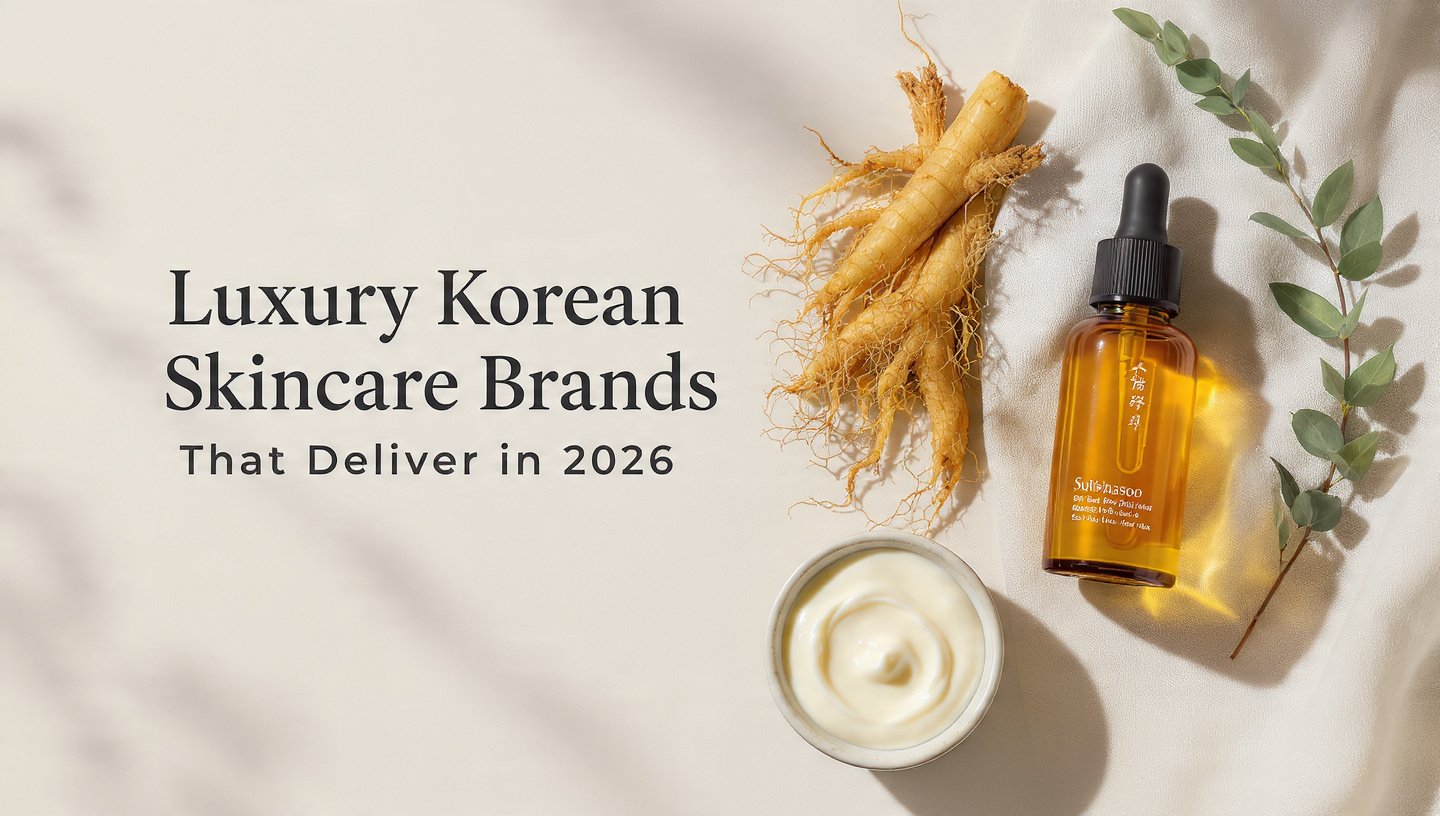
Luxury Korean Skincare Brands That Deliver in 2026
Luxury Korean skincare brands like Sulwhasoo, The History of Whoo, and Amorepacific sit at the intersection of herbal medicine tradition, modern fermentation biotechnology, and genuinely sophisticated formulation design. The best of these brands deliver real, measurable skin changes through compounds like ginsenosides and adenosine that have legitimate dermatological research behind them, though not every product in the category earns its three-figure price.
The question worth asking in 2026 is not whether luxury Korean skincare is beautiful. The packaging is exquisite. The textures are refined. The question is whether the active ingredients inside the jar are present at concentrations that matter, in formulations that deliver them to the right skin layer, and whether the clinical evidence supports the price over a well-chosen $40 counterpart. The answer depends entirely on which brand you choose and which skin outcome you are targeting.
This article names the specific bioactive compounds inside the botanicals that define luxury Korean skincare, explains what the research actually says about ginsenosides and fermented herbal complexes, distinguishes between brands built on genuine fermentation science and those trading on heritage narrative, and gives you the skin type guidance that is missing from every other luxury K-beauty roundup. You will leave knowing which products are worth considering, which ingredients to look for on an INCI list, and which formulations to approach with caution if your skin is reactive or you are managing hyperpigmentation.
luxury korean skincare brands
Luxury Korean skincare brands occupy a specific category defined by higher price points, proprietary herbal complex formulations, fermentation-derived active ingredients, and most meaningfully, a concentrated investment in research on specific botanical compounds that mass-market K-beauty lines do not develop. The three brands most frequently cited as category leaders are Sulwhasoo (Amorepacific Group), The History of Whoo (LG Household & Health Care), and Amorepacific’s namesake line. These are not simply premium versions of standard moisturizers. Each brand holds documented research programs studying the skin effects of specific ginsenoside compounds, fermented medicinal herb complexes, or green tea-derived polyphenol fractions.
The distinction matters because many brands that market themselves as luxury K-beauty are actually premium-priced but do not invest in the extraction technology, fermentation processing, or clinical testing that distinguishes the top tier from beautifully packaged mid-range products. Genuine luxury K-beauty research often appears in peer-reviewed cosmetic science journals under scientist names affiliated with the parent conglomerates, a transparency signal that lesser brands rarely provide.
- Sulwhasoo centers its entire line on ginseng processed through a proprietary steaming and fermentation method that the brand claims increases the concentration of compound K, a ginsenoside metabolite with documented skin absorption.
- The History of Whoo formulates around a traditional Korean royal court medicine compound called Gongjin-dan, a blend of deer antler, wild ginseng, and other medicinal herbs that the brand modernizes through extraction and fermentation.
- Amorepacific focuses on green tea-derived compounds, specifically EGCG (epigallocatechin gallate) isolated from cultivars grown on the brand’s own Jeju Island tea fields, supported by published research on antioxidant stability and skin delivery.
Key Takeaway: A genuine luxury K-beauty brand invests in proprietary extraction and fermentation processes that alter the molecular profile of its botanical raw materials. If the brand’s marketing describes “ancient ingredients” without naming any processed bioactive compound or citing its own research, it is likely a premium packaging play rather than a science-driven luxury line.
korean luxury skincare
Korean luxury skincare refers specifically to the high-end segment of the K-beauty market where product prices typically range from $60 to over $400, where formulation science draws on traditional Korean herbal medicine principles modernized through biotechnology, and where the parent company maintains significant internal research and development infrastructure. This category is not defined by a single price threshold. It is defined by the presence of proprietary extraction processes, peer-reviewed or conference-presented research on the brand’s key active compounds, and a sensory formulation quality that reflects genuine cosmetic chemistry expertise.
A 2024 report in the International Journal of Cosmetic Science noted that luxury Korean skincare brands have invested heavily in fermentation biotechnology to break down large-molecule botanical compounds into smaller, more skin-penetrable fractions. This is not marketing language. The molecular weight of a standard ginsenoside ranges from 800 to 1100 g/mol, which is too large to pass through the stratum corneum efficiently. Fermentation using specific yeast or bacterial strains, an approach Sulwhasoo and Su:m37 both use, breaks ginsenosides into smaller metabolites like compound K that demonstrate measurable dermal penetration in Franz cell diffusion studies.
This scientific infrastructure is expensive. It means genuine luxury K-beauty differs from mass and mid-range Korean skincare in ways that go beyond packaging and brand story. The ingredient list on a Sulwhasoo or Whoo product will frequently include fermentation filtrates, enzyme-treated extracts, and named bioactive fractions, not just crude botanical extracts steeped in glycerin and water.
Key Takeaway: The presence of fermentation-processed ingredients and specific named bioactive fractions on an INCI list is a more reliable luxury K-beauty signal than the brand name or the price.
what defines luxury k-beauty
Luxury K-beauty is defined by three criteria that distinguish it from mass-market and premium Korean skincare: proprietary raw material cultivation or sourcing control, biotechnological processing that modifies the molecular structure of botanical actives for skin delivery, and internal research programs that publish or present data on finished formulations. Not every expensive Korean skincare product meets all three. The ones that do are the luxury category’s genuine players.
Proprietary raw material control means the brand either cultivates its key botanical (Amorepacific owns tea fields; Sulwhasoo controls specific ginseng cultivation parameters) or maintains exclusive supplier relationships with documented quality specifications. This matters because ginsenoside content in ginseng root varies dramatically based on cultivation duration, soil composition, and harvest timing. A 2021 study in the Journal of Ginseng Research found that six-year-old red ginseng root contains significantly higher concentrations of ginsenosides Rb1 and Rg3 than four-year-old root. Brands without cultivation control are buying commodity ginseng extract of variable potency.
Biotechnological processing is the second criterion. Traditional herbal extraction simply steeps raw botanicals in solvent. Luxury K-beauty processing involves controlled fermentation with specific microbial strains, enzymatic hydrolysis, or supercritical CO2 extraction. These methods alter the molecular profile of the raw ingredient, producing more bioavailable fractions. The process is documented in the brand’s own research, not borrowed from supplier marketing.
Internal research is the third criterion. Amorepacific’s research and development center has published in the Journal of Investigative Dermatology on green tea EGCG stability. LG Household & Health Care researchers have presented data on fermented Gongjin-dan complex at the International Federation of Societies of Cosmetic Chemists conferences. If a brand cannot point to any internal research on its hero ingredient, it is not operating at the luxury tier, regardless of price.
Key Takeaway: Luxury K-beauty is not about a higher price tag. It is about whether the brand controls its raw materials, processes them through biotechnology that changes their molecular profile, and studies the outcome in a way that can be cited.
is luxury korean skincare worth it
Luxury Korean skincare is worth the investment for specific skin concerns where the brand’s proprietary research overlaps with your personal skin biology, and it is not worth it when you are paying primarily for sensory elegance, packaging weight, and brand narrative. The honest evaluation in 2026, based on available published research and dermatological consensus, is that certain luxury K-beauty formulations deliver measurable anti-aging and barrier-support effects at a level that justifies their price for dry, mature, or normal skin types. For oily, acne-prone, or highly reactive skin, the value proposition collapses quickly.
The products that justify their cost tend to be the concentrated serums, the fermented first essences, and the rich occlusive creams built around ginsenoside, adenosine, and ceramide delivery. These are the categories where the biotechnology investment actually changes what the ingredient can do in skin. Sulwhasoo’s ginseng research, for example, has demonstrated that its steamed and fermented ginseng extract produces a different ginsenoside profile than raw ginseng extract, with higher concentrations of the more skin-active minor ginsenosides. That is a real formulation difference, not a story.
What you are also paying for, and whether that matters to you, is sensory refinement. Luxury K-beauty textures are genuinely superior. Emulsions are finer. Creams melt at skin temperature more evenly. The fragrance experience is layered and complex. These sensory qualities do not improve skin health, but they do influence whether someone applies a product consistently for the months required to see anti-aging results. Behavioral consistency has real value. The question is whether the luxury product’s sensory pleasure translates into better compliance for you personally. For some people, it does. For others, it is an expensive irrelevance.
Key Takeaway: Spend luxury K-beauty money on the serum and the cream, where concentration and delivery technology matter most. Save on the cleanser and the toner, where the active ingredient has limited contact time with skin.
hanbang skincare explained
Hanbang skincare refers to formulations built around traditional Korean herbal medicine ingredients and principles, modernized through contemporary extraction, fermentation, and stabilization technology. The term itself derives from the Korean word for traditional medicine, and in a skincare context it signals that the product’s primary active ingredients are botanical compounds drawn from the Korean herbal pharmacopeia rather than from synthetic dermatology actives like retinol or pure ascorbic acid.
The core hanbang botanicals you will see across luxury lines include Panax Ginseng Root Extract, Astragalus Membranaceus Root Extract, Rehmannia Glutinosa Root Extract, Paeonia Lactiflora Root Extract, Glycyrrhiza Glabra (Licorice) Root Extract, Nelumbo Nucifera (Lotus) Flower Extract, and Cornus Officinalis Fruit Extract. Each of these has a documented place in traditional medicine, but what makes modern hanbang skincare different from folk remedy is the processing. Fermentation with Saccharomyces or Lactobacillus strains breaks polysaccharides and glycosides into smaller, more bioavailable fractions. Enzyme treatment hydrolyzes large-molecule compounds into skin-penetrable metabolites.
A 2019 study published in the Journal of Ethnopharmacology examined the anti-inflammatory activity of fermented versus unfermented Rehmannia glutinosa extract in an in vitro skin model. The fermented extract demonstrated significantly higher inhibition of TNF-alpha and IL-6, two key inflammatory cytokines involved in skin aging and sensitivity. This type of research is what distinguishes hanbang skincare from simply adding a pinch of herb powder to a cream base. The fermentation step changes the chemistry. The resulting ingredient is not the same compound that the traditional medicine practitioner would recognize.
The therapeutic logic of hanbang skincare is also distinct from single-active Western dermatology formulations. Hanbang products typically combine multiple botanicals in a single formula under the principle that the combination produces a synergistic effect that the isolated compounds do not achieve alone. Whether this synergy is pharmacologically real or a cultural formulation philosophy is an area of active research, not settled science.
luxury korean skincare ingredients
Luxury Korean skincare ingredients fall into four functional categories: processed ginseng compounds, fermented botanical complexes, fermentation-derived bioactives like peptides and amino acids, and high-purity traditional moisturizing and barrier-support actives. Understanding each category lets you read an INCI list and determine whether a specific luxury product contains ingredients that justify its positioning.
The processed ginseng category includes Panax Ginseng Root Extract, Ginsenosides, Compound K, and various ginseng fermentation filtrates. The key quality signal is whether the INCI list specifies a processing method or a named ginsenoside fraction. “Panax Ginseng Root Extract” alone tells you the ingredient is present but nothing about its potency. “Saccharomyces/Panax Ginseng Root Ferment Filtrate” or “Hydrolyzed Ginseng Saponins” tells you the ingredient has been processed to improve skin delivery.
The fermented botanical complex category includes ingredients like Saccharomyces Ferment Filtrate, Galactomyces Ferment Filtrate, Lactobacillus/Soybean Ferment Extract, and proprietary blends like Sulwhasoo’s Jaum Balancing Complex or Whoo’s Gongjin-dan Extract. These are multi-compound mixtures where the fermentation process generates new molecules, including amino acids, peptides, and organic acids, that were not present in the raw botanicals. The research on fermented filtrates consistently shows they outperform unfermented plant extracts on skin barrier repair, hydration, and antioxidant protection.
The fermentation-derived bioactives category includes Adenosine (a yeast fermentation-derived anti-wrinkle compound approved by South Korea’s MFDS as a functional cosmetic ingredient), Niacinamide (often produced through fermentation as well, though chemically identical to synthetic niacinamide), and various peptide fragments generated during protein fermentation.
The barrier-support category includes Ceramide NP, Ceramide AP, Ceramide EOP, Squalane, Shea Butter, and Cholesterol. Luxury K-beauty formulations frequently use lipid mixtures that mimic the stratum corneum’s natural lipid ratio, a formulation approach that basic moisturizers do not execute with the same precision.
| Ingredient Category | Key INCI Names to Look For | What It Actually Does |
|---|---|---|
| Processed Ginseng | Saccharomyces/Panax Ginseng Root Ferment Filtrate, Hydrolyzed Ginseng Saponins | Delivers bioavailable ginsenosides to dermal fibroblasts for collagen stimulation |
| Fermented Botanicals | Saccharomyces Ferment Filtrate, Galactomyces Ferment Filtrate, Lactobacillus/Herb Ferment Extract | Generates amino acids, peptides, and organic acids that improve barrier function and hydration |
| Fermentation-Derived Actives | Adenosine, Niacinamide, sh-Polypeptide complexes | Adenosine is MFDS-approved for wrinkle improvement; niacinamide supports barrier and tone |
| Barrier Lipids | Ceramide NP, Ceramide AP, Ceramide EOP, Squalane, Cholesterol | Matches stratum corneum lipid composition for genuine barrier repair |
korean herbal skincare science
Korean herbal skincare science is built on a research foundation that asks a specific question: what happens to the molecular composition and skin bioactivity of traditional medicinal botanicals when they are processed through modern fermentation, enzymatic hydrolysis, or supercritical extraction? The answer, documented across two decades of cosmetic science literature, is that processing changes the molecular profile, increases skin penetration, and often amplifies the desired biological effects.
The mechanism works like this. Raw ginseng root contains ginsenosides, which are large glycoside molecules with sugar groups attached to a steroid-like core. Those sugar groups make the molecule water-soluble but too large and too hydrophilic to cross the lipid-rich stratum corneum efficiently. Fermentation with specific yeast or bacterial strains cleaves those sugar groups. The resulting metabolite, often compound K or a related deglycosylated ginsenoside, is smaller, more lipophilic, and demonstrably more capable of reaching viable epidermal and dermal targets. This is not a speculative claim. A 2017 study published in the Journal of Investigative Dermatology demonstrated that topically applied compound K penetrated human skin explants and reached the dermal-epidermal junction, where it suppressed UV-induced matrix metalloproteinase expression. The parent ginsenoside Rb1 did not penetrate to the same depth or produce the same effect.
The same processing logic applies to other hanbang staples. Astragalus root contains astragalosides. Fermentation converts them into smaller sapogenins. Licorice root contains glycyrrhizin. Enzyme treatment releases glycyrrhetinic acid, which has stronger anti-inflammatory activity. The luxury K-beauty brands that invested in this research do not just buy botanical extracts from a supplier. They process the raw material in-house and study the resulting compound profile.
What remains under-researched is the multi-compound synergy that hanbang philosophy claims. Luxury formulations often contain 10 to 20 botanicals in a single product. Research on the interactions between those compounds at the concentrations found in a finished cream is sparse. The individual compound data is growing. The combination data lags behind.
luxury k-beauty anti-aging ingredients
Luxury K-beauty anti-aging ingredients that have genuine published research behind them, not just heritage narrative, include fermented ginseng extracts rich in compound K, adenosine, niacinamide, retinol (increasingly appearing in luxury K-beauty formulations), and specific fermented peptide complexes. Each of these works through a documented dermatological mechanism, and the luxury K-beauty versions often differ from standard versions in processing, delivery, or stabilization.
Fermented ginseng extract rich in compound K is the category’s most distinctive contribution. The mechanism is dual: compound K inhibits MMP-1 (collagenase), the enzyme that breaks down dermal collagen after UV exposure or chronological aging signals, and stimulates dermal fibroblast proliferation, increasing the number of cells that produce new collagen. A 2018 review in the Journal of Ginseng Research consolidated the mechanistic evidence, though it noted that most human clinical trials to date have been small and industry-funded.
Adenosine is a fermentation-derived compound that South Korea’s MFDS recognizes as a functional cosmetic ingredient for wrinkle improvement. It works by binding to adenosine receptors on dermal fibroblasts and keratinocytes, signaling increased collagen production and increased cell turnover. It is gentle, well-tolerated, and pairs well with niacinamide and ceramides. Many luxury K-beauty anti-aging serums and creams feature adenosine at functional concentrations alongside ginseng extracts.
Niacinamide at 2% to 5% concentration is not exclusive to luxury K-beauty. However, the luxury formulations often pair it with adenosine and fermented extracts in a way that creates a multi-pathway anti-aging effect: ginsenosides for collagen preservation, adenosine for collagen stimulation, and niacinamide for barrier support, tone evening, and sebum regulation. The synergy is pharmacologically plausible, even if formal synergy studies are limited.
Retinol has historically been rare in K-beauty, which has emphasized gentle, barrier-supportive anti-aging approaches. This is changing. Several luxury K-beauty brands now offer retinol serums formulated with encapsulation or delivery technology to reduce irritation while maintaining efficacy. The formulations tend to use lower retinol percentages (0.1% to 0.3%) than Western clinical formulations but pair the retinol with soothing fermented extracts and ceramides.
sulwhasoo vs history of whoo
Sulwhasoo and The History of Whoo are the two most internationally recognized luxury Korean skincare brands, and while both are built on ginseng-centered hanbang philosophy, they differ meaningfully in ingredient focus, texture philosophy, and the skin types they serve best. Choosing between them in 2026 depends on whether your skin needs the concentrated, single-ingredient ginseng research of Sulwhasoo or the complex, multi-herb synergy formulations of Whoo.
Sulwhasoo is built around a single hero ingredient: ginseng processed through a proprietary steaming and fermentation method that increases the concentration of bioactive minor ginsenosides. The brand’s research program, housed within Amorepacific’s R&D center, focuses heavily on ginsenoside chemistry, compound K penetration, and dermal fibroblast response. The formulations tend to be slightly lighter, more serum-forward, and texturally refined for layering without heaviness.
The History of Whoo is built around a complex formula called Gongjin-dan, a traditional royal court medicine blend that includes wild ginseng, deer antler velvet, rehmannia root, astragalus, and other medicinal herbs. Where Sulwhasoo is singular, Whoo is combinatorial. The brand’s research focuses on the fermented complex as a whole, and the formulations are richer, more occlusive, and more fragrance-forward than Sulwhasoo’s. The textures are undeniably beautiful but heavier.
| Comparison Factor | Sulwhasoo | The History of Whoo |
|---|---|---|
| Hero Ingredient | Fermented ginseng (single-botanical focus) | Gongjin-dan complex (multi-herb blend) |
| Research Emphasis | Ginsenoside chemistry, compound K penetration | Multi-compound synergy in fermented complex |
| Texture Philosophy | Refined, layerable, absorbs cleanly | Rich, occlusive, feels substantial on skin |
| Best Skin Type | Normal to dry, combination, aging | Dry, very dry, mature, dehydrated |
| Fragrance Level | Moderate, herbal-earthy | High, floral-herbal complex with multiple essential oils |
| Price Range (Serum) | $120-$250 | $180-$400 |
Key Takeaway: Choose Sulwhasoo if you want ginseng-focused anti-aging with refined, wearable textures and moderate fragrance. Choose Whoo if your skin is dry to very dry, you enjoy intense fragrance, and you want the richest possible cream experience.
luxury k-beauty for sensitive skin
Luxury K-beauty for sensitive skin is a narrower category than most brand marketing suggests, because many high-end hanbang formulations contain complex fragrance blends of 10 or more essential oils and botanical extracts that pose real sensitization risk for reactive skin types. Choosing luxury K-beauty when your skin flushes, stings, or breaks out in response to new products requires reading INCI lists for specific fragrance allergens, not trusting “for sensitive skin” label claims.
The primary sensitization concern in luxury K-beauty is fragrance. Many hanbang formulations use essential oils including citrus (limonene), geranium (geraniol, citronellol), lavender (linalool), ylang-ylang, and sandalwood. These compounds are not inherently harmful for non-reactive skin, but for someone with a compromised barrier, rosacea, or known fragrance allergy, they can trigger contact dermatitis. The European Commission’s Scientific Committee on Consumer Safety has identified 26 fragrance allergens that must be listed individually on EU cosmetic labels. Many of these appear in luxury K-beauty products.
Brands that formulate without added fragrance or essential oils include Amorepacific’s The Essential Creme Fluid (fragrance-free), Sulwhasoo’s Concentrated Ginseng Renewing Serum (contains herbal fragrance but at a lower intensity than Whoo), and Whamisa’s organic fermented line (preserved with fermentation extracts rather than synthetic preservatives, though botanical fragrance remains). The safest luxury K-beauty path for truly reactive skin is to select products that list zero essential oils and zero “parfum/fragrance” on the INCI list, regardless of how gentle the brand’s marketing sounds.
Patch testing is mandatory. Apply a small amount of the product behind one ear or on the inner forearm. Wait 48 hours. Monitor for redness, itching, or bumps. A 2022 study in Contact Dermatitis found that botanical and essential oil allergens are among the most common causes of facial allergic contact dermatitis identified through patch testing.
luxury korean skincare for aging skin
Luxury Korean skincare for aging skin should prioritize ingredients that address the three primary mechanisms of skin aging: collagen loss, barrier thinning, and accumulated oxidative damage. The luxury K-beauty formulations best positioned to address these mechanisms are those built around fermented ginseng for collagen preservation, adenosine for collagen stimulation, ceramide complexes for barrier reinforcement, and fermentation-derived antioxidant fractions for oxidative protection.
Collagen loss accelerates in perimenopause and postmenopause due to declining estrogen signaling to dermal fibroblasts. A 2023 review in the Journal of the American Academy of Dermatology confirmed that collagen density declines by approximately 30% in the first five years after menopause. Fermented ginseng extracts rich in compound K address this pathway by inhibiting the collagenase enzymes that break down existing collagen, while adenosine signals fibroblasts to produce new collagen. These are complementary, not redundant, mechanisms.
Barrier thinning occurs with age because the stratum corneum’s lipid production declines and the epidermal turnover rate slows. Products rich in Ceramide NP, Ceramide AP, and Ceramide EOP in a 3:1:1 ratio (the approximate lipid ratio of healthy stratum corneum) provide barrier repair that younger skin produces endogenously but aging skin needs from topical sources. Luxury K-beauty creams from Sulwhasoo, Whoo, and Su:m37 tend to formulate with multi-ceramide systems.
The approach to oxidative damage in luxury K-beauty differs from Western antioxidant skincare, which relies on ascorbic acid and vitamin E. K-beauty antioxidant strategies use fermentation-derived polyphenols, flavonoids, and organic acids that are gentler on aged, thinning skin than low-pH L-ascorbic acid serums. EGCG from Amorepacific’s green tea research, fermented licorice root compounds, and ginsenosides are the category’s antioxidant backbone.
luxury korean skincare for hyperpigmentation
Luxury Korean skincare for hyperpigmentation should prioritize ingredients with documented melanogenesis-inhibiting mechanisms that are also safe for melanin-rich skin types, where aggressive brightening agents can trigger paradoxical post-inflammatory hyperpigmentation. The most evidence-supported luxury K-beauty brightening ingredients are niacinamide, tranexamic acid, licorice root extract, and adenosine, all of which work through pathways that do not irritate melanocytes.
Niacinamide at 2% to 5% concentration inhibits the transfer of melanosomes from melanocytes to keratinocytes. It does not stop melanin production. It stops melanin from reaching the visible skin surface. This mechanism is safer for Fitzpatrick skin types IV through VI than tyrosinase inhibitors like hydroquinone, which can cause ochronosis with prolonged use or trigger rebound hyperpigmentation if irritation occurs.
Tranexamic acid is a synthetic amino acid derivative that inhibits the plasmin pathway, which otherwise activates melanocytes in response to UV exposure or inflammation. It has demonstrated efficacy for melasma and post-inflammatory hyperpigmentation in multiple clinical trials. A 2019 study in the Journal of Cosmetic Dermatology found that 2% to 5% tranexamic acid formulations produced measurable improvement in melasma severity over 12 weeks of twice-daily use.
Licorice root extract contains glabridin, a compound that inhibits tyrosinase activity without the cytotoxicity that some synthetic tyrosinase inhibitors produce. Luxury K-beauty formulations frequently include licorice root in combination with niacinamide.
What to avoid if you have hyperpigmentation and are shopping luxury K-beauty: alcohol denat high on the ingredient list (causes irritation that can trigger PIH), high concentrations of fragrant essential oils (same logic), and aggressive physical exfoliants in the same routine as brightening actives.
luxury korean skincare routine steps
A luxury Korean skincare routine follows the same product-ordering principle as any evidence-based routine, thinnest to thickest consistency, but the specific product categories that luxury K-beauty does best are the first essence after cleansing, the concentrated serum, and the occlusive cream. These are the steps where fermentation biotechnology and ginsenoside delivery justify the price.
The full routine structure:
- Step 1: Oil cleanser (PM only). Removes sunscreen and makeup. Luxury K-beauty oil cleansers are refined but this is not where ingredient concentration matters most. Save money here.
- Step 2: Water-based cleanser. Removes residual impurities. Same logic. The active ingredients have 60 seconds of skin contact. Spend $20, not $60.
- Step 3: First essence. Applied to clean skin immediately after cleansing. This is a luxury K-beauty innovation. Fermented filtrates like Saccharomyces or Galactomyces go here, delivered in a watery, rapidly absorbed vehicle. The research on fermented first essences for barrier hydration and subsequent product absorption is genuine.
- Step 4: Toner (hydrating, not astringent). Replenishes water in the stratum corneum. Luxury K-beauty toners are often slightly viscous and alcohol-free.
- Step 5: Serum or ampoule. The concentration step. This is where your luxury budget should go. Ginsenosides, adenosine, niacinamide, and fermented complexes are delivered here at functional concentrations. Apply to slightly damp skin from the toner step to improve spread and absorption.
- Step 6: Eye cream. Applied before moisturizer to the orbital bone area. Luxury K-beauty eye creams are not functionally distinct from gentle face creams in most cases, but the texture and non-migration formulation can be superior.
- Step 7: Moisturizer (AM) or occlusive cream (PM). Seals everything in. Luxury K-beauty creams with ceramide complexes and fermented oils do this better than drugstore occlusives.
- Step 8: SPF (AM only). Non-negotiable. Every dollar spent on anti-aging actives is wasted without daily broad-spectrum protection.
Key Takeaway: Spend luxury K-beauty money on the first essence, the serum, and the cream. These steps have the contact time, the penetration potential, and the concentration to deliver what you paid for.
best luxury korean serums
The best luxury Korean serums are those that deliver a meaningful concentration of a research-backed active compound in a vehicle designed for penetration, not just a beautifully textured fluid with a few drops of expensive extract. In 2026, the serums that meet this standard are concentrated ginseng serums from Sulwhasoo, adenosine-rich formulations from multiple luxury houses, and the newer retinol-ginseng hybrids that combine Western anti-aging chemistry with hanbang soothing.
Sulwhasoo Concentrated Ginseng Renewing Serum is the category benchmark. The formulation is built around a ginseng extract processed through the brand’s steaming and fermentation method to increase compound K concentration. The vehicle is a lightweight emulsion that absorbs without leaving a silicone-heavy slip. Published research affiliated with Amorepacific’s R&D center has demonstrated that the brand’s processed ginseng extract suppresses UV-induced MMP-1 expression in human skin models. The serum also includes adenosine, niacinamide, and a peptide complex. The fragrance is herbal and present but less intense than Whoo formulations.
The History of Whoo Bichup Ja Saeng Essence is technically a first essence-serum hybrid, positioned between the toner and serum steps. It contains the Gongjin-dan complex, adenosine, niacinamide, and a fermented extract base. The texture is richer than Sulwhasoo’s serum. The fragrance is stronger. For very dry or mature skin, the richer base and multi-herb complexity may provide more barrier support than Sulwhasoo’s lighter delivery system.
Amorepacific Time Response Intensive Serum is a green tea-derived formula built around EGCG and other catechins isolated from the brand’s proprietary tea cultivars. The research focus is on antioxidant protection and collagen preservation rather than ginsenoside-driven fibroblast stimulation. The texture is the lightest of the three, making it suitable for combination skin that wants luxury anti-aging without richness.
luxury k-beauty moisturizers
Luxury K-beauty moisturizers excel at what dermatologists call occlusion and barrier lipid replenishment, and they do this with textures that feel genuinely refined rather than greasy or suffocating. The best formulations combine a multi-ceramide system with fermented oils, squalane, and shea butter in ratios that approximate the skin’s natural lipid composition.
Sulwhasoo Concentrated Ginseng Renewing Cream is the category’s most recognized product. The formulation pairs the brand’s fermented ginseng extract with a lipid system built around squalane, shea butter, and multiple ceramides. The texture is dense but spreads and absorbs without leaving a visible film. For dry to very dry skin, this is one of the few moisturizers at any price point that delivers genuine, sustained barrier improvement across hours, not just immediate emollience.
The History of Whoo Jinyulhyang Essential Moisturizing Cream is the richer counterpart. The Gongjin-dan complex replaces the single-botanical ginseng focus. The lipid system is heavier on shea butter and botanical oils. The fragrance is prominent. This cream is appropriate for very dry, mature skin that tolerates fragrance well and needs maximal occlusion.
Su:m37 Secret Cream is a fermented-focused alternative. The brand, owned by LG Household & Health Care like Whoo, builds its formulations around naturally fermented botanical extracts rather than the medicinal herb focus of Whoo or the ginseng focus of Sulwhasoo. The texture is lighter than both, making it the best luxury K-beauty moisturizer option for combination skin that still needs barrier support.
| Moisturizer | Hero Lipid System | Best Skin Type | Fragrance |
|---|---|---|---|
| Sulwhasoo Concentrated Ginseng Renewing Cream | Squalane, shea butter, multi-ceramide | Dry, normal-dry | Moderate, herbal |
| Whoo Jinyulhyang Essential Moisturizing Cream | Shea butter, botanical oils | Very dry, mature | High, floral-herbal |
| Su:m37 Secret Cream | Fermented oils, squalane | Combination to dry | Low to moderate, fermented |
luxury korean skincare without fragrance
Luxury Korean skincare without fragrance does exist, but the options are narrower than the category as a whole and require label-checking discipline. Fragrance in K-beauty, particularly in luxury lines, is often considered part of the sensory experience and the hanbang identity, not an optional add-on. Finding truly fragrance-free products means looking at specific product lines within larger brands rather than whole brands.
Amorepacific offers the most fragrance-free options within the luxury tier. The brand’s Single Vintage Extract line and certain products in the Time Response range are formulated without added fragrance or essential oils. The focus is on green tea-derived antioxidants and peptides rather than complex botanical fragrance blends. These products tend to be expensive relative to the rest of the K-beauty market, reflecting the research investment in the green tea extraction technology.
Sulwhasoo does not have a dedicated fragrance-free line. However, certain products in the Concentrated Ginseng range have a lower fragrance intensity than the brand’s herbal-scented creams. The serum is the lowest-fragrance product in the line.
Several premium Korean brands that sit at the upper edge of mass-market pricing offer fragrance-free formulations that perform competitively with luxury textures. These are not technically luxury tier by price or research investment, but they are worth knowing about if fragrance is a dealbreaker. Checking the INCI list for “fragrance,” “parfum,” “linalool,” “limonene,” “geraniol,” “citronellol,” “eugenol,” and “citral” is the most reliable method.
If a product markets itself as “hanbang” or “traditional herbal,” assume fragrance is present unless the label explicitly states fragrance-free. Traditional Korean herbal medicine formulations are aromatic by nature. The modern skincare products that replicate them tend to amplify that aroma with additional essential oils.
Frequently Asked Questions About Luxury Korean Skincare
What is the number one luxury Korean skincare brand?
Sulwhasoo is the most internationally recognized luxury Korean skincare brand, backed by Amorepacific’s extensive ginseng research program and the widest global retail presence.
Its ginseng-based formulations are supported by published research on ginsenoside chemistry and compound K skin delivery, making it the reference point against which other luxury K-beauty brands are measured.
The History of Whoo holds equivalent prestige in Korea, with a richer, more fragrance-forward formulation philosophy.
Are luxury Korean skincare products better than Western luxury brands?
Luxury Korean skincare products are better than Western luxury brands for fermented botanical actives, multi-step hydration layering, and barrier-supportive formulations that avoid aggressive actives.
Western luxury skincare typically leads on retinoid technology, pure ascorbic acid stabilization, and dermatologist-conducted clinical trials with published full-text results.
The two traditions are best understood as complementary: K-beauty excels at gentle, fermentation-derived actives, while Western luxury excels at targeted, high-potency treatments.
Is Sulwhasoo or History of Whoo better for mature skin?
Sulwhasoo is better for mature skin that is normal to dry and prefers lighter textures, a focused ginseng anti-aging mechanism, and moderate herbal fragrance.
The History of Whoo is better for mature skin that is very dry to dehydrated, tolerates strong fragrance, and wants the richest possible cream occlusion combined with a multi-herb complex.
Both brands deliver legitimate anti-aging actives; the choice is about texture preference, fragrance tolerance, and skin dryness level.
Can you use luxury Korean skincare if you have sensitive skin?
You can use luxury Korean skincare with sensitive skin if you select fragrance-free and essential oil-free products and patch test every new product before facial application.
Many luxury hanbang formulations contain complex botanical fragrance blends that are common triggers for allergic contact dermatitis in reactive skin.
Amorepacific offers the most fragrance-free options within the luxury tier, and patch testing for 48 hours is mandatory before committing to any product.
What is the most important step in a luxury Korean skincare routine?
The most important step is the serum or ampoule, where the concentrated fermented ginseng, adenosine, and niacinamide that justify the luxury price are delivered at their functional concentrations.
The first essence step is a close second, because it applies fermented filtrates to clean skin for maximal absorption and has documented effects on barrier hydration.
The cream seals everything in, but the serum is where the active ingredient investment happens.
Why is Korean luxury skincare so expensive?
Korean luxury skincare is expensive because the top brands invest in proprietary raw material cultivation, fermentation and enzyme processing technology, internal research programs that publish in peer-reviewed journals, and complex multi-step formulations that require significant manufacturing precision.
You are also paying for sensory refinement, packaging design, and brand prestige, which influence the price but do not directly affect skin biology.
The value depends on whether the research investment translates into a formulation that delivers a specific, measurable skin change you cannot get from a simpler, lower-priced product.
Luxury Korean skincare is neither a scam nor a miracle. It is a category where genuine biotechnology investment and sophisticated formulation design coexist with inflated marketing claims and sensory experiences that cost more than they contribute to skin health. The skill is in telling them apart.
If you take one practical step from this entire evaluation, spend your money on the serum and the cream, from a brand that can point to its own research on its key ingredient and not just to a heritage narrative about ancient herbs. Check the INCI list for fermentation-processed actives and named bioactive fractions, not just crude botanical extracts. Patch test before committing to a product whose fragrance might sensitize your skin over months of use.
Knowing what to look for on a label, understanding the difference between a processed ginsenoside and a raw root extract, and matching a brand’s formulation philosophy to your actual skin type will make you immune to luxury skincare marketing that charges a fortune for a story while delivering nothing you could not get from a $40 serum. You now know exactly what separates the real from the expensive.