What Pink Skincare Actually Is: A 2026 Ingredient Guide
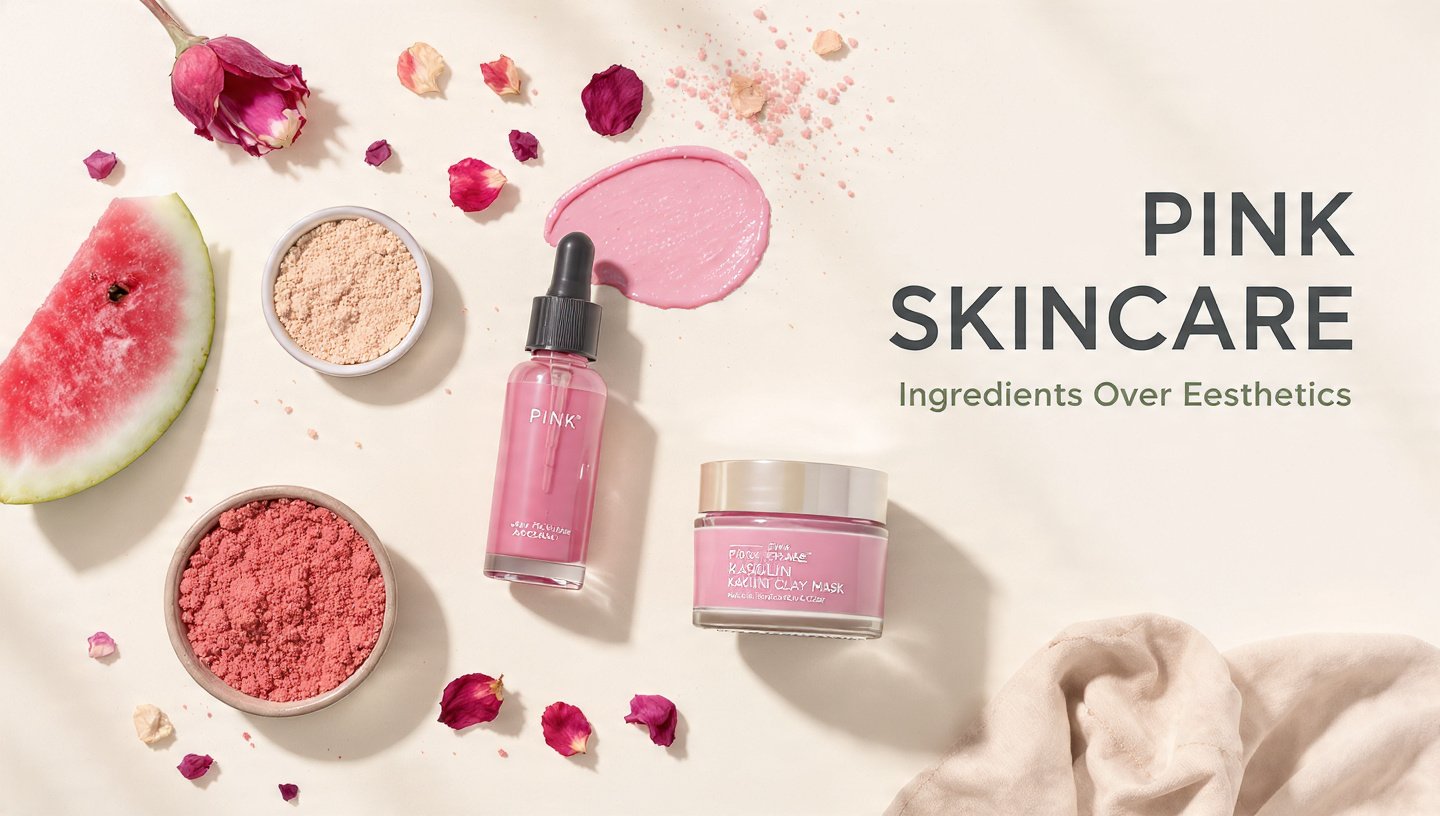
Pink skincare is not a single product category or a clinical term. It refers to skincare products that have a pink hue, which can come from naturally colored, bioactive ingredients like zinc oxide, kaolin clay, or watermelon extract, or from synthetic dyes like Red 33 added purely for aesthetics. Understanding this distinction is the only way to build a routine that looks good and actually works.
The color of a product has zero relationship to its efficacy. A 2025 consumer survey by a major cosmetic chemistry publication noted that 67% of Gen Z and Millennial shoppers were more likely to purchase a product if it fit their “shelfie aesthetic,” yet less than 20% could name a single active ingredient in their moisturizer. This gap between visual appeal and functional knowledge is where skin health gets compromised. You can have both the pink glow and the clinical results, but only if you choose products based on what is inside the bottle, not just the tint of the label.
This guide cuts through the rose-tinted marketing. You will learn which pink ingredients have genuine dermatological backing, how to identify artificial dyes and why they matter, and how to assemble a complete, science-backed skincare routine that harnesses the power of truly active pink cosmetics. We will separate the calming zinc oxide from the just-for-color Red 33, and give you a framework to evaluate any pink product your algorithm shows you next.
What Is Pink Skincare
Pink skincare refers to the broad category of topical products that derive a pink hue either from their intrinsic active ingredients or from added colorants for aesthetic purposes, not from any standardized clinical classification. There is no regulatory definition for “pink skincare.” The term is a marketing and social media construct built around the visual appeal of rose-tinted creams, bubblegum masks, and peach-hued sunscreens.
The color can originate from two entirely different sources. The first is functional: high concentrations of zinc oxide create a naturally opaque white-to-faint-pink cream. Calamine lotion is inherently pink because of ferric oxide (iron) mixed with zinc carbonate. Pink kaolin clay, rich in iron oxide and silica, owes its color to the mineral content of the earth it was mined from. The second source is purely cosmetic: synthetic dyes like Red 33, Red 40, and D&C Red No. 27 are added to otherwise white or clear formulas to make them marketably pink. Biologically, that Red 33 molecule does nothing for your skin. It simply reflects light at a wavelength our eyes perceive as pink.
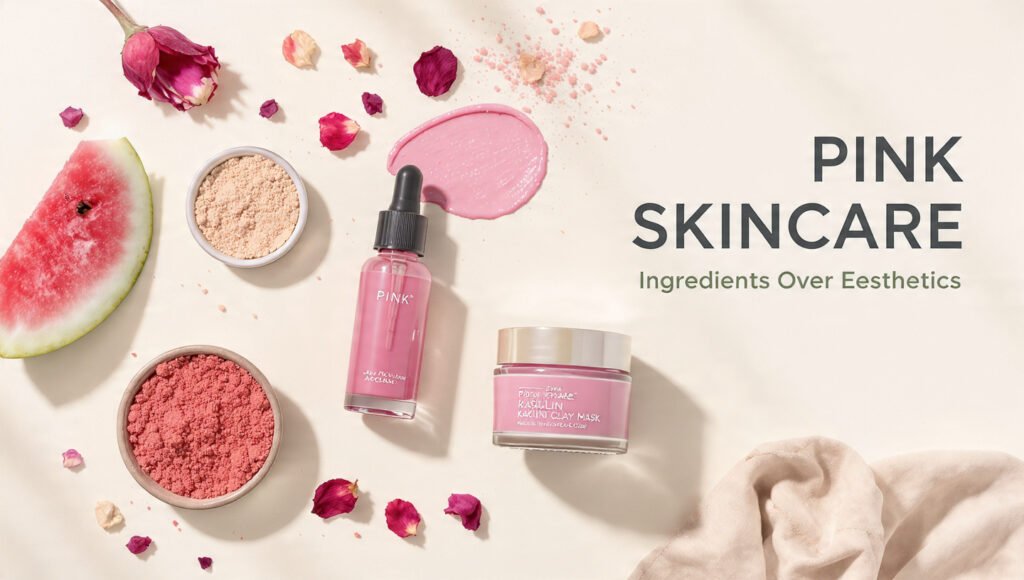
A product can be naturally pink and useless, just as it can be artificially dyed and highly effective. The color is an unreliable narrator. For example, a clay mask may be naturally pink from iron oxides and deliver excellent oil absorption thanks to its kaolin or montmorillonite structure. Meanwhile, a bright pink “calming” cream might be white base formula with Red 40, offering hydration but no active calm beyond standard emollients. According to the American Academy of Dermatology, product efficacy depends entirely on the active ingredient list, the formulation’s pH, and its delivery system, never its color. Your job is to read the ingredient deck, not the packaging.
Key Takeaway: The pink color is a clue, not a verdict. Always ask whether the color comes from a functional compound like zinc oxide or an inert dye like Red 33.
Pink Skincare Ingredients
Pink skincare ingredients can be divided into two distinct categories: functional actives that happen to be pink because of their chemical or mineral structure, and aesthetic additives that are pink solely to sell the product. Knowing which is which determines whether your routine is clinical-grade or purely cosmetic.
The functional ingredients form the small, scientifically interesting core of pink skincare. Zinc oxide is a white mineral that often reads as a faint pinkish-beige when blended with other emollients. It functions as a broad-spectrum physical UV filter and an anti-inflammatory agent. The FDA recognizes zinc oxide as a Category I sunscreen active, meaning it is generally recognized as safe and effective. Calamine, a mixture of zinc carbonate and a small amount of ferric oxide, is an FDA-monographed skin protectant used for decades to soothe itching from poison ivy, bug bites, and minor skin irritations. Kaolin and montmorillonite clays get their pink and rose hues from naturally occurring iron oxides. These clays absorb excess surface oil without stripping the stratum corneum as aggressively as stronger bentonite clays, making them a balanced choice for combination skin. Citrullus lanatus (watermelon) fruit extract delivers the amino acid citrulline and the antioxidant lycopene, both of which are under preliminary investigation for their effects on skin barrier hydration and environmental stress response. Astaxanthin, a carotenoid produced by the microalgae Haematococcus pluvialis, is a deep reddish-pink pigment that, according to a 2022 study in the Journal of Cosmetic Dermatology, demonstrates antioxidant capacity 6000 times greater than vitamin C in vitro, though leave-on human skin data remains limited.
The aesthetic ingredients are chemically and biologically inert in terms of skin benefit. Red 33 (CI 17200), Red 40 (CI 16035), and D&C Red No. 27 are synthetic organic dyes approved by the FDA for cosmetic use. Their role is strictly color. They do not hydrate, exfoliate, protect, or repair. Carmine, a red pigment derived from cochineal insects, is another natural but functionally inactive colorant. Iron oxides exist in a gray area: they can be natural colorants or synthetically produced. In some formulations, they simply tint the product. In others, like mineral sunscreens, they actively contribute to visible-light and blue-light protection, a benefit most relevant for people with Fitzpatrick skin types IV through VI.
Quick Tip:
- If the ingredient list shows an active (zinc oxide, calamine) early on, the pink hue likely signals function.
- If Red 33 or Red 40 appears after the preservative system but before the fragrance, the pink is purely decorative.
- When the color is listed as “Iron Oxides (CI 77491)” and you are buying tinted sunscreen, that colorant is part of the UVA/visible-light protection strategy.
Benefits of Pink Skincare
The actual skin benefits of pink skincare come exclusively from the bioactive compounds within the pink-hued formula, not from the color itself. When a pink product works, it works because it contains zinc oxide, kaolin, calamine, astaxanthin, or a peptide matrix like Matrixyl 3000, not because it is pink.
Zinc oxide provides two fully validated benefits. It physically reflects and scatters UVA and UVB radiation, offering broad-spectrum photoprotection. Simultaneously, its anti-inflammatory properties calm redness and irritation, which is why zinc oxide appears in many diaper rash creams and post-procedure recovery balms. The American Academy of Dermatology specifically recommends zinc oxide and titanium dioxide sunscreens for individuals with sensitive skin, rosacea, or eczema, as they are less likely to trigger stinging or allergic contact dermatitis compared to chemical organic filters. Kaolin and pink clay offer mechanical oil absorption and mild exfoliation upon rinse-off. They are not chemically active in a cellular signaling sense. Their benefit is purely physical: they lift sebum and debris from the skin surface, temporarily refining the appearance of pores.
Calamine’s benefit is targeted and well-documented. It relieves itching and minor irritation by creating a protective, cooling film over the skin. The FDA OTC Skin Protectant monograph classifies calamine 8% as a safe and effective anti-itch agent. Watermelon extract and astaxanthin represent the antioxidant front. Astaxanthin, in a 2021 randomized controlled trial published in the Journal of Clinical Biochemistry and Nutrition, significantly improved skin elasticity and reduced transepidermal water loss (TEWL) in healthy female subjects after 16 weeks of oral supplementation. Topical data is less robust but mechanistically promising, given its ability to quench singlet oxygen and peroxyl radicals. Rose flower water is not a clinically potent active at typical cosmetic concentrations. Its benefit is subjective: the sensory experience and mild humectant properties can improve skin feel and encourage consistency in a routine, which is a real but unquantifiable benefit.
| Ingredient | Primary Validated Benefit | Evidence Level |
|---|---|---|
| Zinc Oxide | Broad-spectrum UV protection, anti-inflammatory | Well-established (FDA Category I) |
| Calamine 8% | Skin protectant, itch relief | Well-established (FDA Monograph) |
| Kaolin/Montmorillonite | Oil absorption, gentle exfoliation | Clinical observation |
| Astaxanthin (topical) | Antioxidant protection, TEWL reduction | Preliminary, in vivo animal + limited human |
| Watermelon Extract | Humectant, mild antioxidant support | Preliminary, largely in vitro |
Key Takeaway: A pink product’s benefit is equal to the sum of its active ingredients. If you cannot find a clinically meaningful active in the first five lines of the INCI list, the benefit is hydration at best.
Pink Skincare Myths
Pink skincare has attracted a collection of myths that conflate color with clinical function, often leading people to buy products that are, at best, neutral and, at worst, irritating. The three most persistent myths need direct correction.
The first myth is that all pink skincare is calming. Social media is saturated with the idea that any pink cream will soothe redness. This is physiologically false. Zinc oxide and calamine are calming because of their zinc content, which is anti-inflammatory. A cream colored pink with Red 33 has no calming chemistry whatsoever. It is simply dyed lotion. In fact, the fragrance often added to these aesthetic pink products is a well-known trigger for contact dermatitis. According to the American Academy of Dermatology, fragrance is among the most common causes of allergic skin reactions. A pink “soothing” cream loaded with limonene and linalool is not soothing. It is a patch test waiting to happen.
The second myth is that pink products are naturally better for sensitive skin. This dangerous oversimplification ignores the entire formulation. A pink clay mask may be gentle relative to a charcoal peel-off mask, but it still physically exfoliates, which can disrupt a compromised skin barrier. A pink watermelon serum may contain 10% glycolic acid for exfoliation, rendering it wholly inappropriate for someone with a damaged stratum corneum. The color signals nothing about acid content, surfactant harshness, or allergen load. You must read the full ingredient label.
The third myth is that the deeper the pink, the more potent the formula. A bright fuchsia mask is almost certainly artificially dyed. Potency is determined by concentration and molecular activity, not color saturation. A 0.1% astaxanthin serum will be a faint reddish-pink. A mask saturated in Red 33 will be shockingly bright pink and entirely inactive. Color intensity in skincare is a formulation design choice, not a potency gauge. Think of it like this: the pink color of a medication does not tell you the dosage. You check the milligrams printed on the label. In skincare, you check the ingredient deck for percentage declarations and the position of actives in the list, not the intensity of the pigment.
Pink Skincare and Artificial Dyes
Artificial dyes are a primary reason that pink skincare exists as a commercial trend rather than a purely functional category. Synthetic colorants like Red 33 (D&C Red No. 33), Red 40 (Allura Red AC), and D&C Red No. 27 are petroleum or coal-tar-derived compounds added to formulations specifically to make them pink. They have no skin benefit. Their inclusion is a marketing and design choice.
The FDA regulates all color additives in cosmetics under the Federal Food, Drug, and Cosmetic Act. Red 33 and Red 40 are approved for topical use in the United States. This means they are not banned and are considered safe for their intended purpose. However, “safe” in a regulatory context means they are not acutely toxic or carcinogenic when applied to intact skin. It does not mean they are beneficial. It does not mean they are irritation-proof. According to a 2020 clinical review in the Journal of the American Academy of Dermatology, synthetic dyes, particularly D&C Red dyes, have been documented as causes of allergic contact dermatitis in sensitized individuals, though the incidence rate is lower than fragrance or preservative triggers. The risk is low for the general population but non-zero.
The clinical concern shifts for people with reactive skin, chronic eczema, or peri-oral dermatitis. Any unnecessary chemical in a formulation introduces a variable that can trigger a flare. If your skin barrier is already compromised, adding a synthetic dye onto it provides zero benefit and a calculable, albeit small, risk of sensitization. This is why board-certified dermatologists routinely recommend dye-free products for patients with atopic dermatitis and sensitive skin. The color is not doing the work. Your healing barrier needs ceramides, fatty acids, and cholesterol. It gains nothing from Red 33.
- Red 33: Approved for drugs and cosmetics. Not approved for use around the eye area by FDA.
- Red 40: Approved for food, drugs, and cosmetics. Most widely used red dye in the US.
- D&C Red No. 27: Approved for external use only. Often used in lipsticks and blush-toned creams.
- Carmine: Natural red pigment from insects. Can cause rare allergic reactions in sensitized individuals.
A product can be artificially dyed and still be a well-formulated moisturizer. The dye does not erase the ceramide complex or the niacinamide in the base formula. The question is necessity. If you are choosing between two identical moisturizers, one pink from Red 40 and one uncolored, the clinical logic strongly favors the dye-free version, especially for anyone with a history of skin reactivity or those working to fade post-inflammatory hyperpigmentation, where any low-grade inflammation is counterproductive.
Key Takeaway: Synthetic pink dyes are cosmetic, not therapeutic. The safest pink skincare formulation for any condition-prone skin is one where the color comes from a functional ingredient or is entirely absent.
Zinc Oxide in Skincare
Zinc oxide is the most important and scientifically validated pink-adjacent ingredient in skincare, even though its pure form is naturally white and only appears faintly pinkish-beige when blended. It is a mineral compound that functions as a broad-spectrum photoprotective agent, an anti-inflammatory, and a mild astringent. In the context of pink skincare, zinc oxide often lends the characteristic pastel pink tint to barrier creams, mineral sunscreens, and calming treatments.
The mechanism of UV protection is physical. Zinc oxide particles sit on the skin’s surface and reflect, scatter, and absorb UVA and UVB rays before they can damage living keratinocytes and fibroblasts. Unlike chemical organic filters that must be absorbed and can cause stinging, zinc oxide is inert and stays at the stratum corneum level. This is why the American Academy of Dermatology and the National Eczema Association consistently recommend zinc oxide sunscreens for people with sensitive skin, rosacea, and eczema. Its anti-inflammatory action is separate from its UV function. Zinc ions interact with skin proteins to reduce the release of pro-inflammatory cytokines, effectively calming redness and irritation at the cellular level. This dual action is rare.
Product form matters critically. Non-nano zinc oxide particles are larger than 100 nanometers and stay entirely on the skin surface. Nano zinc oxide particles are smaller and create less white cast but have raised theoretical concerns about dermal absorption. The FDA updated its sunscreen monograph in 2019 proposing that additional safety data was needed for nanoparticle forms, though current scientific consensus maintains that zinc oxide nanoparticles do not penetrate intact human skin in meaningful amounts. The real everyday issue is the white cast, which can be ashy and unworkable on Fitzpatrick skin types IV through VI. This is where tinted zinc oxide formulations become important. Those pinkish-beige tints you see in mineral sunscreens often come from iron oxides, which do double duty: they cancel the white cast and also provide protection against visible light and blue light, which is a documented trigger for hyperpigmentation in deeper skin tones, according to a 2021 study in the Journal of Investigative Dermatology.
| Zinc Oxide Form | Particle Size | Transparency | Best For |
|---|---|---|---|
| Non-Nano | >100nm | Low (white cast) | Maximum surface barrier, infants |
| Nano | <100nm | High (less cast) | Daily wear, all skin tones |
| Tinted with Iron Oxides | Mixed | High | Fitzpatrick IV-VI, hyperpigmentation |
Quick Tip:
- Look for at least 10% zinc oxide in a daily mineral sunscreen. For tinted formulations, check the label for “Iron Oxides” to confirm it offers visible light protection.
- Apply zinc oxide cream as the last step in your morning skincare routine, after your moisturizer, before makeup.
Pink Clay Mask Benefits
Pink clay masks benefit the skin by absorbing excess sebum, gently removing surface debris through physical exfoliation during rinse-off, and temporarily tightening the appearance of pores without the intense dehydration caused by stronger clays. Pink clay is typically a blend of kaolin and montmorillonite, colored by naturally occurring iron oxides within the mineral matrix.
The physiological mechanism is straightforward. Clay particles have a negative electrical charge. Many oil and impurity particles on the skin’s surface carry a positive charge. When applied, the clay physically binds to positively charged sebum and dead keratinocytes. As the mask dries, it creates a mild tensile force that absorbs oil and draws impurities into the clay layer. When you rinse the mask off with tepid water, you physically lift away the clay along with the bound oil and dead cells. This is not a biochemical pathway. It is a mechanical cleaning process, and it works best for skin that produces noticeable surface oil by midday.
Pink clay is generally better tolerated than bentonite clay because its montmorillonite component is less electrically charged and therefore less dehydrating. A 2018 study in the International Journal of Cosmetic Science on clay-based skincare formulations noted that kaolin-rich masks caused significantly lower post-use transepidermal water loss (TEWL) compared to high-bentonite formulations. This makes pink clay the logical middle ground for combination skin: it addresses the oily T-zone without flaking out the cheeks. For people with dry skin or a compromised barrier, even pink clay is still a drying mask. It should be used sparingly, no more than once every 10 to 14 days, and only when there is visible congestion.
- Patch test a small amount on the jawline for 10 minutes before full-face use.
- Apply a thin, even layer to clean skin, avoiding the orbital bone area.
- Leave on for 5 to 10 minutes. Do not let the mask fully dry to a cracked, tight finish. That pulls moisture from your stratum corneum.
- Rinse gently with lukewarm water using circular motions. Pat dry. Immediately apply a barrier-supportive moisturizer with ceramides.
If you have active inflammatory acne, pink clay will not resolve the underlying bacterial and inflammatory drivers. It can help manage surface oiliness but cannot replace a salicylic acid or benzoyl peroxide treatment directed by a board-certified dermatologist. For deep, painful cysts, the oil absorption from clay provides surface-level relief only. The infection and inflammation happen in the dermis, far below where clay can reach.
Calamine Lotion for Skin
Calamine lotion is a classic pink topical medication made from calamine (zinc carbonate) and ferric oxide, formulated primarily to relieve itching, burning, and minor skin irritation. It is one of the few genuinely functional pink skincare products whose pink color is intrinsic to its active compound and has been used in clinical dermatology for over a century.
The mechanism is skin protection and astringency. According to the FDA’s OTC Skin Protectant Monograph, calamine at an 8% concentration is a Category I skin protectant, meaning it is recognized as safe and effective for its labeled use. When you apply calamine lotion to an insect bite, a patch of poison ivy, or a mild allergic rash, it forms a thin, cooling film over the skin. As the water and alcohol base evaporates, the calamine and ferric oxide powders remain as a protective layer. This layer physically shields nerve endings in the superficial dermis from environmental irritants, which reduces the itch sensation. Simultaneously, the mild astringent property of the zinc carbonate lightly tightens tissue and dries minor oozing.
Calamine is not a moisturizer. It is not a long-term skincare treatment. It is a targeted acute relief product. Using it as a full-face mask or sleeping pack is a misuse that will severely dehydrate your skin and disrupt the stratum corneum. Its optimal use in a modern pink skincare context is as a spot treatment for transient inflammation: an irritated bug bite, a single angry papule, or a localized contact dermatitis patch. Apply a thin layer to the affected spot only using a clean fingertip or cotton swab. Let it dry completely, which usually takes two to three minutes. It will leave a pale pink, powdery residue. This is normal and intentionally occlusive.
- Apply calamine lotion only to intact skin. Do not apply to open wounds, blisters, infected lesions, or deep burns.
- Do not use calamine lotion under tight bandages or occlusive wraps for extended periods unless specifically instructed by a healthcare provider.
- If the itching does not improve within 24 to 48 hours, if the area becomes more painful, red, or begins to ooze pus, stop the calamine and schedule an appointment with a board-certified dermatologist or primary care physician. These can be signs of a bacterial superinfection that requires prescription treatment.
Key Takeaway: Calamine lotion is medicine, not a cosmetic. It is the most clinically legitimate pink topical you can own, but it is a targeted tool for acute itching and irritation, never a daily skincare step.
Watermelon Skincare Ingredients
Watermelon skincare ingredients refer to formulations built around Citrullus Lanatus (Watermelon) Fruit Extract, watermelon seed oil, and related compounds like the amino acid citrulline and the carotenoid lycopene. These ingredients form the core of the “pink juice” aesthetic popularized by brands like Glow Recipe, and while they are not dermatological heavyweights, they do offer legitimate humectant and antioxidant support when properly formulated.
Watermelon fruit extract is, compositionally, mostly water, with natural sugars, amino acids like citrulline, and antioxidants including lycopene and vitamin C. The extract functions primarily as a humectant. Humectants are hygroscopic compounds that pull water from the environment and from deeper skin layers into the stratum corneum, temporarily plumping surface cells. Glycerin and hyaluronic acid are far more validated humectants with decades of clinical data behind them. Watermelon extract provides this same humectancy in a more sensory, aromatically pleasant vehicle. The citrulline component is more interesting. A small 2019 study published in the Journal of Cosmetic Dermatology found that a topical amino acid complex including citrulline improved skin moisture retention after 28 days of use compared to a placebo, though the specific contribution of citrulline versus the other amino acids in the complex could not be isolated.
The antioxidant claim for watermelon skincare rests primarily on lycopene, the carotenoid that makes watermelons red. Lycopene is a potent singlet oxygen quencher in vitro. A 2022 study in Antioxidants journal demonstrated that lycopene protects human dermal fibroblasts from UVA-induced oxidative stress in a cell culture model. However, the translation from a petri dish to a real human face applying a topical serum is not linear. Lycopene is highly unstable in formulation and degrades rapidly when exposed to light and air. The pink-tinted glass bottle your watermelon serum comes in is not just aesthetic; it is a functional necessity to protect the lycopene from photodegradation. If you buy a watermelon serum in a clear bottle and store it on your bathroom counter in direct light, the antioxidant benefit will degrade significantly within weeks.
Watermelon Seed Oil is the fatty acid component. It is rich in linoleic acid, an omega-6 essential fatty acid that has been shown to help regulate sebum consistency in acne-prone skin. Linoleic acid-rich oils are generally non-comedogenic and light enough for oily skin types, which makes watermelon seed oil a reasonable carrier oil in a formulation. It is not a high-potency active in itself. It supports the skin barrier by providing lipid material, similar to how sunflower seed oil or safflower oil functions, but it does not signal cellular repair the way a retinoid or a peptide would.
Rose Skincare Benefits
Rose skincare benefits are primarily sensory, humectant, and mildly antioxidant, derived from ingredients like Rosa Damascena Flower Water, Rosa Centifolia Flower Extract, and rose-derived oils. Rose is the quintessential pink skincare ingredient, but its dermatological effects are often overstated in marketing compared to what the clinical evidence actually supports.
Rose water is a hydrosol, a byproduct of the steam distillation of rose petals. Its composition is mostly water with trace amounts of essential oil compounds: geraniol, citronellol, and linalool. These volatile terpenes are what give rose its characteristic scent. They also are what make rose a potential contact allergen for sensitized individuals. Rose water provides light humectant properties to the skin surface and, when applied via a mist, offers immediate sensory relief: cooling, pleasant-smelling hydration that can lower the subjective sensation of skin stress. There is some preliminary evidence for a psychological calming effect. A 2014 study in the Iranian Red Crescent Medical Journal found that inhaling rose water vapor significantly reduced anxiety in a small cohort of hemodialysis patients. This does not make rose water an anxiolytic in a skincare bottle, but it does point to a legitimate wellness intersection: scent and sensory experience can improve your perception of stress, and lower perceived stress correlates with better skin outcomes via the hypothalamic-pituitary-adrenal (HPA) axis.
Rose extract’s cellular-level antioxidant activity is real but modest compared to ascorbic acid or astaxanthin. Rosa damascena petals contain flavonoid and tannin compounds that scavenge free radicals in vitro. A 2022 review in Molecules confirmed the antioxidant and anti-inflammatory potential of rose petal extracts, but the authors noted that extract potency varies wildly depending on the extraction method, the solvent used, the specific rose cultivar, and the geographic origin of the petals. Your rose toner may contain a potent polyphenol-rich extract, or it may be 99.9% water with a drop of rose fragrance. There is no way to know without a standardized extract guarantee on the label.
- Rosa Damascena Flower Water: Use as a mist for sensory hydration between routine steps. Do not expect it to replace a treatment serum.
- Rosa Canina (Rosehip) Seed Oil: This is a different ingredient entirely. Rich in provitamin A (trans-retinoic acid precursor) and linoleic acid. Supported by some clinical data for scar and hyperpigmentation fading.
- Rosa Centifolia Extract: Similar to damascena. Mild antioxidant, primarily sensory.
Rose skincare is legitimate as an experience enhancer. People who enjoy their routine do it more consistently. Consistency drives results. If a rose-scented moisturizer makes you look forward to applying your sunscreen each morning, that compliance benefit is real. The dermatological risk is for people with existing fragrance allergies or compromised skin barriers. Geraniol and citronellol are known fragrance allergens tracked by the European Commission’s Scientific Committee on Consumer Safety. If your skin is reactive, patch test your rose product for three days on the inner forearm before bringing it to your face.
Key Takeaway: Rose is a beautiful sensory addition to skincare. For clinical results, pair it with evidence-backed actives. It supports the experience, not the mechanism.
Vitamin B12 Pink Skincare
Vitamin B12 pink skincare refers to a specific and often confusing phenomenon where topical cyanocobalamin (Vitamin B12) or high-B12 serums turn a bright, pepto-bismol pink color, leading some consumers to believe the product is artificially dyed when the pink is actually a natural chemical property of the vitamin. This is a distinctly different category from watermelon or rose pink and requires its own explanation.
Cyanocobalamin, the synthetic form of vitamin B12 used in most supplements and skincare products, is intrinsically a deep red to hot pink crystalline powder. When dissolved in water or a cosmetic base, it turns the entire formulation a vivid pink. This is not a marketing dye. It is the color of the active molecule itself. A few skincare brands have leaned into this, formulating vitamin B12 serums and creams that are intentionally, undeniably pink without a single drop of Red 33. The visual effect is often surprising. A clear serum base will become opaque pink at even low concentrations of B12, around 0.02% to 0.05%.
The dermatological question is whether topical vitamin B12 does anything useful for skin. The answer is preliminary but mechanistically interesting. Vitamin B12 is a cofactor in cellular metabolism and has documented anti-inflammatory properties in vitro. A 2004 study published in the British Journal of Dermatology demonstrated that topical cyanocobalamin significantly reduced the severity and duration of atopic dermatitis flares in a randomized controlled trial of 49 patients. The mechanism proposed was nitric oxide scavenging. Nitric oxide is a pro-inflammatory molecule elevated in many inflammatory skin conditions. Vitamin B12 can bind and neutralize excess nitric oxide, reducing the inflammatory cascade locally. This is specific, targeted biochemistry, not a blanket “soothing” claim.
The current formulation challenge is stability. Cyanocobalamin degrades when exposed to light. That bright pink serum must be packaged in an opaque, airless pump. If you buy a B12 serum in a clear bottle that has turned a murky brownish-pink, the B12 has oxidized and the anti-inflammatory activity is significantly diminished. Another nuance: acne. There is a documented clinical link between high-dose vitamin B12 supplementation (oral) and acneiform eruptions in a small subset of people. The mechanism is thought to involve alteration of the skin microbiome. Topical B12 does not appear to trigger this in the majority of clinical and anecdotal reports, but if you have highly acne-prone skin and start a new B12 serum, monitor your skin for any unusual deep inflammatory breakouts.
| Vitamin B12 Form | Color | Stability | Key Note |
|---|---|---|---|
| Cyanocobalamin | Hot pink/red | Light-sensitive | Standard synthetic form |
| Methylcobalamin | Bright red | Light-sensitive | More bioavailable orally; same topical color |
| Hydroxocobalamin | Dark red | Slightly more stable | Less common in cosmetics |
Pink Skincare for Sensitive Skin
Pink skincare for sensitive skin is a high-risk, high-reward category where the color must guide you toward zinc oxide and calamine and aggressively away from Red 33, fragrance, and volatile essential oils. Your skin barrier does not care about the aesthetic; it only responds to the chemical composition.
Sensitive skin, as defined by the International Forum for the Study of Itch, is a syndrome characterized by unpleasant sensations like stinging, burning, and itching in response to stimuli that normally should not provoke such reactions. This is often linked to a compromised stratum corneum barrier. For this skin type, the safest pink ingredients are those with an inert, protective profile. Zinc oxide is the strongest choice. It is non-allergenic, anti-inflammatory, and physically shields the skin from environmental triggers. A 10% zinc oxide cream with minimal additional ingredients (a short INCI list) is a cornerstone product for reactive skin days. Calamine lotion is the second-line acute rescue product for specific itchy patches.
The ingredients to avoid in pink products for sensitive skin are the aesthetic ones. Red 33, Red 40, and D&C Red No. 27 are unnecessary chemical variables. If your immune system is already hypervigilant at the skin level, introducing a non-functional synthetic molecule is a gamble with no skin health upside. Fragrance is an even bigger trigger. It is listed on the ingredient label as “fragrance” or “parfum,” but can also enter through essential oils, even rose oil. Geraniol, citronellol, linalool, and limonene are individual fragrance molecules that the European Commission recognizes as contact allergens. Many naturally pink products, particularly rose and watermelon formulations, contain these. A “natural” fragrance is not safer for sensitive skin; it is chemically identical in terms of sensitization potential.
- Choose pink zinc oxide creams over chemical sunscreens.
- Avoid any pink product with “parfum,” “fragrance,” or named essential oils in the middle of the INCI list.
- If you want a pink clay mask, do the short-contact patch test described in the earlier clay section on the skin behind your ear, not just your arm. The skin behind the ear more closely mirrors facial reactivity.
- When in doubt, choose a dye-free, fragrance-free white product over a pink one. The color adds nothing to the safety profile.
Key Takeaway: Pink skincare for sensitive skin is only safe when the pink comes from a recognized barrier protectant. Any synthetic dye or fragrance erases the safety advantage and makes the product a potential trigger.
Pink Skincare for Acne-Prone Skin
Pink skincare for acne-prone skin must be evaluated through the lens of comedogenicity, oil management, and anti-inflammatory support, not color. A product being pink has zero bearing on whether it will clog a pore or reduce a papule. The ingredient list tells the full story.
For acne-prone skin, the functional pink ingredients are the clay minerals and zinc oxide. Pink kaolin clay masks provide oil absorption and can temporarily decongest pores. This is a supportive, not a primary, acne treatment. It helps manage the oily environment that Malassezia yeast and Cutibacterium acnes thrive in, but it does not kill bacteria or regulate keratinocyte shedding the way a prescription retinoid or a leave-on BHA does. Zinc oxide is beneficial for acne-prone skin as a sun protection ingredient because it is non-comedogenic, anti-inflammatory, and will not trigger the stinging that some chemical SPF filters cause on active acne. According to a 2020 review in Dermatology and Therapy, zinc is a central component of several acne treatment pathways, both topical and oral, due to its anti-inflammatory and mild anti-androgenic effects.
The comedogenicity risk from pink products comes from the hidden base, not the pink pigment. A watermelon extract moisturizer sounds light, but if the base is rich in coconut oil, cocoa butter, or isopropyl myristate, it can be highly comedogenic and fuel fungal acne or closed comedones. Astaxanthin and algae extracts are ingredients often found in pink products that carry a cautious note for acne-prone skin. Some algae compounds have been flagged as potential triggers for malassezia folliculitis (fungal acne) in susceptible individuals, though the evidence is observational and ingredient-specific. The thick, occlusive texture of some pink creams designed to look like “whipped” or “butter” formulas can also trap heat and sebum, worsening congestion in oily T-zones.
- Your acne treatment (prescription tretinoin, adapalene, or OTC salicylic acid) comes first. Pink products are supportive, not therapeutic.
- Scan the base for oils rated as comedogenic on the standard 0-5 scale. A pink product with a 4 on the comedogenicity scale is still a breakout risk.
- Zinc oxide sunscreen is an excellent choice for daytime protection over acne treatments.
- If a pink moisturizer triggers new closed comedones within two weeks, suspect the emollient system, not the color.
Pink Skincare for Hyperpigmentation
Pink skincare for hyperpigmentation, particularly post-inflammatory hyperpigmentation (PIH) common in Fitzpatrick skin types IV through VI, is only relevant if the pink ingredient actively inhibits melanin transfer, suppresses inflammation, or physically blocks the visible light that triggers pigmentation. The color pink itself does none of these things.
The single most valuable pink ingredient for hyperpigmentation is tinted zinc oxide. This is not because zinc oxide fades dark spots directly. It is because it prevents new spots from forming and darkening. A 2021 study in the Journal of Investigative Dermatology demonstrated that visible light, particularly the blue-violet spectrum, induces hyperpigmentation in individuals with Fitzpatrick skin types IV and above. Untinted chemical sunscreens do not block visible light. Iron oxide-tinted sunscreens do. Those pinkish-beige tinted mineral sunscreens combine zinc oxide for UV protection and iron oxides for visible light protection, creating a dual shield that is, according to this growing body of research, the most effective photoprotection strategy for pigment-prone skin. The pink-beige tint is functional photoprotection, not decoration.
Other pink ingredients are ancillary at best for existing hyperpigmentation. Watermelon extract’s lycopene and astaxanthin are antioxidants. They can help reduce the oxidative stress that stimulates melanocytes to overproduce melanin, but they do not actively fade an existing spot. Kojic acid, tranexamic acid, niacinamide, and ascorbic acid are the established topical melanogenesis inhibitors. These ingredients are not pink. Their formulations are white or clear. If you are serious about fading hyperpigmentation, your routine should be built around these evidence-backed actives. If your antioxidant serum happens to have astaxanthin, it adds a supportive layer. But it cannot replace a 15% ascorbic acid or a 2% tranexamic acid serum.
- Prioritize a tinted mineral SPF with zinc oxide and iron oxides every single morning. This is non-negotiable for hyperpigmentation management.
- Do not expect a pink product to spot-fade. The ingredients that suppress melanin are not pink.
- Be cautious with pink clay masks and physical exfoliation. Aggressive scrubbing or over-drying can cause micro-inflammation, which in deeper skin tones can paradoxically trigger new PIH. Gentle chemical exfoliation with an AHA is generally more even and less trauma-inducing than physical scrubs.
Key Takeaway: For hyperpigmentation, the only “pink” product that earns its place is a tinted mineral sunscreen. The rest of your anti-pigment routine will be white or clear, and that is clinically appropriate.
Pink Skincare Routine
A pink skincare routine is simply a standard morning and evening skincare routine where the product selection has been made with full ingredient awareness, ensuring any pink-hued products included are functional, not just decorative, and are layered in the correct order. You do not build a routine around a color. You build it around your skin goals and then choose evidence-backed products that happen to be pink where appropriate.
The fundamental layering principle remains unchanged, regardless of color. The American Academy of Dermatology recommends applying products from thinnest to thickest consistency to ensure proper absorption and avoid pilling. Morning routines must always end with broad-spectrum SPF. Evening routines focus on treatment and repair. The only pink-themed adaptation is being intentional about which steps can support a pink functional ingredient and which steps should remain white or clear to prioritize evidence-backed actives.
Morning Routine: This is where pink skincare has its strongest legitimate footing. A tinted zinc oxide sunscreen is your morning hero. It should be the last step before any makeup. It will be faintly pinkish-beige from the iron oxides and zinc oxide combination. A vitamin B12 serum or an astaxanthin antioxidant serum can be layered under your moisturizer for anti-inflammatory and antioxidant support. These will be genuinely pink from their active molecules.
Evening Routine: This is where the pink aesthetic should step back. Your retinoid, your AHA/BHA exfoliant, and your niacinamide serum are the heavy lifters for cellular repair, cell turnover, and melanin regulation. These are white or clear. Your pink clay mask, if used, fits into the evening once or twice a week after cleansing and before the rest of your routine. A rose water mist can be used as a sensory reset between steps, but it does not replace your treatment products.
Step-by-Step Morning Pink Routine:
- Cleanse: Use a gentle, non-stripping cleanser. Color irrelevant.
- Tone/Mist: Rosa Damascena Flower Water mist, if your skin tolerates fragrance.
- Serum: Cyanocobalamin (Vitamin B12) or Astaxanthin serum for antioxidant and anti-inflammatory prep.
- Moisturize: Lightweight, compatible moisturizer. Can be a watermelon extract formula if the base is non-comedogenic for your skin type.
- Protect: Tinted zinc oxide sunscreen (pink-beige tint). Apply generously to face and neck.
Step-by-Step Evening Pink Support Routine:
- Cleanse: Double cleanse if wearing SPF and makeup.
- Mask (1x weekly): Pink kaolin clay mask on T-zone only for combination skin.
- Treatment: Apply your prescription retinoid or OTC chemical exfoliant. These will be white or clear.
- Spot Treat: Calamine lotion on any acute, itchy inflammatory papules or bug bites.
- Moisturize: Barrier-repair cream with ceramides, cholesterol, and fatty acids. Color is irrelevant.
Pink Skincare Products
Pink skincare products are evaluated correctly only when sorted by their functional category and the quality of their active ingredients, not by brand popularity or color intensity. This section provides a framework for evaluating any pink product you encounter, with named category examples.
The framework has four questions, and you must ask them in order. First, what is making this product pink? Read the INCI list. Is it zinc oxide, calamine, kaolin, astaxanthin, vitamin B12, or iron oxides? Or is it Red 33 and Red 40? The first group of ingredients are functional. The second group are decorative. Second, what is this product’s job? Is it a sunscreen, a mask, a treatment serum, a moisturizer, or just an aesthetic experience? Each category has a higher or lower bar for what level of evidence is required. A pink sunscreen must have adequate, photostable protection. A pink moisturizer just needs to hydrate without irritating. Third, what is the full formulation? The star pink ingredient could be at 0.001% in an otherwise comedogenic, highly fragranced base. You are buying the whole formula, not just the pink highlight. Fourth, is this product right for my skin type? A pink clay mask designed for oily skin is wrong for someone with dry, eczema-prone skin, no matter how aesthetically pleasing the packaging is.
Category Breakdown:
- Sunscreen: The highest functional category. You want 5-25% zinc oxide. A pinkish-beige tint from iron oxides confirms visible light protection. Products in this space include tinted mineral sunscreens from brands that formulate for all skin tones.
- Clay Mask: Target is 5-15% kaolin or montmorillonite. The pink color from iron oxides is a good indicator of natural mineral content. Avoid masks with added synthetic dyes that try to look like clay.
- Calming Cream: Look for zinc oxide as a primary active, or vitamin B12. A pink calming cream based on Red 33 and perfume is a contradiction.
- Treatment Serum: Astaxanthin and B12 serums are viable antioxidant/anti-inflammatory support layers. Their pink color is real and indicates the active is present.
- Moisturizer: Watermelon extract and rose water moisturizers are sensory humectant vehicles. They are not high-efficacy treatments but can be pleasant daily drivers for normal to oily skin types.
- Mist/Essence: Rose water is the standard. Evaluate purely on whether your skin tolerates the natural fragrance components.
Quick Tip: If a pink product makes a specific claim like “fades dark spots,” “clears acne,” or “boosts collagen,” and the ingredient list does not contain an established active for that claim (like niacinamide, salicylic acid, or a retinoid), the color is doing the marketing heavy lifting, and the product is unlikely to deliver on that promise.
Best Pink Skincare Brands 2026
Identifying the best pink skincare brands in 2026 means filtering for companies that are transparent about where their pink color comes from, formulate with functional ingredients at evidence-backed concentrations, and clearly label their products for specific skin types. Brand popularity is not the same as brand quality.
The brands that respect the educated consumer treat the pink as a fact, not a feature. They will tell you directly on the product page that the color is from astaxanthin or from iron oxides. They will not hide Red 33 behind “natural pink color” language. In 2026, the trend is shifting toward “functional pink,” where brands explicitly market the ingredient source of the pink hue as a proof point of potency. Glow Recipe is the most visible example. Their Watermelon Glow line is pink from watermelon extract and lycopene. The brand is transparent about this, though you must still assess whether their AHA concentrations in some products are appropriate for your specific skin barrier. Tower 28 has built a brand around the pink of calamine and zinc oxide in their SOS line, explicitly marketed for sensitive and reactive skin. Their SOS Rescue Spray is a modern reformulation of hypochlorous acid, which is clear, but their SOS Cream is deliberately pink from the active barrier protectants. This is intelligent functional branding.
Dermatological and pharmacy brands remain the quiet leaders in functional pink skincare because they never used the color as a marketing gimmick in the first place. La Roche-Posay, Cetaphil, and CeraVe all have products that contain zinc oxide and calamine, which turn the product a faint pink. They do not call it “pink skincare.” They simply list the zinc oxide percentage and the SPF rating. This is the standard for clinical integrity. EltaMD and SkinCeuticals offer tinted mineral sunscreens that are beige-pink and are among the most recommended by board-certified dermatologists for post-procedure and hyperpigmentation management. The pink tint is functional iron oxide, and the marketing materials explain this.
- High Transparency, Functional Pink: Glow Recipe, Tower 28, Farmacy (some products), Biossance (squalane-based, limited pink).
- Pharmacy Functional: La Roche-Posay (Cicaplast Baume B5 has a faint zinc tint), Cetaphil, CeraVe, Aveeno (calamine products).
- Professional Tinted Sunscreen: EltaMD, SkinCeuticals, Colorescience, ISDIN.
- Treat With Caution: Brands that refuse to disclose dye source, use heavily fragranced pink creams, or market exclusively on the shelfie aesthetic without naming actives.
Clean Pink Skincare
Clean pink skincare is a marketing term that attempts to merge the “clean beauty” concept, which lacks a standardized FDA definition, with the pink aesthetic trend. The promise is a pink product free from a brand-defined list of “undesirable” ingredients. This does not automatically make the product safer, more effective, or better for your skin.
The term “clean” in skincare is unregulated. The FDA does not define “clean” as it applies to cosmetics. Each brand or retailer sets its own standard. One brand’s “clean pink cream” may exclude parabens and phthalates but still contain Red 33 and high concentrations of fragrant essential oils, which are among the most well-documented contact allergens in dermatology. Another brand may use all-natural colorants like beetroot powder, which fades quickly and offers no skin benefit, while charging a premium price for the short shelf life and “natural” label. The burden falls on you to read the actual ingredient list.
From a dermatological perspective, the only clean label that matters for pink skincare is a short INCI list with ingredients that serve a clear, evidence-backed purpose for your specific skin type. A product with ten ingredients including zinc oxide, caprylic/capric triglyceride, and tocopherol is inherently cleaner in a clinical sense, fewer variables equals lower irritation risk, than a 40-ingredient “clean” pink moisturizer loaded with 15 botanical extracts, some of which are known irritants. Botanical extracts are not automatically safer or more effective because they are natural. Poison ivy is natural. According to the American Contact Dermatitis Society, many botanical ingredients, including various flower extracts, are emerging as significant sources of contact dermatitis as their use in cosmetics rises. Synthetic does not mean dangerous. Natural does not mean safe. The color pink, whether from a lab or a beet, does not change this equation.
- Regulated term: “Certified Organic” by the USDA National Organic Program.
- Regulated term: “SPF 30” tested per FDA monograph.
- Unregulated marketing term: “Clean.”
- Unregulated marketing term: “Natural Pink.”
The most intelligent approach to clean pink skincare in 2026 is to ignore the “clean” label entirely and focus on safety data, not philosophy. A fragrance-free, dye-free zinc oxide sunscreen with a short, biocompatible ingredient list is superior skin protection, regardless of whether a retailer has tagged it as “clean” or not. If you want to avoid specific ingredients because they have been problematic for your own skin, that is individualized safety, and it is valid. But that list should be personal, based on your patch test history, not a marketing filter applied by a store.
Key Takeaway: “Clean pink” is a retail concept, not a safety standard. Buy pink skincare based on active ingredients and inertness of the non-active components, not on a “clean” badge.
Frequently Asked Questions About Pink Skincare
Does pink skincare actually do anything or is it just a marketing trend?
Pink skincare is a color descriptor, not a functional guarantee. Products that are pink from active ingredients like zinc oxide, calamine, astaxanthin, or vitamin B12 have real, evidence-backed dermatological functions including UV protection, anti-inflammatory support, and antioxidant activity.
Products that are pink from synthetic dyes like Red 33 or Red 40 are functionally identical to their undyed counterparts and provide no additional skin benefit beyond their base formulation.
What ingredients make skincare products pink naturally?
Zinc oxide creates a white-to-faint-pink cream when blended, calamine is pink from iron oxide mixed with zinc carbonate, and kaolin clay is naturally pink from mineral iron oxides.
Astaxanthin, a carotenoid from algae, produces a deep reddish-pink, and cyanocobalamin (vitamin B12) is a vivid hot pink in solution.
These are chemically distinct from the synthetic dyes that are also used to color skincare pink without providing any biological activity.
Is pink clay better than other clays for oily skin?
Pink clay, which is usually a blend of kaolin and montmorillonite, is generally more balanced and less aggressively drying than high-bentonite clays, making it a better starting point for combination skin with an oily T-zone.
For extremely oily, resilient skin, a bentonite clay mask may deliver stronger oil absorption and more dramatic pore-tightening, but it also carries a higher risk of over-drying and barrier disruption if used too frequently.
Can I use pink skincare products if I have eczema?
You can use specific pink skincare products if you have eczema, but you must restrict your choices to those where the pink comes from a recognized skin protectant and is free of fragrances and synthetic dyes.
According to the National Eczema Association, zinc oxide and calamine are appropriate for calming and protecting eczema-prone skin, but a cream dyed pink with Red 33 or fragranced with rose essential oil is a significant contact dermatitis risk and should be avoided.
Are Glow Recipe and Drunk Elephant considered pink skincare brands?
Glow Recipe is centrally a pink skincare brand because its Watermelon Glow line uses watermelon extract and lycopene, which give the formulas their signature pink tint from the fruit-derived ingredients themselves.
Drunk Elephant is not a pink skincare brand; its packaging is brightly colored but its product formulations are predominantly white or clear, and the brand explicitly rejects the use of what it calls the “Suspicious 6,” which includes dyes.
Is Red 40 bad for your skin?
Red 40 is an FDA-approved synthetic color additive that is not inherently “bad” or toxic for the general population when applied to intact skin.
However, it provides zero skin health benefit, and for individuals with sensitive skin, chronic inflammatory conditions, or compromised barriers, it represents an unnecessary chemical variable that has been documented in the Journal of the American Academy of Dermatology as a potential, though uncommon, contact allergen.
Your Pink Skincare Strategy
The single most important takeaway is this: the pink color is always secondary. Always subordinate it to the active ingredient deck. If the color comes from zinc oxide, you are getting functional sun protection. If it comes from Red 33, you are getting dyed lotion. Both can hydrate. Only one protects. Walk through your current routine and identify every pink product. Find each one’s INCI list and determine whether the pink pigment is doing any work. If it is not, that product is not earning its place.
Your next step is to optimize one single morning product. Switch your daily SPF to a tinted mineral sunscreen with at least 10% zinc oxide and iron oxides listed clearly on the label. This single change, supported by a 2021 Journal of Investigative Dermatology study on visible light and pigmentation, improves your protection profile overnight and adds a functional pink-beige product to your shelf that actually does something.
Do not buy a pink skincare product because it looks beautiful on your counter. Buy it because you can name the active ingredient that happens to be pink and explain exactly what it is doing for your stratum corneum, your melanocytes, or your dermal collagen. The shelfie is a bonus. The skin health is the point.