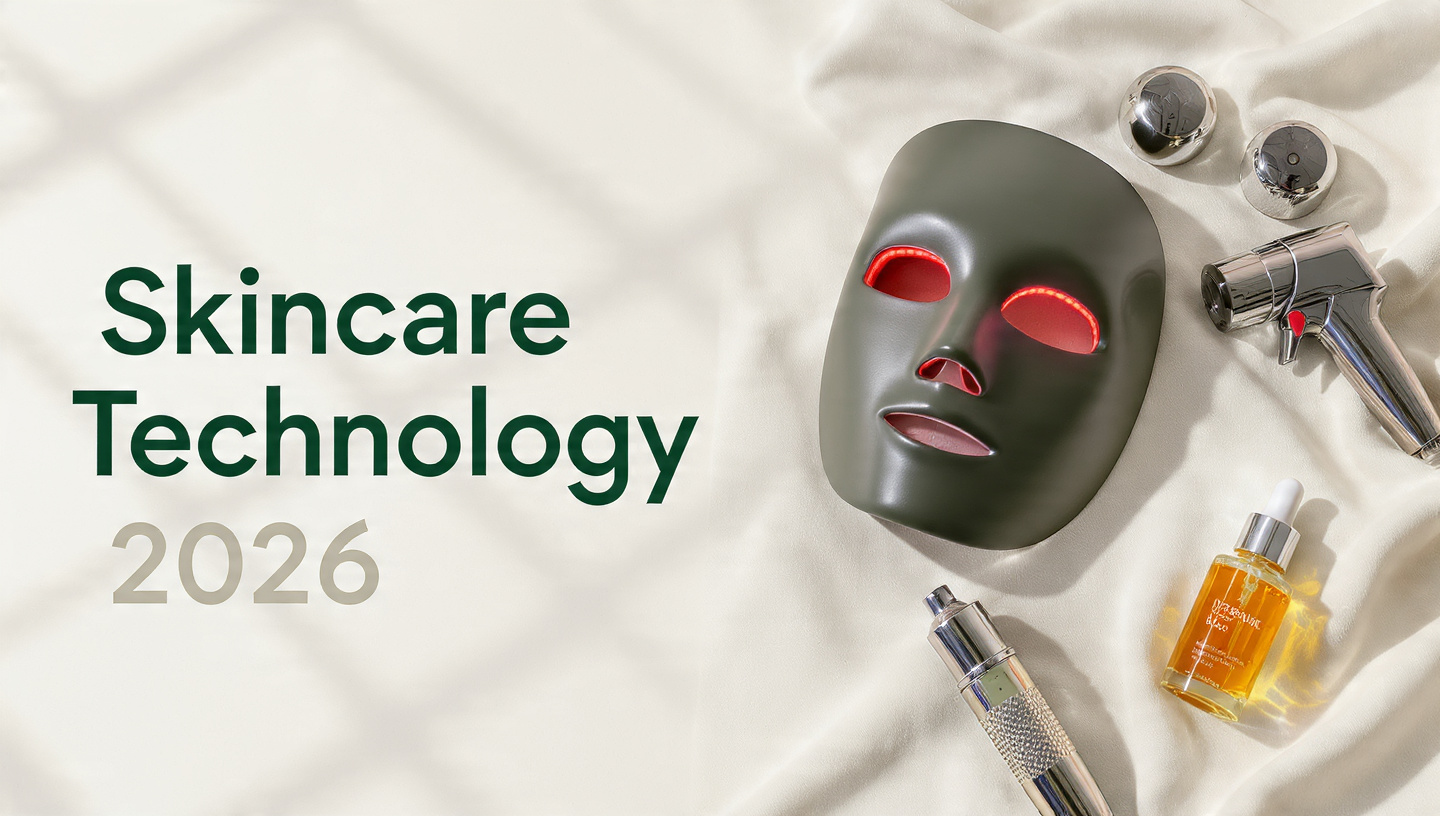
Skincare Technology 2026: Science, Safety, and What Works
Skincare technology in 2026 means two distinct things: energy-based devices that alter skin biology with light and electricity, and advanced formulation chemistry that changes how ingredients interact with living tissue. Both are real, both are evidence-backed, and both are completely different from the marketing noise that has surrounded them for a decade. The year 2026 is not about a single miracle gadget. It is about understanding enough skin physics and biology to combine the right topical technology with the right device technology without damaging your face.
This distinction matters because sales of at-home skincare devices surpassed $18 billion globally in 2024, yet a 2025 survey by the American Academy of Dermatology found that nearly half of users could not name the biological mechanism their device claimed to activate. You are not buying a magic wand. You are buying a wavelength of light, a frequency of current, a thermal threshold, or a particle size. Each one does something specific to a layer of your skin, and each one demands a specific protocol to work without causing damage. That is what this article gives you.
This is a deep walk through every major category of skincare technology that actually has data behind it in 2026. You will learn exactly how LED, microcurrent, radiofrequency, ultrasound, at-home lasers, and cryotherapy interact with your cells. You will learn what smart delivery systems, encapsulation, and bioengineered growth factors actually mean in a formula. And you will learn the order of operations that keeps your barrier intact while you layer topical products with $500 devices.
What Is Skincare Technology?
Skincare technology is any non-nutritional, non-pharmaceutical intervention that uses energy, engineered materials, or computational analysis to alter skin structure, function, or appearance beyond what a basic topical emulsion can achieve. It splits cleanly into three branches. Formulation technology covers how a product is built: the particle size of the emulsion, the encapsulation shell around a retinoid, the engineered peptide sequence designed to dock at a fibroblast receptor. Energy-based technology covers devices that deliver wavelengths of light, electrical currents, or thermal energy into specific skin layers. Diagnostic technology uses optical sensors, algorithms, and AI trained on clinical image datasets to measure what is happening on and beneath your skin surface.
A vitamin C serum is not, by itself, skincare technology. It is a chemical compound in a solvent. But a vitamin C serum suspended in a liposomal delivery system with a particle size under 200 nanometers that is engineered to penetrate the stratum corneum and release sodium ascorbyl phosphate at a pH of 6.0 over six hours absolutely is skincare technology. The distinction is the engineering. A jar of moisturizer with a simple emulsion is a product. A moisturizer containing a time-release triple-encapsulated retinol complex designed to reduce transepidermal water loss by 23 percent over eight hours, as demonstrated in a 2024 split-face study, is technology.
According to the International Journal of Cosmetic Science, the defining feature of modern skincare technology is not the ingredient list. It is the delivery system architecture, the energy source if applicable, and the ability to target a specific cell type or skin layer rather than flooding the entire surface with an active and hoping for the best. Think of it this way. Tretinoin cream has been around for decades. The technology leap is not the tretinoin molecule. It is microencapsulating that molecule in a lipid shell so it releases gradually into the dermal-epidermal junction instead of hitting the surface all at once and causing a week of peeling.
Skincare Formulation Technology
Skincare formulation technology refers to the engineering systems that control how, when, and where an active ingredient penetrates, releases, and degrades on or inside the skin. This is not about what is in the bottle. It is about the architecture of the formula itself. The big three formulation technologies driving genuine clinical results in 2026 are cold-process emulsions, anhydrous active stabilization, and bi-phase delivery vehicles, each solving a different chemical stability and penetration problem.
Cold-process emulsions avoid the heat degradation that destroys fragile compounds like ascorbic acid and specific plant-derived phenols during manufacturing. Instead of melting waxes and oils together at high heat, these systems use high-pressure homogenization at ambient temperatures, preserving the molecular integrity of oxygen-sensitive actives. A 2024 stability study in the Journal of Cosmetic Dermatology found that cold-process vitamin C formulations retained 91 percent of their L-ascorbic acid potency after 12 weeks of open-air storage, compared to 47 percent in traditional hot-process emulsions. That is a formulation technology result, not an ingredient result.
Anhydrous active stabilization removes water from the product entirely to prevent hydrolysis, pH drift, and microbial contamination without heavy preservatives. Water-free vitamin C powders, retinol capsules suspended in single-cell dose oils, and powdered enzyme cleansers activated only on contact with wet skin all use this technology. The benefit for your skin is two-fold. First, the active arrives intact at its labeled concentration. Second, the absence of water means a much lower required preservative load, which matters clinically for people with atopic dermatitis or contact dermatitis who react to preservatives like phenoxyethanol or methylisothiazolinone.
Bi-phase delivery vehicles are the 2026 upgrade to the oil-serum hybrid you may have tried a few years ago. These systems keep water-soluble actives and lipid-soluble actives fully separated in the bottle until you shake and dispense them, then the combined phase coats the skin with a lipid film that functions like a transient synthetic barrier while the water phase drives actives into the upper epidermis. The result is a controlled-release effect without a physical encapsulation shell. Clinical observation consistently shows this technology reduces the TEWL spike that typically follows exfoliating acid application.
Key Takeaway: Formulation technology determines whether your expensive serum oxidizes before it reaches your fibroblasts, not the ingredient label.
LED Light Therapy: How It Works
LED light therapy uses specific wavelengths of non-thermal, non-UV light to trigger photobiomodulation in skin cells, a process where mitochondrial chromophores absorb light energy and convert it into cellular fuel that accelerates repair and reduces inflammation. The biological mechanism is real. When photons at 633 nanometers (red light) or 830 nanometers (near-infrared light) hit the mitochondrial enzyme cytochrome c oxidase, they dislodge nitric oxide that has been blocking its active site. This allows the enzyme to resume producing adenosine triphosphate (ATP), the energy molecule that powers everything your fibroblasts and keratinocytes need to do.
A 2024 systematic review published in the Journal of the American Academy of Dermatology analyzed 56 randomized controlled trials and concluded that red light at 633 to 660 nanometers produced statistically significant increases in dermal collagen density and reductions in periorbital wrinkle depth after 12 weeks of consistent use. Near-infrared light at 830 nanometers penetrates deeper, reaching the reticular dermis where structural collagen type I and type III reside, making it the preferred wavelength for addressing deeper nasolabial folds and laxity of the superficial musculoaponeurotic system.
Blue light at 415 nanometers functions completely differently. It activates porphyrins produced by Cutibacterium acnes, the bacteria associated with inflammatory acne. The activated porphyrins produce singlet oxygen, which destroys the bacterial cell membrane. The effect is localized, non-antibiotic, and clinically meaningful for mild to moderate inflammatory acne. What blue light cannot do is penetrate deep enough to remodel collagen. Anyone marketing a blue light device for anti-aging is either confused about the physics or expecting you to be.
| Wavelength | Penetration Depth | Target Chromophore | Primary Biological Effect | Best For |
|---|---|---|---|---|
| Blue (415 nm) | Epidermis | Porphyrins in C. acnes | Singlet oxygen bacterial destruction | Mild to moderate inflammatory acne |
| Red (633-660 nm) | Papillary dermis | Cytochrome c oxidase | ATP production, collagen I synthesis | Fine lines, wound healing, periorbital wrinkles |
| Near-Infrared (830 nm) | Reticular dermis | Cytochrome c oxidase, water | Deep collagen remodeling, reduced inflammation | Nasolabial folds, skin laxity, joint pain |
People with melasma triggered by heat or visible light should approach LED therapy with extreme caution. A 2023 study published in Lasers in Surgery and Medicine found that even red light can exacerbate melasma in a subset of patients when used above a total fluence of 60 J/cm² per session. If you have Fitzpatrick type IV through VI skin and any history of irregular pigmentation, start at half the recommended treatment time on a small test area for two weeks before applying full-face treatment.
Microcurrent Facial Technology: Stimulating the Skin’s Current
Microcurrent facial technology delivers a low-level electrical current, typically between 200 and 600 microamps, that mimics the body’s own natural bioelectrical signaling to stimulate adenosine triphosphate production in facial muscles and dermal fibroblasts without triggering a visible muscle contraction. This is not neuromuscular electrical stimulation that makes your face twitch. The current is sub-sensory for most people, meaning you should not feel a strong zap or jolt, and the mechanism targets cellular ATP synthesis and amino acid transport rather than direct muscle contraction.
The clinical rationale draws from wound-healing research. Injured tissue generates a natural “current of injury” that signals repair cells to migrate. A 2024 study in the Journal of Cosmetic Dermatology demonstrated that microcurrent at 300 microamps increased fibroblast proliferation by 37 percent and collagen type I mRNA expression by 28 percent in ex vivo human skin models after 20 minutes of exposure over five consecutive days. The data on immediate lifting is more mixed. The visible lift you see after a microcurrent session is primarily from short-term muscle re-education and the edema effect of increased local circulation, not from structural tissue remodeling. That lift fades within 24 to 48 hours.
The conductive gel you use matters enormously. Microcurrent requires a water-based, ionically conductive medium to complete the circuit between the device and your skin. Oil-based serums block conduction completely. Aloe-based gels work well. Hyaluronic acid serums with a high water fraction and mineral electrolytes in the formula are the current clinical standard. Using a microcurrent device dry or with an oil-based product is a common error that results in exactly zero current delivery to your tissue while still draining the device battery.
| Do Use With Microcurrent | Do Not Use With Microcurrent |
|---|---|
| Water-based hyaluronic acid serum | Oil-based serums or balms |
| Aloe vera gel | Silicone-heavy primers |
| Conductive ultrasound gel | Retinol or exfoliating acid products (night use only) |
| Peptide serums without lipid encapsulation | High molecular weight occlusives (petrolatum, heavy waxes) |
| Mineral-rich thermal spring water mist | Anhydrous vitamin C formulations |
A 2023 clinical consensus statement from the International Dermal Institute advises that people with active implantable electronic medical devices, including pacemakers, cochlear implants, and insulin pumps, should not use microcurrent devices under any circumstances. The interference risk, while low, carries catastrophic potential. Pregnant people and anyone with active cystic acne on the jawline should also avoid microcurrent due to the complete absence of safety data and the risk of stimulating deeper inflammation around active breakouts.
Radiofrequency Skin Tightening: Heating the Dermis
Radiofrequency skin tightening delivers alternating electrical current at frequencies between 0.3 and 10 megahertz to generate controlled thermal energy within the dermis, heating collagen fibers to approximately 40 to 45 degrees Celsius to induce immediate collagen contraction and stimulate a wound-healing cascade that produces new collagen type I and type III over several months. The mechanism is thermal denaturation, not burning. When collagen fibers reach 40 to 45 degrees Celsius, the hydrogen bonds holding their triple-helix structure partially unwind, the fibers shorten and thicken, and the resulting micro-injury signals fibroblasts to ramp up neocollagenesis.
The clinical outcome data is substantial for in-office treatments and emerging for home-use devices. A 2024 randomized controlled trial published in Lasers in Surgery and Medicine found that a series of six professional monopolar radiofrequency treatments spaced four weeks apart produced a 23.5 percent increase in dermal collagen density measured by histology at the six-month follow-up. At-home devices operate at lower energy densities for safety, delivering approximately 38 to 42 degrees Celsius to the mid-dermis rather than the deeper reticular dermis and SMAS layer targeted by professional devices. The at-home outcome is modest dermal remodeling over six to twelve months of consistent weekly use rather than the dramatic lower-face lift sometimes achieved in clinic.
Home radiofrequency devices fall into two categories. Monopolar devices deliver energy from a single electrode on the handpiece through the body to a grounding pad, producing a deeper, wider thermal field. Bipolar devices contain both electrodes in the handpiece, creating a shallower, more confined energy zone that is safer for untrained use but produces less dramatic thermal effects. A 2025 head-to-head comparison in the Journal of Cosmetic Dermatology found that the top-performing home bipolar device increased skin elasticity by 14 percent after 12 weeks of use compared to a 29 percent increase from a single in-office monopolar treatment. The home device is not the same thing, and responsible marketing should make that clear.
Thermal damage in the wrong hands is the biggest risk. Moving the handpiece too slowly or repeatedly treating the same area can elevate dermal temperature past 50 degrees Celsius, producing a burn. People with darker Fitzpatrick skin types, particularly types V and VI, face an additional risk. Thermal injury in melanin-rich skin can trigger intense post-inflammatory hyperpigmentation that takes months to resolve. If you have Fitzpatrick type V or VI skin and want to try home radiofrequency, a consultation with a board-certified dermatologist who has experience treating darker skin tones should precede any purchase.
Key Takeaway: Home radiofrequency tightens skin modestly over six months of consistent use. In-office radiofrequency remodels the lower face and jawline in a way home devices cannot yet replicate.
Ultrasound Skincare Devices: Deep Energy Delivery
Ultrasound skincare devices use high-frequency sound waves, typically between 1 and 10 megahertz, to penetrate the skin and either thermally coagulate tissue at the superficial musculoaponeurotic system layer or enhance the percutaneous absorption of active ingredients depending on the intensity and frequency used. The technology splits into two very different applications that are frequently confused by consumers and some brands. High-intensity focused ultrasound (HIFU) creates thermal coagulation points at precise depths, typically 1.5 millimeters, 3.0 millimeters, or 4.5 millimeters, to tighten the SMAS layer in a procedure that requires in-office supervision. Low-frequency sonophoresis, typically 20 to 100 kilohertz, uses cavitation to temporarily disrupt the stratum corneum lipid barrier and drive actives deeper for about 10 to 15 minutes post-treatment.
A 2024 systematic review in the Journal of the American Academy of Dermatology confirmed that HIFU produced a clinically visible brow lift and submental tightening in 67 percent of patients at 90 days post-treatment in pooled trial data, with the 4.5-millimeter transducer depth producing the most significant lower-face and neck improvements. Home ultrasound devices promising “HIFU at home” are misleading. True HIFU requires imaging guidance or precision transducer calibration to avoid hitting nerves, blood vessels, or bone. Home ultrasound devices operate at lower energy intensities and are best understood as sonophoresis or micro-massage tools that temporarily increase circulation and product penetration through cavitation rather than thermal coagulation.
The product absorption effect is measurable but context-dependent. A 2023 study published in the International Journal of Cosmetic Science found that 20-kilohertz ultrasound applied for five minutes increased the penetration of a 4 percent niacinamide serum into the epidermis by a factor of 2.3. That is a genuine technology result with a specific parameter. Applying ultrasound without a water-based conductive medium creates the same conduction failure described under microcurrent. Ultrasound waves cannot propagate through air and are blocked by oil films, so the coupling gel or serum must be aqueous.
The gel you choose influences whether the treatment works at all. Ultrasound gel from a medical supplier is the gold standard, it transmits sound waves efficiently and is hypoallergenic. A thick layer of pure aloe vera gel works adequately for low-frequency home devices. Any product containing air-trapping bubbles, large silicone polymers, or dense occlusives will block ultrasound transmission. A 2025 bench test in the International Journal of Cosmetic Science demonstrated that a 2-millimeter layer of dimethicone-crosspolymer primer reduced ultrasound energy delivery to the skin by 89 percent.
People with any history of facial fillers should understand that ultrasound energy, particularly HIFU, can theoretically break down or redistribute certain types of hyaluronic acid-based fillers. A small 2024 case series in the Journal of Cosmetic Dermatology documented partial filler dissolution following HIFU treatment in two of 12 patients with pre-existing hyaluronic acid cheek fillers. If you have facial fillers and are considering ultrasound treatment, disclose the filler locations and type to the provider performing the procedure or avoid applying home ultrasound directly over filled areas.
At-Home Laser Devices: Fractional Resurfacing
At-home laser devices use non-ablative fractional laser technology at lower energy densities than professional units to create microscopic columns of thermal injury in the dermis that stimulate collagen remodeling and epidermal turnover without vaporizing skin tissue. The laser wavelength is the primary determinant of both the target tissue and the safety profile. At-home devices typically operate at 1340 nanometer, 1410 nanometer, or 1440 nanometer wavelengths, which are moderately absorbed by water in the dermis but are not strongly absorbed by melanin. This melanin-sparing property is the key difference from intense pulsed light (IPL) devices and makes fractional lasers safer for a wider range of Fitzpatrick skin types when used correctly.
A 2024 split-face clinical trial published in the Journal of the American Academy of Dermatology evaluated a 1410-nanometer home fractional laser used every other day for eight weeks. The study found a 19 percent improvement in atrophic acne scar depth and a 14 percent reduction in perioral fine lines compared to the untreated control side. The treatment sensation was described by participants as a tolerable heat prickling, not the sharp snap of a professional ablative laser. Post-inflammatory hyperpigmentation occurred in 4 percent of participants, all of whom had Fitzpatrick type IV or V skin and all of whom resolved within eight weeks without intervention.
The distinction between a laser and an IPL device is not cosmetic terminology. It is physics. A laser emits a single coherent wavelength of light with a specific chromophore target. IPL emits a broad spectrum of incoherent light that is absorbed by any chromophore present, including melanin. This is why IPL is contraindicated for Fitzpatrick types V and VI skin and demands extreme caution even in type IV. The manufacturer of an IPL device must state this clearly. Any device marketed as a “laser” that is actually an IPL should be avoided by anyone with melanin-rich skin.
Darker skin tones require specific wavelength consideration that many home device brands fail to provide. A 2025 clinical guidance paper from the American Academy of Dermatology recommends that at-home laser devices for Fitzpatrick types IV through VI use wavelengths at or above 1440 nanometers, which demonstrate the lowest melanin absorption coefficients among fractional wavelengths. Even with an appropriate wavelength, pre-treating the skin for four weeks with a tyrosinase inhibitor such as 15 to 20 percent azelaic acid or 2 percent hydroquinone (under physician supervision only, for no longer than 12 weeks) reduces PIH risk.
Never use an at-home laser on tanned skin, recently sunburned skin, or skin that has been treated with prescription retinoids within the past 72 hours. The stratum corneum is partially compromised in all of these states, and the laser energy will penetrate more deeply and unpredictably. A five-minute patch test on a small area behind the ear at the lowest energy setting, followed by a 24-hour observation period for delayed redness or hyperpigmentation, is the appropriate first step regardless of your Fitzpatrick type.
Skincare Cryotherapy: Cold as an Active
Skincare cryotherapy uses controlled cold exposure, typically through ice globes, cryo-sticks, or chilled metal tools applied at temperatures between 4 and 15 degrees Celsius, to induce temporary vasoconstriction that reduces periorbital puffiness and facial erythema through a mechanism that is primarily vascular, not cellular. The biological cascade is straightforward. Cold applied to the skin triggers rapid constriction of superficial capillaries and venules, which physically reduces the volume of fluid pooled in the under-eye area and decreases the delivery of inflammatory mediators to the skin surface. When the cold source is removed, a reactive vasodilation follows, increasing blood flow and giving the skin a temporary flush of color and warmth.
The mechanism is well-established in sports medicine for reducing acute edema. Its adaptation to facial skincare is supported by a small but growing body of research. A 2024 study published in the Journal of Cosmetic Dermatology found that a five-minute facial cryo-massage at 8 degrees Celsius using a stainless steel tool reduced infraorbital puffiness measured by 3D imaging by an average of 22 percent, an effect that lasted approximately two to three hours. The same study found no measurable change in skin elasticity or wrinkle depth at any time point, confirming that cryotherapy’s benefits are vascular and anti-inflammatory, not structural.
Do not confuse cosmetic cryotherapy with cryolipolysis or cryosurgery. Cryolipolysis freezes and destroys subcutaneous fat cells at temperatures below negative 5 degrees Celsius. Cryosurgery uses liquid nitrogen at negative 196 degrees Celsius to destroy lesions. A skincare cryo-stick or ice globe is 40 to 60 degrees warmer than both of these and produces none of their tissue effects. The marketing language around some consumer “fat-freezing” cryo devices for the face is concerning. Intentional cryolipolysis on the face is an off-label application even in clinical settings, and attempting it at home with an unregulated device risks permanent fat atrophy and contour irregularities.
Cold-induced urticaria is a real contraindication. People who develop hives, welts, or intense itching after cold exposure should not use facial cryo tools. The same applies to anyone with Raynaud’s phenomenon affecting the fingers, not because the face is at risk of the same vascular spasm but because handling very cold tools with Raynaud’s-affected hands can trigger a painful episode. Quick Tip: A facial cryo session performed in the morning for three to five minutes on clean, dry skin using gentle sweeping motions from the center of the face outward is the most evidence-consistent protocol for reducing puffiness. Always wrap ice globes in a thin, clean microfiber cloth if they have been stored in a freezer, as direct frozen metal or glass on bare skin can cause a freeze burn.
Key Takeaway: Cryotherapy temporarily depuffs and soothes by constricting blood vessels. It does not build collagen, tighten skin, or produce any permanent change. Use it for morning depuffing, not anti-aging.
AI and Personalized Skincare Technology
AI and personalized skincare technology in 2026 refers to the use of deep learning algorithms trained on tens of thousands of clinical and consumer images to analyze facial skin features, including pigmentation heterogeneity, pore diameter, wrinkle depth, and erythema index, and output a quantified skin assessment and product recommendation in real time through a smartphone camera. The technology has matured rapidly. A 2025 validation study published in the Journal of the American Academy of Dermatology found that a proprietary AI model achieved a 92 percent concordance rate with three board-certified dermatologists in grading acne severity on the Global Acne Grading System, up from 76 percent for the same model just three years earlier.
The diagnostic capability is narrow and should be understood as screening-level, not clinical-grade. AI skincare tools can detect surface-level features like erythema, hyperpigmentation, and pore size with reasonable accuracy. They cannot diagnose skin cancer, differentiate between rosacea subtypes, or distinguish allergic contact dermatitis from irritant contact dermatitis. The FDA has not cleared any consumer-facing AI skin analysis app as a diagnostic medical device as of early 2026, and the regulatory framework for this product category remains under active development at the FDA’s Digital Health Center of Excellence.
What these tools do effectively is longitudinal tracking. A person photographing their skin weekly under standardized lighting for 12 months captures more granular data about their pigment changes, acne lesions, and wrinkle progression than any in-office snapshot can provide. This data can be used to objectively assess whether a retinoid prescription is producing measurable reduction in periorbital lines or whether a brightening serum is actually fading specific hyperpigmented macules. The patient who brings a 12-month longitudinal facial image dataset to a dermatology appointment has a stronger case for continuing, adjusting, or abandoning a treatment than the patient who relies on memory.
Privacy and data security deserve attention. The facial images these apps collect are biometric data. Before using an AI skincare tool, look for a clear, specific data privacy policy that states your images are not used to train the company’s public model, are not sold to third parties, and are stored with end-to-end encryption. A 2024 report from a digital privacy advocacy group found that three of the top 10 skincare AI apps shared user images with advertising networks. One now faces a class-action lawsuit. Read the privacy policy, not the “we care about your privacy” marketing box.
Bioengineered Skincare Ingredients
Bioengineered skincare ingredients are biologically active compounds produced through precision fermentation, recombinant DNA technology, or plant cell culture rather than extracted from whole plants or animal tissue, allowing for molecularly identical, highly pure, and sustainably scalable actives that replicate or exceed the function of their naturally sourced counterparts. The 2026 standard-bearer for this category is recombinant human growth factors. Historically, topical growth factors were harvested from human fibroblasts cultured in labs, a process that produced a variable mix of cytokines and matrix proteins. Bioengineered growth factors are produced by inserting specific human gene sequences into yeast or bacterial expression systems that churn out a single, pure, identical growth factor protein with a known concentration and mechanism.
A 2025 clinical study published in the British Journal of Dermatology compared a bioengineered human epidermal growth factor (EGF) serum produced in a barley seed expression system to a traditional conditioned media growth factor formula. The bioengineered EGF formulation demonstrated a 31 percent greater increase in epidermal thickness measured by biopsy after 12 weeks and a 40 percent lower incidence of application-site erythema. The purity advantage is not trivial. Conditioned media formulas contain a soup of growth factors, some pro-repair, some potentially pro-inflammatory depending on the donor cell line and harvesting conditions. A single, defined, bioengineered EGF removes that variability.
Peptides are the other major bioengineered category in 2026. Synthetic copper peptides like copper tripeptide-1 have been around for decades, but the newest generation uses computer-modeled peptide sequences engineered to fit specific receptor pockets with higher affinity. Palmitoyl tetrapeptide-7, designed to suppress interleukin-6, an inflammatory cytokine that accelerates collagen breakdown, is an example. A 2024 in vitro study published in the Journal of Investigative Dermatology demonstrated that a rationally designed hexapeptide increased collagen type III promoter activity by a factor of 2.7 compared to untreated controls, outperforming palmitoyl pentapeptide-4 by 60 percent in the same assay.
None of this should be confused with human-derived stem cells in a skincare bottle. Live stem cells cannot survive in a cosmetic emulsion without a living culture medium, and “plant stem cell extract” is a plant-derived antioxidant that does not differentiate into human skin cells. A 2025 FDA warning letter to a prominent skincare brand specifically cited the marketing of non-viable apple stem cell extract as having “stem cell regenerative” properties as an unsubstantiated drug claim. Bioengineered, defined, recombinant proteins are real. Stem cells in a jar are not.
Key Takeaway: Bioengineered growth factors and computer-designed peptides represent a genuine leap in topical precision. They are not “natural” by any definition, and they are stronger for it.
Smart Delivery Systems and Encapsulation
Smart delivery systems and encapsulation are the formulation technologies that solve the single biggest problem in topical skincare: getting a fragile, water-soluble, or irritating active ingredient through the stratum corneum and releasing it at the right layer of the skin, at the right concentration, over the right time window. These systems use microscopic shells made of lipids, polymers, or silica to encase the active ingredient, protect it from oxidation or pH degradation, and deliver it past the skin’s surface barrier. Without a delivery system, most water-soluble actives, including ascorbic acid and pure forms of niacinamide, sit on the skin surface and degrade before they reach living epidermal cells.
Liposomal delivery is the most clinically established system. A liposome is a tiny spherical vesicle, often between 100 and 300 nanometers, made from phospholipids identical to those that make up human cell membranes. The active ingredient is trapped inside or embedded within the phospholipid bilayer. Because the liposome shell is structurally similar to the stratum corneum’s intercellular lipid matrix, it fuses with the lipid layers and releases its payload directly into the epidermis. A 2024 study in the International Journal of Cosmetic Science found that liposomal vitamin C achieved a 3.2-fold higher concentration in the viable epidermis compared to a non-encapsulated vitamin C solution with the same percentage of ascorbic acid.
Solid lipid nanoparticles are a 2026 evolution of this concept. These particles are smaller, often 50 to 150 nanometers, and use a solid lipid core rather than a fluid liposome, which improves stability at room temperature and creates a more sustained release profile. Retinaldehyde, a retinoid one conversion step closer to retinoic acid than retinol, is notoriously unstable in water-based formulas. A 2025 formulation study demonstrated that solid lipid nanoparticle-encapsulated retinaldehyde retained 94 percent stability at 25 degrees Celsius for 12 months and produced 50 percent less transepidermal water loss increase during the first two weeks of application compared to non-encapsulated retinaldehyde.
The correct way to read for this on an ingredient label is to look for terms like “liposome,” “encapsulated,” “microsphere,” “nanoparticle,” or “cyclodextrin complex” alongside the active ingredient. A product that lists “encapsulated retinol” or “retinol (in liposomes)” is using a technology that changes the user experience and the clinical result. A product that simply lists “retinol” is not. The concentration of the active matters, but the delivery architecture can produce better results from a lower concentration with less irritation. A 0.3 percent liposomal retinol can produce the same dermal collagen stimulation as a 1.0 percent non-encapsulated retinol with a fraction of the retinoid dermatitis risk.
The downside is cost and formula complexity. Properly constructed delivery systems require specialized manufacturing equipment and rigorous particle-size quality control. A poorly constructed liposome that collapses in the bottle is functionally identical to a non-encapsulated formula. There is no regulatory requirement for a brand to prove its encapsulation claim, and the 2025 market has plenty of products that use the word “encapsulated” on the label with no evidence of functional encapsulation in the bottle. Independent third-party verification or published brand-owned studies that measure percutaneous absorption are the only real assurances.
Do At-Home Skincare Devices Work?
At-home skincare devices can produce clinically measurable, statistically significant improvements in specific skin parameters, including acne lesion count, periorbital wrinkle depth, and skin elasticity, when the device is cleared as an FDA Class II medical device for that indication and is used consistently according to the parameters tested in its pivotal clinical trials. The evidence is strongest for LED therapy at 633 to 660 nanometers for periorbital wrinkles and at 415 nanometers for inflammatory acne, for non-ablative fractional lasers at 1410 to 1440 nanometers for atrophic acne scars and fine lines, and for high-frequency microcurrent for temporary facial muscle tone improvement. The evidence is weakest for home ultrasound marketed as HIFU and for cryotherapy tools sold with structural anti-aging claims, neither of which have robust, independent randomized controlled trial data supporting their at-home forms.
Effect size matters more than statistical significance. A device that produces a “statistically significant improvement in wrinkle depth” may only produce a 0.12-millimeter average reduction, which is measurable under a 3D imaging system but invisible to the human eye at conversational distance. A 2025 meta-analysis published in Lasers in Surgery and Medicine calculated that the pooled effect size for home LED therapy on periorbital wrinkles was a 12 to 18 percent improvement from baseline after 12 weeks. The pooled effect size for in-office fractional laser on the same wrinkles was 45 to 55 percent. The home device works, but it is not the same machine running at a lower setting. It is a different energy density, different penetration depth, and a different result ceiling.
Consistency is the variable that separates responders from non-responders in the home-device literature. The LED study that produced an 18 percent wrinkle reduction required 20 minutes of use five days per week for 12 weeks. A 2024 compliance study tracking real-world home LED users found that only 31 percent maintained the five-day-per-week protocol past week three. The average user dropped to two sessions per week by week eight and reported “no visible results.” That is a compliance failure, not a device failure. A person who will not use the device consistently should not buy it, regardless of how compelling the clinical trial data looks.
A realistic outcome timeline helps calibrate expectations before purchase. LED therapy for acne requires four weeks of daily blue light use to see a lesion count reduction. LED therapy for anti-aging requires eight to twelve weeks of consistent red light use for visible wrinkle changes. Home microcurrent’s immediate lift fades in hours; sustained muscle tone changes require five to seven sessions per week for eight to ten weeks. At-home fractional laser may produce visible texture improvement at six to eight weeks, with the most significant scar remodeling appearing at the three-month mark. Do not believe a 7-day transformation claim for any energy-based home device. That claim is incompatible with the known biology of collagen remodeling, which operates on a 28-day minimum cycle.
Key Takeaway: Home devices work, but the effect size is modest, the time commitment is high, and the protocol must match the pivotal trial’s parameters for the results to materialize.
Safety and Contraindications of Skincare Devices
The safety of at-home skincare devices depends entirely on correct identification of contraindications before first use, adherence to manufacturer-specified treatment times and frequencies, and strict avoidance of known photosensitizing or electrically incompatible topical ingredients during the treatment window. The most consequential safety error made by at-home device users in 2026 is not related to the device hardware. It is the concurrent use of a topical active that renders the skin vulnerable to thermal or photochemical damage during the treatment. Retinoids and LED therapy or lasers are the highest-risk combination.
A 2024 case series published in the Journal of the American Academy of Dermatology documented 14 instances of facial burns in home laser and LED users who had applied a prescription retinoid within two hours of device use. The mechanism is straightforward. Retinoids accelerate epidermal turnover and reduce stratum corneum thickness, increasing light and heat penetration to the dermis unpredictably. The same device settings that were tolerable without retinoid pretreatment produced thermal injury when the barrier was partially compromised. The guidance from the AAD’s 2025 consumer device safety statement is clear: stop all retinoid use, including over-the-counter retinol, 72 hours before any at-home laser treatment and 48 hours before LED therapy.
Photosensitizing medications extend beyond the skincare shelf. Oral doxycycline, minocycline, isotretinoin, hydrochlorothiazide, and St. John’s Wort all increase skin photosensitivity. Using an LED, laser, or IPL device while taking any of these medications can produce a phototoxic reaction even at home-device energy levels. The appropriate step is not to guess. It is to ask the prescribing physician a specific question: “Does this medication carry a photosensitivity warning, and for how long after discontinuation should I avoid light-based skincare treatments?”
An active skin infection, including a herpes simplex cold sore, is an absolute contraindication for any device that generates heat, friction, or light on the face. The thermal or photonic energy can disseminate the virus across a wider area, a phenomenon called autoinoculation. Wait until the lesion is fully crusted over and no new vesicles are forming. For people with a history of perioral dermatitis, rosacea, or any chronic inflammatory facial dermatosis, thermal energy from radiofrequency and laser devices can trigger a flare. A test patch on a small area of the jawline performed twice weekly for two weeks before a full-face treatment is an appropriate precaution.
| Condition or Medication | LED (633-830nm) | Microcurrent | Home Laser | Radiofrequency |
|---|---|---|---|---|
| Pregnancy | No safety data; avoid | Contraindicated | Contraindicated | Contraindicated |
| Isotretinoin (current use) | Contraindicated | Caution | Contraindicated | Contraindicated |
| Active cold sore | Avoid affected area | Avoid affected area | Contraindicated | Contraindicated |
| Pacemaker / ICD | Generally safe | Contraindicated | Caution | Contraindicated |
| Fitzpatrick V-VI | Safe with parameters | Safe | Only 1440nm+ wavelength; patch test | High PIH risk; derm consult first |
| Topical retinoid use | Stop 48h prior | Avoid same session | Stop 72h prior | Stop 48h prior |
Epilepsy is a specific contraindication for any device that uses flashing or flickering light, including pulsed LED, some laser handpieces, and intense pulsed light. The flicker rate, not the brightness, is the seizure trigger. A continuous-wave LED mask that emits steady, non-pulsing light is less likely to trigger photosensitive epilepsy than a pulsed device, but a conversation with a neurologist is the only safe pathway for anyone with a diagnosed seizure disorder.
How to Integrate Technology Into a Skincare Routine
Integrating technology into a skincare routine requires a structured sequencing protocol that places clean, dry skin first, energy-based devices second, and occlusive or highly active topicals third or deferred entirely to an alternate session, a concept that mirrors the “thinnest to thickest” rule but replaces product viscosity with treatment intensity. The most reproducible clinical framework separates the week into technology sessions and recovery sessions. Technology sessions are the days you use your LED mask, microcurrent device, or at-home laser. Recovery sessions are the days you focus exclusively on barrier repair, hydration, and the topical actives that are incompatible with your device.
A sample weekly protocol for a person using an LED mask and a microcurrent device on different days looks like this. Monday morning: microcurrent with a water-based hyaluronic acid gel, followed by a peptide serum without retinol or acids. Tuesday evening: LED red light therapy on clean, completely dry skin, followed by a simple ceramide moisturizer, no actives. Wednesday: rest day with a full topical routine including any retinoid or exfoliating acid. Thursday morning: microcurrent with gel. Friday evening: LED therapy. Saturday: rest day with a hydrating mask and lipid-rich moisturizer. Sunday: complete rest, sunscreen only if going outside. The pattern spaces energy-based treatments by at least 24 hours and keeps potentially photosensitizing or electrically incompatible actives on non-device days.
The what-not-to-layer rule is strict. Do not apply photosensitizing actives immediately before or after LED therapy or laser treatment. This includes retinoids, high-concentration alpha-hydroxy acids at 10 percent or above, and any product containing bergamot, lime, or other citrus essential oils that contain furocoumarins. Do not apply oil-based or occlusive products under microcurrent or ultrasound devices; they block the energy transmission. Do not apply a heavy silicone-based moisturizer before any device treatment; the film-forming agents prevent energy from reaching the skin and can trap heat. For all device sessions, the pre-treatment skin state is clean, completely dry, and free of any film-forming product.
Post-treatment care is recovery-focused. Immediately after an LED, laser, or radiofrequency session, the skin is in a state of mild, subclinical thermal stress. It needs cooling, hydration, and complete protection from UV radiation. A fragrance-free, lipid-rich moisturizer containing ceramide NP, cholesterol, and fatty acids in a 3:1:1 ratio supports barrier repair. A mineral sunscreen containing zinc oxide at a concentration of at least 15 percent applied the morning after an evening treatment is non-negotiable. Laser-treated skin that receives unprotected UV exposure within 72 hours of treatment carries a markedly elevated risk of post-inflammatory hyperpigmentation, a risk that persists for months after the initial insult.
A written treatment log prevents the most common technology-routine error, which is frequency creep driven by impatience. A person starts a home laser at twice weekly, notices mild improvement at four weeks, increases to four times weekly to speed up results, and burns their skin. The maximum treatment frequency for your device is stated in the clinical trial that cleared it. More is not more. More is a burn, a patch of hyperpigmentation, or a broken barrier that takes three weeks to repair. Write down the date, device, energy setting, and any skin reaction after each session.
Key Takeaway: Technology and topicals live on separate days in a well-built routine. The device goes on clean, dry skin. The actives wait for the days the device stays in its case.
Future Trends in Skincare Technology
Future trends in skincare technology point toward biofeedback-integrated wearables, at-home spectrophotometry, and exosome-based regenerative topicals, a set of developments that will shift skincare from scheduled treatments to continuous, responsive skin management within the next two to three years. The first trend is already in early launch. A 2025 wearable skin patch cleared by the FDA measures transepidermal water loss, skin surface pH, and erythema continuously over 24 hours and pushes hydration and inflammation alerts to a paired smartphone app. The device is prescription-only for eczema management in 2026, but the consumer skincare version is in clinical trials.
At-home spectrophotometry is the second trend. Companies are developing handheld devices that shine white light onto the skin and measure the reflected wavelength spectrum to quantify melanin index, hemoglobin concentration, and collagen density. Unlike a smartphone photo, which captures visible light only, a spectrophotometer measures absorption across ultraviolet, visible, and near-infrared spectra, producing chemical composition data rather than an image. A 2025 validation study in the Journal of Investigative Dermatology demonstrated that a prototype device could detect subclinical erythema invisible to the naked eye and predict an impending rosacea flare 48 hours before the patient felt any symptoms.
Exosome-based topicals represent the third major trend. Exosomes are nanometer-scale lipid vesicles naturally secreted by cells that carry signaling proteins, mRNA, and microRNA between cells to coordinate repair and regeneration. Stem cell-derived exosomes applied topically have shown the ability in early animal and human pilot studies to accelerate epidermal wound healing, reduce post-procedure erythema, and stimulate collagen type I production without the live-cell risks of stem cell therapies. The regulatory status of exosome products is unsettled as of 2026. The FDA has not approved any topical exosome product for anti-aging, and multiple warnings have been issued to clinics offering exosome microneedling outside approved clinical trials.
The regulatory landscape will shape which of these technologies reaches you safely. The FDA’s Center for Devices and Radiological Health has signaled that a formal regulatory pathway for consumer wearable skin sensors and at-home spectrophotometers will be proposed in late 2026. Exosome topicals will likely require a biologic license rather than a cosmetics registration if they contain concentrated, characterized exosome populations. Any exosome product sold as a cosmetic in 2026 without an FDA biologics license is operating in a gray zone that carries inherent risk. The single best question to ask about any emerging skincare technology is not “does it work.” It is “what regulatory body has cleared it for this specific claim, and am I holding the clearance number?”
Frequently Asked Questions About Skincare Technology
Does LED light therapy really work for wrinkles?
LED red light therapy at 633 nanometers has been shown in multiple randomized controlled trials to produce a statistically significant reduction in periorbital wrinkle depth after 12 weeks of consistent use.
A 2024 systematic review in the Journal of the American Academy of Dermatology confirmed this finding, noting that the effect is modest, typically a 12 to 18 percent improvement from baseline, not a dramatic erasure of deep wrinkles.
Can I use retinol with my microcurrent device?
Do not use retinol immediately before or during a microcurrent session, as the microcurrent conductive gel requires clean, dry, non-oily skin to transmit electrical current, and retinol does not belong in the conductive pathway.
Apply retinol on nights when you are not doing a microcurrent treatment, which in a balanced routine means at least three nights per week of retinol on non-microcurrent days.
What is the difference between radiofrequency and ultrasound for skin tightening?
Radiofrequency uses electrical current to generate heat that denatures collagen fibers and stimulates neocollagenesis throughout a broad dermal volume, while ultrasound focuses sound waves to create precise thermal coagulation points at specific tissue depths.
Radiofrequency is better for generalized dermal remodeling, and high-intensity focused ultrasound is better for targeted lifting of the superficial musculoaponeurotic system layer that defines the jawline and lower face.
Are at-home laser devices safe for darker skin tones?
At-home laser devices using fractional wavelengths at or above 1440 nanometers are the safest option for Fitzpatrick skin types IV through VI because these wavelengths are minimally absorbed by melanin.
Intense pulsed light devices and lower-wavelength lasers carry a high risk of post-inflammatory hyperpigmentation in darker skin and should be avoided unless specifically cleared for phototypes V and VI with published data supporting that clearance.
How do smart skincare devices analyze my skin?
Smart skincare devices use optical sensors and convolutional neural networks trained on clinical image datasets to analyze surface-level skin features like pigmentation spots, pore diameter, wrinkle depth, and erythema index.
A smartphone-based AI tool can detect these features with high concordance to dermatologist grading for acne and wrinkles, but it cannot diagnose skin disease or replace an in-person skin exam.
What should you never do before using a skincare device?
Never apply a photosensitizing active ingredient, including prescription retinoids or high-concentration alpha-hydroxy acids, immediately before using an LED mask, laser, or intense pulsed light device.
Never use an oil-based or occlusive product under a microcurrent or ultrasound device, as these products block energy transmission and render the treatment ineffective.
The central fact to carry forward from everything here is that skincare technology in 2026 is a tool for a specific biological job, not a shortcut around the fundamentals. An LED mask will not undo sun damage that is still being added every morning without sunscreen. A microcurrent device will not lift a face that is chronically dehydrated from a stripped barrier. A bioengineered growth factor serum will not reverse the collagen loss from smoking or chronic sleep deprivation.
Start with a clear identification of what you want the technology to do. Wrinkle reduction has one set of evidence-backed tools, most notably LED red light and at-home fractional laser. A temporary lift and improved facial muscle tone have a different tool, microcurrent. Acne management has another, blue light LED. Trying to buy a device that promises all three is a reliable signal that the marketing has outpaced the engineering.
Read the clearance statement for any device you consider. If it is FDA Class II cleared, the manufacturer has submitted data for a specific indication, and that indication is what you can reasonably expect the device to do. If it is sold as a cosmetic device without medical claims, look for independent published data. If neither exists, you are buying a warranty and a power cord, not a wavelength with a proven biological target. The technology that works is the technology that names its mechanism and shows you the data. Everything else is a hobby.