Most Expensive Skincare 2026: Science vs. Price Tag
The most expensive skincare in the world costs over $2,000 per ounce, but the cosmetic chemistry behind these products rarely matches the price tag. Most luxury skincare relies on sensory elegance, brand mythology, and the psychological weight of a high price rather than any ingredient you cannot find in a properly formulated $40 product. A $1,500 cream and a $60 cream can have nearly identical base formulations with the same humectants, emollients, and occlusives doing the actual work of hydrating and protecting your stratum corneum.
According to the FDA, cosmetic companies are not required to submit efficacy data before marketing a product at any price point. A 2023 analysis published in the Journal of Cosmetic Dermatology noted that pricing in prestige skincare correlates far more strongly with packaging, fragrance complexity, and marketing spend than with active ingredient concentration or clinical trial support. This matters because the luxury skincare market is projected to exceed $25 billion globally by 2026, and consumers deserve to know what they are paying for.
This article examines the actual products topping the world’s most expensive skincare lists, then breaks down the exotic ingredients they are built around: caviar extract, 24k gold, diamond powder, platinum, and proprietary fermentation complexes. Each gets measured against published dermatology research, not marketing copy. You will walk away knowing which luxury ingredients have human clinical evidence behind them, which ones sit inert on your skin surface, and how to evaluate any expensive skincare purchase through a cosmetic chemistry lens rather than a brand story lens.
What Is the Most Expensive Skincare in the World in 2026
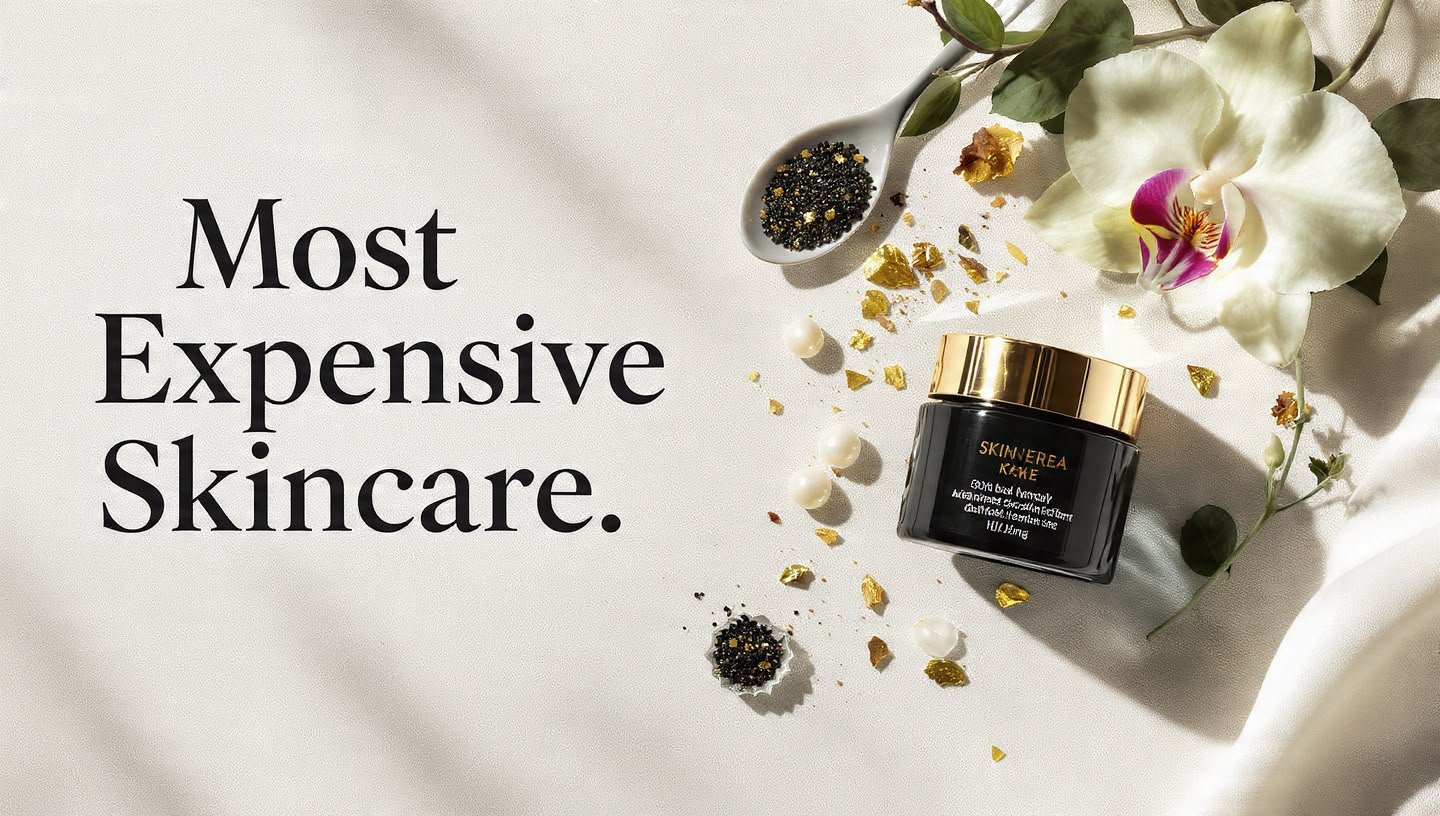
The single most expensive skincare product title belongs to formulations that combine rare raw materials, hand-harvested botanicals, and precious metal or gemstone powders at price points most people associate with mortgage payments rather than moisturizers. These products routinely exceed $1,500 per ounce, with a handful crossing the $2,000 threshold for a single jar or bottle. The price drivers include ingredient sourcing logistics, low-yield extraction processes, handmade production methods, crystal or precious metal packaging, and deliberate scarcity positioning rather than demonstrably superior skin outcomes.
The cosmetic chemistry reality is that removing the packaging cost, the fragrance development cost, and the brand story markup from a $2,000 cream typically leaves you with a formula whose active ingredients are available in peer-reviewed concentrations at the $40 to $80 retail level. Glycerin, dimethicone, and various emollients form the structural backbone of most luxury moisturizers. These compounds function identically whether they sit next to gold flakes or not, because their mechanism of action depends on molecular properties, not brand prestige.
Key Takeaway: The world’s most expensive skincare products are pricing exercises in luxury positioning, not clinical efficacy jumps over well-formulated mid-range alternatives.
The Most Expensive Skincare Product Breakdown
Clé de Peau Beauté’s La Crème, frequently cited among the most expensive skincare products globally, retails for approximately $600 per ounce in its standard size. The formula centers on the brand’s proprietary 4MSK complex and Illuminating Complex EX, designed to address hyperpigmentation and support skin clarity. The base contains standard cosmetic emollients including dimethicone and glycerin. Published human clinical trial data specifically on the finished La Crème formula remains limited to in-house brand research not independently replicated.
La Prairie’s Skin Caviar Luxe Cream, another perennial fixture on most expensive skincare lists, incorporates caviar extract alongside a proprietary Cellular Complex. The formula structure follows a standard water-in-oil emulsion with humectants and occlusives forming the moisture delivery system. The caviar-derived components provide fatty acids and proteins that may offer some emollient benefit, but the molecular size of most proteins prevents penetration beyond the stratum corneum into the dermis where collagen synthesis occurs.
RéVive’s Moisturizing Renewal Cream, built around epidermal growth factor technology originally studied for burn wound healing, occupies a different position in luxury skincare. The epidermal growth factor mechanism has published peer-reviewed research in wound healing contexts, but extrapolating wound healing data to daily anti-aging application on intact skin requires assumptions the current evidence base does not fully support.
| Product | Price Per Ounce (Approx.) | Signature Ingredient | Evidence Type |
|---|---|---|---|
| Clé de Peau Beauté La Crème | $600 | 4MSK, Illuminating Complex EX | In-house brand research |
| La Prairie Skin Caviar Luxe Cream | $550 | Caviar Extract, Cellular Complex | In vitro, limited clinical |
| RéVive Moisturizing Renewal Cream | $475 | Epidermal Growth Factor | Wound healing literature, limited cosmetic RCTs |
| Augustinus Bader The Rich Cream | $265 | TFC8 (Trigger Factor Complex) | In-house brand research |
Most Expensive Skincare Products Worth Understanding
Beyond the top-tier face creams, most expensive skincare products span serums, eye treatments, and specialized masks that use rarity, extraction cost, or precious material inclusion as their value proposition. Japanese and Swiss brands dominate this category, drawing on national reputations for precision manufacturing and pharmaceutical heritage. The products share a common pattern: a proprietary complex with a trademarked name, a backstory involving a specific researcher or discovery moment, and a price point that positions the product as aspirational rather than accessible.
The formulation strategies in these products typically include standard cosmetic chemistry elements: humectants for water binding, occlusives for moisture retention, and emollients for skin feel. The differentiation comes from the “hero” ingredients layered on top of this base: platinum powder, pearl protein, rare orchid extracts harvested once annually, fermented black tea aged for specific periods. These ingredients create a sensory experience and a story that standard formulations cannot replicate, because the story is the actual product as much as the cream inside the jar.
Quick Tip: When evaluating any luxury skincare product, read the INCI list from the top down. The first five ingredients after water typically make up 80% or more of the formula. If the luxury ingredient appears after the preservative system, its concentration is too low to produce any biological effect beyond placebo.
What Is the Most Expensive Skincare Product Per Ounce
When calculated purely by weight, some serum and treatment ampoules claim the highest price-per-ounce title, often exceeding $1,500 per ounce for single-use or limited-dose packaging. Ampoule formats, which package small single-application amounts in sealed glass vials, concentrate cost into the smallest possible delivery system. The price per ounce in this format can reach multiples of the jarred cream equivalent because the packaging cost per milliliter is dramatically higher.
The cost calculation shifts when you consider that a $1,500 per ounce serum applied at the recommended three drops daily costs roughly $12 per application, while a $600 per ounce cream applied at a quarter teaspoon per application costs roughly $8 per use. Over a year, neither product offers a per-application cost that matches its sticker shock when placed next to mortgages and car payments. The psychology of the price per ounce overwhelms the more relevant metric: price per effective dose of the active ingredient you are actually buying.
Per-ounce cost comparisons between luxury products also reveal that the glass jar, crystal lid, and velvet box often cost more to produce than the formula inside. Packaging manufacturing costs for limited-edition luxury skincare can reach 60% to 70% of the total production cost, according to cosmetic industry manufacturing data.
Most Expensive Skincare Product in the World by Category
Breaking the most expensive skincare product in the world by category reveals that face creams dominate the top price tier, followed by serums, then eye treatments. The structure of each category dictates different formulation priorities: creams deliver emollience and occlusion as primary benefits, serums deliver higher concentrations of water-soluble actives, and eye treatments operate in a narrower band of ingredient options due to the thinner, more sensitive periorbital skin.
The most expensive face cream typically costs more than the most expensive serum of the same brand because the cream jar is larger, the packaging is heavier, and the perceived value of a “complete” moisturizer exceeds that of a treatment step. Cosmetic chemists will confirm that serums actually cost more to formulate per ounce on average because active ingredient concentrations run higher. The pricing hierarchy in luxury skincare is a marketing hierarchy, not a manufacturing cost hierarchy.
| Category | Typical Top Price Per Oz | Formulation Priority | Primary Active Types |
|---|---|---|---|
| Face Cream | $500-$700 | Emollients, occlusives, humectants | Peptides, botanicals, fermented complexes |
| Serum | $350-$1,500+ | Water-soluble actives, penetration enhancers | Vitamin C, peptides, growth factors |
| Eye Treatment | $400-$600 | Low-irritation actives, caffeine, peptides | Peptides, caffeine, light-reflecting particles |
| Mask | $200-$500 | Occlusion, short-contact actives | Clay, enzymes, precious metals |
Why Is Skincare So Expensive Beyond Ingredients
Why is skincare so expensive when the ingredient list often resembles a $40 product? The answer sits in five cost categories that have nothing to do with the formula inside the jar. Research and development, while cited by brands as a major cost driver, typically represents a smaller percentage of the final retail price than marketing, packaging, and retail margin combined. A luxury skincare product priced at $500 may carry a total manufacturing cost of $30 to $50, with the remainder distributed across brand marketing, department store commissions, celebrity licensing, and profit margin.
The fragrance development alone on a prestige skincare launch can cost more than the entire active ingredient budget. Luxury consumers expect a signature scent experience, and the bespoke fragrance development process involves multiple rounds of formulation, consumer testing, and regulatory review that add cost without adding any skin benefit. In fact, fragrance is among the most common causes of contact dermatitis and skin sensitization, creating a situation where the most expensive component of a luxury product may actively reduce its skin compatibility.
The retail markup structure in prestige beauty follows a consistent pattern: the brand sells to the retailer at roughly 40% of the suggested retail price, the retailer keeps 40% to 50% margin, and the remaining percentage covers the actual product cost and brand profit. This means that a $500 cream sold at a luxury department store generates roughly $200 to $250 in retailer margin alone. The product inside the package is a small fraction of what you are paying for.
Most Expensive Skincare Brands and Their Signature Technologies
Most expensive skincare brands build their identity around a single proprietary technology or ingredient discovery story that cannot be replicated by competitors. La Mer’s Miracle Broth, derived from sea kelp fermented for months under specific light and sound conditions, remains the most famous example of a brand mythology built around a specific process. The fermentation step likely generates various peptides, amino acids, and humectant compounds, but the exact composition remains proprietary and unpublished in peer-reviewed literature.
La Prairie’s Cellular Complex, which the brand traces back to the Swiss cellular therapy research of the 1930s, anchors its product line. The current formulation uses a combination of glycoproteins, botanical extracts, and peptides. Augustinus Bader’s TFC8 (Trigger Factor Complex) emerged from research into wound healing and stem cell biology, and the brand has published some in vitro data though the independent replication standard that dermatology researchers would apply remains limited.
Clé de Peau Beauté’s 4MSK (4-Methoxy Salicylic Acid Potassium Salt) represents one of the few luxury-brand ingredients with a clearer mechanism of action. As a salicylic acid derivative, 4MSK functions as a tyrosinase inhibitor, meaning it may interfere with melanin production to address hyperpigmentation. This mechanism is shared with other well-studied tyrosinase inhibitors including kojic acid and tranexamic acid, both available in far less expensive formulations.
Key Takeaway: Brand signature technologies are trade secrets, not published science. You cannot verify their efficacy claims independently because the data stays inside the company.
Luxury Skincare Ingredients List and What Chemistry Says
The luxury skincare ingredients list typically features a standard cosmetic base punctuated by one or two rare or expensive components that generate the marketing story. Glycerin, dimethicone, caprylic triglyceride, and various glycols appear in the first five to seven ingredients of nearly every luxury moisturizer. These compounds are the functional workhorses of the formula, and they are identical to the functional workhorses in drugstore moisturizers because chemistry does not change based on price.
The exotic ingredients that follow in smaller concentrations—the caviar extract, the platinum powder, the hand-harvested orchid—serve sensory, narrative, and differentiation functions. A formula chemist would tell you that removing the diamond powder from a luxury cream and replacing it with an equivalent amount of a standard light-reflecting mica would produce the same visual skin effect. The consumer would not know the difference in a blinded test. The luxury ingredient is present for the label, not for the skin.
Cosmetic chemist understanding of molecular weight and skin penetration adds another layer to this assessment. The stratum corneum, your outermost skin layer, functions as a selective barrier. Molecules larger than roughly 500 daltons struggle to penetrate. Most proteins, including those in caviar extract, are far larger than this cutoff. They sit on the skin surface, provide some temporary water-binding if they are humectant-like in structure, and wash off. They cannot reach the dermis where collagen and elastin reside.
Does Expensive Skincare Work Better Than Mid-Range Options
Does expensive skincare work better than properly formulated alternatives at lower price points? The published dermatology evidence consistently indicates that ingredient identity, concentration, formulation pH, and delivery system determine efficacy, not retail price. A 2022 study in the Journal of Cosmetic Dermatology comparing consumer perception of luxury versus mass-market moisturizers found that while users reported higher satisfaction with luxury product packaging and fragrance, the measured skin hydration outcomes did not differ significantly between the price tiers.
The active ingredients with the strongest anti-aging evidence bases—tretinoin, ascorbic acid, niacinamide, glycolic acid, and broad-spectrum sunscreen—are available at every price point. Tretinoin requires a prescription and costs between $10 and $150 per tube depending on insurance coverage. Ascorbic acid serums exist from $10 to $300. The $10 and the $300 versions both contain L-ascorbic acid. The more expensive version may have a more elegant texture, a more complex fragrance, and a heavier glass bottle. It will not have a more effective ascorbic acid molecule because the molecule is the molecule.
The category where luxury skincare sometimes demonstrates a real performance difference is sensory experience: texture elegance, absorption feel, fragrance complexity, and the psychological pleasure of using something beautiful. These are genuine consumer goods values. They are not skin health values. If you understand the distinction, you can make purchasing decisions that align with what you actually want, whether that is sensory pleasure or clinical efficacy or some combination of both.
Most Expensive Face Cream Formulations Examined
The most expensive face cream formulations share a structural architecture regardless of brand. Water typically occupies the first INCI position. A combination of glycerin, butylene glycol, or propylene glycol follows as humectants to draw moisture into the stratum corneum. Silicones such as dimethicone or cyclomethicone provide the smooth, silky application feel that consumers associate with luxury. Fatty alcohols and triglycerides form the emollient and occlusive layer that traps moisture against the skin surface.
The active differentiation layer occupies positions eight through twenty on the INCI list, after the structural ingredients, the emulsifiers, and the texture modifiers. In a $600 cream, this layer might include acetyl hexapeptide-8, palmitoyl pentapeptide-4, various botanical extracts, and the brand’s proprietary complex. These peptides have some published evidence for specific functions: acetyl hexapeptide-8 is studied for its potential to inhibit neurotransmitter release, theoretically reducing expression lines. But the concentration in a finished luxury cream is typically not disclosed, and peptide efficacy is concentration-dependent.
Preservatives, fragrance components, and stabilizers round out the formulation. The fragrance section of the INCI list on a luxury cream is often notably longer than on a clinical product, because luxury consumers demand a multi-note scent experience. Every additional fragrance component is an additional potential contact allergen.
| Formulation Layer | Typical INCI Position | Function | Example Ingredients |
|---|---|---|---|
| Solvent | 1 | Carries all other ingredients | Water |
| Humectants | 2-5 | Draw moisture into skin | Glycerin, Butylene Glycol |
| Emollients/Occlusives | 3-8 | Smooth skin, trap moisture | Dimethicone, Caprylic Triglyceride |
| Active Differentiation | 8-20 | Brand-specific claimed benefits | Peptides, Extracts, Ferments |
| Preservatives | 15-25 | Prevent microbial growth | Phenoxyethanol, Sodium Benzoate |
| Fragrance | 18-30 | Sensory experience | Linalool, Limonene, Citronellol |
Most Expensive Serum Active Ingredients Compared
The most expensive serum formulas concentrate active ingredients more aggressively than creams, which makes their INCI lists a better test of whether the luxury price corresponds to demonstrable skin biology effects. A $300-plus serum should deliver a specific compound at a concentration known from published research to produce measurable outcomes. Ascorbic acid serums, for instance, have research support at concentrations between 10% and 20%. A luxury vitamin C serum selling for $250 that does not disclose its ascorbic acid percentage is asking you to take the efficacy on faith.
Peptide serums represent a category where luxury pricing can overlap with genuine formulation complexity. Copper tripeptide-1 and palmitoyl pentapeptide-4 cost more as raw materials than standard humectants, and formulating stable peptide serums requires expertise in pH optimization and preservative compatibility. A $150 peptide serum may have a real manufacturing cost basis for its pricing. But the same copper tripeptide-1 in a $500 serum and a $80 serum is chemically identical if the concentration and pH are matched.
Growth factor serums sit at the absolute top of the price spectrum, with some formulations exceeding $300 per ounce. The extraction and stabilization of epidermal growth factor and other signaling molecules from human fibroblast cultures or bioengineered sources involves genuine manufacturing complexity. Some published evidence supports growth factor serums for specific skin concerns, including photoaging. Yet even here, the price premium over a prescription tretinoin product, which has a far larger and more rigorous efficacy evidence base, is difficult to justify purely on clinical grounds.
Key Takeaway: A serum’s price should correspond to its disclosed active concentration and published evidence, not its brand positioning. If a brand will not tell you the concentration, assume it is too low to cite.
24k Gold Skincare Benefits and the Human Evidence Gap
24k gold skincare benefits are almost entirely cosmetic and sensory, not biological. Gold particles applied to intact skin sit on the surface of the stratum corneum and reflect light, creating a temporary radiance effect that washes off. Gold is chemically inert under normal skin surface conditions. It does not react with skin proteins. It does not stimulate collagen synthesis. It does not penetrate to the dermis. The molecular structure of gold prevents any of the biochemical interactions that skincare marketing language suggests.
A 2021 review in the International Journal of Cosmetic Science examined the evidence for metal-based ingredients in skincare and found that while gold nanoparticles have been studied in vitro for potential antioxidant activity, the translation to topical human application faces multiple barriers: particle size prevents penetration, the concentrations required for a biological effect would be visible as discoloration on skin, and no randomized controlled human trial has demonstrated an anti-aging benefit for topical gold. The review concluded that gold in skincare functions primarily as a sensory and aesthetic additive.
Gold can also be a contact allergen. The American Contact Dermatitis Society includes gold on its standard patch test series, and gold contact allergy, while not common, is well-documented. Placing a known allergen on your face for sensory pleasure is a tradeoff worth understanding before you spend $500 on a gold-infused moisturizer.
Caviar Extract Skincare Evidence From Published Research
Caviar extract skincare evidence is almost entirely in vitro, meaning it has been studied in cell cultures in a laboratory, not in controlled trials on human skin. Caviar extract contains amino acids, fatty acids, phospholipids, and various minerals. These compounds have known biological functions when ingested. When applied topically, their large molecular structures prevent penetration past the stratum corneum. The skin barrier exists specifically to keep large foreign proteins out.
The fatty acid component of caviar extract may provide some emollient benefit similar to other lipid sources, because fatty acids can integrate into the skin’s lipid barrier to support barrier function. This is the same mechanism achieved by far less expensive plant oils, including sunflower seed oil, jojoba oil, and squalane. No published human clinical trial has demonstrated that caviar extract produces superior anti-aging outcomes compared to standard emollients at the same concentration.
La Prairie’s investment in caviar research is genuine, and the brand has generated internal data on its formulations. But the absence of independent peer-reviewed replication means consumers cannot distinguish between a genuinely active ingredient and an effective marketing story paired with a standard moisturizing base. A board-certified dermatologist evaluating a caviar cream against a properly formulated peptide moisturizer at one-tenth the price would likely point to the peptides as the more evidence-supported choice.
Diamond Powder in Skincare and Skin Barrier Reality
Diamond powder in skincare is an exfoliant and light-reflecting particle, nothing more. Diamond is chemically pure carbon arranged in a crystal lattice that is physically hard and chemically inert. When micronized into a fine powder and suspended in a skincare formula, diamond particles provide mechanical exfoliation similar to far less expensive options including silica, rice powder, or jojoba beads. The hardness of diamond means the exfoliation may be more aggressive than gentler alternatives, which is a caution, not a selling point for most skin types.
The light-reflecting claim for diamond powder has some physical basis. Finely milled diamond particles can scatter light in ways that create a temporary soft-focus effect on skin, similar to how mica or silica spheres function in cosmetic primers and luminizing products. This is a cosmetic effect, not a skincare benefit. It washes off. It does not change the skin’s structure, repair sun damage, or stimulate collagen. A $10 luminizing primer from any drugstore brand achieves the same optical result using spherical silica particles.
The price of diamond powder in a skincare formula reflects the cost of micronizing industrial-grade diamonds to cosmetic fineness, not any unique skin benefit. Lab-grown diamond powder suitable for cosmetics costs more than mica or silica, but the amount present in a typical jar of luxury cream is measured in fractions of a gram. The diamond powder in a $400 moisturizer might cost the manufacturer $2. The rest of the price is packaging, marketing, and margin.
Platinum Skincare Products and the Metal-on-Skin Question
Platinum skincare products position platinum as an anti-aging ingredient that interacts with skin’s electrical charge or electron balance to “recharge” skin. This claim has no basis in published human skin biology research. Platinum is a noble metal, meaning it resists chemical reaction under normal conditions. It does not donate or accept electrons when sitting on your skin surface. It does not participate in skin cell metabolism. The electron-charge marketing language is a creative narrative, not a cosmetic chemistry mechanism.
Some platinum compounds have been studied in vitro for antioxidant potential. A few small studies have examined platinum nanoparticles for various biomedical applications. None of this research translates to a topical platinum cream producing measurable anti-aging outcomes in human skin. The skin barrier prevents platinum particles from reaching viable skin cells. The particles sit on the surface, create a temporary reflective sheen, and get washed off or rubbed off during the day.
Platinum in skincare represents perhaps the clearest example of luxury ingredient marketing detached from skin biology. The metal’s cultural association with rarity, value, and permanence is transferred to the skincare product through narrative. The actual metal in the jar is chemically inactive, biologically irrelevant, and physically incapable of reaching the skin layers where aging processes occur.
Key Takeaway: Precious metals in skincare are jewelry for your face, not treatment for your skin. Enjoy the sensory experience if you want to. Do not expect biological results.
Are Expensive Ingredients Worth It for Skin Health Outcomes
Are expensive ingredients worth it for skin health? The answer depends entirely on whether the ingredient has published human clinical trial evidence at the concentration present in the formula, and whether that ingredient is available for less in another product. If a luxury serum contains 15% L-ascorbic acid at the correct acidic pH with ferulic acid stabilization, and you cannot find that exact formulation profile elsewhere, the price may represent fair value for the formulation complexity. But most luxury ingredients—caviar, gold, platinum, diamond, rare orchid, pearl—do not meet this standard.
The skin health ingredients with the strongest evidence bases are largely unpatentable commodity chemicals: ascorbic acid, niacinamide, retinol, glycolic acid, salicylic acid, zinc oxide, and ceramides. Their research is public, their mechanisms are understood, and their effective concentrations are published. You can buy each of these in effective formulations for under $50. Luxury skincare rarely competes on these ingredients because the ingredients are too common to support an exclusive brand story.
Understanding this distinction puts you in a position most luxury skincare consumers never reach: you can buy what actually works for your skin, then separately decide whether you also want to buy what feels beautiful to use. These are two different purchases. A $40 niacinamide serum for barrier support and a $200 luxury cream for sensory pleasure are not competing decisions. They serve different functions. The problem arises only when the $200 cream is marketed as clinically superior while containing nothing that published research supports at a disclosed effective concentration.
Frequently Asked Questions About Most Expensive Skincare
What makes a skincare product expensive?
Skincare product pricing is driven primarily by packaging cost, fragrance development, marketing spend, and retail margin rather than active ingredient cost.
A luxury moisturizer’s packaging can represent over 50% of total production cost, and the department store retail model takes another 40% to 50% of the retail price.
The actual formula inside the jar typically costs between $5 and $30 to manufacture, even for products retailing above $500.
Is La Mer actually worth the price?
La Mer’s Crème de la Mer delivers a rich, occlusive moisturizing experience that many users find pleasurable and effective for dry skin, but its core moisturizing function comes from standard ingredients including mineral oil, glycerin, and shea butter.
The famous Miracle Broth fermentation process may generate some skin-compatible peptides and humectants, but the published independent evidence for superiority over simpler moisturizers is not present.
A board-certified dermatologist would likely note that the same occlusive moisturizing effect is available from products costing 5% of the price.
Does 24k gold in skincare do anything?
Topical gold creates a temporary light-reflecting sheen on the skin surface, which is a cosmetic effect, not a biological skincare benefit.
Gold particles are too large to penetrate the stratum corneum and are chemically inert under normal skin conditions, meaning they do not stimulate collagen, reduce lines, or interact with skin cells.
No human randomized controlled trial has demonstrated anti-aging benefits from topical gold application.
What is the most expensive skincare ingredient?
Rare botanical extracts harvested in limited annual quantities, specific bioengineered growth factors, and certain stabilized peptide complexes rank among the most expensive raw skincare ingredients by weight.
However, the per-unit cost of these ingredients in a finished product is typically dwarfed by packaging, fragrance, and marketing costs.
The most expensive ingredient in most luxury skincare products is the fragrance formulation, not any active compound.
Are luxury skincare products better than medical-grade ones?
Medical-grade skincare products, a loosely regulated term typically referring to products sold through dermatologist offices, often contain higher concentrations of evidence-supported actives including retinoids, alpha-hydroxy acids, and ascorbic acid than luxury products.
Luxury products generally prioritize sensory experience, fragrance complexity, and packaging over active concentration, which makes them less effective for treating specific skin concerns but potentially more pleasurable to use.
Prescription tretinoin at under $20 per tube outperforms any over-the-counter luxury anti-aging product on measurable collagen stimulation and cell turnover outcomes.
Can expensive skincare cause skin irritation?
Luxury skincare products frequently contain complex fragrance blends, essential oils, and botanical extracts that are common causes of contact dermatitis and skin sensitization.
Products with longer INCI lists, particularly those ending with multiple fragrance components including linalool, limonene, and citronellol, carry a higher probability of triggering irritation or allergy in sensitive individuals.
Paying more does not reduce your irritation risk; it may increase it due to the sensory complexity that luxury consumers expect.
The most useful thing to take from examining luxury skincare through a cosmetic chemistry and evidence lens is that your purchasing power sits in two distinct categories that marketers work hard to merge. There is what works: specific ingredients at disclosed concentrations with published human evidence behind them. And there is what feels beautiful: texture, scent, packaging, and the private pleasure of using something that feels special. Both are real forms of value. Neither is fraudulent. The fraud occurs when a product that belongs in the second category is sold to you as belonging to the first.
Your next step when considering any expensive skincare product is to find the INCI list. Look at the first five to seven ingredients after water. Then find the luxury hero ingredient on the list. If it falls below the preservative line, you are buying a story, not a treatment. If you want the story and you can afford it, that is a valid consumer choice. Just make it with your eyes open.
The skin you will have for the rest of your life deserves decisions grounded in how skin biology actually operates, not in how luxury brand positioning suggests it should operate. Keep the two categories separate, buy evidence first, and let pleasure be the bonus, not the primary claim.