The 2026 Beginner’s Guide to a Perfect Skincare Routine
This is your complete guide to building a skincare for beginners routine from scratch, using the thinnest-to-thickest rule that dermatological research supports. A correct routine is not about having twelve products or spending a fortune. It is about understanding which three products form your non-negotiable foundation and why their order dictates whether your skin barrier thrives or breaks down over time.
The importance of skincare routine adherence is not cosmetic vanity. A 2021 study in the International Journal of Cosmetic Science confirmed that consistent use of a basic routine directly correlates with measurable improvements in stratum corneum hydration and a visible reduction in transepidermal water loss. Your skin is an organ of barrier defense, and a strategic routine is how you maintain its functional integrity against UV radiation, pollution, and pathogens.
This article breaks down the exact morning and evening sequence for a perfect skincare starting point. You will learn what a cleanser actually needs to do to not strip your skin, why moisturizer is non-negotiable even for oily types, the absolute truth about sunscreen, and how to safely add one active ingredient at a time without burning your face off. You are about to understand more about what goes on your skin than most people learn in a lifetime of guessing.
What is a skincare routine and why does it matter
A skincare routine is a structured sequence of product applications designed to maintain the skin’s barrier function, manage specific concerns, and protect against environmental damage, rather than a random collection of serums and creams. The word “structured” matters here because the skin’s outermost layer, the stratum corneum, functions like a selective filter, not a sponge. Products applied in the wrong order physically block the penetration of products applied afterward, rendering them useless.
The importance of skincare routine consistency lies in working with the skin’s natural biology. The stratum corneum is composed of dead skin cells called corneocytes embedded in a lipid matrix of ceramides, fatty acids, and cholesterol. Think of this like a brick wall: the corneocytes are the bricks, and the lipids are the mortar. A routine that uses harsh cleansers strips the mortar away, creating microscopic cracks through which moisture escapes and irritants enter. A corrective routine gradually restores that mortar.
Why a routine matters more than a single miracle product comes down to this: the skin regenerates on a roughly 28-day cycle for young adults, extending into months for older skin. Applying an active ingredient sporadically interrupts this cycle. Applying the wrong texture on top of a carefully selected treatment physically prevents it from reaching live keratinocytes. The structure is the therapy.
Is skincare actually good for your skin
Skincare is good for your skin specifically when it respects and supports the native barrier function of the stratum corneum, rather than disrupting it with over-cleansing or over-exfoliation. The question “is skincare good for your skin” is not a yes or no. It is a question of formulation, pH, and whether the products you choose are rebuilding your lipid barrier or methodically dissolving it.
Healthy skin operates at a slightly acidic pH, around 4.7 to 5.75. This acid mantle inhibits the colonization of pathogenic bacteria and fungi. According to research published in the British Journal of Dermatology, using high-pH cleansers, such as traditional bar soaps that can measure at a pH of 9 to 10, disrupts this acid mantle for hours after washing. This makes skincare actively harmful when the product’s chemistry fights the skin’s natural defense systems.
Conversely, a 2014 clinical study in the Journal of the American Academy of Dermatology found that a standardized routine of gentle cleansing, moisturizing, and sunscreen application improved clinical grading scores for skin dryness, roughness, and overall barrier integrity in participants with healthy skin within two weeks. Skincare is good for your skin when you stop trying to sterilize it and start trying to support its lipid matrix.
Key Takeaway: The success of a skincare routine depends entirely on pH-appropriate formulation and lipid barrier support, not on price point or the number of steps in your cabinet.
The perfect skincare order: step-by-step for beginners
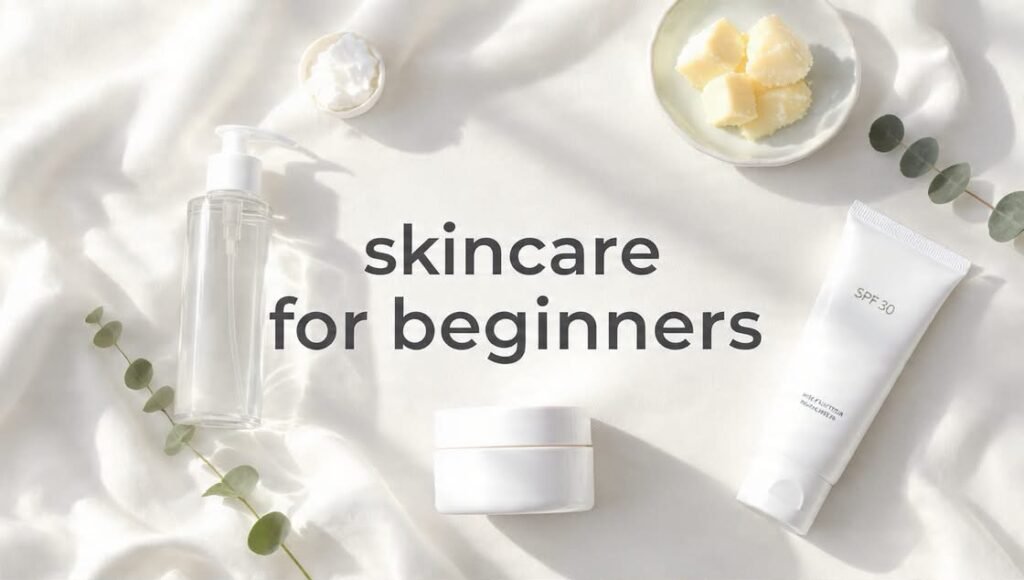
The correct skincare order for a beginner is cleanser, moisturizer, and sunscreen in the morning, and cleanser, moisturizer in the evening. No other products. For at least the first 30 days, this is your entire routine. The ordering logic is not arbitrary. It is governed by the physics of skin penetration: water-soluble products must touch the skin before oil-soluble products, and occlusive films must sit on top to lock everything in. A perfect skincare sequence is built on this unchangeable molecular fact.
Layering proceeds from the most aqueous to the most lipid-rich. Think of pouring water onto a brick wall coated in Vaseline. The Vaseline sits on top and prevents the water from ever touching the brick. The same principle applies to your skin. If you apply a thick, dimethicone-heavy cream and then try to layer a water-based niacinamide serum on top, the serum will evaporate uselessly from the surface, unable to reach the living epidermis.
The foundational order is therefore:
- Cleanser (removes debris, prepares pH)
- Moisturizer (water-phase hydration sinks in first, followed by oils to seal)
- Sunscreen (a final, uninterrupted film that reflects or absorbs UV radiation must sit above everything)
There is no quicker way to waste money than applying these in reverse order.
Morning skincare routine for beginners
A morning routine for a beginner cleanses light nighttime buildup, delivers moisture, and creates a photoprotective shield for the day ahead. The skin’s primary task during the day is defense against UV radiation, particulate pollution, and oxidative stress, not regeneration. Your morning steps therefore center on protection, not treatment.
Most beginners with normal to dry skin do not even need a morning cleanser. Water is sufficient to rinse off the overnight accumulation of dust and sebum. If you have oilier skin, a gentle, sulfate-free cream or gel cleanser helps remove the excess sebum without stripping the barrier. Over-cleansing in the morning is one of the primary drivers of reactive, dehydrated skin in beginners, because it removes the lipids your skin spent the night producing to protect itself.
After cleansing or rinsing, apply a moisturizer to damp skin. Moisturizer on damp skin works because the humectants, such as glycerin, pull that surface water deeper into the stratum corneum, while emollients fill the microscopic cracks between corneocytes. The final step, sunscreen, is absolute and non-negotiable. A broad-spectrum formula of at least SPF 30 must be applied generously as the last step before makeup or leaving the house. Nothing goes on top of it.
Night skincare routine for beginners
A night routine removes the accumulated sunscreen, sebum, pollution particles, and dead skin cells from the day, and replenishes the lipids and moisture your skin will use for its overnight repair cycle. During sleep, transepidermal blood flow increases, and skin cell proliferation peaks. The night routine is fundamentally about preparation for this repair window.
Cleansing at night must be thorough but not aggressive. The goal is to remove every trace of your water-resistant SPF and the day’s grime. A single gentle cleanser, massaged in for a full 60 seconds, is often sufficient for beginner routines. If your sunscreen is tenacious and waterproof, you may use the same cleanser twice in a method called double-cleansing, but with a gentle formulation, never a stripping astringent.
After patting the skin dry, apply your moisturizer immediately, ideally within the first sixty seconds, while the skin’s surface is still slightly damp. You do not need a separate night cream as a beginner. The same fragrance-free moisturizer from your morning routine works perfectly. The skin barrier does not know the difference between a “day” peptide blend and a “night” peptide blend. It knows the difference between a restored lipid matrix and a stripped one.
Key Takeaway: The only structural difference between morning and night routines for a true beginner is the presence of sunscreen, which is mandatory in the morning and entirely absent at night.
How to choose a beginner cleanser
A beginner cleanser must remove excess oil, sunscreen, and debris without disrupting the skin’s acid mantle or dissolving the intercellular lipids of the stratum corneum. The ingredient list and surfactant type matter far more than whether the bottle says “for oily skin” or “hydrating.” Marketing labels are unregulated; the chemistry is absolute.
The surfactants that make this possible are mild, sulfate-free synthetics or natural saponins. Look for a cleanser whose primary surfactants are cocamidopropyl betaine, sodium cocoyl isethionate, or decyl glucoside. These molecules have a larger head group and are physically too big to penetrate deeply into the skin’s lipid matrix, meaning they cleanse the surface without extracting the mortar from the brick wall. Avoid cleansers where the second or third ingredient is sodium lauryl sulfate (SLS) or sodium laureth sulfate (SLES) if you have sensitive or dry skin, as these smaller-molecule surfactants are highly efficient at stripping ceramides.
The formulation type also matters. A cream or milk cleanser works well for dry or sensitive skin because the lipid-rich base leaves behind some emollients. A gel or foaming cleanser is suitable for oily or combination skin, provided it uses the mild surfactants listed above. The right beginner cleanser should leave your skin feeling “clean but not tight” after you pat it dry. If your skin feels tight, that surfactant is stripping your lipids, and you need to switch immediately.
How to choose a beginner moisturizer
A beginner moisturizer must provide three distinct functions simultaneously: humectant action to draw water into the stratum corneum, emollient action to smooth the skin’s surface, and occlusive action to slow transepidermal water loss. No single ingredient performs all three. The formulation is the technology.
Humectants like glycerin and hyaluronic acid (sodium hyaluronate) pull water from the deeper dermis and the environment into the outer layer. Emollients like squalane and caprylic/capric triglyceride fill the gaps between desquamating skin cells, creating the immediate sensation of softness. Occlusives like dimethicone, petrolatum, or shea butter form a thin, breathable film on the surface that physically blocks water evaporation. A moisturizer that only contains dimethicone will seal in nothing, but feel silky. A moisturizer that only contains glycerin will hydrate but evaporate rapidly.
For oily skin types, choose a gel or gel-cream formula where the primary occlusive is dimethicone rather than a heavier oil or petrolatum. For dry or eczema-prone skin, a thicker cream base with ceramide complexes (ceramide NP, AP, EOP) and cholesterol works better because it mimics the lipid composition of the stratum corneum. According to a 2019 study in the Journal of Cosmetic Dermatology, a moisturizer containing a 3:1:1 ratio of ceramides, cholesterol, and fatty acids demonstrated superior barrier repair compared to a standard control moisturizer. The formula, not the price tag, defines the performance.
The importance of sunscreen in your skincare routine
Sunscreen is the single most effective topical product for preventing the visible signs of skin aging, skin cancer, and post-inflammatory hyperpigmentation. The importance of sunscreen in your skincare routine cannot be overstated because every other step in a beginner’s routine becomes clinically pointless without it. You cannot out-moisturize or out-retinol the daily DNA damage caused by unprotected UV exposure.
UV radiation exists in two primary skin-relevant wavelengths. UVA rays (320-400 nm) penetrate deep into the dermis and are primarily responsible for the collagen degradation and elastosis that manifests as wrinkling and sagging. UVB rays (290-320 nm) damage DNA directly in the epidermis, causing sunburn and the initiation of skin cancers. A broad-spectrum sunscreen labeled SPF 30 or higher must protect against both. The FDA’s monograph on sunscreens specifically recognizes zinc oxide and titanium dioxide as mineral filters that work by sitting on the skin’s surface and deflecting photons, while chemical filters like avobenzone absorb UV radiation and convert it to heat.
For all Fitzpatrick skin types, including deeply melanated skin types V and VI, sunscreen is essential. While the higher melanin content provides a natural partial UV filter, the basal layer is still susceptible to UVA-induced damage and pigmentation irregularities. Chemical sunscreens with newer, photostable filters like bemotrizinol are cosmetically elegant for deeper skin tones because they do not leave a white cast. A mineral tinted sunscreen with iron oxides provides visible light protection, which is particularly critical for people prone to melasma or hyperpigmentation.
What is the skin barrier and how do you protect it
The stratum corneum is the body’s primary interface with the external world, a selectively permeable, constantly renewing sheet of dead protein cells sealed with a lipid mortar. Protecting it requires an understanding that it is an active biological tissue, not an inert wrapping. The “brick and mortar” model describes the core architecture: corneocytes composed of the protein filaggrin form the bricks, and a layered matrix of ceramides, cholesterol, and free fatty acids forms the mortar. When this structure is intact, water stays inside the body, and bacteria, allergens, and irritants stay out.
Disruption happens predictably and from multiple everyday sources. Alkaline soaps dissolve the protective lipid matrix. Over-exfoliation with scrubs or acids strips away layers of corneocytes before the skin can regenerate them, leaving the barrier dangerously thin. Even hot water, a surprising culprit, melts the lipid mortar and increases transepidermal water loss (TEWL). A 2018 study in the Journal of Investigative Dermatology demonstrated that TEWL spikes significantly after contact with water above 40 degrees Celsius and can remain elevated for up to 20 minutes.
Protecting the barrier comes down to two behavioral changes: using a pH-balanced, sulfate-free cleanser, and using moisturizer on damp skin. The “3-minute rule” is a practical application of this research. After cleansing, you have about three minutes to apply a moisturizer before the water in your skin begins evaporating, pulling more hydration with it and effectively increasing TEWL. Apply your moisturizer immediately, and you seal the water inside the skin where it belongs.
Key Takeaway: If your face ever feels “tight” after washing, you have just stripped your lipid mortar, and your skin is now in a state of elevated TEWL. You need a more gentle cleanser, not a richer moisturizer to fix it.
How to introduce active ingredients as a beginner
Introduce active ingredients one at a time, starting with the lowest effective concentration, applied only at night, twice per week, for at least two weeks before increasing frequency. This is not a cautious suggestion. It is the clinical method for avoiding irritant contact dermatitis, a reactive barrier breakdown that can take weeks to repair. The skin’s adaptive capacity is real but slow.
The most common mistake a beginner makes is starting three new products simultaneously. When irritation appears, they have no idea which one caused it, and they have to stop everything. The correct protocol for adding an active, such as niacinamide, ascorbic acid (vitamin C), or retinol, is to complete your full patch test as detailed in the next section, then apply the product to your entire face on a Monday and Thursday night, after moisturizer. The moisturizer acts as a buffer, reducing the penetration speed and minimizing irritation without sacrificing efficacy.
Monitor your skin on the intervening days. Look for stinging upon application, persistent redness, flaking that is not relieved by moisturizer, or the appearance of tiny, flesh-colored bumps that were not there before. If none of these appear after two weeks, increase to every other night for another two weeks. Only then should you consider nightly use. The skin needs this adaptation time because active ingredients, by definition, are accelerating cellular turnover or chemically altering the skin’s normal physiology.
Vitamin C serum for beginners: what to know
L-ascorbic acid, the purest form of vitamin C in skincare, is a potent antioxidant that neutralizes reactive oxygen species generated by UV exposure and environmental pollution. For a beginner, the goal of a vitamin C serum is photoprotection enhancement during the day, layered underneath sunscreen. It is not a skin brightener in the first month. It is a shield.
The concentration sweet spot for a beginner is 10% to 15% L-ascorbic acid. This range provides clinically significant antioxidant activity without the stinging and inflammation that 20% formulations can cause in naive skin. The serum must be packaged in a dark, airtight, airless pump or opaque glass bottle. L-ascorbic acid is notoriously unstable. It oxidizes on contact with light and air, turning yellow and then brown. Oxidized vitamin C is not only ineffective; it can contribute to oxidative stress on the skin, the exact opposite of what you are applying it for.
Apply your vitamin C serum in the morning, after cleansing and before moisturizer. The serum requires a low pH, around 3.5, to penetrate effectively, and it functions best on clean, dry skin. Wait about 30 seconds for it to feel absorbed, then layer your moisturizer over it, and sunscreen on top. Do not use vitamin C at the same time as a benzoyl peroxide treatment or a copper peptide serum, as these combinations can cause oxidation and efficacy degradation. For deeper skin tones at higher risk for post-inflammatory hyperpigmentation, vitamin C is a well-documented adjunctive treatment, as it inhibits the enzyme tyrosinase, reducing excess pigment production.
Retinol for beginners: what to know
Retinol, a vitamin A alcohol, is the most extensively studied non-prescription active ingredient for accelerating epidermal cell turnover and stimulating dermal collagen synthesis. It works by converting within the skin into retinaldehyde and then into tretinoin, the active form that directly binds to retinoic acid receptors in the nucleus of skin cells. This binding triggers a cascade of gene expression that signals the skin to behave younger, shedding dead cells faster and creating new collagen types I and III.
The beginner concentration for retinol is 0.25% to 0.3%. A 2015 clinical study in the Journal of Cosmetic Dermatology demonstrated that a 0.25% retinol formulation produced a statistically significant reduction in fine lines after eight weeks of consistent use, with a notably lower irritation profile than higher concentrations. This is the dermatological equivalent of starting with a gentle jog before attempting a marathon. Beginning with a high-strength 1% retinol or a prescription retinoid without prior acclimation will reliably cause a skin reaction known as retinoid dermatitis, a red, peeling, burning state that terrifies beginners and makes them quit entirely.
Apply a pea-sized amount of retinol to dry skin at night, after your moisturizer. This is called the buffering method. The moisturizer reduces the rate of absorption and dramatically decreases the initial irritation without diluting the retinol’s long-term efficacy. Use retinol only on Monday and Thursday nights for the first two weeks, and never on the same night as exfoliating acids or vitamin C. The skin does not need more; it needs time. Retinol works on a delay, like planting a garden. You won’t see cell turnover results for four to six weeks, but the biological machinery starts activating from the very first application.
Key Takeaway: The safest beginner actives are niacinamide and vitamin C in the morning, and a buffered, low-concentration retinol only twice per week at night, with at least 48 hours of plain moisturizer in between each active night.
How to patch test a new skincare product
A patch test is a controlled, localized application of a new product to a discreet area of skin, repeated for three to five days, to determine if a contact allergy or irritation will develop before you apply it to your entire face. The inner forearm is the standard dermatological site for a preliminary chemical test. If the product passes there, a secondary test behind the ear or along the jawline offers a more sensitive skin area to confirm facial tolerance.
To perform an effective patch test:
- Select an area of clean, dry skin on your inner forearm, roughly the size of a quarter.
- Apply a small amount of the product to that specific spot and nowhere else.
- Allow the product to dry down naturally. Do not cover it with a bandage unless it is a highly occlusive balm.
- Reapply the product to the exact same spot every 24 hours for three to five days.
- Monitor for any reaction: redness, itching, swelling, the formation of tiny uniform blisters, or hives that extend beyond the application zone.
This test distinguishes between contact urticaria, which appears within minutes to hours, and allergic contact dermatitis, which can take three to five days to manifest. A moisturizer that feels “cooling” but causes tiny bumps on day four is not purging your skin. It is causing contact dermatitis, and the ingredient responsible is likely a preservative like methylisothiazolinone or a fragrance component. Purging happens only with actives that accelerate cell turnover, such as retinoids or exfoliating acids, and produces small, inflamed whiteheads or blackheads in areas where you normally break out. Anything else is irritation.
Signs your skin barrier is damaged or irritated
The primary physical sign of a disrupted skin barrier is a persistent, tight, shiny appearance accompanied by a stinging sensation when applying any product, even the blandest moisturizer or plain water. This is the clinical phenomenon of increased transepidermal water loss, where the stratum corneum has become so porous that nerve endings in the underlying dermis are exposed and reactive.
You can visually identify a compromised barrier by these specific changes:
- Your skin looks shiny and glassy, not dewy, with a thin, cellophane-like surface texture.
- Redness appears in a diffuse pattern rather than in distinct, raised bumps or welts.
- Pores appear larger and more elongated, a sign of edema in the surrounding tissue.
- Fine dehydration lines, like a network of tiny diamond shapes, appear when you raise your eyebrows or smile.
- Previously well-tolerated products now sting or burn upon contact and the sensation lingers.
For individuals with Fitzpatrick skin types IV through VI, a disrupted barrier often manifests as an ashy, gray, or darkened appearance in specific patches, not just redness, because the increased skin turnover and dryness scatters light differently off melanin-rich skin. The fix for all skin types is identical: stop all active ingredients immediately, strip your routine down to a gentle cleanser and a barrier-repair moisturizer containing a ceramide-cholesterol-fatty acid complex, and expect visible improvement within one to two weeks. According to a 2016 study in the British Journal of Dermatology, complete stratum corneum barrier repair after acute chemical damage takes approximately 14 days of uninterrupted rest.
Common skincare mistakes beginners make
The most biologically damaging mistake beginners make is introducing multiple active ingredients simultaneously and interpreting the resulting inflammation as “purging” rather than barrier damage. A second, equally pervasive error is skipping sunscreen because they are indoors, while UVA rays penetrate window glass unimpeded and accumulate silently over decades. Understanding these specific failure modes is more valuable than knowing every ingredient on the market.
The next destructive mistake is over-cleansing. Washing your face until it feels “squeaky clean” means you have removed every protective lipid from the skin’s surface. That squeaky feeling is friction on a completely stripped, lipid-free stratum corneum. The skin compensates by producing more sebum, leading a person with oily skin to cleanse more harshly, creating a feedback loop of oil overproduction and dehydration that can persist for years until someone explains what is actually happening.
Other specific, correctable errors include:
- Physical exfoliation with harsh scrubs, which create micro-tears in the skin and disrupt the barrier through mechanical force rather than chemical dissolution.
- Using a moisturizer with a high concentration of denatured alcohol as a primary ingredient, which evaporates quickly but degrades the lipid barrier over time.
- Applying retinol to wet skin, which dramatically accelerates penetration and can cause a chemical burn.
- Not rinsing off cleanser thoroughly along the jawline and hairline, leaving surfactant residue that causes localized irritation and closed comedones.
Key Takeaway: The goal of a beginner routine is not to “transform” your skin in a week. It is to sustain a calm, intact barrier so that when you do introduce active ingredients, the skin is capable of tolerating them without an inflammatory response that undoes all your progress.
How long does it take for a skincare routine to work
The skin’s natural cycle of desquamation and regeneration, the time it takes for a basal keratinocyte to divide, migrate to the surface, and slough off, is approximately 28 days for a young adult. This is the minimum biological clock for judging whether a non-active, barrier-supportive routine is working. You will feel a difference in hydration and smoothness within three to five days. You will see a real textural difference at the one-month mark.
For active ingredients, the timelines diverge significantly. Niacinamide can reduce sebum and improve barrier integrity within two to four weeks. A 10% to 15% ascorbic acid serum will show visible brightening of existing pigmentation at eight to twelve weeks. Retinol, even at low concentrations, requires a minimum of eight to twelve weeks for fine-line improvement because collagen synthesis is a slow, cumulative biological process. You are not applying retinol to erase wrinkles that exist today; you are applying it to change the way your skin produces its structural proteins going forward.
The most common reason beginners believe their routine is not working is that they are assessing results at week two, a point at which biologically, they may be in the worst phase of retinoid acclimation with no visible benefit yet. Give your basic routine 30 days before making a single change. Give any new active ingredient 12 weeks at a consistent frequency before judging whether it works for your skin or not.
Frequently Asked Questions About Skincare for Beginners
What are the 3 most important skin care products?
The three essential products are a gentle, sulfate-free cleanser, a moisturizer containing humectants and ceramides, and a broad-spectrum sunscreen of SPF 30 or higher.
Every other product, including serums and actives, is an optimization built on top of this three-step foundation.
Without these three working correctly, no expensive serum will deliver results.
What is the correct order of skincare for a beginner?
The correct order is cleanser first, then moisturizer on damp skin, then sunscreen as the absolute final morning layer.
At night, the order is cleanser, then moisturizer.
The rule is thinnest, water-based textures first, moving toward the thickest, most occlusive texture last.
Do I need moisturizer if I have oily skin?
Yes, oily skin produces excess sebum, which is an oily lipid, but may be deficient in the specific ceramide and fatty acid balance that traps water.
Skipping moisturizer triggers the stratum corneum to signal for more sebum production to compensate for dehydration, worsening the oiliness cycle.
Choose a lightweight, oil-free gel moisturizer with dimethicone and glycerin.
How long should I wait between skincare steps?
Wait just long enough for the previous product to feel dry and set on the skin, which is typically 30 to 60 seconds.
The exception is hyaluronic acid serums, which must be sealed in with moisturizer while still slightly damp to function correctly.
Waiting “20 minutes between actives” is a persistent myth unless you are using specific, pH-dependent prescription acids.
Can I use vitamin C and retinol together as a beginner?
No, you should not use them in the same routine as a beginner.
Vitamin C (L-ascorbic acid) is a morning antioxidant protectant, and retinol is a nighttime cell-communicating agent.
Using them simultaneously dramatically increases the risk of irritation while providing zero evidence-backed synergistic benefit.
How do I know if a product is breaking me out?
A true breakout from a product appears as small, inflamed whiteheads or pustules in areas where you normally get acne, usually within a few days to a week.
A reaction or contact dermatitis manifests as tiny, uniform, itchy bumps in places you never break out, like your cheeks or temples.
Stop the product immediately and return to your basic three-step routine for two weeks to isolate the cause.
Your skin is a responsive, adaptable organ that rewards consistency and gentle support, not complicated, aggressive product roulette. What you have just read is a blueprint for a 30-day reset that lets your barrier regulate its own hydration and lipid production before you add in the more targeted active ingredients. The next step is to walk into your bathroom, look at the ingredient list on your cleanser, and identify its primary surfactant.
If that surfactant is sodium lauryl sulfate, replace the cleanser this week with one that uses decyl glucoside or cocamidopropyl betaine. If you have never worn daily sunscreen that is broad-spectrum and SPF 30 or higher, purchase one and place it next to your toothpaste so you see it every morning. The products in your cabinet matter less than the sequence and the practice you now understand.
This is not a race to perfection or a flawless complexion. It is a practical, evidence-grounded method for keeping the largest organ of your body functioning so that when you are 50, 60, and beyond, the skin you are in reflects decades of quiet, informed protection rather than a scramble to undo damage that was never inevitable.