d program Skincare Review: What It Is and How It Works in 2026
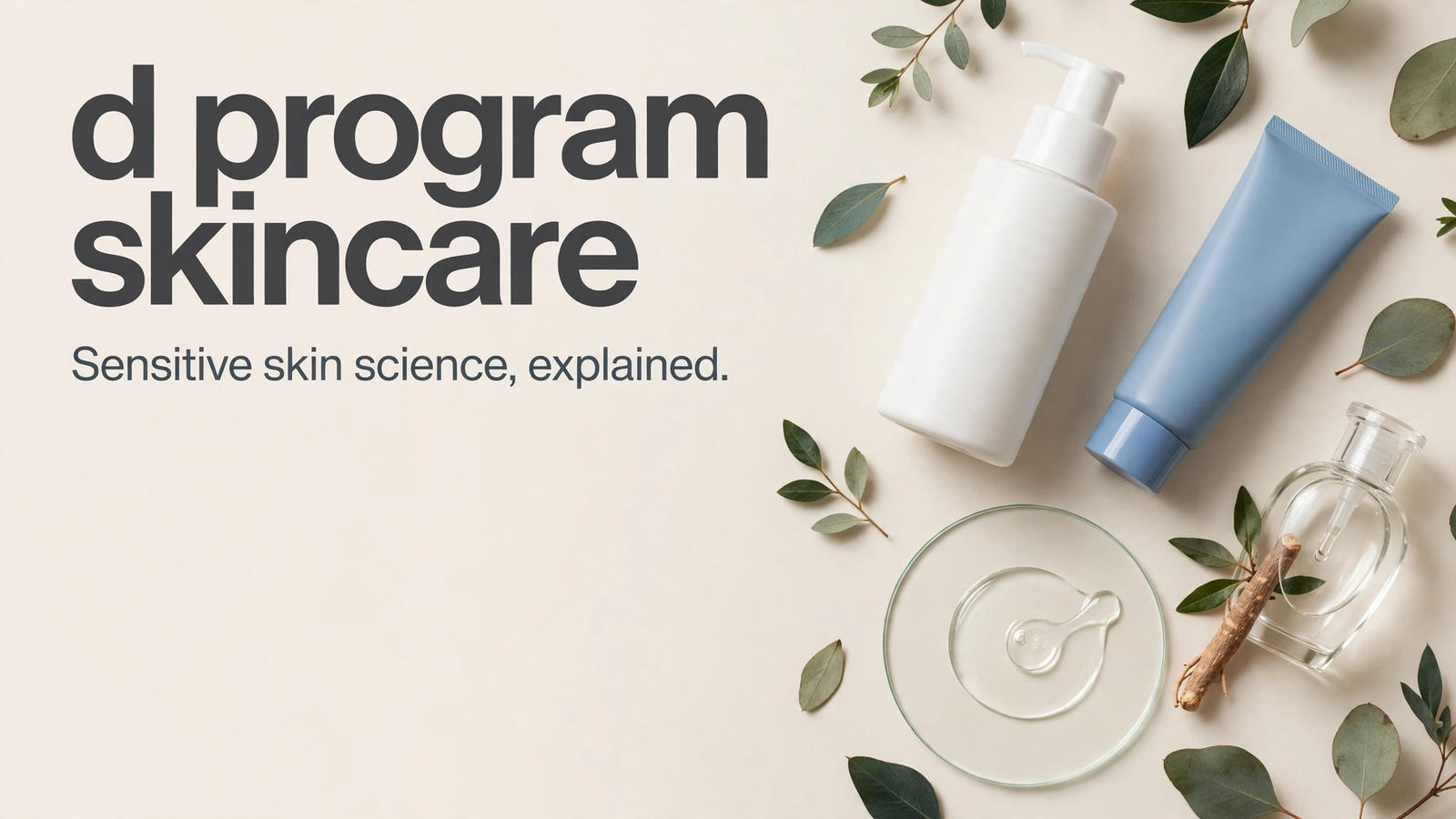
d program skincare is Shiseido’s Japanese sensitive-skin line, built around fragrance-free, colorant-free formulas that support barrier repair and calm visible redness. The line divides into color-coded series for dryness, acne, oiliness, and aging, each with a complete routine of cleanser, lotion, milk, and cream. Here’s the full breakdown of how it works, what the ingredients actually do, and how to choose the right products.
Why this line matters comes down to a specific problem with sensitive skin: most reactive skin is not allergic to one ingredient. It is suffering from a weakened stratum corneum. According to dermatological research published in the Journal of Investigative Dermatology, a disrupted skin barrier allows water to escape faster and irritants to enter more easily, which is the root of most chronic tightness, stinging, and redness. d program is not the only line addressing this, but its Japanese “lotion” format and specific calming ingredients make it a practical option for people rebuilding reactive skin.
This article covers the full d program lineup, the evidence behind its active ingredients, step-by-step application guidance, and the situations where you should proceed with caution. You’ll finish knowing exactly which series fits your skin, how to layer the products, and what this line can and cannot do for redness, acne, and barrier repair.
What is d program skincare
d program skincare is a Japanese sensitive-skin brand created by Shiseido, with separate color-coded lines formulated for dryness, oiliness, acne, aging, and redness-prone skin.
Shiseido positions d program as a “sensitive skin science” brand, meaning every formula is designed to avoid common irritants. The core philosophy is that sensitive skin is not a fixed skin type. It is a compromised barrier state that can be improved with the right mix of humectants, emollients, and barrier lipids. Most d program products are fragrance free, colorant free, alcohol free, and formulated with minimal preservatives.
A key distinction for Western readers is the product format. Japanese skincare uses a “lotion” step, which is not the creamy moisturizer Americans picture. A Japanese lotion is a watery hydrating liquid applied after cleansing, similar to a toner or hydrating essence. You follow it with an emulsion or cream to seal in hydration. Understanding this changes how you evaluate the line’s value.
The brand is widely available through Shiseido’s official channels, Japanese beauty retailers, and some US e-commerce sites. Prices sit in the mid-range for Japanese skincare, typically between $20 and $45 per product depending on size and series. That places d program closer to La Roche-Posay or Paula’s Choice than to luxury Shiseido lines.
The most important context: d program is not a prescription-strength treatment line. It manages sensitivity by avoiding irritants and providing barrier-supportive ingredients. It does not treat rosacea, atopic dermatitis, or acne by itself. Those conditions require specific medical management, though d program can support the skin while prescription actives do the heavier work.
What does d program skincare do
d program skincare hydrates the stratum corneum, replenishes barrier lipids, and reduces visible irritation through a combination of humectants, ceramides, and calming actives like dipotassium glycyrrhizate.
The mechanism is straightforward. First, humectants like glycerin, erythritol, and sodium hyaluronate pull water into the outermost layer of skin. Second, emollients and occlusives like dimethicone slow down transepidermal water loss. Third, actives like dipotassium glycyrrhizate, a licorice-derived compound, help reduce the inflammatory signaling that creates visible redness and heat. This three-part approach is the standard dermatological framework for barrier repair.
What d program does not do is change your skin type. A dry, reactive person will still be dry and reactive. The line reduces the daily stinging, tightness, and post-wash redness that make sensitive skin feel unmanageable. In practical terms, that means cleansers that do not strip, lotions that prep the skin for moisture, and creams that keep water in overnight.
According to the American Academy of Dermatology, people with sensitive skin generally benefit most from short ingredient lists, fragrance-free formulas, and consistent moisturizer use. d program largely follows this structure, though some series add active ingredients like tranexamic acid or yeast extract for targeted concerns. Those additions require a patch test, especially if your skin has flared recently.
The realistic timeline matters. You will likely notice reduced tightness after the first wash and lotion use. Visible redness improvement builds over two to four weeks as the barrier reorganizes and inflammatory signals calm. If you are using d program alongside prescription retinoids, the line’s value is primarily protective, reducing retinoid-induced dryness and making the active more tolerable.
d program skincare ingredients
The key d program skincare ingredients are dipotassium glycyrrhizate, tranexamic acid, erythritol, yeast extract, ceramides, glycerin, and sodium hyaluronate, each serving a specific barrier or calming function.
Dipotassium glycyrrhizate is the most consistent ingredient across the line. It is the dipotassium salt of glycyrrhizic acid, derived from licorice root. Research published in the Journal of Cosmetic Dermatology identifies it as a strong anti-inflammatory compound that reduces redness and discomfort in cosmetic formulations. It works by inhibiting pro-inflammatory mediators in the upper skin layers, though the exact percentage in d program formulas is not publicly disclosed.
Tranexamic acid appears in the acne and brightening series. In a 2022 review published in the Journal of Cosmetic Dermatology, tranexamic acid was highlighted as an effective topical agent for reducing post-inflammatory hyperpigmentation and supporting a more even tone. It works by reducing plasmin activity in skin, which in turn calms the melanocyte overactivity triggered by inflammation. This makes it especially relevant for deeper skin tones prone to dark spots after breakouts.
Erythritol functions as a humectant and a mild anti-irritant. It draws water into the stratum corneum and helps stabilize the skin’s moisture gradient. Yeast extract is a fermented ingredient used in the aging and dryness series. Preliminary research suggests yeast-derived extracts can support keratinocyte differentiation and improve skin smoothness, though human trial data for this specific ingredient is limited.
The full ingredient lists vary by product and series. Here is what to look for in the main product categories.
| Product Type | Primary Ingredients | Function | Sensitivity Note |
|---|---|---|---|
| Cleanser | Glycerin, cocoyl methyl taurate, erythritol | Low-strip cleansing, humectant support | Foaming but pH balanced |
| Lotion | Dipotassium glycyrrhizate, erythritol, tranexamic acid in some series | Hydration, calming, brightening | Watery texture, apply with hands or cotton |
| Emulsion/Milk | Dimethicone, glycerin, ceramides | Lightweight moisture, occlusive layer | Good for oily or combination skin |
| Cream | Ceramides, dimethicone, glycerin | Richer barrier support, overnight occlusion | Good for dry or very dry skin |
| Sunscreen | Zinc oxide or chemical filters, hyaluronic acid | UV protection, added hydration | Patch test, reapply per label |
d program skincare series differences
The d program skincare series differ by color coding, with each series targeting a specific skin concern: blue for combination, pink for dryness, orange for acne, purple for aging, and white for general sensitivity.
The blue series is the entry point for people with combination skin. It balances light hydration with a non-greasy finish. The pink series is richer and designed for dry, tight skin that flakes easily. The orange series adds sebum-regulating and antimicrobial ingredients for acne-prone skin. The purple series targets age-related dryness and loss of firmness. The white series is the simplest, lowest-irritant option.
Each series contains the same core calming ingredients, like dipotassium glycyrrhizate. The differences come from added actives and texture weight. The orange acne series includes tranexamic acid and salicylic-acid-like clarifying agents, though d program keeps actives conservative to protect sensitive skin. The purple aging series adds yeast extract and sometimes retinol-adjacent compounds, though not at aggressive concentrations.
Choosing a series is not about matching your skin type perfectly. It is about identifying your current biggest problem. If your skin is red, tight, and stinging, start with white or pink. If you have breakouts plus sensitivity, orange. If you are over 40 and dealing with dryness and dullness, purple. If you are not sure, blue is the most balanced middle ground.
One caution: the blue and orange series are not acne treatments in the Western medical sense. They support acne-prone skin but do not replace benzoyl peroxide, topical retinoids, or a dermatologist-managed plan. If you have persistent inflammatory acne, the orange line is a support system, not a stand-alone cure.
Key Takeaway: d program’s color-coded series all share the same core calming base; choosing one is about matching your top concern, not chasing a marketing label.
d program skincare routine order
The d program skincare routine order is cleanser, lotion, emulsion or milk, then cream or sunscreen in the morning, with the same sequence followed in the evening.
Japanese skincare follows a hydration-first layering system, not the Western thinnest-to-thickest rule exactly, though the two align here. The watery lotion goes onto slightly damp skin right after cleansing. This locks in surface water before the richer emulsion or cream creates an occlusive seal. Applying a cream before the lotion would trap dead cells and prevent the watery humectants from reaching the stratum corneum.
The morning routine adds sunscreen as the final step. The evening routine often ends with the cream only. If you are using prescription actives like tretinoin, the d program approach works best as a sandwich method: cleanse, apply prescription, wait for it to absorb, then apply lotion, milk, and cream in order. This reduces the dryness that leads most people to quit retinoids.
Here is the basic sequence with timing notes:
- Cleanse with lukewarm water and a d program cleanser for 30 to 45 seconds.
- Pat the skin mostly dry but leave it damp.
- Apply the d program lotion with clean hands or a soft cotton pad, pressing gently.
- Wait 30 to 60 seconds for the lotion to absorb.
- Apply the emulsion or milk in a thin layer.
- If using a cream, apply it last, or use it only at night.
- In the morning, finish with sunscreen as the final step.
For reactive skin, introduce one new d program product at a time. Start with the cleanser and lotion. Add the milk after five to seven days. Add the cream last. This isolates any product-specific reaction and makes it much easier to identify the trigger.
How to use d program lotion
d program lotion is applied to slightly damp skin after cleansing, using either clean hands or a cotton pad, before any emulsion or cream.
The lotion is not a cleanser. It is not a Western toner with alcohol or astringents. It is a watery hydration layer. Using it on dry skin wastes the humectant benefit because humectants work by pulling existing water into the stratum corneum. Damp skin gives the glycerin, erythritol, and sodium hyaluronate something to hold.
The application method matters less than people think. Hands are gentler and avoid the friction of cotton. If you prefer cotton, use a soft Japanese-style cotton and press, not rub. Pouring the lotion into your palm and pressing it in with both hands is the most common Japanese method and the least irritating.
One bottle typically lasts two to three months with twice-daily use, depending on how much you apply. A standard amount is roughly a US quarter-sized puddle. More is not better with watery lotions; the skin can only absorb so much before the excess evaporates or sits on the surface.
People with rosacea should avoid rubbing the skin with cotton pads. Pressing with hands is safer. If you use a prescription active, wait for the active to fully absorb before the lotion, unless the active stings too much. In that case, apply the lotion first as a buffer, wait one to two minutes, then apply the active, then continue with the rest of the routine. This is a standard dermatologist-recommended buffering technique.
d program cleanser
The d program cleanser is a low-foam, pH-balanced face wash formulated to remove sunscreen and daily buildup without stripping the stratum corneum of its natural lipids.
Most sensitive-skin damage starts at the sink. Harsh surfactants, hot water, and over-washing remove ceramides and cholesterol from the barrier, increasing transepidermal water loss. The d program cleansers use gentler surfactant systems, often amino-acid-based cleansers like cocoyl methyl taurate, which clean effectively but disturb the skin barrier less. The American Academy of Dermatology specifically recommends short-contact, fragrance-free cleansers for sensitive and redness-prone skin.
One point often missed: a gentle cleanser should not leave your face squeaky tight. If it does, the cleanser is too stripping or the water is too hot. Use lukewarm water. Press, do not rub, with a towel. Cleansing should take no more than 45 seconds.
The cleanser works for most skin types, including dry and combination. If your skin feels oily but also tight, the blue or orange series cleanser is the better match. If your skin flakes and stings, use the pink or white series cleanser. Do not double cleanse with an oil cleanser every night if your barrier is already compromised; once daily or every other night is enough to remove sunscreen without over-stripping.
Quick Tip:
- Apply the cleanser to damp skin, massage gently for 30 to 45 seconds, and rinse with lukewarm water.
- If your skin still feels tight after washing, try using less product and cooler water.
- For travel, decant a small amount rather than switching to hotel soap, which is often the hidden trigger for a flare.
d program for sensitive skin
d program for sensitive skin is built around fragrance-free, alcohol-free, and colorant-free formulas that reduce the most common sources of contact irritation.
Sensitive skin is not a dermatological diagnosis. It is a symptom cluster: stinging, burning, redness, tightness, and easy flushing in response to products or environment. The underlying issue is almost always a thinned or disrupted skin barrier. According to the National Eczema Association, people with sensitive skin should avoid fragrance, essential oils, drying alcohols, and unnecessary botanical extracts, all of which d program largely excludes.
The line’s value is consistency. Many people with reactive skin switch products every few weeks, which keeps the barrier inflamed. d program offers a complete routine in one system, reducing the number of decisions and the chance of ingredient conflicts. This alone can calm a flare.
The brand uses the phrase “allergy tested,” which is not the same as hypoallergenic. Allergy testing in cosmetics typically means a repeat-insult patch test on a small group, not a guarantee that you will not react. The FDA does not define the term “hypoallergenic.” If your skin reacts to a new product, stop using it and perform a formal patch test with a board-certified dermatologist. Bring the full INCI list, not just the product name.
For people with Fitzpatrick skin types IV through VI, d program’s focus on reducing inflammation is useful. Repeated irritation can trigger post-inflammatory hyperpigmentation, which is often more distressing than the original redness. The tranexamic acid in the orange and some brightening series may help fade those marks, though it will not lighten naturally deeper skin tone.
d program for dry skin
d program for dry skin works by layering humectants under occlusives to reduce transepidermal water loss and soften the tight, flaky appearance of a dehydrated stratum corneum.
Dry skin lacks both water and lipids. The pink and white series address this with richer emulsions and creams containing ceramides, glycerin, and dimethicone. The lotion step adds water-binding humectants. The cream step reduces water loss through the night. This two-layer system is more effective for many people than applying one heavy Western moisturizer, because it replaces both water and the lipid seal.
Ceramides matter here. Ceramide NP and ceramide AP are common in dry-skin formulations. They integrate into the lipid lamellae between skin cells, acting like mortar between bricks. Without enough ceramides, the barrier leaks water. With regular use, ceramide-containing moisturizers can reduce transepidermal water loss and improve visible smoothness.
For very dry skin, use the lotion twice daily and the cream every night. If your skin is dry but also breakout-prone, use the milk instead of the heavy cream in the morning. The dimethicone in the milk provides occlusion without the heavier oils.
People with atopic dermatitis can use d program for maintenance hydration, but it is not a substitute for prescription topical corticosteroids or calcineurin inhibitors during a flare. The National Eczema Association recommends fragrance-free moisturizers as a daily baseline, which d program provides. If your skin is cracked, weeping, or painful, that is a medical threshold requiring dermatology care.
Key Takeaway: Dry skin needs both water and a lipid seal; the lotion provides the water, the cream provides the seal, and skipping either step undercuts the whole routine.
d program for acne
d program for acne, primarily the orange series, reduces irritation and supports the skin around breakouts, but it does not treat inflammatory acne on its own.
The orange series includes tranexamic acid and mild clarifying ingredients that help keep pores clear while calming the redness that comes with active breakouts. This matters because acne-prone sensitive skin is the hardest group to treat: many acne actives are irritating, but treating acne without managing irritation leads to more inflammation and more post-inflammatory hyperpigmentation.
The d program approach is to stabilize the barrier so that prescription or over-the-counter acne treatment becomes tolerable. If you are using benzoyl peroxide or a topical retinoid, adding the orange series cleanser and lotion can reduce the peeling and stinging that make those actives hard to continue. The lotion goes on first as a buffer in some cases, then the active, then the milk or cream.
Tranexamic acid is the ingredient to watch here. It does not kill acne bacteria. It calms the inflammatory cascade and reduces the dark marks left after a pimple heals. For people with medium to deep skin tones, those marks can last for months. A 2021 review in the Journal of Cosmetic Dermatology noted that topical tranexamic acid is well tolerated and effective for post-inflammatory hyperpigmentation when combined with sun protection.
If you have persistent cystic or nodular acne, do not rely on d program alone. A board-certified dermatologist can assess whether you need prescription retinoids, hormonal therapy, or isotretinoin. Bring your current routine with you so the dermatologist can see what you are already using and adjust it safely.
d program for rosacea
d program for rosacea fits best as a supportive routine for people whose rosacea flares with fragrance, alcohol, or harsh cleansers, but it is not a rosacea medication.
Rosacea is a chronic inflammatory skin condition. The most common subtype, erythematotelangiectatic rosacea, involves persistent facial redness, flushing, and visible blood vessels. Topical skincare can reduce trigger-related flares and support the skin barrier, but it cannot remove fixed redness or broken capillaries. That requires prescription medications like metronidazole, azelaic acid, or brimonidine, or laser treatment.
The d program white and blue series are the safest starting points for rosacea because they are the simplest and least likely to include active brightening or clarifying ingredients. Dipotassium glycyrrhizate may help calm the redness response, though the evidence for visible rosacea improvement is indirect rather than from large controlled trials. A dermatologist can advise whether adding a prescription azelaic acid gel to your d program base would be appropriate.
Avoid the orange series during a rosacea flare, because clarifying ingredients can trigger stinging. Also avoid applying lotion with cotton pads, since friction alone can worsen facial redness. Press products in with your fingertips.
The Rosacea Society recommends a gentle, fragrance-free skincare routine as a core self-management step. d program fits that recommendation. If your rosacea includes eye symptoms, facial swelling, or thickened skin around the nose, that warrants evaluation by a board-certified dermatologist because those features require different management.
Key Takeaway: For rosacea, use d program as a gentleness system, not as the primary treatment; fixed redness and visible vessels need prescription or laser care.
d program tranexamic acid
d program tranexamic acid appears in the orange acne and brightening series as a topical agent for reducing post-inflammatory hyperpigmentation and evening skin tone.
Tranexamic acid is a synthetic derivative of the amino acid lysine. In dermatology, it works by inhibiting plasmin, an enzyme that plays a role in the inflammatory signaling that activates melanocytes. When skin is inflamed, whether from acne, sun, or irritation, melanocytes overproduce melanin in the affected area. Tranexamic acid interrupts that overproduction, which is why it helps fade dark marks without the harsh exfoliation of hydroquinone.
The evidence for topical tranexamic acid is strongest at concentrations between 2% and 5%. d program does not publicly disclose its exact percentage, which makes it harder to compare directly to serums with labeled concentrations. Clinical studies generally use the 3% to 5% range and show meaningful improvement in hyperpigmentation over 8 to 12 weeks when combined with daily sunscreen.
Tranexamic acid is well tolerated by most sensitive skin. Unlike retinoids or strong alpha-hydroxy acids, it does not typically cause peeling, redness, or a purging period. This makes it a practical option for people who want to fade dark spots but cannot tolerate more aggressive brightening actives. People with Fitzpatrick skin types IV through VI may benefit most, since inflammation-induced dark spots are more persistent in these phototypes.
One limitation: tranexamic acid fades marks from past inflammation. It does not prevent future breakouts or treat the root cause of acne. Use it alongside, not instead of, effective acne management.
d program ceramide
d program ceramide content comes from ceramide NP and ceramide AP in the lotions, milks, and creams, where they reinforce the skin barrier’s natural lipid structure.
Ceramides are sphingolipids that make up roughly 50% of the lipids in the stratum corneum. In a healthy barrier, ceramides, cholesterol, and free fatty acids form a lamellar structure that holds skin cells together and prevents water loss. In sensitive, dry, or aging skin, ceramide levels drop. This makes the barrier more permeable to irritants and less able to retain water.
Ceramide NP, also known as ceramide 3, is the most commonly used synthetic ceramide in skincare. Ceramide AP, or ceramide 6 II, adds additional barrier support. Both are biocompatible with human skin lipids. When applied topically in well-formulated products, they integrate into the barrier and reduce transepidermal water loss over several weeks.
The catch is concentration. A product can list ceramides on the label at trace amounts, too low to shift barrier function meaningfully. d program does not disclose exact ceramide percentages. That does not mean the formulas are weak, but it means you cannot verify potency the way you could with a barrier serum that lists a known concentration. In practice, d program works better as a complete ceramide-containing system than as a high-potency ceramide treatment.
For compromised barriers, pair ceramide products with fragrance-free cleansing and lukewarm water. Ceramides cannot repair a barrier that is being stripped twice a day by hot water and harsh surfactants.
d program vs La Roche-Posay
d program and La Roche-Posay Toleriane both serve sensitive skin, with d program offering a softer Japanese layering system and La Roche-Posay providing a more clinical, dermatologist-aligned product range.
The main difference is formulation philosophy. d program uses a lotion-first hydration system, while La Roche-Posay Toleriane uses more traditional French pharmacy formulas with richer creams and milks. Both avoid fragrance and drying alcohols. Both include ceramides, glycerin, and niacinamide in some products. La Roche-Posay tends to include more clearly labeled actives, such as 10% panthenol in some Toleriane products or 4% niacinamide in others.
Price and access favor La Roche-Posay in the US. It is available at most drugstores and major retailers. d program is harder to find outside specialist Japanese beauty retailers, and the price per milliliter is often higher once import costs are added. If you need to replace a product quickly, La Roche-Posay is easier to buy.
| Feature | d program | La Roche-Posay Toleriane |
|---|---|---|
| Core focus | Japanese hydration system | Barrier repair and soothing |
| Key actives | Dipotassium glycyrrhizate, tranexamic acid, erythritol | Niacinamide, panthenol, ceramides |
| Texture style | Watery lotion first, then milk or cream | Cream-forward, minimal layering |
| US availability | Limited, mostly online | Wide, most drugstores |
| Best for | People who like layering and want a complete Japanese routine | People who want a simpler, accessible two-step routine |
The better choice depends on your preference. If you like the ritual of multiple lightweight layers, d program feels more comfortable. If you want simple, high-access products with clearly labeled actives, La Roche-Posay is easier to verify.
d program pregnancy safety
d program pregnancy safety is not fully established for the entire line, so review the full INCI list for each product with your obstetrician or a board-certified dermatologist before using during pregnancy.
The core cleansers, lotions, and creams in the white and pink series contain ingredients like glycerin, ceramides, dimethicone, and dipotassium glycyrrhizate. These are generally considered safe for pregnant women based on standard dermatological guidance. The American College of Obstetricians and Gynecologists does not prohibit the use of standard fragrance-free moisturizers and cleansers during pregnancy.
The area of caution is actives. The orange acne series may contain ingredients that need discussion during pregnancy. Oral tranexamic acid is not recommended during pregnancy unless medically indicated, and while topical tranexamic acid has low systemic absorption, many clinicians prefer to avoid it during the first trimester as a precaution. Topical salicylic acid at low concentrations, under 2%, is generally considered acceptable by most obstetric dermatology guidelines, but some providers still advise avoiding it during pregnancy.
The purple aging series is the one to review most carefully. Any product with retinoid or retinol-adjacent ingredients should be avoided during pregnancy unless your clinician explicitly approves it. Retinoids are among the few topical ingredients with clear pregnancy restrictions.
For nursing, most topical skincare products are considered low risk because absorption into breast milk is minimal. Still, avoid applying any product directly to the nipple area. If you are pregnant or nursing and want to build a d program routine, take your product labels to an obstetrician or dermatologist and get a product-by-product review rather than relying on general brand claims.
Key Takeaway: The gentlest d program series are likely fine in pregnancy, but any series with acne or aging actives needs a clinician review before use.
Frequently Asked Questions About d program Skincare
Is d program skincare good for sensitive skin?
d program skincare is designed specifically for sensitive skin with fragrance-free, alcohol-free, and colorant-free formulas. The line’s focus on barrier repair and calming actives like dipotassium glycyrrhizate makes it a strong option for reactive skin. Patch test each product first, because sensitive skin still varies from person to person.
What is the difference between d program lotion and toner?
d program lotion is a hydrating watery layer applied after cleansing to add water to the skin. A Western toner often contains astringents or exfoliants to clarify the skin. d program lotion is closer to a hydrating essence than a traditional American toner.
Does d program skincare contain fragrance?
Most d program products are fragrance free, which means no added fragrance compounds or masking fragrance. This is different from unscented, which can still contain masking chemicals. Always check the individual product INCI list, because formulations vary by series.
Can I use d program with tretinoin or retinol?
d program works well as a buffer system with tretinoin or retinol. Apply the lotion first, wait a minute, then apply your retinoid, then follow with the milk or cream. This reduces dryness and peeling while keeping the active effective.
Which d program series is best for dry skin?
The pink series is formulated for dry, tight, flaky skin, with richer creams and more barrier lipids. The white series is also a good choice if you want the simplest, lowest-irritant option. Use the lotion and cream together twice daily for the best hydration result.
Is d program safe during pregnancy?
The gentler d program cleansers, lotions, and creams are likely safe, but the acne and aging series need review. Avoid retinoid-containing products and discuss topical tranexamic acid and salicylic acid with your obstetrician or dermatologist before use.
Closing
d program skincare earns its place as a practical option for people whose skin stings, flushes, or flakes with standard products. The line’s real strength is not one miracle ingredient. It is the complete system: a gentle cleanser, a hydrating Japanese lotion, and a barrier-sealing milk or cream that reduces daily irritation.
Start with the white or blue series if you are unsure. Use the lotion on damp skin. Add the cream at night. Give the routine three weeks before judging it. If you are using prescription actives, d program works as a buffer, not a replacement.
You now know what the ingredients do, how to layer them, and where the evidence holds up. That is more than most product pages will ever tell you. Build the routine slowly, watch how your skin responds, and let the barrier repair do its quiet work.