The Honest Guide to the Best Camping in Southern California 2026
The best camping in Southern California is not a single place. It is a carefully timed reservation you made six months ago.
If you did not plan, you will not sleep on the Malibu coast this weekend. This guide tells you exactly where to go instead.
It covers the precise loops, named booking platforms, and honest seasonal windows that make the difference. You will know which campgrounds suit families and which are for solitude.
Best Camping in Southern California: An Honest Start
Your quest for the best camping in Southern California is a logistics puzzle first. Scenery and amenities come a distant second to a confirmed reservation.
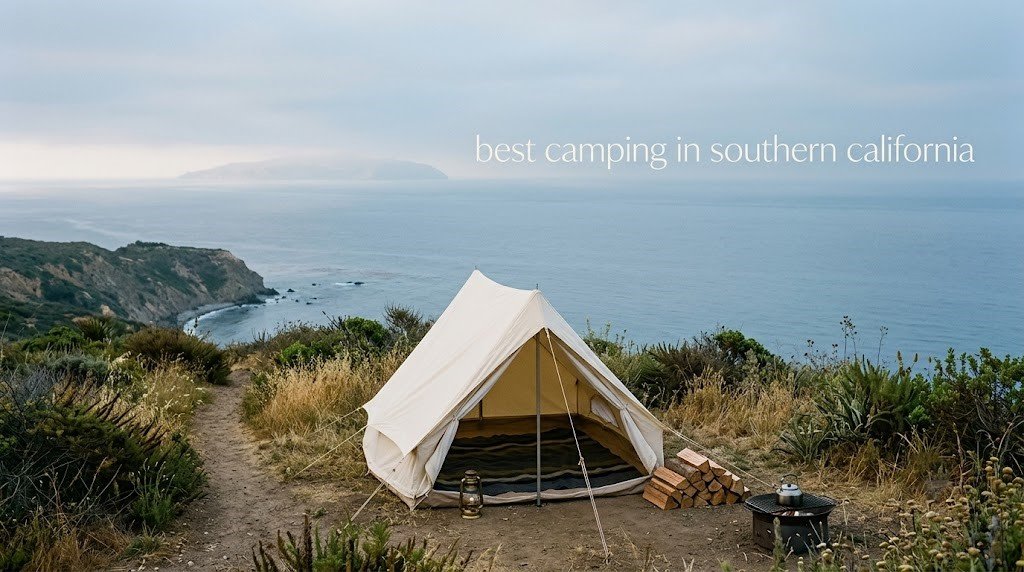
A Friday night drive up Highway 1 without a booking is a recipe for disaster. You will find nothing but “Campground Full” signs and expensive hotel rooms.
For first-time campers, the system feels hostile by design. Experienced campers know that flexibility with dates and location is the only real workaround.
The key is to forget the single “perfect” campground. Build a hit list of five options across different agencies and book whichever one opens up.
What Makes the Best Camping in SoCal
True quality in SoCal camping comes down to the quietest loop on the busiest weekend. A stunning view means nothing if a generator roars next to you all night.
We rank sites by privacy, sound buffer, and shade. Access to a clean, working flush toilet counts for more than a scenic Instagram backdrop at 6 a.m.
Families need flat ground and a nearby camp host for safety. Couples need the opposite, a remote walk-in site far from the playground.
An RV traveler needs a pull-through site with a clear satellite view. A tent camper needs a soft dirt pad and a tall fire ring for wind protection.
Choosing the Best Camping Sites in Southern California
A great site is a fortress against wind, sun, and neighbor noise. Search for natural barriers like boulders or thick manzanita between you and the next pad.
Site 88 at Jumbo Rocks has a private boulder alcove. Site 47 at Serrano Campground sits on a quiet inner loop away from the dump station.
ReserveCalifornia handles state beach bookings with a block system. You pick a zone, not a specific site, so you risk getting the dreaded parking-lot-adjacent slot.
Avoid any site within one hundred feet of a bathroom or dumpster. The traffic, light, and smell from these areas will ruin a tent camper’s rest.
| Campground | Site Count | Reservation System | RV Max | Best For |
|---|---|---|---|---|
| Jumbo Rocks | 124 sites | Recreation.gov | 35 ft | Desert solitude & stargazing |
| Serrano | 109 sites | Recreation.gov | 45 ft | Big Bear lake access |
| Crystal Cove | 28 sites | ReserveCalifornia | 35 ft | Beachfront bluff camping |
| Leo Carrillo | 130 sites | ReserveCalifornia | 25 ft | Tent campers & surfers |
| Barton Flats | 48 sites | Recreation.gov | 30 ft | Mountain peace & fishing |
The Real Deal on Tent Camping in Southern California
Tent camping in Southern California means carrying your own shade and water. The most beautiful desert sites offer zero protection from the midday sun.
Coastal tent sites at Leo Carrillo State Park are often just parking stalls. You sleep on asphalt with a strong chance of marine layer dampness all night.
Families should target walk-in tent sites at Crystal Cove’s Morro Campground. These loop-C sites sit on a bluff and ban generator use entirely.
For true solitude, abandon the campground and head to the Cleveland National Forest. A free camp stove permit lets you pitch your tent on most undeveloped land.
Insider Tip:
Palm Canyon Campground in Anza-Borrego has grassy tent loops during winter. This rare desert softness is ideal for a beginning backpacker’s first shakedown trip.
Best Beach Camping Southern California Has Left
The best beach camping in Southern California is a tightly guarded calendar battle. You must book a spot at precisely 8 a.m. six months in advance.
Crystal Cove’s Morro Campground is the crown jewel for ocean-view tents. Its 28 sites sit on a high bluff directly above the breaking waves.
Doheny State Beach Campground is the better choice for RV travelers. It offers easier pull-in access and is located right next to Dana Point Harbor.
A beginner’s biggest mistake is assuming a beach site will be warm. Spring and early summer nights at Leo Carrillo are damp and shockingly cold with sea spray.
Couples seeking romance should avoid Doheny’s southern rail loop. It borders a busy bike path that fills with shouting cyclists by 7 a.m. daily.
Mountain Camping SoCal: High Altitude, High Reward
Mountain camping in SoCal is a race to escape the summer heat. For every 1,000 feet you climb, the temperature drops roughly three to five degrees.
Big Bear sits at 6,752 feet, offering a true alpine feel. Idyllwild, in the San Jacinto Mountains, is a quieter, more forested alternative at 5,400 feet.
The Palms to Pines Highway becomes treacherous during winter storms. Caltrans often requires chains on Highway 243, blocking access to Idyllwild for unprepared drivers.
Barton Flats Campground in the San Bernardino National Forest is the best site for families. It has a shallow wading stream that small children can safely explore all day.
Experienced backpackers should bypass the campgrounds entirely for the San Gorgonio Wilderness. A free wilderness permit opens up total solitude past the day-hike limit.
Key Takeaway: Book mountain sites for mid-week stays. Weekend traffic on Highway 38 can turn a two-hour drive from LA into five hours of idling.
The Brutal Truth About Desert Camping Southern California
Desert camping in Southern California is unlivable from June through September. The ground radiates stored heat long after the sun goes down, hitting 100 degrees at midnight.
The magic window runs November through April. This is when the Brittlebush blooms and the Milky Way cuts a sharp arc across the cold, clear sky.
Anza-Borrego Desert State Park is the ultimate primitive camping zone. You simply drive onto the dirt and stop, no reservation, no fee, just pure isolation.
You must carry every drop of water you need. A gallon per person per day is the bare minimum for drinking and hygiene in this arid landscape.
The most common rescue call is for a stranded sedan on a soft sand wash. A high-clearance vehicle with deflated tires is mandatory for remote Anza-Borrego exploration.
According to the Anza-Borrego Foundation, illegal campfires during Santa Ana wind events are a major cause of wildfire. Check the park’s fire status page just before you leave home.
Joshua Tree Camping: Beyond the Crowded Rocks
Jumbo Rocks Campground is the best option inside Joshua Tree National Park. It has 124 first-come, first-served sites and a dark sky that defies belief.
However, a line forms at the entrance station by 7 a.m. on a Friday. Relying on a same-day drive-up is the fastest path to camping failure here.
Your backup is Indian Cove Campground, located on the park’s north edge. It often fills a day later than Jumbo Rocks and has spectacular boulder formations.
An experienced camper’s secret is the backcountry boards. Register at a board, park at a designated backcountry lot, and hike one mile in to camp for free.
Families with toddlers should avoid Ryan Campground. Its popular rock climb is a sheer drop-off, creating a constant risk of a child wandering onto a cliff edge.
Important Safety and Conditions Notes for Joshua Tree
Cell phone service is nonexistent inside the park. Download offline maps and bring a satellite messenger for emergencies.
Verify the following before your trip:
Check the NPS Joshua Tree website for the current status of the first-come, first-served campground status page. It is updated hourly.
Verify timed-entry reservation requirements, which may be active during peak bloom periods.
Fill your gas tank completely in Yucca Valley or Twentynine Palms before entering the park bounds.
Big Bear Camping: Lakeside Logistics and Mountain Calm
Serrano Campground is the closest lakeside option to Big Bear Lake. It has 109 sites, and loops A and B offer the only full hookups in the valley.
You cannot show up and expect a serene, quiet escape on Saturday. Big Bear is a dense, busy mountain town with constant traffic and boat noise.
Pineknot Campground is the better choice for a secluded tent camping experience. It sits higher up in the pines, far from the highway hum and the marina crowds.
The best site for a winter ski trip is Serrano site 62. It offers a clear southern exposure, melting snow on your pad before sunrise.
The limitation of Big Bear camping is the urban proximity. If you want true backcountry quiet in this region, you need to drive up Highway 38 to Heart Bar Campground.
Key Takeaway: Big Bear is a hub for boating and diner breakfasts, not for wilderness solitude. Treat it as a comfortable mountain base camp, not an escape.
Angeles National Forest Camping: The Frontcountry Gateway
Buckhorn Campground is the premium base camp deep in Angeles National Forest. It sits at 6,300 feet along the scenic Angeles Crest Highway.
This is not a secret escape from Los Angeles on a summer Sunday. The 34 campsites fill by Thursday night, and the highway is a popular motorcycle raceway.
First-time visitors often make the mistake of arriving with no water plan. Buckhorn has potable water, but smaller sites like Chilao Campground do not, requiring you to pack everything in.
For a family day hike, the Burkhart Trail leaves directly from the campground. It follows a cool, shaded canyon stream to a gentle waterfall in about 1.5 miles.
Experienced campers know to skip Buckhorn entirely for the nearby Horse Flats Campground. It is a first-come, first-served yellow-post site with only 11 pads, ensuring near-total silence.
Malibu Camping: Cliffs, Surf, and Extreme Demand
Leo Carrillo State Park is the tent camper’s stronghold on the Malibu coast. Its 130 sites are bookable through ReserveCalifornia exactly six months out at 8 a.m.
You are competing with bots and thousands of Angelenos. Sites evaporate in less than two minutes, a more competitive booking than a concert ticket.
A giant sycamore canopy shields the inland loops, but you pay for it with a long walk to the surf. The beach is accessed via a pedestrian underpass beneath the Pacific Coast Highway.
RV travelers face a hard 25-foot maximum limit here. Anything longer will not fit in the tight, winding parking-spot-style pads.
Couples seeking a romantic sunset should book site 112. It sits on the far edge of the lower loop with a private native-plant buffer on one side.
Winning the SoCal Camping Reservations Lottery
Winning a booking requires a free account set up in advance on Recreation.gov. Log in, verify your identity, and save your credit card details hours before game time.
Do not search by “availability” at 8 a.m. You will lose. Search by a specific campground, select your date, and have your finger on the “book” button.
Your smartphone clock is likely two seconds slower than the government’s server clock. Use the time.gov website on a separate screen to refresh with atomic-clock precision.
If you fail on Recreation.gov, immediately switch to the ReserveCalifornia system. The coastal state parks are a separate inventory with a completely different cancellation line.
First-time campers should target Thursday arrivals instead of Fridays. A one-day head start on the weekend often unlocks a scatter of last-minute cancellations.
Mastering Recreation.gov Camping California
Recreation.gov controls the best campsites in California’s federal parks and forests. It is a functional platform that hides a high-stakes lottery system beneath a calm user interface.
A “walk-up” site label on Recreation.gov does not mean you can drive up. Many are now bookable online only, with a strict 14-day rolling window that opens each morning.
Use the “Notify Me” alert system for sold-out weekends. A bot will email you the instant a cancellation processes, but you must book it within seconds.
According to the US Forest Service, no-show policies have tightened significantly. If you do not check in by the designated time on day one, your site is forfeited.
Campers with flexible jobs should book the mid-week window from Sunday night to Thursday. This tactic bypasses the weekend warrior arms race and delivers a quieter experience.
Finding Freedom: Southern California Dispersed Camping
Dispersed camping in Southern California is the last free refuge for spontaneous campers. It means camping on public land with no hookups, no water, and no reservations.
The Bureau of Land Management (BLM) controls vast swaths of open desert near Joshua Tree and Anza-Borrego. You just pull off a designated dirt road and set up camp.
The golden rule is “camp within 150 feet of an existing disturbed area.” Do not crush untouched cryptobiotic soil crust, which takes decades to regrow in the desert.
A strict pack-in, pack-out policy applies to everything, including human waste. You must carry a portable toilet or WAG bag, as burying waste is illegal in many arid zones.
The Best SoCal Dispersed Camping Starter Zones:
Alabama Hills Recreation Area near Lone Pine: Epic Whitney Portal views on hard-packed gravel. A high-clearance vehicle is helpful after rain.
Yellow Post Sites in San Bernardino National Forest: A network of numbered, free, primitive sites on remote fire roads. Find a map at the ranger station in Fawnskin.
Pinyon Flat near Palm Desert: A no-fee zone with Joshua trees on the 74. The hard-packed sand is suitable for most passenger cars.
Your Southern California Camping Guide 2026: A Season-by-Season Plan
A rigid season-by-season plan is the only way to navigate the 2026 camping year. Blindly following summer holidays will lead you into a furnace or a wall of snow.
January through March is the peak of the wildflower desert season. Book Anza-Borrego immediately if heavy winter rains have fallen in the preceding December.
April through June offers the narrow shoulder window for the coast. The marine layer is thin, and the mountain snow is melting, opening access to the high country.
A summer trip requires an altitude above 7,000 feet to escape the heat. Target developed sites like Grandview Campground in the White Mountains of Inyo National Forest.
Fall fire season dictates that you carry a portable stove instead of relying on a campfire. A sudden Santa Ana wind event can trigger a national forest-wide fire ban overnight.
A winter beach trip to Crystal Cove is an underrated romance move. You must pack a four-season tent and zero-degree bag to handle the wet, cold ocean wind.
| Season | Target Zone | Primary Risk | Booking Strategy |
|---|---|---|---|
| Winter (Jan-Mar) | Low Desert | Cold nights | Last-minute for State Parks |
| Spring (Apr-Jun) | Coast & Foothills | Marine layer fog | 6 months out for weekends |
| Summer (Jul-Aug) | High Mountains (>7k ft) | Fire closures | Book mid-week near streams |
| Fall (Sep-Nov) | All zones | Santa Ana winds | Use cancellation alerts |
Frequently Asked Questions About Camping in Southern California
What is the most beautiful camping spot in Southern California?
The Morro Campground at Crystal Cove State Park offers the most beautiful bluff-top ocean sunset view in the state.
You are perched directly above the surf with Catalina Island on the distant horizon.
A beachfront site here is the hardest reservation to get, requiring an exact 6-month lead time.
Where can you camp for free in Southern California?
Alabama Hills near Lone Pine offers the most scenic free dispersed camping on Bureau of Land Management (BLM) land.
You can park on the hard-packed dirt roads with a direct view of Mount Whitney and the Sierras.
There are no amenities, so you must pack out all trash and bring your own water.
Do you need reservations for all Southern California campgrounds?
No, only the most popular state and federal campgrounds require reservations booked months in advance.
Many remote US Forest Service campgrounds like Horse Flats and Yellow Post Sites are first-come, first-served.
Free dispersed camping on BLM land never requires a reservation, only a respect for the land.
When is the best time to camp in the Southern California desert?
November through April is the safe window for desert camping when daily temperatures stay below 85 degrees.
January is the coldest month, with overnight lows often dropping well below freezing in Joshua Tree.
You must avoid the low desert entirely from June through September due to lethal heat risk.
Is there beach camping in Los Angeles?
Direct beach camping within Los Angeles city limits does not exist in a public campground format.
The closest public beach camping to L.A. is at Leo Carrillo State Park, about an hour north in Malibu.
Dockweiler State Beach allows RV camping on the pavement, but it feels like a parking lot next to an airport.
What is the penalty for dispersed camping without a permit in Southern California?
Camping in a restricted area or violating a fire ban on federal land can result in a mandatory court appearance and a fine of up to $5,000.
Even where legal, you must possess a California Campfire Permit to use a gas stove outside a developed campground.
The permit is free via a quick online video course, and not having it on your person is a citable offense.
The Single Truth About Southern California Camping
Your perfect campsite in Southern California exists. It is a specific loop, in a specific month, booked on a specific platform.
Your sole mission now is to pick a date, open a Recreation.gov account, and set a calendar reminder for exactly six months out. Do not treat this as a casual weekend whim.
Campground fees, fire restrictions, and permit lottery dates are moving targets. Verify the precise terms directly with the managing park or forest’s official site before you book.
Turn off the generic listicles and commit to the logistics. The evening you spend listening to the waves at Crystal Cove depends entirely on the alert you set right now.