Terrasil Shingles Ointment: A 2026 Science-Backed Review
Terrasil Shingles Skincare Ointment is a branded over-the-counter topical marketed for soothing shingles-related rashes and pain. Its formula primarily relies on a mix of a skin protectant, a clay, and a homeopathic plant extract rather than clinically proven nerve-pain blockers. You need to understand that this product is a supportive skincare aid, not a replacement for the oral antiviral medication that is the medical standard for treating a shingles outbreak.
Shingles, caused by the reactivation of the varicella-zoster virus, affects an estimated 1 in 3 people in the United States during their lifetime, according to the Centers for Disease Control and Prevention (CDC). The resulting rash and nerve pain, known as post-herpetic neuralgia (PHN) if it persists, can be debilitating. This makes the search for relief urgent and emotionally charged, a fact that marketing for products like Terrasil directly speaks to. The reality of post-shingles pain is a complex neurological event, and a topical ointment has physical limits on what it can achieve beneath the skin’s surface.
We will go ingredient by ingredient, examine what the clinical evidence genuinely says, and place this ointment in the context of a complete shingles skincare and medical plan. You will get a clear-eyed look at what this product can do for your skin’s comfort, what it absolutely cannot treat, and exactly where it stands alongside pharmacy staples like lidocaine.
What Is Terrasil Shingles Skincare Ointment?
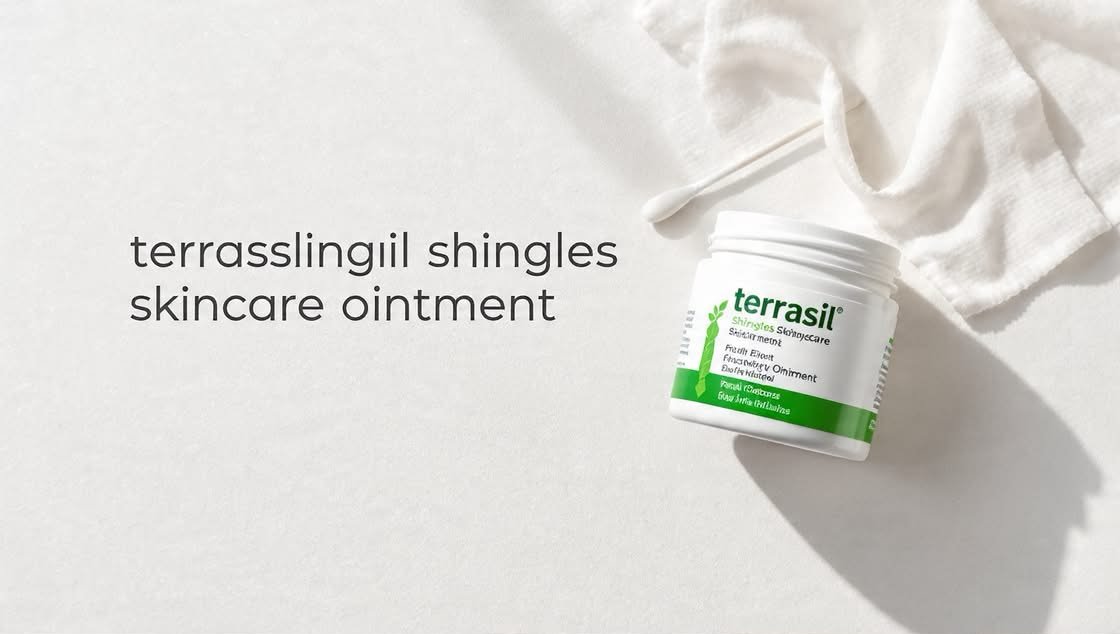
Terrasil Shingles Skincare Ointment is a proprietary topical formula manufactured by Aidance Products and sold over the counter for the symptomatic relief of shingles and other skin eruptions. The company positions it as an “all-natural” alternative, with its core function being to soothe, protect, and support the healing of the skin.
The product does not contain antiviral medicine. Its mechanism of action is entirely based on its topical ingredients, which create a physical barrier and aim to calm surface inflammation. You apply it directly to the affected dermatome, the area of skin served by the nerve where the virus is active.
According to the FDA’s classification, this product is a cosmetic and an OTC skin protectant drug, not an approved treatment for the shingles virus itself. The distinction is the single most important thing to understand before using it. It is designed for your skin, not the nerve infection causing your pain.
Does Terrasil Work for Shingles Pain?
Terrasil can provide a modest degree of surface comfort by coating irritated skin and reducing friction, but it does not directly treat the neuropathic pain of shingles in the way a prescription nerve pain medication does. The pain from shingles comes from viral damage to the nerve, a signal that originates deep under the skin where no topical can reach in significant concentration.
A 2022 clinical review in the journal Pain and Therapy notes that genuine relief of neuropathic pain typically requires agents that modulate nerve signals, such as gabapentinoids or local anesthetics like lidocaine. The ingredients in Terrasil, primarily zinc oxide and clay, work as a physical shield. Think of it like this: if you had a badly scraped knee, a bandage would stop the wound from rubbing against your clothes and stinging, but it would not heal the deep bruise. That is the difference.
Users may report a reduction in the sharp, surface-level sting from clothing or air contact. This is a valid form of relief. But the deep, throbbing, burning ache often persists.
Key Takeaway: The comfort from Terrasil is primarily about reducing external triggers of pain, like friction, rather than calming the electrically irritated nerve signal that is the root cause of shingles agony.
Terrasil Shingles Ointment Ingredients Review
The Terrasil Shingles Skincare Ointment ingredients list is short and marketed as “natural,” including bentonite clay, zinc oxide, magnesium oxide, and thuja occidentalis. A scientific analysis shows a sharp division between ingredients with a recognized dermatological function and those without.
Zinc oxide and bentonite clay are the workhorses here for skin protection and moisture absorption. The presence of thuja occidentalis, a homeopathic ingredient, moves the formulation away from evidence-based dermatology. This creates a difficult evaluation because the product functions on two different planes: physical skincare and homeopathic theory. The Food and Drug Administration (FDA) does not evaluate homeopathic products for safety or effectiveness using the same evidence standard required for drugs.
Here is a clear breakdown of what each component does based on its chemical properties, not its marketing claims.
| Ingredient | Recognized Skin Function | Evidence for Shingles Symptom Relief |
|---|---|---|
| Zinc Oxide (FDA OTC Skin Protectant) | Forms a protective barrier, soothes minor skin irritation. | Well-established as a skin protectant; no direct anti-neuralgic properties. |
| Bentonite Clay | Absorbs exudate and oil; can form a occlusive barrier when wet. | No human clinical trials specifically for shingles healing or pain. |
| Magnesium Oxide | Used as an absorbent and opacifying agent. | No significant clinical evidence for topical shingles pain management. |
| Thuja Occidentalis | Claimed by the manufacturer to target shingles symptoms via homeopathic principles. | Zero robust clinical trials; safety data on open or broken skin is inadequate. |
Can Bentonite Clay Help a Shingles Rash?
Bentonite clay, a key ingredient in Terrasil, can theoretically help dry weeping shingles blisters by absorbing excess fluid, but it offers no proven benefit for nerve pain, and its drying action can be a double-edged sword. The clay, listed as Bentonite in the INCI system, is a naturally occurring smectite clay that swells when mixed with water, forming a paste with absorbent properties.
For the blister stage of shingles, absorbing ooze might seem desirable to keep the area cleaner. This is the clinical logic behind using astringents. The problem arises when the blisters crust over and the surrounding skin becomes exceedingly dry and fragile. A clay-based ointment can continue to pull moisture from the stratum corneum, the skin’s outermost layer. This can tighten the skin to the point of cracking, creating new portals for a secondary bacterial infection.
A 2023 article in the Journal of Drugs in Dermatology discussing wound care principles warns against applying highly absorbent materials to dry, healing skin, as a moist wound environment is essential for faster re-epithelialization with less scarring. So, during the wet, blistered phase, the clay’s absorbency might provide a sense of cleanliness. When the rash starts to dry and crust, you are likely doing more harm than good.
Zinc Oxide as a Skin Protectant for Shingles
Zinc oxide, present in Terrasil, acts as a true skin protectant that shields the raw, inflamed nerve endings in a shingles rash from air, clothing, and friction. Its INCI name is simply Zinc Oxide, and it is the most scientifically valid ingredient in the formula.
The FDA’s Over-the-Counter Drug Monograph for Skin Protectant Drug Products formally recognizes zinc oxide at concentrations of 10% to 20% for protecting injured or exposed skin from harmful stimuli. This matters for shingles, a condition where even a light breeze can trigger severe pain, a phenomenon called allodynia. By adhering to the skin and creating an opaque, water-repelling film, zinc oxide physically blocks these triggers. It does not need to chemically interact with nerves to work. It just functions as a smooth, blanketing shield.
For anyone with shingles, this mechanical protection is genuinely useful. A 2021 patient survey published in Dermatology and Therapy found that skin friction was the most-cited aggravating factor for daily shingles pain. Zinc oxide’s thick, paste-like consistency stays put far longer than a thin lotion, making it a superior choice for long-lasting barrier protection compared to a standard moisturizer. For Fitzpatrick skin types IV-VI, be aware that zinc oxide can leave a visible white film that requires gentle rubbing with an emollient to blend.
Key Takeaway: Zinc oxide does not heal the nerve, but it works immediately to block one of the primary accelerants of shingles discomfort: friction. Its value is in physical protection, not pharmaceutical action.
Thuja Occidentalis and Skin Healing Evidence
The inclusion of thuja occidentalis in Terrasil is based on homeopathic medicine principles, and a review of dermatological literature reveals no clinical evidence that it accelerates skin healing or reduces viral nerve pain. Thuja Occidentalis is an evergreen tree extract. In homeopathy, extremely diluted preparations of this plant are used, with the theory that a substance that causes symptoms in a healthy person can treat similar symptoms in a sick person at a micro-dose. This is a philosophical approach to medicine, not a biochemical one.
When applied topically, the safety data for this botanical extract is concerning for compromised skin. The Cosmetic Ingredient Review (CIR) Expert Panel, which assesses the safety of cosmetic ingredients, has noted in its reports that the safety of Thuja Occidentalis Leaf Extract in cosmetic formulations is not fully established due to a lack of data, especially for concentrations and use cases like this. A key compound in the undiluted plant, thujone, is a known neurotoxin. The homeopathic preparation is diluted, ostensibly past the point of toxicity, but also past the point of any expected biological activity.
A study in Dermatitis reminds clinicians that botanical ingredients are common causes of allergic contact dermatitis. Introducing a potentially sensitizing botanical to skin that is already erupting from a neuro-inflammatory virus carries a real risk of creating a second, overlapping skin problem. You could find yourself dealing with an itchy, red allergic rash on top of the shingles blisters, a complication that makes pain management infinitely harder.
A Proper Shingles Blister Care Routine
The ideal shingles blister care routine aims to prevent secondary skin infection, keep the nerve endings as calm as possible with a cool, low-friction environment, and avoid any products that can cause further irritation or trap bacteria. The skin’s integrity is the priority.
Shingles blisters go through stages: clusters of clear vesicles, then cloudy blisters, then crusting over. Your approach must change with each phase. The American Academy of Dermatology (AAD) advises that gentle skincare is paramount during an active viral eruption. Aggressive scrubbing or picking will drive bacteria deeper and can lead to scarring and prolonged pain.
Follow this sequence exactly to care for your skin without making things worse:
- Cleanse once daily with cool water and a fragrance-free, non-soap cleanser. Pat the area dry with a clean, soft towel. Never rub. Dispose of the towel immediately in the laundry.
- Inspect the rash in a well-lit room. Look for signs of increasing redness, yellow crusting, or honey-colored drainage, which are signs of a secondary bacterial infection like impetigo.
- During the wet blister stage, apply a cool, damp compress made from sterile gauze for 10 minutes. This provides a non-chemical way to soothe heat. Dry the area completely by patting.
- If using a protectant like Terrasil, apply a thin film with a clean cotton swab. Never use your finger from the jar unless your hands are freshly scrubbed, as this contaminates the entire jar.
- Cover loosely with a sterile, non-stick dressing. An adhesive bandage is too irritating. Secure the sterile pad with paper tape on intact, non-blistered skin.
Post-Herpetic Neuralgia Topical Relief Options
For post-herpetic neuralgia (PHN), the persistent nerve pain after the rash heals, Terrasil offers no therapeutic advantage, while a patch containing 8% capsaicin or a 5% lidocaine medicated plaster, prescribed or directed by a physician, represents the frontline topical evidence-based options. PHN is not a skin condition. The skin looks normal, but the nerves underneath are misfiring pain signals. Therefore, a protective skin barrier is functionally useless.
The National Institute of Neurological Disorders and Stroke (NINDS) explains that PHN requires treatments that interact directly with the hyperactive nociceptors, the pain-sensing nerve fibers. The two topicals with significant clinical trial data accomplish this. Lidocaine is a local anesthetic that blocks sodium channels on the nerve, temporarily silencing the pain signal. Capsaicin, derived from chili peppers, initially stimulates then deflates the substance P, a neurotransmitter involved in pain transmission, from the nerve endings over repeated use. A 2022 meta-analysis in the Journal of Pain confirmed both as safe and effective for PHN.
Zinc oxide and clay simply sit on the skin’s surface. They do not absorb deeply enough to modulate these nerve signals. Continuing to layer a barrier ointment like Terrasil on skin that is no longer blistered for the purpose of deep pain control is akin to painting a wall to fix a short circuit behind it.
Key Takeaway: Once the rash disappears and only pain remains, the problem is neurological, not dermatological. Your topical strategy must switch from a skin protectant to a nerve-targeted analgesic.
The Best OTC Ointment for Shingles Discomfort
There is no single “best” OTC ointment for all phases of shingles, but the choice depends entirely on your symptom: for raw, wet blisters, a simple skin protectant like pure zinc oxide (or Terrasil) works; for surface friction pain, a 4% lidocaine cream is superior; for intense itching, calamine lotion is a time-tested option. The framework for your decision must be symptom-specific.
This table breaks down the functional winners based on what you are actually feeling.
| Primary Symptom | Best OTC Product Category | Example Active Ingredient | Clinical Rationale |
|---|---|---|---|
| Open, weeping blisters | Skin Protectant | Zinc Oxide 10-20% (e.g., Desitin, Terrasil) | Creates a waterproof barrier to keep out bacteria and reduce moisture loss. |
| Surface-level stinging, allodynia | Local Anesthetic | Lidocaine HCL 4% (e.g., Aspercreme, generic) | Temporarily blocks sodium channels on nerve endings, providing direct pain relief. |
| Uncontrollable itching | Anti-itch Agent | Pramoxine HCL 1% or Calamine | Calms the histamine-independent itch specific to nerve irritation and skin healing. |
| Dry, crusty, resolving rash | Emollient | Colloidal Oatmeal or Ceramide Cream | Replenishes the skin barrier lipids to stop painful cracking and speed healing. |
How to Apply a Topical Ointment on Shingles Safely
Applying a topical ointment on shingles requires a no-touch, sterile technique to prevent a bacterial infection from entering the broken skin. The shingles rash is an open door for Staphylococcus aureus or Streptococcus bacteria, and your primary goal is to treat the rash without adding a secondary skin infection.
Everything you introduce to the rash surface must be free of contaminants. Double-dipping is a fast track to breeding bacteria in your product jar. The AAD’s guidelines for applying products to irritated skin stress minimal friction and maximum hygiene. Using a cotton swab or a freshly washed fingertip each time you touch the cream is non-negotiable.
Follow this numbered method exactly, every time you apply:
- Wash your hands with an antibacterial soap for a full 20 seconds, scrubbing under your nails.
- Squeeze the ointment onto a single-use, clean cotton swab, or if using a jar, scoop a small amount out with a clean, disposable spatula. Never touch the jar’s contents with a used swab.
- Gently pat the ointment over the rash. Do not rub. The goal is a thin, even film, not a thick occlusive layer that can macerate the skin.
- Dispose of the swab or spatula immediately. Wash your hands again thoroughly to prevent spreading the virus to other parts of your body or to other people, especially anyone who has never had chickenpox or the varicella vaccine.
Terrasil vs. Lidocaine for Shingles Pain Relief
Terrasil relieves pain by blocking the friction of clothing on the skin, whereas lidocaine cream provides a direct, local anesthetic effect by temporarily numbing the nerve endings themselves. This is a critical distinction. One is a shield. The other is a signal jammer.
Terrasil’s action is strictly physical and passive. If your pain is purely external, caused by your shirt rubbing a sensitive area, a thick zinc oxide ointment may block enough sensation to bring relief. Lidocaine, at a 4% OTC concentration, actively penetrates the skin’s surface and binds to sodium channels on the nerve cell membranes, preventing the generation and transmission of pain impulses. A 2023 clinical review in Drugs reaffirms topical lidocaine as a safe first-line approach for localized neuropathic pain.
The duration of action also differs. A lidocaine cream’s numbing effect often lasts for two to four hours. Zinc oxide’s protective benefit lasts as long as the physical film remains intact, which can be many hours if undisturbed. However, lidocaine addresses the deep pain component. If your shingles pain wakes you up at night, a skin barrier will not solve the problem. You need to work with your board-certified dermatologist or pain specialist to develop a plan, which may include the lidocaine 5% patch, available by prescription, for a more potent and sustained nerve block.
Key Takeaway: Choose Terrasil’s active base (zinc oxide) for wet, blistered, daytime friction protection. Switch to lidocaine for direct, temporary numbing of the surface nerve pain, especially at night.
A Smart Skincare Routine During a Shingles Outbreak
A smart skincare routine for an active shingles outbreak strips everything back to the absolute essentials of cleansing, medicating, and protecting. Complexity is the enemy of healing skin. Your goal is zero additional irritation. The varicella-zoster virus has set off a massive inflammatory cascade in that dermatome. Even gentle, active ingredients like niacinamide or peptides, which you might use for anti-aging, can sting and burn on this sensitized terrain.
The only “active” you need is your prescribed oral antiviral, such as acyclovir, valacyclovir, or famciclovir. These medications work systemically to stop the virus from replicating. The role of your routine is just to maintain skin hygiene without interfering with the medical treatment. The skin barrier is severely compromised, so ingredients that penetrate deeply are not your friend.
During an outbreak, your AM and PM routine should be identical and simple:
- Cleanser: Use a gentle, non-foaming, fragrance-free wash. La Roche-Posay Toleriane Hydrating Gentle Cleanser or a generic equivalent is a good template.
- Medication: Take your oral antiviral strictly as prescribed. These are time-sensitive and most effective when started within 72 hours of the rash appearing.
- Topical (AM): After the skin is dry, apply a thin film of a pure zinc oxide paste or Terrasil to weeping areas to protect them from friction. Cover with a non-stick pad.
- Topical (PM): After cleansing, re-apply your chosen protectant. Cover exposed, oozing areas again to keep the skin from sticking to your bedding.
What to Avoid Putting on Shingles Blisters
You must avoid antibiotics not prescribed for the specific wound, home remedies like apple cider vinegar, and any thick, occlusive greases like petroleum jelly on intact but inflamed blisters unless directed by a physician. These can trap heat, cause maceration, or chemically burn the already traumatized skin. The shingles rash is not a typical acne breakout or dry skin patch.
Apple cider vinegar and other acids or astringents are common internet suggestions that can cause severe, painful chemical burns on eroded skin. Topical antibiotics like neomycin, found in many triple-antibiotic creams, are notorious skin sensitizers. According to the American Contact Dermatitis Society, neomycin is a frequent cause of allergic contact dermatitis. Adding a raging allergic rash on top of shingles is an avoidable catastrophe. Finally, while thick ointments create a barrier, they can also trap the virus-laden fluid from weeping blisters against the skin, potentially worsening the viral spread on the skin’s surface and increasing the risk of bacterial superinfection in a warm, sealed environment.
Completely ban these items from your shingles rash:
- Triple Antibiotic Creams (Neomycin): High risk of a secondary allergic reaction that mimics an infection, confusing the clinical picture.
- Hydrocortisone Cream: A corticosteroid can suppress local skin immunity and theoretically worsen a viral infection. Not recommended for an active, untreated shingles rash.
- Apple Cider Vinegar and Essential Oils: Tea tree, peppermint, and oregano oils are not sterile, are highly concentrated, and cause intense stinging and contact dermatitis. There is zero data to support their use here.
- Adhesive Bandages: The adhesive tears fragile skin upon removal. Use non-stick sterile pads and paper tape.
Key Takeaway: If a product burns, stings, or seems to be “drawing out” the poison, wash it off immediately with cool water. Effective shingles care is calm and cool, not reactive and aggressive.
Evaluating the Evidence for Natural Shingles Skincare
The evidence for natural shingles skincare is strongest for ingredients recognized as skin protectants by the FDA, like zinc oxide, while the evidence for botanical extracts like thuja is anecdotal and unsupported by peer-reviewed clinical trials. The term “natural” on a label often implies safety to a consumer, but you must evaluate it the same way you would a synthetic drug. Is there a plausible mechanism? Is there human data to support its use?
A 2024 systematic review in the Journal of the European Academy of Dermatology and Venereology on botanical interventions for viral eruptions found that very few natural substances have undergone rigorous testing. Colloidal oatmeal, for instance, has a defined role in calming pruritus through its avenanthramides and cleansing saponins. Bentonite clay, however, has no such specific pathway for viral pain. It is an adsorbent. The gap between what a substance does in a petri dish versus the inflamed human nerve-skin interface is enormous.
You are not applying these products to a healthy patch of skin on your arm. You are applying them to a site of acute neuro-inflammation. This environment makes your skin hyper-reactive. Without specific safety data for this context, assuming an exotic plant extract is safe simply because it is a plant is a dangerous logical fallacy. Give preference to the therapeutic minimalism of a proven FDA monograph protectant.
When to Stop Using an Ointment and Seek Medical Care
You must stop using any over-the-counter ointment and contact a healthcare professional immediately if the rash shows signs of spreading rapidly, develops honey-colored crusts or pus, or if you experience severe pain that becomes unmanageable despite oral pain relievers. These are red flags for a bacterial superinfection or a more aggressive viral dissemination that requires urgent medical evaluation. The CDC states that shingles near the eye, a condition called herpes zoster ophthalmicus, demands an immediate ophthalmologist visit.
You should also seek an in-person evaluation with a board-certified dermatologist if the rash has not crusted over within 10 to 14 days or if you develop new, unprecedented symptoms like facial drooping or confusion. For pain that persists for more than three months, you should ask your primary care physician for a referral to a pain management specialist to manage the post-herpetic neuralgia with prescription-only medications like nerve pain modulators (e.g., gabapentin) or the high-concentration capsaicin 8% patch.
Do not wait. Secondary infections like cellulitis can take hold rapidly on compromised skin and require oral antibiotics to resolve. A topical ointment cannot fix a systemic infection or contain a deep nerve pain cycle that has become pathological. Your skin is sending a signal. Recognize when the problem has moved beyond the reach of a cream.
Frequently Asked Questions About Terrasil Shingles Ointment
Can you put Terrasil on open shingles blisters?
It is not recommended to apply Terrasil to open, wet shingles blisters because the homeopathic ingredients have no safety data on broken skin and the clay base may adhere to wound beds.
An FDA-recognized skin protectant like pure white petrolatum or a simple zinc oxide paste is a safer choice for weeping sores.
Consulting a pharmacist or board-certified dermatologist before applying any unapproved additive to an open lesion is always the safest course.
Is Terrasil FDA-approved to treat shingles?
No, the FDA does not approve Terrasil Shingles Skincare Ointment to treat the shingles virus or its nerve pain, as it is not a registered pharmaceutical drug with a proven clinical indication.
The FDA recognizes one of its ingredients, zinc oxide, as an over-the-counter skin protectant, which means it can claim to protect the skin temporarily.
It has never been evaluated or approved by the FDA for the treatment, cure, or prevention of any viral disease.
How long does shingles pain last, and can this ointment speed it up?
The shingles rash typically heals within 2 to 4 weeks, but nerve pain can persist for months or years, and a topical barrier ointment cannot speed up the resolution of the nerve pain.
The active varicella-zoster virus is fought by your body’s immune system, often aided by an oral antiviral prescribed by a doctor, not by a surface cream.
Skin protectants can help you cope with the friction component of the pain while your body heals, but they will not shorten the timeline of post-herpetic neuralgia.
What is the best topical for shingles nerve pain?
The best evidence-backed topical for localized shingles nerve pain is lidocaine in a 5% medicated plaster or a high-concentration capsaicin 8% patch, both typically requiring a physician’s prescription and guidance.
Over-the-counter, a 4% lidocaine cream or spray is a much stronger candidate for direct nerve pain than a simple skin protectant cream.
A skin protectant like zinc oxide is best for the raw, blister-stage friction, not the deep, electric nerve pain.
Can I use Terrasil along with my antiviral prescription?
Yes, you can generally use a topical skin protectant like Terrasil alongside oral antiviral medication like valacyclovir, as the two work through completely independent mechanisms.
The oral antiviral works systemically to stop the virus from replicating, while the protectant sits on the skin’s surface to block friction.
Always apply the topical after the prescribed antiviral dose, and never mix the ointment into an open sore immediately after applying another topical medication unless specifically directed by your dermatologist.
What ingredients should I avoid on a shingles rash?
You should strictly avoid potential skin sensitizers like neomycin (found in triple antibiotic creams), fragrances, and botanical essential oils, along with harsh astringents like apple cider vinegar.
These ingredients offer zero antiviral benefit and carry a dangerously high risk of causing allergic contact dermatitis on top of the existing viral rash.
The skin barrier is broken and hyper-reactive, so the safest formula list is short, simple, and free of any ingredient known to provoke a skin allergy.
Your Skin, Your Recovery
The most honest thing you can do for your healing is separate the idea of comfort from the idea of a cure. Terrasil Shingles Skincare Ointment lives in the house of comfort. The zinc oxide and clay in the formula can coat raw skin and block the sting of a shirt collar or a bedsheet. For someone in the throes of a painful, weepy rash, that physical shield is a real and legitimate tool. It deserves a place in your kit for that specific purpose. What it will not do, and what no jar of cream can do, is chase a virus down a nerve pathway and silence it.
So, use it if the friction of daily life is making your skin scream. Cleanse gently, apply a thin layer with a clean swab, and let the paste be your shield. But keep your mind clear on the limits of a topical barrier. Your path forward should be built around your oral antiviral prescription, a relationship with a board-certified dermatologist who tracks your healing, and a sharp eye for the moment the pain stops being a skin problem and becomes a nerve problem. The creams are adjuncts. Your body’s healing and the right medical guidance are the main event. You have more control than you think when you know exactly what each product in your hand can actually do.