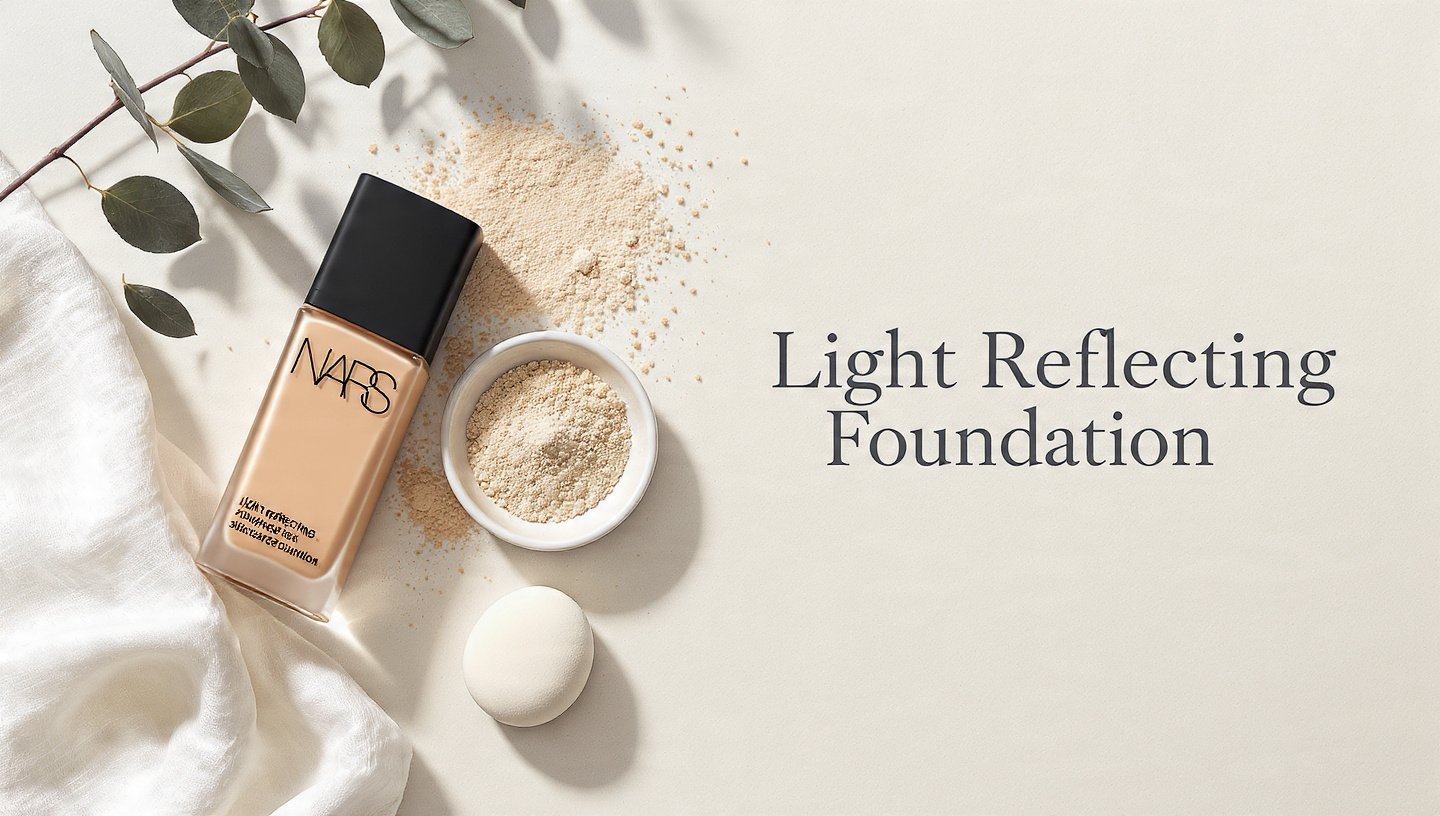
NARS Light Reflecting Foundation: 2026 Skincare Review
The NARS Light Reflecting Advanced Skincare Foundation is a carefully engineered makeup product that uses light-diffusing particles and humectant ingredients to create the illusion of smoother, more even skin, with a limited secondary benefit of surface-level antioxidant protection and hydration. It is not a replacement for a targeted serum or moisturizer, but it is one of the more elegantly formulated makeup-skincare hybrids available. The skincare claims are grounded in the presence of clinically studied ingredients, though their efficacy is constrained by the format of a silicone-based foundation film.
According to a 2022 study published in the Journal of Cosmetic Dermatology, the global demand for multifunctional color cosmetics with proven skin benefits increased by over 40% in five years, prompting a race among brands to infuse makeup bases with active ingredients. The NARS Light Reflecting Foundation sits at the center of this trend. It contains niacinamide, ascorbic acid, peptides, and licorice root extract, all housed in a breathable polymer matrix designed to cling to skin for up to 12 hours.
This review will take a scalpel to the ingredient list, separating the cosmetic chemistry that works beautifully from the marketing language that overstates the evidence. You will understand exactly how the Light Reflecting Complex functions, what the active ingredients can and cannot do in this format, and whether this foundation is compatible with your specific skin biology, whether you are managing post-inflammatory hyperpigmentation, using prescription tretinoin, or cautiously building a fungal acne-safe routine.
NARS Light Reflecting Advanced Skincare Foundation Review
The NARS Light Reflecting Advanced Skincare Foundation is a medium-buildable, natural-finish liquid foundation that prioritizes optical skin smoothing through an advanced particulate system while delivering a small suite of non-prescription skincare actives to the skin’s surface. It performs best on normal to slightly dry skin, where its humectant-driven hydration and light-reflective blurring create a notable improvement in visible skin texture without emphasizing dry patches. The wear time is substantial, often reaching the claimed 12 hours without significant oxidation or separation when applied to well-prepped skin.

What distinguishes this product from many “skincare foundations” is the sophistication of its film-forming technology. The formula uses a blend of dimethicone, polysilicone-11, and silica to create a flexible, breathable mesh. This mesh holds pigments and light-reflecting particles in an even distribution while allowing water vapor and some humectants to pass through to the stratum corneum. The result is a finish that looks less like a layer of paint and more like skin with the diffuse glow of professional lighting, a quality that makes it a common recommendation from makeup artists for on-camera work.
User-reported experiences consistently praise the natural skin-like finish and the absence of a heavy, occlusive feel. The foundation sheers out easily with a damp sponge or builds to a solid medium coverage with a dense brush. The one recurring criticism across multiple wear-test reviews and consumer forums is its behavior on very oily skin, where the non-mattifying formula can shift and become shiny within four to five hours, requiring blotting or powdering to reset the finish. This is an inherent trade-off in a formula designed to reflect, not absorb, light.
| Aspect | Detail |
|---|---|
| Finish | Natural, skin-like radiance from light-diffusing particles, not shimmer |
| Coverage | Medium, buildable to slightly fuller coverage |
| Key Actives | Niacinamide, Ascorbic Acid, Peptides, Licorice Root Extract |
| Skin Type Fit | Normal, dry, combination (may need powder in T-zone for very oily skin) |
| Wear Time | 10 to 12 hours on most skin types with proper skin prep |
NARS Light Reflecting Advanced Skincare Foundation Ingredients
The foundation’s ingredient list reveals a dual-phase system: a skincare phase composed of water, humectants, and active biomolecules, and a cosmetic phase of volatile silicones, film-formers, and treated pigments that deposit onto the skin’s surface as the water evaporates. This is crucial to understanding the product’s behavior. The water and dissolved niacinamide flash off or interface with the upper stratum corneum first, leaving the silicones and particles behind to form the finished, light-reflecting film.
The solvent base is water (aqua), which tells you immediately that even though the finish feels like silicone, the skincare actives are delivered in an aqueous vehicle within the emulsion. Dimethicone appears high on the list, acting as a primary skin-conditioning agent and slip enhancer. Polysilicone-11, a crosslinked siloxane, is the star of the “Light Reflecting Complex,” forming a flexible, breathable net that holds mica and synthetic fluorphlogopite evenly across the skin’s microtopography. This is the mechanical basis for the blurring effect: the flexible particulate film fills in microscopic shadows and reflects light back to the observer’s eye in a diffuse pattern, reducing the visual contrast of pores and fine lines.
The active skincare compounds follow, and their position on the INCI list is informative. Niacinamide is likely present at a meaningful fraction, perhaps 1% to 3%, given its placement after the initial silicones and film-formers. Ascorbic acid (pure vitamin C) appears further down, meaning its concentration is almost certainly below 1%, which is low for stimulating significant collagen production but sufficient for surface-level antioxidant defense. The peptides palmitoyl tripeptide-1 and palmitoyl tetrapeptide-7 appear near the end, typical for signal peptides that function at parts-per-million concentrations to send targeted repair signals to fibroblasts.
Key Ingredient Breakdown:
- Niacinamide: Multifunctional B vitamin. Improves barrier function, fades hyperpigmentation, regulates sebum.
- Ascorbic Acid: Potent antioxidant. Protects against UV-induced free radical damage at the skin’s surface. At very low concentrations, it will not provide significant brightening or firming.
- Palmitoyl Tripeptide-1 and Palmitoyl Tetrapeptide-7: Signal peptides that mimic the breakdown products of collagen to signal the skin to repair itself. Effective at very low concentrations.
- Licorice Root Extract: A botanical extract that inhibits tyrosinase, the enzyme responsible for melanin production, helping to fade uneven skin tone.
- Acetyl Glucosamine: An amino sugar that boosts the skin-lightening effects of niacinamide and is a precursor to hyaluronic acid production.
What Is Light Reflecting Complex in Skincare Foundation
The Light Reflecting Complex is not a single molecule but a proprietary engineered suspension of microscopic, light-diffusing plates and flexible film-forming polymers that even out the skin’s surface topography optically, rather than by physically filling pores. The brand’s patent filings and marketing materials describe a combination of mineral particles, specifically mica and synthetic fluorphlogopite, coated and suspended in a flexible silicone elastomer matrix. This is a significant step beyond the old approach of simply adding shimmer particles to a foundation.
Think of the skin’s surface as a gravel road. When light hits it, the uneven texture scatters the light in all directions, highlighting every tiny ridge and depression. A traditional opaque foundation works like a layer of asphalt, covering everything with a solid, even layer that can look flat and mask-like. The Light Reflecting Complex operates more like a perfectly spaced series of microscopic flat mirrors, suspended just above the road’s surface by a flexible net. These mirrors catch incoming light and bounce it back in a uniform direction, creating the visual impression of smoothness without adding thickness or opacity. The polymer net bends with your facial movements, so the mirrors don’t crack or collect in lines.
This technology relies on the principle of diffuse reflection, a physics concept where incident light is scattered at many angles. Polysilicone-11 serves as the flexible netting, while mica and synthetic fluorphlogopite serve as the reflective plates. Silica microspheres add further light-scattering power and absorb some of the foundation’s oil phase to improve the dry-touch feel. This particulate cocktail is what allows the foundation to appear luminous and skin-like, not greasy or metallic. It reflects light across a broad spectrum, creating a universal glow that does not shift with the light source.
NARS Light Reflecting Foundation Skincare Benefits Real vs Marketing
The marketing claim that this foundation “improves skin’s clarity over time” is aspirational and rooted in the known long-term effects of niacinamide when used consistently at 2% to 5% concentration in a leave-on serum. The claim that it “instantly blurs imperfections and smooths the look of skin” is mechanically and visibly true, achieved through the Light Reflecting Complex described in the previous section. Separating the instant cosmetic effect from the long-term skincare promise is the only honest way to evaluate this product. You are purchasing a world-class cosmetic. The skincare is a bonus, not the main event.
The ingredients with the most robust evidence for long-term skin improvement are niacinamide and, to a lesser extent, acetyl glucosamine. A 2006 study published in the British Journal of Dermatology demonstrated that a topical niacinamide and acetyl glucosamine combination significantly reduced the appearance of hyperpigmentation and improved skin tone evenness over 8 to 12 weeks. However, the dose matters. That study used a dedicated moisturizer formulation applied directly to clean skin twice daily. The foundation delivers a fraction of that dose, once daily, over a film of your actual skincare. The biological effect will be proportionally smaller.
Licorice root extract is another legitimate ingredient that suppresses melanin production, making it a sound addition to a product aimed at evening skin tone. The signal peptides are genuinely exciting but function as long-game players that send cellular repair signals over months. In summary, the foundation provides a meaningful, real-time antioxidant shield against environmental free radicals, a small daily dose of barrier-supporting and tone-evening compounds, and a purely optical blurring benefit that mimics the visual of perfect skin. The marketing is hyperbolic, but the ingredients are not fraudulent. They are simply present in a format that limits their potential.
Key Takeaway: The instant optical blurring from the Light Reflecting Complex is the foundation’s real superpower; the long-term skincare benefits from the added niacinamide, peptides, and antioxidants are a gentle, supportive boost, not a substitute for a dedicated skincare routine.
NARS Light Reflecting Foundation Niacinamide Concentration
NARS does not disclose the exact percentage of niacinamide in the Light Reflecting Foundation, as is standard for cosmetic products, but cosmetic chemistry analysis of the INCI list places a likely concentration between 1% and 3%. This assessment is based on the ingredient’s position on the list, which typically orders ingredients from highest to lowest concentration, with those present at 1% or less allowable in any order. The placement of niacinamide, just after the volatile silicones and early film-formers and before the thicker secondary silicones, is a strong indicator of a meaningful, albeit not therapeutic, percentage.
For context, clinical studies on niacinamide for barrier repair, sebum regulation, and hyperpigmentation have used concentrations ranging from 2% to 10%, with 4% to 5% being a very common sweet spot in peer-reviewed dermatological research for managing acne and uneven skin tone. Over-the-counter serums from brands like The Ordinary and Good Molecules deliver a straightforward 10% niacinamide, though this high concentration can cause stinging and flushing in a subset of sensitive individuals.
A 1% to 3% concentration in a foundation is a well-considered amount. It sits in the zone where niacinamide can provide humectant-driven hydration and mild anti-inflammatory support without irritating skin that is already under the stress of a full face of makeup. It is a supportive, maintenance-level dose. If you have a primary skincare goal of fading stubborn post-inflammatory hyperpigmentation or significantly reducing pore appearance, you will still need a dedicated leave-on niacinamide serum in the 4% to 5% range. The foundation will not do that heavy lifting.
| Product Format | Typical Niacinamide Concentration | Primary Effect |
|---|---|---|
| Dedicated Niacinamide Serum | 4% to 10% | Intensive hyperpigmentation treatment, strong sebum regulation |
| Multi-Ingredient Moisturizer | 1% to 3% | Barrier support, gentle tone improvement |
| NARS Light Reflecting Foundation (Estimated) | 1% to 3% | Surface hydration, mild anti-inflammatory support, maintenance |
| Cleanser with Niacinamide | <1% | Negligible, rinsed off before significant absorption |
Foundation With Ascorbic Acid and Peptides Efficacy
Evaluating the efficacy of ascorbic acid and peptides in a foundation requires a hard pivot from how we evaluate them in a serum. In a water-based, low-pH serum, L-ascorbic acid at a 10% to 20% concentration is a gold-standard antioxidant that neutralizes free radicals, stimulates collagen, and brightens the complexion. In a foundation, the rules change. The concentration is low, likely below 1%, and it is housed in a complex silicone emulsion that is not optimized for its pH-dependent penetration.
The primary role of ascorbic acid in this formula is not collagen stimulation; it is sacrificial antioxidant defense. It sits within the foundation film and intercepts UV-generated free radicals and environmental pollutants before they trigger oxidative stress in the skin’s underlying living tissue. This is a genuine, scientifically valid benefit. A 2002 study published in the Journal of Investigative Dermatology demonstrated that even small concentrations of topically applied antioxidants could significantly reduce the formation of sunburn cells when combined with a broad-spectrum sunscreen. The ascorbic acid in this foundation works in concert with your daily sunscreen to reduce the free radical burden, not to actively reverse aging.
The peptide story is more straightforward. Palmitoyl tripeptide-1 and palmitoyl tetrapeptide-7 are matrikines, small protein fragments that act as messengers to stimulate collagen and elastin repair in the dermis. They are famously used at parts-per-million levels in products across the industry because their mechanism is signaling, not mass-action biochemistry. Their inclusion in this foundation is credible. The ongoing daily contact of these peptides with the skin’s surface, even layered over other skincare, provides a low-level, chronic signal for repair that is additive to your other products. It is a smart, long-game formulation strategy.
Do Skincare Foundations Actually Work on Skin
Skincare foundations do work on the skin, but they work primarily as cosmetics that deliver a supplementary trickle of surface-level skincare benefits, not as primary treatment products. The distinction is in the word “advanced skincare.” A foundation can provide genuine, measurable improvements in surface hydration, a slight reduction in transepidermal water loss (TEWL) during wear, and antioxidant protection against the environmental assault that occurs while the makeup is on your face. It will not remodel your dermis, resurface your epidermis, or clear deep inflammatory acne.
The format is the limiting factor. A skincare serum is a water-thin, concentrated shot of actives with a carefully controlled pH and a delivery system designed for maximum penetration into the epidermis and dermis. A foundation is a pigmented, film-forming fluid engineered to stay on the surface of your skin, maintain even coverage, resist sweat and sebum, and look natural for an entire day. Its primary job is to scatter light. Every ingredient must support that film’s integrity and aesthetic. Loading the formula with 10% glycolic acid would destabilize the pigments and wreck the wear-time. The skincare actives that do make it in must be non-disruptive to the cosmetic structure and effective at low doses, which is exactly why niacinamide, antioxidants, and signal peptides are the ingredients of choice.
According to the American Academy of Dermatology, any makeup product, regardless of its added skincare ingredients, should be removed thoroughly at the end of the day to prevent clogged pores and skin irritation. The benefits you gain from the skincare elements during the day are lost if the occlusive film traps dead skin cells and sebum overnight. The product “works” as a skincare adjunct only when it is part of a comprehensive routine that includes dedicated treatment products, proper cleansing, and daily sun protection. It is the final flourish, not the foundation of your skin health, despite its name.
Key Takeaway: A hybrid foundation supports your skin during the day but treats it only as much as a film can; your night routine without it is where the real structural change happens.
NARS Light Reflecting Foundation Water Based or Silicone Based
The NARS Light Reflecting Advanced Skincare Foundation is a water-in-silicone emulsion, which means water is the first ingredient and is the external phase during initial mixing, but the formula’s feel, behavior, and evaporation-driven set are dominated by volatile silicones. This places it firmly in the “silicone-based” category for all practical purposes in a skincare or makeup layering routine. The water and any dissolved humectants flash off quickly, leaving a flexible, non-oily silicone film behind.
This classification has practical consequences. The foundational rule of cosmetic layering is “like dissolves like.” Silicone-based products create a smooth, continuous film that a subsequent water-based product will not adhere to or penetrate. If you apply a water-based sunscreen or a water-based concealer over this foundation, it may pill, bead up, or slide around because the water in the new product cannot evaporate through the silicone mesh evenly. It becomes trapped, destabilizing both layers.
Identifying a silicone base on an ingredient list means looking for silicones ending in “-cone” or “-siloxane” in the first five to seven ingredients, even if water is listed first. In the NARS formula, you see dimethicone, polysilicone-11, and silica early on. To ensure perfect layering, you should prime with a silicone-based primer and set or touch up with a silicone-based concealer or powder. Pairing it with a water-based primer often leads to separation and patchiness by midday. This is a common reason people report a foundation “doesn’t work” for them when the issue is actually a layering incompatibility.
NARS Light Reflecting Foundation for Dry Skin Suitability
The NARS Light Reflecting Foundation is one of the stronger options for dry and dehydrated skin from a formulation standpoint. The combination of humectant niacinamide in the water phase and a flexible, non-mattifying silicone film means the product does not strip moisture from the stratum corneum during wear. The glycerin and butylene glycol in the base also draw water into the upper layers of the skin as the product sets, which provides a visible plumping effect that lasts for several hours.
A major issue with many long-wear foundations for dry skin is their reliance on denatured alcohol or high levels of clays to achieve a matte, transfer-proof finish. These ingredients pull water out of the skin, causing the foundation to crack and flake into fine lines over the course of the day. This NARS formula avoids that entirely. The film is breathable and flexible, meaning it moves with the skin rather than forming a brittle, crack-prone mask. The light-reflective particles then work to optically fill in the look of superficial dry lines, which is a purely cosmetic but highly effective benefit.
To get the most from this foundation on dry skin, skin preparation is non-negotiable. A poorly exfoliated, flaky surface will always look textured under any foundation. A smooth, well-moisturized base allows the silicone film to lay down evenly. Apply a barrier-supporting moisturizer with ceramides and fatty acids 10 minutes before application to allow full absorption. Applying this foundation onto damp, freshly moisturized skin with a damp sponge will further increase the dewiness and seamlessness of the finish, diluting the pigment slightly for a sheerer, more hydrated look.
NARS Light Reflecting Foundation for Oily and Acne Prone Skin
For very oily skin, the NARS Light Reflecting Foundation presents a genuine performance risk. The formulation is deliberately non-mattifying. Its entire optical architecture is built to return light to the eye, which means it does not contain oil-absorbing powders, clays, or high levels of silica at the concentrations needed to manage significant sebum production throughout the day. On an oily T-zone, the foundation’s natural finish will read as greasy within three to four hours as the skin’s own oils combine with the unabsorbed silicone film.
For oily skin that is also acne-prone, the formula is a mixed bag, but leans toward safe with a major caveat. The active acne-related ingredient is niacinamide, which regulates sebum production over time with consistent use. However, the concentration here is for maintenance, not for actively suppressing a significant overproduction of oil. The formula avoids highly comedogenic emollients like isopropyl myristate and coconut oil, which is excellent. However, the long-wearing film, if not cleansed meticulously, can contribute to microcomedone formation simply by trapping a day’s worth of sebum and shed keratinocytes against the skin.
For someone with oily, acne-prone skin who is determined to use this foundation, the strategy must be proactive. Set the T-zone generously with a silica-based translucent powder immediately after application to introduce an absorbent into the system. Throughout the day, blotting papers are essential, not piling on more powder, which will turn thick and cake-like. A double-cleanse in the evening, starting with an oil cleanser or micellar water to lift the silicone film, is non-negotiable. This foundation’s worst enemy on oily skin is inadequate removal, which can lead to a breakout cycle mistaken for a product reaction.
NARS Light Reflecting Foundation and Fungal Acne Safety
The NARS Light Reflecting Foundation is not fungal acne safe. The ingredient list contains several emollients and esters that are known triggers for malassezia folliculitis, a common skin condition where yeast naturally present on the skin overgrows in the hair follicles, feeding on fatty acids and certain lipids. This makes the foundation a poor choice for anyone actively managing this condition, despite its otherwise thoughtfully formulated base.
Fungal acne requires a near-total avoidance of oils, esters, and fatty acid-based emollients that have carbon chain lengths between C11 and C24. The NARS formula contains PEG-10 dimethicone, which, while primarily a silicone, has an ethoxylated structure that some malassezia-sensitive individuals react to. More significantly, the presence of tocopheryl acetate (vitamin E acetate) is a direct concern. Malassezia yeast can hydrolyze tocopheryl acetate and use the freed fatty acids as a food source.
Simple Skincare Science, a widely respected resource on fungal acne management, maintains extensive databases of safe products, and most NARS foundations, including this one, are flagged for multiple triggers. If your primary concern is malassezia folliculitis, you need a foundation formulated without oils, fatty acid esters, polysorbates, or galactomyces, a very difficult ask in the liquid foundation market. Mineral powder foundations or specific water-based, ester-free formulations are safer alternatives. Using this foundation on active fungal acne will likely fuel the papules and pustules, undermining any skincare benefit from the niacinamide.
NARS Light Reflecting Foundation for Sensitive Skin and Rosacea
For sensitive skin without active dermatitis, the NARS Light Reflecting Foundation is a strong candidate. It is fragrance-free, which is the single most important criterion for sensitive skin, according to a 2018 consensus statement from the American Academy of Dermatology. It also lacks denatured alcohol, witch hazel, and essential oils, all common triggers for stinging, flushing, and barrier disruption. The absence of these irritants, combined with the soothing properties of niacinamide, makes the foundation tolerable for most people who react easily to new products.
Rosacea-prone skin requires a more nuanced analysis. Papulopustular rosacea involves a broken, inflamed barrier and a hypersensitivity to heat and occlusion. The silicone film of this foundation, while breathable, is still a film. It can trap heat and sweat against the skin, a known trigger for rosacea flushing and a flare-up of inflammatory lesions. This is not a reaction to a specific chemical ingredient; it is a reaction to the physical environment the product creates on the skin’s surface.
If you have rosacea primarily characterized by redness and flushing (erythematotelangiectatic rosacea), you may find this foundation excellent. The light-reflecting particles optically neutralize redness without requiring a thick, mask-like pigment load. The niacinamide helps calm the skin over the long term. If your rosacea involves papules and pustules, approach with extreme caution. Test the foundation on a small area of one cheek for three to four days. Monitor for increased heat, flushing, or bumps. Any sign of worsening means the film’s occlusive effect is the problem, and a mineral powder that allows heat to escape would be a better path.
Key Takeaway: Fragrance-free and alcohol-free formulas are a baseline for sensitive skin, but rosacea demands you also consider the thermal and occlusive effect of the product’s film, not just its chemical ingredients.
How to Layer Makeup With Skincare Actives Correctly
Layering makeup with skincare actives correctly follows one unbreakable rule: skincare actives go on first, onto clean, toned skin, where their penetration is unblocked by pigments and film-formers. The foundation is your final step, a lightweight shield that locks in the treatments underneath while providing its own supplementary antioxidant defense. This sequence ensures your high-investment serums are not diluted or blocked by the silicone matrix of the foundation.
The order of your morning routine should be water-based treatment serums first, followed by emulsions or oils, then moisturizer, then sunscreen, and finally, foundation. Allow each layer a moment to set. A common mistake is to apply a silicone-based foundation directly onto a wet, water-based vitamin C serum. The water on the skin’s surface causes the silicones to ball up and pill immediately, destroying the base.
Correct Layering Sequence for Foundation and Active Skincare:
- Cleanse and tone skin. Ensure skin is dry before step 2.
- Apply water-based active serums (ascorbic acid, hyaluronic acid, niacinamide serum). Wait 60 to 90 seconds until the skin feels smooth and dry to the touch.
- Apply an eye cream and a moisturizer suitable for your skin type.
- Apply a broad-spectrum sunscreen of SPF 30 or higher and allow it to set for 5 minutes. This is the most critical step. The foundation does not replace your sunscreen.
- Apply a silicone-based primer if using one.
- Apply the NARS Light Reflecting Foundation with a brush, sponge, or fingers. Pat and press to avoid disturbing the sunscreen film.
Using NARS Light Reflecting Foundation With Retinol or Tretinoin
Using this foundation while on retinol or tretinoin requires careful attention to skin barrier integrity. Retinoids, especially prescription tretinoin, accelerate skin cell turnover and thin the stratum corneum in the early weeks of use, leading to a period of increased sensitivity, flaking, and a disrupted barrier. Applying any long-wear foundation to retinized skin that is peeling or stinging will highlight the flakes and potentially worsen the irritation.
The NARS foundation is not inherently incompatible with retinoids, but it magnifies poor skin prep. If you are in the peeling, adjusting phase of a retinoid, this foundation’s film will sit on top of the loosened skin cells, and as it dries and flexes throughout the day, it will lift those cells, making the texture far more visible than bare skin. The solution is not to abandon the foundation but to address the barrier underneath. A rich, ceramide-based moisturizer applied at night over the tretinoin and again in the morning creates a smooth, pliable surface that the foundation can glide over.
A more serious concern is the potential for increased irritation from the ascorbic acid in the formula. On a healthy barrier, low-concentration ascorbic acid in a foundation is negligible. On a tretinoin-irritated, raw barrier, that same low dose of a low-pH active can cause instant stinging, redness, and a hot sensation. If your skin stings when you apply a gentle moisturizer, do not use this foundation. Switch to a pure mineral powder or a fragrance-free, minimal-ingredient tinted moisturizer until your barrier recalibrates. The NARS formula works beautifully with retinoid use, but only for skin that has fully retinized and is no longer reactive.
Is NARS Light Reflecting Foundation Comedogenic
Comedogenicity, or the tendency of an ingredient to clog pores, is not a simple yes or no, despite what “non-comedogenic” labels suggest. The NARS Light Reflecting Foundation does not contain the classic highly comedogenic offenders like coconut oil, isopropyl myristate, or algae extract. In that sense, it formulates away from obvious pore-clogging risk. However, the very nature of a long-wearing silicone film creates a microenvironment that can be comedogenic for some individuals.
The film itself is not biologically inert. It can trap sebum, dead skin cells, and sweat against the skin. If you are prone to closed comedones, these tiny, flesh-colored bumps that form when a pore is blocked by a mix of sebum and keratin, this foundation can contribute to the problem if you wear it for extended hours and do not remove it thoroughly. The acetyl glucosamine and low-dose niacinamide help support normal skin turnover, which theoretically helps prevent this, but the occlusive pressure of the film can outweigh this gentle support in susceptible individuals.
The most practical advice is to use comedogenicity as a highly individual phenomenon. Two people with seemingly identical skin can react in opposite ways to the same foundation. Before integrating this product into your daily routine, perform a patch test on your most congestion-prone area, typically the chin or the junction between the nose and cheek. Wear it daily on that small patch for a full week. If no new closed comedones or inflamed pimples appear, the formula is likely non-comedogenic for your unique skin biology. If bumps arise, the foundation’s film is probably too occlusive for you, and the search continues.
How to Read a Makeup Skincare Hybrid Ingredient Label
Reading a makeup-skincare hybrid label requires looking past the front-of-box claims and evaluating two things on the INCI list: the position of the active skincare ingredients and the function of the first five ingredients. The front of the box may scream “niacinamide” or “peptides,” but the back of the box, where ingredients are listed in descending order of concentration, tells you whether those actives are present at a meaningful level or are merely a marketing sprinkle.
The first five ingredients dictate the product’s base and primary behavior. If the first ingredient is water and the next four are silicones like dimethicone, cyclopentasiloxane, and polysilicone-11, you have a water-in-silicone foundation. This product will feel smooth, set via evaporation, and leave a flexible film. If the first ingredients are water, a glycol like propanediol, and fatty alcohols, you are holding a water-based, or more accurately, a glycol-based product that will feel more like a moisturizer and may penetrate more deeply. Neither is better; they serve different skin types and layering needs.
Scan for the key active. Find niacinamide. Its position on the list relative to the preservatives (usually phenoxyethanol, which is almost never used above 1%) tells you a lot. If niacinamide appears before phenoxyethanol, its concentration is likely above 1%, a meaningful amount. If it appears after, it is likely under 1%, a dusting. Look for your triggers. Scan the entire list for fragrance (parfum), essential oils, drying alcohols (SD alcohol, denatured alcohol), and specific botanical extracts you know irritate your skin. A hybrid product is only as good as its worst ingredient for your particular skin.
Key Takeaway: The front of the box is a story; the back of the box, specifically the position of actives relative to preservatives and the identity of the first five ingredients, is the truth.
Frequently Asked Questions About NARS Light Reflecting Foundation
Is NARS Light Reflecting Foundation good for aging skin?
This foundation is excellent for mature skin because its light-diffusing technology optically blurs fine lines and wrinkles without settling into them heavily. The flexible silicone film moves with the skin rather than cracking, and the addition of hydrating niacinamide and signal peptides provides supportive long-term benefits that are desirable for aging skin. Proper skin moisturizing before application is essential to prevent the formula from highlighting dry patches.
Does NARS Light Reflecting Foundation have SPF?
No, the NARS Light Reflecting Advanced Skincare Foundation does not contain chemical or mineral UV filters and does not provide sun protection. You must wear a dedicated broad-spectrum sunscreen of SPF 30 or higher underneath this foundation every day. The added ascorbic acid provides antioxidant protection, which is a complement to sunscreen, not a substitute for it.
Can I use NARS Light Reflecting Foundation with retinol?
You can use this foundation with retinol if your skin barrier is fully intact and not currently peeling or stinging. On retinized, irritated skin, even the low concentration of ascorbic acid in the formula can cause burning and redness. Wait until your skin has adjusted to the retinol and no longer shows signs of barrier disruption before using this foundation.
Is NARS Light Reflecting Foundation silicone based?
Yes, this is a silicone-based foundation, a water-in-silicone emulsion with a finish dominated by dimethicone and polysilicone-11. It pairs best with silicone-based primers, and applying a water-based product directly on top of it can cause pilling. Understanding the silicone base is critical for layering your sunscreen and other makeup correctly.
Is NARS Light Reflecting Foundation good for acne prone skin?
The formula is fragranced-free and avoids classic comedogenic oils, which is good. However, it is not oil-absorbing, and the long-wearing silicone film can trap sebum if skin is not meticulously double-cleansed each night. It is most suitable for acne-prone skin that is not very oily and where a rigorous removal routine is consistently practiced.
What is the finish of NARS Light Reflecting Foundation?
The finish is a natural, skin-like radiance, not a matte, dewy, or shimmery one. This is achieved by microscopic light-diffusing plates within the formula that reflect light in a diffuse pattern, creating the illusion of smooth, even skin. The effect mimics healthy, hydrated skin rather than an applied cosmetic gloss.
The NARS Light Reflecting Advanced Skincare Foundation is a landmark product for a specific reason: it treats the optics of skin with as much sophistication as its chemistry. The Light Reflecting Complex is not a passing trend. It is a thoughtful application of materials science that genuinely blurs imperfections in real time without requiring opaque coverage. The skincare side is a mild, well-intentioned supplement. It will not resurface your skin or fade stubborn sunspots, but the daily hum of niacinamide, peptides, and antioxidants under a protective silicone film adds up to something over months, provided the film is removed completely every night.
Your next step is a patch test. Wear it on one side of your chin for a week. Watch how it wears on your unique oil-and-dryness pattern. Does it pill against your sunscreen? Does it emphasize texture you did not know you had at 5 p.m.? Does it wash off cleanly? These are the questions that matter more than the ingredient list alone. If it passes, you have found a product that makes your skin look better immediately while offering just enough care to earn the word “skincare” on the bottle.